



Summary: The Ultimate 10-Point Emotion Regulation Checklist — understanding the signal beneath the surface and what you can actually do about it.
An emotion regulation checklist sounds clinical, but it’s one of the most practical tools I use — both personally and with clients. It turns ‘I don’t know what’s wrong’ into something specific you can work with.
In a world of constant demand, managing your internal state isn’t just a wellness practice, it’s a high-performance skill. Emotional reactivity can derail focus, damage relationships, and lead to burnout. Conversely, emotional regulation allows you to navigate challenges with clarity, resilience, and intent.
But simply ‘trying to stay calm’ is like trying to build a house without a blueprint. This article provides that blueprint: a detailed, evidence-informed emotion regulation checklist. We’ll move beyond generic advice like ‘take a deep breath’ and provide a structured framework of 10 powerful techniques.
You’ll learn not just what they are, but exactly how and when to use them to manage everything from daily irritations to high-stakes pressure. These strategies cover a range of approaches, including:
- Cognitive Reframing: Shifting your perspective to change your emotional response.
- Box Breathing: A structured breathing technique to calm your nervous system.
- 5-4-3-2-1 Grounding: Using your senses to anchor yourself in the present moment.
- Opposite Action: A DBT skill for acting counter to a non-productive emotional urge.
Think of this as your personal toolkit for emotional mastery, curated to help you think, feel, and live with greater control and purpose. By the end, you’ll have a clear, actionable plan and a downloadable checklist to turn emotional turbulence into a source of strength.
1. Cognitive Reframing
Cognitive reframing is a foundational technique in any emotion regulation checklist, centered on the idea that our feelings stem from our interpretations of events, not the events themselves. It involves a conscious process of identifying, challenging, and restructuring unhelpful thought patterns into more balanced and realistic perspectives. By doing so, you can directly influence your emotional response, reducing distress and improving mental clarity, which is especially useful for professionals managing high-stress situations.

For instance, after a tough presentation, an initial thought might be, “I completely failed, I’m incompetent.” A cognitive reframe shifts this to, “That presentation didn’t go as planned; I’ll use the feedback to improve for next time.” This small but significant change in perspective prevents a spiral of negative emotion and promotes a growth-oriented mindset.
Key Insight: The goal isn’t to force toxic positivity but to cultivate a more objective and constructive inner dialogue. It’s about acknowledging the difficulty without succumbing to a catastrophic interpretation.
How to Practice Cognitive Reframing
- Identify Automatic Thoughts: The first step is to notice the negative thoughts that pop into your head in response to a situation. Write them down without judgment.
- Question the Evidence: Challenge the thought directly. Ask yourself: “Is this 100% true? What evidence supports it? What evidence contradicts it? Is there a more helpful way to see this?”
- Create an Alternative: Formulate a new, more balanced thought. Instead of “One client rejection means my business is doomed,” try “Rejection is a normal part of sales; I will refine my approach and keep moving forward.”
- Use the ABC Model: A core concept from cognitive behavioral therapy, this model helps you connect the dots:
- Activating Event: The situation that triggered the response.
- Belief: Your immediate thought or interpretation.
- Consequence: The emotion you felt as a result.
By breaking down the process, you can pinpoint the belief as the lever you can pull to change the emotional outcome. You can explore more cognitive behavioral therapy techniques to deepen this practice. This method is particularly effective when you feel stuck in cycles of worry, self-criticism, or anxiety about future performance.

2. Box Breathing (4-4-4-4 Technique)
Box breathing, also known as the 4-4-4-4 technique, is a simple yet neurobiologically powerful tool on any emotion regulation checklist. It involves inhaling, holding your breath, exhaling, and holding again, each for an equal count of four seconds. This measured rhythm directly activates the parasympathetic nervous system, countering the body’s fight-or-flight response and creating immediate physiological calm. For busy professionals, it offers a portable and discreet tool that requires no equipment and works within moments.

For example, a leader can employ box breathing during a heated team conflict to maintain composure and respond thoughtfully rather than reactively. Similarly, a presenter might use it for two minutes before a keynote speech to settle nerves and sharpen focus. This technique is highly effective for managing acute stress, pre-meeting anxiety, or presentation nerves.
Key Insight: The power of box breathing lies in its direct influence on your physiology. By intentionally slowing your respiratory rate, you send a signal to your brain that you are safe, which helps interrupt the physical cascade of anxiety.
How to Practice Box Breathing
- Find a Quiet Space: Sit upright with your feet flat on the floor and rest your hands on your lap.
- Inhale (4 seconds): Slowly breathe in through your nose to a count of four, feeling the air fill your lungs.
- Hold (4 seconds): Hold your breath for a count of four. Avoid tensing your muscles during the hold.
- Exhale (4 seconds): Gently exhale through your mouth for a count of four, releasing the air completely.
- Hold (4 seconds): Hold your breath again for a final count of four before beginning the next cycle.
Repeat this cycle for 3-5 minutes or until you feel a sense of calm return. The key is to keep the rhythm smooth and steady. This method, popularized by U.S. Navy SEALs for stress management, is excellent when you need to quickly ground yourself and regain control during high-pressure moments.
3. The 5-4-3-2-1 Grounding Technique
The 5-4-3-2-1 grounding technique is a powerful tool in any emotion regulation checklist that anchors your awareness to the present moment by engaging all five senses. It is especially effective for interrupting states of high anxiety, dissociation, or emotional overwhelm. By systematically identifying five things you see, four you can touch, three you hear, two you smell, and one you can taste, you pull your mind away from distressing thoughts and restore a sense of calm. This method is valuable for professionals experiencing stress spirals or scattered focus, as it recalibrates attention to the tangible present rather than feared futures.

For example, a remote worker feeling a wave of afternoon anxiety can pause and notice: five items on their desk (a pen, a monitor, a plant), four textures they can feel (the smooth wood of the desk, the soft fabric of their chair), three distinct sounds (the hum of the computer, distant traffic, their own breathing), two scents (coffee, a scented candle), and one thing they can taste (the lingering mint from their tea). This sensory check-in breaks the cycle of overthinking and restores focus.
Key Insight: This isn’t about ignoring the emotion, but about creating a deliberate pause. It gives your nervous system a chance to down-regulate by proving you are safe in your immediate physical environment.
How to Practice the 5-4-3-2-1 Grounding Technique
- Practice When Calm: Rehearse the technique during moments of low stress to build the mental muscle memory. This makes it easier to access and more automatic when you’re feeling overwhelmed.
- Be Deliberate: Slow down and truly notice each sensory input. Don’t rush through it like a checklist. The goal is to fully engage your senses, not just to complete the task.
- Combine with Breathing: For an amplified calming effect, pair the technique with slow, deep breaths. Inhale as you search for an item and exhale as you acknowledge it.
- Adapt to Your Environment: Customize the list based on your surroundings. If you can’t find five distinct things to see, just notice what is available. The numbers are a guide, not a rigid rule.
- The Full Sequence:
- 5 things you can SEE.
- 4 things you can TOUCH.
- 3 things you can HEAR.
- 2 things you can SMELL.
- 1 thing you can TASTE.
This technique, popularized by trauma-informed therapy and Dialectical Behavior Therapy (DBT), is a go-to strategy for quickly de-escalating intense emotions. It is exceptionally useful when you feel your thoughts are racing or you’re beginning to feel disconnected from your body or surroundings.
4. Emotional Labeling (Affect Labeling)
Emotional labeling, also known as affect labeling, is the practice of identifying and naming the specific emotion you’re feeling with precision. It moves beyond vague descriptions like feeling ‘bad’ or ‘stressed’ to concrete terms such as, “I feel frustrated that my input wasn’t heard” or “I’m anxious about tomorrow’s decision.” Research shows that simply putting feelings into words can reduce activity in the amygdala (the brain’s emotional hub) and increase engagement in the prefrontal cortex, which helps down-regulate emotional intensity.
For instance, a manager might realize they aren’t just ‘stressed’ about a report but are actually ‘frustrated’ that their team is missing deadlines and ‘anxious’ about disappointing leadership. This clarity shifts the focus from managing general stress to targeted problem-solving. This technique is a core part of any emotion regulation checklist because it transforms confusing emotional states into actionable insight.
Key Insight: The act of naming an emotion creates psychological distance from it. Instead of being consumed by a feeling, you become an observer of it, which grants you the power to choose your response.
How to Practice Emotional Labeling
- Build Your Emotional Vocabulary: Move beyond basic terms like ‘sad’ or ‘happy.’ Use tools like an emotions chart or wheel to explore nuanced feelings such as ‘disappointed,’ ‘resentful,’ ‘betrayed,’ or ‘inspired.’ This comprehensive emotions chart is an excellent resource for expanding your vocabulary.
- Use a Structured Sentence: Practice the formula, “I feel [specific emotion] because [the trigger].” This connects the feeling to its source, making it easier to understand and address. For example, “I feel overwhelmed because the project scope is larger than I anticipated.”
- Journal with Nuance: When writing about your day, avoid generalizations. Instead of “I had a bad day,” try “I felt embarrassed when I stumbled over my words during the presentation and then disappointed by the meeting’s outcome.”
- Notice Bodily Sensations: Pay attention to where emotions show up in your body, like tightness in your chest or a knot in your stomach. Use these physical cues to help anchor your labeling process, asking yourself, “What emotion does this feeling in my jaw represent?” This method is especially helpful when you feel overwhelmed and need to regain a sense of control quickly.

5. Progressive Muscle Relaxation (PMR)
Progressive Muscle Relaxation (PMR) is a structured technique where you systematically tense and then release muscle groups, a valuable item for any emotion regulation checklist. This practice is built on the direct mind-body connection, helping you release stored physical tension and trigger a deep relaxation response. For high-performing professionals who chronically hold stress in their bodies, like in their shoulders, jaw, or chest, PMR provides an evidence-based method to literally let go of that tension while developing greater bodily self-awareness.
An example would be a busy executive who incorporates a 15-minute PMR session into their evening routine. By consciously tensing and then relaxing muscles from their feet to their face, they create a clear boundary between a stressful workday and personal rest time. This improves their sleep quality and, consequently, their decision-making capacity the next day. The physical act of release sends a powerful signal to the brain to downshift from a state of high alert.
Key Insight: The physical body is a primary storage unit for emotional stress. PMR works by interrupting this feedback loop, proving that you can calm the mind by first calming the body.
How to Practice Progressive Muscle Relaxation
- Find a Quiet Space: Lie down comfortably or sit in a supportive chair. Close your eyes and take a few deep breaths to begin.
- Tense and Release: Start with your feet. Tense the muscles for 5-10 seconds, focusing on the feeling of tightness (but not to the point of pain). Then, release the tension completely and notice the difference for 15-20 seconds.
- Move Systematically: Work your way up through your body’s major muscle groups: calves, thighs, glutes, abdomen, chest, back, hands, arms, shoulders, neck, and face. Tense and release each one.
- Focus on the Sensation: Pay close attention to the contrast between tension and relaxation. This focus is what helps quiet the mind and deepens your state of calm. You can find many guided PMR audio sessions on platforms like Insight Timer to help you get started.
This technique, developed by Edmund Jacobson, is especially effective as part of a pre-sleep routine or during a midday break to reset accumulated physical and mental stress.
6. Opposite Action (DBT Technique)
Opposite Action, a powerful skill from Dialectical Behavior Therapy (DBT), involves intentionally acting contrary to your emotional urge when that urge is unhelpful. This technique is based on the understanding that emotions drive behavior, but by consciously choosing a different behavior, you can directly influence and change the original emotion. It is a core component of any effective emotion regulation checklist for its ability to break cycles of avoidance, anger, and withdrawal.
For example, if anxiety about a difficult conversation urges you to procrastinate, Opposite Action means initiating that conversation. If sadness urges you to isolate yourself, it means calling a friend or going for a walk. By doing the opposite of what the emotion tells you to do, you send a signal to your brain that the emotional response is not necessary, which helps it to subside.
Key Insight: The goal is not to suppress your feeling but to choose a behavior that serves your long-term well-being instead of one driven by a fleeting, unhelpful emotion. It’s about taking control of your actions to guide your feelings.
How to Practice Opposite Action
- Name the Emotion and Urge: First, identify the specific emotion and the action it’s pushing you toward. For instance, “I feel anxiety, and it’s urging me to avoid the networking event.”
- Check the Facts: Ask if the emotion and its intensity fit the situation. If your urge is counterproductive to your goals (e.g., avoiding the event will hurt your career), Opposite Action is appropriate.
- Identify the Opposite Behavior: Determine the direct opposite of your urge. The opposite of hiding is engaging; the opposite of lashing out is speaking calmly or walking away gently.
- Commit Fully to the Action: Engage in the opposite behavior all the way. If you decide to attend the networking event, don’t just stand in the corner on your phone. Commit to speaking to at least one new person.
- Acknowledge the Difficulty: Pair the action with self-compassion. You can tell yourself, “This is really hard, and I am proud of myself for doing it anyway.” This validates your struggle while reinforcing your commitment.
This technique is especially effective for overcoming procrastination rooted in anxiety, managing frustration in high-pressure team environments, and combating the inertia that comes with low moods. By repeatedly choosing constructive actions, you build new, healthier emotional and behavioral patterns.

7. Mindfulness and Present-Moment Awareness
Mindfulness is the practice of deliberately paying attention to the present moment without judgment. It involves noticing thoughts, feelings, bodily sensations, and your surroundings as they arise and pass away. Instead of getting caught in regret about the past or worry about the future, mindfulness anchors your awareness to what is happening right now. This technique is a cornerstone of any effective emotion regulation checklist, as it builds the foundational skill of observing emotions without being consumed by them.
For example, an anxious entrepreneur might notice the thought, “This business will fail,” and react with panic. Through mindfulness, they can reframe this internally as, “I’m having the thought that this will fail.” This subtle shift creates psychological distance, separating their identity from the catastrophic thought and reducing its emotional power. It allows them to see the thought as a transient mental event rather than an absolute truth.
Key Insight: The purpose of mindfulness isn’t to achieve a blank mind or stop thoughts altogether. The practice is in noticing when the mind has wandered and gently, without self-criticism, returning your focus to the present.
How to Practice Mindfulness
- Start Small and Guided: Begin with short, guided meditations of 5-10 minutes using apps like Calm or Insight Timer to build consistency. You can find a helpful guided meditation for focus to start your journey.
- Create a Routine: Practice at the same time each day, such as first thing in the morning, to establish it as a strong habit.
- Expect a Wandering Mind: Your mind will wander; this is completely normal. The core exercise is simply noticing the distraction and returning your attention to your breath or an anchor point.
- Apply Beyond Formal Practice: Integrate mindfulness into daily activities. Practice mindful eating by savoring each bite, mindful walking by feeling your feet on the ground, or mindful listening in meetings.
- Use a Body Scan: If sitting still feels difficult, a body scan meditation, where you bring awareness to different parts of your body sequentially, can be a great alternative.
8. Values-Based Living and Purpose Alignment
Values-based living is a proactive emotion regulation approach that focuses on aligning your daily life with your core principles and sense of purpose. It operates on the premise that a significant source of emotional distress, such as resentment or dissatisfaction, comes from the friction of living in a way that contradicts what you hold most dear. By consciously choosing behaviors, goals, and commitments that reflect your authentic values, you reduce this internal conflict and build a foundation of contentment and meaning.
For example, an executive who values family time but consistently works late might feel chronic resentment. Realigning their schedule to honor that value, perhaps by leaving at 5 PM sharp, directly addresses the emotional friction. This isn’t about abandoning ambition but about defining success on your own terms, which is a powerful element of any emotion regulation checklist.
Key Insight: This strategy prevents distress before it starts. Instead of reacting to negative emotions, you create a life where those emotions have fewer reasons to surface in the first place.
How to Practice Values-Based Living
- Clarify Your Values: Use a formal exercise, like the Valued Directions worksheet from Acceptance and Commitment Therapy (ACT), to identify what truly matters to you in domains like relationships, career, health, and community.
- Audit Your Alignment: For each core value, rate your current alignment on a scale of 0-10. This creates a clear, honest picture of where your actions and values are out of sync.
- Take Small, Concrete Steps: Identify one specific action you can take to improve alignment in a low-scoring area. If you value “health” (rated a 3), a concrete step could be to schedule three 30-minute walks this week.
- Review Your Resources: Periodically check if your calendar, budget, and energy reflect your stated values. If you value “creativity” but spend no time or money on it, that’s a clear signal for adjustment.
- Practice Saying ‘No’: A crucial skill for maintaining alignment is declining opportunities, requests, and obligations that pull you away from your values. Saying ‘no’ to the wrong things allows you to say ‘yes’ to what matters.
9. Somatic Experiencing and Body-Based Regulation
Somatic experiencing recognizes that emotions live not just in our thoughts but also in our bodies, stored as tension, numbness, or restricted breathing patterns. This body-based addition to your emotion regulation checklist works directly with physical sensations and movement rather than cognitive processing. By becoming aware of how emotions manifest physically and intentionally shifting your body state, you can rapidly downregulate emotional intensity. For professionals dealing with chronic stress or performance pressure, somatic approaches offer a direct pathway to a nervous system reset.
For instance, a leader about to enter a tense negotiation might feel their chest tighten. Instead of just thinking differently, they could take two minutes to stand in a powerful stance with feet shoulder-width apart and hands on hips. This physical shift can increase feelings of confidence and move the nervous system into a state of readiness, not fear.
Key Insight: The body and mind are in constant communication. You can calm the mind by intentionally calming the body, offering a powerful alternative when cognitive strategies feel out of reach.
How to Practice Body-Based Regulation
- Notice Your Somatic Signature: Pay attention to where you feel emotions in your body. Is it a tight chest, clenched jaw, heavy limbs, or shallow breathing? Identifying this physical signature is the first step to changing it.
- Use Movement Intentionally: Movement is a potent tool for shifting your nervous system. A brisk walk during a difficult phone call can prevent you from feeling stuck, while shaking out your arms and legs can release anxious energy before a presentation.
- Practice Power Posing: As shown in studies, adopting expansive, open postures for just two minutes can lower cortisol (the stress hormone) and increase feelings of power and confidence. Use this before any high-stakes situation.
- Leverage Temperature: Cold exposure, such as splashing cold water on your face or holding an ice pack, can activate the vagus nerve. This is a quick and effective way to interrupt a spiral of anxiety when you feel overwhelmed.
By working directly with your physiology through these somatic practices, you can access a different and often faster route to emotional balance. This approach, popularized by experts like Peter Levine and Bessel van der Kolk, is especially effective for stress that feels “stuck” in the body.
10. Behavioral Activation and Engagement
Behavioral activation is a powerful technique for managing emotions by taking action first, rather than waiting for motivation to strike. It’s built on the principle that our behaviors directly influence our feelings. By intentionally engaging in meaningful, value-aligned activities, especially when experiencing low mood, apathy, or burnout, you can create a positive feedback loop. This approach is a cornerstone of an effective emotion regulation checklist, providing a tangible way to lift your mood and regain a sense of control.
For example, a professional experiencing a post-project slump might feel withdrawn and unmotivated. Instead of waiting for the feeling to pass, they use behavioral activation to schedule three specific activities: a morning run to boost mood, a lunch with a colleague for social connection, and an hour dedicated to a creative hobby. Completing these actions, regardless of initial desire, generates feelings of accomplishment and pleasure, effectively breaking the cycle of emotional avoidance and rumination.
Key Insight: Action is the antidote to apathy. The goal is not to wait until you feel like doing something, but to do something in order to feel better.
How to Practice Behavioral Activation and Engagement
- Create an Activity Menu: Brainstorm a list of activities divided into two categories: pleasure (things you enjoy, like listening to music) and mastery (things that create a sense of accomplishment, like organizing a drawer). This gives you options when you feel stuck.
- Schedule Non-Negotiable Time: Put activities into your calendar just as you would a business meeting. Start small with a 15-minute walk or a single productive task. Treating it as a firm commitment increases the likelihood of follow-through.
- Track Before and After: Rate your mood on a scale of 1 to 10 before and after the activity. This builds concrete evidence that your actions have a direct and positive impact on your emotional state, reinforcing the habit.
- Combine Different Activity Types: A balanced routine includes:
- Physical Activity: Proven to have a direct mood-lifting effect.
- Social Connection: Fights isolation and strengthens your support system.
- Meaningful Tasks: Activities aligned with your values or that build skills.
This strategy is particularly effective for combating the inertia of burnout, depression, or low confidence. By proving to yourself through action that you can influence your own emotional weather, you restore a powerful sense of agency.
10-Strategy Emotion Regulation Comparison
| Technique | Implementation Complexity 🔄 | Resource / Time Requirements ⚡ | Expected Outcomes ⭐ | Ideal Use Cases 💡 | Key Advantages 📊 |
|---|---|---|---|---|---|
| Cognitive Reframing | Medium — practice & self-awareness required | Low ongoing time; brief in-the-moment work | ⭐⭐⭐⭐ — reduces bias, improves long-term regulation | Chronic negative thinking, performance stress, decision-making | Addresses root cognitive causes; CBT‑backed |
| Box Breathing (4-4-4-4) | Low — simple procedural steps | Very low: 1–5 minutes; portable | ⭐⭐⭐ — immediate physiological calm | Acute anxiety, pre-meeting nerves, short-term regulation | Fast vagal effect; no equipment |
| 5-4-3-2-1 Grounding | Low — straightforward sensory checklist | Very low: <5 minutes; adaptable anywhere | ⭐⭐⭐ — interrupts rumination and panic | Panic, dissociation, overwhelm, midday anxiety | Sensory anchoring; easy to customize |
| Emotional Labeling (Affect Labeling) | Low–Medium — needs emotion vocabulary | Low: moments or journaling; improves with practice | ⭐⭐⭐⭐ — lowers intensity; improves communication | Moderate emotions, difficult conversations, self-awareness | Neural downregulation; builds emotional granularity |
| Progressive Muscle Relaxation (PMR) | Medium — structured sequence, some guidance | Medium–High: 15–30 min typical; audio helpful | ⭐⭐⭐⭐ — deep physical relaxation, better sleep | Chronic muscle tension, evening wind-down, sleep issues | Directly relieves bodily tension; measurable effects |
| Opposite Action (DBT) | Medium — requires clear urge identification | Low–Moderate: immediate actions; needs commitment | ⭐⭐⭐⭐ — breaks avoidance cycles; rapid behavioral change | Procrastination, avoidance, anger management | Action‑focused; builds evidence against feared outcomes |
| Mindfulness & Present-Moment Awareness | Medium — learning curve; consistent practice | Medium–High: 15–30 min daily for robust effects | ⭐⭐⭐⭐⭐ — broad improvements in attention & regulation | Rumination, decision fatigue, chronic stress | Neuroplastic benefits; versatile across contexts |
| Values-Based Living & Purpose Alignment | High — deep reflection and auditing | High: initial clarification + ongoing reviews | ⭐⭐⭐⭐ — long-term satisfaction; reduces burnout | Career transitions, persistent misalignment, life choices | Prevents distress; sustainable motivation and clarity |
| Somatic Experiencing / Body-Based Regulation | High — somatic skills or therapist training | Medium: brief body techniques or longer therapy | ⭐⭐⭐⭐ — rapid downregulation of bodily arousal | Trauma, chronic somatic anxiety, performance prep | Bottom‑up regulation; directly targets physiology |
| Behavioral Activation & Engagement | Medium — planning, scheduling, tracking | Medium: set routines; results in 1–2 weeks | ⭐⭐⭐⭐ — mood lift; increases activity and mastery | Depression, low motivation, burnout recovery | Evidence‑based for depression; builds momentum and agency |
Building Your Personal Emotion Regulation System
Navigating the journey of self-improvement often feels like assembling a complex puzzle, and mastering your emotional landscape is a critical piece of that picture. This article has provided a detailed roadmap, a comprehensive emotion regulation checklist designed not as a rigid set of rules, but as a flexible toolkit. We’ve explored ten distinct yet interconnected strategies, from the immediate grounding power of the 5-4-3-2-1 technique to the profound, long-term alignment of Values-Based Living.
The true value of this list isn’t in memorizing each technique. It’s in recognizing that you have a spectrum of options available at any given moment. You are not at the mercy of a sudden wave of anxiety or a surge of frustration. Instead, you can become an active participant in your emotional life.
From Checklist to Personal System
The transition from a simple list to an integrated personal system is where genuine change happens. Think of it like building a functional workshop. You wouldn’t use a hammer for every task, just as you wouldn’t use Box Breathing to solve a problem rooted in misaligned life goals. Each tool has its purpose.
- For Acute Distress: When you feel overwhelmed in the moment, techniques like Box Breathing, the 5-4-3-2-1 Grounding Technique, and Progressive Muscle Relaxation (PMR) are your go-to instruments. They directly address the physiological symptoms of stress, calming your nervous system and creating the mental space needed for clearer thinking.
- For Shifting Perspective: When you’re stuck in a negative thought loop, strategies like Cognitive Reframing, Emotional Labeling, and the DBT-informed Opposite Action are incredibly effective. They help you challenge your initial interpretation of a situation and consciously choose a more constructive response.
- For Foundational Resilience: For building long-term emotional strength, focus on integrating Mindfulness, Values-Based Living, Somatic Experiencing, and Behavioral Activation. These aren’t quick fixes but ongoing practices that change your baseline. They build a foundation of self-awareness and purpose that makes you less susceptible to emotional volatility in the first place.
Your Action Plan for Lasting Change
Mastery begins with small, consistent actions. The goal is not perfection but progress. Start by selecting just one or two techniques from the emotion regulation checklist that resonate with your current challenges.
Perhaps you commit to practicing Emotional Labeling by journaling for five minutes each evening. Or maybe you decide to use the 5-4-3-2-1 technique every time you feel a pang of social anxiety before a call. The key is to make it a deliberate, conscious practice. Track your efforts. A simple note on your phone or a checkmark in a planner can create a powerful feedback loop, showing you what works and building momentum.
Remember, emotional regulation is a skill, not an inborn trait. Like any skill, it requires practice, patience, and a willingness to learn from missteps. There will be days when you react impulsively, and that’s okay. The goal is to shorten the time it takes to recognize the emotional hijack and deploy a tool to get back on track.
“The aim of emotional regulation is not to eliminate feelings but to choose our actions wisely in their presence. It’s the space between stimulus and response where our power lies.”
Ultimately, building this system is an act of profound self-respect. It is the commitment to showing up for yourself with compassion and resourcefulness. It’s about creating a life where your emotions inform you rather than control you, allowing you to engage with your work, your relationships, and your passions with greater intention and clarity. This checklist is your starting point on a rewarding path toward a more resilient and empowered existence.
Frequently Asked Questions
What is emotion regulation?
Emotion regulation is the ability to influence which emotions you have, when you have them, and how you experience and express them. It’s not suppression — it’s management. The goal is to feel fully while responding thoughtfully.
What are the best emotion regulation strategies?
The most effective strategies work upstream: reappraising the situation before the emotion escalates, rather than trying to suppress it after. Other tools include naming emotions specifically, physical movement, and creating space between stimulus and response.
How do I know if I have poor emotion regulation?
If you frequently regret how you reacted, if small frustrations trigger disproportionate responses, or if you swing between emotional flooding and complete shutdown, your regulation system likely needs strengthening.
Keep Reading
- Is Love an Emotion? A Guide to Its True Nature
- Emotional Intelligence Chart: A Guide to Mapping Your EQ
- Emotional Disconnect: Signs, Causes, & Repair
If you process emotions through writing — journaling, drafting hard conversations, putting words to what you’re feeling — the tool I use to draft most of my words is Wispr Flow. It transcribes your voice into clean, edited text in real time, so the friction between thinking it and writing it basically disappears.
What I Actually Take
If you want a supplement that does what most of these strategies need a boost from, I take BrainSupreme FEEL GOOD. For days when the regulation tools alone need a boost — a gentle nootropic mood stack to take the edge off. Use code PEXA at checkout for 15% off.
Conclusion
Understanding is the first step, but it’s what you do with that understanding that changes things. The ideas in this article aren’t meant to sit in your head — they’re meant to shift how you see your situation and give you something concrete to act on. Start with the one thing that felt most relevant, apply it this week, and notice what changes.
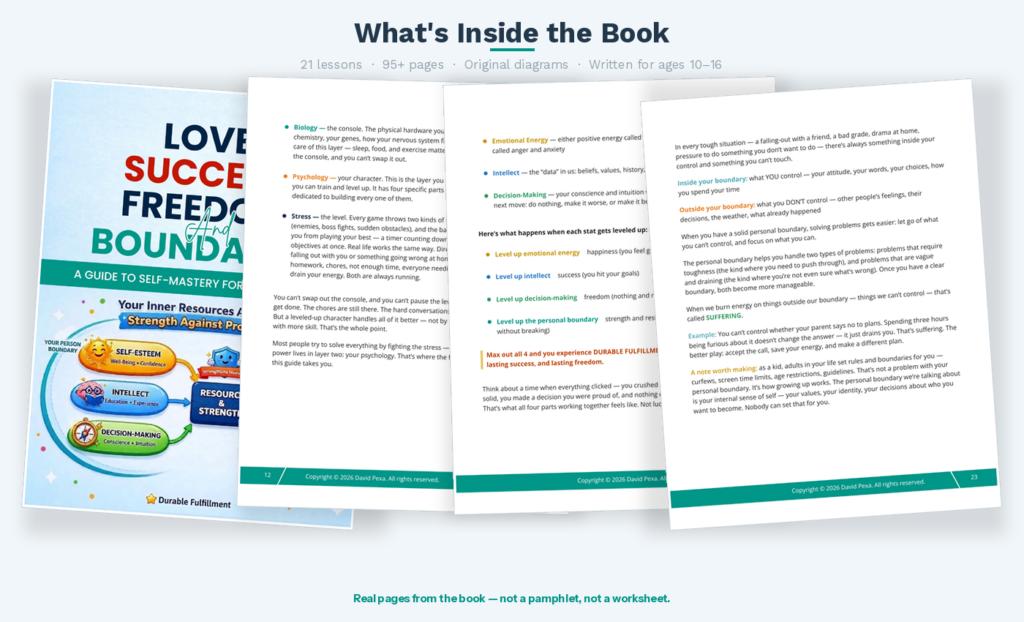
If this resonated, go deeper. My book Love, Success, Freedom and Boundaries gives you twelve frameworks for seeing the patterns that shape your life — and changing the ones that aren’t working.
A note on affiliates: This article includes affiliate links to platforms I’ve vetted and would recommend to my own clients and students. If you start with a recommended service through a link here, I may earn a small commission — at no extra cost to you. I only mention what I’d actually point you to in person. The recommendation comes first; the relationship is disclosed second.
If this resonates, the full framework lives in Love, Success, Freedom and Boundaries.
A practical playbook for raising emotionally resilient kids — and breaking the patterns you didn’t choose to inherit.
