



Summary: Emotional Intelligence Chart: A Guide to Mapping Your EQ — understanding the signal beneath the surface and what you can actually do about it.
I started using emotional intelligence charts with clients because most people have never been given a vocabulary for what they’re feeling. You can’t regulate what you can’t name.
You may be doing solid work, hitting deadlines, solving problems fast, and still feel a strange drag in your career. People trust your output, but they don’t always trust your presence under pressure. Meetings go sideways. Feedback stings more than it should. A hard conversation lingers in your head for days.
That gap often isn’t about intelligence or effort. It’s about how you notice, name, regulate, and use emotion.
An emotional intelligence chart helps you make that invisible layer visible. I like to think of it as a working map. Not a label. Not a verdict. A map that shows where you’re strong, where you get thrown off, and where small practice can change how you lead, communicate, and recover.
Why Your Career Might Hinge on an Emotional Intelligence Chart
A client once described this problem well. He said, “I’m the one people call when something breaks. But when leadership roles open up, they pick someone else.”
His technical performance was strong. His relationships were uneven. In stressful moments, he became abrupt. He didn’t notice how often he shut people down. He thought he was being efficient. His team experienced him as tense and hard to approach.
That’s where an emotional intelligence chart becomes useful. It turns vague feedback like “work on executive presence” into skill areas you can examine.

According to emotional intelligence statistics compiled by ElectroIQ, 90% of top performers have high emotional intelligence, and EQ accounts for about 58% of job performance across roles. That’s why people with strong resumes still hit a ceiling. Skill gets you in the room. Emotional intelligence often shapes what happens next.
Where professionals usually get stuck
Individuals don’t struggle because they “lack EQ” in some global sense. They struggle in specific moments:
- During feedback: You hear useful input as criticism and get defensive.
- In conflict: You push too hard, withdraw too fast, or try to fix feelings before understanding them.
- Under stress: Your tone sharpens, your listening narrows, and your judgment gets noisy.
- When leading others: You assume clarity without checking how your message landed.
Those aren’t character flaws. They’re trainable patterns.
Practical rule: If the same kind of friction keeps showing up with different people, treat it as a skill signal, not bad luck.
Why a chart works better than vague advice
“Be more self-aware” is too fuzzy to act on.
A good emotional intelligence chart gives you categories. It shows whether your growth edge is self-awareness, self-management, empathy, or relationship skills. That matters because each area calls for different practice.
If your issue is self-awareness, journaling after tense meetings may help. If it’s self-management, a pause routine before responding may matter more. If it’s relationship management, you may need to improve how you repair trust after conflict.
The chart doesn’t replace reflection. It sharpens it.
What Exactly Is an Emotional Intelligence Chart
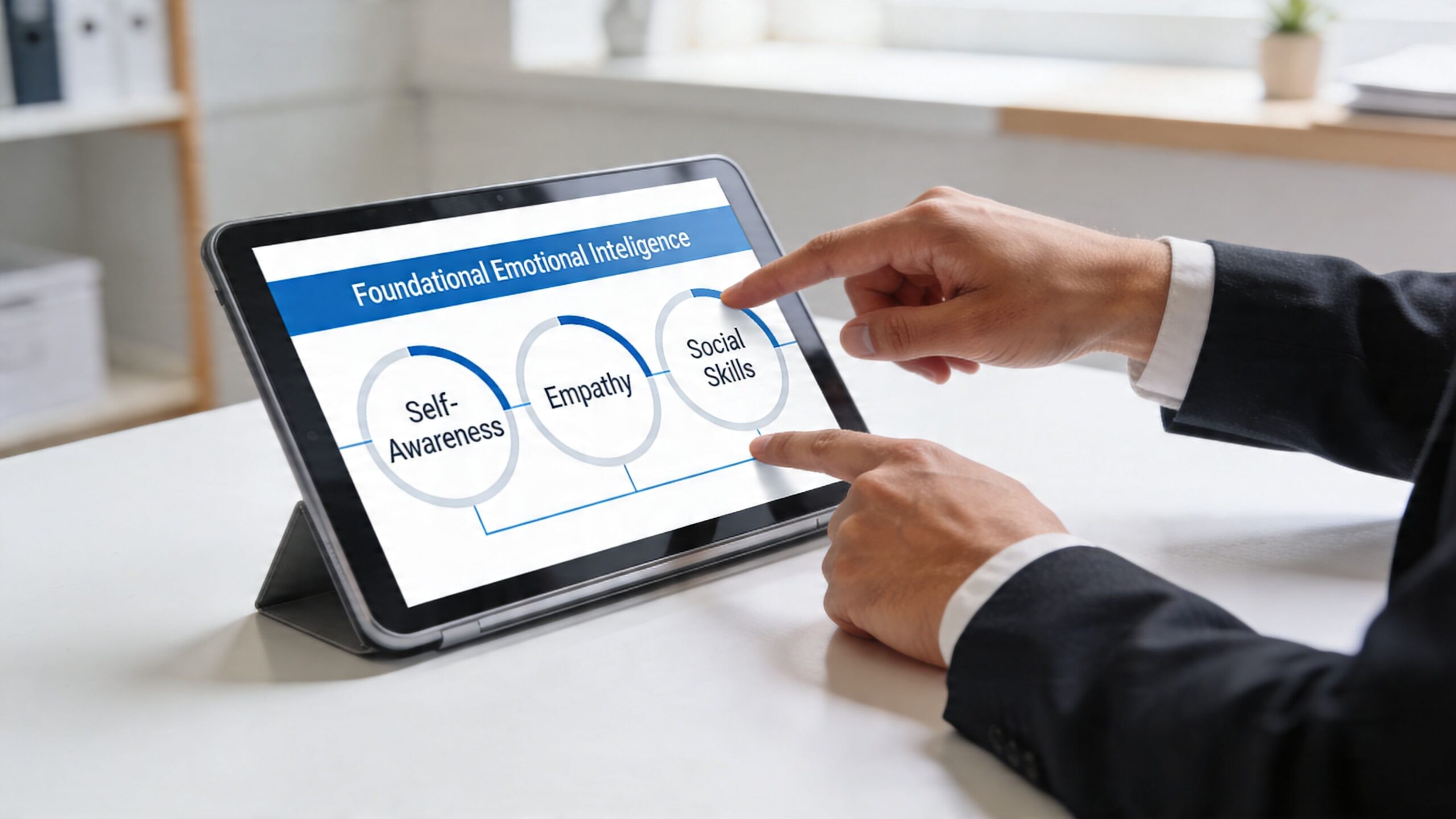
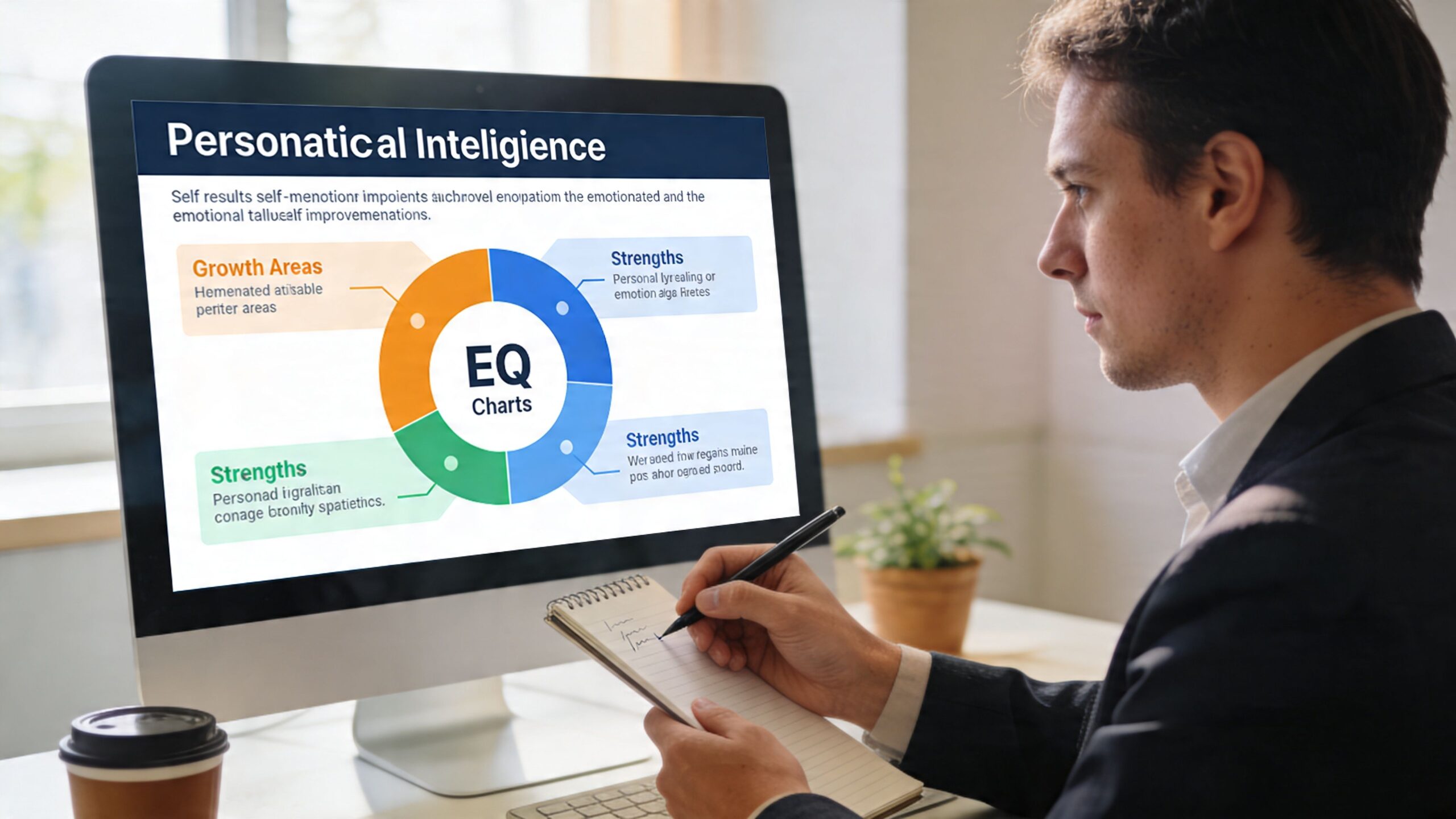
An emotional intelligence chart is a visual tool that organizes your EQ skills into categories so you can see patterns more clearly. It functions as a dashboard for your internal world.
Instead of asking, “Am I emotionally intelligent or not?” it asks better questions. Where do you read yourself accurately? Where do you regulate well? Where do you miss signals from other people? Where do your relationships tend to get strained?
What it usually looks like
You might see an emotional intelligence chart presented as:
- A radar chart: Useful for spotting imbalances across several EQ dimensions at once.
- A bar graph: Better if you want a simple side-by-side comparison of categories.
- A quadrant chart: Common in coaching because it groups skills into larger domains.
- A checklist or score sheet: Helpful for self-review, journaling, and habit tracking.
Some charts come from formal assessments. Others are self-coaching tools. Both can help, but they do slightly different jobs.
What it is not
People often confuse an EQ chart with a personality test.
A personality test tends to describe preferences. An emotional intelligence chart is more about skills in action. That’s an important difference. Personality may feel stable over time. EQ can improve with deliberate practice, reflection, and feedback.
So if you score lower in one area, don’t read that as a permanent trait. Read it as a current pattern.
A chart is most useful when you treat it like a snapshot, not a sentence.
Why naming emotion matters first
Many readers get tripped up at the first step. They assume emotional intelligence starts with managing emotion. Usually it starts with identifying it.
If you can’t tell the difference between feeling disappointed, embarrassed, threatened, or overwhelmed, you’ll choose the wrong response. That’s why emotional vocabulary matters. If you want a simple way to separate those terms, this guide on emotions vs feelings can help.
The real purpose of the chart
The point isn’t to chase a flattering score.
The point is to create better decisions in real situations, such as:
| Situation | What the chart helps you notice |
|---|---|
| Tough feedback from a manager | Whether your reaction is defensiveness, shame, or useful reflection |
| Team tension | Whether you’re missing others’ cues or struggling to regulate your own frustration |
| Leadership growth | Whether your bottleneck is influence, empathy, or self-control |
When used well, the emotional intelligence chart becomes less about analysis and more about adjustment.
Exploring the Core Models of Emotional Intelligence
Most EQ charts are built on a model underneath. If you don’t understand the model, the chart can feel arbitrary.
The framework I use most often in coaching is Daniel Goleman’s four-domain model. It’s practical, easy to apply, and strong enough for workplace use.
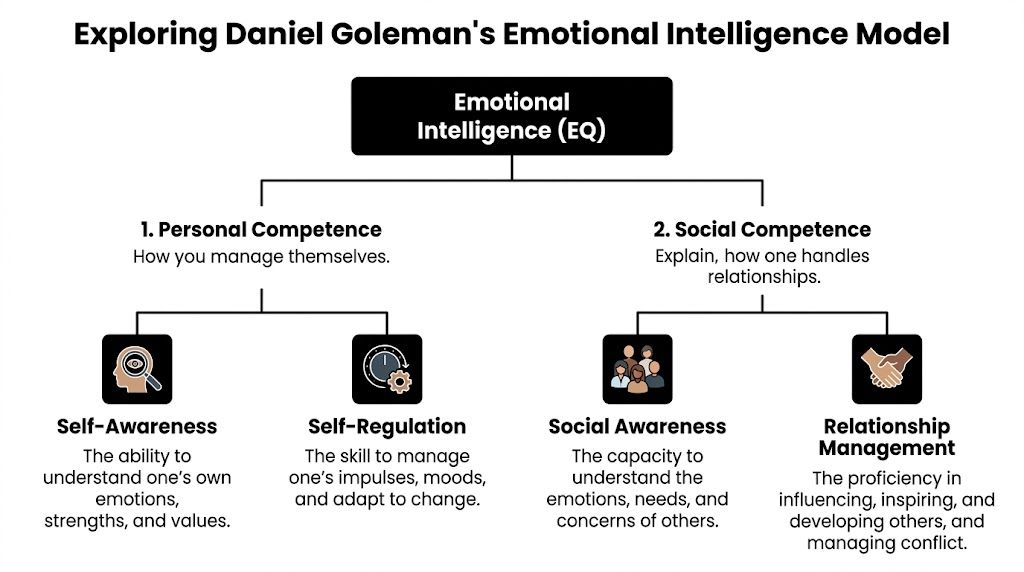
The Nottingham overview of Goleman’s model describes four domains: Self-Awareness, Self-Management, Social Awareness, and Relationship Management. It also notes a practical coaching use of these quadrants, including breathing exercises for Self-Management that can reduce conflict by up to 40% in some applications, as outlined in the Emotional Intelligence infographic from the University of Nottingham.
Goleman’s four domains in plain language
Self-awareness
This is your ability to notice what you’re feeling while it’s happening.
Not later that night. Not after the argument. In the moment.
Someone with stronger self-awareness can say, “I’m not just annoyed. I feel dismissed, and that’s why my tone is tightening.” That kind of accuracy changes everything.
Common signs this area needs work:
- You explain emotions as facts: “The meeting was stupid” instead of “I felt threatened and shut down.”
- You get surprised by your own reactions: Anger or withdrawal seems to come out of nowhere.
- You struggle to name your state: You know something feels off, but can’t identify it clearly.
Self-management
This is what you do after you notice an emotion.
Can you pause? Can you choose a response that fits your values instead of your first impulse? Can you recover after stress instead of spreading it?
A lot of professionals know what they should say. Self-management determines whether they can do it when stakes rise.
When clients improve this area, the first visible change is often slower reactions and cleaner conversations.
Social awareness
This is your ability to read the room and understand what other people may be feeling.
It includes empathy, but it’s not only empathy. It’s also context. Who feels unheard? Who’s hesitant? What tension is present even if nobody names it?
Without social awareness, people often overestimate how clear or persuasive they’re being.
Relationship management
In this context, EQ becomes visible to others.
It includes influence, conflict handling, coaching, collaboration, and repair after friction. You may be highly reflective inside and still struggle here if you don’t communicate that skill well.
People often think leadership presence is mysterious. Often it’s relationship management practiced consistently.
A comparison of popular frameworks
Not every emotional intelligence chart uses the same lens. Here’s a simple comparison.
| Aspect | Daniel Goleman Model (Competency-Based) | Reuven Bar-On Model (Trait-Based) |
|---|---|---|
| Primary focus | Workplace competencies and observable behavior | Broader emotional and social functioning |
| Common use | Coaching, leadership development, team growth | Assessment, self-report, personal insight |
| Structure | Four core domains | Multiple traits and capacities |
| Best for | Turning EQ into practical habits | Understanding general emotional functioning |
| Coaching feel | Action-oriented and behavioral | Reflective and descriptive |
Goleman’s model works well when you want to improve performance in conversations, meetings, leadership, and conflict. Bar-On’s approach can be useful when you want a wider view of emotional patterns and wellbeing.
How coaches use the model
I don’t hand clients a quadrant and stop there. I translate it into behaviors.
For example:
- A Self-Awareness goal may involve tracking emotional triggers after specific meetings.
- A Self-Management goal may involve a short breathing pause before replying when tension rises.
- A Social Awareness goal may involve summarizing what another person seems to be feeling before offering your own view.
- A Relationship Management goal may involve practicing direct repair after misunderstandings.
That shift matters. Models are helpful. Behaviors change outcomes.
How to Read and Interpret Your EQ Chart Results
Many individuals look at an EQ chart and immediately judge themselves. High score equals good. Low score equals bad.
That’s the wrong reading.
A chart is more useful when you ask, “What behavior does this pattern point to in daily life?” Your scores only matter if they help you notice something concrete.
If you want a simple companion tool for naming what you’re feeling before you interpret patterns, this emotions chart can pair well with your EQ review.
Start with shape, not score
If you’re looking at a radar chart, don’t stare at individual numbers first. Look at the overall shape.
Ask yourself:
- Where are the obvious dips
- Which areas look relatively balanced
- Is one strength carrying the rest
- Do the lows match feedback you’ve heard before
A person with strong social awareness and weaker self-management may read others well but still react badly under stress. Someone with strong self-awareness and weaker relationship management may understand themselves well but struggle to influence or repair.
What different patterns may suggest
Here’s a practical way to read the four common domains.
| Domain | Higher result may suggest | Lower result may suggest |
|---|---|---|
| Self-Awareness | You notice triggers, body signals, and emotional shifts earlier | You react first and understand later |
| Self-Management | You pause, regulate tone, and recover faster | Stress leaks into speech, email, or decisions |
| Social Awareness | You catch unspoken tension and read others more accurately | You miss cues, interrupt, or assume too much |
| Relationship Management | You handle conflict, feedback, and influence with more skill | Trust frays after friction and repair is inconsistent |
These aren’t diagnoses. They’re working hypotheses.
Reflection prompt: “Where did this pattern show up in the last seven days?”
That one question keeps your chart grounded in real life.
Don’t overidentify with one result
People often latch onto a low area and turn it into identity. “I’m just bad with people.” “I’m not a natural leader.” “I don’t have empathy.”
Slow down.
A lower result may reflect stress, a current environment, weak emotional vocabulary, poor sleep, burnout, lack of feedback, or a habit you haven’t trained yet. Context matters.
Use examples from recent situations
Interpretation gets sharper when you pair each category with one event.
Try this method:
- Pick one recent meeting where you felt off.
- Mark the moment your internal state changed.
- Match it to a likely EQ domain.
- Write one better response you could practice next time.
That turns an emotional intelligence chart from abstract information into something you can apply on Tuesday at 2 p.m., not someday in theory.
Turning Your Chart into an Actionable Growth Plan
Insight without practice fades fast.
Once you’ve read your emotional intelligence chart, the next move isn’t to fix everything. It’s to choose one or two areas that will create the biggest difference in your work and relationships.
The case for doing this is practical, not abstract. The Positive Psychology overview of emotional intelligence frameworks notes that demand for emotional skills is projected to grow by 26% by 2030, and 71% of employers say they value EQ over IQ. If your chart reveals a gap, that gap isn’t just personal. It’s professional.
Pick one focus area first
Don’t build a giant plan with ten habits.
Choose the area that creates the most friction right now. Usually that’s the one tied to repeated stress, conflict, or stalled growth.
A simple filter helps:
- Choose urgency: What skill hurts you most if it doesn’t improve?
- Choose visibility: What behavior do other people notice most often?
- Choose impact: What skill would strengthen several situations at once?
If you snap in meetings, self-management may be the first target. If you leave people confused or disconnected, relationship management may be the better entry point.
Turn a weak area into a practice
A useful growth plan is behavioral. It doesn’t say “be calmer.” It says what you’ll do.
Examples:
- For Self-Awareness: Keep a short daily log of moments when your mood changed and what triggered it.
- For Self-Management: Pause and count before responding when you feel heat rising.
- For Social Awareness: In one conversation each day, reflect back what you think the other person is feeling before sharing your view.
- For Relationship Management: After tension, send a repair message instead of waiting for awkwardness to fade.
Use a simple worksheet structure
When I coach clients, I keep the template short enough to use and specific enough to matter.
Your worksheet can include:
| Prompt | Your answer |
|---|---|
| My target EQ area | |
| Situation where it breaks down | |
| New behavior I’ll practice | |
| Cue that reminds me to use it | |
| How I’ll review progress weekly |
If you want a practical behavior list to support this plan, the emotion regulation checklist is one option for translating emotional insight into daily actions.
You can also create your own printable version in Notes, Google Docs, Notion, or a paper journal. The format matters less than the repeat use.
Customize the chart to your life
A generic chart is a starting point. A personal chart is better.
If you’re a manager, add rows for team feedback, conflict moments, and one-on-one conversations. If you’re a student, track presentations, group work, and exam stress. If you’re building a business, include client calls, negotiation, and recovery after setbacks.
One mention here is enough: David Pexa offers tools focused on naming emotions and building emotional literacy, which can complement an EQ growth process when you need help turning vague feelings into more specific self-observation.
The best chart is the one you’ll revisit.
Frequently Asked Questions About EQ Charts
Are free online EQ tests reliable
Some are useful for reflection. Many are too shallow for strong conclusions.
Use a free test as a prompt, not a verdict. If the results feel accurate, validate them against real situations, feedback from people you trust, and patterns you’ve noticed over time.
How often should I reassess my emotional intelligence
Reassess after you’ve had enough time to practice new habits.
That means checking in periodically rather than obsessing over frequent retesting. If you measure too often, you’ll track mood more than skill. It’s better to compare results after consistent practice and a few meaningful real-world situations.
A reassessment is only helpful if your behavior had time to change.
Can you have too much EQ
You can use emotional skill poorly.
For example, someone may read others well but avoid honest conversations to keep the peace. Another person may become overly responsible for everyone else’s feelings. That’s not “too much EQ.” That’s uneven EQ or misapplied EQ.
Healthy emotional intelligence includes boundaries, honesty, and self-respect.
How long does it take to improve an EQ score
There’s no single timeline that fits everyone, and I won’t pretend there is.
What I see in practice is that people often notice behavioral shifts before they notice score changes. You may start pausing more effectively, listening longer, or recovering faster before any formal assessment reflects it. That’s still progress.
What’s the best first step if I feel overwhelmed by all this
Keep it narrow.
Start with one recurring situation that drains you. Maybe it’s performance feedback, team conflict, or tension with a partner. Use your emotional intelligence chart to identify the likely domain involved. Then pick one replacement behavior and repeat it.
That’s enough to begin.
Should I share my EQ chart with my manager or team
Only if it serves a clear purpose and the environment is trustworthy.
Sharing can help when you’re using it to support growth, invite feedback, or explain what you’re actively working on. It can backfire if you’re looking for reassurance or exposing something you haven’t processed yet. Use judgment.
Keep Reading
- Emotional Disconnect: Signs, Causes, & Repair
- Why Am I So Emotional: Find Your Balance
- Master Your Feelings: The Ultimate Emotions Chart Guide
If you process emotions through writing — journaling, drafting hard conversations, putting words to what you’re feeling — the tool I use to draft most of my words is Wispr Flow. It transcribes your voice into clean, edited text in real time, so the friction between thinking it and writing it basically disappears.
Conclusion
Understanding is the first step, but it’s what you do with that understanding that changes things. The ideas in this article aren’t meant to sit in your head — they’re meant to shift how you see your situation and give you something concrete to act on. Start with the one thing that felt most relevant, apply it this week, and notice what changes.
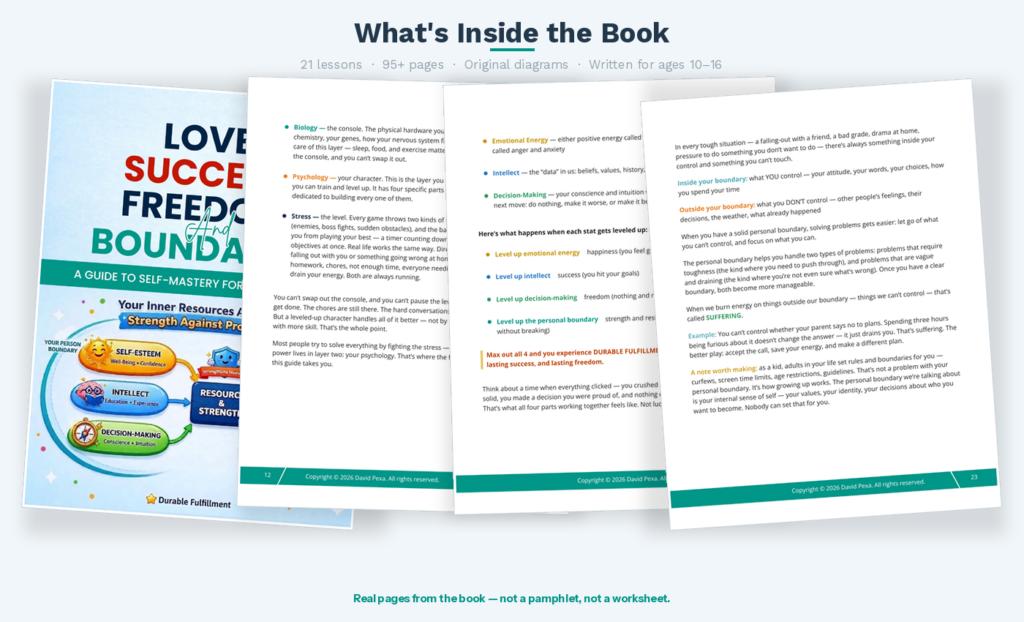
If this resonated, go deeper. My book Love, Success, Freedom and Boundaries gives you twelve frameworks for seeing the patterns that shape your life — and changing the ones that aren’t working.
A note on affiliates: This article includes affiliate links to platforms I’ve vetted and would recommend to my own clients and students. If you start with a recommended service through a link here, I may earn a small commission — at no extra cost to you. I only mention what I’d actually point you to in person. The recommendation comes first; the relationship is disclosed second.
If this resonates, the full framework lives in Love, Success, Freedom and Boundaries.
A practical playbook for raising emotionally resilient kids — and breaking the patterns you didn’t choose to inherit.
