


Summary: A practical guide to be a good parent: it’s not what you think. What actually works, what doesn’t, and where to start.
I’ve never met a parent who wasn’t trying their best. The question isn’t whether you’re a good parent — it’s whether the tools you’re using match the child you’re actually raising.
You’re already a better parent than you think. Here’s what’s actually missing.
If you just searched “how to be a good parent,” I want you to know something before we go any further: the fact that you’re asking that question means you care deeply. And caring deeply is not the problem.
The problem is that nobody ever taught us how to translate caring into connection.
We love our kids. We’d do anything for them. But somewhere between the morning chaos and the bedtime battles, it starts to feel like love isn’t enough. Like something is broken — and we can’t figure out what.
So we google it. At midnight. Alone. Hoping someone, somewhere, has the answer.
Here’s what I’ve found working with families: good parenting isn’t about doing more. It’s about seeing more clearly.
Why Most Parenting Advice Doesn’t Stick
You’ve probably read a dozen articles like this before. Tips, lists, strategies. “Be consistent.” “Set boundaries.” “Stay calm when they’re melting down.”
And you’ve probably noticed that none of it lasts more than a week.
That’s not because you lack discipline or willpower. It’s because most parenting advice treats the symptom — the behavior — without addressing the real issue: how you see your child in the moment that matters.
Think about the last time your child did something that triggered you. Maybe they talked back. Maybe they refused to do something simple. Maybe they said something that hurt.
In that moment, what story ran through your head? Was it “This child is disrespecting me”? Or “I’m failing at this”? Or “Nothing I do works”?
That story — the one running in the background — is what drives your reaction. Not the tip you read about staying calm. Not the boundary-setting technique. The story.
Good parenting starts with recognizing the story and asking whether it’s true.
What Good Parents Actually Do Differently
After years of working with families, I’ve noticed that the parents who get the best results aren’t doing more than anyone else. They’re doing something different. They’ve learned to shift from reacting to understanding.
Here’s what that looks like in practice:
They separate the behavior from the child.
When their child acts out, they don’t take it as evidence of who the child is. They treat it as information about what the child needs. “He’s being defiant” becomes “He’s struggling with something and this is how it’s showing up.” That one shift changes everything — the tone of voice, the response, and eventually, the child’s behavior.
They get curious before they get corrective.
The instinct is to fix, redirect, or discipline. But the parents who build lasting connection pause long enough to wonder why. Why is she shutting down? Why did he explode over something small? The answer is almost never what it looks like on the surface. Children lack the vocabulary to say “I felt invisible today” — so they throw things instead.
They repair, not just react.
Every parent loses their temper. Every parent says something they regret. The difference isn’t whether you mess up — it’s what you do after. The parents who raise secure, resilient children are the ones who come back and say, “I handled that badly. Here’s what I wish I’d said.” That repair teaches the child more about relationships than a hundred perfect moments would.
They let their child feel seen — not just managed.
There’s a difference between managing a child’s behavior and helping a child understand themselves. One produces compliance. The other produces a human being who knows who they are and what they’re capable of. The managed child behaves. The seen child thrives.
The Question Behind the Question
When you search “how to be a good parent,” what you’re really asking is: Am I enough?
And the honest answer is: yes — but not because you’re perfect. Because you’re paying attention. You’re here, asking hard questions, trying to figure it out. That’s not nothing. That’s everything.
But here’s what often goes unexamined: the standard you’re measuring yourself against probably isn’t yours. It’s your parents’ standard. Or the Instagram version. Or the impossible expectation that good parents never struggle, never doubt, never lose their way.
What we really need isn’t more tips on being a good parent. We need to understand ourselves — our own patterns, reactions, and blind spots — well enough to show up clearly for our kids.
Because here’s the paradox: the parent who can say, “I don’t know what I’m doing, but I’m willing to look at it honestly” — that parent is already doing the most important thing. They’re modeling the exact quality they want their child to develop: the willingness to see clearly and act from understanding rather than fear.
Three Things You Can Start Today
You don’t need to overhaul your parenting. You need to shift your lens. Here are three places to start:
1. Notice the story before the reaction.
Next time your child triggers you, pause for two seconds and ask: “What am I telling myself right now?” You’ll start to see patterns — and patterns can be changed once they’re visible.
2. Ask one question before correcting.
Before you discipline, redirect, or lecture, try asking: “What’s going on?” — and actually listen to the answer. You’ll be surprised how often the behavior makes perfect sense once you understand the context.
3. Replace one criticism with one observation.
Instead of “You never listen,” try “I noticed you seemed really distracted today. What was on your mind?” One closes the door. The other opens it.
These aren’t tricks. They’re shifts in how you see — and when you see differently, you act differently. Your child feels it. The relationship changes. Not because you became a “better” parent, but because you became a more present one.
Going Deeper
If you recognize yourself in this article — the love, the doubt, the late-night searching — I wrote something for parents exactly like you.
Love, Success, Freedom and Boundaries is a book that gives young people (and the parents raising them) a framework for understanding themselves and each other. It’s not a parenting manual. It’s a translation guide — for the conversations you’ve been trying to have but couldn’t quite find the words for.
If this resonated, go deeper. My book Love, Success, Freedom and Boundaries gives you twelve frameworks for seeing the patterns that shape your life — and changing the ones that aren’t working.
Frequently Asked Questions
What is the most important quality of a good parent?
The most important quality is the ability to see your child clearly — not through the lens of what you want them to be, but who they actually are. This means paying attention to what their behavior is communicating rather than just reacting to the surface. Good parenting starts with understanding, not control.
How do I know if I’m being a good parent?
If you’re asking the question, that’s already a signal you care. But the real measure isn’t whether your child is happy all the time — it’s whether they feel safe enough to show you who they really are, including the messy parts.
Can I become a better parent if I had a difficult childhood?
Yes. In fact, having a difficult childhood can become an advantage if you’re willing to look at the patterns it created. The key is recognizing where your reactions come from so you don’t pass them forward unconsciously.
Keep Reading
- Behavioral Strengths of a Child: What Your Child’s Worst Behavior Is Really Telling You
- Manipulative Child Behavior Symptoms: What You’re Really Seeing
- Your Child’s Anger Isn’t the Problem. Here’s What Is.
If you find yourself wanting to put words to what’s happening with your kid — drafting a hard conversation, journaling what you noticed, writing the script you wish you had — the tool I use to draft most of my words is Wispr Flow. It transcribes your voice into clean, edited text in real time, so the friction between thinking it and writing it basically disappears.
If this resonated, go deeper. My book Love, Success, Freedom and Boundaries gives you twelve frameworks for seeing the patterns that shape your life — and changing the ones that aren’t working.
Frequently Asked Questions
What is the most important quality of a good parent?
The most important quality is the ability to see your child clearly — not through the lens of what you want them to be, but who they actually are. This means paying attention to what their behavior is communicating rather than just reacting to the surface. Good parenting starts with understanding, not control.
How do I know if I’m being a good parent?
If you’re asking the question, that’s already a signal you care. But the real measure isn’t whether your child is happy all the time — it’s whether they feel safe enough to show you who they really are, including the messy parts.
Can I become a better parent if I had a difficult childhood?
Yes. In fact, having a difficult childhood can become an advantage if you’re willing to look at the patterns it created. The key is recognizing where your reactions come from so you don’t pass them forward unconsciously.
Keep Reading
- Behavioral Strengths of a Child: What Your Child’s Worst Behavior Is Really Telling You
- Manipulative Child Behavior Symptoms: What You’re Really Seeing
- Your Child’s Anger Isn’t the Problem. Here’s What Is.
If you find yourself wanting to put words to what’s happening with your kid — drafting a hard conversation, journaling what you noticed, writing the script you wish you had — the tool I use to draft most of my words is Wispr Flow. It transcribes your voice into clean, edited text in real time, so the friction between thinking it and writing it basically disappears.
If this resonated, go deeper. My book Love, Success, Freedom and Boundaries gives you twelve frameworks for seeing the patterns that shape your life — and changing the ones that aren’t working.
Frequently Asked Questions
What is the most important quality of a good parent?
The most important quality is the ability to see your child clearly — not through the lens of what you want them to be, but who they actually are. This means paying attention to what their behavior is communicating rather than just reacting to the surface. Good parenting starts with understanding, not control.
How do I know if I’m being a good parent?
If you’re asking the question, that’s already a signal you care. But the real measure isn’t whether your child is happy all the time — it’s whether they feel safe enough to show you who they really are, including the messy parts.
Can I become a better parent if I had a difficult childhood?
Yes. In fact, having a difficult childhood can become an advantage if you’re willing to look at the patterns it created. The key is recognizing where your reactions come from so you don’t pass them forward unconsciously.
Keep Reading
- Behavioral Strengths of a Child: What Your Child’s Worst Behavior Is Really Telling You
- Manipulative Child Behavior Symptoms: What You’re Really Seeing
- Your Child’s Anger Isn’t the Problem. Here’s What Is.
If you find yourself wanting to put words to what’s happening with your kid — drafting a hard conversation, journaling what you noticed, writing the script you wish you had — the tool I use to draft most of my words is Wispr Flow. It transcribes your voice into clean, edited text in real time, so the friction between thinking it and writing it basically disappears.
If this resonated, go deeper. My book Love, Success, Freedom and Boundaries gives you twelve frameworks for seeing the patterns that shape your life — and changing the ones that aren’t working.
Frequently Asked Questions
What is the most important quality of a good parent?
The most important quality is the ability to see your child clearly — not through the lens of what you want them to be, but who they actually are. This means paying attention to what their behavior is communicating rather than just reacting to the surface. Good parenting starts with understanding, not control.
How do I know if I’m being a good parent?
If you’re asking the question, that’s already a signal you care. But the real measure isn’t whether your child is happy all the time — it’s whether they feel safe enough to show you who they really are, including the messy parts.
Can I become a better parent if I had a difficult childhood?
Yes. In fact, having a difficult childhood can become an advantage if you’re willing to look at the patterns it created. The key is recognizing where your reactions come from so you don’t pass them forward unconsciously.
Keep Reading
- Behavioral Strengths of a Child: What Your Child’s Worst Behavior Is Really Telling You
- Manipulative Child Behavior Symptoms: What You’re Really Seeing
- Your Child’s Anger Isn’t the Problem. Here’s What Is.
If you find yourself wanting to put words to what’s happening with your kid — drafting a hard conversation, journaling what you noticed, writing the script you wish you had — the tool I use to draft most of my words is Wispr Flow. It transcribes your voice into clean, edited text in real time, so the friction between thinking it and writing it basically disappears.
If this resonated, go deeper. My book Love, Success, Freedom and Boundaries gives you twelve frameworks for seeing the patterns that shape your life — and changing the ones that aren’t working.
Frequently Asked Questions
What is the most important quality of a good parent?
The most important quality is the ability to see your child clearly — not through the lens of what you want them to be, but who they actually are. This means paying attention to what their behavior is communicating rather than just reacting to the surface. Good parenting starts with understanding, not control.
How do I know if I’m being a good parent?
If you’re asking the question, that’s already a signal you care. But the real measure isn’t whether your child is happy all the time — it’s whether they feel safe enough to show you who they really are, including the messy parts.
Can I become a better parent if I had a difficult childhood?
Yes. In fact, having a difficult childhood can become an advantage if you’re willing to look at the patterns it created. The key is recognizing where your reactions come from so you don’t pass them forward unconsciously.
Keep Reading
- Behavioral Strengths of a Child: What Your Child’s Worst Behavior Is Really Telling You
- Manipulative Child Behavior Symptoms: What You’re Really Seeing
- Your Child’s Anger Isn’t the Problem. Here’s What Is.
If you find yourself wanting to put words to what’s happening with your kid — drafting a hard conversation, journaling what you noticed, writing the script you wish you had — the tool I use to draft most of my words is Wispr Flow. It transcribes your voice into clean, edited text in real time, so the friction between thinking it and writing it basically disappears.
If this resonated, go deeper. My book Love, Success, Freedom and Boundaries gives you twelve frameworks for seeing the patterns that shape your life — and changing the ones that aren’t working.
Frequently Asked Questions
What is the most important quality of a good parent?
The most important quality is the ability to see your child clearly — not through the lens of what you want them to be, but who they actually are. This means paying attention to what their behavior is communicating rather than just reacting to the surface. Good parenting starts with understanding, not control.
How do I know if I’m being a good parent?
If you’re asking the question, that’s already a signal you care. But the real measure isn’t whether your child is happy all the time — it’s whether they feel safe enough to show you who they really are, including the messy parts.
Can I become a better parent if I had a difficult childhood?
Yes. In fact, having a difficult childhood can become an advantage if you’re willing to look at the patterns it created. The key is recognizing where your reactions come from so you don’t pass them forward unconsciously.
Keep Reading
- Behavioral Strengths of a Child: What Your Child’s Worst Behavior Is Really Telling You
- Manipulative Child Behavior Symptoms: What You’re Really Seeing
- Your Child’s Anger Isn’t the Problem. Here’s What Is.
If you find yourself wanting to put words to what’s happening with your kid — drafting a hard conversation, journaling what you noticed, writing the script you wish you had — the tool I use to draft most of my words is Wispr Flow. It transcribes your voice into clean, edited text in real time, so the friction between thinking it and writing it basically disappears.
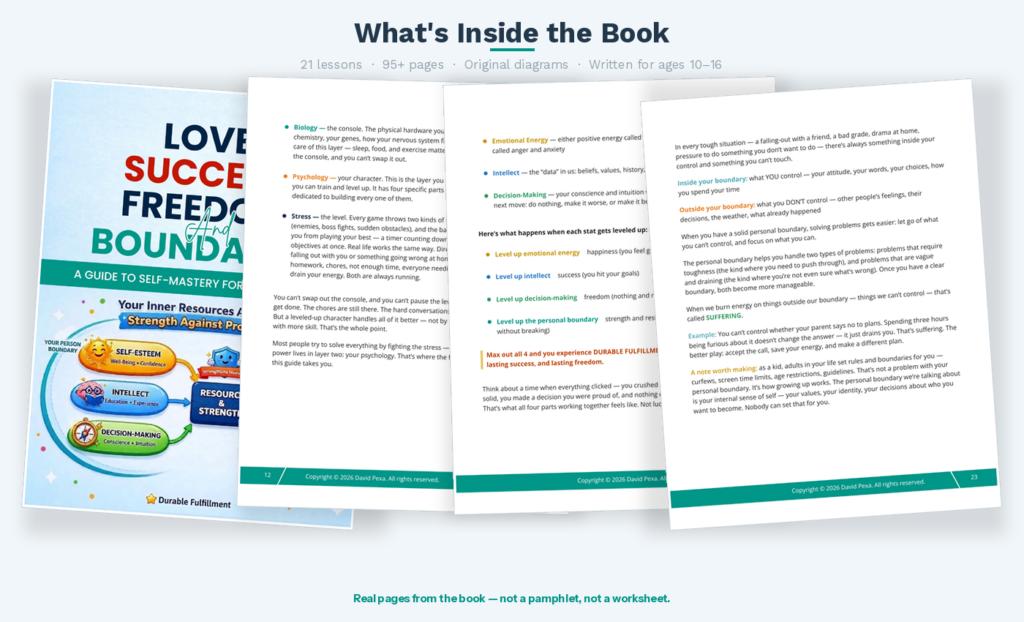
If this resonated, go deeper. My book Love, Success, Freedom and Boundaries gives you twelve frameworks for seeing the patterns that shape your life — and changing the ones that aren’t working.
Frequently Asked Questions
What is the most important quality of a good parent?
The most important quality is the ability to see your child clearly — not through the lens of what you want them to be, but who they actually are. This means paying attention to what their behavior is communicating rather than just reacting to the surface. Good parenting starts with understanding, not control.
How do I know if I’m being a good parent?
If you’re asking the question, that’s already a signal you care. But the real measure isn’t whether your child is happy all the time — it’s whether they feel safe enough to show you who they really are, including the messy parts.
Can I become a better parent if I had a difficult childhood?
Yes. In fact, having a difficult childhood can become an advantage if you’re willing to look at the patterns it created. The key is recognizing where your reactions come from so you don’t pass them forward unconsciously.
Keep Reading
- Behavioral Strengths of a Child: What Your Child’s Worst Behavior Is Really Telling You
- Manipulative Child Behavior Symptoms: What You’re Really Seeing
- Your Child’s Anger Isn’t the Problem. Here’s What Is.
If you find yourself wanting to put words to what’s happening with your kid — drafting a hard conversation, journaling what you noticed, writing the script you wish you had — the tool I use to draft most of my words is Wispr Flow. It transcribes your voice into clean, edited text in real time, so the friction between thinking it and writing it basically disappears.
If this resonated, go deeper. My book Love, Success, Freedom and Boundaries gives you twelve frameworks for seeing the patterns that shape your life — and changing the ones that aren’t working.
Frequently Asked Questions
What is the most important quality of a good parent?
The most important quality is the ability to see your child clearly — not through the lens of what you want them to be, but who they actually are. This means paying attention to what their behavior is communicating rather than just reacting to the surface. Good parenting starts with understanding, not control.
How do I know if I’m being a good parent?
If you’re asking the question, that’s already a signal you care. But the real measure isn’t whether your child is happy all the time — it’s whether they feel safe enough to show you who they really are, including the messy parts.
Can I become a better parent if I had a difficult childhood?
Yes. In fact, having a difficult childhood can become an advantage if you’re willing to look at the patterns it created. The key is recognizing where your reactions come from so you don’t pass them forward unconsciously.
Keep Reading
- Behavioral Strengths of a Child: What Your Child’s Worst Behavior Is Really Telling You
- Manipulative Child Behavior Symptoms: What You’re Really Seeing
- Your Child’s Anger Isn’t the Problem. Here’s What Is.
If you find yourself wanting to put words to what’s happening with your kid — drafting a hard conversation, journaling what you noticed, writing the script you wish you had — the tool I use to draft most of my words is Wispr Flow. It transcribes your voice into clean, edited text in real time, so the friction between thinking it and writing it basically disappears.
If this resonated, go deeper. My book Love, Success, Freedom and Boundaries gives you twelve frameworks for seeing the patterns that shape your life — and changing the ones that aren’t working.
Frequently Asked Questions
What is the most important quality of a good parent?
The most important quality is the ability to see your child clearly — not through the lens of what you want them to be, but who they actually are. This means paying attention to what their behavior is communicating rather than just reacting to the surface. Good parenting starts with understanding, not control.
How do I know if I’m being a good parent?
If you’re asking the question, that’s already a signal you care. But the real measure isn’t whether your child is happy all the time — it’s whether they feel safe enough to show you who they really are, including the messy parts.
Can I become a better parent if I had a difficult childhood?
Yes. In fact, having a difficult childhood can become an advantage if you’re willing to look at the patterns it created. The key is recognizing where your reactions come from so you don’t pass them forward unconsciously.
Keep Reading
- Behavioral Strengths of a Child: What Your Child’s Worst Behavior Is Really Telling You
- Manipulative Child Behavior Symptoms: What You’re Really Seeing
- Your Child’s Anger Isn’t the Problem. Here’s What Is.
If you find yourself wanting to put words to what’s happening with your kid — drafting a hard conversation, journaling what you noticed, writing the script you wish you had — the tool I use to draft most of my words is Wispr Flow. It transcribes your voice into clean, edited text in real time, so the friction between thinking it and writing it basically disappears.
If this resonated, go deeper. My book Love, Success, Freedom and Boundaries gives you twelve frameworks for seeing the patterns that shape your life — and changing the ones that aren’t working.
Frequently Asked Questions
What is the most important quality of a good parent?
The most important quality is the ability to see your child clearly — not through the lens of what you want them to be, but who they actually are. This means paying attention to what their behavior is communicating rather than just reacting to the surface. Good parenting starts with understanding, not control.
How do I know if I’m being a good parent?
If you’re asking the question, that’s already a signal you care. But the real measure isn’t whether your child is happy all the time — it’s whether they feel safe enough to show you who they really are, including the messy parts.
Can I become a better parent if I had a difficult childhood?
Yes. In fact, having a difficult childhood can become an advantage if you’re willing to look at the patterns it created. The key is recognizing where your reactions come from so you don’t pass them forward unconsciously.
Keep Reading
- Behavioral Strengths of a Child: What Your Child’s Worst Behavior Is Really Telling You
- Manipulative Child Behavior Symptoms: What You’re Really Seeing
- Your Child’s Anger Isn’t the Problem. Here’s What Is.
If you find yourself wanting to put words to what’s happening with your kid — drafting a hard conversation, journaling what you noticed, writing the script you wish you had — the tool I use to draft most of my words is Wispr Flow. It transcribes your voice into clean, edited text in real time, so the friction between thinking it and writing it basically disappears.
If this resonated, go deeper. My book Love, Success, Freedom and Boundaries gives you twelve frameworks for seeing the patterns that shape your life — and changing the ones that aren’t working.
Frequently Asked Questions
What is the most important quality of a good parent?
The most important quality is the ability to see your child clearly — not through the lens of what you want them to be, but who they actually are. This means paying attention to what their behavior is communicating rather than just reacting to the surface. Good parenting starts with understanding, not control.
How do I know if I’m being a good parent?
If you’re asking the question, that’s already a signal you care. But the real measure isn’t whether your child is happy all the time — it’s whether they feel safe enough to show you who they really are, including the messy parts.
Can I become a better parent if I had a difficult childhood?
Yes. In fact, having a difficult childhood can become an advantage if you’re willing to look at the patterns it created. The key is recognizing where your reactions come from so you don’t pass them forward unconsciously.
Keep Reading
- Behavioral Strengths of a Child: What Your Child’s Worst Behavior Is Really Telling You
- Manipulative Child Behavior Symptoms: What You’re Really Seeing
- Your Child’s Anger Isn’t the Problem. Here’s What Is.
If you find yourself wanting to put words to what’s happening with your kid — drafting a hard conversation, journaling what you noticed, writing the script you wish you had — the tool I use to draft most of my words is Wispr Flow. It transcribes your voice into clean, edited text in real time, so the friction between thinking it and writing it basically disappears.
If this resonated, go deeper. My book Love, Success, Freedom and Boundaries gives you twelve frameworks for seeing the patterns that shape your life — and changing the ones that aren’t working.
Frequently Asked Questions
What is the most important quality of a good parent?
The most important quality is the ability to see your child clearly — not through the lens of what you want them to be, but who they actually are. This means paying attention to what their behavior is communicating rather than just reacting to the surface. Good parenting starts with understanding, not control.
How do I know if I’m being a good parent?
If you’re asking the question, that’s already a signal you care. But the real measure isn’t whether your child is happy all the time — it’s whether they feel safe enough to show you who they really are, including the messy parts.
Can I become a better parent if I had a difficult childhood?
Yes. In fact, having a difficult childhood can become an advantage if you’re willing to look at the patterns it created. The key is recognizing where your reactions come from so you don’t pass them forward unconsciously.
Keep Reading
- Behavioral Strengths of a Child: What Your Child’s Worst Behavior Is Really Telling You
- Manipulative Child Behavior Symptoms: What You’re Really Seeing
- Your Child’s Anger Isn’t the Problem. Here’s What Is.
If you find yourself wanting to put words to what’s happening with your kid — drafting a hard conversation, journaling what you noticed, writing the script you wish you had — the tool I use to draft most of my words is Wispr Flow. It transcribes your voice into clean, edited text in real time, so the friction between thinking it and writing it basically disappears.
If this resonated, go deeper. My book Love, Success, Freedom and Boundaries gives you twelve frameworks for seeing the patterns that shape your life — and changing the ones that aren’t working.
Frequently Asked Questions
What is the most important quality of a good parent?
The most important quality is the ability to see your child clearly — not through the lens of what you want them to be, but who they actually are. This means paying attention to what their behavior is communicating rather than just reacting to the surface. Good parenting starts with understanding, not control.
How do I know if I’m being a good parent?
If you’re asking the question, that’s already a signal you care. But the real measure isn’t whether your child is happy all the time — it’s whether they feel safe enough to show you who they really are, including the messy parts.
Can I become a better parent if I had a difficult childhood?
Yes. In fact, having a difficult childhood can become an advantage if you’re willing to look at the patterns it created. The key is recognizing where your reactions come from so you don’t pass them forward unconsciously.
Keep Reading
- Behavioral Strengths of a Child: What Your Child’s Worst Behavior Is Really Telling You
- Manipulative Child Behavior Symptoms: What You’re Really Seeing
- Your Child’s Anger Isn’t the Problem. Here’s What Is.
If you find yourself wanting to put words to what’s happening with your kid — drafting a hard conversation, journaling what you noticed, writing the script you wish you had — the tool I use to draft most of my words is Wispr Flow. It transcribes your voice into clean, edited text in real time, so the friction between thinking it and writing it basically disappears.
If this resonated, go deeper. My book Love, Success, Freedom and Boundaries gives you twelve frameworks for seeing the patterns that shape your life — and changing the ones that aren’t working.
Frequently Asked Questions
What is the most important quality of a good parent?
The most important quality is the ability to see your child clearly — not through the lens of what you want them to be, but who they actually are. This means paying attention to what their behavior is communicating rather than just reacting to the surface. Good parenting starts with understanding, not control.
How do I know if I’m being a good parent?
If you’re asking the question, that’s already a signal you care. But the real measure isn’t whether your child is happy all the time — it’s whether they feel safe enough to show you who they really are, including the messy parts.
Can I become a better parent if I had a difficult childhood?
Yes. In fact, having a difficult childhood can become an advantage if you’re willing to look at the patterns it created. The key is recognizing where your reactions come from so you don’t pass them forward unconsciously.
Keep Reading
- Behavioral Strengths of a Child: What Your Child’s Worst Behavior Is Really Telling You
- Manipulative Child Behavior Symptoms: What You’re Really Seeing
- Your Child’s Anger Isn’t the Problem. Here’s What Is.
If you find yourself wanting to put words to what’s happening with your kid — drafting a hard conversation, journaling what you noticed, writing the script you wish you had — the tool I use to draft most of my words is Wispr Flow. It transcribes your voice into clean, edited text in real time, so the friction between thinking it and writing it basically disappears.
If this resonated, go deeper. My book Love, Success, Freedom and Boundaries gives you twelve frameworks for seeing the patterns that shape your life — and changing the ones that aren’t working.
Frequently Asked Questions
What is the most important quality of a good parent?
The most important quality is the ability to see your child clearly — not through the lens of what you want them to be, but who they actually are. This means paying attention to what their behavior is communicating rather than just reacting to the surface. Good parenting starts with understanding, not control.
How do I know if I’m being a good parent?
If you’re asking the question, that’s already a signal you care. But the real measure isn’t whether your child is happy all the time — it’s whether they feel safe enough to show you who they really are, including the messy parts.
Can I become a better parent if I had a difficult childhood?
Yes. In fact, having a difficult childhood can become an advantage if you’re willing to look at the patterns it created. The key is recognizing where your reactions come from so you don’t pass them forward unconsciously.
Keep Reading
- Behavioral Strengths of a Child: What Your Child’s Worst Behavior Is Really Telling You
- Manipulative Child Behavior Symptoms: What You’re Really Seeing
- Your Child’s Anger Isn’t the Problem. Here’s What Is.
If you find yourself wanting to put words to what’s happening with your kid — drafting a hard conversation, journaling what you noticed, writing the script you wish you had — the tool I use to draft most of my words is Wispr Flow. It transcribes your voice into clean, edited text in real time, so the friction between thinking it and writing it basically disappears.
If this resonated, go deeper. My book Love, Success, Freedom and Boundaries gives you twelve frameworks for seeing the patterns that shape your life — and changing the ones that aren’t working.
Frequently Asked Questions
What is the most important quality of a good parent?
The most important quality is the ability to see your child clearly — not through the lens of what you want them to be, but who they actually are. This means paying attention to what their behavior is communicating rather than just reacting to the surface. Good parenting starts with understanding, not control.
How do I know if I’m being a good parent?
If you’re asking the question, that’s already a signal you care. But the real measure isn’t whether your child is happy all the time — it’s whether they feel safe enough to show you who they really are, including the messy parts.
Can I become a better parent if I had a difficult childhood?
Yes. In fact, having a difficult childhood can become an advantage if you’re willing to look at the patterns it created. The key is recognizing where your reactions come from so you don’t pass them forward unconsciously.
Keep Reading
- Behavioral Strengths of a Child: What Your Child’s Worst Behavior Is Really Telling You
- Manipulative Child Behavior Symptoms: What You’re Really Seeing
- Your Child’s Anger Isn’t the Problem. Here’s What Is.
If you find yourself wanting to put words to what’s happening with your kid — drafting a hard conversation, journaling what you noticed, writing the script you wish you had — the tool I use to draft most of my words is Wispr Flow. It transcribes your voice into clean, edited text in real time, so the friction between thinking it and writing it basically disappears.
If this resonated, go deeper. My book Love, Success, Freedom and Boundaries gives you twelve frameworks for seeing the patterns that shape your life — and changing the ones that aren’t working.
Frequently Asked Questions
What is the most important quality of a good parent?
The most important quality is the ability to see your child clearly — not through the lens of what you want them to be, but who they actually are. This means paying attention to what their behavior is communicating rather than just reacting to the surface. Good parenting starts with understanding, not control.
How do I know if I’m being a good parent?
If you’re asking the question, that’s already a signal you care. But the real measure isn’t whether your child is happy all the time — it’s whether they feel safe enough to show you who they really are, including the messy parts.
Can I become a better parent if I had a difficult childhood?
Yes. In fact, having a difficult childhood can become an advantage if you’re willing to look at the patterns it created. The key is recognizing where your reactions come from so you don’t pass them forward unconsciously.
Keep Reading
- Behavioral Strengths of a Child: What Your Child’s Worst Behavior Is Really Telling You
- Manipulative Child Behavior Symptoms: What You’re Really Seeing
- Your Child’s Anger Isn’t the Problem. Here’s What Is.
If you find yourself wanting to put words to what’s happening with your kid — drafting a hard conversation, journaling what you noticed, writing the script you wish you had — the tool I use to draft most of my words is Wispr Flow. It transcribes your voice into clean, edited text in real time, so the friction between thinking it and writing it basically disappears.
If this resonated, go deeper. My book Love, Success, Freedom and Boundaries gives you twelve frameworks for seeing the patterns that shape your life — and changing the ones that aren’t working.
Frequently Asked Questions
What is the most important quality of a good parent?
The most important quality is the ability to see your child clearly — not through the lens of what you want them to be, but who they actually are. This means paying attention to what their behavior is communicating rather than just reacting to the surface. Good parenting starts with understanding, not control.
How do I know if I’m being a good parent?
If you’re asking the question, that’s already a signal you care. But the real measure isn’t whether your child is happy all the time — it’s whether they feel safe enough to show you who they really are, including the messy parts.
Can I become a better parent if I had a difficult childhood?
Yes. In fact, having a difficult childhood can become an advantage if you’re willing to look at the patterns it created. The key is recognizing where your reactions come from so you don’t pass them forward unconsciously.
Keep Reading
- Behavioral Strengths of a Child: What Your Child’s Worst Behavior Is Really Telling You
- Manipulative Child Behavior Symptoms: What You’re Really Seeing
- Your Child’s Anger Isn’t the Problem. Here’s What Is.
If you find yourself wanting to put words to what’s happening with your kid — drafting a hard conversation, journaling what you noticed, writing the script you wish you had — the tool I use to draft most of my words is Wispr Flow. It transcribes your voice into clean, edited text in real time, so the friction between thinking it and writing it basically disappears.
If this resonated, go deeper. My book Love, Success, Freedom and Boundaries gives you twelve frameworks for seeing the patterns that shape your life — and changing the ones that aren’t working.
Frequently Asked Questions
What is the most important quality of a good parent?
The most important quality is the ability to see your child clearly — not through the lens of what you want them to be, but who they actually are. This means paying attention to what their behavior is communicating rather than just reacting to the surface. Good parenting starts with understanding, not control.
How do I know if I’m being a good parent?
If you’re asking the question, that’s already a signal you care. But the real measure isn’t whether your child is happy all the time — it’s whether they feel safe enough to show you who they really are, including the messy parts.
Can I become a better parent if I had a difficult childhood?
Yes. In fact, having a difficult childhood can become an advantage if you’re willing to look at the patterns it created. The key is recognizing where your reactions come from so you don’t pass them forward unconsciously.
Keep Reading
- Behavioral Strengths of a Child: What Your Child’s Worst Behavior Is Really Telling You
- Manipulative Child Behavior Symptoms: What You’re Really Seeing
- Your Child’s Anger Isn’t the Problem. Here’s What Is.
If you find yourself wanting to put words to what’s happening with your kid — drafting a hard conversation, journaling what you noticed, writing the script you wish you had — the tool I use to draft most of my words is Wispr Flow. It transcribes your voice into clean, edited text in real time, so the friction between thinking it and writing it basically disappears.
If this resonated, go deeper. My book Love, Success, Freedom and Boundaries gives you twelve frameworks for seeing the patterns that shape your life — and changing the ones that aren’t working.
Frequently Asked Questions
What is the most important quality of a good parent?
The most important quality is the ability to see your child clearly — not through the lens of what you want them to be, but who they actually are. This means paying attention to what their behavior is communicating rather than just reacting to the surface. Good parenting starts with understanding, not control.
How do I know if I’m being a good parent?
If you’re asking the question, that’s already a signal you care. But the real measure isn’t whether your child is happy all the time — it’s whether they feel safe enough to show you who they really are, including the messy parts.
Can I become a better parent if I had a difficult childhood?
Yes. In fact, having a difficult childhood can become an advantage if you’re willing to look at the patterns it created. The key is recognizing where your reactions come from so you don’t pass them forward unconsciously.
Keep Reading
- Behavioral Strengths of a Child: What Your Child’s Worst Behavior Is Really Telling You
- Manipulative Child Behavior Symptoms: What You’re Really Seeing
- Your Child’s Anger Isn’t the Problem. Here’s What Is.
If you find yourself wanting to put words to what’s happening with your kid — drafting a hard conversation, journaling what you noticed, writing the script you wish you had — the tool I use to draft most of my words is Wispr Flow. It transcribes your voice into clean, edited text in real time, so the friction between thinking it and writing it basically disappears.
If this resonated, go deeper. My book Love, Success, Freedom and Boundaries gives you twelve frameworks for seeing the patterns that shape your life — and changing the ones that aren’t working.
Frequently Asked Questions
What is the most important quality of a good parent?
The most important quality is the ability to see your child clearly — not through the lens of what you want them to be, but who they actually are. This means paying attention to what their behavior is communicating rather than just reacting to the surface. Good parenting starts with understanding, not control.
How do I know if I’m being a good parent?
If you’re asking the question, that’s already a signal you care. But the real measure isn’t whether your child is happy all the time — it’s whether they feel safe enough to show you who they really are, including the messy parts.
Can I become a better parent if I had a difficult childhood?
Yes. In fact, having a difficult childhood can become an advantage if you’re willing to look at the patterns it created. The key is recognizing where your reactions come from so you don’t pass them forward unconsciously.
Keep Reading
- Behavioral Strengths of a Child: What Your Child’s Worst Behavior Is Really Telling You
- Manipulative Child Behavior Symptoms: What You’re Really Seeing
- Your Child’s Anger Isn’t the Problem. Here’s What Is.
If you find yourself wanting to put words to what’s happening with your kid — drafting a hard conversation, journaling what you noticed, writing the script you wish you had — the tool I use to draft most of my words is Wispr Flow. It transcribes your voice into clean, edited text in real time, so the friction between thinking it and writing it basically disappears.
If this resonated, go deeper. My book Love, Success, Freedom and Boundaries gives you twelve frameworks for seeing the patterns that shape your life — and changing the ones that aren’t working.
Frequently Asked Questions
What is the most important quality of a good parent?
The most important quality is the ability to see your child clearly — not through the lens of what you want them to be, but who they actually are. This means paying attention to what their behavior is communicating rather than just reacting to the surface. Good parenting starts with understanding, not control.
How do I know if I’m being a good parent?
If you’re asking the question, that’s already a signal you care. But the real measure isn’t whether your child is happy all the time — it’s whether they feel safe enough to show you who they really are, including the messy parts.
Can I become a better parent if I had a difficult childhood?
Yes. In fact, having a difficult childhood can become an advantage if you’re willing to look at the patterns it created. The key is recognizing where your reactions come from so you don’t pass them forward unconsciously.
Keep Reading
- Behavioral Strengths of a Child: What Your Child’s Worst Behavior Is Really Telling You
- Manipulative Child Behavior Symptoms: What You’re Really Seeing
- Your Child’s Anger Isn’t the Problem. Here’s What Is.
If you find yourself wanting to put words to what’s happening with your kid — drafting a hard conversation, journaling what you noticed, writing the script you wish you had — the tool I use to draft most of my words is Wispr Flow. It transcribes your voice into clean, edited text in real time, so the friction between thinking it and writing it basically disappears.
If this resonated, go deeper. My book Love, Success, Freedom and Boundaries gives you twelve frameworks for seeing the patterns that shape your life — and changing the ones that aren’t working.
Frequently Asked Questions
What is the most important quality of a good parent?
The most important quality is the ability to see your child clearly — not through the lens of what you want them to be, but who they actually are. This means paying attention to what their behavior is communicating rather than just reacting to the surface. Good parenting starts with understanding, not control.
How do I know if I’m being a good parent?
If you’re asking the question, that’s already a signal you care. But the real measure isn’t whether your child is happy all the time — it’s whether they feel safe enough to show you who they really are, including the messy parts.
Can I become a better parent if I had a difficult childhood?
Yes. In fact, having a difficult childhood can become an advantage if you’re willing to look at the patterns it created. The key is recognizing where your reactions come from so you don’t pass them forward unconsciously.
Keep Reading
- Behavioral Strengths of a Child: What Your Child’s Worst Behavior Is Really Telling You
- Manipulative Child Behavior Symptoms: What You’re Really Seeing
- Your Child’s Anger Isn’t the Problem. Here’s What Is.
If you find yourself wanting to put words to what’s happening with your kid — drafting a hard conversation, journaling what you noticed, writing the script you wish you had — the tool I use to draft most of my words is Wispr Flow. It transcribes your voice into clean, edited text in real time, so the friction between thinking it and writing it basically disappears.
If this resonated, go deeper. My book Love, Success, Freedom and Boundaries gives you twelve frameworks for seeing the patterns that shape your life — and changing the ones that aren’t working.
Frequently Asked Questions
What is the most important quality of a good parent?
The most important quality is the ability to see your child clearly — not through the lens of what you want them to be, but who they actually are. This means paying attention to what their behavior is communicating rather than just reacting to the surface. Good parenting starts with understanding, not control.
How do I know if I’m being a good parent?
If you’re asking the question, that’s already a signal you care. But the real measure isn’t whether your child is happy all the time — it’s whether they feel safe enough to show you who they really are, including the messy parts.
Can I become a better parent if I had a difficult childhood?
Yes. In fact, having a difficult childhood can become an advantage if you’re willing to look at the patterns it created. The key is recognizing where your reactions come from so you don’t pass them forward unconsciously.
Keep Reading
- Behavioral Strengths of a Child: What Your Child’s Worst Behavior Is Really Telling You
- Manipulative Child Behavior Symptoms: What You’re Really Seeing
- Your Child’s Anger Isn’t the Problem. Here’s What Is.
If you find yourself wanting to put words to what’s happening with your kid — drafting a hard conversation, journaling what you noticed, writing the script you wish you had — the tool I use to draft most of my words is Wispr Flow. It transcribes your voice into clean, edited text in real time, so the friction between thinking it and writing it basically disappears.
If this resonated, go deeper. My book Love, Success, Freedom and Boundaries gives you twelve frameworks for seeing the patterns that shape your life — and changing the ones that aren’t working.
Frequently Asked Questions
What is the most important quality of a good parent?
The most important quality is the ability to see your child clearly — not through the lens of what you want them to be, but who they actually are. This means paying attention to what their behavior is communicating rather than just reacting to the surface. Good parenting starts with understanding, not control.
How do I know if I’m being a good parent?
If you’re asking the question, that’s already a signal you care. But the real measure isn’t whether your child is happy all the time — it’s whether they feel safe enough to show you who they really are, including the messy parts.
Can I become a better parent if I had a difficult childhood?
Yes. In fact, having a difficult childhood can become an advantage if you’re willing to look at the patterns it created. The key is recognizing where your reactions come from so you don’t pass them forward unconsciously.
Keep Reading
- Behavioral Strengths of a Child: What Your Child’s Worst Behavior Is Really Telling You
- Manipulative Child Behavior Symptoms: What You’re Really Seeing
- Your Child’s Anger Isn’t the Problem. Here’s What Is.
If you find yourself wanting to put words to what’s happening with your kid — drafting a hard conversation, journaling what you noticed, writing the script you wish you had — the tool I use to draft most of my words is Wispr Flow. It transcribes your voice into clean, edited text in real time, so the friction between thinking it and writing it basically disappears.
If this resonated, go deeper. My book Love, Success, Freedom and Boundaries gives you twelve frameworks for seeing the patterns that shape your life — and changing the ones that aren’t working.
Frequently Asked Questions
What is the most important quality of a good parent?
The most important quality is the ability to see your child clearly — not through the lens of what you want them to be, but who they actually are. This means paying attention to what their behavior is communicating rather than just reacting to the surface. Good parenting starts with understanding, not control.
How do I know if I’m being a good parent?
If you’re asking the question, that’s already a signal you care. But the real measure isn’t whether your child is happy all the time — it’s whether they feel safe enough to show you who they really are, including the messy parts.
Can I become a better parent if I had a difficult childhood?
Yes. In fact, having a difficult childhood can become an advantage if you’re willing to look at the patterns it created. The key is recognizing where your reactions come from so you don’t pass them forward unconsciously.
Keep Reading
- Behavioral Strengths of a Child: What Your Child’s Worst Behavior Is Really Telling You
- Manipulative Child Behavior Symptoms: What You’re Really Seeing
- Your Child’s Anger Isn’t the Problem. Here’s What Is.
If you find yourself wanting to put words to what’s happening with your kid — drafting a hard conversation, journaling what you noticed, writing the script you wish you had — the tool I use to draft most of my words is Wispr Flow. It transcribes your voice into clean, edited text in real time, so the friction between thinking it and writing it basically disappears.
If this resonated, go deeper. My book Love, Success, Freedom and Boundaries gives you twelve frameworks for seeing the patterns that shape your life — and changing the ones that aren’t working.
Frequently Asked Questions
What is the most important quality of a good parent?
The most important quality is the ability to see your child clearly — not through the lens of what you want them to be, but who they actually are. This means paying attention to what their behavior is communicating rather than just reacting to the surface. Good parenting starts with understanding, not control.
How do I know if I’m being a good parent?
If you’re asking the question, that’s already a signal you care. But the real measure isn’t whether your child is happy all the time — it’s whether they feel safe enough to show you who they really are, including the messy parts.
Can I become a better parent if I had a difficult childhood?
Yes. In fact, having a difficult childhood can become an advantage if you’re willing to look at the patterns it created. The key is recognizing where your reactions come from so you don’t pass them forward unconsciously.
Keep Reading
- Behavioral Strengths of a Child: What Your Child’s Worst Behavior Is Really Telling You
- Manipulative Child Behavior Symptoms: What You’re Really Seeing
- Your Child’s Anger Isn’t the Problem. Here’s What Is.
If you find yourself wanting to put words to what’s happening with your kid — drafting a hard conversation, journaling what you noticed, writing the script you wish you had — the tool I use to draft most of my words is Wispr Flow. It transcribes your voice into clean, edited text in real time, so the friction between thinking it and writing it basically disappears.
If this resonated, go deeper. My book Love, Success, Freedom and Boundaries gives you twelve frameworks for seeing the patterns that shape your life — and changing the ones that aren’t working.
Frequently Asked Questions
What is the most important quality of a good parent?
The most important quality is the ability to see your child clearly — not through the lens of what you want them to be, but who they actually are. This means paying attention to what their behavior is communicating rather than just reacting to the surface. Good parenting starts with understanding, not control.
How do I know if I’m being a good parent?
If you’re asking the question, that’s already a signal you care. But the real measure isn’t whether your child is happy all the time — it’s whether they feel safe enough to show you who they really are, including the messy parts.
Can I become a better parent if I had a difficult childhood?
Yes. In fact, having a difficult childhood can become an advantage if you’re willing to look at the patterns it created. The key is recognizing where your reactions come from so you don’t pass them forward unconsciously.
Keep Reading
- Behavioral Strengths of a Child: What Your Child’s Worst Behavior Is Really Telling You
- Manipulative Child Behavior Symptoms: What You’re Really Seeing
- Your Child’s Anger Isn’t the Problem. Here’s What Is.
If you find yourself wanting to put words to what’s happening with your kid — drafting a hard conversation, journaling what you noticed, writing the script you wish you had — the tool I use to draft most of my words is Wispr Flow. It transcribes your voice into clean, edited text in real time, so the friction between thinking it and writing it basically disappears.
If this resonated, go deeper. My book Love, Success, Freedom and Boundaries gives you twelve frameworks for seeing the patterns that shape your life — and changing the ones that aren’t working.
Frequently Asked Questions
What is the most important quality of a good parent?
The most important quality is the ability to see your child clearly — not through the lens of what you want them to be, but who they actually are. This means paying attention to what their behavior is communicating rather than just reacting to the surface. Good parenting starts with understanding, not control.
How do I know if I’m being a good parent?
If you’re asking the question, that’s already a signal you care. But the real measure isn’t whether your child is happy all the time — it’s whether they feel safe enough to show you who they really are, including the messy parts.
Can I become a better parent if I had a difficult childhood?
Yes. In fact, having a difficult childhood can become an advantage if you’re willing to look at the patterns it created. The key is recognizing where your reactions come from so you don’t pass them forward unconsciously.
Keep Reading
- Behavioral Strengths of a Child: What Your Child’s Worst Behavior Is Really Telling You
- Manipulative Child Behavior Symptoms: What You’re Really Seeing
- Your Child’s Anger Isn’t the Problem. Here’s What Is.
If you find yourself wanting to put words to what’s happening with your kid — drafting a hard conversation, journaling what you noticed, writing the script you wish you had — the tool I use to draft most of my words is Wispr Flow. It transcribes your voice into clean, edited text in real time, so the friction between thinking it and writing it basically disappears.
If this resonated, go deeper. My book Love, Success, Freedom and Boundaries gives you twelve frameworks for seeing the patterns that shape your life — and changing the ones that aren’t working.
Frequently Asked Questions
What is the most important quality of a good parent?
The most important quality is the ability to see your child clearly — not through the lens of what you want them to be, but who they actually are. This means paying attention to what their behavior is communicating rather than just reacting to the surface. Good parenting starts with understanding, not control.
How do I know if I’m being a good parent?
If you’re asking the question, that’s already a signal you care. But the real measure isn’t whether your child is happy all the time — it’s whether they feel safe enough to show you who they really are, including the messy parts.
Can I become a better parent if I had a difficult childhood?
Yes. In fact, having a difficult childhood can become an advantage if you’re willing to look at the patterns it created. The key is recognizing where your reactions come from so you don’t pass them forward unconsciously.
Keep Reading
- Behavioral Strengths of a Child: What Your Child’s Worst Behavior Is Really Telling You
- Manipulative Child Behavior Symptoms: What You’re Really Seeing
- Your Child’s Anger Isn’t the Problem. Here’s What Is.
If you find yourself wanting to put words to what’s happening with your kid — drafting a hard conversation, journaling what you noticed, writing the script you wish you had — the tool I use to draft most of my words is Wispr Flow. It transcribes your voice into clean, edited text in real time, so the friction between thinking it and writing it basically disappears.
If this resonated, go deeper. My book Love, Success, Freedom and Boundaries gives you twelve frameworks for seeing the patterns that shape your life — and changing the ones that aren’t working.
Frequently Asked Questions
What is the most important quality of a good parent?
The most important quality is the ability to see your child clearly — not through the lens of what you want them to be, but who they actually are. This means paying attention to what their behavior is communicating rather than just reacting to the surface. Good parenting starts with understanding, not control.
How do I know if I’m being a good parent?
If you’re asking the question, that’s already a signal you care. But the real measure isn’t whether your child is happy all the time — it’s whether they feel safe enough to show you who they really are, including the messy parts.
Can I become a better parent if I had a difficult childhood?
Yes. In fact, having a difficult childhood can become an advantage if you’re willing to look at the patterns it created. The key is recognizing where your reactions come from so you don’t pass them forward unconsciously.
Keep Reading
- Behavioral Strengths of a Child: What Your Child’s Worst Behavior Is Really Telling You
- Manipulative Child Behavior Symptoms: What You’re Really Seeing
- Your Child’s Anger Isn’t the Problem. Here’s What Is.
If you find yourself wanting to put words to what’s happening with your kid — drafting a hard conversation, journaling what you noticed, writing the script you wish you had — the tool I use to draft most of my words is Wispr Flow. It transcribes your voice into clean, edited text in real time, so the friction between thinking it and writing it basically disappears.
If this resonated, go deeper. My book Love, Success, Freedom and Boundaries gives you twelve frameworks for seeing the patterns that shape your life — and changing the ones that aren’t working.
Frequently Asked Questions
What is the most important quality of a good parent?
The most important quality is the ability to see your child clearly — not through the lens of what you want them to be, but who they actually are. This means paying attention to what their behavior is communicating rather than just reacting to the surface. Good parenting starts with understanding, not control.
How do I know if I’m being a good parent?
If you’re asking the question, that’s already a signal you care. But the real measure isn’t whether your child is happy all the time — it’s whether they feel safe enough to show you who they really are, including the messy parts.
Can I become a better parent if I had a difficult childhood?
Yes. In fact, having a difficult childhood can become an advantage if you’re willing to look at the patterns it created. The key is recognizing where your reactions come from so you don’t pass them forward unconsciously.
Keep Reading
- Behavioral Strengths of a Child: What Your Child’s Worst Behavior Is Really Telling You
- Manipulative Child Behavior Symptoms: What You’re Really Seeing
- Your Child’s Anger Isn’t the Problem. Here’s What Is.
If you find yourself wanting to put words to what’s happening with your kid — drafting a hard conversation, journaling what you noticed, writing the script you wish you had — the tool I use to draft most of my words is Wispr Flow. It transcribes your voice into clean, edited text in real time, so the friction between thinking it and writing it basically disappears.
If this resonated, go deeper. My book Love, Success, Freedom and Boundaries gives you twelve frameworks for seeing the patterns that shape your life — and changing the ones that aren’t working.
Frequently Asked Questions
What is the most important quality of a good parent?
The most important quality is the ability to see your child clearly — not through the lens of what you want them to be, but who they actually are. This means paying attention to what their behavior is communicating rather than just reacting to the surface. Good parenting starts with understanding, not control.
How do I know if I’m being a good parent?
If you’re asking the question, that’s already a signal you care. But the real measure isn’t whether your child is happy all the time — it’s whether they feel safe enough to show you who they really are, including the messy parts.
Can I become a better parent if I had a difficult childhood?
Yes. In fact, having a difficult childhood can become an advantage if you’re willing to look at the patterns it created. The key is recognizing where your reactions come from so you don’t pass them forward unconsciously.
Keep Reading
- Behavioral Strengths of a Child: What Your Child’s Worst Behavior Is Really Telling You
- Manipulative Child Behavior Symptoms: What You’re Really Seeing
- Your Child’s Anger Isn’t the Problem. Here’s What Is.
If you find yourself wanting to put words to what’s happening with your kid — drafting a hard conversation, journaling what you noticed, writing the script you wish you had — the tool I use to draft most of my words is Wispr Flow. It transcribes your voice into clean, edited text in real time, so the friction between thinking it and writing it basically disappears.
If this resonated, go deeper. My book Love, Success, Freedom and Boundaries gives you twelve frameworks for seeing the patterns that shape your life — and changing the ones that aren’t working.
Frequently Asked Questions
What is the most important quality of a good parent?
The most important quality is the ability to see your child clearly — not through the lens of what you want them to be, but who they actually are. This means paying attention to what their behavior is communicating rather than just reacting to the surface. Good parenting starts with understanding, not control.
How do I know if I’m being a good parent?
If you’re asking the question, that’s already a signal you care. But the real measure isn’t whether your child is happy all the time — it’s whether they feel safe enough to show you who they really are, including the messy parts.
Can I become a better parent if I had a difficult childhood?
Yes. In fact, having a difficult childhood can become an advantage if you’re willing to look at the patterns it created. The key is recognizing where your reactions come from so you don’t pass them forward unconsciously.
Keep Reading
- Behavioral Strengths of a Child: What Your Child’s Worst Behavior Is Really Telling You
- Manipulative Child Behavior Symptoms: What You’re Really Seeing
- Your Child’s Anger Isn’t the Problem. Here’s What Is.
If you find yourself wanting to put words to what’s happening with your kid — drafting a hard conversation, journaling what you noticed, writing the script you wish you had — the tool I use to draft most of my words is Wispr Flow. It transcribes your voice into clean, edited text in real time, so the friction between thinking it and writing it basically disappears.
If this resonated, go deeper. My book Love, Success, Freedom and Boundaries gives you twelve frameworks for seeing the patterns that shape your life — and changing the ones that aren’t working.
Frequently Asked Questions
What is the most important quality of a good parent?
The most important quality is the ability to see your child clearly — not through the lens of what you want them to be, but who they actually are. This means paying attention to what their behavior is communicating rather than just reacting to the surface. Good parenting starts with understanding, not control.
How do I know if I’m being a good parent?
If you’re asking the question, that’s already a signal you care. But the real measure isn’t whether your child is happy all the time — it’s whether they feel safe enough to show you who they really are, including the messy parts.
Can I become a better parent if I had a difficult childhood?
Yes. In fact, having a difficult childhood can become an advantage if you’re willing to look at the patterns it created. The key is recognizing where your reactions come from so you don’t pass them forward unconsciously.
Keep Reading
- Behavioral Strengths of a Child: What Your Child’s Worst Behavior Is Really Telling You
- Manipulative Child Behavior Symptoms: What You’re Really Seeing
- Your Child’s Anger Isn’t the Problem. Here’s What Is.
If you find yourself wanting to put words to what’s happening with your kid — drafting a hard conversation, journaling what you noticed, writing the script you wish you had — the tool I use to draft most of my words is Wispr Flow. It transcribes your voice into clean, edited text in real time, so the friction between thinking it and writing it basically disappears.
If this resonated, go deeper. My book Love, Success, Freedom and Boundaries gives you twelve frameworks for seeing the patterns that shape your life — and changing the ones that aren’t working.
Frequently Asked Questions
What is the most important quality of a good parent?
The most important quality is the ability to see your child clearly — not through the lens of what you want them to be, but who they actually are. This means paying attention to what their behavior is communicating rather than just reacting to the surface. Good parenting starts with understanding, not control.
How do I know if I’m being a good parent?
If you’re asking the question, that’s already a signal you care. But the real measure isn’t whether your child is happy all the time — it’s whether they feel safe enough to show you who they really are, including the messy parts.
Can I become a better parent if I had a difficult childhood?
Yes. In fact, having a difficult childhood can become an advantage if you’re willing to look at the patterns it created. The key is recognizing where your reactions come from so you don’t pass them forward unconsciously.
Keep Reading
- Behavioral Strengths of a Child: What Your Child’s Worst Behavior Is Really Telling You
- Manipulative Child Behavior Symptoms: What You’re Really Seeing
- Your Child’s Anger Isn’t the Problem. Here’s What Is.
If you find yourself wanting to put words to what’s happening with your kid — drafting a hard conversation, journaling what you noticed, writing the script you wish you had — the tool I use to draft most of my words is Wispr Flow. It transcribes your voice into clean, edited text in real time, so the friction between thinking it and writing it basically disappears.
If this resonated, go deeper. My book Love, Success, Freedom and Boundaries gives you twelve frameworks for seeing the patterns that shape your life — and changing the ones that aren’t working.
Frequently Asked Questions
What is the most important quality of a good parent?
The most important quality is the ability to see your child clearly — not through the lens of what you want them to be, but who they actually are. This means paying attention to what their behavior is communicating rather than just reacting to the surface. Good parenting starts with understanding, not control.
How do I know if I’m being a good parent?
If you’re asking the question, that’s already a signal you care. But the real measure isn’t whether your child is happy all the time — it’s whether they feel safe enough to show you who they really are, including the messy parts.
Can I become a better parent if I had a difficult childhood?
Yes. In fact, having a difficult childhood can become an advantage if you’re willing to look at the patterns it created. The key is recognizing where your reactions come from so you don’t pass them forward unconsciously.
Keep Reading
- Behavioral Strengths of a Child: What Your Child’s Worst Behavior Is Really Telling You
- Manipulative Child Behavior Symptoms: What You’re Really Seeing
- Your Child’s Anger Isn’t the Problem. Here’s What Is.
If you find yourself wanting to put words to what’s happening with your kid — drafting a hard conversation, journaling what you noticed, writing the script you wish you had — the tool I use to draft most of my words is Wispr Flow. It transcribes your voice into clean, edited text in real time, so the friction between thinking it and writing it basically disappears.
If this resonated, go deeper. My book Love, Success, Freedom and Boundaries gives you twelve frameworks for seeing the patterns that shape your life — and changing the ones that aren’t working.
Frequently Asked Questions
What is the most important quality of a good parent?
The most important quality is the ability to see your child clearly — not through the lens of what you want them to be, but who they actually are. This means paying attention to what their behavior is communicating rather than just reacting to the surface. Good parenting starts with understanding, not control.
How do I know if I’m being a good parent?
If you’re asking the question, that’s already a signal you care. But the real measure isn’t whether your child is happy all the time — it’s whether they feel safe enough to show you who they really are, including the messy parts.
Can I become a better parent if I had a difficult childhood?
Yes. In fact, having a difficult childhood can become an advantage if you’re willing to look at the patterns it created. The key is recognizing where your reactions come from so you don’t pass them forward unconsciously.
Keep Reading
- Behavioral Strengths of a Child: What Your Child’s Worst Behavior Is Really Telling You
- Manipulative Child Behavior Symptoms: What You’re Really Seeing
- Your Child’s Anger Isn’t the Problem. Here’s What Is.
If you find yourself wanting to put words to what’s happening with your kid — drafting a hard conversation, journaling what you noticed, writing the script you wish you had — the tool I use to draft most of my words is Wispr Flow. It transcribes your voice into clean, edited text in real time, so the friction between thinking it and writing it basically disappears.
If this resonated, go deeper. My book Love, Success, Freedom and Boundaries gives you twelve frameworks for seeing the patterns that shape your life — and changing the ones that aren’t working.
Frequently Asked Questions
What is the most important quality of a good parent?
The most important quality is the ability to see your child clearly — not through the lens of what you want them to be, but who they actually are. This means paying attention to what their behavior is communicating rather than just reacting to the surface. Good parenting starts with understanding, not control.
How do I know if I’m being a good parent?
If you’re asking the question, that’s already a signal you care. But the real measure isn’t whether your child is happy all the time — it’s whether they feel safe enough to show you who they really are, including the messy parts.
Can I become a better parent if I had a difficult childhood?
Yes. In fact, having a difficult childhood can become an advantage if you’re willing to look at the patterns it created. The key is recognizing where your reactions come from so you don’t pass them forward unconsciously.
Keep Reading
- Behavioral Strengths of a Child: What Your Child’s Worst Behavior Is Really Telling You
- Manipulative Child Behavior Symptoms: What You’re Really Seeing
- Your Child’s Anger Isn’t the Problem. Here’s What Is.
If you find yourself wanting to put words to what’s happening with your kid — drafting a hard conversation, journaling what you noticed, writing the script you wish you had — the tool I use to draft most of my words is Wispr Flow. It transcribes your voice into clean, edited text in real time, so the friction between thinking it and writing it basically disappears.
If this resonated, go deeper. My book Love, Success, Freedom and Boundaries gives you twelve frameworks for seeing the patterns that shape your life — and changing the ones that aren’t working.
Frequently Asked Questions
What is the most important quality of a good parent?
The most important quality is the ability to see your child clearly — not through the lens of what you want them to be, but who they actually are. This means paying attention to what their behavior is communicating rather than just reacting to the surface. Good parenting starts with understanding, not control.
How do I know if I’m being a good parent?
If you’re asking the question, that’s already a signal you care. But the real measure isn’t whether your child is happy all the time — it’s whether they feel safe enough to show you who they really are, including the messy parts.
Can I become a better parent if I had a difficult childhood?
Yes. In fact, having a difficult childhood can become an advantage if you’re willing to look at the patterns it created. The key is recognizing where your reactions come from so you don’t pass them forward unconsciously.
Keep Reading
- Behavioral Strengths of a Child: What Your Child’s Worst Behavior Is Really Telling You
- Manipulative Child Behavior Symptoms: What You’re Really Seeing
- Your Child’s Anger Isn’t the Problem. Here’s What Is.
If you find yourself wanting to put words to what’s happening with your kid — drafting a hard conversation, journaling what you noticed, writing the script you wish you had — the tool I use to draft most of my words is Wispr Flow. It transcribes your voice into clean, edited text in real time, so the friction between thinking it and writing it basically disappears.
If this resonated, go deeper. My book Love, Success, Freedom and Boundaries gives you twelve frameworks for seeing the patterns that shape your life — and changing the ones that aren’t working.
Frequently Asked Questions
What is the most important quality of a good parent?
The most important quality is the ability to see your child clearly — not through the lens of what you want them to be, but who they actually are. This means paying attention to what their behavior is communicating rather than just reacting to the surface. Good parenting starts with understanding, not control.
How do I know if I’m being a good parent?
If you’re asking the question, that’s already a signal you care. But the real measure isn’t whether your child is happy all the time — it’s whether they feel safe enough to show you who they really are, including the messy parts.
Can I become a better parent if I had a difficult childhood?
Yes. In fact, having a difficult childhood can become an advantage if you’re willing to look at the patterns it created. The key is recognizing where your reactions come from so you don’t pass them forward unconsciously.
Keep Reading
- Behavioral Strengths of a Child: What Your Child’s Worst Behavior Is Really Telling You
- Manipulative Child Behavior Symptoms: What You’re Really Seeing
- Your Child’s Anger Isn’t the Problem. Here’s What Is.
If you find yourself wanting to put words to what’s happening with your kid — drafting a hard conversation, journaling what you noticed, writing the script you wish you had — the tool I use to draft most of my words is Wispr Flow. It transcribes your voice into clean, edited text in real time, so the friction between thinking it and writing it basically disappears.
If this resonated, go deeper. My book Love, Success, Freedom and Boundaries gives you twelve frameworks for seeing the patterns that shape your life — and changing the ones that aren’t working.
Frequently Asked Questions
What is the most important quality of a good parent?
The most important quality is the ability to see your child clearly — not through the lens of what you want them to be, but who they actually are. This means paying attention to what their behavior is communicating rather than just reacting to the surface. Good parenting starts with understanding, not control.
How do I know if I’m being a good parent?
If you’re asking the question, that’s already a signal you care. But the real measure isn’t whether your child is happy all the time — it’s whether they feel safe enough to show you who they really are, including the messy parts.
Can I become a better parent if I had a difficult childhood?
Yes. In fact, having a difficult childhood can become an advantage if you’re willing to look at the patterns it created. The key is recognizing where your reactions come from so you don’t pass them forward unconsciously.
Keep Reading
- Behavioral Strengths of a Child: What Your Child’s Worst Behavior Is Really Telling You
- Manipulative Child Behavior Symptoms: What You’re Really Seeing
- Your Child’s Anger Isn’t the Problem. Here’s What Is.
If you find yourself wanting to put words to what’s happening with your kid — drafting a hard conversation, journaling what you noticed, writing the script you wish you had — the tool I use to draft most of my words is Wispr Flow. It transcribes your voice into clean, edited text in real time, so the friction between thinking it and writing it basically disappears.
If this resonated, go deeper. My book Love, Success, Freedom and Boundaries gives you twelve frameworks for seeing the patterns that shape your life — and changing the ones that aren’t working.
Frequently Asked Questions
What is the most important quality of a good parent?
The most important quality is the ability to see your child clearly — not through the lens of what you want them to be, but who they actually are. This means paying attention to what their behavior is communicating rather than just reacting to the surface. Good parenting starts with understanding, not control.
How do I know if I’m being a good parent?
If you’re asking the question, that’s already a signal you care. But the real measure isn’t whether your child is happy all the time — it’s whether they feel safe enough to show you who they really are, including the messy parts.
Can I become a better parent if I had a difficult childhood?
Yes. In fact, having a difficult childhood can become an advantage if you’re willing to look at the patterns it created. The key is recognizing where your reactions come from so you don’t pass them forward unconsciously.
Keep Reading
- Behavioral Strengths of a Child: What Your Child’s Worst Behavior Is Really Telling You
- Manipulative Child Behavior Symptoms: What You’re Really Seeing
- Your Child’s Anger Isn’t the Problem. Here’s What Is.
If you find yourself wanting to put words to what’s happening with your kid — drafting a hard conversation, journaling what you noticed, writing the script you wish you had — the tool I use to draft most of my words is Wispr Flow. It transcribes your voice into clean, edited text in real time, so the friction between thinking it and writing it basically disappears.
If this resonated, go deeper. My book Love, Success, Freedom and Boundaries gives you twelve frameworks for seeing the patterns that shape your life — and changing the ones that aren’t working.
Frequently Asked Questions
What is the most important quality of a good parent?
The most important quality is the ability to see your child clearly — not through the lens of what you want them to be, but who they actually are. This means paying attention to what their behavior is communicating rather than just reacting to the surface. Good parenting starts with understanding, not control.
How do I know if I’m being a good parent?
If you’re asking the question, that’s already a signal you care. But the real measure isn’t whether your child is happy all the time — it’s whether they feel safe enough to show you who they really are, including the messy parts.
Can I become a better parent if I had a difficult childhood?
Yes. In fact, having a difficult childhood can become an advantage if you’re willing to look at the patterns it created. The key is recognizing where your reactions come from so you don’t pass them forward unconsciously.
Keep Reading
- Behavioral Strengths of a Child: What Your Child’s Worst Behavior Is Really Telling You
- Manipulative Child Behavior Symptoms: What You’re Really Seeing
- Your Child’s Anger Isn’t the Problem. Here’s What Is.
If you find yourself wanting to put words to what’s happening with your kid — drafting a hard conversation, journaling what you noticed, writing the script you wish you had — the tool I use to draft most of my words is Wispr Flow. It transcribes your voice into clean, edited text in real time, so the friction between thinking it and writing it basically disappears.
If this resonated, go deeper. My book Love, Success, Freedom and Boundaries gives you twelve frameworks for seeing the patterns that shape your life — and changing the ones that aren’t working.
Frequently Asked Questions
What is the most important quality of a good parent?
The most important quality is the ability to see your child clearly — not through the lens of what you want them to be, but who they actually are. This means paying attention to what their behavior is communicating rather than just reacting to the surface. Good parenting starts with understanding, not control.
How do I know if I’m being a good parent?
If you’re asking the question, that’s already a signal you care. But the real measure isn’t whether your child is happy all the time — it’s whether they feel safe enough to show you who they really are, including the messy parts.
Can I become a better parent if I had a difficult childhood?
Yes. In fact, having a difficult childhood can become an advantage if you’re willing to look at the patterns it created. The key is recognizing where your reactions come from so you don’t pass them forward unconsciously.
Keep Reading
- Behavioral Strengths of a Child: What Your Child’s Worst Behavior Is Really Telling You
- Manipulative Child Behavior Symptoms: What You’re Really Seeing
- Your Child’s Anger Isn’t the Problem. Here’s What Is.
If you find yourself wanting to put words to what’s happening with your kid — drafting a hard conversation, journaling what you noticed, writing the script you wish you had — the tool I use to draft most of my words is Wispr Flow. It transcribes your voice into clean, edited text in real time, so the friction between thinking it and writing it basically disappears.
If this resonated, go deeper. My book Love, Success, Freedom and Boundaries gives you twelve frameworks for seeing the patterns that shape your life — and changing the ones that aren’t working.
Frequently Asked Questions
What is the most important quality of a good parent?
The most important quality is the ability to see your child clearly — not through the lens of what you want them to be, but who they actually are. This means paying attention to what their behavior is communicating rather than just reacting to the surface. Good parenting starts with understanding, not control.
How do I know if I’m being a good parent?
If you’re asking the question, that’s already a signal you care. But the real measure isn’t whether your child is happy all the time — it’s whether they feel safe enough to show you who they really are, including the messy parts.
Can I become a better parent if I had a difficult childhood?
Yes. In fact, having a difficult childhood can become an advantage if you’re willing to look at the patterns it created. The key is recognizing where your reactions come from so you don’t pass them forward unconsciously.
Keep Reading
- Behavioral Strengths of a Child: What Your Child’s Worst Behavior Is Really Telling You
- Manipulative Child Behavior Symptoms: What You’re Really Seeing
- Your Child’s Anger Isn’t the Problem. Here’s What Is.
If you find yourself wanting to put words to what’s happening with your kid — drafting a hard conversation, journaling what you noticed, writing the script you wish you had — the tool I use to draft most of my words is Wispr Flow. It transcribes your voice into clean, edited text in real time, so the friction between thinking it and writing it basically disappears.
If this resonated, go deeper. My book Love, Success, Freedom and Boundaries gives you twelve frameworks for seeing the patterns that shape your life — and changing the ones that aren’t working.
Frequently Asked Questions
What is the most important quality of a good parent?
The most important quality is the ability to see your child clearly — not through the lens of what you want them to be, but who they actually are. This means paying attention to what their behavior is communicating rather than just reacting to the surface. Good parenting starts with understanding, not control.
How do I know if I’m being a good parent?
If you’re asking the question, that’s already a signal you care. But the real measure isn’t whether your child is happy all the time — it’s whether they feel safe enough to show you who they really are, including the messy parts.
Can I become a better parent if I had a difficult childhood?
Yes. In fact, having a difficult childhood can become an advantage if you’re willing to look at the patterns it created. The key is recognizing where your reactions come from so you don’t pass them forward unconsciously.
Keep Reading
- Behavioral Strengths of a Child: What Your Child’s Worst Behavior Is Really Telling You
- Manipulative Child Behavior Symptoms: What You’re Really Seeing
- Your Child’s Anger Isn’t the Problem. Here’s What Is.
If you find yourself wanting to put words to what’s happening with your kid — drafting a hard conversation, journaling what you noticed, writing the script you wish you had — the tool I use to draft most of my words is Wispr Flow. It transcribes your voice into clean, edited text in real time, so the friction between thinking it and writing it basically disappears.
If this resonated, go deeper. My book Love, Success, Freedom and Boundaries gives you twelve frameworks for seeing the patterns that shape your life — and changing the ones that aren’t working.
Frequently Asked Questions
What is the most important quality of a good parent?
The most important quality is the ability to see your child clearly — not through the lens of what you want them to be, but who they actually are. This means paying attention to what their behavior is communicating rather than just reacting to the surface. Good parenting starts with understanding, not control.
How do I know if I’m being a good parent?
If you’re asking the question, that’s already a signal you care. But the real measure isn’t whether your child is happy all the time — it’s whether they feel safe enough to show you who they really are, including the messy parts.
Can I become a better parent if I had a difficult childhood?
Yes. In fact, having a difficult childhood can become an advantage if you’re willing to look at the patterns it created. The key is recognizing where your reactions come from so you don’t pass them forward unconsciously.
Keep Reading
- Behavioral Strengths of a Child: What Your Child’s Worst Behavior Is Really Telling You
- Manipulative Child Behavior Symptoms: What You’re Really Seeing
- Your Child’s Anger Isn’t the Problem. Here’s What Is.
If you find yourself wanting to put words to what’s happening with your kid — drafting a hard conversation, journaling what you noticed, writing the script you wish you had — the tool I use to draft most of my words is Wispr Flow. It transcribes your voice into clean, edited text in real time, so the friction between thinking it and writing it basically disappears.
If this resonated, go deeper. My book Love, Success, Freedom and Boundaries gives you twelve frameworks for seeing the patterns that shape your life — and changing the ones that aren’t working.
Frequently Asked Questions
What is the most important quality of a good parent?
The most important quality is the ability to see your child clearly — not through the lens of what you want them to be, but who they actually are. This means paying attention to what their behavior is communicating rather than just reacting to the surface. Good parenting starts with understanding, not control.
How do I know if I’m being a good parent?
If you’re asking the question, that’s already a signal you care. But the real measure isn’t whether your child is happy all the time — it’s whether they feel safe enough to show you who they really are, including the messy parts.
Can I become a better parent if I had a difficult childhood?
Yes. In fact, having a difficult childhood can become an advantage if you’re willing to look at the patterns it created. The key is recognizing where your reactions come from so you don’t pass them forward unconsciously.
Keep Reading
- Behavioral Strengths of a Child: What Your Child’s Worst Behavior Is Really Telling You
- Manipulative Child Behavior Symptoms: What You’re Really Seeing
- Your Child’s Anger Isn’t the Problem. Here’s What Is.
If you find yourself wanting to put words to what’s happening with your kid — drafting a hard conversation, journaling what you noticed, writing the script you wish you had — the tool I use to draft most of my words is Wispr Flow. It transcribes your voice into clean, edited text in real time, so the friction between thinking it and writing it basically disappears.
If this resonated, go deeper. My book Love, Success, Freedom and Boundaries gives you twelve frameworks for seeing the patterns that shape your life — and changing the ones that aren’t working.
Frequently Asked Questions
What is the most important quality of a good parent?
The most important quality is the ability to see your child clearly — not through the lens of what you want them to be, but who they actually are. This means paying attention to what their behavior is communicating rather than just reacting to the surface. Good parenting starts with understanding, not control.
How do I know if I’m being a good parent?
If you’re asking the question, that’s already a signal you care. But the real measure isn’t whether your child is happy all the time — it’s whether they feel safe enough to show you who they really are, including the messy parts.
Can I become a better parent if I had a difficult childhood?
Yes. In fact, having a difficult childhood can become an advantage if you’re willing to look at the patterns it created. The key is recognizing where your reactions come from so you don’t pass them forward unconsciously.
Keep Reading
- Behavioral Strengths of a Child: What Your Child’s Worst Behavior Is Really Telling You
- Manipulative Child Behavior Symptoms: What You’re Really Seeing
- Your Child’s Anger Isn’t the Problem. Here’s What Is.
If you find yourself wanting to put words to what’s happening with your kid — drafting a hard conversation, journaling what you noticed, writing the script you wish you had — the tool I use to draft most of my words is Wispr Flow. It transcribes your voice into clean, edited text in real time, so the friction between thinking it and writing it basically disappears.
If this resonated, go deeper. My book Love, Success, Freedom and Boundaries gives you twelve frameworks for seeing the patterns that shape your life — and changing the ones that aren’t working.
Frequently Asked Questions
What is the most important quality of a good parent?
The most important quality is the ability to see your child clearly — not through the lens of what you want them to be, but who they actually are. This means paying attention to what their behavior is communicating rather than just reacting to the surface. Good parenting starts with understanding, not control.
How do I know if I’m being a good parent?
If you’re asking the question, that’s already a signal you care. But the real measure isn’t whether your child is happy all the time — it’s whether they feel safe enough to show you who they really are, including the messy parts.
Can I become a better parent if I had a difficult childhood?
Yes. In fact, having a difficult childhood can become an advantage if you’re willing to look at the patterns it created. The key is recognizing where your reactions come from so you don’t pass them forward unconsciously.
Keep Reading
- Behavioral Strengths of a Child: What Your Child’s Worst Behavior Is Really Telling You
- Manipulative Child Behavior Symptoms: What You’re Really Seeing
- Your Child’s Anger Isn’t the Problem. Here’s What Is.
If you find yourself wanting to put words to what’s happening with your kid — drafting a hard conversation, journaling what you noticed, writing the script you wish you had — the tool I use to draft most of my words is Wispr Flow. It transcribes your voice into clean, edited text in real time, so the friction between thinking it and writing it basically disappears.
If this resonated, go deeper. My book Love, Success, Freedom and Boundaries gives you twelve frameworks for seeing the patterns that shape your life — and changing the ones that aren’t working.
Frequently Asked Questions
What is the most important quality of a good parent?
The most important quality is the ability to see your child clearly — not through the lens of what you want them to be, but who they actually are. This means paying attention to what their behavior is communicating rather than just reacting to the surface. Good parenting starts with understanding, not control.
How do I know if I’m being a good parent?
If you’re asking the question, that’s already a signal you care. But the real measure isn’t whether your child is happy all the time — it’s whether they feel safe enough to show you who they really are, including the messy parts.
Can I become a better parent if I had a difficult childhood?
Yes. In fact, having a difficult childhood can become an advantage if you’re willing to look at the patterns it created. The key is recognizing where your reactions come from so you don’t pass them forward unconsciously.
Keep Reading
- Behavioral Strengths of a Child: What Your Child’s Worst Behavior Is Really Telling You
- Manipulative Child Behavior Symptoms: What You’re Really Seeing
- Your Child’s Anger Isn’t the Problem. Here’s What Is.
If you find yourself wanting to put words to what’s happening with your kid — drafting a hard conversation, journaling what you noticed, writing the script you wish you had — the tool I use to draft most of my words is Wispr Flow. It transcribes your voice into clean, edited text in real time, so the friction between thinking it and writing it basically disappears.
If this resonated, go deeper. My book Love, Success, Freedom and Boundaries gives you twelve frameworks for seeing the patterns that shape your life — and changing the ones that aren’t working.
Frequently Asked Questions
What is the most important quality of a good parent?
The most important quality is the ability to see your child clearly — not through the lens of what you want them to be, but who they actually are. This means paying attention to what their behavior is communicating rather than just reacting to the surface. Good parenting starts with understanding, not control.
How do I know if I’m being a good parent?
If you’re asking the question, that’s already a signal you care. But the real measure isn’t whether your child is happy all the time — it’s whether they feel safe enough to show you who they really are, including the messy parts.
Can I become a better parent if I had a difficult childhood?
Yes. In fact, having a difficult childhood can become an advantage if you’re willing to look at the patterns it created. The key is recognizing where your reactions come from so you don’t pass them forward unconsciously.
Keep Reading
- Behavioral Strengths of a Child: What Your Child’s Worst Behavior Is Really Telling You
- Manipulative Child Behavior Symptoms: What You’re Really Seeing
- Your Child’s Anger Isn’t the Problem. Here’s What Is.
If you find yourself wanting to put words to what’s happening with your kid — drafting a hard conversation, journaling what you noticed, writing the script you wish you had — the tool I use to draft most of my words is Wispr Flow. It transcribes your voice into clean, edited text in real time, so the friction between thinking it and writing it basically disappears.
If this resonated, go deeper. My book Love, Success, Freedom and Boundaries gives you twelve frameworks for seeing the patterns that shape your life — and changing the ones that aren’t working.
Frequently Asked Questions
What is the most important quality of a good parent?
The most important quality is the ability to see your child clearly — not through the lens of what you want them to be, but who they actually are. This means paying attention to what their behavior is communicating rather than just reacting to the surface. Good parenting starts with understanding, not control.
How do I know if I’m being a good parent?
If you’re asking the question, that’s already a signal you care. But the real measure isn’t whether your child is happy all the time — it’s whether they feel safe enough to show you who they really are, including the messy parts.
Can I become a better parent if I had a difficult childhood?
Yes. In fact, having a difficult childhood can become an advantage if you’re willing to look at the patterns it created. The key is recognizing where your reactions come from so you don’t pass them forward unconsciously.
Keep Reading
- Behavioral Strengths of a Child: What Your Child’s Worst Behavior Is Really Telling You
- Manipulative Child Behavior Symptoms: What You’re Really Seeing
- Your Child’s Anger Isn’t the Problem. Here’s What Is.
If you find yourself wanting to put words to what’s happening with your kid — drafting a hard conversation, journaling what you noticed, writing the script you wish you had — the tool I use to draft most of my words is Wispr Flow. It transcribes your voice into clean, edited text in real time, so the friction between thinking it and writing it basically disappears.
If this resonated, go deeper. My book Love, Success, Freedom and Boundaries gives you twelve frameworks for seeing the patterns that shape your life — and changing the ones that aren’t working.
Frequently Asked Questions
What is the most important quality of a good parent?
The most important quality is the ability to see your child clearly — not through the lens of what you want them to be, but who they actually are. This means paying attention to what their behavior is communicating rather than just reacting to the surface. Good parenting starts with understanding, not control.
How do I know if I’m being a good parent?
If you’re asking the question, that’s already a signal you care. But the real measure isn’t whether your child is happy all the time — it’s whether they feel safe enough to show you who they really are, including the messy parts.
Can I become a better parent if I had a difficult childhood?
Yes. In fact, having a difficult childhood can become an advantage if you’re willing to look at the patterns it created. The key is recognizing where your reactions come from so you don’t pass them forward unconsciously.
Keep Reading
- Behavioral Strengths of a Child: What Your Child’s Worst Behavior Is Really Telling You
- Manipulative Child Behavior Symptoms: What You’re Really Seeing
- Your Child’s Anger Isn’t the Problem. Here’s What Is.
If you find yourself wanting to put words to what’s happening with your kid — drafting a hard conversation, journaling what you noticed, writing the script you wish you had — the tool I use to draft most of my words is Wispr Flow. It transcribes your voice into clean, edited text in real time, so the friction between thinking it and writing it basically disappears.
If this resonated, go deeper. My book Love, Success, Freedom and Boundaries gives you twelve frameworks for seeing the patterns that shape your life — and changing the ones that aren’t working.
Frequently Asked Questions
What is the most important quality of a good parent?
The most important quality is the ability to see your child clearly — not through the lens of what you want them to be, but who they actually are. This means paying attention to what their behavior is communicating rather than just reacting to the surface. Good parenting starts with understanding, not control.
How do I know if I’m being a good parent?
If you’re asking the question, that’s already a signal you care. But the real measure isn’t whether your child is happy all the time — it’s whether they feel safe enough to show you who they really are, including the messy parts.
Can I become a better parent if I had a difficult childhood?
Yes. In fact, having a difficult childhood can become an advantage if you’re willing to look at the patterns it created. The key is recognizing where your reactions come from so you don’t pass them forward unconsciously.
Keep Reading
- Behavioral Strengths of a Child: What Your Child’s Worst Behavior Is Really Telling You
- Manipulative Child Behavior Symptoms: What You’re Really Seeing
- Your Child’s Anger Isn’t the Problem. Here’s What Is.
If you find yourself wanting to put words to what’s happening with your kid — drafting a hard conversation, journaling what you noticed, writing the script you wish you had — the tool I use to draft most of my words is Wispr Flow. It transcribes your voice into clean, edited text in real time, so the friction between thinking it and writing it basically disappears.
If this resonated, go deeper. My book Love, Success, Freedom and Boundaries gives you twelve frameworks for seeing the patterns that shape your life — and changing the ones that aren’t working.
Frequently Asked Questions
What is the most important quality of a good parent?
The most important quality is the ability to see your child clearly — not through the lens of what you want them to be, but who they actually are. This means paying attention to what their behavior is communicating rather than just reacting to the surface. Good parenting starts with understanding, not control.
How do I know if I’m being a good parent?
If you’re asking the question, that’s already a signal you care. But the real measure isn’t whether your child is happy all the time — it’s whether they feel safe enough to show you who they really are, including the messy parts.
Can I become a better parent if I had a difficult childhood?
Yes. In fact, having a difficult childhood can become an advantage if you’re willing to look at the patterns it created. The key is recognizing where your reactions come from so you don’t pass them forward unconsciously.
Keep Reading
- Behavioral Strengths of a Child: What Your Child’s Worst Behavior Is Really Telling You
- Manipulative Child Behavior Symptoms: What You’re Really Seeing
- Your Child’s Anger Isn’t the Problem. Here’s What Is.
If you find yourself wanting to put words to what’s happening with your kid — drafting a hard conversation, journaling what you noticed, writing the script you wish you had — the tool I use to draft most of my words is Wispr Flow. It transcribes your voice into clean, edited text in real time, so the friction between thinking it and writing it basically disappears.
If this resonated, go deeper. My book Love, Success, Freedom and Boundaries gives you twelve frameworks for seeing the patterns that shape your life — and changing the ones that aren’t working.
Frequently Asked Questions
What is the most important quality of a good parent?
The most important quality is the ability to see your child clearly — not through the lens of what you want them to be, but who they actually are. This means paying attention to what their behavior is communicating rather than just reacting to the surface. Good parenting starts with understanding, not control.
How do I know if I’m being a good parent?
If you’re asking the question, that’s already a signal you care. But the real measure isn’t whether your child is happy all the time — it’s whether they feel safe enough to show you who they really are, including the messy parts.
Can I become a better parent if I had a difficult childhood?
Yes. In fact, having a difficult childhood can become an advantage if you’re willing to look at the patterns it created. The key is recognizing where your reactions come from so you don’t pass them forward unconsciously.
Keep Reading
- Behavioral Strengths of a Child: What Your Child’s Worst Behavior Is Really Telling You
- Manipulative Child Behavior Symptoms: What You’re Really Seeing
- Your Child’s Anger Isn’t the Problem. Here’s What Is.
If you find yourself wanting to put words to what’s happening with your kid — drafting a hard conversation, journaling what you noticed, writing the script you wish you had — the tool I use to draft most of my words is Wispr Flow. It transcribes your voice into clean, edited text in real time, so the friction between thinking it and writing it basically disappears.
If this resonated, go deeper. My book Love, Success, Freedom and Boundaries gives you twelve frameworks for seeing the patterns that shape your life — and changing the ones that aren’t working.
Frequently Asked Questions
What is the most important quality of a good parent?
The most important quality is the ability to see your child clearly — not through the lens of what you want them to be, but who they actually are. This means paying attention to what their behavior is communicating rather than just reacting to the surface. Good parenting starts with understanding, not control.
How do I know if I’m being a good parent?
If you’re asking the question, that’s already a signal you care. But the real measure isn’t whether your child is happy all the time — it’s whether they feel safe enough to show you who they really are, including the messy parts.
Can I become a better parent if I had a difficult childhood?
Yes. In fact, having a difficult childhood can become an advantage if you’re willing to look at the patterns it created. The key is recognizing where your reactions come from so you don’t pass them forward unconsciously.
Keep Reading
- Behavioral Strengths of a Child: What Your Child’s Worst Behavior Is Really Telling You
- Manipulative Child Behavior Symptoms: What You’re Really Seeing
- Your Child’s Anger Isn’t the Problem. Here’s What Is.
If you find yourself wanting to put words to what’s happening with your kid — drafting a hard conversation, journaling what you noticed, writing the script you wish you had — the tool I use to draft most of my words is Wispr Flow. It transcribes your voice into clean, edited text in real time, so the friction between thinking it and writing it basically disappears.
If this resonated, go deeper. My book Love, Success, Freedom and Boundaries gives you twelve frameworks for seeing the patterns that shape your life — and changing the ones that aren’t working.
Frequently Asked Questions
What is the most important quality of a good parent?
The most important quality is the ability to see your child clearly — not through the lens of what you want them to be, but who they actually are. This means paying attention to what their behavior is communicating rather than just reacting to the surface. Good parenting starts with understanding, not control.
How do I know if I’m being a good parent?
If you’re asking the question, that’s already a signal you care. But the real measure isn’t whether your child is happy all the time — it’s whether they feel safe enough to show you who they really are, including the messy parts.
Can I become a better parent if I had a difficult childhood?
Yes. In fact, having a difficult childhood can become an advantage if you’re willing to look at the patterns it created. The key is recognizing where your reactions come from so you don’t pass them forward unconsciously.
Keep Reading
- Behavioral Strengths of a Child: What Your Child’s Worst Behavior Is Really Telling You
- Manipulative Child Behavior Symptoms: What You’re Really Seeing
- Your Child’s Anger Isn’t the Problem. Here’s What Is.
If you find yourself wanting to put words to what’s happening with your kid — drafting a hard conversation, journaling what you noticed, writing the script you wish you had — the tool I use to draft most of my words is Wispr Flow. It transcribes your voice into clean, edited text in real time, so the friction between thinking it and writing it basically disappears.
If this resonated, go deeper. My book Love, Success, Freedom and Boundaries gives you twelve frameworks for seeing the patterns that shape your life — and changing the ones that aren’t working.
Frequently Asked Questions
What is the most important quality of a good parent?
The most important quality is the ability to see your child clearly — not through the lens of what you want them to be, but who they actually are. This means paying attention to what their behavior is communicating rather than just reacting to the surface. Good parenting starts with understanding, not control.
How do I know if I’m being a good parent?
If you’re asking the question, that’s already a signal you care. But the real measure isn’t whether your child is happy all the time — it’s whether they feel safe enough to show you who they really are, including the messy parts.
Can I become a better parent if I had a difficult childhood?
Yes. In fact, having a difficult childhood can become an advantage if you’re willing to look at the patterns it created. The key is recognizing where your reactions come from so you don’t pass them forward unconsciously.
Keep Reading
- Behavioral Strengths of a Child: What Your Child’s Worst Behavior Is Really Telling You
- Manipulative Child Behavior Symptoms: What You’re Really Seeing
- Your Child’s Anger Isn’t the Problem. Here’s What Is.
If you find yourself wanting to put words to what’s happening with your kid — drafting a hard conversation, journaling what you noticed, writing the script you wish you had — the tool I use to draft most of my words is Wispr Flow. It transcribes your voice into clean, edited text in real time, so the friction between thinking it and writing it basically disappears.
If this resonated, go deeper. My book Love, Success, Freedom and Boundaries gives you twelve frameworks for seeing the patterns that shape your life — and changing the ones that aren’t working.
Frequently Asked Questions
What is the most important quality of a good parent?
The most important quality is the ability to see your child clearly — not through the lens of what you want them to be, but who they actually are. This means paying attention to what their behavior is communicating rather than just reacting to the surface. Good parenting starts with understanding, not control.
How do I know if I’m being a good parent?
If you’re asking the question, that’s already a signal you care. But the real measure isn’t whether your child is happy all the time — it’s whether they feel safe enough to show you who they really are, including the messy parts.
Can I become a better parent if I had a difficult childhood?
Yes. In fact, having a difficult childhood can become an advantage if you’re willing to look at the patterns it created. The key is recognizing where your reactions come from so you don’t pass them forward unconsciously.
Keep Reading
- Behavioral Strengths of a Child: What Your Child’s Worst Behavior Is Really Telling You
- Manipulative Child Behavior Symptoms: What You’re Really Seeing
- Your Child’s Anger Isn’t the Problem. Here’s What Is.
If you find yourself wanting to put words to what’s happening with your kid — drafting a hard conversation, journaling what you noticed, writing the script you wish you had — the tool I use to draft most of my words is Wispr Flow. It transcribes your voice into clean, edited text in real time, so the friction between thinking it and writing it basically disappears.
If this resonated, go deeper. My book Love, Success, Freedom and Boundaries gives you twelve frameworks for seeing the patterns that shape your life — and changing the ones that aren’t working.
Frequently Asked Questions
What is the most important quality of a good parent?
The most important quality is the ability to see your child clearly — not through the lens of what you want them to be, but who they actually are. This means paying attention to what their behavior is communicating rather than just reacting to the surface. Good parenting starts with understanding, not control.
How do I know if I’m being a good parent?
If you’re asking the question, that’s already a signal you care. But the real measure isn’t whether your child is happy all the time — it’s whether they feel safe enough to show you who they really are, including the messy parts.
Can I become a better parent if I had a difficult childhood?
Yes. In fact, having a difficult childhood can become an advantage if you’re willing to look at the patterns it created. The key is recognizing where your reactions come from so you don’t pass them forward unconsciously.
Keep Reading
- Behavioral Strengths of a Child: What Your Child’s Worst Behavior Is Really Telling You
- Manipulative Child Behavior Symptoms: What You’re Really Seeing
- Your Child’s Anger Isn’t the Problem. Here’s What Is.
If you find yourself wanting to put words to what’s happening with your kid — drafting a hard conversation, journaling what you noticed, writing the script you wish you had — the tool I use to draft most of my words is Wispr Flow. It transcribes your voice into clean, edited text in real time, so the friction between thinking it and writing it basically disappears.
If this resonated, go deeper. My book Love, Success, Freedom and Boundaries gives you twelve frameworks for seeing the patterns that shape your life — and changing the ones that aren’t working.
Frequently Asked Questions
What is the most important quality of a good parent?
The most important quality is the ability to see your child clearly — not through the lens of what you want them to be, but who they actually are. This means paying attention to what their behavior is communicating rather than just reacting to the surface. Good parenting starts with understanding, not control.
How do I know if I’m being a good parent?
If you’re asking the question, that’s already a signal you care. But the real measure isn’t whether your child is happy all the time — it’s whether they feel safe enough to show you who they really are, including the messy parts.
Can I become a better parent if I had a difficult childhood?
Yes. In fact, having a difficult childhood can become an advantage if you’re willing to look at the patterns it created. The key is recognizing where your reactions come from so you don’t pass them forward unconsciously.
Keep Reading
- Behavioral Strengths of a Child: What Your Child’s Worst Behavior Is Really Telling You
- Manipulative Child Behavior Symptoms: What You’re Really Seeing
- Your Child’s Anger Isn’t the Problem. Here’s What Is.
If you find yourself wanting to put words to what’s happening with your kid — drafting a hard conversation, journaling what you noticed, writing the script you wish you had — the tool I use to draft most of my words is Wispr Flow. It transcribes your voice into clean, edited text in real time, so the friction between thinking it and writing it basically disappears.
If this resonated, go deeper. My book Love, Success, Freedom and Boundaries gives you twelve frameworks for seeing the patterns that shape your life — and changing the ones that aren’t working.
Frequently Asked Questions
What is the most important quality of a good parent?
The most important quality is the ability to see your child clearly — not through the lens of what you want them to be, but who they actually are. This means paying attention to what their behavior is communicating rather than just reacting to the surface. Good parenting starts with understanding, not control.
How do I know if I’m being a good parent?
If you’re asking the question, that’s already a signal you care. But the real measure isn’t whether your child is happy all the time — it’s whether they feel safe enough to show you who they really are, including the messy parts.
Can I become a better parent if I had a difficult childhood?
Yes. In fact, having a difficult childhood can become an advantage if you’re willing to look at the patterns it created. The key is recognizing where your reactions come from so you don’t pass them forward unconsciously.
Keep Reading
- Behavioral Strengths of a Child: What Your Child’s Worst Behavior Is Really Telling You
- Manipulative Child Behavior Symptoms: What You’re Really Seeing
- Your Child’s Anger Isn’t the Problem. Here’s What Is.
If you find yourself wanting to put words to what’s happening with your kid — drafting a hard conversation, journaling what you noticed, writing the script you wish you had — the tool I use to draft most of my words is Wispr Flow. It transcribes your voice into clean, edited text in real time, so the friction between thinking it and writing it basically disappears.
If this resonated, go deeper. My book Love, Success, Freedom and Boundaries gives you twelve frameworks for seeing the patterns that shape your life — and changing the ones that aren’t working.
Frequently Asked Questions
What is the most important quality of a good parent?
The most important quality is the ability to see your child clearly — not through the lens of what you want them to be, but who they actually are. This means paying attention to what their behavior is communicating rather than just reacting to the surface. Good parenting starts with understanding, not control.
How do I know if I’m being a good parent?
If you’re asking the question, that’s already a signal you care. But the real measure isn’t whether your child is happy all the time — it’s whether they feel safe enough to show you who they really are, including the messy parts.
Can I become a better parent if I had a difficult childhood?
Yes. In fact, having a difficult childhood can become an advantage if you’re willing to look at the patterns it created. The key is recognizing where your reactions come from so you don’t pass them forward unconsciously.
Keep Reading
- Behavioral Strengths of a Child: What Your Child’s Worst Behavior Is Really Telling You
- Manipulative Child Behavior Symptoms: What You’re Really Seeing
- Your Child’s Anger Isn’t the Problem. Here’s What Is.
If you find yourself wanting to put words to what’s happening with your kid — drafting a hard conversation, journaling what you noticed, writing the script you wish you had — the tool I use to draft most of my words is Wispr Flow. It transcribes your voice into clean, edited text in real time, so the friction between thinking it and writing it basically disappears.
If this resonated, go deeper. My book Love, Success, Freedom and Boundaries gives you twelve frameworks for seeing the patterns that shape your life — and changing the ones that aren’t working.
Frequently Asked Questions
What is the most important quality of a good parent?
The most important quality is the ability to see your child clearly — not through the lens of what you want them to be, but who they actually are. This means paying attention to what their behavior is communicating rather than just reacting to the surface. Good parenting starts with understanding, not control.
How do I know if I’m being a good parent?
If you’re asking the question, that’s already a signal you care. But the real measure isn’t whether your child is happy all the time — it’s whether they feel safe enough to show you who they really are, including the messy parts.
Can I become a better parent if I had a difficult childhood?
Yes. In fact, having a difficult childhood can become an advantage if you’re willing to look at the patterns it created. The key is recognizing where your reactions come from so you don’t pass them forward unconsciously.
Keep Reading
- Behavioral Strengths of a Child: What Your Child’s Worst Behavior Is Really Telling You
- Manipulative Child Behavior Symptoms: What You’re Really Seeing
- Your Child’s Anger Isn’t the Problem. Here’s What Is.
If you find yourself wanting to put words to what’s happening with your kid — drafting a hard conversation, journaling what you noticed, writing the script you wish you had — the tool I use to draft most of my words is Wispr Flow. It transcribes your voice into clean, edited text in real time, so the friction between thinking it and writing it basically disappears.
If this resonated, go deeper. My book Love, Success, Freedom and Boundaries gives you twelve frameworks for seeing the patterns that shape your life — and changing the ones that aren’t working.
Frequently Asked Questions
What is the most important quality of a good parent?
The most important quality is the ability to see your child clearly — not through the lens of what you want them to be, but who they actually are. This means paying attention to what their behavior is communicating rather than just reacting to the surface. Good parenting starts with understanding, not control.
How do I know if I’m being a good parent?
If you’re asking the question, that’s already a signal you care. But the real measure isn’t whether your child is happy all the time — it’s whether they feel safe enough to show you who they really are, including the messy parts.
Can I become a better parent if I had a difficult childhood?
Yes. In fact, having a difficult childhood can become an advantage if you’re willing to look at the patterns it created. The key is recognizing where your reactions come from so you don’t pass them forward unconsciously.
Keep Reading
- Behavioral Strengths of a Child: What Your Child’s Worst Behavior Is Really Telling You
- Manipulative Child Behavior Symptoms: What You’re Really Seeing
- Your Child’s Anger Isn’t the Problem. Here’s What Is.
If you find yourself wanting to put words to what’s happening with your kid — drafting a hard conversation, journaling what you noticed, writing the script you wish you had — the tool I use to draft most of my words is Wispr Flow. It transcribes your voice into clean, edited text in real time, so the friction between thinking it and writing it basically disappears.
If this resonated, go deeper. My book Love, Success, Freedom and Boundaries gives you twelve frameworks for seeing the patterns that shape your life — and changing the ones that aren’t working.
Frequently Asked Questions
What is the most important quality of a good parent?
The most important quality is the ability to see your child clearly — not through the lens of what you want them to be, but who they actually are. This means paying attention to what their behavior is communicating rather than just reacting to the surface. Good parenting starts with understanding, not control.
How do I know if I’m being a good parent?
If you’re asking the question, that’s already a signal you care. But the real measure isn’t whether your child is happy all the time — it’s whether they feel safe enough to show you who they really are, including the messy parts.
Can I become a better parent if I had a difficult childhood?
Yes. In fact, having a difficult childhood can become an advantage if you’re willing to look at the patterns it created. The key is recognizing where your reactions come from so you don’t pass them forward unconsciously.
Keep Reading
- Behavioral Strengths of a Child: What Your Child’s Worst Behavior Is Really Telling You
- Manipulative Child Behavior Symptoms: What You’re Really Seeing
- Your Child’s Anger Isn’t the Problem. Here’s What Is.
If you find yourself wanting to put words to what’s happening with your kid — drafting a hard conversation, journaling what you noticed, writing the script you wish you had — the tool I use to draft most of my words is Wispr Flow. It transcribes your voice into clean, edited text in real time, so the friction between thinking it and writing it basically disappears.
If this resonated, go deeper. My book Love, Success, Freedom and Boundaries gives you twelve frameworks for seeing the patterns that shape your life — and changing the ones that aren’t working.
Frequently Asked Questions
What is the most important quality of a good parent?
The most important quality is the ability to see your child clearly — not through the lens of what you want them to be, but who they actually are. This means paying attention to what their behavior is communicating rather than just reacting to the surface. Good parenting starts with understanding, not control.
How do I know if I’m being a good parent?
If you’re asking the question, that’s already a signal you care. But the real measure isn’t whether your child is happy all the time — it’s whether they feel safe enough to show you who they really are, including the messy parts.
Can I become a better parent if I had a difficult childhood?
Yes. In fact, having a difficult childhood can become an advantage if you’re willing to look at the patterns it created. The key is recognizing where your reactions come from so you don’t pass them forward unconsciously.
Keep Reading
- Behavioral Strengths of a Child: What Your Child’s Worst Behavior Is Really Telling You
- Manipulative Child Behavior Symptoms: What You’re Really Seeing
- Your Child’s Anger Isn’t the Problem. Here’s What Is.
If you find yourself wanting to put words to what’s happening with your kid — drafting a hard conversation, journaling what you noticed, writing the script you wish you had — the tool I use to draft most of my words is Wispr Flow. It transcribes your voice into clean, edited text in real time, so the friction between thinking it and writing it basically disappears.
If this resonated, go deeper. My book Love, Success, Freedom and Boundaries gives you twelve frameworks for seeing the patterns that shape your life — and changing the ones that aren’t working.
Frequently Asked Questions
What is the most important quality of a good parent?
The most important quality is the ability to see your child clearly — not through the lens of what you want them to be, but who they actually are. This means paying attention to what their behavior is communicating rather than just reacting to the surface. Good parenting starts with understanding, not control.
How do I know if I’m being a good parent?
If you’re asking the question, that’s already a signal you care. But the real measure isn’t whether your child is happy all the time — it’s whether they feel safe enough to show you who they really are, including the messy parts.
Can I become a better parent if I had a difficult childhood?
Yes. In fact, having a difficult childhood can become an advantage if you’re willing to look at the patterns it created. The key is recognizing where your reactions come from so you don’t pass them forward unconsciously.
Keep Reading
- Behavioral Strengths of a Child: What Your Child’s Worst Behavior Is Really Telling You
- Manipulative Child Behavior Symptoms: What You’re Really Seeing
- Your Child’s Anger Isn’t the Problem. Here’s What Is.
If you find yourself wanting to put words to what’s happening with your kid — drafting a hard conversation, journaling what you noticed, writing the script you wish you had — the tool I use to draft most of my words is Wispr Flow. It transcribes your voice into clean, edited text in real time, so the friction between thinking it and writing it basically disappears.
If this resonated, go deeper. My book Love, Success, Freedom and Boundaries gives you twelve frameworks for seeing the patterns that shape your life — and changing the ones that aren’t working.
Frequently Asked Questions
What is the most important quality of a good parent?
The most important quality is the ability to see your child clearly — not through the lens of what you want them to be, but who they actually are. This means paying attention to what their behavior is communicating rather than just reacting to the surface. Good parenting starts with understanding, not control.
How do I know if I’m being a good parent?
If you’re asking the question, that’s already a signal you care. But the real measure isn’t whether your child is happy all the time — it’s whether they feel safe enough to show you who they really are, including the messy parts.
Can I become a better parent if I had a difficult childhood?
Yes. In fact, having a difficult childhood can become an advantage if you’re willing to look at the patterns it created. The key is recognizing where your reactions come from so you don’t pass them forward unconsciously.
Keep Reading
- Behavioral Strengths of a Child: What Your Child’s Worst Behavior Is Really Telling You
- Manipulative Child Behavior Symptoms: What You’re Really Seeing
- Your Child’s Anger Isn’t the Problem. Here’s What Is.
If you find yourself wanting to put words to what’s happening with your kid — drafting a hard conversation, journaling what you noticed, writing the script you wish you had — the tool I use to draft most of my words is Wispr Flow. It transcribes your voice into clean, edited text in real time, so the friction between thinking it and writing it basically disappears.
If this resonated, go deeper. My book Love, Success, Freedom and Boundaries gives you twelve frameworks for seeing the patterns that shape your life — and changing the ones that aren’t working.
Frequently Asked Questions
What is the most important quality of a good parent?
The most important quality is the ability to see your child clearly — not through the lens of what you want them to be, but who they actually are. This means paying attention to what their behavior is communicating rather than just reacting to the surface. Good parenting starts with understanding, not control.
How do I know if I’m being a good parent?
If you’re asking the question, that’s already a signal you care. But the real measure isn’t whether your child is happy all the time — it’s whether they feel safe enough to show you who they really are, including the messy parts.
Can I become a better parent if I had a difficult childhood?
Yes. In fact, having a difficult childhood can become an advantage if you’re willing to look at the patterns it created. The key is recognizing where your reactions come from so you don’t pass them forward unconsciously.
Keep Reading
- Behavioral Strengths of a Child: What Your Child’s Worst Behavior Is Really Telling You
- Manipulative Child Behavior Symptoms: What You’re Really Seeing
- Your Child’s Anger Isn’t the Problem. Here’s What Is.
If you find yourself wanting to put words to what’s happening with your kid — drafting a hard conversation, journaling what you noticed, writing the script you wish you had — the tool I use to draft most of my words is Wispr Flow. It transcribes your voice into clean, edited text in real time, so the friction between thinking it and writing it basically disappears.
If this resonated, go deeper. My book Love, Success, Freedom and Boundaries gives you twelve frameworks for seeing the patterns that shape your life — and changing the ones that aren’t working.
Frequently Asked Questions
What is the most important quality of a good parent?
The most important quality is the ability to see your child clearly — not through the lens of what you want them to be, but who they actually are. This means paying attention to what their behavior is communicating rather than just reacting to the surface. Good parenting starts with understanding, not control.
How do I know if I’m being a good parent?
If you’re asking the question, that’s already a signal you care. But the real measure isn’t whether your child is happy all the time — it’s whether they feel safe enough to show you who they really are, including the messy parts.
Can I become a better parent if I had a difficult childhood?
Yes. In fact, having a difficult childhood can become an advantage if you’re willing to look at the patterns it created. The key is recognizing where your reactions come from so you don’t pass them forward unconsciously.
Keep Reading
- Behavioral Strengths of a Child: What Your Child’s Worst Behavior Is Really Telling You
- Manipulative Child Behavior Symptoms: What You’re Really Seeing
- Your Child’s Anger Isn’t the Problem. Here’s What Is.
If you find yourself wanting to put words to what’s happening with your kid — drafting a hard conversation, journaling what you noticed, writing the script you wish you had — the tool I use to draft most of my words is Wispr Flow. It transcribes your voice into clean, edited text in real time, so the friction between thinking it and writing it basically disappears.
If this resonated, go deeper. My book Love, Success, Freedom and Boundaries gives you twelve frameworks for seeing the patterns that shape your life — and changing the ones that aren’t working.
Frequently Asked Questions
What is the most important quality of a good parent?
The most important quality is the ability to see your child clearly — not through the lens of what you want them to be, but who they actually are. This means paying attention to what their behavior is communicating rather than just reacting to the surface. Good parenting starts with understanding, not control.
How do I know if I’m being a good parent?
If you’re asking the question, that’s already a signal you care. But the real measure isn’t whether your child is happy all the time — it’s whether they feel safe enough to show you who they really are, including the messy parts.
Can I become a better parent if I had a difficult childhood?
Yes. In fact, having a difficult childhood can become an advantage if you’re willing to look at the patterns it created. The key is recognizing where your reactions come from so you don’t pass them forward unconsciously.
Keep Reading
- Behavioral Strengths of a Child: What Your Child’s Worst Behavior Is Really Telling You
- Manipulative Child Behavior Symptoms: What You’re Really Seeing
- Your Child’s Anger Isn’t the Problem. Here’s What Is.
If you find yourself wanting to put words to what’s happening with your kid — drafting a hard conversation, journaling what you noticed, writing the script you wish you had — the tool I use to draft most of my words is Wispr Flow. It transcribes your voice into clean, edited text in real time, so the friction between thinking it and writing it basically disappears.
If this resonated, go deeper. My book Love, Success, Freedom and Boundaries gives you twelve frameworks for seeing the patterns that shape your life — and changing the ones that aren’t working.
Frequently Asked Questions
What is the most important quality of a good parent?
The most important quality is the ability to see your child clearly — not through the lens of what you want them to be, but who they actually are. This means paying attention to what their behavior is communicating rather than just reacting to the surface. Good parenting starts with understanding, not control.
How do I know if I’m being a good parent?
If you’re asking the question, that’s already a signal you care. But the real measure isn’t whether your child is happy all the time — it’s whether they feel safe enough to show you who they really are, including the messy parts.
Can I become a better parent if I had a difficult childhood?
Yes. In fact, having a difficult childhood can become an advantage if you’re willing to look at the patterns it created. The key is recognizing where your reactions come from so you don’t pass them forward unconsciously.
Keep Reading
- Behavioral Strengths of a Child: What Your Child’s Worst Behavior Is Really Telling You
- Manipulative Child Behavior Symptoms: What You’re Really Seeing
- Your Child’s Anger Isn’t the Problem. Here’s What Is.
If you find yourself wanting to put words to what’s happening with your kid — drafting a hard conversation, journaling what you noticed, writing the script you wish you had — the tool I use to draft most of my words is Wispr Flow. It transcribes your voice into clean, edited text in real time, so the friction between thinking it and writing it basically disappears.
If this resonated, go deeper. My book Love, Success, Freedom and Boundaries gives you twelve frameworks for seeing the patterns that shape your life — and changing the ones that aren’t working.
Frequently Asked Questions
What is the most important quality of a good parent?
The most important quality is the ability to see your child clearly — not through the lens of what you want them to be, but who they actually are. This means paying attention to what their behavior is communicating rather than just reacting to the surface. Good parenting starts with understanding, not control.
How do I know if I’m being a good parent?
If you’re asking the question, that’s already a signal you care. But the real measure isn’t whether your child is happy all the time — it’s whether they feel safe enough to show you who they really are, including the messy parts.
Can I become a better parent if I had a difficult childhood?
Yes. In fact, having a difficult childhood can become an advantage if you’re willing to look at the patterns it created. The key is recognizing where your reactions come from so you don’t pass them forward unconsciously.
Keep Reading
- Behavioral Strengths of a Child: What Your Child’s Worst Behavior Is Really Telling You
- Manipulative Child Behavior Symptoms: What You’re Really Seeing
- Your Child’s Anger Isn’t the Problem. Here’s What Is.
If you find yourself wanting to put words to what’s happening with your kid — drafting a hard conversation, journaling what you noticed, writing the script you wish you had — the tool I use to draft most of my words is Wispr Flow. It transcribes your voice into clean, edited text in real time, so the friction between thinking it and writing it basically disappears.
If this resonated, go deeper. My book Love, Success, Freedom and Boundaries gives you twelve frameworks for seeing the patterns that shape your life — and changing the ones that aren’t working.
Frequently Asked Questions
What is the most important quality of a good parent?
The most important quality is the ability to see your child clearly — not through the lens of what you want them to be, but who they actually are. This means paying attention to what their behavior is communicating rather than just reacting to the surface. Good parenting starts with understanding, not control.
How do I know if I’m being a good parent?
If you’re asking the question, that’s already a signal you care. But the real measure isn’t whether your child is happy all the time — it’s whether they feel safe enough to show you who they really are, including the messy parts.
Can I become a better parent if I had a difficult childhood?
Yes. In fact, having a difficult childhood can become an advantage if you’re willing to look at the patterns it created. The key is recognizing where your reactions come from so you don’t pass them forward unconsciously.
Keep Reading
- Behavioral Strengths of a Child: What Your Child’s Worst Behavior Is Really Telling You
- Manipulative Child Behavior Symptoms: What You’re Really Seeing
- Your Child’s Anger Isn’t the Problem. Here’s What Is.
If you find yourself wanting to put words to what’s happening with your kid — drafting a hard conversation, journaling what you noticed, writing the script you wish you had — the tool I use to draft most of my words is Wispr Flow. It transcribes your voice into clean, edited text in real time, so the friction between thinking it and writing it basically disappears.
If this resonated, go deeper. My book Love, Success, Freedom and Boundaries gives you twelve frameworks for seeing the patterns that shape your life — and changing the ones that aren’t working.
Frequently Asked Questions
What is the most important quality of a good parent?
The most important quality is the ability to see your child clearly — not through the lens of what you want them to be, but who they actually are. This means paying attention to what their behavior is communicating rather than just reacting to the surface. Good parenting starts with understanding, not control.
How do I know if I’m being a good parent?
If you’re asking the question, that’s already a signal you care. But the real measure isn’t whether your child is happy all the time — it’s whether they feel safe enough to show you who they really are, including the messy parts.
Can I become a better parent if I had a difficult childhood?
Yes. In fact, having a difficult childhood can become an advantage if you’re willing to look at the patterns it created. The key is recognizing where your reactions come from so you don’t pass them forward unconsciously.
Keep Reading
- Behavioral Strengths of a Child: What Your Child’s Worst Behavior Is Really Telling You
- Manipulative Child Behavior Symptoms: What You’re Really Seeing
- Your Child’s Anger Isn’t the Problem. Here’s What Is.
If you find yourself wanting to put words to what’s happening with your kid — drafting a hard conversation, journaling what you noticed, writing the script you wish you had — the tool I use to draft most of my words is Wispr Flow. It transcribes your voice into clean, edited text in real time, so the friction between thinking it and writing it basically disappears.
If this resonated, go deeper. My book Love, Success, Freedom and Boundaries gives you twelve frameworks for seeing the patterns that shape your life — and changing the ones that aren’t working.
Frequently Asked Questions
What is the most important quality of a good parent?
The most important quality is the ability to see your child clearly — not through the lens of what you want them to be, but who they actually are. This means paying attention to what their behavior is communicating rather than just reacting to the surface. Good parenting starts with understanding, not control.
How do I know if I’m being a good parent?
If you’re asking the question, that’s already a signal you care. But the real measure isn’t whether your child is happy all the time — it’s whether they feel safe enough to show you who they really are, including the messy parts.
Can I become a better parent if I had a difficult childhood?
Yes. In fact, having a difficult childhood can become an advantage if you’re willing to look at the patterns it created. The key is recognizing where your reactions come from so you don’t pass them forward unconsciously.
Keep Reading
- Behavioral Strengths of a Child: What Your Child’s Worst Behavior Is Really Telling You
- Manipulative Child Behavior Symptoms: What You’re Really Seeing
- Your Child’s Anger Isn’t the Problem. Here’s What Is.
If you find yourself wanting to put words to what’s happening with your kid — drafting a hard conversation, journaling what you noticed, writing the script you wish you had — the tool I use to draft most of my words is Wispr Flow. It transcribes your voice into clean, edited text in real time, so the friction between thinking it and writing it basically disappears.
If this resonated, go deeper. My book Love, Success, Freedom and Boundaries gives you twelve frameworks for seeing the patterns that shape your life — and changing the ones that aren’t working.
Frequently Asked Questions
What is the most important quality of a good parent?
The most important quality is the ability to see your child clearly — not through the lens of what you want them to be, but who they actually are. This means paying attention to what their behavior is communicating rather than just reacting to the surface. Good parenting starts with understanding, not control.
How do I know if I’m being a good parent?
If you’re asking the question, that’s already a signal you care. But the real measure isn’t whether your child is happy all the time — it’s whether they feel safe enough to show you who they really are, including the messy parts.
Can I become a better parent if I had a difficult childhood?
Yes. In fact, having a difficult childhood can become an advantage if you’re willing to look at the patterns it created. The key is recognizing where your reactions come from so you don’t pass them forward unconsciously.
Keep Reading
- Behavioral Strengths of a Child: What Your Child’s Worst Behavior Is Really Telling You
- Manipulative Child Behavior Symptoms: What You’re Really Seeing
- Your Child’s Anger Isn’t the Problem. Here’s What Is.
If you find yourself wanting to put words to what’s happening with your kid — drafting a hard conversation, journaling what you noticed, writing the script you wish you had — the tool I use to draft most of my words is Wispr Flow. It transcribes your voice into clean, edited text in real time, so the friction between thinking it and writing it basically disappears.
If this resonated, go deeper. My book Love, Success, Freedom and Boundaries gives you twelve frameworks for seeing the patterns that shape your life — and changing the ones that aren’t working.
Frequently Asked Questions
What is the most important quality of a good parent?
The most important quality is the ability to see your child clearly — not through the lens of what you want them to be, but who they actually are. This means paying attention to what their behavior is communicating rather than just reacting to the surface. Good parenting starts with understanding, not control.
How do I know if I’m being a good parent?
If you’re asking the question, that’s already a signal you care. But the real measure isn’t whether your child is happy all the time — it’s whether they feel safe enough to show you who they really are, including the messy parts.
Can I become a better parent if I had a difficult childhood?
Yes. In fact, having a difficult childhood can become an advantage if you’re willing to look at the patterns it created. The key is recognizing where your reactions come from so you don’t pass them forward unconsciously.
Keep Reading
- Behavioral Strengths of a Child: What Your Child’s Worst Behavior Is Really Telling You
- Manipulative Child Behavior Symptoms: What You’re Really Seeing
- Your Child’s Anger Isn’t the Problem. Here’s What Is.
If you find yourself wanting to put words to what’s happening with your kid — drafting a hard conversation, journaling what you noticed, writing the script you wish you had — the tool I use to draft most of my words is Wispr Flow. It transcribes your voice into clean, edited text in real time, so the friction between thinking it and writing it basically disappears.
If this resonated, go deeper. My book Love, Success, Freedom and Boundaries gives you twelve frameworks for seeing the patterns that shape your life — and changing the ones that aren’t working.
Frequently Asked Questions
What is the most important quality of a good parent?
The most important quality is the ability to see your child clearly — not through the lens of what you want them to be, but who they actually are. This means paying attention to what their behavior is communicating rather than just reacting to the surface. Good parenting starts with understanding, not control.
How do I know if I’m being a good parent?
If you’re asking the question, that’s already a signal you care. But the real measure isn’t whether your child is happy all the time — it’s whether they feel safe enough to show you who they really are, including the messy parts.
Can I become a better parent if I had a difficult childhood?
Yes. In fact, having a difficult childhood can become an advantage if you’re willing to look at the patterns it created. The key is recognizing where your reactions come from so you don’t pass them forward unconsciously.
Keep Reading
- Behavioral Strengths of a Child: What Your Child’s Worst Behavior Is Really Telling You
- Manipulative Child Behavior Symptoms: What You’re Really Seeing
- Your Child’s Anger Isn’t the Problem. Here’s What Is.
If you find yourself wanting to put words to what’s happening with your kid — drafting a hard conversation, journaling what you noticed, writing the script you wish you had — the tool I use to draft most of my words is Wispr Flow. It transcribes your voice into clean, edited text in real time, so the friction between thinking it and writing it basically disappears.
If this resonated, go deeper. My book Love, Success, Freedom and Boundaries gives you twelve frameworks for seeing the patterns that shape your life — and changing the ones that aren’t working.
Frequently Asked Questions
What is the most important quality of a good parent?
The most important quality is the ability to see your child clearly — not through the lens of what you want them to be, but who they actually are. This means paying attention to what their behavior is communicating rather than just reacting to the surface. Good parenting starts with understanding, not control.
How do I know if I’m being a good parent?
If you’re asking the question, that’s already a signal you care. But the real measure isn’t whether your child is happy all the time — it’s whether they feel safe enough to show you who they really are, including the messy parts.
Can I become a better parent if I had a difficult childhood?
Yes. In fact, having a difficult childhood can become an advantage if you’re willing to look at the patterns it created. The key is recognizing where your reactions come from so you don’t pass them forward unconsciously.
Keep Reading
- Behavioral Strengths of a Child: What Your Child’s Worst Behavior Is Really Telling You
- Manipulative Child Behavior Symptoms: What You’re Really Seeing
- Your Child’s Anger Isn’t the Problem. Here’s What Is.
If you find yourself wanting to put words to what’s happening with your kid — drafting a hard conversation, journaling what you noticed, writing the script you wish you had — the tool I use to draft most of my words is Wispr Flow. It transcribes your voice into clean, edited text in real time, so the friction between thinking it and writing it basically disappears.
If this resonated, go deeper. My book Love, Success, Freedom and Boundaries gives you twelve frameworks for seeing the patterns that shape your life — and changing the ones that aren’t working.
Frequently Asked Questions
What is the most important quality of a good parent?
The most important quality is the ability to see your child clearly — not through the lens of what you want them to be, but who they actually are. This means paying attention to what their behavior is communicating rather than just reacting to the surface. Good parenting starts with understanding, not control.
How do I know if I’m being a good parent?
If you’re asking the question, that’s already a signal you care. But the real measure isn’t whether your child is happy all the time — it’s whether they feel safe enough to show you who they really are, including the messy parts.
Can I become a better parent if I had a difficult childhood?
Yes. In fact, having a difficult childhood can become an advantage if you’re willing to look at the patterns it created. The key is recognizing where your reactions come from so you don’t pass them forward unconsciously.
Keep Reading
- Behavioral Strengths of a Child: What Your Child’s Worst Behavior Is Really Telling You
- Manipulative Child Behavior Symptoms: What You’re Really Seeing
- Your Child’s Anger Isn’t the Problem. Here’s What Is.
If you find yourself wanting to put words to what’s happening with your kid — drafting a hard conversation, journaling what you noticed, writing the script you wish you had — the tool I use to draft most of my words is Wispr Flow. It transcribes your voice into clean, edited text in real time, so the friction between thinking it and writing it basically disappears.
If this resonated, go deeper. My book Love, Success, Freedom and Boundaries gives you twelve frameworks for seeing the patterns that shape your life — and changing the ones that aren’t working.
Frequently Asked Questions
What is the most important quality of a good parent?
The most important quality is the ability to see your child clearly — not through the lens of what you want them to be, but who they actually are. This means paying attention to what their behavior is communicating rather than just reacting to the surface. Good parenting starts with understanding, not control.
How do I know if I’m being a good parent?
If you’re asking the question, that’s already a signal you care. But the real measure isn’t whether your child is happy all the time — it’s whether they feel safe enough to show you who they really are, including the messy parts.
Can I become a better parent if I had a difficult childhood?
Yes. In fact, having a difficult childhood can become an advantage if you’re willing to look at the patterns it created. The key is recognizing where your reactions come from so you don’t pass them forward unconsciously.
Keep Reading
- Behavioral Strengths of a Child: What Your Child’s Worst Behavior Is Really Telling You
- Manipulative Child Behavior Symptoms: What You’re Really Seeing
- Your Child’s Anger Isn’t the Problem. Here’s What Is.
If you find yourself wanting to put words to what’s happening with your kid — drafting a hard conversation, journaling what you noticed, writing the script you wish you had — the tool I use to draft most of my words is Wispr Flow. It transcribes your voice into clean, edited text in real time, so the friction between thinking it and writing it basically disappears.
If this resonated, go deeper. My book Love, Success, Freedom and Boundaries gives you twelve frameworks for seeing the patterns that shape your life — and changing the ones that aren’t working.
Frequently Asked Questions
What is the most important quality of a good parent?
The most important quality is the ability to see your child clearly — not through the lens of what you want them to be, but who they actually are. This means paying attention to what their behavior is communicating rather than just reacting to the surface. Good parenting starts with understanding, not control.
How do I know if I’m being a good parent?
If you’re asking the question, that’s already a signal you care. But the real measure isn’t whether your child is happy all the time — it’s whether they feel safe enough to show you who they really are, including the messy parts.
Can I become a better parent if I had a difficult childhood?
Yes. In fact, having a difficult childhood can become an advantage if you’re willing to look at the patterns it created. The key is recognizing where your reactions come from so you don’t pass them forward unconsciously.
Keep Reading
- Behavioral Strengths of a Child: What Your Child’s Worst Behavior Is Really Telling You
- Manipulative Child Behavior Symptoms: What You’re Really Seeing
- Your Child’s Anger Isn’t the Problem. Here’s What Is.
If you find yourself wanting to put words to what’s happening with your kid — drafting a hard conversation, journaling what you noticed, writing the script you wish you had — the tool I use to draft most of my words is Wispr Flow. It transcribes your voice into clean, edited text in real time, so the friction between thinking it and writing it basically disappears.
If this resonated, go deeper. My book Love, Success, Freedom and Boundaries gives you twelve frameworks for seeing the patterns that shape your life — and changing the ones that aren’t working.
Frequently Asked Questions
What is the most important quality of a good parent?
The most important quality is the ability to see your child clearly — not through the lens of what you want them to be, but who they actually are. This means paying attention to what their behavior is communicating rather than just reacting to the surface. Good parenting starts with understanding, not control.
How do I know if I’m being a good parent?
If you’re asking the question, that’s already a signal you care. But the real measure isn’t whether your child is happy all the time — it’s whether they feel safe enough to show you who they really are, including the messy parts.
Can I become a better parent if I had a difficult childhood?
Yes. In fact, having a difficult childhood can become an advantage if you’re willing to look at the patterns it created. The key is recognizing where your reactions come from so you don’t pass them forward unconsciously.
Keep Reading
- Behavioral Strengths of a Child: What Your Child’s Worst Behavior Is Really Telling You
- Manipulative Child Behavior Symptoms: What You’re Really Seeing
- Your Child’s Anger Isn’t the Problem. Here’s What Is.
If you find yourself wanting to put words to what’s happening with your kid — drafting a hard conversation, journaling what you noticed, writing the script you wish you had — the tool I use to draft most of my words is Wispr Flow. It transcribes your voice into clean, edited text in real time, so the friction between thinking it and writing it basically disappears.
If this resonated, go deeper. My book Love, Success, Freedom and Boundaries gives you twelve frameworks for seeing the patterns that shape your life — and changing the ones that aren’t working.
Frequently Asked Questions
What is the most important quality of a good parent?
The most important quality is the ability to see your child clearly — not through the lens of what you want them to be, but who they actually are. This means paying attention to what their behavior is communicating rather than just reacting to the surface. Good parenting starts with understanding, not control.
How do I know if I’m being a good parent?
If you’re asking the question, that’s already a signal you care. But the real measure isn’t whether your child is happy all the time — it’s whether they feel safe enough to show you who they really are, including the messy parts.
Can I become a better parent if I had a difficult childhood?
Yes. In fact, having a difficult childhood can become an advantage if you’re willing to look at the patterns it created. The key is recognizing where your reactions come from so you don’t pass them forward unconsciously.
Keep Reading
- Behavioral Strengths of a Child: What Your Child’s Worst Behavior Is Really Telling You
- Manipulative Child Behavior Symptoms: What You’re Really Seeing
- Your Child’s Anger Isn’t the Problem. Here’s What Is.
If you find yourself wanting to put words to what’s happening with your kid — drafting a hard conversation, journaling what you noticed, writing the script you wish you had — the tool I use to draft most of my words is Wispr Flow. It transcribes your voice into clean, edited text in real time, so the friction between thinking it and writing it basically disappears.
If this resonated, go deeper. My book Love, Success, Freedom and Boundaries gives you twelve frameworks for seeing the patterns that shape your life — and changing the ones that aren’t working.
Frequently Asked Questions
What is the most important quality of a good parent?
The most important quality is the ability to see your child clearly — not through the lens of what you want them to be, but who they actually are. This means paying attention to what their behavior is communicating rather than just reacting to the surface. Good parenting starts with understanding, not control.
How do I know if I’m being a good parent?
If you’re asking the question, that’s already a signal you care. But the real measure isn’t whether your child is happy all the time — it’s whether they feel safe enough to show you who they really are, including the messy parts.
Can I become a better parent if I had a difficult childhood?
Yes. In fact, having a difficult childhood can become an advantage if you’re willing to look at the patterns it created. The key is recognizing where your reactions come from so you don’t pass them forward unconsciously.
Keep Reading
- Behavioral Strengths of a Child: What Your Child’s Worst Behavior Is Really Telling You
- Manipulative Child Behavior Symptoms: What You’re Really Seeing
- Your Child’s Anger Isn’t the Problem. Here’s What Is.
If you find yourself wanting to put words to what’s happening with your kid — drafting a hard conversation, journaling what you noticed, writing the script you wish you had — the tool I use to draft most of my words is Wispr Flow. It transcribes your voice into clean, edited text in real time, so the friction between thinking it and writing it basically disappears.
If this resonated, go deeper. My book Love, Success, Freedom and Boundaries gives you twelve frameworks for seeing the patterns that shape your life — and changing the ones that aren’t working.
Frequently Asked Questions
What is the most important quality of a good parent?
The most important quality is the ability to see your child clearly — not through the lens of what you want them to be, but who they actually are. This means paying attention to what their behavior is communicating rather than just reacting to the surface. Good parenting starts with understanding, not control.
How do I know if I’m being a good parent?
If you’re asking the question, that’s already a signal you care. But the real measure isn’t whether your child is happy all the time — it’s whether they feel safe enough to show you who they really are, including the messy parts.
Can I become a better parent if I had a difficult childhood?
Yes. In fact, having a difficult childhood can become an advantage if you’re willing to look at the patterns it created. The key is recognizing where your reactions come from so you don’t pass them forward unconsciously.
Keep Reading
- Behavioral Strengths of a Child: What Your Child’s Worst Behavior Is Really Telling You
- Manipulative Child Behavior Symptoms: What You’re Really Seeing
- Your Child’s Anger Isn’t the Problem. Here’s What Is.
If you find yourself wanting to put words to what’s happening with your kid — drafting a hard conversation, journaling what you noticed, writing the script you wish you had — the tool I use to draft most of my words is Wispr Flow. It transcribes your voice into clean, edited text in real time, so the friction between thinking it and writing it basically disappears.
If this resonated, go deeper. My book Love, Success, Freedom and Boundaries gives you twelve frameworks for seeing the patterns that shape your life — and changing the ones that aren’t working.
Frequently Asked Questions
What is the most important quality of a good parent?
The most important quality is the ability to see your child clearly — not through the lens of what you want them to be, but who they actually are. This means paying attention to what their behavior is communicating rather than just reacting to the surface. Good parenting starts with understanding, not control.
How do I know if I’m being a good parent?
If you’re asking the question, that’s already a signal you care. But the real measure isn’t whether your child is happy all the time — it’s whether they feel safe enough to show you who they really are, including the messy parts.
Can I become a better parent if I had a difficult childhood?
Yes. In fact, having a difficult childhood can become an advantage if you’re willing to look at the patterns it created. The key is recognizing where your reactions come from so you don’t pass them forward unconsciously.
Keep Reading
- Behavioral Strengths of a Child: What Your Child’s Worst Behavior Is Really Telling You
- Manipulative Child Behavior Symptoms: What You’re Really Seeing
- Your Child’s Anger Isn’t the Problem. Here’s What Is.
If you find yourself wanting to put words to what’s happening with your kid — drafting a hard conversation, journaling what you noticed, writing the script you wish you had — the tool I use to draft most of my words is Wispr Flow. It transcribes your voice into clean, edited text in real time, so the friction between thinking it and writing it basically disappears.
If this resonated, go deeper. My book Love, Success, Freedom and Boundaries gives you twelve frameworks for seeing the patterns that shape your life — and changing the ones that aren’t working.
Frequently Asked Questions
What is the most important quality of a good parent?
The most important quality is the ability to see your child clearly — not through the lens of what you want them to be, but who they actually are. This means paying attention to what their behavior is communicating rather than just reacting to the surface. Good parenting starts with understanding, not control.
How do I know if I’m being a good parent?
If you’re asking the question, that’s already a signal you care. But the real measure isn’t whether your child is happy all the time — it’s whether they feel safe enough to show you who they really are, including the messy parts.
Can I become a better parent if I had a difficult childhood?
Yes. In fact, having a difficult childhood can become an advantage if you’re willing to look at the patterns it created. The key is recognizing where your reactions come from so you don’t pass them forward unconsciously.
Keep Reading
- Behavioral Strengths of a Child: What Your Child’s Worst Behavior Is Really Telling You
- Manipulative Child Behavior Symptoms: What You’re Really Seeing
- Your Child’s Anger Isn’t the Problem. Here’s What Is.
If you find yourself wanting to put words to what’s happening with your kid — drafting a hard conversation, journaling what you noticed, writing the script you wish you had — the tool I use to draft most of my words is Wispr Flow. It transcribes your voice into clean, edited text in real time, so the friction between thinking it and writing it basically disappears.
If this resonated, go deeper. My book Love, Success, Freedom and Boundaries gives you twelve frameworks for seeing the patterns that shape your life — and changing the ones that aren’t working.
Frequently Asked Questions
What is the most important quality of a good parent?
The most important quality is the ability to see your child clearly — not through the lens of what you want them to be, but who they actually are. This means paying attention to what their behavior is communicating rather than just reacting to the surface. Good parenting starts with understanding, not control.
How do I know if I’m being a good parent?
If you’re asking the question, that’s already a signal you care. But the real measure isn’t whether your child is happy all the time — it’s whether they feel safe enough to show you who they really are, including the messy parts.
Can I become a better parent if I had a difficult childhood?
Yes. In fact, having a difficult childhood can become an advantage if you’re willing to look at the patterns it created. The key is recognizing where your reactions come from so you don’t pass them forward unconsciously.
Keep Reading
- Behavioral Strengths of a Child: What Your Child’s Worst Behavior Is Really Telling You
- Manipulative Child Behavior Symptoms: What You’re Really Seeing
- Your Child’s Anger Isn’t the Problem. Here’s What Is.
If you find yourself wanting to put words to what’s happening with your kid — drafting a hard conversation, journaling what you noticed, writing the script you wish you had — the tool I use to draft most of my words is Wispr Flow. It transcribes your voice into clean, edited text in real time, so the friction between thinking it and writing it basically disappears.
If this resonated, go deeper. My book Love, Success, Freedom and Boundaries gives you twelve frameworks for seeing the patterns that shape your life — and changing the ones that aren’t working.
Frequently Asked Questions
What is the most important quality of a good parent?
The most important quality is the ability to see your child clearly — not through the lens of what you want them to be, but who they actually are. This means paying attention to what their behavior is communicating rather than just reacting to the surface. Good parenting starts with understanding, not control.
How do I know if I’m being a good parent?
If you’re asking the question, that’s already a signal you care. But the real measure isn’t whether your child is happy all the time — it’s whether they feel safe enough to show you who they really are, including the messy parts.
Can I become a better parent if I had a difficult childhood?
Yes. In fact, having a difficult childhood can become an advantage if you’re willing to look at the patterns it created. The key is recognizing where your reactions come from so you don’t pass them forward unconsciously.
Keep Reading
- Behavioral Strengths of a Child: What Your Child’s Worst Behavior Is Really Telling You
- Manipulative Child Behavior Symptoms: What You’re Really Seeing
- Your Child’s Anger Isn’t the Problem. Here’s What Is.
If you find yourself wanting to put words to what’s happening with your kid — drafting a hard conversation, journaling what you noticed, writing the script you wish you had — the tool I use to draft most of my words is Wispr Flow. It transcribes your voice into clean, edited text in real time, so the friction between thinking it and writing it basically disappears.
If this resonated, go deeper. My book Love, Success, Freedom and Boundaries gives you twelve frameworks for seeing the patterns that shape your life — and changing the ones that aren’t working.
Frequently Asked Questions
What is the most important quality of a good parent?
The most important quality is the ability to see your child clearly — not through the lens of what you want them to be, but who they actually are. This means paying attention to what their behavior is communicating rather than just reacting to the surface. Good parenting starts with understanding, not control.
How do I know if I’m being a good parent?
If you’re asking the question, that’s already a signal you care. But the real measure isn’t whether your child is happy all the time — it’s whether they feel safe enough to show you who they really are, including the messy parts.
Can I become a better parent if I had a difficult childhood?
Yes. In fact, having a difficult childhood can become an advantage if you’re willing to look at the patterns it created. The key is recognizing where your reactions come from so you don’t pass them forward unconsciously.
Keep Reading
- Behavioral Strengths of a Child: What Your Child’s Worst Behavior Is Really Telling You
- Manipulative Child Behavior Symptoms: What You’re Really Seeing
- Your Child’s Anger Isn’t the Problem. Here’s What Is.
If you find yourself wanting to put words to what’s happening with your kid — drafting a hard conversation, journaling what you noticed, writing the script you wish you had — the tool I use to draft most of my words is Wispr Flow. It transcribes your voice into clean, edited text in real time, so the friction between thinking it and writing it basically disappears.
If this resonated, go deeper. My book Love, Success, Freedom and Boundaries gives you twelve frameworks for seeing the patterns that shape your life — and changing the ones that aren’t working.
Frequently Asked Questions
What is the most important quality of a good parent?
The most important quality is the ability to see your child clearly — not through the lens of what you want them to be, but who they actually are. This means paying attention to what their behavior is communicating rather than just reacting to the surface. Good parenting starts with understanding, not control.
How do I know if I’m being a good parent?
If you’re asking the question, that’s already a signal you care. But the real measure isn’t whether your child is happy all the time — it’s whether they feel safe enough to show you who they really are, including the messy parts.
Can I become a better parent if I had a difficult childhood?
Yes. In fact, having a difficult childhood can become an advantage if you’re willing to look at the patterns it created. The key is recognizing where your reactions come from so you don’t pass them forward unconsciously.
Keep Reading
- Behavioral Strengths of a Child: What Your Child’s Worst Behavior Is Really Telling You
- Manipulative Child Behavior Symptoms: What You’re Really Seeing
- Your Child’s Anger Isn’t the Problem. Here’s What Is.
If you find yourself wanting to put words to what’s happening with your kid — drafting a hard conversation, journaling what you noticed, writing the script you wish you had — the tool I use to draft most of my words is Wispr Flow. It transcribes your voice into clean, edited text in real time, so the friction between thinking it and writing it basically disappears.
If this resonated, go deeper. My book Love, Success, Freedom and Boundaries gives you twelve frameworks for seeing the patterns that shape your life — and changing the ones that aren’t working.
Frequently Asked Questions
What is the most important quality of a good parent?
The most important quality is the ability to see your child clearly — not through the lens of what you want them to be, but who they actually are. This means paying attention to what their behavior is communicating rather than just reacting to the surface. Good parenting starts with understanding, not control.
How do I know if I’m being a good parent?
If you’re asking the question, that’s already a signal you care. But the real measure isn’t whether your child is happy all the time — it’s whether they feel safe enough to show you who they really are, including the messy parts.
Can I become a better parent if I had a difficult childhood?
Yes. In fact, having a difficult childhood can become an advantage if you’re willing to look at the patterns it created. The key is recognizing where your reactions come from so you don’t pass them forward unconsciously.
Keep Reading
- Behavioral Strengths of a Child: What Your Child’s Worst Behavior Is Really Telling You
- Manipulative Child Behavior Symptoms: What You’re Really Seeing
- Your Child’s Anger Isn’t the Problem. Here’s What Is.
If you find yourself wanting to put words to what’s happening with your kid — drafting a hard conversation, journaling what you noticed, writing the script you wish you had — the tool I use to draft most of my words is Wispr Flow. It transcribes your voice into clean, edited text in real time, so the friction between thinking it and writing it basically disappears.
If this resonated, go deeper. My book Love, Success, Freedom and Boundaries gives you twelve frameworks for seeing the patterns that shape your life — and changing the ones that aren’t working.
Frequently Asked Questions
What is the most important quality of a good parent?
The most important quality is the ability to see your child clearly — not through the lens of what you want them to be, but who they actually are. This means paying attention to what their behavior is communicating rather than just reacting to the surface. Good parenting starts with understanding, not control.
How do I know if I’m being a good parent?
If you’re asking the question, that’s already a signal you care. But the real measure isn’t whether your child is happy all the time — it’s whether they feel safe enough to show you who they really are, including the messy parts.
Can I become a better parent if I had a difficult childhood?
Yes. In fact, having a difficult childhood can become an advantage if you’re willing to look at the patterns it created. The key is recognizing where your reactions come from so you don’t pass them forward unconsciously.
Keep Reading
- Behavioral Strengths of a Child: What Your Child’s Worst Behavior Is Really Telling You
- Manipulative Child Behavior Symptoms: What You’re Really Seeing
- Your Child’s Anger Isn’t the Problem. Here’s What Is.
If you find yourself wanting to put words to what’s happening with your kid — drafting a hard conversation, journaling what you noticed, writing the script you wish you had — the tool I use to draft most of my words is Wispr Flow. It transcribes your voice into clean, edited text in real time, so the friction between thinking it and writing it basically disappears.
If this resonated, go deeper. My book Love, Success, Freedom and Boundaries gives you twelve frameworks for seeing the patterns that shape your life — and changing the ones that aren’t working.
Frequently Asked Questions
What is the most important quality of a good parent?
The most important quality is the ability to see your child clearly — not through the lens of what you want them to be, but who they actually are. This means paying attention to what their behavior is communicating rather than just reacting to the surface. Good parenting starts with understanding, not control.
How do I know if I’m being a good parent?
If you’re asking the question, that’s already a signal you care. But the real measure isn’t whether your child is happy all the time — it’s whether they feel safe enough to show you who they really are, including the messy parts.
Can I become a better parent if I had a difficult childhood?
Yes. In fact, having a difficult childhood can become an advantage if you’re willing to look at the patterns it created. The key is recognizing where your reactions come from so you don’t pass them forward unconsciously.
Keep Reading
- Behavioral Strengths of a Child: What Your Child’s Worst Behavior Is Really Telling You
- Manipulative Child Behavior Symptoms: What You’re Really Seeing
- Your Child’s Anger Isn’t the Problem. Here’s What Is.
If you find yourself wanting to put words to what’s happening with your kid — drafting a hard conversation, journaling what you noticed, writing the script you wish you had — the tool I use to draft most of my words is Wispr Flow. It transcribes your voice into clean, edited text in real time, so the friction between thinking it and writing it basically disappears.
If this resonated, go deeper. My book Love, Success, Freedom and Boundaries gives you twelve frameworks for seeing the patterns that shape your life — and changing the ones that aren’t working.
Frequently Asked Questions
What is the most important quality of a good parent?
The most important quality is the ability to see your child clearly — not through the lens of what you want them to be, but who they actually are. This means paying attention to what their behavior is communicating rather than just reacting to the surface. Good parenting starts with understanding, not control.
How do I know if I’m being a good parent?
If you’re asking the question, that’s already a signal you care. But the real measure isn’t whether your child is happy all the time — it’s whether they feel safe enough to show you who they really are, including the messy parts.
Can I become a better parent if I had a difficult childhood?
Yes. In fact, having a difficult childhood can become an advantage if you’re willing to look at the patterns it created. The key is recognizing where your reactions come from so you don’t pass them forward unconsciously.
Keep Reading
- Behavioral Strengths of a Child: What Your Child’s Worst Behavior Is Really Telling You
- Manipulative Child Behavior Symptoms: What You’re Really Seeing
- Your Child’s Anger Isn’t the Problem. Here’s What Is.
If you find yourself wanting to put words to what’s happening with your kid — drafting a hard conversation, journaling what you noticed, writing the script you wish you had — the tool I use to draft most of my words is Wispr Flow. It transcribes your voice into clean, edited text in real time, so the friction between thinking it and writing it basically disappears.
If this resonated, go deeper. My book Love, Success, Freedom and Boundaries gives you twelve frameworks for seeing the patterns that shape your life — and changing the ones that aren’t working.
Frequently Asked Questions
What is the most important quality of a good parent?
The most important quality is the ability to see your child clearly — not through the lens of what you want them to be, but who they actually are. This means paying attention to what their behavior is communicating rather than just reacting to the surface. Good parenting starts with understanding, not control.
How do I know if I’m being a good parent?
If you’re asking the question, that’s already a signal you care. But the real measure isn’t whether your child is happy all the time — it’s whether they feel safe enough to show you who they really are, including the messy parts.
Can I become a better parent if I had a difficult childhood?
Yes. In fact, having a difficult childhood can become an advantage if you’re willing to look at the patterns it created. The key is recognizing where your reactions come from so you don’t pass them forward unconsciously.
Keep Reading
- Behavioral Strengths of a Child: What Your Child’s Worst Behavior Is Really Telling You
- Manipulative Child Behavior Symptoms: What You’re Really Seeing
- Your Child’s Anger Isn’t the Problem. Here’s What Is.
If you find yourself wanting to put words to what’s happening with your kid — drafting a hard conversation, journaling what you noticed, writing the script you wish you had — the tool I use to draft most of my words is Wispr Flow. It transcribes your voice into clean, edited text in real time, so the friction between thinking it and writing it basically disappears.
If this resonated, go deeper. My book Love, Success, Freedom and Boundaries gives you twelve frameworks for seeing the patterns that shape your life — and changing the ones that aren’t working.
Frequently Asked Questions
What is the most important quality of a good parent?
The most important quality is the ability to see your child clearly — not through the lens of what you want them to be, but who they actually are. This means paying attention to what their behavior is communicating rather than just reacting to the surface. Good parenting starts with understanding, not control.
How do I know if I’m being a good parent?
If you’re asking the question, that’s already a signal you care. But the real measure isn’t whether your child is happy all the time — it’s whether they feel safe enough to show you who they really are, including the messy parts.
Can I become a better parent if I had a difficult childhood?
Yes. In fact, having a difficult childhood can become an advantage if you’re willing to look at the patterns it created. The key is recognizing where your reactions come from so you don’t pass them forward unconsciously.
Keep Reading
- Behavioral Strengths of a Child: What Your Child’s Worst Behavior Is Really Telling You
- Manipulative Child Behavior Symptoms: What You’re Really Seeing
- Your Child’s Anger Isn’t the Problem. Here’s What Is.
If you find yourself wanting to put words to what’s happening with your kid — drafting a hard conversation, journaling what you noticed, writing the script you wish you had — the tool I use to draft most of my words is Wispr Flow. It transcribes your voice into clean, edited text in real time, so the friction between thinking it and writing it basically disappears.
If this resonated, go deeper. My book Love, Success, Freedom and Boundaries gives you twelve frameworks for seeing the patterns that shape your life — and changing the ones that aren’t working.
Frequently Asked Questions
What is the most important quality of a good parent?
The most important quality is the ability to see your child clearly — not through the lens of what you want them to be, but who they actually are. This means paying attention to what their behavior is communicating rather than just reacting to the surface. Good parenting starts with understanding, not control.
How do I know if I’m being a good parent?
If you’re asking the question, that’s already a signal you care. But the real measure isn’t whether your child is happy all the time — it’s whether they feel safe enough to show you who they really are, including the messy parts.
Can I become a better parent if I had a difficult childhood?
Yes. In fact, having a difficult childhood can become an advantage if you’re willing to look at the patterns it created. The key is recognizing where your reactions come from so you don’t pass them forward unconsciously.
Keep Reading
- Behavioral Strengths of a Child: What Your Child’s Worst Behavior Is Really Telling You
- Manipulative Child Behavior Symptoms: What You’re Really Seeing
- Your Child’s Anger Isn’t the Problem. Here’s What Is.
If you find yourself wanting to put words to what’s happening with your kid — drafting a hard conversation, journaling what you noticed, writing the script you wish you had — the tool I use to draft most of my words is Wispr Flow. It transcribes your voice into clean, edited text in real time, so the friction between thinking it and writing it basically disappears.
If this resonated, go deeper. My book Love, Success, Freedom and Boundaries gives you twelve frameworks for seeing the patterns that shape your life — and changing the ones that aren’t working.
Frequently Asked Questions
What is the most important quality of a good parent?
The most important quality is the ability to see your child clearly — not through the lens of what you want them to be, but who they actually are. This means paying attention to what their behavior is communicating rather than just reacting to the surface. Good parenting starts with understanding, not control.
How do I know if I’m being a good parent?
If you’re asking the question, that’s already a signal you care. But the real measure isn’t whether your child is happy all the time — it’s whether they feel safe enough to show you who they really are, including the messy parts.
Can I become a better parent if I had a difficult childhood?
Yes. In fact, having a difficult childhood can become an advantage if you’re willing to look at the patterns it created. The key is recognizing where your reactions come from so you don’t pass them forward unconsciously.
Keep Reading
- Behavioral Strengths of a Child: What Your Child’s Worst Behavior Is Really Telling You
- Manipulative Child Behavior Symptoms: What You’re Really Seeing
- Your Child’s Anger Isn’t the Problem. Here’s What Is.
If you find yourself wanting to put words to what’s happening with your kid — drafting a hard conversation, journaling what you noticed, writing the script you wish you had — the tool I use to draft most of my words is Wispr Flow. It transcribes your voice into clean, edited text in real time, so the friction between thinking it and writing it basically disappears.
If this resonated, go deeper. My book Love, Success, Freedom and Boundaries gives you twelve frameworks for seeing the patterns that shape your life — and changing the ones that aren’t working.
Frequently Asked Questions
What is the most important quality of a good parent?
The most important quality is the ability to see your child clearly — not through the lens of what you want them to be, but who they actually are. This means paying attention to what their behavior is communicating rather than just reacting to the surface. Good parenting starts with understanding, not control.
How do I know if I’m being a good parent?
If you’re asking the question, that’s already a signal you care. But the real measure isn’t whether your child is happy all the time — it’s whether they feel safe enough to show you who they really are, including the messy parts.
Can I become a better parent if I had a difficult childhood?
Yes. In fact, having a difficult childhood can become an advantage if you’re willing to look at the patterns it created. The key is recognizing where your reactions come from so you don’t pass them forward unconsciously.
Keep Reading
- Behavioral Strengths of a Child: What Your Child’s Worst Behavior Is Really Telling You
- Manipulative Child Behavior Symptoms: What You’re Really Seeing
- Your Child’s Anger Isn’t the Problem. Here’s What Is.
If you find yourself wanting to put words to what’s happening with your kid — drafting a hard conversation, journaling what you noticed, writing the script you wish you had — the tool I use to draft most of my words is Wispr Flow. It transcribes your voice into clean, edited text in real time, so the friction between thinking it and writing it basically disappears.
If this resonated, go deeper. My book Love, Success, Freedom and Boundaries gives you twelve frameworks for seeing the patterns that shape your life — and changing the ones that aren’t working.
Frequently Asked Questions
What is the most important quality of a good parent?
The most important quality is the ability to see your child clearly — not through the lens of what you want them to be, but who they actually are. This means paying attention to what their behavior is communicating rather than just reacting to the surface. Good parenting starts with understanding, not control.
How do I know if I’m being a good parent?
If you’re asking the question, that’s already a signal you care. But the real measure isn’t whether your child is happy all the time — it’s whether they feel safe enough to show you who they really are, including the messy parts.
Can I become a better parent if I had a difficult childhood?
Yes. In fact, having a difficult childhood can become an advantage if you’re willing to look at the patterns it created. The key is recognizing where your reactions come from so you don’t pass them forward unconsciously.
Keep Reading
- Behavioral Strengths of a Child: What Your Child’s Worst Behavior Is Really Telling You
- Manipulative Child Behavior Symptoms: What You’re Really Seeing
- Your Child’s Anger Isn’t the Problem. Here’s What Is.
If you find yourself wanting to put words to what’s happening with your kid — drafting a hard conversation, journaling what you noticed, writing the script you wish you had — the tool I use to draft most of my words is Wispr Flow. It transcribes your voice into clean, edited text in real time, so the friction between thinking it and writing it basically disappears.
If this resonated, go deeper. My book Love, Success, Freedom and Boundaries gives you twelve frameworks for seeing the patterns that shape your life — and changing the ones that aren’t working.
Frequently Asked Questions
What is the most important quality of a good parent?
The most important quality is the ability to see your child clearly — not through the lens of what you want them to be, but who they actually are. This means paying attention to what their behavior is communicating rather than just reacting to the surface. Good parenting starts with understanding, not control.
How do I know if I’m being a good parent?
If you’re asking the question, that’s already a signal you care. But the real measure isn’t whether your child is happy all the time — it’s whether they feel safe enough to show you who they really are, including the messy parts.
Can I become a better parent if I had a difficult childhood?
Yes. In fact, having a difficult childhood can become an advantage if you’re willing to look at the patterns it created. The key is recognizing where your reactions come from so you don’t pass them forward unconsciously.
Keep Reading
- Behavioral Strengths of a Child: What Your Child’s Worst Behavior Is Really Telling You
- Manipulative Child Behavior Symptoms: What You’re Really Seeing
- Your Child’s Anger Isn’t the Problem. Here’s What Is.
If you find yourself wanting to put words to what’s happening with your kid — drafting a hard conversation, journaling what you noticed, writing the script you wish you had — the tool I use to draft most of my words is Wispr Flow. It transcribes your voice into clean, edited text in real time, so the friction between thinking it and writing it basically disappears.
If this resonated, go deeper. My book Love, Success, Freedom and Boundaries gives you twelve frameworks for seeing the patterns that shape your life — and changing the ones that aren’t working.
Frequently Asked Questions
What is the most important quality of a good parent?
The most important quality is the ability to see your child clearly — not through the lens of what you want them to be, but who they actually are. This means paying attention to what their behavior is communicating rather than just reacting to the surface. Good parenting starts with understanding, not control.
How do I know if I’m being a good parent?
If you’re asking the question, that’s already a signal you care. But the real measure isn’t whether your child is happy all the time — it’s whether they feel safe enough to show you who they really are, including the messy parts.
Can I become a better parent if I had a difficult childhood?
Yes. In fact, having a difficult childhood can become an advantage if you’re willing to look at the patterns it created. The key is recognizing where your reactions come from so you don’t pass them forward unconsciously.
Keep Reading
- Behavioral Strengths of a Child: What Your Child’s Worst Behavior Is Really Telling You
- Manipulative Child Behavior Symptoms: What You’re Really Seeing
- Your Child’s Anger Isn’t the Problem. Here’s What Is.
If you find yourself wanting to put words to what’s happening with your kid — drafting a hard conversation, journaling what you noticed, writing the script you wish you had — the tool I use to draft most of my words is Wispr Flow. It transcribes your voice into clean, edited text in real time, so the friction between thinking it and writing it basically disappears.
If this resonated, go deeper. My book Love, Success, Freedom and Boundaries gives you twelve frameworks for seeing the patterns that shape your life — and changing the ones that aren’t working.
Frequently Asked Questions
What is the most important quality of a good parent?
The most important quality is the ability to see your child clearly — not through the lens of what you want them to be, but who they actually are. This means paying attention to what their behavior is communicating rather than just reacting to the surface. Good parenting starts with understanding, not control.
How do I know if I’m being a good parent?
If you’re asking the question, that’s already a signal you care. But the real measure isn’t whether your child is happy all the time — it’s whether they feel safe enough to show you who they really are, including the messy parts.
Can I become a better parent if I had a difficult childhood?
Yes. In fact, having a difficult childhood can become an advantage if you’re willing to look at the patterns it created. The key is recognizing where your reactions come from so you don’t pass them forward unconsciously.
Keep Reading
- Behavioral Strengths of a Child: What Your Child’s Worst Behavior Is Really Telling You
- Manipulative Child Behavior Symptoms: What You’re Really Seeing
- Your Child’s Anger Isn’t the Problem. Here’s What Is.
If you find yourself wanting to put words to what’s happening with your kid — drafting a hard conversation, journaling what you noticed, writing the script you wish you had — the tool I use to draft most of my words is Wispr Flow. It transcribes your voice into clean, edited text in real time, so the friction between thinking it and writing it basically disappears.
If this resonated, go deeper. My book Love, Success, Freedom and Boundaries gives you twelve frameworks for seeing the patterns that shape your life — and changing the ones that aren’t working.
Frequently Asked Questions
What is the most important quality of a good parent?
The most important quality is the ability to see your child clearly — not through the lens of what you want them to be, but who they actually are. This means paying attention to what their behavior is communicating rather than just reacting to the surface. Good parenting starts with understanding, not control.
How do I know if I’m being a good parent?
If you’re asking the question, that’s already a signal you care. But the real measure isn’t whether your child is happy all the time — it’s whether they feel safe enough to show you who they really are, including the messy parts.
Can I become a better parent if I had a difficult childhood?
Yes. In fact, having a difficult childhood can become an advantage if you’re willing to look at the patterns it created. The key is recognizing where your reactions come from so you don’t pass them forward unconsciously.
Keep Reading
- Behavioral Strengths of a Child: What Your Child’s Worst Behavior Is Really Telling You
- Manipulative Child Behavior Symptoms: What You’re Really Seeing
- Your Child’s Anger Isn’t the Problem. Here’s What Is.
If you find yourself wanting to put words to what’s happening with your kid — drafting a hard conversation, journaling what you noticed, writing the script you wish you had — the tool I use to draft most of my words is Wispr Flow. It transcribes your voice into clean, edited text in real time, so the friction between thinking it and writing it basically disappears.
If this resonated, go deeper. My book Love, Success, Freedom and Boundaries gives you twelve frameworks for seeing the patterns that shape your life — and changing the ones that aren’t working.
Frequently Asked Questions
What is the most important quality of a good parent?
The most important quality is the ability to see your child clearly — not through the lens of what you want them to be, but who they actually are. This means paying attention to what their behavior is communicating rather than just reacting to the surface. Good parenting starts with understanding, not control.
How do I know if I’m being a good parent?
If you’re asking the question, that’s already a signal you care. But the real measure isn’t whether your child is happy all the time — it’s whether they feel safe enough to show you who they really are, including the messy parts.
Can I become a better parent if I had a difficult childhood?
Yes. In fact, having a difficult childhood can become an advantage if you’re willing to look at the patterns it created. The key is recognizing where your reactions come from so you don’t pass them forward unconsciously.
Keep Reading
- Behavioral Strengths of a Child: What Your Child’s Worst Behavior Is Really Telling You
- Manipulative Child Behavior Symptoms: What You’re Really Seeing
- Your Child’s Anger Isn’t the Problem. Here’s What Is.
If you find yourself wanting to put words to what’s happening with your kid — drafting a hard conversation, journaling what you noticed, writing the script you wish you had — the tool I use to draft most of my words is Wispr Flow. It transcribes your voice into clean, edited text in real time, so the friction between thinking it and writing it basically disappears.
If this resonated, go deeper. My book Love, Success, Freedom and Boundaries gives you twelve frameworks for seeing the patterns that shape your life — and changing the ones that aren’t working.
Frequently Asked Questions
What is the most important quality of a good parent?
The most important quality is the ability to see your child clearly — not through the lens of what you want them to be, but who they actually are. This means paying attention to what their behavior is communicating rather than just reacting to the surface. Good parenting starts with understanding, not control.
How do I know if I’m being a good parent?
If you’re asking the question, that’s already a signal you care. But the real measure isn’t whether your child is happy all the time — it’s whether they feel safe enough to show you who they really are, including the messy parts.
Can I become a better parent if I had a difficult childhood?
Yes. In fact, having a difficult childhood can become an advantage if you’re willing to look at the patterns it created. The key is recognizing where your reactions come from so you don’t pass them forward unconsciously.
Keep Reading
- Behavioral Strengths of a Child: What Your Child’s Worst Behavior Is Really Telling You
- Manipulative Child Behavior Symptoms: What You’re Really Seeing
- Your Child’s Anger Isn’t the Problem. Here’s What Is.
If you find yourself wanting to put words to what’s happening with your kid — drafting a hard conversation, journaling what you noticed, writing the script you wish you had — the tool I use to draft most of my words is Wispr Flow. It transcribes your voice into clean, edited text in real time, so the friction between thinking it and writing it basically disappears.
If this resonated, go deeper. My book Love, Success, Freedom and Boundaries gives you twelve frameworks for seeing the patterns that shape your life — and changing the ones that aren’t working.
Frequently Asked Questions
What is the most important quality of a good parent?
The most important quality is the ability to see your child clearly — not through the lens of what you want them to be, but who they actually are. This means paying attention to what their behavior is communicating rather than just reacting to the surface. Good parenting starts with understanding, not control.
How do I know if I’m being a good parent?
If you’re asking the question, that’s already a signal you care. But the real measure isn’t whether your child is happy all the time — it’s whether they feel safe enough to show you who they really are, including the messy parts.
Can I become a better parent if I had a difficult childhood?
Yes. In fact, having a difficult childhood can become an advantage if you’re willing to look at the patterns it created. The key is recognizing where your reactions come from so you don’t pass them forward unconsciously.
Keep Reading
- Behavioral Strengths of a Child: What Your Child’s Worst Behavior Is Really Telling You
- Manipulative Child Behavior Symptoms: What You’re Really Seeing
- Your Child’s Anger Isn’t the Problem. Here’s What Is.
If you find yourself wanting to put words to what’s happening with your kid — drafting a hard conversation, journaling what you noticed, writing the script you wish you had — the tool I use to draft most of my words is Wispr Flow. It transcribes your voice into clean, edited text in real time, so the friction between thinking it and writing it basically disappears.
If this resonated, go deeper. My book Love, Success, Freedom and Boundaries gives you twelve frameworks for seeing the patterns that shape your life — and changing the ones that aren’t working.
Frequently Asked Questions
What is the most important quality of a good parent?
The most important quality is the ability to see your child clearly — not through the lens of what you want them to be, but who they actually are. This means paying attention to what their behavior is communicating rather than just reacting to the surface. Good parenting starts with understanding, not control.
How do I know if I’m being a good parent?
If you’re asking the question, that’s already a signal you care. But the real measure isn’t whether your child is happy all the time — it’s whether they feel safe enough to show you who they really are, including the messy parts.
Can I become a better parent if I had a difficult childhood?
Yes. In fact, having a difficult childhood can become an advantage if you’re willing to look at the patterns it created. The key is recognizing where your reactions come from so you don’t pass them forward unconsciously.
Keep Reading
- Behavioral Strengths of a Child: What Your Child’s Worst Behavior Is Really Telling You
- Manipulative Child Behavior Symptoms: What You’re Really Seeing
- Your Child’s Anger Isn’t the Problem. Here’s What Is.
If you find yourself wanting to put words to what’s happening with your kid — drafting a hard conversation, journaling what you noticed, writing the script you wish you had — the tool I use to draft most of my words is Wispr Flow. It transcribes your voice into clean, edited text in real time, so the friction between thinking it and writing it basically disappears.
If this resonated, go deeper. My book Love, Success, Freedom and Boundaries gives you twelve frameworks for seeing the patterns that shape your life — and changing the ones that aren’t working.
Frequently Asked Questions
What is the most important quality of a good parent?
The most important quality is the ability to see your child clearly — not through the lens of what you want them to be, but who they actually are. This means paying attention to what their behavior is communicating rather than just reacting to the surface. Good parenting starts with understanding, not control.
How do I know if I’m being a good parent?
If you’re asking the question, that’s already a signal you care. But the real measure isn’t whether your child is happy all the time — it’s whether they feel safe enough to show you who they really are, including the messy parts.
Can I become a better parent if I had a difficult childhood?
Yes. In fact, having a difficult childhood can become an advantage if you’re willing to look at the patterns it created. The key is recognizing where your reactions come from so you don’t pass them forward unconsciously.
Keep Reading
- Behavioral Strengths of a Child: What Your Child’s Worst Behavior Is Really Telling You
- Manipulative Child Behavior Symptoms: What You’re Really Seeing
- Your Child’s Anger Isn’t the Problem. Here’s What Is.
If you find yourself wanting to put words to what’s happening with your kid — drafting a hard conversation, journaling what you noticed, writing the script you wish you had — the tool I use to draft most of my words is Wispr Flow. It transcribes your voice into clean, edited text in real time, so the friction between thinking it and writing it basically disappears.
If this resonated, go deeper. My book Love, Success, Freedom and Boundaries gives you twelve frameworks for seeing the patterns that shape your life — and changing the ones that aren’t working.
Frequently Asked Questions
What is the most important quality of a good parent?
The most important quality is the ability to see your child clearly — not through the lens of what you want them to be, but who they actually are. This means paying attention to what their behavior is communicating rather than just reacting to the surface. Good parenting starts with understanding, not control.
How do I know if I’m being a good parent?
If you’re asking the question, that’s already a signal you care. But the real measure isn’t whether your child is happy all the time — it’s whether they feel safe enough to show you who they really are, including the messy parts.
Can I become a better parent if I had a difficult childhood?
Yes. In fact, having a difficult childhood can become an advantage if you’re willing to look at the patterns it created. The key is recognizing where your reactions come from so you don’t pass them forward unconsciously.
Keep Reading
- Behavioral Strengths of a Child: What Your Child’s Worst Behavior Is Really Telling You
- Manipulative Child Behavior Symptoms: What You’re Really Seeing
- Your Child’s Anger Isn’t the Problem. Here’s What Is.
If you find yourself wanting to put words to what’s happening with your kid — drafting a hard conversation, journaling what you noticed, writing the script you wish you had — the tool I use to draft most of my words is Wispr Flow. It transcribes your voice into clean, edited text in real time, so the friction between thinking it and writing it basically disappears.
If this resonated, go deeper. My book Love, Success, Freedom and Boundaries gives you twelve frameworks for seeing the patterns that shape your life — and changing the ones that aren’t working.
Frequently Asked Questions
What is the most important quality of a good parent?
The most important quality is the ability to see your child clearly — not through the lens of what you want them to be, but who they actually are. This means paying attention to what their behavior is communicating rather than just reacting to the surface. Good parenting starts with understanding, not control.
How do I know if I’m being a good parent?
If you’re asking the question, that’s already a signal you care. But the real measure isn’t whether your child is happy all the time — it’s whether they feel safe enough to show you who they really are, including the messy parts.
Can I become a better parent if I had a difficult childhood?
Yes. In fact, having a difficult childhood can become an advantage if you’re willing to look at the patterns it created. The key is recognizing where your reactions come from so you don’t pass them forward unconsciously.
Keep Reading
- Behavioral Strengths of a Child: What Your Child’s Worst Behavior Is Really Telling You
- Manipulative Child Behavior Symptoms: What You’re Really Seeing
- Your Child’s Anger Isn’t the Problem. Here’s What Is.
If you find yourself wanting to put words to what’s happening with your kid — drafting a hard conversation, journaling what you noticed, writing the script you wish you had — the tool I use to draft most of my words is Wispr Flow. It transcribes your voice into clean, edited text in real time, so the friction between thinking it and writing it basically disappears.
If this resonated, go deeper. My book Love, Success, Freedom and Boundaries gives you twelve frameworks for seeing the patterns that shape your life — and changing the ones that aren’t working.
Frequently Asked Questions
What is the most important quality of a good parent?
The most important quality is the ability to see your child clearly — not through the lens of what you want them to be, but who they actually are. This means paying attention to what their behavior is communicating rather than just reacting to the surface. Good parenting starts with understanding, not control.
How do I know if I’m being a good parent?
If you’re asking the question, that’s already a signal you care. But the real measure isn’t whether your child is happy all the time — it’s whether they feel safe enough to show you who they really are, including the messy parts.
Can I become a better parent if I had a difficult childhood?
Yes. In fact, having a difficult childhood can become an advantage if you’re willing to look at the patterns it created. The key is recognizing where your reactions come from so you don’t pass them forward unconsciously.
Keep Reading
- Behavioral Strengths of a Child: What Your Child’s Worst Behavior Is Really Telling You
- Manipulative Child Behavior Symptoms: What You’re Really Seeing
- Your Child’s Anger Isn’t the Problem. Here’s What Is.
If you find yourself wanting to put words to what’s happening with your kid — drafting a hard conversation, journaling what you noticed, writing the script you wish you had — the tool I use to draft most of my words is Wispr Flow. It transcribes your voice into clean, edited text in real time, so the friction between thinking it and writing it basically disappears.
If this resonated, go deeper. My book Love, Success, Freedom and Boundaries gives you twelve frameworks for seeing the patterns that shape your life — and changing the ones that aren’t working.
Frequently Asked Questions
What is the most important quality of a good parent?
The most important quality is the ability to see your child clearly — not through the lens of what you want them to be, but who they actually are. This means paying attention to what their behavior is communicating rather than just reacting to the surface. Good parenting starts with understanding, not control.
How do I know if I’m being a good parent?
If you’re asking the question, that’s already a signal you care. But the real measure isn’t whether your child is happy all the time — it’s whether they feel safe enough to show you who they really are, including the messy parts.
Can I become a better parent if I had a difficult childhood?
Yes. In fact, having a difficult childhood can become an advantage if you’re willing to look at the patterns it created. The key is recognizing where your reactions come from so you don’t pass them forward unconsciously.
Keep Reading
- Behavioral Strengths of a Child: What Your Child’s Worst Behavior Is Really Telling You
- Manipulative Child Behavior Symptoms: What You’re Really Seeing
- Your Child’s Anger Isn’t the Problem. Here’s What Is.
If you find yourself wanting to put words to what’s happening with your kid — drafting a hard conversation, journaling what you noticed, writing the script you wish you had — the tool I use to draft most of my words is Wispr Flow. It transcribes your voice into clean, edited text in real time, so the friction between thinking it and writing it basically disappears.
If this resonated, go deeper. My book Love, Success, Freedom and Boundaries gives you twelve frameworks for seeing the patterns that shape your life — and changing the ones that aren’t working.
Frequently Asked Questions
What is the most important quality of a good parent?
The most important quality is the ability to see your child clearly — not through the lens of what you want them to be, but who they actually are. This means paying attention to what their behavior is communicating rather than just reacting to the surface. Good parenting starts with understanding, not control.
How do I know if I’m being a good parent?
If you’re asking the question, that’s already a signal you care. But the real measure isn’t whether your child is happy all the time — it’s whether they feel safe enough to show you who they really are, including the messy parts.
Can I become a better parent if I had a difficult childhood?
Yes. In fact, having a difficult childhood can become an advantage if you’re willing to look at the patterns it created. The key is recognizing where your reactions come from so you don’t pass them forward unconsciously.
Keep Reading
- Behavioral Strengths of a Child: What Your Child’s Worst Behavior Is Really Telling You
- Manipulative Child Behavior Symptoms: What You’re Really Seeing
- Your Child’s Anger Isn’t the Problem. Here’s What Is.
If you find yourself wanting to put words to what’s happening with your kid — drafting a hard conversation, journaling what you noticed, writing the script you wish you had — the tool I use to draft most of my words is Wispr Flow. It transcribes your voice into clean, edited text in real time, so the friction between thinking it and writing it basically disappears.
If this resonated, go deeper. My book Love, Success, Freedom and Boundaries gives you twelve frameworks for seeing the patterns that shape your life — and changing the ones that aren’t working.
Frequently Asked Questions
What is the most important quality of a good parent?
The most important quality is the ability to see your child clearly — not through the lens of what you want them to be, but who they actually are. This means paying attention to what their behavior is communicating rather than just reacting to the surface. Good parenting starts with understanding, not control.
How do I know if I’m being a good parent?
If you’re asking the question, that’s already a signal you care. But the real measure isn’t whether your child is happy all the time — it’s whether they feel safe enough to show you who they really are, including the messy parts.
Can I become a better parent if I had a difficult childhood?
Yes. In fact, having a difficult childhood can become an advantage if you’re willing to look at the patterns it created. The key is recognizing where your reactions come from so you don’t pass them forward unconsciously.
Keep Reading
- Behavioral Strengths of a Child: What Your Child’s Worst Behavior Is Really Telling You
- Manipulative Child Behavior Symptoms: What You’re Really Seeing
- Your Child’s Anger Isn’t the Problem. Here’s What Is.
If you find yourself wanting to put words to what’s happening with your kid — drafting a hard conversation, journaling what you noticed, writing the script you wish you had — the tool I use to draft most of my words is Wispr Flow. It transcribes your voice into clean, edited text in real time, so the friction between thinking it and writing it basically disappears.
If this resonated, go deeper. My book Love, Success, Freedom and Boundaries gives you twelve frameworks for seeing the patterns that shape your life — and changing the ones that aren’t working.
Frequently Asked Questions
What is the most important quality of a good parent?
The most important quality is the ability to see your child clearly — not through the lens of what you want them to be, but who they actually are. This means paying attention to what their behavior is communicating rather than just reacting to the surface. Good parenting starts with understanding, not control.
How do I know if I’m being a good parent?
If you’re asking the question, that’s already a signal you care. But the real measure isn’t whether your child is happy all the time — it’s whether they feel safe enough to show you who they really are, including the messy parts.
Can I become a better parent if I had a difficult childhood?
Yes. In fact, having a difficult childhood can become an advantage if you’re willing to look at the patterns it created. The key is recognizing where your reactions come from so you don’t pass them forward unconsciously.
Keep Reading
- Behavioral Strengths of a Child: What Your Child’s Worst Behavior Is Really Telling You
- Manipulative Child Behavior Symptoms: What You’re Really Seeing
- Your Child’s Anger Isn’t the Problem. Here’s What Is.
If you find yourself wanting to put words to what’s happening with your kid — drafting a hard conversation, journaling what you noticed, writing the script you wish you had — the tool I use to draft most of my words is Wispr Flow. It transcribes your voice into clean, edited text in real time, so the friction between thinking it and writing it basically disappears.
If this resonated, go deeper. My book Love, Success, Freedom and Boundaries gives you twelve frameworks for seeing the patterns that shape your life — and changing the ones that aren’t working.
Frequently Asked Questions
What is the most important quality of a good parent?
The most important quality is the ability to see your child clearly — not through the lens of what you want them to be, but who they actually are. This means paying attention to what their behavior is communicating rather than just reacting to the surface. Good parenting starts with understanding, not control.
How do I know if I’m being a good parent?
If you’re asking the question, that’s already a signal you care. But the real measure isn’t whether your child is happy all the time — it’s whether they feel safe enough to show you who they really are, including the messy parts.
Can I become a better parent if I had a difficult childhood?
Yes. In fact, having a difficult childhood can become an advantage if you’re willing to look at the patterns it created. The key is recognizing where your reactions come from so you don’t pass them forward unconsciously.
Keep Reading
- Behavioral Strengths of a Child: What Your Child’s Worst Behavior Is Really Telling You
- Manipulative Child Behavior Symptoms: What You’re Really Seeing
- Your Child’s Anger Isn’t the Problem. Here’s What Is.
If you find yourself wanting to put words to what’s happening with your kid — drafting a hard conversation, journaling what you noticed, writing the script you wish you had — the tool I use to draft most of my words is Wispr Flow. It transcribes your voice into clean, edited text in real time, so the friction between thinking it and writing it basically disappears.
If this resonated, go deeper. My book Love, Success, Freedom and Boundaries gives you twelve frameworks for seeing the patterns that shape your life — and changing the ones that aren’t working.
Frequently Asked Questions
What is the most important quality of a good parent?
The most important quality is the ability to see your child clearly — not through the lens of what you want them to be, but who they actually are. This means paying attention to what their behavior is communicating rather than just reacting to the surface. Good parenting starts with understanding, not control.
How do I know if I’m being a good parent?
If you’re asking the question, that’s already a signal you care. But the real measure isn’t whether your child is happy all the time — it’s whether they feel safe enough to show you who they really are, including the messy parts.
Can I become a better parent if I had a difficult childhood?
Yes. In fact, having a difficult childhood can become an advantage if you’re willing to look at the patterns it created. The key is recognizing where your reactions come from so you don’t pass them forward unconsciously.
Keep Reading
- Behavioral Strengths of a Child: What Your Child’s Worst Behavior Is Really Telling You
- Manipulative Child Behavior Symptoms: What You’re Really Seeing
- Your Child’s Anger Isn’t the Problem. Here’s What Is.
If you find yourself wanting to put words to what’s happening with your kid — drafting a hard conversation, journaling what you noticed, writing the script you wish you had — the tool I use to draft most of my words is Wispr Flow. It transcribes your voice into clean, edited text in real time, so the friction between thinking it and writing it basically disappears.
If this resonated, go deeper. My book Love, Success, Freedom and Boundaries gives you twelve frameworks for seeing the patterns that shape your life — and changing the ones that aren’t working.
Frequently Asked Questions
What is the most important quality of a good parent?
The most important quality is the ability to see your child clearly — not through the lens of what you want them to be, but who they actually are. This means paying attention to what their behavior is communicating rather than just reacting to the surface. Good parenting starts with understanding, not control.
How do I know if I’m being a good parent?
If you’re asking the question, that’s already a signal you care. But the real measure isn’t whether your child is happy all the time — it’s whether they feel safe enough to show you who they really are, including the messy parts.
Can I become a better parent if I had a difficult childhood?
Yes. In fact, having a difficult childhood can become an advantage if you’re willing to look at the patterns it created. The key is recognizing where your reactions come from so you don’t pass them forward unconsciously.
Keep Reading
- Behavioral Strengths of a Child: What Your Child’s Worst Behavior Is Really Telling You
- Manipulative Child Behavior Symptoms: What You’re Really Seeing
- Your Child’s Anger Isn’t the Problem. Here’s What Is.
If you find yourself wanting to put words to what’s happening with your kid — drafting a hard conversation, journaling what you noticed, writing the script you wish you had — the tool I use to draft most of my words is Wispr Flow. It transcribes your voice into clean, edited text in real time, so the friction between thinking it and writing it basically disappears.
If this resonated, go deeper. My book Love, Success, Freedom and Boundaries gives you twelve frameworks for seeing the patterns that shape your life — and changing the ones that aren’t working.
Frequently Asked Questions
What is the most important quality of a good parent?
The most important quality is the ability to see your child clearly — not through the lens of what you want them to be, but who they actually are. This means paying attention to what their behavior is communicating rather than just reacting to the surface. Good parenting starts with understanding, not control.
How do I know if I’m being a good parent?
If you’re asking the question, that’s already a signal you care. But the real measure isn’t whether your child is happy all the time — it’s whether they feel safe enough to show you who they really are, including the messy parts.
Can I become a better parent if I had a difficult childhood?
Yes. In fact, having a difficult childhood can become an advantage if you’re willing to look at the patterns it created. The key is recognizing where your reactions come from so you don’t pass them forward unconsciously.
Keep Reading
- Behavioral Strengths of a Child: What Your Child’s Worst Behavior Is Really Telling You
- Manipulative Child Behavior Symptoms: What You’re Really Seeing
- Your Child’s Anger Isn’t the Problem. Here’s What Is.
If you find yourself wanting to put words to what’s happening with your kid — drafting a hard conversation, journaling what you noticed, writing the script you wish you had — the tool I use to draft most of my words is Wispr Flow. It transcribes your voice into clean, edited text in real time, so the friction between thinking it and writing it basically disappears.
If this resonated, go deeper. My book Love, Success, Freedom and Boundaries gives you twelve frameworks for seeing the patterns that shape your life — and changing the ones that aren’t working.
Frequently Asked Questions
What is the most important quality of a good parent?
The most important quality is the ability to see your child clearly — not through the lens of what you want them to be, but who they actually are. This means paying attention to what their behavior is communicating rather than just reacting to the surface. Good parenting starts with understanding, not control.
How do I know if I’m being a good parent?
If you’re asking the question, that’s already a signal you care. But the real measure isn’t whether your child is happy all the time — it’s whether they feel safe enough to show you who they really are, including the messy parts.
Can I become a better parent if I had a difficult childhood?
Yes. In fact, having a difficult childhood can become an advantage if you’re willing to look at the patterns it created. The key is recognizing where your reactions come from so you don’t pass them forward unconsciously.
Keep Reading
- Behavioral Strengths of a Child: What Your Child’s Worst Behavior Is Really Telling You
- Manipulative Child Behavior Symptoms: What You’re Really Seeing
- Your Child’s Anger Isn’t the Problem. Here’s What Is.
If you find yourself wanting to put words to what’s happening with your kid — drafting a hard conversation, journaling what you noticed, writing the script you wish you had — the tool I use to draft most of my words is Wispr Flow. It transcribes your voice into clean, edited text in real time, so the friction between thinking it and writing it basically disappears.
If this resonated, go deeper. My book Love, Success, Freedom and Boundaries gives you twelve frameworks for seeing the patterns that shape your life — and changing the ones that aren’t working.
Frequently Asked Questions
What is the most important quality of a good parent?
The most important quality is the ability to see your child clearly — not through the lens of what you want them to be, but who they actually are. This means paying attention to what their behavior is communicating rather than just reacting to the surface. Good parenting starts with understanding, not control.
How do I know if I’m being a good parent?
If you’re asking the question, that’s already a signal you care. But the real measure isn’t whether your child is happy all the time — it’s whether they feel safe enough to show you who they really are, including the messy parts.
Can I become a better parent if I had a difficult childhood?
Yes. In fact, having a difficult childhood can become an advantage if you’re willing to look at the patterns it created. The key is recognizing where your reactions come from so you don’t pass them forward unconsciously.
Keep Reading
- Behavioral Strengths of a Child: What Your Child’s Worst Behavior Is Really Telling You
- Manipulative Child Behavior Symptoms: What You’re Really Seeing
- Your Child’s Anger Isn’t the Problem. Here’s What Is.
If you find yourself wanting to put words to what’s happening with your kid — drafting a hard conversation, journaling what you noticed, writing the script you wish you had — the tool I use to draft most of my words is Wispr Flow. It transcribes your voice into clean, edited text in real time, so the friction between thinking it and writing it basically disappears.
If this resonated, go deeper. My book Love, Success, Freedom and Boundaries gives you twelve frameworks for seeing the patterns that shape your life — and changing the ones that aren’t working.
Frequently Asked Questions
What is the most important quality of a good parent?
The most important quality is the ability to see your child clearly — not through the lens of what you want them to be, but who they actually are. This means paying attention to what their behavior is communicating rather than just reacting to the surface. Good parenting starts with understanding, not control.
How do I know if I’m being a good parent?
If you’re asking the question, that’s already a signal you care. But the real measure isn’t whether your child is happy all the time — it’s whether they feel safe enough to show you who they really are, including the messy parts.
Can I become a better parent if I had a difficult childhood?
Yes. In fact, having a difficult childhood can become an advantage if you’re willing to look at the patterns it created. The key is recognizing where your reactions come from so you don’t pass them forward unconsciously.
Keep Reading
- Behavioral Strengths of a Child: What Your Child’s Worst Behavior Is Really Telling You
- Manipulative Child Behavior Symptoms: What You’re Really Seeing
- Your Child’s Anger Isn’t the Problem. Here’s What Is.
If you find yourself wanting to put words to what’s happening with your kid — drafting a hard conversation, journaling what you noticed, writing the script you wish you had — the tool I use to draft most of my words is Wispr Flow. It transcribes your voice into clean, edited text in real time, so the friction between thinking it and writing it basically disappears.
If this resonated, go deeper. My book Love, Success, Freedom and Boundaries gives you twelve frameworks for seeing the patterns that shape your life — and changing the ones that aren’t working.
Frequently Asked Questions
What is the most important quality of a good parent?
The most important quality is the ability to see your child clearly — not through the lens of what you want them to be, but who they actually are. This means paying attention to what their behavior is communicating rather than just reacting to the surface. Good parenting starts with understanding, not control.
How do I know if I’m being a good parent?
If you’re asking the question, that’s already a signal you care. But the real measure isn’t whether your child is happy all the time — it’s whether they feel safe enough to show you who they really are, including the messy parts.
Can I become a better parent if I had a difficult childhood?
Yes. In fact, having a difficult childhood can become an advantage if you’re willing to look at the patterns it created. The key is recognizing where your reactions come from so you don’t pass them forward unconsciously.
Keep Reading
- Behavioral Strengths of a Child: What Your Child’s Worst Behavior Is Really Telling You
- Manipulative Child Behavior Symptoms: What You’re Really Seeing
- Your Child’s Anger Isn’t the Problem. Here’s What Is.
If you find yourself wanting to put words to what’s happening with your kid — drafting a hard conversation, journaling what you noticed, writing the script you wish you had — the tool I use to draft most of my words is Wispr Flow. It transcribes your voice into clean, edited text in real time, so the friction between thinking it and writing it basically disappears.
If this resonated, go deeper. My book Love, Success, Freedom and Boundaries gives you twelve frameworks for seeing the patterns that shape your life — and changing the ones that aren’t working.
Frequently Asked Questions
What is the most important quality of a good parent?
The most important quality is the ability to see your child clearly — not through the lens of what you want them to be, but who they actually are. This means paying attention to what their behavior is communicating rather than just reacting to the surface. Good parenting starts with understanding, not control.
How do I know if I’m being a good parent?
If you’re asking the question, that’s already a signal you care. But the real measure isn’t whether your child is happy all the time — it’s whether they feel safe enough to show you who they really are, including the messy parts.
Can I become a better parent if I had a difficult childhood?
Yes. In fact, having a difficult childhood can become an advantage if you’re willing to look at the patterns it created. The key is recognizing where your reactions come from so you don’t pass them forward unconsciously.
Keep Reading
- Behavioral Strengths of a Child: What Your Child’s Worst Behavior Is Really Telling You
- Manipulative Child Behavior Symptoms: What You’re Really Seeing
- Your Child’s Anger Isn’t the Problem. Here’s What Is.
If you find yourself wanting to put words to what’s happening with your kid — drafting a hard conversation, journaling what you noticed, writing the script you wish you had — the tool I use to draft most of my words is Wispr Flow. It transcribes your voice into clean, edited text in real time, so the friction between thinking it and writing it basically disappears.
If this resonated, go deeper. My book Love, Success, Freedom and Boundaries gives you twelve frameworks for seeing the patterns that shape your life — and changing the ones that aren’t working.
Frequently Asked Questions
What is the most important quality of a good parent?
The most important quality is the ability to see your child clearly — not through the lens of what you want them to be, but who they actually are. This means paying attention to what their behavior is communicating rather than just reacting to the surface. Good parenting starts with understanding, not control.
How do I know if I’m being a good parent?
If you’re asking the question, that’s already a signal you care. But the real measure isn’t whether your child is happy all the time — it’s whether they feel safe enough to show you who they really are, including the messy parts.
Can I become a better parent if I had a difficult childhood?
Yes. In fact, having a difficult childhood can become an advantage if you’re willing to look at the patterns it created. The key is recognizing where your reactions come from so you don’t pass them forward unconsciously.
Keep Reading
- Behavioral Strengths of a Child: What Your Child’s Worst Behavior Is Really Telling You
- Manipulative Child Behavior Symptoms: What You’re Really Seeing
- Your Child’s Anger Isn’t the Problem. Here’s What Is.
If you find yourself wanting to put words to what’s happening with your kid — drafting a hard conversation, journaling what you noticed, writing the script you wish you had — the tool I use to draft most of my words is Wispr Flow. It transcribes your voice into clean, edited text in real time, so the friction between thinking it and writing it basically disappears.
If this resonated, go deeper. My book Love, Success, Freedom and Boundaries gives you twelve frameworks for seeing the patterns that shape your life — and changing the ones that aren’t working.
Frequently Asked Questions
What is the most important quality of a good parent?
The most important quality is the ability to see your child clearly — not through the lens of what you want them to be, but who they actually are. This means paying attention to what their behavior is communicating rather than just reacting to the surface. Good parenting starts with understanding, not control.
How do I know if I’m being a good parent?
If you’re asking the question, that’s already a signal you care. But the real measure isn’t whether your child is happy all the time — it’s whether they feel safe enough to show you who they really are, including the messy parts.
Can I become a better parent if I had a difficult childhood?
Yes. In fact, having a difficult childhood can become an advantage if you’re willing to look at the patterns it created. The key is recognizing where your reactions come from so you don’t pass them forward unconsciously.
Keep Reading
- Behavioral Strengths of a Child: What Your Child’s Worst Behavior Is Really Telling You
- Manipulative Child Behavior Symptoms: What You’re Really Seeing
- Your Child’s Anger Isn’t the Problem. Here’s What Is.
If you find yourself wanting to put words to what’s happening with your kid — drafting a hard conversation, journaling what you noticed, writing the script you wish you had — the tool I use to draft most of my words is Wispr Flow. It transcribes your voice into clean, edited text in real time, so the friction between thinking it and writing it basically disappears.
If this resonated, go deeper. My book Love, Success, Freedom and Boundaries gives you twelve frameworks for seeing the patterns that shape your life — and changing the ones that aren’t working.
Frequently Asked Questions
What is the most important quality of a good parent?
The most important quality is the ability to see your child clearly — not through the lens of what you want them to be, but who they actually are. This means paying attention to what their behavior is communicating rather than just reacting to the surface. Good parenting starts with understanding, not control.
How do I know if I’m being a good parent?
If you’re asking the question, that’s already a signal you care. But the real measure isn’t whether your child is happy all the time — it’s whether they feel safe enough to show you who they really are, including the messy parts.
Can I become a better parent if I had a difficult childhood?
Yes. In fact, having a difficult childhood can become an advantage if you’re willing to look at the patterns it created. The key is recognizing where your reactions come from so you don’t pass them forward unconsciously.
Keep Reading
- Behavioral Strengths of a Child: What Your Child’s Worst Behavior Is Really Telling You
- Manipulative Child Behavior Symptoms: What You’re Really Seeing
- Your Child’s Anger Isn’t the Problem. Here’s What Is.
If you find yourself wanting to put words to what’s happening with your kid — drafting a hard conversation, journaling what you noticed, writing the script you wish you had — the tool I use to draft most of my words is Wispr Flow. It transcribes your voice into clean, edited text in real time, so the friction between thinking it and writing it basically disappears.
If this resonated, go deeper. My book Love, Success, Freedom and Boundaries gives you twelve frameworks for seeing the patterns that shape your life — and changing the ones that aren’t working.
Frequently Asked Questions
What is the most important quality of a good parent?
The most important quality is the ability to see your child clearly — not through the lens of what you want them to be, but who they actually are. This means paying attention to what their behavior is communicating rather than just reacting to the surface. Good parenting starts with understanding, not control.
How do I know if I’m being a good parent?
If you’re asking the question, that’s already a signal you care. But the real measure isn’t whether your child is happy all the time — it’s whether they feel safe enough to show you who they really are, including the messy parts.
Can I become a better parent if I had a difficult childhood?
Yes. In fact, having a difficult childhood can become an advantage if you’re willing to look at the patterns it created. The key is recognizing where your reactions come from so you don’t pass them forward unconsciously.
Keep Reading
- Behavioral Strengths of a Child: What Your Child’s Worst Behavior Is Really Telling You
- Manipulative Child Behavior Symptoms: What You’re Really Seeing
- Your Child’s Anger Isn’t the Problem. Here’s What Is.
If you find yourself wanting to put words to what’s happening with your kid — drafting a hard conversation, journaling what you noticed, writing the script you wish you had — the tool I use to draft most of my words is Wispr Flow. It transcribes your voice into clean, edited text in real time, so the friction between thinking it and writing it basically disappears.
If this resonated, go deeper. My book Love, Success, Freedom and Boundaries gives you twelve frameworks for seeing the patterns that shape your life — and changing the ones that aren’t working.
Frequently Asked Questions
What is the most important quality of a good parent?
The most important quality is the ability to see your child clearly — not through the lens of what you want them to be, but who they actually are. This means paying attention to what their behavior is communicating rather than just reacting to the surface. Good parenting starts with understanding, not control.
How do I know if I’m being a good parent?
If you’re asking the question, that’s already a signal you care. But the real measure isn’t whether your child is happy all the time — it’s whether they feel safe enough to show you who they really are, including the messy parts.
Can I become a better parent if I had a difficult childhood?
Yes. In fact, having a difficult childhood can become an advantage if you’re willing to look at the patterns it created. The key is recognizing where your reactions come from so you don’t pass them forward unconsciously.
Keep Reading
- Behavioral Strengths of a Child: What Your Child’s Worst Behavior Is Really Telling You
- Manipulative Child Behavior Symptoms: What You’re Really Seeing
- Your Child’s Anger Isn’t the Problem. Here’s What Is.
If you find yourself wanting to put words to what’s happening with your kid — drafting a hard conversation, journaling what you noticed, writing the script you wish you had — the tool I use to draft most of my words is Wispr Flow. It transcribes your voice into clean, edited text in real time, so the friction between thinking it and writing it basically disappears.
If this resonated, go deeper. My book Love, Success, Freedom and Boundaries gives you twelve frameworks for seeing the patterns that shape your life — and changing the ones that aren’t working.
Frequently Asked Questions
What is the most important quality of a good parent?
The most important quality is the ability to see your child clearly — not through the lens of what you want them to be, but who they actually are. This means paying attention to what their behavior is communicating rather than just reacting to the surface. Good parenting starts with understanding, not control.
How do I know if I’m being a good parent?
If you’re asking the question, that’s already a signal you care. But the real measure isn’t whether your child is happy all the time — it’s whether they feel safe enough to show you who they really are, including the messy parts.
Can I become a better parent if I had a difficult childhood?
Yes. In fact, having a difficult childhood can become an advantage if you’re willing to look at the patterns it created. The key is recognizing where your reactions come from so you don’t pass them forward unconsciously.
Keep Reading
- Behavioral Strengths of a Child: What Your Child’s Worst Behavior Is Really Telling You
- Manipulative Child Behavior Symptoms: What You’re Really Seeing
- Your Child’s Anger Isn’t the Problem. Here’s What Is.
If you find yourself wanting to put words to what’s happening with your kid — drafting a hard conversation, journaling what you noticed, writing the script you wish you had — the tool I use to draft most of my words is Wispr Flow. It transcribes your voice into clean, edited text in real time, so the friction between thinking it and writing it basically disappears.
If this resonated, go deeper. My book Love, Success, Freedom and Boundaries gives you twelve frameworks for seeing the patterns that shape your life — and changing the ones that aren’t working.
Frequently Asked Questions
What is the most important quality of a good parent?
The most important quality is the ability to see your child clearly — not through the lens of what you want them to be, but who they actually are. This means paying attention to what their behavior is communicating rather than just reacting to the surface. Good parenting starts with understanding, not control.
How do I know if I’m being a good parent?
If you’re asking the question, that’s already a signal you care. But the real measure isn’t whether your child is happy all the time — it’s whether they feel safe enough to show you who they really are, including the messy parts.
Can I become a better parent if I had a difficult childhood?
Yes. In fact, having a difficult childhood can become an advantage if you’re willing to look at the patterns it created. The key is recognizing where your reactions come from so you don’t pass them forward unconsciously.
Keep Reading
- Behavioral Strengths of a Child: What Your Child’s Worst Behavior Is Really Telling You
- Manipulative Child Behavior Symptoms: What You’re Really Seeing
- Your Child’s Anger Isn’t the Problem. Here’s What Is.
If you find yourself wanting to put words to what’s happening with your kid — drafting a hard conversation, journaling what you noticed, writing the script you wish you had — the tool I use to draft most of my words is Wispr Flow. It transcribes your voice into clean, edited text in real time, so the friction between thinking it and writing it basically disappears.
If this resonated, go deeper. My book Love, Success, Freedom and Boundaries gives you twelve frameworks for seeing the patterns that shape your life — and changing the ones that aren’t working.
Frequently Asked Questions
What is the most important quality of a good parent?
The most important quality is the ability to see your child clearly — not through the lens of what you want them to be, but who they actually are. This means paying attention to what their behavior is communicating rather than just reacting to the surface. Good parenting starts with understanding, not control.
How do I know if I’m being a good parent?
If you’re asking the question, that’s already a signal you care. But the real measure isn’t whether your child is happy all the time — it’s whether they feel safe enough to show you who they really are, including the messy parts.
Can I become a better parent if I had a difficult childhood?
Yes. In fact, having a difficult childhood can become an advantage if you’re willing to look at the patterns it created. The key is recognizing where your reactions come from so you don’t pass them forward unconsciously.
Keep Reading
- Behavioral Strengths of a Child: What Your Child’s Worst Behavior Is Really Telling You
- Manipulative Child Behavior Symptoms: What You’re Really Seeing
- Your Child’s Anger Isn’t the Problem. Here’s What Is.
If you find yourself wanting to put words to what’s happening with your kid — drafting a hard conversation, journaling what you noticed, writing the script you wish you had — the tool I use to draft most of my words is Wispr Flow. It transcribes your voice into clean, edited text in real time, so the friction between thinking it and writing it basically disappears.
If this resonated, go deeper. My book Love, Success, Freedom and Boundaries gives you twelve frameworks for seeing the patterns that shape your life — and changing the ones that aren’t working.
Frequently Asked Questions
What is the most important quality of a good parent?
The most important quality is the ability to see your child clearly — not through the lens of what you want them to be, but who they actually are. This means paying attention to what their behavior is communicating rather than just reacting to the surface. Good parenting starts with understanding, not control.
How do I know if I’m being a good parent?
If you’re asking the question, that’s already a signal you care. But the real measure isn’t whether your child is happy all the time — it’s whether they feel safe enough to show you who they really are, including the messy parts.
Can I become a better parent if I had a difficult childhood?
Yes. In fact, having a difficult childhood can become an advantage if you’re willing to look at the patterns it created. The key is recognizing where your reactions come from so you don’t pass them forward unconsciously.
Keep Reading
- Behavioral Strengths of a Child: What Your Child’s Worst Behavior Is Really Telling You
- Manipulative Child Behavior Symptoms: What You’re Really Seeing
- Your Child’s Anger Isn’t the Problem. Here’s What Is.
If you find yourself wanting to put words to what’s happening with your kid — drafting a hard conversation, journaling what you noticed, writing the script you wish you had — the tool I use to draft most of my words is Wispr Flow. It transcribes your voice into clean, edited text in real time, so the friction between thinking it and writing it basically disappears.
If this resonated, go deeper. My book Love, Success, Freedom and Boundaries gives you twelve frameworks for seeing the patterns that shape your life — and changing the ones that aren’t working.
Frequently Asked Questions
What is the most important quality of a good parent?
The most important quality is the ability to see your child clearly — not through the lens of what you want them to be, but who they actually are. This means paying attention to what their behavior is communicating rather than just reacting to the surface. Good parenting starts with understanding, not control.
How do I know if I’m being a good parent?
If you’re asking the question, that’s already a signal you care. But the real measure isn’t whether your child is happy all the time — it’s whether they feel safe enough to show you who they really are, including the messy parts.
Can I become a better parent if I had a difficult childhood?
Yes. In fact, having a difficult childhood can become an advantage if you’re willing to look at the patterns it created. The key is recognizing where your reactions come from so you don’t pass them forward unconsciously.
Keep Reading
- Behavioral Strengths of a Child: What Your Child’s Worst Behavior Is Really Telling You
- Manipulative Child Behavior Symptoms: What You’re Really Seeing
- Your Child’s Anger Isn’t the Problem. Here’s What Is.
If you find yourself wanting to put words to what’s happening with your kid — drafting a hard conversation, journaling what you noticed, writing the script you wish you had — the tool I use to draft most of my words is Wispr Flow. It transcribes your voice into clean, edited text in real time, so the friction between thinking it and writing it basically disappears.
If this resonated, go deeper. My book Love, Success, Freedom and Boundaries gives you twelve frameworks for seeing the patterns that shape your life — and changing the ones that aren’t working.
Frequently Asked Questions
What is the most important quality of a good parent?
The most important quality is the ability to see your child clearly — not through the lens of what you want them to be, but who they actually are. This means paying attention to what their behavior is communicating rather than just reacting to the surface. Good parenting starts with understanding, not control.
How do I know if I’m being a good parent?
If you’re asking the question, that’s already a signal you care. But the real measure isn’t whether your child is happy all the time — it’s whether they feel safe enough to show you who they really are, including the messy parts.
Can I become a better parent if I had a difficult childhood?
Yes. In fact, having a difficult childhood can become an advantage if you’re willing to look at the patterns it created. The key is recognizing where your reactions come from so you don’t pass them forward unconsciously.
Keep Reading
- Behavioral Strengths of a Child: What Your Child’s Worst Behavior Is Really Telling You
- Manipulative Child Behavior Symptoms: What You’re Really Seeing
- Your Child’s Anger Isn’t the Problem. Here’s What Is.
If you find yourself wanting to put words to what’s happening with your kid — drafting a hard conversation, journaling what you noticed, writing the script you wish you had — the tool I use to draft most of my words is Wispr Flow. It transcribes your voice into clean, edited text in real time, so the friction between thinking it and writing it basically disappears.
If this resonated, go deeper. My book Love, Success, Freedom and Boundaries gives you twelve frameworks for seeing the patterns that shape your life — and changing the ones that aren’t working.
Frequently Asked Questions
What is the most important quality of a good parent?
The most important quality is the ability to see your child clearly — not through the lens of what you want them to be, but who they actually are. This means paying attention to what their behavior is communicating rather than just reacting to the surface. Good parenting starts with understanding, not control.
How do I know if I’m being a good parent?
If you’re asking the question, that’s already a signal you care. But the real measure isn’t whether your child is happy all the time — it’s whether they feel safe enough to show you who they really are, including the messy parts.
Can I become a better parent if I had a difficult childhood?
Yes. In fact, having a difficult childhood can become an advantage if you’re willing to look at the patterns it created. The key is recognizing where your reactions come from so you don’t pass them forward unconsciously.
Keep Reading
- Behavioral Strengths of a Child: What Your Child’s Worst Behavior Is Really Telling You
- Manipulative Child Behavior Symptoms: What You’re Really Seeing
- Your Child’s Anger Isn’t the Problem. Here’s What Is.
If you find yourself wanting to put words to what’s happening with your kid — drafting a hard conversation, journaling what you noticed, writing the script you wish you had — the tool I use to draft most of my words is Wispr Flow. It transcribes your voice into clean, edited text in real time, so the friction between thinking it and writing it basically disappears.
If this resonated, go deeper. My book Love, Success, Freedom and Boundaries gives you twelve frameworks for seeing the patterns that shape your life — and changing the ones that aren’t working.
Frequently Asked Questions
What is the most important quality of a good parent?
The most important quality is the ability to see your child clearly — not through the lens of what you want them to be, but who they actually are. This means paying attention to what their behavior is communicating rather than just reacting to the surface. Good parenting starts with understanding, not control.
How do I know if I’m being a good parent?
If you’re asking the question, that’s already a signal you care. But the real measure isn’t whether your child is happy all the time — it’s whether they feel safe enough to show you who they really are, including the messy parts.
Can I become a better parent if I had a difficult childhood?
Yes. In fact, having a difficult childhood can become an advantage if you’re willing to look at the patterns it created. The key is recognizing where your reactions come from so you don’t pass them forward unconsciously.
Keep Reading
- Behavioral Strengths of a Child: What Your Child’s Worst Behavior Is Really Telling You
- Manipulative Child Behavior Symptoms: What You’re Really Seeing
- Your Child’s Anger Isn’t the Problem. Here’s What Is.
If you find yourself wanting to put words to what’s happening with your kid — drafting a hard conversation, journaling what you noticed, writing the script you wish you had — the tool I use to draft most of my words is Wispr Flow. It transcribes your voice into clean, edited text in real time, so the friction between thinking it and writing it basically disappears.
If this resonated, go deeper. My book Love, Success, Freedom and Boundaries gives you twelve frameworks for seeing the patterns that shape your life — and changing the ones that aren’t working.
Frequently Asked Questions
What is the most important quality of a good parent?
The most important quality is the ability to see your child clearly — not through the lens of what you want them to be, but who they actually are. This means paying attention to what their behavior is communicating rather than just reacting to the surface. Good parenting starts with understanding, not control.
How do I know if I’m being a good parent?
If you’re asking the question, that’s already a signal you care. But the real measure isn’t whether your child is happy all the time — it’s whether they feel safe enough to show you who they really are, including the messy parts.
Can I become a better parent if I had a difficult childhood?
Yes. In fact, having a difficult childhood can become an advantage if you’re willing to look at the patterns it created. The key is recognizing where your reactions come from so you don’t pass them forward unconsciously.
Keep Reading
- Behavioral Strengths of a Child: What Your Child’s Worst Behavior Is Really Telling You
- Manipulative Child Behavior Symptoms: What You’re Really Seeing
- Your Child’s Anger Isn’t the Problem. Here’s What Is.
If you find yourself wanting to put words to what’s happening with your kid — drafting a hard conversation, journaling what you noticed, writing the script you wish you had — the tool I use to draft most of my words is Wispr Flow. It transcribes your voice into clean, edited text in real time, so the friction between thinking it and writing it basically disappears.
If this resonated, go deeper. My book Love, Success, Freedom and Boundaries gives you twelve frameworks for seeing the patterns that shape your life — and changing the ones that aren’t working.
Frequently Asked Questions
What is the most important quality of a good parent?
The most important quality is the ability to see your child clearly — not through the lens of what you want them to be, but who they actually are. This means paying attention to what their behavior is communicating rather than just reacting to the surface. Good parenting starts with understanding, not control.
How do I know if I’m being a good parent?
If you’re asking the question, that’s already a signal you care. But the real measure isn’t whether your child is happy all the time — it’s whether they feel safe enough to show you who they really are, including the messy parts.
Can I become a better parent if I had a difficult childhood?
Yes. In fact, having a difficult childhood can become an advantage if you’re willing to look at the patterns it created. The key is recognizing where your reactions come from so you don’t pass them forward unconsciously.
Keep Reading
- Behavioral Strengths of a Child: What Your Child’s Worst Behavior Is Really Telling You
- Manipulative Child Behavior Symptoms: What You’re Really Seeing
- Your Child’s Anger Isn’t the Problem. Here’s What Is.
If you find yourself wanting to put words to what’s happening with your kid — drafting a hard conversation, journaling what you noticed, writing the script you wish you had — the tool I use to draft most of my words is Wispr Flow. It transcribes your voice into clean, edited text in real time, so the friction between thinking it and writing it basically disappears.
If this resonated, go deeper. My book Love, Success, Freedom and Boundaries gives you twelve frameworks for seeing the patterns that shape your life — and changing the ones that aren’t working.
Frequently Asked Questions
What is the most important quality of a good parent?
The most important quality is the ability to see your child clearly — not through the lens of what you want them to be, but who they actually are. This means paying attention to what their behavior is communicating rather than just reacting to the surface. Good parenting starts with understanding, not control.
How do I know if I’m being a good parent?
If you’re asking the question, that’s already a signal you care. But the real measure isn’t whether your child is happy all the time — it’s whether they feel safe enough to show you who they really are, including the messy parts.
Can I become a better parent if I had a difficult childhood?
Yes. In fact, having a difficult childhood can become an advantage if you’re willing to look at the patterns it created. The key is recognizing where your reactions come from so you don’t pass them forward unconsciously.
Keep Reading
- Behavioral Strengths of a Child: What Your Child’s Worst Behavior Is Really Telling You
- Manipulative Child Behavior Symptoms: What You’re Really Seeing
- Your Child’s Anger Isn’t the Problem. Here’s What Is.
If you find yourself wanting to put words to what’s happening with your kid — drafting a hard conversation, journaling what you noticed, writing the script you wish you had — the tool I use to draft most of my words is Wispr Flow. It transcribes your voice into clean, edited text in real time, so the friction between thinking it and writing it basically disappears.
If this resonated, go deeper. My book Love, Success, Freedom and Boundaries gives you twelve frameworks for seeing the patterns that shape your life — and changing the ones that aren’t working.
Frequently Asked Questions
What is the most important quality of a good parent?
The most important quality is the ability to see your child clearly — not through the lens of what you want them to be, but who they actually are. This means paying attention to what their behavior is communicating rather than just reacting to the surface. Good parenting starts with understanding, not control.
How do I know if I’m being a good parent?
If you’re asking the question, that’s already a signal you care. But the real measure isn’t whether your child is happy all the time — it’s whether they feel safe enough to show you who they really are, including the messy parts.
Can I become a better parent if I had a difficult childhood?
Yes. In fact, having a difficult childhood can become an advantage if you’re willing to look at the patterns it created. The key is recognizing where your reactions come from so you don’t pass them forward unconsciously.
Keep Reading
- Behavioral Strengths of a Child: What Your Child’s Worst Behavior Is Really Telling You
- Manipulative Child Behavior Symptoms: What You’re Really Seeing
- Your Child’s Anger Isn’t the Problem. Here’s What Is.
If you find yourself wanting to put words to what’s happening with your kid — drafting a hard conversation, journaling what you noticed, writing the script you wish you had — the tool I use to draft most of my words is Wispr Flow. It transcribes your voice into clean, edited text in real time, so the friction between thinking it and writing it basically disappears.
If this resonated, go deeper. My book Love, Success, Freedom and Boundaries gives you twelve frameworks for seeing the patterns that shape your life — and changing the ones that aren’t working.
Frequently Asked Questions
What is the most important quality of a good parent?
The most important quality is the ability to see your child clearly — not through the lens of what you want them to be, but who they actually are. This means paying attention to what their behavior is communicating rather than just reacting to the surface. Good parenting starts with understanding, not control.
How do I know if I’m being a good parent?
If you’re asking the question, that’s already a signal you care. But the real measure isn’t whether your child is happy all the time — it’s whether they feel safe enough to show you who they really are, including the messy parts.
Can I become a better parent if I had a difficult childhood?
Yes. In fact, having a difficult childhood can become an advantage if you’re willing to look at the patterns it created. The key is recognizing where your reactions come from so you don’t pass them forward unconsciously.
Keep Reading
- Behavioral Strengths of a Child: What Your Child’s Worst Behavior Is Really Telling You
- Manipulative Child Behavior Symptoms: What You’re Really Seeing
- Your Child’s Anger Isn’t the Problem. Here’s What Is.
If you find yourself wanting to put words to what’s happening with your kid — drafting a hard conversation, journaling what you noticed, writing the script you wish you had — the tool I use to draft most of my words is Wispr Flow. It transcribes your voice into clean, edited text in real time, so the friction between thinking it and writing it basically disappears.
If this resonated, go deeper. My book Love, Success, Freedom and Boundaries gives you twelve frameworks for seeing the patterns that shape your life — and changing the ones that aren’t working.
Frequently Asked Questions
What is the most important quality of a good parent?
The most important quality is the ability to see your child clearly — not through the lens of what you want them to be, but who they actually are. This means paying attention to what their behavior is communicating rather than just reacting to the surface. Good parenting starts with understanding, not control.
How do I know if I’m being a good parent?
If you’re asking the question, that’s already a signal you care. But the real measure isn’t whether your child is happy all the time — it’s whether they feel safe enough to show you who they really are, including the messy parts.
Can I become a better parent if I had a difficult childhood?
Yes. In fact, having a difficult childhood can become an advantage if you’re willing to look at the patterns it created. The key is recognizing where your reactions come from so you don’t pass them forward unconsciously.
Keep Reading
- Behavioral Strengths of a Child: What Your Child’s Worst Behavior Is Really Telling You
- Manipulative Child Behavior Symptoms: What You’re Really Seeing
- Your Child’s Anger Isn’t the Problem. Here’s What Is.
If you find yourself wanting to put words to what’s happening with your kid — drafting a hard conversation, journaling what you noticed, writing the script you wish you had — the tool I use to draft most of my words is Wispr Flow. It transcribes your voice into clean, edited text in real time, so the friction between thinking it and writing it basically disappears.
If this resonated, go deeper. My book Love, Success, Freedom and Boundaries gives you twelve frameworks for seeing the patterns that shape your life — and changing the ones that aren’t working.
Frequently Asked Questions
What is the most important quality of a good parent?
The most important quality is the ability to see your child clearly — not through the lens of what you want them to be, but who they actually are. This means paying attention to what their behavior is communicating rather than just reacting to the surface. Good parenting starts with understanding, not control.
How do I know if I’m being a good parent?
If you’re asking the question, that’s already a signal you care. But the real measure isn’t whether your child is happy all the time — it’s whether they feel safe enough to show you who they really are, including the messy parts.
Can I become a better parent if I had a difficult childhood?
Yes. In fact, having a difficult childhood can become an advantage if you’re willing to look at the patterns it created. The key is recognizing where your reactions come from so you don’t pass them forward unconsciously.
Keep Reading
- Behavioral Strengths of a Child: What Your Child’s Worst Behavior Is Really Telling You
- Manipulative Child Behavior Symptoms: What You’re Really Seeing
- Your Child’s Anger Isn’t the Problem. Here’s What Is.
If you find yourself wanting to put words to what’s happening with your kid — drafting a hard conversation, journaling what you noticed, writing the script you wish you had — the tool I use to draft most of my words is Wispr Flow. It transcribes your voice into clean, edited text in real time, so the friction between thinking it and writing it basically disappears.
If this resonated, go deeper. My book Love, Success, Freedom and Boundaries gives you twelve frameworks for seeing the patterns that shape your life — and changing the ones that aren’t working.
Frequently Asked Questions
What is the most important quality of a good parent?
The most important quality is the ability to see your child clearly — not through the lens of what you want them to be, but who they actually are. This means paying attention to what their behavior is communicating rather than just reacting to the surface. Good parenting starts with understanding, not control.
How do I know if I’m being a good parent?
If you’re asking the question, that’s already a signal you care. But the real measure isn’t whether your child is happy all the time — it’s whether they feel safe enough to show you who they really are, including the messy parts.
Can I become a better parent if I had a difficult childhood?
Yes. In fact, having a difficult childhood can become an advantage if you’re willing to look at the patterns it created. The key is recognizing where your reactions come from so you don’t pass them forward unconsciously.
Keep Reading
- Behavioral Strengths of a Child: What Your Child’s Worst Behavior Is Really Telling You
- Manipulative Child Behavior Symptoms: What You’re Really Seeing
- Your Child’s Anger Isn’t the Problem. Here’s What Is.
If you find yourself wanting to put words to what’s happening with your kid — drafting a hard conversation, journaling what you noticed, writing the script you wish you had — the tool I use to draft most of my words is Wispr Flow. It transcribes your voice into clean, edited text in real time, so the friction between thinking it and writing it basically disappears.
If this resonated, go deeper. My book Love, Success, Freedom and Boundaries gives you twelve frameworks for seeing the patterns that shape your life — and changing the ones that aren’t working.
Frequently Asked Questions
What is the most important quality of a good parent?
The most important quality is the ability to see your child clearly — not through the lens of what you want them to be, but who they actually are. This means paying attention to what their behavior is communicating rather than just reacting to the surface. Good parenting starts with understanding, not control.
How do I know if I’m being a good parent?
If you’re asking the question, that’s already a signal you care. But the real measure isn’t whether your child is happy all the time — it’s whether they feel safe enough to show you who they really are, including the messy parts.
Can I become a better parent if I had a difficult childhood?
Yes. In fact, having a difficult childhood can become an advantage if you’re willing to look at the patterns it created. The key is recognizing where your reactions come from so you don’t pass them forward unconsciously.
Keep Reading
- Behavioral Strengths of a Child: What Your Child’s Worst Behavior Is Really Telling You
- Manipulative Child Behavior Symptoms: What You’re Really Seeing
- Your Child’s Anger Isn’t the Problem. Here’s What Is.
If you find yourself wanting to put words to what’s happening with your kid — drafting a hard conversation, journaling what you noticed, writing the script you wish you had — the tool I use to draft most of my words is Wispr Flow. It transcribes your voice into clean, edited text in real time, so the friction between thinking it and writing it basically disappears.
If this resonated, go deeper. My book Love, Success, Freedom and Boundaries gives you twelve frameworks for seeing the patterns that shape your life — and changing the ones that aren’t working.
Frequently Asked Questions
What is the most important quality of a good parent?
The most important quality is the ability to see your child clearly — not through the lens of what you want them to be, but who they actually are. This means paying attention to what their behavior is communicating rather than just reacting to the surface. Good parenting starts with understanding, not control.
How do I know if I’m being a good parent?
If you’re asking the question, that’s already a signal you care. But the real measure isn’t whether your child is happy all the time — it’s whether they feel safe enough to show you who they really are, including the messy parts.
Can I become a better parent if I had a difficult childhood?
Yes. In fact, having a difficult childhood can become an advantage if you’re willing to look at the patterns it created. The key is recognizing where your reactions come from so you don’t pass them forward unconsciously.
Keep Reading
- Behavioral Strengths of a Child: What Your Child’s Worst Behavior Is Really Telling You
- Manipulative Child Behavior Symptoms: What You’re Really Seeing
- Your Child’s Anger Isn’t the Problem. Here’s What Is.
If you find yourself wanting to put words to what’s happening with your kid — drafting a hard conversation, journaling what you noticed, writing the script you wish you had — the tool I use to draft most of my words is Wispr Flow. It transcribes your voice into clean, edited text in real time, so the friction between thinking it and writing it basically disappears.
If this resonated, go deeper. My book Love, Success, Freedom and Boundaries gives you twelve frameworks for seeing the patterns that shape your life — and changing the ones that aren’t working.
Frequently Asked Questions
What is the most important quality of a good parent?
The most important quality is the ability to see your child clearly — not through the lens of what you want them to be, but who they actually are. This means paying attention to what their behavior is communicating rather than just reacting to the surface. Good parenting starts with understanding, not control.
How do I know if I’m being a good parent?
If you’re asking the question, that’s already a signal you care. But the real measure isn’t whether your child is happy all the time — it’s whether they feel safe enough to show you who they really are, including the messy parts.
Can I become a better parent if I had a difficult childhood?
Yes. In fact, having a difficult childhood can become an advantage if you’re willing to look at the patterns it created. The key is recognizing where your reactions come from so you don’t pass them forward unconsciously.
Keep Reading
- Behavioral Strengths of a Child: What Your Child’s Worst Behavior Is Really Telling You
- Manipulative Child Behavior Symptoms: What You’re Really Seeing
- Your Child’s Anger Isn’t the Problem. Here’s What Is.
If you find yourself wanting to put words to what’s happening with your kid — drafting a hard conversation, journaling what you noticed, writing the script you wish you had — the tool I use to draft most of my words is Wispr Flow. It transcribes your voice into clean, edited text in real time, so the friction between thinking it and writing it basically disappears.
If this resonated, go deeper. My book Love, Success, Freedom and Boundaries gives you twelve frameworks for seeing the patterns that shape your life — and changing the ones that aren’t working.
Frequently Asked Questions
What is the most important quality of a good parent?
The most important quality is the ability to see your child clearly — not through the lens of what you want them to be, but who they actually are. This means paying attention to what their behavior is communicating rather than just reacting to the surface. Good parenting starts with understanding, not control.
How do I know if I’m being a good parent?
If you’re asking the question, that’s already a signal you care. But the real measure isn’t whether your child is happy all the time — it’s whether they feel safe enough to show you who they really are, including the messy parts.
Can I become a better parent if I had a difficult childhood?
Yes. In fact, having a difficult childhood can become an advantage if you’re willing to look at the patterns it created. The key is recognizing where your reactions come from so you don’t pass them forward unconsciously.
Keep Reading
- Behavioral Strengths of a Child: What Your Child’s Worst Behavior Is Really Telling You
- Manipulative Child Behavior Symptoms: What You’re Really Seeing
- Your Child’s Anger Isn’t the Problem. Here’s What Is.
If you find yourself wanting to put words to what’s happening with your kid — drafting a hard conversation, journaling what you noticed, writing the script you wish you had — the tool I use to draft most of my words is Wispr Flow. It transcribes your voice into clean, edited text in real time, so the friction between thinking it and writing it basically disappears.
If this resonated, go deeper. My book Love, Success, Freedom and Boundaries gives you twelve frameworks for seeing the patterns that shape your life — and changing the ones that aren’t working.
Frequently Asked Questions
What is the most important quality of a good parent?
The most important quality is the ability to see your child clearly — not through the lens of what you want them to be, but who they actually are. This means paying attention to what their behavior is communicating rather than just reacting to the surface. Good parenting starts with understanding, not control.
How do I know if I’m being a good parent?
If you’re asking the question, that’s already a signal you care. But the real measure isn’t whether your child is happy all the time — it’s whether they feel safe enough to show you who they really are, including the messy parts.
Can I become a better parent if I had a difficult childhood?
Yes. In fact, having a difficult childhood can become an advantage if you’re willing to look at the patterns it created. The key is recognizing where your reactions come from so you don’t pass them forward unconsciously.
Keep Reading
- Behavioral Strengths of a Child: What Your Child’s Worst Behavior Is Really Telling You
- Manipulative Child Behavior Symptoms: What You’re Really Seeing
- Your Child’s Anger Isn’t the Problem. Here’s What Is.
If you find yourself wanting to put words to what’s happening with your kid — drafting a hard conversation, journaling what you noticed, writing the script you wish you had — the tool I use to draft most of my words is Wispr Flow. It transcribes your voice into clean, edited text in real time, so the friction between thinking it and writing it basically disappears.
If this resonated, go deeper. My book Love, Success, Freedom and Boundaries gives you twelve frameworks for seeing the patterns that shape your life — and changing the ones that aren’t working.
Frequently Asked Questions
What is the most important quality of a good parent?
The most important quality is the ability to see your child clearly — not through the lens of what you want them to be, but who they actually are. This means paying attention to what their behavior is communicating rather than just reacting to the surface. Good parenting starts with understanding, not control.
How do I know if I’m being a good parent?
If you’re asking the question, that’s already a signal you care. But the real measure isn’t whether your child is happy all the time — it’s whether they feel safe enough to show you who they really are, including the messy parts.
Can I become a better parent if I had a difficult childhood?
Yes. In fact, having a difficult childhood can become an advantage if you’re willing to look at the patterns it created. The key is recognizing where your reactions come from so you don’t pass them forward unconsciously.
Keep Reading
- Behavioral Strengths of a Child: What Your Child’s Worst Behavior Is Really Telling You
- Manipulative Child Behavior Symptoms: What You’re Really Seeing
- Your Child’s Anger Isn’t the Problem. Here’s What Is.
If you find yourself wanting to put words to what’s happening with your kid — drafting a hard conversation, journaling what you noticed, writing the script you wish you had — the tool I use to draft most of my words is Wispr Flow. It transcribes your voice into clean, edited text in real time, so the friction between thinking it and writing it basically disappears.
If this resonated, go deeper. My book Love, Success, Freedom and Boundaries gives you twelve frameworks for seeing the patterns that shape your life — and changing the ones that aren’t working.
Frequently Asked Questions
What is the most important quality of a good parent?
The most important quality is the ability to see your child clearly — not through the lens of what you want them to be, but who they actually are. This means paying attention to what their behavior is communicating rather than just reacting to the surface. Good parenting starts with understanding, not control.
How do I know if I’m being a good parent?
If you’re asking the question, that’s already a signal you care. But the real measure isn’t whether your child is happy all the time — it’s whether they feel safe enough to show you who they really are, including the messy parts.
Can I become a better parent if I had a difficult childhood?
Yes. In fact, having a difficult childhood can become an advantage if you’re willing to look at the patterns it created. The key is recognizing where your reactions come from so you don’t pass them forward unconsciously.
Keep Reading
- Behavioral Strengths of a Child: What Your Child’s Worst Behavior Is Really Telling You
- Manipulative Child Behavior Symptoms: What You’re Really Seeing
- Your Child’s Anger Isn’t the Problem. Here’s What Is.
If you find yourself wanting to put words to what’s happening with your kid — drafting a hard conversation, journaling what you noticed, writing the script you wish you had — the tool I use to draft most of my words is Wispr Flow. It transcribes your voice into clean, edited text in real time, so the friction between thinking it and writing it basically disappears.
If this resonated, go deeper. My book Love, Success, Freedom and Boundaries gives you twelve frameworks for seeing the patterns that shape your life — and changing the ones that aren’t working.
Frequently Asked Questions
What is the most important quality of a good parent?
The most important quality is the ability to see your child clearly — not through the lens of what you want them to be, but who they actually are. This means paying attention to what their behavior is communicating rather than just reacting to the surface. Good parenting starts with understanding, not control.
How do I know if I’m being a good parent?
If you’re asking the question, that’s already a signal you care. But the real measure isn’t whether your child is happy all the time — it’s whether they feel safe enough to show you who they really are, including the messy parts.
Can I become a better parent if I had a difficult childhood?
Yes. In fact, having a difficult childhood can become an advantage if you’re willing to look at the patterns it created. The key is recognizing where your reactions come from so you don’t pass them forward unconsciously.
Keep Reading
- Behavioral Strengths of a Child: What Your Child’s Worst Behavior Is Really Telling You
- Manipulative Child Behavior Symptoms: What You’re Really Seeing
- Your Child’s Anger Isn’t the Problem. Here’s What Is.
If you find yourself wanting to put words to what’s happening with your kid — drafting a hard conversation, journaling what you noticed, writing the script you wish you had — the tool I use to draft most of my words is Wispr Flow. It transcribes your voice into clean, edited text in real time, so the friction between thinking it and writing it basically disappears.
If this resonated, go deeper. My book Love, Success, Freedom and Boundaries gives you twelve frameworks for seeing the patterns that shape your life — and changing the ones that aren’t working.
Frequently Asked Questions
What is the most important quality of a good parent?
The most important quality is the ability to see your child clearly — not through the lens of what you want them to be, but who they actually are. This means paying attention to what their behavior is communicating rather than just reacting to the surface. Good parenting starts with understanding, not control.
How do I know if I’m being a good parent?
If you’re asking the question, that’s already a signal you care. But the real measure isn’t whether your child is happy all the time — it’s whether they feel safe enough to show you who they really are, including the messy parts.
Can I become a better parent if I had a difficult childhood?
Yes. In fact, having a difficult childhood can become an advantage if you’re willing to look at the patterns it created. The key is recognizing where your reactions come from so you don’t pass them forward unconsciously.
Keep Reading
- Behavioral Strengths of a Child: What Your Child’s Worst Behavior Is Really Telling You
- Manipulative Child Behavior Symptoms: What You’re Really Seeing
- Your Child’s Anger Isn’t the Problem. Here’s What Is.
If you find yourself wanting to put words to what’s happening with your kid — drafting a hard conversation, journaling what you noticed, writing the script you wish you had — the tool I use to draft most of my words is Wispr Flow. It transcribes your voice into clean, edited text in real time, so the friction between thinking it and writing it basically disappears.
If this resonated, go deeper. My book Love, Success, Freedom and Boundaries gives you twelve frameworks for seeing the patterns that shape your life — and changing the ones that aren’t working.
Frequently Asked Questions
What is the most important quality of a good parent?
The most important quality is the ability to see your child clearly — not through the lens of what you want them to be, but who they actually are. This means paying attention to what their behavior is communicating rather than just reacting to the surface. Good parenting starts with understanding, not control.
How do I know if I’m being a good parent?
If you’re asking the question, that’s already a signal you care. But the real measure isn’t whether your child is happy all the time — it’s whether they feel safe enough to show you who they really are, including the messy parts.
Can I become a better parent if I had a difficult childhood?
Yes. In fact, having a difficult childhood can become an advantage if you’re willing to look at the patterns it created. The key is recognizing where your reactions come from so you don’t pass them forward unconsciously.
Keep Reading
- Behavioral Strengths of a Child: What Your Child’s Worst Behavior Is Really Telling You
- Manipulative Child Behavior Symptoms: What You’re Really Seeing
- Your Child’s Anger Isn’t the Problem. Here’s What Is.
If you find yourself wanting to put words to what’s happening with your kid — drafting a hard conversation, journaling what you noticed, writing the script you wish you had — the tool I use to draft most of my words is Wispr Flow. It transcribes your voice into clean, edited text in real time, so the friction between thinking it and writing it basically disappears.
If this resonated, go deeper. My book Love, Success, Freedom and Boundaries gives you twelve frameworks for seeing the patterns that shape your life — and changing the ones that aren’t working.
Frequently Asked Questions
What is the most important quality of a good parent?
The most important quality is the ability to see your child clearly — not through the lens of what you want them to be, but who they actually are. This means paying attention to what their behavior is communicating rather than just reacting to the surface. Good parenting starts with understanding, not control.
How do I know if I’m being a good parent?
If you’re asking the question, that’s already a signal you care. But the real measure isn’t whether your child is happy all the time — it’s whether they feel safe enough to show you who they really are, including the messy parts.
Can I become a better parent if I had a difficult childhood?
Yes. In fact, having a difficult childhood can become an advantage if you’re willing to look at the patterns it created. The key is recognizing where your reactions come from so you don’t pass them forward unconsciously.
Keep Reading
- Behavioral Strengths of a Child: What Your Child’s Worst Behavior Is Really Telling You
- Manipulative Child Behavior Symptoms: What You’re Really Seeing
- Your Child’s Anger Isn’t the Problem. Here’s What Is.
If you find yourself wanting to put words to what’s happening with your kid — drafting a hard conversation, journaling what you noticed, writing the script you wish you had — the tool I use to draft most of my words is Wispr Flow. It transcribes your voice into clean, edited text in real time, so the friction between thinking it and writing it basically disappears.
If this resonated, go deeper. My book Love, Success, Freedom and Boundaries gives you twelve frameworks for seeing the patterns that shape your life — and changing the ones that aren’t working.
Frequently Asked Questions
What is the most important quality of a good parent?
The most important quality is the ability to see your child clearly — not through the lens of what you want them to be, but who they actually are. This means paying attention to what their behavior is communicating rather than just reacting to the surface. Good parenting starts with understanding, not control.
How do I know if I’m being a good parent?
If you’re asking the question, that’s already a signal you care. But the real measure isn’t whether your child is happy all the time — it’s whether they feel safe enough to show you who they really are, including the messy parts.
Can I become a better parent if I had a difficult childhood?
Yes. In fact, having a difficult childhood can become an advantage if you’re willing to look at the patterns it created. The key is recognizing where your reactions come from so you don’t pass them forward unconsciously.
Keep Reading
- Behavioral Strengths of a Child: What Your Child’s Worst Behavior Is Really Telling You
- Manipulative Child Behavior Symptoms: What You’re Really Seeing
- Your Child’s Anger Isn’t the Problem. Here’s What Is.
If you find yourself wanting to put words to what’s happening with your kid — drafting a hard conversation, journaling what you noticed, writing the script you wish you had — the tool I use to draft most of my words is Wispr Flow. It transcribes your voice into clean, edited text in real time, so the friction between thinking it and writing it basically disappears.
If this resonated, go deeper. My book Love, Success, Freedom and Boundaries gives you twelve frameworks for seeing the patterns that shape your life — and changing the ones that aren’t working.
Frequently Asked Questions
What is the most important quality of a good parent?
The most important quality is the ability to see your child clearly — not through the lens of what you want them to be, but who they actually are. This means paying attention to what their behavior is communicating rather than just reacting to the surface. Good parenting starts with understanding, not control.
How do I know if I’m being a good parent?
If you’re asking the question, that’s already a signal you care. But the real measure isn’t whether your child is happy all the time — it’s whether they feel safe enough to show you who they really are, including the messy parts.
Can I become a better parent if I had a difficult childhood?
Yes. In fact, having a difficult childhood can become an advantage if you’re willing to look at the patterns it created. The key is recognizing where your reactions come from so you don’t pass them forward unconsciously.
Keep Reading
- Behavioral Strengths of a Child: What Your Child’s Worst Behavior Is Really Telling You
- Manipulative Child Behavior Symptoms: What You’re Really Seeing
- Your Child’s Anger Isn’t the Problem. Here’s What Is.
If you find yourself wanting to put words to what’s happening with your kid — drafting a hard conversation, journaling what you noticed, writing the script you wish you had — the tool I use to draft most of my words is Wispr Flow. It transcribes your voice into clean, edited text in real time, so the friction between thinking it and writing it basically disappears.
If this resonated, go deeper. My book Love, Success, Freedom and Boundaries gives you twelve frameworks for seeing the patterns that shape your life — and changing the ones that aren’t working.
Frequently Asked Questions
What is the most important quality of a good parent?
The most important quality is the ability to see your child clearly — not through the lens of what you want them to be, but who they actually are. This means paying attention to what their behavior is communicating rather than just reacting to the surface. Good parenting starts with understanding, not control.
How do I know if I’m being a good parent?
If you’re asking the question, that’s already a signal you care. But the real measure isn’t whether your child is happy all the time — it’s whether they feel safe enough to show you who they really are, including the messy parts.
Can I become a better parent if I had a difficult childhood?
Yes. In fact, having a difficult childhood can become an advantage if you’re willing to look at the patterns it created. The key is recognizing where your reactions come from so you don’t pass them forward unconsciously.
Keep Reading
- Behavioral Strengths of a Child: What Your Child’s Worst Behavior Is Really Telling You
- Manipulative Child Behavior Symptoms: What You’re Really Seeing
- Your Child’s Anger Isn’t the Problem. Here’s What Is.
If you find yourself wanting to put words to what’s happening with your kid — drafting a hard conversation, journaling what you noticed, writing the script you wish you had — the tool I use to draft most of my words is Wispr Flow. It transcribes your voice into clean, edited text in real time, so the friction between thinking it and writing it basically disappears.
If this resonated, go deeper. My book Love, Success, Freedom and Boundaries gives you twelve frameworks for seeing the patterns that shape your life — and changing the ones that aren’t working.
Frequently Asked Questions
What is the most important quality of a good parent?
The most important quality is the ability to see your child clearly — not through the lens of what you want them to be, but who they actually are. This means paying attention to what their behavior is communicating rather than just reacting to the surface. Good parenting starts with understanding, not control.
How do I know if I’m being a good parent?
If you’re asking the question, that’s already a signal you care. But the real measure isn’t whether your child is happy all the time — it’s whether they feel safe enough to show you who they really are, including the messy parts.
Can I become a better parent if I had a difficult childhood?
Yes. In fact, having a difficult childhood can become an advantage if you’re willing to look at the patterns it created. The key is recognizing where your reactions come from so you don’t pass them forward unconsciously.
Keep Reading
- Behavioral Strengths of a Child: What Your Child’s Worst Behavior Is Really Telling You
- Manipulative Child Behavior Symptoms: What You’re Really Seeing
- Your Child’s Anger Isn’t the Problem. Here’s What Is.
If you find yourself wanting to put words to what’s happening with your kid — drafting a hard conversation, journaling what you noticed, writing the script you wish you had — the tool I use to draft most of my words is Wispr Flow. It transcribes your voice into clean, edited text in real time, so the friction between thinking it and writing it basically disappears.
If this resonated, go deeper. My book Love, Success, Freedom and Boundaries gives you twelve frameworks for seeing the patterns that shape your life — and changing the ones that aren’t working.
Frequently Asked Questions
What is the most important quality of a good parent?
The most important quality is the ability to see your child clearly — not through the lens of what you want them to be, but who they actually are. This means paying attention to what their behavior is communicating rather than just reacting to the surface. Good parenting starts with understanding, not control.
How do I know if I’m being a good parent?
If you’re asking the question, that’s already a signal you care. But the real measure isn’t whether your child is happy all the time — it’s whether they feel safe enough to show you who they really are, including the messy parts.
Can I become a better parent if I had a difficult childhood?
Yes. In fact, having a difficult childhood can become an advantage if you’re willing to look at the patterns it created. The key is recognizing where your reactions come from so you don’t pass them forward unconsciously.
Keep Reading
- Behavioral Strengths of a Child: What Your Child’s Worst Behavior Is Really Telling You
- Manipulative Child Behavior Symptoms: What You’re Really Seeing
- Your Child’s Anger Isn’t the Problem. Here’s What Is.
If you find yourself wanting to put words to what’s happening with your kid — drafting a hard conversation, journaling what you noticed, writing the script you wish you had — the tool I use to draft most of my words is Wispr Flow. It transcribes your voice into clean, edited text in real time, so the friction between thinking it and writing it basically disappears.
If this resonated, go deeper. My book Love, Success, Freedom and Boundaries gives you twelve frameworks for seeing the patterns that shape your life — and changing the ones that aren’t working.
Frequently Asked Questions
What is the most important quality of a good parent?
The most important quality is the ability to see your child clearly — not through the lens of what you want them to be, but who they actually are. This means paying attention to what their behavior is communicating rather than just reacting to the surface. Good parenting starts with understanding, not control.
How do I know if I’m being a good parent?
If you’re asking the question, that’s already a signal you care. But the real measure isn’t whether your child is happy all the time — it’s whether they feel safe enough to show you who they really are, including the messy parts.
Can I become a better parent if I had a difficult childhood?
Yes. In fact, having a difficult childhood can become an advantage if you’re willing to look at the patterns it created. The key is recognizing where your reactions come from so you don’t pass them forward unconsciously.
Keep Reading
- Behavioral Strengths of a Child: What Your Child’s Worst Behavior Is Really Telling You
- Manipulative Child Behavior Symptoms: What You’re Really Seeing
- Your Child’s Anger Isn’t the Problem. Here’s What Is.
If you find yourself wanting to put words to what’s happening with your kid — drafting a hard conversation, journaling what you noticed, writing the script you wish you had — the tool I use to draft most of my words is Wispr Flow. It transcribes your voice into clean, edited text in real time, so the friction between thinking it and writing it basically disappears.
If this resonated, go deeper. My book Love, Success, Freedom and Boundaries gives you twelve frameworks for seeing the patterns that shape your life — and changing the ones that aren’t working.
Frequently Asked Questions
What is the most important quality of a good parent?
The most important quality is the ability to see your child clearly — not through the lens of what you want them to be, but who they actually are. This means paying attention to what their behavior is communicating rather than just reacting to the surface. Good parenting starts with understanding, not control.
How do I know if I’m being a good parent?
If you’re asking the question, that’s already a signal you care. But the real measure isn’t whether your child is happy all the time — it’s whether they feel safe enough to show you who they really are, including the messy parts.
Can I become a better parent if I had a difficult childhood?
Yes. In fact, having a difficult childhood can become an advantage if you’re willing to look at the patterns it created. The key is recognizing where your reactions come from so you don’t pass them forward unconsciously.
Keep Reading
- Behavioral Strengths of a Child: What Your Child’s Worst Behavior Is Really Telling You
- Manipulative Child Behavior Symptoms: What You’re Really Seeing
- Your Child’s Anger Isn’t the Problem. Here’s What Is.
If you find yourself wanting to put words to what’s happening with your kid — drafting a hard conversation, journaling what you noticed, writing the script you wish you had — the tool I use to draft most of my words is Wispr Flow. It transcribes your voice into clean, edited text in real time, so the friction between thinking it and writing it basically disappears.
If this resonated, go deeper. My book Love, Success, Freedom and Boundaries gives you twelve frameworks for seeing the patterns that shape your life — and changing the ones that aren’t working.
Frequently Asked Questions
What is the most important quality of a good parent?
The most important quality is the ability to see your child clearly — not through the lens of what you want them to be, but who they actually are. This means paying attention to what their behavior is communicating rather than just reacting to the surface. Good parenting starts with understanding, not control.
How do I know if I’m being a good parent?
If you’re asking the question, that’s already a signal you care. But the real measure isn’t whether your child is happy all the time — it’s whether they feel safe enough to show you who they really are, including the messy parts.
Can I become a better parent if I had a difficult childhood?
Yes. In fact, having a difficult childhood can become an advantage if you’re willing to look at the patterns it created. The key is recognizing where your reactions come from so you don’t pass them forward unconsciously.
Keep Reading
- Behavioral Strengths of a Child: What Your Child’s Worst Behavior Is Really Telling You
- Manipulative Child Behavior Symptoms: What You’re Really Seeing
- Your Child’s Anger Isn’t the Problem. Here’s What Is.
If you find yourself wanting to put words to what’s happening with your kid — drafting a hard conversation, journaling what you noticed, writing the script you wish you had — the tool I use to draft most of my words is Wispr Flow. It transcribes your voice into clean, edited text in real time, so the friction between thinking it and writing it basically disappears.
If this resonated, go deeper. My book Love, Success, Freedom and Boundaries gives you twelve frameworks for seeing the patterns that shape your life — and changing the ones that aren’t working.
Frequently Asked Questions
What is the most important quality of a good parent?
The most important quality is the ability to see your child clearly — not through the lens of what you want them to be, but who they actually are. This means paying attention to what their behavior is communicating rather than just reacting to the surface. Good parenting starts with understanding, not control.
How do I know if I’m being a good parent?
If you’re asking the question, that’s already a signal you care. But the real measure isn’t whether your child is happy all the time — it’s whether they feel safe enough to show you who they really are, including the messy parts.
Can I become a better parent if I had a difficult childhood?
Yes. In fact, having a difficult childhood can become an advantage if you’re willing to look at the patterns it created. The key is recognizing where your reactions come from so you don’t pass them forward unconsciously.
Keep Reading
- Behavioral Strengths of a Child: What Your Child’s Worst Behavior Is Really Telling You
- Manipulative Child Behavior Symptoms: What You’re Really Seeing
- Your Child’s Anger Isn’t the Problem. Here’s What Is.
If you find yourself wanting to put words to what’s happening with your kid — drafting a hard conversation, journaling what you noticed, writing the script you wish you had — the tool I use to draft most of my words is Wispr Flow. It transcribes your voice into clean, edited text in real time, so the friction between thinking it and writing it basically disappears.
If this resonated, go deeper. My book Love, Success, Freedom and Boundaries gives you twelve frameworks for seeing the patterns that shape your life — and changing the ones that aren’t working.
Frequently Asked Questions
What is the most important quality of a good parent?
The most important quality is the ability to see your child clearly — not through the lens of what you want them to be, but who they actually are. This means paying attention to what their behavior is communicating rather than just reacting to the surface. Good parenting starts with understanding, not control.
How do I know if I’m being a good parent?
If you’re asking the question, that’s already a signal you care. But the real measure isn’t whether your child is happy all the time — it’s whether they feel safe enough to show you who they really are, including the messy parts.
Can I become a better parent if I had a difficult childhood?
Yes. In fact, having a difficult childhood can become an advantage if you’re willing to look at the patterns it created. The key is recognizing where your reactions come from so you don’t pass them forward unconsciously.
Keep Reading
- Behavioral Strengths of a Child: What Your Child’s Worst Behavior Is Really Telling You
- Manipulative Child Behavior Symptoms: What You’re Really Seeing
- Your Child’s Anger Isn’t the Problem. Here’s What Is.
If you find yourself wanting to put words to what’s happening with your kid — drafting a hard conversation, journaling what you noticed, writing the script you wish you had — the tool I use to draft most of my words is Wispr Flow. It transcribes your voice into clean, edited text in real time, so the friction between thinking it and writing it basically disappears.
If this resonated, go deeper. My book Love, Success, Freedom and Boundaries gives you twelve frameworks for seeing the patterns that shape your life — and changing the ones that aren’t working.
Frequently Asked Questions
What is the most important quality of a good parent?
The most important quality is the ability to see your child clearly — not through the lens of what you want them to be, but who they actually are. This means paying attention to what their behavior is communicating rather than just reacting to the surface. Good parenting starts with understanding, not control.
How do I know if I’m being a good parent?
If you’re asking the question, that’s already a signal you care. But the real measure isn’t whether your child is happy all the time — it’s whether they feel safe enough to show you who they really are, including the messy parts.
Can I become a better parent if I had a difficult childhood?
Yes. In fact, having a difficult childhood can become an advantage if you’re willing to look at the patterns it created. The key is recognizing where your reactions come from so you don’t pass them forward unconsciously.
Keep Reading
- Behavioral Strengths of a Child: What Your Child’s Worst Behavior Is Really Telling You
- Manipulative Child Behavior Symptoms: What You’re Really Seeing
- Your Child’s Anger Isn’t the Problem. Here’s What Is.
If you find yourself wanting to put words to what’s happening with your kid — drafting a hard conversation, journaling what you noticed, writing the script you wish you had — the tool I use to draft most of my words is Wispr Flow. It transcribes your voice into clean, edited text in real time, so the friction between thinking it and writing it basically disappears.
If this resonated, go deeper. My book Love, Success, Freedom and Boundaries gives you twelve frameworks for seeing the patterns that shape your life — and changing the ones that aren’t working.
Frequently Asked Questions
What is the most important quality of a good parent?
The most important quality is the ability to see your child clearly — not through the lens of what you want them to be, but who they actually are. This means paying attention to what their behavior is communicating rather than just reacting to the surface. Good parenting starts with understanding, not control.
How do I know if I’m being a good parent?
If you’re asking the question, that’s already a signal you care. But the real measure isn’t whether your child is happy all the time — it’s whether they feel safe enough to show you who they really are, including the messy parts.
Can I become a better parent if I had a difficult childhood?
Yes. In fact, having a difficult childhood can become an advantage if you’re willing to look at the patterns it created. The key is recognizing where your reactions come from so you don’t pass them forward unconsciously.
Keep Reading
- Behavioral Strengths of a Child: What Your Child’s Worst Behavior Is Really Telling You
- Manipulative Child Behavior Symptoms: What You’re Really Seeing
- Your Child’s Anger Isn’t the Problem. Here’s What Is.
If you find yourself wanting to put words to what’s happening with your kid — drafting a hard conversation, journaling what you noticed, writing the script you wish you had — the tool I use to draft most of my words is Wispr Flow. It transcribes your voice into clean, edited text in real time, so the friction between thinking it and writing it basically disappears.
If this resonated, go deeper. My book Love, Success, Freedom and Boundaries gives you twelve frameworks for seeing the patterns that shape your life — and changing the ones that aren’t working.
Frequently Asked Questions
What is the most important quality of a good parent?
The most important quality is the ability to see your child clearly — not through the lens of what you want them to be, but who they actually are. This means paying attention to what their behavior is communicating rather than just reacting to the surface. Good parenting starts with understanding, not control.
How do I know if I’m being a good parent?
If you’re asking the question, that’s already a signal you care. But the real measure isn’t whether your child is happy all the time — it’s whether they feel safe enough to show you who they really are, including the messy parts.
Can I become a better parent if I had a difficult childhood?
Yes. In fact, having a difficult childhood can become an advantage if you’re willing to look at the patterns it created. The key is recognizing where your reactions come from so you don’t pass them forward unconsciously.
Keep Reading
- Behavioral Strengths of a Child: What Your Child’s Worst Behavior Is Really Telling You
- Manipulative Child Behavior Symptoms: What You’re Really Seeing
- Your Child’s Anger Isn’t the Problem. Here’s What Is.
If you find yourself wanting to put words to what’s happening with your kid — drafting a hard conversation, journaling what you noticed, writing the script you wish you had — the tool I use to draft most of my words is Wispr Flow. It transcribes your voice into clean, edited text in real time, so the friction between thinking it and writing it basically disappears.
If this resonated, go deeper. My book Love, Success, Freedom and Boundaries gives you twelve frameworks for seeing the patterns that shape your life — and changing the ones that aren’t working.
Frequently Asked Questions
What is the most important quality of a good parent?
The most important quality is the ability to see your child clearly — not through the lens of what you want them to be, but who they actually are. This means paying attention to what their behavior is communicating rather than just reacting to the surface. Good parenting starts with understanding, not control.
How do I know if I’m being a good parent?
If you’re asking the question, that’s already a signal you care. But the real measure isn’t whether your child is happy all the time — it’s whether they feel safe enough to show you who they really are, including the messy parts.
Can I become a better parent if I had a difficult childhood?
Yes. In fact, having a difficult childhood can become an advantage if you’re willing to look at the patterns it created. The key is recognizing where your reactions come from so you don’t pass them forward unconsciously.
Keep Reading
- Behavioral Strengths of a Child: What Your Child’s Worst Behavior Is Really Telling You
- Manipulative Child Behavior Symptoms: What You’re Really Seeing
- Your Child’s Anger Isn’t the Problem. Here’s What Is.
If you find yourself wanting to put words to what’s happening with your kid — drafting a hard conversation, journaling what you noticed, writing the script you wish you had — the tool I use to draft most of my words is Wispr Flow. It transcribes your voice into clean, edited text in real time, so the friction between thinking it and writing it basically disappears.
If this resonated, go deeper. My book Love, Success, Freedom and Boundaries gives you twelve frameworks for seeing the patterns that shape your life — and changing the ones that aren’t working.
Frequently Asked Questions
What is the most important quality of a good parent?
The most important quality is the ability to see your child clearly — not through the lens of what you want them to be, but who they actually are. This means paying attention to what their behavior is communicating rather than just reacting to the surface. Good parenting starts with understanding, not control.
How do I know if I’m being a good parent?
If you’re asking the question, that’s already a signal you care. But the real measure isn’t whether your child is happy all the time — it’s whether they feel safe enough to show you who they really are, including the messy parts.
Can I become a better parent if I had a difficult childhood?
Yes. In fact, having a difficult childhood can become an advantage if you’re willing to look at the patterns it created. The key is recognizing where your reactions come from so you don’t pass them forward unconsciously.
Keep Reading
- Behavioral Strengths of a Child: What Your Child’s Worst Behavior Is Really Telling You
- Manipulative Child Behavior Symptoms: What You’re Really Seeing
- Your Child’s Anger Isn’t the Problem. Here’s What Is.
If you find yourself wanting to put words to what’s happening with your kid — drafting a hard conversation, journaling what you noticed, writing the script you wish you had — the tool I use to draft most of my words is Wispr Flow. It transcribes your voice into clean, edited text in real time, so the friction between thinking it and writing it basically disappears.
If this resonated, go deeper. My book Love, Success, Freedom and Boundaries gives you twelve frameworks for seeing the patterns that shape your life — and changing the ones that aren’t working.
Frequently Asked Questions
What is the most important quality of a good parent?
The most important quality is the ability to see your child clearly — not through the lens of what you want them to be, but who they actually are. This means paying attention to what their behavior is communicating rather than just reacting to the surface. Good parenting starts with understanding, not control.
How do I know if I’m being a good parent?
If you’re asking the question, that’s already a signal you care. But the real measure isn’t whether your child is happy all the time — it’s whether they feel safe enough to show you who they really are, including the messy parts.
Can I become a better parent if I had a difficult childhood?
Yes. In fact, having a difficult childhood can become an advantage if you’re willing to look at the patterns it created. The key is recognizing where your reactions come from so you don’t pass them forward unconsciously.
Keep Reading
- Behavioral Strengths of a Child: What Your Child’s Worst Behavior Is Really Telling You
- Manipulative Child Behavior Symptoms: What You’re Really Seeing
- Your Child’s Anger Isn’t the Problem. Here’s What Is.
If you find yourself wanting to put words to what’s happening with your kid — drafting a hard conversation, journaling what you noticed, writing the script you wish you had — the tool I use to draft most of my words is Wispr Flow. It transcribes your voice into clean, edited text in real time, so the friction between thinking it and writing it basically disappears.
If this resonated, go deeper. My book Love, Success, Freedom and Boundaries gives you twelve frameworks for seeing the patterns that shape your life — and changing the ones that aren’t working.
Frequently Asked Questions
What is the most important quality of a good parent?
The most important quality is the ability to see your child clearly — not through the lens of what you want them to be, but who they actually are. This means paying attention to what their behavior is communicating rather than just reacting to the surface. Good parenting starts with understanding, not control.
How do I know if I’m being a good parent?
If you’re asking the question, that’s already a signal you care. But the real measure isn’t whether your child is happy all the time — it’s whether they feel safe enough to show you who they really are, including the messy parts.
Can I become a better parent if I had a difficult childhood?
Yes. In fact, having a difficult childhood can become an advantage if you’re willing to look at the patterns it created. The key is recognizing where your reactions come from so you don’t pass them forward unconsciously.
Keep Reading
- Behavioral Strengths of a Child: What Your Child’s Worst Behavior Is Really Telling You
- Manipulative Child Behavior Symptoms: What You’re Really Seeing
- Your Child’s Anger Isn’t the Problem. Here’s What Is.
If you find yourself wanting to put words to what’s happening with your kid — drafting a hard conversation, journaling what you noticed, writing the script you wish you had — the tool I use to draft most of my words is Wispr Flow. It transcribes your voice into clean, edited text in real time, so the friction between thinking it and writing it basically disappears.
If this resonated, go deeper. My book Love, Success, Freedom and Boundaries gives you twelve frameworks for seeing the patterns that shape your life — and changing the ones that aren’t working.
Frequently Asked Questions
What is the most important quality of a good parent?
The most important quality is the ability to see your child clearly — not through the lens of what you want them to be, but who they actually are. This means paying attention to what their behavior is communicating rather than just reacting to the surface. Good parenting starts with understanding, not control.
How do I know if I’m being a good parent?
If you’re asking the question, that’s already a signal you care. But the real measure isn’t whether your child is happy all the time — it’s whether they feel safe enough to show you who they really are, including the messy parts.
Can I become a better parent if I had a difficult childhood?
Yes. In fact, having a difficult childhood can become an advantage if you’re willing to look at the patterns it created. The key is recognizing where your reactions come from so you don’t pass them forward unconsciously.
Keep Reading
- Behavioral Strengths of a Child: What Your Child’s Worst Behavior Is Really Telling You
- Manipulative Child Behavior Symptoms: What You’re Really Seeing
- Your Child’s Anger Isn’t the Problem. Here’s What Is.
If you find yourself wanting to put words to what’s happening with your kid — drafting a hard conversation, journaling what you noticed, writing the script you wish you had — the tool I use to draft most of my words is Wispr Flow. It transcribes your voice into clean, edited text in real time, so the friction between thinking it and writing it basically disappears.
If this resonated, go deeper. My book Love, Success, Freedom and Boundaries gives you twelve frameworks for seeing the patterns that shape your life — and changing the ones that aren’t working.
Frequently Asked Questions
What is the most important quality of a good parent?
The most important quality is the ability to see your child clearly — not through the lens of what you want them to be, but who they actually are. This means paying attention to what their behavior is communicating rather than just reacting to the surface. Good parenting starts with understanding, not control.
How do I know if I’m being a good parent?
If you’re asking the question, that’s already a signal you care. But the real measure isn’t whether your child is happy all the time — it’s whether they feel safe enough to show you who they really are, including the messy parts.
Can I become a better parent if I had a difficult childhood?
Yes. In fact, having a difficult childhood can become an advantage if you’re willing to look at the patterns it created. The key is recognizing where your reactions come from so you don’t pass them forward unconsciously.
Keep Reading
- Behavioral Strengths of a Child: What Your Child’s Worst Behavior Is Really Telling You
- Manipulative Child Behavior Symptoms: What You’re Really Seeing
- Your Child’s Anger Isn’t the Problem. Here’s What Is.
If you find yourself wanting to put words to what’s happening with your kid — drafting a hard conversation, journaling what you noticed, writing the script you wish you had — the tool I use to draft most of my words is Wispr Flow. It transcribes your voice into clean, edited text in real time, so the friction between thinking it and writing it basically disappears.
If this resonated, go deeper. My book Love, Success, Freedom and Boundaries gives you twelve frameworks for seeing the patterns that shape your life — and changing the ones that aren’t working.
Frequently Asked Questions
What is the most important quality of a good parent?
The most important quality is the ability to see your child clearly — not through the lens of what you want them to be, but who they actually are. This means paying attention to what their behavior is communicating rather than just reacting to the surface. Good parenting starts with understanding, not control.
How do I know if I’m being a good parent?
If you’re asking the question, that’s already a signal you care. But the real measure isn’t whether your child is happy all the time — it’s whether they feel safe enough to show you who they really are, including the messy parts.
Can I become a better parent if I had a difficult childhood?
Yes. In fact, having a difficult childhood can become an advantage if you’re willing to look at the patterns it created. The key is recognizing where your reactions come from so you don’t pass them forward unconsciously.
Keep Reading
- Behavioral Strengths of a Child: What Your Child’s Worst Behavior Is Really Telling You
- Manipulative Child Behavior Symptoms: What You’re Really Seeing
- Your Child’s Anger Isn’t the Problem. Here’s What Is.
If you find yourself wanting to put words to what’s happening with your kid — drafting a hard conversation, journaling what you noticed, writing the script you wish you had — the tool I use to draft most of my words is Wispr Flow. It transcribes your voice into clean, edited text in real time, so the friction between thinking it and writing it basically disappears.
If this resonated, go deeper. My book Love, Success, Freedom and Boundaries gives you twelve frameworks for seeing the patterns that shape your life — and changing the ones that aren’t working.
Frequently Asked Questions
What is the most important quality of a good parent?
The most important quality is the ability to see your child clearly — not through the lens of what you want them to be, but who they actually are. This means paying attention to what their behavior is communicating rather than just reacting to the surface. Good parenting starts with understanding, not control.
How do I know if I’m being a good parent?
If you’re asking the question, that’s already a signal you care. But the real measure isn’t whether your child is happy all the time — it’s whether they feel safe enough to show you who they really are, including the messy parts.
Can I become a better parent if I had a difficult childhood?
Yes. In fact, having a difficult childhood can become an advantage if you’re willing to look at the patterns it created. The key is recognizing where your reactions come from so you don’t pass them forward unconsciously.
Keep Reading
- Behavioral Strengths of a Child: What Your Child’s Worst Behavior Is Really Telling You
- Manipulative Child Behavior Symptoms: What You’re Really Seeing
- Your Child’s Anger Isn’t the Problem. Here’s What Is.
If you find yourself wanting to put words to what’s happening with your kid — drafting a hard conversation, journaling what you noticed, writing the script you wish you had — the tool I use to draft most of my words is Wispr Flow. It transcribes your voice into clean, edited text in real time, so the friction between thinking it and writing it basically disappears.
If this resonated, go deeper. My book Love, Success, Freedom and Boundaries gives you twelve frameworks for seeing the patterns that shape your life — and changing the ones that aren’t working.
Frequently Asked Questions
What is the most important quality of a good parent?
The most important quality is the ability to see your child clearly — not through the lens of what you want them to be, but who they actually are. This means paying attention to what their behavior is communicating rather than just reacting to the surface. Good parenting starts with understanding, not control.
How do I know if I’m being a good parent?
If you’re asking the question, that’s already a signal you care. But the real measure isn’t whether your child is happy all the time — it’s whether they feel safe enough to show you who they really are, including the messy parts.
Can I become a better parent if I had a difficult childhood?
Yes. In fact, having a difficult childhood can become an advantage if you’re willing to look at the patterns it created. The key is recognizing where your reactions come from so you don’t pass them forward unconsciously.
Keep Reading
- Behavioral Strengths of a Child: What Your Child’s Worst Behavior Is Really Telling You
- Manipulative Child Behavior Symptoms: What You’re Really Seeing
- Your Child’s Anger Isn’t the Problem. Here’s What Is.
If you find yourself wanting to put words to what’s happening with your kid — drafting a hard conversation, journaling what you noticed, writing the script you wish you had — the tool I use to draft most of my words is Wispr Flow. It transcribes your voice into clean, edited text in real time, so the friction between thinking it and writing it basically disappears.
If this resonated, go deeper. My book Love, Success, Freedom and Boundaries gives you twelve frameworks for seeing the patterns that shape your life — and changing the ones that aren’t working.
Frequently Asked Questions
What is the most important quality of a good parent?
The most important quality is the ability to see your child clearly — not through the lens of what you want them to be, but who they actually are. This means paying attention to what their behavior is communicating rather than just reacting to the surface. Good parenting starts with understanding, not control.
How do I know if I’m being a good parent?
If you’re asking the question, that’s already a signal you care. But the real measure isn’t whether your child is happy all the time — it’s whether they feel safe enough to show you who they really are, including the messy parts.
Can I become a better parent if I had a difficult childhood?
Yes. In fact, having a difficult childhood can become an advantage if you’re willing to look at the patterns it created. The key is recognizing where your reactions come from so you don’t pass them forward unconsciously.
Keep Reading
- Behavioral Strengths of a Child: What Your Child’s Worst Behavior Is Really Telling You
- Manipulative Child Behavior Symptoms: What You’re Really Seeing
- Your Child’s Anger Isn’t the Problem. Here’s What Is.
If you find yourself wanting to put words to what’s happening with your kid — drafting a hard conversation, journaling what you noticed, writing the script you wish you had — the tool I use to draft most of my words is Wispr Flow. It transcribes your voice into clean, edited text in real time, so the friction between thinking it and writing it basically disappears.
If this resonated, go deeper. My book Love, Success, Freedom and Boundaries gives you twelve frameworks for seeing the patterns that shape your life — and changing the ones that aren’t working.
Frequently Asked Questions
What is the most important quality of a good parent?
The most important quality is the ability to see your child clearly — not through the lens of what you want them to be, but who they actually are. This means paying attention to what their behavior is communicating rather than just reacting to the surface. Good parenting starts with understanding, not control.
How do I know if I’m being a good parent?
If you’re asking the question, that’s already a signal you care. But the real measure isn’t whether your child is happy all the time — it’s whether they feel safe enough to show you who they really are, including the messy parts.
Can I become a better parent if I had a difficult childhood?
Yes. In fact, having a difficult childhood can become an advantage if you’re willing to look at the patterns it created. The key is recognizing where your reactions come from so you don’t pass them forward unconsciously.
Keep Reading
- Behavioral Strengths of a Child: What Your Child’s Worst Behavior Is Really Telling You
- Manipulative Child Behavior Symptoms: What You’re Really Seeing
- Your Child’s Anger Isn’t the Problem. Here’s What Is.
If you find yourself wanting to put words to what’s happening with your kid — drafting a hard conversation, journaling what you noticed, writing the script you wish you had — the tool I use to draft most of my words is Wispr Flow. It transcribes your voice into clean, edited text in real time, so the friction between thinking it and writing it basically disappears.
If this resonated, go deeper. My book Love, Success, Freedom and Boundaries gives you twelve frameworks for seeing the patterns that shape your life — and changing the ones that aren’t working.
Frequently Asked Questions
What is the most important quality of a good parent?
The most important quality is the ability to see your child clearly — not through the lens of what you want them to be, but who they actually are. This means paying attention to what their behavior is communicating rather than just reacting to the surface. Good parenting starts with understanding, not control.
How do I know if I’m being a good parent?
If you’re asking the question, that’s already a signal you care. But the real measure isn’t whether your child is happy all the time — it’s whether they feel safe enough to show you who they really are, including the messy parts.
Can I become a better parent if I had a difficult childhood?
Yes. In fact, having a difficult childhood can become an advantage if you’re willing to look at the patterns it created. The key is recognizing where your reactions come from so you don’t pass them forward unconsciously.
Keep Reading
- Behavioral Strengths of a Child: What Your Child’s Worst Behavior Is Really Telling You
- Manipulative Child Behavior Symptoms: What You’re Really Seeing
- Your Child’s Anger Isn’t the Problem. Here’s What Is.
If you find yourself wanting to put words to what’s happening with your kid — drafting a hard conversation, journaling what you noticed, writing the script you wish you had — the tool I use to draft most of my words is Wispr Flow. It transcribes your voice into clean, edited text in real time, so the friction between thinking it and writing it basically disappears.
If this resonated, go deeper. My book Love, Success, Freedom and Boundaries gives you twelve frameworks for seeing the patterns that shape your life — and changing the ones that aren’t working.
Frequently Asked Questions
What is the most important quality of a good parent?
The most important quality is the ability to see your child clearly — not through the lens of what you want them to be, but who they actually are. This means paying attention to what their behavior is communicating rather than just reacting to the surface. Good parenting starts with understanding, not control.
How do I know if I’m being a good parent?
If you’re asking the question, that’s already a signal you care. But the real measure isn’t whether your child is happy all the time — it’s whether they feel safe enough to show you who they really are, including the messy parts.
Can I become a better parent if I had a difficult childhood?
Yes. In fact, having a difficult childhood can become an advantage if you’re willing to look at the patterns it created. The key is recognizing where your reactions come from so you don’t pass them forward unconsciously.
Keep Reading
- Behavioral Strengths of a Child: What Your Child’s Worst Behavior Is Really Telling You
- Manipulative Child Behavior Symptoms: What You’re Really Seeing
- Your Child’s Anger Isn’t the Problem. Here’s What Is.
If you find yourself wanting to put words to what’s happening with your kid — drafting a hard conversation, journaling what you noticed, writing the script you wish you had — the tool I use to draft most of my words is Wispr Flow. It transcribes your voice into clean, edited text in real time, so the friction between thinking it and writing it basically disappears.
If this resonated, go deeper. My book Love, Success, Freedom and Boundaries gives you twelve frameworks for seeing the patterns that shape your life — and changing the ones that aren’t working.
Frequently Asked Questions
What is the most important quality of a good parent?
The most important quality is the ability to see your child clearly — not through the lens of what you want them to be, but who they actually are. This means paying attention to what their behavior is communicating rather than just reacting to the surface. Good parenting starts with understanding, not control.
How do I know if I’m being a good parent?
If you’re asking the question, that’s already a signal you care. But the real measure isn’t whether your child is happy all the time — it’s whether they feel safe enough to show you who they really are, including the messy parts.
Can I become a better parent if I had a difficult childhood?
Yes. In fact, having a difficult childhood can become an advantage if you’re willing to look at the patterns it created. The key is recognizing where your reactions come from so you don’t pass them forward unconsciously.
Keep Reading
- Behavioral Strengths of a Child: What Your Child’s Worst Behavior Is Really Telling You
- Manipulative Child Behavior Symptoms: What You’re Really Seeing
- Your Child’s Anger Isn’t the Problem. Here’s What Is.
If you find yourself wanting to put words to what’s happening with your kid — drafting a hard conversation, journaling what you noticed, writing the script you wish you had — the tool I use to draft most of my words is Wispr Flow. It transcribes your voice into clean, edited text in real time, so the friction between thinking it and writing it basically disappears.
If this resonated, go deeper. My book Love, Success, Freedom and Boundaries gives you twelve frameworks for seeing the patterns that shape your life — and changing the ones that aren’t working.
Frequently Asked Questions
What is the most important quality of a good parent?
The most important quality is the ability to see your child clearly — not through the lens of what you want them to be, but who they actually are. This means paying attention to what their behavior is communicating rather than just reacting to the surface. Good parenting starts with understanding, not control.
How do I know if I’m being a good parent?
If you’re asking the question, that’s already a signal you care. But the real measure isn’t whether your child is happy all the time — it’s whether they feel safe enough to show you who they really are, including the messy parts.
Can I become a better parent if I had a difficult childhood?
Yes. In fact, having a difficult childhood can become an advantage if you’re willing to look at the patterns it created. The key is recognizing where your reactions come from so you don’t pass them forward unconsciously.
Keep Reading
- Behavioral Strengths of a Child: What Your Child’s Worst Behavior Is Really Telling You
- Manipulative Child Behavior Symptoms: What You’re Really Seeing
- Your Child’s Anger Isn’t the Problem. Here’s What Is.
If you find yourself wanting to put words to what’s happening with your kid — drafting a hard conversation, journaling what you noticed, writing the script you wish you had — the tool I use to draft most of my words is Wispr Flow. It transcribes your voice into clean, edited text in real time, so the friction between thinking it and writing it basically disappears.
If this resonated, go deeper. My book Love, Success, Freedom and Boundaries gives you twelve frameworks for seeing the patterns that shape your life — and changing the ones that aren’t working.
Frequently Asked Questions
What is the most important quality of a good parent?
The most important quality is the ability to see your child clearly — not through the lens of what you want them to be, but who they actually are. This means paying attention to what their behavior is communicating rather than just reacting to the surface. Good parenting starts with understanding, not control.
How do I know if I’m being a good parent?
If you’re asking the question, that’s already a signal you care. But the real measure isn’t whether your child is happy all the time — it’s whether they feel safe enough to show you who they really are, including the messy parts.
Can I become a better parent if I had a difficult childhood?
Yes. In fact, having a difficult childhood can become an advantage if you’re willing to look at the patterns it created. The key is recognizing where your reactions come from so you don’t pass them forward unconsciously.
Keep Reading
- Behavioral Strengths of a Child: What Your Child’s Worst Behavior Is Really Telling You
- Manipulative Child Behavior Symptoms: What You’re Really Seeing
- Your Child’s Anger Isn’t the Problem. Here’s What Is.
If you find yourself wanting to put words to what’s happening with your kid — drafting a hard conversation, journaling what you noticed, writing the script you wish you had — the tool I use to draft most of my words is Wispr Flow. It transcribes your voice into clean, edited text in real time, so the friction between thinking it and writing it basically disappears.
If this resonated, go deeper. My book Love, Success, Freedom and Boundaries gives you twelve frameworks for seeing the patterns that shape your life — and changing the ones that aren’t working.
Frequently Asked Questions
What is the most important quality of a good parent?
The most important quality is the ability to see your child clearly — not through the lens of what you want them to be, but who they actually are. This means paying attention to what their behavior is communicating rather than just reacting to the surface. Good parenting starts with understanding, not control.
How do I know if I’m being a good parent?
If you’re asking the question, that’s already a signal you care. But the real measure isn’t whether your child is happy all the time — it’s whether they feel safe enough to show you who they really are, including the messy parts.
Can I become a better parent if I had a difficult childhood?
Yes. In fact, having a difficult childhood can become an advantage if you’re willing to look at the patterns it created. The key is recognizing where your reactions come from so you don’t pass them forward unconsciously.
Keep Reading
- Behavioral Strengths of a Child: What Your Child’s Worst Behavior Is Really Telling You
- Manipulative Child Behavior Symptoms: What You’re Really Seeing
- Your Child’s Anger Isn’t the Problem. Here’s What Is.
If you find yourself wanting to put words to what’s happening with your kid — drafting a hard conversation, journaling what you noticed, writing the script you wish you had — the tool I use to draft most of my words is Wispr Flow. It transcribes your voice into clean, edited text in real time, so the friction between thinking it and writing it basically disappears.
If this resonated, go deeper. My book Love, Success, Freedom and Boundaries gives you twelve frameworks for seeing the patterns that shape your life — and changing the ones that aren’t working.
Frequently Asked Questions
What is the most important quality of a good parent?
The most important quality is the ability to see your child clearly — not through the lens of what you want them to be, but who they actually are. This means paying attention to what their behavior is communicating rather than just reacting to the surface. Good parenting starts with understanding, not control.
How do I know if I’m being a good parent?
If you’re asking the question, that’s already a signal you care. But the real measure isn’t whether your child is happy all the time — it’s whether they feel safe enough to show you who they really are, including the messy parts.
Can I become a better parent if I had a difficult childhood?
Yes. In fact, having a difficult childhood can become an advantage if you’re willing to look at the patterns it created. The key is recognizing where your reactions come from so you don’t pass them forward unconsciously.
Keep Reading
- Behavioral Strengths of a Child: What Your Child’s Worst Behavior Is Really Telling You
- Manipulative Child Behavior Symptoms: What You’re Really Seeing
- Your Child’s Anger Isn’t the Problem. Here’s What Is.
If you find yourself wanting to put words to what’s happening with your kid — drafting a hard conversation, journaling what you noticed, writing the script you wish you had — the tool I use to draft most of my words is Wispr Flow. It transcribes your voice into clean, edited text in real time, so the friction between thinking it and writing it basically disappears.
If this resonated, go deeper. My book Love, Success, Freedom and Boundaries gives you twelve frameworks for seeing the patterns that shape your life — and changing the ones that aren’t working.
Frequently Asked Questions
What is the most important quality of a good parent?
The most important quality is the ability to see your child clearly — not through the lens of what you want them to be, but who they actually are. This means paying attention to what their behavior is communicating rather than just reacting to the surface. Good parenting starts with understanding, not control.
How do I know if I’m being a good parent?
If you’re asking the question, that’s already a signal you care. But the real measure isn’t whether your child is happy all the time — it’s whether they feel safe enough to show you who they really are, including the messy parts.
Can I become a better parent if I had a difficult childhood?
Yes. In fact, having a difficult childhood can become an advantage if you’re willing to look at the patterns it created. The key is recognizing where your reactions come from so you don’t pass them forward unconsciously.
Keep Reading
- Behavioral Strengths of a Child: What Your Child’s Worst Behavior Is Really Telling You
- Manipulative Child Behavior Symptoms: What You’re Really Seeing
- Your Child’s Anger Isn’t the Problem. Here’s What Is.
If you find yourself wanting to put words to what’s happening with your kid — drafting a hard conversation, journaling what you noticed, writing the script you wish you had — the tool I use to draft most of my words is Wispr Flow. It transcribes your voice into clean, edited text in real time, so the friction between thinking it and writing it basically disappears.
If this resonated, go deeper. My book Love, Success, Freedom and Boundaries gives you twelve frameworks for seeing the patterns that shape your life — and changing the ones that aren’t working.
Frequently Asked Questions
What is the most important quality of a good parent?
The most important quality is the ability to see your child clearly — not through the lens of what you want them to be, but who they actually are. This means paying attention to what their behavior is communicating rather than just reacting to the surface. Good parenting starts with understanding, not control.
How do I know if I’m being a good parent?
If you’re asking the question, that’s already a signal you care. But the real measure isn’t whether your child is happy all the time — it’s whether they feel safe enough to show you who they really are, including the messy parts.
Can I become a better parent if I had a difficult childhood?
Yes. In fact, having a difficult childhood can become an advantage if you’re willing to look at the patterns it created. The key is recognizing where your reactions come from so you don’t pass them forward unconsciously.
Keep Reading
- Behavioral Strengths of a Child: What Your Child’s Worst Behavior Is Really Telling You
- Manipulative Child Behavior Symptoms: What You’re Really Seeing
- Your Child’s Anger Isn’t the Problem. Here’s What Is.
If you find yourself wanting to put words to what’s happening with your kid — drafting a hard conversation, journaling what you noticed, writing the script you wish you had — the tool I use to draft most of my words is Wispr Flow. It transcribes your voice into clean, edited text in real time, so the friction between thinking it and writing it basically disappears.
If this resonated, go deeper. My book Love, Success, Freedom and Boundaries gives you twelve frameworks for seeing the patterns that shape your life — and changing the ones that aren’t working.
Frequently Asked Questions
What is the most important quality of a good parent?
The most important quality is the ability to see your child clearly — not through the lens of what you want them to be, but who they actually are. This means paying attention to what their behavior is communicating rather than just reacting to the surface. Good parenting starts with understanding, not control.
How do I know if I’m being a good parent?
If you’re asking the question, that’s already a signal you care. But the real measure isn’t whether your child is happy all the time — it’s whether they feel safe enough to show you who they really are, including the messy parts.
Can I become a better parent if I had a difficult childhood?
Yes. In fact, having a difficult childhood can become an advantage if you’re willing to look at the patterns it created. The key is recognizing where your reactions come from so you don’t pass them forward unconsciously.
Keep Reading
- Behavioral Strengths of a Child: What Your Child’s Worst Behavior Is Really Telling You
- Manipulative Child Behavior Symptoms: What You’re Really Seeing
- Your Child’s Anger Isn’t the Problem. Here’s What Is.
If you find yourself wanting to put words to what’s happening with your kid — drafting a hard conversation, journaling what you noticed, writing the script you wish you had — the tool I use to draft most of my words is Wispr Flow. It transcribes your voice into clean, edited text in real time, so the friction between thinking it and writing it basically disappears.
If this resonated, go deeper. My book Love, Success, Freedom and Boundaries gives you twelve frameworks for seeing the patterns that shape your life — and changing the ones that aren’t working.
Frequently Asked Questions
What is the most important quality of a good parent?
The most important quality is the ability to see your child clearly — not through the lens of what you want them to be, but who they actually are. This means paying attention to what their behavior is communicating rather than just reacting to the surface. Good parenting starts with understanding, not control.
How do I know if I’m being a good parent?
If you’re asking the question, that’s already a signal you care. But the real measure isn’t whether your child is happy all the time — it’s whether they feel safe enough to show you who they really are, including the messy parts.
Can I become a better parent if I had a difficult childhood?
Yes. In fact, having a difficult childhood can become an advantage if you’re willing to look at the patterns it created. The key is recognizing where your reactions come from so you don’t pass them forward unconsciously.
Keep Reading
- Behavioral Strengths of a Child: What Your Child’s Worst Behavior Is Really Telling You
- Manipulative Child Behavior Symptoms: What You’re Really Seeing
- Your Child’s Anger Isn’t the Problem. Here’s What Is.
If you find yourself wanting to put words to what’s happening with your kid — drafting a hard conversation, journaling what you noticed, writing the script you wish you had — the tool I use to draft most of my words is Wispr Flow. It transcribes your voice into clean, edited text in real time, so the friction between thinking it and writing it basically disappears.
If this resonated, go deeper. My book Love, Success, Freedom and Boundaries gives you twelve frameworks for seeing the patterns that shape your life — and changing the ones that aren’t working.
Frequently Asked Questions
What is the most important quality of a good parent?
The most important quality is the ability to see your child clearly — not through the lens of what you want them to be, but who they actually are. This means paying attention to what their behavior is communicating rather than just reacting to the surface. Good parenting starts with understanding, not control.
How do I know if I’m being a good parent?
If you’re asking the question, that’s already a signal you care. But the real measure isn’t whether your child is happy all the time — it’s whether they feel safe enough to show you who they really are, including the messy parts.
Can I become a better parent if I had a difficult childhood?
Yes. In fact, having a difficult childhood can become an advantage if you’re willing to look at the patterns it created. The key is recognizing where your reactions come from so you don’t pass them forward unconsciously.
Keep Reading
- Behavioral Strengths of a Child: What Your Child’s Worst Behavior Is Really Telling You
- Manipulative Child Behavior Symptoms: What You’re Really Seeing
- Your Child’s Anger Isn’t the Problem. Here’s What Is.
If you find yourself wanting to put words to what’s happening with your kid — drafting a hard conversation, journaling what you noticed, writing the script you wish you had — the tool I use to draft most of my words is Wispr Flow. It transcribes your voice into clean, edited text in real time, so the friction between thinking it and writing it basically disappears.
If this resonated, go deeper. My book Love, Success, Freedom and Boundaries gives you twelve frameworks for seeing the patterns that shape your life — and changing the ones that aren’t working.
Frequently Asked Questions
What is the most important quality of a good parent?
The most important quality is the ability to see your child clearly — not through the lens of what you want them to be, but who they actually are. This means paying attention to what their behavior is communicating rather than just reacting to the surface. Good parenting starts with understanding, not control.
How do I know if I’m being a good parent?
If you’re asking the question, that’s already a signal you care. But the real measure isn’t whether your child is happy all the time — it’s whether they feel safe enough to show you who they really are, including the messy parts.
Can I become a better parent if I had a difficult childhood?
Yes. In fact, having a difficult childhood can become an advantage if you’re willing to look at the patterns it created. The key is recognizing where your reactions come from so you don’t pass them forward unconsciously.
Keep Reading
- Behavioral Strengths of a Child: What Your Child’s Worst Behavior Is Really Telling You
- Manipulative Child Behavior Symptoms: What You’re Really Seeing
- Your Child’s Anger Isn’t the Problem. Here’s What Is.
If you find yourself wanting to put words to what’s happening with your kid — drafting a hard conversation, journaling what you noticed, writing the script you wish you had — the tool I use to draft most of my words is Wispr Flow. It transcribes your voice into clean, edited text in real time, so the friction between thinking it and writing it basically disappears.
If this resonated, go deeper. My book Love, Success, Freedom and Boundaries gives you twelve frameworks for seeing the patterns that shape your life — and changing the ones that aren’t working.
Frequently Asked Questions
What is the most important quality of a good parent?
The most important quality is the ability to see your child clearly — not through the lens of what you want them to be, but who they actually are. This means paying attention to what their behavior is communicating rather than just reacting to the surface. Good parenting starts with understanding, not control.
How do I know if I’m being a good parent?
If you’re asking the question, that’s already a signal you care. But the real measure isn’t whether your child is happy all the time — it’s whether they feel safe enough to show you who they really are, including the messy parts.
Can I become a better parent if I had a difficult childhood?
Yes. In fact, having a difficult childhood can become an advantage if you’re willing to look at the patterns it created. The key is recognizing where your reactions come from so you don’t pass them forward unconsciously.
Keep Reading
- Behavioral Strengths of a Child: What Your Child’s Worst Behavior Is Really Telling You
- Manipulative Child Behavior Symptoms: What You’re Really Seeing
- Your Child’s Anger Isn’t the Problem. Here’s What Is.
If you find yourself wanting to put words to what’s happening with your kid — drafting a hard conversation, journaling what you noticed, writing the script you wish you had — the tool I use to draft most of my words is Wispr Flow. It transcribes your voice into clean, edited text in real time, so the friction between thinking it and writing it basically disappears.
If this resonated, go deeper. My book Love, Success, Freedom and Boundaries gives you twelve frameworks for seeing the patterns that shape your life — and changing the ones that aren’t working.
Frequently Asked Questions
What is the most important quality of a good parent?
The most important quality is the ability to see your child clearly — not through the lens of what you want them to be, but who they actually are. This means paying attention to what their behavior is communicating rather than just reacting to the surface. Good parenting starts with understanding, not control.
How do I know if I’m being a good parent?
If you’re asking the question, that’s already a signal you care. But the real measure isn’t whether your child is happy all the time — it’s whether they feel safe enough to show you who they really are, including the messy parts.
Can I become a better parent if I had a difficult childhood?
Yes. In fact, having a difficult childhood can become an advantage if you’re willing to look at the patterns it created. The key is recognizing where your reactions come from so you don’t pass them forward unconsciously.
Keep Reading
- Behavioral Strengths of a Child: What Your Child’s Worst Behavior Is Really Telling You
- Manipulative Child Behavior Symptoms: What You’re Really Seeing
- Your Child’s Anger Isn’t the Problem. Here’s What Is.
If you find yourself wanting to put words to what’s happening with your kid — drafting a hard conversation, journaling what you noticed, writing the script you wish you had — the tool I use to draft most of my words is Wispr Flow. It transcribes your voice into clean, edited text in real time, so the friction between thinking it and writing it basically disappears.
If this resonated, go deeper. My book Love, Success, Freedom and Boundaries gives you twelve frameworks for seeing the patterns that shape your life — and changing the ones that aren’t working.
Frequently Asked Questions
What is the most important quality of a good parent?
The most important quality is the ability to see your child clearly — not through the lens of what you want them to be, but who they actually are. This means paying attention to what their behavior is communicating rather than just reacting to the surface. Good parenting starts with understanding, not control.
How do I know if I’m being a good parent?
If you’re asking the question, that’s already a signal you care. But the real measure isn’t whether your child is happy all the time — it’s whether they feel safe enough to show you who they really are, including the messy parts.
Can I become a better parent if I had a difficult childhood?
Yes. In fact, having a difficult childhood can become an advantage if you’re willing to look at the patterns it created. The key is recognizing where your reactions come from so you don’t pass them forward unconsciously.
Keep Reading
- Behavioral Strengths of a Child: What Your Child’s Worst Behavior Is Really Telling You
- Manipulative Child Behavior Symptoms: What You’re Really Seeing
- Your Child’s Anger Isn’t the Problem. Here’s What Is.
If you find yourself wanting to put words to what’s happening with your kid — drafting a hard conversation, journaling what you noticed, writing the script you wish you had — the tool I use to draft most of my words is Wispr Flow. It transcribes your voice into clean, edited text in real time, so the friction between thinking it and writing it basically disappears.
If this resonated, go deeper. My book Love, Success, Freedom and Boundaries gives you twelve frameworks for seeing the patterns that shape your life — and changing the ones that aren’t working.
Frequently Asked Questions
What is the most important quality of a good parent?
The most important quality is the ability to see your child clearly — not through the lens of what you want them to be, but who they actually are. This means paying attention to what their behavior is communicating rather than just reacting to the surface. Good parenting starts with understanding, not control.
How do I know if I’m being a good parent?
If you’re asking the question, that’s already a signal you care. But the real measure isn’t whether your child is happy all the time — it’s whether they feel safe enough to show you who they really are, including the messy parts.
Can I become a better parent if I had a difficult childhood?
Yes. In fact, having a difficult childhood can become an advantage if you’re willing to look at the patterns it created. The key is recognizing where your reactions come from so you don’t pass them forward unconsciously.
Keep Reading
- Behavioral Strengths of a Child: What Your Child’s Worst Behavior Is Really Telling You
- Manipulative Child Behavior Symptoms: What You’re Really Seeing
- Your Child’s Anger Isn’t the Problem. Here’s What Is.
If you find yourself wanting to put words to what’s happening with your kid — drafting a hard conversation, journaling what you noticed, writing the script you wish you had — the tool I use to draft most of my words is Wispr Flow. It transcribes your voice into clean, edited text in real time, so the friction between thinking it and writing it basically disappears.
If this resonated, go deeper. My book Love, Success, Freedom and Boundaries gives you twelve frameworks for seeing the patterns that shape your life — and changing the ones that aren’t working.
Frequently Asked Questions
What is the most important quality of a good parent?
The most important quality is the ability to see your child clearly — not through the lens of what you want them to be, but who they actually are. This means paying attention to what their behavior is communicating rather than just reacting to the surface. Good parenting starts with understanding, not control.
How do I know if I’m being a good parent?
If you’re asking the question, that’s already a signal you care. But the real measure isn’t whether your child is happy all the time — it’s whether they feel safe enough to show you who they really are, including the messy parts.
Can I become a better parent if I had a difficult childhood?
Yes. In fact, having a difficult childhood can become an advantage if you’re willing to look at the patterns it created. The key is recognizing where your reactions come from so you don’t pass them forward unconsciously.
Keep Reading
- Behavioral Strengths of a Child: What Your Child’s Worst Behavior Is Really Telling You
- Manipulative Child Behavior Symptoms: What You’re Really Seeing
- Your Child’s Anger Isn’t the Problem. Here’s What Is.
If you find yourself wanting to put words to what’s happening with your kid — drafting a hard conversation, journaling what you noticed, writing the script you wish you had — the tool I use to draft most of my words is Wispr Flow. It transcribes your voice into clean, edited text in real time, so the friction between thinking it and writing it basically disappears.
If this resonated, go deeper. My book Love, Success, Freedom and Boundaries gives you twelve frameworks for seeing the patterns that shape your life — and changing the ones that aren’t working.
Frequently Asked Questions
What is the most important quality of a good parent?
The most important quality is the ability to see your child clearly — not through the lens of what you want them to be, but who they actually are. This means paying attention to what their behavior is communicating rather than just reacting to the surface. Good parenting starts with understanding, not control.
How do I know if I’m being a good parent?
If you’re asking the question, that’s already a signal you care. But the real measure isn’t whether your child is happy all the time — it’s whether they feel safe enough to show you who they really are, including the messy parts.
Can I become a better parent if I had a difficult childhood?
Yes. In fact, having a difficult childhood can become an advantage if you’re willing to look at the patterns it created. The key is recognizing where your reactions come from so you don’t pass them forward unconsciously.
Keep Reading
- Behavioral Strengths of a Child: What Your Child’s Worst Behavior Is Really Telling You
- Manipulative Child Behavior Symptoms: What You’re Really Seeing
- Your Child’s Anger Isn’t the Problem. Here’s What Is.
If you find yourself wanting to put words to what’s happening with your kid — drafting a hard conversation, journaling what you noticed, writing the script you wish you had — the tool I use to draft most of my words is Wispr Flow. It transcribes your voice into clean, edited text in real time, so the friction between thinking it and writing it basically disappears.
If this resonated, go deeper. My book Love, Success, Freedom and Boundaries gives you twelve frameworks for seeing the patterns that shape your life — and changing the ones that aren’t working.
Frequently Asked Questions
What is the most important quality of a good parent?
The most important quality is the ability to see your child clearly — not through the lens of what you want them to be, but who they actually are. This means paying attention to what their behavior is communicating rather than just reacting to the surface. Good parenting starts with understanding, not control.
How do I know if I’m being a good parent?
If you’re asking the question, that’s already a signal you care. But the real measure isn’t whether your child is happy all the time — it’s whether they feel safe enough to show you who they really are, including the messy parts.
Can I become a better parent if I had a difficult childhood?
Yes. In fact, having a difficult childhood can become an advantage if you’re willing to look at the patterns it created. The key is recognizing where your reactions come from so you don’t pass them forward unconsciously.
Keep Reading
- Behavioral Strengths of a Child: What Your Child’s Worst Behavior Is Really Telling You
- Manipulative Child Behavior Symptoms: What You’re Really Seeing
- Your Child’s Anger Isn’t the Problem. Here’s What Is.
If you find yourself wanting to put words to what’s happening with your kid — drafting a hard conversation, journaling what you noticed, writing the script you wish you had — the tool I use to draft most of my words is Wispr Flow. It transcribes your voice into clean, edited text in real time, so the friction between thinking it and writing it basically disappears.
If this resonated, go deeper. My book Love, Success, Freedom and Boundaries gives you twelve frameworks for seeing the patterns that shape your life — and changing the ones that aren’t working.
Frequently Asked Questions
What is the most important quality of a good parent?
The most important quality is the ability to see your child clearly — not through the lens of what you want them to be, but who they actually are. This means paying attention to what their behavior is communicating rather than just reacting to the surface. Good parenting starts with understanding, not control.
How do I know if I’m being a good parent?
If you’re asking the question, that’s already a signal you care. But the real measure isn’t whether your child is happy all the time — it’s whether they feel safe enough to show you who they really are, including the messy parts.
Can I become a better parent if I had a difficult childhood?
Yes. In fact, having a difficult childhood can become an advantage if you’re willing to look at the patterns it created. The key is recognizing where your reactions come from so you don’t pass them forward unconsciously.
Keep Reading
- Behavioral Strengths of a Child: What Your Child’s Worst Behavior Is Really Telling You
- Manipulative Child Behavior Symptoms: What You’re Really Seeing
- Your Child’s Anger Isn’t the Problem. Here’s What Is.
If you find yourself wanting to put words to what’s happening with your kid — drafting a hard conversation, journaling what you noticed, writing the script you wish you had — the tool I use to draft most of my words is Wispr Flow. It transcribes your voice into clean, edited text in real time, so the friction between thinking it and writing it basically disappears.
If this resonated, go deeper. My book Love, Success, Freedom and Boundaries gives you twelve frameworks for seeing the patterns that shape your life — and changing the ones that aren’t working.
Frequently Asked Questions
What is the most important quality of a good parent?
The most important quality is the ability to see your child clearly — not through the lens of what you want them to be, but who they actually are. This means paying attention to what their behavior is communicating rather than just reacting to the surface. Good parenting starts with understanding, not control.
How do I know if I’m being a good parent?
If you’re asking the question, that’s already a signal you care. But the real measure isn’t whether your child is happy all the time — it’s whether they feel safe enough to show you who they really are, including the messy parts.
Can I become a better parent if I had a difficult childhood?
Yes. In fact, having a difficult childhood can become an advantage if you’re willing to look at the patterns it created. The key is recognizing where your reactions come from so you don’t pass them forward unconsciously.
Keep Reading
- Behavioral Strengths of a Child: What Your Child’s Worst Behavior Is Really Telling You
- Manipulative Child Behavior Symptoms: What You’re Really Seeing
- Your Child’s Anger Isn’t the Problem. Here’s What Is.
If you find yourself wanting to put words to what’s happening with your kid — drafting a hard conversation, journaling what you noticed, writing the script you wish you had — the tool I use to draft most of my words is Wispr Flow. It transcribes your voice into clean, edited text in real time, so the friction between thinking it and writing it basically disappears.
If this resonated, go deeper. My book Love, Success, Freedom and Boundaries gives you twelve frameworks for seeing the patterns that shape your life — and changing the ones that aren’t working.
Frequently Asked Questions
What is the most important quality of a good parent?
The most important quality is the ability to see your child clearly — not through the lens of what you want them to be, but who they actually are. This means paying attention to what their behavior is communicating rather than just reacting to the surface. Good parenting starts with understanding, not control.
How do I know if I’m being a good parent?
If you’re asking the question, that’s already a signal you care. But the real measure isn’t whether your child is happy all the time — it’s whether they feel safe enough to show you who they really are, including the messy parts.
Can I become a better parent if I had a difficult childhood?
Yes. In fact, having a difficult childhood can become an advantage if you’re willing to look at the patterns it created. The key is recognizing where your reactions come from so you don’t pass them forward unconsciously.
Keep Reading
- Behavioral Strengths of a Child: What Your Child’s Worst Behavior Is Really Telling You
- Manipulative Child Behavior Symptoms: What You’re Really Seeing
- Your Child’s Anger Isn’t the Problem. Here’s What Is.
If you find yourself wanting to put words to what’s happening with your kid — drafting a hard conversation, journaling what you noticed, writing the script you wish you had — the tool I use to draft most of my words is Wispr Flow. It transcribes your voice into clean, edited text in real time, so the friction between thinking it and writing it basically disappears.
If this resonated, go deeper. My book Love, Success, Freedom and Boundaries gives you twelve frameworks for seeing the patterns that shape your life — and changing the ones that aren’t working.
Frequently Asked Questions
What is the most important quality of a good parent?
The most important quality is the ability to see your child clearly — not through the lens of what you want them to be, but who they actually are. This means paying attention to what their behavior is communicating rather than just reacting to the surface. Good parenting starts with understanding, not control.
How do I know if I’m being a good parent?
If you’re asking the question, that’s already a signal you care. But the real measure isn’t whether your child is happy all the time — it’s whether they feel safe enough to show you who they really are, including the messy parts.
Can I become a better parent if I had a difficult childhood?
Yes. In fact, having a difficult childhood can become an advantage if you’re willing to look at the patterns it created. The key is recognizing where your reactions come from so you don’t pass them forward unconsciously.
Keep Reading
- Behavioral Strengths of a Child: What Your Child’s Worst Behavior Is Really Telling You
- Manipulative Child Behavior Symptoms: What You’re Really Seeing
- Your Child’s Anger Isn’t the Problem. Here’s What Is.
If you find yourself wanting to put words to what’s happening with your kid — drafting a hard conversation, journaling what you noticed, writing the script you wish you had — the tool I use to draft most of my words is Wispr Flow. It transcribes your voice into clean, edited text in real time, so the friction between thinking it and writing it basically disappears.
If this resonated, go deeper. My book Love, Success, Freedom and Boundaries gives you twelve frameworks for seeing the patterns that shape your life — and changing the ones that aren’t working.
Frequently Asked Questions
What is the most important quality of a good parent?
The most important quality is the ability to see your child clearly — not through the lens of what you want them to be, but who they actually are. This means paying attention to what their behavior is communicating rather than just reacting to the surface. Good parenting starts with understanding, not control.
How do I know if I’m being a good parent?
If you’re asking the question, that’s already a signal you care. But the real measure isn’t whether your child is happy all the time — it’s whether they feel safe enough to show you who they really are, including the messy parts.
Can I become a better parent if I had a difficult childhood?
Yes. In fact, having a difficult childhood can become an advantage if you’re willing to look at the patterns it created. The key is recognizing where your reactions come from so you don’t pass them forward unconsciously.
Keep Reading
- Behavioral Strengths of a Child: What Your Child’s Worst Behavior Is Really Telling You
- Manipulative Child Behavior Symptoms: What You’re Really Seeing
- Your Child’s Anger Isn’t the Problem. Here’s What Is.
If you find yourself wanting to put words to what’s happening with your kid — drafting a hard conversation, journaling what you noticed, writing the script you wish you had — the tool I use to draft most of my words is Wispr Flow. It transcribes your voice into clean, edited text in real time, so the friction between thinking it and writing it basically disappears.
If this resonated, go deeper. My book Love, Success, Freedom and Boundaries gives you twelve frameworks for seeing the patterns that shape your life — and changing the ones that aren’t working.
Frequently Asked Questions
What is the most important quality of a good parent?
The most important quality is the ability to see your child clearly — not through the lens of what you want them to be, but who they actually are. This means paying attention to what their behavior is communicating rather than just reacting to the surface. Good parenting starts with understanding, not control.
How do I know if I’m being a good parent?
If you’re asking the question, that’s already a signal you care. But the real measure isn’t whether your child is happy all the time — it’s whether they feel safe enough to show you who they really are, including the messy parts.
Can I become a better parent if I had a difficult childhood?
Yes. In fact, having a difficult childhood can become an advantage if you’re willing to look at the patterns it created. The key is recognizing where your reactions come from so you don’t pass them forward unconsciously.
Keep Reading
- Behavioral Strengths of a Child: What Your Child’s Worst Behavior Is Really Telling You
- Manipulative Child Behavior Symptoms: What You’re Really Seeing
- Your Child’s Anger Isn’t the Problem. Here’s What Is.
If you find yourself wanting to put words to what’s happening with your kid — drafting a hard conversation, journaling what you noticed, writing the script you wish you had — the tool I use to draft most of my words is Wispr Flow. It transcribes your voice into clean, edited text in real time, so the friction between thinking it and writing it basically disappears.
If this resonated, go deeper. My book Love, Success, Freedom and Boundaries gives you twelve frameworks for seeing the patterns that shape your life — and changing the ones that aren’t working.
Frequently Asked Questions
What is the most important quality of a good parent?
The most important quality is the ability to see your child clearly — not through the lens of what you want them to be, but who they actually are. This means paying attention to what their behavior is communicating rather than just reacting to the surface. Good parenting starts with understanding, not control.
How do I know if I’m being a good parent?
If you’re asking the question, that’s already a signal you care. But the real measure isn’t whether your child is happy all the time — it’s whether they feel safe enough to show you who they really are, including the messy parts.
Can I become a better parent if I had a difficult childhood?
Yes. In fact, having a difficult childhood can become an advantage if you’re willing to look at the patterns it created. The key is recognizing where your reactions come from so you don’t pass them forward unconsciously.
Keep Reading
- Behavioral Strengths of a Child: What Your Child’s Worst Behavior Is Really Telling You
- Manipulative Child Behavior Symptoms: What You’re Really Seeing
- Your Child’s Anger Isn’t the Problem. Here’s What Is.
If you find yourself wanting to put words to what’s happening with your kid — drafting a hard conversation, journaling what you noticed, writing the script you wish you had — the tool I use to draft most of my words is Wispr Flow. It transcribes your voice into clean, edited text in real time, so the friction between thinking it and writing it basically disappears.
If this resonated, go deeper. My book Love, Success, Freedom and Boundaries gives you twelve frameworks for seeing the patterns that shape your life — and changing the ones that aren’t working.
Frequently Asked Questions
What is the most important quality of a good parent?
The most important quality is the ability to see your child clearly — not through the lens of what you want them to be, but who they actually are. This means paying attention to what their behavior is communicating rather than just reacting to the surface. Good parenting starts with understanding, not control.
How do I know if I’m being a good parent?
If you’re asking the question, that’s already a signal you care. But the real measure isn’t whether your child is happy all the time — it’s whether they feel safe enough to show you who they really are, including the messy parts.
Can I become a better parent if I had a difficult childhood?
Yes. In fact, having a difficult childhood can become an advantage if you’re willing to look at the patterns it created. The key is recognizing where your reactions come from so you don’t pass them forward unconsciously.
Keep Reading
- Behavioral Strengths of a Child: What Your Child’s Worst Behavior Is Really Telling You
- Manipulative Child Behavior Symptoms: What You’re Really Seeing
- Your Child’s Anger Isn’t the Problem. Here’s What Is.
If you find yourself wanting to put words to what’s happening with your kid — drafting a hard conversation, journaling what you noticed, writing the script you wish you had — the tool I use to draft most of my words is Wispr Flow. It transcribes your voice into clean, edited text in real time, so the friction between thinking it and writing it basically disappears.
If this resonated, go deeper. My book Love, Success, Freedom and Boundaries gives you twelve frameworks for seeing the patterns that shape your life — and changing the ones that aren’t working.
Frequently Asked Questions
What is the most important quality of a good parent?
The most important quality is the ability to see your child clearly — not through the lens of what you want them to be, but who they actually are. This means paying attention to what their behavior is communicating rather than just reacting to the surface. Good parenting starts with understanding, not control.
How do I know if I’m being a good parent?
If you’re asking the question, that’s already a signal you care. But the real measure isn’t whether your child is happy all the time — it’s whether they feel safe enough to show you who they really are, including the messy parts.
Can I become a better parent if I had a difficult childhood?
Yes. In fact, having a difficult childhood can become an advantage if you’re willing to look at the patterns it created. The key is recognizing where your reactions come from so you don’t pass them forward unconsciously.
Keep Reading
- Behavioral Strengths of a Child: What Your Child’s Worst Behavior Is Really Telling You
- Manipulative Child Behavior Symptoms: What You’re Really Seeing
- Your Child’s Anger Isn’t the Problem. Here’s What Is.
If you find yourself wanting to put words to what’s happening with your kid — drafting a hard conversation, journaling what you noticed, writing the script you wish you had — the tool I use to draft most of my words is Wispr Flow. It transcribes your voice into clean, edited text in real time, so the friction between thinking it and writing it basically disappears.
If this resonated, go deeper. My book Love, Success, Freedom and Boundaries gives you twelve frameworks for seeing the patterns that shape your life — and changing the ones that aren’t working.
Frequently Asked Questions
What is the most important quality of a good parent?
The most important quality is the ability to see your child clearly — not through the lens of what you want them to be, but who they actually are. This means paying attention to what their behavior is communicating rather than just reacting to the surface. Good parenting starts with understanding, not control.
How do I know if I’m being a good parent?
If you’re asking the question, that’s already a signal you care. But the real measure isn’t whether your child is happy all the time — it’s whether they feel safe enough to show you who they really are, including the messy parts.
Can I become a better parent if I had a difficult childhood?
Yes. In fact, having a difficult childhood can become an advantage if you’re willing to look at the patterns it created. The key is recognizing where your reactions come from so you don’t pass them forward unconsciously.
Keep Reading
- Behavioral Strengths of a Child: What Your Child’s Worst Behavior Is Really Telling You
- Manipulative Child Behavior Symptoms: What You’re Really Seeing
- Your Child’s Anger Isn’t the Problem. Here’s What Is.
If you find yourself wanting to put words to what’s happening with your kid — drafting a hard conversation, journaling what you noticed, writing the script you wish you had — the tool I use to draft most of my words is Wispr Flow. It transcribes your voice into clean, edited text in real time, so the friction between thinking it and writing it basically disappears.
If this resonated, go deeper. My book Love, Success, Freedom and Boundaries gives you twelve frameworks for seeing the patterns that shape your life — and changing the ones that aren’t working.
Frequently Asked Questions
What is the most important quality of a good parent?
The most important quality is the ability to see your child clearly — not through the lens of what you want them to be, but who they actually are. This means paying attention to what their behavior is communicating rather than just reacting to the surface. Good parenting starts with understanding, not control.
How do I know if I’m being a good parent?
If you’re asking the question, that’s already a signal you care. But the real measure isn’t whether your child is happy all the time — it’s whether they feel safe enough to show you who they really are, including the messy parts.
Can I become a better parent if I had a difficult childhood?
Yes. In fact, having a difficult childhood can become an advantage if you’re willing to look at the patterns it created. The key is recognizing where your reactions come from so you don’t pass them forward unconsciously.
Keep Reading
- Behavioral Strengths of a Child: What Your Child’s Worst Behavior Is Really Telling You
- Manipulative Child Behavior Symptoms: What You’re Really Seeing
- Your Child’s Anger Isn’t the Problem. Here’s What Is.
If you find yourself wanting to put words to what’s happening with your kid — drafting a hard conversation, journaling what you noticed, writing the script you wish you had — the tool I use to draft most of my words is Wispr Flow. It transcribes your voice into clean, edited text in real time, so the friction between thinking it and writing it basically disappears.
If this resonated, go deeper. My book Love, Success, Freedom and Boundaries gives you twelve frameworks for seeing the patterns that shape your life — and changing the ones that aren’t working.
Frequently Asked Questions
What is the most important quality of a good parent?
The most important quality is the ability to see your child clearly — not through the lens of what you want them to be, but who they actually are. This means paying attention to what their behavior is communicating rather than just reacting to the surface. Good parenting starts with understanding, not control.
How do I know if I’m being a good parent?
If you’re asking the question, that’s already a signal you care. But the real measure isn’t whether your child is happy all the time — it’s whether they feel safe enough to show you who they really are, including the messy parts.
Can I become a better parent if I had a difficult childhood?
Yes. In fact, having a difficult childhood can become an advantage if you’re willing to look at the patterns it created. The key is recognizing where your reactions come from so you don’t pass them forward unconsciously.
Keep Reading
- Behavioral Strengths of a Child: What Your Child’s Worst Behavior Is Really Telling You
- Manipulative Child Behavior Symptoms: What You’re Really Seeing
- Your Child’s Anger Isn’t the Problem. Here’s What Is.
If you find yourself wanting to put words to what’s happening with your kid — drafting a hard conversation, journaling what you noticed, writing the script you wish you had — the tool I use to draft most of my words is Wispr Flow. It transcribes your voice into clean, edited text in real time, so the friction between thinking it and writing it basically disappears.
If this resonated, go deeper. My book Love, Success, Freedom and Boundaries gives you twelve frameworks for seeing the patterns that shape your life — and changing the ones that aren’t working.
Frequently Asked Questions
What is the most important quality of a good parent?
The most important quality is the ability to see your child clearly — not through the lens of what you want them to be, but who they actually are. This means paying attention to what their behavior is communicating rather than just reacting to the surface. Good parenting starts with understanding, not control.
How do I know if I’m being a good parent?
If you’re asking the question, that’s already a signal you care. But the real measure isn’t whether your child is happy all the time — it’s whether they feel safe enough to show you who they really are, including the messy parts.
Can I become a better parent if I had a difficult childhood?
Yes. In fact, having a difficult childhood can become an advantage if you’re willing to look at the patterns it created. The key is recognizing where your reactions come from so you don’t pass them forward unconsciously.
Keep Reading
- Behavioral Strengths of a Child: What Your Child’s Worst Behavior Is Really Telling You
- Manipulative Child Behavior Symptoms: What You’re Really Seeing
- Your Child’s Anger Isn’t the Problem. Here’s What Is.
If you find yourself wanting to put words to what’s happening with your kid — drafting a hard conversation, journaling what you noticed, writing the script you wish you had — the tool I use to draft most of my words is Wispr Flow. It transcribes your voice into clean, edited text in real time, so the friction between thinking it and writing it basically disappears.
If this resonated, go deeper. My book Love, Success, Freedom and Boundaries gives you twelve frameworks for seeing the patterns that shape your life — and changing the ones that aren’t working.
Frequently Asked Questions
What is the most important quality of a good parent?
The most important quality is the ability to see your child clearly — not through the lens of what you want them to be, but who they actually are. This means paying attention to what their behavior is communicating rather than just reacting to the surface. Good parenting starts with understanding, not control.
How do I know if I’m being a good parent?
If you’re asking the question, that’s already a signal you care. But the real measure isn’t whether your child is happy all the time — it’s whether they feel safe enough to show you who they really are, including the messy parts.
Can I become a better parent if I had a difficult childhood?
Yes. In fact, having a difficult childhood can become an advantage if you’re willing to look at the patterns it created. The key is recognizing where your reactions come from so you don’t pass them forward unconsciously.
Keep Reading
- Behavioral Strengths of a Child: What Your Child’s Worst Behavior Is Really Telling You
- Manipulative Child Behavior Symptoms: What You’re Really Seeing
- Your Child’s Anger Isn’t the Problem. Here’s What Is.
If you find yourself wanting to put words to what’s happening with your kid — drafting a hard conversation, journaling what you noticed, writing the script you wish you had — the tool I use to draft most of my words is Wispr Flow. It transcribes your voice into clean, edited text in real time, so the friction between thinking it and writing it basically disappears.
If this resonated, go deeper. My book Love, Success, Freedom and Boundaries gives you twelve frameworks for seeing the patterns that shape your life — and changing the ones that aren’t working.
Frequently Asked Questions
What is the most important quality of a good parent?
The most important quality is the ability to see your child clearly — not through the lens of what you want them to be, but who they actually are. This means paying attention to what their behavior is communicating rather than just reacting to the surface. Good parenting starts with understanding, not control.
How do I know if I’m being a good parent?
If you’re asking the question, that’s already a signal you care. But the real measure isn’t whether your child is happy all the time — it’s whether they feel safe enough to show you who they really are, including the messy parts.
Can I become a better parent if I had a difficult childhood?
Yes. In fact, having a difficult childhood can become an advantage if you’re willing to look at the patterns it created. The key is recognizing where your reactions come from so you don’t pass them forward unconsciously.
Keep Reading
- Behavioral Strengths of a Child: What Your Child’s Worst Behavior Is Really Telling You
- Manipulative Child Behavior Symptoms: What You’re Really Seeing
- Your Child’s Anger Isn’t the Problem. Here’s What Is.
If you find yourself wanting to put words to what’s happening with your kid — drafting a hard conversation, journaling what you noticed, writing the script you wish you had — the tool I use to draft most of my words is Wispr Flow. It transcribes your voice into clean, edited text in real time, so the friction between thinking it and writing it basically disappears.
If this resonated, go deeper. My book Love, Success, Freedom and Boundaries gives you twelve frameworks for seeing the patterns that shape your life — and changing the ones that aren’t working.
Frequently Asked Questions
What is the most important quality of a good parent?
The most important quality is the ability to see your child clearly — not through the lens of what you want them to be, but who they actually are. This means paying attention to what their behavior is communicating rather than just reacting to the surface. Good parenting starts with understanding, not control.
How do I know if I’m being a good parent?
If you’re asking the question, that’s already a signal you care. But the real measure isn’t whether your child is happy all the time — it’s whether they feel safe enough to show you who they really are, including the messy parts.
Can I become a better parent if I had a difficult childhood?
Yes. In fact, having a difficult childhood can become an advantage if you’re willing to look at the patterns it created. The key is recognizing where your reactions come from so you don’t pass them forward unconsciously.
Keep Reading
- Behavioral Strengths of a Child: What Your Child’s Worst Behavior Is Really Telling You
- Manipulative Child Behavior Symptoms: What You’re Really Seeing
- Your Child’s Anger Isn’t the Problem. Here’s What Is.
If you find yourself wanting to put words to what’s happening with your kid — drafting a hard conversation, journaling what you noticed, writing the script you wish you had — the tool I use to draft most of my words is Wispr Flow. It transcribes your voice into clean, edited text in real time, so the friction between thinking it and writing it basically disappears.
If this resonated, go deeper. My book Love, Success, Freedom and Boundaries gives you twelve frameworks for seeing the patterns that shape your life — and changing the ones that aren’t working.
Frequently Asked Questions
What is the most important quality of a good parent?
The most important quality is the ability to see your child clearly — not through the lens of what you want them to be, but who they actually are. This means paying attention to what their behavior is communicating rather than just reacting to the surface. Good parenting starts with understanding, not control.
How do I know if I’m being a good parent?
If you’re asking the question, that’s already a signal you care. But the real measure isn’t whether your child is happy all the time — it’s whether they feel safe enough to show you who they really are, including the messy parts.
Can I become a better parent if I had a difficult childhood?
Yes. In fact, having a difficult childhood can become an advantage if you’re willing to look at the patterns it created. The key is recognizing where your reactions come from so you don’t pass them forward unconsciously.
Keep Reading
- Behavioral Strengths of a Child: What Your Child’s Worst Behavior Is Really Telling You
- Manipulative Child Behavior Symptoms: What You’re Really Seeing
- Your Child’s Anger Isn’t the Problem. Here’s What Is.
If you find yourself wanting to put words to what’s happening with your kid — drafting a hard conversation, journaling what you noticed, writing the script you wish you had — the tool I use to draft most of my words is Wispr Flow. It transcribes your voice into clean, edited text in real time, so the friction between thinking it and writing it basically disappears.
If this resonated, go deeper. My book Love, Success, Freedom and Boundaries gives you twelve frameworks for seeing the patterns that shape your life — and changing the ones that aren’t working.
Frequently Asked Questions
What is the most important quality of a good parent?
The most important quality is the ability to see your child clearly — not through the lens of what you want them to be, but who they actually are. This means paying attention to what their behavior is communicating rather than just reacting to the surface. Good parenting starts with understanding, not control.
How do I know if I’m being a good parent?
If you’re asking the question, that’s already a signal you care. But the real measure isn’t whether your child is happy all the time — it’s whether they feel safe enough to show you who they really are, including the messy parts.
Can I become a better parent if I had a difficult childhood?
Yes. In fact, having a difficult childhood can become an advantage if you’re willing to look at the patterns it created. The key is recognizing where your reactions come from so you don’t pass them forward unconsciously.
Keep Reading
- Behavioral Strengths of a Child: What Your Child’s Worst Behavior Is Really Telling You
- Manipulative Child Behavior Symptoms: What You’re Really Seeing
- Your Child’s Anger Isn’t the Problem. Here’s What Is.
If you find yourself wanting to put words to what’s happening with your kid — drafting a hard conversation, journaling what you noticed, writing the script you wish you had — the tool I use to draft most of my words is Wispr Flow. It transcribes your voice into clean, edited text in real time, so the friction between thinking it and writing it basically disappears.
If this resonated, go deeper. My book Love, Success, Freedom and Boundaries gives you twelve frameworks for seeing the patterns that shape your life — and changing the ones that aren’t working.
Frequently Asked Questions
What is the most important quality of a good parent?
The most important quality is the ability to see your child clearly — not through the lens of what you want them to be, but who they actually are. This means paying attention to what their behavior is communicating rather than just reacting to the surface. Good parenting starts with understanding, not control.
How do I know if I’m being a good parent?
If you’re asking the question, that’s already a signal you care. But the real measure isn’t whether your child is happy all the time — it’s whether they feel safe enough to show you who they really are, including the messy parts.
Can I become a better parent if I had a difficult childhood?
Yes. In fact, having a difficult childhood can become an advantage if you’re willing to look at the patterns it created. The key is recognizing where your reactions come from so you don’t pass them forward unconsciously.
Keep Reading
- Behavioral Strengths of a Child: What Your Child’s Worst Behavior Is Really Telling You
- Manipulative Child Behavior Symptoms: What You’re Really Seeing
- Your Child’s Anger Isn’t the Problem. Here’s What Is.
If you find yourself wanting to put words to what’s happening with your kid — drafting a hard conversation, journaling what you noticed, writing the script you wish you had — the tool I use to draft most of my words is Wispr Flow. It transcribes your voice into clean, edited text in real time, so the friction between thinking it and writing it basically disappears.
If this resonated, go deeper. My book Love, Success, Freedom and Boundaries gives you twelve frameworks for seeing the patterns that shape your life — and changing the ones that aren’t working.
Frequently Asked Questions
What is the most important quality of a good parent?
The most important quality is the ability to see your child clearly — not through the lens of what you want them to be, but who they actually are. This means paying attention to what their behavior is communicating rather than just reacting to the surface. Good parenting starts with understanding, not control.
How do I know if I’m being a good parent?
If you’re asking the question, that’s already a signal you care. But the real measure isn’t whether your child is happy all the time — it’s whether they feel safe enough to show you who they really are, including the messy parts.
Can I become a better parent if I had a difficult childhood?
Yes. In fact, having a difficult childhood can become an advantage if you’re willing to look at the patterns it created. The key is recognizing where your reactions come from so you don’t pass them forward unconsciously.
Keep Reading
- Behavioral Strengths of a Child: What Your Child’s Worst Behavior Is Really Telling You
- Manipulative Child Behavior Symptoms: What You’re Really Seeing
- Your Child’s Anger Isn’t the Problem. Here’s What Is.
If you find yourself wanting to put words to what’s happening with your kid — drafting a hard conversation, journaling what you noticed, writing the script you wish you had — the tool I use to draft most of my words is Wispr Flow. It transcribes your voice into clean, edited text in real time, so the friction between thinking it and writing it basically disappears.
If this resonated, go deeper. My book Love, Success, Freedom and Boundaries gives you twelve frameworks for seeing the patterns that shape your life — and changing the ones that aren’t working.
Frequently Asked Questions
What is the most important quality of a good parent?
The most important quality is the ability to see your child clearly — not through the lens of what you want them to be, but who they actually are. This means paying attention to what their behavior is communicating rather than just reacting to the surface. Good parenting starts with understanding, not control.
How do I know if I’m being a good parent?
If you’re asking the question, that’s already a signal you care. But the real measure isn’t whether your child is happy all the time — it’s whether they feel safe enough to show you who they really are, including the messy parts.
Can I become a better parent if I had a difficult childhood?
Yes. In fact, having a difficult childhood can become an advantage if you’re willing to look at the patterns it created. The key is recognizing where your reactions come from so you don’t pass them forward unconsciously.
Keep Reading
- Behavioral Strengths of a Child: What Your Child’s Worst Behavior Is Really Telling You
- Manipulative Child Behavior Symptoms: What You’re Really Seeing
- Your Child’s Anger Isn’t the Problem. Here’s What Is.
If you find yourself wanting to put words to what’s happening with your kid — drafting a hard conversation, journaling what you noticed, writing the script you wish you had — the tool I use to draft most of my words is Wispr Flow. It transcribes your voice into clean, edited text in real time, so the friction between thinking it and writing it basically disappears.
If this resonated, go deeper. My book Love, Success, Freedom and Boundaries gives you twelve frameworks for seeing the patterns that shape your life — and changing the ones that aren’t working.
Frequently Asked Questions
What is the most important quality of a good parent?
The most important quality is the ability to see your child clearly — not through the lens of what you want them to be, but who they actually are. This means paying attention to what their behavior is communicating rather than just reacting to the surface. Good parenting starts with understanding, not control.
How do I know if I’m being a good parent?
If you’re asking the question, that’s already a signal you care. But the real measure isn’t whether your child is happy all the time — it’s whether they feel safe enough to show you who they really are, including the messy parts.
Can I become a better parent if I had a difficult childhood?
Yes. In fact, having a difficult childhood can become an advantage if you’re willing to look at the patterns it created. The key is recognizing where your reactions come from so you don’t pass them forward unconsciously.
Keep Reading
- Behavioral Strengths of a Child: What Your Child’s Worst Behavior Is Really Telling You
- Manipulative Child Behavior Symptoms: What You’re Really Seeing
- Your Child’s Anger Isn’t the Problem. Here’s What Is.
If you find yourself wanting to put words to what’s happening with your kid — drafting a hard conversation, journaling what you noticed, writing the script you wish you had — the tool I use to draft most of my words is Wispr Flow. It transcribes your voice into clean, edited text in real time, so the friction between thinking it and writing it basically disappears.
If this resonated, go deeper. My book Love, Success, Freedom and Boundaries gives you twelve frameworks for seeing the patterns that shape your life — and changing the ones that aren’t working.
Frequently Asked Questions
What is the most important quality of a good parent?
The most important quality is the ability to see your child clearly — not through the lens of what you want them to be, but who they actually are. This means paying attention to what their behavior is communicating rather than just reacting to the surface. Good parenting starts with understanding, not control.
How do I know if I’m being a good parent?
If you’re asking the question, that’s already a signal you care. But the real measure isn’t whether your child is happy all the time — it’s whether they feel safe enough to show you who they really are, including the messy parts.
Can I become a better parent if I had a difficult childhood?
Yes. In fact, having a difficult childhood can become an advantage if you’re willing to look at the patterns it created. The key is recognizing where your reactions come from so you don’t pass them forward unconsciously.
Keep Reading
- Behavioral Strengths of a Child: What Your Child’s Worst Behavior Is Really Telling You
- Manipulative Child Behavior Symptoms: What You’re Really Seeing
- Your Child’s Anger Isn’t the Problem. Here’s What Is.
If you find yourself wanting to put words to what’s happening with your kid — drafting a hard conversation, journaling what you noticed, writing the script you wish you had — the tool I use to draft most of my words is Wispr Flow. It transcribes your voice into clean, edited text in real time, so the friction between thinking it and writing it basically disappears.
If this resonated, go deeper. My book Love, Success, Freedom and Boundaries gives you twelve frameworks for seeing the patterns that shape your life — and changing the ones that aren’t working.
Frequently Asked Questions
What is the most important quality of a good parent?
The most important quality is the ability to see your child clearly — not through the lens of what you want them to be, but who they actually are. This means paying attention to what their behavior is communicating rather than just reacting to the surface. Good parenting starts with understanding, not control.
How do I know if I’m being a good parent?
If you’re asking the question, that’s already a signal you care. But the real measure isn’t whether your child is happy all the time — it’s whether they feel safe enough to show you who they really are, including the messy parts.
Can I become a better parent if I had a difficult childhood?
Yes. In fact, having a difficult childhood can become an advantage if you’re willing to look at the patterns it created. The key is recognizing where your reactions come from so you don’t pass them forward unconsciously.
Keep Reading
- Behavioral Strengths of a Child: What Your Child’s Worst Behavior Is Really Telling You
- Manipulative Child Behavior Symptoms: What You’re Really Seeing
- Your Child’s Anger Isn’t the Problem. Here’s What Is.
If you find yourself wanting to put words to what’s happening with your kid — drafting a hard conversation, journaling what you noticed, writing the script you wish you had — the tool I use to draft most of my words is Wispr Flow. It transcribes your voice into clean, edited text in real time, so the friction between thinking it and writing it basically disappears.
If this resonated, go deeper. My book Love, Success, Freedom and Boundaries gives you twelve frameworks for seeing the patterns that shape your life — and changing the ones that aren’t working.
Frequently Asked Questions
What is the most important quality of a good parent?
The most important quality is the ability to see your child clearly — not through the lens of what you want them to be, but who they actually are. This means paying attention to what their behavior is communicating rather than just reacting to the surface. Good parenting starts with understanding, not control.
How do I know if I’m being a good parent?
If you’re asking the question, that’s already a signal you care. But the real measure isn’t whether your child is happy all the time — it’s whether they feel safe enough to show you who they really are, including the messy parts.
Can I become a better parent if I had a difficult childhood?
Yes. In fact, having a difficult childhood can become an advantage if you’re willing to look at the patterns it created. The key is recognizing where your reactions come from so you don’t pass them forward unconsciously.
Keep Reading
- Behavioral Strengths of a Child: What Your Child’s Worst Behavior Is Really Telling You
- Manipulative Child Behavior Symptoms: What You’re Really Seeing
- Your Child’s Anger Isn’t the Problem. Here’s What Is.
If you find yourself wanting to put words to what’s happening with your kid — drafting a hard conversation, journaling what you noticed, writing the script you wish you had — the tool I use to draft most of my words is Wispr Flow. It transcribes your voice into clean, edited text in real time, so the friction between thinking it and writing it basically disappears.
If this resonated, go deeper. My book Love, Success, Freedom and Boundaries gives you twelve frameworks for seeing the patterns that shape your life — and changing the ones that aren’t working.
Frequently Asked Questions
What is the most important quality of a good parent?
The most important quality is the ability to see your child clearly — not through the lens of what you want them to be, but who they actually are. This means paying attention to what their behavior is communicating rather than just reacting to the surface. Good parenting starts with understanding, not control.
How do I know if I’m being a good parent?
If you’re asking the question, that’s already a signal you care. But the real measure isn’t whether your child is happy all the time — it’s whether they feel safe enough to show you who they really are, including the messy parts.
Can I become a better parent if I had a difficult childhood?
Yes. In fact, having a difficult childhood can become an advantage if you’re willing to look at the patterns it created. The key is recognizing where your reactions come from so you don’t pass them forward unconsciously.
Keep Reading
- Behavioral Strengths of a Child: What Your Child’s Worst Behavior Is Really Telling You
- Manipulative Child Behavior Symptoms: What You’re Really Seeing
- Your Child’s Anger Isn’t the Problem. Here’s What Is.
If you find yourself wanting to put words to what’s happening with your kid — drafting a hard conversation, journaling what you noticed, writing the script you wish you had — the tool I use to draft most of my words is Wispr Flow. It transcribes your voice into clean, edited text in real time, so the friction between thinking it and writing it basically disappears.
If this resonated, go deeper. My book Love, Success, Freedom and Boundaries gives you twelve frameworks for seeing the patterns that shape your life — and changing the ones that aren’t working.
Frequently Asked Questions
What is the most important quality of a good parent?
The most important quality is the ability to see your child clearly — not through the lens of what you want them to be, but who they actually are. This means paying attention to what their behavior is communicating rather than just reacting to the surface. Good parenting starts with understanding, not control.
How do I know if I’m being a good parent?
If you’re asking the question, that’s already a signal you care. But the real measure isn’t whether your child is happy all the time — it’s whether they feel safe enough to show you who they really are, including the messy parts.
Can I become a better parent if I had a difficult childhood?
Yes. In fact, having a difficult childhood can become an advantage if you’re willing to look at the patterns it created. The key is recognizing where your reactions come from so you don’t pass them forward unconsciously.
Keep Reading
- Behavioral Strengths of a Child: What Your Child’s Worst Behavior Is Really Telling You
- Manipulative Child Behavior Symptoms: What You’re Really Seeing
- Your Child’s Anger Isn’t the Problem. Here’s What Is.
If you find yourself wanting to put words to what’s happening with your kid — drafting a hard conversation, journaling what you noticed, writing the script you wish you had — the tool I use to draft most of my words is Wispr Flow. It transcribes your voice into clean, edited text in real time, so the friction between thinking it and writing it basically disappears.
If this resonated, go deeper. My book Love, Success, Freedom and Boundaries gives you twelve frameworks for seeing the patterns that shape your life — and changing the ones that aren’t working.
Frequently Asked Questions
What is the most important quality of a good parent?
The most important quality is the ability to see your child clearly — not through the lens of what you want them to be, but who they actually are. This means paying attention to what their behavior is communicating rather than just reacting to the surface. Good parenting starts with understanding, not control.
How do I know if I’m being a good parent?
If you’re asking the question, that’s already a signal you care. But the real measure isn’t whether your child is happy all the time — it’s whether they feel safe enough to show you who they really are, including the messy parts.
Can I become a better parent if I had a difficult childhood?
Yes. In fact, having a difficult childhood can become an advantage if you’re willing to look at the patterns it created. The key is recognizing where your reactions come from so you don’t pass them forward unconsciously.
Keep Reading
- Behavioral Strengths of a Child: What Your Child’s Worst Behavior Is Really Telling You
- Manipulative Child Behavior Symptoms: What You’re Really Seeing
- Your Child’s Anger Isn’t the Problem. Here’s What Is.
If you find yourself wanting to put words to what’s happening with your kid — drafting a hard conversation, journaling what you noticed, writing the script you wish you had — the tool I use to draft most of my words is Wispr Flow. It transcribes your voice into clean, edited text in real time, so the friction between thinking it and writing it basically disappears.
If this resonated, go deeper. My book Love, Success, Freedom and Boundaries gives you twelve frameworks for seeing the patterns that shape your life — and changing the ones that aren’t working.
Frequently Asked Questions
What is the most important quality of a good parent?
The most important quality is the ability to see your child clearly — not through the lens of what you want them to be, but who they actually are. This means paying attention to what their behavior is communicating rather than just reacting to the surface. Good parenting starts with understanding, not control.
How do I know if I’m being a good parent?
If you’re asking the question, that’s already a signal you care. But the real measure isn’t whether your child is happy all the time — it’s whether they feel safe enough to show you who they really are, including the messy parts.
Can I become a better parent if I had a difficult childhood?
Yes. In fact, having a difficult childhood can become an advantage if you’re willing to look at the patterns it created. The key is recognizing where your reactions come from so you don’t pass them forward unconsciously.
Keep Reading
- Behavioral Strengths of a Child: What Your Child’s Worst Behavior Is Really Telling You
- Manipulative Child Behavior Symptoms: What You’re Really Seeing
- Your Child’s Anger Isn’t the Problem. Here’s What Is.
If you find yourself wanting to put words to what’s happening with your kid — drafting a hard conversation, journaling what you noticed, writing the script you wish you had — the tool I use to draft most of my words is Wispr Flow. It transcribes your voice into clean, edited text in real time, so the friction between thinking it and writing it basically disappears.
If this resonated, go deeper. My book Love, Success, Freedom and Boundaries gives you twelve frameworks for seeing the patterns that shape your life — and changing the ones that aren’t working.
Frequently Asked Questions
What is the most important quality of a good parent?
The most important quality is the ability to see your child clearly — not through the lens of what you want them to be, but who they actually are. This means paying attention to what their behavior is communicating rather than just reacting to the surface. Good parenting starts with understanding, not control.
How do I know if I’m being a good parent?
If you’re asking the question, that’s already a signal you care. But the real measure isn’t whether your child is happy all the time — it’s whether they feel safe enough to show you who they really are, including the messy parts.
Can I become a better parent if I had a difficult childhood?
Yes. In fact, having a difficult childhood can become an advantage if you’re willing to look at the patterns it created. The key is recognizing where your reactions come from so you don’t pass them forward unconsciously.
Keep Reading
- Behavioral Strengths of a Child: What Your Child’s Worst Behavior Is Really Telling You
- Manipulative Child Behavior Symptoms: What You’re Really Seeing
- Your Child’s Anger Isn’t the Problem. Here’s What Is.
If you find yourself wanting to put words to what’s happening with your kid — drafting a hard conversation, journaling what you noticed, writing the script you wish you had — the tool I use to draft most of my words is Wispr Flow. It transcribes your voice into clean, edited text in real time, so the friction between thinking it and writing it basically disappears.
If this resonated, go deeper. My book Love, Success, Freedom and Boundaries gives you twelve frameworks for seeing the patterns that shape your life — and changing the ones that aren’t working.
Frequently Asked Questions
What is the most important quality of a good parent?
The most important quality is the ability to see your child clearly — not through the lens of what you want them to be, but who they actually are. This means paying attention to what their behavior is communicating rather than just reacting to the surface. Good parenting starts with understanding, not control.
How do I know if I’m being a good parent?
If you’re asking the question, that’s already a signal you care. But the real measure isn’t whether your child is happy all the time — it’s whether they feel safe enough to show you who they really are, including the messy parts.
Can I become a better parent if I had a difficult childhood?
Yes. In fact, having a difficult childhood can become an advantage if you’re willing to look at the patterns it created. The key is recognizing where your reactions come from so you don’t pass them forward unconsciously.
Keep Reading
- Behavioral Strengths of a Child: What Your Child’s Worst Behavior Is Really Telling You
- Manipulative Child Behavior Symptoms: What You’re Really Seeing
- Your Child’s Anger Isn’t the Problem. Here’s What Is.
If you find yourself wanting to put words to what’s happening with your kid — drafting a hard conversation, journaling what you noticed, writing the script you wish you had — the tool I use to draft most of my words is Wispr Flow. It transcribes your voice into clean, edited text in real time, so the friction between thinking it and writing it basically disappears.
If this resonated, go deeper. My book Love, Success, Freedom and Boundaries gives you twelve frameworks for seeing the patterns that shape your life — and changing the ones that aren’t working.
Frequently Asked Questions
What is the most important quality of a good parent?
The most important quality is the ability to see your child clearly — not through the lens of what you want them to be, but who they actually are. This means paying attention to what their behavior is communicating rather than just reacting to the surface. Good parenting starts with understanding, not control.
How do I know if I’m being a good parent?
If you’re asking the question, that’s already a signal you care. But the real measure isn’t whether your child is happy all the time — it’s whether they feel safe enough to show you who they really are, including the messy parts.
Can I become a better parent if I had a difficult childhood?
Yes. In fact, having a difficult childhood can become an advantage if you’re willing to look at the patterns it created. The key is recognizing where your reactions come from so you don’t pass them forward unconsciously.
Keep Reading
- Behavioral Strengths of a Child: What Your Child’s Worst Behavior Is Really Telling You
- Manipulative Child Behavior Symptoms: What You’re Really Seeing
- Your Child’s Anger Isn’t the Problem. Here’s What Is.
If you find yourself wanting to put words to what’s happening with your kid — drafting a hard conversation, journaling what you noticed, writing the script you wish you had — the tool I use to draft most of my words is Wispr Flow. It transcribes your voice into clean, edited text in real time, so the friction between thinking it and writing it basically disappears.
If this resonated, go deeper. My book Love, Success, Freedom and Boundaries gives you twelve frameworks for seeing the patterns that shape your life — and changing the ones that aren’t working.
Frequently Asked Questions
What is the most important quality of a good parent?
The most important quality is the ability to see your child clearly — not through the lens of what you want them to be, but who they actually are. This means paying attention to what their behavior is communicating rather than just reacting to the surface. Good parenting starts with understanding, not control.
How do I know if I’m being a good parent?
If you’re asking the question, that’s already a signal you care. But the real measure isn’t whether your child is happy all the time — it’s whether they feel safe enough to show you who they really are, including the messy parts.
Can I become a better parent if I had a difficult childhood?
Yes. In fact, having a difficult childhood can become an advantage if you’re willing to look at the patterns it created. The key is recognizing where your reactions come from so you don’t pass them forward unconsciously.
Keep Reading
- Behavioral Strengths of a Child: What Your Child’s Worst Behavior Is Really Telling You
- Manipulative Child Behavior Symptoms: What You’re Really Seeing
- Your Child’s Anger Isn’t the Problem. Here’s What Is.
If you find yourself wanting to put words to what’s happening with your kid — drafting a hard conversation, journaling what you noticed, writing the script you wish you had — the tool I use to draft most of my words is Wispr Flow. It transcribes your voice into clean, edited text in real time, so the friction between thinking it and writing it basically disappears.
If this resonated, go deeper. My book Love, Success, Freedom and Boundaries gives you twelve frameworks for seeing the patterns that shape your life — and changing the ones that aren’t working.
Frequently Asked Questions
What is the most important quality of a good parent?
The most important quality is the ability to see your child clearly — not through the lens of what you want them to be, but who they actually are. This means paying attention to what their behavior is communicating rather than just reacting to the surface. Good parenting starts with understanding, not control.
How do I know if I’m being a good parent?
If you’re asking the question, that’s already a signal you care. But the real measure isn’t whether your child is happy all the time — it’s whether they feel safe enough to show you who they really are, including the messy parts.
Can I become a better parent if I had a difficult childhood?
Yes. In fact, having a difficult childhood can become an advantage if you’re willing to look at the patterns it created. The key is recognizing where your reactions come from so you don’t pass them forward unconsciously.
Keep Reading
- Behavioral Strengths of a Child: What Your Child’s Worst Behavior Is Really Telling You
- Manipulative Child Behavior Symptoms: What You’re Really Seeing
- Your Child’s Anger Isn’t the Problem. Here’s What Is.
If you find yourself wanting to put words to what’s happening with your kid — drafting a hard conversation, journaling what you noticed, writing the script you wish you had — the tool I use to draft most of my words is Wispr Flow. It transcribes your voice into clean, edited text in real time, so the friction between thinking it and writing it basically disappears.
If this resonated, go deeper. My book Love, Success, Freedom and Boundaries gives you twelve frameworks for seeing the patterns that shape your life — and changing the ones that aren’t working.
Frequently Asked Questions
What is the most important quality of a good parent?
The most important quality is the ability to see your child clearly — not through the lens of what you want them to be, but who they actually are. This means paying attention to what their behavior is communicating rather than just reacting to the surface. Good parenting starts with understanding, not control.
How do I know if I’m being a good parent?
If you’re asking the question, that’s already a signal you care. But the real measure isn’t whether your child is happy all the time — it’s whether they feel safe enough to show you who they really are, including the messy parts.
Can I become a better parent if I had a difficult childhood?
Yes. In fact, having a difficult childhood can become an advantage if you’re willing to look at the patterns it created. The key is recognizing where your reactions come from so you don’t pass them forward unconsciously.
Keep Reading
- Behavioral Strengths of a Child: What Your Child’s Worst Behavior Is Really Telling You
- Manipulative Child Behavior Symptoms: What You’re Really Seeing
- Your Child’s Anger Isn’t the Problem. Here’s What Is.
If you find yourself wanting to put words to what’s happening with your kid — drafting a hard conversation, journaling what you noticed, writing the script you wish you had — the tool I use to draft most of my words is Wispr Flow. It transcribes your voice into clean, edited text in real time, so the friction between thinking it and writing it basically disappears.
If this resonated, go deeper. My book Love, Success, Freedom and Boundaries gives you twelve frameworks for seeing the patterns that shape your life — and changing the ones that aren’t working.
Frequently Asked Questions
What is the most important quality of a good parent?
The most important quality is the ability to see your child clearly — not through the lens of what you want them to be, but who they actually are. This means paying attention to what their behavior is communicating rather than just reacting to the surface. Good parenting starts with understanding, not control.
How do I know if I’m being a good parent?
If you’re asking the question, that’s already a signal you care. But the real measure isn’t whether your child is happy all the time — it’s whether they feel safe enough to show you who they really are, including the messy parts.
Can I become a better parent if I had a difficult childhood?
Yes. In fact, having a difficult childhood can become an advantage if you’re willing to look at the patterns it created. The key is recognizing where your reactions come from so you don’t pass them forward unconsciously.
Keep Reading
- Behavioral Strengths of a Child: What Your Child’s Worst Behavior Is Really Telling You
- Manipulative Child Behavior Symptoms: What You’re Really Seeing
- Your Child’s Anger Isn’t the Problem. Here’s What Is.
If you find yourself wanting to put words to what’s happening with your kid — drafting a hard conversation, journaling what you noticed, writing the script you wish you had — the tool I use to draft most of my words is Wispr Flow. It transcribes your voice into clean, edited text in real time, so the friction between thinking it and writing it basically disappears.
If this resonated, go deeper. My book Love, Success, Freedom and Boundaries gives you twelve frameworks for seeing the patterns that shape your life — and changing the ones that aren’t working.
Frequently Asked Questions
What is the most important quality of a good parent?
The most important quality is the ability to see your child clearly — not through the lens of what you want them to be, but who they actually are. This means paying attention to what their behavior is communicating rather than just reacting to the surface. Good parenting starts with understanding, not control.
How do I know if I’m being a good parent?
If you’re asking the question, that’s already a signal you care. But the real measure isn’t whether your child is happy all the time — it’s whether they feel safe enough to show you who they really are, including the messy parts.
Can I become a better parent if I had a difficult childhood?
Yes. In fact, having a difficult childhood can become an advantage if you’re willing to look at the patterns it created. The key is recognizing where your reactions come from so you don’t pass them forward unconsciously.
Keep Reading
- Behavioral Strengths of a Child: What Your Child’s Worst Behavior Is Really Telling You
- Manipulative Child Behavior Symptoms: What You’re Really Seeing
- Your Child’s Anger Isn’t the Problem. Here’s What Is.
If you find yourself wanting to put words to what’s happening with your kid — drafting a hard conversation, journaling what you noticed, writing the script you wish you had — the tool I use to draft most of my words is Wispr Flow. It transcribes your voice into clean, edited text in real time, so the friction between thinking it and writing it basically disappears.
If this resonated, go deeper. My book Love, Success, Freedom and Boundaries gives you twelve frameworks for seeing the patterns that shape your life — and changing the ones that aren’t working.
Frequently Asked Questions
What is the most important quality of a good parent?
The most important quality is the ability to see your child clearly — not through the lens of what you want them to be, but who they actually are. This means paying attention to what their behavior is communicating rather than just reacting to the surface. Good parenting starts with understanding, not control.
How do I know if I’m being a good parent?
If you’re asking the question, that’s already a signal you care. But the real measure isn’t whether your child is happy all the time — it’s whether they feel safe enough to show you who they really are, including the messy parts.
Can I become a better parent if I had a difficult childhood?
Yes. In fact, having a difficult childhood can become an advantage if you’re willing to look at the patterns it created. The key is recognizing where your reactions come from so you don’t pass them forward unconsciously.
Keep Reading
- Behavioral Strengths of a Child: What Your Child’s Worst Behavior Is Really Telling You
- Manipulative Child Behavior Symptoms: What You’re Really Seeing
- Your Child’s Anger Isn’t the Problem. Here’s What Is.
If you find yourself wanting to put words to what’s happening with your kid — drafting a hard conversation, journaling what you noticed, writing the script you wish you had — the tool I use to draft most of my words is Wispr Flow. It transcribes your voice into clean, edited text in real time, so the friction between thinking it and writing it basically disappears.
If this resonated, go deeper. My book Love, Success, Freedom and Boundaries gives you twelve frameworks for seeing the patterns that shape your life — and changing the ones that aren’t working.
Frequently Asked Questions
What is the most important quality of a good parent?
The most important quality is the ability to see your child clearly — not through the lens of what you want them to be, but who they actually are. This means paying attention to what their behavior is communicating rather than just reacting to the surface. Good parenting starts with understanding, not control.
How do I know if I’m being a good parent?
If you’re asking the question, that’s already a signal you care. But the real measure isn’t whether your child is happy all the time — it’s whether they feel safe enough to show you who they really are, including the messy parts.
Can I become a better parent if I had a difficult childhood?
Yes. In fact, having a difficult childhood can become an advantage if you’re willing to look at the patterns it created. The key is recognizing where your reactions come from so you don’t pass them forward unconsciously.
Keep Reading
- Behavioral Strengths of a Child: What Your Child’s Worst Behavior Is Really Telling You
- Manipulative Child Behavior Symptoms: What You’re Really Seeing
- Your Child’s Anger Isn’t the Problem. Here’s What Is.
If you find yourself wanting to put words to what’s happening with your kid — drafting a hard conversation, journaling what you noticed, writing the script you wish you had — the tool I use to draft most of my words is Wispr Flow. It transcribes your voice into clean, edited text in real time, so the friction between thinking it and writing it basically disappears.
If this resonated, go deeper. My book Love, Success, Freedom and Boundaries gives you twelve frameworks for seeing the patterns that shape your life — and changing the ones that aren’t working.
Frequently Asked Questions
What is the most important quality of a good parent?
The most important quality is the ability to see your child clearly — not through the lens of what you want them to be, but who they actually are. This means paying attention to what their behavior is communicating rather than just reacting to the surface. Good parenting starts with understanding, not control.
How do I know if I’m being a good parent?
If you’re asking the question, that’s already a signal you care. But the real measure isn’t whether your child is happy all the time — it’s whether they feel safe enough to show you who they really are, including the messy parts.
Can I become a better parent if I had a difficult childhood?
Yes. In fact, having a difficult childhood can become an advantage if you’re willing to look at the patterns it created. The key is recognizing where your reactions come from so you don’t pass them forward unconsciously.
Keep Reading
- Behavioral Strengths of a Child: What Your Child’s Worst Behavior Is Really Telling You
- Manipulative Child Behavior Symptoms: What You’re Really Seeing
- Your Child’s Anger Isn’t the Problem. Here’s What Is.
If you find yourself wanting to put words to what’s happening with your kid — drafting a hard conversation, journaling what you noticed, writing the script you wish you had — the tool I use to draft most of my words is Wispr Flow. It transcribes your voice into clean, edited text in real time, so the friction between thinking it and writing it basically disappears.
If this resonated, go deeper. My book Love, Success, Freedom and Boundaries gives you twelve frameworks for seeing the patterns that shape your life — and changing the ones that aren’t working.
Frequently Asked Questions
What is the most important quality of a good parent?
The most important quality is the ability to see your child clearly — not through the lens of what you want them to be, but who they actually are. This means paying attention to what their behavior is communicating rather than just reacting to the surface. Good parenting starts with understanding, not control.
How do I know if I’m being a good parent?
If you’re asking the question, that’s already a signal you care. But the real measure isn’t whether your child is happy all the time — it’s whether they feel safe enough to show you who they really are, including the messy parts.
Can I become a better parent if I had a difficult childhood?
Yes. In fact, having a difficult childhood can become an advantage if you’re willing to look at the patterns it created. The key is recognizing where your reactions come from so you don’t pass them forward unconsciously.
Keep Reading
- Behavioral Strengths of a Child: What Your Child’s Worst Behavior Is Really Telling You
- Manipulative Child Behavior Symptoms: What You’re Really Seeing
- Your Child’s Anger Isn’t the Problem. Here’s What Is.
If you find yourself wanting to put words to what’s happening with your kid — drafting a hard conversation, journaling what you noticed, writing the script you wish you had — the tool I use to draft most of my words is Wispr Flow. It transcribes your voice into clean, edited text in real time, so the friction between thinking it and writing it basically disappears.
If this resonated, go deeper. My book Love, Success, Freedom and Boundaries gives you twelve frameworks for seeing the patterns that shape your life — and changing the ones that aren’t working.
Frequently Asked Questions
What is the most important quality of a good parent?
The most important quality is the ability to see your child clearly — not through the lens of what you want them to be, but who they actually are. This means paying attention to what their behavior is communicating rather than just reacting to the surface. Good parenting starts with understanding, not control.
How do I know if I’m being a good parent?
If you’re asking the question, that’s already a signal you care. But the real measure isn’t whether your child is happy all the time — it’s whether they feel safe enough to show you who they really are, including the messy parts.
Can I become a better parent if I had a difficult childhood?
Yes. In fact, having a difficult childhood can become an advantage if you’re willing to look at the patterns it created. The key is recognizing where your reactions come from so you don’t pass them forward unconsciously.
Keep Reading
- Behavioral Strengths of a Child: What Your Child’s Worst Behavior Is Really Telling You
- Manipulative Child Behavior Symptoms: What You’re Really Seeing
- Your Child’s Anger Isn’t the Problem. Here’s What Is.
If you find yourself wanting to put words to what’s happening with your kid — drafting a hard conversation, journaling what you noticed, writing the script you wish you had — the tool I use to draft most of my words is Wispr Flow. It transcribes your voice into clean, edited text in real time, so the friction between thinking it and writing it basically disappears.
If this resonated, go deeper. My book Love, Success, Freedom and Boundaries gives you twelve frameworks for seeing the patterns that shape your life — and changing the ones that aren’t working.
Frequently Asked Questions
What is the most important quality of a good parent?
The most important quality is the ability to see your child clearly — not through the lens of what you want them to be, but who they actually are. This means paying attention to what their behavior is communicating rather than just reacting to the surface. Good parenting starts with understanding, not control.
How do I know if I’m being a good parent?
If you’re asking the question, that’s already a signal you care. But the real measure isn’t whether your child is happy all the time — it’s whether they feel safe enough to show you who they really are, including the messy parts.
Can I become a better parent if I had a difficult childhood?
Yes. In fact, having a difficult childhood can become an advantage if you’re willing to look at the patterns it created. The key is recognizing where your reactions come from so you don’t pass them forward unconsciously.
Keep Reading
- Behavioral Strengths of a Child: What Your Child’s Worst Behavior Is Really Telling You
- Manipulative Child Behavior Symptoms: What You’re Really Seeing
- Your Child’s Anger Isn’t the Problem. Here’s What Is.
If you find yourself wanting to put words to what’s happening with your kid — drafting a hard conversation, journaling what you noticed, writing the script you wish you had — the tool I use to draft most of my words is Wispr Flow. It transcribes your voice into clean, edited text in real time, so the friction between thinking it and writing it basically disappears.
If this resonated, go deeper. My book Love, Success, Freedom and Boundaries gives you twelve frameworks for seeing the patterns that shape your life — and changing the ones that aren’t working.
Frequently Asked Questions
What is the most important quality of a good parent?
The most important quality is the ability to see your child clearly — not through the lens of what you want them to be, but who they actually are. This means paying attention to what their behavior is communicating rather than just reacting to the surface. Good parenting starts with understanding, not control.
How do I know if I’m being a good parent?
If you’re asking the question, that’s already a signal you care. But the real measure isn’t whether your child is happy all the time — it’s whether they feel safe enough to show you who they really are, including the messy parts.
Can I become a better parent if I had a difficult childhood?
Yes. In fact, having a difficult childhood can become an advantage if you’re willing to look at the patterns it created. The key is recognizing where your reactions come from so you don’t pass them forward unconsciously.
Keep Reading
- Behavioral Strengths of a Child: What Your Child’s Worst Behavior Is Really Telling You
- Manipulative Child Behavior Symptoms: What You’re Really Seeing
- Your Child’s Anger Isn’t the Problem. Here’s What Is.
If you find yourself wanting to put words to what’s happening with your kid — drafting a hard conversation, journaling what you noticed, writing the script you wish you had — the tool I use to draft most of my words is Wispr Flow. It transcribes your voice into clean, edited text in real time, so the friction between thinking it and writing it basically disappears.
If this resonated, go deeper. My book Love, Success, Freedom and Boundaries gives you twelve frameworks for seeing the patterns that shape your life — and changing the ones that aren’t working.
Frequently Asked Questions
What is the most important quality of a good parent?
The most important quality is the ability to see your child clearly — not through the lens of what you want them to be, but who they actually are. This means paying attention to what their behavior is communicating rather than just reacting to the surface. Good parenting starts with understanding, not control.
How do I know if I’m being a good parent?
If you’re asking the question, that’s already a signal you care. But the real measure isn’t whether your child is happy all the time — it’s whether they feel safe enough to show you who they really are, including the messy parts.
Can I become a better parent if I had a difficult childhood?
Yes. In fact, having a difficult childhood can become an advantage if you’re willing to look at the patterns it created. The key is recognizing where your reactions come from so you don’t pass them forward unconsciously.
Keep Reading
- Behavioral Strengths of a Child: What Your Child’s Worst Behavior Is Really Telling You
- Manipulative Child Behavior Symptoms: What You’re Really Seeing
- Your Child’s Anger Isn’t the Problem. Here’s What Is.
If you find yourself wanting to put words to what’s happening with your kid — drafting a hard conversation, journaling what you noticed, writing the script you wish you had — the tool I use to draft most of my words is Wispr Flow. It transcribes your voice into clean, edited text in real time, so the friction between thinking it and writing it basically disappears.
If this resonated, go deeper. My book Love, Success, Freedom and Boundaries gives you twelve frameworks for seeing the patterns that shape your life — and changing the ones that aren’t working.
Frequently Asked Questions
What is the most important quality of a good parent?
The most important quality is the ability to see your child clearly — not through the lens of what you want them to be, but who they actually are. This means paying attention to what their behavior is communicating rather than just reacting to the surface. Good parenting starts with understanding, not control.
How do I know if I’m being a good parent?
If you’re asking the question, that’s already a signal you care. But the real measure isn’t whether your child is happy all the time — it’s whether they feel safe enough to show you who they really are, including the messy parts.
Can I become a better parent if I had a difficult childhood?
Yes. In fact, having a difficult childhood can become an advantage if you’re willing to look at the patterns it created. The key is recognizing where your reactions come from so you don’t pass them forward unconsciously.
Keep Reading
- Behavioral Strengths of a Child: What Your Child’s Worst Behavior Is Really Telling You
- Manipulative Child Behavior Symptoms: What You’re Really Seeing
- Your Child’s Anger Isn’t the Problem. Here’s What Is.
If you find yourself wanting to put words to what’s happening with your kid — drafting a hard conversation, journaling what you noticed, writing the script you wish you had — the tool I use to draft most of my words is Wispr Flow. It transcribes your voice into clean, edited text in real time, so the friction between thinking it and writing it basically disappears.
If this resonated, go deeper. My book Love, Success, Freedom and Boundaries gives you twelve frameworks for seeing the patterns that shape your life — and changing the ones that aren’t working.
Frequently Asked Questions
What is the most important quality of a good parent?
The most important quality is the ability to see your child clearly — not through the lens of what you want them to be, but who they actually are. This means paying attention to what their behavior is communicating rather than just reacting to the surface. Good parenting starts with understanding, not control.
How do I know if I’m being a good parent?
If you’re asking the question, that’s already a signal you care. But the real measure isn’t whether your child is happy all the time — it’s whether they feel safe enough to show you who they really are, including the messy parts.
Can I become a better parent if I had a difficult childhood?
Yes. In fact, having a difficult childhood can become an advantage if you’re willing to look at the patterns it created. The key is recognizing where your reactions come from so you don’t pass them forward unconsciously.
Keep Reading
- Behavioral Strengths of a Child: What Your Child’s Worst Behavior Is Really Telling You
- Manipulative Child Behavior Symptoms: What You’re Really Seeing
- Your Child’s Anger Isn’t the Problem. Here’s What Is.
If you find yourself wanting to put words to what’s happening with your kid — drafting a hard conversation, journaling what you noticed, writing the script you wish you had — the tool I use to draft most of my words is Wispr Flow. It transcribes your voice into clean, edited text in real time, so the friction between thinking it and writing it basically disappears.
If this resonated, go deeper. My book Love, Success, Freedom and Boundaries gives you twelve frameworks for seeing the patterns that shape your life — and changing the ones that aren’t working.
Frequently Asked Questions
What is the most important quality of a good parent?
The most important quality is the ability to see your child clearly — not through the lens of what you want them to be, but who they actually are. This means paying attention to what their behavior is communicating rather than just reacting to the surface. Good parenting starts with understanding, not control.
How do I know if I’m being a good parent?
If you’re asking the question, that’s already a signal you care. But the real measure isn’t whether your child is happy all the time — it’s whether they feel safe enough to show you who they really are, including the messy parts.
Can I become a better parent if I had a difficult childhood?
Yes. In fact, having a difficult childhood can become an advantage if you’re willing to look at the patterns it created. The key is recognizing where your reactions come from so you don’t pass them forward unconsciously.
Keep Reading
- Behavioral Strengths of a Child: What Your Child’s Worst Behavior Is Really Telling You
- Manipulative Child Behavior Symptoms: What You’re Really Seeing
- Your Child’s Anger Isn’t the Problem. Here’s What Is.
If you find yourself wanting to put words to what’s happening with your kid — drafting a hard conversation, journaling what you noticed, writing the script you wish you had — the tool I use to draft most of my words is Wispr Flow. It transcribes your voice into clean, edited text in real time, so the friction between thinking it and writing it basically disappears.
If this resonated, go deeper. My book Love, Success, Freedom and Boundaries gives you twelve frameworks for seeing the patterns that shape your life — and changing the ones that aren’t working.
Frequently Asked Questions
What is the most important quality of a good parent?
The most important quality is the ability to see your child clearly — not through the lens of what you want them to be, but who they actually are. This means paying attention to what their behavior is communicating rather than just reacting to the surface. Good parenting starts with understanding, not control.
How do I know if I’m being a good parent?
If you’re asking the question, that’s already a signal you care. But the real measure isn’t whether your child is happy all the time — it’s whether they feel safe enough to show you who they really are, including the messy parts.
Can I become a better parent if I had a difficult childhood?
Yes. In fact, having a difficult childhood can become an advantage if you’re willing to look at the patterns it created. The key is recognizing where your reactions come from so you don’t pass them forward unconsciously.
Keep Reading
- Behavioral Strengths of a Child: What Your Child’s Worst Behavior Is Really Telling You
- Manipulative Child Behavior Symptoms: What You’re Really Seeing
- Your Child’s Anger Isn’t the Problem. Here’s What Is.
If you find yourself wanting to put words to what’s happening with your kid — drafting a hard conversation, journaling what you noticed, writing the script you wish you had — the tool I use to draft most of my words is Wispr Flow. It transcribes your voice into clean, edited text in real time, so the friction between thinking it and writing it basically disappears.
If this resonated, go deeper. My book Love, Success, Freedom and Boundaries gives you twelve frameworks for seeing the patterns that shape your life — and changing the ones that aren’t working.
Frequently Asked Questions
What is the most important quality of a good parent?
The most important quality is the ability to see your child clearly — not through the lens of what you want them to be, but who they actually are. This means paying attention to what their behavior is communicating rather than just reacting to the surface. Good parenting starts with understanding, not control.
How do I know if I’m being a good parent?
If you’re asking the question, that’s already a signal you care. But the real measure isn’t whether your child is happy all the time — it’s whether they feel safe enough to show you who they really are, including the messy parts.
Can I become a better parent if I had a difficult childhood?
Yes. In fact, having a difficult childhood can become an advantage if you’re willing to look at the patterns it created. The key is recognizing where your reactions come from so you don’t pass them forward unconsciously.
Keep Reading
- Behavioral Strengths of a Child: What Your Child’s Worst Behavior Is Really Telling You
- Manipulative Child Behavior Symptoms: What You’re Really Seeing
- Your Child’s Anger Isn’t the Problem. Here’s What Is.
If you find yourself wanting to put words to what’s happening with your kid — drafting a hard conversation, journaling what you noticed, writing the script you wish you had — the tool I use to draft most of my words is Wispr Flow. It transcribes your voice into clean, edited text in real time, so the friction between thinking it and writing it basically disappears.
If this resonated, go deeper. My book Love, Success, Freedom and Boundaries gives you twelve frameworks for seeing the patterns that shape your life — and changing the ones that aren’t working.
Frequently Asked Questions
What is the most important quality of a good parent?
The most important quality is the ability to see your child clearly — not through the lens of what you want them to be, but who they actually are. This means paying attention to what their behavior is communicating rather than just reacting to the surface. Good parenting starts with understanding, not control.
How do I know if I’m being a good parent?
If you’re asking the question, that’s already a signal you care. But the real measure isn’t whether your child is happy all the time — it’s whether they feel safe enough to show you who they really are, including the messy parts.
Can I become a better parent if I had a difficult childhood?
Yes. In fact, having a difficult childhood can become an advantage if you’re willing to look at the patterns it created. The key is recognizing where your reactions come from so you don’t pass them forward unconsciously.
Keep Reading
- Behavioral Strengths of a Child: What Your Child’s Worst Behavior Is Really Telling You
- Manipulative Child Behavior Symptoms: What You’re Really Seeing
- Your Child’s Anger Isn’t the Problem. Here’s What Is.
If you find yourself wanting to put words to what’s happening with your kid — drafting a hard conversation, journaling what you noticed, writing the script you wish you had — the tool I use to draft most of my words is Wispr Flow. It transcribes your voice into clean, edited text in real time, so the friction between thinking it and writing it basically disappears.
If this resonated, go deeper. My book Love, Success, Freedom and Boundaries gives you twelve frameworks for seeing the patterns that shape your life — and changing the ones that aren’t working.
Frequently Asked Questions
What is the most important quality of a good parent?
The most important quality is the ability to see your child clearly — not through the lens of what you want them to be, but who they actually are. This means paying attention to what their behavior is communicating rather than just reacting to the surface. Good parenting starts with understanding, not control.
How do I know if I’m being a good parent?
If you’re asking the question, that’s already a signal you care. But the real measure isn’t whether your child is happy all the time — it’s whether they feel safe enough to show you who they really are, including the messy parts.
Can I become a better parent if I had a difficult childhood?
Yes. In fact, having a difficult childhood can become an advantage if you’re willing to look at the patterns it created. The key is recognizing where your reactions come from so you don’t pass them forward unconsciously.
Keep Reading
- Behavioral Strengths of a Child: What Your Child’s Worst Behavior Is Really Telling You
- Manipulative Child Behavior Symptoms: What You’re Really Seeing
- Your Child’s Anger Isn’t the Problem. Here’s What Is.
If you find yourself wanting to put words to what’s happening with your kid — drafting a hard conversation, journaling what you noticed, writing the script you wish you had — the tool I use to draft most of my words is Wispr Flow. It transcribes your voice into clean, edited text in real time, so the friction between thinking it and writing it basically disappears.
If this resonated, go deeper. My book Love, Success, Freedom and Boundaries gives you twelve frameworks for seeing the patterns that shape your life — and changing the ones that aren’t working.
Frequently Asked Questions
What is the most important quality of a good parent?
The most important quality is the ability to see your child clearly — not through the lens of what you want them to be, but who they actually are. This means paying attention to what their behavior is communicating rather than just reacting to the surface. Good parenting starts with understanding, not control.
How do I know if I’m being a good parent?
If you’re asking the question, that’s already a signal you care. But the real measure isn’t whether your child is happy all the time — it’s whether they feel safe enough to show you who they really are, including the messy parts.
Can I become a better parent if I had a difficult childhood?
Yes. In fact, having a difficult childhood can become an advantage if you’re willing to look at the patterns it created. The key is recognizing where your reactions come from so you don’t pass them forward unconsciously.
Keep Reading
- Behavioral Strengths of a Child: What Your Child’s Worst Behavior Is Really Telling You
- Manipulative Child Behavior Symptoms: What You’re Really Seeing
- Your Child’s Anger Isn’t the Problem. Here’s What Is.
If you find yourself wanting to put words to what’s happening with your kid — drafting a hard conversation, journaling what you noticed, writing the script you wish you had — the tool I use to draft most of my words is Wispr Flow. It transcribes your voice into clean, edited text in real time, so the friction between thinking it and writing it basically disappears.
If this resonated, go deeper. My book Love, Success, Freedom and Boundaries gives you twelve frameworks for seeing the patterns that shape your life — and changing the ones that aren’t working.
Frequently Asked Questions
What is the most important quality of a good parent?
The most important quality is the ability to see your child clearly — not through the lens of what you want them to be, but who they actually are. This means paying attention to what their behavior is communicating rather than just reacting to the surface. Good parenting starts with understanding, not control.
How do I know if I’m being a good parent?
If you’re asking the question, that’s already a signal you care. But the real measure isn’t whether your child is happy all the time — it’s whether they feel safe enough to show you who they really are, including the messy parts.
Can I become a better parent if I had a difficult childhood?
Yes. In fact, having a difficult childhood can become an advantage if you’re willing to look at the patterns it created. The key is recognizing where your reactions come from so you don’t pass them forward unconsciously.
Keep Reading
- Behavioral Strengths of a Child: What Your Child’s Worst Behavior Is Really Telling You
- Manipulative Child Behavior Symptoms: What You’re Really Seeing
- Your Child’s Anger Isn’t the Problem. Here’s What Is.
If you find yourself wanting to put words to what’s happening with your kid — drafting a hard conversation, journaling what you noticed, writing the script you wish you had — the tool I use to draft most of my words is Wispr Flow. It transcribes your voice into clean, edited text in real time, so the friction between thinking it and writing it basically disappears.
If this resonated, go deeper. My book Love, Success, Freedom and Boundaries gives you twelve frameworks for seeing the patterns that shape your life — and changing the ones that aren’t working.
Frequently Asked Questions
What is the most important quality of a good parent?
The most important quality is the ability to see your child clearly — not through the lens of what you want them to be, but who they actually are. This means paying attention to what their behavior is communicating rather than just reacting to the surface. Good parenting starts with understanding, not control.
How do I know if I’m being a good parent?
If you’re asking the question, that’s already a signal you care. But the real measure isn’t whether your child is happy all the time — it’s whether they feel safe enough to show you who they really are, including the messy parts.
Can I become a better parent if I had a difficult childhood?
Yes. In fact, having a difficult childhood can become an advantage if you’re willing to look at the patterns it created. The key is recognizing where your reactions come from so you don’t pass them forward unconsciously.
Keep Reading
- Behavioral Strengths of a Child: What Your Child’s Worst Behavior Is Really Telling You
- Manipulative Child Behavior Symptoms: What You’re Really Seeing
- Your Child’s Anger Isn’t the Problem. Here’s What Is.
If you find yourself wanting to put words to what’s happening with your kid — drafting a hard conversation, journaling what you noticed, writing the script you wish you had — the tool I use to draft most of my words is Wispr Flow. It transcribes your voice into clean, edited text in real time, so the friction between thinking it and writing it basically disappears.
If this resonated, go deeper. My book Love, Success, Freedom and Boundaries gives you twelve frameworks for seeing the patterns that shape your life — and changing the ones that aren’t working.
Frequently Asked Questions
What is the most important quality of a good parent?
The most important quality is the ability to see your child clearly — not through the lens of what you want them to be, but who they actually are. This means paying attention to what their behavior is communicating rather than just reacting to the surface. Good parenting starts with understanding, not control.
How do I know if I’m being a good parent?
If you’re asking the question, that’s already a signal you care. But the real measure isn’t whether your child is happy all the time — it’s whether they feel safe enough to show you who they really are, including the messy parts.
Can I become a better parent if I had a difficult childhood?
Yes. In fact, having a difficult childhood can become an advantage if you’re willing to look at the patterns it created. The key is recognizing where your reactions come from so you don’t pass them forward unconsciously.
Keep Reading
- Behavioral Strengths of a Child: What Your Child’s Worst Behavior Is Really Telling You
- Manipulative Child Behavior Symptoms: What You’re Really Seeing
- Your Child’s Anger Isn’t the Problem. Here’s What Is.
If you find yourself wanting to put words to what’s happening with your kid — drafting a hard conversation, journaling what you noticed, writing the script you wish you had — the tool I use to draft most of my words is Wispr Flow. It transcribes your voice into clean, edited text in real time, so the friction between thinking it and writing it basically disappears.
If this resonated, go deeper. My book Love, Success, Freedom and Boundaries gives you twelve frameworks for seeing the patterns that shape your life — and changing the ones that aren’t working.
Frequently Asked Questions
What is the most important quality of a good parent?
The most important quality is the ability to see your child clearly — not through the lens of what you want them to be, but who they actually are. This means paying attention to what their behavior is communicating rather than just reacting to the surface. Good parenting starts with understanding, not control.
How do I know if I’m being a good parent?
If you’re asking the question, that’s already a signal you care. But the real measure isn’t whether your child is happy all the time — it’s whether they feel safe enough to show you who they really are, including the messy parts.
Can I become a better parent if I had a difficult childhood?
Yes. In fact, having a difficult childhood can become an advantage if you’re willing to look at the patterns it created. The key is recognizing where your reactions come from so you don’t pass them forward unconsciously.
Keep Reading
- Behavioral Strengths of a Child: What Your Child’s Worst Behavior Is Really Telling You
- Manipulative Child Behavior Symptoms: What You’re Really Seeing
- Your Child’s Anger Isn’t the Problem. Here’s What Is.
If you find yourself wanting to put words to what’s happening with your kid — drafting a hard conversation, journaling what you noticed, writing the script you wish you had — the tool I use to draft most of my words is Wispr Flow. It transcribes your voice into clean, edited text in real time, so the friction between thinking it and writing it basically disappears.
If this resonated, go deeper. My book Love, Success, Freedom and Boundaries gives you twelve frameworks for seeing the patterns that shape your life — and changing the ones that aren’t working.
Frequently Asked Questions
What is the most important quality of a good parent?
The most important quality is the ability to see your child clearly — not through the lens of what you want them to be, but who they actually are. This means paying attention to what their behavior is communicating rather than just reacting to the surface. Good parenting starts with understanding, not control.
How do I know if I’m being a good parent?
If you’re asking the question, that’s already a signal you care. But the real measure isn’t whether your child is happy all the time — it’s whether they feel safe enough to show you who they really are, including the messy parts.
Can I become a better parent if I had a difficult childhood?
Yes. In fact, having a difficult childhood can become an advantage if you’re willing to look at the patterns it created. The key is recognizing where your reactions come from so you don’t pass them forward unconsciously.
Keep Reading
- Behavioral Strengths of a Child: What Your Child’s Worst Behavior Is Really Telling You
- Manipulative Child Behavior Symptoms: What You’re Really Seeing
- Your Child’s Anger Isn’t the Problem. Here’s What Is.
If you find yourself wanting to put words to what’s happening with your kid — drafting a hard conversation, journaling what you noticed, writing the script you wish you had — the tool I use to draft most of my words is Wispr Flow. It transcribes your voice into clean, edited text in real time, so the friction between thinking it and writing it basically disappears.
If this resonated, go deeper. My book Love, Success, Freedom and Boundaries gives you twelve frameworks for seeing the patterns that shape your life — and changing the ones that aren’t working.
Frequently Asked Questions
What is the most important quality of a good parent?
The most important quality is the ability to see your child clearly — not through the lens of what you want them to be, but who they actually are. This means paying attention to what their behavior is communicating rather than just reacting to the surface. Good parenting starts with understanding, not control.
How do I know if I’m being a good parent?
If you’re asking the question, that’s already a signal you care. But the real measure isn’t whether your child is happy all the time — it’s whether they feel safe enough to show you who they really are, including the messy parts.
Can I become a better parent if I had a difficult childhood?
Yes. In fact, having a difficult childhood can become an advantage if you’re willing to look at the patterns it created. The key is recognizing where your reactions come from so you don’t pass them forward unconsciously.
Keep Reading
- Behavioral Strengths of a Child: What Your Child’s Worst Behavior Is Really Telling You
- Manipulative Child Behavior Symptoms: What You’re Really Seeing
- Your Child’s Anger Isn’t the Problem. Here’s What Is.
If you find yourself wanting to put words to what’s happening with your kid — drafting a hard conversation, journaling what you noticed, writing the script you wish you had — the tool I use to draft most of my words is Wispr Flow. It transcribes your voice into clean, edited text in real time, so the friction between thinking it and writing it basically disappears.
If this resonated, go deeper. My book Love, Success, Freedom and Boundaries gives you twelve frameworks for seeing the patterns that shape your life — and changing the ones that aren’t working.
Frequently Asked Questions
What is the most important quality of a good parent?
The most important quality is the ability to see your child clearly — not through the lens of what you want them to be, but who they actually are. This means paying attention to what their behavior is communicating rather than just reacting to the surface. Good parenting starts with understanding, not control.
How do I know if I’m being a good parent?
If you’re asking the question, that’s already a signal you care. But the real measure isn’t whether your child is happy all the time — it’s whether they feel safe enough to show you who they really are, including the messy parts.
Can I become a better parent if I had a difficult childhood?
Yes. In fact, having a difficult childhood can become an advantage if you’re willing to look at the patterns it created. The key is recognizing where your reactions come from so you don’t pass them forward unconsciously.
Keep Reading
- Behavioral Strengths of a Child: What Your Child’s Worst Behavior Is Really Telling You
- Manipulative Child Behavior Symptoms: What You’re Really Seeing
- Your Child’s Anger Isn’t the Problem. Here’s What Is.
If you find yourself wanting to put words to what’s happening with your kid — drafting a hard conversation, journaling what you noticed, writing the script you wish you had — the tool I use to draft most of my words is Wispr Flow. It transcribes your voice into clean, edited text in real time, so the friction between thinking it and writing it basically disappears.
If this resonated, go deeper. My book Love, Success, Freedom and Boundaries gives you twelve frameworks for seeing the patterns that shape your life — and changing the ones that aren’t working.
Frequently Asked Questions
What is the most important quality of a good parent?
The most important quality is the ability to see your child clearly — not through the lens of what you want them to be, but who they actually are. This means paying attention to what their behavior is communicating rather than just reacting to the surface. Good parenting starts with understanding, not control.
How do I know if I’m being a good parent?
If you’re asking the question, that’s already a signal you care. But the real measure isn’t whether your child is happy all the time — it’s whether they feel safe enough to show you who they really are, including the messy parts.
Can I become a better parent if I had a difficult childhood?
Yes. In fact, having a difficult childhood can become an advantage if you’re willing to look at the patterns it created. The key is recognizing where your reactions come from so you don’t pass them forward unconsciously.
Keep Reading
- Behavioral Strengths of a Child: What Your Child’s Worst Behavior Is Really Telling You
- Manipulative Child Behavior Symptoms: What You’re Really Seeing
- Your Child’s Anger Isn’t the Problem. Here’s What Is.
If you find yourself wanting to put words to what’s happening with your kid — drafting a hard conversation, journaling what you noticed, writing the script you wish you had — the tool I use to draft most of my words is Wispr Flow. It transcribes your voice into clean, edited text in real time, so the friction between thinking it and writing it basically disappears.
If this resonated, go deeper. My book Love, Success, Freedom and Boundaries gives you twelve frameworks for seeing the patterns that shape your life — and changing the ones that aren’t working.
Frequently Asked Questions
What is the most important quality of a good parent?
The most important quality is the ability to see your child clearly — not through the lens of what you want them to be, but who they actually are. This means paying attention to what their behavior is communicating rather than just reacting to the surface. Good parenting starts with understanding, not control.
How do I know if I’m being a good parent?
If you’re asking the question, that’s already a signal you care. But the real measure isn’t whether your child is happy all the time — it’s whether they feel safe enough to show you who they really are, including the messy parts.
Can I become a better parent if I had a difficult childhood?
Yes. In fact, having a difficult childhood can become an advantage if you’re willing to look at the patterns it created. The key is recognizing where your reactions come from so you don’t pass them forward unconsciously.
Keep Reading
- Behavioral Strengths of a Child: What Your Child’s Worst Behavior Is Really Telling You
- Manipulative Child Behavior Symptoms: What You’re Really Seeing
- Your Child’s Anger Isn’t the Problem. Here’s What Is.
If you find yourself wanting to put words to what’s happening with your kid — drafting a hard conversation, journaling what you noticed, writing the script you wish you had — the tool I use to draft most of my words is Wispr Flow. It transcribes your voice into clean, edited text in real time, so the friction between thinking it and writing it basically disappears.
If this resonated, go deeper. My book Love, Success, Freedom and Boundaries gives you twelve frameworks for seeing the patterns that shape your life — and changing the ones that aren’t working.
Frequently Asked Questions
What is the most important quality of a good parent?
The most important quality is the ability to see your child clearly — not through the lens of what you want them to be, but who they actually are. This means paying attention to what their behavior is communicating rather than just reacting to the surface. Good parenting starts with understanding, not control.
How do I know if I’m being a good parent?
If you’re asking the question, that’s already a signal you care. But the real measure isn’t whether your child is happy all the time — it’s whether they feel safe enough to show you who they really are, including the messy parts.
Can I become a better parent if I had a difficult childhood?
Yes. In fact, having a difficult childhood can become an advantage if you’re willing to look at the patterns it created. The key is recognizing where your reactions come from so you don’t pass them forward unconsciously.
Keep Reading
- Behavioral Strengths of a Child: What Your Child’s Worst Behavior Is Really Telling You
- Manipulative Child Behavior Symptoms: What You’re Really Seeing
- Your Child’s Anger Isn’t the Problem. Here’s What Is.
If you find yourself wanting to put words to what’s happening with your kid — drafting a hard conversation, journaling what you noticed, writing the script you wish you had — the tool I use to draft most of my words is Wispr Flow. It transcribes your voice into clean, edited text in real time, so the friction between thinking it and writing it basically disappears.
If this resonated, go deeper. My book Love, Success, Freedom and Boundaries gives you twelve frameworks for seeing the patterns that shape your life — and changing the ones that aren’t working.
Frequently Asked Questions
What is the most important quality of a good parent?
The most important quality is the ability to see your child clearly — not through the lens of what you want them to be, but who they actually are. This means paying attention to what their behavior is communicating rather than just reacting to the surface. Good parenting starts with understanding, not control.
How do I know if I’m being a good parent?
If you’re asking the question, that’s already a signal you care. But the real measure isn’t whether your child is happy all the time — it’s whether they feel safe enough to show you who they really are, including the messy parts.
Can I become a better parent if I had a difficult childhood?
Yes. In fact, having a difficult childhood can become an advantage if you’re willing to look at the patterns it created. The key is recognizing where your reactions come from so you don’t pass them forward unconsciously.
Keep Reading
- Behavioral Strengths of a Child: What Your Child’s Worst Behavior Is Really Telling You
- Manipulative Child Behavior Symptoms: What You’re Really Seeing
- Your Child’s Anger Isn’t the Problem. Here’s What Is.
If you find yourself wanting to put words to what’s happening with your kid — drafting a hard conversation, journaling what you noticed, writing the script you wish you had — the tool I use to draft most of my words is Wispr Flow. It transcribes your voice into clean, edited text in real time, so the friction between thinking it and writing it basically disappears.
If this resonated, go deeper. My book Love, Success, Freedom and Boundaries gives you twelve frameworks for seeing the patterns that shape your life — and changing the ones that aren’t working.
Frequently Asked Questions
What is the most important quality of a good parent?
The most important quality is the ability to see your child clearly — not through the lens of what you want them to be, but who they actually are. This means paying attention to what their behavior is communicating rather than just reacting to the surface. Good parenting starts with understanding, not control.
How do I know if I’m being a good parent?
If you’re asking the question, that’s already a signal you care. But the real measure isn’t whether your child is happy all the time — it’s whether they feel safe enough to show you who they really are, including the messy parts.
Can I become a better parent if I had a difficult childhood?
Yes. In fact, having a difficult childhood can become an advantage if you’re willing to look at the patterns it created. The key is recognizing where your reactions come from so you don’t pass them forward unconsciously.
Keep Reading
- Behavioral Strengths of a Child: What Your Child’s Worst Behavior Is Really Telling You
- Manipulative Child Behavior Symptoms: What You’re Really Seeing
- Your Child’s Anger Isn’t the Problem. Here’s What Is.
If you find yourself wanting to put words to what’s happening with your kid — drafting a hard conversation, journaling what you noticed, writing the script you wish you had — the tool I use to draft most of my words is Wispr Flow. It transcribes your voice into clean, edited text in real time, so the friction between thinking it and writing it basically disappears.
If this resonated, go deeper. My book Love, Success, Freedom and Boundaries gives you twelve frameworks for seeing the patterns that shape your life — and changing the ones that aren’t working.
Frequently Asked Questions
What is the most important quality of a good parent?
The most important quality is the ability to see your child clearly — not through the lens of what you want them to be, but who they actually are. This means paying attention to what their behavior is communicating rather than just reacting to the surface. Good parenting starts with understanding, not control.
How do I know if I’m being a good parent?
If you’re asking the question, that’s already a signal you care. But the real measure isn’t whether your child is happy all the time — it’s whether they feel safe enough to show you who they really are, including the messy parts.
Can I become a better parent if I had a difficult childhood?
Yes. In fact, having a difficult childhood can become an advantage if you’re willing to look at the patterns it created. The key is recognizing where your reactions come from so you don’t pass them forward unconsciously.
Keep Reading
- Behavioral Strengths of a Child: What Your Child’s Worst Behavior Is Really Telling You
- Manipulative Child Behavior Symptoms: What You’re Really Seeing
- Your Child’s Anger Isn’t the Problem. Here’s What Is.
If you find yourself wanting to put words to what’s happening with your kid — drafting a hard conversation, journaling what you noticed, writing the script you wish you had — the tool I use to draft most of my words is Wispr Flow. It transcribes your voice into clean, edited text in real time, so the friction between thinking it and writing it basically disappears.
If this resonated, go deeper. My book Love, Success, Freedom and Boundaries gives you twelve frameworks for seeing the patterns that shape your life — and changing the ones that aren’t working.
Frequently Asked Questions
What is the most important quality of a good parent?
The most important quality is the ability to see your child clearly — not through the lens of what you want them to be, but who they actually are. This means paying attention to what their behavior is communicating rather than just reacting to the surface. Good parenting starts with understanding, not control.
How do I know if I’m being a good parent?
If you’re asking the question, that’s already a signal you care. But the real measure isn’t whether your child is happy all the time — it’s whether they feel safe enough to show you who they really are, including the messy parts.
Can I become a better parent if I had a difficult childhood?
Yes. In fact, having a difficult childhood can become an advantage if you’re willing to look at the patterns it created. The key is recognizing where your reactions come from so you don’t pass them forward unconsciously.
Keep Reading
- Behavioral Strengths of a Child: What Your Child’s Worst Behavior Is Really Telling You
- Manipulative Child Behavior Symptoms: What You’re Really Seeing
- Your Child’s Anger Isn’t the Problem. Here’s What Is.
If you find yourself wanting to put words to what’s happening with your kid — drafting a hard conversation, journaling what you noticed, writing the script you wish you had — the tool I use to draft most of my words is Wispr Flow. It transcribes your voice into clean, edited text in real time, so the friction between thinking it and writing it basically disappears.
If this resonated, go deeper. My book Love, Success, Freedom and Boundaries gives you twelve frameworks for seeing the patterns that shape your life — and changing the ones that aren’t working.
Frequently Asked Questions
What is the most important quality of a good parent?
The most important quality is the ability to see your child clearly — not through the lens of what you want them to be, but who they actually are. This means paying attention to what their behavior is communicating rather than just reacting to the surface. Good parenting starts with understanding, not control.
How do I know if I’m being a good parent?
If you’re asking the question, that’s already a signal you care. But the real measure isn’t whether your child is happy all the time — it’s whether they feel safe enough to show you who they really are, including the messy parts.
Can I become a better parent if I had a difficult childhood?
Yes. In fact, having a difficult childhood can become an advantage if you’re willing to look at the patterns it created. The key is recognizing where your reactions come from so you don’t pass them forward unconsciously.
Keep Reading
- Behavioral Strengths of a Child: What Your Child’s Worst Behavior Is Really Telling You
- Manipulative Child Behavior Symptoms: What You’re Really Seeing
- Your Child’s Anger Isn’t the Problem. Here’s What Is.
If you find yourself wanting to put words to what’s happening with your kid — drafting a hard conversation, journaling what you noticed, writing the script you wish you had — the tool I use to draft most of my words is Wispr Flow. It transcribes your voice into clean, edited text in real time, so the friction between thinking it and writing it basically disappears.
If this resonated, go deeper. My book Love, Success, Freedom and Boundaries gives you twelve frameworks for seeing the patterns that shape your life — and changing the ones that aren’t working.
Frequently Asked Questions
What is the most important quality of a good parent?
The most important quality is the ability to see your child clearly — not through the lens of what you want them to be, but who they actually are. This means paying attention to what their behavior is communicating rather than just reacting to the surface. Good parenting starts with understanding, not control.
How do I know if I’m being a good parent?
If you’re asking the question, that’s already a signal you care. But the real measure isn’t whether your child is happy all the time — it’s whether they feel safe enough to show you who they really are, including the messy parts.
Can I become a better parent if I had a difficult childhood?
Yes. In fact, having a difficult childhood can become an advantage if you’re willing to look at the patterns it created. The key is recognizing where your reactions come from so you don’t pass them forward unconsciously.
Keep Reading
- Behavioral Strengths of a Child: What Your Child’s Worst Behavior Is Really Telling You
- Manipulative Child Behavior Symptoms: What You’re Really Seeing
- Your Child’s Anger Isn’t the Problem. Here’s What Is.
If you find yourself wanting to put words to what’s happening with your kid — drafting a hard conversation, journaling what you noticed, writing the script you wish you had — the tool I use to draft most of my words is Wispr Flow. It transcribes your voice into clean, edited text in real time, so the friction between thinking it and writing it basically disappears.
If this resonated, go deeper. My book Love, Success, Freedom and Boundaries gives you twelve frameworks for seeing the patterns that shape your life — and changing the ones that aren’t working.
Frequently Asked Questions
What is the most important quality of a good parent?
The most important quality is the ability to see your child clearly — not through the lens of what you want them to be, but who they actually are. This means paying attention to what their behavior is communicating rather than just reacting to the surface. Good parenting starts with understanding, not control.
How do I know if I’m being a good parent?
If you’re asking the question, that’s already a signal you care. But the real measure isn’t whether your child is happy all the time — it’s whether they feel safe enough to show you who they really are, including the messy parts.
Can I become a better parent if I had a difficult childhood?
Yes. In fact, having a difficult childhood can become an advantage if you’re willing to look at the patterns it created. The key is recognizing where your reactions come from so you don’t pass them forward unconsciously.
Keep Reading
- Behavioral Strengths of a Child: What Your Child’s Worst Behavior Is Really Telling You
- Manipulative Child Behavior Symptoms: What You’re Really Seeing
- Your Child’s Anger Isn’t the Problem. Here’s What Is.
If you find yourself wanting to put words to what’s happening with your kid — drafting a hard conversation, journaling what you noticed, writing the script you wish you had — the tool I use to draft most of my words is Wispr Flow. It transcribes your voice into clean, edited text in real time, so the friction between thinking it and writing it basically disappears.
If this resonated, go deeper. My book Love, Success, Freedom and Boundaries gives you twelve frameworks for seeing the patterns that shape your life — and changing the ones that aren’t working.
Frequently Asked Questions
What is the most important quality of a good parent?
The most important quality is the ability to see your child clearly — not through the lens of what you want them to be, but who they actually are. This means paying attention to what their behavior is communicating rather than just reacting to the surface. Good parenting starts with understanding, not control.
How do I know if I’m being a good parent?
If you’re asking the question, that’s already a signal you care. But the real measure isn’t whether your child is happy all the time — it’s whether they feel safe enough to show you who they really are, including the messy parts.
Can I become a better parent if I had a difficult childhood?
Yes. In fact, having a difficult childhood can become an advantage if you’re willing to look at the patterns it created. The key is recognizing where your reactions come from so you don’t pass them forward unconsciously.
Keep Reading
- Behavioral Strengths of a Child: What Your Child’s Worst Behavior Is Really Telling You
- Manipulative Child Behavior Symptoms: What You’re Really Seeing
- Your Child’s Anger Isn’t the Problem. Here’s What Is.
If you find yourself wanting to put words to what’s happening with your kid — drafting a hard conversation, journaling what you noticed, writing the script you wish you had — the tool I use to draft most of my words is Wispr Flow. It transcribes your voice into clean, edited text in real time, so the friction between thinking it and writing it basically disappears.
If this resonated, go deeper. My book Love, Success, Freedom and Boundaries gives you twelve frameworks for seeing the patterns that shape your life — and changing the ones that aren’t working.
Frequently Asked Questions
What is the most important quality of a good parent?
The most important quality is the ability to see your child clearly — not through the lens of what you want them to be, but who they actually are. This means paying attention to what their behavior is communicating rather than just reacting to the surface. Good parenting starts with understanding, not control.
How do I know if I’m being a good parent?
If you’re asking the question, that’s already a signal you care. But the real measure isn’t whether your child is happy all the time — it’s whether they feel safe enough to show you who they really are, including the messy parts.
Can I become a better parent if I had a difficult childhood?
Yes. In fact, having a difficult childhood can become an advantage if you’re willing to look at the patterns it created. The key is recognizing where your reactions come from so you don’t pass them forward unconsciously.
Keep Reading
- Behavioral Strengths of a Child: What Your Child’s Worst Behavior Is Really Telling You
- Manipulative Child Behavior Symptoms: What You’re Really Seeing
- Your Child’s Anger Isn’t the Problem. Here’s What Is.
If you find yourself wanting to put words to what’s happening with your kid — drafting a hard conversation, journaling what you noticed, writing the script you wish you had — the tool I use to draft most of my words is Wispr Flow. It transcribes your voice into clean, edited text in real time, so the friction between thinking it and writing it basically disappears.
If this resonated, go deeper. My book Love, Success, Freedom and Boundaries gives you twelve frameworks for seeing the patterns that shape your life — and changing the ones that aren’t working.
Frequently Asked Questions
What is the most important quality of a good parent?
The most important quality is the ability to see your child clearly — not through the lens of what you want them to be, but who they actually are. This means paying attention to what their behavior is communicating rather than just reacting to the surface. Good parenting starts with understanding, not control.
How do I know if I’m being a good parent?
If you’re asking the question, that’s already a signal you care. But the real measure isn’t whether your child is happy all the time — it’s whether they feel safe enough to show you who they really are, including the messy parts.
Can I become a better parent if I had a difficult childhood?
Yes. In fact, having a difficult childhood can become an advantage if you’re willing to look at the patterns it created. The key is recognizing where your reactions come from so you don’t pass them forward unconsciously.
Keep Reading
- Behavioral Strengths of a Child: What Your Child’s Worst Behavior Is Really Telling You
- Manipulative Child Behavior Symptoms: What You’re Really Seeing
- Your Child’s Anger Isn’t the Problem. Here’s What Is.
If you find yourself wanting to put words to what’s happening with your kid — drafting a hard conversation, journaling what you noticed, writing the script you wish you had — the tool I use to draft most of my words is Wispr Flow. It transcribes your voice into clean, edited text in real time, so the friction between thinking it and writing it basically disappears.
If this resonated, go deeper. My book Love, Success, Freedom and Boundaries gives you twelve frameworks for seeing the patterns that shape your life — and changing the ones that aren’t working.
Frequently Asked Questions
What is the most important quality of a good parent?
The most important quality is the ability to see your child clearly — not through the lens of what you want them to be, but who they actually are. This means paying attention to what their behavior is communicating rather than just reacting to the surface. Good parenting starts with understanding, not control.
How do I know if I’m being a good parent?
If you’re asking the question, that’s already a signal you care. But the real measure isn’t whether your child is happy all the time — it’s whether they feel safe enough to show you who they really are, including the messy parts.
Can I become a better parent if I had a difficult childhood?
Yes. In fact, having a difficult childhood can become an advantage if you’re willing to look at the patterns it created. The key is recognizing where your reactions come from so you don’t pass them forward unconsciously.
Keep Reading
- Behavioral Strengths of a Child: What Your Child’s Worst Behavior Is Really Telling You
- Manipulative Child Behavior Symptoms: What You’re Really Seeing
- Your Child’s Anger Isn’t the Problem. Here’s What Is.
If you find yourself wanting to put words to what’s happening with your kid — drafting a hard conversation, journaling what you noticed, writing the script you wish you had — the tool I use to draft most of my words is Wispr Flow. It transcribes your voice into clean, edited text in real time, so the friction between thinking it and writing it basically disappears.
If this resonated, go deeper. My book Love, Success, Freedom and Boundaries gives you twelve frameworks for seeing the patterns that shape your life — and changing the ones that aren’t working.
Frequently Asked Questions
What is the most important quality of a good parent?
The most important quality is the ability to see your child clearly — not through the lens of what you want them to be, but who they actually are. This means paying attention to what their behavior is communicating rather than just reacting to the surface. Good parenting starts with understanding, not control.
How do I know if I’m being a good parent?
If you’re asking the question, that’s already a signal you care. But the real measure isn’t whether your child is happy all the time — it’s whether they feel safe enough to show you who they really are, including the messy parts.
Can I become a better parent if I had a difficult childhood?
Yes. In fact, having a difficult childhood can become an advantage if you’re willing to look at the patterns it created. The key is recognizing where your reactions come from so you don’t pass them forward unconsciously.
Keep Reading
- Behavioral Strengths of a Child: What Your Child’s Worst Behavior Is Really Telling You
- Manipulative Child Behavior Symptoms: What You’re Really Seeing
- Your Child’s Anger Isn’t the Problem. Here’s What Is.
If you find yourself wanting to put words to what’s happening with your kid — drafting a hard conversation, journaling what you noticed, writing the script you wish you had — the tool I use to draft most of my words is Wispr Flow. It transcribes your voice into clean, edited text in real time, so the friction between thinking it and writing it basically disappears.
If this resonated, go deeper. My book Love, Success, Freedom and Boundaries gives you twelve frameworks for seeing the patterns that shape your life — and changing the ones that aren’t working.
Frequently Asked Questions
What is the most important quality of a good parent?
The most important quality is the ability to see your child clearly — not through the lens of what you want them to be, but who they actually are. This means paying attention to what their behavior is communicating rather than just reacting to the surface. Good parenting starts with understanding, not control.
How do I know if I’m being a good parent?
If you’re asking the question, that’s already a signal you care. But the real measure isn’t whether your child is happy all the time — it’s whether they feel safe enough to show you who they really are, including the messy parts.
Can I become a better parent if I had a difficult childhood?
Yes. In fact, having a difficult childhood can become an advantage if you’re willing to look at the patterns it created. The key is recognizing where your reactions come from so you don’t pass them forward unconsciously.
Keep Reading
- Behavioral Strengths of a Child: What Your Child’s Worst Behavior Is Really Telling You
- Manipulative Child Behavior Symptoms: What You’re Really Seeing
- Your Child’s Anger Isn’t the Problem. Here’s What Is.
If you find yourself wanting to put words to what’s happening with your kid — drafting a hard conversation, journaling what you noticed, writing the script you wish you had — the tool I use to draft most of my words is Wispr Flow. It transcribes your voice into clean, edited text in real time, so the friction between thinking it and writing it basically disappears.
If this resonated, go deeper. My book Love, Success, Freedom and Boundaries gives you twelve frameworks for seeing the patterns that shape your life — and changing the ones that aren’t working.
Frequently Asked Questions
What is the most important quality of a good parent?
The most important quality is the ability to see your child clearly — not through the lens of what you want them to be, but who they actually are. This means paying attention to what their behavior is communicating rather than just reacting to the surface. Good parenting starts with understanding, not control.
How do I know if I’m being a good parent?
If you’re asking the question, that’s already a signal you care. But the real measure isn’t whether your child is happy all the time — it’s whether they feel safe enough to show you who they really are, including the messy parts.
Can I become a better parent if I had a difficult childhood?
Yes. In fact, having a difficult childhood can become an advantage if you’re willing to look at the patterns it created. The key is recognizing where your reactions come from so you don’t pass them forward unconsciously.
Keep Reading
- Behavioral Strengths of a Child: What Your Child’s Worst Behavior Is Really Telling You
- Manipulative Child Behavior Symptoms: What You’re Really Seeing
- Your Child’s Anger Isn’t the Problem. Here’s What Is.
If you find yourself wanting to put words to what’s happening with your kid — drafting a hard conversation, journaling what you noticed, writing the script you wish you had — the tool I use to draft most of my words is Wispr Flow. It transcribes your voice into clean, edited text in real time, so the friction between thinking it and writing it basically disappears.
If this resonated, go deeper. My book Love, Success, Freedom and Boundaries gives you twelve frameworks for seeing the patterns that shape your life — and changing the ones that aren’t working.
Frequently Asked Questions
What is the most important quality of a good parent?
The most important quality is the ability to see your child clearly — not through the lens of what you want them to be, but who they actually are. This means paying attention to what their behavior is communicating rather than just reacting to the surface. Good parenting starts with understanding, not control.
How do I know if I’m being a good parent?
If you’re asking the question, that’s already a signal you care. But the real measure isn’t whether your child is happy all the time — it’s whether they feel safe enough to show you who they really are, including the messy parts.
Can I become a better parent if I had a difficult childhood?
Yes. In fact, having a difficult childhood can become an advantage if you’re willing to look at the patterns it created. The key is recognizing where your reactions come from so you don’t pass them forward unconsciously.
Keep Reading
- Behavioral Strengths of a Child: What Your Child’s Worst Behavior Is Really Telling You
- Manipulative Child Behavior Symptoms: What You’re Really Seeing
- Your Child’s Anger Isn’t the Problem. Here’s What Is.
If you find yourself wanting to put words to what’s happening with your kid — drafting a hard conversation, journaling what you noticed, writing the script you wish you had — the tool I use to draft most of my words is Wispr Flow. It transcribes your voice into clean, edited text in real time, so the friction between thinking it and writing it basically disappears.
If this resonated, go deeper. My book Love, Success, Freedom and Boundaries gives you twelve frameworks for seeing the patterns that shape your life — and changing the ones that aren’t working.
Frequently Asked Questions
What is the most important quality of a good parent?
The most important quality is the ability to see your child clearly — not through the lens of what you want them to be, but who they actually are. This means paying attention to what their behavior is communicating rather than just reacting to the surface. Good parenting starts with understanding, not control.
How do I know if I’m being a good parent?
If you’re asking the question, that’s already a signal you care. But the real measure isn’t whether your child is happy all the time — it’s whether they feel safe enough to show you who they really are, including the messy parts.
Can I become a better parent if I had a difficult childhood?
Yes. In fact, having a difficult childhood can become an advantage if you’re willing to look at the patterns it created. The key is recognizing where your reactions come from so you don’t pass them forward unconsciously.
Keep Reading
- Behavioral Strengths of a Child: What Your Child’s Worst Behavior Is Really Telling You
- Manipulative Child Behavior Symptoms: What You’re Really Seeing
- Your Child’s Anger Isn’t the Problem. Here’s What Is.
If you find yourself wanting to put words to what’s happening with your kid — drafting a hard conversation, journaling what you noticed, writing the script you wish you had — the tool I use to draft most of my words is Wispr Flow. It transcribes your voice into clean, edited text in real time, so the friction between thinking it and writing it basically disappears.
If this resonated, go deeper. My book Love, Success, Freedom and Boundaries gives you twelve frameworks for seeing the patterns that shape your life — and changing the ones that aren’t working.
Frequently Asked Questions
What is the most important quality of a good parent?
The most important quality is the ability to see your child clearly — not through the lens of what you want them to be, but who they actually are. This means paying attention to what their behavior is communicating rather than just reacting to the surface. Good parenting starts with understanding, not control.
How do I know if I’m being a good parent?
If you’re asking the question, that’s already a signal you care. But the real measure isn’t whether your child is happy all the time — it’s whether they feel safe enough to show you who they really are, including the messy parts.
Can I become a better parent if I had a difficult childhood?
Yes. In fact, having a difficult childhood can become an advantage if you’re willing to look at the patterns it created. The key is recognizing where your reactions come from so you don’t pass them forward unconsciously.
Keep Reading
- Behavioral Strengths of a Child: What Your Child’s Worst Behavior Is Really Telling You
- Manipulative Child Behavior Symptoms: What You’re Really Seeing
- Your Child’s Anger Isn’t the Problem. Here’s What Is.
If you find yourself wanting to put words to what’s happening with your kid — drafting a hard conversation, journaling what you noticed, writing the script you wish you had — the tool I use to draft most of my words is Wispr Flow. It transcribes your voice into clean, edited text in real time, so the friction between thinking it and writing it basically disappears.
If this resonated, go deeper. My book Love, Success, Freedom and Boundaries gives you twelve frameworks for seeing the patterns that shape your life — and changing the ones that aren’t working.
Frequently Asked Questions
What is the most important quality of a good parent?
The most important quality is the ability to see your child clearly — not through the lens of what you want them to be, but who they actually are. This means paying attention to what their behavior is communicating rather than just reacting to the surface. Good parenting starts with understanding, not control.
How do I know if I’m being a good parent?
If you’re asking the question, that’s already a signal you care. But the real measure isn’t whether your child is happy all the time — it’s whether they feel safe enough to show you who they really are, including the messy parts.
Can I become a better parent if I had a difficult childhood?
Yes. In fact, having a difficult childhood can become an advantage if you’re willing to look at the patterns it created. The key is recognizing where your reactions come from so you don’t pass them forward unconsciously.
Keep Reading
- Behavioral Strengths of a Child: What Your Child’s Worst Behavior Is Really Telling You
- Manipulative Child Behavior Symptoms: What You’re Really Seeing
- Your Child’s Anger Isn’t the Problem. Here’s What Is.
If you find yourself wanting to put words to what’s happening with your kid — drafting a hard conversation, journaling what you noticed, writing the script you wish you had — the tool I use to draft most of my words is Wispr Flow. It transcribes your voice into clean, edited text in real time, so the friction between thinking it and writing it basically disappears.
If this resonated, go deeper. My book Love, Success, Freedom and Boundaries gives you twelve frameworks for seeing the patterns that shape your life — and changing the ones that aren’t working.
Frequently Asked Questions
What is the most important quality of a good parent?
The most important quality is the ability to see your child clearly — not through the lens of what you want them to be, but who they actually are. This means paying attention to what their behavior is communicating rather than just reacting to the surface. Good parenting starts with understanding, not control.
How do I know if I’m being a good parent?
If you’re asking the question, that’s already a signal you care. But the real measure isn’t whether your child is happy all the time — it’s whether they feel safe enough to show you who they really are, including the messy parts.
Can I become a better parent if I had a difficult childhood?
Yes. In fact, having a difficult childhood can become an advantage if you’re willing to look at the patterns it created. The key is recognizing where your reactions come from so you don’t pass them forward unconsciously.
Keep Reading
- Behavioral Strengths of a Child: What Your Child’s Worst Behavior Is Really Telling You
- Manipulative Child Behavior Symptoms: What You’re Really Seeing
- Your Child’s Anger Isn’t the Problem. Here’s What Is.
If you find yourself wanting to put words to what’s happening with your kid — drafting a hard conversation, journaling what you noticed, writing the script you wish you had — the tool I use to draft most of my words is Wispr Flow. It transcribes your voice into clean, edited text in real time, so the friction between thinking it and writing it basically disappears.
If this resonated, go deeper. My book Love, Success, Freedom and Boundaries gives you twelve frameworks for seeing the patterns that shape your life — and changing the ones that aren’t working.
Frequently Asked Questions
What is the most important quality of a good parent?
The most important quality is the ability to see your child clearly — not through the lens of what you want them to be, but who they actually are. This means paying attention to what their behavior is communicating rather than just reacting to the surface. Good parenting starts with understanding, not control.
How do I know if I’m being a good parent?
If you’re asking the question, that’s already a signal you care. But the real measure isn’t whether your child is happy all the time — it’s whether they feel safe enough to show you who they really are, including the messy parts.
Can I become a better parent if I had a difficult childhood?
Yes. In fact, having a difficult childhood can become an advantage if you’re willing to look at the patterns it created. The key is recognizing where your reactions come from so you don’t pass them forward unconsciously.
Keep Reading
- Behavioral Strengths of a Child: What Your Child’s Worst Behavior Is Really Telling You
- Manipulative Child Behavior Symptoms: What You’re Really Seeing
- Your Child’s Anger Isn’t the Problem. Here’s What Is.
If you find yourself wanting to put words to what’s happening with your kid — drafting a hard conversation, journaling what you noticed, writing the script you wish you had — the tool I use to draft most of my words is Wispr Flow. It transcribes your voice into clean, edited text in real time, so the friction between thinking it and writing it basically disappears.
If this resonated, go deeper. My book Love, Success, Freedom and Boundaries gives you twelve frameworks for seeing the patterns that shape your life — and changing the ones that aren’t working.
Frequently Asked Questions
What is the most important quality of a good parent?
The most important quality is the ability to see your child clearly — not through the lens of what you want them to be, but who they actually are. This means paying attention to what their behavior is communicating rather than just reacting to the surface. Good parenting starts with understanding, not control.
How do I know if I’m being a good parent?
If you’re asking the question, that’s already a signal you care. But the real measure isn’t whether your child is happy all the time — it’s whether they feel safe enough to show you who they really are, including the messy parts.
Can I become a better parent if I had a difficult childhood?
Yes. In fact, having a difficult childhood can become an advantage if you’re willing to look at the patterns it created. The key is recognizing where your reactions come from so you don’t pass them forward unconsciously.
Keep Reading
- Behavioral Strengths of a Child: What Your Child’s Worst Behavior Is Really Telling You
- Manipulative Child Behavior Symptoms: What You’re Really Seeing
- Your Child’s Anger Isn’t the Problem. Here’s What Is.
If you find yourself wanting to put words to what’s happening with your kid — drafting a hard conversation, journaling what you noticed, writing the script you wish you had — the tool I use to draft most of my words is Wispr Flow. It transcribes your voice into clean, edited text in real time, so the friction between thinking it and writing it basically disappears.
If this resonated, go deeper. My book Love, Success, Freedom and Boundaries gives you twelve frameworks for seeing the patterns that shape your life — and changing the ones that aren’t working.
Frequently Asked Questions
What is the most important quality of a good parent?
The most important quality is the ability to see your child clearly — not through the lens of what you want them to be, but who they actually are. This means paying attention to what their behavior is communicating rather than just reacting to the surface. Good parenting starts with understanding, not control.
How do I know if I’m being a good parent?
If you’re asking the question, that’s already a signal you care. But the real measure isn’t whether your child is happy all the time — it’s whether they feel safe enough to show you who they really are, including the messy parts.
Can I become a better parent if I had a difficult childhood?
Yes. In fact, having a difficult childhood can become an advantage if you’re willing to look at the patterns it created. The key is recognizing where your reactions come from so you don’t pass them forward unconsciously.
Keep Reading
- Behavioral Strengths of a Child: What Your Child’s Worst Behavior Is Really Telling You
- Manipulative Child Behavior Symptoms: What You’re Really Seeing
- Your Child’s Anger Isn’t the Problem. Here’s What Is.
If you find yourself wanting to put words to what’s happening with your kid — drafting a hard conversation, journaling what you noticed, writing the script you wish you had — the tool I use to draft most of my words is Wispr Flow. It transcribes your voice into clean, edited text in real time, so the friction between thinking it and writing it basically disappears.
If this resonated, go deeper. My book Love, Success, Freedom and Boundaries gives you twelve frameworks for seeing the patterns that shape your life — and changing the ones that aren’t working.
Frequently Asked Questions
What is the most important quality of a good parent?
The most important quality is the ability to see your child clearly — not through the lens of what you want them to be, but who they actually are. This means paying attention to what their behavior is communicating rather than just reacting to the surface. Good parenting starts with understanding, not control.
How do I know if I’m being a good parent?
If you’re asking the question, that’s already a signal you care. But the real measure isn’t whether your child is happy all the time — it’s whether they feel safe enough to show you who they really are, including the messy parts.
Can I become a better parent if I had a difficult childhood?
Yes. In fact, having a difficult childhood can become an advantage if you’re willing to look at the patterns it created. The key is recognizing where your reactions come from so you don’t pass them forward unconsciously.
Keep Reading
- Behavioral Strengths of a Child: What Your Child’s Worst Behavior Is Really Telling You
- Manipulative Child Behavior Symptoms: What You’re Really Seeing
- Your Child’s Anger Isn’t the Problem. Here’s What Is.
If you find yourself wanting to put words to what’s happening with your kid — drafting a hard conversation, journaling what you noticed, writing the script you wish you had — the tool I use to draft most of my words is Wispr Flow. It transcribes your voice into clean, edited text in real time, so the friction between thinking it and writing it basically disappears.
If this resonated, go deeper. My book Love, Success, Freedom and Boundaries gives you twelve frameworks for seeing the patterns that shape your life — and changing the ones that aren’t working.
Frequently Asked Questions
What is the most important quality of a good parent?
The most important quality is the ability to see your child clearly — not through the lens of what you want them to be, but who they actually are. This means paying attention to what their behavior is communicating rather than just reacting to the surface. Good parenting starts with understanding, not control.
How do I know if I’m being a good parent?
If you’re asking the question, that’s already a signal you care. But the real measure isn’t whether your child is happy all the time — it’s whether they feel safe enough to show you who they really are, including the messy parts.
Can I become a better parent if I had a difficult childhood?
Yes. In fact, having a difficult childhood can become an advantage if you’re willing to look at the patterns it created. The key is recognizing where your reactions come from so you don’t pass them forward unconsciously.
Keep Reading
- Behavioral Strengths of a Child: What Your Child’s Worst Behavior Is Really Telling You
- Manipulative Child Behavior Symptoms: What You’re Really Seeing
- Your Child’s Anger Isn’t the Problem. Here’s What Is.
If you find yourself wanting to put words to what’s happening with your kid — drafting a hard conversation, journaling what you noticed, writing the script you wish you had — the tool I use to draft most of my words is Wispr Flow. It transcribes your voice into clean, edited text in real time, so the friction between thinking it and writing it basically disappears.
If this resonated, go deeper. My book Love, Success, Freedom and Boundaries gives you twelve frameworks for seeing the patterns that shape your life — and changing the ones that aren’t working.
Frequently Asked Questions
What is the most important quality of a good parent?
The most important quality is the ability to see your child clearly — not through the lens of what you want them to be, but who they actually are. This means paying attention to what their behavior is communicating rather than just reacting to the surface. Good parenting starts with understanding, not control.
How do I know if I’m being a good parent?
If you’re asking the question, that’s already a signal you care. But the real measure isn’t whether your child is happy all the time — it’s whether they feel safe enough to show you who they really are, including the messy parts.
Can I become a better parent if I had a difficult childhood?
Yes. In fact, having a difficult childhood can become an advantage if you’re willing to look at the patterns it created. The key is recognizing where your reactions come from so you don’t pass them forward unconsciously.
Keep Reading
- Behavioral Strengths of a Child: What Your Child’s Worst Behavior Is Really Telling You
- Manipulative Child Behavior Symptoms: What You’re Really Seeing
- Your Child’s Anger Isn’t the Problem. Here’s What Is.
If you find yourself wanting to put words to what’s happening with your kid — drafting a hard conversation, journaling what you noticed, writing the script you wish you had — the tool I use to draft most of my words is Wispr Flow. It transcribes your voice into clean, edited text in real time, so the friction between thinking it and writing it basically disappears.
If this resonated, go deeper. My book Love, Success, Freedom and Boundaries gives you twelve frameworks for seeing the patterns that shape your life — and changing the ones that aren’t working.
Frequently Asked Questions
What is the most important quality of a good parent?
The most important quality is the ability to see your child clearly — not through the lens of what you want them to be, but who they actually are. This means paying attention to what their behavior is communicating rather than just reacting to the surface. Good parenting starts with understanding, not control.
How do I know if I’m being a good parent?
If you’re asking the question, that’s already a signal you care. But the real measure isn’t whether your child is happy all the time — it’s whether they feel safe enough to show you who they really are, including the messy parts.
Can I become a better parent if I had a difficult childhood?
Yes. In fact, having a difficult childhood can become an advantage if you’re willing to look at the patterns it created. The key is recognizing where your reactions come from so you don’t pass them forward unconsciously.
Keep Reading
- Behavioral Strengths of a Child: What Your Child’s Worst Behavior Is Really Telling You
- Manipulative Child Behavior Symptoms: What You’re Really Seeing
- Your Child’s Anger Isn’t the Problem. Here’s What Is.
If you find yourself wanting to put words to what’s happening with your kid — drafting a hard conversation, journaling what you noticed, writing the script you wish you had — the tool I use to draft most of my words is Wispr Flow. It transcribes your voice into clean, edited text in real time, so the friction between thinking it and writing it basically disappears.
If this resonated, go deeper. My book Love, Success, Freedom and Boundaries gives you twelve frameworks for seeing the patterns that shape your life — and changing the ones that aren’t working.
Frequently Asked Questions
What is the most important quality of a good parent?
The most important quality is the ability to see your child clearly — not through the lens of what you want them to be, but who they actually are. This means paying attention to what their behavior is communicating rather than just reacting to the surface. Good parenting starts with understanding, not control.
How do I know if I’m being a good parent?
If you’re asking the question, that’s already a signal you care. But the real measure isn’t whether your child is happy all the time — it’s whether they feel safe enough to show you who they really are, including the messy parts.
Can I become a better parent if I had a difficult childhood?
Yes. In fact, having a difficult childhood can become an advantage if you’re willing to look at the patterns it created. The key is recognizing where your reactions come from so you don’t pass them forward unconsciously.
Keep Reading
- Behavioral Strengths of a Child: What Your Child’s Worst Behavior Is Really Telling You
- Manipulative Child Behavior Symptoms: What You’re Really Seeing
- Your Child’s Anger Isn’t the Problem. Here’s What Is.
If you find yourself wanting to put words to what’s happening with your kid — drafting a hard conversation, journaling what you noticed, writing the script you wish you had — the tool I use to draft most of my words is Wispr Flow. It transcribes your voice into clean, edited text in real time, so the friction between thinking it and writing it basically disappears.
If this resonated, go deeper. My book Love, Success, Freedom and Boundaries gives you twelve frameworks for seeing the patterns that shape your life — and changing the ones that aren’t working.
Frequently Asked Questions
What is the most important quality of a good parent?
The most important quality is the ability to see your child clearly — not through the lens of what you want them to be, but who they actually are. This means paying attention to what their behavior is communicating rather than just reacting to the surface. Good parenting starts with understanding, not control.
How do I know if I’m being a good parent?
If you’re asking the question, that’s already a signal you care. But the real measure isn’t whether your child is happy all the time — it’s whether they feel safe enough to show you who they really are, including the messy parts.
Can I become a better parent if I had a difficult childhood?
Yes. In fact, having a difficult childhood can become an advantage if you’re willing to look at the patterns it created. The key is recognizing where your reactions come from so you don’t pass them forward unconsciously.
Keep Reading
- Behavioral Strengths of a Child: What Your Child’s Worst Behavior Is Really Telling You
- Manipulative Child Behavior Symptoms: What You’re Really Seeing
- Your Child’s Anger Isn’t the Problem. Here’s What Is.
If you find yourself wanting to put words to what’s happening with your kid — drafting a hard conversation, journaling what you noticed, writing the script you wish you had — the tool I use to draft most of my words is Wispr Flow. It transcribes your voice into clean, edited text in real time, so the friction between thinking it and writing it basically disappears.
If this resonated, go deeper. My book Love, Success, Freedom and Boundaries gives you twelve frameworks for seeing the patterns that shape your life — and changing the ones that aren’t working.
Frequently Asked Questions
What is the most important quality of a good parent?
The most important quality is the ability to see your child clearly — not through the lens of what you want them to be, but who they actually are. This means paying attention to what their behavior is communicating rather than just reacting to the surface. Good parenting starts with understanding, not control.
How do I know if I’m being a good parent?
If you’re asking the question, that’s already a signal you care. But the real measure isn’t whether your child is happy all the time — it’s whether they feel safe enough to show you who they really are, including the messy parts.
Can I become a better parent if I had a difficult childhood?
Yes. In fact, having a difficult childhood can become an advantage if you’re willing to look at the patterns it created. The key is recognizing where your reactions come from so you don’t pass them forward unconsciously.
Keep Reading
- Behavioral Strengths of a Child: What Your Child’s Worst Behavior Is Really Telling You
- Manipulative Child Behavior Symptoms: What You’re Really Seeing
- Your Child’s Anger Isn’t the Problem. Here’s What Is.
If you find yourself wanting to put words to what’s happening with your kid — drafting a hard conversation, journaling what you noticed, writing the script you wish you had — the tool I use to draft most of my words is Wispr Flow. It transcribes your voice into clean, edited text in real time, so the friction between thinking it and writing it basically disappears.
If this resonated, go deeper. My book Love, Success, Freedom and Boundaries gives you twelve frameworks for seeing the patterns that shape your life — and changing the ones that aren’t working.
Frequently Asked Questions
What is the most important quality of a good parent?
The most important quality is the ability to see your child clearly — not through the lens of what you want them to be, but who they actually are. This means paying attention to what their behavior is communicating rather than just reacting to the surface. Good parenting starts with understanding, not control.
How do I know if I’m being a good parent?
If you’re asking the question, that’s already a signal you care. But the real measure isn’t whether your child is happy all the time — it’s whether they feel safe enough to show you who they really are, including the messy parts.
Can I become a better parent if I had a difficult childhood?
Yes. In fact, having a difficult childhood can become an advantage if you’re willing to look at the patterns it created. The key is recognizing where your reactions come from so you don’t pass them forward unconsciously.
Keep Reading
- Behavioral Strengths of a Child: What Your Child’s Worst Behavior Is Really Telling You
- Manipulative Child Behavior Symptoms: What You’re Really Seeing
- Your Child’s Anger Isn’t the Problem. Here’s What Is.
If you find yourself wanting to put words to what’s happening with your kid — drafting a hard conversation, journaling what you noticed, writing the script you wish you had — the tool I use to draft most of my words is Wispr Flow. It transcribes your voice into clean, edited text in real time, so the friction between thinking it and writing it basically disappears.
If this resonated, go deeper. My book Love, Success, Freedom and Boundaries gives you twelve frameworks for seeing the patterns that shape your life — and changing the ones that aren’t working.
Frequently Asked Questions
What is the most important quality of a good parent?
The most important quality is the ability to see your child clearly — not through the lens of what you want them to be, but who they actually are. This means paying attention to what their behavior is communicating rather than just reacting to the surface. Good parenting starts with understanding, not control.
How do I know if I’m being a good parent?
If you’re asking the question, that’s already a signal you care. But the real measure isn’t whether your child is happy all the time — it’s whether they feel safe enough to show you who they really are, including the messy parts.
Can I become a better parent if I had a difficult childhood?
Yes. In fact, having a difficult childhood can become an advantage if you’re willing to look at the patterns it created. The key is recognizing where your reactions come from so you don’t pass them forward unconsciously.
Keep Reading
- Behavioral Strengths of a Child: What Your Child’s Worst Behavior Is Really Telling You
- Manipulative Child Behavior Symptoms: What You’re Really Seeing
- Your Child’s Anger Isn’t the Problem. Here’s What Is.
If you find yourself wanting to put words to what’s happening with your kid — drafting a hard conversation, journaling what you noticed, writing the script you wish you had — the tool I use to draft most of my words is Wispr Flow. It transcribes your voice into clean, edited text in real time, so the friction between thinking it and writing it basically disappears.
If this resonated, go deeper. My book Love, Success, Freedom and Boundaries gives you twelve frameworks for seeing the patterns that shape your life — and changing the ones that aren’t working.
Frequently Asked Questions
What is the most important quality of a good parent?
The most important quality is the ability to see your child clearly — not through the lens of what you want them to be, but who they actually are. This means paying attention to what their behavior is communicating rather than just reacting to the surface. Good parenting starts with understanding, not control.
How do I know if I’m being a good parent?
If you’re asking the question, that’s already a signal you care. But the real measure isn’t whether your child is happy all the time — it’s whether they feel safe enough to show you who they really are, including the messy parts.
Can I become a better parent if I had a difficult childhood?
Yes. In fact, having a difficult childhood can become an advantage if you’re willing to look at the patterns it created. The key is recognizing where your reactions come from so you don’t pass them forward unconsciously.
Keep Reading
- Behavioral Strengths of a Child: What Your Child’s Worst Behavior Is Really Telling You
- Manipulative Child Behavior Symptoms: What You’re Really Seeing
- Your Child’s Anger Isn’t the Problem. Here’s What Is.
If you find yourself wanting to put words to what’s happening with your kid — drafting a hard conversation, journaling what you noticed, writing the script you wish you had — the tool I use to draft most of my words is Wispr Flow. It transcribes your voice into clean, edited text in real time, so the friction between thinking it and writing it basically disappears.
If this resonated, go deeper. My book Love, Success, Freedom and Boundaries gives you twelve frameworks for seeing the patterns that shape your life — and changing the ones that aren’t working.
Frequently Asked Questions
What is the most important quality of a good parent?
The most important quality is the ability to see your child clearly — not through the lens of what you want them to be, but who they actually are. This means paying attention to what their behavior is communicating rather than just reacting to the surface. Good parenting starts with understanding, not control.
How do I know if I’m being a good parent?
If you’re asking the question, that’s already a signal you care. But the real measure isn’t whether your child is happy all the time — it’s whether they feel safe enough to show you who they really are, including the messy parts.
Can I become a better parent if I had a difficult childhood?
Yes. In fact, having a difficult childhood can become an advantage if you’re willing to look at the patterns it created. The key is recognizing where your reactions come from so you don’t pass them forward unconsciously.
Keep Reading
- Behavioral Strengths of a Child: What Your Child’s Worst Behavior Is Really Telling You
- Manipulative Child Behavior Symptoms: What You’re Really Seeing
- Your Child’s Anger Isn’t the Problem. Here’s What Is.
If you find yourself wanting to put words to what’s happening with your kid — drafting a hard conversation, journaling what you noticed, writing the script you wish you had — the tool I use to draft most of my words is Wispr Flow. It transcribes your voice into clean, edited text in real time, so the friction between thinking it and writing it basically disappears.
If this resonated, go deeper. My book Love, Success, Freedom and Boundaries gives you twelve frameworks for seeing the patterns that shape your life — and changing the ones that aren’t working.
Frequently Asked Questions
What is the most important quality of a good parent?
The most important quality is the ability to see your child clearly — not through the lens of what you want them to be, but who they actually are. This means paying attention to what their behavior is communicating rather than just reacting to the surface. Good parenting starts with understanding, not control.
How do I know if I’m being a good parent?
If you’re asking the question, that’s already a signal you care. But the real measure isn’t whether your child is happy all the time — it’s whether they feel safe enough to show you who they really are, including the messy parts.
Can I become a better parent if I had a difficult childhood?
Yes. In fact, having a difficult childhood can become an advantage if you’re willing to look at the patterns it created. The key is recognizing where your reactions come from so you don’t pass them forward unconsciously.
Keep Reading
- Behavioral Strengths of a Child: What Your Child’s Worst Behavior Is Really Telling You
- Manipulative Child Behavior Symptoms: What You’re Really Seeing
- Your Child’s Anger Isn’t the Problem. Here’s What Is.
If you find yourself wanting to put words to what’s happening with your kid — drafting a hard conversation, journaling what you noticed, writing the script you wish you had — the tool I use to draft most of my words is Wispr Flow. It transcribes your voice into clean, edited text in real time, so the friction between thinking it and writing it basically disappears.
If this resonated, go deeper. My book Love, Success, Freedom and Boundaries gives you twelve frameworks for seeing the patterns that shape your life — and changing the ones that aren’t working.
Frequently Asked Questions
What is the most important quality of a good parent?
The most important quality is the ability to see your child clearly — not through the lens of what you want them to be, but who they actually are. This means paying attention to what their behavior is communicating rather than just reacting to the surface. Good parenting starts with understanding, not control.
How do I know if I’m being a good parent?
If you’re asking the question, that’s already a signal you care. But the real measure isn’t whether your child is happy all the time — it’s whether they feel safe enough to show you who they really are, including the messy parts.
Can I become a better parent if I had a difficult childhood?
Yes. In fact, having a difficult childhood can become an advantage if you’re willing to look at the patterns it created. The key is recognizing where your reactions come from so you don’t pass them forward unconsciously.
Keep Reading
- Behavioral Strengths of a Child: What Your Child’s Worst Behavior Is Really Telling You
- Manipulative Child Behavior Symptoms: What You’re Really Seeing
- Your Child’s Anger Isn’t the Problem. Here’s What Is.
If you find yourself wanting to put words to what’s happening with your kid — drafting a hard conversation, journaling what you noticed, writing the script you wish you had — the tool I use to draft most of my words is Wispr Flow. It transcribes your voice into clean, edited text in real time, so the friction between thinking it and writing it basically disappears.
If this resonated, go deeper. My book Love, Success, Freedom and Boundaries gives you twelve frameworks for seeing the patterns that shape your life — and changing the ones that aren’t working.
Frequently Asked Questions
What is the most important quality of a good parent?
The most important quality is the ability to see your child clearly — not through the lens of what you want them to be, but who they actually are. This means paying attention to what their behavior is communicating rather than just reacting to the surface. Good parenting starts with understanding, not control.
How do I know if I’m being a good parent?
If you’re asking the question, that’s already a signal you care. But the real measure isn’t whether your child is happy all the time — it’s whether they feel safe enough to show you who they really are, including the messy parts.
Can I become a better parent if I had a difficult childhood?
Yes. In fact, having a difficult childhood can become an advantage if you’re willing to look at the patterns it created. The key is recognizing where your reactions come from so you don’t pass them forward unconsciously.
Keep Reading
- Behavioral Strengths of a Child: What Your Child’s Worst Behavior Is Really Telling You
- Manipulative Child Behavior Symptoms: What You’re Really Seeing
- Your Child’s Anger Isn’t the Problem. Here’s What Is.
If you find yourself wanting to put words to what’s happening with your kid — drafting a hard conversation, journaling what you noticed, writing the script you wish you had — the tool I use to draft most of my words is Wispr Flow. It transcribes your voice into clean, edited text in real time, so the friction between thinking it and writing it basically disappears.
If this resonated, go deeper. My book Love, Success, Freedom and Boundaries gives you twelve frameworks for seeing the patterns that shape your life — and changing the ones that aren’t working.
Frequently Asked Questions
What is the most important quality of a good parent?
The most important quality is the ability to see your child clearly — not through the lens of what you want them to be, but who they actually are. This means paying attention to what their behavior is communicating rather than just reacting to the surface. Good parenting starts with understanding, not control.
How do I know if I’m being a good parent?
If you’re asking the question, that’s already a signal you care. But the real measure isn’t whether your child is happy all the time — it’s whether they feel safe enough to show you who they really are, including the messy parts.
Can I become a better parent if I had a difficult childhood?
Yes. In fact, having a difficult childhood can become an advantage if you’re willing to look at the patterns it created. The key is recognizing where your reactions come from so you don’t pass them forward unconsciously.
Keep Reading
- Behavioral Strengths of a Child: What Your Child’s Worst Behavior Is Really Telling You
- Manipulative Child Behavior Symptoms: What You’re Really Seeing
- Your Child’s Anger Isn’t the Problem. Here’s What Is.
If you find yourself wanting to put words to what’s happening with your kid — drafting a hard conversation, journaling what you noticed, writing the script you wish you had — the tool I use to draft most of my words is Wispr Flow. It transcribes your voice into clean, edited text in real time, so the friction between thinking it and writing it basically disappears.
If this resonated, go deeper. My book Love, Success, Freedom and Boundaries gives you twelve frameworks for seeing the patterns that shape your life — and changing the ones that aren’t working.
Frequently Asked Questions
What is the most important quality of a good parent?
The most important quality is the ability to see your child clearly — not through the lens of what you want them to be, but who they actually are. This means paying attention to what their behavior is communicating rather than just reacting to the surface. Good parenting starts with understanding, not control.
How do I know if I’m being a good parent?
If you’re asking the question, that’s already a signal you care. But the real measure isn’t whether your child is happy all the time — it’s whether they feel safe enough to show you who they really are, including the messy parts.
Can I become a better parent if I had a difficult childhood?
Yes. In fact, having a difficult childhood can become an advantage if you’re willing to look at the patterns it created. The key is recognizing where your reactions come from so you don’t pass them forward unconsciously.
Keep Reading
- Behavioral Strengths of a Child: What Your Child’s Worst Behavior Is Really Telling You
- Manipulative Child Behavior Symptoms: What You’re Really Seeing
- Your Child’s Anger Isn’t the Problem. Here’s What Is.
If you find yourself wanting to put words to what’s happening with your kid — drafting a hard conversation, journaling what you noticed, writing the script you wish you had — the tool I use to draft most of my words is Wispr Flow. It transcribes your voice into clean, edited text in real time, so the friction between thinking it and writing it basically disappears.
If this resonated, go deeper. My book Love, Success, Freedom and Boundaries gives you twelve frameworks for seeing the patterns that shape your life — and changing the ones that aren’t working.
Frequently Asked Questions
What is the most important quality of a good parent?
The most important quality is the ability to see your child clearly — not through the lens of what you want them to be, but who they actually are. This means paying attention to what their behavior is communicating rather than just reacting to the surface. Good parenting starts with understanding, not control.
How do I know if I’m being a good parent?
If you’re asking the question, that’s already a signal you care. But the real measure isn’t whether your child is happy all the time — it’s whether they feel safe enough to show you who they really are, including the messy parts.
Can I become a better parent if I had a difficult childhood?
Yes. In fact, having a difficult childhood can become an advantage if you’re willing to look at the patterns it created. The key is recognizing where your reactions come from so you don’t pass them forward unconsciously.
Keep Reading
- Behavioral Strengths of a Child: What Your Child’s Worst Behavior Is Really Telling You
- Manipulative Child Behavior Symptoms: What You’re Really Seeing
- Your Child’s Anger Isn’t the Problem. Here’s What Is.
If you find yourself wanting to put words to what’s happening with your kid — drafting a hard conversation, journaling what you noticed, writing the script you wish you had — the tool I use to draft most of my words is Wispr Flow. It transcribes your voice into clean, edited text in real time, so the friction between thinking it and writing it basically disappears.
If this resonated, go deeper. My book Love, Success, Freedom and Boundaries gives you twelve frameworks for seeing the patterns that shape your life — and changing the ones that aren’t working.
Frequently Asked Questions
What is the most important quality of a good parent?
The most important quality is the ability to see your child clearly — not through the lens of what you want them to be, but who they actually are. This means paying attention to what their behavior is communicating rather than just reacting to the surface. Good parenting starts with understanding, not control.
How do I know if I’m being a good parent?
If you’re asking the question, that’s already a signal you care. But the real measure isn’t whether your child is happy all the time — it’s whether they feel safe enough to show you who they really are, including the messy parts.
Can I become a better parent if I had a difficult childhood?
Yes. In fact, having a difficult childhood can become an advantage if you’re willing to look at the patterns it created. The key is recognizing where your reactions come from so you don’t pass them forward unconsciously.
Keep Reading
- Behavioral Strengths of a Child: What Your Child’s Worst Behavior Is Really Telling You
- Manipulative Child Behavior Symptoms: What You’re Really Seeing
- Your Child’s Anger Isn’t the Problem. Here’s What Is.
If you find yourself wanting to put words to what’s happening with your kid — drafting a hard conversation, journaling what you noticed, writing the script you wish you had — the tool I use to draft most of my words is Wispr Flow. It transcribes your voice into clean, edited text in real time, so the friction between thinking it and writing it basically disappears.
If this resonated, go deeper. My book Love, Success, Freedom and Boundaries gives you twelve frameworks for seeing the patterns that shape your life — and changing the ones that aren’t working.
Frequently Asked Questions
What is the most important quality of a good parent?
The most important quality is the ability to see your child clearly — not through the lens of what you want them to be, but who they actually are. This means paying attention to what their behavior is communicating rather than just reacting to the surface. Good parenting starts with understanding, not control.
How do I know if I’m being a good parent?
If you’re asking the question, that’s already a signal you care. But the real measure isn’t whether your child is happy all the time — it’s whether they feel safe enough to show you who they really are, including the messy parts.
Can I become a better parent if I had a difficult childhood?
Yes. In fact, having a difficult childhood can become an advantage if you’re willing to look at the patterns it created. The key is recognizing where your reactions come from so you don’t pass them forward unconsciously.
Keep Reading
- Behavioral Strengths of a Child: What Your Child’s Worst Behavior Is Really Telling You
- Manipulative Child Behavior Symptoms: What You’re Really Seeing
- Your Child’s Anger Isn’t the Problem. Here’s What Is.
If you find yourself wanting to put words to what’s happening with your kid — drafting a hard conversation, journaling what you noticed, writing the script you wish you had — the tool I use to draft most of my words is Wispr Flow. It transcribes your voice into clean, edited text in real time, so the friction between thinking it and writing it basically disappears.
If this resonated, go deeper. My book Love, Success, Freedom and Boundaries gives you twelve frameworks for seeing the patterns that shape your life — and changing the ones that aren’t working.
Frequently Asked Questions
What is the most important quality of a good parent?
The most important quality is the ability to see your child clearly — not through the lens of what you want them to be, but who they actually are. This means paying attention to what their behavior is communicating rather than just reacting to the surface. Good parenting starts with understanding, not control.
How do I know if I’m being a good parent?
If you’re asking the question, that’s already a signal you care. But the real measure isn’t whether your child is happy all the time — it’s whether they feel safe enough to show you who they really are, including the messy parts.
Can I become a better parent if I had a difficult childhood?
Yes. In fact, having a difficult childhood can become an advantage if you’re willing to look at the patterns it created. The key is recognizing where your reactions come from so you don’t pass them forward unconsciously.
Keep Reading
- Behavioral Strengths of a Child: What Your Child’s Worst Behavior Is Really Telling You
- Manipulative Child Behavior Symptoms: What You’re Really Seeing
- Your Child’s Anger Isn’t the Problem. Here’s What Is.
If you find yourself wanting to put words to what’s happening with your kid — drafting a hard conversation, journaling what you noticed, writing the script you wish you had — the tool I use to draft most of my words is Wispr Flow. It transcribes your voice into clean, edited text in real time, so the friction between thinking it and writing it basically disappears.
If this resonated, go deeper. My book Love, Success, Freedom and Boundaries gives you twelve frameworks for seeing the patterns that shape your life — and changing the ones that aren’t working.
Frequently Asked Questions
What is the most important quality of a good parent?
The most important quality is the ability to see your child clearly — not through the lens of what you want them to be, but who they actually are. This means paying attention to what their behavior is communicating rather than just reacting to the surface. Good parenting starts with understanding, not control.
How do I know if I’m being a good parent?
If you’re asking the question, that’s already a signal you care. But the real measure isn’t whether your child is happy all the time — it’s whether they feel safe enough to show you who they really are, including the messy parts.
Can I become a better parent if I had a difficult childhood?
Yes. In fact, having a difficult childhood can become an advantage if you’re willing to look at the patterns it created. The key is recognizing where your reactions come from so you don’t pass them forward unconsciously.
Keep Reading
- Behavioral Strengths of a Child: What Your Child’s Worst Behavior Is Really Telling You
- Manipulative Child Behavior Symptoms: What You’re Really Seeing
- Your Child’s Anger Isn’t the Problem. Here’s What Is.
If you find yourself wanting to put words to what’s happening with your kid — drafting a hard conversation, journaling what you noticed, writing the script you wish you had — the tool I use to draft most of my words is Wispr Flow. It transcribes your voice into clean, edited text in real time, so the friction between thinking it and writing it basically disappears.
If this resonated, go deeper. My book Love, Success, Freedom and Boundaries gives you twelve frameworks for seeing the patterns that shape your life — and changing the ones that aren’t working.
Frequently Asked Questions
What is the most important quality of a good parent?
The most important quality is the ability to see your child clearly — not through the lens of what you want them to be, but who they actually are. This means paying attention to what their behavior is communicating rather than just reacting to the surface. Good parenting starts with understanding, not control.
How do I know if I’m being a good parent?
If you’re asking the question, that’s already a signal you care. But the real measure isn’t whether your child is happy all the time — it’s whether they feel safe enough to show you who they really are, including the messy parts.
Can I become a better parent if I had a difficult childhood?
Yes. In fact, having a difficult childhood can become an advantage if you’re willing to look at the patterns it created. The key is recognizing where your reactions come from so you don’t pass them forward unconsciously.
Keep Reading
- Behavioral Strengths of a Child: What Your Child’s Worst Behavior Is Really Telling You
- Manipulative Child Behavior Symptoms: What You’re Really Seeing
- Your Child’s Anger Isn’t the Problem. Here’s What Is.
If you find yourself wanting to put words to what’s happening with your kid — drafting a hard conversation, journaling what you noticed, writing the script you wish you had — the tool I use to draft most of my words is Wispr Flow. It transcribes your voice into clean, edited text in real time, so the friction between thinking it and writing it basically disappears.
If this resonated, go deeper. My book Love, Success, Freedom and Boundaries gives you twelve frameworks for seeing the patterns that shape your life — and changing the ones that aren’t working.
Frequently Asked Questions
What is the most important quality of a good parent?
The most important quality is the ability to see your child clearly — not through the lens of what you want them to be, but who they actually are. This means paying attention to what their behavior is communicating rather than just reacting to the surface. Good parenting starts with understanding, not control.
How do I know if I’m being a good parent?
If you’re asking the question, that’s already a signal you care. But the real measure isn’t whether your child is happy all the time — it’s whether they feel safe enough to show you who they really are, including the messy parts.
Can I become a better parent if I had a difficult childhood?
Yes. In fact, having a difficult childhood can become an advantage if you’re willing to look at the patterns it created. The key is recognizing where your reactions come from so you don’t pass them forward unconsciously.
Keep Reading
- Behavioral Strengths of a Child: What Your Child’s Worst Behavior Is Really Telling You
- Manipulative Child Behavior Symptoms: What You’re Really Seeing
- Your Child’s Anger Isn’t the Problem. Here’s What Is.
If you find yourself wanting to put words to what’s happening with your kid — drafting a hard conversation, journaling what you noticed, writing the script you wish you had — the tool I use to draft most of my words is Wispr Flow. It transcribes your voice into clean, edited text in real time, so the friction between thinking it and writing it basically disappears.
If this resonated, go deeper. My book Love, Success, Freedom and Boundaries gives you twelve frameworks for seeing the patterns that shape your life — and changing the ones that aren’t working.
Frequently Asked Questions
What is the most important quality of a good parent?
The most important quality is the ability to see your child clearly — not through the lens of what you want them to be, but who they actually are. This means paying attention to what their behavior is communicating rather than just reacting to the surface. Good parenting starts with understanding, not control.
How do I know if I’m being a good parent?
If you’re asking the question, that’s already a signal you care. But the real measure isn’t whether your child is happy all the time — it’s whether they feel safe enough to show you who they really are, including the messy parts.
Can I become a better parent if I had a difficult childhood?
Yes. In fact, having a difficult childhood can become an advantage if you’re willing to look at the patterns it created. The key is recognizing where your reactions come from so you don’t pass them forward unconsciously.
Keep Reading
- Behavioral Strengths of a Child: What Your Child’s Worst Behavior Is Really Telling You
- Manipulative Child Behavior Symptoms: What You’re Really Seeing
- Your Child’s Anger Isn’t the Problem. Here’s What Is.
If you find yourself wanting to put words to what’s happening with your kid — drafting a hard conversation, journaling what you noticed, writing the script you wish you had — the tool I use to draft most of my words is Wispr Flow. It transcribes your voice into clean, edited text in real time, so the friction between thinking it and writing it basically disappears.
If this resonated, go deeper. My book Love, Success, Freedom and Boundaries gives you twelve frameworks for seeing the patterns that shape your life — and changing the ones that aren’t working.
Frequently Asked Questions
What is the most important quality of a good parent?
The most important quality is the ability to see your child clearly — not through the lens of what you want them to be, but who they actually are. This means paying attention to what their behavior is communicating rather than just reacting to the surface. Good parenting starts with understanding, not control.
How do I know if I’m being a good parent?
If you’re asking the question, that’s already a signal you care. But the real measure isn’t whether your child is happy all the time — it’s whether they feel safe enough to show you who they really are, including the messy parts.
Can I become a better parent if I had a difficult childhood?
Yes. In fact, having a difficult childhood can become an advantage if you’re willing to look at the patterns it created. The key is recognizing where your reactions come from so you don’t pass them forward unconsciously.
Keep Reading
- Behavioral Strengths of a Child: What Your Child’s Worst Behavior Is Really Telling You
- Manipulative Child Behavior Symptoms: What You’re Really Seeing
- Your Child’s Anger Isn’t the Problem. Here’s What Is.
If you find yourself wanting to put words to what’s happening with your kid — drafting a hard conversation, journaling what you noticed, writing the script you wish you had — the tool I use to draft most of my words is Wispr Flow. It transcribes your voice into clean, edited text in real time, so the friction between thinking it and writing it basically disappears.
If this resonated, go deeper. My book Love, Success, Freedom and Boundaries gives you twelve frameworks for seeing the patterns that shape your life — and changing the ones that aren’t working.
Frequently Asked Questions
What is the most important quality of a good parent?
The most important quality is the ability to see your child clearly — not through the lens of what you want them to be, but who they actually are. This means paying attention to what their behavior is communicating rather than just reacting to the surface. Good parenting starts with understanding, not control.
How do I know if I’m being a good parent?
If you’re asking the question, that’s already a signal you care. But the real measure isn’t whether your child is happy all the time — it’s whether they feel safe enough to show you who they really are, including the messy parts.
Can I become a better parent if I had a difficult childhood?
Yes. In fact, having a difficult childhood can become an advantage if you’re willing to look at the patterns it created. The key is recognizing where your reactions come from so you don’t pass them forward unconsciously.
Keep Reading
- Behavioral Strengths of a Child: What Your Child’s Worst Behavior Is Really Telling You
- Manipulative Child Behavior Symptoms: What You’re Really Seeing
- Your Child’s Anger Isn’t the Problem. Here’s What Is.
If you find yourself wanting to put words to what’s happening with your kid — drafting a hard conversation, journaling what you noticed, writing the script you wish you had — the tool I use to draft most of my words is Wispr Flow. It transcribes your voice into clean, edited text in real time, so the friction between thinking it and writing it basically disappears.
If this resonated, go deeper. My book Love, Success, Freedom and Boundaries gives you twelve frameworks for seeing the patterns that shape your life — and changing the ones that aren’t working.
Frequently Asked Questions
What is the most important quality of a good parent?
The most important quality is the ability to see your child clearly — not through the lens of what you want them to be, but who they actually are. This means paying attention to what their behavior is communicating rather than just reacting to the surface. Good parenting starts with understanding, not control.
How do I know if I’m being a good parent?
If you’re asking the question, that’s already a signal you care. But the real measure isn’t whether your child is happy all the time — it’s whether they feel safe enough to show you who they really are, including the messy parts.
Can I become a better parent if I had a difficult childhood?
Yes. In fact, having a difficult childhood can become an advantage if you’re willing to look at the patterns it created. The key is recognizing where your reactions come from so you don’t pass them forward unconsciously.
Keep Reading
- Behavioral Strengths of a Child: What Your Child’s Worst Behavior Is Really Telling You
- Manipulative Child Behavior Symptoms: What You’re Really Seeing
- Your Child’s Anger Isn’t the Problem. Here’s What Is.
If you find yourself wanting to put words to what’s happening with your kid — drafting a hard conversation, journaling what you noticed, writing the script you wish you had — the tool I use to draft most of my words is Wispr Flow. It transcribes your voice into clean, edited text in real time, so the friction between thinking it and writing it basically disappears.
If this resonated, go deeper. My book Love, Success, Freedom and Boundaries gives you twelve frameworks for seeing the patterns that shape your life — and changing the ones that aren’t working.
Frequently Asked Questions
What is the most important quality of a good parent?
The most important quality is the ability to see your child clearly — not through the lens of what you want them to be, but who they actually are. This means paying attention to what their behavior is communicating rather than just reacting to the surface. Good parenting starts with understanding, not control.
How do I know if I’m being a good parent?
If you’re asking the question, that’s already a signal you care. But the real measure isn’t whether your child is happy all the time — it’s whether they feel safe enough to show you who they really are, including the messy parts.
Can I become a better parent if I had a difficult childhood?
Yes. In fact, having a difficult childhood can become an advantage if you’re willing to look at the patterns it created. The key is recognizing where your reactions come from so you don’t pass them forward unconsciously.
Keep Reading
- Behavioral Strengths of a Child: What Your Child’s Worst Behavior Is Really Telling You
- Manipulative Child Behavior Symptoms: What You’re Really Seeing
- Your Child’s Anger Isn’t the Problem. Here’s What Is.
If you find yourself wanting to put words to what’s happening with your kid — drafting a hard conversation, journaling what you noticed, writing the script you wish you had — the tool I use to draft most of my words is Wispr Flow. It transcribes your voice into clean, edited text in real time, so the friction between thinking it and writing it basically disappears.
If this resonated, go deeper. My book Love, Success, Freedom and Boundaries gives you twelve frameworks for seeing the patterns that shape your life — and changing the ones that aren’t working.
Frequently Asked Questions
What is the most important quality of a good parent?
The most important quality is the ability to see your child clearly — not through the lens of what you want them to be, but who they actually are. This means paying attention to what their behavior is communicating rather than just reacting to the surface. Good parenting starts with understanding, not control.
How do I know if I’m being a good parent?
If you’re asking the question, that’s already a signal you care. But the real measure isn’t whether your child is happy all the time — it’s whether they feel safe enough to show you who they really are, including the messy parts.
Can I become a better parent if I had a difficult childhood?
Yes. In fact, having a difficult childhood can become an advantage if you’re willing to look at the patterns it created. The key is recognizing where your reactions come from so you don’t pass them forward unconsciously.
Keep Reading
- Behavioral Strengths of a Child: What Your Child’s Worst Behavior Is Really Telling You
- Manipulative Child Behavior Symptoms: What You’re Really Seeing
- Your Child’s Anger Isn’t the Problem. Here’s What Is.
If you find yourself wanting to put words to what’s happening with your kid — drafting a hard conversation, journaling what you noticed, writing the script you wish you had — the tool I use to draft most of my words is Wispr Flow. It transcribes your voice into clean, edited text in real time, so the friction between thinking it and writing it basically disappears.
If this resonated, go deeper. My book Love, Success, Freedom and Boundaries gives you twelve frameworks for seeing the patterns that shape your life — and changing the ones that aren’t working.
Frequently Asked Questions
What is the most important quality of a good parent?
The most important quality is the ability to see your child clearly — not through the lens of what you want them to be, but who they actually are. This means paying attention to what their behavior is communicating rather than just reacting to the surface. Good parenting starts with understanding, not control.
How do I know if I’m being a good parent?
If you’re asking the question, that’s already a signal you care. But the real measure isn’t whether your child is happy all the time — it’s whether they feel safe enough to show you who they really are, including the messy parts.
Can I become a better parent if I had a difficult childhood?
Yes. In fact, having a difficult childhood can become an advantage if you’re willing to look at the patterns it created. The key is recognizing where your reactions come from so you don’t pass them forward unconsciously.
Keep Reading
- Behavioral Strengths of a Child: What Your Child’s Worst Behavior Is Really Telling You
- Manipulative Child Behavior Symptoms: What You’re Really Seeing
- Your Child’s Anger Isn’t the Problem. Here’s What Is.
If you find yourself wanting to put words to what’s happening with your kid — drafting a hard conversation, journaling what you noticed, writing the script you wish you had — the tool I use to draft most of my words is Wispr Flow. It transcribes your voice into clean, edited text in real time, so the friction between thinking it and writing it basically disappears.
If this resonated, go deeper. My book Love, Success, Freedom and Boundaries gives you twelve frameworks for seeing the patterns that shape your life — and changing the ones that aren’t working.
Frequently Asked Questions
What is the most important quality of a good parent?
The most important quality is the ability to see your child clearly — not through the lens of what you want them to be, but who they actually are. This means paying attention to what their behavior is communicating rather than just reacting to the surface. Good parenting starts with understanding, not control.
How do I know if I’m being a good parent?
If you’re asking the question, that’s already a signal you care. But the real measure isn’t whether your child is happy all the time — it’s whether they feel safe enough to show you who they really are, including the messy parts.
Can I become a better parent if I had a difficult childhood?
Yes. In fact, having a difficult childhood can become an advantage if you’re willing to look at the patterns it created. The key is recognizing where your reactions come from so you don’t pass them forward unconsciously.
Keep Reading
- Behavioral Strengths of a Child: What Your Child’s Worst Behavior Is Really Telling You
- Manipulative Child Behavior Symptoms: What You’re Really Seeing
- Your Child’s Anger Isn’t the Problem. Here’s What Is.
If you find yourself wanting to put words to what’s happening with your kid — drafting a hard conversation, journaling what you noticed, writing the script you wish you had — the tool I use to draft most of my words is Wispr Flow. It transcribes your voice into clean, edited text in real time, so the friction between thinking it and writing it basically disappears.
If this resonated, go deeper. My book Love, Success, Freedom and Boundaries gives you twelve frameworks for seeing the patterns that shape your life — and changing the ones that aren’t working.
Frequently Asked Questions
What is the most important quality of a good parent?
The most important quality is the ability to see your child clearly — not through the lens of what you want them to be, but who they actually are. This means paying attention to what their behavior is communicating rather than just reacting to the surface. Good parenting starts with understanding, not control.
How do I know if I’m being a good parent?
If you’re asking the question, that’s already a signal you care. But the real measure isn’t whether your child is happy all the time — it’s whether they feel safe enough to show you who they really are, including the messy parts.
Can I become a better parent if I had a difficult childhood?
Yes. In fact, having a difficult childhood can become an advantage if you’re willing to look at the patterns it created. The key is recognizing where your reactions come from so you don’t pass them forward unconsciously.
Keep Reading
- Behavioral Strengths of a Child: What Your Child’s Worst Behavior Is Really Telling You
- Manipulative Child Behavior Symptoms: What You’re Really Seeing
- Your Child’s Anger Isn’t the Problem. Here’s What Is.
If you find yourself wanting to put words to what’s happening with your kid — drafting a hard conversation, journaling what you noticed, writing the script you wish you had — the tool I use to draft most of my words is Wispr Flow. It transcribes your voice into clean, edited text in real time, so the friction between thinking it and writing it basically disappears.
If this resonated, go deeper. My book Love, Success, Freedom and Boundaries gives you twelve frameworks for seeing the patterns that shape your life — and changing the ones that aren’t working.
Frequently Asked Questions
What is the most important quality of a good parent?
The most important quality is the ability to see your child clearly — not through the lens of what you want them to be, but who they actually are. This means paying attention to what their behavior is communicating rather than just reacting to the surface. Good parenting starts with understanding, not control.
How do I know if I’m being a good parent?
If you’re asking the question, that’s already a signal you care. But the real measure isn’t whether your child is happy all the time — it’s whether they feel safe enough to show you who they really are, including the messy parts.
Can I become a better parent if I had a difficult childhood?
Yes. In fact, having a difficult childhood can become an advantage if you’re willing to look at the patterns it created. The key is recognizing where your reactions come from so you don’t pass them forward unconsciously.
Keep Reading
- Behavioral Strengths of a Child: What Your Child’s Worst Behavior Is Really Telling You
- Manipulative Child Behavior Symptoms: What You’re Really Seeing
- Your Child’s Anger Isn’t the Problem. Here’s What Is.
If you find yourself wanting to put words to what’s happening with your kid — drafting a hard conversation, journaling what you noticed, writing the script you wish you had — the tool I use to draft most of my words is Wispr Flow. It transcribes your voice into clean, edited text in real time, so the friction between thinking it and writing it basically disappears.
If this resonated, go deeper. My book Love, Success, Freedom and Boundaries gives you twelve frameworks for seeing the patterns that shape your life — and changing the ones that aren’t working.
Frequently Asked Questions
What is the most important quality of a good parent?
The most important quality is the ability to see your child clearly — not through the lens of what you want them to be, but who they actually are. This means paying attention to what their behavior is communicating rather than just reacting to the surface. Good parenting starts with understanding, not control.
How do I know if I’m being a good parent?
If you’re asking the question, that’s already a signal you care. But the real measure isn’t whether your child is happy all the time — it’s whether they feel safe enough to show you who they really are, including the messy parts.
Can I become a better parent if I had a difficult childhood?
Yes. In fact, having a difficult childhood can become an advantage if you’re willing to look at the patterns it created. The key is recognizing where your reactions come from so you don’t pass them forward unconsciously.
Keep Reading
- Behavioral Strengths of a Child: What Your Child’s Worst Behavior Is Really Telling You
- Manipulative Child Behavior Symptoms: What You’re Really Seeing
- Your Child’s Anger Isn’t the Problem. Here’s What Is.
If you find yourself wanting to put words to what’s happening with your kid — drafting a hard conversation, journaling what you noticed, writing the script you wish you had — the tool I use to draft most of my words is Wispr Flow. It transcribes your voice into clean, edited text in real time, so the friction between thinking it and writing it basically disappears.
If this resonated, go deeper. My book Love, Success, Freedom and Boundaries gives you twelve frameworks for seeing the patterns that shape your life — and changing the ones that aren’t working.
Frequently Asked Questions
What is the most important quality of a good parent?
The most important quality is the ability to see your child clearly — not through the lens of what you want them to be, but who they actually are. This means paying attention to what their behavior is communicating rather than just reacting to the surface. Good parenting starts with understanding, not control.
How do I know if I’m being a good parent?
If you’re asking the question, that’s already a signal you care. But the real measure isn’t whether your child is happy all the time — it’s whether they feel safe enough to show you who they really are, including the messy parts.
Can I become a better parent if I had a difficult childhood?
Yes. In fact, having a difficult childhood can become an advantage if you’re willing to look at the patterns it created. The key is recognizing where your reactions come from so you don’t pass them forward unconsciously.
Keep Reading
- Behavioral Strengths of a Child: What Your Child’s Worst Behavior Is Really Telling You
- Manipulative Child Behavior Symptoms: What You’re Really Seeing
- Your Child’s Anger Isn’t the Problem. Here’s What Is.
If you find yourself wanting to put words to what’s happening with your kid — drafting a hard conversation, journaling what you noticed, writing the script you wish you had — the tool I use to draft most of my words is Wispr Flow. It transcribes your voice into clean, edited text in real time, so the friction between thinking it and writing it basically disappears.
If this resonated, go deeper. My book Love, Success, Freedom and Boundaries gives you twelve frameworks for seeing the patterns that shape your life — and changing the ones that aren’t working.
Frequently Asked Questions
What is the most important quality of a good parent?
The most important quality is the ability to see your child clearly — not through the lens of what you want them to be, but who they actually are. This means paying attention to what their behavior is communicating rather than just reacting to the surface. Good parenting starts with understanding, not control.
How do I know if I’m being a good parent?
If you’re asking the question, that’s already a signal you care. But the real measure isn’t whether your child is happy all the time — it’s whether they feel safe enough to show you who they really are, including the messy parts.
Can I become a better parent if I had a difficult childhood?
Yes. In fact, having a difficult childhood can become an advantage if you’re willing to look at the patterns it created. The key is recognizing where your reactions come from so you don’t pass them forward unconsciously.
Keep Reading
- Behavioral Strengths of a Child: What Your Child’s Worst Behavior Is Really Telling You
- Manipulative Child Behavior Symptoms: What You’re Really Seeing
- Your Child’s Anger Isn’t the Problem. Here’s What Is.
If you find yourself wanting to put words to what’s happening with your kid — drafting a hard conversation, journaling what you noticed, writing the script you wish you had — the tool I use to draft most of my words is Wispr Flow. It transcribes your voice into clean, edited text in real time, so the friction between thinking it and writing it basically disappears.
If this resonated, go deeper. My book Love, Success, Freedom and Boundaries gives you twelve frameworks for seeing the patterns that shape your life — and changing the ones that aren’t working.
Frequently Asked Questions
What is the most important quality of a good parent?
The most important quality is the ability to see your child clearly — not through the lens of what you want them to be, but who they actually are. This means paying attention to what their behavior is communicating rather than just reacting to the surface. Good parenting starts with understanding, not control.
How do I know if I’m being a good parent?
If you’re asking the question, that’s already a signal you care. But the real measure isn’t whether your child is happy all the time — it’s whether they feel safe enough to show you who they really are, including the messy parts.
Can I become a better parent if I had a difficult childhood?
Yes. In fact, having a difficult childhood can become an advantage if you’re willing to look at the patterns it created. The key is recognizing where your reactions come from so you don’t pass them forward unconsciously.
Keep Reading
- Behavioral Strengths of a Child: What Your Child’s Worst Behavior Is Really Telling You
- Manipulative Child Behavior Symptoms: What You’re Really Seeing
- Your Child’s Anger Isn’t the Problem. Here’s What Is.
If you find yourself wanting to put words to what’s happening with your kid — drafting a hard conversation, journaling what you noticed, writing the script you wish you had — the tool I use to draft most of my words is Wispr Flow. It transcribes your voice into clean, edited text in real time, so the friction between thinking it and writing it basically disappears.
If this resonated, go deeper. My book Love, Success, Freedom and Boundaries gives you twelve frameworks for seeing the patterns that shape your life — and changing the ones that aren’t working.
Frequently Asked Questions
What is the most important quality of a good parent?
The most important quality is the ability to see your child clearly — not through the lens of what you want them to be, but who they actually are. This means paying attention to what their behavior is communicating rather than just reacting to the surface. Good parenting starts with understanding, not control.
How do I know if I’m being a good parent?
If you’re asking the question, that’s already a signal you care. But the real measure isn’t whether your child is happy all the time — it’s whether they feel safe enough to show you who they really are, including the messy parts.
Can I become a better parent if I had a difficult childhood?
Yes. In fact, having a difficult childhood can become an advantage if you’re willing to look at the patterns it created. The key is recognizing where your reactions come from so you don’t pass them forward unconsciously.
Keep Reading
- Behavioral Strengths of a Child: What Your Child’s Worst Behavior Is Really Telling You
- Manipulative Child Behavior Symptoms: What You’re Really Seeing
- Your Child’s Anger Isn’t the Problem. Here’s What Is.
If you find yourself wanting to put words to what’s happening with your kid — drafting a hard conversation, journaling what you noticed, writing the script you wish you had — the tool I use to draft most of my words is Wispr Flow. It transcribes your voice into clean, edited text in real time, so the friction between thinking it and writing it basically disappears.
If this resonated, go deeper. My book Love, Success, Freedom and Boundaries gives you twelve frameworks for seeing the patterns that shape your life — and changing the ones that aren’t working.
Frequently Asked Questions
What is the most important quality of a good parent?
The most important quality is the ability to see your child clearly — not through the lens of what you want them to be, but who they actually are. This means paying attention to what their behavior is communicating rather than just reacting to the surface. Good parenting starts with understanding, not control.
How do I know if I’m being a good parent?
If you’re asking the question, that’s already a signal you care. But the real measure isn’t whether your child is happy all the time — it’s whether they feel safe enough to show you who they really are, including the messy parts.
Can I become a better parent if I had a difficult childhood?
Yes. In fact, having a difficult childhood can become an advantage if you’re willing to look at the patterns it created. The key is recognizing where your reactions come from so you don’t pass them forward unconsciously.
Keep Reading
- Behavioral Strengths of a Child: What Your Child’s Worst Behavior Is Really Telling You
- Manipulative Child Behavior Symptoms: What You’re Really Seeing
- Your Child’s Anger Isn’t the Problem. Here’s What Is.
If you find yourself wanting to put words to what’s happening with your kid — drafting a hard conversation, journaling what you noticed, writing the script you wish you had — the tool I use to draft most of my words is Wispr Flow. It transcribes your voice into clean, edited text in real time, so the friction between thinking it and writing it basically disappears.
If this resonated, go deeper. My book Love, Success, Freedom and Boundaries gives you twelve frameworks for seeing the patterns that shape your life — and changing the ones that aren’t working.
Frequently Asked Questions
What is the most important quality of a good parent?
The most important quality is the ability to see your child clearly — not through the lens of what you want them to be, but who they actually are. This means paying attention to what their behavior is communicating rather than just reacting to the surface. Good parenting starts with understanding, not control.
How do I know if I’m being a good parent?
If you’re asking the question, that’s already a signal you care. But the real measure isn’t whether your child is happy all the time — it’s whether they feel safe enough to show you who they really are, including the messy parts.
Can I become a better parent if I had a difficult childhood?
Yes. In fact, having a difficult childhood can become an advantage if you’re willing to look at the patterns it created. The key is recognizing where your reactions come from so you don’t pass them forward unconsciously.
Keep Reading
- Behavioral Strengths of a Child: What Your Child’s Worst Behavior Is Really Telling You
- Manipulative Child Behavior Symptoms: What You’re Really Seeing
- Your Child’s Anger Isn’t the Problem. Here’s What Is.
If you find yourself wanting to put words to what’s happening with your kid — drafting a hard conversation, journaling what you noticed, writing the script you wish you had — the tool I use to draft most of my words is Wispr Flow. It transcribes your voice into clean, edited text in real time, so the friction between thinking it and writing it basically disappears.
If this resonated, go deeper. My book Love, Success, Freedom and Boundaries gives you twelve frameworks for seeing the patterns that shape your life — and changing the ones that aren’t working.
Frequently Asked Questions
What is the most important quality of a good parent?
The most important quality is the ability to see your child clearly — not through the lens of what you want them to be, but who they actually are. This means paying attention to what their behavior is communicating rather than just reacting to the surface. Good parenting starts with understanding, not control.
How do I know if I’m being a good parent?
If you’re asking the question, that’s already a signal you care. But the real measure isn’t whether your child is happy all the time — it’s whether they feel safe enough to show you who they really are, including the messy parts.
Can I become a better parent if I had a difficult childhood?
Yes. In fact, having a difficult childhood can become an advantage if you’re willing to look at the patterns it created. The key is recognizing where your reactions come from so you don’t pass them forward unconsciously.
Keep Reading
- Behavioral Strengths of a Child: What Your Child’s Worst Behavior Is Really Telling You
- Manipulative Child Behavior Symptoms: What You’re Really Seeing
- Your Child’s Anger Isn’t the Problem. Here’s What Is.
If you find yourself wanting to put words to what’s happening with your kid — drafting a hard conversation, journaling what you noticed, writing the script you wish you had — the tool I use to draft most of my words is Wispr Flow. It transcribes your voice into clean, edited text in real time, so the friction between thinking it and writing it basically disappears.
If this resonated, go deeper. My book Love, Success, Freedom and Boundaries gives you twelve frameworks for seeing the patterns that shape your life — and changing the ones that aren’t working.
Frequently Asked Questions
What is the most important quality of a good parent?
The most important quality is the ability to see your child clearly — not through the lens of what you want them to be, but who they actually are. This means paying attention to what their behavior is communicating rather than just reacting to the surface. Good parenting starts with understanding, not control.
How do I know if I’m being a good parent?
If you’re asking the question, that’s already a signal you care. But the real measure isn’t whether your child is happy all the time — it’s whether they feel safe enough to show you who they really are, including the messy parts.
Can I become a better parent if I had a difficult childhood?
Yes. In fact, having a difficult childhood can become an advantage if you’re willing to look at the patterns it created. The key is recognizing where your reactions come from so you don’t pass them forward unconsciously.
Keep Reading
- Behavioral Strengths of a Child: What Your Child’s Worst Behavior Is Really Telling You
- Manipulative Child Behavior Symptoms: What You’re Really Seeing
- Your Child’s Anger Isn’t the Problem. Here’s What Is.
If you find yourself wanting to put words to what’s happening with your kid — drafting a hard conversation, journaling what you noticed, writing the script you wish you had — the tool I use to draft most of my words is Wispr Flow. It transcribes your voice into clean, edited text in real time, so the friction between thinking it and writing it basically disappears.
If this resonated, go deeper. My book Love, Success, Freedom and Boundaries gives you twelve frameworks for seeing the patterns that shape your life — and changing the ones that aren’t working.
Frequently Asked Questions
What is the most important quality of a good parent?
The most important quality is the ability to see your child clearly — not through the lens of what you want them to be, but who they actually are. This means paying attention to what their behavior is communicating rather than just reacting to the surface. Good parenting starts with understanding, not control.
How do I know if I’m being a good parent?
If you’re asking the question, that’s already a signal you care. But the real measure isn’t whether your child is happy all the time — it’s whether they feel safe enough to show you who they really are, including the messy parts.
Can I become a better parent if I had a difficult childhood?
Yes. In fact, having a difficult childhood can become an advantage if you’re willing to look at the patterns it created. The key is recognizing where your reactions come from so you don’t pass them forward unconsciously.
Keep Reading
- Behavioral Strengths of a Child: What Your Child’s Worst Behavior Is Really Telling You
- Manipulative Child Behavior Symptoms: What You’re Really Seeing
- Your Child’s Anger Isn’t the Problem. Here’s What Is.
If you find yourself wanting to put words to what’s happening with your kid — drafting a hard conversation, journaling what you noticed, writing the script you wish you had — the tool I use to draft most of my words is Wispr Flow. It transcribes your voice into clean, edited text in real time, so the friction between thinking it and writing it basically disappears.
If this resonated, go deeper. My book Love, Success, Freedom and Boundaries gives you twelve frameworks for seeing the patterns that shape your life — and changing the ones that aren’t working.
Frequently Asked Questions
What is the most important quality of a good parent?
The most important quality is the ability to see your child clearly — not through the lens of what you want them to be, but who they actually are. This means paying attention to what their behavior is communicating rather than just reacting to the surface. Good parenting starts with understanding, not control.
How do I know if I’m being a good parent?
If you’re asking the question, that’s already a signal you care. But the real measure isn’t whether your child is happy all the time — it’s whether they feel safe enough to show you who they really are, including the messy parts.
Can I become a better parent if I had a difficult childhood?
Yes. In fact, having a difficult childhood can become an advantage if you’re willing to look at the patterns it created. The key is recognizing where your reactions come from so you don’t pass them forward unconsciously.
Keep Reading
- Behavioral Strengths of a Child: What Your Child’s Worst Behavior Is Really Telling You
- Manipulative Child Behavior Symptoms: What You’re Really Seeing
- Your Child’s Anger Isn’t the Problem. Here’s What Is.
If you find yourself wanting to put words to what’s happening with your kid — drafting a hard conversation, journaling what you noticed, writing the script you wish you had — the tool I use to draft most of my words is Wispr Flow. It transcribes your voice into clean, edited text in real time, so the friction between thinking it and writing it basically disappears.
If this resonated, go deeper. My book Love, Success, Freedom and Boundaries gives you twelve frameworks for seeing the patterns that shape your life — and changing the ones that aren’t working.
Frequently Asked Questions
What is the most important quality of a good parent?
The most important quality is the ability to see your child clearly — not through the lens of what you want them to be, but who they actually are. This means paying attention to what their behavior is communicating rather than just reacting to the surface. Good parenting starts with understanding, not control.
How do I know if I’m being a good parent?
If you’re asking the question, that’s already a signal you care. But the real measure isn’t whether your child is happy all the time — it’s whether they feel safe enough to show you who they really are, including the messy parts.
Can I become a better parent if I had a difficult childhood?
Yes. In fact, having a difficult childhood can become an advantage if you’re willing to look at the patterns it created. The key is recognizing where your reactions come from so you don’t pass them forward unconsciously.
Keep Reading
- Behavioral Strengths of a Child: What Your Child’s Worst Behavior Is Really Telling You
- Manipulative Child Behavior Symptoms: What You’re Really Seeing
- Your Child’s Anger Isn’t the Problem. Here’s What Is.
If you find yourself wanting to put words to what’s happening with your kid — drafting a hard conversation, journaling what you noticed, writing the script you wish you had — the tool I use to draft most of my words is Wispr Flow. It transcribes your voice into clean, edited text in real time, so the friction between thinking it and writing it basically disappears.
If this resonated, go deeper. My book Love, Success, Freedom and Boundaries gives you twelve frameworks for seeing the patterns that shape your life — and changing the ones that aren’t working.
Frequently Asked Questions
What is the most important quality of a good parent?
The most important quality is the ability to see your child clearly — not through the lens of what you want them to be, but who they actually are. This means paying attention to what their behavior is communicating rather than just reacting to the surface. Good parenting starts with understanding, not control.
How do I know if I’m being a good parent?
If you’re asking the question, that’s already a signal you care. But the real measure isn’t whether your child is happy all the time — it’s whether they feel safe enough to show you who they really are, including the messy parts.
Can I become a better parent if I had a difficult childhood?
Yes. In fact, having a difficult childhood can become an advantage if you’re willing to look at the patterns it created. The key is recognizing where your reactions come from so you don’t pass them forward unconsciously.
Keep Reading
- Behavioral Strengths of a Child: What Your Child’s Worst Behavior Is Really Telling You
- Manipulative Child Behavior Symptoms: What You’re Really Seeing
- Your Child’s Anger Isn’t the Problem. Here’s What Is.
If you find yourself wanting to put words to what’s happening with your kid — drafting a hard conversation, journaling what you noticed, writing the script you wish you had — the tool I use to draft most of my words is Wispr Flow. It transcribes your voice into clean, edited text in real time, so the friction between thinking it and writing it basically disappears.
If this resonated, go deeper. My book Love, Success, Freedom and Boundaries gives you twelve frameworks for seeing the patterns that shape your life — and changing the ones that aren’t working.
Frequently Asked Questions
What is the most important quality of a good parent?
The most important quality is the ability to see your child clearly — not through the lens of what you want them to be, but who they actually are. This means paying attention to what their behavior is communicating rather than just reacting to the surface. Good parenting starts with understanding, not control.
How do I know if I’m being a good parent?
If you’re asking the question, that’s already a signal you care. But the real measure isn’t whether your child is happy all the time — it’s whether they feel safe enough to show you who they really are, including the messy parts.
Can I become a better parent if I had a difficult childhood?
Yes. In fact, having a difficult childhood can become an advantage if you’re willing to look at the patterns it created. The key is recognizing where your reactions come from so you don’t pass them forward unconsciously.
Keep Reading
- Behavioral Strengths of a Child: What Your Child’s Worst Behavior Is Really Telling You
- Manipulative Child Behavior Symptoms: What You’re Really Seeing
- Your Child’s Anger Isn’t the Problem. Here’s What Is.
If you find yourself wanting to put words to what’s happening with your kid — drafting a hard conversation, journaling what you noticed, writing the script you wish you had — the tool I use to draft most of my words is Wispr Flow. It transcribes your voice into clean, edited text in real time, so the friction between thinking it and writing it basically disappears.
If this resonated, go deeper. My book Love, Success, Freedom and Boundaries gives you twelve frameworks for seeing the patterns that shape your life — and changing the ones that aren’t working.
Frequently Asked Questions
What is the most important quality of a good parent?
The most important quality is the ability to see your child clearly — not through the lens of what you want them to be, but who they actually are. This means paying attention to what their behavior is communicating rather than just reacting to the surface. Good parenting starts with understanding, not control.
How do I know if I’m being a good parent?
If you’re asking the question, that’s already a signal you care. But the real measure isn’t whether your child is happy all the time — it’s whether they feel safe enough to show you who they really are, including the messy parts.
Can I become a better parent if I had a difficult childhood?
Yes. In fact, having a difficult childhood can become an advantage if you’re willing to look at the patterns it created. The key is recognizing where your reactions come from so you don’t pass them forward unconsciously.
Keep Reading
- Behavioral Strengths of a Child: What Your Child’s Worst Behavior Is Really Telling You
- Manipulative Child Behavior Symptoms: What You’re Really Seeing
- Your Child’s Anger Isn’t the Problem. Here’s What Is.
If you find yourself wanting to put words to what’s happening with your kid — drafting a hard conversation, journaling what you noticed, writing the script you wish you had — the tool I use to draft most of my words is Wispr Flow. It transcribes your voice into clean, edited text in real time, so the friction between thinking it and writing it basically disappears.
If this resonated, go deeper. My book Love, Success, Freedom and Boundaries gives you twelve frameworks for seeing the patterns that shape your life — and changing the ones that aren’t working.
Frequently Asked Questions
What is the most important quality of a good parent?
The most important quality is the ability to see your child clearly — not through the lens of what you want them to be, but who they actually are. This means paying attention to what their behavior is communicating rather than just reacting to the surface. Good parenting starts with understanding, not control.
How do I know if I’m being a good parent?
If you’re asking the question, that’s already a signal you care. But the real measure isn’t whether your child is happy all the time — it’s whether they feel safe enough to show you who they really are, including the messy parts.
Can I become a better parent if I had a difficult childhood?
Yes. In fact, having a difficult childhood can become an advantage if you’re willing to look at the patterns it created. The key is recognizing where your reactions come from so you don’t pass them forward unconsciously.
Keep Reading
- Behavioral Strengths of a Child: What Your Child’s Worst Behavior Is Really Telling You
- Manipulative Child Behavior Symptoms: What You’re Really Seeing
- Your Child’s Anger Isn’t the Problem. Here’s What Is.
If you find yourself wanting to put words to what’s happening with your kid — drafting a hard conversation, journaling what you noticed, writing the script you wish you had — the tool I use to draft most of my words is Wispr Flow. It transcribes your voice into clean, edited text in real time, so the friction between thinking it and writing it basically disappears.
If this resonated, go deeper. My book Love, Success, Freedom and Boundaries gives you twelve frameworks for seeing the patterns that shape your life — and changing the ones that aren’t working.
Frequently Asked Questions
What is the most important quality of a good parent?
The most important quality is the ability to see your child clearly — not through the lens of what you want them to be, but who they actually are. This means paying attention to what their behavior is communicating rather than just reacting to the surface. Good parenting starts with understanding, not control.
How do I know if I’m being a good parent?
If you’re asking the question, that’s already a signal you care. But the real measure isn’t whether your child is happy all the time — it’s whether they feel safe enough to show you who they really are, including the messy parts.
Can I become a better parent if I had a difficult childhood?
Yes. In fact, having a difficult childhood can become an advantage if you’re willing to look at the patterns it created. The key is recognizing where your reactions come from so you don’t pass them forward unconsciously.
Keep Reading
- Behavioral Strengths of a Child: What Your Child’s Worst Behavior Is Really Telling You
- Manipulative Child Behavior Symptoms: What You’re Really Seeing
- Your Child’s Anger Isn’t the Problem. Here’s What Is.
If you find yourself wanting to put words to what’s happening with your kid — drafting a hard conversation, journaling what you noticed, writing the script you wish you had — the tool I use to draft most of my words is Wispr Flow. It transcribes your voice into clean, edited text in real time, so the friction between thinking it and writing it basically disappears.
If this resonated, go deeper. My book Love, Success, Freedom and Boundaries gives you twelve frameworks for seeing the patterns that shape your life — and changing the ones that aren’t working.
Frequently Asked Questions
What is the most important quality of a good parent?
The most important quality is the ability to see your child clearly — not through the lens of what you want them to be, but who they actually are. This means paying attention to what their behavior is communicating rather than just reacting to the surface. Good parenting starts with understanding, not control.
How do I know if I’m being a good parent?
If you’re asking the question, that’s already a signal you care. But the real measure isn’t whether your child is happy all the time — it’s whether they feel safe enough to show you who they really are, including the messy parts.
Can I become a better parent if I had a difficult childhood?
Yes. In fact, having a difficult childhood can become an advantage if you’re willing to look at the patterns it created. The key is recognizing where your reactions come from so you don’t pass them forward unconsciously.
Keep Reading
- Behavioral Strengths of a Child: What Your Child’s Worst Behavior Is Really Telling You
- Manipulative Child Behavior Symptoms: What You’re Really Seeing
- Your Child’s Anger Isn’t the Problem. Here’s What Is.
If you find yourself wanting to put words to what’s happening with your kid — drafting a hard conversation, journaling what you noticed, writing the script you wish you had — the tool I use to draft most of my words is Wispr Flow. It transcribes your voice into clean, edited text in real time, so the friction between thinking it and writing it basically disappears.
If this resonated, go deeper. My book Love, Success, Freedom and Boundaries gives you twelve frameworks for seeing the patterns that shape your life — and changing the ones that aren’t working.
Frequently Asked Questions
What is the most important quality of a good parent?
The most important quality is the ability to see your child clearly — not through the lens of what you want them to be, but who they actually are. This means paying attention to what their behavior is communicating rather than just reacting to the surface. Good parenting starts with understanding, not control.
How do I know if I’m being a good parent?
If you’re asking the question, that’s already a signal you care. But the real measure isn’t whether your child is happy all the time — it’s whether they feel safe enough to show you who they really are, including the messy parts.
Can I become a better parent if I had a difficult childhood?
Yes. In fact, having a difficult childhood can become an advantage if you’re willing to look at the patterns it created. The key is recognizing where your reactions come from so you don’t pass them forward unconsciously.
Keep Reading
- Behavioral Strengths of a Child: What Your Child’s Worst Behavior Is Really Telling You
- Manipulative Child Behavior Symptoms: What You’re Really Seeing
- Your Child’s Anger Isn’t the Problem. Here’s What Is.
If you find yourself wanting to put words to what’s happening with your kid — drafting a hard conversation, journaling what you noticed, writing the script you wish you had — the tool I use to draft most of my words is Wispr Flow. It transcribes your voice into clean, edited text in real time, so the friction between thinking it and writing it basically disappears.
If this resonated, go deeper. My book Love, Success, Freedom and Boundaries gives you twelve frameworks for seeing the patterns that shape your life — and changing the ones that aren’t working.
Frequently Asked Questions
What is the most important quality of a good parent?
The most important quality is the ability to see your child clearly — not through the lens of what you want them to be, but who they actually are. This means paying attention to what their behavior is communicating rather than just reacting to the surface. Good parenting starts with understanding, not control.
How do I know if I’m being a good parent?
If you’re asking the question, that’s already a signal you care. But the real measure isn’t whether your child is happy all the time — it’s whether they feel safe enough to show you who they really are, including the messy parts.
Can I become a better parent if I had a difficult childhood?
Yes. In fact, having a difficult childhood can become an advantage if you’re willing to look at the patterns it created. The key is recognizing where your reactions come from so you don’t pass them forward unconsciously.
Keep Reading
- Behavioral Strengths of a Child: What Your Child’s Worst Behavior Is Really Telling You
- Manipulative Child Behavior Symptoms: What You’re Really Seeing
- Your Child’s Anger Isn’t the Problem. Here’s What Is.
If you find yourself wanting to put words to what’s happening with your kid — drafting a hard conversation, journaling what you noticed, writing the script you wish you had — the tool I use to draft most of my words is Wispr Flow. It transcribes your voice into clean, edited text in real time, so the friction between thinking it and writing it basically disappears.
If this resonated, go deeper. My book Love, Success, Freedom and Boundaries gives you twelve frameworks for seeing the patterns that shape your life — and changing the ones that aren’t working.
Frequently Asked Questions
What is the most important quality of a good parent?
The most important quality is the ability to see your child clearly — not through the lens of what you want them to be, but who they actually are. This means paying attention to what their behavior is communicating rather than just reacting to the surface. Good parenting starts with understanding, not control.
How do I know if I’m being a good parent?
If you’re asking the question, that’s already a signal you care. But the real measure isn’t whether your child is happy all the time — it’s whether they feel safe enough to show you who they really are, including the messy parts.
Can I become a better parent if I had a difficult childhood?
Yes. In fact, having a difficult childhood can become an advantage if you’re willing to look at the patterns it created. The key is recognizing where your reactions come from so you don’t pass them forward unconsciously.
Keep Reading
- Behavioral Strengths of a Child: What Your Child’s Worst Behavior Is Really Telling You
- Manipulative Child Behavior Symptoms: What You’re Really Seeing
- Your Child’s Anger Isn’t the Problem. Here’s What Is.
If you find yourself wanting to put words to what’s happening with your kid — drafting a hard conversation, journaling what you noticed, writing the script you wish you had — the tool I use to draft most of my words is Wispr Flow. It transcribes your voice into clean, edited text in real time, so the friction between thinking it and writing it basically disappears.
If this resonated, go deeper. My book Love, Success, Freedom and Boundaries gives you twelve frameworks for seeing the patterns that shape your life — and changing the ones that aren’t working.
Frequently Asked Questions
What is the most important quality of a good parent?
The most important quality is the ability to see your child clearly — not through the lens of what you want them to be, but who they actually are. This means paying attention to what their behavior is communicating rather than just reacting to the surface. Good parenting starts with understanding, not control.
How do I know if I’m being a good parent?
If you’re asking the question, that’s already a signal you care. But the real measure isn’t whether your child is happy all the time — it’s whether they feel safe enough to show you who they really are, including the messy parts.
Can I become a better parent if I had a difficult childhood?
Yes. In fact, having a difficult childhood can become an advantage if you’re willing to look at the patterns it created. The key is recognizing where your reactions come from so you don’t pass them forward unconsciously.
Keep Reading
- Behavioral Strengths of a Child: What Your Child’s Worst Behavior Is Really Telling You
- Manipulative Child Behavior Symptoms: What You’re Really Seeing
- Your Child’s Anger Isn’t the Problem. Here’s What Is.
If you find yourself wanting to put words to what’s happening with your kid — drafting a hard conversation, journaling what you noticed, writing the script you wish you had — the tool I use to draft most of my words is Wispr Flow. It transcribes your voice into clean, edited text in real time, so the friction between thinking it and writing it basically disappears.
If this resonated, go deeper. My book Love, Success, Freedom and Boundaries gives you twelve frameworks for seeing the patterns that shape your life — and changing the ones that aren’t working.
Frequently Asked Questions
What is the most important quality of a good parent?
The most important quality is the ability to see your child clearly — not through the lens of what you want them to be, but who they actually are. This means paying attention to what their behavior is communicating rather than just reacting to the surface. Good parenting starts with understanding, not control.
How do I know if I’m being a good parent?
If you’re asking the question, that’s already a signal you care. But the real measure isn’t whether your child is happy all the time — it’s whether they feel safe enough to show you who they really are, including the messy parts.
Can I become a better parent if I had a difficult childhood?
Yes. In fact, having a difficult childhood can become an advantage if you’re willing to look at the patterns it created. The key is recognizing where your reactions come from so you don’t pass them forward unconsciously.
Keep Reading
- Behavioral Strengths of a Child: What Your Child’s Worst Behavior Is Really Telling You
- Manipulative Child Behavior Symptoms: What You’re Really Seeing
- Your Child’s Anger Isn’t the Problem. Here’s What Is.
If you find yourself wanting to put words to what’s happening with your kid — drafting a hard conversation, journaling what you noticed, writing the script you wish you had — the tool I use to draft most of my words is Wispr Flow. It transcribes your voice into clean, edited text in real time, so the friction between thinking it and writing it basically disappears.
If this resonated, go deeper. My book Love, Success, Freedom and Boundaries gives you twelve frameworks for seeing the patterns that shape your life — and changing the ones that aren’t working.
Frequently Asked Questions
What is the most important quality of a good parent?
The most important quality is the ability to see your child clearly — not through the lens of what you want them to be, but who they actually are. This means paying attention to what their behavior is communicating rather than just reacting to the surface. Good parenting starts with understanding, not control.
How do I know if I’m being a good parent?
If you’re asking the question, that’s already a signal you care. But the real measure isn’t whether your child is happy all the time — it’s whether they feel safe enough to show you who they really are, including the messy parts.
Can I become a better parent if I had a difficult childhood?
Yes. In fact, having a difficult childhood can become an advantage if you’re willing to look at the patterns it created. The key is recognizing where your reactions come from so you don’t pass them forward unconsciously.
Keep Reading
- Behavioral Strengths of a Child: What Your Child’s Worst Behavior Is Really Telling You
- Manipulative Child Behavior Symptoms: What You’re Really Seeing
- Your Child’s Anger Isn’t the Problem. Here’s What Is.
If you find yourself wanting to put words to what’s happening with your kid — drafting a hard conversation, journaling what you noticed, writing the script you wish you had — the tool I use to draft most of my words is Wispr Flow. It transcribes your voice into clean, edited text in real time, so the friction between thinking it and writing it basically disappears.
If this resonated, go deeper. My book Love, Success, Freedom and Boundaries gives you twelve frameworks for seeing the patterns that shape your life — and changing the ones that aren’t working.
Frequently Asked Questions
What is the most important quality of a good parent?
The most important quality is the ability to see your child clearly — not through the lens of what you want them to be, but who they actually are. This means paying attention to what their behavior is communicating rather than just reacting to the surface. Good parenting starts with understanding, not control.
How do I know if I’m being a good parent?
If you’re asking the question, that’s already a signal you care. But the real measure isn’t whether your child is happy all the time — it’s whether they feel safe enough to show you who they really are, including the messy parts.
Can I become a better parent if I had a difficult childhood?
Yes. In fact, having a difficult childhood can become an advantage if you’re willing to look at the patterns it created. The key is recognizing where your reactions come from so you don’t pass them forward unconsciously.
Keep Reading
- Behavioral Strengths of a Child: What Your Child’s Worst Behavior Is Really Telling You
- Manipulative Child Behavior Symptoms: What You’re Really Seeing
- Your Child’s Anger Isn’t the Problem. Here’s What Is.
If you find yourself wanting to put words to what’s happening with your kid — drafting a hard conversation, journaling what you noticed, writing the script you wish you had — the tool I use to draft most of my words is Wispr Flow. It transcribes your voice into clean, edited text in real time, so the friction between thinking it and writing it basically disappears.
If this resonated, go deeper. My book Love, Success, Freedom and Boundaries gives you twelve frameworks for seeing the patterns that shape your life — and changing the ones that aren’t working.
Frequently Asked Questions
What is the most important quality of a good parent?
The most important quality is the ability to see your child clearly — not through the lens of what you want them to be, but who they actually are. This means paying attention to what their behavior is communicating rather than just reacting to the surface. Good parenting starts with understanding, not control.
How do I know if I’m being a good parent?
If you’re asking the question, that’s already a signal you care. But the real measure isn’t whether your child is happy all the time — it’s whether they feel safe enough to show you who they really are, including the messy parts.
Can I become a better parent if I had a difficult childhood?
Yes. In fact, having a difficult childhood can become an advantage if you’re willing to look at the patterns it created. The key is recognizing where your reactions come from so you don’t pass them forward unconsciously.
Keep Reading
- Behavioral Strengths of a Child: What Your Child’s Worst Behavior Is Really Telling You
- Manipulative Child Behavior Symptoms: What You’re Really Seeing
- Your Child’s Anger Isn’t the Problem. Here’s What Is.
If you find yourself wanting to put words to what’s happening with your kid — drafting a hard conversation, journaling what you noticed, writing the script you wish you had — the tool I use to draft most of my words is Wispr Flow. It transcribes your voice into clean, edited text in real time, so the friction between thinking it and writing it basically disappears.
If this resonated, go deeper. My book Love, Success, Freedom and Boundaries gives you twelve frameworks for seeing the patterns that shape your life — and changing the ones that aren’t working.
Frequently Asked Questions
What is the most important quality of a good parent?
The most important quality is the ability to see your child clearly — not through the lens of what you want them to be, but who they actually are. This means paying attention to what their behavior is communicating rather than just reacting to the surface. Good parenting starts with understanding, not control.
How do I know if I’m being a good parent?
If you’re asking the question, that’s already a signal you care. But the real measure isn’t whether your child is happy all the time — it’s whether they feel safe enough to show you who they really are, including the messy parts.
Can I become a better parent if I had a difficult childhood?
Yes. In fact, having a difficult childhood can become an advantage if you’re willing to look at the patterns it created. The key is recognizing where your reactions come from so you don’t pass them forward unconsciously.
Keep Reading
- Behavioral Strengths of a Child: What Your Child’s Worst Behavior Is Really Telling You
- Manipulative Child Behavior Symptoms: What You’re Really Seeing
- Your Child’s Anger Isn’t the Problem. Here’s What Is.
If you find yourself wanting to put words to what’s happening with your kid — drafting a hard conversation, journaling what you noticed, writing the script you wish you had — the tool I use to draft most of my words is Wispr Flow. It transcribes your voice into clean, edited text in real time, so the friction between thinking it and writing it basically disappears.
If this resonated, go deeper. My book Love, Success, Freedom and Boundaries gives you twelve frameworks for seeing the patterns that shape your life — and changing the ones that aren’t working.
Frequently Asked Questions
What is the most important quality of a good parent?
The most important quality is the ability to see your child clearly — not through the lens of what you want them to be, but who they actually are. This means paying attention to what their behavior is communicating rather than just reacting to the surface. Good parenting starts with understanding, not control.
How do I know if I’m being a good parent?
If you’re asking the question, that’s already a signal you care. But the real measure isn’t whether your child is happy all the time — it’s whether they feel safe enough to show you who they really are, including the messy parts.
Can I become a better parent if I had a difficult childhood?
Yes. In fact, having a difficult childhood can become an advantage if you’re willing to look at the patterns it created. The key is recognizing where your reactions come from so you don’t pass them forward unconsciously.
Keep Reading
- Behavioral Strengths of a Child: What Your Child’s Worst Behavior Is Really Telling You
- Manipulative Child Behavior Symptoms: What You’re Really Seeing
- Your Child’s Anger Isn’t the Problem. Here’s What Is.
If you find yourself wanting to put words to what’s happening with your kid — drafting a hard conversation, journaling what you noticed, writing the script you wish you had — the tool I use to draft most of my words is Wispr Flow. It transcribes your voice into clean, edited text in real time, so the friction between thinking it and writing it basically disappears.
If this resonated, go deeper. My book Love, Success, Freedom and Boundaries gives you twelve frameworks for seeing the patterns that shape your life — and changing the ones that aren’t working.
Frequently Asked Questions
What is the most important quality of a good parent?
The most important quality is the ability to see your child clearly — not through the lens of what you want them to be, but who they actually are. This means paying attention to what their behavior is communicating rather than just reacting to the surface. Good parenting starts with understanding, not control.
How do I know if I’m being a good parent?
If you’re asking the question, that’s already a signal you care. But the real measure isn’t whether your child is happy all the time — it’s whether they feel safe enough to show you who they really are, including the messy parts.
Can I become a better parent if I had a difficult childhood?
Yes. In fact, having a difficult childhood can become an advantage if you’re willing to look at the patterns it created. The key is recognizing where your reactions come from so you don’t pass them forward unconsciously.
Keep Reading
- Behavioral Strengths of a Child: What Your Child’s Worst Behavior Is Really Telling You
- Manipulative Child Behavior Symptoms: What You’re Really Seeing
- Your Child’s Anger Isn’t the Problem. Here’s What Is.
If you find yourself wanting to put words to what’s happening with your kid — drafting a hard conversation, journaling what you noticed, writing the script you wish you had — the tool I use to draft most of my words is Wispr Flow. It transcribes your voice into clean, edited text in real time, so the friction between thinking it and writing it basically disappears.
If this resonated, go deeper. My book Love, Success, Freedom and Boundaries gives you twelve frameworks for seeing the patterns that shape your life — and changing the ones that aren’t working.
Frequently Asked Questions
What is the most important quality of a good parent?
The most important quality is the ability to see your child clearly — not through the lens of what you want them to be, but who they actually are. This means paying attention to what their behavior is communicating rather than just reacting to the surface. Good parenting starts with understanding, not control.
How do I know if I’m being a good parent?
If you’re asking the question, that’s already a signal you care. But the real measure isn’t whether your child is happy all the time — it’s whether they feel safe enough to show you who they really are, including the messy parts.
Can I become a better parent if I had a difficult childhood?
Yes. In fact, having a difficult childhood can become an advantage if you’re willing to look at the patterns it created. The key is recognizing where your reactions come from so you don’t pass them forward unconsciously.
Keep Reading
- Behavioral Strengths of a Child: What Your Child’s Worst Behavior Is Really Telling You
- Manipulative Child Behavior Symptoms: What You’re Really Seeing
- Your Child’s Anger Isn’t the Problem. Here’s What Is.
If you find yourself wanting to put words to what’s happening with your kid — drafting a hard conversation, journaling what you noticed, writing the script you wish you had — the tool I use to draft most of my words is Wispr Flow. It transcribes your voice into clean, edited text in real time, so the friction between thinking it and writing it basically disappears.
If this resonated, go deeper. My book Love, Success, Freedom and Boundaries gives you twelve frameworks for seeing the patterns that shape your life — and changing the ones that aren’t working.
Frequently Asked Questions
What is the most important quality of a good parent?
The most important quality is the ability to see your child clearly — not through the lens of what you want them to be, but who they actually are. This means paying attention to what their behavior is communicating rather than just reacting to the surface. Good parenting starts with understanding, not control.
How do I know if I’m being a good parent?
If you’re asking the question, that’s already a signal you care. But the real measure isn’t whether your child is happy all the time — it’s whether they feel safe enough to show you who they really are, including the messy parts.
Can I become a better parent if I had a difficult childhood?
Yes. In fact, having a difficult childhood can become an advantage if you’re willing to look at the patterns it created. The key is recognizing where your reactions come from so you don’t pass them forward unconsciously.
Keep Reading
- Behavioral Strengths of a Child: What Your Child’s Worst Behavior Is Really Telling You
- Manipulative Child Behavior Symptoms: What You’re Really Seeing
- Your Child’s Anger Isn’t the Problem. Here’s What Is.
If you find yourself wanting to put words to what’s happening with your kid — drafting a hard conversation, journaling what you noticed, writing the script you wish you had — the tool I use to draft most of my words is Wispr Flow. It transcribes your voice into clean, edited text in real time, so the friction between thinking it and writing it basically disappears.
If this resonated, go deeper. My book Love, Success, Freedom and Boundaries gives you twelve frameworks for seeing the patterns that shape your life — and changing the ones that aren’t working.
Frequently Asked Questions
What is the most important quality of a good parent?
The most important quality is the ability to see your child clearly — not through the lens of what you want them to be, but who they actually are. This means paying attention to what their behavior is communicating rather than just reacting to the surface. Good parenting starts with understanding, not control.
How do I know if I’m being a good parent?
If you’re asking the question, that’s already a signal you care. But the real measure isn’t whether your child is happy all the time — it’s whether they feel safe enough to show you who they really are, including the messy parts.
Can I become a better parent if I had a difficult childhood?
Yes. In fact, having a difficult childhood can become an advantage if you’re willing to look at the patterns it created. The key is recognizing where your reactions come from so you don’t pass them forward unconsciously.
Keep Reading
- Behavioral Strengths of a Child: What Your Child’s Worst Behavior Is Really Telling You
- Manipulative Child Behavior Symptoms: What You’re Really Seeing
- Your Child’s Anger Isn’t the Problem. Here’s What Is.
If you find yourself wanting to put words to what’s happening with your kid — drafting a hard conversation, journaling what you noticed, writing the script you wish you had — the tool I use to draft most of my words is Wispr Flow. It transcribes your voice into clean, edited text in real time, so the friction between thinking it and writing it basically disappears.
If this resonated, go deeper. My book Love, Success, Freedom and Boundaries gives you twelve frameworks for seeing the patterns that shape your life — and changing the ones that aren’t working.
Frequently Asked Questions
What is the most important quality of a good parent?
The most important quality is the ability to see your child clearly — not through the lens of what you want them to be, but who they actually are. This means paying attention to what their behavior is communicating rather than just reacting to the surface. Good parenting starts with understanding, not control.
How do I know if I’m being a good parent?
If you’re asking the question, that’s already a signal you care. But the real measure isn’t whether your child is happy all the time — it’s whether they feel safe enough to show you who they really are, including the messy parts.
Can I become a better parent if I had a difficult childhood?
Yes. In fact, having a difficult childhood can become an advantage if you’re willing to look at the patterns it created. The key is recognizing where your reactions come from so you don’t pass them forward unconsciously.
Keep Reading
- Behavioral Strengths of a Child: What Your Child’s Worst Behavior Is Really Telling You
- Manipulative Child Behavior Symptoms: What You’re Really Seeing
- Your Child’s Anger Isn’t the Problem. Here’s What Is.
If you find yourself wanting to put words to what’s happening with your kid — drafting a hard conversation, journaling what you noticed, writing the script you wish you had — the tool I use to draft most of my words is Wispr Flow. It transcribes your voice into clean, edited text in real time, so the friction between thinking it and writing it basically disappears.
If this resonated, go deeper. My book Love, Success, Freedom and Boundaries gives you twelve frameworks for seeing the patterns that shape your life — and changing the ones that aren’t working.
Frequently Asked Questions
What is the most important quality of a good parent?
The most important quality is the ability to see your child clearly — not through the lens of what you want them to be, but who they actually are. This means paying attention to what their behavior is communicating rather than just reacting to the surface. Good parenting starts with understanding, not control.
How do I know if I’m being a good parent?
If you’re asking the question, that’s already a signal you care. But the real measure isn’t whether your child is happy all the time — it’s whether they feel safe enough to show you who they really are, including the messy parts.
Can I become a better parent if I had a difficult childhood?
Yes. In fact, having a difficult childhood can become an advantage if you’re willing to look at the patterns it created. The key is recognizing where your reactions come from so you don’t pass them forward unconsciously.
Keep Reading
- Behavioral Strengths of a Child: What Your Child’s Worst Behavior Is Really Telling You
- Manipulative Child Behavior Symptoms: What You’re Really Seeing
- Your Child’s Anger Isn’t the Problem. Here’s What Is.
If you find yourself wanting to put words to what’s happening with your kid — drafting a hard conversation, journaling what you noticed, writing the script you wish you had — the tool I use to draft most of my words is Wispr Flow. It transcribes your voice into clean, edited text in real time, so the friction between thinking it and writing it basically disappears.
If this resonated, go deeper. My book Love, Success, Freedom and Boundaries gives you twelve frameworks for seeing the patterns that shape your life — and changing the ones that aren’t working.
Frequently Asked Questions
What is the most important quality of a good parent?
The most important quality is the ability to see your child clearly — not through the lens of what you want them to be, but who they actually are. This means paying attention to what their behavior is communicating rather than just reacting to the surface. Good parenting starts with understanding, not control.
How do I know if I’m being a good parent?
If you’re asking the question, that’s already a signal you care. But the real measure isn’t whether your child is happy all the time — it’s whether they feel safe enough to show you who they really are, including the messy parts.
Can I become a better parent if I had a difficult childhood?
Yes. In fact, having a difficult childhood can become an advantage if you’re willing to look at the patterns it created. The key is recognizing where your reactions come from so you don’t pass them forward unconsciously.
Keep Reading
- Behavioral Strengths of a Child: What Your Child’s Worst Behavior Is Really Telling You
- Manipulative Child Behavior Symptoms: What You’re Really Seeing
- Your Child’s Anger Isn’t the Problem. Here’s What Is.
If you find yourself wanting to put words to what’s happening with your kid — drafting a hard conversation, journaling what you noticed, writing the script you wish you had — the tool I use to draft most of my words is Wispr Flow. It transcribes your voice into clean, edited text in real time, so the friction between thinking it and writing it basically disappears.
If this resonated, go deeper. My book Love, Success, Freedom and Boundaries gives you twelve frameworks for seeing the patterns that shape your life — and changing the ones that aren’t working.
Frequently Asked Questions
What is the most important quality of a good parent?
The most important quality is the ability to see your child clearly — not through the lens of what you want them to be, but who they actually are. This means paying attention to what their behavior is communicating rather than just reacting to the surface. Good parenting starts with understanding, not control.
How do I know if I’m being a good parent?
If you’re asking the question, that’s already a signal you care. But the real measure isn’t whether your child is happy all the time — it’s whether they feel safe enough to show you who they really are, including the messy parts.
Can I become a better parent if I had a difficult childhood?
Yes. In fact, having a difficult childhood can become an advantage if you’re willing to look at the patterns it created. The key is recognizing where your reactions come from so you don’t pass them forward unconsciously.
Keep Reading
- Behavioral Strengths of a Child: What Your Child’s Worst Behavior Is Really Telling You
- Manipulative Child Behavior Symptoms: What You’re Really Seeing
- Your Child’s Anger Isn’t the Problem. Here’s What Is.
If you find yourself wanting to put words to what’s happening with your kid — drafting a hard conversation, journaling what you noticed, writing the script you wish you had — the tool I use to draft most of my words is Wispr Flow. It transcribes your voice into clean, edited text in real time, so the friction between thinking it and writing it basically disappears.
If this resonated, go deeper. My book Love, Success, Freedom and Boundaries gives you twelve frameworks for seeing the patterns that shape your life — and changing the ones that aren’t working.
Frequently Asked Questions
What is the most important quality of a good parent?
The most important quality is the ability to see your child clearly — not through the lens of what you want them to be, but who they actually are. This means paying attention to what their behavior is communicating rather than just reacting to the surface. Good parenting starts with understanding, not control.
How do I know if I’m being a good parent?
If you’re asking the question, that’s already a signal you care. But the real measure isn’t whether your child is happy all the time — it’s whether they feel safe enough to show you who they really are, including the messy parts.
Can I become a better parent if I had a difficult childhood?
Yes. In fact, having a difficult childhood can become an advantage if you’re willing to look at the patterns it created. The key is recognizing where your reactions come from so you don’t pass them forward unconsciously.
Keep Reading
- Behavioral Strengths of a Child: What Your Child’s Worst Behavior Is Really Telling You
- Manipulative Child Behavior Symptoms: What You’re Really Seeing
- Your Child’s Anger Isn’t the Problem. Here’s What Is.
If you find yourself wanting to put words to what’s happening with your kid — drafting a hard conversation, journaling what you noticed, writing the script you wish you had — the tool I use to draft most of my words is Wispr Flow. It transcribes your voice into clean, edited text in real time, so the friction between thinking it and writing it basically disappears.
If this resonated, go deeper. My book Love, Success, Freedom and Boundaries gives you twelve frameworks for seeing the patterns that shape your life — and changing the ones that aren’t working.
Frequently Asked Questions
What is the most important quality of a good parent?
The most important quality is the ability to see your child clearly — not through the lens of what you want them to be, but who they actually are. This means paying attention to what their behavior is communicating rather than just reacting to the surface. Good parenting starts with understanding, not control.
How do I know if I’m being a good parent?
If you’re asking the question, that’s already a signal you care. But the real measure isn’t whether your child is happy all the time — it’s whether they feel safe enough to show you who they really are, including the messy parts.
Can I become a better parent if I had a difficult childhood?
Yes. In fact, having a difficult childhood can become an advantage if you’re willing to look at the patterns it created. The key is recognizing where your reactions come from so you don’t pass them forward unconsciously.
Keep Reading
- Behavioral Strengths of a Child: What Your Child’s Worst Behavior Is Really Telling You
- Manipulative Child Behavior Symptoms: What You’re Really Seeing
- Your Child’s Anger Isn’t the Problem. Here’s What Is.
If you find yourself wanting to put words to what’s happening with your kid — drafting a hard conversation, journaling what you noticed, writing the script you wish you had — the tool I use to draft most of my words is Wispr Flow. It transcribes your voice into clean, edited text in real time, so the friction between thinking it and writing it basically disappears.
If this resonated, go deeper. My book Love, Success, Freedom and Boundaries gives you twelve frameworks for seeing the patterns that shape your life — and changing the ones that aren’t working.
Frequently Asked Questions
What is the most important quality of a good parent?
The most important quality is the ability to see your child clearly — not through the lens of what you want them to be, but who they actually are. This means paying attention to what their behavior is communicating rather than just reacting to the surface. Good parenting starts with understanding, not control.
How do I know if I’m being a good parent?
If you’re asking the question, that’s already a signal you care. But the real measure isn’t whether your child is happy all the time — it’s whether they feel safe enough to show you who they really are, including the messy parts.
Can I become a better parent if I had a difficult childhood?
Yes. In fact, having a difficult childhood can become an advantage if you’re willing to look at the patterns it created. The key is recognizing where your reactions come from so you don’t pass them forward unconsciously.
Keep Reading
- Behavioral Strengths of a Child: What Your Child’s Worst Behavior Is Really Telling You
- Manipulative Child Behavior Symptoms: What You’re Really Seeing
- Your Child’s Anger Isn’t the Problem. Here’s What Is.
If you find yourself wanting to put words to what’s happening with your kid — drafting a hard conversation, journaling what you noticed, writing the script you wish you had — the tool I use to draft most of my words is Wispr Flow. It transcribes your voice into clean, edited text in real time, so the friction between thinking it and writing it basically disappears.
If this resonated, go deeper. My book Love, Success, Freedom and Boundaries gives you twelve frameworks for seeing the patterns that shape your life — and changing the ones that aren’t working.
Frequently Asked Questions
What is the most important quality of a good parent?
The most important quality is the ability to see your child clearly — not through the lens of what you want them to be, but who they actually are. This means paying attention to what their behavior is communicating rather than just reacting to the surface. Good parenting starts with understanding, not control.
How do I know if I’m being a good parent?
If you’re asking the question, that’s already a signal you care. But the real measure isn’t whether your child is happy all the time — it’s whether they feel safe enough to show you who they really are, including the messy parts.
Can I become a better parent if I had a difficult childhood?
Yes. In fact, having a difficult childhood can become an advantage if you’re willing to look at the patterns it created. The key is recognizing where your reactions come from so you don’t pass them forward unconsciously.
Keep Reading
- Behavioral Strengths of a Child: What Your Child’s Worst Behavior Is Really Telling You
- Manipulative Child Behavior Symptoms: What You’re Really Seeing
- Your Child’s Anger Isn’t the Problem. Here’s What Is.
If you find yourself wanting to put words to what’s happening with your kid — drafting a hard conversation, journaling what you noticed, writing the script you wish you had — the tool I use to draft most of my words is Wispr Flow. It transcribes your voice into clean, edited text in real time, so the friction between thinking it and writing it basically disappears.
If this resonated, go deeper. My book Love, Success, Freedom and Boundaries gives you twelve frameworks for seeing the patterns that shape your life — and changing the ones that aren’t working.
Frequently Asked Questions
What is the most important quality of a good parent?
The most important quality is the ability to see your child clearly — not through the lens of what you want them to be, but who they actually are. This means paying attention to what their behavior is communicating rather than just reacting to the surface. Good parenting starts with understanding, not control.
How do I know if I’m being a good parent?
If you’re asking the question, that’s already a signal you care. But the real measure isn’t whether your child is happy all the time — it’s whether they feel safe enough to show you who they really are, including the messy parts.
Can I become a better parent if I had a difficult childhood?
Yes. In fact, having a difficult childhood can become an advantage if you’re willing to look at the patterns it created. The key is recognizing where your reactions come from so you don’t pass them forward unconsciously.
Keep Reading
- Behavioral Strengths of a Child: What Your Child’s Worst Behavior Is Really Telling You
- Manipulative Child Behavior Symptoms: What You’re Really Seeing
- Your Child’s Anger Isn’t the Problem. Here’s What Is.
If you find yourself wanting to put words to what’s happening with your kid — drafting a hard conversation, journaling what you noticed, writing the script you wish you had — the tool I use to draft most of my words is Wispr Flow. It transcribes your voice into clean, edited text in real time, so the friction between thinking it and writing it basically disappears.
If this resonated, go deeper. My book Love, Success, Freedom and Boundaries gives you twelve frameworks for seeing the patterns that shape your life — and changing the ones that aren’t working.
Frequently Asked Questions
What is the most important quality of a good parent?
The most important quality is the ability to see your child clearly — not through the lens of what you want them to be, but who they actually are. This means paying attention to what their behavior is communicating rather than just reacting to the surface. Good parenting starts with understanding, not control.
How do I know if I’m being a good parent?
If you’re asking the question, that’s already a signal you care. But the real measure isn’t whether your child is happy all the time — it’s whether they feel safe enough to show you who they really are, including the messy parts.
Can I become a better parent if I had a difficult childhood?
Yes. In fact, having a difficult childhood can become an advantage if you’re willing to look at the patterns it created. The key is recognizing where your reactions come from so you don’t pass them forward unconsciously.
Keep Reading
- Behavioral Strengths of a Child: What Your Child’s Worst Behavior Is Really Telling You
- Manipulative Child Behavior Symptoms: What You’re Really Seeing
- Your Child’s Anger Isn’t the Problem. Here’s What Is.
If you find yourself wanting to put words to what’s happening with your kid — drafting a hard conversation, journaling what you noticed, writing the script you wish you had — the tool I use to draft most of my words is Wispr Flow. It transcribes your voice into clean, edited text in real time, so the friction between thinking it and writing it basically disappears.
If this resonated, go deeper. My book Love, Success, Freedom and Boundaries gives you twelve frameworks for seeing the patterns that shape your life — and changing the ones that aren’t working.
Frequently Asked Questions
What is the most important quality of a good parent?
The most important quality is the ability to see your child clearly — not through the lens of what you want them to be, but who they actually are. This means paying attention to what their behavior is communicating rather than just reacting to the surface. Good parenting starts with understanding, not control.
How do I know if I’m being a good parent?
If you’re asking the question, that’s already a signal you care. But the real measure isn’t whether your child is happy all the time — it’s whether they feel safe enough to show you who they really are, including the messy parts.
Can I become a better parent if I had a difficult childhood?
Yes. In fact, having a difficult childhood can become an advantage if you’re willing to look at the patterns it created. The key is recognizing where your reactions come from so you don’t pass them forward unconsciously.
Keep Reading
- Behavioral Strengths of a Child: What Your Child’s Worst Behavior Is Really Telling You
- Manipulative Child Behavior Symptoms: What You’re Really Seeing
- Your Child’s Anger Isn’t the Problem. Here’s What Is.
If you find yourself wanting to put words to what’s happening with your kid — drafting a hard conversation, journaling what you noticed, writing the script you wish you had — the tool I use to draft most of my words is Wispr Flow. It transcribes your voice into clean, edited text in real time, so the friction between thinking it and writing it basically disappears.
If this resonated, go deeper. My book Love, Success, Freedom and Boundaries gives you twelve frameworks for seeing the patterns that shape your life — and changing the ones that aren’t working.
Frequently Asked Questions
What is the most important quality of a good parent?
The most important quality is the ability to see your child clearly — not through the lens of what you want them to be, but who they actually are. This means paying attention to what their behavior is communicating rather than just reacting to the surface. Good parenting starts with understanding, not control.
How do I know if I’m being a good parent?
If you’re asking the question, that’s already a signal you care. But the real measure isn’t whether your child is happy all the time — it’s whether they feel safe enough to show you who they really are, including the messy parts.
Can I become a better parent if I had a difficult childhood?
Yes. In fact, having a difficult childhood can become an advantage if you’re willing to look at the patterns it created. The key is recognizing where your reactions come from so you don’t pass them forward unconsciously.
Keep Reading
- Behavioral Strengths of a Child: What Your Child’s Worst Behavior Is Really Telling You
- Manipulative Child Behavior Symptoms: What You’re Really Seeing
- Your Child’s Anger Isn’t the Problem. Here’s What Is.
If you find yourself wanting to put words to what’s happening with your kid — drafting a hard conversation, journaling what you noticed, writing the script you wish you had — the tool I use to draft most of my words is Wispr Flow. It transcribes your voice into clean, edited text in real time, so the friction between thinking it and writing it basically disappears.
If this resonated, go deeper. My book Love, Success, Freedom and Boundaries gives you twelve frameworks for seeing the patterns that shape your life — and changing the ones that aren’t working.
Frequently Asked Questions
What is the most important quality of a good parent?
The most important quality is the ability to see your child clearly — not through the lens of what you want them to be, but who they actually are. This means paying attention to what their behavior is communicating rather than just reacting to the surface. Good parenting starts with understanding, not control.
How do I know if I’m being a good parent?
If you’re asking the question, that’s already a signal you care. But the real measure isn’t whether your child is happy all the time — it’s whether they feel safe enough to show you who they really are, including the messy parts.
Can I become a better parent if I had a difficult childhood?
Yes. In fact, having a difficult childhood can become an advantage if you’re willing to look at the patterns it created. The key is recognizing where your reactions come from so you don’t pass them forward unconsciously.
Keep Reading
- Behavioral Strengths of a Child: What Your Child’s Worst Behavior Is Really Telling You
- Manipulative Child Behavior Symptoms: What You’re Really Seeing
- Your Child’s Anger Isn’t the Problem. Here’s What Is.
If you find yourself wanting to put words to what’s happening with your kid — drafting a hard conversation, journaling what you noticed, writing the script you wish you had — the tool I use to draft most of my words is Wispr Flow. It transcribes your voice into clean, edited text in real time, so the friction between thinking it and writing it basically disappears.
If this resonated, go deeper. My book Love, Success, Freedom and Boundaries gives you twelve frameworks for seeing the patterns that shape your life — and changing the ones that aren’t working.
Frequently Asked Questions
What is the most important quality of a good parent?
The most important quality is the ability to see your child clearly — not through the lens of what you want them to be, but who they actually are. This means paying attention to what their behavior is communicating rather than just reacting to the surface. Good parenting starts with understanding, not control.
How do I know if I’m being a good parent?
If you’re asking the question, that’s already a signal you care. But the real measure isn’t whether your child is happy all the time — it’s whether they feel safe enough to show you who they really are, including the messy parts.
Can I become a better parent if I had a difficult childhood?
Yes. In fact, having a difficult childhood can become an advantage if you’re willing to look at the patterns it created. The key is recognizing where your reactions come from so you don’t pass them forward unconsciously.
Keep Reading
- Behavioral Strengths of a Child: What Your Child’s Worst Behavior Is Really Telling You
- Manipulative Child Behavior Symptoms: What You’re Really Seeing
- Your Child’s Anger Isn’t the Problem. Here’s What Is.
If you find yourself wanting to put words to what’s happening with your kid — drafting a hard conversation, journaling what you noticed, writing the script you wish you had — the tool I use to draft most of my words is Wispr Flow. It transcribes your voice into clean, edited text in real time, so the friction between thinking it and writing it basically disappears.
If this resonated, go deeper. My book Love, Success, Freedom and Boundaries gives you twelve frameworks for seeing the patterns that shape your life — and changing the ones that aren’t working.
Frequently Asked Questions
What is the most important quality of a good parent?
The most important quality is the ability to see your child clearly — not through the lens of what you want them to be, but who they actually are. This means paying attention to what their behavior is communicating rather than just reacting to the surface. Good parenting starts with understanding, not control.
How do I know if I’m being a good parent?
If you’re asking the question, that’s already a signal you care. But the real measure isn’t whether your child is happy all the time — it’s whether they feel safe enough to show you who they really are, including the messy parts.
Can I become a better parent if I had a difficult childhood?
Yes. In fact, having a difficult childhood can become an advantage if you’re willing to look at the patterns it created. The key is recognizing where your reactions come from so you don’t pass them forward unconsciously.
Keep Reading
- Behavioral Strengths of a Child: What Your Child’s Worst Behavior Is Really Telling You
- Manipulative Child Behavior Symptoms: What You’re Really Seeing
- Your Child’s Anger Isn’t the Problem. Here’s What Is.
If you find yourself wanting to put words to what’s happening with your kid — drafting a hard conversation, journaling what you noticed, writing the script you wish you had — the tool I use to draft most of my words is Wispr Flow. It transcribes your voice into clean, edited text in real time, so the friction between thinking it and writing it basically disappears.
If this resonated, go deeper. My book Love, Success, Freedom and Boundaries gives you twelve frameworks for seeing the patterns that shape your life — and changing the ones that aren’t working.
Frequently Asked Questions
What is the most important quality of a good parent?
The most important quality is the ability to see your child clearly — not through the lens of what you want them to be, but who they actually are. This means paying attention to what their behavior is communicating rather than just reacting to the surface. Good parenting starts with understanding, not control.
How do I know if I’m being a good parent?
If you’re asking the question, that’s already a signal you care. But the real measure isn’t whether your child is happy all the time — it’s whether they feel safe enough to show you who they really are, including the messy parts.
Can I become a better parent if I had a difficult childhood?
Yes. In fact, having a difficult childhood can become an advantage if you’re willing to look at the patterns it created. The key is recognizing where your reactions come from so you don’t pass them forward unconsciously.
Keep Reading
- Behavioral Strengths of a Child: What Your Child’s Worst Behavior Is Really Telling You
- Manipulative Child Behavior Symptoms: What You’re Really Seeing
- Your Child’s Anger Isn’t the Problem. Here’s What Is.
If you find yourself wanting to put words to what’s happening with your kid — drafting a hard conversation, journaling what you noticed, writing the script you wish you had — the tool I use to draft most of my words is Wispr Flow. It transcribes your voice into clean, edited text in real time, so the friction between thinking it and writing it basically disappears.
If this resonated, go deeper. My book Love, Success, Freedom and Boundaries gives you twelve frameworks for seeing the patterns that shape your life — and changing the ones that aren’t working.
Frequently Asked Questions
What is the most important quality of a good parent?
The most important quality is the ability to see your child clearly — not through the lens of what you want them to be, but who they actually are. This means paying attention to what their behavior is communicating rather than just reacting to the surface. Good parenting starts with understanding, not control.
How do I know if I’m being a good parent?
If you’re asking the question, that’s already a signal you care. But the real measure isn’t whether your child is happy all the time — it’s whether they feel safe enough to show you who they really are, including the messy parts.
Can I become a better parent if I had a difficult childhood?
Yes. In fact, having a difficult childhood can become an advantage if you’re willing to look at the patterns it created. The key is recognizing where your reactions come from so you don’t pass them forward unconsciously.
Keep Reading
- Behavioral Strengths of a Child: What Your Child’s Worst Behavior Is Really Telling You
- Manipulative Child Behavior Symptoms: What You’re Really Seeing
- Your Child’s Anger Isn’t the Problem. Here’s What Is.
If you find yourself wanting to put words to what’s happening with your kid — drafting a hard conversation, journaling what you noticed, writing the script you wish you had — the tool I use to draft most of my words is Wispr Flow. It transcribes your voice into clean, edited text in real time, so the friction between thinking it and writing it basically disappears.
If this resonated, go deeper. My book Love, Success, Freedom and Boundaries gives you twelve frameworks for seeing the patterns that shape your life — and changing the ones that aren’t working.
Frequently Asked Questions
What is the most important quality of a good parent?
The most important quality is the ability to see your child clearly — not through the lens of what you want them to be, but who they actually are. This means paying attention to what their behavior is communicating rather than just reacting to the surface. Good parenting starts with understanding, not control.
How do I know if I’m being a good parent?
If you’re asking the question, that’s already a signal you care. But the real measure isn’t whether your child is happy all the time — it’s whether they feel safe enough to show you who they really are, including the messy parts.
Can I become a better parent if I had a difficult childhood?
Yes. In fact, having a difficult childhood can become an advantage if you’re willing to look at the patterns it created. The key is recognizing where your reactions come from so you don’t pass them forward unconsciously.
Keep Reading
- Behavioral Strengths of a Child: What Your Child’s Worst Behavior Is Really Telling You
- Manipulative Child Behavior Symptoms: What You’re Really Seeing
- Your Child’s Anger Isn’t the Problem. Here’s What Is.
If you find yourself wanting to put words to what’s happening with your kid — drafting a hard conversation, journaling what you noticed, writing the script you wish you had — the tool I use to draft most of my words is Wispr Flow. It transcribes your voice into clean, edited text in real time, so the friction between thinking it and writing it basically disappears.
If this resonated, go deeper. My book Love, Success, Freedom and Boundaries gives you twelve frameworks for seeing the patterns that shape your life — and changing the ones that aren’t working.
Frequently Asked Questions
What is the most important quality of a good parent?
The most important quality is the ability to see your child clearly — not through the lens of what you want them to be, but who they actually are. This means paying attention to what their behavior is communicating rather than just reacting to the surface. Good parenting starts with understanding, not control.
How do I know if I’m being a good parent?
If you’re asking the question, that’s already a signal you care. But the real measure isn’t whether your child is happy all the time — it’s whether they feel safe enough to show you who they really are, including the messy parts.
Can I become a better parent if I had a difficult childhood?
Yes. In fact, having a difficult childhood can become an advantage if you’re willing to look at the patterns it created. The key is recognizing where your reactions come from so you don’t pass them forward unconsciously.
Keep Reading
- Behavioral Strengths of a Child: What Your Child’s Worst Behavior Is Really Telling You
- Manipulative Child Behavior Symptoms: What You’re Really Seeing
- Your Child’s Anger Isn’t the Problem. Here’s What Is.
If you find yourself wanting to put words to what’s happening with your kid — drafting a hard conversation, journaling what you noticed, writing the script you wish you had — the tool I use to draft most of my words is Wispr Flow. It transcribes your voice into clean, edited text in real time, so the friction between thinking it and writing it basically disappears.
If this resonated, go deeper. My book Love, Success, Freedom and Boundaries gives you twelve frameworks for seeing the patterns that shape your life — and changing the ones that aren’t working.
Frequently Asked Questions
What is the most important quality of a good parent?
The most important quality is the ability to see your child clearly — not through the lens of what you want them to be, but who they actually are. This means paying attention to what their behavior is communicating rather than just reacting to the surface. Good parenting starts with understanding, not control.
How do I know if I’m being a good parent?
If you’re asking the question, that’s already a signal you care. But the real measure isn’t whether your child is happy all the time — it’s whether they feel safe enough to show you who they really are, including the messy parts.
Can I become a better parent if I had a difficult childhood?
Yes. In fact, having a difficult childhood can become an advantage if you’re willing to look at the patterns it created. The key is recognizing where your reactions come from so you don’t pass them forward unconsciously.
Keep Reading
- Behavioral Strengths of a Child: What Your Child’s Worst Behavior Is Really Telling You
- Manipulative Child Behavior Symptoms: What You’re Really Seeing
- Your Child’s Anger Isn’t the Problem. Here’s What Is.
If you find yourself wanting to put words to what’s happening with your kid — drafting a hard conversation, journaling what you noticed, writing the script you wish you had — the tool I use to draft most of my words is Wispr Flow. It transcribes your voice into clean, edited text in real time, so the friction between thinking it and writing it basically disappears.
If this resonated, go deeper. My book Love, Success, Freedom and Boundaries gives you twelve frameworks for seeing the patterns that shape your life — and changing the ones that aren’t working.
Frequently Asked Questions
What is the most important quality of a good parent?
The most important quality is the ability to see your child clearly — not through the lens of what you want them to be, but who they actually are. This means paying attention to what their behavior is communicating rather than just reacting to the surface. Good parenting starts with understanding, not control.
How do I know if I’m being a good parent?
If you’re asking the question, that’s already a signal you care. But the real measure isn’t whether your child is happy all the time — it’s whether they feel safe enough to show you who they really are, including the messy parts.
Can I become a better parent if I had a difficult childhood?
Yes. In fact, having a difficult childhood can become an advantage if you’re willing to look at the patterns it created. The key is recognizing where your reactions come from so you don’t pass them forward unconsciously.
Keep Reading
- Behavioral Strengths of a Child: What Your Child’s Worst Behavior Is Really Telling You
- Manipulative Child Behavior Symptoms: What You’re Really Seeing
- Your Child’s Anger Isn’t the Problem. Here’s What Is.
If you find yourself wanting to put words to what’s happening with your kid — drafting a hard conversation, journaling what you noticed, writing the script you wish you had — the tool I use to draft most of my words is Wispr Flow. It transcribes your voice into clean, edited text in real time, so the friction between thinking it and writing it basically disappears.
If this resonated, go deeper. My book Love, Success, Freedom and Boundaries gives you twelve frameworks for seeing the patterns that shape your life — and changing the ones that aren’t working.
Frequently Asked Questions
What is the most important quality of a good parent?
The most important quality is the ability to see your child clearly — not through the lens of what you want them to be, but who they actually are. This means paying attention to what their behavior is communicating rather than just reacting to the surface. Good parenting starts with understanding, not control.
How do I know if I’m being a good parent?
If you’re asking the question, that’s already a signal you care. But the real measure isn’t whether your child is happy all the time — it’s whether they feel safe enough to show you who they really are, including the messy parts.
Can I become a better parent if I had a difficult childhood?
Yes. In fact, having a difficult childhood can become an advantage if you’re willing to look at the patterns it created. The key is recognizing where your reactions come from so you don’t pass them forward unconsciously.
Keep Reading
- Behavioral Strengths of a Child: What Your Child’s Worst Behavior Is Really Telling You
- Manipulative Child Behavior Symptoms: What You’re Really Seeing
- Your Child’s Anger Isn’t the Problem. Here’s What Is.
If you find yourself wanting to put words to what’s happening with your kid — drafting a hard conversation, journaling what you noticed, writing the script you wish you had — the tool I use to draft most of my words is Wispr Flow. It transcribes your voice into clean, edited text in real time, so the friction between thinking it and writing it basically disappears.
If this resonated, go deeper. My book Love, Success, Freedom and Boundaries gives you twelve frameworks for seeing the patterns that shape your life — and changing the ones that aren’t working.
Frequently Asked Questions
What is the most important quality of a good parent?
The most important quality is the ability to see your child clearly — not through the lens of what you want them to be, but who they actually are. This means paying attention to what their behavior is communicating rather than just reacting to the surface. Good parenting starts with understanding, not control.
How do I know if I’m being a good parent?
If you’re asking the question, that’s already a signal you care. But the real measure isn’t whether your child is happy all the time — it’s whether they feel safe enough to show you who they really are, including the messy parts.
Can I become a better parent if I had a difficult childhood?
Yes. In fact, having a difficult childhood can become an advantage if you’re willing to look at the patterns it created. The key is recognizing where your reactions come from so you don’t pass them forward unconsciously.
Keep Reading
- Behavioral Strengths of a Child: What Your Child’s Worst Behavior Is Really Telling You
- Manipulative Child Behavior Symptoms: What You’re Really Seeing
- Your Child’s Anger Isn’t the Problem. Here’s What Is.
If you find yourself wanting to put words to what’s happening with your kid — drafting a hard conversation, journaling what you noticed, writing the script you wish you had — the tool I use to draft most of my words is Wispr Flow. It transcribes your voice into clean, edited text in real time, so the friction between thinking it and writing it basically disappears.
If this resonated, go deeper. My book Love, Success, Freedom and Boundaries gives you twelve frameworks for seeing the patterns that shape your life — and changing the ones that aren’t working.
Frequently Asked Questions
What is the most important quality of a good parent?
The most important quality is the ability to see your child clearly — not through the lens of what you want them to be, but who they actually are. This means paying attention to what their behavior is communicating rather than just reacting to the surface. Good parenting starts with understanding, not control.
How do I know if I’m being a good parent?
If you’re asking the question, that’s already a signal you care. But the real measure isn’t whether your child is happy all the time — it’s whether they feel safe enough to show you who they really are, including the messy parts.
Can I become a better parent if I had a difficult childhood?
Yes. In fact, having a difficult childhood can become an advantage if you’re willing to look at the patterns it created. The key is recognizing where your reactions come from so you don’t pass them forward unconsciously.
Keep Reading
- Behavioral Strengths of a Child: What Your Child’s Worst Behavior Is Really Telling You
- Manipulative Child Behavior Symptoms: What You’re Really Seeing
- Your Child’s Anger Isn’t the Problem. Here’s What Is.
If you find yourself wanting to put words to what’s happening with your kid — drafting a hard conversation, journaling what you noticed, writing the script you wish you had — the tool I use to draft most of my words is Wispr Flow. It transcribes your voice into clean, edited text in real time, so the friction between thinking it and writing it basically disappears.
If this resonated, go deeper. My book Love, Success, Freedom and Boundaries gives you twelve frameworks for seeing the patterns that shape your life — and changing the ones that aren’t working.
Frequently Asked Questions
What is the most important quality of a good parent?
The most important quality is the ability to see your child clearly — not through the lens of what you want them to be, but who they actually are. This means paying attention to what their behavior is communicating rather than just reacting to the surface. Good parenting starts with understanding, not control.
How do I know if I’m being a good parent?
If you’re asking the question, that’s already a signal you care. But the real measure isn’t whether your child is happy all the time — it’s whether they feel safe enough to show you who they really are, including the messy parts.
Can I become a better parent if I had a difficult childhood?
Yes. In fact, having a difficult childhood can become an advantage if you’re willing to look at the patterns it created. The key is recognizing where your reactions come from so you don’t pass them forward unconsciously.
Keep Reading
- Behavioral Strengths of a Child: What Your Child’s Worst Behavior Is Really Telling You
- Manipulative Child Behavior Symptoms: What You’re Really Seeing
- Your Child’s Anger Isn’t the Problem. Here’s What Is.
If you find yourself wanting to put words to what’s happening with your kid — drafting a hard conversation, journaling what you noticed, writing the script you wish you had — the tool I use to draft most of my words is Wispr Flow. It transcribes your voice into clean, edited text in real time, so the friction between thinking it and writing it basically disappears.
If this resonated, go deeper. My book Love, Success, Freedom and Boundaries gives you twelve frameworks for seeing the patterns that shape your life — and changing the ones that aren’t working.
Frequently Asked Questions
What is the most important quality of a good parent?
The most important quality is the ability to see your child clearly — not through the lens of what you want them to be, but who they actually are. This means paying attention to what their behavior is communicating rather than just reacting to the surface. Good parenting starts with understanding, not control.
How do I know if I’m being a good parent?
If you’re asking the question, that’s already a signal you care. But the real measure isn’t whether your child is happy all the time — it’s whether they feel safe enough to show you who they really are, including the messy parts.
Can I become a better parent if I had a difficult childhood?
Yes. In fact, having a difficult childhood can become an advantage if you’re willing to look at the patterns it created. The key is recognizing where your reactions come from so you don’t pass them forward unconsciously.
Keep Reading
- Behavioral Strengths of a Child: What Your Child’s Worst Behavior Is Really Telling You
- Manipulative Child Behavior Symptoms: What You’re Really Seeing
- Your Child’s Anger Isn’t the Problem. Here’s What Is.
If you find yourself wanting to put words to what’s happening with your kid — drafting a hard conversation, journaling what you noticed, writing the script you wish you had — the tool I use to draft most of my words is Wispr Flow. It transcribes your voice into clean, edited text in real time, so the friction between thinking it and writing it basically disappears.
If this resonated, go deeper. My book Love, Success, Freedom and Boundaries gives you twelve frameworks for seeing the patterns that shape your life — and changing the ones that aren’t working.
Frequently Asked Questions
What is the most important quality of a good parent?
The most important quality is the ability to see your child clearly — not through the lens of what you want them to be, but who they actually are. This means paying attention to what their behavior is communicating rather than just reacting to the surface. Good parenting starts with understanding, not control.
How do I know if I’m being a good parent?
If you’re asking the question, that’s already a signal you care. But the real measure isn’t whether your child is happy all the time — it’s whether they feel safe enough to show you who they really are, including the messy parts.
Can I become a better parent if I had a difficult childhood?
Yes. In fact, having a difficult childhood can become an advantage if you’re willing to look at the patterns it created. The key is recognizing where your reactions come from so you don’t pass them forward unconsciously.
Keep Reading
- Behavioral Strengths of a Child: What Your Child’s Worst Behavior Is Really Telling You
- Manipulative Child Behavior Symptoms: What You’re Really Seeing
- Your Child’s Anger Isn’t the Problem. Here’s What Is.
If you find yourself wanting to put words to what’s happening with your kid — drafting a hard conversation, journaling what you noticed, writing the script you wish you had — the tool I use to draft most of my words is Wispr Flow. It transcribes your voice into clean, edited text in real time, so the friction between thinking it and writing it basically disappears.
If this resonated, go deeper. My book Love, Success, Freedom and Boundaries gives you twelve frameworks for seeing the patterns that shape your life — and changing the ones that aren’t working.
Frequently Asked Questions
What is the most important quality of a good parent?
The most important quality is the ability to see your child clearly — not through the lens of what you want them to be, but who they actually are. This means paying attention to what their behavior is communicating rather than just reacting to the surface. Good parenting starts with understanding, not control.
How do I know if I’m being a good parent?
If you’re asking the question, that’s already a signal you care. But the real measure isn’t whether your child is happy all the time — it’s whether they feel safe enough to show you who they really are, including the messy parts.
Can I become a better parent if I had a difficult childhood?
Yes. In fact, having a difficult childhood can become an advantage if you’re willing to look at the patterns it created. The key is recognizing where your reactions come from so you don’t pass them forward unconsciously.
Keep Reading
- Behavioral Strengths of a Child: What Your Child’s Worst Behavior Is Really Telling You
- Manipulative Child Behavior Symptoms: What You’re Really Seeing
- Your Child’s Anger Isn’t the Problem. Here’s What Is.
If you find yourself wanting to put words to what’s happening with your kid — drafting a hard conversation, journaling what you noticed, writing the script you wish you had — the tool I use to draft most of my words is Wispr Flow. It transcribes your voice into clean, edited text in real time, so the friction between thinking it and writing it basically disappears.
If this resonated, go deeper. My book Love, Success, Freedom and Boundaries gives you twelve frameworks for seeing the patterns that shape your life — and changing the ones that aren’t working.
Frequently Asked Questions
What is the most important quality of a good parent?
The most important quality is the ability to see your child clearly — not through the lens of what you want them to be, but who they actually are. This means paying attention to what their behavior is communicating rather than just reacting to the surface. Good parenting starts with understanding, not control.
How do I know if I’m being a good parent?
If you’re asking the question, that’s already a signal you care. But the real measure isn’t whether your child is happy all the time — it’s whether they feel safe enough to show you who they really are, including the messy parts.
Can I become a better parent if I had a difficult childhood?
Yes. In fact, having a difficult childhood can become an advantage if you’re willing to look at the patterns it created. The key is recognizing where your reactions come from so you don’t pass them forward unconsciously.
Keep Reading
- Behavioral Strengths of a Child: What Your Child’s Worst Behavior Is Really Telling You
- Manipulative Child Behavior Symptoms: What You’re Really Seeing
- Your Child’s Anger Isn’t the Problem. Here’s What Is.
If you find yourself wanting to put words to what’s happening with your kid — drafting a hard conversation, journaling what you noticed, writing the script you wish you had — the tool I use to draft most of my words is Wispr Flow. It transcribes your voice into clean, edited text in real time, so the friction between thinking it and writing it basically disappears.
If this resonated, go deeper. My book Love, Success, Freedom and Boundaries gives you twelve frameworks for seeing the patterns that shape your life — and changing the ones that aren’t working.
Frequently Asked Questions
What is the most important quality of a good parent?
The most important quality is the ability to see your child clearly — not through the lens of what you want them to be, but who they actually are. This means paying attention to what their behavior is communicating rather than just reacting to the surface. Good parenting starts with understanding, not control.
How do I know if I’m being a good parent?
If you’re asking the question, that’s already a signal you care. But the real measure isn’t whether your child is happy all the time — it’s whether they feel safe enough to show you who they really are, including the messy parts.
Can I become a better parent if I had a difficult childhood?
Yes. In fact, having a difficult childhood can become an advantage if you’re willing to look at the patterns it created. The key is recognizing where your reactions come from so you don’t pass them forward unconsciously.
Keep Reading
- Behavioral Strengths of a Child: What Your Child’s Worst Behavior Is Really Telling You
- Manipulative Child Behavior Symptoms: What You’re Really Seeing
- Your Child’s Anger Isn’t the Problem. Here’s What Is.
If you find yourself wanting to put words to what’s happening with your kid — drafting a hard conversation, journaling what you noticed, writing the script you wish you had — the tool I use to draft most of my words is Wispr Flow. It transcribes your voice into clean, edited text in real time, so the friction between thinking it and writing it basically disappears.
If this resonated, go deeper. My book Love, Success, Freedom and Boundaries gives you twelve frameworks for seeing the patterns that shape your life — and changing the ones that aren’t working.
Frequently Asked Questions
What is the most important quality of a good parent?
The most important quality is the ability to see your child clearly — not through the lens of what you want them to be, but who they actually are. This means paying attention to what their behavior is communicating rather than just reacting to the surface. Good parenting starts with understanding, not control.
How do I know if I’m being a good parent?
If you’re asking the question, that’s already a signal you care. But the real measure isn’t whether your child is happy all the time — it’s whether they feel safe enough to show you who they really are, including the messy parts.
Can I become a better parent if I had a difficult childhood?
Yes. In fact, having a difficult childhood can become an advantage if you’re willing to look at the patterns it created. The key is recognizing where your reactions come from so you don’t pass them forward unconsciously.
Keep Reading
- Behavioral Strengths of a Child: What Your Child’s Worst Behavior Is Really Telling You
- Manipulative Child Behavior Symptoms: What You’re Really Seeing
- Your Child’s Anger Isn’t the Problem. Here’s What Is.
If you find yourself wanting to put words to what’s happening with your kid — drafting a hard conversation, journaling what you noticed, writing the script you wish you had — the tool I use to draft most of my words is Wispr Flow. It transcribes your voice into clean, edited text in real time, so the friction between thinking it and writing it basically disappears.
If this resonated, go deeper. My book Love, Success, Freedom and Boundaries gives you twelve frameworks for seeing the patterns that shape your life — and changing the ones that aren’t working.
Frequently Asked Questions
What is the most important quality of a good parent?
The most important quality is the ability to see your child clearly — not through the lens of what you want them to be, but who they actually are. This means paying attention to what their behavior is communicating rather than just reacting to the surface. Good parenting starts with understanding, not control.
How do I know if I’m being a good parent?
If you’re asking the question, that’s already a signal you care. But the real measure isn’t whether your child is happy all the time — it’s whether they feel safe enough to show you who they really are, including the messy parts.
Can I become a better parent if I had a difficult childhood?
Yes. In fact, having a difficult childhood can become an advantage if you’re willing to look at the patterns it created. The key is recognizing where your reactions come from so you don’t pass them forward unconsciously.
Keep Reading
- Behavioral Strengths of a Child: What Your Child’s Worst Behavior Is Really Telling You
- Manipulative Child Behavior Symptoms: What You’re Really Seeing
- Your Child’s Anger Isn’t the Problem. Here’s What Is.
If you find yourself wanting to put words to what’s happening with your kid — drafting a hard conversation, journaling what you noticed, writing the script you wish you had — the tool I use to draft most of my words is Wispr Flow. It transcribes your voice into clean, edited text in real time, so the friction between thinking it and writing it basically disappears.
If this resonated, go deeper. My book Love, Success, Freedom and Boundaries gives you twelve frameworks for seeing the patterns that shape your life — and changing the ones that aren’t working.
Frequently Asked Questions
What is the most important quality of a good parent?
The most important quality is the ability to see your child clearly — not through the lens of what you want them to be, but who they actually are. This means paying attention to what their behavior is communicating rather than just reacting to the surface. Good parenting starts with understanding, not control.
How do I know if I’m being a good parent?
If you’re asking the question, that’s already a signal you care. But the real measure isn’t whether your child is happy all the time — it’s whether they feel safe enough to show you who they really are, including the messy parts.
Can I become a better parent if I had a difficult childhood?
Yes. In fact, having a difficult childhood can become an advantage if you’re willing to look at the patterns it created. The key is recognizing where your reactions come from so you don’t pass them forward unconsciously.
Keep Reading
- Behavioral Strengths of a Child: What Your Child’s Worst Behavior Is Really Telling You
- Manipulative Child Behavior Symptoms: What You’re Really Seeing
- Your Child’s Anger Isn’t the Problem. Here’s What Is.
If you find yourself wanting to put words to what’s happening with your kid — drafting a hard conversation, journaling what you noticed, writing the script you wish you had — the tool I use to draft most of my words is Wispr Flow. It transcribes your voice into clean, edited text in real time, so the friction between thinking it and writing it basically disappears.
If this resonated, go deeper. My book Love, Success, Freedom and Boundaries gives you twelve frameworks for seeing the patterns that shape your life — and changing the ones that aren’t working.
Frequently Asked Questions
What is the most important quality of a good parent?
The most important quality is the ability to see your child clearly — not through the lens of what you want them to be, but who they actually are. This means paying attention to what their behavior is communicating rather than just reacting to the surface. Good parenting starts with understanding, not control.
How do I know if I’m being a good parent?
If you’re asking the question, that’s already a signal you care. But the real measure isn’t whether your child is happy all the time — it’s whether they feel safe enough to show you who they really are, including the messy parts.
Can I become a better parent if I had a difficult childhood?
Yes. In fact, having a difficult childhood can become an advantage if you’re willing to look at the patterns it created. The key is recognizing where your reactions come from so you don’t pass them forward unconsciously.
Keep Reading
- Behavioral Strengths of a Child: What Your Child’s Worst Behavior Is Really Telling You
- Manipulative Child Behavior Symptoms: What You’re Really Seeing
- Your Child’s Anger Isn’t the Problem. Here’s What Is.
If you find yourself wanting to put words to what’s happening with your kid — drafting a hard conversation, journaling what you noticed, writing the script you wish you had — the tool I use to draft most of my words is Wispr Flow. It transcribes your voice into clean, edited text in real time, so the friction between thinking it and writing it basically disappears.
If this resonated, go deeper. My book Love, Success, Freedom and Boundaries gives you twelve frameworks for seeing the patterns that shape your life — and changing the ones that aren’t working.
Frequently Asked Questions
What is the most important quality of a good parent?
The most important quality is the ability to see your child clearly — not through the lens of what you want them to be, but who they actually are. This means paying attention to what their behavior is communicating rather than just reacting to the surface. Good parenting starts with understanding, not control.
How do I know if I’m being a good parent?
If you’re asking the question, that’s already a signal you care. But the real measure isn’t whether your child is happy all the time — it’s whether they feel safe enough to show you who they really are, including the messy parts.
Can I become a better parent if I had a difficult childhood?
Yes. In fact, having a difficult childhood can become an advantage if you’re willing to look at the patterns it created. The key is recognizing where your reactions come from so you don’t pass them forward unconsciously.
Keep Reading
- Behavioral Strengths of a Child: What Your Child’s Worst Behavior Is Really Telling You
- Manipulative Child Behavior Symptoms: What You’re Really Seeing
- Your Child’s Anger Isn’t the Problem. Here’s What Is.
If you find yourself wanting to put words to what’s happening with your kid — drafting a hard conversation, journaling what you noticed, writing the script you wish you had — the tool I use to draft most of my words is Wispr Flow. It transcribes your voice into clean, edited text in real time, so the friction between thinking it and writing it basically disappears.
If this resonated, go deeper. My book Love, Success, Freedom and Boundaries gives you twelve frameworks for seeing the patterns that shape your life — and changing the ones that aren’t working.
Frequently Asked Questions
What is the most important quality of a good parent?
The most important quality is the ability to see your child clearly — not through the lens of what you want them to be, but who they actually are. This means paying attention to what their behavior is communicating rather than just reacting to the surface. Good parenting starts with understanding, not control.
How do I know if I’m being a good parent?
If you’re asking the question, that’s already a signal you care. But the real measure isn’t whether your child is happy all the time — it’s whether they feel safe enough to show you who they really are, including the messy parts.
Can I become a better parent if I had a difficult childhood?
Yes. In fact, having a difficult childhood can become an advantage if you’re willing to look at the patterns it created. The key is recognizing where your reactions come from so you don’t pass them forward unconsciously.
Keep Reading
- Behavioral Strengths of a Child: What Your Child’s Worst Behavior Is Really Telling You
- Manipulative Child Behavior Symptoms: What You’re Really Seeing
- Your Child’s Anger Isn’t the Problem. Here’s What Is.
If you find yourself wanting to put words to what’s happening with your kid — drafting a hard conversation, journaling what you noticed, writing the script you wish you had — the tool I use to draft most of my words is Wispr Flow. It transcribes your voice into clean, edited text in real time, so the friction between thinking it and writing it basically disappears.
If this resonated, go deeper. My book Love, Success, Freedom and Boundaries gives you twelve frameworks for seeing the patterns that shape your life — and changing the ones that aren’t working.
Frequently Asked Questions
What is the most important quality of a good parent?
The most important quality is the ability to see your child clearly — not through the lens of what you want them to be, but who they actually are. This means paying attention to what their behavior is communicating rather than just reacting to the surface. Good parenting starts with understanding, not control.
How do I know if I’m being a good parent?
If you’re asking the question, that’s already a signal you care. But the real measure isn’t whether your child is happy all the time — it’s whether they feel safe enough to show you who they really are, including the messy parts.
Can I become a better parent if I had a difficult childhood?
Yes. In fact, having a difficult childhood can become an advantage if you’re willing to look at the patterns it created. The key is recognizing where your reactions come from so you don’t pass them forward unconsciously.
Keep Reading
- Behavioral Strengths of a Child: What Your Child’s Worst Behavior Is Really Telling You
- Manipulative Child Behavior Symptoms: What You’re Really Seeing
- Your Child’s Anger Isn’t the Problem. Here’s What Is.
If you find yourself wanting to put words to what’s happening with your kid — drafting a hard conversation, journaling what you noticed, writing the script you wish you had — the tool I use to draft most of my words is Wispr Flow. It transcribes your voice into clean, edited text in real time, so the friction between thinking it and writing it basically disappears.
If this resonated, go deeper. My book Love, Success, Freedom and Boundaries gives you twelve frameworks for seeing the patterns that shape your life — and changing the ones that aren’t working.
Frequently Asked Questions
What is the most important quality of a good parent?
The most important quality is the ability to see your child clearly — not through the lens of what you want them to be, but who they actually are. This means paying attention to what their behavior is communicating rather than just reacting to the surface. Good parenting starts with understanding, not control.
How do I know if I’m being a good parent?
If you’re asking the question, that’s already a signal you care. But the real measure isn’t whether your child is happy all the time — it’s whether they feel safe enough to show you who they really are, including the messy parts.
Can I become a better parent if I had a difficult childhood?
Yes. In fact, having a difficult childhood can become an advantage if you’re willing to look at the patterns it created. The key is recognizing where your reactions come from so you don’t pass them forward unconsciously.
Keep Reading
- Behavioral Strengths of a Child: What Your Child’s Worst Behavior Is Really Telling You
- Manipulative Child Behavior Symptoms: What You’re Really Seeing
- Your Child’s Anger Isn’t the Problem. Here’s What Is.
If you find yourself wanting to put words to what’s happening with your kid — drafting a hard conversation, journaling what you noticed, writing the script you wish you had — the tool I use to draft most of my words is Wispr Flow. It transcribes your voice into clean, edited text in real time, so the friction between thinking it and writing it basically disappears.
If this resonated, go deeper. My book Love, Success, Freedom and Boundaries gives you twelve frameworks for seeing the patterns that shape your life — and changing the ones that aren’t working.
Frequently Asked Questions
What is the most important quality of a good parent?
The most important quality is the ability to see your child clearly — not through the lens of what you want them to be, but who they actually are. This means paying attention to what their behavior is communicating rather than just reacting to the surface. Good parenting starts with understanding, not control.
How do I know if I’m being a good parent?
If you’re asking the question, that’s already a signal you care. But the real measure isn’t whether your child is happy all the time — it’s whether they feel safe enough to show you who they really are, including the messy parts.
Can I become a better parent if I had a difficult childhood?
Yes. In fact, having a difficult childhood can become an advantage if you’re willing to look at the patterns it created. The key is recognizing where your reactions come from so you don’t pass them forward unconsciously.
Keep Reading
- Behavioral Strengths of a Child: What Your Child’s Worst Behavior Is Really Telling You
- Manipulative Child Behavior Symptoms: What You’re Really Seeing
- Your Child’s Anger Isn’t the Problem. Here’s What Is.
If you find yourself wanting to put words to what’s happening with your kid — drafting a hard conversation, journaling what you noticed, writing the script you wish you had — the tool I use to draft most of my words is Wispr Flow. It transcribes your voice into clean, edited text in real time, so the friction between thinking it and writing it basically disappears.
If this resonated, go deeper. My book Love, Success, Freedom and Boundaries gives you twelve frameworks for seeing the patterns that shape your life — and changing the ones that aren’t working.
Frequently Asked Questions
What is the most important quality of a good parent?
The most important quality is the ability to see your child clearly — not through the lens of what you want them to be, but who they actually are. This means paying attention to what their behavior is communicating rather than just reacting to the surface. Good parenting starts with understanding, not control.
How do I know if I’m being a good parent?
If you’re asking the question, that’s already a signal you care. But the real measure isn’t whether your child is happy all the time — it’s whether they feel safe enough to show you who they really are, including the messy parts.
Can I become a better parent if I had a difficult childhood?
Yes. In fact, having a difficult childhood can become an advantage if you’re willing to look at the patterns it created. The key is recognizing where your reactions come from so you don’t pass them forward unconsciously.
Keep Reading
- Behavioral Strengths of a Child: What Your Child’s Worst Behavior Is Really Telling You
- Manipulative Child Behavior Symptoms: What You’re Really Seeing
- Your Child’s Anger Isn’t the Problem. Here’s What Is.
If you find yourself wanting to put words to what’s happening with your kid — drafting a hard conversation, journaling what you noticed, writing the script you wish you had — the tool I use to draft most of my words is Wispr Flow. It transcribes your voice into clean, edited text in real time, so the friction between thinking it and writing it basically disappears.
If this resonated, go deeper. My book Love, Success, Freedom and Boundaries gives you twelve frameworks for seeing the patterns that shape your life — and changing the ones that aren’t working.
Frequently Asked Questions
What is the most important quality of a good parent?
The most important quality is the ability to see your child clearly — not through the lens of what you want them to be, but who they actually are. This means paying attention to what their behavior is communicating rather than just reacting to the surface. Good parenting starts with understanding, not control.
How do I know if I’m being a good parent?
If you’re asking the question, that’s already a signal you care. But the real measure isn’t whether your child is happy all the time — it’s whether they feel safe enough to show you who they really are, including the messy parts.
Can I become a better parent if I had a difficult childhood?
Yes. In fact, having a difficult childhood can become an advantage if you’re willing to look at the patterns it created. The key is recognizing where your reactions come from so you don’t pass them forward unconsciously.
Keep Reading
- Behavioral Strengths of a Child: What Your Child’s Worst Behavior Is Really Telling You
- Manipulative Child Behavior Symptoms: What You’re Really Seeing
- Your Child’s Anger Isn’t the Problem. Here’s What Is.
If you find yourself wanting to put words to what’s happening with your kid — drafting a hard conversation, journaling what you noticed, writing the script you wish you had — the tool I use to draft most of my words is Wispr Flow. It transcribes your voice into clean, edited text in real time, so the friction between thinking it and writing it basically disappears.
If this resonated, go deeper. My book Love, Success, Freedom and Boundaries gives you twelve frameworks for seeing the patterns that shape your life — and changing the ones that aren’t working.
Frequently Asked Questions
What is the most important quality of a good parent?
The most important quality is the ability to see your child clearly — not through the lens of what you want them to be, but who they actually are. This means paying attention to what their behavior is communicating rather than just reacting to the surface. Good parenting starts with understanding, not control.
How do I know if I’m being a good parent?
If you’re asking the question, that’s already a signal you care. But the real measure isn’t whether your child is happy all the time — it’s whether they feel safe enough to show you who they really are, including the messy parts.
Can I become a better parent if I had a difficult childhood?
Yes. In fact, having a difficult childhood can become an advantage if you’re willing to look at the patterns it created. The key is recognizing where your reactions come from so you don’t pass them forward unconsciously.
Keep Reading
- Behavioral Strengths of a Child: What Your Child’s Worst Behavior Is Really Telling You
- Manipulative Child Behavior Symptoms: What You’re Really Seeing
- Your Child’s Anger Isn’t the Problem. Here’s What Is.
If you find yourself wanting to put words to what’s happening with your kid — drafting a hard conversation, journaling what you noticed, writing the script you wish you had — the tool I use to draft most of my words is Wispr Flow. It transcribes your voice into clean, edited text in real time, so the friction between thinking it and writing it basically disappears.
If this resonated, go deeper. My book Love, Success, Freedom and Boundaries gives you twelve frameworks for seeing the patterns that shape your life — and changing the ones that aren’t working.
Frequently Asked Questions
What is the most important quality of a good parent?
The most important quality is the ability to see your child clearly — not through the lens of what you want them to be, but who they actually are. This means paying attention to what their behavior is communicating rather than just reacting to the surface. Good parenting starts with understanding, not control.
How do I know if I’m being a good parent?
If you’re asking the question, that’s already a signal you care. But the real measure isn’t whether your child is happy all the time — it’s whether they feel safe enough to show you who they really are, including the messy parts.
Can I become a better parent if I had a difficult childhood?
Yes. In fact, having a difficult childhood can become an advantage if you’re willing to look at the patterns it created. The key is recognizing where your reactions come from so you don’t pass them forward unconsciously.
Keep Reading
- Behavioral Strengths of a Child: What Your Child’s Worst Behavior Is Really Telling You
- Manipulative Child Behavior Symptoms: What You’re Really Seeing
- Your Child’s Anger Isn’t the Problem. Here’s What Is.
If you find yourself wanting to put words to what’s happening with your kid — drafting a hard conversation, journaling what you noticed, writing the script you wish you had — the tool I use to draft most of my words is Wispr Flow. It transcribes your voice into clean, edited text in real time, so the friction between thinking it and writing it basically disappears.
If this resonated, go deeper. My book Love, Success, Freedom and Boundaries gives you twelve frameworks for seeing the patterns that shape your life — and changing the ones that aren’t working.
Frequently Asked Questions
What is the most important quality of a good parent?
The most important quality is the ability to see your child clearly — not through the lens of what you want them to be, but who they actually are. This means paying attention to what their behavior is communicating rather than just reacting to the surface. Good parenting starts with understanding, not control.
How do I know if I’m being a good parent?
If you’re asking the question, that’s already a signal you care. But the real measure isn’t whether your child is happy all the time — it’s whether they feel safe enough to show you who they really are, including the messy parts.
Can I become a better parent if I had a difficult childhood?
Yes. In fact, having a difficult childhood can become an advantage if you’re willing to look at the patterns it created. The key is recognizing where your reactions come from so you don’t pass them forward unconsciously.
Keep Reading
- Behavioral Strengths of a Child: What Your Child’s Worst Behavior Is Really Telling You
- Manipulative Child Behavior Symptoms: What You’re Really Seeing
- Your Child’s Anger Isn’t the Problem. Here’s What Is.
If you find yourself wanting to put words to what’s happening with your kid — drafting a hard conversation, journaling what you noticed, writing the script you wish you had — the tool I use to draft most of my words is Wispr Flow. It transcribes your voice into clean, edited text in real time, so the friction between thinking it and writing it basically disappears.
If this resonated, go deeper. My book Love, Success, Freedom and Boundaries gives you twelve frameworks for seeing the patterns that shape your life — and changing the ones that aren’t working.
Frequently Asked Questions
What is the most important quality of a good parent?
The most important quality is the ability to see your child clearly — not through the lens of what you want them to be, but who they actually are. This means paying attention to what their behavior is communicating rather than just reacting to the surface. Good parenting starts with understanding, not control.
How do I know if I’m being a good parent?
If you’re asking the question, that’s already a signal you care. But the real measure isn’t whether your child is happy all the time — it’s whether they feel safe enough to show you who they really are, including the messy parts.
Can I become a better parent if I had a difficult childhood?
Yes. In fact, having a difficult childhood can become an advantage if you’re willing to look at the patterns it created. The key is recognizing where your reactions come from so you don’t pass them forward unconsciously.
Keep Reading
- Behavioral Strengths of a Child: What Your Child’s Worst Behavior Is Really Telling You
- Manipulative Child Behavior Symptoms: What You’re Really Seeing
- Your Child’s Anger Isn’t the Problem. Here’s What Is.
If you find yourself wanting to put words to what’s happening with your kid — drafting a hard conversation, journaling what you noticed, writing the script you wish you had — the tool I use to draft most of my words is Wispr Flow. It transcribes your voice into clean, edited text in real time, so the friction between thinking it and writing it basically disappears.
If this resonated, go deeper. My book Love, Success, Freedom and Boundaries gives you twelve frameworks for seeing the patterns that shape your life — and changing the ones that aren’t working.
Frequently Asked Questions
What is the most important quality of a good parent?
The most important quality is the ability to see your child clearly — not through the lens of what you want them to be, but who they actually are. This means paying attention to what their behavior is communicating rather than just reacting to the surface. Good parenting starts with understanding, not control.
How do I know if I’m being a good parent?
If you’re asking the question, that’s already a signal you care. But the real measure isn’t whether your child is happy all the time — it’s whether they feel safe enough to show you who they really are, including the messy parts.
Can I become a better parent if I had a difficult childhood?
Yes. In fact, having a difficult childhood can become an advantage if you’re willing to look at the patterns it created. The key is recognizing where your reactions come from so you don’t pass them forward unconsciously.
Keep Reading
- Behavioral Strengths of a Child: What Your Child’s Worst Behavior Is Really Telling You
- Manipulative Child Behavior Symptoms: What You’re Really Seeing
- Your Child’s Anger Isn’t the Problem. Here’s What Is.
If you find yourself wanting to put words to what’s happening with your kid — drafting a hard conversation, journaling what you noticed, writing the script you wish you had — the tool I use to draft most of my words is Wispr Flow. It transcribes your voice into clean, edited text in real time, so the friction between thinking it and writing it basically disappears.
If this resonated, go deeper. My book Love, Success, Freedom and Boundaries gives you twelve frameworks for seeing the patterns that shape your life — and changing the ones that aren’t working.
Frequently Asked Questions
What is the most important quality of a good parent?
The most important quality is the ability to see your child clearly — not through the lens of what you want them to be, but who they actually are. This means paying attention to what their behavior is communicating rather than just reacting to the surface. Good parenting starts with understanding, not control.
How do I know if I’m being a good parent?
If you’re asking the question, that’s already a signal you care. But the real measure isn’t whether your child is happy all the time — it’s whether they feel safe enough to show you who they really are, including the messy parts.
Can I become a better parent if I had a difficult childhood?
Yes. In fact, having a difficult childhood can become an advantage if you’re willing to look at the patterns it created. The key is recognizing where your reactions come from so you don’t pass them forward unconsciously.
Keep Reading
- Behavioral Strengths of a Child: What Your Child’s Worst Behavior Is Really Telling You
- Manipulative Child Behavior Symptoms: What You’re Really Seeing
- Your Child’s Anger Isn’t the Problem. Here’s What Is.
If you find yourself wanting to put words to what’s happening with your kid — drafting a hard conversation, journaling what you noticed, writing the script you wish you had — the tool I use to draft most of my words is Wispr Flow. It transcribes your voice into clean, edited text in real time, so the friction between thinking it and writing it basically disappears.
If this resonated, go deeper. My book Love, Success, Freedom and Boundaries gives you twelve frameworks for seeing the patterns that shape your life — and changing the ones that aren’t working.
Frequently Asked Questions
What is the most important quality of a good parent?
The most important quality is the ability to see your child clearly — not through the lens of what you want them to be, but who they actually are. This means paying attention to what their behavior is communicating rather than just reacting to the surface. Good parenting starts with understanding, not control.
How do I know if I’m being a good parent?
If you’re asking the question, that’s already a signal you care. But the real measure isn’t whether your child is happy all the time — it’s whether they feel safe enough to show you who they really are, including the messy parts.
Can I become a better parent if I had a difficult childhood?
Yes. In fact, having a difficult childhood can become an advantage if you’re willing to look at the patterns it created. The key is recognizing where your reactions come from so you don’t pass them forward unconsciously.
Keep Reading
- Behavioral Strengths of a Child: What Your Child’s Worst Behavior Is Really Telling You
- Manipulative Child Behavior Symptoms: What You’re Really Seeing
- Your Child’s Anger Isn’t the Problem. Here’s What Is.
If you find yourself wanting to put words to what’s happening with your kid — drafting a hard conversation, journaling what you noticed, writing the script you wish you had — the tool I use to draft most of my words is Wispr Flow. It transcribes your voice into clean, edited text in real time, so the friction between thinking it and writing it basically disappears.
If this resonated, go deeper. My book Love, Success, Freedom and Boundaries gives you twelve frameworks for seeing the patterns that shape your life — and changing the ones that aren’t working.
Frequently Asked Questions
What is the most important quality of a good parent?
The most important quality is the ability to see your child clearly — not through the lens of what you want them to be, but who they actually are. This means paying attention to what their behavior is communicating rather than just reacting to the surface. Good parenting starts with understanding, not control.
How do I know if I’m being a good parent?
If you’re asking the question, that’s already a signal you care. But the real measure isn’t whether your child is happy all the time — it’s whether they feel safe enough to show you who they really are, including the messy parts.
Can I become a better parent if I had a difficult childhood?
Yes. In fact, having a difficult childhood can become an advantage if you’re willing to look at the patterns it created. The key is recognizing where your reactions come from so you don’t pass them forward unconsciously.
Keep Reading
- Behavioral Strengths of a Child: What Your Child’s Worst Behavior Is Really Telling You
- Manipulative Child Behavior Symptoms: What You’re Really Seeing
- Your Child’s Anger Isn’t the Problem. Here’s What Is.
If you find yourself wanting to put words to what’s happening with your kid — drafting a hard conversation, journaling what you noticed, writing the script you wish you had — the tool I use to draft most of my words is Wispr Flow. It transcribes your voice into clean, edited text in real time, so the friction between thinking it and writing it basically disappears.
If this resonated, go deeper. My book Love, Success, Freedom and Boundaries gives you twelve frameworks for seeing the patterns that shape your life — and changing the ones that aren’t working.
Frequently Asked Questions
What is the most important quality of a good parent?
The most important quality is the ability to see your child clearly — not through the lens of what you want them to be, but who they actually are. This means paying attention to what their behavior is communicating rather than just reacting to the surface. Good parenting starts with understanding, not control.
How do I know if I’m being a good parent?
If you’re asking the question, that’s already a signal you care. But the real measure isn’t whether your child is happy all the time — it’s whether they feel safe enough to show you who they really are, including the messy parts.
Can I become a better parent if I had a difficult childhood?
Yes. In fact, having a difficult childhood can become an advantage if you’re willing to look at the patterns it created. The key is recognizing where your reactions come from so you don’t pass them forward unconsciously.
Keep Reading
- Behavioral Strengths of a Child: What Your Child’s Worst Behavior Is Really Telling You
- Manipulative Child Behavior Symptoms: What You’re Really Seeing
- Your Child’s Anger Isn’t the Problem. Here’s What Is.
If you find yourself wanting to put words to what’s happening with your kid — drafting a hard conversation, journaling what you noticed, writing the script you wish you had — the tool I use to draft most of my words is Wispr Flow. It transcribes your voice into clean, edited text in real time, so the friction between thinking it and writing it basically disappears.
If this resonated, go deeper. My book Love, Success, Freedom and Boundaries gives you twelve frameworks for seeing the patterns that shape your life — and changing the ones that aren’t working.
Frequently Asked Questions
What is the most important quality of a good parent?
The most important quality is the ability to see your child clearly — not through the lens of what you want them to be, but who they actually are. This means paying attention to what their behavior is communicating rather than just reacting to the surface. Good parenting starts with understanding, not control.
How do I know if I’m being a good parent?
If you’re asking the question, that’s already a signal you care. But the real measure isn’t whether your child is happy all the time — it’s whether they feel safe enough to show you who they really are, including the messy parts.
Can I become a better parent if I had a difficult childhood?
Yes. In fact, having a difficult childhood can become an advantage if you’re willing to look at the patterns it created. The key is recognizing where your reactions come from so you don’t pass them forward unconsciously.
Keep Reading
- Behavioral Strengths of a Child: What Your Child’s Worst Behavior Is Really Telling You
- Manipulative Child Behavior Symptoms: What You’re Really Seeing
- Your Child’s Anger Isn’t the Problem. Here’s What Is.
If you find yourself wanting to put words to what’s happening with your kid — drafting a hard conversation, journaling what you noticed, writing the script you wish you had — the tool I use to draft most of my words is Wispr Flow. It transcribes your voice into clean, edited text in real time, so the friction between thinking it and writing it basically disappears.
If this resonated, go deeper. My book Love, Success, Freedom and Boundaries gives you twelve frameworks for seeing the patterns that shape your life — and changing the ones that aren’t working.
Frequently Asked Questions
What is the most important quality of a good parent?
The most important quality is the ability to see your child clearly — not through the lens of what you want them to be, but who they actually are. This means paying attention to what their behavior is communicating rather than just reacting to the surface. Good parenting starts with understanding, not control.
How do I know if I’m being a good parent?
If you’re asking the question, that’s already a signal you care. But the real measure isn’t whether your child is happy all the time — it’s whether they feel safe enough to show you who they really are, including the messy parts.
Can I become a better parent if I had a difficult childhood?
Yes. In fact, having a difficult childhood can become an advantage if you’re willing to look at the patterns it created. The key is recognizing where your reactions come from so you don’t pass them forward unconsciously.
Keep Reading
- Behavioral Strengths of a Child: What Your Child’s Worst Behavior Is Really Telling You
- Manipulative Child Behavior Symptoms: What You’re Really Seeing
- Your Child’s Anger Isn’t the Problem. Here’s What Is.
If you find yourself wanting to put words to what’s happening with your kid — drafting a hard conversation, journaling what you noticed, writing the script you wish you had — the tool I use to draft most of my words is Wispr Flow. It transcribes your voice into clean, edited text in real time, so the friction between thinking it and writing it basically disappears.
If this resonated, go deeper. My book Love, Success, Freedom and Boundaries gives you twelve frameworks for seeing the patterns that shape your life — and changing the ones that aren’t working.
Frequently Asked Questions
What is the most important quality of a good parent?
The most important quality is the ability to see your child clearly — not through the lens of what you want them to be, but who they actually are. This means paying attention to what their behavior is communicating rather than just reacting to the surface. Good parenting starts with understanding, not control.
How do I know if I’m being a good parent?
If you’re asking the question, that’s already a signal you care. But the real measure isn’t whether your child is happy all the time — it’s whether they feel safe enough to show you who they really are, including the messy parts.
Can I become a better parent if I had a difficult childhood?
Yes. In fact, having a difficult childhood can become an advantage if you’re willing to look at the patterns it created. The key is recognizing where your reactions come from so you don’t pass them forward unconsciously.
Keep Reading
- Behavioral Strengths of a Child: What Your Child’s Worst Behavior Is Really Telling You
- Manipulative Child Behavior Symptoms: What You’re Really Seeing
- Your Child’s Anger Isn’t the Problem. Here’s What Is.
If you find yourself wanting to put words to what’s happening with your kid — drafting a hard conversation, journaling what you noticed, writing the script you wish you had — the tool I use to draft most of my words is Wispr Flow. It transcribes your voice into clean, edited text in real time, so the friction between thinking it and writing it basically disappears.
If this resonated, go deeper. My book Love, Success, Freedom and Boundaries gives you twelve frameworks for seeing the patterns that shape your life — and changing the ones that aren’t working.
Frequently Asked Questions
What is the most important quality of a good parent?
The most important quality is the ability to see your child clearly — not through the lens of what you want them to be, but who they actually are. This means paying attention to what their behavior is communicating rather than just reacting to the surface. Good parenting starts with understanding, not control.
How do I know if I’m being a good parent?
If you’re asking the question, that’s already a signal you care. But the real measure isn’t whether your child is happy all the time — it’s whether they feel safe enough to show you who they really are, including the messy parts.
Can I become a better parent if I had a difficult childhood?
Yes. In fact, having a difficult childhood can become an advantage if you’re willing to look at the patterns it created. The key is recognizing where your reactions come from so you don’t pass them forward unconsciously.
Keep Reading
- Behavioral Strengths of a Child: What Your Child’s Worst Behavior Is Really Telling You
- Manipulative Child Behavior Symptoms: What You’re Really Seeing
- Your Child’s Anger Isn’t the Problem. Here’s What Is.
If you find yourself wanting to put words to what’s happening with your kid — drafting a hard conversation, journaling what you noticed, writing the script you wish you had — the tool I use to draft most of my words is Wispr Flow. It transcribes your voice into clean, edited text in real time, so the friction between thinking it and writing it basically disappears.
If this resonated, go deeper. My book Love, Success, Freedom and Boundaries gives you twelve frameworks for seeing the patterns that shape your life — and changing the ones that aren’t working.
Frequently Asked Questions
What is the most important quality of a good parent?
The most important quality is the ability to see your child clearly — not through the lens of what you want them to be, but who they actually are. This means paying attention to what their behavior is communicating rather than just reacting to the surface. Good parenting starts with understanding, not control.
How do I know if I’m being a good parent?
If you’re asking the question, that’s already a signal you care. But the real measure isn’t whether your child is happy all the time — it’s whether they feel safe enough to show you who they really are, including the messy parts.
Can I become a better parent if I had a difficult childhood?
Yes. In fact, having a difficult childhood can become an advantage if you’re willing to look at the patterns it created. The key is recognizing where your reactions come from so you don’t pass them forward unconsciously.
Keep Reading
- Behavioral Strengths of a Child: What Your Child’s Worst Behavior Is Really Telling You
- Manipulative Child Behavior Symptoms: What You’re Really Seeing
- Your Child’s Anger Isn’t the Problem. Here’s What Is.
If you find yourself wanting to put words to what’s happening with your kid — drafting a hard conversation, journaling what you noticed, writing the script you wish you had — the tool I use to draft most of my words is Wispr Flow. It transcribes your voice into clean, edited text in real time, so the friction between thinking it and writing it basically disappears.
If this resonated, go deeper. My book Love, Success, Freedom and Boundaries gives you twelve frameworks for seeing the patterns that shape your life — and changing the ones that aren’t working.
Frequently Asked Questions
What is the most important quality of a good parent?
The most important quality is the ability to see your child clearly — not through the lens of what you want them to be, but who they actually are. This means paying attention to what their behavior is communicating rather than just reacting to the surface. Good parenting starts with understanding, not control.
How do I know if I’m being a good parent?
If you’re asking the question, that’s already a signal you care. But the real measure isn’t whether your child is happy all the time — it’s whether they feel safe enough to show you who they really are, including the messy parts.
Can I become a better parent if I had a difficult childhood?
Yes. In fact, having a difficult childhood can become an advantage if you’re willing to look at the patterns it created. The key is recognizing where your reactions come from so you don’t pass them forward unconsciously.
Keep Reading
- Behavioral Strengths of a Child: What Your Child’s Worst Behavior Is Really Telling You
- Manipulative Child Behavior Symptoms: What You’re Really Seeing
- Your Child’s Anger Isn’t the Problem. Here’s What Is.
If you find yourself wanting to put words to what’s happening with your kid — drafting a hard conversation, journaling what you noticed, writing the script you wish you had — the tool I use to draft most of my words is Wispr Flow. It transcribes your voice into clean, edited text in real time, so the friction between thinking it and writing it basically disappears.
If this resonated, go deeper. My book Love, Success, Freedom and Boundaries gives you twelve frameworks for seeing the patterns that shape your life — and changing the ones that aren’t working.
Frequently Asked Questions
What is the most important quality of a good parent?
The most important quality is the ability to see your child clearly — not through the lens of what you want them to be, but who they actually are. This means paying attention to what their behavior is communicating rather than just reacting to the surface. Good parenting starts with understanding, not control.
How do I know if I’m being a good parent?
If you’re asking the question, that’s already a signal you care. But the real measure isn’t whether your child is happy all the time — it’s whether they feel safe enough to show you who they really are, including the messy parts.
Can I become a better parent if I had a difficult childhood?
Yes. In fact, having a difficult childhood can become an advantage if you’re willing to look at the patterns it created. The key is recognizing where your reactions come from so you don’t pass them forward unconsciously.
Keep Reading
- Behavioral Strengths of a Child: What Your Child’s Worst Behavior Is Really Telling You
- Manipulative Child Behavior Symptoms: What You’re Really Seeing
- Your Child’s Anger Isn’t the Problem. Here’s What Is.
If you find yourself wanting to put words to what’s happening with your kid — drafting a hard conversation, journaling what you noticed, writing the script you wish you had — the tool I use to draft most of my words is Wispr Flow. It transcribes your voice into clean, edited text in real time, so the friction between thinking it and writing it basically disappears.
If this resonated, go deeper. My book Love, Success, Freedom and Boundaries gives you twelve frameworks for seeing the patterns that shape your life — and changing the ones that aren’t working.
Frequently Asked Questions
What is the most important quality of a good parent?
The most important quality is the ability to see your child clearly — not through the lens of what you want them to be, but who they actually are. This means paying attention to what their behavior is communicating rather than just reacting to the surface. Good parenting starts with understanding, not control.
How do I know if I’m being a good parent?
If you’re asking the question, that’s already a signal you care. But the real measure isn’t whether your child is happy all the time — it’s whether they feel safe enough to show you who they really are, including the messy parts.
Can I become a better parent if I had a difficult childhood?
Yes. In fact, having a difficult childhood can become an advantage if you’re willing to look at the patterns it created. The key is recognizing where your reactions come from so you don’t pass them forward unconsciously.
Keep Reading
- Behavioral Strengths of a Child: What Your Child’s Worst Behavior Is Really Telling You
- Manipulative Child Behavior Symptoms: What You’re Really Seeing
- Your Child’s Anger Isn’t the Problem. Here’s What Is.
If you find yourself wanting to put words to what’s happening with your kid — drafting a hard conversation, journaling what you noticed, writing the script you wish you had — the tool I use to draft most of my words is Wispr Flow. It transcribes your voice into clean, edited text in real time, so the friction between thinking it and writing it basically disappears.
If this resonated, go deeper. My book Love, Success, Freedom and Boundaries gives you twelve frameworks for seeing the patterns that shape your life — and changing the ones that aren’t working.
Frequently Asked Questions
What is the most important quality of a good parent?
The most important quality is the ability to see your child clearly — not through the lens of what you want them to be, but who they actually are. This means paying attention to what their behavior is communicating rather than just reacting to the surface. Good parenting starts with understanding, not control.
How do I know if I’m being a good parent?
If you’re asking the question, that’s already a signal you care. But the real measure isn’t whether your child is happy all the time — it’s whether they feel safe enough to show you who they really are, including the messy parts.
Can I become a better parent if I had a difficult childhood?
Yes. In fact, having a difficult childhood can become an advantage if you’re willing to look at the patterns it created. The key is recognizing where your reactions come from so you don’t pass them forward unconsciously.
Keep Reading
- Behavioral Strengths of a Child: What Your Child’s Worst Behavior Is Really Telling You
- Manipulative Child Behavior Symptoms: What You’re Really Seeing
- Your Child’s Anger Isn’t the Problem. Here’s What Is.
If you find yourself wanting to put words to what’s happening with your kid — drafting a hard conversation, journaling what you noticed, writing the script you wish you had — the tool I use to draft most of my words is Wispr Flow. It transcribes your voice into clean, edited text in real time, so the friction between thinking it and writing it basically disappears.
If this resonated, go deeper. My book Love, Success, Freedom and Boundaries gives you twelve frameworks for seeing the patterns that shape your life — and changing the ones that aren’t working.
Frequently Asked Questions
What is the most important quality of a good parent?
The most important quality is the ability to see your child clearly — not through the lens of what you want them to be, but who they actually are. This means paying attention to what their behavior is communicating rather than just reacting to the surface. Good parenting starts with understanding, not control.
How do I know if I’m being a good parent?
If you’re asking the question, that’s already a signal you care. But the real measure isn’t whether your child is happy all the time — it’s whether they feel safe enough to show you who they really are, including the messy parts.
Can I become a better parent if I had a difficult childhood?
Yes. In fact, having a difficult childhood can become an advantage if you’re willing to look at the patterns it created. The key is recognizing where your reactions come from so you don’t pass them forward unconsciously.
Keep Reading
- Behavioral Strengths of a Child: What Your Child’s Worst Behavior Is Really Telling You
- Manipulative Child Behavior Symptoms: What You’re Really Seeing
- Your Child’s Anger Isn’t the Problem. Here’s What Is.
If you find yourself wanting to put words to what’s happening with your kid — drafting a hard conversation, journaling what you noticed, writing the script you wish you had — the tool I use to draft most of my words is Wispr Flow. It transcribes your voice into clean, edited text in real time, so the friction between thinking it and writing it basically disappears.
If this resonated, go deeper. My book Love, Success, Freedom and Boundaries gives you twelve frameworks for seeing the patterns that shape your life — and changing the ones that aren’t working.
Frequently Asked Questions
What is the most important quality of a good parent?
The most important quality is the ability to see your child clearly — not through the lens of what you want them to be, but who they actually are. This means paying attention to what their behavior is communicating rather than just reacting to the surface. Good parenting starts with understanding, not control.
How do I know if I’m being a good parent?
If you’re asking the question, that’s already a signal you care. But the real measure isn’t whether your child is happy all the time — it’s whether they feel safe enough to show you who they really are, including the messy parts.
Can I become a better parent if I had a difficult childhood?
Yes. In fact, having a difficult childhood can become an advantage if you’re willing to look at the patterns it created. The key is recognizing where your reactions come from so you don’t pass them forward unconsciously.
Keep Reading
- Behavioral Strengths of a Child: What Your Child’s Worst Behavior Is Really Telling You
- Manipulative Child Behavior Symptoms: What You’re Really Seeing
- Your Child’s Anger Isn’t the Problem. Here’s What Is.
If you find yourself wanting to put words to what’s happening with your kid — drafting a hard conversation, journaling what you noticed, writing the script you wish you had — the tool I use to draft most of my words is Wispr Flow. It transcribes your voice into clean, edited text in real time, so the friction between thinking it and writing it basically disappears.
If this resonated, go deeper. My book Love, Success, Freedom and Boundaries gives you twelve frameworks for seeing the patterns that shape your life — and changing the ones that aren’t working.
Frequently Asked Questions
What is the most important quality of a good parent?
The most important quality is the ability to see your child clearly — not through the lens of what you want them to be, but who they actually are. This means paying attention to what their behavior is communicating rather than just reacting to the surface. Good parenting starts with understanding, not control.
How do I know if I’m being a good parent?
If you’re asking the question, that’s already a signal you care. But the real measure isn’t whether your child is happy all the time — it’s whether they feel safe enough to show you who they really are, including the messy parts.
Can I become a better parent if I had a difficult childhood?
Yes. In fact, having a difficult childhood can become an advantage if you’re willing to look at the patterns it created. The key is recognizing where your reactions come from so you don’t pass them forward unconsciously.
Keep Reading
- Behavioral Strengths of a Child: What Your Child’s Worst Behavior Is Really Telling You
- Manipulative Child Behavior Symptoms: What You’re Really Seeing
- Your Child’s Anger Isn’t the Problem. Here’s What Is.
If you find yourself wanting to put words to what’s happening with your kid — drafting a hard conversation, journaling what you noticed, writing the script you wish you had — the tool I use to draft most of my words is Wispr Flow. It transcribes your voice into clean, edited text in real time, so the friction between thinking it and writing it basically disappears.
If this resonated, go deeper. My book Love, Success, Freedom and Boundaries gives you twelve frameworks for seeing the patterns that shape your life — and changing the ones that aren’t working.
Frequently Asked Questions
What is the most important quality of a good parent?
The most important quality is the ability to see your child clearly — not through the lens of what you want them to be, but who they actually are. This means paying attention to what their behavior is communicating rather than just reacting to the surface. Good parenting starts with understanding, not control.
How do I know if I’m being a good parent?
If you’re asking the question, that’s already a signal you care. But the real measure isn’t whether your child is happy all the time — it’s whether they feel safe enough to show you who they really are, including the messy parts.
Can I become a better parent if I had a difficult childhood?
Yes. In fact, having a difficult childhood can become an advantage if you’re willing to look at the patterns it created. The key is recognizing where your reactions come from so you don’t pass them forward unconsciously.
Keep Reading
- Behavioral Strengths of a Child: What Your Child’s Worst Behavior Is Really Telling You
- Manipulative Child Behavior Symptoms: What You’re Really Seeing
- Your Child’s Anger Isn’t the Problem. Here’s What Is.
If you find yourself wanting to put words to what’s happening with your kid — drafting a hard conversation, journaling what you noticed, writing the script you wish you had — the tool I use to draft most of my words is Wispr Flow. It transcribes your voice into clean, edited text in real time, so the friction between thinking it and writing it basically disappears.
If this resonated, go deeper. My book Love, Success, Freedom and Boundaries gives you twelve frameworks for seeing the patterns that shape your life — and changing the ones that aren’t working.
Frequently Asked Questions
What is the most important quality of a good parent?
The most important quality is the ability to see your child clearly — not through the lens of what you want them to be, but who they actually are. This means paying attention to what their behavior is communicating rather than just reacting to the surface. Good parenting starts with understanding, not control.
How do I know if I’m being a good parent?
If you’re asking the question, that’s already a signal you care. But the real measure isn’t whether your child is happy all the time — it’s whether they feel safe enough to show you who they really are, including the messy parts.
Can I become a better parent if I had a difficult childhood?
Yes. In fact, having a difficult childhood can become an advantage if you’re willing to look at the patterns it created. The key is recognizing where your reactions come from so you don’t pass them forward unconsciously.
Keep Reading
- Behavioral Strengths of a Child: What Your Child’s Worst Behavior Is Really Telling You
- Manipulative Child Behavior Symptoms: What You’re Really Seeing
- Your Child’s Anger Isn’t the Problem. Here’s What Is.
If you find yourself wanting to put words to what’s happening with your kid — drafting a hard conversation, journaling what you noticed, writing the script you wish you had — the tool I use to draft most of my words is Wispr Flow. It transcribes your voice into clean, edited text in real time, so the friction between thinking it and writing it basically disappears.
If this resonated, go deeper. My book Love, Success, Freedom and Boundaries gives you twelve frameworks for seeing the patterns that shape your life — and changing the ones that aren’t working.
Frequently Asked Questions
What is the most important quality of a good parent?
The most important quality is the ability to see your child clearly — not through the lens of what you want them to be, but who they actually are. This means paying attention to what their behavior is communicating rather than just reacting to the surface. Good parenting starts with understanding, not control.
How do I know if I’m being a good parent?
If you’re asking the question, that’s already a signal you care. But the real measure isn’t whether your child is happy all the time — it’s whether they feel safe enough to show you who they really are, including the messy parts.
Can I become a better parent if I had a difficult childhood?
Yes. In fact, having a difficult childhood can become an advantage if you’re willing to look at the patterns it created. The key is recognizing where your reactions come from so you don’t pass them forward unconsciously.
Keep Reading
- Behavioral Strengths of a Child: What Your Child’s Worst Behavior Is Really Telling You
- Manipulative Child Behavior Symptoms: What You’re Really Seeing
- Your Child’s Anger Isn’t the Problem. Here’s What Is.
If you find yourself wanting to put words to what’s happening with your kid — drafting a hard conversation, journaling what you noticed, writing the script you wish you had — the tool I use to draft most of my words is Wispr Flow. It transcribes your voice into clean, edited text in real time, so the friction between thinking it and writing it basically disappears.
If this resonated, go deeper. My book Love, Success, Freedom and Boundaries gives you twelve frameworks for seeing the patterns that shape your life — and changing the ones that aren’t working.
Frequently Asked Questions
What is the most important quality of a good parent?
The most important quality is the ability to see your child clearly — not through the lens of what you want them to be, but who they actually are. This means paying attention to what their behavior is communicating rather than just reacting to the surface. Good parenting starts with understanding, not control.
How do I know if I’m being a good parent?
If you’re asking the question, that’s already a signal you care. But the real measure isn’t whether your child is happy all the time — it’s whether they feel safe enough to show you who they really are, including the messy parts.
Can I become a better parent if I had a difficult childhood?
Yes. In fact, having a difficult childhood can become an advantage if you’re willing to look at the patterns it created. The key is recognizing where your reactions come from so you don’t pass them forward unconsciously.
Keep Reading
- Behavioral Strengths of a Child: What Your Child’s Worst Behavior Is Really Telling You
- Manipulative Child Behavior Symptoms: What You’re Really Seeing
- Your Child’s Anger Isn’t the Problem. Here’s What Is.
If you find yourself wanting to put words to what’s happening with your kid — drafting a hard conversation, journaling what you noticed, writing the script you wish you had — the tool I use to draft most of my words is Wispr Flow. It transcribes your voice into clean, edited text in real time, so the friction between thinking it and writing it basically disappears.
If this resonated, go deeper. My book Love, Success, Freedom and Boundaries gives you twelve frameworks for seeing the patterns that shape your life — and changing the ones that aren’t working.
Frequently Asked Questions
What is the most important quality of a good parent?
The most important quality is the ability to see your child clearly — not through the lens of what you want them to be, but who they actually are. This means paying attention to what their behavior is communicating rather than just reacting to the surface. Good parenting starts with understanding, not control.
How do I know if I’m being a good parent?
If you’re asking the question, that’s already a signal you care. But the real measure isn’t whether your child is happy all the time — it’s whether they feel safe enough to show you who they really are, including the messy parts.
Can I become a better parent if I had a difficult childhood?
Yes. In fact, having a difficult childhood can become an advantage if you’re willing to look at the patterns it created. The key is recognizing where your reactions come from so you don’t pass them forward unconsciously.
Keep Reading
- Behavioral Strengths of a Child: What Your Child’s Worst Behavior Is Really Telling You
- Manipulative Child Behavior Symptoms: What You’re Really Seeing
- Your Child’s Anger Isn’t the Problem. Here’s What Is.
If you find yourself wanting to put words to what’s happening with your kid — drafting a hard conversation, journaling what you noticed, writing the script you wish you had — the tool I use to draft most of my words is Wispr Flow. It transcribes your voice into clean, edited text in real time, so the friction between thinking it and writing it basically disappears.
If this resonated, go deeper. My book Love, Success, Freedom and Boundaries gives you twelve frameworks for seeing the patterns that shape your life — and changing the ones that aren’t working.
Frequently Asked Questions
What is the most important quality of a good parent?
The most important quality is the ability to see your child clearly — not through the lens of what you want them to be, but who they actually are. This means paying attention to what their behavior is communicating rather than just reacting to the surface. Good parenting starts with understanding, not control.
How do I know if I’m being a good parent?
If you’re asking the question, that’s already a signal you care. But the real measure isn’t whether your child is happy all the time — it’s whether they feel safe enough to show you who they really are, including the messy parts.
Can I become a better parent if I had a difficult childhood?
Yes. In fact, having a difficult childhood can become an advantage if you’re willing to look at the patterns it created. The key is recognizing where your reactions come from so you don’t pass them forward unconsciously.
Keep Reading
- Behavioral Strengths of a Child: What Your Child’s Worst Behavior Is Really Telling You
- Manipulative Child Behavior Symptoms: What You’re Really Seeing
- Your Child’s Anger Isn’t the Problem. Here’s What Is.
If you find yourself wanting to put words to what’s happening with your kid — drafting a hard conversation, journaling what you noticed, writing the script you wish you had — the tool I use to draft most of my words is Wispr Flow. It transcribes your voice into clean, edited text in real time, so the friction between thinking it and writing it basically disappears.
If this resonated, go deeper. My book Love, Success, Freedom and Boundaries gives you twelve frameworks for seeing the patterns that shape your life — and changing the ones that aren’t working.
Frequently Asked Questions
What is the most important quality of a good parent?
The most important quality is the ability to see your child clearly — not through the lens of what you want them to be, but who they actually are. This means paying attention to what their behavior is communicating rather than just reacting to the surface. Good parenting starts with understanding, not control.
How do I know if I’m being a good parent?
If you’re asking the question, that’s already a signal you care. But the real measure isn’t whether your child is happy all the time — it’s whether they feel safe enough to show you who they really are, including the messy parts.
Can I become a better parent if I had a difficult childhood?
Yes. In fact, having a difficult childhood can become an advantage if you’re willing to look at the patterns it created. The key is recognizing where your reactions come from so you don’t pass them forward unconsciously.
Keep Reading
- Behavioral Strengths of a Child: What Your Child’s Worst Behavior Is Really Telling You
- Manipulative Child Behavior Symptoms: What You’re Really Seeing
- Your Child’s Anger Isn’t the Problem. Here’s What Is.
If you find yourself wanting to put words to what’s happening with your kid — drafting a hard conversation, journaling what you noticed, writing the script you wish you had — the tool I use to draft most of my words is Wispr Flow. It transcribes your voice into clean, edited text in real time, so the friction between thinking it and writing it basically disappears.
If this resonated, go deeper. My book Love, Success, Freedom and Boundaries gives you twelve frameworks for seeing the patterns that shape your life — and changing the ones that aren’t working.
Frequently Asked Questions
What is the most important quality of a good parent?
The most important quality is the ability to see your child clearly — not through the lens of what you want them to be, but who they actually are. This means paying attention to what their behavior is communicating rather than just reacting to the surface. Good parenting starts with understanding, not control.
How do I know if I’m being a good parent?
If you’re asking the question, that’s already a signal you care. But the real measure isn’t whether your child is happy all the time — it’s whether they feel safe enough to show you who they really are, including the messy parts.
Can I become a better parent if I had a difficult childhood?
Yes. In fact, having a difficult childhood can become an advantage if you’re willing to look at the patterns it created. The key is recognizing where your reactions come from so you don’t pass them forward unconsciously.
Keep Reading
- Behavioral Strengths of a Child: What Your Child’s Worst Behavior Is Really Telling You
- Manipulative Child Behavior Symptoms: What You’re Really Seeing
- Your Child’s Anger Isn’t the Problem. Here’s What Is.
If you find yourself wanting to put words to what’s happening with your kid — drafting a hard conversation, journaling what you noticed, writing the script you wish you had — the tool I use to draft most of my words is Wispr Flow. It transcribes your voice into clean, edited text in real time, so the friction between thinking it and writing it basically disappears.
If this resonated, go deeper. My book Love, Success, Freedom and Boundaries gives you twelve frameworks for seeing the patterns that shape your life — and changing the ones that aren’t working.
Frequently Asked Questions
What is the most important quality of a good parent?
The most important quality is the ability to see your child clearly — not through the lens of what you want them to be, but who they actually are. This means paying attention to what their behavior is communicating rather than just reacting to the surface. Good parenting starts with understanding, not control.
How do I know if I’m being a good parent?
If you’re asking the question, that’s already a signal you care. But the real measure isn’t whether your child is happy all the time — it’s whether they feel safe enough to show you who they really are, including the messy parts.
Can I become a better parent if I had a difficult childhood?
Yes. In fact, having a difficult childhood can become an advantage if you’re willing to look at the patterns it created. The key is recognizing where your reactions come from so you don’t pass them forward unconsciously.
Keep Reading
- Behavioral Strengths of a Child: What Your Child’s Worst Behavior Is Really Telling You
- Manipulative Child Behavior Symptoms: What You’re Really Seeing
- Your Child’s Anger Isn’t the Problem. Here’s What Is.
If you find yourself wanting to put words to what’s happening with your kid — drafting a hard conversation, journaling what you noticed, writing the script you wish you had — the tool I use to draft most of my words is Wispr Flow. It transcribes your voice into clean, edited text in real time, so the friction between thinking it and writing it basically disappears.
If this resonated, go deeper. My book Love, Success, Freedom and Boundaries gives you twelve frameworks for seeing the patterns that shape your life — and changing the ones that aren’t working.
Frequently Asked Questions
What is the most important quality of a good parent?
The most important quality is the ability to see your child clearly — not through the lens of what you want them to be, but who they actually are. This means paying attention to what their behavior is communicating rather than just reacting to the surface. Good parenting starts with understanding, not control.
How do I know if I’m being a good parent?
If you’re asking the question, that’s already a signal you care. But the real measure isn’t whether your child is happy all the time — it’s whether they feel safe enough to show you who they really are, including the messy parts.
Can I become a better parent if I had a difficult childhood?
Yes. In fact, having a difficult childhood can become an advantage if you’re willing to look at the patterns it created. The key is recognizing where your reactions come from so you don’t pass them forward unconsciously.
Keep Reading
- Behavioral Strengths of a Child: What Your Child’s Worst Behavior Is Really Telling You
- Manipulative Child Behavior Symptoms: What You’re Really Seeing
- Your Child’s Anger Isn’t the Problem. Here’s What Is.
If you find yourself wanting to put words to what’s happening with your kid — drafting a hard conversation, journaling what you noticed, writing the script you wish you had — the tool I use to draft most of my words is Wispr Flow. It transcribes your voice into clean, edited text in real time, so the friction between thinking it and writing it basically disappears.
If this resonated, go deeper. My book Love, Success, Freedom and Boundaries gives you twelve frameworks for seeing the patterns that shape your life — and changing the ones that aren’t working.
Frequently Asked Questions
What is the most important quality of a good parent?
The most important quality is the ability to see your child clearly — not through the lens of what you want them to be, but who they actually are. This means paying attention to what their behavior is communicating rather than just reacting to the surface. Good parenting starts with understanding, not control.
How do I know if I’m being a good parent?
If you’re asking the question, that’s already a signal you care. But the real measure isn’t whether your child is happy all the time — it’s whether they feel safe enough to show you who they really are, including the messy parts.
Can I become a better parent if I had a difficult childhood?
Yes. In fact, having a difficult childhood can become an advantage if you’re willing to look at the patterns it created. The key is recognizing where your reactions come from so you don’t pass them forward unconsciously.
Keep Reading
- Behavioral Strengths of a Child: What Your Child’s Worst Behavior Is Really Telling You
- Manipulative Child Behavior Symptoms: What You’re Really Seeing
- Your Child’s Anger Isn’t the Problem. Here’s What Is.
If you find yourself wanting to put words to what’s happening with your kid — drafting a hard conversation, journaling what you noticed, writing the script you wish you had — the tool I use to draft most of my words is Wispr Flow. It transcribes your voice into clean, edited text in real time, so the friction between thinking it and writing it basically disappears.
If this resonated, go deeper. My book Love, Success, Freedom and Boundaries gives you twelve frameworks for seeing the patterns that shape your life — and changing the ones that aren’t working.
Frequently Asked Questions
What is the most important quality of a good parent?
The most important quality is the ability to see your child clearly — not through the lens of what you want them to be, but who they actually are. This means paying attention to what their behavior is communicating rather than just reacting to the surface. Good parenting starts with understanding, not control.
How do I know if I’m being a good parent?
If you’re asking the question, that’s already a signal you care. But the real measure isn’t whether your child is happy all the time — it’s whether they feel safe enough to show you who they really are, including the messy parts.
Can I become a better parent if I had a difficult childhood?
Yes. In fact, having a difficult childhood can become an advantage if you’re willing to look at the patterns it created. The key is recognizing where your reactions come from so you don’t pass them forward unconsciously.
Keep Reading
- Behavioral Strengths of a Child: What Your Child’s Worst Behavior Is Really Telling You
- Manipulative Child Behavior Symptoms: What You’re Really Seeing
- Your Child’s Anger Isn’t the Problem. Here’s What Is.
If you find yourself wanting to put words to what’s happening with your kid — drafting a hard conversation, journaling what you noticed, writing the script you wish you had — the tool I use to draft most of my words is Wispr Flow. It transcribes your voice into clean, edited text in real time, so the friction between thinking it and writing it basically disappears.
If this resonated, go deeper. My book Love, Success, Freedom and Boundaries gives you twelve frameworks for seeing the patterns that shape your life — and changing the ones that aren’t working.
Frequently Asked Questions
What is the most important quality of a good parent?
The most important quality is the ability to see your child clearly — not through the lens of what you want them to be, but who they actually are. This means paying attention to what their behavior is communicating rather than just reacting to the surface. Good parenting starts with understanding, not control.
How do I know if I’m being a good parent?
If you’re asking the question, that’s already a signal you care. But the real measure isn’t whether your child is happy all the time — it’s whether they feel safe enough to show you who they really are, including the messy parts.
Can I become a better parent if I had a difficult childhood?
Yes. In fact, having a difficult childhood can become an advantage if you’re willing to look at the patterns it created. The key is recognizing where your reactions come from so you don’t pass them forward unconsciously.
Keep Reading
- Behavioral Strengths of a Child: What Your Child’s Worst Behavior Is Really Telling You
- Manipulative Child Behavior Symptoms: What You’re Really Seeing
- Your Child’s Anger Isn’t the Problem. Here’s What Is.
If you find yourself wanting to put words to what’s happening with your kid — drafting a hard conversation, journaling what you noticed, writing the script you wish you had — the tool I use to draft most of my words is Wispr Flow. It transcribes your voice into clean, edited text in real time, so the friction between thinking it and writing it basically disappears.
If this resonated, go deeper. My book Love, Success, Freedom and Boundaries gives you twelve frameworks for seeing the patterns that shape your life — and changing the ones that aren’t working.
Frequently Asked Questions
What is the most important quality of a good parent?
The most important quality is the ability to see your child clearly — not through the lens of what you want them to be, but who they actually are. This means paying attention to what their behavior is communicating rather than just reacting to the surface. Good parenting starts with understanding, not control.
How do I know if I’m being a good parent?
If you’re asking the question, that’s already a signal you care. But the real measure isn’t whether your child is happy all the time — it’s whether they feel safe enough to show you who they really are, including the messy parts.
Can I become a better parent if I had a difficult childhood?
Yes. In fact, having a difficult childhood can become an advantage if you’re willing to look at the patterns it created. The key is recognizing where your reactions come from so you don’t pass them forward unconsciously.
Keep Reading
- Behavioral Strengths of a Child: What Your Child’s Worst Behavior Is Really Telling You
- Manipulative Child Behavior Symptoms: What You’re Really Seeing
- Your Child’s Anger Isn’t the Problem. Here’s What Is.
If you find yourself wanting to put words to what’s happening with your kid — drafting a hard conversation, journaling what you noticed, writing the script you wish you had — the tool I use to draft most of my words is Wispr Flow. It transcribes your voice into clean, edited text in real time, so the friction between thinking it and writing it basically disappears.
If this resonated, go deeper. My book Love, Success, Freedom and Boundaries gives you twelve frameworks for seeing the patterns that shape your life — and changing the ones that aren’t working.
Frequently Asked Questions
What is the most important quality of a good parent?
The most important quality is the ability to see your child clearly — not through the lens of what you want them to be, but who they actually are. This means paying attention to what their behavior is communicating rather than just reacting to the surface. Good parenting starts with understanding, not control.
How do I know if I’m being a good parent?
If you’re asking the question, that’s already a signal you care. But the real measure isn’t whether your child is happy all the time — it’s whether they feel safe enough to show you who they really are, including the messy parts.
Can I become a better parent if I had a difficult childhood?
Yes. In fact, having a difficult childhood can become an advantage if you’re willing to look at the patterns it created. The key is recognizing where your reactions come from so you don’t pass them forward unconsciously.
Keep Reading
- Behavioral Strengths of a Child: What Your Child’s Worst Behavior Is Really Telling You
- Manipulative Child Behavior Symptoms: What You’re Really Seeing
- Your Child’s Anger Isn’t the Problem. Here’s What Is.
If you find yourself wanting to put words to what’s happening with your kid — drafting a hard conversation, journaling what you noticed, writing the script you wish you had — the tool I use to draft most of my words is Wispr Flow. It transcribes your voice into clean, edited text in real time, so the friction between thinking it and writing it basically disappears.
If this resonated, go deeper. My book Love, Success, Freedom and Boundaries gives you twelve frameworks for seeing the patterns that shape your life — and changing the ones that aren’t working.
Frequently Asked Questions
What is the most important quality of a good parent?
The most important quality is the ability to see your child clearly — not through the lens of what you want them to be, but who they actually are. This means paying attention to what their behavior is communicating rather than just reacting to the surface. Good parenting starts with understanding, not control.
How do I know if I’m being a good parent?
If you’re asking the question, that’s already a signal you care. But the real measure isn’t whether your child is happy all the time — it’s whether they feel safe enough to show you who they really are, including the messy parts.
Can I become a better parent if I had a difficult childhood?
Yes. In fact, having a difficult childhood can become an advantage if you’re willing to look at the patterns it created. The key is recognizing where your reactions come from so you don’t pass them forward unconsciously.
Keep Reading
- Behavioral Strengths of a Child: What Your Child’s Worst Behavior Is Really Telling You
- Manipulative Child Behavior Symptoms: What You’re Really Seeing
- Your Child’s Anger Isn’t the Problem. Here’s What Is.
If you find yourself wanting to put words to what’s happening with your kid — drafting a hard conversation, journaling what you noticed, writing the script you wish you had — the tool I use to draft most of my words is Wispr Flow. It transcribes your voice into clean, edited text in real time, so the friction between thinking it and writing it basically disappears.
If this resonated, go deeper. My book Love, Success, Freedom and Boundaries gives you twelve frameworks for seeing the patterns that shape your life — and changing the ones that aren’t working.
Frequently Asked Questions
What is the most important quality of a good parent?
The most important quality is the ability to see your child clearly — not through the lens of what you want them to be, but who they actually are. This means paying attention to what their behavior is communicating rather than just reacting to the surface. Good parenting starts with understanding, not control.
How do I know if I’m being a good parent?
If you’re asking the question, that’s already a signal you care. But the real measure isn’t whether your child is happy all the time — it’s whether they feel safe enough to show you who they really are, including the messy parts.
Can I become a better parent if I had a difficult childhood?
Yes. In fact, having a difficult childhood can become an advantage if you’re willing to look at the patterns it created. The key is recognizing where your reactions come from so you don’t pass them forward unconsciously.
Keep Reading
- Behavioral Strengths of a Child: What Your Child’s Worst Behavior Is Really Telling You
- Manipulative Child Behavior Symptoms: What You’re Really Seeing
- Your Child’s Anger Isn’t the Problem. Here’s What Is.
If you find yourself wanting to put words to what’s happening with your kid — drafting a hard conversation, journaling what you noticed, writing the script you wish you had — the tool I use to draft most of my words is Wispr Flow. It transcribes your voice into clean, edited text in real time, so the friction between thinking it and writing it basically disappears.
If this resonated, go deeper. My book Love, Success, Freedom and Boundaries gives you twelve frameworks for seeing the patterns that shape your life — and changing the ones that aren’t working.
Frequently Asked Questions
What is the most important quality of a good parent?
The most important quality is the ability to see your child clearly — not through the lens of what you want them to be, but who they actually are. This means paying attention to what their behavior is communicating rather than just reacting to the surface. Good parenting starts with understanding, not control.
How do I know if I’m being a good parent?
If you’re asking the question, that’s already a signal you care. But the real measure isn’t whether your child is happy all the time — it’s whether they feel safe enough to show you who they really are, including the messy parts.
Can I become a better parent if I had a difficult childhood?
Yes. In fact, having a difficult childhood can become an advantage if you’re willing to look at the patterns it created. The key is recognizing where your reactions come from so you don’t pass them forward unconsciously.
Keep Reading
- Behavioral Strengths of a Child: What Your Child’s Worst Behavior Is Really Telling You
- Manipulative Child Behavior Symptoms: What You’re Really Seeing
- Your Child’s Anger Isn’t the Problem. Here’s What Is.
If you find yourself wanting to put words to what’s happening with your kid — drafting a hard conversation, journaling what you noticed, writing the script you wish you had — the tool I use to draft most of my words is Wispr Flow. It transcribes your voice into clean, edited text in real time, so the friction between thinking it and writing it basically disappears.
If this resonated, go deeper. My book Love, Success, Freedom and Boundaries gives you twelve frameworks for seeing the patterns that shape your life — and changing the ones that aren’t working.
Frequently Asked Questions
What is the most important quality of a good parent?
The most important quality is the ability to see your child clearly — not through the lens of what you want them to be, but who they actually are. This means paying attention to what their behavior is communicating rather than just reacting to the surface. Good parenting starts with understanding, not control.
How do I know if I’m being a good parent?
If you’re asking the question, that’s already a signal you care. But the real measure isn’t whether your child is happy all the time — it’s whether they feel safe enough to show you who they really are, including the messy parts.
Can I become a better parent if I had a difficult childhood?
Yes. In fact, having a difficult childhood can become an advantage if you’re willing to look at the patterns it created. The key is recognizing where your reactions come from so you don’t pass them forward unconsciously.
Keep Reading
- Behavioral Strengths of a Child: What Your Child’s Worst Behavior Is Really Telling You
- Manipulative Child Behavior Symptoms: What You’re Really Seeing
- Your Child’s Anger Isn’t the Problem. Here’s What Is.
If you find yourself wanting to put words to what’s happening with your kid — drafting a hard conversation, journaling what you noticed, writing the script you wish you had — the tool I use to draft most of my words is Wispr Flow. It transcribes your voice into clean, edited text in real time, so the friction between thinking it and writing it basically disappears.
If this resonated, go deeper. My book Love, Success, Freedom and Boundaries gives you twelve frameworks for seeing the patterns that shape your life — and changing the ones that aren’t working.
Frequently Asked Questions
What is the most important quality of a good parent?
The most important quality is the ability to see your child clearly — not through the lens of what you want them to be, but who they actually are. This means paying attention to what their behavior is communicating rather than just reacting to the surface. Good parenting starts with understanding, not control.
How do I know if I’m being a good parent?
If you’re asking the question, that’s already a signal you care. But the real measure isn’t whether your child is happy all the time — it’s whether they feel safe enough to show you who they really are, including the messy parts.
Can I become a better parent if I had a difficult childhood?
Yes. In fact, having a difficult childhood can become an advantage if you’re willing to look at the patterns it created. The key is recognizing where your reactions come from so you don’t pass them forward unconsciously.
Keep Reading
- Behavioral Strengths of a Child: What Your Child’s Worst Behavior Is Really Telling You
- Manipulative Child Behavior Symptoms: What You’re Really Seeing
- Your Child’s Anger Isn’t the Problem. Here’s What Is.
If you find yourself wanting to put words to what’s happening with your kid — drafting a hard conversation, journaling what you noticed, writing the script you wish you had — the tool I use to draft most of my words is Wispr Flow. It transcribes your voice into clean, edited text in real time, so the friction between thinking it and writing it basically disappears.
If this resonated, go deeper. My book Love, Success, Freedom and Boundaries gives you twelve frameworks for seeing the patterns that shape your life — and changing the ones that aren’t working.
Frequently Asked Questions
What is the most important quality of a good parent?
The most important quality is the ability to see your child clearly — not through the lens of what you want them to be, but who they actually are. This means paying attention to what their behavior is communicating rather than just reacting to the surface. Good parenting starts with understanding, not control.
How do I know if I’m being a good parent?
If you’re asking the question, that’s already a signal you care. But the real measure isn’t whether your child is happy all the time — it’s whether they feel safe enough to show you who they really are, including the messy parts.
Can I become a better parent if I had a difficult childhood?
Yes. In fact, having a difficult childhood can become an advantage if you’re willing to look at the patterns it created. The key is recognizing where your reactions come from so you don’t pass them forward unconsciously.
Keep Reading
- Behavioral Strengths of a Child: What Your Child’s Worst Behavior Is Really Telling You
- Manipulative Child Behavior Symptoms: What You’re Really Seeing
- Your Child’s Anger Isn’t the Problem. Here’s What Is.
If you find yourself wanting to put words to what’s happening with your kid — drafting a hard conversation, journaling what you noticed, writing the script you wish you had — the tool I use to draft most of my words is Wispr Flow. It transcribes your voice into clean, edited text in real time, so the friction between thinking it and writing it basically disappears.
If this resonated, go deeper. My book Love, Success, Freedom and Boundaries gives you twelve frameworks for seeing the patterns that shape your life — and changing the ones that aren’t working.
Frequently Asked Questions
What is the most important quality of a good parent?
The most important quality is the ability to see your child clearly — not through the lens of what you want them to be, but who they actually are. This means paying attention to what their behavior is communicating rather than just reacting to the surface. Good parenting starts with understanding, not control.
How do I know if I’m being a good parent?
If you’re asking the question, that’s already a signal you care. But the real measure isn’t whether your child is happy all the time — it’s whether they feel safe enough to show you who they really are, including the messy parts.
Can I become a better parent if I had a difficult childhood?
Yes. In fact, having a difficult childhood can become an advantage if you’re willing to look at the patterns it created. The key is recognizing where your reactions come from so you don’t pass them forward unconsciously.
Keep Reading
- Behavioral Strengths of a Child: What Your Child’s Worst Behavior Is Really Telling You
- Manipulative Child Behavior Symptoms: What You’re Really Seeing
- Your Child’s Anger Isn’t the Problem. Here’s What Is.
If you find yourself wanting to put words to what’s happening with your kid — drafting a hard conversation, journaling what you noticed, writing the script you wish you had — the tool I use to draft most of my words is Wispr Flow. It transcribes your voice into clean, edited text in real time, so the friction between thinking it and writing it basically disappears.
If this resonated, go deeper. My book Love, Success, Freedom and Boundaries gives you twelve frameworks for seeing the patterns that shape your life — and changing the ones that aren’t working.
Frequently Asked Questions
What is the most important quality of a good parent?
The most important quality is the ability to see your child clearly — not through the lens of what you want them to be, but who they actually are. This means paying attention to what their behavior is communicating rather than just reacting to the surface. Good parenting starts with understanding, not control.
How do I know if I’m being a good parent?
If you’re asking the question, that’s already a signal you care. But the real measure isn’t whether your child is happy all the time — it’s whether they feel safe enough to show you who they really are, including the messy parts.
Can I become a better parent if I had a difficult childhood?
Yes. In fact, having a difficult childhood can become an advantage if you’re willing to look at the patterns it created. The key is recognizing where your reactions come from so you don’t pass them forward unconsciously.
Keep Reading
- Behavioral Strengths of a Child: What Your Child’s Worst Behavior Is Really Telling You
- Manipulative Child Behavior Symptoms: What You’re Really Seeing
- Your Child’s Anger Isn’t the Problem. Here’s What Is.
If you find yourself wanting to put words to what’s happening with your kid — drafting a hard conversation, journaling what you noticed, writing the script you wish you had — the tool I use to draft most of my words is Wispr Flow. It transcribes your voice into clean, edited text in real time, so the friction between thinking it and writing it basically disappears.
If this resonated, go deeper. My book Love, Success, Freedom and Boundaries gives you twelve frameworks for seeing the patterns that shape your life — and changing the ones that aren’t working.
Frequently Asked Questions
What is the most important quality of a good parent?
The most important quality is the ability to see your child clearly — not through the lens of what you want them to be, but who they actually are. This means paying attention to what their behavior is communicating rather than just reacting to the surface. Good parenting starts with understanding, not control.
How do I know if I’m being a good parent?
If you’re asking the question, that’s already a signal you care. But the real measure isn’t whether your child is happy all the time — it’s whether they feel safe enough to show you who they really are, including the messy parts.
Can I become a better parent if I had a difficult childhood?
Yes. In fact, having a difficult childhood can become an advantage if you’re willing to look at the patterns it created. The key is recognizing where your reactions come from so you don’t pass them forward unconsciously.
Keep Reading
- Behavioral Strengths of a Child: What Your Child’s Worst Behavior Is Really Telling You
- Manipulative Child Behavior Symptoms: What You’re Really Seeing
- Your Child’s Anger Isn’t the Problem. Here’s What Is.
If you find yourself wanting to put words to what’s happening with your kid — drafting a hard conversation, journaling what you noticed, writing the script you wish you had — the tool I use to draft most of my words is Wispr Flow. It transcribes your voice into clean, edited text in real time, so the friction between thinking it and writing it basically disappears.
If this resonated, go deeper. My book Love, Success, Freedom and Boundaries gives you twelve frameworks for seeing the patterns that shape your life — and changing the ones that aren’t working.
Frequently Asked Questions
What is the most important quality of a good parent?
The most important quality is the ability to see your child clearly — not through the lens of what you want them to be, but who they actually are. This means paying attention to what their behavior is communicating rather than just reacting to the surface. Good parenting starts with understanding, not control.
How do I know if I’m being a good parent?
If you’re asking the question, that’s already a signal you care. But the real measure isn’t whether your child is happy all the time — it’s whether they feel safe enough to show you who they really are, including the messy parts.
Can I become a better parent if I had a difficult childhood?
Yes. In fact, having a difficult childhood can become an advantage if you’re willing to look at the patterns it created. The key is recognizing where your reactions come from so you don’t pass them forward unconsciously.
Keep Reading
- Behavioral Strengths of a Child: What Your Child’s Worst Behavior Is Really Telling You
- Manipulative Child Behavior Symptoms: What You’re Really Seeing
- Your Child’s Anger Isn’t the Problem. Here’s What Is.
If you find yourself wanting to put words to what’s happening with your kid — drafting a hard conversation, journaling what you noticed, writing the script you wish you had — the tool I use to draft most of my words is Wispr Flow. It transcribes your voice into clean, edited text in real time, so the friction between thinking it and writing it basically disappears.
If this resonated, go deeper. My book Love, Success, Freedom and Boundaries gives you twelve frameworks for seeing the patterns that shape your life — and changing the ones that aren’t working.
Frequently Asked Questions
What is the most important quality of a good parent?
The most important quality is the ability to see your child clearly — not through the lens of what you want them to be, but who they actually are. This means paying attention to what their behavior is communicating rather than just reacting to the surface. Good parenting starts with understanding, not control.
How do I know if I’m being a good parent?
If you’re asking the question, that’s already a signal you care. But the real measure isn’t whether your child is happy all the time — it’s whether they feel safe enough to show you who they really are, including the messy parts.
Can I become a better parent if I had a difficult childhood?
Yes. In fact, having a difficult childhood can become an advantage if you’re willing to look at the patterns it created. The key is recognizing where your reactions come from so you don’t pass them forward unconsciously.
Keep Reading
- Behavioral Strengths of a Child: What Your Child’s Worst Behavior Is Really Telling You
- Manipulative Child Behavior Symptoms: What You’re Really Seeing
- Your Child’s Anger Isn’t the Problem. Here’s What Is.
If you find yourself wanting to put words to what’s happening with your kid — drafting a hard conversation, journaling what you noticed, writing the script you wish you had — the tool I use to draft most of my words is Wispr Flow. It transcribes your voice into clean, edited text in real time, so the friction between thinking it and writing it basically disappears.
If this resonated, go deeper. My book Love, Success, Freedom and Boundaries gives you twelve frameworks for seeing the patterns that shape your life — and changing the ones that aren’t working.
Frequently Asked Questions
What is the most important quality of a good parent?
The most important quality is the ability to see your child clearly — not through the lens of what you want them to be, but who they actually are. This means paying attention to what their behavior is communicating rather than just reacting to the surface. Good parenting starts with understanding, not control.
How do I know if I’m being a good parent?
If you’re asking the question, that’s already a signal you care. But the real measure isn’t whether your child is happy all the time — it’s whether they feel safe enough to show you who they really are, including the messy parts.
Can I become a better parent if I had a difficult childhood?
Yes. In fact, having a difficult childhood can become an advantage if you’re willing to look at the patterns it created. The key is recognizing where your reactions come from so you don’t pass them forward unconsciously.
Keep Reading
- Behavioral Strengths of a Child: What Your Child’s Worst Behavior Is Really Telling You
- Manipulative Child Behavior Symptoms: What You’re Really Seeing
- Your Child’s Anger Isn’t the Problem. Here’s What Is.
If you find yourself wanting to put words to what’s happening with your kid — drafting a hard conversation, journaling what you noticed, writing the script you wish you had — the tool I use to draft most of my words is Wispr Flow. It transcribes your voice into clean, edited text in real time, so the friction between thinking it and writing it basically disappears.
If this resonated, go deeper. My book Love, Success, Freedom and Boundaries gives you twelve frameworks for seeing the patterns that shape your life — and changing the ones that aren’t working.
Frequently Asked Questions
What is the most important quality of a good parent?
The most important quality is the ability to see your child clearly — not through the lens of what you want them to be, but who they actually are. This means paying attention to what their behavior is communicating rather than just reacting to the surface. Good parenting starts with understanding, not control.
How do I know if I’m being a good parent?
If you’re asking the question, that’s already a signal you care. But the real measure isn’t whether your child is happy all the time — it’s whether they feel safe enough to show you who they really are, including the messy parts.
Can I become a better parent if I had a difficult childhood?
Yes. In fact, having a difficult childhood can become an advantage if you’re willing to look at the patterns it created. The key is recognizing where your reactions come from so you don’t pass them forward unconsciously.
Keep Reading
- Behavioral Strengths of a Child: What Your Child’s Worst Behavior Is Really Telling You
- Manipulative Child Behavior Symptoms: What You’re Really Seeing
- Your Child’s Anger Isn’t the Problem. Here’s What Is.
If you find yourself wanting to put words to what’s happening with your kid — drafting a hard conversation, journaling what you noticed, writing the script you wish you had — the tool I use to draft most of my words is Wispr Flow. It transcribes your voice into clean, edited text in real time, so the friction between thinking it and writing it basically disappears.
If this resonated, go deeper. My book Love, Success, Freedom and Boundaries gives you twelve frameworks for seeing the patterns that shape your life — and changing the ones that aren’t working.
Frequently Asked Questions
What is the most important quality of a good parent?
The most important quality is the ability to see your child clearly — not through the lens of what you want them to be, but who they actually are. This means paying attention to what their behavior is communicating rather than just reacting to the surface. Good parenting starts with understanding, not control.
How do I know if I’m being a good parent?
If you’re asking the question, that’s already a signal you care. But the real measure isn’t whether your child is happy all the time — it’s whether they feel safe enough to show you who they really are, including the messy parts.
Can I become a better parent if I had a difficult childhood?
Yes. In fact, having a difficult childhood can become an advantage if you’re willing to look at the patterns it created. The key is recognizing where your reactions come from so you don’t pass them forward unconsciously.
Keep Reading
- Behavioral Strengths of a Child: What Your Child’s Worst Behavior Is Really Telling You
- Manipulative Child Behavior Symptoms: What You’re Really Seeing
- Your Child’s Anger Isn’t the Problem. Here’s What Is.
If you find yourself wanting to put words to what’s happening with your kid — drafting a hard conversation, journaling what you noticed, writing the script you wish you had — the tool I use to draft most of my words is Wispr Flow. It transcribes your voice into clean, edited text in real time, so the friction between thinking it and writing it basically disappears.
If this resonated, go deeper. My book Love, Success, Freedom and Boundaries gives you twelve frameworks for seeing the patterns that shape your life — and changing the ones that aren’t working.
Frequently Asked Questions
What is the most important quality of a good parent?
The most important quality is the ability to see your child clearly — not through the lens of what you want them to be, but who they actually are. This means paying attention to what their behavior is communicating rather than just reacting to the surface. Good parenting starts with understanding, not control.
How do I know if I’m being a good parent?
If you’re asking the question, that’s already a signal you care. But the real measure isn’t whether your child is happy all the time — it’s whether they feel safe enough to show you who they really are, including the messy parts.
Can I become a better parent if I had a difficult childhood?
Yes. In fact, having a difficult childhood can become an advantage if you’re willing to look at the patterns it created. The key is recognizing where your reactions come from so you don’t pass them forward unconsciously.
Keep Reading
- Behavioral Strengths of a Child: What Your Child’s Worst Behavior Is Really Telling You
- Manipulative Child Behavior Symptoms: What You’re Really Seeing
- Your Child’s Anger Isn’t the Problem. Here’s What Is.
If you find yourself wanting to put words to what’s happening with your kid — drafting a hard conversation, journaling what you noticed, writing the script you wish you had — the tool I use to draft most of my words is Wispr Flow. It transcribes your voice into clean, edited text in real time, so the friction between thinking it and writing it basically disappears.
If this resonated, go deeper. My book Love, Success, Freedom and Boundaries gives you twelve frameworks for seeing the patterns that shape your life — and changing the ones that aren’t working.
Frequently Asked Questions
What is the most important quality of a good parent?
The most important quality is the ability to see your child clearly — not through the lens of what you want them to be, but who they actually are. This means paying attention to what their behavior is communicating rather than just reacting to the surface. Good parenting starts with understanding, not control.
How do I know if I’m being a good parent?
If you’re asking the question, that’s already a signal you care. But the real measure isn’t whether your child is happy all the time — it’s whether they feel safe enough to show you who they really are, including the messy parts.
Can I become a better parent if I had a difficult childhood?
Yes. In fact, having a difficult childhood can become an advantage if you’re willing to look at the patterns it created. The key is recognizing where your reactions come from so you don’t pass them forward unconsciously.
Keep Reading
- Behavioral Strengths of a Child: What Your Child’s Worst Behavior Is Really Telling You
- Manipulative Child Behavior Symptoms: What You’re Really Seeing
- Your Child’s Anger Isn’t the Problem. Here’s What Is.
If you find yourself wanting to put words to what’s happening with your kid — drafting a hard conversation, journaling what you noticed, writing the script you wish you had — the tool I use to draft most of my words is Wispr Flow. It transcribes your voice into clean, edited text in real time, so the friction between thinking it and writing it basically disappears.
If this resonated, go deeper. My book Love, Success, Freedom and Boundaries gives you twelve frameworks for seeing the patterns that shape your life — and changing the ones that aren’t working.
Frequently Asked Questions
What is the most important quality of a good parent?
The most important quality is the ability to see your child clearly — not through the lens of what you want them to be, but who they actually are. This means paying attention to what their behavior is communicating rather than just reacting to the surface. Good parenting starts with understanding, not control.
How do I know if I’m being a good parent?
If you’re asking the question, that’s already a signal you care. But the real measure isn’t whether your child is happy all the time — it’s whether they feel safe enough to show you who they really are, including the messy parts.
Can I become a better parent if I had a difficult childhood?
Yes. In fact, having a difficult childhood can become an advantage if you’re willing to look at the patterns it created. The key is recognizing where your reactions come from so you don’t pass them forward unconsciously.
Keep Reading
- Behavioral Strengths of a Child: What Your Child’s Worst Behavior Is Really Telling You
- Manipulative Child Behavior Symptoms: What You’re Really Seeing
- Your Child’s Anger Isn’t the Problem. Here’s What Is.
If you find yourself wanting to put words to what’s happening with your kid — drafting a hard conversation, journaling what you noticed, writing the script you wish you had — the tool I use to draft most of my words is Wispr Flow. It transcribes your voice into clean, edited text in real time, so the friction between thinking it and writing it basically disappears.
If this resonated, go deeper. My book Love, Success, Freedom and Boundaries gives you twelve frameworks for seeing the patterns that shape your life — and changing the ones that aren’t working.
Frequently Asked Questions
What is the most important quality of a good parent?
The most important quality is the ability to see your child clearly — not through the lens of what you want them to be, but who they actually are. This means paying attention to what their behavior is communicating rather than just reacting to the surface. Good parenting starts with understanding, not control.
How do I know if I’m being a good parent?
If you’re asking the question, that’s already a signal you care. But the real measure isn’t whether your child is happy all the time — it’s whether they feel safe enough to show you who they really are, including the messy parts.
Can I become a better parent if I had a difficult childhood?
Yes. In fact, having a difficult childhood can become an advantage if you’re willing to look at the patterns it created. The key is recognizing where your reactions come from so you don’t pass them forward unconsciously.
Keep Reading
- Behavioral Strengths of a Child: What Your Child’s Worst Behavior Is Really Telling You
- Manipulative Child Behavior Symptoms: What You’re Really Seeing
- Your Child’s Anger Isn’t the Problem. Here’s What Is.
If you find yourself wanting to put words to what’s happening with your kid — drafting a hard conversation, journaling what you noticed, writing the script you wish you had — the tool I use to draft most of my words is Wispr Flow. It transcribes your voice into clean, edited text in real time, so the friction between thinking it and writing it basically disappears.
If this resonated, go deeper. My book Love, Success, Freedom and Boundaries gives you twelve frameworks for seeing the patterns that shape your life — and changing the ones that aren’t working.
Frequently Asked Questions
What is the most important quality of a good parent?
The most important quality is the ability to see your child clearly — not through the lens of what you want them to be, but who they actually are. This means paying attention to what their behavior is communicating rather than just reacting to the surface. Good parenting starts with understanding, not control.
How do I know if I’m being a good parent?
If you’re asking the question, that’s already a signal you care. But the real measure isn’t whether your child is happy all the time — it’s whether they feel safe enough to show you who they really are, including the messy parts.
Can I become a better parent if I had a difficult childhood?
Yes. In fact, having a difficult childhood can become an advantage if you’re willing to look at the patterns it created. The key is recognizing where your reactions come from so you don’t pass them forward unconsciously.
Keep Reading
- Behavioral Strengths of a Child: What Your Child’s Worst Behavior Is Really Telling You
- Manipulative Child Behavior Symptoms: What You’re Really Seeing
- Your Child’s Anger Isn’t the Problem. Here’s What Is.
If you find yourself wanting to put words to what’s happening with your kid — drafting a hard conversation, journaling what you noticed, writing the script you wish you had — the tool I use to draft most of my words is Wispr Flow. It transcribes your voice into clean, edited text in real time, so the friction between thinking it and writing it basically disappears.
If this resonated, go deeper. My book Love, Success, Freedom and Boundaries gives you twelve frameworks for seeing the patterns that shape your life — and changing the ones that aren’t working.
Frequently Asked Questions
What is the most important quality of a good parent?
The most important quality is the ability to see your child clearly — not through the lens of what you want them to be, but who they actually are. This means paying attention to what their behavior is communicating rather than just reacting to the surface. Good parenting starts with understanding, not control.
How do I know if I’m being a good parent?
If you’re asking the question, that’s already a signal you care. But the real measure isn’t whether your child is happy all the time — it’s whether they feel safe enough to show you who they really are, including the messy parts.
Can I become a better parent if I had a difficult childhood?
Yes. In fact, having a difficult childhood can become an advantage if you’re willing to look at the patterns it created. The key is recognizing where your reactions come from so you don’t pass them forward unconsciously.
Keep Reading
- Behavioral Strengths of a Child: What Your Child’s Worst Behavior Is Really Telling You
- Manipulative Child Behavior Symptoms: What You’re Really Seeing
- Your Child’s Anger Isn’t the Problem. Here’s What Is.
If you find yourself wanting to put words to what’s happening with your kid — drafting a hard conversation, journaling what you noticed, writing the script you wish you had — the tool I use to draft most of my words is Wispr Flow. It transcribes your voice into clean, edited text in real time, so the friction between thinking it and writing it basically disappears.
If this resonated, go deeper. My book Love, Success, Freedom and Boundaries gives you twelve frameworks for seeing the patterns that shape your life — and changing the ones that aren’t working.
Frequently Asked Questions
What is the most important quality of a good parent?
The most important quality is the ability to see your child clearly — not through the lens of what you want them to be, but who they actually are. This means paying attention to what their behavior is communicating rather than just reacting to the surface. Good parenting starts with understanding, not control.
How do I know if I’m being a good parent?
If you’re asking the question, that’s already a signal you care. But the real measure isn’t whether your child is happy all the time — it’s whether they feel safe enough to show you who they really are, including the messy parts.
Can I become a better parent if I had a difficult childhood?
Yes. In fact, having a difficult childhood can become an advantage if you’re willing to look at the patterns it created. The key is recognizing where your reactions come from so you don’t pass them forward unconsciously.
Keep Reading
- Behavioral Strengths of a Child: What Your Child’s Worst Behavior Is Really Telling You
- Manipulative Child Behavior Symptoms: What You’re Really Seeing
- Your Child’s Anger Isn’t the Problem. Here’s What Is.
If you find yourself wanting to put words to what’s happening with your kid — drafting a hard conversation, journaling what you noticed, writing the script you wish you had — the tool I use to draft most of my words is Wispr Flow. It transcribes your voice into clean, edited text in real time, so the friction between thinking it and writing it basically disappears.
If this resonated, go deeper. My book Love, Success, Freedom and Boundaries gives you twelve frameworks for seeing the patterns that shape your life — and changing the ones that aren’t working.
Frequently Asked Questions
What is the most important quality of a good parent?
The most important quality is the ability to see your child clearly — not through the lens of what you want them to be, but who they actually are. This means paying attention to what their behavior is communicating rather than just reacting to the surface. Good parenting starts with understanding, not control.
How do I know if I’m being a good parent?
If you’re asking the question, that’s already a signal you care. But the real measure isn’t whether your child is happy all the time — it’s whether they feel safe enough to show you who they really are, including the messy parts.
Can I become a better parent if I had a difficult childhood?
Yes. In fact, having a difficult childhood can become an advantage if you’re willing to look at the patterns it created. The key is recognizing where your reactions come from so you don’t pass them forward unconsciously.
Keep Reading
- Behavioral Strengths of a Child: What Your Child’s Worst Behavior Is Really Telling You
- Manipulative Child Behavior Symptoms: What You’re Really Seeing
- Your Child’s Anger Isn’t the Problem. Here’s What Is.
If you find yourself wanting to put words to what’s happening with your kid — drafting a hard conversation, journaling what you noticed, writing the script you wish you had — the tool I use to draft most of my words is Wispr Flow. It transcribes your voice into clean, edited text in real time, so the friction between thinking it and writing it basically disappears.
If this resonated, go deeper. My book Love, Success, Freedom and Boundaries gives you twelve frameworks for seeing the patterns that shape your life — and changing the ones that aren’t working.
Frequently Asked Questions
What is the most important quality of a good parent?
The most important quality is the ability to see your child clearly — not through the lens of what you want them to be, but who they actually are. This means paying attention to what their behavior is communicating rather than just reacting to the surface. Good parenting starts with understanding, not control.
How do I know if I’m being a good parent?
If you’re asking the question, that’s already a signal you care. But the real measure isn’t whether your child is happy all the time — it’s whether they feel safe enough to show you who they really are, including the messy parts.
Can I become a better parent if I had a difficult childhood?
Yes. In fact, having a difficult childhood can become an advantage if you’re willing to look at the patterns it created. The key is recognizing where your reactions come from so you don’t pass them forward unconsciously.
Keep Reading
- Behavioral Strengths of a Child: What Your Child’s Worst Behavior Is Really Telling You
- Manipulative Child Behavior Symptoms: What You’re Really Seeing
- Your Child’s Anger Isn’t the Problem. Here’s What Is.
If you find yourself wanting to put words to what’s happening with your kid — drafting a hard conversation, journaling what you noticed, writing the script you wish you had — the tool I use to draft most of my words is Wispr Flow. It transcribes your voice into clean, edited text in real time, so the friction between thinking it and writing it basically disappears.
If this resonated, go deeper. My book Love, Success, Freedom and Boundaries gives you twelve frameworks for seeing the patterns that shape your life — and changing the ones that aren’t working.
Frequently Asked Questions
What is the most important quality of a good parent?
The most important quality is the ability to see your child clearly — not through the lens of what you want them to be, but who they actually are. This means paying attention to what their behavior is communicating rather than just reacting to the surface. Good parenting starts with understanding, not control.
How do I know if I’m being a good parent?
If you’re asking the question, that’s already a signal you care. But the real measure isn’t whether your child is happy all the time — it’s whether they feel safe enough to show you who they really are, including the messy parts.
Can I become a better parent if I had a difficult childhood?
Yes. In fact, having a difficult childhood can become an advantage if you’re willing to look at the patterns it created. The key is recognizing where your reactions come from so you don’t pass them forward unconsciously.
Keep Reading
- Behavioral Strengths of a Child: What Your Child’s Worst Behavior Is Really Telling You
- Manipulative Child Behavior Symptoms: What You’re Really Seeing
- Your Child’s Anger Isn’t the Problem. Here’s What Is.
If you find yourself wanting to put words to what’s happening with your kid — drafting a hard conversation, journaling what you noticed, writing the script you wish you had — the tool I use to draft most of my words is Wispr Flow. It transcribes your voice into clean, edited text in real time, so the friction between thinking it and writing it basically disappears.
If this resonated, go deeper. My book Love, Success, Freedom and Boundaries gives you twelve frameworks for seeing the patterns that shape your life — and changing the ones that aren’t working.
Frequently Asked Questions
What is the most important quality of a good parent?
The most important quality is the ability to see your child clearly — not through the lens of what you want them to be, but who they actually are. This means paying attention to what their behavior is communicating rather than just reacting to the surface. Good parenting starts with understanding, not control.
How do I know if I’m being a good parent?
If you’re asking the question, that’s already a signal you care. But the real measure isn’t whether your child is happy all the time — it’s whether they feel safe enough to show you who they really are, including the messy parts.
Can I become a better parent if I had a difficult childhood?
Yes. In fact, having a difficult childhood can become an advantage if you’re willing to look at the patterns it created. The key is recognizing where your reactions come from so you don’t pass them forward unconsciously.
Keep Reading
- Behavioral Strengths of a Child: What Your Child’s Worst Behavior Is Really Telling You
- Manipulative Child Behavior Symptoms: What You’re Really Seeing
- Your Child’s Anger Isn’t the Problem. Here’s What Is.
If you find yourself wanting to put words to what’s happening with your kid — drafting a hard conversation, journaling what you noticed, writing the script you wish you had — the tool I use to draft most of my words is Wispr Flow. It transcribes your voice into clean, edited text in real time, so the friction between thinking it and writing it basically disappears.
If this resonated, go deeper. My book Love, Success, Freedom and Boundaries gives you twelve frameworks for seeing the patterns that shape your life — and changing the ones that aren’t working.
Frequently Asked Questions
What is the most important quality of a good parent?
The most important quality is the ability to see your child clearly — not through the lens of what you want them to be, but who they actually are. This means paying attention to what their behavior is communicating rather than just reacting to the surface. Good parenting starts with understanding, not control.
How do I know if I’m being a good parent?
If you’re asking the question, that’s already a signal you care. But the real measure isn’t whether your child is happy all the time — it’s whether they feel safe enough to show you who they really are, including the messy parts.
Can I become a better parent if I had a difficult childhood?
Yes. In fact, having a difficult childhood can become an advantage if you’re willing to look at the patterns it created. The key is recognizing where your reactions come from so you don’t pass them forward unconsciously.
Keep Reading
- Behavioral Strengths of a Child: What Your Child’s Worst Behavior Is Really Telling You
- Manipulative Child Behavior Symptoms: What You’re Really Seeing
- Your Child’s Anger Isn’t the Problem. Here’s What Is.
If you find yourself wanting to put words to what’s happening with your kid — drafting a hard conversation, journaling what you noticed, writing the script you wish you had — the tool I use to draft most of my words is Wispr Flow. It transcribes your voice into clean, edited text in real time, so the friction between thinking it and writing it basically disappears.
If this resonated, go deeper. My book Love, Success, Freedom and Boundaries gives you twelve frameworks for seeing the patterns that shape your life — and changing the ones that aren’t working.
Frequently Asked Questions
What is the most important quality of a good parent?
The most important quality is the ability to see your child clearly — not through the lens of what you want them to be, but who they actually are. This means paying attention to what their behavior is communicating rather than just reacting to the surface. Good parenting starts with understanding, not control.
How do I know if I’m being a good parent?
If you’re asking the question, that’s already a signal you care. But the real measure isn’t whether your child is happy all the time — it’s whether they feel safe enough to show you who they really are, including the messy parts.
Can I become a better parent if I had a difficult childhood?
Yes. In fact, having a difficult childhood can become an advantage if you’re willing to look at the patterns it created. The key is recognizing where your reactions come from so you don’t pass them forward unconsciously.
Keep Reading
- Behavioral Strengths of a Child: What Your Child’s Worst Behavior Is Really Telling You
- Manipulative Child Behavior Symptoms: What You’re Really Seeing
- Your Child’s Anger Isn’t the Problem. Here’s What Is.
If you find yourself wanting to put words to what’s happening with your kid — drafting a hard conversation, journaling what you noticed, writing the script you wish you had — the tool I use to draft most of my words is Wispr Flow. It transcribes your voice into clean, edited text in real time, so the friction between thinking it and writing it basically disappears.
If this resonated, go deeper. My book Love, Success, Freedom and Boundaries gives you twelve frameworks for seeing the patterns that shape your life — and changing the ones that aren’t working.
Frequently Asked Questions
What is the most important quality of a good parent?
The most important quality is the ability to see your child clearly — not through the lens of what you want them to be, but who they actually are. This means paying attention to what their behavior is communicating rather than just reacting to the surface. Good parenting starts with understanding, not control.
How do I know if I’m being a good parent?
If you’re asking the question, that’s already a signal you care. But the real measure isn’t whether your child is happy all the time — it’s whether they feel safe enough to show you who they really are, including the messy parts.
Can I become a better parent if I had a difficult childhood?
Yes. In fact, having a difficult childhood can become an advantage if you’re willing to look at the patterns it created. The key is recognizing where your reactions come from so you don’t pass them forward unconsciously.
Keep Reading
- Behavioral Strengths of a Child: What Your Child’s Worst Behavior Is Really Telling You
- Manipulative Child Behavior Symptoms: What You’re Really Seeing
- Your Child’s Anger Isn’t the Problem. Here’s What Is.
If you find yourself wanting to put words to what’s happening with your kid — drafting a hard conversation, journaling what you noticed, writing the script you wish you had — the tool I use to draft most of my words is Wispr Flow. It transcribes your voice into clean, edited text in real time, so the friction between thinking it and writing it basically disappears.
If this resonated, go deeper. My book Love, Success, Freedom and Boundaries gives you twelve frameworks for seeing the patterns that shape your life — and changing the ones that aren’t working.
Frequently Asked Questions
What is the most important quality of a good parent?
The most important quality is the ability to see your child clearly — not through the lens of what you want them to be, but who they actually are. This means paying attention to what their behavior is communicating rather than just reacting to the surface. Good parenting starts with understanding, not control.
How do I know if I’m being a good parent?
If you’re asking the question, that’s already a signal you care. But the real measure isn’t whether your child is happy all the time — it’s whether they feel safe enough to show you who they really are, including the messy parts.
Can I become a better parent if I had a difficult childhood?
Yes. In fact, having a difficult childhood can become an advantage if you’re willing to look at the patterns it created. The key is recognizing where your reactions come from so you don’t pass them forward unconsciously.
Keep Reading
- Behavioral Strengths of a Child: What Your Child’s Worst Behavior Is Really Telling You
- Manipulative Child Behavior Symptoms: What You’re Really Seeing
- Your Child’s Anger Isn’t the Problem. Here’s What Is.
If you find yourself wanting to put words to what’s happening with your kid — drafting a hard conversation, journaling what you noticed, writing the script you wish you had — the tool I use to draft most of my words is Wispr Flow. It transcribes your voice into clean, edited text in real time, so the friction between thinking it and writing it basically disappears.
If this resonated, go deeper. My book Love, Success, Freedom and Boundaries gives you twelve frameworks for seeing the patterns that shape your life — and changing the ones that aren’t working.
Frequently Asked Questions
What is the most important quality of a good parent?
The most important quality is the ability to see your child clearly — not through the lens of what you want them to be, but who they actually are. This means paying attention to what their behavior is communicating rather than just reacting to the surface. Good parenting starts with understanding, not control.
How do I know if I’m being a good parent?
If you’re asking the question, that’s already a signal you care. But the real measure isn’t whether your child is happy all the time — it’s whether they feel safe enough to show you who they really are, including the messy parts.
Can I become a better parent if I had a difficult childhood?
Yes. In fact, having a difficult childhood can become an advantage if you’re willing to look at the patterns it created. The key is recognizing where your reactions come from so you don’t pass them forward unconsciously.
Keep Reading
- Behavioral Strengths of a Child: What Your Child’s Worst Behavior Is Really Telling You
- Manipulative Child Behavior Symptoms: What You’re Really Seeing
- Your Child’s Anger Isn’t the Problem. Here’s What Is.
If you find yourself wanting to put words to what’s happening with your kid — drafting a hard conversation, journaling what you noticed, writing the script you wish you had — the tool I use to draft most of my words is Wispr Flow. It transcribes your voice into clean, edited text in real time, so the friction between thinking it and writing it basically disappears.
If this resonated, go deeper. My book Love, Success, Freedom and Boundaries gives you twelve frameworks for seeing the patterns that shape your life — and changing the ones that aren’t working.
Frequently Asked Questions
What is the most important quality of a good parent?
The most important quality is the ability to see your child clearly — not through the lens of what you want them to be, but who they actually are. This means paying attention to what their behavior is communicating rather than just reacting to the surface. Good parenting starts with understanding, not control.
How do I know if I’m being a good parent?
If you’re asking the question, that’s already a signal you care. But the real measure isn’t whether your child is happy all the time — it’s whether they feel safe enough to show you who they really are, including the messy parts.
Can I become a better parent if I had a difficult childhood?
Yes. In fact, having a difficult childhood can become an advantage if you’re willing to look at the patterns it created. The key is recognizing where your reactions come from so you don’t pass them forward unconsciously.
Keep Reading
- Behavioral Strengths of a Child: What Your Child’s Worst Behavior Is Really Telling You
- Manipulative Child Behavior Symptoms: What You’re Really Seeing
- Your Child’s Anger Isn’t the Problem. Here’s What Is.
If you find yourself wanting to put words to what’s happening with your kid — drafting a hard conversation, journaling what you noticed, writing the script you wish you had — the tool I use to draft most of my words is Wispr Flow. It transcribes your voice into clean, edited text in real time, so the friction between thinking it and writing it basically disappears.
If this resonated, go deeper. My book Love, Success, Freedom and Boundaries gives you twelve frameworks for seeing the patterns that shape your life — and changing the ones that aren’t working.
Frequently Asked Questions
What is the most important quality of a good parent?
The most important quality is the ability to see your child clearly — not through the lens of what you want them to be, but who they actually are. This means paying attention to what their behavior is communicating rather than just reacting to the surface. Good parenting starts with understanding, not control.
How do I know if I’m being a good parent?
If you’re asking the question, that’s already a signal you care. But the real measure isn’t whether your child is happy all the time — it’s whether they feel safe enough to show you who they really are, including the messy parts.
Can I become a better parent if I had a difficult childhood?
Yes. In fact, having a difficult childhood can become an advantage if you’re willing to look at the patterns it created. The key is recognizing where your reactions come from so you don’t pass them forward unconsciously.
Keep Reading
- Behavioral Strengths of a Child: What Your Child’s Worst Behavior Is Really Telling You
- Manipulative Child Behavior Symptoms: What You’re Really Seeing
- Your Child’s Anger Isn’t the Problem. Here’s What Is.
If you find yourself wanting to put words to what’s happening with your kid — drafting a hard conversation, journaling what you noticed, writing the script you wish you had — the tool I use to draft most of my words is Wispr Flow. It transcribes your voice into clean, edited text in real time, so the friction between thinking it and writing it basically disappears.
If this resonated, go deeper. My book Love, Success, Freedom and Boundaries gives you twelve frameworks for seeing the patterns that shape your life — and changing the ones that aren’t working.
Frequently Asked Questions
What is the most important quality of a good parent?
The most important quality is the ability to see your child clearly — not through the lens of what you want them to be, but who they actually are. This means paying attention to what their behavior is communicating rather than just reacting to the surface. Good parenting starts with understanding, not control.
How do I know if I’m being a good parent?
If you’re asking the question, that’s already a signal you care. But the real measure isn’t whether your child is happy all the time — it’s whether they feel safe enough to show you who they really are, including the messy parts.
Can I become a better parent if I had a difficult childhood?
Yes. In fact, having a difficult childhood can become an advantage if you’re willing to look at the patterns it created. The key is recognizing where your reactions come from so you don’t pass them forward unconsciously.
Keep Reading
- Behavioral Strengths of a Child: What Your Child’s Worst Behavior Is Really Telling You
- Manipulative Child Behavior Symptoms: What You’re Really Seeing
- Your Child’s Anger Isn’t the Problem. Here’s What Is.
If you find yourself wanting to put words to what’s happening with your kid — drafting a hard conversation, journaling what you noticed, writing the script you wish you had — the tool I use to draft most of my words is Wispr Flow. It transcribes your voice into clean, edited text in real time, so the friction between thinking it and writing it basically disappears.
If this resonated, go deeper. My book Love, Success, Freedom and Boundaries gives you twelve frameworks for seeing the patterns that shape your life — and changing the ones that aren’t working.
Frequently Asked Questions
What is the most important quality of a good parent?
The most important quality is the ability to see your child clearly — not through the lens of what you want them to be, but who they actually are. This means paying attention to what their behavior is communicating rather than just reacting to the surface. Good parenting starts with understanding, not control.
How do I know if I’m being a good parent?
If you’re asking the question, that’s already a signal you care. But the real measure isn’t whether your child is happy all the time — it’s whether they feel safe enough to show you who they really are, including the messy parts.
Can I become a better parent if I had a difficult childhood?
Yes. In fact, having a difficult childhood can become an advantage if you’re willing to look at the patterns it created. The key is recognizing where your reactions come from so you don’t pass them forward unconsciously.
Keep Reading
- Behavioral Strengths of a Child: What Your Child’s Worst Behavior Is Really Telling You
- Manipulative Child Behavior Symptoms: What You’re Really Seeing
- Your Child’s Anger Isn’t the Problem. Here’s What Is.
If you find yourself wanting to put words to what’s happening with your kid — drafting a hard conversation, journaling what you noticed, writing the script you wish you had — the tool I use to draft most of my words is Wispr Flow. It transcribes your voice into clean, edited text in real time, so the friction between thinking it and writing it basically disappears.
If this resonated, go deeper. My book Love, Success, Freedom and Boundaries gives you twelve frameworks for seeing the patterns that shape your life — and changing the ones that aren’t working.
Frequently Asked Questions
What is the most important quality of a good parent?
The most important quality is the ability to see your child clearly — not through the lens of what you want them to be, but who they actually are. This means paying attention to what their behavior is communicating rather than just reacting to the surface. Good parenting starts with understanding, not control.
How do I know if I’m being a good parent?
If you’re asking the question, that’s already a signal you care. But the real measure isn’t whether your child is happy all the time — it’s whether they feel safe enough to show you who they really are, including the messy parts.
Can I become a better parent if I had a difficult childhood?
Yes. In fact, having a difficult childhood can become an advantage if you’re willing to look at the patterns it created. The key is recognizing where your reactions come from so you don’t pass them forward unconsciously.
Keep Reading
- Behavioral Strengths of a Child: What Your Child’s Worst Behavior Is Really Telling You
- Manipulative Child Behavior Symptoms: What You’re Really Seeing
- Your Child’s Anger Isn’t the Problem. Here’s What Is.
If you find yourself wanting to put words to what’s happening with your kid — drafting a hard conversation, journaling what you noticed, writing the script you wish you had — the tool I use to draft most of my words is Wispr Flow. It transcribes your voice into clean, edited text in real time, so the friction between thinking it and writing it basically disappears.
If this resonated, go deeper. My book Love, Success, Freedom and Boundaries gives you twelve frameworks for seeing the patterns that shape your life — and changing the ones that aren’t working.
Frequently Asked Questions
What is the most important quality of a good parent?
The most important quality is the ability to see your child clearly — not through the lens of what you want them to be, but who they actually are. This means paying attention to what their behavior is communicating rather than just reacting to the surface. Good parenting starts with understanding, not control.
How do I know if I’m being a good parent?
If you’re asking the question, that’s already a signal you care. But the real measure isn’t whether your child is happy all the time — it’s whether they feel safe enough to show you who they really are, including the messy parts.
Can I become a better parent if I had a difficult childhood?
Yes. In fact, having a difficult childhood can become an advantage if you’re willing to look at the patterns it created. The key is recognizing where your reactions come from so you don’t pass them forward unconsciously.
Keep Reading
- Behavioral Strengths of a Child: What Your Child’s Worst Behavior Is Really Telling You
- Manipulative Child Behavior Symptoms: What You’re Really Seeing
- Your Child’s Anger Isn’t the Problem. Here’s What Is.
If you find yourself wanting to put words to what’s happening with your kid — drafting a hard conversation, journaling what you noticed, writing the script you wish you had — the tool I use to draft most of my words is Wispr Flow. It transcribes your voice into clean, edited text in real time, so the friction between thinking it and writing it basically disappears.
If this resonated, go deeper. My book Love, Success, Freedom and Boundaries gives you twelve frameworks for seeing the patterns that shape your life — and changing the ones that aren’t working.
Frequently Asked Questions
What is the most important quality of a good parent?
The most important quality is the ability to see your child clearly — not through the lens of what you want them to be, but who they actually are. This means paying attention to what their behavior is communicating rather than just reacting to the surface. Good parenting starts with understanding, not control.
How do I know if I’m being a good parent?
If you’re asking the question, that’s already a signal you care. But the real measure isn’t whether your child is happy all the time — it’s whether they feel safe enough to show you who they really are, including the messy parts.
Can I become a better parent if I had a difficult childhood?
Yes. In fact, having a difficult childhood can become an advantage if you’re willing to look at the patterns it created. The key is recognizing where your reactions come from so you don’t pass them forward unconsciously.
Keep Reading
- Behavioral Strengths of a Child: What Your Child’s Worst Behavior Is Really Telling You
- Manipulative Child Behavior Symptoms: What You’re Really Seeing
- Your Child’s Anger Isn’t the Problem. Here’s What Is.
If you find yourself wanting to put words to what’s happening with your kid — drafting a hard conversation, journaling what you noticed, writing the script you wish you had — the tool I use to draft most of my words is Wispr Flow. It transcribes your voice into clean, edited text in real time, so the friction between thinking it and writing it basically disappears.
If this resonated, go deeper. My book Love, Success, Freedom and Boundaries gives you twelve frameworks for seeing the patterns that shape your life — and changing the ones that aren’t working.
Frequently Asked Questions
What is the most important quality of a good parent?
The most important quality is the ability to see your child clearly — not through the lens of what you want them to be, but who they actually are. This means paying attention to what their behavior is communicating rather than just reacting to the surface. Good parenting starts with understanding, not control.
How do I know if I’m being a good parent?
If you’re asking the question, that’s already a signal you care. But the real measure isn’t whether your child is happy all the time — it’s whether they feel safe enough to show you who they really are, including the messy parts.
Can I become a better parent if I had a difficult childhood?
Yes. In fact, having a difficult childhood can become an advantage if you’re willing to look at the patterns it created. The key is recognizing where your reactions come from so you don’t pass them forward unconsciously.
Keep Reading
- Behavioral Strengths of a Child: What Your Child’s Worst Behavior Is Really Telling You
- Manipulative Child Behavior Symptoms: What You’re Really Seeing
- Your Child’s Anger Isn’t the Problem. Here’s What Is.
If you find yourself wanting to put words to what’s happening with your kid — drafting a hard conversation, journaling what you noticed, writing the script you wish you had — the tool I use to draft most of my words is Wispr Flow. It transcribes your voice into clean, edited text in real time, so the friction between thinking it and writing it basically disappears.
If this resonated, go deeper. My book Love, Success, Freedom and Boundaries gives you twelve frameworks for seeing the patterns that shape your life — and changing the ones that aren’t working.
Frequently Asked Questions
What is the most important quality of a good parent?
The most important quality is the ability to see your child clearly — not through the lens of what you want them to be, but who they actually are. This means paying attention to what their behavior is communicating rather than just reacting to the surface. Good parenting starts with understanding, not control.
How do I know if I’m being a good parent?
If you’re asking the question, that’s already a signal you care. But the real measure isn’t whether your child is happy all the time — it’s whether they feel safe enough to show you who they really are, including the messy parts.
Can I become a better parent if I had a difficult childhood?
Yes. In fact, having a difficult childhood can become an advantage if you’re willing to look at the patterns it created. The key is recognizing where your reactions come from so you don’t pass them forward unconsciously.
Keep Reading
- Behavioral Strengths of a Child: What Your Child’s Worst Behavior Is Really Telling You
- Manipulative Child Behavior Symptoms: What You’re Really Seeing
- Your Child’s Anger Isn’t the Problem. Here’s What Is.
If you find yourself wanting to put words to what’s happening with your kid — drafting a hard conversation, journaling what you noticed, writing the script you wish you had — the tool I use to draft most of my words is Wispr Flow. It transcribes your voice into clean, edited text in real time, so the friction between thinking it and writing it basically disappears.
If this resonated, go deeper. My book Love, Success, Freedom and Boundaries gives you twelve frameworks for seeing the patterns that shape your life — and changing the ones that aren’t working.
Frequently Asked Questions
What is the most important quality of a good parent?
The most important quality is the ability to see your child clearly — not through the lens of what you want them to be, but who they actually are. This means paying attention to what their behavior is communicating rather than just reacting to the surface. Good parenting starts with understanding, not control.
How do I know if I’m being a good parent?
If you’re asking the question, that’s already a signal you care. But the real measure isn’t whether your child is happy all the time — it’s whether they feel safe enough to show you who they really are, including the messy parts.
Can I become a better parent if I had a difficult childhood?
Yes. In fact, having a difficult childhood can become an advantage if you’re willing to look at the patterns it created. The key is recognizing where your reactions come from so you don’t pass them forward unconsciously.
Keep Reading
- Behavioral Strengths of a Child: What Your Child’s Worst Behavior Is Really Telling You
- Manipulative Child Behavior Symptoms: What You’re Really Seeing
- Your Child’s Anger Isn’t the Problem. Here’s What Is.
If you find yourself wanting to put words to what’s happening with your kid — drafting a hard conversation, journaling what you noticed, writing the script you wish you had — the tool I use to draft most of my words is Wispr Flow. It transcribes your voice into clean, edited text in real time, so the friction between thinking it and writing it basically disappears.
If this resonated, go deeper. My book Love, Success, Freedom and Boundaries gives you twelve frameworks for seeing the patterns that shape your life — and changing the ones that aren’t working.
Frequently Asked Questions
What is the most important quality of a good parent?
The most important quality is the ability to see your child clearly — not through the lens of what you want them to be, but who they actually are. This means paying attention to what their behavior is communicating rather than just reacting to the surface. Good parenting starts with understanding, not control.
How do I know if I’m being a good parent?
If you’re asking the question, that’s already a signal you care. But the real measure isn’t whether your child is happy all the time — it’s whether they feel safe enough to show you who they really are, including the messy parts.
Can I become a better parent if I had a difficult childhood?
Yes. In fact, having a difficult childhood can become an advantage if you’re willing to look at the patterns it created. The key is recognizing where your reactions come from so you don’t pass them forward unconsciously.
Keep Reading
- Behavioral Strengths of a Child: What Your Child’s Worst Behavior Is Really Telling You
- Manipulative Child Behavior Symptoms: What You’re Really Seeing
- Your Child’s Anger Isn’t the Problem. Here’s What Is.
If you find yourself wanting to put words to what’s happening with your kid — drafting a hard conversation, journaling what you noticed, writing the script you wish you had — the tool I use to draft most of my words is Wispr Flow. It transcribes your voice into clean, edited text in real time, so the friction between thinking it and writing it basically disappears.
If this resonated, go deeper. My book Love, Success, Freedom and Boundaries gives you twelve frameworks for seeing the patterns that shape your life — and changing the ones that aren’t working.
Frequently Asked Questions
What is the most important quality of a good parent?
The most important quality is the ability to see your child clearly — not through the lens of what you want them to be, but who they actually are. This means paying attention to what their behavior is communicating rather than just reacting to the surface. Good parenting starts with understanding, not control.
How do I know if I’m being a good parent?
If you’re asking the question, that’s already a signal you care. But the real measure isn’t whether your child is happy all the time — it’s whether they feel safe enough to show you who they really are, including the messy parts.
Can I become a better parent if I had a difficult childhood?
Yes. In fact, having a difficult childhood can become an advantage if you’re willing to look at the patterns it created. The key is recognizing where your reactions come from so you don’t pass them forward unconsciously.
Keep Reading
- Behavioral Strengths of a Child: What Your Child’s Worst Behavior Is Really Telling You
- Manipulative Child Behavior Symptoms: What You’re Really Seeing
- Your Child’s Anger Isn’t the Problem. Here’s What Is.
If you find yourself wanting to put words to what’s happening with your kid — drafting a hard conversation, journaling what you noticed, writing the script you wish you had — the tool I use to draft most of my words is Wispr Flow. It transcribes your voice into clean, edited text in real time, so the friction between thinking it and writing it basically disappears.
If this resonated, go deeper. My book Love, Success, Freedom and Boundaries gives you twelve frameworks for seeing the patterns that shape your life — and changing the ones that aren’t working.
Frequently Asked Questions
What is the most important quality of a good parent?
The most important quality is the ability to see your child clearly — not through the lens of what you want them to be, but who they actually are. This means paying attention to what their behavior is communicating rather than just reacting to the surface. Good parenting starts with understanding, not control.
How do I know if I’m being a good parent?
If you’re asking the question, that’s already a signal you care. But the real measure isn’t whether your child is happy all the time — it’s whether they feel safe enough to show you who they really are, including the messy parts.
Can I become a better parent if I had a difficult childhood?
Yes. In fact, having a difficult childhood can become an advantage if you’re willing to look at the patterns it created. The key is recognizing where your reactions come from so you don’t pass them forward unconsciously.
Keep Reading
- Behavioral Strengths of a Child: What Your Child’s Worst Behavior Is Really Telling You
- Manipulative Child Behavior Symptoms: What You’re Really Seeing
- Your Child’s Anger Isn’t the Problem. Here’s What Is.
If you find yourself wanting to put words to what’s happening with your kid — drafting a hard conversation, journaling what you noticed, writing the script you wish you had — the tool I use to draft most of my words is Wispr Flow. It transcribes your voice into clean, edited text in real time, so the friction between thinking it and writing it basically disappears.
If this resonated, go deeper. My book Love, Success, Freedom and Boundaries gives you twelve frameworks for seeing the patterns that shape your life — and changing the ones that aren’t working.
Frequently Asked Questions
What is the most important quality of a good parent?
The most important quality is the ability to see your child clearly — not through the lens of what you want them to be, but who they actually are. This means paying attention to what their behavior is communicating rather than just reacting to the surface. Good parenting starts with understanding, not control.
How do I know if I’m being a good parent?
If you’re asking the question, that’s already a signal you care. But the real measure isn’t whether your child is happy all the time — it’s whether they feel safe enough to show you who they really are, including the messy parts.
Can I become a better parent if I had a difficult childhood?
Yes. In fact, having a difficult childhood can become an advantage if you’re willing to look at the patterns it created. The key is recognizing where your reactions come from so you don’t pass them forward unconsciously.
Keep Reading
- Behavioral Strengths of a Child: What Your Child’s Worst Behavior Is Really Telling You
- Manipulative Child Behavior Symptoms: What You’re Really Seeing
- Your Child’s Anger Isn’t the Problem. Here’s What Is.
If you find yourself wanting to put words to what’s happening with your kid — drafting a hard conversation, journaling what you noticed, writing the script you wish you had — the tool I use to draft most of my words is Wispr Flow. It transcribes your voice into clean, edited text in real time, so the friction between thinking it and writing it basically disappears.
If this resonated, go deeper. My book Love, Success, Freedom and Boundaries gives you twelve frameworks for seeing the patterns that shape your life — and changing the ones that aren’t working.
Frequently Asked Questions
What is the most important quality of a good parent?
The most important quality is the ability to see your child clearly — not through the lens of what you want them to be, but who they actually are. This means paying attention to what their behavior is communicating rather than just reacting to the surface. Good parenting starts with understanding, not control.
How do I know if I’m being a good parent?
If you’re asking the question, that’s already a signal you care. But the real measure isn’t whether your child is happy all the time — it’s whether they feel safe enough to show you who they really are, including the messy parts.
Can I become a better parent if I had a difficult childhood?
Yes. In fact, having a difficult childhood can become an advantage if you’re willing to look at the patterns it created. The key is recognizing where your reactions come from so you don’t pass them forward unconsciously.
Keep Reading
- Behavioral Strengths of a Child: What Your Child’s Worst Behavior Is Really Telling You
- Manipulative Child Behavior Symptoms: What You’re Really Seeing
- Your Child’s Anger Isn’t the Problem. Here’s What Is.
If you find yourself wanting to put words to what’s happening with your kid — drafting a hard conversation, journaling what you noticed, writing the script you wish you had — the tool I use to draft most of my words is Wispr Flow. It transcribes your voice into clean, edited text in real time, so the friction between thinking it and writing it basically disappears.
If this resonated, go deeper. My book Love, Success, Freedom and Boundaries gives you twelve frameworks for seeing the patterns that shape your life — and changing the ones that aren’t working.
Frequently Asked Questions
What is the most important quality of a good parent?
The most important quality is the ability to see your child clearly — not through the lens of what you want them to be, but who they actually are. This means paying attention to what their behavior is communicating rather than just reacting to the surface. Good parenting starts with understanding, not control.
How do I know if I’m being a good parent?
If you’re asking the question, that’s already a signal you care. But the real measure isn’t whether your child is happy all the time — it’s whether they feel safe enough to show you who they really are, including the messy parts.
Can I become a better parent if I had a difficult childhood?
Yes. In fact, having a difficult childhood can become an advantage if you’re willing to look at the patterns it created. The key is recognizing where your reactions come from so you don’t pass them forward unconsciously.
Keep Reading
- Behavioral Strengths of a Child: What Your Child’s Worst Behavior Is Really Telling You
- Manipulative Child Behavior Symptoms: What You’re Really Seeing
- Your Child’s Anger Isn’t the Problem. Here’s What Is.
If you find yourself wanting to put words to what’s happening with your kid — drafting a hard conversation, journaling what you noticed, writing the script you wish you had — the tool I use to draft most of my words is Wispr Flow. It transcribes your voice into clean, edited text in real time, so the friction between thinking it and writing it basically disappears.
If this resonated, go deeper. My book Love, Success, Freedom and Boundaries gives you twelve frameworks for seeing the patterns that shape your life — and changing the ones that aren’t working.
Frequently Asked Questions
What is the most important quality of a good parent?
The most important quality is the ability to see your child clearly — not through the lens of what you want them to be, but who they actually are. This means paying attention to what their behavior is communicating rather than just reacting to the surface. Good parenting starts with understanding, not control.
How do I know if I’m being a good parent?
If you’re asking the question, that’s already a signal you care. But the real measure isn’t whether your child is happy all the time — it’s whether they feel safe enough to show you who they really are, including the messy parts.
Can I become a better parent if I had a difficult childhood?
Yes. In fact, having a difficult childhood can become an advantage if you’re willing to look at the patterns it created. The key is recognizing where your reactions come from so you don’t pass them forward unconsciously.
Keep Reading
- Behavioral Strengths of a Child: What Your Child’s Worst Behavior Is Really Telling You
- Manipulative Child Behavior Symptoms: What You’re Really Seeing
- Your Child’s Anger Isn’t the Problem. Here’s What Is.
If you find yourself wanting to put words to what’s happening with your kid — drafting a hard conversation, journaling what you noticed, writing the script you wish you had — the tool I use to draft most of my words is Wispr Flow. It transcribes your voice into clean, edited text in real time, so the friction between thinking it and writing it basically disappears.
If this resonated, go deeper. My book Love, Success, Freedom and Boundaries gives you twelve frameworks for seeing the patterns that shape your life — and changing the ones that aren’t working.
Frequently Asked Questions
What is the most important quality of a good parent?
The most important quality is the ability to see your child clearly — not through the lens of what you want them to be, but who they actually are. This means paying attention to what their behavior is communicating rather than just reacting to the surface. Good parenting starts with understanding, not control.
How do I know if I’m being a good parent?
If you’re asking the question, that’s already a signal you care. But the real measure isn’t whether your child is happy all the time — it’s whether they feel safe enough to show you who they really are, including the messy parts.
Can I become a better parent if I had a difficult childhood?
Yes. In fact, having a difficult childhood can become an advantage if you’re willing to look at the patterns it created. The key is recognizing where your reactions come from so you don’t pass them forward unconsciously.
Keep Reading
- Behavioral Strengths of a Child: What Your Child’s Worst Behavior Is Really Telling You
- Manipulative Child Behavior Symptoms: What You’re Really Seeing
- Your Child’s Anger Isn’t the Problem. Here’s What Is.
If you find yourself wanting to put words to what’s happening with your kid — drafting a hard conversation, journaling what you noticed, writing the script you wish you had — the tool I use to draft most of my words is Wispr Flow. It transcribes your voice into clean, edited text in real time, so the friction between thinking it and writing it basically disappears.
If this resonated, go deeper. My book Love, Success, Freedom and Boundaries gives you twelve frameworks for seeing the patterns that shape your life — and changing the ones that aren’t working.
Frequently Asked Questions
What is the most important quality of a good parent?
The most important quality is the ability to see your child clearly — not through the lens of what you want them to be, but who they actually are. This means paying attention to what their behavior is communicating rather than just reacting to the surface. Good parenting starts with understanding, not control.
How do I know if I’m being a good parent?
If you’re asking the question, that’s already a signal you care. But the real measure isn’t whether your child is happy all the time — it’s whether they feel safe enough to show you who they really are, including the messy parts.
Can I become a better parent if I had a difficult childhood?
Yes. In fact, having a difficult childhood can become an advantage if you’re willing to look at the patterns it created. The key is recognizing where your reactions come from so you don’t pass them forward unconsciously.
Keep Reading
- Behavioral Strengths of a Child: What Your Child’s Worst Behavior Is Really Telling You
- Manipulative Child Behavior Symptoms: What You’re Really Seeing
- Your Child’s Anger Isn’t the Problem. Here’s What Is.
If you find yourself wanting to put words to what’s happening with your kid — drafting a hard conversation, journaling what you noticed, writing the script you wish you had — the tool I use to draft most of my words is Wispr Flow. It transcribes your voice into clean, edited text in real time, so the friction between thinking it and writing it basically disappears.
If this resonated, go deeper. My book Love, Success, Freedom and Boundaries gives you twelve frameworks for seeing the patterns that shape your life — and changing the ones that aren’t working.
Frequently Asked Questions
What is the most important quality of a good parent?
The most important quality is the ability to see your child clearly — not through the lens of what you want them to be, but who they actually are. This means paying attention to what their behavior is communicating rather than just reacting to the surface. Good parenting starts with understanding, not control.
How do I know if I’m being a good parent?
If you’re asking the question, that’s already a signal you care. But the real measure isn’t whether your child is happy all the time — it’s whether they feel safe enough to show you who they really are, including the messy parts.
Can I become a better parent if I had a difficult childhood?
Yes. In fact, having a difficult childhood can become an advantage if you’re willing to look at the patterns it created. The key is recognizing where your reactions come from so you don’t pass them forward unconsciously.
Keep Reading
- Behavioral Strengths of a Child: What Your Child’s Worst Behavior Is Really Telling You
- Manipulative Child Behavior Symptoms: What You’re Really Seeing
- Your Child’s Anger Isn’t the Problem. Here’s What Is.
If you find yourself wanting to put words to what’s happening with your kid — drafting a hard conversation, journaling what you noticed, writing the script you wish you had — the tool I use to draft most of my words is Wispr Flow. It transcribes your voice into clean, edited text in real time, so the friction between thinking it and writing it basically disappears.
If this resonated, go deeper. My book Love, Success, Freedom and Boundaries gives you twelve frameworks for seeing the patterns that shape your life — and changing the ones that aren’t working.
Frequently Asked Questions
What is the most important quality of a good parent?
The most important quality is the ability to see your child clearly — not through the lens of what you want them to be, but who they actually are. This means paying attention to what their behavior is communicating rather than just reacting to the surface. Good parenting starts with understanding, not control.
How do I know if I’m being a good parent?
If you’re asking the question, that’s already a signal you care. But the real measure isn’t whether your child is happy all the time — it’s whether they feel safe enough to show you who they really are, including the messy parts.
Can I become a better parent if I had a difficult childhood?
Yes. In fact, having a difficult childhood can become an advantage if you’re willing to look at the patterns it created. The key is recognizing where your reactions come from so you don’t pass them forward unconsciously.
Keep Reading
- Behavioral Strengths of a Child: What Your Child’s Worst Behavior Is Really Telling You
- Manipulative Child Behavior Symptoms: What You’re Really Seeing
- Your Child’s Anger Isn’t the Problem. Here’s What Is.
If you find yourself wanting to put words to what’s happening with your kid — drafting a hard conversation, journaling what you noticed, writing the script you wish you had — the tool I use to draft most of my words is Wispr Flow. It transcribes your voice into clean, edited text in real time, so the friction between thinking it and writing it basically disappears.
If this resonated, go deeper. My book Love, Success, Freedom and Boundaries gives you twelve frameworks for seeing the patterns that shape your life — and changing the ones that aren’t working.
Frequently Asked Questions
What is the most important quality of a good parent?
The most important quality is the ability to see your child clearly — not through the lens of what you want them to be, but who they actually are. This means paying attention to what their behavior is communicating rather than just reacting to the surface. Good parenting starts with understanding, not control.
How do I know if I’m being a good parent?
If you’re asking the question, that’s already a signal you care. But the real measure isn’t whether your child is happy all the time — it’s whether they feel safe enough to show you who they really are, including the messy parts.
Can I become a better parent if I had a difficult childhood?
Yes. In fact, having a difficult childhood can become an advantage if you’re willing to look at the patterns it created. The key is recognizing where your reactions come from so you don’t pass them forward unconsciously.
Keep Reading
- Behavioral Strengths of a Child: What Your Child’s Worst Behavior Is Really Telling You
- Manipulative Child Behavior Symptoms: What You’re Really Seeing
- Your Child’s Anger Isn’t the Problem. Here’s What Is.
If you find yourself wanting to put words to what’s happening with your kid — drafting a hard conversation, journaling what you noticed, writing the script you wish you had — the tool I use to draft most of my words is Wispr Flow. It transcribes your voice into clean, edited text in real time, so the friction between thinking it and writing it basically disappears.
If this resonated, go deeper. My book Love, Success, Freedom and Boundaries gives you twelve frameworks for seeing the patterns that shape your life — and changing the ones that aren’t working.
Frequently Asked Questions
What is the most important quality of a good parent?
The most important quality is the ability to see your child clearly — not through the lens of what you want them to be, but who they actually are. This means paying attention to what their behavior is communicating rather than just reacting to the surface. Good parenting starts with understanding, not control.
How do I know if I’m being a good parent?
If you’re asking the question, that’s already a signal you care. But the real measure isn’t whether your child is happy all the time — it’s whether they feel safe enough to show you who they really are, including the messy parts.
Can I become a better parent if I had a difficult childhood?
Yes. In fact, having a difficult childhood can become an advantage if you’re willing to look at the patterns it created. The key is recognizing where your reactions come from so you don’t pass them forward unconsciously.
Keep Reading
- Behavioral Strengths of a Child: What Your Child’s Worst Behavior Is Really Telling You
- Manipulative Child Behavior Symptoms: What You’re Really Seeing
- Your Child’s Anger Isn’t the Problem. Here’s What Is.
If you find yourself wanting to put words to what’s happening with your kid — drafting a hard conversation, journaling what you noticed, writing the script you wish you had — the tool I use to draft most of my words is Wispr Flow. It transcribes your voice into clean, edited text in real time, so the friction between thinking it and writing it basically disappears.
If this resonated, go deeper. My book Love, Success, Freedom and Boundaries gives you twelve frameworks for seeing the patterns that shape your life — and changing the ones that aren’t working.
Frequently Asked Questions
What is the most important quality of a good parent?
The most important quality is the ability to see your child clearly — not through the lens of what you want them to be, but who they actually are. This means paying attention to what their behavior is communicating rather than just reacting to the surface. Good parenting starts with understanding, not control.
How do I know if I’m being a good parent?
If you’re asking the question, that’s already a signal you care. But the real measure isn’t whether your child is happy all the time — it’s whether they feel safe enough to show you who they really are, including the messy parts.
Can I become a better parent if I had a difficult childhood?
Yes. In fact, having a difficult childhood can become an advantage if you’re willing to look at the patterns it created. The key is recognizing where your reactions come from so you don’t pass them forward unconsciously.
Keep Reading
- Behavioral Strengths of a Child: What Your Child’s Worst Behavior Is Really Telling You
- Manipulative Child Behavior Symptoms: What You’re Really Seeing
- Your Child’s Anger Isn’t the Problem. Here’s What Is.
If you find yourself wanting to put words to what’s happening with your kid — drafting a hard conversation, journaling what you noticed, writing the script you wish you had — the tool I use to draft most of my words is Wispr Flow. It transcribes your voice into clean, edited text in real time, so the friction between thinking it and writing it basically disappears.
If this resonated, go deeper. My book Love, Success, Freedom and Boundaries gives you twelve frameworks for seeing the patterns that shape your life — and changing the ones that aren’t working.
Frequently Asked Questions
What is the most important quality of a good parent?
The most important quality is the ability to see your child clearly — not through the lens of what you want them to be, but who they actually are. This means paying attention to what their behavior is communicating rather than just reacting to the surface. Good parenting starts with understanding, not control.
How do I know if I’m being a good parent?
If you’re asking the question, that’s already a signal you care. But the real measure isn’t whether your child is happy all the time — it’s whether they feel safe enough to show you who they really are, including the messy parts.
Can I become a better parent if I had a difficult childhood?
Yes. In fact, having a difficult childhood can become an advantage if you’re willing to look at the patterns it created. The key is recognizing where your reactions come from so you don’t pass them forward unconsciously.
Keep Reading
- Behavioral Strengths of a Child: What Your Child’s Worst Behavior Is Really Telling You
- Manipulative Child Behavior Symptoms: What You’re Really Seeing
- Your Child’s Anger Isn’t the Problem. Here’s What Is.
If you find yourself wanting to put words to what’s happening with your kid — drafting a hard conversation, journaling what you noticed, writing the script you wish you had — the tool I use to draft most of my words is Wispr Flow. It transcribes your voice into clean, edited text in real time, so the friction between thinking it and writing it basically disappears.
If this resonated, go deeper. My book Love, Success, Freedom and Boundaries gives you twelve frameworks for seeing the patterns that shape your life — and changing the ones that aren’t working.
Frequently Asked Questions
What is the most important quality of a good parent?
The most important quality is the ability to see your child clearly — not through the lens of what you want them to be, but who they actually are. This means paying attention to what their behavior is communicating rather than just reacting to the surface. Good parenting starts with understanding, not control.
How do I know if I’m being a good parent?
If you’re asking the question, that’s already a signal you care. But the real measure isn’t whether your child is happy all the time — it’s whether they feel safe enough to show you who they really are, including the messy parts.
Can I become a better parent if I had a difficult childhood?
Yes. In fact, having a difficult childhood can become an advantage if you’re willing to look at the patterns it created. The key is recognizing where your reactions come from so you don’t pass them forward unconsciously.
Keep Reading
- Behavioral Strengths of a Child: What Your Child’s Worst Behavior Is Really Telling You
- Manipulative Child Behavior Symptoms: What You’re Really Seeing
- Your Child’s Anger Isn’t the Problem. Here’s What Is.
If you find yourself wanting to put words to what’s happening with your kid — drafting a hard conversation, journaling what you noticed, writing the script you wish you had — the tool I use to draft most of my words is Wispr Flow. It transcribes your voice into clean, edited text in real time, so the friction between thinking it and writing it basically disappears.
If this resonated, go deeper. My book Love, Success, Freedom and Boundaries gives you twelve frameworks for seeing the patterns that shape your life — and changing the ones that aren’t working.
Frequently Asked Questions
What is the most important quality of a good parent?
The most important quality is the ability to see your child clearly — not through the lens of what you want them to be, but who they actually are. This means paying attention to what their behavior is communicating rather than just reacting to the surface. Good parenting starts with understanding, not control.
How do I know if I’m being a good parent?
If you’re asking the question, that’s already a signal you care. But the real measure isn’t whether your child is happy all the time — it’s whether they feel safe enough to show you who they really are, including the messy parts.
Can I become a better parent if I had a difficult childhood?
Yes. In fact, having a difficult childhood can become an advantage if you’re willing to look at the patterns it created. The key is recognizing where your reactions come from so you don’t pass them forward unconsciously.
Keep Reading
- Behavioral Strengths of a Child: What Your Child’s Worst Behavior Is Really Telling You
- Manipulative Child Behavior Symptoms: What You’re Really Seeing
- Your Child’s Anger Isn’t the Problem. Here’s What Is.
If you find yourself wanting to put words to what’s happening with your kid — drafting a hard conversation, journaling what you noticed, writing the script you wish you had — the tool I use to draft most of my words is Wispr Flow. It transcribes your voice into clean, edited text in real time, so the friction between thinking it and writing it basically disappears.
If this resonated, go deeper. My book Love, Success, Freedom and Boundaries gives you twelve frameworks for seeing the patterns that shape your life — and changing the ones that aren’t working.
Frequently Asked Questions
What is the most important quality of a good parent?
The most important quality is the ability to see your child clearly — not through the lens of what you want them to be, but who they actually are. This means paying attention to what their behavior is communicating rather than just reacting to the surface. Good parenting starts with understanding, not control.
How do I know if I’m being a good parent?
If you’re asking the question, that’s already a signal you care. But the real measure isn’t whether your child is happy all the time — it’s whether they feel safe enough to show you who they really are, including the messy parts.
Can I become a better parent if I had a difficult childhood?
Yes. In fact, having a difficult childhood can become an advantage if you’re willing to look at the patterns it created. The key is recognizing where your reactions come from so you don’t pass them forward unconsciously.
Keep Reading
- Behavioral Strengths of a Child: What Your Child’s Worst Behavior Is Really Telling You
- Manipulative Child Behavior Symptoms: What You’re Really Seeing
- Your Child’s Anger Isn’t the Problem. Here’s What Is.
If you find yourself wanting to put words to what’s happening with your kid — drafting a hard conversation, journaling what you noticed, writing the script you wish you had — the tool I use to draft most of my words is Wispr Flow. It transcribes your voice into clean, edited text in real time, so the friction between thinking it and writing it basically disappears.
If this resonated, go deeper. My book Love, Success, Freedom and Boundaries gives you twelve frameworks for seeing the patterns that shape your life — and changing the ones that aren’t working.
Frequently Asked Questions
What is the most important quality of a good parent?
The most important quality is the ability to see your child clearly — not through the lens of what you want them to be, but who they actually are. This means paying attention to what their behavior is communicating rather than just reacting to the surface. Good parenting starts with understanding, not control.
How do I know if I’m being a good parent?
If you’re asking the question, that’s already a signal you care. But the real measure isn’t whether your child is happy all the time — it’s whether they feel safe enough to show you who they really are, including the messy parts.
Can I become a better parent if I had a difficult childhood?
Yes. In fact, having a difficult childhood can become an advantage if you’re willing to look at the patterns it created. The key is recognizing where your reactions come from so you don’t pass them forward unconsciously.
Keep Reading
- Behavioral Strengths of a Child: What Your Child’s Worst Behavior Is Really Telling You
- Manipulative Child Behavior Symptoms: What You’re Really Seeing
- Your Child’s Anger Isn’t the Problem. Here’s What Is.
If you find yourself wanting to put words to what’s happening with your kid — drafting a hard conversation, journaling what you noticed, writing the script you wish you had — the tool I use to draft most of my words is Wispr Flow. It transcribes your voice into clean, edited text in real time, so the friction between thinking it and writing it basically disappears.
If this resonated, go deeper. My book Love, Success, Freedom and Boundaries gives you twelve frameworks for seeing the patterns that shape your life — and changing the ones that aren’t working.
Frequently Asked Questions
What is the most important quality of a good parent?
The most important quality is the ability to see your child clearly — not through the lens of what you want them to be, but who they actually are. This means paying attention to what their behavior is communicating rather than just reacting to the surface. Good parenting starts with understanding, not control.
How do I know if I’m being a good parent?
If you’re asking the question, that’s already a signal you care. But the real measure isn’t whether your child is happy all the time — it’s whether they feel safe enough to show you who they really are, including the messy parts.
Can I become a better parent if I had a difficult childhood?
Yes. In fact, having a difficult childhood can become an advantage if you’re willing to look at the patterns it created. The key is recognizing where your reactions come from so you don’t pass them forward unconsciously.
Keep Reading
- Behavioral Strengths of a Child: What Your Child’s Worst Behavior Is Really Telling You
- Manipulative Child Behavior Symptoms: What You’re Really Seeing
- Your Child’s Anger Isn’t the Problem. Here’s What Is.
If you find yourself wanting to put words to what’s happening with your kid — drafting a hard conversation, journaling what you noticed, writing the script you wish you had — the tool I use to draft most of my words is Wispr Flow. It transcribes your voice into clean, edited text in real time, so the friction between thinking it and writing it basically disappears.
If this resonated, go deeper. My book Love, Success, Freedom and Boundaries gives you twelve frameworks for seeing the patterns that shape your life — and changing the ones that aren’t working.
Frequently Asked Questions
What is the most important quality of a good parent?
The most important quality is the ability to see your child clearly — not through the lens of what you want them to be, but who they actually are. This means paying attention to what their behavior is communicating rather than just reacting to the surface. Good parenting starts with understanding, not control.
How do I know if I’m being a good parent?
If you’re asking the question, that’s already a signal you care. But the real measure isn’t whether your child is happy all the time — it’s whether they feel safe enough to show you who they really are, including the messy parts.
Can I become a better parent if I had a difficult childhood?
Yes. In fact, having a difficult childhood can become an advantage if you’re willing to look at the patterns it created. The key is recognizing where your reactions come from so you don’t pass them forward unconsciously.
Keep Reading
- Behavioral Strengths of a Child: What Your Child’s Worst Behavior Is Really Telling You
- Manipulative Child Behavior Symptoms: What You’re Really Seeing
- Your Child’s Anger Isn’t the Problem. Here’s What Is.
If you find yourself wanting to put words to what’s happening with your kid — drafting a hard conversation, journaling what you noticed, writing the script you wish you had — the tool I use to draft most of my words is Wispr Flow. It transcribes your voice into clean, edited text in real time, so the friction between thinking it and writing it basically disappears.
If this resonated, go deeper. My book Love, Success, Freedom and Boundaries gives you twelve frameworks for seeing the patterns that shape your life — and changing the ones that aren’t working.
Frequently Asked Questions
What is the most important quality of a good parent?
The most important quality is the ability to see your child clearly — not through the lens of what you want them to be, but who they actually are. This means paying attention to what their behavior is communicating rather than just reacting to the surface. Good parenting starts with understanding, not control.
How do I know if I’m being a good parent?
If you’re asking the question, that’s already a signal you care. But the real measure isn’t whether your child is happy all the time — it’s whether they feel safe enough to show you who they really are, including the messy parts.
Can I become a better parent if I had a difficult childhood?
Yes. In fact, having a difficult childhood can become an advantage if you’re willing to look at the patterns it created. The key is recognizing where your reactions come from so you don’t pass them forward unconsciously.
Keep Reading
- Behavioral Strengths of a Child: What Your Child’s Worst Behavior Is Really Telling You
- Manipulative Child Behavior Symptoms: What You’re Really Seeing
- Your Child’s Anger Isn’t the Problem. Here’s What Is.
If you find yourself wanting to put words to what’s happening with your kid — drafting a hard conversation, journaling what you noticed, writing the script you wish you had — the tool I use to draft most of my words is Wispr Flow. It transcribes your voice into clean, edited text in real time, so the friction between thinking it and writing it basically disappears.
If this resonated, go deeper. My book Love, Success, Freedom and Boundaries gives you twelve frameworks for seeing the patterns that shape your life — and changing the ones that aren’t working.
Frequently Asked Questions
What is the most important quality of a good parent?
The most important quality is the ability to see your child clearly — not through the lens of what you want them to be, but who they actually are. This means paying attention to what their behavior is communicating rather than just reacting to the surface. Good parenting starts with understanding, not control.
How do I know if I’m being a good parent?
If you’re asking the question, that’s already a signal you care. But the real measure isn’t whether your child is happy all the time — it’s whether they feel safe enough to show you who they really are, including the messy parts.
Can I become a better parent if I had a difficult childhood?
Yes. In fact, having a difficult childhood can become an advantage if you’re willing to look at the patterns it created. The key is recognizing where your reactions come from so you don’t pass them forward unconsciously.
Keep Reading
- Behavioral Strengths of a Child: What Your Child’s Worst Behavior Is Really Telling You
- Manipulative Child Behavior Symptoms: What You’re Really Seeing
- Your Child’s Anger Isn’t the Problem. Here’s What Is.
If you find yourself wanting to put words to what’s happening with your kid — drafting a hard conversation, journaling what you noticed, writing the script you wish you had — the tool I use to draft most of my words is Wispr Flow. It transcribes your voice into clean, edited text in real time, so the friction between thinking it and writing it basically disappears.
If this resonated, go deeper. My book Love, Success, Freedom and Boundaries gives you twelve frameworks for seeing the patterns that shape your life — and changing the ones that aren’t working.
Frequently Asked Questions
What is the most important quality of a good parent?
The most important quality is the ability to see your child clearly — not through the lens of what you want them to be, but who they actually are. This means paying attention to what their behavior is communicating rather than just reacting to the surface. Good parenting starts with understanding, not control.
How do I know if I’m being a good parent?
If you’re asking the question, that’s already a signal you care. But the real measure isn’t whether your child is happy all the time — it’s whether they feel safe enough to show you who they really are, including the messy parts.
Can I become a better parent if I had a difficult childhood?
Yes. In fact, having a difficult childhood can become an advantage if you’re willing to look at the patterns it created. The key is recognizing where your reactions come from so you don’t pass them forward unconsciously.
Keep Reading
- Behavioral Strengths of a Child: What Your Child’s Worst Behavior Is Really Telling You
- Manipulative Child Behavior Symptoms: What You’re Really Seeing
- Your Child’s Anger Isn’t the Problem. Here’s What Is.
If you find yourself wanting to put words to what’s happening with your kid — drafting a hard conversation, journaling what you noticed, writing the script you wish you had — the tool I use to draft most of my words is Wispr Flow. It transcribes your voice into clean, edited text in real time, so the friction between thinking it and writing it basically disappears.
If this resonated, go deeper. My book Love, Success, Freedom and Boundaries gives you twelve frameworks for seeing the patterns that shape your life — and changing the ones that aren’t working.
Frequently Asked Questions
What is the most important quality of a good parent?
The most important quality is the ability to see your child clearly — not through the lens of what you want them to be, but who they actually are. This means paying attention to what their behavior is communicating rather than just reacting to the surface. Good parenting starts with understanding, not control.
How do I know if I’m being a good parent?
If you’re asking the question, that’s already a signal you care. But the real measure isn’t whether your child is happy all the time — it’s whether they feel safe enough to show you who they really are, including the messy parts.
Can I become a better parent if I had a difficult childhood?
Yes. In fact, having a difficult childhood can become an advantage if you’re willing to look at the patterns it created. The key is recognizing where your reactions come from so you don’t pass them forward unconsciously.
Keep Reading
- Behavioral Strengths of a Child: What Your Child’s Worst Behavior Is Really Telling You
- Manipulative Child Behavior Symptoms: What You’re Really Seeing
- Your Child’s Anger Isn’t the Problem. Here’s What Is.
If you find yourself wanting to put words to what’s happening with your kid — drafting a hard conversation, journaling what you noticed, writing the script you wish you had — the tool I use to draft most of my words is Wispr Flow. It transcribes your voice into clean, edited text in real time, so the friction between thinking it and writing it basically disappears.
If this resonated, go deeper. My book Love, Success, Freedom and Boundaries gives you twelve frameworks for seeing the patterns that shape your life — and changing the ones that aren’t working.
Frequently Asked Questions
What is the most important quality of a good parent?
The most important quality is the ability to see your child clearly — not through the lens of what you want them to be, but who they actually are. This means paying attention to what their behavior is communicating rather than just reacting to the surface. Good parenting starts with understanding, not control.
How do I know if I’m being a good parent?
If you’re asking the question, that’s already a signal you care. But the real measure isn’t whether your child is happy all the time — it’s whether they feel safe enough to show you who they really are, including the messy parts.
Can I become a better parent if I had a difficult childhood?
Yes. In fact, having a difficult childhood can become an advantage if you’re willing to look at the patterns it created. The key is recognizing where your reactions come from so you don’t pass them forward unconsciously.
Keep Reading
- Behavioral Strengths of a Child: What Your Child’s Worst Behavior Is Really Telling You
- Manipulative Child Behavior Symptoms: What You’re Really Seeing
- Your Child’s Anger Isn’t the Problem. Here’s What Is.
If you find yourself wanting to put words to what’s happening with your kid — drafting a hard conversation, journaling what you noticed, writing the script you wish you had — the tool I use to draft most of my words is Wispr Flow. It transcribes your voice into clean, edited text in real time, so the friction between thinking it and writing it basically disappears.
If this resonated, go deeper. My book Love, Success, Freedom and Boundaries gives you twelve frameworks for seeing the patterns that shape your life — and changing the ones that aren’t working.
Frequently Asked Questions
What is the most important quality of a good parent?
The most important quality is the ability to see your child clearly — not through the lens of what you want them to be, but who they actually are. This means paying attention to what their behavior is communicating rather than just reacting to the surface. Good parenting starts with understanding, not control.
How do I know if I’m being a good parent?
If you’re asking the question, that’s already a signal you care. But the real measure isn’t whether your child is happy all the time — it’s whether they feel safe enough to show you who they really are, including the messy parts.
Can I become a better parent if I had a difficult childhood?
Yes. In fact, having a difficult childhood can become an advantage if you’re willing to look at the patterns it created. The key is recognizing where your reactions come from so you don’t pass them forward unconsciously.
Keep Reading
- Behavioral Strengths of a Child: What Your Child’s Worst Behavior Is Really Telling You
- Manipulative Child Behavior Symptoms: What You’re Really Seeing
- Your Child’s Anger Isn’t the Problem. Here’s What Is.
If you find yourself wanting to put words to what’s happening with your kid — drafting a hard conversation, journaling what you noticed, writing the script you wish you had — the tool I use to draft most of my words is Wispr Flow. It transcribes your voice into clean, edited text in real time, so the friction between thinking it and writing it basically disappears.
If this resonated, go deeper. My book Love, Success, Freedom and Boundaries gives you twelve frameworks for seeing the patterns that shape your life — and changing the ones that aren’t working.
Frequently Asked Questions
What is the most important quality of a good parent?
The most important quality is the ability to see your child clearly — not through the lens of what you want them to be, but who they actually are. This means paying attention to what their behavior is communicating rather than just reacting to the surface. Good parenting starts with understanding, not control.
How do I know if I’m being a good parent?
If you’re asking the question, that’s already a signal you care. But the real measure isn’t whether your child is happy all the time — it’s whether they feel safe enough to show you who they really are, including the messy parts.
Can I become a better parent if I had a difficult childhood?
Yes. In fact, having a difficult childhood can become an advantage if you’re willing to look at the patterns it created. The key is recognizing where your reactions come from so you don’t pass them forward unconsciously.
Keep Reading
- Behavioral Strengths of a Child: What Your Child’s Worst Behavior Is Really Telling You
- Manipulative Child Behavior Symptoms: What You’re Really Seeing
- Your Child’s Anger Isn’t the Problem. Here’s What Is.
If you find yourself wanting to put words to what’s happening with your kid — drafting a hard conversation, journaling what you noticed, writing the script you wish you had — the tool I use to draft most of my words is Wispr Flow. It transcribes your voice into clean, edited text in real time, so the friction between thinking it and writing it basically disappears.
If this resonated, go deeper. My book Love, Success, Freedom and Boundaries gives you twelve frameworks for seeing the patterns that shape your life — and changing the ones that aren’t working.
Frequently Asked Questions
What is the most important quality of a good parent?
The most important quality is the ability to see your child clearly — not through the lens of what you want them to be, but who they actually are. This means paying attention to what their behavior is communicating rather than just reacting to the surface. Good parenting starts with understanding, not control.
How do I know if I’m being a good parent?
If you’re asking the question, that’s already a signal you care. But the real measure isn’t whether your child is happy all the time — it’s whether they feel safe enough to show you who they really are, including the messy parts.
Can I become a better parent if I had a difficult childhood?
Yes. In fact, having a difficult childhood can become an advantage if you’re willing to look at the patterns it created. The key is recognizing where your reactions come from so you don’t pass them forward unconsciously.
Keep Reading
- Behavioral Strengths of a Child: What Your Child’s Worst Behavior Is Really Telling You
- Manipulative Child Behavior Symptoms: What You’re Really Seeing
- Your Child’s Anger Isn’t the Problem. Here’s What Is.
If you find yourself wanting to put words to what’s happening with your kid — drafting a hard conversation, journaling what you noticed, writing the script you wish you had — the tool I use to draft most of my words is Wispr Flow. It transcribes your voice into clean, edited text in real time, so the friction between thinking it and writing it basically disappears.
If this resonated, go deeper. My book Love, Success, Freedom and Boundaries gives you twelve frameworks for seeing the patterns that shape your life — and changing the ones that aren’t working.
Frequently Asked Questions
What is the most important quality of a good parent?
The most important quality is the ability to see your child clearly — not through the lens of what you want them to be, but who they actually are. This means paying attention to what their behavior is communicating rather than just reacting to the surface. Good parenting starts with understanding, not control.
How do I know if I’m being a good parent?
If you’re asking the question, that’s already a signal you care. But the real measure isn’t whether your child is happy all the time — it’s whether they feel safe enough to show you who they really are, including the messy parts.
Can I become a better parent if I had a difficult childhood?
Yes. In fact, having a difficult childhood can become an advantage if you’re willing to look at the patterns it created. The key is recognizing where your reactions come from so you don’t pass them forward unconsciously.
Keep Reading
- Behavioral Strengths of a Child: What Your Child’s Worst Behavior Is Really Telling You
- Manipulative Child Behavior Symptoms: What You’re Really Seeing
- Your Child’s Anger Isn’t the Problem. Here’s What Is.
If you find yourself wanting to put words to what’s happening with your kid — drafting a hard conversation, journaling what you noticed, writing the script you wish you had — the tool I use to draft most of my words is Wispr Flow. It transcribes your voice into clean, edited text in real time, so the friction between thinking it and writing it basically disappears.
If this resonated, go deeper. My book Love, Success, Freedom and Boundaries gives you twelve frameworks for seeing the patterns that shape your life — and changing the ones that aren’t working.
Frequently Asked Questions
What is the most important quality of a good parent?
The most important quality is the ability to see your child clearly — not through the lens of what you want them to be, but who they actually are. This means paying attention to what their behavior is communicating rather than just reacting to the surface. Good parenting starts with understanding, not control.
How do I know if I’m being a good parent?
If you’re asking the question, that’s already a signal you care. But the real measure isn’t whether your child is happy all the time — it’s whether they feel safe enough to show you who they really are, including the messy parts.
Can I become a better parent if I had a difficult childhood?
Yes. In fact, having a difficult childhood can become an advantage if you’re willing to look at the patterns it created. The key is recognizing where your reactions come from so you don’t pass them forward unconsciously.
Keep Reading
- Behavioral Strengths of a Child: What Your Child’s Worst Behavior Is Really Telling You
- Manipulative Child Behavior Symptoms: What You’re Really Seeing
- Your Child’s Anger Isn’t the Problem. Here’s What Is.
If you find yourself wanting to put words to what’s happening with your kid — drafting a hard conversation, journaling what you noticed, writing the script you wish you had — the tool I use to draft most of my words is Wispr Flow. It transcribes your voice into clean, edited text in real time, so the friction between thinking it and writing it basically disappears.
If this resonated, go deeper. My book Love, Success, Freedom and Boundaries gives you twelve frameworks for seeing the patterns that shape your life — and changing the ones that aren’t working.
Frequently Asked Questions
What is the most important quality of a good parent?
The most important quality is the ability to see your child clearly — not through the lens of what you want them to be, but who they actually are. This means paying attention to what their behavior is communicating rather than just reacting to the surface. Good parenting starts with understanding, not control.
How do I know if I’m being a good parent?
If you’re asking the question, that’s already a signal you care. But the real measure isn’t whether your child is happy all the time — it’s whether they feel safe enough to show you who they really are, including the messy parts.
Can I become a better parent if I had a difficult childhood?
Yes. In fact, having a difficult childhood can become an advantage if you’re willing to look at the patterns it created. The key is recognizing where your reactions come from so you don’t pass them forward unconsciously.
Keep Reading
- Behavioral Strengths of a Child: What Your Child’s Worst Behavior Is Really Telling You
- Manipulative Child Behavior Symptoms: What You’re Really Seeing
- Your Child’s Anger Isn’t the Problem. Here’s What Is.
If you find yourself wanting to put words to what’s happening with your kid — drafting a hard conversation, journaling what you noticed, writing the script you wish you had — the tool I use to draft most of my words is Wispr Flow. It transcribes your voice into clean, edited text in real time, so the friction between thinking it and writing it basically disappears.
If this resonated, go deeper. My book Love, Success, Freedom and Boundaries gives you twelve frameworks for seeing the patterns that shape your life — and changing the ones that aren’t working.
Frequently Asked Questions
What is the most important quality of a good parent?
The most important quality is the ability to see your child clearly — not through the lens of what you want them to be, but who they actually are. This means paying attention to what their behavior is communicating rather than just reacting to the surface. Good parenting starts with understanding, not control.
How do I know if I’m being a good parent?
If you’re asking the question, that’s already a signal you care. But the real measure isn’t whether your child is happy all the time — it’s whether they feel safe enough to show you who they really are, including the messy parts.
Can I become a better parent if I had a difficult childhood?
Yes. In fact, having a difficult childhood can become an advantage if you’re willing to look at the patterns it created. The key is recognizing where your reactions come from so you don’t pass them forward unconsciously.
Keep Reading
- Behavioral Strengths of a Child: What Your Child’s Worst Behavior Is Really Telling You
- Manipulative Child Behavior Symptoms: What You’re Really Seeing
- Your Child’s Anger Isn’t the Problem. Here’s What Is.
If you find yourself wanting to put words to what’s happening with your kid — drafting a hard conversation, journaling what you noticed, writing the script you wish you had — the tool I use to draft most of my words is Wispr Flow. It transcribes your voice into clean, edited text in real time, so the friction between thinking it and writing it basically disappears.
If this resonated, go deeper. My book Love, Success, Freedom and Boundaries gives you twelve frameworks for seeing the patterns that shape your life — and changing the ones that aren’t working.
Frequently Asked Questions
What is the most important quality of a good parent?
The most important quality is the ability to see your child clearly — not through the lens of what you want them to be, but who they actually are. This means paying attention to what their behavior is communicating rather than just reacting to the surface. Good parenting starts with understanding, not control.
How do I know if I’m being a good parent?
If you’re asking the question, that’s already a signal you care. But the real measure isn’t whether your child is happy all the time — it’s whether they feel safe enough to show you who they really are, including the messy parts.
Can I become a better parent if I had a difficult childhood?
Yes. In fact, having a difficult childhood can become an advantage if you’re willing to look at the patterns it created. The key is recognizing where your reactions come from so you don’t pass them forward unconsciously.
Keep Reading
- Behavioral Strengths of a Child: What Your Child’s Worst Behavior Is Really Telling You
- Manipulative Child Behavior Symptoms: What You’re Really Seeing
- Your Child’s Anger Isn’t the Problem. Here’s What Is.
If you find yourself wanting to put words to what’s happening with your kid — drafting a hard conversation, journaling what you noticed, writing the script you wish you had — the tool I use to draft most of my words is Wispr Flow. It transcribes your voice into clean, edited text in real time, so the friction between thinking it and writing it basically disappears.
If this resonated, go deeper. My book Love, Success, Freedom and Boundaries gives you twelve frameworks for seeing the patterns that shape your life — and changing the ones that aren’t working.
Frequently Asked Questions
What is the most important quality of a good parent?
The most important quality is the ability to see your child clearly — not through the lens of what you want them to be, but who they actually are. This means paying attention to what their behavior is communicating rather than just reacting to the surface. Good parenting starts with understanding, not control.
How do I know if I’m being a good parent?
If you’re asking the question, that’s already a signal you care. But the real measure isn’t whether your child is happy all the time — it’s whether they feel safe enough to show you who they really are, including the messy parts.
Can I become a better parent if I had a difficult childhood?
Yes. In fact, having a difficult childhood can become an advantage if you’re willing to look at the patterns it created. The key is recognizing where your reactions come from so you don’t pass them forward unconsciously.
Keep Reading
- Behavioral Strengths of a Child: What Your Child’s Worst Behavior Is Really Telling You
- Manipulative Child Behavior Symptoms: What You’re Really Seeing
- Your Child’s Anger Isn’t the Problem. Here’s What Is.
If you find yourself wanting to put words to what’s happening with your kid — drafting a hard conversation, journaling what you noticed, writing the script you wish you had — the tool I use to draft most of my words is Wispr Flow. It transcribes your voice into clean, edited text in real time, so the friction between thinking it and writing it basically disappears.
If this resonated, go deeper. My book Love, Success, Freedom and Boundaries gives you twelve frameworks for seeing the patterns that shape your life — and changing the ones that aren’t working.
Frequently Asked Questions
What is the most important quality of a good parent?
The most important quality is the ability to see your child clearly — not through the lens of what you want them to be, but who they actually are. This means paying attention to what their behavior is communicating rather than just reacting to the surface. Good parenting starts with understanding, not control.
How do I know if I’m being a good parent?
If you’re asking the question, that’s already a signal you care. But the real measure isn’t whether your child is happy all the time — it’s whether they feel safe enough to show you who they really are, including the messy parts.
Can I become a better parent if I had a difficult childhood?
Yes. In fact, having a difficult childhood can become an advantage if you’re willing to look at the patterns it created. The key is recognizing where your reactions come from so you don’t pass them forward unconsciously.
Keep Reading
- Behavioral Strengths of a Child: What Your Child’s Worst Behavior Is Really Telling You
- Manipulative Child Behavior Symptoms: What You’re Really Seeing
- Your Child’s Anger Isn’t the Problem. Here’s What Is.
If you find yourself wanting to put words to what’s happening with your kid — drafting a hard conversation, journaling what you noticed, writing the script you wish you had — the tool I use to draft most of my words is Wispr Flow. It transcribes your voice into clean, edited text in real time, so the friction between thinking it and writing it basically disappears.
If this resonated, go deeper. My book Love, Success, Freedom and Boundaries gives you twelve frameworks for seeing the patterns that shape your life — and changing the ones that aren’t working.
Frequently Asked Questions
What is the most important quality of a good parent?
The most important quality is the ability to see your child clearly — not through the lens of what you want them to be, but who they actually are. This means paying attention to what their behavior is communicating rather than just reacting to the surface. Good parenting starts with understanding, not control.
How do I know if I’m being a good parent?
If you’re asking the question, that’s already a signal you care. But the real measure isn’t whether your child is happy all the time — it’s whether they feel safe enough to show you who they really are, including the messy parts.
Can I become a better parent if I had a difficult childhood?
Yes. In fact, having a difficult childhood can become an advantage if you’re willing to look at the patterns it created. The key is recognizing where your reactions come from so you don’t pass them forward unconsciously.
Keep Reading
- Behavioral Strengths of a Child: What Your Child’s Worst Behavior Is Really Telling You
- Manipulative Child Behavior Symptoms: What You’re Really Seeing
- Your Child’s Anger Isn’t the Problem. Here’s What Is.
If you find yourself wanting to put words to what’s happening with your kid — drafting a hard conversation, journaling what you noticed, writing the script you wish you had — the tool I use to draft most of my words is Wispr Flow. It transcribes your voice into clean, edited text in real time, so the friction between thinking it and writing it basically disappears.
If this resonated, go deeper. My book Love, Success, Freedom and Boundaries gives you twelve frameworks for seeing the patterns that shape your life — and changing the ones that aren’t working.
Frequently Asked Questions
What is the most important quality of a good parent?
The most important quality is the ability to see your child clearly — not through the lens of what you want them to be, but who they actually are. This means paying attention to what their behavior is communicating rather than just reacting to the surface. Good parenting starts with understanding, not control.
How do I know if I’m being a good parent?
If you’re asking the question, that’s already a signal you care. But the real measure isn’t whether your child is happy all the time — it’s whether they feel safe enough to show you who they really are, including the messy parts.
Can I become a better parent if I had a difficult childhood?
Yes. In fact, having a difficult childhood can become an advantage if you’re willing to look at the patterns it created. The key is recognizing where your reactions come from so you don’t pass them forward unconsciously.
Keep Reading
- Behavioral Strengths of a Child: What Your Child’s Worst Behavior Is Really Telling You
- Manipulative Child Behavior Symptoms: What You’re Really Seeing
- Your Child’s Anger Isn’t the Problem. Here’s What Is.
If you find yourself wanting to put words to what’s happening with your kid — drafting a hard conversation, journaling what you noticed, writing the script you wish you had — the tool I use to draft most of my words is Wispr Flow. It transcribes your voice into clean, edited text in real time, so the friction between thinking it and writing it basically disappears.
If this resonated, go deeper. My book Love, Success, Freedom and Boundaries gives you twelve frameworks for seeing the patterns that shape your life — and changing the ones that aren’t working.
Frequently Asked Questions
What is the most important quality of a good parent?
The most important quality is the ability to see your child clearly — not through the lens of what you want them to be, but who they actually are. This means paying attention to what their behavior is communicating rather than just reacting to the surface. Good parenting starts with understanding, not control.
How do I know if I’m being a good parent?
If you’re asking the question, that’s already a signal you care. But the real measure isn’t whether your child is happy all the time — it’s whether they feel safe enough to show you who they really are, including the messy parts.
Can I become a better parent if I had a difficult childhood?
Yes. In fact, having a difficult childhood can become an advantage if you’re willing to look at the patterns it created. The key is recognizing where your reactions come from so you don’t pass them forward unconsciously.
Keep Reading
- Behavioral Strengths of a Child: What Your Child’s Worst Behavior Is Really Telling You
- Manipulative Child Behavior Symptoms: What You’re Really Seeing
- Your Child’s Anger Isn’t the Problem. Here’s What Is.
If you find yourself wanting to put words to what’s happening with your kid — drafting a hard conversation, journaling what you noticed, writing the script you wish you had — the tool I use to draft most of my words is Wispr Flow. It transcribes your voice into clean, edited text in real time, so the friction between thinking it and writing it basically disappears.
If this resonated, go deeper. My book Love, Success, Freedom and Boundaries gives you twelve frameworks for seeing the patterns that shape your life — and changing the ones that aren’t working.
Frequently Asked Questions
What is the most important quality of a good parent?
The most important quality is the ability to see your child clearly — not through the lens of what you want them to be, but who they actually are. This means paying attention to what their behavior is communicating rather than just reacting to the surface. Good parenting starts with understanding, not control.
How do I know if I’m being a good parent?
If you’re asking the question, that’s already a signal you care. But the real measure isn’t whether your child is happy all the time — it’s whether they feel safe enough to show you who they really are, including the messy parts.
Can I become a better parent if I had a difficult childhood?
Yes. In fact, having a difficult childhood can become an advantage if you’re willing to look at the patterns it created. The key is recognizing where your reactions come from so you don’t pass them forward unconsciously.
Keep Reading
- Behavioral Strengths of a Child: What Your Child’s Worst Behavior Is Really Telling You
- Manipulative Child Behavior Symptoms: What You’re Really Seeing
- Your Child’s Anger Isn’t the Problem. Here’s What Is.
If you find yourself wanting to put words to what’s happening with your kid — drafting a hard conversation, journaling what you noticed, writing the script you wish you had — the tool I use to draft most of my words is Wispr Flow. It transcribes your voice into clean, edited text in real time, so the friction between thinking it and writing it basically disappears.
If this resonated, go deeper. My book Love, Success, Freedom and Boundaries gives you twelve frameworks for seeing the patterns that shape your life — and changing the ones that aren’t working.
Frequently Asked Questions
What is the most important quality of a good parent?
The most important quality is the ability to see your child clearly — not through the lens of what you want them to be, but who they actually are. This means paying attention to what their behavior is communicating rather than just reacting to the surface. Good parenting starts with understanding, not control.
How do I know if I’m being a good parent?
If you’re asking the question, that’s already a signal you care. But the real measure isn’t whether your child is happy all the time — it’s whether they feel safe enough to show you who they really are, including the messy parts.
Can I become a better parent if I had a difficult childhood?
Yes. In fact, having a difficult childhood can become an advantage if you’re willing to look at the patterns it created. The key is recognizing where your reactions come from so you don’t pass them forward unconsciously.
Keep Reading
- Behavioral Strengths of a Child: What Your Child’s Worst Behavior Is Really Telling You
- Manipulative Child Behavior Symptoms: What You’re Really Seeing
- Your Child’s Anger Isn’t the Problem. Here’s What Is.
If you find yourself wanting to put words to what’s happening with your kid — drafting a hard conversation, journaling what you noticed, writing the script you wish you had — the tool I use to draft most of my words is Wispr Flow. It transcribes your voice into clean, edited text in real time, so the friction between thinking it and writing it basically disappears.
If this resonated, go deeper. My book Love, Success, Freedom and Boundaries gives you twelve frameworks for seeing the patterns that shape your life — and changing the ones that aren’t working.
Frequently Asked Questions
What is the most important quality of a good parent?
The most important quality is the ability to see your child clearly — not through the lens of what you want them to be, but who they actually are. This means paying attention to what their behavior is communicating rather than just reacting to the surface. Good parenting starts with understanding, not control.
How do I know if I’m being a good parent?
If you’re asking the question, that’s already a signal you care. But the real measure isn’t whether your child is happy all the time — it’s whether they feel safe enough to show you who they really are, including the messy parts.
Can I become a better parent if I had a difficult childhood?
Yes. In fact, having a difficult childhood can become an advantage if you’re willing to look at the patterns it created. The key is recognizing where your reactions come from so you don’t pass them forward unconsciously.
Keep Reading
- Behavioral Strengths of a Child: What Your Child’s Worst Behavior Is Really Telling You
- Manipulative Child Behavior Symptoms: What You’re Really Seeing
- Your Child’s Anger Isn’t the Problem. Here’s What Is.
If you find yourself wanting to put words to what’s happening with your kid — drafting a hard conversation, journaling what you noticed, writing the script you wish you had — the tool I use to draft most of my words is Wispr Flow. It transcribes your voice into clean, edited text in real time, so the friction between thinking it and writing it basically disappears.
If this resonated, go deeper. My book Love, Success, Freedom and Boundaries gives you twelve frameworks for seeing the patterns that shape your life — and changing the ones that aren’t working.
Frequently Asked Questions
What is the most important quality of a good parent?
The most important quality is the ability to see your child clearly — not through the lens of what you want them to be, but who they actually are. This means paying attention to what their behavior is communicating rather than just reacting to the surface. Good parenting starts with understanding, not control.
How do I know if I’m being a good parent?
If you’re asking the question, that’s already a signal you care. But the real measure isn’t whether your child is happy all the time — it’s whether they feel safe enough to show you who they really are, including the messy parts.
Can I become a better parent if I had a difficult childhood?
Yes. In fact, having a difficult childhood can become an advantage if you’re willing to look at the patterns it created. The key is recognizing where your reactions come from so you don’t pass them forward unconsciously.
Keep Reading
- Behavioral Strengths of a Child: What Your Child’s Worst Behavior Is Really Telling You
- Manipulative Child Behavior Symptoms: What You’re Really Seeing
- Your Child’s Anger Isn’t the Problem. Here’s What Is.
If you find yourself wanting to put words to what’s happening with your kid — drafting a hard conversation, journaling what you noticed, writing the script you wish you had — the tool I use to draft most of my words is Wispr Flow. It transcribes your voice into clean, edited text in real time, so the friction between thinking it and writing it basically disappears.
If this resonated, go deeper. My book Love, Success, Freedom and Boundaries gives you twelve frameworks for seeing the patterns that shape your life — and changing the ones that aren’t working.
Frequently Asked Questions
What is the most important quality of a good parent?
The most important quality is the ability to see your child clearly — not through the lens of what you want them to be, but who they actually are. This means paying attention to what their behavior is communicating rather than just reacting to the surface. Good parenting starts with understanding, not control.
How do I know if I’m being a good parent?
If you’re asking the question, that’s already a signal you care. But the real measure isn’t whether your child is happy all the time — it’s whether they feel safe enough to show you who they really are, including the messy parts.
Can I become a better parent if I had a difficult childhood?
Yes. In fact, having a difficult childhood can become an advantage if you’re willing to look at the patterns it created. The key is recognizing where your reactions come from so you don’t pass them forward unconsciously.
Keep Reading
- Behavioral Strengths of a Child: What Your Child’s Worst Behavior Is Really Telling You
- Manipulative Child Behavior Symptoms: What You’re Really Seeing
- Your Child’s Anger Isn’t the Problem. Here’s What Is.
If you find yourself wanting to put words to what’s happening with your kid — drafting a hard conversation, journaling what you noticed, writing the script you wish you had — the tool I use to draft most of my words is Wispr Flow. It transcribes your voice into clean, edited text in real time, so the friction between thinking it and writing it basically disappears.
If this resonated, go deeper. My book Love, Success, Freedom and Boundaries gives you twelve frameworks for seeing the patterns that shape your life — and changing the ones that aren’t working.
Frequently Asked Questions
What is the most important quality of a good parent?
The most important quality is the ability to see your child clearly — not through the lens of what you want them to be, but who they actually are. This means paying attention to what their behavior is communicating rather than just reacting to the surface. Good parenting starts with understanding, not control.
How do I know if I’m being a good parent?
If you’re asking the question, that’s already a signal you care. But the real measure isn’t whether your child is happy all the time — it’s whether they feel safe enough to show you who they really are, including the messy parts.
Can I become a better parent if I had a difficult childhood?
Yes. In fact, having a difficult childhood can become an advantage if you’re willing to look at the patterns it created. The key is recognizing where your reactions come from so you don’t pass them forward unconsciously.
Keep Reading
- Behavioral Strengths of a Child: What Your Child’s Worst Behavior Is Really Telling You
- Manipulative Child Behavior Symptoms: What You’re Really Seeing
- Your Child’s Anger Isn’t the Problem. Here’s What Is.
If you find yourself wanting to put words to what’s happening with your kid — drafting a hard conversation, journaling what you noticed, writing the script you wish you had — the tool I use to draft most of my words is Wispr Flow. It transcribes your voice into clean, edited text in real time, so the friction between thinking it and writing it basically disappears.
If this resonated, go deeper. My book Love, Success, Freedom and Boundaries gives you twelve frameworks for seeing the patterns that shape your life — and changing the ones that aren’t working.
Frequently Asked Questions
What is the most important quality of a good parent?
The most important quality is the ability to see your child clearly — not through the lens of what you want them to be, but who they actually are. This means paying attention to what their behavior is communicating rather than just reacting to the surface. Good parenting starts with understanding, not control.
How do I know if I’m being a good parent?
If you’re asking the question, that’s already a signal you care. But the real measure isn’t whether your child is happy all the time — it’s whether they feel safe enough to show you who they really are, including the messy parts.
Can I become a better parent if I had a difficult childhood?
Yes. In fact, having a difficult childhood can become an advantage if you’re willing to look at the patterns it created. The key is recognizing where your reactions come from so you don’t pass them forward unconsciously.
Keep Reading
- Behavioral Strengths of a Child: What Your Child’s Worst Behavior Is Really Telling You
- Manipulative Child Behavior Symptoms: What You’re Really Seeing
- Your Child’s Anger Isn’t the Problem. Here’s What Is.
If you find yourself wanting to put words to what’s happening with your kid — drafting a hard conversation, journaling what you noticed, writing the script you wish you had — the tool I use to draft most of my words is Wispr Flow. It transcribes your voice into clean, edited text in real time, so the friction between thinking it and writing it basically disappears.
If this resonated, go deeper. My book Love, Success, Freedom and Boundaries gives you twelve frameworks for seeing the patterns that shape your life — and changing the ones that aren’t working.
Frequently Asked Questions
What is the most important quality of a good parent?
The most important quality is the ability to see your child clearly — not through the lens of what you want them to be, but who they actually are. This means paying attention to what their behavior is communicating rather than just reacting to the surface. Good parenting starts with understanding, not control.
How do I know if I’m being a good parent?
If you’re asking the question, that’s already a signal you care. But the real measure isn’t whether your child is happy all the time — it’s whether they feel safe enough to show you who they really are, including the messy parts.
Can I become a better parent if I had a difficult childhood?
Yes. In fact, having a difficult childhood can become an advantage if you’re willing to look at the patterns it created. The key is recognizing where your reactions come from so you don’t pass them forward unconsciously.
Keep Reading
- Behavioral Strengths of a Child: What Your Child’s Worst Behavior Is Really Telling You
- Manipulative Child Behavior Symptoms: What You’re Really Seeing
- Your Child’s Anger Isn’t the Problem. Here’s What Is.
If you find yourself wanting to put words to what’s happening with your kid — drafting a hard conversation, journaling what you noticed, writing the script you wish you had — the tool I use to draft most of my words is Wispr Flow. It transcribes your voice into clean, edited text in real time, so the friction between thinking it and writing it basically disappears.
If this resonated, go deeper. My book Love, Success, Freedom and Boundaries gives you twelve frameworks for seeing the patterns that shape your life — and changing the ones that aren’t working.
Frequently Asked Questions
What is the most important quality of a good parent?
The most important quality is the ability to see your child clearly — not through the lens of what you want them to be, but who they actually are. This means paying attention to what their behavior is communicating rather than just reacting to the surface. Good parenting starts with understanding, not control.
How do I know if I’m being a good parent?
If you’re asking the question, that’s already a signal you care. But the real measure isn’t whether your child is happy all the time — it’s whether they feel safe enough to show you who they really are, including the messy parts.
Can I become a better parent if I had a difficult childhood?
Yes. In fact, having a difficult childhood can become an advantage if you’re willing to look at the patterns it created. The key is recognizing where your reactions come from so you don’t pass them forward unconsciously.
Keep Reading
- Behavioral Strengths of a Child: What Your Child’s Worst Behavior Is Really Telling You
- Manipulative Child Behavior Symptoms: What You’re Really Seeing
- Your Child’s Anger Isn’t the Problem. Here’s What Is.
If you find yourself wanting to put words to what’s happening with your kid — drafting a hard conversation, journaling what you noticed, writing the script you wish you had — the tool I use to draft most of my words is Wispr Flow. It transcribes your voice into clean, edited text in real time, so the friction between thinking it and writing it basically disappears.
If this resonated, go deeper. My book Love, Success, Freedom and Boundaries gives you twelve frameworks for seeing the patterns that shape your life — and changing the ones that aren’t working.
Frequently Asked Questions
What is the most important quality of a good parent?
The most important quality is the ability to see your child clearly — not through the lens of what you want them to be, but who they actually are. This means paying attention to what their behavior is communicating rather than just reacting to the surface. Good parenting starts with understanding, not control.
How do I know if I’m being a good parent?
If you’re asking the question, that’s already a signal you care. But the real measure isn’t whether your child is happy all the time — it’s whether they feel safe enough to show you who they really are, including the messy parts.
Can I become a better parent if I had a difficult childhood?
Yes. In fact, having a difficult childhood can become an advantage if you’re willing to look at the patterns it created. The key is recognizing where your reactions come from so you don’t pass them forward unconsciously.
Keep Reading
- Behavioral Strengths of a Child: What Your Child’s Worst Behavior Is Really Telling You
- Manipulative Child Behavior Symptoms: What You’re Really Seeing
- Your Child’s Anger Isn’t the Problem. Here’s What Is.
If you find yourself wanting to put words to what’s happening with your kid — drafting a hard conversation, journaling what you noticed, writing the script you wish you had — the tool I use to draft most of my words is Wispr Flow. It transcribes your voice into clean, edited text in real time, so the friction between thinking it and writing it basically disappears.
If this resonated, go deeper. My book Love, Success, Freedom and Boundaries gives you twelve frameworks for seeing the patterns that shape your life — and changing the ones that aren’t working.
Frequently Asked Questions
What is the most important quality of a good parent?
The most important quality is the ability to see your child clearly — not through the lens of what you want them to be, but who they actually are. This means paying attention to what their behavior is communicating rather than just reacting to the surface. Good parenting starts with understanding, not control.
How do I know if I’m being a good parent?
If you’re asking the question, that’s already a signal you care. But the real measure isn’t whether your child is happy all the time — it’s whether they feel safe enough to show you who they really are, including the messy parts.
Can I become a better parent if I had a difficult childhood?
Yes. In fact, having a difficult childhood can become an advantage if you’re willing to look at the patterns it created. The key is recognizing where your reactions come from so you don’t pass them forward unconsciously.
Keep Reading
- Behavioral Strengths of a Child: What Your Child’s Worst Behavior Is Really Telling You
- Manipulative Child Behavior Symptoms: What You’re Really Seeing
- Your Child’s Anger Isn’t the Problem. Here’s What Is.
If you find yourself wanting to put words to what’s happening with your kid — drafting a hard conversation, journaling what you noticed, writing the script you wish you had — the tool I use to draft most of my words is Wispr Flow. It transcribes your voice into clean, edited text in real time, so the friction between thinking it and writing it basically disappears.
If this resonated, go deeper. My book Love, Success, Freedom and Boundaries gives you twelve frameworks for seeing the patterns that shape your life — and changing the ones that aren’t working.
Frequently Asked Questions
What is the most important quality of a good parent?
The most important quality is the ability to see your child clearly — not through the lens of what you want them to be, but who they actually are. This means paying attention to what their behavior is communicating rather than just reacting to the surface. Good parenting starts with understanding, not control.
How do I know if I’m being a good parent?
If you’re asking the question, that’s already a signal you care. But the real measure isn’t whether your child is happy all the time — it’s whether they feel safe enough to show you who they really are, including the messy parts.
Can I become a better parent if I had a difficult childhood?
Yes. In fact, having a difficult childhood can become an advantage if you’re willing to look at the patterns it created. The key is recognizing where your reactions come from so you don’t pass them forward unconsciously.
Keep Reading
- Behavioral Strengths of a Child: What Your Child’s Worst Behavior Is Really Telling You
- Manipulative Child Behavior Symptoms: What You’re Really Seeing
- Your Child’s Anger Isn’t the Problem. Here’s What Is.
If you find yourself wanting to put words to what’s happening with your kid — drafting a hard conversation, journaling what you noticed, writing the script you wish you had — the tool I use to draft most of my words is Wispr Flow. It transcribes your voice into clean, edited text in real time, so the friction between thinking it and writing it basically disappears.
If this resonated, go deeper. My book Love, Success, Freedom and Boundaries gives you twelve frameworks for seeing the patterns that shape your life — and changing the ones that aren’t working.
Frequently Asked Questions
What is the most important quality of a good parent?
The most important quality is the ability to see your child clearly — not through the lens of what you want them to be, but who they actually are. This means paying attention to what their behavior is communicating rather than just reacting to the surface. Good parenting starts with understanding, not control.
How do I know if I’m being a good parent?
If you’re asking the question, that’s already a signal you care. But the real measure isn’t whether your child is happy all the time — it’s whether they feel safe enough to show you who they really are, including the messy parts.
Can I become a better parent if I had a difficult childhood?
Yes. In fact, having a difficult childhood can become an advantage if you’re willing to look at the patterns it created. The key is recognizing where your reactions come from so you don’t pass them forward unconsciously.
Keep Reading
- Behavioral Strengths of a Child: What Your Child’s Worst Behavior Is Really Telling You
- Manipulative Child Behavior Symptoms: What You’re Really Seeing
- Your Child’s Anger Isn’t the Problem. Here’s What Is.
If you find yourself wanting to put words to what’s happening with your kid — drafting a hard conversation, journaling what you noticed, writing the script you wish you had — the tool I use to draft most of my words is Wispr Flow. It transcribes your voice into clean, edited text in real time, so the friction between thinking it and writing it basically disappears.
If this resonated, go deeper. My book Love, Success, Freedom and Boundaries gives you twelve frameworks for seeing the patterns that shape your life — and changing the ones that aren’t working.
Frequently Asked Questions
What is the most important quality of a good parent?
The most important quality is the ability to see your child clearly — not through the lens of what you want them to be, but who they actually are. This means paying attention to what their behavior is communicating rather than just reacting to the surface. Good parenting starts with understanding, not control.
How do I know if I’m being a good parent?
If you’re asking the question, that’s already a signal you care. But the real measure isn’t whether your child is happy all the time — it’s whether they feel safe enough to show you who they really are, including the messy parts.
Can I become a better parent if I had a difficult childhood?
Yes. In fact, having a difficult childhood can become an advantage if you’re willing to look at the patterns it created. The key is recognizing where your reactions come from so you don’t pass them forward unconsciously.
Keep Reading
- Behavioral Strengths of a Child: What Your Child’s Worst Behavior Is Really Telling You
- Manipulative Child Behavior Symptoms: What You’re Really Seeing
- Your Child’s Anger Isn’t the Problem. Here’s What Is.
If you find yourself wanting to put words to what’s happening with your kid — drafting a hard conversation, journaling what you noticed, writing the script you wish you had — the tool I use to draft most of my words is Wispr Flow. It transcribes your voice into clean, edited text in real time, so the friction between thinking it and writing it basically disappears.
If this resonated, go deeper. My book Love, Success, Freedom and Boundaries gives you twelve frameworks for seeing the patterns that shape your life — and changing the ones that aren’t working.
Frequently Asked Questions
What is the most important quality of a good parent?
The most important quality is the ability to see your child clearly — not through the lens of what you want them to be, but who they actually are. This means paying attention to what their behavior is communicating rather than just reacting to the surface. Good parenting starts with understanding, not control.
How do I know if I’m being a good parent?
If you’re asking the question, that’s already a signal you care. But the real measure isn’t whether your child is happy all the time — it’s whether they feel safe enough to show you who they really are, including the messy parts.
Can I become a better parent if I had a difficult childhood?
Yes. In fact, having a difficult childhood can become an advantage if you’re willing to look at the patterns it created. The key is recognizing where your reactions come from so you don’t pass them forward unconsciously.
Keep Reading
- Behavioral Strengths of a Child: What Your Child’s Worst Behavior Is Really Telling You
- Manipulative Child Behavior Symptoms: What You’re Really Seeing
- Your Child’s Anger Isn’t the Problem. Here’s What Is.
If you find yourself wanting to put words to what’s happening with your kid — drafting a hard conversation, journaling what you noticed, writing the script you wish you had — the tool I use to draft most of my words is Wispr Flow. It transcribes your voice into clean, edited text in real time, so the friction between thinking it and writing it basically disappears.
If this resonated, go deeper. My book Love, Success, Freedom and Boundaries gives you twelve frameworks for seeing the patterns that shape your life — and changing the ones that aren’t working.
Frequently Asked Questions
What is the most important quality of a good parent?
The most important quality is the ability to see your child clearly — not through the lens of what you want them to be, but who they actually are. This means paying attention to what their behavior is communicating rather than just reacting to the surface. Good parenting starts with understanding, not control.
How do I know if I’m being a good parent?
If you’re asking the question, that’s already a signal you care. But the real measure isn’t whether your child is happy all the time — it’s whether they feel safe enough to show you who they really are, including the messy parts.
Can I become a better parent if I had a difficult childhood?
Yes. In fact, having a difficult childhood can become an advantage if you’re willing to look at the patterns it created. The key is recognizing where your reactions come from so you don’t pass them forward unconsciously.
Keep Reading
- Behavioral Strengths of a Child: What Your Child’s Worst Behavior Is Really Telling You
- Manipulative Child Behavior Symptoms: What You’re Really Seeing
- Your Child’s Anger Isn’t the Problem. Here’s What Is.
If you find yourself wanting to put words to what’s happening with your kid — drafting a hard conversation, journaling what you noticed, writing the script you wish you had — the tool I use to draft most of my words is Wispr Flow. It transcribes your voice into clean, edited text in real time, so the friction between thinking it and writing it basically disappears.
If this resonated, go deeper. My book Love, Success, Freedom and Boundaries gives you twelve frameworks for seeing the patterns that shape your life — and changing the ones that aren’t working.
Frequently Asked Questions
What is the most important quality of a good parent?
The most important quality is the ability to see your child clearly — not through the lens of what you want them to be, but who they actually are. This means paying attention to what their behavior is communicating rather than just reacting to the surface. Good parenting starts with understanding, not control.
How do I know if I’m being a good parent?
If you’re asking the question, that’s already a signal you care. But the real measure isn’t whether your child is happy all the time — it’s whether they feel safe enough to show you who they really are, including the messy parts.
Can I become a better parent if I had a difficult childhood?
Yes. In fact, having a difficult childhood can become an advantage if you’re willing to look at the patterns it created. The key is recognizing where your reactions come from so you don’t pass them forward unconsciously.
Keep Reading
- Behavioral Strengths of a Child: What Your Child’s Worst Behavior Is Really Telling You
- Manipulative Child Behavior Symptoms: What You’re Really Seeing
- Your Child’s Anger Isn’t the Problem. Here’s What Is.
If you find yourself wanting to put words to what’s happening with your kid — drafting a hard conversation, journaling what you noticed, writing the script you wish you had — the tool I use to draft most of my words is Wispr Flow. It transcribes your voice into clean, edited text in real time, so the friction between thinking it and writing it basically disappears.
If this resonated, go deeper. My book Love, Success, Freedom and Boundaries gives you twelve frameworks for seeing the patterns that shape your life — and changing the ones that aren’t working.
Frequently Asked Questions
What is the most important quality of a good parent?
The most important quality is the ability to see your child clearly — not through the lens of what you want them to be, but who they actually are. This means paying attention to what their behavior is communicating rather than just reacting to the surface. Good parenting starts with understanding, not control.
How do I know if I’m being a good parent?
If you’re asking the question, that’s already a signal you care. But the real measure isn’t whether your child is happy all the time — it’s whether they feel safe enough to show you who they really are, including the messy parts.
Can I become a better parent if I had a difficult childhood?
Yes. In fact, having a difficult childhood can become an advantage if you’re willing to look at the patterns it created. The key is recognizing where your reactions come from so you don’t pass them forward unconsciously.
Keep Reading
- Behavioral Strengths of a Child: What Your Child’s Worst Behavior Is Really Telling You
- Manipulative Child Behavior Symptoms: What You’re Really Seeing
- Your Child’s Anger Isn’t the Problem. Here’s What Is.
If you find yourself wanting to put words to what’s happening with your kid — drafting a hard conversation, journaling what you noticed, writing the script you wish you had — the tool I use to draft most of my words is Wispr Flow. It transcribes your voice into clean, edited text in real time, so the friction between thinking it and writing it basically disappears.
If this resonated, go deeper. My book Love, Success, Freedom and Boundaries gives you twelve frameworks for seeing the patterns that shape your life — and changing the ones that aren’t working.
Frequently Asked Questions
What is the most important quality of a good parent?
The most important quality is the ability to see your child clearly — not through the lens of what you want them to be, but who they actually are. This means paying attention to what their behavior is communicating rather than just reacting to the surface. Good parenting starts with understanding, not control.
How do I know if I’m being a good parent?
If you’re asking the question, that’s already a signal you care. But the real measure isn’t whether your child is happy all the time — it’s whether they feel safe enough to show you who they really are, including the messy parts.
Can I become a better parent if I had a difficult childhood?
Yes. In fact, having a difficult childhood can become an advantage if you’re willing to look at the patterns it created. The key is recognizing where your reactions come from so you don’t pass them forward unconsciously.
Keep Reading
- Behavioral Strengths of a Child: What Your Child’s Worst Behavior Is Really Telling You
- Manipulative Child Behavior Symptoms: What You’re Really Seeing
- Your Child’s Anger Isn’t the Problem. Here’s What Is.
If you find yourself wanting to put words to what’s happening with your kid — drafting a hard conversation, journaling what you noticed, writing the script you wish you had — the tool I use to draft most of my words is Wispr Flow. It transcribes your voice into clean, edited text in real time, so the friction between thinking it and writing it basically disappears.
If this resonated, go deeper. My book Love, Success, Freedom and Boundaries gives you twelve frameworks for seeing the patterns that shape your life — and changing the ones that aren’t working.
Frequently Asked Questions
What is the most important quality of a good parent?
The most important quality is the ability to see your child clearly — not through the lens of what you want them to be, but who they actually are. This means paying attention to what their behavior is communicating rather than just reacting to the surface. Good parenting starts with understanding, not control.
How do I know if I’m being a good parent?
If you’re asking the question, that’s already a signal you care. But the real measure isn’t whether your child is happy all the time — it’s whether they feel safe enough to show you who they really are, including the messy parts.
Can I become a better parent if I had a difficult childhood?
Yes. In fact, having a difficult childhood can become an advantage if you’re willing to look at the patterns it created. The key is recognizing where your reactions come from so you don’t pass them forward unconsciously.
Keep Reading
- Behavioral Strengths of a Child: What Your Child’s Worst Behavior Is Really Telling You
- Manipulative Child Behavior Symptoms: What You’re Really Seeing
- Your Child’s Anger Isn’t the Problem. Here’s What Is.
If you find yourself wanting to put words to what’s happening with your kid — drafting a hard conversation, journaling what you noticed, writing the script you wish you had — the tool I use to draft most of my words is Wispr Flow. It transcribes your voice into clean, edited text in real time, so the friction between thinking it and writing it basically disappears.
If this resonated, go deeper. My book Love, Success, Freedom and Boundaries gives you twelve frameworks for seeing the patterns that shape your life — and changing the ones that aren’t working.
Frequently Asked Questions
What is the most important quality of a good parent?
The most important quality is the ability to see your child clearly — not through the lens of what you want them to be, but who they actually are. This means paying attention to what their behavior is communicating rather than just reacting to the surface. Good parenting starts with understanding, not control.
How do I know if I’m being a good parent?
If you’re asking the question, that’s already a signal you care. But the real measure isn’t whether your child is happy all the time — it’s whether they feel safe enough to show you who they really are, including the messy parts.
Can I become a better parent if I had a difficult childhood?
Yes. In fact, having a difficult childhood can become an advantage if you’re willing to look at the patterns it created. The key is recognizing where your reactions come from so you don’t pass them forward unconsciously.
Keep Reading
- Behavioral Strengths of a Child: What Your Child’s Worst Behavior Is Really Telling You
- Manipulative Child Behavior Symptoms: What You’re Really Seeing
- Your Child’s Anger Isn’t the Problem. Here’s What Is.
If you find yourself wanting to put words to what’s happening with your kid — drafting a hard conversation, journaling what you noticed, writing the script you wish you had — the tool I use to draft most of my words is Wispr Flow. It transcribes your voice into clean, edited text in real time, so the friction between thinking it and writing it basically disappears.
If this resonated, go deeper. My book Love, Success, Freedom and Boundaries gives you twelve frameworks for seeing the patterns that shape your life — and changing the ones that aren’t working.
Frequently Asked Questions
What is the most important quality of a good parent?
The most important quality is the ability to see your child clearly — not through the lens of what you want them to be, but who they actually are. This means paying attention to what their behavior is communicating rather than just reacting to the surface. Good parenting starts with understanding, not control.
How do I know if I’m being a good parent?
If you’re asking the question, that’s already a signal you care. But the real measure isn’t whether your child is happy all the time — it’s whether they feel safe enough to show you who they really are, including the messy parts.
Can I become a better parent if I had a difficult childhood?
Yes. In fact, having a difficult childhood can become an advantage if you’re willing to look at the patterns it created. The key is recognizing where your reactions come from so you don’t pass them forward unconsciously.
Keep Reading
- Behavioral Strengths of a Child: What Your Child’s Worst Behavior Is Really Telling You
- Manipulative Child Behavior Symptoms: What You’re Really Seeing
- Your Child’s Anger Isn’t the Problem. Here’s What Is.
If you find yourself wanting to put words to what’s happening with your kid — drafting a hard conversation, journaling what you noticed, writing the script you wish you had — the tool I use to draft most of my words is Wispr Flow. It transcribes your voice into clean, edited text in real time, so the friction between thinking it and writing it basically disappears.
If this resonated, go deeper. My book Love, Success, Freedom and Boundaries gives you twelve frameworks for seeing the patterns that shape your life — and changing the ones that aren’t working.
Frequently Asked Questions
What is the most important quality of a good parent?
The most important quality is the ability to see your child clearly — not through the lens of what you want them to be, but who they actually are. This means paying attention to what their behavior is communicating rather than just reacting to the surface. Good parenting starts with understanding, not control.
How do I know if I’m being a good parent?
If you’re asking the question, that’s already a signal you care. But the real measure isn’t whether your child is happy all the time — it’s whether they feel safe enough to show you who they really are, including the messy parts.
Can I become a better parent if I had a difficult childhood?
Yes. In fact, having a difficult childhood can become an advantage if you’re willing to look at the patterns it created. The key is recognizing where your reactions come from so you don’t pass them forward unconsciously.
Keep Reading
- Behavioral Strengths of a Child: What Your Child’s Worst Behavior Is Really Telling You
- Manipulative Child Behavior Symptoms: What You’re Really Seeing
- Your Child’s Anger Isn’t the Problem. Here’s What Is.
If you find yourself wanting to put words to what’s happening with your kid — drafting a hard conversation, journaling what you noticed, writing the script you wish you had — the tool I use to draft most of my words is Wispr Flow. It transcribes your voice into clean, edited text in real time, so the friction between thinking it and writing it basically disappears.
If this resonated, go deeper. My book Love, Success, Freedom and Boundaries gives you twelve frameworks for seeing the patterns that shape your life — and changing the ones that aren’t working.
Frequently Asked Questions
What is the most important quality of a good parent?
The most important quality is the ability to see your child clearly — not through the lens of what you want them to be, but who they actually are. This means paying attention to what their behavior is communicating rather than just reacting to the surface. Good parenting starts with understanding, not control.
How do I know if I’m being a good parent?
If you’re asking the question, that’s already a signal you care. But the real measure isn’t whether your child is happy all the time — it’s whether they feel safe enough to show you who they really are, including the messy parts.
Can I become a better parent if I had a difficult childhood?
Yes. In fact, having a difficult childhood can become an advantage if you’re willing to look at the patterns it created. The key is recognizing where your reactions come from so you don’t pass them forward unconsciously.
Keep Reading
- Behavioral Strengths of a Child: What Your Child’s Worst Behavior Is Really Telling You
- Manipulative Child Behavior Symptoms: What You’re Really Seeing
- Your Child’s Anger Isn’t the Problem. Here’s What Is.
If you find yourself wanting to put words to what’s happening with your kid — drafting a hard conversation, journaling what you noticed, writing the script you wish you had — the tool I use to draft most of my words is Wispr Flow. It transcribes your voice into clean, edited text in real time, so the friction between thinking it and writing it basically disappears.
If this resonated, go deeper. My book Love, Success, Freedom and Boundaries gives you twelve frameworks for seeing the patterns that shape your life — and changing the ones that aren’t working.
Frequently Asked Questions
What is the most important quality of a good parent?
The most important quality is the ability to see your child clearly — not through the lens of what you want them to be, but who they actually are. This means paying attention to what their behavior is communicating rather than just reacting to the surface. Good parenting starts with understanding, not control.
How do I know if I’m being a good parent?
If you’re asking the question, that’s already a signal you care. But the real measure isn’t whether your child is happy all the time — it’s whether they feel safe enough to show you who they really are, including the messy parts.
Can I become a better parent if I had a difficult childhood?
Yes. In fact, having a difficult childhood can become an advantage if you’re willing to look at the patterns it created. The key is recognizing where your reactions come from so you don’t pass them forward unconsciously.
Keep Reading
- Behavioral Strengths of a Child: What Your Child’s Worst Behavior Is Really Telling You
- Manipulative Child Behavior Symptoms: What You’re Really Seeing
- Your Child’s Anger Isn’t the Problem. Here’s What Is.
If you find yourself wanting to put words to what’s happening with your kid — drafting a hard conversation, journaling what you noticed, writing the script you wish you had — the tool I use to draft most of my words is Wispr Flow. It transcribes your voice into clean, edited text in real time, so the friction between thinking it and writing it basically disappears.
If this resonated, go deeper. My book Love, Success, Freedom and Boundaries gives you twelve frameworks for seeing the patterns that shape your life — and changing the ones that aren’t working.
Frequently Asked Questions
What is the most important quality of a good parent?
The most important quality is the ability to see your child clearly — not through the lens of what you want them to be, but who they actually are. This means paying attention to what their behavior is communicating rather than just reacting to the surface. Good parenting starts with understanding, not control.
How do I know if I’m being a good parent?
If you’re asking the question, that’s already a signal you care. But the real measure isn’t whether your child is happy all the time — it’s whether they feel safe enough to show you who they really are, including the messy parts.
Can I become a better parent if I had a difficult childhood?
Yes. In fact, having a difficult childhood can become an advantage if you’re willing to look at the patterns it created. The key is recognizing where your reactions come from so you don’t pass them forward unconsciously.
Keep Reading
- Behavioral Strengths of a Child: What Your Child’s Worst Behavior Is Really Telling You
- Manipulative Child Behavior Symptoms: What You’re Really Seeing
- Your Child’s Anger Isn’t the Problem. Here’s What Is.
If you find yourself wanting to put words to what’s happening with your kid — drafting a hard conversation, journaling what you noticed, writing the script you wish you had — the tool I use to draft most of my words is Wispr Flow. It transcribes your voice into clean, edited text in real time, so the friction between thinking it and writing it basically disappears.
If this resonated, go deeper. My book Love, Success, Freedom and Boundaries gives you twelve frameworks for seeing the patterns that shape your life — and changing the ones that aren’t working.
Frequently Asked Questions
What is the most important quality of a good parent?
The most important quality is the ability to see your child clearly — not through the lens of what you want them to be, but who they actually are. This means paying attention to what their behavior is communicating rather than just reacting to the surface. Good parenting starts with understanding, not control.
How do I know if I’m being a good parent?
If you’re asking the question, that’s already a signal you care. But the real measure isn’t whether your child is happy all the time — it’s whether they feel safe enough to show you who they really are, including the messy parts.
Can I become a better parent if I had a difficult childhood?
Yes. In fact, having a difficult childhood can become an advantage if you’re willing to look at the patterns it created. The key is recognizing where your reactions come from so you don’t pass them forward unconsciously.
Keep Reading
- Behavioral Strengths of a Child: What Your Child’s Worst Behavior Is Really Telling You
- Manipulative Child Behavior Symptoms: What You’re Really Seeing
- Your Child’s Anger Isn’t the Problem. Here’s What Is.
If you find yourself wanting to put words to what’s happening with your kid — drafting a hard conversation, journaling what you noticed, writing the script you wish you had — the tool I use to draft most of my words is Wispr Flow. It transcribes your voice into clean, edited text in real time, so the friction between thinking it and writing it basically disappears.
If this resonated, go deeper. My book Love, Success, Freedom and Boundaries gives you twelve frameworks for seeing the patterns that shape your life — and changing the ones that aren’t working.
Frequently Asked Questions
What is the most important quality of a good parent?
The most important quality is the ability to see your child clearly — not through the lens of what you want them to be, but who they actually are. This means paying attention to what their behavior is communicating rather than just reacting to the surface. Good parenting starts with understanding, not control.
How do I know if I’m being a good parent?
If you’re asking the question, that’s already a signal you care. But the real measure isn’t whether your child is happy all the time — it’s whether they feel safe enough to show you who they really are, including the messy parts.
Can I become a better parent if I had a difficult childhood?
Yes. In fact, having a difficult childhood can become an advantage if you’re willing to look at the patterns it created. The key is recognizing where your reactions come from so you don’t pass them forward unconsciously.
Keep Reading
- Behavioral Strengths of a Child: What Your Child’s Worst Behavior Is Really Telling You
- Manipulative Child Behavior Symptoms: What You’re Really Seeing
- Your Child’s Anger Isn’t the Problem. Here’s What Is.
If you find yourself wanting to put words to what’s happening with your kid — drafting a hard conversation, journaling what you noticed, writing the script you wish you had — the tool I use to draft most of my words is Wispr Flow. It transcribes your voice into clean, edited text in real time, so the friction between thinking it and writing it basically disappears.
If this resonated, go deeper. My book Love, Success, Freedom and Boundaries gives you twelve frameworks for seeing the patterns that shape your life — and changing the ones that aren’t working.
Frequently Asked Questions
What is the most important quality of a good parent?
The most important quality is the ability to see your child clearly — not through the lens of what you want them to be, but who they actually are. This means paying attention to what their behavior is communicating rather than just reacting to the surface. Good parenting starts with understanding, not control.
How do I know if I’m being a good parent?
If you’re asking the question, that’s already a signal you care. But the real measure isn’t whether your child is happy all the time — it’s whether they feel safe enough to show you who they really are, including the messy parts.
Can I become a better parent if I had a difficult childhood?
Yes. In fact, having a difficult childhood can become an advantage if you’re willing to look at the patterns it created. The key is recognizing where your reactions come from so you don’t pass them forward unconsciously.
Keep Reading
- Behavioral Strengths of a Child: What Your Child’s Worst Behavior Is Really Telling You
- Manipulative Child Behavior Symptoms: What You’re Really Seeing
- Your Child’s Anger Isn’t the Problem. Here’s What Is.
If you find yourself wanting to put words to what’s happening with your kid — drafting a hard conversation, journaling what you noticed, writing the script you wish you had — the tool I use to draft most of my words is Wispr Flow. It transcribes your voice into clean, edited text in real time, so the friction between thinking it and writing it basically disappears.
If this resonated, go deeper. My book Love, Success, Freedom and Boundaries gives you twelve frameworks for seeing the patterns that shape your life — and changing the ones that aren’t working.
Frequently Asked Questions
What is the most important quality of a good parent?
The most important quality is the ability to see your child clearly — not through the lens of what you want them to be, but who they actually are. This means paying attention to what their behavior is communicating rather than just reacting to the surface. Good parenting starts with understanding, not control.
How do I know if I’m being a good parent?
If you’re asking the question, that’s already a signal you care. But the real measure isn’t whether your child is happy all the time — it’s whether they feel safe enough to show you who they really are, including the messy parts.
Can I become a better parent if I had a difficult childhood?
Yes. In fact, having a difficult childhood can become an advantage if you’re willing to look at the patterns it created. The key is recognizing where your reactions come from so you don’t pass them forward unconsciously.
Keep Reading
- Behavioral Strengths of a Child: What Your Child’s Worst Behavior Is Really Telling You
- Manipulative Child Behavior Symptoms: What You’re Really Seeing
- Your Child’s Anger Isn’t the Problem. Here’s What Is.
If you find yourself wanting to put words to what’s happening with your kid — drafting a hard conversation, journaling what you noticed, writing the script you wish you had — the tool I use to draft most of my words is Wispr Flow. It transcribes your voice into clean, edited text in real time, so the friction between thinking it and writing it basically disappears.
If this resonated, go deeper. My book Love, Success, Freedom and Boundaries gives you twelve frameworks for seeing the patterns that shape your life — and changing the ones that aren’t working.
Frequently Asked Questions
What is the most important quality of a good parent?
The most important quality is the ability to see your child clearly — not through the lens of what you want them to be, but who they actually are. This means paying attention to what their behavior is communicating rather than just reacting to the surface. Good parenting starts with understanding, not control.
How do I know if I’m being a good parent?
If you’re asking the question, that’s already a signal you care. But the real measure isn’t whether your child is happy all the time — it’s whether they feel safe enough to show you who they really are, including the messy parts.
Can I become a better parent if I had a difficult childhood?
Yes. In fact, having a difficult childhood can become an advantage if you’re willing to look at the patterns it created. The key is recognizing where your reactions come from so you don’t pass them forward unconsciously.
Keep Reading
- Behavioral Strengths of a Child: What Your Child’s Worst Behavior Is Really Telling You
- Manipulative Child Behavior Symptoms: What You’re Really Seeing
- Your Child’s Anger Isn’t the Problem. Here’s What Is.
If you find yourself wanting to put words to what’s happening with your kid — drafting a hard conversation, journaling what you noticed, writing the script you wish you had — the tool I use to draft most of my words is Wispr Flow. It transcribes your voice into clean, edited text in real time, so the friction between thinking it and writing it basically disappears.
If this resonated, go deeper. My book Love, Success, Freedom and Boundaries gives you twelve frameworks for seeing the patterns that shape your life — and changing the ones that aren’t working.
Frequently Asked Questions
What is the most important quality of a good parent?
The most important quality is the ability to see your child clearly — not through the lens of what you want them to be, but who they actually are. This means paying attention to what their behavior is communicating rather than just reacting to the surface. Good parenting starts with understanding, not control.
How do I know if I’m being a good parent?
If you’re asking the question, that’s already a signal you care. But the real measure isn’t whether your child is happy all the time — it’s whether they feel safe enough to show you who they really are, including the messy parts.
Can I become a better parent if I had a difficult childhood?
Yes. In fact, having a difficult childhood can become an advantage if you’re willing to look at the patterns it created. The key is recognizing where your reactions come from so you don’t pass them forward unconsciously.
Keep Reading
- Behavioral Strengths of a Child: What Your Child’s Worst Behavior Is Really Telling You
- Manipulative Child Behavior Symptoms: What You’re Really Seeing
- Your Child’s Anger Isn’t the Problem. Here’s What Is.
If you find yourself wanting to put words to what’s happening with your kid — drafting a hard conversation, journaling what you noticed, writing the script you wish you had — the tool I use to draft most of my words is Wispr Flow. It transcribes your voice into clean, edited text in real time, so the friction between thinking it and writing it basically disappears.
If this resonated, go deeper. My book Love, Success, Freedom and Boundaries gives you twelve frameworks for seeing the patterns that shape your life — and changing the ones that aren’t working.
Frequently Asked Questions
What is the most important quality of a good parent?
The most important quality is the ability to see your child clearly — not through the lens of what you want them to be, but who they actually are. This means paying attention to what their behavior is communicating rather than just reacting to the surface. Good parenting starts with understanding, not control.
How do I know if I’m being a good parent?
If you’re asking the question, that’s already a signal you care. But the real measure isn’t whether your child is happy all the time — it’s whether they feel safe enough to show you who they really are, including the messy parts.
Can I become a better parent if I had a difficult childhood?
Yes. In fact, having a difficult childhood can become an advantage if you’re willing to look at the patterns it created. The key is recognizing where your reactions come from so you don’t pass them forward unconsciously.
Keep Reading
- Behavioral Strengths of a Child: What Your Child’s Worst Behavior Is Really Telling You
- Manipulative Child Behavior Symptoms: What You’re Really Seeing
- Your Child’s Anger Isn’t the Problem. Here’s What Is.
If you find yourself wanting to put words to what’s happening with your kid — drafting a hard conversation, journaling what you noticed, writing the script you wish you had — the tool I use to draft most of my words is Wispr Flow. It transcribes your voice into clean, edited text in real time, so the friction between thinking it and writing it basically disappears.
If this resonated, go deeper. My book Love, Success, Freedom and Boundaries gives you twelve frameworks for seeing the patterns that shape your life — and changing the ones that aren’t working.
Frequently Asked Questions
What is the most important quality of a good parent?
The most important quality is the ability to see your child clearly — not through the lens of what you want them to be, but who they actually are. This means paying attention to what their behavior is communicating rather than just reacting to the surface. Good parenting starts with understanding, not control.
How do I know if I’m being a good parent?
If you’re asking the question, that’s already a signal you care. But the real measure isn’t whether your child is happy all the time — it’s whether they feel safe enough to show you who they really are, including the messy parts.
Can I become a better parent if I had a difficult childhood?
Yes. In fact, having a difficult childhood can become an advantage if you’re willing to look at the patterns it created. The key is recognizing where your reactions come from so you don’t pass them forward unconsciously.
Keep Reading
- Behavioral Strengths of a Child: What Your Child’s Worst Behavior Is Really Telling You
- Manipulative Child Behavior Symptoms: What You’re Really Seeing
- Your Child’s Anger Isn’t the Problem. Here’s What Is.
If you find yourself wanting to put words to what’s happening with your kid — drafting a hard conversation, journaling what you noticed, writing the script you wish you had — the tool I use to draft most of my words is Wispr Flow. It transcribes your voice into clean, edited text in real time, so the friction between thinking it and writing it basically disappears.
If this resonated, go deeper. My book Love, Success, Freedom and Boundaries gives you twelve frameworks for seeing the patterns that shape your life — and changing the ones that aren’t working.
Frequently Asked Questions
What is the most important quality of a good parent?
The most important quality is the ability to see your child clearly — not through the lens of what you want them to be, but who they actually are. This means paying attention to what their behavior is communicating rather than just reacting to the surface. Good parenting starts with understanding, not control.
How do I know if I’m being a good parent?
If you’re asking the question, that’s already a signal you care. But the real measure isn’t whether your child is happy all the time — it’s whether they feel safe enough to show you who they really are, including the messy parts.
Can I become a better parent if I had a difficult childhood?
Yes. In fact, having a difficult childhood can become an advantage if you’re willing to look at the patterns it created. The key is recognizing where your reactions come from so you don’t pass them forward unconsciously.
Keep Reading
- Behavioral Strengths of a Child: What Your Child’s Worst Behavior Is Really Telling You
- Manipulative Child Behavior Symptoms: What You’re Really Seeing
- Your Child’s Anger Isn’t the Problem. Here’s What Is.
If you find yourself wanting to put words to what’s happening with your kid — drafting a hard conversation, journaling what you noticed, writing the script you wish you had — the tool I use to draft most of my words is Wispr Flow. It transcribes your voice into clean, edited text in real time, so the friction between thinking it and writing it basically disappears.
If this resonated, go deeper. My book Love, Success, Freedom and Boundaries gives you twelve frameworks for seeing the patterns that shape your life — and changing the ones that aren’t working.
Frequently Asked Questions
What is the most important quality of a good parent?
The most important quality is the ability to see your child clearly — not through the lens of what you want them to be, but who they actually are. This means paying attention to what their behavior is communicating rather than just reacting to the surface. Good parenting starts with understanding, not control.
How do I know if I’m being a good parent?
If you’re asking the question, that’s already a signal you care. But the real measure isn’t whether your child is happy all the time — it’s whether they feel safe enough to show you who they really are, including the messy parts.
Can I become a better parent if I had a difficult childhood?
Yes. In fact, having a difficult childhood can become an advantage if you’re willing to look at the patterns it created. The key is recognizing where your reactions come from so you don’t pass them forward unconsciously.
Keep Reading
- Behavioral Strengths of a Child: What Your Child’s Worst Behavior Is Really Telling You
- Manipulative Child Behavior Symptoms: What You’re Really Seeing
- Your Child’s Anger Isn’t the Problem. Here’s What Is.
If you find yourself wanting to put words to what’s happening with your kid — drafting a hard conversation, journaling what you noticed, writing the script you wish you had — the tool I use to draft most of my words is Wispr Flow. It transcribes your voice into clean, edited text in real time, so the friction between thinking it and writing it basically disappears.
If this resonated, go deeper. My book Love, Success, Freedom and Boundaries gives you twelve frameworks for seeing the patterns that shape your life — and changing the ones that aren’t working.
Frequently Asked Questions
What is the most important quality of a good parent?
The most important quality is the ability to see your child clearly — not through the lens of what you want them to be, but who they actually are. This means paying attention to what their behavior is communicating rather than just reacting to the surface. Good parenting starts with understanding, not control.
How do I know if I’m being a good parent?
If you’re asking the question, that’s already a signal you care. But the real measure isn’t whether your child is happy all the time — it’s whether they feel safe enough to show you who they really are, including the messy parts.
Can I become a better parent if I had a difficult childhood?
Yes. In fact, having a difficult childhood can become an advantage if you’re willing to look at the patterns it created. The key is recognizing where your reactions come from so you don’t pass them forward unconsciously.
Keep Reading
- Behavioral Strengths of a Child: What Your Child’s Worst Behavior Is Really Telling You
- Manipulative Child Behavior Symptoms: What You’re Really Seeing
- Your Child’s Anger Isn’t the Problem. Here’s What Is.
If you find yourself wanting to put words to what’s happening with your kid — drafting a hard conversation, journaling what you noticed, writing the script you wish you had — the tool I use to draft most of my words is Wispr Flow. It transcribes your voice into clean, edited text in real time, so the friction between thinking it and writing it basically disappears.
If this resonated, go deeper. My book Love, Success, Freedom and Boundaries gives you twelve frameworks for seeing the patterns that shape your life — and changing the ones that aren’t working.
Frequently Asked Questions
What is the most important quality of a good parent?
The most important quality is the ability to see your child clearly — not through the lens of what you want them to be, but who they actually are. This means paying attention to what their behavior is communicating rather than just reacting to the surface. Good parenting starts with understanding, not control.
How do I know if I’m being a good parent?
If you’re asking the question, that’s already a signal you care. But the real measure isn’t whether your child is happy all the time — it’s whether they feel safe enough to show you who they really are, including the messy parts.
Can I become a better parent if I had a difficult childhood?
Yes. In fact, having a difficult childhood can become an advantage if you’re willing to look at the patterns it created. The key is recognizing where your reactions come from so you don’t pass them forward unconsciously.
Keep Reading
- Behavioral Strengths of a Child: What Your Child’s Worst Behavior Is Really Telling You
- Manipulative Child Behavior Symptoms: What You’re Really Seeing
- Your Child’s Anger Isn’t the Problem. Here’s What Is.
If you find yourself wanting to put words to what’s happening with your kid — drafting a hard conversation, journaling what you noticed, writing the script you wish you had — the tool I use to draft most of my words is Wispr Flow. It transcribes your voice into clean, edited text in real time, so the friction between thinking it and writing it basically disappears.
If this resonated, go deeper. My book Love, Success, Freedom and Boundaries gives you twelve frameworks for seeing the patterns that shape your life — and changing the ones that aren’t working.
Frequently Asked Questions
What is the most important quality of a good parent?
The most important quality is the ability to see your child clearly — not through the lens of what you want them to be, but who they actually are. This means paying attention to what their behavior is communicating rather than just reacting to the surface. Good parenting starts with understanding, not control.
How do I know if I’m being a good parent?
If you’re asking the question, that’s already a signal you care. But the real measure isn’t whether your child is happy all the time — it’s whether they feel safe enough to show you who they really are, including the messy parts.
Can I become a better parent if I had a difficult childhood?
Yes. In fact, having a difficult childhood can become an advantage if you’re willing to look at the patterns it created. The key is recognizing where your reactions come from so you don’t pass them forward unconsciously.
Keep Reading
- Behavioral Strengths of a Child: What Your Child’s Worst Behavior Is Really Telling You
- Manipulative Child Behavior Symptoms: What You’re Really Seeing
- Your Child’s Anger Isn’t the Problem. Here’s What Is.
If you find yourself wanting to put words to what’s happening with your kid — drafting a hard conversation, journaling what you noticed, writing the script you wish you had — the tool I use to draft most of my words is Wispr Flow. It transcribes your voice into clean, edited text in real time, so the friction between thinking it and writing it basically disappears.
If this resonated, go deeper. My book Love, Success, Freedom and Boundaries gives you twelve frameworks for seeing the patterns that shape your life — and changing the ones that aren’t working.
Frequently Asked Questions
What is the most important quality of a good parent?
The most important quality is the ability to see your child clearly — not through the lens of what you want them to be, but who they actually are. This means paying attention to what their behavior is communicating rather than just reacting to the surface. Good parenting starts with understanding, not control.
How do I know if I’m being a good parent?
If you’re asking the question, that’s already a signal you care. But the real measure isn’t whether your child is happy all the time — it’s whether they feel safe enough to show you who they really are, including the messy parts.
Can I become a better parent if I had a difficult childhood?
Yes. In fact, having a difficult childhood can become an advantage if you’re willing to look at the patterns it created. The key is recognizing where your reactions come from so you don’t pass them forward unconsciously.
Keep Reading
- Behavioral Strengths of a Child: What Your Child’s Worst Behavior Is Really Telling You
- Manipulative Child Behavior Symptoms: What You’re Really Seeing
- Your Child’s Anger Isn’t the Problem. Here’s What Is.
If you find yourself wanting to put words to what’s happening with your kid — drafting a hard conversation, journaling what you noticed, writing the script you wish you had — the tool I use to draft most of my words is Wispr Flow. It transcribes your voice into clean, edited text in real time, so the friction between thinking it and writing it basically disappears.
If this resonated, go deeper. My book Love, Success, Freedom and Boundaries gives you twelve frameworks for seeing the patterns that shape your life — and changing the ones that aren’t working.
Frequently Asked Questions
What is the most important quality of a good parent?
The most important quality is the ability to see your child clearly — not through the lens of what you want them to be, but who they actually are. This means paying attention to what their behavior is communicating rather than just reacting to the surface. Good parenting starts with understanding, not control.
How do I know if I’m being a good parent?
If you’re asking the question, that’s already a signal you care. But the real measure isn’t whether your child is happy all the time — it’s whether they feel safe enough to show you who they really are, including the messy parts.
Can I become a better parent if I had a difficult childhood?
Yes. In fact, having a difficult childhood can become an advantage if you’re willing to look at the patterns it created. The key is recognizing where your reactions come from so you don’t pass them forward unconsciously.
Keep Reading
- Behavioral Strengths of a Child: What Your Child’s Worst Behavior Is Really Telling You
- Manipulative Child Behavior Symptoms: What You’re Really Seeing
- Your Child’s Anger Isn’t the Problem. Here’s What Is.
If you find yourself wanting to put words to what’s happening with your kid — drafting a hard conversation, journaling what you noticed, writing the script you wish you had — the tool I use to draft most of my words is Wispr Flow. It transcribes your voice into clean, edited text in real time, so the friction between thinking it and writing it basically disappears.
If this resonated, go deeper. My book Love, Success, Freedom and Boundaries gives you twelve frameworks for seeing the patterns that shape your life — and changing the ones that aren’t working.
Frequently Asked Questions
What is the most important quality of a good parent?
The most important quality is the ability to see your child clearly — not through the lens of what you want them to be, but who they actually are. This means paying attention to what their behavior is communicating rather than just reacting to the surface. Good parenting starts with understanding, not control.
How do I know if I’m being a good parent?
If you’re asking the question, that’s already a signal you care. But the real measure isn’t whether your child is happy all the time — it’s whether they feel safe enough to show you who they really are, including the messy parts.
Can I become a better parent if I had a difficult childhood?
Yes. In fact, having a difficult childhood can become an advantage if you’re willing to look at the patterns it created. The key is recognizing where your reactions come from so you don’t pass them forward unconsciously.
Keep Reading
- Behavioral Strengths of a Child: What Your Child’s Worst Behavior Is Really Telling You
- Manipulative Child Behavior Symptoms: What You’re Really Seeing
- Your Child’s Anger Isn’t the Problem. Here’s What Is.
If you find yourself wanting to put words to what’s happening with your kid — drafting a hard conversation, journaling what you noticed, writing the script you wish you had — the tool I use to draft most of my words is Wispr Flow. It transcribes your voice into clean, edited text in real time, so the friction between thinking it and writing it basically disappears.
If this resonated, go deeper. My book Love, Success, Freedom and Boundaries gives you twelve frameworks for seeing the patterns that shape your life — and changing the ones that aren’t working.
Frequently Asked Questions
What is the most important quality of a good parent?
The most important quality is the ability to see your child clearly — not through the lens of what you want them to be, but who they actually are. This means paying attention to what their behavior is communicating rather than just reacting to the surface. Good parenting starts with understanding, not control.
How do I know if I’m being a good parent?
If you’re asking the question, that’s already a signal you care. But the real measure isn’t whether your child is happy all the time — it’s whether they feel safe enough to show you who they really are, including the messy parts.
Can I become a better parent if I had a difficult childhood?
Yes. In fact, having a difficult childhood can become an advantage if you’re willing to look at the patterns it created. The key is recognizing where your reactions come from so you don’t pass them forward unconsciously.
Keep Reading
- Behavioral Strengths of a Child: What Your Child’s Worst Behavior Is Really Telling You
- Manipulative Child Behavior Symptoms: What You’re Really Seeing
- Your Child’s Anger Isn’t the Problem. Here’s What Is.
If you find yourself wanting to put words to what’s happening with your kid — drafting a hard conversation, journaling what you noticed, writing the script you wish you had — the tool I use to draft most of my words is Wispr Flow. It transcribes your voice into clean, edited text in real time, so the friction between thinking it and writing it basically disappears.
If this resonated, go deeper. My book Love, Success, Freedom and Boundaries gives you twelve frameworks for seeing the patterns that shape your life — and changing the ones that aren’t working.
Frequently Asked Questions
What is the most important quality of a good parent?
The most important quality is the ability to see your child clearly — not through the lens of what you want them to be, but who they actually are. This means paying attention to what their behavior is communicating rather than just reacting to the surface. Good parenting starts with understanding, not control.
How do I know if I’m being a good parent?
If you’re asking the question, that’s already a signal you care. But the real measure isn’t whether your child is happy all the time — it’s whether they feel safe enough to show you who they really are, including the messy parts.
Can I become a better parent if I had a difficult childhood?
Yes. In fact, having a difficult childhood can become an advantage if you’re willing to look at the patterns it created. The key is recognizing where your reactions come from so you don’t pass them forward unconsciously.
Keep Reading
- Behavioral Strengths of a Child: What Your Child’s Worst Behavior Is Really Telling You
- Manipulative Child Behavior Symptoms: What You’re Really Seeing
- Your Child’s Anger Isn’t the Problem. Here’s What Is.
If you find yourself wanting to put words to what’s happening with your kid — drafting a hard conversation, journaling what you noticed, writing the script you wish you had — the tool I use to draft most of my words is Wispr Flow. It transcribes your voice into clean, edited text in real time, so the friction between thinking it and writing it basically disappears.
If this resonated, go deeper. My book Love, Success, Freedom and Boundaries gives you twelve frameworks for seeing the patterns that shape your life — and changing the ones that aren’t working.
Frequently Asked Questions
What is the most important quality of a good parent?
The most important quality is the ability to see your child clearly — not through the lens of what you want them to be, but who they actually are. This means paying attention to what their behavior is communicating rather than just reacting to the surface. Good parenting starts with understanding, not control.
How do I know if I’m being a good parent?
If you’re asking the question, that’s already a signal you care. But the real measure isn’t whether your child is happy all the time — it’s whether they feel safe enough to show you who they really are, including the messy parts.
Can I become a better parent if I had a difficult childhood?
Yes. In fact, having a difficult childhood can become an advantage if you’re willing to look at the patterns it created. The key is recognizing where your reactions come from so you don’t pass them forward unconsciously.
Keep Reading
- Behavioral Strengths of a Child: What Your Child’s Worst Behavior Is Really Telling You
- Manipulative Child Behavior Symptoms: What You’re Really Seeing
- Your Child’s Anger Isn’t the Problem. Here’s What Is.
If you find yourself wanting to put words to what’s happening with your kid — drafting a hard conversation, journaling what you noticed, writing the script you wish you had — the tool I use to draft most of my words is Wispr Flow. It transcribes your voice into clean, edited text in real time, so the friction between thinking it and writing it basically disappears.
If this resonated, go deeper. My book Love, Success, Freedom and Boundaries gives you twelve frameworks for seeing the patterns that shape your life — and changing the ones that aren’t working.
Frequently Asked Questions
What is the most important quality of a good parent?
The most important quality is the ability to see your child clearly — not through the lens of what you want them to be, but who they actually are. This means paying attention to what their behavior is communicating rather than just reacting to the surface. Good parenting starts with understanding, not control.
How do I know if I’m being a good parent?
If you’re asking the question, that’s already a signal you care. But the real measure isn’t whether your child is happy all the time — it’s whether they feel safe enough to show you who they really are, including the messy parts.
Can I become a better parent if I had a difficult childhood?
Yes. In fact, having a difficult childhood can become an advantage if you’re willing to look at the patterns it created. The key is recognizing where your reactions come from so you don’t pass them forward unconsciously.
Keep Reading
- Behavioral Strengths of a Child: What Your Child’s Worst Behavior Is Really Telling You
- Manipulative Child Behavior Symptoms: What You’re Really Seeing
- Your Child’s Anger Isn’t the Problem. Here’s What Is.
If you find yourself wanting to put words to what’s happening with your kid — drafting a hard conversation, journaling what you noticed, writing the script you wish you had — the tool I use to draft most of my words is Wispr Flow. It transcribes your voice into clean, edited text in real time, so the friction between thinking it and writing it basically disappears.
If this resonated, go deeper. My book Love, Success, Freedom and Boundaries gives you twelve frameworks for seeing the patterns that shape your life — and changing the ones that aren’t working.
Frequently Asked Questions
What is the most important quality of a good parent?
The most important quality is the ability to see your child clearly — not through the lens of what you want them to be, but who they actually are. This means paying attention to what their behavior is communicating rather than just reacting to the surface. Good parenting starts with understanding, not control.
How do I know if I’m being a good parent?
If you’re asking the question, that’s already a signal you care. But the real measure isn’t whether your child is happy all the time — it’s whether they feel safe enough to show you who they really are, including the messy parts.
Can I become a better parent if I had a difficult childhood?
Yes. In fact, having a difficult childhood can become an advantage if you’re willing to look at the patterns it created. The key is recognizing where your reactions come from so you don’t pass them forward unconsciously.
Keep Reading
- Behavioral Strengths of a Child: What Your Child’s Worst Behavior Is Really Telling You
- Manipulative Child Behavior Symptoms: What You’re Really Seeing
- Your Child’s Anger Isn’t the Problem. Here’s What Is.
If you find yourself wanting to put words to what’s happening with your kid — drafting a hard conversation, journaling what you noticed, writing the script you wish you had — the tool I use to draft most of my words is Wispr Flow. It transcribes your voice into clean, edited text in real time, so the friction between thinking it and writing it basically disappears.
If this resonated, go deeper. My book Love, Success, Freedom and Boundaries gives you twelve frameworks for seeing the patterns that shape your life — and changing the ones that aren’t working.
Frequently Asked Questions
What is the most important quality of a good parent?
The most important quality is the ability to see your child clearly — not through the lens of what you want them to be, but who they actually are. This means paying attention to what their behavior is communicating rather than just reacting to the surface. Good parenting starts with understanding, not control.
How do I know if I’m being a good parent?
If you’re asking the question, that’s already a signal you care. But the real measure isn’t whether your child is happy all the time — it’s whether they feel safe enough to show you who they really are, including the messy parts.
Can I become a better parent if I had a difficult childhood?
Yes. In fact, having a difficult childhood can become an advantage if you’re willing to look at the patterns it created. The key is recognizing where your reactions come from so you don’t pass them forward unconsciously.
Keep Reading
- Behavioral Strengths of a Child: What Your Child’s Worst Behavior Is Really Telling You
- Manipulative Child Behavior Symptoms: What You’re Really Seeing
- Your Child’s Anger Isn’t the Problem. Here’s What Is.
If you find yourself wanting to put words to what’s happening with your kid — drafting a hard conversation, journaling what you noticed, writing the script you wish you had — the tool I use to draft most of my words is Wispr Flow. It transcribes your voice into clean, edited text in real time, so the friction between thinking it and writing it basically disappears.
If this resonated, go deeper. My book Love, Success, Freedom and Boundaries gives you twelve frameworks for seeing the patterns that shape your life — and changing the ones that aren’t working.
Frequently Asked Questions
What is the most important quality of a good parent?
The most important quality is the ability to see your child clearly — not through the lens of what you want them to be, but who they actually are. This means paying attention to what their behavior is communicating rather than just reacting to the surface. Good parenting starts with understanding, not control.
How do I know if I’m being a good parent?
If you’re asking the question, that’s already a signal you care. But the real measure isn’t whether your child is happy all the time — it’s whether they feel safe enough to show you who they really are, including the messy parts.
Can I become a better parent if I had a difficult childhood?
Yes. In fact, having a difficult childhood can become an advantage if you’re willing to look at the patterns it created. The key is recognizing where your reactions come from so you don’t pass them forward unconsciously.
Keep Reading
- Behavioral Strengths of a Child: What Your Child’s Worst Behavior Is Really Telling You
- Manipulative Child Behavior Symptoms: What You’re Really Seeing
- Your Child’s Anger Isn’t the Problem. Here’s What Is.
If you find yourself wanting to put words to what’s happening with your kid — drafting a hard conversation, journaling what you noticed, writing the script you wish you had — the tool I use to draft most of my words is Wispr Flow. It transcribes your voice into clean, edited text in real time, so the friction between thinking it and writing it basically disappears.
If this resonated, go deeper. My book Love, Success, Freedom and Boundaries gives you twelve frameworks for seeing the patterns that shape your life — and changing the ones that aren’t working.
Frequently Asked Questions
What is the most important quality of a good parent?
The most important quality is the ability to see your child clearly — not through the lens of what you want them to be, but who they actually are. This means paying attention to what their behavior is communicating rather than just reacting to the surface. Good parenting starts with understanding, not control.
How do I know if I’m being a good parent?
If you’re asking the question, that’s already a signal you care. But the real measure isn’t whether your child is happy all the time — it’s whether they feel safe enough to show you who they really are, including the messy parts.
Can I become a better parent if I had a difficult childhood?
Yes. In fact, having a difficult childhood can become an advantage if you’re willing to look at the patterns it created. The key is recognizing where your reactions come from so you don’t pass them forward unconsciously.
Keep Reading
- Behavioral Strengths of a Child: What Your Child’s Worst Behavior Is Really Telling You
- Manipulative Child Behavior Symptoms: What You’re Really Seeing
- Your Child’s Anger Isn’t the Problem. Here’s What Is.
If you find yourself wanting to put words to what’s happening with your kid — drafting a hard conversation, journaling what you noticed, writing the script you wish you had — the tool I use to draft most of my words is Wispr Flow. It transcribes your voice into clean, edited text in real time, so the friction between thinking it and writing it basically disappears.
If this resonated, go deeper. My book Love, Success, Freedom and Boundaries gives you twelve frameworks for seeing the patterns that shape your life — and changing the ones that aren’t working.
Frequently Asked Questions
What is the most important quality of a good parent?
The most important quality is the ability to see your child clearly — not through the lens of what you want them to be, but who they actually are. This means paying attention to what their behavior is communicating rather than just reacting to the surface. Good parenting starts with understanding, not control.
How do I know if I’m being a good parent?
If you’re asking the question, that’s already a signal you care. But the real measure isn’t whether your child is happy all the time — it’s whether they feel safe enough to show you who they really are, including the messy parts.
Can I become a better parent if I had a difficult childhood?
Yes. In fact, having a difficult childhood can become an advantage if you’re willing to look at the patterns it created. The key is recognizing where your reactions come from so you don’t pass them forward unconsciously.
Keep Reading
- Behavioral Strengths of a Child: What Your Child’s Worst Behavior Is Really Telling You
- Manipulative Child Behavior Symptoms: What You’re Really Seeing
- Your Child’s Anger Isn’t the Problem. Here’s What Is.
If you find yourself wanting to put words to what’s happening with your kid — drafting a hard conversation, journaling what you noticed, writing the script you wish you had — the tool I use to draft most of my words is Wispr Flow. It transcribes your voice into clean, edited text in real time, so the friction between thinking it and writing it basically disappears.
If this resonated, go deeper. My book Love, Success, Freedom and Boundaries gives you twelve frameworks for seeing the patterns that shape your life — and changing the ones that aren’t working.
Frequently Asked Questions
What is the most important quality of a good parent?
The most important quality is the ability to see your child clearly — not through the lens of what you want them to be, but who they actually are. This means paying attention to what their behavior is communicating rather than just reacting to the surface. Good parenting starts with understanding, not control.
How do I know if I’m being a good parent?
If you’re asking the question, that’s already a signal you care. But the real measure isn’t whether your child is happy all the time — it’s whether they feel safe enough to show you who they really are, including the messy parts.
Can I become a better parent if I had a difficult childhood?
Yes. In fact, having a difficult childhood can become an advantage if you’re willing to look at the patterns it created. The key is recognizing where your reactions come from so you don’t pass them forward unconsciously.
Keep Reading
- Behavioral Strengths of a Child: What Your Child’s Worst Behavior Is Really Telling You
- Manipulative Child Behavior Symptoms: What You’re Really Seeing
- Your Child’s Anger Isn’t the Problem. Here’s What Is.
If you find yourself wanting to put words to what’s happening with your kid — drafting a hard conversation, journaling what you noticed, writing the script you wish you had — the tool I use to draft most of my words is Wispr Flow. It transcribes your voice into clean, edited text in real time, so the friction between thinking it and writing it basically disappears.
If this resonated, go deeper. My book Love, Success, Freedom and Boundaries gives you twelve frameworks for seeing the patterns that shape your life — and changing the ones that aren’t working.
Frequently Asked Questions
What is the most important quality of a good parent?
The most important quality is the ability to see your child clearly — not through the lens of what you want them to be, but who they actually are. This means paying attention to what their behavior is communicating rather than just reacting to the surface. Good parenting starts with understanding, not control.
How do I know if I’m being a good parent?
If you’re asking the question, that’s already a signal you care. But the real measure isn’t whether your child is happy all the time — it’s whether they feel safe enough to show you who they really are, including the messy parts.
Can I become a better parent if I had a difficult childhood?
Yes. In fact, having a difficult childhood can become an advantage if you’re willing to look at the patterns it created. The key is recognizing where your reactions come from so you don’t pass them forward unconsciously.
Keep Reading
- Behavioral Strengths of a Child: What Your Child’s Worst Behavior Is Really Telling You
- Manipulative Child Behavior Symptoms: What You’re Really Seeing
- Your Child’s Anger Isn’t the Problem. Here’s What Is.
If you find yourself wanting to put words to what’s happening with your kid — drafting a hard conversation, journaling what you noticed, writing the script you wish you had — the tool I use to draft most of my words is Wispr Flow. It transcribes your voice into clean, edited text in real time, so the friction between thinking it and writing it basically disappears.
If this resonated, go deeper. My book Love, Success, Freedom and Boundaries gives you twelve frameworks for seeing the patterns that shape your life — and changing the ones that aren’t working.
Frequently Asked Questions
What is the most important quality of a good parent?
The most important quality is the ability to see your child clearly — not through the lens of what you want them to be, but who they actually are. This means paying attention to what their behavior is communicating rather than just reacting to the surface. Good parenting starts with understanding, not control.
How do I know if I’m being a good parent?
If you’re asking the question, that’s already a signal you care. But the real measure isn’t whether your child is happy all the time — it’s whether they feel safe enough to show you who they really are, including the messy parts.
Can I become a better parent if I had a difficult childhood?
Yes. In fact, having a difficult childhood can become an advantage if you’re willing to look at the patterns it created. The key is recognizing where your reactions come from so you don’t pass them forward unconsciously.
Keep Reading
- Behavioral Strengths of a Child: What Your Child’s Worst Behavior Is Really Telling You
- Manipulative Child Behavior Symptoms: What You’re Really Seeing
- Your Child’s Anger Isn’t the Problem. Here’s What Is.
If you find yourself wanting to put words to what’s happening with your kid — drafting a hard conversation, journaling what you noticed, writing the script you wish you had — the tool I use to draft most of my words is Wispr Flow. It transcribes your voice into clean, edited text in real time, so the friction between thinking it and writing it basically disappears.
If this resonated, go deeper. My book Love, Success, Freedom and Boundaries gives you twelve frameworks for seeing the patterns that shape your life — and changing the ones that aren’t working.
Frequently Asked Questions
What is the most important quality of a good parent?
The most important quality is the ability to see your child clearly — not through the lens of what you want them to be, but who they actually are. This means paying attention to what their behavior is communicating rather than just reacting to the surface. Good parenting starts with understanding, not control.
How do I know if I’m being a good parent?
If you’re asking the question, that’s already a signal you care. But the real measure isn’t whether your child is happy all the time — it’s whether they feel safe enough to show you who they really are, including the messy parts.
Can I become a better parent if I had a difficult childhood?
Yes. In fact, having a difficult childhood can become an advantage if you’re willing to look at the patterns it created. The key is recognizing where your reactions come from so you don’t pass them forward unconsciously.
Keep Reading
- Behavioral Strengths of a Child: What Your Child’s Worst Behavior Is Really Telling You
- Manipulative Child Behavior Symptoms: What You’re Really Seeing
- Your Child’s Anger Isn’t the Problem. Here’s What Is.
If you find yourself wanting to put words to what’s happening with your kid — drafting a hard conversation, journaling what you noticed, writing the script you wish you had — the tool I use to draft most of my words is Wispr Flow. It transcribes your voice into clean, edited text in real time, so the friction between thinking it and writing it basically disappears.
If this resonated, go deeper. My book Love, Success, Freedom and Boundaries gives you twelve frameworks for seeing the patterns that shape your life — and changing the ones that aren’t working.
Frequently Asked Questions
What is the most important quality of a good parent?
The most important quality is the ability to see your child clearly — not through the lens of what you want them to be, but who they actually are. This means paying attention to what their behavior is communicating rather than just reacting to the surface. Good parenting starts with understanding, not control.
How do I know if I’m being a good parent?
If you’re asking the question, that’s already a signal you care. But the real measure isn’t whether your child is happy all the time — it’s whether they feel safe enough to show you who they really are, including the messy parts.
Can I become a better parent if I had a difficult childhood?
Yes. In fact, having a difficult childhood can become an advantage if you’re willing to look at the patterns it created. The key is recognizing where your reactions come from so you don’t pass them forward unconsciously.
Keep Reading
- Behavioral Strengths of a Child: What Your Child’s Worst Behavior Is Really Telling You
- Manipulative Child Behavior Symptoms: What You’re Really Seeing
- Your Child’s Anger Isn’t the Problem. Here’s What Is.
If you find yourself wanting to put words to what’s happening with your kid — drafting a hard conversation, journaling what you noticed, writing the script you wish you had — the tool I use to draft most of my words is Wispr Flow. It transcribes your voice into clean, edited text in real time, so the friction between thinking it and writing it basically disappears.
If this resonated, go deeper. My book Love, Success, Freedom and Boundaries gives you twelve frameworks for seeing the patterns that shape your life — and changing the ones that aren’t working.
Frequently Asked Questions
What is the most important quality of a good parent?
The most important quality is the ability to see your child clearly — not through the lens of what you want them to be, but who they actually are. This means paying attention to what their behavior is communicating rather than just reacting to the surface. Good parenting starts with understanding, not control.
How do I know if I’m being a good parent?
If you’re asking the question, that’s already a signal you care. But the real measure isn’t whether your child is happy all the time — it’s whether they feel safe enough to show you who they really are, including the messy parts.
Can I become a better parent if I had a difficult childhood?
Yes. In fact, having a difficult childhood can become an advantage if you’re willing to look at the patterns it created. The key is recognizing where your reactions come from so you don’t pass them forward unconsciously.
Keep Reading
- Behavioral Strengths of a Child: What Your Child’s Worst Behavior Is Really Telling You
- Manipulative Child Behavior Symptoms: What You’re Really Seeing
- Your Child’s Anger Isn’t the Problem. Here’s What Is.
If you find yourself wanting to put words to what’s happening with your kid — drafting a hard conversation, journaling what you noticed, writing the script you wish you had — the tool I use to draft most of my words is Wispr Flow. It transcribes your voice into clean, edited text in real time, so the friction between thinking it and writing it basically disappears.
If this resonated, go deeper. My book Love, Success, Freedom and Boundaries gives you twelve frameworks for seeing the patterns that shape your life — and changing the ones that aren’t working.
Frequently Asked Questions
What is the most important quality of a good parent?
The most important quality is the ability to see your child clearly — not through the lens of what you want them to be, but who they actually are. This means paying attention to what their behavior is communicating rather than just reacting to the surface. Good parenting starts with understanding, not control.
How do I know if I’m being a good parent?
If you’re asking the question, that’s already a signal you care. But the real measure isn’t whether your child is happy all the time — it’s whether they feel safe enough to show you who they really are, including the messy parts.
Can I become a better parent if I had a difficult childhood?
Yes. In fact, having a difficult childhood can become an advantage if you’re willing to look at the patterns it created. The key is recognizing where your reactions come from so you don’t pass them forward unconsciously.
Keep Reading
- Behavioral Strengths of a Child: What Your Child’s Worst Behavior Is Really Telling You
- Manipulative Child Behavior Symptoms: What You’re Really Seeing
- Your Child’s Anger Isn’t the Problem. Here’s What Is.
If you find yourself wanting to put words to what’s happening with your kid — drafting a hard conversation, journaling what you noticed, writing the script you wish you had — the tool I use to draft most of my words is Wispr Flow. It transcribes your voice into clean, edited text in real time, so the friction between thinking it and writing it basically disappears.
If this resonated, go deeper. My book Love, Success, Freedom and Boundaries gives you twelve frameworks for seeing the patterns that shape your life — and changing the ones that aren’t working.
Frequently Asked Questions
What is the most important quality of a good parent?
The most important quality is the ability to see your child clearly — not through the lens of what you want them to be, but who they actually are. This means paying attention to what their behavior is communicating rather than just reacting to the surface. Good parenting starts with understanding, not control.
How do I know if I’m being a good parent?
If you’re asking the question, that’s already a signal you care. But the real measure isn’t whether your child is happy all the time — it’s whether they feel safe enough to show you who they really are, including the messy parts.
Can I become a better parent if I had a difficult childhood?
Yes. In fact, having a difficult childhood can become an advantage if you’re willing to look at the patterns it created. The key is recognizing where your reactions come from so you don’t pass them forward unconsciously.
Keep Reading
- Behavioral Strengths of a Child: What Your Child’s Worst Behavior Is Really Telling You
- Manipulative Child Behavior Symptoms: What You’re Really Seeing
- Your Child’s Anger Isn’t the Problem. Here’s What Is.
If you find yourself wanting to put words to what’s happening with your kid — drafting a hard conversation, journaling what you noticed, writing the script you wish you had — the tool I use to draft most of my words is Wispr Flow. It transcribes your voice into clean, edited text in real time, so the friction between thinking it and writing it basically disappears.
If this resonated, go deeper. My book Love, Success, Freedom and Boundaries gives you twelve frameworks for seeing the patterns that shape your life — and changing the ones that aren’t working.
Frequently Asked Questions
What is the most important quality of a good parent?
The most important quality is the ability to see your child clearly — not through the lens of what you want them to be, but who they actually are. This means paying attention to what their behavior is communicating rather than just reacting to the surface. Good parenting starts with understanding, not control.
How do I know if I’m being a good parent?
If you’re asking the question, that’s already a signal you care. But the real measure isn’t whether your child is happy all the time — it’s whether they feel safe enough to show you who they really are, including the messy parts.
Can I become a better parent if I had a difficult childhood?
Yes. In fact, having a difficult childhood can become an advantage if you’re willing to look at the patterns it created. The key is recognizing where your reactions come from so you don’t pass them forward unconsciously.
Keep Reading
- Behavioral Strengths of a Child: What Your Child’s Worst Behavior Is Really Telling You
- Manipulative Child Behavior Symptoms: What You’re Really Seeing
- Your Child’s Anger Isn’t the Problem. Here’s What Is.
If you find yourself wanting to put words to what’s happening with your kid — drafting a hard conversation, journaling what you noticed, writing the script you wish you had — the tool I use to draft most of my words is Wispr Flow. It transcribes your voice into clean, edited text in real time, so the friction between thinking it and writing it basically disappears.
If this resonated, go deeper. My book Love, Success, Freedom and Boundaries gives you twelve frameworks for seeing the patterns that shape your life — and changing the ones that aren’t working.
Frequently Asked Questions
What is the most important quality of a good parent?
The most important quality is the ability to see your child clearly — not through the lens of what you want them to be, but who they actually are. This means paying attention to what their behavior is communicating rather than just reacting to the surface. Good parenting starts with understanding, not control.
How do I know if I’m being a good parent?
If you’re asking the question, that’s already a signal you care. But the real measure isn’t whether your child is happy all the time — it’s whether they feel safe enough to show you who they really are, including the messy parts.
Can I become a better parent if I had a difficult childhood?
Yes. In fact, having a difficult childhood can become an advantage if you’re willing to look at the patterns it created. The key is recognizing where your reactions come from so you don’t pass them forward unconsciously.
Keep Reading
- Behavioral Strengths of a Child: What Your Child’s Worst Behavior Is Really Telling You
- Manipulative Child Behavior Symptoms: What You’re Really Seeing
- Your Child’s Anger Isn’t the Problem. Here’s What Is.
If you find yourself wanting to put words to what’s happening with your kid — drafting a hard conversation, journaling what you noticed, writing the script you wish you had — the tool I use to draft most of my words is Wispr Flow. It transcribes your voice into clean, edited text in real time, so the friction between thinking it and writing it basically disappears.
If this resonated, go deeper. My book Love, Success, Freedom and Boundaries gives you twelve frameworks for seeing the patterns that shape your life — and changing the ones that aren’t working.
Frequently Asked Questions
What is the most important quality of a good parent?
The most important quality is the ability to see your child clearly — not through the lens of what you want them to be, but who they actually are. This means paying attention to what their behavior is communicating rather than just reacting to the surface. Good parenting starts with understanding, not control.
How do I know if I’m being a good parent?
If you’re asking the question, that’s already a signal you care. But the real measure isn’t whether your child is happy all the time — it’s whether they feel safe enough to show you who they really are, including the messy parts.
Can I become a better parent if I had a difficult childhood?
Yes. In fact, having a difficult childhood can become an advantage if you’re willing to look at the patterns it created. The key is recognizing where your reactions come from so you don’t pass them forward unconsciously.
Keep Reading
- Behavioral Strengths of a Child: What Your Child’s Worst Behavior Is Really Telling You
- Manipulative Child Behavior Symptoms: What You’re Really Seeing
- Your Child’s Anger Isn’t the Problem. Here’s What Is.
If you find yourself wanting to put words to what’s happening with your kid — drafting a hard conversation, journaling what you noticed, writing the script you wish you had — the tool I use to draft most of my words is Wispr Flow. It transcribes your voice into clean, edited text in real time, so the friction between thinking it and writing it basically disappears.
If this resonated, go deeper. My book Love, Success, Freedom and Boundaries gives you twelve frameworks for seeing the patterns that shape your life — and changing the ones that aren’t working.
Frequently Asked Questions
What is the most important quality of a good parent?
The most important quality is the ability to see your child clearly — not through the lens of what you want them to be, but who they actually are. This means paying attention to what their behavior is communicating rather than just reacting to the surface. Good parenting starts with understanding, not control.
How do I know if I’m being a good parent?
If you’re asking the question, that’s already a signal you care. But the real measure isn’t whether your child is happy all the time — it’s whether they feel safe enough to show you who they really are, including the messy parts.
Can I become a better parent if I had a difficult childhood?
Yes. In fact, having a difficult childhood can become an advantage if you’re willing to look at the patterns it created. The key is recognizing where your reactions come from so you don’t pass them forward unconsciously.
Keep Reading
- Behavioral Strengths of a Child: What Your Child’s Worst Behavior Is Really Telling You
- Manipulative Child Behavior Symptoms: What You’re Really Seeing
- Your Child’s Anger Isn’t the Problem. Here’s What Is.
If you find yourself wanting to put words to what’s happening with your kid — drafting a hard conversation, journaling what you noticed, writing the script you wish you had — the tool I use to draft most of my words is Wispr Flow. It transcribes your voice into clean, edited text in real time, so the friction between thinking it and writing it basically disappears.
If this resonated, go deeper. My book Love, Success, Freedom and Boundaries gives you twelve frameworks for seeing the patterns that shape your life — and changing the ones that aren’t working.
Frequently Asked Questions
What is the most important quality of a good parent?
The most important quality is the ability to see your child clearly — not through the lens of what you want them to be, but who they actually are. This means paying attention to what their behavior is communicating rather than just reacting to the surface. Good parenting starts with understanding, not control.
How do I know if I’m being a good parent?
If you’re asking the question, that’s already a signal you care. But the real measure isn’t whether your child is happy all the time — it’s whether they feel safe enough to show you who they really are, including the messy parts.
Can I become a better parent if I had a difficult childhood?
Yes. In fact, having a difficult childhood can become an advantage if you’re willing to look at the patterns it created. The key is recognizing where your reactions come from so you don’t pass them forward unconsciously.
Keep Reading
- Behavioral Strengths of a Child: What Your Child’s Worst Behavior Is Really Telling You
- Manipulative Child Behavior Symptoms: What You’re Really Seeing
- Your Child’s Anger Isn’t the Problem. Here’s What Is.
If you find yourself wanting to put words to what’s happening with your kid — drafting a hard conversation, journaling what you noticed, writing the script you wish you had — the tool I use to draft most of my words is Wispr Flow. It transcribes your voice into clean, edited text in real time, so the friction between thinking it and writing it basically disappears.
If this resonated, go deeper. My book Love, Success, Freedom and Boundaries gives you twelve frameworks for seeing the patterns that shape your life — and changing the ones that aren’t working.
Frequently Asked Questions
What is the most important quality of a good parent?
The most important quality is the ability to see your child clearly — not through the lens of what you want them to be, but who they actually are. This means paying attention to what their behavior is communicating rather than just reacting to the surface. Good parenting starts with understanding, not control.
How do I know if I’m being a good parent?
If you’re asking the question, that’s already a signal you care. But the real measure isn’t whether your child is happy all the time — it’s whether they feel safe enough to show you who they really are, including the messy parts.
Can I become a better parent if I had a difficult childhood?
Yes. In fact, having a difficult childhood can become an advantage if you’re willing to look at the patterns it created. The key is recognizing where your reactions come from so you don’t pass them forward unconsciously.
Keep Reading
- Behavioral Strengths of a Child: What Your Child’s Worst Behavior Is Really Telling You
- Manipulative Child Behavior Symptoms: What You’re Really Seeing
- Your Child’s Anger Isn’t the Problem. Here’s What Is.
If you find yourself wanting to put words to what’s happening with your kid — drafting a hard conversation, journaling what you noticed, writing the script you wish you had — the tool I use to draft most of my words is Wispr Flow. It transcribes your voice into clean, edited text in real time, so the friction between thinking it and writing it basically disappears.
If this resonated, go deeper. My book Love, Success, Freedom and Boundaries gives you twelve frameworks for seeing the patterns that shape your life — and changing the ones that aren’t working.
Frequently Asked Questions
What is the most important quality of a good parent?
The most important quality is the ability to see your child clearly — not through the lens of what you want them to be, but who they actually are. This means paying attention to what their behavior is communicating rather than just reacting to the surface. Good parenting starts with understanding, not control.
How do I know if I’m being a good parent?
If you’re asking the question, that’s already a signal you care. But the real measure isn’t whether your child is happy all the time — it’s whether they feel safe enough to show you who they really are, including the messy parts.
Can I become a better parent if I had a difficult childhood?
Yes. In fact, having a difficult childhood can become an advantage if you’re willing to look at the patterns it created. The key is recognizing where your reactions come from so you don’t pass them forward unconsciously.
Keep Reading
- Behavioral Strengths of a Child: What Your Child’s Worst Behavior Is Really Telling You
- Manipulative Child Behavior Symptoms: What You’re Really Seeing
- Your Child’s Anger Isn’t the Problem. Here’s What Is.
If you find yourself wanting to put words to what’s happening with your kid — drafting a hard conversation, journaling what you noticed, writing the script you wish you had — the tool I use to draft most of my words is Wispr Flow. It transcribes your voice into clean, edited text in real time, so the friction between thinking it and writing it basically disappears.
If this resonated, go deeper. My book Love, Success, Freedom and Boundaries gives you twelve frameworks for seeing the patterns that shape your life — and changing the ones that aren’t working.
Frequently Asked Questions
What is the most important quality of a good parent?
The most important quality is the ability to see your child clearly — not through the lens of what you want them to be, but who they actually are. This means paying attention to what their behavior is communicating rather than just reacting to the surface. Good parenting starts with understanding, not control.
How do I know if I’m being a good parent?
If you’re asking the question, that’s already a signal you care. But the real measure isn’t whether your child is happy all the time — it’s whether they feel safe enough to show you who they really are, including the messy parts.
Can I become a better parent if I had a difficult childhood?
Yes. In fact, having a difficult childhood can become an advantage if you’re willing to look at the patterns it created. The key is recognizing where your reactions come from so you don’t pass them forward unconsciously.
Keep Reading
- Behavioral Strengths of a Child: What Your Child’s Worst Behavior Is Really Telling You
- Manipulative Child Behavior Symptoms: What You’re Really Seeing
- Your Child’s Anger Isn’t the Problem. Here’s What Is.
If you find yourself wanting to put words to what’s happening with your kid — drafting a hard conversation, journaling what you noticed, writing the script you wish you had — the tool I use to draft most of my words is Wispr Flow. It transcribes your voice into clean, edited text in real time, so the friction between thinking it and writing it basically disappears.
If this resonated, go deeper. My book Love, Success, Freedom and Boundaries gives you twelve frameworks for seeing the patterns that shape your life — and changing the ones that aren’t working.
Frequently Asked Questions
What is the most important quality of a good parent?
The most important quality is the ability to see your child clearly — not through the lens of what you want them to be, but who they actually are. This means paying attention to what their behavior is communicating rather than just reacting to the surface. Good parenting starts with understanding, not control.
How do I know if I’m being a good parent?
If you’re asking the question, that’s already a signal you care. But the real measure isn’t whether your child is happy all the time — it’s whether they feel safe enough to show you who they really are, including the messy parts.
Can I become a better parent if I had a difficult childhood?
Yes. In fact, having a difficult childhood can become an advantage if you’re willing to look at the patterns it created. The key is recognizing where your reactions come from so you don’t pass them forward unconsciously.
Keep Reading
- Behavioral Strengths of a Child: What Your Child’s Worst Behavior Is Really Telling You
- Manipulative Child Behavior Symptoms: What You’re Really Seeing
- Your Child’s Anger Isn’t the Problem. Here’s What Is.
If you find yourself wanting to put words to what’s happening with your kid — drafting a hard conversation, journaling what you noticed, writing the script you wish you had — the tool I use to draft most of my words is Wispr Flow. It transcribes your voice into clean, edited text in real time, so the friction between thinking it and writing it basically disappears.
If this resonated, go deeper. My book Love, Success, Freedom and Boundaries gives you twelve frameworks for seeing the patterns that shape your life — and changing the ones that aren’t working.
Frequently Asked Questions
What is the most important quality of a good parent?
The most important quality is the ability to see your child clearly — not through the lens of what you want them to be, but who they actually are. This means paying attention to what their behavior is communicating rather than just reacting to the surface. Good parenting starts with understanding, not control.
How do I know if I’m being a good parent?
If you’re asking the question, that’s already a signal you care. But the real measure isn’t whether your child is happy all the time — it’s whether they feel safe enough to show you who they really are, including the messy parts.
Can I become a better parent if I had a difficult childhood?
Yes. In fact, having a difficult childhood can become an advantage if you’re willing to look at the patterns it created. The key is recognizing where your reactions come from so you don’t pass them forward unconsciously.
Keep Reading
- Behavioral Strengths of a Child: What Your Child’s Worst Behavior Is Really Telling You
- Manipulative Child Behavior Symptoms: What You’re Really Seeing
- Your Child’s Anger Isn’t the Problem. Here’s What Is.
If you find yourself wanting to put words to what’s happening with your kid — drafting a hard conversation, journaling what you noticed, writing the script you wish you had — the tool I use to draft most of my words is Wispr Flow. It transcribes your voice into clean, edited text in real time, so the friction between thinking it and writing it basically disappears.
If this resonated, go deeper. My book Love, Success, Freedom and Boundaries gives you twelve frameworks for seeing the patterns that shape your life — and changing the ones that aren’t working.
Frequently Asked Questions
What is the most important quality of a good parent?
The most important quality is the ability to see your child clearly — not through the lens of what you want them to be, but who they actually are. This means paying attention to what their behavior is communicating rather than just reacting to the surface. Good parenting starts with understanding, not control.
How do I know if I’m being a good parent?
If you’re asking the question, that’s already a signal you care. But the real measure isn’t whether your child is happy all the time — it’s whether they feel safe enough to show you who they really are, including the messy parts.
Can I become a better parent if I had a difficult childhood?
Yes. In fact, having a difficult childhood can become an advantage if you’re willing to look at the patterns it created. The key is recognizing where your reactions come from so you don’t pass them forward unconsciously.
Keep Reading
- Behavioral Strengths of a Child: What Your Child’s Worst Behavior Is Really Telling You
- Manipulative Child Behavior Symptoms: What You’re Really Seeing
- Your Child’s Anger Isn’t the Problem. Here’s What Is.
If you find yourself wanting to put words to what’s happening with your kid — drafting a hard conversation, journaling what you noticed, writing the script you wish you had — the tool I use to draft most of my words is Wispr Flow. It transcribes your voice into clean, edited text in real time, so the friction between thinking it and writing it basically disappears.
If this resonated, go deeper. My book Love, Success, Freedom and Boundaries gives you twelve frameworks for seeing the patterns that shape your life — and changing the ones that aren’t working.
Frequently Asked Questions
What is the most important quality of a good parent?
The most important quality is the ability to see your child clearly — not through the lens of what you want them to be, but who they actually are. This means paying attention to what their behavior is communicating rather than just reacting to the surface. Good parenting starts with understanding, not control.
How do I know if I’m being a good parent?
If you’re asking the question, that’s already a signal you care. But the real measure isn’t whether your child is happy all the time — it’s whether they feel safe enough to show you who they really are, including the messy parts.
Can I become a better parent if I had a difficult childhood?
Yes. In fact, having a difficult childhood can become an advantage if you’re willing to look at the patterns it created. The key is recognizing where your reactions come from so you don’t pass them forward unconsciously.
Keep Reading
- Behavioral Strengths of a Child: What Your Child’s Worst Behavior Is Really Telling You
- Manipulative Child Behavior Symptoms: What You’re Really Seeing
- Your Child’s Anger Isn’t the Problem. Here’s What Is.
If you find yourself wanting to put words to what’s happening with your kid — drafting a hard conversation, journaling what you noticed, writing the script you wish you had — the tool I use to draft most of my words is Wispr Flow. It transcribes your voice into clean, edited text in real time, so the friction between thinking it and writing it basically disappears.
If this resonated, go deeper. My book Love, Success, Freedom and Boundaries gives you twelve frameworks for seeing the patterns that shape your life — and changing the ones that aren’t working.
Frequently Asked Questions
What is the most important quality of a good parent?
The most important quality is the ability to see your child clearly — not through the lens of what you want them to be, but who they actually are. This means paying attention to what their behavior is communicating rather than just reacting to the surface. Good parenting starts with understanding, not control.
How do I know if I’m being a good parent?
If you’re asking the question, that’s already a signal you care. But the real measure isn’t whether your child is happy all the time — it’s whether they feel safe enough to show you who they really are, including the messy parts.
Can I become a better parent if I had a difficult childhood?
Yes. In fact, having a difficult childhood can become an advantage if you’re willing to look at the patterns it created. The key is recognizing where your reactions come from so you don’t pass them forward unconsciously.
Keep Reading
- Behavioral Strengths of a Child: What Your Child’s Worst Behavior Is Really Telling You
- Manipulative Child Behavior Symptoms: What You’re Really Seeing
- Your Child’s Anger Isn’t the Problem. Here’s What Is.
If you find yourself wanting to put words to what’s happening with your kid — drafting a hard conversation, journaling what you noticed, writing the script you wish you had — the tool I use to draft most of my words is Wispr Flow. It transcribes your voice into clean, edited text in real time, so the friction between thinking it and writing it basically disappears.
If this resonated, go deeper. My book Love, Success, Freedom and Boundaries gives you twelve frameworks for seeing the patterns that shape your life — and changing the ones that aren’t working.
Frequently Asked Questions
What is the most important quality of a good parent?
The most important quality is the ability to see your child clearly — not through the lens of what you want them to be, but who they actually are. This means paying attention to what their behavior is communicating rather than just reacting to the surface. Good parenting starts with understanding, not control.
How do I know if I’m being a good parent?
If you’re asking the question, that’s already a signal you care. But the real measure isn’t whether your child is happy all the time — it’s whether they feel safe enough to show you who they really are, including the messy parts.
Can I become a better parent if I had a difficult childhood?
Yes. In fact, having a difficult childhood can become an advantage if you’re willing to look at the patterns it created. The key is recognizing where your reactions come from so you don’t pass them forward unconsciously.
Keep Reading
- Behavioral Strengths of a Child: What Your Child’s Worst Behavior Is Really Telling You
- Manipulative Child Behavior Symptoms: What You’re Really Seeing
- Your Child’s Anger Isn’t the Problem. Here’s What Is.
If you find yourself wanting to put words to what’s happening with your kid — drafting a hard conversation, journaling what you noticed, writing the script you wish you had — the tool I use to draft most of my words is Wispr Flow. It transcribes your voice into clean, edited text in real time, so the friction between thinking it and writing it basically disappears.
If this resonated, go deeper. My book Love, Success, Freedom and Boundaries gives you twelve frameworks for seeing the patterns that shape your life — and changing the ones that aren’t working.
Frequently Asked Questions
What is the most important quality of a good parent?
The most important quality is the ability to see your child clearly — not through the lens of what you want them to be, but who they actually are. This means paying attention to what their behavior is communicating rather than just reacting to the surface. Good parenting starts with understanding, not control.
How do I know if I’m being a good parent?
If you’re asking the question, that’s already a signal you care. But the real measure isn’t whether your child is happy all the time — it’s whether they feel safe enough to show you who they really are, including the messy parts.
Can I become a better parent if I had a difficult childhood?
Yes. In fact, having a difficult childhood can become an advantage if you’re willing to look at the patterns it created. The key is recognizing where your reactions come from so you don’t pass them forward unconsciously.
Keep Reading
- Behavioral Strengths of a Child: What Your Child’s Worst Behavior Is Really Telling You
- Manipulative Child Behavior Symptoms: What You’re Really Seeing
- Your Child’s Anger Isn’t the Problem. Here’s What Is.
If you find yourself wanting to put words to what’s happening with your kid — drafting a hard conversation, journaling what you noticed, writing the script you wish you had — the tool I use to draft most of my words is Wispr Flow. It transcribes your voice into clean, edited text in real time, so the friction between thinking it and writing it basically disappears.
If this resonated, go deeper. My book Love, Success, Freedom and Boundaries gives you twelve frameworks for seeing the patterns that shape your life — and changing the ones that aren’t working.
Frequently Asked Questions
What is the most important quality of a good parent?
The most important quality is the ability to see your child clearly — not through the lens of what you want them to be, but who they actually are. This means paying attention to what their behavior is communicating rather than just reacting to the surface. Good parenting starts with understanding, not control.
How do I know if I’m being a good parent?
If you’re asking the question, that’s already a signal you care. But the real measure isn’t whether your child is happy all the time — it’s whether they feel safe enough to show you who they really are, including the messy parts.
Can I become a better parent if I had a difficult childhood?
Yes. In fact, having a difficult childhood can become an advantage if you’re willing to look at the patterns it created. The key is recognizing where your reactions come from so you don’t pass them forward unconsciously.
Keep Reading
- Behavioral Strengths of a Child: What Your Child’s Worst Behavior Is Really Telling You
- Manipulative Child Behavior Symptoms: What You’re Really Seeing
- Your Child’s Anger Isn’t the Problem. Here’s What Is.
If you find yourself wanting to put words to what’s happening with your kid — drafting a hard conversation, journaling what you noticed, writing the script you wish you had — the tool I use to draft most of my words is Wispr Flow. It transcribes your voice into clean, edited text in real time, so the friction between thinking it and writing it basically disappears.
If this resonated, go deeper. My book Love, Success, Freedom and Boundaries gives you twelve frameworks for seeing the patterns that shape your life — and changing the ones that aren’t working.
Frequently Asked Questions
What is the most important quality of a good parent?
The most important quality is the ability to see your child clearly — not through the lens of what you want them to be, but who they actually are. This means paying attention to what their behavior is communicating rather than just reacting to the surface. Good parenting starts with understanding, not control.
How do I know if I’m being a good parent?
If you’re asking the question, that’s already a signal you care. But the real measure isn’t whether your child is happy all the time — it’s whether they feel safe enough to show you who they really are, including the messy parts.
Can I become a better parent if I had a difficult childhood?
Yes. In fact, having a difficult childhood can become an advantage if you’re willing to look at the patterns it created. The key is recognizing where your reactions come from so you don’t pass them forward unconsciously.
Keep Reading
- Behavioral Strengths of a Child: What Your Child’s Worst Behavior Is Really Telling You
- Manipulative Child Behavior Symptoms: What You’re Really Seeing
- Your Child’s Anger Isn’t the Problem. Here’s What Is.
If you find yourself wanting to put words to what’s happening with your kid — drafting a hard conversation, journaling what you noticed, writing the script you wish you had — the tool I use to draft most of my words is Wispr Flow. It transcribes your voice into clean, edited text in real time, so the friction between thinking it and writing it basically disappears.
If this resonated, go deeper. My book Love, Success, Freedom and Boundaries gives you twelve frameworks for seeing the patterns that shape your life — and changing the ones that aren’t working.
Frequently Asked Questions
What is the most important quality of a good parent?
The most important quality is the ability to see your child clearly — not through the lens of what you want them to be, but who they actually are. This means paying attention to what their behavior is communicating rather than just reacting to the surface. Good parenting starts with understanding, not control.
How do I know if I’m being a good parent?
If you’re asking the question, that’s already a signal you care. But the real measure isn’t whether your child is happy all the time — it’s whether they feel safe enough to show you who they really are, including the messy parts.
Can I become a better parent if I had a difficult childhood?
Yes. In fact, having a difficult childhood can become an advantage if you’re willing to look at the patterns it created. The key is recognizing where your reactions come from so you don’t pass them forward unconsciously.
Keep Reading
- Behavioral Strengths of a Child: What Your Child’s Worst Behavior Is Really Telling You
- Manipulative Child Behavior Symptoms: What You’re Really Seeing
- Your Child’s Anger Isn’t the Problem. Here’s What Is.
If you find yourself wanting to put words to what’s happening with your kid — drafting a hard conversation, journaling what you noticed, writing the script you wish you had — the tool I use to draft most of my words is Wispr Flow. It transcribes your voice into clean, edited text in real time, so the friction between thinking it and writing it basically disappears.
If this resonated, go deeper. My book Love, Success, Freedom and Boundaries gives you twelve frameworks for seeing the patterns that shape your life — and changing the ones that aren’t working.
Frequently Asked Questions
What is the most important quality of a good parent?
The most important quality is the ability to see your child clearly — not through the lens of what you want them to be, but who they actually are. This means paying attention to what their behavior is communicating rather than just reacting to the surface. Good parenting starts with understanding, not control.
How do I know if I’m being a good parent?
If you’re asking the question, that’s already a signal you care. But the real measure isn’t whether your child is happy all the time — it’s whether they feel safe enough to show you who they really are, including the messy parts.
Can I become a better parent if I had a difficult childhood?
Yes. In fact, having a difficult childhood can become an advantage if you’re willing to look at the patterns it created. The key is recognizing where your reactions come from so you don’t pass them forward unconsciously.
Keep Reading
- Behavioral Strengths of a Child: What Your Child’s Worst Behavior Is Really Telling You
- Manipulative Child Behavior Symptoms: What You’re Really Seeing
- Your Child’s Anger Isn’t the Problem. Here’s What Is.
If you find yourself wanting to put words to what’s happening with your kid — drafting a hard conversation, journaling what you noticed, writing the script you wish you had — the tool I use to draft most of my words is Wispr Flow. It transcribes your voice into clean, edited text in real time, so the friction between thinking it and writing it basically disappears.
If this resonated, go deeper. My book Love, Success, Freedom and Boundaries gives you twelve frameworks for seeing the patterns that shape your life — and changing the ones that aren’t working.
Frequently Asked Questions
What is the most important quality of a good parent?
The most important quality is the ability to see your child clearly — not through the lens of what you want them to be, but who they actually are. This means paying attention to what their behavior is communicating rather than just reacting to the surface. Good parenting starts with understanding, not control.
How do I know if I’m being a good parent?
If you’re asking the question, that’s already a signal you care. But the real measure isn’t whether your child is happy all the time — it’s whether they feel safe enough to show you who they really are, including the messy parts.
Can I become a better parent if I had a difficult childhood?
Yes. In fact, having a difficult childhood can become an advantage if you’re willing to look at the patterns it created. The key is recognizing where your reactions come from so you don’t pass them forward unconsciously.
Keep Reading
- Behavioral Strengths of a Child: What Your Child’s Worst Behavior Is Really Telling You
- Manipulative Child Behavior Symptoms: What You’re Really Seeing
- Your Child’s Anger Isn’t the Problem. Here’s What Is.
If you find yourself wanting to put words to what’s happening with your kid — drafting a hard conversation, journaling what you noticed, writing the script you wish you had — the tool I use to draft most of my words is Wispr Flow. It transcribes your voice into clean, edited text in real time, so the friction between thinking it and writing it basically disappears.
If this resonated, go deeper. My book Love, Success, Freedom and Boundaries gives you twelve frameworks for seeing the patterns that shape your life — and changing the ones that aren’t working.
Frequently Asked Questions
What is the most important quality of a good parent?
The most important quality is the ability to see your child clearly — not through the lens of what you want them to be, but who they actually are. This means paying attention to what their behavior is communicating rather than just reacting to the surface. Good parenting starts with understanding, not control.
How do I know if I’m being a good parent?
If you’re asking the question, that’s already a signal you care. But the real measure isn’t whether your child is happy all the time — it’s whether they feel safe enough to show you who they really are, including the messy parts.
Can I become a better parent if I had a difficult childhood?
Yes. In fact, having a difficult childhood can become an advantage if you’re willing to look at the patterns it created. The key is recognizing where your reactions come from so you don’t pass them forward unconsciously.
Keep Reading
- Behavioral Strengths of a Child: What Your Child’s Worst Behavior Is Really Telling You
- Manipulative Child Behavior Symptoms: What You’re Really Seeing
- Your Child’s Anger Isn’t the Problem. Here’s What Is.
If you find yourself wanting to put words to what’s happening with your kid — drafting a hard conversation, journaling what you noticed, writing the script you wish you had — the tool I use to draft most of my words is Wispr Flow. It transcribes your voice into clean, edited text in real time, so the friction between thinking it and writing it basically disappears.
If this resonated, go deeper. My book Love, Success, Freedom and Boundaries gives you twelve frameworks for seeing the patterns that shape your life — and changing the ones that aren’t working.
Frequently Asked Questions
What is the most important quality of a good parent?
The most important quality is the ability to see your child clearly — not through the lens of what you want them to be, but who they actually are. This means paying attention to what their behavior is communicating rather than just reacting to the surface. Good parenting starts with understanding, not control.
How do I know if I’m being a good parent?
If you’re asking the question, that’s already a signal you care. But the real measure isn’t whether your child is happy all the time — it’s whether they feel safe enough to show you who they really are, including the messy parts.
Can I become a better parent if I had a difficult childhood?
Yes. In fact, having a difficult childhood can become an advantage if you’re willing to look at the patterns it created. The key is recognizing where your reactions come from so you don’t pass them forward unconsciously.
Keep Reading
- Behavioral Strengths of a Child: What Your Child’s Worst Behavior Is Really Telling You
- Manipulative Child Behavior Symptoms: What You’re Really Seeing
- Your Child’s Anger Isn’t the Problem. Here’s What Is.
If you find yourself wanting to put words to what’s happening with your kid — drafting a hard conversation, journaling what you noticed, writing the script you wish you had — the tool I use to draft most of my words is Wispr Flow. It transcribes your voice into clean, edited text in real time, so the friction between thinking it and writing it basically disappears.
If this resonated, go deeper. My book Love, Success, Freedom and Boundaries gives you twelve frameworks for seeing the patterns that shape your life — and changing the ones that aren’t working.
Frequently Asked Questions
What is the most important quality of a good parent?
The most important quality is the ability to see your child clearly — not through the lens of what you want them to be, but who they actually are. This means paying attention to what their behavior is communicating rather than just reacting to the surface. Good parenting starts with understanding, not control.
How do I know if I’m being a good parent?
If you’re asking the question, that’s already a signal you care. But the real measure isn’t whether your child is happy all the time — it’s whether they feel safe enough to show you who they really are, including the messy parts.
Can I become a better parent if I had a difficult childhood?
Yes. In fact, having a difficult childhood can become an advantage if you’re willing to look at the patterns it created. The key is recognizing where your reactions come from so you don’t pass them forward unconsciously.
Keep Reading
- Behavioral Strengths of a Child: What Your Child’s Worst Behavior Is Really Telling You
- Manipulative Child Behavior Symptoms: What You’re Really Seeing
- Your Child’s Anger Isn’t the Problem. Here’s What Is.
If you find yourself wanting to put words to what’s happening with your kid — drafting a hard conversation, journaling what you noticed, writing the script you wish you had — the tool I use to draft most of my words is Wispr Flow. It transcribes your voice into clean, edited text in real time, so the friction between thinking it and writing it basically disappears.
If this resonated, go deeper. My book Love, Success, Freedom and Boundaries gives you twelve frameworks for seeing the patterns that shape your life — and changing the ones that aren’t working.
Frequently Asked Questions
What is the most important quality of a good parent?
The most important quality is the ability to see your child clearly — not through the lens of what you want them to be, but who they actually are. This means paying attention to what their behavior is communicating rather than just reacting to the surface. Good parenting starts with understanding, not control.
How do I know if I’m being a good parent?
If you’re asking the question, that’s already a signal you care. But the real measure isn’t whether your child is happy all the time — it’s whether they feel safe enough to show you who they really are, including the messy parts.
Can I become a better parent if I had a difficult childhood?
Yes. In fact, having a difficult childhood can become an advantage if you’re willing to look at the patterns it created. The key is recognizing where your reactions come from so you don’t pass them forward unconsciously.
Keep Reading
- Behavioral Strengths of a Child: What Your Child’s Worst Behavior Is Really Telling You
- Manipulative Child Behavior Symptoms: What You’re Really Seeing
- Your Child’s Anger Isn’t the Problem. Here’s What Is.
If you find yourself wanting to put words to what’s happening with your kid — drafting a hard conversation, journaling what you noticed, writing the script you wish you had — the tool I use to draft most of my words is Wispr Flow. It transcribes your voice into clean, edited text in real time, so the friction between thinking it and writing it basically disappears.
If this resonated, go deeper. My book Love, Success, Freedom and Boundaries gives you twelve frameworks for seeing the patterns that shape your life — and changing the ones that aren’t working.
Frequently Asked Questions
What is the most important quality of a good parent?
The most important quality is the ability to see your child clearly — not through the lens of what you want them to be, but who they actually are. This means paying attention to what their behavior is communicating rather than just reacting to the surface. Good parenting starts with understanding, not control.
How do I know if I’m being a good parent?
If you’re asking the question, that’s already a signal you care. But the real measure isn’t whether your child is happy all the time — it’s whether they feel safe enough to show you who they really are, including the messy parts.
Can I become a better parent if I had a difficult childhood?
Yes. In fact, having a difficult childhood can become an advantage if you’re willing to look at the patterns it created. The key is recognizing where your reactions come from so you don’t pass them forward unconsciously.
Keep Reading
- Behavioral Strengths of a Child: What Your Child’s Worst Behavior Is Really Telling You
- Manipulative Child Behavior Symptoms: What You’re Really Seeing
- Your Child’s Anger Isn’t the Problem. Here’s What Is.
If you find yourself wanting to put words to what’s happening with your kid — drafting a hard conversation, journaling what you noticed, writing the script you wish you had — the tool I use to draft most of my words is Wispr Flow. It transcribes your voice into clean, edited text in real time, so the friction between thinking it and writing it basically disappears.
If this resonated, go deeper. My book Love, Success, Freedom and Boundaries gives you twelve frameworks for seeing the patterns that shape your life — and changing the ones that aren’t working.
Frequently Asked Questions
What is the most important quality of a good parent?
The most important quality is the ability to see your child clearly — not through the lens of what you want them to be, but who they actually are. This means paying attention to what their behavior is communicating rather than just reacting to the surface. Good parenting starts with understanding, not control.
How do I know if I’m being a good parent?
If you’re asking the question, that’s already a signal you care. But the real measure isn’t whether your child is happy all the time — it’s whether they feel safe enough to show you who they really are, including the messy parts.
Can I become a better parent if I had a difficult childhood?
Yes. In fact, having a difficult childhood can become an advantage if you’re willing to look at the patterns it created. The key is recognizing where your reactions come from so you don’t pass them forward unconsciously.
Keep Reading
- Behavioral Strengths of a Child: What Your Child’s Worst Behavior Is Really Telling You
- Manipulative Child Behavior Symptoms: What You’re Really Seeing
- Your Child’s Anger Isn’t the Problem. Here’s What Is.
If you find yourself wanting to put words to what’s happening with your kid — drafting a hard conversation, journaling what you noticed, writing the script you wish you had — the tool I use to draft most of my words is Wispr Flow. It transcribes your voice into clean, edited text in real time, so the friction between thinking it and writing it basically disappears.
If this resonated, go deeper. My book Love, Success, Freedom and Boundaries gives you twelve frameworks for seeing the patterns that shape your life — and changing the ones that aren’t working.
Frequently Asked Questions
What is the most important quality of a good parent?
The most important quality is the ability to see your child clearly — not through the lens of what you want them to be, but who they actually are. This means paying attention to what their behavior is communicating rather than just reacting to the surface. Good parenting starts with understanding, not control.
How do I know if I’m being a good parent?
If you’re asking the question, that’s already a signal you care. But the real measure isn’t whether your child is happy all the time — it’s whether they feel safe enough to show you who they really are, including the messy parts.
Can I become a better parent if I had a difficult childhood?
Yes. In fact, having a difficult childhood can become an advantage if you’re willing to look at the patterns it created. The key is recognizing where your reactions come from so you don’t pass them forward unconsciously.
Keep Reading
- Behavioral Strengths of a Child: What Your Child’s Worst Behavior Is Really Telling You
- Manipulative Child Behavior Symptoms: What You’re Really Seeing
- Your Child’s Anger Isn’t the Problem. Here’s What Is.
If you find yourself wanting to put words to what’s happening with your kid — drafting a hard conversation, journaling what you noticed, writing the script you wish you had — the tool I use to draft most of my words is Wispr Flow. It transcribes your voice into clean, edited text in real time, so the friction between thinking it and writing it basically disappears.
If this resonated, go deeper. My book Love, Success, Freedom and Boundaries gives you twelve frameworks for seeing the patterns that shape your life — and changing the ones that aren’t working.
Frequently Asked Questions
What is the most important quality of a good parent?
The most important quality is the ability to see your child clearly — not through the lens of what you want them to be, but who they actually are. This means paying attention to what their behavior is communicating rather than just reacting to the surface. Good parenting starts with understanding, not control.
How do I know if I’m being a good parent?
If you’re asking the question, that’s already a signal you care. But the real measure isn’t whether your child is happy all the time — it’s whether they feel safe enough to show you who they really are, including the messy parts.
Can I become a better parent if I had a difficult childhood?
Yes. In fact, having a difficult childhood can become an advantage if you’re willing to look at the patterns it created. The key is recognizing where your reactions come from so you don’t pass them forward unconsciously.
Keep Reading
- Behavioral Strengths of a Child: What Your Child’s Worst Behavior Is Really Telling You
- Manipulative Child Behavior Symptoms: What You’re Really Seeing
- Your Child’s Anger Isn’t the Problem. Here’s What Is.
If you find yourself wanting to put words to what’s happening with your kid — drafting a hard conversation, journaling what you noticed, writing the script you wish you had — the tool I use to draft most of my words is Wispr Flow. It transcribes your voice into clean, edited text in real time, so the friction between thinking it and writing it basically disappears.
If this resonated, go deeper. My book Love, Success, Freedom and Boundaries gives you twelve frameworks for seeing the patterns that shape your life — and changing the ones that aren’t working.
Frequently Asked Questions
What is the most important quality of a good parent?
The most important quality is the ability to see your child clearly — not through the lens of what you want them to be, but who they actually are. This means paying attention to what their behavior is communicating rather than just reacting to the surface. Good parenting starts with understanding, not control.
How do I know if I’m being a good parent?
If you’re asking the question, that’s already a signal you care. But the real measure isn’t whether your child is happy all the time — it’s whether they feel safe enough to show you who they really are, including the messy parts.
Can I become a better parent if I had a difficult childhood?
Yes. In fact, having a difficult childhood can become an advantage if you’re willing to look at the patterns it created. The key is recognizing where your reactions come from so you don’t pass them forward unconsciously.
Keep Reading
- Behavioral Strengths of a Child: What Your Child’s Worst Behavior Is Really Telling You
- Manipulative Child Behavior Symptoms: What You’re Really Seeing
- Your Child’s Anger Isn’t the Problem. Here’s What Is.
If you find yourself wanting to put words to what’s happening with your kid — drafting a hard conversation, journaling what you noticed, writing the script you wish you had — the tool I use to draft most of my words is Wispr Flow. It transcribes your voice into clean, edited text in real time, so the friction between thinking it and writing it basically disappears.
If this resonated, go deeper. My book Love, Success, Freedom and Boundaries gives you twelve frameworks for seeing the patterns that shape your life — and changing the ones that aren’t working.
Frequently Asked Questions
What is the most important quality of a good parent?
The most important quality is the ability to see your child clearly — not through the lens of what you want them to be, but who they actually are. This means paying attention to what their behavior is communicating rather than just reacting to the surface. Good parenting starts with understanding, not control.
How do I know if I’m being a good parent?
If you’re asking the question, that’s already a signal you care. But the real measure isn’t whether your child is happy all the time — it’s whether they feel safe enough to show you who they really are, including the messy parts.
Can I become a better parent if I had a difficult childhood?
Yes. In fact, having a difficult childhood can become an advantage if you’re willing to look at the patterns it created. The key is recognizing where your reactions come from so you don’t pass them forward unconsciously.
Keep Reading
- Behavioral Strengths of a Child: What Your Child’s Worst Behavior Is Really Telling You
- Manipulative Child Behavior Symptoms: What You’re Really Seeing
- Your Child’s Anger Isn’t the Problem. Here’s What Is.
If you find yourself wanting to put words to what’s happening with your kid — drafting a hard conversation, journaling what you noticed, writing the script you wish you had — the tool I use to draft most of my words is Wispr Flow. It transcribes your voice into clean, edited text in real time, so the friction between thinking it and writing it basically disappears.
If this resonated, go deeper. My book Love, Success, Freedom and Boundaries gives you twelve frameworks for seeing the patterns that shape your life — and changing the ones that aren’t working.
Frequently Asked Questions
What is the most important quality of a good parent?
The most important quality is the ability to see your child clearly — not through the lens of what you want them to be, but who they actually are. This means paying attention to what their behavior is communicating rather than just reacting to the surface. Good parenting starts with understanding, not control.
How do I know if I’m being a good parent?
If you’re asking the question, that’s already a signal you care. But the real measure isn’t whether your child is happy all the time — it’s whether they feel safe enough to show you who they really are, including the messy parts.
Can I become a better parent if I had a difficult childhood?
Yes. In fact, having a difficult childhood can become an advantage if you’re willing to look at the patterns it created. The key is recognizing where your reactions come from so you don’t pass them forward unconsciously.
Keep Reading
- Behavioral Strengths of a Child: What Your Child’s Worst Behavior Is Really Telling You
- Manipulative Child Behavior Symptoms: What You’re Really Seeing
- Your Child’s Anger Isn’t the Problem. Here’s What Is.
If you find yourself wanting to put words to what’s happening with your kid — drafting a hard conversation, journaling what you noticed, writing the script you wish you had — the tool I use to draft most of my words is Wispr Flow. It transcribes your voice into clean, edited text in real time, so the friction between thinking it and writing it basically disappears.
If this resonated, go deeper. My book Love, Success, Freedom and Boundaries gives you twelve frameworks for seeing the patterns that shape your life — and changing the ones that aren’t working.
Frequently Asked Questions
What is the most important quality of a good parent?
The most important quality is the ability to see your child clearly — not through the lens of what you want them to be, but who they actually are. This means paying attention to what their behavior is communicating rather than just reacting to the surface. Good parenting starts with understanding, not control.
How do I know if I’m being a good parent?
If you’re asking the question, that’s already a signal you care. But the real measure isn’t whether your child is happy all the time — it’s whether they feel safe enough to show you who they really are, including the messy parts.
Can I become a better parent if I had a difficult childhood?
Yes. In fact, having a difficult childhood can become an advantage if you’re willing to look at the patterns it created. The key is recognizing where your reactions come from so you don’t pass them forward unconsciously.
Keep Reading
- Behavioral Strengths of a Child: What Your Child’s Worst Behavior Is Really Telling You
- Manipulative Child Behavior Symptoms: What You’re Really Seeing
- Your Child’s Anger Isn’t the Problem. Here’s What Is.
If you find yourself wanting to put words to what’s happening with your kid — drafting a hard conversation, journaling what you noticed, writing the script you wish you had — the tool I use to draft most of my words is Wispr Flow. It transcribes your voice into clean, edited text in real time, so the friction between thinking it and writing it basically disappears.
If this resonated, go deeper. My book Love, Success, Freedom and Boundaries gives you twelve frameworks for seeing the patterns that shape your life — and changing the ones that aren’t working.
Frequently Asked Questions
What is the most important quality of a good parent?
The most important quality is the ability to see your child clearly — not through the lens of what you want them to be, but who they actually are. This means paying attention to what their behavior is communicating rather than just reacting to the surface. Good parenting starts with understanding, not control.
How do I know if I’m being a good parent?
If you’re asking the question, that’s already a signal you care. But the real measure isn’t whether your child is happy all the time — it’s whether they feel safe enough to show you who they really are, including the messy parts.
Can I become a better parent if I had a difficult childhood?
Yes. In fact, having a difficult childhood can become an advantage if you’re willing to look at the patterns it created. The key is recognizing where your reactions come from so you don’t pass them forward unconsciously.
Keep Reading
- Behavioral Strengths of a Child: What Your Child’s Worst Behavior Is Really Telling You
- Manipulative Child Behavior Symptoms: What You’re Really Seeing
- Your Child’s Anger Isn’t the Problem. Here’s What Is.
If you find yourself wanting to put words to what’s happening with your kid — drafting a hard conversation, journaling what you noticed, writing the script you wish you had — the tool I use to draft most of my words is Wispr Flow. It transcribes your voice into clean, edited text in real time, so the friction between thinking it and writing it basically disappears.
If this resonated, go deeper. My book Love, Success, Freedom and Boundaries gives you twelve frameworks for seeing the patterns that shape your life — and changing the ones that aren’t working.
Frequently Asked Questions
What is the most important quality of a good parent?
The most important quality is the ability to see your child clearly — not through the lens of what you want them to be, but who they actually are. This means paying attention to what their behavior is communicating rather than just reacting to the surface. Good parenting starts with understanding, not control.
How do I know if I’m being a good parent?
If you’re asking the question, that’s already a signal you care. But the real measure isn’t whether your child is happy all the time — it’s whether they feel safe enough to show you who they really are, including the messy parts.
Can I become a better parent if I had a difficult childhood?
Yes. In fact, having a difficult childhood can become an advantage if you’re willing to look at the patterns it created. The key is recognizing where your reactions come from so you don’t pass them forward unconsciously.
Keep Reading
- Behavioral Strengths of a Child: What Your Child’s Worst Behavior Is Really Telling You
- Manipulative Child Behavior Symptoms: What You’re Really Seeing
- Your Child’s Anger Isn’t the Problem. Here’s What Is.
If you find yourself wanting to put words to what’s happening with your kid — drafting a hard conversation, journaling what you noticed, writing the script you wish you had — the tool I use to draft most of my words is Wispr Flow. It transcribes your voice into clean, edited text in real time, so the friction between thinking it and writing it basically disappears.
If this resonated, go deeper. My book Love, Success, Freedom and Boundaries gives you twelve frameworks for seeing the patterns that shape your life — and changing the ones that aren’t working.
Frequently Asked Questions
What is the most important quality of a good parent?
The most important quality is the ability to see your child clearly — not through the lens of what you want them to be, but who they actually are. This means paying attention to what their behavior is communicating rather than just reacting to the surface. Good parenting starts with understanding, not control.
How do I know if I’m being a good parent?
If you’re asking the question, that’s already a signal you care. But the real measure isn’t whether your child is happy all the time — it’s whether they feel safe enough to show you who they really are, including the messy parts.
Can I become a better parent if I had a difficult childhood?
Yes. In fact, having a difficult childhood can become an advantage if you’re willing to look at the patterns it created. The key is recognizing where your reactions come from so you don’t pass them forward unconsciously.
Keep Reading
- Behavioral Strengths of a Child: What Your Child’s Worst Behavior Is Really Telling You
- Manipulative Child Behavior Symptoms: What You’re Really Seeing
- Your Child’s Anger Isn’t the Problem. Here’s What Is.
If you find yourself wanting to put words to what’s happening with your kid — drafting a hard conversation, journaling what you noticed, writing the script you wish you had — the tool I use to draft most of my words is Wispr Flow. It transcribes your voice into clean, edited text in real time, so the friction between thinking it and writing it basically disappears.
If this resonated, go deeper. My book Love, Success, Freedom and Boundaries gives you twelve frameworks for seeing the patterns that shape your life — and changing the ones that aren’t working.
Frequently Asked Questions
What is the most important quality of a good parent?
The most important quality is the ability to see your child clearly — not through the lens of what you want them to be, but who they actually are. This means paying attention to what their behavior is communicating rather than just reacting to the surface. Good parenting starts with understanding, not control.
How do I know if I’m being a good parent?
If you’re asking the question, that’s already a signal you care. But the real measure isn’t whether your child is happy all the time — it’s whether they feel safe enough to show you who they really are, including the messy parts.
Can I become a better parent if I had a difficult childhood?
Yes. In fact, having a difficult childhood can become an advantage if you’re willing to look at the patterns it created. The key is recognizing where your reactions come from so you don’t pass them forward unconsciously.
Keep Reading
- Behavioral Strengths of a Child: What Your Child’s Worst Behavior Is Really Telling You
- Manipulative Child Behavior Symptoms: What You’re Really Seeing
- Your Child’s Anger Isn’t the Problem. Here’s What Is.
If you find yourself wanting to put words to what’s happening with your kid — drafting a hard conversation, journaling what you noticed, writing the script you wish you had — the tool I use to draft most of my words is Wispr Flow. It transcribes your voice into clean, edited text in real time, so the friction between thinking it and writing it basically disappears.
If this resonated, go deeper. My book Love, Success, Freedom and Boundaries gives you twelve frameworks for seeing the patterns that shape your life — and changing the ones that aren’t working.
Frequently Asked Questions
What is the most important quality of a good parent?
The most important quality is the ability to see your child clearly — not through the lens of what you want them to be, but who they actually are. This means paying attention to what their behavior is communicating rather than just reacting to the surface. Good parenting starts with understanding, not control.
How do I know if I’m being a good parent?
If you’re asking the question, that’s already a signal you care. But the real measure isn’t whether your child is happy all the time — it’s whether they feel safe enough to show you who they really are, including the messy parts.
Can I become a better parent if I had a difficult childhood?
Yes. In fact, having a difficult childhood can become an advantage if you’re willing to look at the patterns it created. The key is recognizing where your reactions come from so you don’t pass them forward unconsciously.
Keep Reading
- Behavioral Strengths of a Child: What Your Child’s Worst Behavior Is Really Telling You
- Manipulative Child Behavior Symptoms: What You’re Really Seeing
- Your Child’s Anger Isn’t the Problem. Here’s What Is.
If you find yourself wanting to put words to what’s happening with your kid — drafting a hard conversation, journaling what you noticed, writing the script you wish you had — the tool I use to draft most of my words is Wispr Flow. It transcribes your voice into clean, edited text in real time, so the friction between thinking it and writing it basically disappears.
If this resonated, go deeper. My book Love, Success, Freedom and Boundaries gives you twelve frameworks for seeing the patterns that shape your life — and changing the ones that aren’t working.
Frequently Asked Questions
What is the most important quality of a good parent?
The most important quality is the ability to see your child clearly — not through the lens of what you want them to be, but who they actually are. This means paying attention to what their behavior is communicating rather than just reacting to the surface. Good parenting starts with understanding, not control.
How do I know if I’m being a good parent?
If you’re asking the question, that’s already a signal you care. But the real measure isn’t whether your child is happy all the time — it’s whether they feel safe enough to show you who they really are, including the messy parts.
Can I become a better parent if I had a difficult childhood?
Yes. In fact, having a difficult childhood can become an advantage if you’re willing to look at the patterns it created. The key is recognizing where your reactions come from so you don’t pass them forward unconsciously.
Keep Reading
- Behavioral Strengths of a Child: What Your Child’s Worst Behavior Is Really Telling You
- Manipulative Child Behavior Symptoms: What You’re Really Seeing
- Your Child’s Anger Isn’t the Problem. Here’s What Is.
If you find yourself wanting to put words to what’s happening with your kid — drafting a hard conversation, journaling what you noticed, writing the script you wish you had — the tool I use to draft most of my words is Wispr Flow. It transcribes your voice into clean, edited text in real time, so the friction between thinking it and writing it basically disappears.
If this resonated, go deeper. My book Love, Success, Freedom and Boundaries gives you twelve frameworks for seeing the patterns that shape your life — and changing the ones that aren’t working.
Frequently Asked Questions
What is the most important quality of a good parent?
The most important quality is the ability to see your child clearly — not through the lens of what you want them to be, but who they actually are. This means paying attention to what their behavior is communicating rather than just reacting to the surface. Good parenting starts with understanding, not control.
How do I know if I’m being a good parent?
If you’re asking the question, that’s already a signal you care. But the real measure isn’t whether your child is happy all the time — it’s whether they feel safe enough to show you who they really are, including the messy parts.
Can I become a better parent if I had a difficult childhood?
Yes. In fact, having a difficult childhood can become an advantage if you’re willing to look at the patterns it created. The key is recognizing where your reactions come from so you don’t pass them forward unconsciously.
Keep Reading
- Behavioral Strengths of a Child: What Your Child’s Worst Behavior Is Really Telling You
- Manipulative Child Behavior Symptoms: What You’re Really Seeing
- Your Child’s Anger Isn’t the Problem. Here’s What Is.
If you find yourself wanting to put words to what’s happening with your kid — drafting a hard conversation, journaling what you noticed, writing the script you wish you had — the tool I use to draft most of my words is Wispr Flow. It transcribes your voice into clean, edited text in real time, so the friction between thinking it and writing it basically disappears.
If this resonated, go deeper. My book Love, Success, Freedom and Boundaries gives you twelve frameworks for seeing the patterns that shape your life — and changing the ones that aren’t working.
Frequently Asked Questions
What is the most important quality of a good parent?
The most important quality is the ability to see your child clearly — not through the lens of what you want them to be, but who they actually are. This means paying attention to what their behavior is communicating rather than just reacting to the surface. Good parenting starts with understanding, not control.
How do I know if I’m being a good parent?
If you’re asking the question, that’s already a signal you care. But the real measure isn’t whether your child is happy all the time — it’s whether they feel safe enough to show you who they really are, including the messy parts.
Can I become a better parent if I had a difficult childhood?
Yes. In fact, having a difficult childhood can become an advantage if you’re willing to look at the patterns it created. The key is recognizing where your reactions come from so you don’t pass them forward unconsciously.
Keep Reading
- Behavioral Strengths of a Child: What Your Child’s Worst Behavior Is Really Telling You
- Manipulative Child Behavior Symptoms: What You’re Really Seeing
- Your Child’s Anger Isn’t the Problem. Here’s What Is.
If you find yourself wanting to put words to what’s happening with your kid — drafting a hard conversation, journaling what you noticed, writing the script you wish you had — the tool I use to draft most of my words is Wispr Flow. It transcribes your voice into clean, edited text in real time, so the friction between thinking it and writing it basically disappears.
If this resonated, go deeper. My book Love, Success, Freedom and Boundaries gives you twelve frameworks for seeing the patterns that shape your life — and changing the ones that aren’t working.
Frequently Asked Questions
What is the most important quality of a good parent?
The most important quality is the ability to see your child clearly — not through the lens of what you want them to be, but who they actually are. This means paying attention to what their behavior is communicating rather than just reacting to the surface. Good parenting starts with understanding, not control.
How do I know if I’m being a good parent?
If you’re asking the question, that’s already a signal you care. But the real measure isn’t whether your child is happy all the time — it’s whether they feel safe enough to show you who they really are, including the messy parts.
Can I become a better parent if I had a difficult childhood?
Yes. In fact, having a difficult childhood can become an advantage if you’re willing to look at the patterns it created. The key is recognizing where your reactions come from so you don’t pass them forward unconsciously.
Keep Reading
- Behavioral Strengths of a Child: What Your Child’s Worst Behavior Is Really Telling You
- Manipulative Child Behavior Symptoms: What You’re Really Seeing
- Your Child’s Anger Isn’t the Problem. Here’s What Is.
If you find yourself wanting to put words to what’s happening with your kid — drafting a hard conversation, journaling what you noticed, writing the script you wish you had — the tool I use to draft most of my words is Wispr Flow. It transcribes your voice into clean, edited text in real time, so the friction between thinking it and writing it basically disappears.
If this resonated, go deeper. My book Love, Success, Freedom and Boundaries gives you twelve frameworks for seeing the patterns that shape your life — and changing the ones that aren’t working.
Frequently Asked Questions
What is the most important quality of a good parent?
The most important quality is the ability to see your child clearly — not through the lens of what you want them to be, but who they actually are. This means paying attention to what their behavior is communicating rather than just reacting to the surface. Good parenting starts with understanding, not control.
How do I know if I’m being a good parent?
If you’re asking the question, that’s already a signal you care. But the real measure isn’t whether your child is happy all the time — it’s whether they feel safe enough to show you who they really are, including the messy parts.
Can I become a better parent if I had a difficult childhood?
Yes. In fact, having a difficult childhood can become an advantage if you’re willing to look at the patterns it created. The key is recognizing where your reactions come from so you don’t pass them forward unconsciously.
Keep Reading
- Behavioral Strengths of a Child: What Your Child’s Worst Behavior Is Really Telling You
- Manipulative Child Behavior Symptoms: What You’re Really Seeing
- Your Child’s Anger Isn’t the Problem. Here’s What Is.
If you find yourself wanting to put words to what’s happening with your kid — drafting a hard conversation, journaling what you noticed, writing the script you wish you had — the tool I use to draft most of my words is Wispr Flow. It transcribes your voice into clean, edited text in real time, so the friction between thinking it and writing it basically disappears.
If this resonated, go deeper. My book Love, Success, Freedom and Boundaries gives you twelve frameworks for seeing the patterns that shape your life — and changing the ones that aren’t working.
Frequently Asked Questions
What is the most important quality of a good parent?
The most important quality is the ability to see your child clearly — not through the lens of what you want them to be, but who they actually are. This means paying attention to what their behavior is communicating rather than just reacting to the surface. Good parenting starts with understanding, not control.
How do I know if I’m being a good parent?
If you’re asking the question, that’s already a signal you care. But the real measure isn’t whether your child is happy all the time — it’s whether they feel safe enough to show you who they really are, including the messy parts.
Can I become a better parent if I had a difficult childhood?
Yes. In fact, having a difficult childhood can become an advantage if you’re willing to look at the patterns it created. The key is recognizing where your reactions come from so you don’t pass them forward unconsciously.
Keep Reading
- Behavioral Strengths of a Child: What Your Child’s Worst Behavior Is Really Telling You
- Manipulative Child Behavior Symptoms: What You’re Really Seeing
- Your Child’s Anger Isn’t the Problem. Here’s What Is.
If you find yourself wanting to put words to what’s happening with your kid — drafting a hard conversation, journaling what you noticed, writing the script you wish you had — the tool I use to draft most of my words is Wispr Flow. It transcribes your voice into clean, edited text in real time, so the friction between thinking it and writing it basically disappears.
If this resonated, go deeper. My book Love, Success, Freedom and Boundaries gives you twelve frameworks for seeing the patterns that shape your life — and changing the ones that aren’t working.
Frequently Asked Questions
What is the most important quality of a good parent?
The most important quality is the ability to see your child clearly — not through the lens of what you want them to be, but who they actually are. This means paying attention to what their behavior is communicating rather than just reacting to the surface. Good parenting starts with understanding, not control.
How do I know if I’m being a good parent?
If you’re asking the question, that’s already a signal you care. But the real measure isn’t whether your child is happy all the time — it’s whether they feel safe enough to show you who they really are, including the messy parts.
Can I become a better parent if I had a difficult childhood?
Yes. In fact, having a difficult childhood can become an advantage if you’re willing to look at the patterns it created. The key is recognizing where your reactions come from so you don’t pass them forward unconsciously.
Keep Reading
- Behavioral Strengths of a Child: What Your Child’s Worst Behavior Is Really Telling You
- Manipulative Child Behavior Symptoms: What You’re Really Seeing
- Your Child’s Anger Isn’t the Problem. Here’s What Is.
If you find yourself wanting to put words to what’s happening with your kid — drafting a hard conversation, journaling what you noticed, writing the script you wish you had — the tool I use to draft most of my words is Wispr Flow. It transcribes your voice into clean, edited text in real time, so the friction between thinking it and writing it basically disappears.
If this resonated, go deeper. My book Love, Success, Freedom and Boundaries gives you twelve frameworks for seeing the patterns that shape your life — and changing the ones that aren’t working.
Frequently Asked Questions
What is the most important quality of a good parent?
The most important quality is the ability to see your child clearly — not through the lens of what you want them to be, but who they actually are. This means paying attention to what their behavior is communicating rather than just reacting to the surface. Good parenting starts with understanding, not control.
How do I know if I’m being a good parent?
If you’re asking the question, that’s already a signal you care. But the real measure isn’t whether your child is happy all the time — it’s whether they feel safe enough to show you who they really are, including the messy parts.
Can I become a better parent if I had a difficult childhood?
Yes. In fact, having a difficult childhood can become an advantage if you’re willing to look at the patterns it created. The key is recognizing where your reactions come from so you don’t pass them forward unconsciously.
Keep Reading
- Behavioral Strengths of a Child: What Your Child’s Worst Behavior Is Really Telling You
- Manipulative Child Behavior Symptoms: What You’re Really Seeing
- Your Child’s Anger Isn’t the Problem. Here’s What Is.
If you find yourself wanting to put words to what’s happening with your kid — drafting a hard conversation, journaling what you noticed, writing the script you wish you had — the tool I use to draft most of my words is Wispr Flow. It transcribes your voice into clean, edited text in real time, so the friction between thinking it and writing it basically disappears.
If this resonated, go deeper. My book Love, Success, Freedom and Boundaries gives you twelve frameworks for seeing the patterns that shape your life — and changing the ones that aren’t working.
Frequently Asked Questions
What is the most important quality of a good parent?
The most important quality is the ability to see your child clearly — not through the lens of what you want them to be, but who they actually are. This means paying attention to what their behavior is communicating rather than just reacting to the surface. Good parenting starts with understanding, not control.
How do I know if I’m being a good parent?
If you’re asking the question, that’s already a signal you care. But the real measure isn’t whether your child is happy all the time — it’s whether they feel safe enough to show you who they really are, including the messy parts.
Can I become a better parent if I had a difficult childhood?
Yes. In fact, having a difficult childhood can become an advantage if you’re willing to look at the patterns it created. The key is recognizing where your reactions come from so you don’t pass them forward unconsciously.
Keep Reading
- Behavioral Strengths of a Child: What Your Child’s Worst Behavior Is Really Telling You
- Manipulative Child Behavior Symptoms: What You’re Really Seeing
- Your Child’s Anger Isn’t the Problem. Here’s What Is.
If you find yourself wanting to put words to what’s happening with your kid — drafting a hard conversation, journaling what you noticed, writing the script you wish you had — the tool I use to draft most of my words is Wispr Flow. It transcribes your voice into clean, edited text in real time, so the friction between thinking it and writing it basically disappears.
If this resonated, go deeper. My book Love, Success, Freedom and Boundaries gives you twelve frameworks for seeing the patterns that shape your life — and changing the ones that aren’t working.
Frequently Asked Questions
What is the most important quality of a good parent?
The most important quality is the ability to see your child clearly — not through the lens of what you want them to be, but who they actually are. This means paying attention to what their behavior is communicating rather than just reacting to the surface. Good parenting starts with understanding, not control.
How do I know if I’m being a good parent?
If you’re asking the question, that’s already a signal you care. But the real measure isn’t whether your child is happy all the time — it’s whether they feel safe enough to show you who they really are, including the messy parts.
Can I become a better parent if I had a difficult childhood?
Yes. In fact, having a difficult childhood can become an advantage if you’re willing to look at the patterns it created. The key is recognizing where your reactions come from so you don’t pass them forward unconsciously.
Keep Reading
- Behavioral Strengths of a Child: What Your Child’s Worst Behavior Is Really Telling You
- Manipulative Child Behavior Symptoms: What You’re Really Seeing
- Your Child’s Anger Isn’t the Problem. Here’s What Is.
If you find yourself wanting to put words to what’s happening with your kid — drafting a hard conversation, journaling what you noticed, writing the script you wish you had — the tool I use to draft most of my words is Wispr Flow. It transcribes your voice into clean, edited text in real time, so the friction between thinking it and writing it basically disappears.
If this resonated, go deeper. My book Love, Success, Freedom and Boundaries gives you twelve frameworks for seeing the patterns that shape your life — and changing the ones that aren’t working.
Frequently Asked Questions
What is the most important quality of a good parent?
The most important quality is the ability to see your child clearly — not through the lens of what you want them to be, but who they actually are. This means paying attention to what their behavior is communicating rather than just reacting to the surface. Good parenting starts with understanding, not control.
How do I know if I’m being a good parent?
If you’re asking the question, that’s already a signal you care. But the real measure isn’t whether your child is happy all the time — it’s whether they feel safe enough to show you who they really are, including the messy parts.
Can I become a better parent if I had a difficult childhood?
Yes. In fact, having a difficult childhood can become an advantage if you’re willing to look at the patterns it created. The key is recognizing where your reactions come from so you don’t pass them forward unconsciously.
Keep Reading
- Behavioral Strengths of a Child: What Your Child’s Worst Behavior Is Really Telling You
- Manipulative Child Behavior Symptoms: What You’re Really Seeing
- Your Child’s Anger Isn’t the Problem. Here’s What Is.
If you find yourself wanting to put words to what’s happening with your kid — drafting a hard conversation, journaling what you noticed, writing the script you wish you had — the tool I use to draft most of my words is Wispr Flow. It transcribes your voice into clean, edited text in real time, so the friction between thinking it and writing it basically disappears.
If this resonated, go deeper. My book Love, Success, Freedom and Boundaries gives you twelve frameworks for seeing the patterns that shape your life — and changing the ones that aren’t working.
Frequently Asked Questions
What is the most important quality of a good parent?
The most important quality is the ability to see your child clearly — not through the lens of what you want them to be, but who they actually are. This means paying attention to what their behavior is communicating rather than just reacting to the surface. Good parenting starts with understanding, not control.
How do I know if I’m being a good parent?
If you’re asking the question, that’s already a signal you care. But the real measure isn’t whether your child is happy all the time — it’s whether they feel safe enough to show you who they really are, including the messy parts.
Can I become a better parent if I had a difficult childhood?
Yes. In fact, having a difficult childhood can become an advantage if you’re willing to look at the patterns it created. The key is recognizing where your reactions come from so you don’t pass them forward unconsciously.
Keep Reading
- Behavioral Strengths of a Child: What Your Child’s Worst Behavior Is Really Telling You
- Manipulative Child Behavior Symptoms: What You’re Really Seeing
- Your Child’s Anger Isn’t the Problem. Here’s What Is.
If you find yourself wanting to put words to what’s happening with your kid — drafting a hard conversation, journaling what you noticed, writing the script you wish you had — the tool I use to draft most of my words is Wispr Flow. It transcribes your voice into clean, edited text in real time, so the friction between thinking it and writing it basically disappears.
If this resonated, go deeper. My book Love, Success, Freedom and Boundaries gives you twelve frameworks for seeing the patterns that shape your life — and changing the ones that aren’t working.
Frequently Asked Questions
What is the most important quality of a good parent?
The most important quality is the ability to see your child clearly — not through the lens of what you want them to be, but who they actually are. This means paying attention to what their behavior is communicating rather than just reacting to the surface. Good parenting starts with understanding, not control.
How do I know if I’m being a good parent?
If you’re asking the question, that’s already a signal you care. But the real measure isn’t whether your child is happy all the time — it’s whether they feel safe enough to show you who they really are, including the messy parts.
Can I become a better parent if I had a difficult childhood?
Yes. In fact, having a difficult childhood can become an advantage if you’re willing to look at the patterns it created. The key is recognizing where your reactions come from so you don’t pass them forward unconsciously.
Keep Reading
- Behavioral Strengths of a Child: What Your Child’s Worst Behavior Is Really Telling You
- Manipulative Child Behavior Symptoms: What You’re Really Seeing
- Your Child’s Anger Isn’t the Problem. Here’s What Is.
If you find yourself wanting to put words to what’s happening with your kid — drafting a hard conversation, journaling what you noticed, writing the script you wish you had — the tool I use to draft most of my words is Wispr Flow. It transcribes your voice into clean, edited text in real time, so the friction between thinking it and writing it basically disappears.
If this resonated, go deeper. My book Love, Success, Freedom and Boundaries gives you twelve frameworks for seeing the patterns that shape your life — and changing the ones that aren’t working.
Frequently Asked Questions
What is the most important quality of a good parent?
The most important quality is the ability to see your child clearly — not through the lens of what you want them to be, but who they actually are. This means paying attention to what their behavior is communicating rather than just reacting to the surface. Good parenting starts with understanding, not control.
How do I know if I’m being a good parent?
If you’re asking the question, that’s already a signal you care. But the real measure isn’t whether your child is happy all the time — it’s whether they feel safe enough to show you who they really are, including the messy parts.
Can I become a better parent if I had a difficult childhood?
Yes. In fact, having a difficult childhood can become an advantage if you’re willing to look at the patterns it created. The key is recognizing where your reactions come from so you don’t pass them forward unconsciously.
Keep Reading
- Behavioral Strengths of a Child: What Your Child’s Worst Behavior Is Really Telling You
- Manipulative Child Behavior Symptoms: What You’re Really Seeing
- Your Child’s Anger Isn’t the Problem. Here’s What Is.
If you find yourself wanting to put words to what’s happening with your kid — drafting a hard conversation, journaling what you noticed, writing the script you wish you had — the tool I use to draft most of my words is Wispr Flow. It transcribes your voice into clean, edited text in real time, so the friction between thinking it and writing it basically disappears.
If this resonated, go deeper. My book Love, Success, Freedom and Boundaries gives you twelve frameworks for seeing the patterns that shape your life — and changing the ones that aren’t working.
Frequently Asked Questions
What is the most important quality of a good parent?
The most important quality is the ability to see your child clearly — not through the lens of what you want them to be, but who they actually are. This means paying attention to what their behavior is communicating rather than just reacting to the surface. Good parenting starts with understanding, not control.
How do I know if I’m being a good parent?
If you’re asking the question, that’s already a signal you care. But the real measure isn’t whether your child is happy all the time — it’s whether they feel safe enough to show you who they really are, including the messy parts.
Can I become a better parent if I had a difficult childhood?
Yes. In fact, having a difficult childhood can become an advantage if you’re willing to look at the patterns it created. The key is recognizing where your reactions come from so you don’t pass them forward unconsciously.
Keep Reading
- Behavioral Strengths of a Child: What Your Child’s Worst Behavior Is Really Telling You
- Manipulative Child Behavior Symptoms: What You’re Really Seeing
- Your Child’s Anger Isn’t the Problem. Here’s What Is.
If you find yourself wanting to put words to what’s happening with your kid — drafting a hard conversation, journaling what you noticed, writing the script you wish you had — the tool I use to draft most of my words is Wispr Flow. It transcribes your voice into clean, edited text in real time, so the friction between thinking it and writing it basically disappears.
If this resonated, go deeper. My book Love, Success, Freedom and Boundaries gives you twelve frameworks for seeing the patterns that shape your life — and changing the ones that aren’t working.
Frequently Asked Questions
What is the most important quality of a good parent?
The most important quality is the ability to see your child clearly — not through the lens of what you want them to be, but who they actually are. This means paying attention to what their behavior is communicating rather than just reacting to the surface. Good parenting starts with understanding, not control.
How do I know if I’m being a good parent?
If you’re asking the question, that’s already a signal you care. But the real measure isn’t whether your child is happy all the time — it’s whether they feel safe enough to show you who they really are, including the messy parts.
Can I become a better parent if I had a difficult childhood?
Yes. In fact, having a difficult childhood can become an advantage if you’re willing to look at the patterns it created. The key is recognizing where your reactions come from so you don’t pass them forward unconsciously.
Keep Reading
- Behavioral Strengths of a Child: What Your Child’s Worst Behavior Is Really Telling You
- Manipulative Child Behavior Symptoms: What You’re Really Seeing
- Your Child’s Anger Isn’t the Problem. Here’s What Is.
If you find yourself wanting to put words to what’s happening with your kid — drafting a hard conversation, journaling what you noticed, writing the script you wish you had — the tool I use to draft most of my words is Wispr Flow. It transcribes your voice into clean, edited text in real time, so the friction between thinking it and writing it basically disappears.
If this resonated, go deeper. My book Love, Success, Freedom and Boundaries gives you twelve frameworks for seeing the patterns that shape your life — and changing the ones that aren’t working.
Frequently Asked Questions
What is the most important quality of a good parent?
The most important quality is the ability to see your child clearly — not through the lens of what you want them to be, but who they actually are. This means paying attention to what their behavior is communicating rather than just reacting to the surface. Good parenting starts with understanding, not control.
How do I know if I’m being a good parent?
If you’re asking the question, that’s already a signal you care. But the real measure isn’t whether your child is happy all the time — it’s whether they feel safe enough to show you who they really are, including the messy parts.
Can I become a better parent if I had a difficult childhood?
Yes. In fact, having a difficult childhood can become an advantage if you’re willing to look at the patterns it created. The key is recognizing where your reactions come from so you don’t pass them forward unconsciously.
Keep Reading
- Behavioral Strengths of a Child: What Your Child’s Worst Behavior Is Really Telling You
- Manipulative Child Behavior Symptoms: What You’re Really Seeing
- Your Child’s Anger Isn’t the Problem. Here’s What Is.
If you find yourself wanting to put words to what’s happening with your kid — drafting a hard conversation, journaling what you noticed, writing the script you wish you had — the tool I use to draft most of my words is Wispr Flow. It transcribes your voice into clean, edited text in real time, so the friction between thinking it and writing it basically disappears.
If this resonated, go deeper. My book Love, Success, Freedom and Boundaries gives you twelve frameworks for seeing the patterns that shape your life — and changing the ones that aren’t working.
Frequently Asked Questions
What is the most important quality of a good parent?
The most important quality is the ability to see your child clearly — not through the lens of what you want them to be, but who they actually are. This means paying attention to what their behavior is communicating rather than just reacting to the surface. Good parenting starts with understanding, not control.
How do I know if I’m being a good parent?
If you’re asking the question, that’s already a signal you care. But the real measure isn’t whether your child is happy all the time — it’s whether they feel safe enough to show you who they really are, including the messy parts.
Can I become a better parent if I had a difficult childhood?
Yes. In fact, having a difficult childhood can become an advantage if you’re willing to look at the patterns it created. The key is recognizing where your reactions come from so you don’t pass them forward unconsciously.
Keep Reading
- Behavioral Strengths of a Child: What Your Child’s Worst Behavior Is Really Telling You
- Manipulative Child Behavior Symptoms: What You’re Really Seeing
- Your Child’s Anger Isn’t the Problem. Here’s What Is.
If you find yourself wanting to put words to what’s happening with your kid — drafting a hard conversation, journaling what you noticed, writing the script you wish you had — the tool I use to draft most of my words is Wispr Flow. It transcribes your voice into clean, edited text in real time, so the friction between thinking it and writing it basically disappears.
If this resonated, go deeper. My book Love, Success, Freedom and Boundaries gives you twelve frameworks for seeing the patterns that shape your life — and changing the ones that aren’t working.
Frequently Asked Questions
What is the most important quality of a good parent?
The most important quality is the ability to see your child clearly — not through the lens of what you want them to be, but who they actually are. This means paying attention to what their behavior is communicating rather than just reacting to the surface. Good parenting starts with understanding, not control.
How do I know if I’m being a good parent?
If you’re asking the question, that’s already a signal you care. But the real measure isn’t whether your child is happy all the time — it’s whether they feel safe enough to show you who they really are, including the messy parts.
Can I become a better parent if I had a difficult childhood?
Yes. In fact, having a difficult childhood can become an advantage if you’re willing to look at the patterns it created. The key is recognizing where your reactions come from so you don’t pass them forward unconsciously.
Keep Reading
- Behavioral Strengths of a Child: What Your Child’s Worst Behavior Is Really Telling You
- Manipulative Child Behavior Symptoms: What You’re Really Seeing
- Your Child’s Anger Isn’t the Problem. Here’s What Is.
If you find yourself wanting to put words to what’s happening with your kid — drafting a hard conversation, journaling what you noticed, writing the script you wish you had — the tool I use to draft most of my words is Wispr Flow. It transcribes your voice into clean, edited text in real time, so the friction between thinking it and writing it basically disappears.
If this resonated, go deeper. My book Love, Success, Freedom and Boundaries gives you twelve frameworks for seeing the patterns that shape your life — and changing the ones that aren’t working.
Frequently Asked Questions
What is the most important quality of a good parent?
The most important quality is the ability to see your child clearly — not through the lens of what you want them to be, but who they actually are. This means paying attention to what their behavior is communicating rather than just reacting to the surface. Good parenting starts with understanding, not control.
How do I know if I’m being a good parent?
If you’re asking the question, that’s already a signal you care. But the real measure isn’t whether your child is happy all the time — it’s whether they feel safe enough to show you who they really are, including the messy parts.
Can I become a better parent if I had a difficult childhood?
Yes. In fact, having a difficult childhood can become an advantage if you’re willing to look at the patterns it created. The key is recognizing where your reactions come from so you don’t pass them forward unconsciously.
Keep Reading
- Behavioral Strengths of a Child: What Your Child’s Worst Behavior Is Really Telling You
- Manipulative Child Behavior Symptoms: What You’re Really Seeing
- Your Child’s Anger Isn’t the Problem. Here’s What Is.
If you find yourself wanting to put words to what’s happening with your kid — drafting a hard conversation, journaling what you noticed, writing the script you wish you had — the tool I use to draft most of my words is Wispr Flow. It transcribes your voice into clean, edited text in real time, so the friction between thinking it and writing it basically disappears.
If this resonated, go deeper. My book Love, Success, Freedom and Boundaries gives you twelve frameworks for seeing the patterns that shape your life — and changing the ones that aren’t working.
Frequently Asked Questions
What is the most important quality of a good parent?
The most important quality is the ability to see your child clearly — not through the lens of what you want them to be, but who they actually are. This means paying attention to what their behavior is communicating rather than just reacting to the surface. Good parenting starts with understanding, not control.
How do I know if I’m being a good parent?
If you’re asking the question, that’s already a signal you care. But the real measure isn’t whether your child is happy all the time — it’s whether they feel safe enough to show you who they really are, including the messy parts.
Can I become a better parent if I had a difficult childhood?
Yes. In fact, having a difficult childhood can become an advantage if you’re willing to look at the patterns it created. The key is recognizing where your reactions come from so you don’t pass them forward unconsciously.
Keep Reading
- Behavioral Strengths of a Child: What Your Child’s Worst Behavior Is Really Telling You
- Manipulative Child Behavior Symptoms: What You’re Really Seeing
- Your Child’s Anger Isn’t the Problem. Here’s What Is.
If you find yourself wanting to put words to what’s happening with your kid — drafting a hard conversation, journaling what you noticed, writing the script you wish you had — the tool I use to draft most of my words is Wispr Flow. It transcribes your voice into clean, edited text in real time, so the friction between thinking it and writing it basically disappears.
If this resonated, go deeper. My book Love, Success, Freedom and Boundaries gives you twelve frameworks for seeing the patterns that shape your life — and changing the ones that aren’t working.
Frequently Asked Questions
What is the most important quality of a good parent?
The most important quality is the ability to see your child clearly — not through the lens of what you want them to be, but who they actually are. This means paying attention to what their behavior is communicating rather than just reacting to the surface. Good parenting starts with understanding, not control.
How do I know if I’m being a good parent?
If you’re asking the question, that’s already a signal you care. But the real measure isn’t whether your child is happy all the time — it’s whether they feel safe enough to show you who they really are, including the messy parts.
Can I become a better parent if I had a difficult childhood?
Yes. In fact, having a difficult childhood can become an advantage if you’re willing to look at the patterns it created. The key is recognizing where your reactions come from so you don’t pass them forward unconsciously.
Keep Reading
- Behavioral Strengths of a Child: What Your Child’s Worst Behavior Is Really Telling You
- Manipulative Child Behavior Symptoms: What You’re Really Seeing
- Your Child’s Anger Isn’t the Problem. Here’s What Is.
If you find yourself wanting to put words to what’s happening with your kid — drafting a hard conversation, journaling what you noticed, writing the script you wish you had — the tool I use to draft most of my words is Wispr Flow. It transcribes your voice into clean, edited text in real time, so the friction between thinking it and writing it basically disappears.
If this resonated, go deeper. My book Love, Success, Freedom and Boundaries gives you twelve frameworks for seeing the patterns that shape your life — and changing the ones that aren’t working.
Frequently Asked Questions
What is the most important quality of a good parent?
The most important quality is the ability to see your child clearly — not through the lens of what you want them to be, but who they actually are. This means paying attention to what their behavior is communicating rather than just reacting to the surface. Good parenting starts with understanding, not control.
How do I know if I’m being a good parent?
If you’re asking the question, that’s already a signal you care. But the real measure isn’t whether your child is happy all the time — it’s whether they feel safe enough to show you who they really are, including the messy parts.
Can I become a better parent if I had a difficult childhood?
Yes. In fact, having a difficult childhood can become an advantage if you’re willing to look at the patterns it created. The key is recognizing where your reactions come from so you don’t pass them forward unconsciously.
Keep Reading
- Behavioral Strengths of a Child: What Your Child’s Worst Behavior Is Really Telling You
- Manipulative Child Behavior Symptoms: What You’re Really Seeing
- Your Child’s Anger Isn’t the Problem. Here’s What Is.
If you find yourself wanting to put words to what’s happening with your kid — drafting a hard conversation, journaling what you noticed, writing the script you wish you had — the tool I use to draft most of my words is Wispr Flow. It transcribes your voice into clean, edited text in real time, so the friction between thinking it and writing it basically disappears.
If this resonated, go deeper. My book Love, Success, Freedom and Boundaries gives you twelve frameworks for seeing the patterns that shape your life — and changing the ones that aren’t working.
Frequently Asked Questions
What is the most important quality of a good parent?
The most important quality is the ability to see your child clearly — not through the lens of what you want them to be, but who they actually are. This means paying attention to what their behavior is communicating rather than just reacting to the surface. Good parenting starts with understanding, not control.
How do I know if I’m being a good parent?
If you’re asking the question, that’s already a signal you care. But the real measure isn’t whether your child is happy all the time — it’s whether they feel safe enough to show you who they really are, including the messy parts.
Can I become a better parent if I had a difficult childhood?
Yes. In fact, having a difficult childhood can become an advantage if you’re willing to look at the patterns it created. The key is recognizing where your reactions come from so you don’t pass them forward unconsciously.
Keep Reading
- Behavioral Strengths of a Child: What Your Child’s Worst Behavior Is Really Telling You
- Manipulative Child Behavior Symptoms: What You’re Really Seeing
- Your Child’s Anger Isn’t the Problem. Here’s What Is.
If you find yourself wanting to put words to what’s happening with your kid — drafting a hard conversation, journaling what you noticed, writing the script you wish you had — the tool I use to draft most of my words is Wispr Flow. It transcribes your voice into clean, edited text in real time, so the friction between thinking it and writing it basically disappears.
If this resonated, go deeper. My book Love, Success, Freedom and Boundaries gives you twelve frameworks for seeing the patterns that shape your life — and changing the ones that aren’t working.
Frequently Asked Questions
What is the most important quality of a good parent?
The most important quality is the ability to see your child clearly — not through the lens of what you want them to be, but who they actually are. This means paying attention to what their behavior is communicating rather than just reacting to the surface. Good parenting starts with understanding, not control.
How do I know if I’m being a good parent?
If you’re asking the question, that’s already a signal you care. But the real measure isn’t whether your child is happy all the time — it’s whether they feel safe enough to show you who they really are, including the messy parts.
Can I become a better parent if I had a difficult childhood?
Yes. In fact, having a difficult childhood can become an advantage if you’re willing to look at the patterns it created. The key is recognizing where your reactions come from so you don’t pass them forward unconsciously.
Keep Reading
- Behavioral Strengths of a Child: What Your Child’s Worst Behavior Is Really Telling You
- Manipulative Child Behavior Symptoms: What You’re Really Seeing
- Your Child’s Anger Isn’t the Problem. Here’s What Is.
If you find yourself wanting to put words to what’s happening with your kid — drafting a hard conversation, journaling what you noticed, writing the script you wish you had — the tool I use to draft most of my words is Wispr Flow. It transcribes your voice into clean, edited text in real time, so the friction between thinking it and writing it basically disappears.
If this resonated, go deeper. My book Love, Success, Freedom and Boundaries gives you twelve frameworks for seeing the patterns that shape your life — and changing the ones that aren’t working.
Frequently Asked Questions
What is the most important quality of a good parent?
The most important quality is the ability to see your child clearly — not through the lens of what you want them to be, but who they actually are. This means paying attention to what their behavior is communicating rather than just reacting to the surface. Good parenting starts with understanding, not control.
How do I know if I’m being a good parent?
If you’re asking the question, that’s already a signal you care. But the real measure isn’t whether your child is happy all the time — it’s whether they feel safe enough to show you who they really are, including the messy parts.
Can I become a better parent if I had a difficult childhood?
Yes. In fact, having a difficult childhood can become an advantage if you’re willing to look at the patterns it created. The key is recognizing where your reactions come from so you don’t pass them forward unconsciously.
Keep Reading
- Behavioral Strengths of a Child: What Your Child’s Worst Behavior Is Really Telling You
- Manipulative Child Behavior Symptoms: What You’re Really Seeing
- Your Child’s Anger Isn’t the Problem. Here’s What Is.
If you find yourself wanting to put words to what’s happening with your kid — drafting a hard conversation, journaling what you noticed, writing the script you wish you had — the tool I use to draft most of my words is Wispr Flow. It transcribes your voice into clean, edited text in real time, so the friction between thinking it and writing it basically disappears.
If this resonated, go deeper. My book Love, Success, Freedom and Boundaries gives you twelve frameworks for seeing the patterns that shape your life — and changing the ones that aren’t working.
Frequently Asked Questions
What is the most important quality of a good parent?
The most important quality is the ability to see your child clearly — not through the lens of what you want them to be, but who they actually are. This means paying attention to what their behavior is communicating rather than just reacting to the surface. Good parenting starts with understanding, not control.
How do I know if I’m being a good parent?
If you’re asking the question, that’s already a signal you care. But the real measure isn’t whether your child is happy all the time — it’s whether they feel safe enough to show you who they really are, including the messy parts.
Can I become a better parent if I had a difficult childhood?
Yes. In fact, having a difficult childhood can become an advantage if you’re willing to look at the patterns it created. The key is recognizing where your reactions come from so you don’t pass them forward unconsciously.
Keep Reading
- Behavioral Strengths of a Child: What Your Child’s Worst Behavior Is Really Telling You
- Manipulative Child Behavior Symptoms: What You’re Really Seeing
- Your Child’s Anger Isn’t the Problem. Here’s What Is.
If you find yourself wanting to put words to what’s happening with your kid — drafting a hard conversation, journaling what you noticed, writing the script you wish you had — the tool I use to draft most of my words is Wispr Flow. It transcribes your voice into clean, edited text in real time, so the friction between thinking it and writing it basically disappears.
If this resonated, go deeper. My book Love, Success, Freedom and Boundaries gives you twelve frameworks for seeing the patterns that shape your life — and changing the ones that aren’t working.
Frequently Asked Questions
What is the most important quality of a good parent?
The most important quality is the ability to see your child clearly — not through the lens of what you want them to be, but who they actually are. This means paying attention to what their behavior is communicating rather than just reacting to the surface. Good parenting starts with understanding, not control.
How do I know if I’m being a good parent?
If you’re asking the question, that’s already a signal you care. But the real measure isn’t whether your child is happy all the time — it’s whether they feel safe enough to show you who they really are, including the messy parts.
Can I become a better parent if I had a difficult childhood?
Yes. In fact, having a difficult childhood can become an advantage if you’re willing to look at the patterns it created. The key is recognizing where your reactions come from so you don’t pass them forward unconsciously.
Keep Reading
- Behavioral Strengths of a Child: What Your Child’s Worst Behavior Is Really Telling You
- Manipulative Child Behavior Symptoms: What You’re Really Seeing
- Your Child’s Anger Isn’t the Problem. Here’s What Is.
If you find yourself wanting to put words to what’s happening with your kid — drafting a hard conversation, journaling what you noticed, writing the script you wish you had — the tool I use to draft most of my words is Wispr Flow. It transcribes your voice into clean, edited text in real time, so the friction between thinking it and writing it basically disappears.
If this resonated, go deeper. My book Love, Success, Freedom and Boundaries gives you twelve frameworks for seeing the patterns that shape your life — and changing the ones that aren’t working.
Frequently Asked Questions
What is the most important quality of a good parent?
The most important quality is the ability to see your child clearly — not through the lens of what you want them to be, but who they actually are. This means paying attention to what their behavior is communicating rather than just reacting to the surface. Good parenting starts with understanding, not control.
How do I know if I’m being a good parent?
If you’re asking the question, that’s already a signal you care. But the real measure isn’t whether your child is happy all the time — it’s whether they feel safe enough to show you who they really are, including the messy parts.
Can I become a better parent if I had a difficult childhood?
Yes. In fact, having a difficult childhood can become an advantage if you’re willing to look at the patterns it created. The key is recognizing where your reactions come from so you don’t pass them forward unconsciously.
Keep Reading
- Behavioral Strengths of a Child: What Your Child’s Worst Behavior Is Really Telling You
- Manipulative Child Behavior Symptoms: What You’re Really Seeing
- Your Child’s Anger Isn’t the Problem. Here’s What Is.
If you find yourself wanting to put words to what’s happening with your kid — drafting a hard conversation, journaling what you noticed, writing the script you wish you had — the tool I use to draft most of my words is Wispr Flow. It transcribes your voice into clean, edited text in real time, so the friction between thinking it and writing it basically disappears.
If this resonated, go deeper. My book Love, Success, Freedom and Boundaries gives you twelve frameworks for seeing the patterns that shape your life — and changing the ones that aren’t working.
Frequently Asked Questions
What is the most important quality of a good parent?
The most important quality is the ability to see your child clearly — not through the lens of what you want them to be, but who they actually are. This means paying attention to what their behavior is communicating rather than just reacting to the surface. Good parenting starts with understanding, not control.
How do I know if I’m being a good parent?
If you’re asking the question, that’s already a signal you care. But the real measure isn’t whether your child is happy all the time — it’s whether they feel safe enough to show you who they really are, including the messy parts.
Can I become a better parent if I had a difficult childhood?
Yes. In fact, having a difficult childhood can become an advantage if you’re willing to look at the patterns it created. The key is recognizing where your reactions come from so you don’t pass them forward unconsciously.
Keep Reading
- Behavioral Strengths of a Child: What Your Child’s Worst Behavior Is Really Telling You
- Manipulative Child Behavior Symptoms: What You’re Really Seeing
- Your Child’s Anger Isn’t the Problem. Here’s What Is.
If you find yourself wanting to put words to what’s happening with your kid — drafting a hard conversation, journaling what you noticed, writing the script you wish you had — the tool I use to draft most of my words is Wispr Flow. It transcribes your voice into clean, edited text in real time, so the friction between thinking it and writing it basically disappears.
If this resonated, go deeper. My book Love, Success, Freedom and Boundaries gives you twelve frameworks for seeing the patterns that shape your life — and changing the ones that aren’t working.
Frequently Asked Questions
What is the most important quality of a good parent?
The most important quality is the ability to see your child clearly — not through the lens of what you want them to be, but who they actually are. This means paying attention to what their behavior is communicating rather than just reacting to the surface. Good parenting starts with understanding, not control.
How do I know if I’m being a good parent?
If you’re asking the question, that’s already a signal you care. But the real measure isn’t whether your child is happy all the time — it’s whether they feel safe enough to show you who they really are, including the messy parts.
Can I become a better parent if I had a difficult childhood?
Yes. In fact, having a difficult childhood can become an advantage if you’re willing to look at the patterns it created. The key is recognizing where your reactions come from so you don’t pass them forward unconsciously.
Keep Reading
- Behavioral Strengths of a Child: What Your Child’s Worst Behavior Is Really Telling You
- Manipulative Child Behavior Symptoms: What You’re Really Seeing
- Your Child’s Anger Isn’t the Problem. Here’s What Is.
If you find yourself wanting to put words to what’s happening with your kid — drafting a hard conversation, journaling what you noticed, writing the script you wish you had — the tool I use to draft most of my words is Wispr Flow. It transcribes your voice into clean, edited text in real time, so the friction between thinking it and writing it basically disappears.
If this resonated, go deeper. My book Love, Success, Freedom and Boundaries gives you twelve frameworks for seeing the patterns that shape your life — and changing the ones that aren’t working.
Frequently Asked Questions
What is the most important quality of a good parent?
The most important quality is the ability to see your child clearly — not through the lens of what you want them to be, but who they actually are. This means paying attention to what their behavior is communicating rather than just reacting to the surface. Good parenting starts with understanding, not control.
How do I know if I’m being a good parent?
If you’re asking the question, that’s already a signal you care. But the real measure isn’t whether your child is happy all the time — it’s whether they feel safe enough to show you who they really are, including the messy parts.
Can I become a better parent if I had a difficult childhood?
Yes. In fact, having a difficult childhood can become an advantage if you’re willing to look at the patterns it created. The key is recognizing where your reactions come from so you don’t pass them forward unconsciously.
Keep Reading
- Behavioral Strengths of a Child: What Your Child’s Worst Behavior Is Really Telling You
- Manipulative Child Behavior Symptoms: What You’re Really Seeing
- Your Child’s Anger Isn’t the Problem. Here’s What Is.
If you find yourself wanting to put words to what’s happening with your kid — drafting a hard conversation, journaling what you noticed, writing the script you wish you had — the tool I use to draft most of my words is Wispr Flow. It transcribes your voice into clean, edited text in real time, so the friction between thinking it and writing it basically disappears.
If this resonated, go deeper. My book Love, Success, Freedom and Boundaries gives you twelve frameworks for seeing the patterns that shape your life — and changing the ones that aren’t working.
Frequently Asked Questions
What is the most important quality of a good parent?
The most important quality is the ability to see your child clearly — not through the lens of what you want them to be, but who they actually are. This means paying attention to what their behavior is communicating rather than just reacting to the surface. Good parenting starts with understanding, not control.
How do I know if I’m being a good parent?
If you’re asking the question, that’s already a signal you care. But the real measure isn’t whether your child is happy all the time — it’s whether they feel safe enough to show you who they really are, including the messy parts.
Can I become a better parent if I had a difficult childhood?
Yes. In fact, having a difficult childhood can become an advantage if you’re willing to look at the patterns it created. The key is recognizing where your reactions come from so you don’t pass them forward unconsciously.
Keep Reading
- Behavioral Strengths of a Child: What Your Child’s Worst Behavior Is Really Telling You
- Manipulative Child Behavior Symptoms: What You’re Really Seeing
- Your Child’s Anger Isn’t the Problem. Here’s What Is.
If you find yourself wanting to put words to what’s happening with your kid — drafting a hard conversation, journaling what you noticed, writing the script you wish you had — the tool I use to draft most of my words is Wispr Flow. It transcribes your voice into clean, edited text in real time, so the friction between thinking it and writing it basically disappears.
If this resonated, go deeper. My book Love, Success, Freedom and Boundaries gives you twelve frameworks for seeing the patterns that shape your life — and changing the ones that aren’t working.
Frequently Asked Questions
What is the most important quality of a good parent?
The most important quality is the ability to see your child clearly — not through the lens of what you want them to be, but who they actually are. This means paying attention to what their behavior is communicating rather than just reacting to the surface. Good parenting starts with understanding, not control.
How do I know if I’m being a good parent?
If you’re asking the question, that’s already a signal you care. But the real measure isn’t whether your child is happy all the time — it’s whether they feel safe enough to show you who they really are, including the messy parts.
Can I become a better parent if I had a difficult childhood?
Yes. In fact, having a difficult childhood can become an advantage if you’re willing to look at the patterns it created. The key is recognizing where your reactions come from so you don’t pass them forward unconsciously.
Keep Reading
- Behavioral Strengths of a Child: What Your Child’s Worst Behavior Is Really Telling You
- Manipulative Child Behavior Symptoms: What You’re Really Seeing
- Your Child’s Anger Isn’t the Problem. Here’s What Is.
If you find yourself wanting to put words to what’s happening with your kid — drafting a hard conversation, journaling what you noticed, writing the script you wish you had — the tool I use to draft most of my words is Wispr Flow. It transcribes your voice into clean, edited text in real time, so the friction between thinking it and writing it basically disappears.
If this resonated, go deeper. My book Love, Success, Freedom and Boundaries gives you twelve frameworks for seeing the patterns that shape your life — and changing the ones that aren’t working.
Frequently Asked Questions
What is the most important quality of a good parent?
The most important quality is the ability to see your child clearly — not through the lens of what you want them to be, but who they actually are. This means paying attention to what their behavior is communicating rather than just reacting to the surface. Good parenting starts with understanding, not control.
How do I know if I’m being a good parent?
If you’re asking the question, that’s already a signal you care. But the real measure isn’t whether your child is happy all the time — it’s whether they feel safe enough to show you who they really are, including the messy parts.
Can I become a better parent if I had a difficult childhood?
Yes. In fact, having a difficult childhood can become an advantage if you’re willing to look at the patterns it created. The key is recognizing where your reactions come from so you don’t pass them forward unconsciously.
Keep Reading
- Behavioral Strengths of a Child: What Your Child’s Worst Behavior Is Really Telling You
- Manipulative Child Behavior Symptoms: What You’re Really Seeing
- Your Child’s Anger Isn’t the Problem. Here’s What Is.
If you find yourself wanting to put words to what’s happening with your kid — drafting a hard conversation, journaling what you noticed, writing the script you wish you had — the tool I use to draft most of my words is Wispr Flow. It transcribes your voice into clean, edited text in real time, so the friction between thinking it and writing it basically disappears.
If this resonated, go deeper. My book Love, Success, Freedom and Boundaries gives you twelve frameworks for seeing the patterns that shape your life — and changing the ones that aren’t working.
Frequently Asked Questions
What is the most important quality of a good parent?
The most important quality is the ability to see your child clearly — not through the lens of what you want them to be, but who they actually are. This means paying attention to what their behavior is communicating rather than just reacting to the surface. Good parenting starts with understanding, not control.
How do I know if I’m being a good parent?
If you’re asking the question, that’s already a signal you care. But the real measure isn’t whether your child is happy all the time — it’s whether they feel safe enough to show you who they really are, including the messy parts.
Can I become a better parent if I had a difficult childhood?
Yes. In fact, having a difficult childhood can become an advantage if you’re willing to look at the patterns it created. The key is recognizing where your reactions come from so you don’t pass them forward unconsciously.
Keep Reading
- Behavioral Strengths of a Child: What Your Child’s Worst Behavior Is Really Telling You
- Manipulative Child Behavior Symptoms: What You’re Really Seeing
- Your Child’s Anger Isn’t the Problem. Here’s What Is.
If you find yourself wanting to put words to what’s happening with your kid — drafting a hard conversation, journaling what you noticed, writing the script you wish you had — the tool I use to draft most of my words is Wispr Flow. It transcribes your voice into clean, edited text in real time, so the friction between thinking it and writing it basically disappears.
If this resonated, go deeper. My book Love, Success, Freedom and Boundaries gives you twelve frameworks for seeing the patterns that shape your life — and changing the ones that aren’t working.
Frequently Asked Questions
What is the most important quality of a good parent?
The most important quality is the ability to see your child clearly — not through the lens of what you want them to be, but who they actually are. This means paying attention to what their behavior is communicating rather than just reacting to the surface. Good parenting starts with understanding, not control.
How do I know if I’m being a good parent?
If you’re asking the question, that’s already a signal you care. But the real measure isn’t whether your child is happy all the time — it’s whether they feel safe enough to show you who they really are, including the messy parts.
Can I become a better parent if I had a difficult childhood?
Yes. In fact, having a difficult childhood can become an advantage if you’re willing to look at the patterns it created. The key is recognizing where your reactions come from so you don’t pass them forward unconsciously.
Keep Reading
- Behavioral Strengths of a Child: What Your Child’s Worst Behavior Is Really Telling You
- Manipulative Child Behavior Symptoms: What You’re Really Seeing
- Your Child’s Anger Isn’t the Problem. Here’s What Is.
If you find yourself wanting to put words to what’s happening with your kid — drafting a hard conversation, journaling what you noticed, writing the script you wish you had — the tool I use to draft most of my words is Wispr Flow. It transcribes your voice into clean, edited text in real time, so the friction between thinking it and writing it basically disappears.
If this resonated, go deeper. My book Love, Success, Freedom and Boundaries gives you twelve frameworks for seeing the patterns that shape your life — and changing the ones that aren’t working.
Frequently Asked Questions
What is the most important quality of a good parent?
The most important quality is the ability to see your child clearly — not through the lens of what you want them to be, but who they actually are. This means paying attention to what their behavior is communicating rather than just reacting to the surface. Good parenting starts with understanding, not control.
How do I know if I’m being a good parent?
If you’re asking the question, that’s already a signal you care. But the real measure isn’t whether your child is happy all the time — it’s whether they feel safe enough to show you who they really are, including the messy parts.
Can I become a better parent if I had a difficult childhood?
Yes. In fact, having a difficult childhood can become an advantage if you’re willing to look at the patterns it created. The key is recognizing where your reactions come from so you don’t pass them forward unconsciously.
Keep Reading
- Behavioral Strengths of a Child: What Your Child’s Worst Behavior Is Really Telling You
- Manipulative Child Behavior Symptoms: What You’re Really Seeing
- Your Child’s Anger Isn’t the Problem. Here’s What Is.
If you find yourself wanting to put words to what’s happening with your kid — drafting a hard conversation, journaling what you noticed, writing the script you wish you had — the tool I use to draft most of my words is Wispr Flow. It transcribes your voice into clean, edited text in real time, so the friction between thinking it and writing it basically disappears.
If this resonated, go deeper. My book Love, Success, Freedom and Boundaries gives you twelve frameworks for seeing the patterns that shape your life — and changing the ones that aren’t working.
Frequently Asked Questions
What is the most important quality of a good parent?
The most important quality is the ability to see your child clearly — not through the lens of what you want them to be, but who they actually are. This means paying attention to what their behavior is communicating rather than just reacting to the surface. Good parenting starts with understanding, not control.
How do I know if I’m being a good parent?
If you’re asking the question, that’s already a signal you care. But the real measure isn’t whether your child is happy all the time — it’s whether they feel safe enough to show you who they really are, including the messy parts.
Can I become a better parent if I had a difficult childhood?
Yes. In fact, having a difficult childhood can become an advantage if you’re willing to look at the patterns it created. The key is recognizing where your reactions come from so you don’t pass them forward unconsciously.
Keep Reading
- Behavioral Strengths of a Child: What Your Child’s Worst Behavior Is Really Telling You
- Manipulative Child Behavior Symptoms: What You’re Really Seeing
- Your Child’s Anger Isn’t the Problem. Here’s What Is.
If you find yourself wanting to put words to what’s happening with your kid — drafting a hard conversation, journaling what you noticed, writing the script you wish you had — the tool I use to draft most of my words is Wispr Flow. It transcribes your voice into clean, edited text in real time, so the friction between thinking it and writing it basically disappears.
If this resonated, go deeper. My book Love, Success, Freedom and Boundaries gives you twelve frameworks for seeing the patterns that shape your life — and changing the ones that aren’t working.
Frequently Asked Questions
What is the most important quality of a good parent?
The most important quality is the ability to see your child clearly — not through the lens of what you want them to be, but who they actually are. This means paying attention to what their behavior is communicating rather than just reacting to the surface. Good parenting starts with understanding, not control.
How do I know if I’m being a good parent?
If you’re asking the question, that’s already a signal you care. But the real measure isn’t whether your child is happy all the time — it’s whether they feel safe enough to show you who they really are, including the messy parts.
Can I become a better parent if I had a difficult childhood?
Yes. In fact, having a difficult childhood can become an advantage if you’re willing to look at the patterns it created. The key is recognizing where your reactions come from so you don’t pass them forward unconsciously.
Keep Reading
- Behavioral Strengths of a Child: What Your Child’s Worst Behavior Is Really Telling You
- Manipulative Child Behavior Symptoms: What You’re Really Seeing
- Your Child’s Anger Isn’t the Problem. Here’s What Is.
If you find yourself wanting to put words to what’s happening with your kid — drafting a hard conversation, journaling what you noticed, writing the script you wish you had — the tool I use to draft most of my words is Wispr Flow. It transcribes your voice into clean, edited text in real time, so the friction between thinking it and writing it basically disappears.
If this resonated, go deeper. My book Love, Success, Freedom and Boundaries gives you twelve frameworks for seeing the patterns that shape your life — and changing the ones that aren’t working.
Frequently Asked Questions
What is the most important quality of a good parent?
The most important quality is the ability to see your child clearly — not through the lens of what you want them to be, but who they actually are. This means paying attention to what their behavior is communicating rather than just reacting to the surface. Good parenting starts with understanding, not control.
How do I know if I’m being a good parent?
If you’re asking the question, that’s already a signal you care. But the real measure isn’t whether your child is happy all the time — it’s whether they feel safe enough to show you who they really are, including the messy parts.
Can I become a better parent if I had a difficult childhood?
Yes. In fact, having a difficult childhood can become an advantage if you’re willing to look at the patterns it created. The key is recognizing where your reactions come from so you don’t pass them forward unconsciously.
Keep Reading
- Behavioral Strengths of a Child: What Your Child’s Worst Behavior Is Really Telling You
- Manipulative Child Behavior Symptoms: What You’re Really Seeing
- Your Child’s Anger Isn’t the Problem. Here’s What Is.
If you find yourself wanting to put words to what’s happening with your kid — drafting a hard conversation, journaling what you noticed, writing the script you wish you had — the tool I use to draft most of my words is Wispr Flow. It transcribes your voice into clean, edited text in real time, so the friction between thinking it and writing it basically disappears.
If this resonated, go deeper. My book Love, Success, Freedom and Boundaries gives you twelve frameworks for seeing the patterns that shape your life — and changing the ones that aren’t working.
Frequently Asked Questions
What is the most important quality of a good parent?
The most important quality is the ability to see your child clearly — not through the lens of what you want them to be, but who they actually are. This means paying attention to what their behavior is communicating rather than just reacting to the surface. Good parenting starts with understanding, not control.
How do I know if I’m being a good parent?
If you’re asking the question, that’s already a signal you care. But the real measure isn’t whether your child is happy all the time — it’s whether they feel safe enough to show you who they really are, including the messy parts.
Can I become a better parent if I had a difficult childhood?
Yes. In fact, having a difficult childhood can become an advantage if you’re willing to look at the patterns it created. The key is recognizing where your reactions come from so you don’t pass them forward unconsciously.
Keep Reading
- Behavioral Strengths of a Child: What Your Child’s Worst Behavior Is Really Telling You
- Manipulative Child Behavior Symptoms: What You’re Really Seeing
- Your Child’s Anger Isn’t the Problem. Here’s What Is.
If you find yourself wanting to put words to what’s happening with your kid — drafting a hard conversation, journaling what you noticed, writing the script you wish you had — the tool I use to draft most of my words is Wispr Flow. It transcribes your voice into clean, edited text in real time, so the friction between thinking it and writing it basically disappears.
If this resonated, go deeper. My book Love, Success, Freedom and Boundaries gives you twelve frameworks for seeing the patterns that shape your life — and changing the ones that aren’t working.
Frequently Asked Questions
What is the most important quality of a good parent?
The most important quality is the ability to see your child clearly — not through the lens of what you want them to be, but who they actually are. This means paying attention to what their behavior is communicating rather than just reacting to the surface. Good parenting starts with understanding, not control.
How do I know if I’m being a good parent?
If you’re asking the question, that’s already a signal you care. But the real measure isn’t whether your child is happy all the time — it’s whether they feel safe enough to show you who they really are, including the messy parts.
Can I become a better parent if I had a difficult childhood?
Yes. In fact, having a difficult childhood can become an advantage if you’re willing to look at the patterns it created. The key is recognizing where your reactions come from so you don’t pass them forward unconsciously.
Keep Reading
- Behavioral Strengths of a Child: What Your Child’s Worst Behavior Is Really Telling You
- Manipulative Child Behavior Symptoms: What You’re Really Seeing
- Your Child’s Anger Isn’t the Problem. Here’s What Is.
If you find yourself wanting to put words to what’s happening with your kid — drafting a hard conversation, journaling what you noticed, writing the script you wish you had — the tool I use to draft most of my words is Wispr Flow. It transcribes your voice into clean, edited text in real time, so the friction between thinking it and writing it basically disappears.
If this resonated, go deeper. My book Love, Success, Freedom and Boundaries gives you twelve frameworks for seeing the patterns that shape your life — and changing the ones that aren’t working.
Frequently Asked Questions
What is the most important quality of a good parent?
The most important quality is the ability to see your child clearly — not through the lens of what you want them to be, but who they actually are. This means paying attention to what their behavior is communicating rather than just reacting to the surface. Good parenting starts with understanding, not control.
How do I know if I’m being a good parent?
If you’re asking the question, that’s already a signal you care. But the real measure isn’t whether your child is happy all the time — it’s whether they feel safe enough to show you who they really are, including the messy parts.
Can I become a better parent if I had a difficult childhood?
Yes. In fact, having a difficult childhood can become an advantage if you’re willing to look at the patterns it created. The key is recognizing where your reactions come from so you don’t pass them forward unconsciously.
Keep Reading
- Behavioral Strengths of a Child: What Your Child’s Worst Behavior Is Really Telling You
- Manipulative Child Behavior Symptoms: What You’re Really Seeing
- Your Child’s Anger Isn’t the Problem. Here’s What Is.
If you find yourself wanting to put words to what’s happening with your kid — drafting a hard conversation, journaling what you noticed, writing the script you wish you had — the tool I use to draft most of my words is Wispr Flow. It transcribes your voice into clean, edited text in real time, so the friction between thinking it and writing it basically disappears.
If this resonated, go deeper. My book Love, Success, Freedom and Boundaries gives you twelve frameworks for seeing the patterns that shape your life — and changing the ones that aren’t working.
Frequently Asked Questions
What is the most important quality of a good parent?
The most important quality is the ability to see your child clearly — not through the lens of what you want them to be, but who they actually are. This means paying attention to what their behavior is communicating rather than just reacting to the surface. Good parenting starts with understanding, not control.
How do I know if I’m being a good parent?
If you’re asking the question, that’s already a signal you care. But the real measure isn’t whether your child is happy all the time — it’s whether they feel safe enough to show you who they really are, including the messy parts.
Can I become a better parent if I had a difficult childhood?
Yes. In fact, having a difficult childhood can become an advantage if you’re willing to look at the patterns it created. The key is recognizing where your reactions come from so you don’t pass them forward unconsciously.
Keep Reading
- Behavioral Strengths of a Child: What Your Child’s Worst Behavior Is Really Telling You
- Manipulative Child Behavior Symptoms: What You’re Really Seeing
- Your Child’s Anger Isn’t the Problem. Here’s What Is.
If you find yourself wanting to put words to what’s happening with your kid — drafting a hard conversation, journaling what you noticed, writing the script you wish you had — the tool I use to draft most of my words is Wispr Flow. It transcribes your voice into clean, edited text in real time, so the friction between thinking it and writing it basically disappears.
If this resonated, go deeper. My book Love, Success, Freedom and Boundaries gives you twelve frameworks for seeing the patterns that shape your life — and changing the ones that aren’t working.
Frequently Asked Questions
What is the most important quality of a good parent?
The most important quality is the ability to see your child clearly — not through the lens of what you want them to be, but who they actually are. This means paying attention to what their behavior is communicating rather than just reacting to the surface. Good parenting starts with understanding, not control.
How do I know if I’m being a good parent?
If you’re asking the question, that’s already a signal you care. But the real measure isn’t whether your child is happy all the time — it’s whether they feel safe enough to show you who they really are, including the messy parts.
Can I become a better parent if I had a difficult childhood?
Yes. In fact, having a difficult childhood can become an advantage if you’re willing to look at the patterns it created. The key is recognizing where your reactions come from so you don’t pass them forward unconsciously.
Keep Reading
- Behavioral Strengths of a Child: What Your Child’s Worst Behavior Is Really Telling You
- Manipulative Child Behavior Symptoms: What You’re Really Seeing
- Your Child’s Anger Isn’t the Problem. Here’s What Is.
If you find yourself wanting to put words to what’s happening with your kid — drafting a hard conversation, journaling what you noticed, writing the script you wish you had — the tool I use to draft most of my words is Wispr Flow. It transcribes your voice into clean, edited text in real time, so the friction between thinking it and writing it basically disappears.
If this resonated, go deeper. My book Love, Success, Freedom and Boundaries gives you twelve frameworks for seeing the patterns that shape your life — and changing the ones that aren’t working.
Frequently Asked Questions
What is the most important quality of a good parent?
The most important quality is the ability to see your child clearly — not through the lens of what you want them to be, but who they actually are. This means paying attention to what their behavior is communicating rather than just reacting to the surface. Good parenting starts with understanding, not control.
How do I know if I’m being a good parent?
If you’re asking the question, that’s already a signal you care. But the real measure isn’t whether your child is happy all the time — it’s whether they feel safe enough to show you who they really are, including the messy parts.
Can I become a better parent if I had a difficult childhood?
Yes. In fact, having a difficult childhood can become an advantage if you’re willing to look at the patterns it created. The key is recognizing where your reactions come from so you don’t pass them forward unconsciously.
Keep Reading
- Behavioral Strengths of a Child: What Your Child’s Worst Behavior Is Really Telling You
- Manipulative Child Behavior Symptoms: What You’re Really Seeing
- Your Child’s Anger Isn’t the Problem. Here’s What Is.
If you find yourself wanting to put words to what’s happening with your kid — drafting a hard conversation, journaling what you noticed, writing the script you wish you had — the tool I use to draft most of my words is Wispr Flow. It transcribes your voice into clean, edited text in real time, so the friction between thinking it and writing it basically disappears.
If this resonated, go deeper. My book Love, Success, Freedom and Boundaries gives you twelve frameworks for seeing the patterns that shape your life — and changing the ones that aren’t working.
Frequently Asked Questions
What is the most important quality of a good parent?
The most important quality is the ability to see your child clearly — not through the lens of what you want them to be, but who they actually are. This means paying attention to what their behavior is communicating rather than just reacting to the surface. Good parenting starts with understanding, not control.
How do I know if I’m being a good parent?
If you’re asking the question, that’s already a signal you care. But the real measure isn’t whether your child is happy all the time — it’s whether they feel safe enough to show you who they really are, including the messy parts.
Can I become a better parent if I had a difficult childhood?
Yes. In fact, having a difficult childhood can become an advantage if you’re willing to look at the patterns it created. The key is recognizing where your reactions come from so you don’t pass them forward unconsciously.
Keep Reading
- Behavioral Strengths of a Child: What Your Child’s Worst Behavior Is Really Telling You
- Manipulative Child Behavior Symptoms: What You’re Really Seeing
- Your Child’s Anger Isn’t the Problem. Here’s What Is.
If you find yourself wanting to put words to what’s happening with your kid — drafting a hard conversation, journaling what you noticed, writing the script you wish you had — the tool I use to draft most of my words is Wispr Flow. It transcribes your voice into clean, edited text in real time, so the friction between thinking it and writing it basically disappears.
If this resonated, go deeper. My book Love, Success, Freedom and Boundaries gives you twelve frameworks for seeing the patterns that shape your life — and changing the ones that aren’t working.
Frequently Asked Questions
What is the most important quality of a good parent?
The most important quality is the ability to see your child clearly — not through the lens of what you want them to be, but who they actually are. This means paying attention to what their behavior is communicating rather than just reacting to the surface. Good parenting starts with understanding, not control.
How do I know if I’m being a good parent?
If you’re asking the question, that’s already a signal you care. But the real measure isn’t whether your child is happy all the time — it’s whether they feel safe enough to show you who they really are, including the messy parts.
Can I become a better parent if I had a difficult childhood?
Yes. In fact, having a difficult childhood can become an advantage if you’re willing to look at the patterns it created. The key is recognizing where your reactions come from so you don’t pass them forward unconsciously.
Keep Reading
- Behavioral Strengths of a Child: What Your Child’s Worst Behavior Is Really Telling You
- Manipulative Child Behavior Symptoms: What You’re Really Seeing
- Your Child’s Anger Isn’t the Problem. Here’s What Is.
If you find yourself wanting to put words to what’s happening with your kid — drafting a hard conversation, journaling what you noticed, writing the script you wish you had — the tool I use to draft most of my words is Wispr Flow. It transcribes your voice into clean, edited text in real time, so the friction between thinking it and writing it basically disappears.
If this resonated, go deeper. My book Love, Success, Freedom and Boundaries gives you twelve frameworks for seeing the patterns that shape your life — and changing the ones that aren’t working.
Frequently Asked Questions
What is the most important quality of a good parent?
The most important quality is the ability to see your child clearly — not through the lens of what you want them to be, but who they actually are. This means paying attention to what their behavior is communicating rather than just reacting to the surface. Good parenting starts with understanding, not control.
How do I know if I’m being a good parent?
If you’re asking the question, that’s already a signal you care. But the real measure isn’t whether your child is happy all the time — it’s whether they feel safe enough to show you who they really are, including the messy parts.
Can I become a better parent if I had a difficult childhood?
Yes. In fact, having a difficult childhood can become an advantage if you’re willing to look at the patterns it created. The key is recognizing where your reactions come from so you don’t pass them forward unconsciously.
Keep Reading
- Behavioral Strengths of a Child: What Your Child’s Worst Behavior Is Really Telling You
- Manipulative Child Behavior Symptoms: What You’re Really Seeing
- Your Child’s Anger Isn’t the Problem. Here’s What Is.
If you find yourself wanting to put words to what’s happening with your kid — drafting a hard conversation, journaling what you noticed, writing the script you wish you had — the tool I use to draft most of my words is Wispr Flow. It transcribes your voice into clean, edited text in real time, so the friction between thinking it and writing it basically disappears.
If this resonated, go deeper. My book Love, Success, Freedom and Boundaries gives you twelve frameworks for seeing the patterns that shape your life — and changing the ones that aren’t working.
Frequently Asked Questions
What is the most important quality of a good parent?
The most important quality is the ability to see your child clearly — not through the lens of what you want them to be, but who they actually are. This means paying attention to what their behavior is communicating rather than just reacting to the surface. Good parenting starts with understanding, not control.
How do I know if I’m being a good parent?
If you’re asking the question, that’s already a signal you care. But the real measure isn’t whether your child is happy all the time — it’s whether they feel safe enough to show you who they really are, including the messy parts.
Can I become a better parent if I had a difficult childhood?
Yes. In fact, having a difficult childhood can become an advantage if you’re willing to look at the patterns it created. The key is recognizing where your reactions come from so you don’t pass them forward unconsciously.
Keep Reading
- Behavioral Strengths of a Child: What Your Child’s Worst Behavior Is Really Telling You
- Manipulative Child Behavior Symptoms: What You’re Really Seeing
- Your Child’s Anger Isn’t the Problem. Here’s What Is.
If you find yourself wanting to put words to what’s happening with your kid — drafting a hard conversation, journaling what you noticed, writing the script you wish you had — the tool I use to draft most of my words is Wispr Flow. It transcribes your voice into clean, edited text in real time, so the friction between thinking it and writing it basically disappears.
If this resonated, go deeper. My book Love, Success, Freedom and Boundaries gives you twelve frameworks for seeing the patterns that shape your life — and changing the ones that aren’t working.
Frequently Asked Questions
What is the most important quality of a good parent?
The most important quality is the ability to see your child clearly — not through the lens of what you want them to be, but who they actually are. This means paying attention to what their behavior is communicating rather than just reacting to the surface. Good parenting starts with understanding, not control.
How do I know if I’m being a good parent?
If you’re asking the question, that’s already a signal you care. But the real measure isn’t whether your child is happy all the time — it’s whether they feel safe enough to show you who they really are, including the messy parts.
Can I become a better parent if I had a difficult childhood?
Yes. In fact, having a difficult childhood can become an advantage if you’re willing to look at the patterns it created. The key is recognizing where your reactions come from so you don’t pass them forward unconsciously.
Keep Reading
- Behavioral Strengths of a Child: What Your Child’s Worst Behavior Is Really Telling You
- Manipulative Child Behavior Symptoms: What You’re Really Seeing
- Your Child’s Anger Isn’t the Problem. Here’s What Is.
If you find yourself wanting to put words to what’s happening with your kid — drafting a hard conversation, journaling what you noticed, writing the script you wish you had — the tool I use to draft most of my words is Wispr Flow. It transcribes your voice into clean, edited text in real time, so the friction between thinking it and writing it basically disappears.
If this resonated, go deeper. My book Love, Success, Freedom and Boundaries gives you twelve frameworks for seeing the patterns that shape your life — and changing the ones that aren’t working.
Frequently Asked Questions
What is the most important quality of a good parent?
The most important quality is the ability to see your child clearly — not through the lens of what you want them to be, but who they actually are. This means paying attention to what their behavior is communicating rather than just reacting to the surface. Good parenting starts with understanding, not control.
How do I know if I’m being a good parent?
If you’re asking the question, that’s already a signal you care. But the real measure isn’t whether your child is happy all the time — it’s whether they feel safe enough to show you who they really are, including the messy parts.
Can I become a better parent if I had a difficult childhood?
Yes. In fact, having a difficult childhood can become an advantage if you’re willing to look at the patterns it created. The key is recognizing where your reactions come from so you don’t pass them forward unconsciously.
Keep Reading
- Behavioral Strengths of a Child: What Your Child’s Worst Behavior Is Really Telling You
- Manipulative Child Behavior Symptoms: What You’re Really Seeing
- Your Child’s Anger Isn’t the Problem. Here’s What Is.
If you find yourself wanting to put words to what’s happening with your kid — drafting a hard conversation, journaling what you noticed, writing the script you wish you had — the tool I use to draft most of my words is Wispr Flow. It transcribes your voice into clean, edited text in real time, so the friction between thinking it and writing it basically disappears.
If this resonated, go deeper. My book Love, Success, Freedom and Boundaries gives you twelve frameworks for seeing the patterns that shape your life — and changing the ones that aren’t working.
Frequently Asked Questions
What is the most important quality of a good parent?
The most important quality is the ability to see your child clearly — not through the lens of what you want them to be, but who they actually are. This means paying attention to what their behavior is communicating rather than just reacting to the surface. Good parenting starts with understanding, not control.
How do I know if I’m being a good parent?
If you’re asking the question, that’s already a signal you care. But the real measure isn’t whether your child is happy all the time — it’s whether they feel safe enough to show you who they really are, including the messy parts.
Can I become a better parent if I had a difficult childhood?
Yes. In fact, having a difficult childhood can become an advantage if you’re willing to look at the patterns it created. The key is recognizing where your reactions come from so you don’t pass them forward unconsciously.
Keep Reading
- Behavioral Strengths of a Child: What Your Child’s Worst Behavior Is Really Telling You
- Manipulative Child Behavior Symptoms: What You’re Really Seeing
- Your Child’s Anger Isn’t the Problem. Here’s What Is.
If you find yourself wanting to put words to what’s happening with your kid — drafting a hard conversation, journaling what you noticed, writing the script you wish you had — the tool I use to draft most of my words is Wispr Flow. It transcribes your voice into clean, edited text in real time, so the friction between thinking it and writing it basically disappears.
If this resonated, go deeper. My book Love, Success, Freedom and Boundaries gives you twelve frameworks for seeing the patterns that shape your life — and changing the ones that aren’t working.
Frequently Asked Questions
What is the most important quality of a good parent?
The most important quality is the ability to see your child clearly — not through the lens of what you want them to be, but who they actually are. This means paying attention to what their behavior is communicating rather than just reacting to the surface. Good parenting starts with understanding, not control.
How do I know if I’m being a good parent?
If you’re asking the question, that’s already a signal you care. But the real measure isn’t whether your child is happy all the time — it’s whether they feel safe enough to show you who they really are, including the messy parts.
Can I become a better parent if I had a difficult childhood?
Yes. In fact, having a difficult childhood can become an advantage if you’re willing to look at the patterns it created. The key is recognizing where your reactions come from so you don’t pass them forward unconsciously.
Keep Reading
- Behavioral Strengths of a Child: What Your Child’s Worst Behavior Is Really Telling You
- Manipulative Child Behavior Symptoms: What You’re Really Seeing
- Your Child’s Anger Isn’t the Problem. Here’s What Is.
If you find yourself wanting to put words to what’s happening with your kid — drafting a hard conversation, journaling what you noticed, writing the script you wish you had — the tool I use to draft most of my words is Wispr Flow. It transcribes your voice into clean, edited text in real time, so the friction between thinking it and writing it basically disappears.
If this resonated, go deeper. My book Love, Success, Freedom and Boundaries gives you twelve frameworks for seeing the patterns that shape your life — and changing the ones that aren’t working.
Frequently Asked Questions
What is the most important quality of a good parent?
The most important quality is the ability to see your child clearly — not through the lens of what you want them to be, but who they actually are. This means paying attention to what their behavior is communicating rather than just reacting to the surface. Good parenting starts with understanding, not control.
How do I know if I’m being a good parent?
If you’re asking the question, that’s already a signal you care. But the real measure isn’t whether your child is happy all the time — it’s whether they feel safe enough to show you who they really are, including the messy parts.
Can I become a better parent if I had a difficult childhood?
Yes. In fact, having a difficult childhood can become an advantage if you’re willing to look at the patterns it created. The key is recognizing where your reactions come from so you don’t pass them forward unconsciously.
Keep Reading
- Behavioral Strengths of a Child: What Your Child’s Worst Behavior Is Really Telling You
- Manipulative Child Behavior Symptoms: What You’re Really Seeing
- Your Child’s Anger Isn’t the Problem. Here’s What Is.
If you find yourself wanting to put words to what’s happening with your kid — drafting a hard conversation, journaling what you noticed, writing the script you wish you had — the tool I use to draft most of my words is Wispr Flow. It transcribes your voice into clean, edited text in real time, so the friction between thinking it and writing it basically disappears.
If this resonated, go deeper. My book Love, Success, Freedom and Boundaries gives you twelve frameworks for seeing the patterns that shape your life — and changing the ones that aren’t working.
Frequently Asked Questions
What is the most important quality of a good parent?
The most important quality is the ability to see your child clearly — not through the lens of what you want them to be, but who they actually are. This means paying attention to what their behavior is communicating rather than just reacting to the surface. Good parenting starts with understanding, not control.
How do I know if I’m being a good parent?
If you’re asking the question, that’s already a signal you care. But the real measure isn’t whether your child is happy all the time — it’s whether they feel safe enough to show you who they really are, including the messy parts.
Can I become a better parent if I had a difficult childhood?
Yes. In fact, having a difficult childhood can become an advantage if you’re willing to look at the patterns it created. The key is recognizing where your reactions come from so you don’t pass them forward unconsciously.
Keep Reading
- Behavioral Strengths of a Child: What Your Child’s Worst Behavior Is Really Telling You
- Manipulative Child Behavior Symptoms: What You’re Really Seeing
- Your Child’s Anger Isn’t the Problem. Here’s What Is.
If you find yourself wanting to put words to what’s happening with your kid — drafting a hard conversation, journaling what you noticed, writing the script you wish you had — the tool I use to draft most of my words is Wispr Flow. It transcribes your voice into clean, edited text in real time, so the friction between thinking it and writing it basically disappears.
If this resonated, go deeper. My book Love, Success, Freedom and Boundaries gives you twelve frameworks for seeing the patterns that shape your life — and changing the ones that aren’t working.
Frequently Asked Questions
What is the most important quality of a good parent?
The most important quality is the ability to see your child clearly — not through the lens of what you want them to be, but who they actually are. This means paying attention to what their behavior is communicating rather than just reacting to the surface. Good parenting starts with understanding, not control.
How do I know if I’m being a good parent?
If you’re asking the question, that’s already a signal you care. But the real measure isn’t whether your child is happy all the time — it’s whether they feel safe enough to show you who they really are, including the messy parts.
Can I become a better parent if I had a difficult childhood?
Yes. In fact, having a difficult childhood can become an advantage if you’re willing to look at the patterns it created. The key is recognizing where your reactions come from so you don’t pass them forward unconsciously.
Keep Reading
- Behavioral Strengths of a Child: What Your Child’s Worst Behavior Is Really Telling You
- Manipulative Child Behavior Symptoms: What You’re Really Seeing
- Your Child’s Anger Isn’t the Problem. Here’s What Is.
If you find yourself wanting to put words to what’s happening with your kid — drafting a hard conversation, journaling what you noticed, writing the script you wish you had — the tool I use to draft most of my words is Wispr Flow. It transcribes your voice into clean, edited text in real time, so the friction between thinking it and writing it basically disappears.
If this resonated, go deeper. My book Love, Success, Freedom and Boundaries gives you twelve frameworks for seeing the patterns that shape your life — and changing the ones that aren’t working.
Frequently Asked Questions
What is the most important quality of a good parent?
The most important quality is the ability to see your child clearly — not through the lens of what you want them to be, but who they actually are. This means paying attention to what their behavior is communicating rather than just reacting to the surface. Good parenting starts with understanding, not control.
How do I know if I’m being a good parent?
If you’re asking the question, that’s already a signal you care. But the real measure isn’t whether your child is happy all the time — it’s whether they feel safe enough to show you who they really are, including the messy parts.
Can I become a better parent if I had a difficult childhood?
Yes. In fact, having a difficult childhood can become an advantage if you’re willing to look at the patterns it created. The key is recognizing where your reactions come from so you don’t pass them forward unconsciously.
Keep Reading
- Behavioral Strengths of a Child: What Your Child’s Worst Behavior Is Really Telling You
- Manipulative Child Behavior Symptoms: What You’re Really Seeing
- Your Child’s Anger Isn’t the Problem. Here’s What Is.
If you find yourself wanting to put words to what’s happening with your kid — drafting a hard conversation, journaling what you noticed, writing the script you wish you had — the tool I use to draft most of my words is Wispr Flow. It transcribes your voice into clean, edited text in real time, so the friction between thinking it and writing it basically disappears.
If this resonated, go deeper. My book Love, Success, Freedom and Boundaries gives you twelve frameworks for seeing the patterns that shape your life — and changing the ones that aren’t working.
Frequently Asked Questions
What is the most important quality of a good parent?
The most important quality is the ability to see your child clearly — not through the lens of what you want them to be, but who they actually are. This means paying attention to what their behavior is communicating rather than just reacting to the surface. Good parenting starts with understanding, not control.
How do I know if I’m being a good parent?
If you’re asking the question, that’s already a signal you care. But the real measure isn’t whether your child is happy all the time — it’s whether they feel safe enough to show you who they really are, including the messy parts.
Can I become a better parent if I had a difficult childhood?
Yes. In fact, having a difficult childhood can become an advantage if you’re willing to look at the patterns it created. The key is recognizing where your reactions come from so you don’t pass them forward unconsciously.
Keep Reading
- Behavioral Strengths of a Child: What Your Child’s Worst Behavior Is Really Telling You
- Manipulative Child Behavior Symptoms: What You’re Really Seeing
- Your Child’s Anger Isn’t the Problem. Here’s What Is.
If you find yourself wanting to put words to what’s happening with your kid — drafting a hard conversation, journaling what you noticed, writing the script you wish you had — the tool I use to draft most of my words is Wispr Flow. It transcribes your voice into clean, edited text in real time, so the friction between thinking it and writing it basically disappears.
If this resonated, go deeper. My book Love, Success, Freedom and Boundaries gives you twelve frameworks for seeing the patterns that shape your life — and changing the ones that aren’t working.
Frequently Asked Questions
What is the most important quality of a good parent?
The most important quality is the ability to see your child clearly — not through the lens of what you want them to be, but who they actually are. This means paying attention to what their behavior is communicating rather than just reacting to the surface. Good parenting starts with understanding, not control.
How do I know if I’m being a good parent?
If you’re asking the question, that’s already a signal you care. But the real measure isn’t whether your child is happy all the time — it’s whether they feel safe enough to show you who they really are, including the messy parts.
Can I become a better parent if I had a difficult childhood?
Yes. In fact, having a difficult childhood can become an advantage if you’re willing to look at the patterns it created. The key is recognizing where your reactions come from so you don’t pass them forward unconsciously.
Keep Reading
- Behavioral Strengths of a Child: What Your Child’s Worst Behavior Is Really Telling You
- Manipulative Child Behavior Symptoms: What You’re Really Seeing
- Your Child’s Anger Isn’t the Problem. Here’s What Is.
If you find yourself wanting to put words to what’s happening with your kid — drafting a hard conversation, journaling what you noticed, writing the script you wish you had — the tool I use to draft most of my words is Wispr Flow. It transcribes your voice into clean, edited text in real time, so the friction between thinking it and writing it basically disappears.
If this resonated, go deeper. My book Love, Success, Freedom and Boundaries gives you twelve frameworks for seeing the patterns that shape your life — and changing the ones that aren’t working.
Frequently Asked Questions
What is the most important quality of a good parent?
The most important quality is the ability to see your child clearly — not through the lens of what you want them to be, but who they actually are. This means paying attention to what their behavior is communicating rather than just reacting to the surface. Good parenting starts with understanding, not control.
How do I know if I’m being a good parent?
If you’re asking the question, that’s already a signal you care. But the real measure isn’t whether your child is happy all the time — it’s whether they feel safe enough to show you who they really are, including the messy parts.
Can I become a better parent if I had a difficult childhood?
Yes. In fact, having a difficult childhood can become an advantage if you’re willing to look at the patterns it created. The key is recognizing where your reactions come from so you don’t pass them forward unconsciously.
Keep Reading
- Behavioral Strengths of a Child: What Your Child’s Worst Behavior Is Really Telling You
- Manipulative Child Behavior Symptoms: What You’re Really Seeing
- Your Child’s Anger Isn’t the Problem. Here’s What Is.
If you find yourself wanting to put words to what’s happening with your kid — drafting a hard conversation, journaling what you noticed, writing the script you wish you had — the tool I use to draft most of my words is Wispr Flow. It transcribes your voice into clean, edited text in real time, so the friction between thinking it and writing it basically disappears.
If this resonated, go deeper. My book Love, Success, Freedom and Boundaries gives you twelve frameworks for seeing the patterns that shape your life — and changing the ones that aren’t working.
Frequently Asked Questions
What is the most important quality of a good parent?
The most important quality is the ability to see your child clearly — not through the lens of what you want them to be, but who they actually are. This means paying attention to what their behavior is communicating rather than just reacting to the surface. Good parenting starts with understanding, not control.
How do I know if I’m being a good parent?
If you’re asking the question, that’s already a signal you care. But the real measure isn’t whether your child is happy all the time — it’s whether they feel safe enough to show you who they really are, including the messy parts.
Can I become a better parent if I had a difficult childhood?
Yes. In fact, having a difficult childhood can become an advantage if you’re willing to look at the patterns it created. The key is recognizing where your reactions come from so you don’t pass them forward unconsciously.
Keep Reading
- Behavioral Strengths of a Child: What Your Child’s Worst Behavior Is Really Telling You
- Manipulative Child Behavior Symptoms: What You’re Really Seeing
- Your Child’s Anger Isn’t the Problem. Here’s What Is.
If you find yourself wanting to put words to what’s happening with your kid — drafting a hard conversation, journaling what you noticed, writing the script you wish you had — the tool I use to draft most of my words is Wispr Flow. It transcribes your voice into clean, edited text in real time, so the friction between thinking it and writing it basically disappears.
If this resonated, go deeper. My book Love, Success, Freedom and Boundaries gives you twelve frameworks for seeing the patterns that shape your life — and changing the ones that aren’t working.
Frequently Asked Questions
What is the most important quality of a good parent?
The most important quality is the ability to see your child clearly — not through the lens of what you want them to be, but who they actually are. This means paying attention to what their behavior is communicating rather than just reacting to the surface. Good parenting starts with understanding, not control.
How do I know if I’m being a good parent?
If you’re asking the question, that’s already a signal you care. But the real measure isn’t whether your child is happy all the time — it’s whether they feel safe enough to show you who they really are, including the messy parts.
Can I become a better parent if I had a difficult childhood?
Yes. In fact, having a difficult childhood can become an advantage if you’re willing to look at the patterns it created. The key is recognizing where your reactions come from so you don’t pass them forward unconsciously.
Keep Reading
- Behavioral Strengths of a Child: What Your Child’s Worst Behavior Is Really Telling You
- Manipulative Child Behavior Symptoms: What You’re Really Seeing
- Your Child’s Anger Isn’t the Problem. Here’s What Is.
If you find yourself wanting to put words to what’s happening with your kid — drafting a hard conversation, journaling what you noticed, writing the script you wish you had — the tool I use to draft most of my words is Wispr Flow. It transcribes your voice into clean, edited text in real time, so the friction between thinking it and writing it basically disappears.
If this resonated, go deeper. My book Love, Success, Freedom and Boundaries gives you twelve frameworks for seeing the patterns that shape your life — and changing the ones that aren’t working.
Frequently Asked Questions
What is the most important quality of a good parent?
The most important quality is the ability to see your child clearly — not through the lens of what you want them to be, but who they actually are. This means paying attention to what their behavior is communicating rather than just reacting to the surface. Good parenting starts with understanding, not control.
How do I know if I’m being a good parent?
If you’re asking the question, that’s already a signal you care. But the real measure isn’t whether your child is happy all the time — it’s whether they feel safe enough to show you who they really are, including the messy parts.
Can I become a better parent if I had a difficult childhood?
Yes. In fact, having a difficult childhood can become an advantage if you’re willing to look at the patterns it created. The key is recognizing where your reactions come from so you don’t pass them forward unconsciously.
Keep Reading
- Behavioral Strengths of a Child: What Your Child’s Worst Behavior Is Really Telling You
- Manipulative Child Behavior Symptoms: What You’re Really Seeing
- Your Child’s Anger Isn’t the Problem. Here’s What Is.
If you find yourself wanting to put words to what’s happening with your kid — drafting a hard conversation, journaling what you noticed, writing the script you wish you had — the tool I use to draft most of my words is Wispr Flow. It transcribes your voice into clean, edited text in real time, so the friction between thinking it and writing it basically disappears.
If this resonated, go deeper. My book Love, Success, Freedom and Boundaries gives you twelve frameworks for seeing the patterns that shape your life — and changing the ones that aren’t working.
Frequently Asked Questions
What is the most important quality of a good parent?
The most important quality is the ability to see your child clearly — not through the lens of what you want them to be, but who they actually are. This means paying attention to what their behavior is communicating rather than just reacting to the surface. Good parenting starts with understanding, not control.
How do I know if I’m being a good parent?
If you’re asking the question, that’s already a signal you care. But the real measure isn’t whether your child is happy all the time — it’s whether they feel safe enough to show you who they really are, including the messy parts.
Can I become a better parent if I had a difficult childhood?
Yes. In fact, having a difficult childhood can become an advantage if you’re willing to look at the patterns it created. The key is recognizing where your reactions come from so you don’t pass them forward unconsciously.
Keep Reading
- Behavioral Strengths of a Child: What Your Child’s Worst Behavior Is Really Telling You
- Manipulative Child Behavior Symptoms: What You’re Really Seeing
- Your Child’s Anger Isn’t the Problem. Here’s What Is.
If you find yourself wanting to put words to what’s happening with your kid — drafting a hard conversation, journaling what you noticed, writing the script you wish you had — the tool I use to draft most of my words is Wispr Flow. It transcribes your voice into clean, edited text in real time, so the friction between thinking it and writing it basically disappears.
If this resonated, go deeper. My book Love, Success, Freedom and Boundaries gives you twelve frameworks for seeing the patterns that shape your life — and changing the ones that aren’t working.
Frequently Asked Questions
What is the most important quality of a good parent?
The most important quality is the ability to see your child clearly — not through the lens of what you want them to be, but who they actually are. This means paying attention to what their behavior is communicating rather than just reacting to the surface. Good parenting starts with understanding, not control.
How do I know if I’m being a good parent?
If you’re asking the question, that’s already a signal you care. But the real measure isn’t whether your child is happy all the time — it’s whether they feel safe enough to show you who they really are, including the messy parts.
Can I become a better parent if I had a difficult childhood?
Yes. In fact, having a difficult childhood can become an advantage if you’re willing to look at the patterns it created. The key is recognizing where your reactions come from so you don’t pass them forward unconsciously.
Keep Reading
- Behavioral Strengths of a Child: What Your Child’s Worst Behavior Is Really Telling You
- Manipulative Child Behavior Symptoms: What You’re Really Seeing
- Your Child’s Anger Isn’t the Problem. Here’s What Is.
If you find yourself wanting to put words to what’s happening with your kid — drafting a hard conversation, journaling what you noticed, writing the script you wish you had — the tool I use to draft most of my words is Wispr Flow. It transcribes your voice into clean, edited text in real time, so the friction between thinking it and writing it basically disappears.
If this resonated, go deeper. My book Love, Success, Freedom and Boundaries gives you twelve frameworks for seeing the patterns that shape your life — and changing the ones that aren’t working.
Frequently Asked Questions
What is the most important quality of a good parent?
The most important quality is the ability to see your child clearly — not through the lens of what you want them to be, but who they actually are. This means paying attention to what their behavior is communicating rather than just reacting to the surface. Good parenting starts with understanding, not control.
How do I know if I’m being a good parent?
If you’re asking the question, that’s already a signal you care. But the real measure isn’t whether your child is happy all the time — it’s whether they feel safe enough to show you who they really are, including the messy parts.
Can I become a better parent if I had a difficult childhood?
Yes. In fact, having a difficult childhood can become an advantage if you’re willing to look at the patterns it created. The key is recognizing where your reactions come from so you don’t pass them forward unconsciously.
Keep Reading
- Behavioral Strengths of a Child: What Your Child’s Worst Behavior Is Really Telling You
- Manipulative Child Behavior Symptoms: What You’re Really Seeing
- Your Child’s Anger Isn’t the Problem. Here’s What Is.
If you find yourself wanting to put words to what’s happening with your kid — drafting a hard conversation, journaling what you noticed, writing the script you wish you had — the tool I use to draft most of my words is Wispr Flow. It transcribes your voice into clean, edited text in real time, so the friction between thinking it and writing it basically disappears.
If this resonated, go deeper. My book Love, Success, Freedom and Boundaries gives you twelve frameworks for seeing the patterns that shape your life — and changing the ones that aren’t working.
Frequently Asked Questions
What is the most important quality of a good parent?
The most important quality is the ability to see your child clearly — not through the lens of what you want them to be, but who they actually are. This means paying attention to what their behavior is communicating rather than just reacting to the surface. Good parenting starts with understanding, not control.
How do I know if I’m being a good parent?
If you’re asking the question, that’s already a signal you care. But the real measure isn’t whether your child is happy all the time — it’s whether they feel safe enough to show you who they really are, including the messy parts.
Can I become a better parent if I had a difficult childhood?
Yes. In fact, having a difficult childhood can become an advantage if you’re willing to look at the patterns it created. The key is recognizing where your reactions come from so you don’t pass them forward unconsciously.
Keep Reading
- Behavioral Strengths of a Child: What Your Child’s Worst Behavior Is Really Telling You
- Manipulative Child Behavior Symptoms: What You’re Really Seeing
- Your Child’s Anger Isn’t the Problem. Here’s What Is.
If you find yourself wanting to put words to what’s happening with your kid — drafting a hard conversation, journaling what you noticed, writing the script you wish you had — the tool I use to draft most of my words is Wispr Flow. It transcribes your voice into clean, edited text in real time, so the friction between thinking it and writing it basically disappears.
If this resonated, go deeper. My book Love, Success, Freedom and Boundaries gives you twelve frameworks for seeing the patterns that shape your life — and changing the ones that aren’t working.
Frequently Asked Questions
What is the most important quality of a good parent?
The most important quality is the ability to see your child clearly — not through the lens of what you want them to be, but who they actually are. This means paying attention to what their behavior is communicating rather than just reacting to the surface. Good parenting starts with understanding, not control.
How do I know if I’m being a good parent?
If you’re asking the question, that’s already a signal you care. But the real measure isn’t whether your child is happy all the time — it’s whether they feel safe enough to show you who they really are, including the messy parts.
Can I become a better parent if I had a difficult childhood?
Yes. In fact, having a difficult childhood can become an advantage if you’re willing to look at the patterns it created. The key is recognizing where your reactions come from so you don’t pass them forward unconsciously.
Keep Reading
- Behavioral Strengths of a Child: What Your Child’s Worst Behavior Is Really Telling You
- Manipulative Child Behavior Symptoms: What You’re Really Seeing
- Your Child’s Anger Isn’t the Problem. Here’s What Is.
If you find yourself wanting to put words to what’s happening with your kid — drafting a hard conversation, journaling what you noticed, writing the script you wish you had — the tool I use to draft most of my words is Wispr Flow. It transcribes your voice into clean, edited text in real time, so the friction between thinking it and writing it basically disappears.
If this resonated, go deeper. My book Love, Success, Freedom and Boundaries gives you twelve frameworks for seeing the patterns that shape your life — and changing the ones that aren’t working.
Frequently Asked Questions
What is the most important quality of a good parent?
The most important quality is the ability to see your child clearly — not through the lens of what you want them to be, but who they actually are. This means paying attention to what their behavior is communicating rather than just reacting to the surface. Good parenting starts with understanding, not control.
How do I know if I’m being a good parent?
If you’re asking the question, that’s already a signal you care. But the real measure isn’t whether your child is happy all the time — it’s whether they feel safe enough to show you who they really are, including the messy parts.
Can I become a better parent if I had a difficult childhood?
Yes. In fact, having a difficult childhood can become an advantage if you’re willing to look at the patterns it created. The key is recognizing where your reactions come from so you don’t pass them forward unconsciously.
Keep Reading
- Behavioral Strengths of a Child: What Your Child’s Worst Behavior Is Really Telling You
- Manipulative Child Behavior Symptoms: What You’re Really Seeing
- Your Child’s Anger Isn’t the Problem. Here’s What Is.
If you find yourself wanting to put words to what’s happening with your kid — drafting a hard conversation, journaling what you noticed, writing the script you wish you had — the tool I use to draft most of my words is Wispr Flow. It transcribes your voice into clean, edited text in real time, so the friction between thinking it and writing it basically disappears.
If this resonated, go deeper. My book Love, Success, Freedom and Boundaries gives you twelve frameworks for seeing the patterns that shape your life — and changing the ones that aren’t working.
Frequently Asked Questions
What is the most important quality of a good parent?
The most important quality is the ability to see your child clearly — not through the lens of what you want them to be, but who they actually are. This means paying attention to what their behavior is communicating rather than just reacting to the surface. Good parenting starts with understanding, not control.
How do I know if I’m being a good parent?
If you’re asking the question, that’s already a signal you care. But the real measure isn’t whether your child is happy all the time — it’s whether they feel safe enough to show you who they really are, including the messy parts.
Can I become a better parent if I had a difficult childhood?
Yes. In fact, having a difficult childhood can become an advantage if you’re willing to look at the patterns it created. The key is recognizing where your reactions come from so you don’t pass them forward unconsciously.
Keep Reading
- Behavioral Strengths of a Child: What Your Child’s Worst Behavior Is Really Telling You
- Manipulative Child Behavior Symptoms: What You’re Really Seeing
- Your Child’s Anger Isn’t the Problem. Here’s What Is.
If you find yourself wanting to put words to what’s happening with your kid — drafting a hard conversation, journaling what you noticed, writing the script you wish you had — the tool I use to draft most of my words is Wispr Flow. It transcribes your voice into clean, edited text in real time, so the friction between thinking it and writing it basically disappears.
If this resonated, go deeper. My book Love, Success, Freedom and Boundaries gives you twelve frameworks for seeing the patterns that shape your life — and changing the ones that aren’t working.
Frequently Asked Questions
What is the most important quality of a good parent?
The most important quality is the ability to see your child clearly — not through the lens of what you want them to be, but who they actually are. This means paying attention to what their behavior is communicating rather than just reacting to the surface. Good parenting starts with understanding, not control.
How do I know if I’m being a good parent?
If you’re asking the question, that’s already a signal you care. But the real measure isn’t whether your child is happy all the time — it’s whether they feel safe enough to show you who they really are, including the messy parts.
Can I become a better parent if I had a difficult childhood?
Yes. In fact, having a difficult childhood can become an advantage if you’re willing to look at the patterns it created. The key is recognizing where your reactions come from so you don’t pass them forward unconsciously.
Keep Reading
- Behavioral Strengths of a Child: What Your Child’s Worst Behavior Is Really Telling You
- Manipulative Child Behavior Symptoms: What You’re Really Seeing
- Your Child’s Anger Isn’t the Problem. Here’s What Is.
If you find yourself wanting to put words to what’s happening with your kid — drafting a hard conversation, journaling what you noticed, writing the script you wish you had — the tool I use to draft most of my words is Wispr Flow. It transcribes your voice into clean, edited text in real time, so the friction between thinking it and writing it basically disappears.
If this resonated, go deeper. My book Love, Success, Freedom and Boundaries gives you twelve frameworks for seeing the patterns that shape your life — and changing the ones that aren’t working.
Frequently Asked Questions
What is the most important quality of a good parent?
The most important quality is the ability to see your child clearly — not through the lens of what you want them to be, but who they actually are. This means paying attention to what their behavior is communicating rather than just reacting to the surface. Good parenting starts with understanding, not control.
How do I know if I’m being a good parent?
If you’re asking the question, that’s already a signal you care. But the real measure isn’t whether your child is happy all the time — it’s whether they feel safe enough to show you who they really are, including the messy parts.
Can I become a better parent if I had a difficult childhood?
Yes. In fact, having a difficult childhood can become an advantage if you’re willing to look at the patterns it created. The key is recognizing where your reactions come from so you don’t pass them forward unconsciously.
Keep Reading
- Behavioral Strengths of a Child: What Your Child’s Worst Behavior Is Really Telling You
- Manipulative Child Behavior Symptoms: What You’re Really Seeing
- Your Child’s Anger Isn’t the Problem. Here’s What Is.
If you find yourself wanting to put words to what’s happening with your kid — drafting a hard conversation, journaling what you noticed, writing the script you wish you had — the tool I use to draft most of my words is Wispr Flow. It transcribes your voice into clean, edited text in real time, so the friction between thinking it and writing it basically disappears.
If this resonated, go deeper. My book Love, Success, Freedom and Boundaries gives you twelve frameworks for seeing the patterns that shape your life — and changing the ones that aren’t working.
Frequently Asked Questions
What is the most important quality of a good parent?
The most important quality is the ability to see your child clearly — not through the lens of what you want them to be, but who they actually are. This means paying attention to what their behavior is communicating rather than just reacting to the surface. Good parenting starts with understanding, not control.
How do I know if I’m being a good parent?
If you’re asking the question, that’s already a signal you care. But the real measure isn’t whether your child is happy all the time — it’s whether they feel safe enough to show you who they really are, including the messy parts.
Can I become a better parent if I had a difficult childhood?
Yes. In fact, having a difficult childhood can become an advantage if you’re willing to look at the patterns it created. The key is recognizing where your reactions come from so you don’t pass them forward unconsciously.
Keep Reading
- Behavioral Strengths of a Child: What Your Child’s Worst Behavior Is Really Telling You
- Manipulative Child Behavior Symptoms: What You’re Really Seeing
- Your Child’s Anger Isn’t the Problem. Here’s What Is.
If you find yourself wanting to put words to what’s happening with your kid — drafting a hard conversation, journaling what you noticed, writing the script you wish you had — the tool I use to draft most of my words is Wispr Flow. It transcribes your voice into clean, edited text in real time, so the friction between thinking it and writing it basically disappears.
If this resonated, go deeper. My book Love, Success, Freedom and Boundaries gives you twelve frameworks for seeing the patterns that shape your life — and changing the ones that aren’t working.
Frequently Asked Questions
What is the most important quality of a good parent?
The most important quality is the ability to see your child clearly — not through the lens of what you want them to be, but who they actually are. This means paying attention to what their behavior is communicating rather than just reacting to the surface. Good parenting starts with understanding, not control.
How do I know if I’m being a good parent?
If you’re asking the question, that’s already a signal you care. But the real measure isn’t whether your child is happy all the time — it’s whether they feel safe enough to show you who they really are, including the messy parts.
Can I become a better parent if I had a difficult childhood?
Yes. In fact, having a difficult childhood can become an advantage if you’re willing to look at the patterns it created. The key is recognizing where your reactions come from so you don’t pass them forward unconsciously.
Keep Reading
- Behavioral Strengths of a Child: What Your Child’s Worst Behavior Is Really Telling You
- Manipulative Child Behavior Symptoms: What You’re Really Seeing
- Your Child’s Anger Isn’t the Problem. Here’s What Is.
If you find yourself wanting to put words to what’s happening with your kid — drafting a hard conversation, journaling what you noticed, writing the script you wish you had — the tool I use to draft most of my words is Wispr Flow. It transcribes your voice into clean, edited text in real time, so the friction between thinking it and writing it basically disappears.
If this resonated, go deeper. My book Love, Success, Freedom and Boundaries gives you twelve frameworks for seeing the patterns that shape your life — and changing the ones that aren’t working.
Frequently Asked Questions
What is the most important quality of a good parent?
The most important quality is the ability to see your child clearly — not through the lens of what you want them to be, but who they actually are. This means paying attention to what their behavior is communicating rather than just reacting to the surface. Good parenting starts with understanding, not control.
How do I know if I’m being a good parent?
If you’re asking the question, that’s already a signal you care. But the real measure isn’t whether your child is happy all the time — it’s whether they feel safe enough to show you who they really are, including the messy parts.
Can I become a better parent if I had a difficult childhood?
Yes. In fact, having a difficult childhood can become an advantage if you’re willing to look at the patterns it created. The key is recognizing where your reactions come from so you don’t pass them forward unconsciously.
Keep Reading
- Behavioral Strengths of a Child: What Your Child’s Worst Behavior Is Really Telling You
- Manipulative Child Behavior Symptoms: What You’re Really Seeing
- Your Child’s Anger Isn’t the Problem. Here’s What Is.
If you find yourself wanting to put words to what’s happening with your kid — drafting a hard conversation, journaling what you noticed, writing the script you wish you had — the tool I use to draft most of my words is Wispr Flow. It transcribes your voice into clean, edited text in real time, so the friction between thinking it and writing it basically disappears.
If this resonated, go deeper. My book Love, Success, Freedom and Boundaries gives you twelve frameworks for seeing the patterns that shape your life — and changing the ones that aren’t working.
Frequently Asked Questions
What is the most important quality of a good parent?
The most important quality is the ability to see your child clearly — not through the lens of what you want them to be, but who they actually are. This means paying attention to what their behavior is communicating rather than just reacting to the surface. Good parenting starts with understanding, not control.
How do I know if I’m being a good parent?
If you’re asking the question, that’s already a signal you care. But the real measure isn’t whether your child is happy all the time — it’s whether they feel safe enough to show you who they really are, including the messy parts.
Can I become a better parent if I had a difficult childhood?
Yes. In fact, having a difficult childhood can become an advantage if you’re willing to look at the patterns it created. The key is recognizing where your reactions come from so you don’t pass them forward unconsciously.
Keep Reading
- Behavioral Strengths of a Child: What Your Child’s Worst Behavior Is Really Telling You
- Manipulative Child Behavior Symptoms: What You’re Really Seeing
- Your Child’s Anger Isn’t the Problem. Here’s What Is.
If you find yourself wanting to put words to what’s happening with your kid — drafting a hard conversation, journaling what you noticed, writing the script you wish you had — the tool I use to draft most of my words is Wispr Flow. It transcribes your voice into clean, edited text in real time, so the friction between thinking it and writing it basically disappears.
If this resonated, go deeper. My book Love, Success, Freedom and Boundaries gives you twelve frameworks for seeing the patterns that shape your life — and changing the ones that aren’t working.
Frequently Asked Questions
What is the most important quality of a good parent?
The most important quality is the ability to see your child clearly — not through the lens of what you want them to be, but who they actually are. This means paying attention to what their behavior is communicating rather than just reacting to the surface. Good parenting starts with understanding, not control.
How do I know if I’m being a good parent?
If you’re asking the question, that’s already a signal you care. But the real measure isn’t whether your child is happy all the time — it’s whether they feel safe enough to show you who they really are, including the messy parts.
Can I become a better parent if I had a difficult childhood?
Yes. In fact, having a difficult childhood can become an advantage if you’re willing to look at the patterns it created. The key is recognizing where your reactions come from so you don’t pass them forward unconsciously.
Keep Reading
- Behavioral Strengths of a Child: What Your Child’s Worst Behavior Is Really Telling You
- Manipulative Child Behavior Symptoms: What You’re Really Seeing
- Your Child’s Anger Isn’t the Problem. Here’s What Is.
If you find yourself wanting to put words to what’s happening with your kid — drafting a hard conversation, journaling what you noticed, writing the script you wish you had — the tool I use to draft most of my words is Wispr Flow. It transcribes your voice into clean, edited text in real time, so the friction between thinking it and writing it basically disappears.
If this resonated, go deeper. My book Love, Success, Freedom and Boundaries gives you twelve frameworks for seeing the patterns that shape your life — and changing the ones that aren’t working.
Frequently Asked Questions
What is the most important quality of a good parent?
The most important quality is the ability to see your child clearly — not through the lens of what you want them to be, but who they actually are. This means paying attention to what their behavior is communicating rather than just reacting to the surface. Good parenting starts with understanding, not control.
How do I know if I’m being a good parent?
If you’re asking the question, that’s already a signal you care. But the real measure isn’t whether your child is happy all the time — it’s whether they feel safe enough to show you who they really are, including the messy parts.
Can I become a better parent if I had a difficult childhood?
Yes. In fact, having a difficult childhood can become an advantage if you’re willing to look at the patterns it created. The key is recognizing where your reactions come from so you don’t pass them forward unconsciously.
Keep Reading
- Behavioral Strengths of a Child: What Your Child’s Worst Behavior Is Really Telling You
- Manipulative Child Behavior Symptoms: What You’re Really Seeing
- Your Child’s Anger Isn’t the Problem. Here’s What Is.
If you find yourself wanting to put words to what’s happening with your kid — drafting a hard conversation, journaling what you noticed, writing the script you wish you had — the tool I use to draft most of my words is Wispr Flow. It transcribes your voice into clean, edited text in real time, so the friction between thinking it and writing it basically disappears.
If this resonated, go deeper. My book Love, Success, Freedom and Boundaries gives you twelve frameworks for seeing the patterns that shape your life — and changing the ones that aren’t working.
Frequently Asked Questions
What is the most important quality of a good parent?
The most important quality is the ability to see your child clearly — not through the lens of what you want them to be, but who they actually are. This means paying attention to what their behavior is communicating rather than just reacting to the surface. Good parenting starts with understanding, not control.
How do I know if I’m being a good parent?
If you’re asking the question, that’s already a signal you care. But the real measure isn’t whether your child is happy all the time — it’s whether they feel safe enough to show you who they really are, including the messy parts.
Can I become a better parent if I had a difficult childhood?
Yes. In fact, having a difficult childhood can become an advantage if you’re willing to look at the patterns it created. The key is recognizing where your reactions come from so you don’t pass them forward unconsciously.
Keep Reading
- Behavioral Strengths of a Child: What Your Child’s Worst Behavior Is Really Telling You
- Manipulative Child Behavior Symptoms: What You’re Really Seeing
- Your Child’s Anger Isn’t the Problem. Here’s What Is.
If you find yourself wanting to put words to what’s happening with your kid — drafting a hard conversation, journaling what you noticed, writing the script you wish you had — the tool I use to draft most of my words is Wispr Flow. It transcribes your voice into clean, edited text in real time, so the friction between thinking it and writing it basically disappears.
If this resonated, go deeper. My book Love, Success, Freedom and Boundaries gives you twelve frameworks for seeing the patterns that shape your life — and changing the ones that aren’t working.
Frequently Asked Questions
What is the most important quality of a good parent?
The most important quality is the ability to see your child clearly — not through the lens of what you want them to be, but who they actually are. This means paying attention to what their behavior is communicating rather than just reacting to the surface. Good parenting starts with understanding, not control.
How do I know if I’m being a good parent?
If you’re asking the question, that’s already a signal you care. But the real measure isn’t whether your child is happy all the time — it’s whether they feel safe enough to show you who they really are, including the messy parts.
Can I become a better parent if I had a difficult childhood?
Yes. In fact, having a difficult childhood can become an advantage if you’re willing to look at the patterns it created. The key is recognizing where your reactions come from so you don’t pass them forward unconsciously.
Keep Reading
- Behavioral Strengths of a Child: What Your Child’s Worst Behavior Is Really Telling You
- Manipulative Child Behavior Symptoms: What You’re Really Seeing
- Your Child’s Anger Isn’t the Problem. Here’s What Is.
If you find yourself wanting to put words to what’s happening with your kid — drafting a hard conversation, journaling what you noticed, writing the script you wish you had — the tool I use to draft most of my words is Wispr Flow. It transcribes your voice into clean, edited text in real time, so the friction between thinking it and writing it basically disappears.
If this resonated, go deeper. My book Love, Success, Freedom and Boundaries gives you twelve frameworks for seeing the patterns that shape your life — and changing the ones that aren’t working.
Frequently Asked Questions
What is the most important quality of a good parent?
The most important quality is the ability to see your child clearly — not through the lens of what you want them to be, but who they actually are. This means paying attention to what their behavior is communicating rather than just reacting to the surface. Good parenting starts with understanding, not control.
How do I know if I’m being a good parent?
If you’re asking the question, that’s already a signal you care. But the real measure isn’t whether your child is happy all the time — it’s whether they feel safe enough to show you who they really are, including the messy parts.
Can I become a better parent if I had a difficult childhood?
Yes. In fact, having a difficult childhood can become an advantage if you’re willing to look at the patterns it created. The key is recognizing where your reactions come from so you don’t pass them forward unconsciously.
Keep Reading
- Behavioral Strengths of a Child: What Your Child’s Worst Behavior Is Really Telling You
- Manipulative Child Behavior Symptoms: What You’re Really Seeing
- Your Child’s Anger Isn’t the Problem. Here’s What Is.
If you find yourself wanting to put words to what’s happening with your kid — drafting a hard conversation, journaling what you noticed, writing the script you wish you had — the tool I use to draft most of my words is Wispr Flow. It transcribes your voice into clean, edited text in real time, so the friction between thinking it and writing it basically disappears.
If this resonated, go deeper. My book Love, Success, Freedom and Boundaries gives you twelve frameworks for seeing the patterns that shape your life — and changing the ones that aren’t working.
Frequently Asked Questions
What is the most important quality of a good parent?
The most important quality is the ability to see your child clearly — not through the lens of what you want them to be, but who they actually are. This means paying attention to what their behavior is communicating rather than just reacting to the surface. Good parenting starts with understanding, not control.
How do I know if I’m being a good parent?
If you’re asking the question, that’s already a signal you care. But the real measure isn’t whether your child is happy all the time — it’s whether they feel safe enough to show you who they really are, including the messy parts.
Can I become a better parent if I had a difficult childhood?
Yes. In fact, having a difficult childhood can become an advantage if you’re willing to look at the patterns it created. The key is recognizing where your reactions come from so you don’t pass them forward unconsciously.
Keep Reading
- Behavioral Strengths of a Child: What Your Child’s Worst Behavior Is Really Telling You
- Manipulative Child Behavior Symptoms: What You’re Really Seeing
- Your Child’s Anger Isn’t the Problem. Here’s What Is.
If you find yourself wanting to put words to what’s happening with your kid — drafting a hard conversation, journaling what you noticed, writing the script you wish you had — the tool I use to draft most of my words is Wispr Flow. It transcribes your voice into clean, edited text in real time, so the friction between thinking it and writing it basically disappears.
If this resonated, go deeper. My book Love, Success, Freedom and Boundaries gives you twelve frameworks for seeing the patterns that shape your life — and changing the ones that aren’t working.
Frequently Asked Questions
What is the most important quality of a good parent?
The most important quality is the ability to see your child clearly — not through the lens of what you want them to be, but who they actually are. This means paying attention to what their behavior is communicating rather than just reacting to the surface. Good parenting starts with understanding, not control.
How do I know if I’m being a good parent?
If you’re asking the question, that’s already a signal you care. But the real measure isn’t whether your child is happy all the time — it’s whether they feel safe enough to show you who they really are, including the messy parts.
Can I become a better parent if I had a difficult childhood?
Yes. In fact, having a difficult childhood can become an advantage if you’re willing to look at the patterns it created. The key is recognizing where your reactions come from so you don’t pass them forward unconsciously.
Keep Reading
- Behavioral Strengths of a Child: What Your Child’s Worst Behavior Is Really Telling You
- Manipulative Child Behavior Symptoms: What You’re Really Seeing
- Your Child’s Anger Isn’t the Problem. Here’s What Is.
If you find yourself wanting to put words to what’s happening with your kid — drafting a hard conversation, journaling what you noticed, writing the script you wish you had — the tool I use to draft most of my words is Wispr Flow. It transcribes your voice into clean, edited text in real time, so the friction between thinking it and writing it basically disappears.
If this resonated, go deeper. My book Love, Success, Freedom and Boundaries gives you twelve frameworks for seeing the patterns that shape your life — and changing the ones that aren’t working.
Frequently Asked Questions
What is the most important quality of a good parent?
The most important quality is the ability to see your child clearly — not through the lens of what you want them to be, but who they actually are. This means paying attention to what their behavior is communicating rather than just reacting to the surface. Good parenting starts with understanding, not control.
How do I know if I’m being a good parent?
If you’re asking the question, that’s already a signal you care. But the real measure isn’t whether your child is happy all the time — it’s whether they feel safe enough to show you who they really are, including the messy parts.
Can I become a better parent if I had a difficult childhood?
Yes. In fact, having a difficult childhood can become an advantage if you’re willing to look at the patterns it created. The key is recognizing where your reactions come from so you don’t pass them forward unconsciously.
Keep Reading
- Behavioral Strengths of a Child: What Your Child’s Worst Behavior Is Really Telling You
- Manipulative Child Behavior Symptoms: What You’re Really Seeing
- Your Child’s Anger Isn’t the Problem. Here’s What Is.
If you find yourself wanting to put words to what’s happening with your kid — drafting a hard conversation, journaling what you noticed, writing the script you wish you had — the tool I use to draft most of my words is Wispr Flow. It transcribes your voice into clean, edited text in real time, so the friction between thinking it and writing it basically disappears.
If this resonated, go deeper. My book Love, Success, Freedom and Boundaries gives you twelve frameworks for seeing the patterns that shape your life — and changing the ones that aren’t working.
Frequently Asked Questions
What is the most important quality of a good parent?
The most important quality is the ability to see your child clearly — not through the lens of what you want them to be, but who they actually are. This means paying attention to what their behavior is communicating rather than just reacting to the surface. Good parenting starts with understanding, not control.
How do I know if I’m being a good parent?
If you’re asking the question, that’s already a signal you care. But the real measure isn’t whether your child is happy all the time — it’s whether they feel safe enough to show you who they really are, including the messy parts.
Can I become a better parent if I had a difficult childhood?
Yes. In fact, having a difficult childhood can become an advantage if you’re willing to look at the patterns it created. The key is recognizing where your reactions come from so you don’t pass them forward unconsciously.
Keep Reading
- Behavioral Strengths of a Child: What Your Child’s Worst Behavior Is Really Telling You
- Manipulative Child Behavior Symptoms: What You’re Really Seeing
- Your Child’s Anger Isn’t the Problem. Here’s What Is.
If you find yourself wanting to put words to what’s happening with your kid — drafting a hard conversation, journaling what you noticed, writing the script you wish you had — the tool I use to draft most of my words is Wispr Flow. It transcribes your voice into clean, edited text in real time, so the friction between thinking it and writing it basically disappears.
If this resonated, go deeper. My book Love, Success, Freedom and Boundaries gives you twelve frameworks for seeing the patterns that shape your life — and changing the ones that aren’t working.
Frequently Asked Questions
What is the most important quality of a good parent?
The most important quality is the ability to see your child clearly — not through the lens of what you want them to be, but who they actually are. This means paying attention to what their behavior is communicating rather than just reacting to the surface. Good parenting starts with understanding, not control.
How do I know if I’m being a good parent?
If you’re asking the question, that’s already a signal you care. But the real measure isn’t whether your child is happy all the time — it’s whether they feel safe enough to show you who they really are, including the messy parts.
Can I become a better parent if I had a difficult childhood?
Yes. In fact, having a difficult childhood can become an advantage if you’re willing to look at the patterns it created. The key is recognizing where your reactions come from so you don’t pass them forward unconsciously.
Keep Reading
- Behavioral Strengths of a Child: What Your Child’s Worst Behavior Is Really Telling You
- Manipulative Child Behavior Symptoms: What You’re Really Seeing
- Your Child’s Anger Isn’t the Problem. Here’s What Is.
If you find yourself wanting to put words to what’s happening with your kid — drafting a hard conversation, journaling what you noticed, writing the script you wish you had — the tool I use to draft most of my words is Wispr Flow. It transcribes your voice into clean, edited text in real time, so the friction between thinking it and writing it basically disappears.
If this resonated, go deeper. My book Love, Success, Freedom and Boundaries gives you twelve frameworks for seeing the patterns that shape your life — and changing the ones that aren’t working.
Frequently Asked Questions
What is the most important quality of a good parent?
The most important quality is the ability to see your child clearly — not through the lens of what you want them to be, but who they actually are. This means paying attention to what their behavior is communicating rather than just reacting to the surface. Good parenting starts with understanding, not control.
How do I know if I’m being a good parent?
If you’re asking the question, that’s already a signal you care. But the real measure isn’t whether your child is happy all the time — it’s whether they feel safe enough to show you who they really are, including the messy parts.
Can I become a better parent if I had a difficult childhood?
Yes. In fact, having a difficult childhood can become an advantage if you’re willing to look at the patterns it created. The key is recognizing where your reactions come from so you don’t pass them forward unconsciously.
Keep Reading
- Behavioral Strengths of a Child: What Your Child’s Worst Behavior Is Really Telling You
- Manipulative Child Behavior Symptoms: What You’re Really Seeing
- Your Child’s Anger Isn’t the Problem. Here’s What Is.
If you find yourself wanting to put words to what’s happening with your kid — drafting a hard conversation, journaling what you noticed, writing the script you wish you had — the tool I use to draft most of my words is Wispr Flow. It transcribes your voice into clean, edited text in real time, so the friction between thinking it and writing it basically disappears.
If this resonated, go deeper. My book Love, Success, Freedom and Boundaries gives you twelve frameworks for seeing the patterns that shape your life — and changing the ones that aren’t working.
Frequently Asked Questions
What is the most important quality of a good parent?
The most important quality is the ability to see your child clearly — not through the lens of what you want them to be, but who they actually are. This means paying attention to what their behavior is communicating rather than just reacting to the surface. Good parenting starts with understanding, not control.
How do I know if I’m being a good parent?
If you’re asking the question, that’s already a signal you care. But the real measure isn’t whether your child is happy all the time — it’s whether they feel safe enough to show you who they really are, including the messy parts.
Can I become a better parent if I had a difficult childhood?
Yes. In fact, having a difficult childhood can become an advantage if you’re willing to look at the patterns it created. The key is recognizing where your reactions come from so you don’t pass them forward unconsciously.
Keep Reading
- Behavioral Strengths of a Child: What Your Child’s Worst Behavior Is Really Telling You
- Manipulative Child Behavior Symptoms: What You’re Really Seeing
- Your Child’s Anger Isn’t the Problem. Here’s What Is.
If you find yourself wanting to put words to what’s happening with your kid — drafting a hard conversation, journaling what you noticed, writing the script you wish you had — the tool I use to draft most of my words is Wispr Flow. It transcribes your voice into clean, edited text in real time, so the friction between thinking it and writing it basically disappears.
If this resonated, go deeper. My book Love, Success, Freedom and Boundaries gives you twelve frameworks for seeing the patterns that shape your life — and changing the ones that aren’t working.
Frequently Asked Questions
What is the most important quality of a good parent?
The most important quality is the ability to see your child clearly — not through the lens of what you want them to be, but who they actually are. This means paying attention to what their behavior is communicating rather than just reacting to the surface. Good parenting starts with understanding, not control.
How do I know if I’m being a good parent?
If you’re asking the question, that’s already a signal you care. But the real measure isn’t whether your child is happy all the time — it’s whether they feel safe enough to show you who they really are, including the messy parts.
Can I become a better parent if I had a difficult childhood?
Yes. In fact, having a difficult childhood can become an advantage if you’re willing to look at the patterns it created. The key is recognizing where your reactions come from so you don’t pass them forward unconsciously.
Keep Reading
- Behavioral Strengths of a Child: What Your Child’s Worst Behavior Is Really Telling You
- Manipulative Child Behavior Symptoms: What You’re Really Seeing
- Your Child’s Anger Isn’t the Problem. Here’s What Is.
If you find yourself wanting to put words to what’s happening with your kid — drafting a hard conversation, journaling what you noticed, writing the script you wish you had — the tool I use to draft most of my words is Wispr Flow. It transcribes your voice into clean, edited text in real time, so the friction between thinking it and writing it basically disappears.
If this resonated, go deeper. My book Love, Success, Freedom and Boundaries gives you twelve frameworks for seeing the patterns that shape your life — and changing the ones that aren’t working.
Frequently Asked Questions
What is the most important quality of a good parent?
The most important quality is the ability to see your child clearly — not through the lens of what you want them to be, but who they actually are. This means paying attention to what their behavior is communicating rather than just reacting to the surface. Good parenting starts with understanding, not control.
How do I know if I’m being a good parent?
If you’re asking the question, that’s already a signal you care. But the real measure isn’t whether your child is happy all the time — it’s whether they feel safe enough to show you who they really are, including the messy parts.
Can I become a better parent if I had a difficult childhood?
Yes. In fact, having a difficult childhood can become an advantage if you’re willing to look at the patterns it created. The key is recognizing where your reactions come from so you don’t pass them forward unconsciously.
Keep Reading
- Behavioral Strengths of a Child: What Your Child’s Worst Behavior Is Really Telling You
- Manipulative Child Behavior Symptoms: What You’re Really Seeing
- Your Child’s Anger Isn’t the Problem. Here’s What Is.
If you find yourself wanting to put words to what’s happening with your kid — drafting a hard conversation, journaling what you noticed, writing the script you wish you had — the tool I use to draft most of my words is Wispr Flow. It transcribes your voice into clean, edited text in real time, so the friction between thinking it and writing it basically disappears.
If this resonated, go deeper. My book Love, Success, Freedom and Boundaries gives you twelve frameworks for seeing the patterns that shape your life — and changing the ones that aren’t working.
Frequently Asked Questions
What is the most important quality of a good parent?
The most important quality is the ability to see your child clearly — not through the lens of what you want them to be, but who they actually are. This means paying attention to what their behavior is communicating rather than just reacting to the surface. Good parenting starts with understanding, not control.
How do I know if I’m being a good parent?
If you’re asking the question, that’s already a signal you care. But the real measure isn’t whether your child is happy all the time — it’s whether they feel safe enough to show you who they really are, including the messy parts.
Can I become a better parent if I had a difficult childhood?
Yes. In fact, having a difficult childhood can become an advantage if you’re willing to look at the patterns it created. The key is recognizing where your reactions come from so you don’t pass them forward unconsciously.
Keep Reading
- Behavioral Strengths of a Child: What Your Child’s Worst Behavior Is Really Telling You
- Manipulative Child Behavior Symptoms: What You’re Really Seeing
- Your Child’s Anger Isn’t the Problem. Here’s What Is.
If you find yourself wanting to put words to what’s happening with your kid — drafting a hard conversation, journaling what you noticed, writing the script you wish you had — the tool I use to draft most of my words is Wispr Flow. It transcribes your voice into clean, edited text in real time, so the friction between thinking it and writing it basically disappears.
If this resonated, go deeper. My book Love, Success, Freedom and Boundaries gives you twelve frameworks for seeing the patterns that shape your life — and changing the ones that aren’t working.
Frequently Asked Questions
What is the most important quality of a good parent?
The most important quality is the ability to see your child clearly — not through the lens of what you want them to be, but who they actually are. This means paying attention to what their behavior is communicating rather than just reacting to the surface. Good parenting starts with understanding, not control.
How do I know if I’m being a good parent?
If you’re asking the question, that’s already a signal you care. But the real measure isn’t whether your child is happy all the time — it’s whether they feel safe enough to show you who they really are, including the messy parts.
Can I become a better parent if I had a difficult childhood?
Yes. In fact, having a difficult childhood can become an advantage if you’re willing to look at the patterns it created. The key is recognizing where your reactions come from so you don’t pass them forward unconsciously.
Keep Reading
- Behavioral Strengths of a Child: What Your Child’s Worst Behavior Is Really Telling You
- Manipulative Child Behavior Symptoms: What You’re Really Seeing
- Your Child’s Anger Isn’t the Problem. Here’s What Is.
If you find yourself wanting to put words to what’s happening with your kid — drafting a hard conversation, journaling what you noticed, writing the script you wish you had — the tool I use to draft most of my words is Wispr Flow. It transcribes your voice into clean, edited text in real time, so the friction between thinking it and writing it basically disappears.
If this resonated, go deeper. My book Love, Success, Freedom and Boundaries gives you twelve frameworks for seeing the patterns that shape your life — and changing the ones that aren’t working.
Frequently Asked Questions
What is the most important quality of a good parent?
The most important quality is the ability to see your child clearly — not through the lens of what you want them to be, but who they actually are. This means paying attention to what their behavior is communicating rather than just reacting to the surface. Good parenting starts with understanding, not control.
How do I know if I’m being a good parent?
If you’re asking the question, that’s already a signal you care. But the real measure isn’t whether your child is happy all the time — it’s whether they feel safe enough to show you who they really are, including the messy parts.
Can I become a better parent if I had a difficult childhood?
Yes. In fact, having a difficult childhood can become an advantage if you’re willing to look at the patterns it created. The key is recognizing where your reactions come from so you don’t pass them forward unconsciously.
Keep Reading
- Behavioral Strengths of a Child: What Your Child’s Worst Behavior Is Really Telling You
- Manipulative Child Behavior Symptoms: What You’re Really Seeing
- Your Child’s Anger Isn’t the Problem. Here’s What Is.
If you find yourself wanting to put words to what’s happening with your kid — drafting a hard conversation, journaling what you noticed, writing the script you wish you had — the tool I use to draft most of my words is Wispr Flow. It transcribes your voice into clean, edited text in real time, so the friction between thinking it and writing it basically disappears.
If this resonated, go deeper. My book Love, Success, Freedom and Boundaries gives you twelve frameworks for seeing the patterns that shape your life — and changing the ones that aren’t working.
Frequently Asked Questions
What is the most important quality of a good parent?
The most important quality is the ability to see your child clearly — not through the lens of what you want them to be, but who they actually are. This means paying attention to what their behavior is communicating rather than just reacting to the surface. Good parenting starts with understanding, not control.
How do I know if I’m being a good parent?
If you’re asking the question, that’s already a signal you care. But the real measure isn’t whether your child is happy all the time — it’s whether they feel safe enough to show you who they really are, including the messy parts.
Can I become a better parent if I had a difficult childhood?
Yes. In fact, having a difficult childhood can become an advantage if you’re willing to look at the patterns it created. The key is recognizing where your reactions come from so you don’t pass them forward unconsciously.
Keep Reading
- Behavioral Strengths of a Child: What Your Child’s Worst Behavior Is Really Telling You
- Manipulative Child Behavior Symptoms: What You’re Really Seeing
- Your Child’s Anger Isn’t the Problem. Here’s What Is.
If you find yourself wanting to put words to what’s happening with your kid — drafting a hard conversation, journaling what you noticed, writing the script you wish you had — the tool I use to draft most of my words is Wispr Flow. It transcribes your voice into clean, edited text in real time, so the friction between thinking it and writing it basically disappears.
If this resonated, go deeper. My book Love, Success, Freedom and Boundaries gives you twelve frameworks for seeing the patterns that shape your life — and changing the ones that aren’t working.
Frequently Asked Questions
What is the most important quality of a good parent?
The most important quality is the ability to see your child clearly — not through the lens of what you want them to be, but who they actually are. This means paying attention to what their behavior is communicating rather than just reacting to the surface. Good parenting starts with understanding, not control.
How do I know if I’m being a good parent?
If you’re asking the question, that’s already a signal you care. But the real measure isn’t whether your child is happy all the time — it’s whether they feel safe enough to show you who they really are, including the messy parts.
Can I become a better parent if I had a difficult childhood?
Yes. In fact, having a difficult childhood can become an advantage if you’re willing to look at the patterns it created. The key is recognizing where your reactions come from so you don’t pass them forward unconsciously.
Keep Reading
- Behavioral Strengths of a Child: What Your Child’s Worst Behavior Is Really Telling You
- Manipulative Child Behavior Symptoms: What You’re Really Seeing
- Your Child’s Anger Isn’t the Problem. Here’s What Is.
If you find yourself wanting to put words to what’s happening with your kid — drafting a hard conversation, journaling what you noticed, writing the script you wish you had — the tool I use to draft most of my words is Wispr Flow. It transcribes your voice into clean, edited text in real time, so the friction between thinking it and writing it basically disappears.
If this resonated, go deeper. My book Love, Success, Freedom and Boundaries gives you twelve frameworks for seeing the patterns that shape your life — and changing the ones that aren’t working.
Frequently Asked Questions
What is the most important quality of a good parent?
The most important quality is the ability to see your child clearly — not through the lens of what you want them to be, but who they actually are. This means paying attention to what their behavior is communicating rather than just reacting to the surface. Good parenting starts with understanding, not control.
How do I know if I’m being a good parent?
If you’re asking the question, that’s already a signal you care. But the real measure isn’t whether your child is happy all the time — it’s whether they feel safe enough to show you who they really are, including the messy parts.
Can I become a better parent if I had a difficult childhood?
Yes. In fact, having a difficult childhood can become an advantage if you’re willing to look at the patterns it created. The key is recognizing where your reactions come from so you don’t pass them forward unconsciously.
Keep Reading
- Behavioral Strengths of a Child: What Your Child’s Worst Behavior Is Really Telling You
- Manipulative Child Behavior Symptoms: What You’re Really Seeing
- Your Child’s Anger Isn’t the Problem. Here’s What Is.
If you find yourself wanting to put words to what’s happening with your kid — drafting a hard conversation, journaling what you noticed, writing the script you wish you had — the tool I use to draft most of my words is Wispr Flow. It transcribes your voice into clean, edited text in real time, so the friction between thinking it and writing it basically disappears.
If this resonated, go deeper. My book Love, Success, Freedom and Boundaries gives you twelve frameworks for seeing the patterns that shape your life — and changing the ones that aren’t working.
Frequently Asked Questions
What is the most important quality of a good parent?
The most important quality is the ability to see your child clearly — not through the lens of what you want them to be, but who they actually are. This means paying attention to what their behavior is communicating rather than just reacting to the surface. Good parenting starts with understanding, not control.
How do I know if I’m being a good parent?
If you’re asking the question, that’s already a signal you care. But the real measure isn’t whether your child is happy all the time — it’s whether they feel safe enough to show you who they really are, including the messy parts.
Can I become a better parent if I had a difficult childhood?
Yes. In fact, having a difficult childhood can become an advantage if you’re willing to look at the patterns it created. The key is recognizing where your reactions come from so you don’t pass them forward unconsciously.
Keep Reading
- Behavioral Strengths of a Child: What Your Child’s Worst Behavior Is Really Telling You
- Manipulative Child Behavior Symptoms: What You’re Really Seeing
- Your Child’s Anger Isn’t the Problem. Here’s What Is.
If you find yourself wanting to put words to what’s happening with your kid — drafting a hard conversation, journaling what you noticed, writing the script you wish you had — the tool I use to draft most of my words is Wispr Flow. It transcribes your voice into clean, edited text in real time, so the friction between thinking it and writing it basically disappears.
If this resonated, go deeper. My book Love, Success, Freedom and Boundaries gives you twelve frameworks for seeing the patterns that shape your life — and changing the ones that aren’t working.
Frequently Asked Questions
What is the most important quality of a good parent?
The most important quality is the ability to see your child clearly — not through the lens of what you want them to be, but who they actually are. This means paying attention to what their behavior is communicating rather than just reacting to the surface. Good parenting starts with understanding, not control.
How do I know if I’m being a good parent?
If you’re asking the question, that’s already a signal you care. But the real measure isn’t whether your child is happy all the time — it’s whether they feel safe enough to show you who they really are, including the messy parts.
Can I become a better parent if I had a difficult childhood?
Yes. In fact, having a difficult childhood can become an advantage if you’re willing to look at the patterns it created. The key is recognizing where your reactions come from so you don’t pass them forward unconsciously.
Keep Reading
- Behavioral Strengths of a Child: What Your Child’s Worst Behavior Is Really Telling You
- Manipulative Child Behavior Symptoms: What You’re Really Seeing
- Your Child’s Anger Isn’t the Problem. Here’s What Is.
If you find yourself wanting to put words to what’s happening with your kid — drafting a hard conversation, journaling what you noticed, writing the script you wish you had — the tool I use to draft most of my words is Wispr Flow. It transcribes your voice into clean, edited text in real time, so the friction between thinking it and writing it basically disappears.
If this resonated, go deeper. My book Love, Success, Freedom and Boundaries gives you twelve frameworks for seeing the patterns that shape your life — and changing the ones that aren’t working.
Frequently Asked Questions
What is the most important quality of a good parent?
The most important quality is the ability to see your child clearly — not through the lens of what you want them to be, but who they actually are. This means paying attention to what their behavior is communicating rather than just reacting to the surface. Good parenting starts with understanding, not control.
How do I know if I’m being a good parent?
If you’re asking the question, that’s already a signal you care. But the real measure isn’t whether your child is happy all the time — it’s whether they feel safe enough to show you who they really are, including the messy parts.
Can I become a better parent if I had a difficult childhood?
Yes. In fact, having a difficult childhood can become an advantage if you’re willing to look at the patterns it created. The key is recognizing where your reactions come from so you don’t pass them forward unconsciously.
Keep Reading
- Behavioral Strengths of a Child: What Your Child’s Worst Behavior Is Really Telling You
- Manipulative Child Behavior Symptoms: What You’re Really Seeing
- Your Child’s Anger Isn’t the Problem. Here’s What Is.
If you find yourself wanting to put words to what’s happening with your kid — drafting a hard conversation, journaling what you noticed, writing the script you wish you had — the tool I use to draft most of my words is Wispr Flow. It transcribes your voice into clean, edited text in real time, so the friction between thinking it and writing it basically disappears.
If this resonated, go deeper. My book Love, Success, Freedom and Boundaries gives you twelve frameworks for seeing the patterns that shape your life — and changing the ones that aren’t working.
Frequently Asked Questions
What is the most important quality of a good parent?
The most important quality is the ability to see your child clearly — not through the lens of what you want them to be, but who they actually are. This means paying attention to what their behavior is communicating rather than just reacting to the surface. Good parenting starts with understanding, not control.
How do I know if I’m being a good parent?
If you’re asking the question, that’s already a signal you care. But the real measure isn’t whether your child is happy all the time — it’s whether they feel safe enough to show you who they really are, including the messy parts.
Can I become a better parent if I had a difficult childhood?
Yes. In fact, having a difficult childhood can become an advantage if you’re willing to look at the patterns it created. The key is recognizing where your reactions come from so you don’t pass them forward unconsciously.
Keep Reading
- Behavioral Strengths of a Child: What Your Child’s Worst Behavior Is Really Telling You
- Manipulative Child Behavior Symptoms: What You’re Really Seeing
- Your Child’s Anger Isn’t the Problem. Here’s What Is.
If you find yourself wanting to put words to what’s happening with your kid — drafting a hard conversation, journaling what you noticed, writing the script you wish you had — the tool I use to draft most of my words is Wispr Flow. It transcribes your voice into clean, edited text in real time, so the friction between thinking it and writing it basically disappears.
If this resonated, go deeper. My book Love, Success, Freedom and Boundaries gives you twelve frameworks for seeing the patterns that shape your life — and changing the ones that aren’t working.
Frequently Asked Questions
What is the most important quality of a good parent?
The most important quality is the ability to see your child clearly — not through the lens of what you want them to be, but who they actually are. This means paying attention to what their behavior is communicating rather than just reacting to the surface. Good parenting starts with understanding, not control.
How do I know if I’m being a good parent?
If you’re asking the question, that’s already a signal you care. But the real measure isn’t whether your child is happy all the time — it’s whether they feel safe enough to show you who they really are, including the messy parts.
Can I become a better parent if I had a difficult childhood?
Yes. In fact, having a difficult childhood can become an advantage if you’re willing to look at the patterns it created. The key is recognizing where your reactions come from so you don’t pass them forward unconsciously.
Keep Reading
- Behavioral Strengths of a Child: What Your Child’s Worst Behavior Is Really Telling You
- Manipulative Child Behavior Symptoms: What You’re Really Seeing
- Your Child’s Anger Isn’t the Problem. Here’s What Is.
If you find yourself wanting to put words to what’s happening with your kid — drafting a hard conversation, journaling what you noticed, writing the script you wish you had — the tool I use to draft most of my words is Wispr Flow. It transcribes your voice into clean, edited text in real time, so the friction between thinking it and writing it basically disappears.
If this resonated, go deeper. My book Love, Success, Freedom and Boundaries gives you twelve frameworks for seeing the patterns that shape your life — and changing the ones that aren’t working.
Frequently Asked Questions
What is the most important quality of a good parent?
The most important quality is the ability to see your child clearly — not through the lens of what you want them to be, but who they actually are. This means paying attention to what their behavior is communicating rather than just reacting to the surface. Good parenting starts with understanding, not control.
How do I know if I’m being a good parent?
If you’re asking the question, that’s already a signal you care. But the real measure isn’t whether your child is happy all the time — it’s whether they feel safe enough to show you who they really are, including the messy parts.
Can I become a better parent if I had a difficult childhood?
Yes. In fact, having a difficult childhood can become an advantage if you’re willing to look at the patterns it created. The key is recognizing where your reactions come from so you don’t pass them forward unconsciously.
Keep Reading
- Behavioral Strengths of a Child: What Your Child’s Worst Behavior Is Really Telling You
- Manipulative Child Behavior Symptoms: What You’re Really Seeing
- Your Child’s Anger Isn’t the Problem. Here’s What Is.
If you find yourself wanting to put words to what’s happening with your kid — drafting a hard conversation, journaling what you noticed, writing the script you wish you had — the tool I use to draft most of my words is Wispr Flow. It transcribes your voice into clean, edited text in real time, so the friction between thinking it and writing it basically disappears.
If this resonated, go deeper. My book Love, Success, Freedom and Boundaries gives you twelve frameworks for seeing the patterns that shape your life — and changing the ones that aren’t working.
Frequently Asked Questions
What is the most important quality of a good parent?
The most important quality is the ability to see your child clearly — not through the lens of what you want them to be, but who they actually are. This means paying attention to what their behavior is communicating rather than just reacting to the surface. Good parenting starts with understanding, not control.
How do I know if I’m being a good parent?
If you’re asking the question, that’s already a signal you care. But the real measure isn’t whether your child is happy all the time — it’s whether they feel safe enough to show you who they really are, including the messy parts.
Can I become a better parent if I had a difficult childhood?
Yes. In fact, having a difficult childhood can become an advantage if you’re willing to look at the patterns it created. The key is recognizing where your reactions come from so you don’t pass them forward unconsciously.
Keep Reading
- Behavioral Strengths of a Child: What Your Child’s Worst Behavior Is Really Telling You
- Manipulative Child Behavior Symptoms: What You’re Really Seeing
- Your Child’s Anger Isn’t the Problem. Here’s What Is.
If you find yourself wanting to put words to what’s happening with your kid — drafting a hard conversation, journaling what you noticed, writing the script you wish you had — the tool I use to draft most of my words is Wispr Flow. It transcribes your voice into clean, edited text in real time, so the friction between thinking it and writing it basically disappears.
If this resonated, go deeper. My book Love, Success, Freedom and Boundaries gives you twelve frameworks for seeing the patterns that shape your life — and changing the ones that aren’t working.
Frequently Asked Questions
What is the most important quality of a good parent?
The most important quality is the ability to see your child clearly — not through the lens of what you want them to be, but who they actually are. This means paying attention to what their behavior is communicating rather than just reacting to the surface. Good parenting starts with understanding, not control.
How do I know if I’m being a good parent?
If you’re asking the question, that’s already a signal you care. But the real measure isn’t whether your child is happy all the time — it’s whether they feel safe enough to show you who they really are, including the messy parts.
Can I become a better parent if I had a difficult childhood?
Yes. In fact, having a difficult childhood can become an advantage if you’re willing to look at the patterns it created. The key is recognizing where your reactions come from so you don’t pass them forward unconsciously.
Keep Reading
- Behavioral Strengths of a Child: What Your Child’s Worst Behavior Is Really Telling You
- Manipulative Child Behavior Symptoms: What You’re Really Seeing
- Your Child’s Anger Isn’t the Problem. Here’s What Is.
If you find yourself wanting to put words to what’s happening with your kid — drafting a hard conversation, journaling what you noticed, writing the script you wish you had — the tool I use to draft most of my words is Wispr Flow. It transcribes your voice into clean, edited text in real time, so the friction between thinking it and writing it basically disappears.
If this resonated, go deeper. My book Love, Success, Freedom and Boundaries gives you twelve frameworks for seeing the patterns that shape your life — and changing the ones that aren’t working.
Frequently Asked Questions
What is the most important quality of a good parent?
The most important quality is the ability to see your child clearly — not through the lens of what you want them to be, but who they actually are. This means paying attention to what their behavior is communicating rather than just reacting to the surface. Good parenting starts with understanding, not control.
How do I know if I’m being a good parent?
If you’re asking the question, that’s already a signal you care. But the real measure isn’t whether your child is happy all the time — it’s whether they feel safe enough to show you who they really are, including the messy parts.
Can I become a better parent if I had a difficult childhood?
Yes. In fact, having a difficult childhood can become an advantage if you’re willing to look at the patterns it created. The key is recognizing where your reactions come from so you don’t pass them forward unconsciously.
Keep Reading
- Behavioral Strengths of a Child: What Your Child’s Worst Behavior Is Really Telling You
- Manipulative Child Behavior Symptoms: What You’re Really Seeing
- Your Child’s Anger Isn’t the Problem. Here’s What Is.
If you find yourself wanting to put words to what’s happening with your kid — drafting a hard conversation, journaling what you noticed, writing the script you wish you had — the tool I use to draft most of my words is Wispr Flow. It transcribes your voice into clean, edited text in real time, so the friction between thinking it and writing it basically disappears.
If this resonated, go deeper. My book Love, Success, Freedom and Boundaries gives you twelve frameworks for seeing the patterns that shape your life — and changing the ones that aren’t working.
Frequently Asked Questions
What is the most important quality of a good parent?
The most important quality is the ability to see your child clearly — not through the lens of what you want them to be, but who they actually are. This means paying attention to what their behavior is communicating rather than just reacting to the surface. Good parenting starts with understanding, not control.
How do I know if I’m being a good parent?
If you’re asking the question, that’s already a signal you care. But the real measure isn’t whether your child is happy all the time — it’s whether they feel safe enough to show you who they really are, including the messy parts.
Can I become a better parent if I had a difficult childhood?
Yes. In fact, having a difficult childhood can become an advantage if you’re willing to look at the patterns it created. The key is recognizing where your reactions come from so you don’t pass them forward unconsciously.
Keep Reading
- Behavioral Strengths of a Child: What Your Child’s Worst Behavior Is Really Telling You
- Manipulative Child Behavior Symptoms: What You’re Really Seeing
- Your Child’s Anger Isn’t the Problem. Here’s What Is.
If you find yourself wanting to put words to what’s happening with your kid — drafting a hard conversation, journaling what you noticed, writing the script you wish you had — the tool I use to draft most of my words is Wispr Flow. It transcribes your voice into clean, edited text in real time, so the friction between thinking it and writing it basically disappears.
If this resonated, go deeper. My book Love, Success, Freedom and Boundaries gives you twelve frameworks for seeing the patterns that shape your life — and changing the ones that aren’t working.
Frequently Asked Questions
What is the most important quality of a good parent?
The most important quality is the ability to see your child clearly — not through the lens of what you want them to be, but who they actually are. This means paying attention to what their behavior is communicating rather than just reacting to the surface. Good parenting starts with understanding, not control.
How do I know if I’m being a good parent?
If you’re asking the question, that’s already a signal you care. But the real measure isn’t whether your child is happy all the time — it’s whether they feel safe enough to show you who they really are, including the messy parts.
Can I become a better parent if I had a difficult childhood?
Yes. In fact, having a difficult childhood can become an advantage if you’re willing to look at the patterns it created. The key is recognizing where your reactions come from so you don’t pass them forward unconsciously.
Keep Reading
- Behavioral Strengths of a Child: What Your Child’s Worst Behavior Is Really Telling You
- Manipulative Child Behavior Symptoms: What You’re Really Seeing
- Your Child’s Anger Isn’t the Problem. Here’s What Is.
If you find yourself wanting to put words to what’s happening with your kid — drafting a hard conversation, journaling what you noticed, writing the script you wish you had — the tool I use to draft most of my words is Wispr Flow. It transcribes your voice into clean, edited text in real time, so the friction between thinking it and writing it basically disappears.
If this resonated, go deeper. My book Love, Success, Freedom and Boundaries gives you twelve frameworks for seeing the patterns that shape your life — and changing the ones that aren’t working.
Frequently Asked Questions
What is the most important quality of a good parent?
The most important quality is the ability to see your child clearly — not through the lens of what you want them to be, but who they actually are. This means paying attention to what their behavior is communicating rather than just reacting to the surface. Good parenting starts with understanding, not control.
How do I know if I’m being a good parent?
If you’re asking the question, that’s already a signal you care. But the real measure isn’t whether your child is happy all the time — it’s whether they feel safe enough to show you who they really are, including the messy parts.
Can I become a better parent if I had a difficult childhood?
Yes. In fact, having a difficult childhood can become an advantage if you’re willing to look at the patterns it created. The key is recognizing where your reactions come from so you don’t pass them forward unconsciously.
Keep Reading
- Behavioral Strengths of a Child: What Your Child’s Worst Behavior Is Really Telling You
- Manipulative Child Behavior Symptoms: What You’re Really Seeing
- Your Child’s Anger Isn’t the Problem. Here’s What Is.
If you find yourself wanting to put words to what’s happening with your kid — drafting a hard conversation, journaling what you noticed, writing the script you wish you had — the tool I use to draft most of my words is Wispr Flow. It transcribes your voice into clean, edited text in real time, so the friction between thinking it and writing it basically disappears.
If this resonated, go deeper. My book Love, Success, Freedom and Boundaries gives you twelve frameworks for seeing the patterns that shape your life — and changing the ones that aren’t working.
Frequently Asked Questions
What is the most important quality of a good parent?
The most important quality is the ability to see your child clearly — not through the lens of what you want them to be, but who they actually are. This means paying attention to what their behavior is communicating rather than just reacting to the surface. Good parenting starts with understanding, not control.
How do I know if I’m being a good parent?
If you’re asking the question, that’s already a signal you care. But the real measure isn’t whether your child is happy all the time — it’s whether they feel safe enough to show you who they really are, including the messy parts.
Can I become a better parent if I had a difficult childhood?
Yes. In fact, having a difficult childhood can become an advantage if you’re willing to look at the patterns it created. The key is recognizing where your reactions come from so you don’t pass them forward unconsciously.
Keep Reading
- Behavioral Strengths of a Child: What Your Child’s Worst Behavior Is Really Telling You
- Manipulative Child Behavior Symptoms: What You’re Really Seeing
- Your Child’s Anger Isn’t the Problem. Here’s What Is.
If you find yourself wanting to put words to what’s happening with your kid — drafting a hard conversation, journaling what you noticed, writing the script you wish you had — the tool I use to draft most of my words is Wispr Flow. It transcribes your voice into clean, edited text in real time, so the friction between thinking it and writing it basically disappears.
If this resonated, go deeper. My book Love, Success, Freedom and Boundaries gives you twelve frameworks for seeing the patterns that shape your life — and changing the ones that aren’t working.
Frequently Asked Questions
What is the most important quality of a good parent?
The most important quality is the ability to see your child clearly — not through the lens of what you want them to be, but who they actually are. This means paying attention to what their behavior is communicating rather than just reacting to the surface. Good parenting starts with understanding, not control.
How do I know if I’m being a good parent?
If you’re asking the question, that’s already a signal you care. But the real measure isn’t whether your child is happy all the time — it’s whether they feel safe enough to show you who they really are, including the messy parts.
Can I become a better parent if I had a difficult childhood?
Yes. In fact, having a difficult childhood can become an advantage if you’re willing to look at the patterns it created. The key is recognizing where your reactions come from so you don’t pass them forward unconsciously.
Keep Reading
- Behavioral Strengths of a Child: What Your Child’s Worst Behavior Is Really Telling You
- Manipulative Child Behavior Symptoms: What You’re Really Seeing
- Your Child’s Anger Isn’t the Problem. Here’s What Is.
If you find yourself wanting to put words to what’s happening with your kid — drafting a hard conversation, journaling what you noticed, writing the script you wish you had — the tool I use to draft most of my words is Wispr Flow. It transcribes your voice into clean, edited text in real time, so the friction between thinking it and writing it basically disappears.
If this resonated, go deeper. My book Love, Success, Freedom and Boundaries gives you twelve frameworks for seeing the patterns that shape your life — and changing the ones that aren’t working.
Frequently Asked Questions
What is the most important quality of a good parent?
The most important quality is the ability to see your child clearly — not through the lens of what you want them to be, but who they actually are. This means paying attention to what their behavior is communicating rather than just reacting to the surface. Good parenting starts with understanding, not control.
How do I know if I’m being a good parent?
If you’re asking the question, that’s already a signal you care. But the real measure isn’t whether your child is happy all the time — it’s whether they feel safe enough to show you who they really are, including the messy parts.
Can I become a better parent if I had a difficult childhood?
Yes. In fact, having a difficult childhood can become an advantage if you’re willing to look at the patterns it created. The key is recognizing where your reactions come from so you don’t pass them forward unconsciously.
Keep Reading
- Behavioral Strengths of a Child: What Your Child’s Worst Behavior Is Really Telling You
- Manipulative Child Behavior Symptoms: What You’re Really Seeing
- Your Child’s Anger Isn’t the Problem. Here’s What Is.
If you find yourself wanting to put words to what’s happening with your kid — drafting a hard conversation, journaling what you noticed, writing the script you wish you had — the tool I use to draft most of my words is Wispr Flow. It transcribes your voice into clean, edited text in real time, so the friction between thinking it and writing it basically disappears.
If this resonated, go deeper. My book Love, Success, Freedom and Boundaries gives you twelve frameworks for seeing the patterns that shape your life — and changing the ones that aren’t working.
Frequently Asked Questions
What is the most important quality of a good parent?
The most important quality is the ability to see your child clearly — not through the lens of what you want them to be, but who they actually are. This means paying attention to what their behavior is communicating rather than just reacting to the surface. Good parenting starts with understanding, not control.
How do I know if I’m being a good parent?
If you’re asking the question, that’s already a signal you care. But the real measure isn’t whether your child is happy all the time — it’s whether they feel safe enough to show you who they really are, including the messy parts.
Can I become a better parent if I had a difficult childhood?
Yes. In fact, having a difficult childhood can become an advantage if you’re willing to look at the patterns it created. The key is recognizing where your reactions come from so you don’t pass them forward unconsciously.
Keep Reading
- Behavioral Strengths of a Child: What Your Child’s Worst Behavior Is Really Telling You
- Manipulative Child Behavior Symptoms: What You’re Really Seeing
- Your Child’s Anger Isn’t the Problem. Here’s What Is.
If you find yourself wanting to put words to what’s happening with your kid — drafting a hard conversation, journaling what you noticed, writing the script you wish you had — the tool I use to draft most of my words is Wispr Flow. It transcribes your voice into clean, edited text in real time, so the friction between thinking it and writing it basically disappears.
If this resonated, go deeper. My book Love, Success, Freedom and Boundaries gives you twelve frameworks for seeing the patterns that shape your life — and changing the ones that aren’t working.
Frequently Asked Questions
What is the most important quality of a good parent?
The most important quality is the ability to see your child clearly — not through the lens of what you want them to be, but who they actually are. This means paying attention to what their behavior is communicating rather than just reacting to the surface. Good parenting starts with understanding, not control.
How do I know if I’m being a good parent?
If you’re asking the question, that’s already a signal you care. But the real measure isn’t whether your child is happy all the time — it’s whether they feel safe enough to show you who they really are, including the messy parts.
Can I become a better parent if I had a difficult childhood?
Yes. In fact, having a difficult childhood can become an advantage if you’re willing to look at the patterns it created. The key is recognizing where your reactions come from so you don’t pass them forward unconsciously.
Keep Reading
- Behavioral Strengths of a Child: What Your Child’s Worst Behavior Is Really Telling You
- Manipulative Child Behavior Symptoms: What You’re Really Seeing
- Your Child’s Anger Isn’t the Problem. Here’s What Is.
If you find yourself wanting to put words to what’s happening with your kid — drafting a hard conversation, journaling what you noticed, writing the script you wish you had — the tool I use to draft most of my words is Wispr Flow. It transcribes your voice into clean, edited text in real time, so the friction between thinking it and writing it basically disappears.
If this resonated, go deeper. My book Love, Success, Freedom and Boundaries gives you twelve frameworks for seeing the patterns that shape your life — and changing the ones that aren’t working.
Frequently Asked Questions
What is the most important quality of a good parent?
The most important quality is the ability to see your child clearly — not through the lens of what you want them to be, but who they actually are. This means paying attention to what their behavior is communicating rather than just reacting to the surface. Good parenting starts with understanding, not control.
How do I know if I’m being a good parent?
If you’re asking the question, that’s already a signal you care. But the real measure isn’t whether your child is happy all the time — it’s whether they feel safe enough to show you who they really are, including the messy parts.
Can I become a better parent if I had a difficult childhood?
Yes. In fact, having a difficult childhood can become an advantage if you’re willing to look at the patterns it created. The key is recognizing where your reactions come from so you don’t pass them forward unconsciously.
Keep Reading
- Behavioral Strengths of a Child: What Your Child’s Worst Behavior Is Really Telling You
- Manipulative Child Behavior Symptoms: What You’re Really Seeing
- Your Child’s Anger Isn’t the Problem. Here’s What Is.
If you find yourself wanting to put words to what’s happening with your kid — drafting a hard conversation, journaling what you noticed, writing the script you wish you had — the tool I use to draft most of my words is Wispr Flow. It transcribes your voice into clean, edited text in real time, so the friction between thinking it and writing it basically disappears.
If this resonated, go deeper. My book Love, Success, Freedom and Boundaries gives you twelve frameworks for seeing the patterns that shape your life — and changing the ones that aren’t working.
Frequently Asked Questions
What is the most important quality of a good parent?
The most important quality is the ability to see your child clearly — not through the lens of what you want them to be, but who they actually are. This means paying attention to what their behavior is communicating rather than just reacting to the surface. Good parenting starts with understanding, not control.
How do I know if I’m being a good parent?
If you’re asking the question, that’s already a signal you care. But the real measure isn’t whether your child is happy all the time — it’s whether they feel safe enough to show you who they really are, including the messy parts.
Can I become a better parent if I had a difficult childhood?
Yes. In fact, having a difficult childhood can become an advantage if you’re willing to look at the patterns it created. The key is recognizing where your reactions come from so you don’t pass them forward unconsciously.
Keep Reading
- Behavioral Strengths of a Child: What Your Child’s Worst Behavior Is Really Telling You
- Manipulative Child Behavior Symptoms: What You’re Really Seeing
- Your Child’s Anger Isn’t the Problem. Here’s What Is.
If you find yourself wanting to put words to what’s happening with your kid — drafting a hard conversation, journaling what you noticed, writing the script you wish you had — the tool I use to draft most of my words is Wispr Flow. It transcribes your voice into clean, edited text in real time, so the friction between thinking it and writing it basically disappears.
If this resonated, go deeper. My book Love, Success, Freedom and Boundaries gives you twelve frameworks for seeing the patterns that shape your life — and changing the ones that aren’t working.
Frequently Asked Questions
What is the most important quality of a good parent?
The most important quality is the ability to see your child clearly — not through the lens of what you want them to be, but who they actually are. This means paying attention to what their behavior is communicating rather than just reacting to the surface. Good parenting starts with understanding, not control.
How do I know if I’m being a good parent?
If you’re asking the question, that’s already a signal you care. But the real measure isn’t whether your child is happy all the time — it’s whether they feel safe enough to show you who they really are, including the messy parts.
Can I become a better parent if I had a difficult childhood?
Yes. In fact, having a difficult childhood can become an advantage if you’re willing to look at the patterns it created. The key is recognizing where your reactions come from so you don’t pass them forward unconsciously.
Keep Reading
- Behavioral Strengths of a Child: What Your Child’s Worst Behavior Is Really Telling You
- Manipulative Child Behavior Symptoms: What You’re Really Seeing
- Your Child’s Anger Isn’t the Problem. Here’s What Is.
If you find yourself wanting to put words to what’s happening with your kid — drafting a hard conversation, journaling what you noticed, writing the script you wish you had — the tool I use to draft most of my words is Wispr Flow. It transcribes your voice into clean, edited text in real time, so the friction between thinking it and writing it basically disappears.
If this resonated, go deeper. My book Love, Success, Freedom and Boundaries gives you twelve frameworks for seeing the patterns that shape your life — and changing the ones that aren’t working.
Frequently Asked Questions
What is the most important quality of a good parent?
The most important quality is the ability to see your child clearly — not through the lens of what you want them to be, but who they actually are. This means paying attention to what their behavior is communicating rather than just reacting to the surface. Good parenting starts with understanding, not control.
How do I know if I’m being a good parent?
If you’re asking the question, that’s already a signal you care. But the real measure isn’t whether your child is happy all the time — it’s whether they feel safe enough to show you who they really are, including the messy parts.
Can I become a better parent if I had a difficult childhood?
Yes. In fact, having a difficult childhood can become an advantage if you’re willing to look at the patterns it created. The key is recognizing where your reactions come from so you don’t pass them forward unconsciously.
Keep Reading
- Behavioral Strengths of a Child: What Your Child’s Worst Behavior Is Really Telling You
- Manipulative Child Behavior Symptoms: What You’re Really Seeing
- Your Child’s Anger Isn’t the Problem. Here’s What Is.
If you find yourself wanting to put words to what’s happening with your kid — drafting a hard conversation, journaling what you noticed, writing the script you wish you had — the tool I use to draft most of my words is Wispr Flow. It transcribes your voice into clean, edited text in real time, so the friction between thinking it and writing it basically disappears.
Conclusion
Understanding is the first step, but it’s what you do with that understanding that changes things. The ideas in this article aren’t meant to sit in your head — they’re meant to shift how you see your situation and give you something concrete to act on. Start with the one thing that felt most relevant, apply it this week, and notice what changes.
A note on affiliates: This article includes affiliate links to platforms I’ve vetted and would recommend to my own clients and students. If you start with a recommended service through a link here, I may earn a small commission — at no extra cost to you. I only mention what I’d actually point you to in person. The recommendation comes first; the relationship is disclosed second.
If this resonates, the full framework lives in Love, Success, Freedom and Boundaries.
A practical playbook for raising emotionally resilient kids — and breaking the patterns you didn’t choose to inherit.
