



Summary: The 7 Best Books for Confidence — understanding the signal beneath the surface and what you can actually do about it.
Confidence isn’t something you’re born with — it’s something you build. These books taught me that, and more importantly, they showed me how.
Searching for a book that can genuinely boost your confidence often feels like a project in itself. The right one, however, isn’t just a book—it’s a personal coach in your corner. World-class reads from Amazon like Brené Brown’s The Gifts of Imperfection or The Confidence Code by Katty Kay and Claire Shipman are packed with research-backed strategies that build real, unshakable self-assurance.
This guide will walk you through seven of the best books on confidence, all available on Amazon, to help you find the perfect match for your personal growth journey. We’ll explore what makes each book unique, from tackling perfectionism to mastering social skills, so you can choose the right tool to unlock your potential.
Your Guide to the Best Books on Confidence
Walking into the self-help aisle can be dizzying. So many titles promise to change your life, but which ones actually deliver? This guide is designed to cut through that clutter. We’re going to walk through seven incredible books that each serve as a specialized tool for building a different piece of your self-belief, from quieting negative self-talk to owning a room.
My goal here isn’t to just list popular books. It’s to show you what each one does. Think of this as your roadmap to finding the perfect starting point for building the kind of confidence that sticks.
What Kind of Confidence Book Do You Need?
Before we get to the titles, it helps to understand that not all confidence books are created equal. They tend to fall into a few distinct camps, each targeting a different part of the confidence puzzle.
- Mindset and Self-Perception: These books get to the root of the problem. They focus on tackling your inner critic, questioning your limiting beliefs, and reshaping how you see yourself. It’s the deep, internal work.
- Action and Skill-Building: This is all about practical, hands-on advice. These guides give you concrete steps for developing confident behaviors, whether that’s speaking up in meetings, navigating social events, or being more assertive.
- Vulnerability and Authenticity: A more modern take on confidence suggests true strength comes from embracing who you are—flaws and all. These books argue that real self-assurance isn’t about being perfect; it’s about having the courage to be seen.
How This Guide Will Help You
Instead of just telling you a book is “great,” we’re connecting each one to a specific goal. You won’t just learn what a book is about; you’ll learn what it will help you do.
Confidence is not something you wait for; it is something you build. It comes after action. You gather evidence through doing. You build competence. Then confidence follows.
This guide starts with a quick overview to help you spot the books that feel like a good fit right away. From there, we’ll dive deep into each one. Let’s find the book that speaks your language.
Top 7 Books for Building Confidence At a Glance
To get started, here’s a quick snapshot of our top recommendations. Use this table to get a feel for each Amazon product’s core focus and see which one aligns with what you need right now.
| Book Title | Author | Core Confidence Focus | Best For |
|---|---|---|---|
| The Gifts of Imperfection | Brené Brown | Embracing vulnerability and authenticity | Those struggling with perfectionism and shame |
| The Confidence Code | Katty Kay & Claire Shipman | Understanding the science of confidence, especially for women | Women seeking to close the confidence gap in their careers |
| How to Win Friends and Influence People | Dale Carnegie | Building social skills and interpersonal confidence | Anyone wanting to improve their communication and networking |
| Feel the Fear and Do It Anyway | Susan Jeffers | Overcoming fear and taking action | Individuals feeling stuck or paralyzed by anxiety |
| The Six Pillars of Self-Esteem | Nathaniel Branden | Developing a foundational sense of self-worth | Readers looking for a deep, psychological framework |
| Mindset: The New Psychology of Success | Carol S. Dweck | Cultivating a growth mindset for resilience | Students, professionals, and parents wanting to foster resilience |
| Grit: The Power of Passion and Perseverance | Angela Duckworth | Building long-term determination and resilience | Goal-setters who need to sustain motivation through challenges |
Now that you’ve had a quick look, we’ll explore what makes each of these Amazon products so effective and how you can use them to start building lasting confidence today.
How To Choose The Right Confidence Book For Your Goals
Before you run out and grab the first book with “confidence” in the title, let’s take a step back. The truth is, the “best” book is simply the one that solves your specific problem. Picking the right one is a lot like choosing a workout plan—are you trying to build raw strength, improve your marathon time, or just get more flexible? Each goal demands a completely different approach.
A lack of confidence isn’t one single issue; it’s a symptom with many different roots. The key is to figure out what’s really going on beneath the surface. Once you do, you can find a resource that offers real solutions, not just a temporary motivational boost.
Identify Your Confidence Gap
So, where does your confidence falter? Is it an internal battle, or does it show up when you’re around other people? This is the first, most important question to ask.
-
Internal Confidence: This is all about the relationship you have with yourself. Does a relentless inner critic run the show? Do you struggle with perfectionism or a deep-seated fear of failure? If that sounds familiar, you’ll want to look for books that dig into mindset, self-compassion, and the practical tools of Cognitive Behavioral Therapy (CBT).
-
Social Confidence: This is about how you show up in the world. Maybe you get anxious in meetings, avoid speaking your mind, or find it hard to make genuine connections. In this case, your best bet is a book focused on concrete skills like communication, assertiveness, and understanding social dynamics.
If you’re not quite sure which camp you fall into, this decision tree can help point you in the right direction.
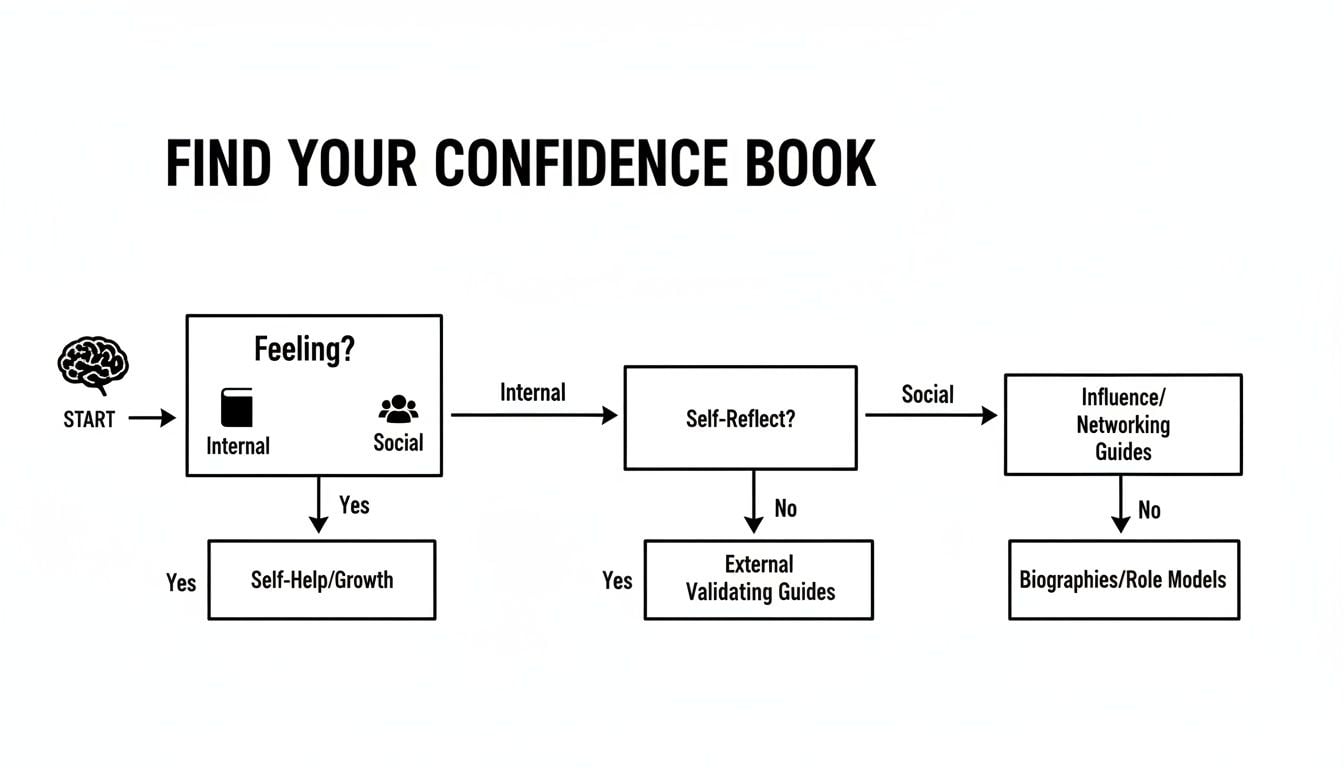
Think of this flowchart as your personal guide. It helps you trace your primary struggle back to the type of book that will actually make a difference for you.
Match The Book To Your Objective
Once you have a clearer picture of your main challenge, you can get specific. This isn’t about reading for the sake of it; it’s about choosing a tool to help you actively build the skills you need.
For example, if you realized your struggles are mostly internal, you’re likely wrestling with what we call limiting beliefs. These are the invisible scripts and subconscious rules you’ve accepted as true about yourself, and they can be incredibly powerful. We cover this in-depth, and you can learn more about overcoming limiting beliefs in our detailed guide on the topic.
As you start this work, it helps to reframe what confidence even is. It’s not about being certain you’ll win.
Confidence isn’t about believing you’re going to achieve success. It’s knowing you’re going to be okay if it doesn’t turn out okay. – Mark Manson
This is a game-changer. It shifts the focus from guaranteeing a perfect outcome to building the resilience to handle any outcome. Confidence isn’t something you wait for; it’s something you build. It’s the result of taking action, gathering evidence that you can handle things, and proving your inner critic wrong, one small step at a time. Choosing the right book is your first intentional step on that path.
Alright, let’s get to the heart of it: the books themselves. This is where we roll up our sleeves and look at what makes each of these 7 recommendations tick.
Think of this less as a book review list and more as a tour of a specialist’s workshop. Each Amazon product is a unique tool designed for a specific job—whether that’s overhauling your inner dialogue, mastering social situations, or learning how to bounce back from failure. My goal is to give you a feel for each one so you can pick the right tool for the challenges you’re facing right now.
And you’re certainly not alone in looking for these tools. The demand for books on confidence and personal growth has exploded. In the U.S. alone, sales of self-help books grew at a compound annual rate of 11% between 2013 and 2019, hitting 18.6 million copies sold in 2019. The motivational section, where most of these books live, jumped from 1.4 million units in 2013 to 4.3 million just six years later. You can see the full story in this report on self-help book statistics. This isn’t just a trend; it’s a clear signal that millions of people are actively working to build a stronger sense of self, and a great book is often where the journey begins.
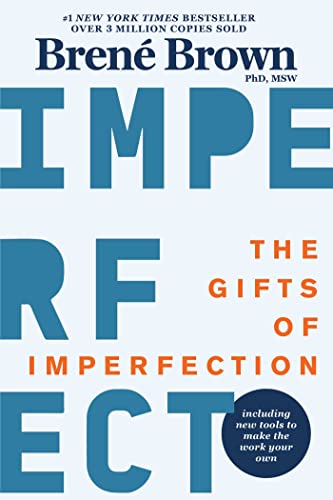
1. The Gifts Of Imperfection By Brené Brown
Best For: Anyone caught in the trap of perfectionism, shame, or living for others’ approval.
Core Message: Real confidence isn’t about being perfect; it’s about having the courage to be yourself.
Brené Brown’s work isn’t about puffing yourself up or “faking it.” It’s about getting real. The Gifts of Imperfection is the starting point for anyone who feels their confidence is constantly being undermined by an inner critic telling them they aren’t good enough.
Brown, a researcher who has dedicated her career to studying courage, vulnerability, and shame, points out a critical flaw in how we pursue confidence. We think if we can just look perfect and successful, we’ll finally feel worthy. But as she shows, that’s a direct path to more anxiety and feeling disconnected from everyone, including ourselves.
Instead, she offers ten guideposts for what she calls “Wholehearted Living.” Each one is a practical shift away from worrying about what others think and toward trusting what you know is true for you.
Key Guideposts for Building Confidence:
- Cultivating Authenticity: Letting go of what people think.
- Cultivating Self-Compassion: Letting go of perfectionism.
- Cultivating a Resilient Spirit: Letting go of numbing and powerlessness.
The big idea here is that vulnerability isn’t a weakness. Brown argues it’s the very place where courage, connection, and confidence are born. When you let yourself be seen, flaws and all, you build a type of self-worth that no one can take away from you. This Amazon product helps you find the quiet, unshakeable confidence that comes from knowing you’re enough, right here, right now.
2. The Confidence Code By Katty Kay & Claire Shipman
Best For: Women who want to understand and overcome the confidence gap in their careers and personal lives.
Core Message: Confidence isn’t a fixed trait; it’s a skill you can build through action, risk-taking, and new ways of thinking.
Ever wonder why so many brilliant women hold back from speaking up in meetings or going for that big promotion? Journalists Katty Kay and Claire Shipman wanted to know, too. Their book, The Confidence Code, is a fantastic mix of deep research, relatable stories, and actionable advice.
They uncover a tangible “confidence gap” between men and women, exploring how genetics and social conditioning play a role. They dig into issues like rumination (our tendency to overthink) and the pressure to be perfect, showing how these forces can systematically drain a woman’s confidence.
But this Amazon product is far from just a diagnosis of the problem—it’s a prescription for the cure. The authors make a compelling case that confidence is far more in our control than we believe. It’s not something you’re born with; it’s something you build.
“Confidence is the stuff that turns thoughts into action.” – Katty Kay & Claire Shipman
The book’s real magic is in its simple, powerful formula: act more, think less, and be willing to take more small risks. It champions the idea of failing fast and moving on, teaching you to see mistakes not as proof of your inadequacy but as proof that you’re trying. Every time you step out of your comfort zone, you give yourself evidence that you’re capable, which in turn fuels your confidence to take the next step.

3. How To Win Friends And Influence People By Dale Carnegie
Best For: Anyone looking to build confidence in social settings by improving their people skills.
Core Message: The secret to building relationships and influence is to become genuinely interested in other people.
There’s a reason this book, first published in 1936, is still a staple. How to Win Friends and Influence People gets to the core of a huge piece of the confidence puzzle: our ability to connect with others. Dale Carnegie knew that feeling sure of yourself often starts with feeling comfortable and effective in your interactions.
This isn’t about learning slick lines or how to manipulate people. The entire philosophy is built on a simple, deeply human truth: we are drawn to people who make us feel seen and valued. Carnegie’s advice is a masterclass in turning your focus outward.
Core Principles for Social Confidence:
- Become genuinely interested in other people.
- Smile.
- Be a good listener. Encourage others to talk about themselves.
- Make the other person feel important—and do it sincerely.
For someone who dreads networking events or making small talk, these principles are a game-changer. They give you a concrete playbook. Instead of spiraling with worry about what you’ll say, your new mission is simple: learn something about the person you’re talking to. This one shift takes the pressure off and helps you build real connections, which is the foundation of true social confidence.
4. Feel The Fear And Do It Anyway By Susan Jeffers
Best For: People who feel stuck or paralyzed by anxiety, fear, and indecision.
Core Message: You don’t have to wait for the fear to go away. The only way to get past it is to act in spite of it.
Dr. Susan Jeffers’ timeless classic, Feel the Fear and Do It Anyway, is built on a liberating idea: fear isn’t the real problem. The problem is how we react to it. Jeffers makes it clear that everyone feels fear when they’re stepping into the unknown. Confident people don’t lack fear; they’ve just learned to move forward with it.
This book is so powerful because it completely normalizes fear. That nervous feeling you get before a big presentation or a tough conversation isn’t a stop sign. It’s a sign that you’re growing.
Jeffers equips you with a whole toolkit of mental models and practical exercises to help you push through that fear. One of the core concepts is her “Fear-Truths,” which are designed to completely reframe your relationship with anxiety.
Powerful Fear-Truths:
- The only way to get rid of the fear of doing something is to go out and do it.
- The only way to feel better about myself is to go out and do it.
- Not only am I going to experience fear whenever I’m on unfamiliar territory, but so is everyone else.
This Amazon product is the ultimate cure for “analysis paralysis.” It gives you permission to be scared while also giving you the tools to act. It helps you build the kind of confidence that comes directly from taking action and proving to yourself, time and again, that you are bigger than your fears.

5. The Six Pillars Of Self-Esteem By Nathaniel Branden
Best For: Anyone seeking a deep, psychological blueprint for building a rock-solid foundation of self-worth.
Core Message: Self-esteem is like the immune system for your consciousness; you have to build it intentionally through daily practice.
If other confidence books sometimes feel like they’re only treating the symptoms, The Six Pillars of Self-Esteem is the one that goes straight to the root. A psychotherapist and pioneer in the field, Nathaniel Branden lays out a rigorous, practice-based framework for developing true self-worth from the inside out.
Branden breaks self-esteem down into two key ingredients:
- Self-Efficacy: Trust in your own mind and your ability to cope with life’s challenges.
- Self-Respect: The conviction that you are worthy of happiness and success.
He argues that you can’t get lasting self-esteem from empty praise or positive affirmations. It has to be earned through conscious action. He identifies six specific, actionable practices—his “pillars”—that form the bedrock of a healthy self-concept.
The Six Pillars:
- The Practice of Living Consciously
- The Practice of Self-Acceptance
- The Practice of Self-Responsibility
- The Practice of Self-Assertiveness
- The Practice of Living Purposefully
- The Practice of Personal Integrity
Fair warning: this is not a light, breezy read. It’s a thoughtful, dense book that requires you to do the work. Branden even includes sentence-completion exercises to help you apply these pillars directly to your own life. But for those ready to dig deep, this Amazon product provides the architectural plans for building an unshakeable core of self-esteem that naturally radiates as authentic confidence.

6. Mindset: The New Psychology Of Success By Carol S. Dweck
Best For: Anyone who wants to build resilience, learn to love challenges, and unlock their own potential for growth.
Core Message: What you believe about your abilities—whether they’re fixed or can be developed—is the single biggest factor in your success.
In her landmark book, Mindset: The New Psychology of Success, Stanford psychologist Carol S. Dweck shares a discovery that changes everything. Through her research, she identified two fundamental mindsets that shape our response to life:
- Fixed Mindset: The belief that your talent and intelligence are set in stone. This leads you to focus on proving yourself and avoiding failure, since any setback feels like a final judgment on your abilities.
- Growth Mindset: The belief that your abilities can be grown through hard work and dedication. This allows you to see challenges as opportunities to learn and get better.
When you operate from a fixed mindset, your confidence is incredibly fragile. It only lasts as long as you’re winning. The second you hit a rough patch, it crumbles.
In a growth mindset, however, confidence becomes resilient. A failure isn’t a verdict; it’s just data. It’s valuable information you can use to adjust your strategy and improve. This mindset fosters a genuine love of learning and the kind of grit that’s crucial for any major accomplishment.
Dweck fills the book with compelling research and stories from business, sports, and education to show these mindsets in action. She teaches you to embrace challenges, see effort as the path to mastery, and view criticism as a gift. By making this one fundamental shift in your thinking, you build a durable form of confidence that doesn’t need constant external praise to survive.
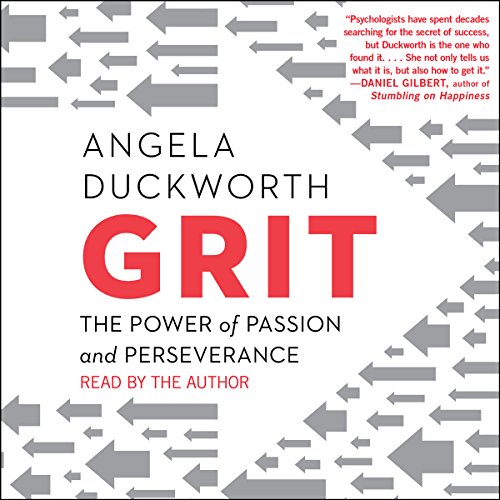
7. Grit: The Power Of Passion And Perseverance By Angela Duckworth
Best For: Ambitious people who want to cultivate the long-term stamina and motivation needed to see their goals through.
Core Message: Talent is overrated. True achievement comes from a special blend of passion and perseverance.
Why do some people with obvious natural talent fizzle out, while others with seemingly less raw ability go on to achieve incredible things? According to psychologist Angela Duckworth, the answer is grit. In her book Grit: The Power of Passion and Perseverance, she defines grit as a powerful combination of passion for a long-term goal and the perseverance to keep working toward it.
Duckworth’s research makes a powerful case that when it comes to long-term success, grit trumps talent every time. This is a hugely empowering message for anyone who has ever felt they weren’t a “natural” at something they cared about.
The book is neatly split into two parts. First, Duckworth breaks down what grit is and presents the compelling evidence for why it’s so important. Then, she offers a practical guide for how to grow your own grit from the “inside out.”
How to Grow Your Grit:
- Develop a fascination: Grit begins with a genuine, consuming interest in what you’re doing.
- Practice deliberately: You have to commit to daily, focused practice designed to target and improve your weaknesses.
- Find purpose: Connect your daily work to a bigger mission that helps others.
- Cultivate hope: Maintain a growth mindset and believe that your efforts will make a difference.
This Amazon product builds a very specific and crucial type of confidence: the confidence that you can stick with it. It’s not about feeling self-assured in a single moment. It’s about developing the mental and emotional endurance to chase your goals for years, pushing through boredom, failure, and setbacks along the way. For anyone with a big dream, Grit is the essential manual for building the resilience to make it a reality.
Putting Theory Into Practice With Actionable Exercises
It’s one thing to read a book about confidence, but it’s another thing entirely to feel it in your bones. Knowledge is potential. Action is power. True, lasting self-belief isn’t built by passively absorbing ideas; it’s forged in the small, consistent actions you take every single day.
This is where the real work—and the real fun—begins. We’re going to move from the ‘what’ to the ‘how,’ translating the brilliant concepts from these books into practical exercises you can start using immediately.

Think of confidence as a muscle. Reading is like studying the anatomy of that muscle, but these exercises are the reps that actually make it stronger. To really see your progress, I always recommend writing things down. If you want some solid strategies on that, check out my guide on how to take notes from a book effectively.
Ready to get started?
Exercise 1: Fear Setting
Many of the most powerful books on confidence push a simple truth: action is the antidote to anxiety. Fear Setting is a perfect exercise for this, designed to pull you out of the paralysis of “what if.” Instead of letting vague worries run wild, this practice forces you to stare your fears in the face and realize they’re not as big and scary as they seem.
How to do it:
- Define: Grab a piece of paper and write down the absolute worst-case scenarios for the action you’re afraid to take. Get specific and don’t hold back.
- Prevent: Next to each point, brainstorm what you could do to prevent that specific outcome or at least make it less likely.
- Repair: Now, imagine the worst did happen. What could you do to fix the damage or get back on your feet? Who could you ask for help?
- Benefits: Flip the script. List all the amazing potential benefits of succeeding or even just attempting this action. Think about the impact on your career, your relationships, and your self-respect.
- Cost of Inaction: This is the crucial part. Describe, in detail, what your life will look like in six months, one year, and five years if you do nothing and let this fear win.
This exercise dramatically shifts your perspective from a vague, overwhelming fear of failure to a concrete, manageable plan. Suddenly, the path forward seems a lot clearer.
Exercise 2: The Daily Self-Compassion Break
Drawing from the incredible work on self-worth and vulnerability, this next exercise is a direct counterpunch to that harsh inner critic we all have. It’s a simple, three-step mental routine you can pull out of your back pocket anytime you feel that wave of stress or self-doubt wash over you. It takes less than 60 seconds and is all about treating yourself with the same kindness you’d give a friend.
A Self-Compassion Break isn’t about letting yourself off the hook; it’s about giving yourself the support you need to get back on your feet.
Here’s the simple process:
- Acknowledge the Pain: First, just notice the feeling and say to yourself, “This is a moment of suffering.” Simply validating your emotion without judgment is a powerful first step.
- Recognize Common Humanity: Next, remind yourself, “Suffering is a part of life,” or “Other people feel this way, too.” This breaks the feeling of isolation that often comes with struggle.
- Offer Kindness: Finally, place a hand over your heart or another soothing spot. Say, “May I be kind to myself in this moment.” This simple gesture provides a real sense of comfort and care when you need it most.
Creating Your Personal Confidence Reading Plan
I’ve seen it time and again: someone gets fired up about building their confidence, buys a stack of books, and then… not much changes. Why? Because just reading isn’t enough. You need a game plan.
Moving from one book to the next without a clear purpose is like collecting puzzle pieces from different boxes. You’ll have a lot of interesting pieces, but they’ll never form a complete picture. A personal reading plan turns that stack of Amazon products into a deliberate, step-by-step system for real growth.

Think of it as your own personalized course curriculum. When you read books in the right order, the ideas start to build on one another, turning small “aha” moments into unshakable self-belief. This is how you make sure every book you pick up serves a specific, powerful purpose.
Design Your Reading Pathway
Your reading plan should be built around you—your goals, your struggles, and where you want to go. Are you trying to quiet that inner critic at work? Feel more at ease in social situations? Or maybe you’re working on finding validation from within? Each of these goals points to a different starting line.
Here are a couple of sample “pathways” to give you an idea of how this works:
-
For the Professional Battling Imposter Syndrome:
- Start with The Confidence Code. It will give you a fantastic, research-backed look at the unique confidence challenges people (especially women) face in the workplace.
- Next, pick up Mindset. This book is crucial for learning how to bounce back from the inevitable setbacks and critiques that come with ambitious work.
- Finish with Grit to cultivate the long-haul tenacity you need to see your biggest career goals through to the end.
-
For the Person Seeking Social Confidence:
- Begin with a classic for a reason: How to Win Friends and Influence People. It’s the foundational text for mastering positive, genuine human interaction.
- Then, move to The Gifts of Imperfection. This will help you find the courage to show up as your authentic self, which is the key to real connection.
- Finally, read Feel the Fear and Do It Anyway to get the tools you need to act in spite of social anxiety.
Of course, these are just templates. Feel free to mix and match them based on the confidence gaps you identified for yourself earlier. The best plan is the one you create for yourself.
Get The Most From Every Book
Alright, here’s where the real work—and the real change—begins. Reading the words is just step one. To truly internalize these lessons, you have to bring them off the page and into your life.
The audience is on your side; they want you to do well in your presentation. Remember the talks you’ve attended as an audience member. You would have regarded the speaker as just a person talking, with no reason to be nervous.
Here’s how to turn these concepts from ideas into instincts:
- Journal Your Insights: Don’t just highlight. After each chapter, pull out your journal and write down the single biggest takeaway for you. Then, ask yourself: “What’s one small thing I can do this week to put this into practice?”
- Discuss Key Concepts: Find a friend, partner, or mentor you trust and talk about what you’re learning. Trying to explain an idea to someone else is one of the best ways to clarify it for yourself.
- Schedule Practice Time: If a book gives you an exercise—like a visualization or a journaling prompt—don’t just think, “That’s a good idea.” Put it in your calendar. Treat it like a non-negotiable appointment with yourself.
Keep Reading
- Mastering the Antonym to Confidence: 8 Key Steps
- Self Esteem vs Confidence: Key Differences & How to Build
- Self Esteem vs Self Confidence: What’s the Difference?
Conclusion
We’ve explored seven powerful books on confidence, each offering a unique pathway to building self-assurance. From embracing vulnerability with Brené Brown to developing grit with Angela Duckworth, these Amazon products provide the tools you need. But remember, the real journey begins when you apply these lessons. Choose the book that speaks to you, start with one small action, and build momentum from there. Lasting confidence is not found in a single moment of inspiration but is forged through consistent, daily practice. You have the map; now it’s time to take the first step.
Frequently Asked Questions (FAQs)
How long does it really take to build confidence by reading these books?
Building confidence is a process, not an overnight fix. While you can feel small but meaningful shifts in your mindset within a few weeks of applying the book’s principles, true, lasting confidence is built over months of consistent effort. Think of reading the book as getting the blueprint; the real work and reward come from the daily practice of building it into your life.
Should I read more than one confidence book at a time?
It’s tempting to tackle several books at once, but it’s more effective to focus on one at a time. This allows you to fully absorb the author’s message and dedicate your energy to practicing its specific exercises without getting overwhelmed or confused. Once you’ve integrated the key lessons from one book, you can move on to the next.
Are audiobooks as good as physical books for this?
Yes, audiobooks can be just as effective, especially for busy individuals. The format is less important than your engagement with the material. Practice active listening: pause the audio to reflect on key ideas, and take notes on your phone or in a notebook just as you would with a physical copy. Hearing the concepts can often help them sink in even more deeply.
If this resonated, go deeper. My book Love, Success, Freedom and Boundaries gives you twelve frameworks for seeing the patterns that shape your life — and changing the ones that aren’t working.
If this resonates, the full framework lives in Love, Success, Freedom and Boundaries.
A practical playbook for raising emotionally resilient kids — and breaking the patterns you didn’t choose to inherit.
