



Navigating the complexities of modern life requires more than just practical problem-solving. When faced with stressors that feel insurmountable or beyond our direct control, we often need a different toolkit to maintain our mental equilibrium. This is where emotion focused coping becomes an essential practice for emotional regulation and long-term psychological resilience.
At David Pexa, we emphasize that how you process your internal state is just as important as how you address external obstacles. Emotion focused coping is not about ignoring the reality of a situation, but rather about managing the distress that the situation creates within you.
Understanding Emotion Focused Coping
Emotion focused coping is a strategy that centers on reducing the negative emotional responses associated with stress. Unlike problem-focused coping, which seeks to eliminate the stressor itself, this approach focuses on the individual’s subjective experience.
Psychologists often categorize this as a way to “regulate” the emotional fallout of a challenging event. When you cannot change the weather, you learn to adjust your sails; similarly, when you cannot change a life event, you adjust your internal reaction to it.
“Emotion-focused coping involves attempts to reduce or manage the emotional distress that is associated with the situation.” — As defined by researchers in the American Psychological Association documentation on stress management.
By shifting the focus from the external problem to your internal state, you prevent emotional burnout. This creates a buffer that allows you to remain functional even when circumstances are difficult.
The Role of Cognitive Appraisal
Your brain constantly evaluates the world around you. This process, known as cognitive appraisal, determines whether you view a situation as a threat or a challenge.
If you view a situation as a threat, your body enters a fight-or-flight state. Emotion focused coping helps you reframe this appraisal. By choosing to interpret the situation differently, you can lower your physiological arousal.
Why Reframing Matters
Reframing is a cornerstone of this coping style. It involves looking at a stressful situation from a different perspective to minimize its perceived impact.
For instance, instead of focusing on the anxiety of a looming deadline, you might focus on the growth opportunity the task provides. This simple shift can drastically reduce your cortisol levels and improve your focus.
Acceptance as a Coping Mechanism
Acceptance does not mean resignation or weakness. It means acknowledging the reality of your current state without immediate judgment.
Many people waste energy fighting the existence of their feelings. Through emotion focused coping, you learn to observe your distress without allowing it to dictate your actions. This is often practiced through mindfulness and radical acceptance.
Techniques for Effective Emotion Focused Coping
Implementing these strategies in your daily life at David Pexa requires patience and consistent practice. Below are some of the most effective methods to manage emotional distress effectively.
Mindfulness and Grounding

Mindfulness keeps you tethered to the present moment, preventing your mind from spiraling into hypothetical future worries. Grounding techniques—such as deep breathing or the 5-4-3-2-1 sensory method—can snap the nervous system out of an overwhelmed state.
Journaling and Self-Reflection
Writing down your feelings is a powerful tool for emotional processing. It moves thoughts from the abstract and overwhelming to the tangible and organized.
When you see your thoughts on paper, you gain objectivity. You can then analyze whether those thoughts are based on facts or emotional distortions.
Physical Release and Exercise
Exercise is one of the most effective ways to complete the “stress cycle” in your body. When stress builds up, physical activity allows that energy to be released.
Regular movement helps clear your mind and provides a sense of accomplishment. It is a biological way to signal to your brain that you are moving forward despite the stressor.
“The body is the primary vessel through which we experience stress, and movement is the most direct pathway to discharging that tension.” — Perspectives on Mental Health and Exercise.
When to Use Emotion Focused vs. Problem Focused Coping
It is important to understand that neither strategy is inherently “better.” The most resilient individuals are those who can fluidly switch between the two based on the context.
When to Prioritize Emotion Focused Coping
Use this approach when the stressor is beyond your control. Examples include:
- The loss of a loved one.
- Global events or systemic societal issues.
- Chronic illness or injury.
- Past events that cannot be changed.
In these instances, trying to “fix” the problem is futile and only leads to increased frustration. Focusing on your internal reaction is the healthiest path forward.
When to Switch to Problem Focused Coping
Use problem-focused strategies when the situation is actionable. Examples include:
- Resolving a conflict with a colleague.
- Fixing a broken appliance.
- Preparing for a project with a clear deadline.
By addressing the problem directly, you eliminate the source of the stress. If you use emotion focused coping exclusively on an solvable problem, you may end up ignoring the root cause of your stress.
Common Barriers to Success
Even with the best intentions, people often struggle to adopt these strategies. Recognizing these barriers is the first step to overcoming them.
The Stigma of Emotional Expression
Many people are raised to believe that “strong” individuals suppress their emotions. At David Pexa, we believe the opposite is true. It takes immense strength to look inward, acknowledge your pain, and choose a path of regulation rather than reaction.

Avoidance Strategies
Some people attempt to cope through avoidance, such as excessive social media use, substance use, or isolation. While these provide temporary relief, they ultimately stunt emotional growth and exacerbate the underlying stress.
Effective emotion focused coping is an active, not passive, process. It requires engagement with your feelings, not a departure from them.
Integrating These Practices into Your Daily Routine
To truly benefit from these techniques, consistency is key. You cannot wait until you are in the middle of a crisis to start learning how to regulate your emotions.
Start Small
Begin by dedicating five minutes each day to self-reflection. Ask yourself: “How do I feel right now, and what is one thing I can do to sit with this feeling without letting it overwhelm me?”
Seek Support
You do not have to do this alone. Working with a professional or being part of a community can provide the scaffolding you need to build emotional resilience. Learning from others who have navigated similar challenges is invaluable.
Consistency Over Perfection
There will be days when your emotions feel entirely unmanageable. This is normal. The goal of emotion focused coping is not to become a stoic robot; the goal is to develop the capacity to return to baseline after being triggered.
Frequently Asked Questions (FAQ)
What is the main difference between emotion focused and problem focused coping?
Problem focused coping aims to change the external environment or the stressor itself. Emotion focused coping aims to change your internal emotional reaction to the stressor when the environment cannot be altered.
Can these methods be harmful?
They can be harmful if they become a form of chronic avoidance or denial. If you use these strategies to suppress trauma or ignore life-altering problems that could be solved, they may hinder your progress.
How do I know if I need professional help?
If your emotions are consistently interfering with your ability to work, maintain relationships, or perform basic daily tasks, it is highly recommended to seek professional guidance. External support can provide personalized tools that articles alone cannot offer.
Is mindfulness a form of emotion focused coping?
Yes, mindfulness is one of the most effective tools for this style of coping. By staying present, you regulate your physiological response to stressors, allowing you to manage emotions more effectively.
Does emotion focused coping work for everyone?
Everyone experiences and processes stress differently. While these strategies are grounded in established psychological principles, individuals may find that different techniques work better for their specific temperaments and life circumstances.
If you do any writing alongside the coping work — journaling, processing what you’re feeling, drafting hard conversations — the tool I use to draft most of my words is Wispr Flow. It transcribes your voice into clean, edited text in real time, so the friction between thinking it and writing it basically disappears.
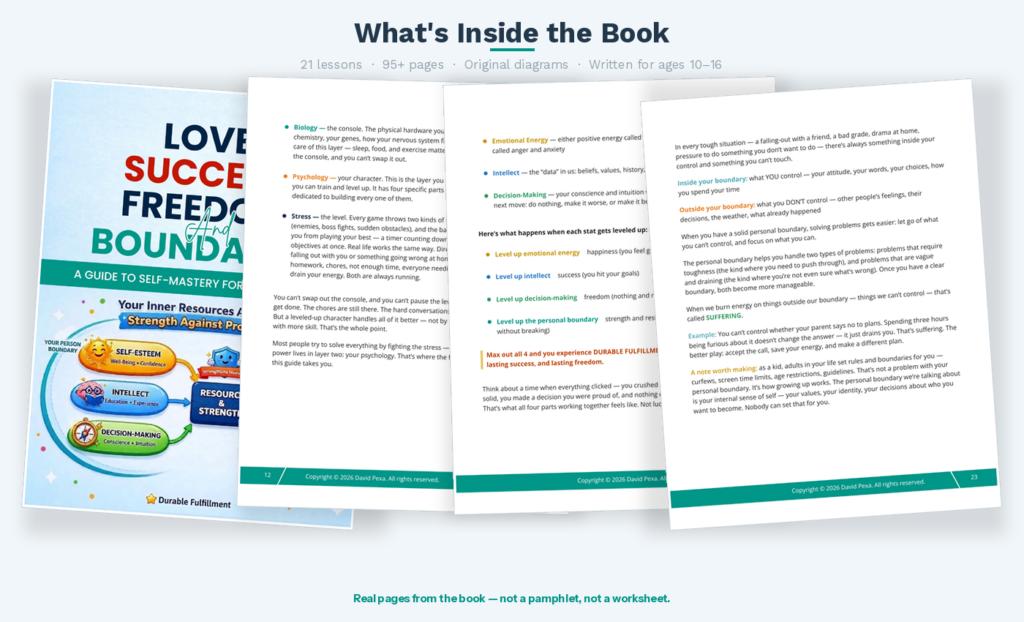
Beyond the Words
Love, Success, Freedom and Boundaries
Naming the work is the first step. Doing the work is the next.
Get the book — $39
Conclusion
Mastering emotion focused coping is an ongoing journey of self-discovery. By learning to manage your inner state, you create a sustainable foundation for handling the inevitable fluctuations of life.
At David Pexa, we champion the idea that your emotional landscape is a territory worth exploring and cultivating. When you stop fighting the reality of your feelings and start managing them with intentionality, you unlock a new level of personal freedom and resilience.
Remember that you have the power to decide how you engage with your experiences. By integrating mindfulness, self-reflection, and healthy physical habits, you can transform the way you interact with the world around you.
The objective is not to eradicate stress entirely, as that is part of the human condition. The objective is to build a life where you are the captain of your emotional ship, regardless of how turbulent the waters become.
A note on affiliates: This article includes affiliate links to platforms I’ve vetted and would recommend to my own clients and students. If you start with a recommended service through a link here, I may earn a small commission — at no extra cost to you. I only mention what I’d actually point you to in person. The recommendation comes first; the relationship is disclosed second.
If this resonates, the full framework lives in Love, Success, Freedom and Boundaries.
A practical playbook for raising emotionally resilient kids — and breaking the patterns you didn’t choose to inherit.
