



You have spent years trying to make the relationship work, bending your personality to fit into boxes that were never meant for you, and hoping that one day, the friction will just stop. Cutting ties with toxic parents is often the final act of a long, exhausting play where you have been the only one following the script while the other side keeps rewriting the rules to keep you small. This article will help you understand that distancing yourself isn’t an act of cruelty—it is a necessary act of preservation, and it is the first step toward reclaiming the agency you were never allowed to have.
Why This Matters: The Cost of Remaining Connected
We often mistake endurance for loyalty. When you are tied to a toxic parental dynamic, you aren’t just dealing with a difficult person; you are dealing with a recurring “glitch” in your own internal operating system. Every interaction, every phone call, and every holiday visit can trigger a stress response that keeps your nervous system in a state of high alert.
When you stay in a dynamic that chips away at your sense of reality—where you are gaslit, ignored, or manipulated—you pay the price in ways that aren’t immediately obvious. You might notice it as unexplained anxiety, a persistent feeling of “not being enough,” or a habit of people-pleasing in your professional life.
“Boundaries are not walls to keep others out; they are the gates that protect the integrity of your own garden.”
If you are feeling overwhelmed, stuck, or constantly questioning your own sanity, it is worth acknowledging that your body is telling you something your mind might be trying to override. You are not “failing” as a child; you are reacting to a structure that is fundamentally unhealthy.
Sponsored

Free Guide
See People Clearly
7 truths that change how you show up. Free guide, sent to your inbox.
No spam. Unsubscribe anytime.
What It Actually Means to Cut Ties
There is a massive misconception that “cutting ties” means a dramatic, cinematic explosion where you scream your grievances and slam the door. In reality, healthy detachment is often much quieter and far more intentional. It is the practice of moving from “reactive” to “neutral.”
When we talk about toxic patterns, we are often looking at intergenerational trauma, where the way your parents treat you is a direct echo of how they were treated. Understanding this doesn’t excuse their behavior, but it helps you see that you cannot “fix” them. You are only responsible for the health of your own internal ecosystem.
Cutting ties is not a punishment. It is a decision to stop participating in a cycle that requires you to sacrifice your peace, your identity, or your health to maintain the status quo. It is the decision to stop begging for a seat at a table that doesn’t want you, and instead, to start building your own.
How It Works: A Strategy for Detachment
If you have decided that some distance is necessary, you don’t need a torch-and-pitchfork approach. You need a strategy for your own protection.
1. Observe Without Absorbing
Begin to look at your interactions with your parents as if you are watching a movie about someone else. When they criticize you or try to guilt you, notice the technique they are using. Don’t engage with the content; simply note the pattern. This shifts you from a victim of the interaction to a strategist observing it.
2. The Low-Contact Buffer
You do not have to jump straight to “no contact” if you aren’t ready. Start by shrinking the aperture. Communicate only through channels that give you time to think before you reply—text or email instead of phone calls. Limit the topics you discuss to low-stakes subjects like the weather or current events.
3. Seek Professional Support
When you begin to shift these dynamics, the pushback can be intense. You need a neutral third party who can hold your feet to the fire of your own healing.
For the therapy option specifically, the access friction has dropped a lot in the last few years. Online platforms like Talkspace can match you with a licensed therapist usually within 24 hours, work in all 50 states, accept most major insurance, and let you message your therapist between sessions when something comes up that you don’t want to forget. I mention them by name because they’re the platform I’d point a student or coaching client to today — the path from “I think I need help” to “I’m in a session” is short enough to actually walk.
4. Create Your “Alternative Family”
Social support networks are vital. When you cut ties with the people who were supposed to be your primary support, you will feel a void. You must fill that void with friends, mentors, and partners who model the kind of healthy communication you want to live by.
What If You Apply This: The Life You Reclaim
When you stop trying to change the untamable, something shifts. You stop waking up with that “heavy” feeling in your chest. You stop waiting for the other shoe to drop because you aren’t tethered to a source of chaos anymore.
- You reclaim your nervous system: Your body will move out of “fight or flight” and into a place of rest, allowing you to actually enjoy your life.
- You regain your mental bandwidth: Instead of spending hours ruminating on what you “should” have said to your parent, you suddenly have the energy to pursue your own goals and ambitions.
- You define yourself: For the first time, you are not defined by who your parents want you to be, but by the choices you make every single day.
“True independence is not about doing whatever you want; it’s about having the capacity to choose who you are, regardless of the expectations of your past.”
Frequently Asked Questions
Is it wrong to cut off my parents if they aren’t ‘evil’?
It isn’t about whether they are “evil” or “bad.” It is about whether the relationship is sustainable for your own mental and emotional health. If the relationship creates a pattern of damage that prevents you from functioning well in your adult life, that is reason enough to set a boundary.
What do I do when I feel guilty for setting boundaries?
Guilt is often a sign that you are breaking a long-held rule, not necessarily that you are doing something “wrong.” It is a byproduct of changing a system. Acknowledge the guilt as a feeling—not a fact—and keep moving. The guilt will fade as you realize how much better you feel without the constant stress.
How do I handle family members who pressure me to ‘forgive and forget’?
People who pressure you often do so because your boundary makes them uncomfortable or threatens their own comfort. You do not owe anyone an explanation for your boundaries. A simple, “I’m doing what I need to do to take care of myself,” is a complete sentence that requires no further negotiation.
Can I ever have a relationship with them again?
Maybe, but only after you have developed the strength to maintain your boundaries regardless of their behavior. If the pattern is deep-seated, the most loving thing you can do for yourself—and sometimes for them—is to keep a distance until you are no longer triggered by their actions.
Conclusion
Cutting ties with toxic parents is an act of extreme courage. It requires you to face the reality of your upbringing, mourn the relationship you wish you had, and choose the life you are actually living. You are not responsible for their reaction, and you are not responsible for their feelings. You are only responsible for the health of your own future.
Stop asking for permission to live a life that doesn’t hurt. You already have it.
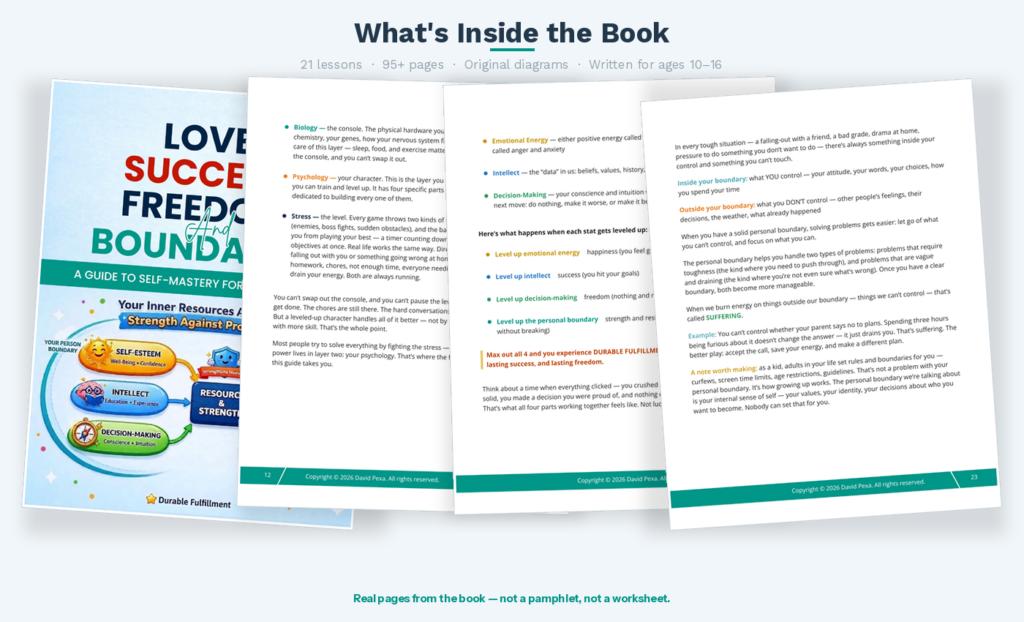
If this resonated, go deeper. My book Love, Success, Freedom and Boundaries gives you twelve frameworks for seeing the patterns that shape your life — and changing the ones that aren’t working. Get the book here — $39.
A note on affiliates: This article includes affiliate links to platforms I’ve vetted and would recommend to my own clients and students. If you start with a recommended service through a link here, I may earn a small commission — at no extra cost to you. I only mention what I’d actually point you to in person. The recommendation comes first; the relationship is disclosed second.
