



Summary: Courage Isn’t the Absence of Fear It’s Acting Anyway — a practical breakdown of what matters, what doesn’t, and what to do next.
The biggest lie about courage is that brave people don’t feel afraid. They do. The difference is they’ve learned that fear is information, not a stop sign.
You’ve probably heard the saying that courage isn’t the absence of fear. It’s one of those phrases we nod along to, but what does it actually feel like to live it? The truth is, courage has very little to do with being fearless and everything to do with what you do the moment fear shows up.
What Courage Really Means in Your Daily Life

When we think of courage, our minds often jump to dramatic, larger-than-life scenarios. We picture a first responder charging into danger or an activist risking it all for a cause. While those are undeniable acts of bravery, that narrow definition makes courage feel like something reserved for other people in other situations.
But courage is much more personal and practical than that. It’s a skill you can build, a muscle you exercise in small, everyday moments of decision. It’s the quiet, deliberate choice to move forward when every instinct is telling you to play it safe.
Fear as a Signal, Not a Stop Sign
Imagine a leader you respect pitching a bold, unproven strategy to a room full of skeptics. Do you think they feel calm? Not a chance. Their heart is probably hammering, and their mind is a whirlwind of “what-ifs.” The fear of failure, of looking foolish, is right there with them.
They move forward anyway. Why? Because their conviction in the idea is stronger than their need for comfort.
Their fear isn’t a red light telling them to stop. It’s a flashing yellow light, a signal that they’re pushing boundaries and that something meaningful is on the line. This is the very heart of courage in action.
This shift in perspective is everything. Fear is just a biological alarm system, a primitive part of your brain doing its job to keep you safe from perceived threats. Courage, on the other hand, is the thoughtful, evolved part of you that can look at that alarm, assess the situation, and decide that a deeper value—like growth, integrity, or innovation—is worth the risk.
Once you see fear as the entry fee for a courageous act, not a barrier to it, you can start building your capacity for moral courage in everyday decisions.
To help clarify this crucial difference, let’s break down the common myth of fearlessness versus the reality of true courage. This table can help you reframe your thinking and recognize your own potential for bravery.
Daring Greatly: How the Courage to Be Vulnerable Transforms the Way We Live, Love, Parent, and Lead
0

Fearlessness vs. True Courage: A Comparison
| Attribute | Fearlessness (The Myth) | Courage (The Reality) |
|---|---|---|
| Relationship to Fear | The complete absence of fear. | Acknowledging fear and acting anyway. |
| Mindset | “I’m not scared.” | “I’m scared, but this is important.” |
| Driving Force | Often driven by ignorance or recklessness. | Driven by purpose, values, or conviction. |
| Perception | Sees fear as a weakness or a failing. | Sees fear as a natural signal for a challenge. |
| Outcome | Can lead to unnecessary risks and poor decisions. | Leads to personal growth and meaningful action. |
| Nature | A rare, often unachievable state. | A learnable skill practiced over time. |
Understanding this distinction is the first step. You don’t need to eliminate fear; you just need to learn how to walk with it.
The Science of Why You Act Despite Fear
It’s easy to think of courage as some mysterious, almost magical quality. But what’s really happening inside your head when you step up, even though you’re terrified? Science actually gives us a surprisingly clear picture, and it confirms something you might have already suspected: courage isn’t the absence of fear. It’s your brain managing fear.
When you face something that scares you—a tough conversation, a big presentation, a critical decision—your brain’s built-in alarm system, the amygdala, lights up. This is what triggers that all-too-familiar jolt of fear: the racing heart, the sweaty palms, the rush of adrenaline. This is a primitive, automatic response. It happens to everyone.
But that’s not the end of the story. This is where a more recently evolved part of your brain, the prefrontal cortex, comes into play. You can think of it as your brain’s CEO. While the amygdala is sounding the alarm, the prefrontal cortex is the part of you that can take a breath, analyze the situation, and weigh the long-term goal against that immediate, visceral feeling of panic.

From Alarm Bell to Action Plan
Let’s use an analogy. Your fear is like a sensitive car alarm that goes off in the middle of the night. The amygdala is what sets it off—it’s loud, urgent, and designed to get your attention.
Courage is what happens when your prefrontal cortex—the rational you—hears the alarm, gets up, and looks out the window. Instead of panicking, it assesses the situation and realizes it was just a strong gust of wind. It’s the ability to see the bigger picture, quiet the alarm, and decide to act based on reason, not just reaction.
This isn’t just a neat theory; it’s a measurable process.
The real story of courage is how your brain’s ‘CEO’—the prefrontal cortex—can step in and make a calculated decision to act anyway. It’s the triumph of rational thought over raw emotion.
A fascinating 2009 study on phobias brought this to life. Researchers looked at 45 people with an intense fear of spiders, measuring their courage levels right before asking them to approach one. The results were telling: a person’s courage score was a significant predictor of whether they would actually approach the spider, with a correlation of r=0.42. This was a huge deal because it showed that courage, as a measurable trait, was a better indicator of action than the level of fear they felt. You can dig into the specifics of this phobia and courage study on PMC.
What this science gives us is incredibly empowering. It means courage isn’t some fixed trait you either have or you don’t. It’s a cognitive skill—something you can actively develop by strengthening the connection between your rational mind and your emotional reactions. Once you understand this internal tug-of-war, you can start training yourself to act with courage, even when your palms are still sweating.
The Four Building Blocks of Courage You Can Develop
So, we agree that courage isn’t the absence of fear. That’s a huge first step. But what now? The next step is to stop thinking of courage as some mythical quality you’re either born with or not.
Think of it more like a skill. Just like learning an instrument or a sport, you can break courage down into smaller, manageable parts. Once you see the components, you can practice them, get better at them, and build real confidence over time.
A fantastic framework for this comes from Cornell Professor Erica Dawson, who identified four essential building blocks. These must all be in place for an act to truly be considered courageous. When you understand what they are, you can start to diagnose exactly where you get stuck and what you need to work on. It turns an intimidating ideal into a concrete, achievable goal.
This diagram shows what’s happening inside your brain during that process—from the initial trigger to the fear response and, finally, to the conscious choice to act.
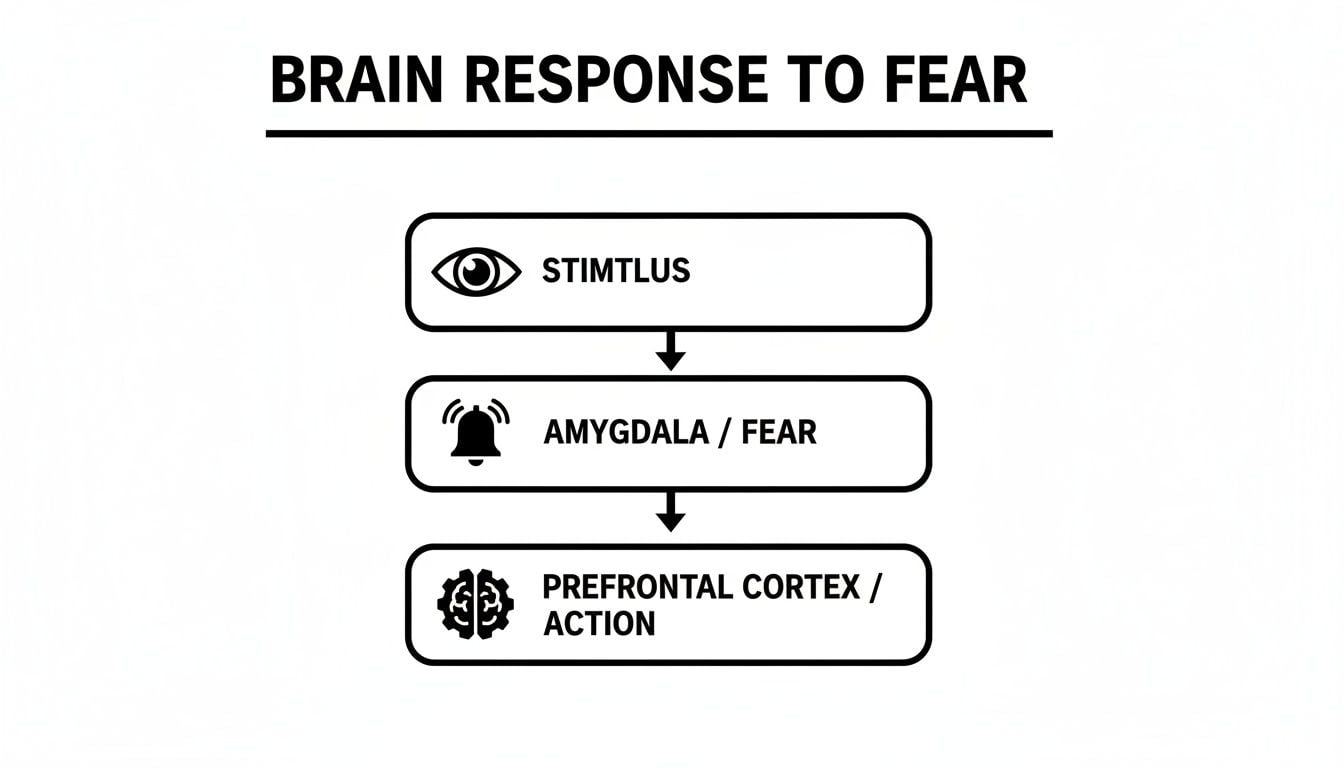
As you can see, the courageous choice happens in your prefrontal cortex, the part of your brain that can reason and override the amygdala’s initial “fight or flight” alarm.

The Anatomy of a Courageous Act
Dawson’s research breaks a courageous act down into four key ingredients. These apply to everything from facing a physical danger to making a tough call at the office.
-
Felt Fear: This is the non-negotiable starting point. If there’s no real emotional or psychological fear, then what you’re doing isn’t courageous—it’s just a task. It’s that knot in your stomach before giving tough feedback or the anxiety that hits when you have to admit a project is failing.
-
Uncertain Outcome: Courageous acts are never a sure thing. There’s always a degree of ambiguity. You don’t know for certain if you’ll succeed, if people will support you, or if you’ll avoid the very consequences you’re afraid of. This uncertainty is what makes the choice so hard.
-
Perceived Risk: You have to believe there’s something significant on the line. This could be your reputation, a key relationship, your financial stability, or even just your own comfort. With no perceived risk, there’s no real bravery.
-
A Willful Choice to Act: This is where it all comes together. It’s the conscious, deliberate decision to move forward despite the fear, the uncertainty, and the risk. It’s the “anyway” in the phrase, “I’m scared, but I’m doing it anyway.”
These elements completely reframe how we should look at bravery. It echoes Nelson Mandela’s famous insight that “courage is not the absence of fear, but the triumph over it.” In fact, Dawson’s work reveals that for most of us, psychological courage—like owning up to a mistake—is needed 60% more often than physical courage. You can explore more about understanding fear and courage at Cornell.
Putting the Building Blocks into Practice
Let’s ground this in a real-world scenario. Imagine an analyst discovers a serious ethical issue in a company report right before it goes public.
- Felt Fear: They feel a surge of anxiety, worrying they might anger their boss or even jeopardize their job by speaking up.
- Uncertain Outcome: They have no idea if their concern will be taken seriously, dismissed as an overreaction, or swept under the rug.
- Perceived Risk: They risk being labeled a “troublemaker” and damaging their career path within the company.
- Willful Action: Driven by their integrity, they choose to schedule a meeting with their manager to flag the issue, despite the fear.
That is a textbook act of moral courage, built from the exact same blocks as any other form of bravery.
When you start recognizing these components in your own life, you gain the power to act with intention. By breaking courage down, you give yourself a practical roadmap for growth instead of just wishing you were “braver.” If you’re looking to take the next step, check out our guide on overcoming limiting beliefs to help you on your path.
Inspiring Stories of Courage in High-Stakes Moments

Theory is one thing, but courage really comes into focus when you see it tested under fire. The most profound examples don’t come from calm, predictable situations. They come from those impossible moments where our safety and our purpose are in direct conflict.
The 2014-2016 Ebola outbreak in West Africa is a perfect, harrowing example. Healthcare workers on the ground faced a terrifying, invisible enemy. There was no proven cure, and the mortality rates were staggering. The fear wasn’t just a fleeting thought; it was a constant, heavy presence.
And yet, they showed up every single day. Not because they were fearless, but because their commitment to saving lives—their deepest professional and ethical calling—outweighed their terror. This is the clearest demonstration you’ll ever find that courage isn’t the absence of fear. It’s the conscious decision that something else is far more important.
The data from that crisis paints a stark picture. The World Health Organization reported over 28,600 cases with a case fatality rate hovering around 40%. Studies of the responders themselves revealed that 72% felt acute fear, yet an incredible 65% continued their duties, fueled by an unshakable sense of purpose. You can find more details in this study on the psychological fortitude of these healthcare workers on PMC.
From Global Crisis to Personal Challenges
It’s tempting to look at bravery on that scale and think, “That’s for heroes. That’s not me.” But the fundamental human process at play is the same one you can access in your own career. The stakes might feel smaller, but the internal tug-of-war between your fear and your values is universal.
Think about some of the tough spots we all face professionally:
-
Leading Through Uncertainty: You have to guide a team through a brutal business downturn or, worse, a series of layoffs. The fear of failing your people is immense, but your duty to lead with honesty and compassion has to win out.
-
Making a Bold Career Move: You’re about to leave a secure, well-paying job to launch your own venture or pivot into a new field. The fear of financial ruin and the great unknown is palpable, but the drive for something more meaningful pushes you to take the leap.
These moments demand the exact same choice: to act in spite of being afraid. Just as the Ebola responders anchored themselves to the mission of saving lives, you have to anchor your actions to a core value, whether that’s integrity, personal growth, or responsibility to others.
When you connect what you have to do with a powerful “why,” you find the fuel to push forward, even with a knot in your stomach. This is how fear stops being a wall and starts being a compass, pointing you toward the work that truly matters.
A Practical Framework for Building Your Courage Muscle

Realizing that courage isn’t the absence of fear is a huge first step. But what do you do with that insight? How do you actually put it into practice? The answer is to treat courage like a muscle—it gets stronger the more you intentionally exercise it.
This isn’t about some grand, heroic gesture. It’s about small, consistent practice. I’ve seen this simple three-step framework help people move from feeling stuck to taking meaningful action, one brave choice at a time.
Step 1: Acknowledge the Fear
You can’t work with a fear you refuse to look at. The first move is to stop running, turn around, and face it. Give it a name, get it out of your head, and look at it objectively.
Fear loves the dark. When it’s just a vague cloud of anxiety swirling around in your mind, it feels massive and all-powerful. By dragging it into the light, you shrink it down to size.
Courage is not the absence of fear, but rather the judgment that something is more important than fear. This judgment leads to the choice to take action in spite of the fear.
To do this, grab a notebook and get brutally honest with yourself. Answer these questions:
- What am I really afraid will happen here?
- What’s the specific worst-case scenario that keeps looping in my head?
- What feelings are coming up for me? Embarrassment? Rejection? Failure?
The act of writing it down transforms the fear from a nebulous feeling into something concrete you can actually analyze. Talking it through with a trusted friend or mentor works wonders, too. The goal is simply to see it for what it is.
Step 2: Anchor to Your Why
Once you’ve identified the fear, you need to find something more important than the fear itself. Courage needs fuel. It needs a powerful reason to act despite the perceived risk, and that reason is almost always rooted in your core values.
Connecting the scary thing you need to do with a value you deeply believe in changes the entire equation. The focus shifts from, “What could I lose?” to “What principle am I standing for?”
Ask yourself these questions to find your anchor:
- What core value of mine is on the line (e.g., integrity, growth, honesty, connection)?
- Who do I want to be in this moment?
- What’s the long-term cost if I let fear win right now?
Maybe you’re terrified of giving tough feedback to a team member. But if you anchor that action to your value of “professional integrity” or “team success,” the conversation stops being a scary conflict. It becomes a necessary act of leadership.
Step 3: Take One Small Step
The final piece is to act. This doesn’t mean you have to leap off a cliff. Progress, not perfection, is the name of the game. The single most powerful way to build your courage muscle is to take one small, manageable step forward.
Action is the ultimate antidote to fear. Even a tiny bit of forward motion sends a signal to your brain that you can handle the discomfort. This creates momentum, making the next step just a little bit easier. We cover some great strategies for this in our guide on how to take risks for personal growth.
So, what does one small step look like?
- Drafting the email you’re afraid to send—without hitting “send” yet.
- Scheduling the meeting you’ve been putting off.
- Doing 15 minutes of research for that massive project that feels overwhelming.
The trick is to make the action so small that it feels almost silly not to do it. Courage isn’t built in a day. It’s built in the small moments, one tiny, brave choice at a time.
Common Myths About Courage That Hold You Back
Before we can build real, practical courage, we have to clear out some of the mental junk that gets in the way. So many of us carry around old, unhelpful ideas about what it means to be brave. These myths act like invisible walls, keeping us stuck in a cycle of fear and self-doubt.
By seeing these myths for what they are, we can finally give ourselves the green light to act. It all starts with the core idea that courage isn’t the absence of fear; it’s acting despite it. Let’s pull back the curtain on the most common misconceptions and replace them with something far more useful.
Myth 1: Courage Is Something You Are Born With
This is a big one, and it’s incredibly damaging. We tend to think of courage as a fixed genetic trait—some people just have it, and the rest of us don’t. This mindset is so disempowering because it tricks you into thinking that feeling fear means you’re in the “don’t have it” club.
Here’s the truth: Courage is a skill, not a personality trait. Think of it like a muscle. It gets stronger with consistent, intentional practice. Heroes aren’t born overnight; they are built over time, one brave choice at a time.
Myth 2: I Have to Feel 100% Confident Before I Act
Waiting for absolute confidence to show up before you take a leap is a perfect recipe for staying right where you are. It’s a trap. This myth gets the cause and effect completely backward. We think we need a big dose of confidence to act, but the reality is the exact opposite.
Confidence isn’t a prerequisite for courage; it’s the reward you earn after taking courageous action. You build real, lasting self-assurance by proving to yourself, through small, brave acts, that you can navigate discomfort and come out the other side.
Myth 3: If I Fail, It Means I Wasn’t Brave Enough
So many people wrongly tie the outcome of an action to the courage it took to take it. But bravery is measured by your willingness to show up and try, especially when the results are uncertain. It has nothing to do with whether you “win” or “lose.”
A courageous attempt that doesn’t pan out is not a failure of character—it’s just a data point. The courage was in the trying. True resilience comes from reframing failure as a lesson learned and, more importantly, honoring the bravery it took to take the risk in the first place.
Frequently Asked Questions About Developing Courage
Knowing that courage isn’t the absence of fear is a great starting point. But when the rubber meets the road, a lot of practical questions pop up. Let’s walk through some of the most common hurdles I see people face when they start this journey.
How Can I Tell the Difference Between a Healthy Fear and an Excuse?
This is a tough one, but there’s a practical way to tell them apart. A healthy fear is your brain’s alarm system flagging a real, specific risk that you need to prepare for. An excuse is usually a fuzzy, ill-defined worry that’s really just trying to keep you tucked away in your comfort zone.
The best way to sort it out is to get specific. Can you name the risk? And can you take one small, calculated step to reduce that risk? If the answer is yes, you’re looking at a challenge you can meet. If the “fear” is more about avoiding discomfort or what others might think, it’s probably an excuse trying to run the show.
What if I Act Courageously and Fail? How Do I Recover?
First, we need to completely redefine what “failure” means in this context. A courageous act that doesn’t unfold the way you hoped isn’t a personal failure. Not at all. It’s simply a new piece of information. The real win was in the attempt itself, not the final score.
Recovery starts with shifting your focus. Instead of dwelling on the result, ask yourself what you learned. Acknowledge that you were brave enough to take the shot, then use that new insight to aim better next time. This is exactly how you build resilience.
Can I Build Courage if I Am a Naturally Anxious Person?
Absolutely. In fact, if you tend to be anxious, every small act of courage is a massive win and can feel incredibly empowering. The objective isn’t to magically erase your anxiety. It’s to prove to yourself that you can still move forward and get things done even when anxiety is along for the ride.
Start with tiny, low-stakes actions. This helps you build momentum and gather evidence that you can act with the feeling of anxiety. Remember, courage is never about being fearless—it’s about acting anyway.
Keep Reading
- Courage Moral: courage moral for principled action
- 12 Powerful Courage Quotes to Inspire Action in 2026
- 10 Potent Quotes for Bravery and Courage to Inspire Action in 2026
If you process emotions through writing — journaling, drafting hard conversations, putting words to what you’re feeling — the tool I use to draft most of my words is Wispr Flow. It transcribes your voice into clean, edited text in real time, so the friction between thinking it and writing it basically disappears.
Conclusion
Understanding is the first step, but it’s what you do with that understanding that changes things. The ideas in this article aren’t meant to sit in your head — they’re meant to shift how you see your situation and give you something concrete to act on. Start with the one thing that felt most relevant, apply it this week, and notice what changes.
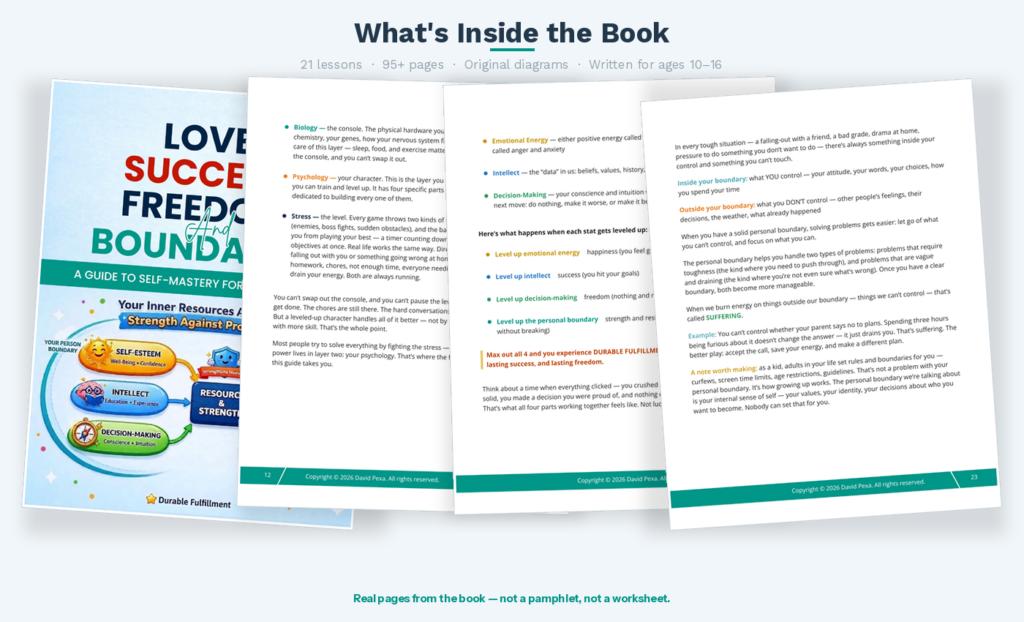
If this resonated, go deeper. My book Love, Success, Freedom and Boundaries gives you twelve frameworks for seeing the patterns that shape your life — and changing the ones that aren’t working.
A note on affiliates: This article includes affiliate links to platforms I’ve vetted and would recommend to my own clients and students. If you start with a recommended service through a link here, I may earn a small commission — at no extra cost to you. I only mention what I’d actually point you to in person. The recommendation comes first; the relationship is disclosed second.
If this resonates, the full framework lives in Love, Success, Freedom and Boundaries.
A practical playbook for raising emotionally resilient kids — and breaking the patterns you didn’t choose to inherit.
