


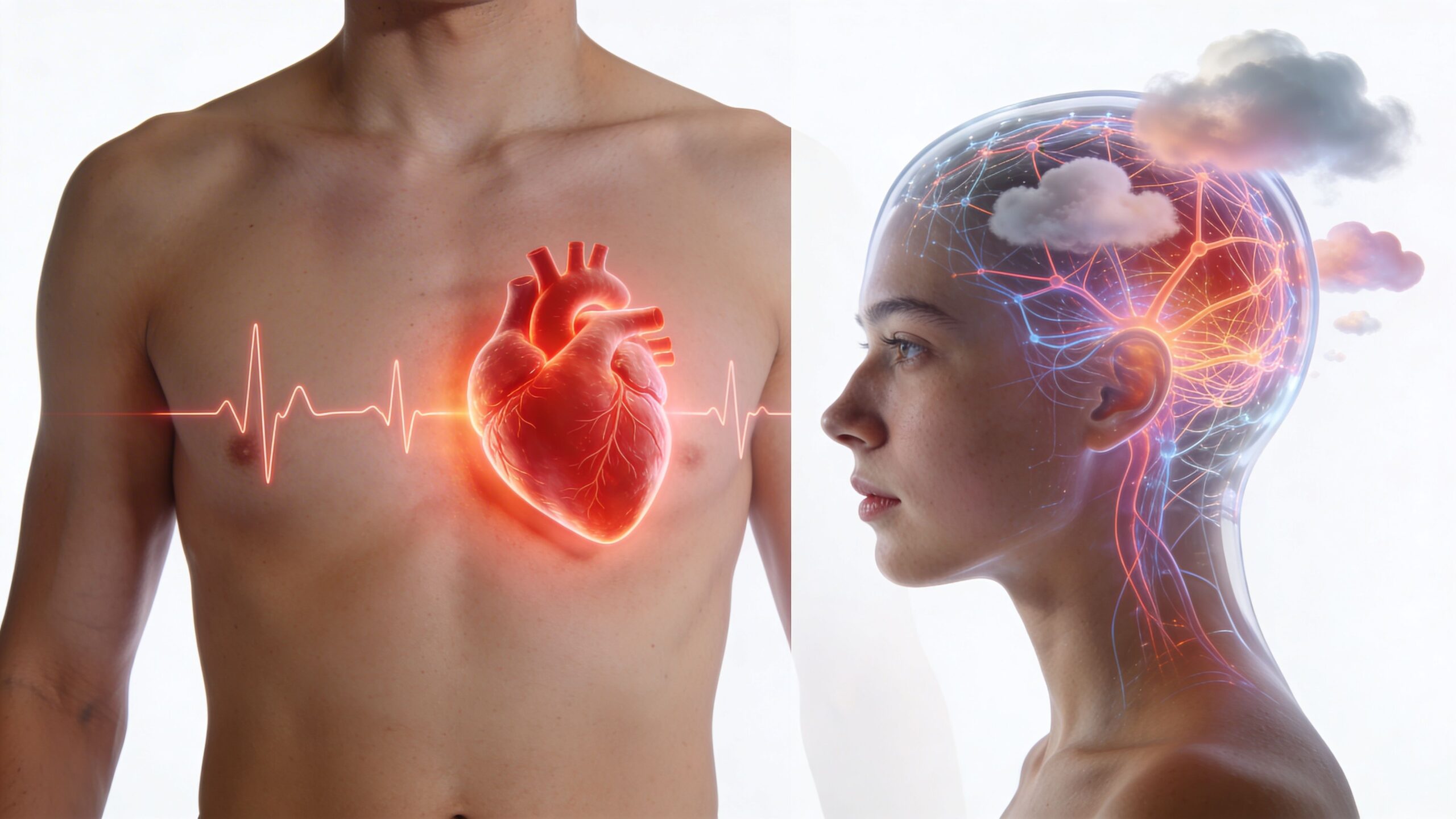
Summary: Emotions vs Feelings: Key Distinctions — understanding the signal beneath the surface and what you can actually do about it.
The difference between emotions and feelings is one of those distinctions that sounds academic until you apply it. Then it changes how you understand yourself and everyone around you.
You open your laptop to answer one email before bed. A message from a colleague lands badly. Your chest tightens. Your jaw sets. Ten minutes later, you’ve rewritten your reply three times, assumed the worst, and started doubting the whole project.
Many would say, “I feel disrespected.”
That may be true. But it skips an important step.
What happened first was an emotion. A fast body reaction. Then came a feeling. Your mind’s interpretation of that reaction. If you miss the difference, you can mistake a stress signal for a fact. That’s how a rough moment turns into a bad decision, a strained conversation, or an unproductive day.
This distinction matters more than many realize. A landmark 2015 study of everyday emotional life found that people experience emotions 90% of the time, and positive emotions occur 2.5 times more frequently than negative ones across more than 11,000 participants in 29 countries (PNAS study summary at PMC). Emotions aren’t occasional interruptions. They’re part of the background of daily life.
If you want better self-regulation, clearer thinking, and steadier performance, you need to know what your body is signaling and what your mind is adding to the signal. That’s the foundation of genuine self-awareness. It also sharpens the kind of emotional value you bring into work, relationships, and high-stakes choices.
Why Distinguishing Emotions and Feelings Matters
A common workplace mistake looks simple on the surface.
You leave a meeting thinking, “I feel like nobody respects my input.” By noon, you’ve withdrawn. By afternoon, you’ve decided the team is political, your manager doesn’t trust you, and you should stop contributing unless asked.
That chain reaction often starts with a quick internal event your body registered before your thinking mind built a story around it.
When confusion becomes costly
An emotion is fast and physical. You might notice heat in your face, a racing heart, or a tight stomach. A feeling is the meaning you give those sensations. It might become embarrassment, resentment, discouragement, or self-doubt.
If you blend them together, several problems follow:
- You treat interpretation as evidence. “I feel ignored” becomes “I was ignored.”
- You react to the story, not the signal. You defend, avoid, overwork, or shut down.
- You lose precision. Everything gets labeled “stressed” or “overwhelmed,” which doesn’t help you respond wisely.
Practical rule: If you can’t separate what your body did from what your mind concluded, you’re more likely to make an emotional decision while calling it a rational one.
Why professionals benefit from this skill
For growth-oriented professionals, the emotions vs feelings distinction isn’t academic language. It’s operational clarity.
It helps you ask better questions in the moment:
- What happened in my body first?
- What meaning did I assign to it?
- What else could this signal mean?
- What action fits the facts, not just the narrative?
That pause creates room for choice.
People often assume emotional mastery means suppressing reactions. It doesn’t. It means reading them accurately. The body gives you data. The mind gives it a label. Wise self-regulation starts by not confusing the two.
Unpacking Emotions The Body’s Raw Data
You open your inbox at 8:07 a.m. and see a message from your manager: “Need to discuss yesterday’s client call.”
Before you form a single clear thought, your body has already started responding. Your chest tightens. Your jaw sets. Your attention narrows. That sequence matters, especially if your work depends on clear judgment under pressure.

Emotions start as fast body signals
An emotion begins as an automatic response to something your nervous system reads as relevant, rewarding, threatening, unfair, or urgent. It is fast, physical, and often outside conscious control in the first moments.
This helps explain a common professional mistake. People often assume their first reaction is a conclusion. In practice, it is usually data.
A raised heart rate, a flushed face, a knot in the stomach, a sudden burst of energy. These are not yet polished insights about what the situation means. They are early signals that your system has detected significance.
Emotions are the body’s first draft
The clearest way to understand emotion is to treat it as incoming information from the body.
Common patterns include:
- Threat activation: faster heartbeat, shallow breathing, muscle tension, scanning for problems
- Anger activation: heat, pressure, clenched jaw, urge to push forward or confront
- Sadness activation: heaviness, slowed movement, lower energy, tightness in the throat
- Positive activation: warmth, expanded posture, lighter breathing, spontaneous smiling
A dashboard warning light is a useful comparison. It does not explain the whole problem, but it tells you where to look. The same is true of emotion. If you skip past the signal and rush into interpretation, you lose useful information about what your system is reacting to.
For professionals, that loss shows up in familiar ways. You send the sharp reply. You overprepare for a minor risk. You avoid a conversation that needed calm attention, not alarm.
The body gives you something you can observe
One reason emotions are easier to study than feelings is that they leave traces in the body. Researchers can measure changes in heart rate, skin conductance, facial muscles, and breathing patterns. That does not make emotions simple, but it does make them more observable than the private story your mind builds afterward.
This is why body awareness is a practical skill, not a wellness extra.
If you can catch the physical pattern early, you gain a small but meaningful advantage:
- you can pause before replying
- you can check whether the situation is urgent
- you can choose a response that fits your goals, not just your activation level
That is how emotional skill improves productivity. It reduces avoidable errors made in a state of misread urgency.
A body-first example at work
Say your manager writes, “Can you revise this before noon?”
Your emotion may show up in seconds:
- Heart rate increases.
- Neck and shoulders tighten.
- Focus narrows toward the deadline.
Only after that does the mental story begin:
- “I messed this up.”
- “They don’t trust me.”
- “I’m already behind.”
- “This always happens to me.”
Those thoughts may be accurate, partly accurate, or distorted by stress. The emotion is different. It tells you that your system has registered pressure, risk, or importance.
That distinction gives you a better next move. Instead of reacting from the first story your mind offers, you can ask a more useful question: What is my body signaling, and what response would help here?
That is the starting point for self-regulation. Notice the signal first. Then decide what it means.
Translating Signals into Feelings The Mind’s Story
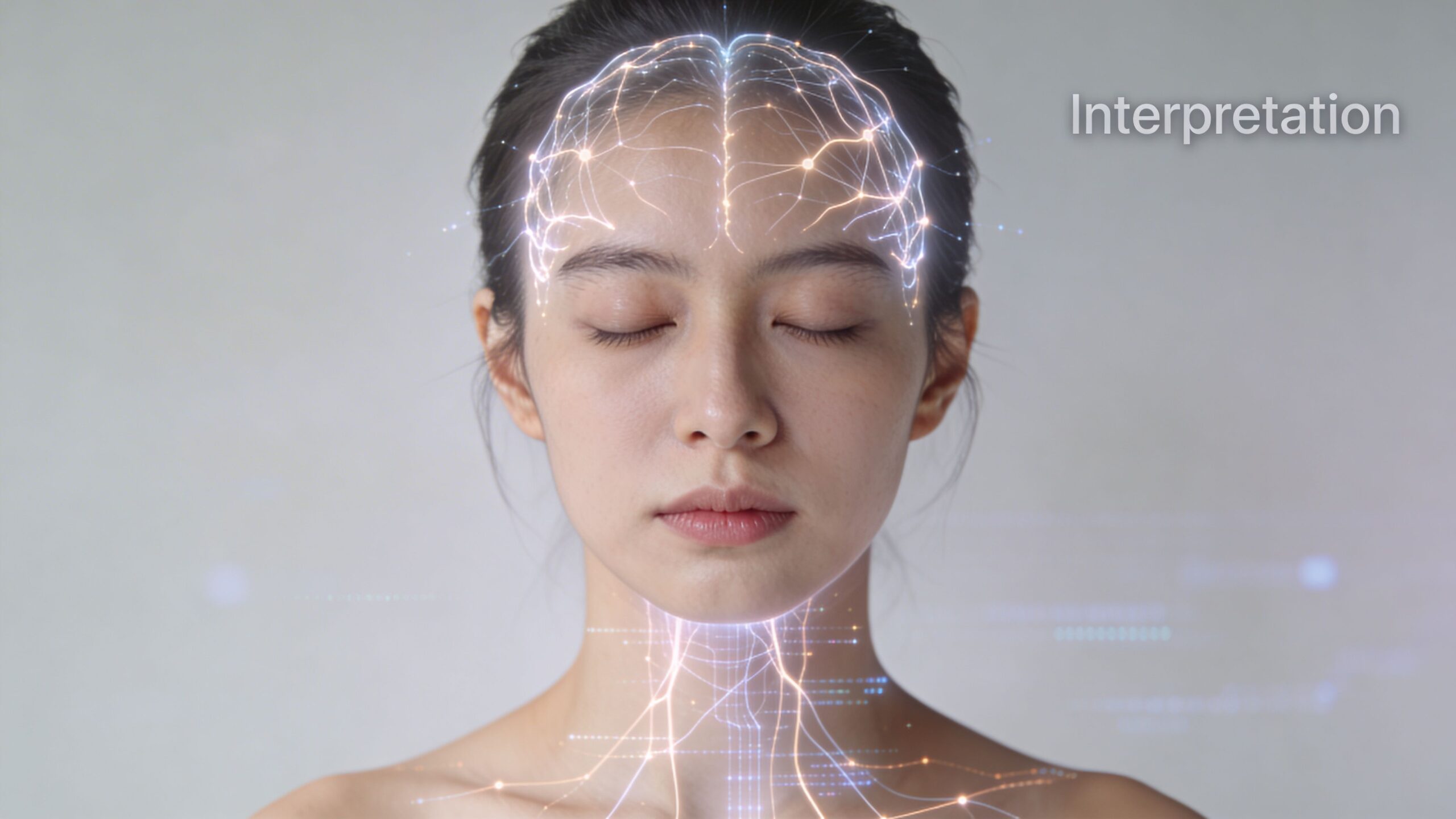
A feeling is what your mind makes of an emotion.
Your body surges with activation before a presentation. One person calls it excitement. Another calls it dread. The physical charge may be similar. The interpretation is different.
Feelings are shaped by your history
Feelings are conscious, subjective, and filtered through memory, beliefs, context, and culture. The body provides the signal. The mind asks, “What does this mean for me?”
That interpretation gets influenced by things like:
- Past experience
- Personal identity
- Learned beliefs
- Current stress load
- Social context
Two people can have a similar body response and walk away with different feelings because each person gives the moment a different meaning.
The same emotion can become different feelings
Here’s a plain example.
You’re about to present to senior leadership.
Your body reacts:
- faster heartbeat
- sweaty palms
- narrow focus
Your feeling might become:
| Situation | Likely feeling |
|---|---|
| You believe you’re prepared | confidence mixed with excitement |
| You believe mistakes are dangerous | anxiety |
| You feel unfairly exposed | resentment |
| You’ve been criticized lately | dread |
Here, many people get tripped up in emotions vs feelings. They assume the feeling is the original event. Often it isn’t. It’s the translated version.
If you want to change your reaction, don’t start by arguing with the body. Start by examining the story wrapped around the body.
Feelings influence action
Feelings influence action. These feelings help drive behavior.
Research suggests that emotional factors play a significant role in decision-making, often more so than purely rational considerations. In a 2011 study, participants were 20% more likely to favor law enforcement solutions when crime was framed as a “beast” rather than support social reform when it was framed as a “virus,” showing how framing shapes judgment (decision-making summary).
The lesson for professionals is straightforward. People often believe they’re responding to facts when they’re also responding to felt meaning.
You may think:
- “I’m just being cautious.”
But the underlying feeling may be:
- “This feels unsafe.”
- “I feel exposed.”
- “I feel small.”
- “I feel cornered.”
Those feeling states can steer choices about speaking up, negotiating, delegating, buying, quitting, apologizing, or delaying.
Why this distinction provides an advantage
When you know you’re dealing with a feeling, not just a fact, you gain options.
You can ask:
- Is this interpretation accurate?
- Is it old?
- Is it incomplete?
- Is there another explanation?
That doesn’t invalidate the feeling. It helps you work with it wisely.
A feeling is real as an experience. It isn’t always reliable as a conclusion.
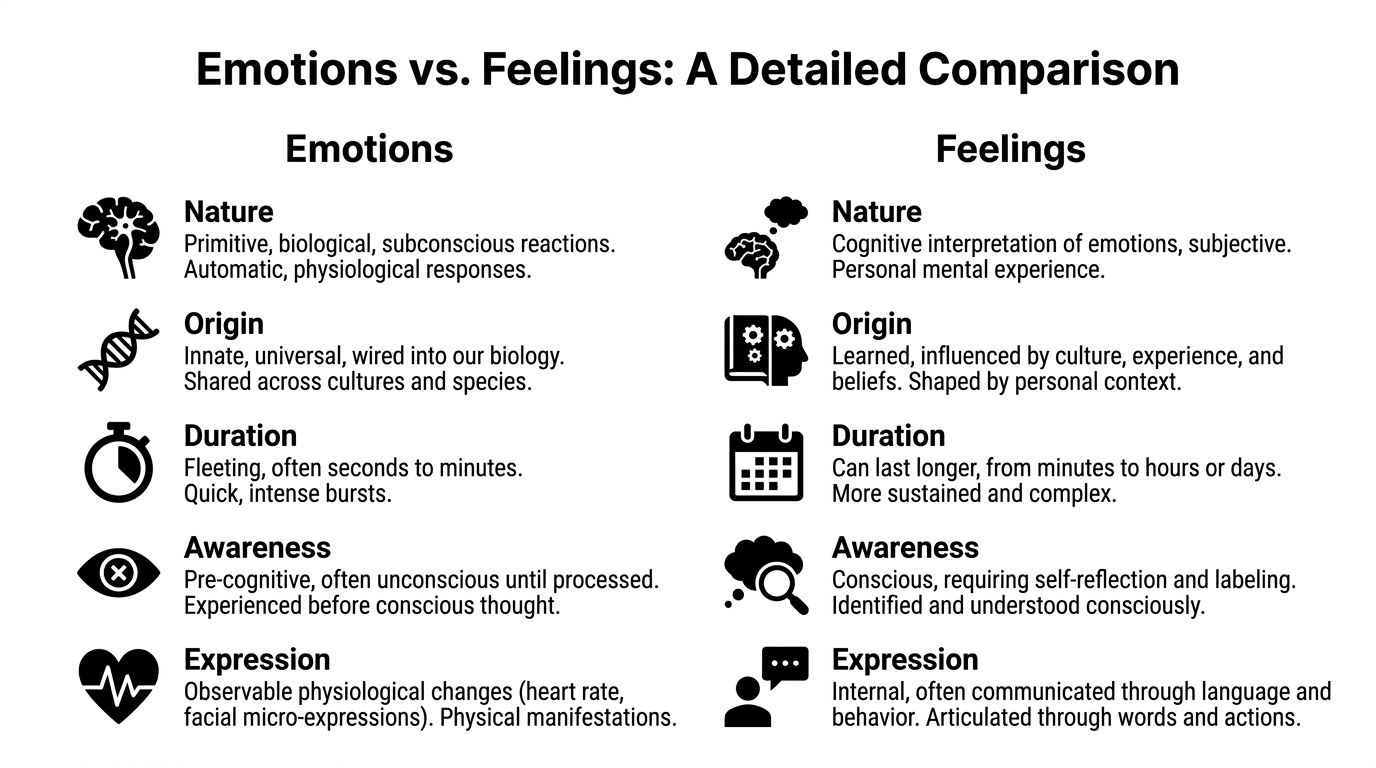
Emotions vs Feelings A Detailed Comparison
A manager walks into a performance review with a tight jaw, a quick pulse, and a vague sense of pressure. Ten minutes later, she leaves thinking, “I’m frustrated with my team.” By the end of the day, that turns into, “I can’t trust anyone to handle this well.” The body reacted first. The conscious feeling came next. The conclusion arrived last.
That sequence is why the distinction matters so much for growth-oriented professionals. If you confuse a fast bodily reaction with a settled truth, you can make poor calls under pressure, misread colleagues, and waste energy solving the wrong problem.
Key Differences Between Emotions and Feelings
| Attribute | Emotions | Feelings |
|—|—|
| Origin | Automatic body responses to something important | Conscious interpretation of those responses |
| Speed | Rapid, often before clear awareness | Slower, as the mind starts labeling and organizing experience |
| Duration | Brief and shifting | Can linger as attention, memory, and interpretation keep them active |
| Nature | Physiological and broadly shared across humans | Subjective and shaped by history, context, and beliefs |
| Awareness | May happen before you can name them | Usually available to reflection and language |
| Measurement | Studied through bodily signals and behavioral markers | Studied mainly through self-report and language-based measures |
| Function | Flags relevance, threat, reward, loss, or novelty | Turns raw data into a personal experience with meaning |
| Example | Sweaty palms, flinch, racing heart, facial tension | “I feel embarrassed,” “I feel discouraged,” “I feel relieved” |
The visual summary below can help make the distinction stick.
The science behind the split
Researchers often separate these experiences by how they show up. Emotions can be observed through changes in the body and behavior. Feelings are usually captured through a person’s own report of what they are consciously experiencing. As noted earlier in the article, the basic distinction is also reflected in timing. Faster subcortical responses tend to come before slower conscious interpretation.
A simple way to hold this in mind is this: emotion is closer to raw data, feeling is closer to the mind’s summary.
That summary can be accurate, partly accurate, or distorted by stress, old learning, or workplace context.
Where people usually get confused
Language blurs the layers.
Someone says, “I feel disrespected.” In everyday conversation, that makes sense. In coaching, leadership development, or therapy, it helps to slow it down because “disrespected” often mixes three different things: a body reaction, an emotional experience, and a social judgment about what the other person meant.
A clearer version sounds like this:
- “My shoulders tensed and my face got hot.”
- “I felt angry and embarrassed.”
- “I interpreted their comment as dismissive.”
Now you have something usable. You can address the body, clarify the feeling, and test the interpretation instead of treating the whole experience as one solid fact.
A cleaner way to describe inner experience
For practical self-regulation, sort experience into three layers:
-
Body signal
What changed physically? -
Feeling label
What emotion word best fits your conscious experience? -
Meaning or belief
What story did your mind attach to it?
Example:
- Body signal: stomach tight, breathing shallow
- Feeling label: anxious
- Meaning or belief: “If I ask for feedback, they’ll think I’m incompetent”
This framework works like a diagnostic tool for the mind. If the body is activated, use regulation skills. If the feeling is unclear, improve the label. If the meaning is driving the distress, examine the belief. A useful aid here is an emotion words chart for naming feelings more precisely.
Clear self-awareness often comes from better sorting.
Why this matters for decision-making and productivity
At work, people often treat an internal state as proof.
A leader feels threat during a difficult meeting and calls the strategy risky. A founder feels shame after a setback and labels it loss of motivation. A high performer feels dread before a hard conversation and calls it procrastination.
These are not small errors. They affect delegation, feedback, hiring, negotiation, and focus.
When you separate emotion from feeling, you get a better decision process. You can ask: What is my body reacting to? What am I feeling? What story am I adding? That pause improves self-regulation and helps you respond with more precision, which usually means less reactivity and better use of attention.
Leveraging Emotional Granularity for Better Decisions
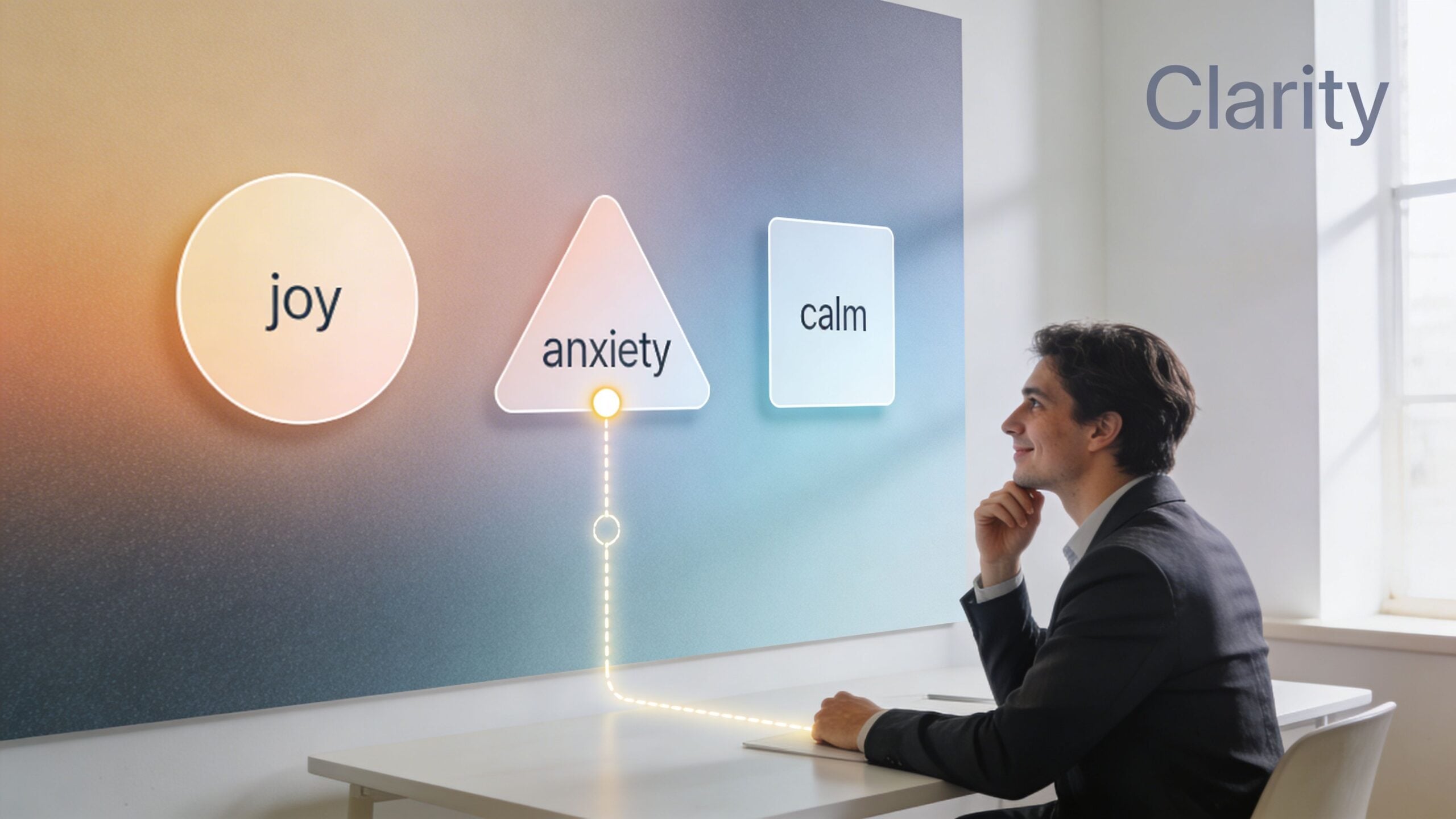
One of the most useful skills in this whole conversation is emotional granularity. That means being able to distinguish between similar inner states instead of lumping them together.
If every difficult state becomes “stress,” you lose information. If you can tell the difference between frustration, disappointment, anxiety, shame, and resentment, your decisions improve.
Precision changes your options
Research on emotion granularity shows that people who better differentiate negative emotions show 22% lower anxiety symptoms and 18% higher well-being, and this differentiation is a strong predictor of resilience (PMC study on emotion differentiation).
That finding matters in real work situations.
If you say, “I’m overwhelmed,” that could mean many different things:
- too many tasks
- fear of criticism
- uncertainty about priorities
- frustration at interruption
- resentment about unclear boundaries
Each one calls for a different response.
Low granularity creates avoidable bias
When people can’t name their inner state precisely, they often fall into emotional reasoning. That’s when a feeling gets treated like proof.
For example:
- “I feel unprepared, so I must be unprepared.”
- “I feel tension with this client, so this partnership must be wrong.”
- “I feel behind, so I’m failing.”
These conclusions may be true. But they may also be false, exaggerated, or outdated.
High granularity helps because it slows the jump from sensation to certainty.
What this looks like at work
A manager gets critical feedback and says, “I’m stressed.”
That label is too broad to help.
A more granular read might be:
- “I feel embarrassed that I missed something obvious.”
- “I feel defensive because I worked hard on this.”
- “I feel anxious about how this affects my reputation.”
Now the path forward is clearer.
Embarrassment may call for repair.
Defensiveness may call for a pause.
Anxiety may call for fact-checking and planning.
A practical way to build granularity
Use a wider emotional vocabulary. Not because fancy words matter, but because accurate labels reduce confusion.
Instead of defaulting to “bad,” “off,” or “stressed,” try distinguishing among:
- Threat states such as anxious, alarmed, uneasy
- Loss states such as disappointed, sad, discouraged
- Boundary states such as irritated, angry, resentful
- Self-evaluative states such as ashamed, exposed, inadequate
- Energy states such as restless, flat, activated, drained
A tool like an emotions chart can help when your vocabulary narrows under pressure.
More precise labeling doesn’t make you dramatic. It makes you usable to yourself.
Why leaders and creators need this skill
Professionals who make decisions under pressure often assume speed is the main advantage. It isn’t always.
Sometimes the key advantage is emotional discrimination.
If you can tell:
- fear from intuition
- frustration from misalignment
- shame from genuine accountability
- fatigue from disengagement
you make fewer avoidable mistakes.
You also communicate better. “I’m frustrated because priorities keep changing” lands differently from “This is impossible” or “Nobody knows what’s going on.”
One statement creates clarity. The others create noise.
A brief self-check
Before a major decision, ask:
- What am I feeling?
- What is the body signal underneath it?
- What story am I building around it?
- What decision would I make if I named this more precisely?
This kind of pause won’t eliminate emotion. It will keep emotion from running the whole meeting.
When Your Child Can’t Explain What’s Wrong
Your kid walks in from school, drops their backpack, and melts down over a lost pencil. Or a sibling’s comment. Or a worksheet they couldn’t finish. You do what any parent would do — you ask what happened.
“I don’t know.”
Or: “Everything is stupid.”
Or: nothing. Just tears, or rage, or a slammed door.
And you’re standing there thinking: I can’t fix this if they won’t tell me what’s wrong. The frustration is real. The helplessness is worse. Because deep down, you’re not just worried about tonight’s meltdown — you’re worried about what happens if they never learn to name what they feel. If they carry this into their twenties. Into their relationships. Into their own parenting.
That worry is valid. And the way most of us try to help actually makes it harder for them to learn.
Why “What’s wrong?” is the wrong first question
Here’s what’s happening inside your child that they can’t explain — because they don’t have the framework yet.
Their body reacted first. Maybe their stomach knotted during a group project when nobody picked them. Maybe their face flushed when a teacher corrected them in front of the class. That body signal was the emotion — fast, physical, automatic. It happened before they had a single thought about it.
Then their mind built a story around that signal: “Nobody likes me.” “I’m dumb.” “School is unfair.” That interpretation is the feeling — the narrative their brain wrapped around the body data.
By the time they walk through your door, those layers have fused into one heavy thing they can’t untangle. So they melt down about the pencil, because the pencil is the last thing their conscious mind can point to.
When we ask “What happened?” or “Why are you upset?”, we’re asking them to work backwards — from a feeling to a body signal to a trigger event. Most adults can’t do that reliably in the moment. A child between 6 and 14 almost certainly can’t. So they give us “I don’t know” — which is the honest answer. They genuinely don’t know. The layers are fused.
The sequence that actually works
Instead of starting at the top (the story) and working down, start at the bottom (the body) and work up.
Step 1 — Start with the body. “Where do you feel it? Can you show me — is it your chest, your stomach, your head?” This is something they CAN answer. They might not know why they’re upset, but they can feel where the body is holding it. You’ve just given them an entry point that doesn’t require the thing they can’t do yet.
Step 2 — Name the signal together. “Sounds like your body got tight and hot. That usually means something felt unfair or scary. Does that sound right?” You’re doing the translation for them. Not telling them what they feel — offering a hypothesis they can accept, reject, or refine. Over time, they start doing this step themselves. That’s the actual skill you’re building.
Step 3 — Only then, explore the story. “What was happening right before your body started doing that?” Now you’re asking a question they can answer, because they’ve already located the feeling in their body and given it a rough name. The narrative comes easier when it’s anchored to something physical.
Same scenario, two ways
Without the framework:
Child: “I hate school!”
Parent: “You don’t hate school. You had a bad day. What happened?”
Child: (shuts down or escalates)
What happened there: the parent corrected the child’s feeling (“you don’t hate school”), demanded a narrative they can’t produce, and the child’s system — already flooded — went into fight or flight.
With the framework:
Child: “I hate school!”
Parent: “Something happened that made your body feel bad. Can you show me where?”
Child: “My chest feels tight.”
Parent: “Tight chest usually means something felt scary or unfair. Did something feel like that today?”
Child: “…Mrs. Garcia said my answer was wrong in front of everyone.”
Now you have something real. The child didn’t “hate school.” Their body registered a threat (public correction), their feeling became shame, and their story collapsed into “school is bad.” You just helped them unsort those layers — the same skill the entire article above teaches, translated to the kitchen table.
The part most parenting advice skips entirely
Here’s what nobody tells you: you’re running the same process at the same time.
Your child walks in upset. Your body reacts — maybe your shoulders tense because you’re exhausted and bracing for conflict. Your feeling becomes frustration. Your story becomes: Why does every afternoon turn into this?
If you act from that story, you get impatient. You lecture. You say “It’s not a big deal” — which is the parent version of treating an interpretation as a fact.
If you sort your own layers first — even for ten seconds, even imperfectly — a different response becomes available. Notice the tension in your shoulders. Name it: I’m tired, not angry. Then decide what to say.
Here’s the principle: Your child’s emotional clarity will never exceed yours. They learn to sort their layers by watching you sort yours. Not from a lecture about feelings. From watching you do the thing in real time.
That’s the shift that changes everything in a household. Not a technique. A capacity. And it starts with the parent, not the child.
If you’re watching your child struggle to name what they feel — and feeling helpless standing next to it — this framework is a starting point. But there’s a deeper pattern underneath: the way emotional confusion in childhood becomes fixed identity in adolescence. The kid who can’t name “shame” at age 8 becomes the teenager who believes “I’m broken” at 15.
Love, Success, Freedom and Boundaries is about catching that translation before it hardens. It’s a system for helping young people build the frameworks they need to understand their own psychology — so they stop guessing and start building.
Help your child build the framework they’re missing → Get Chapter 1 free — enter your email and it arrives in minutes.
Or if you’re ready for the full picture: Get the complete system — $39
If this resonated, go deeper. My book Love, Success, Freedom and Boundaries gives you twelve frameworks for seeing the patterns that shape your life — and changing the ones that aren’t working.
Frequently Asked Questions
What’s the actual difference between emotions and feelings?
Emotions are the body’s automatic, biological responses — fast, unconscious, and universal. Feelings are your conscious interpretation of those responses, filtered through your experiences and beliefs. The emotion happens first; the feeling is what you make of it.
Why does the distinction matter?
Because two people can have the same emotion (fear) and completely different feelings about it (one feels excited, the other feels paralyzed). Understanding this gives you leverage — you can’t control the emotion, but you can influence the feeling.
Can you have emotions without feelings?
Yes. Your body registers emotions constantly that never reach conscious awareness. This is why you can feel tense or drained without knowing why — the emotion is running, but the feeling hasn’t been processed yet.
Keep Reading
- Your Guide to Understanding Mixed Emotions
- Master Your Feelings: The Ultimate Emotions Chart Guide
- Is Love an Emotion? A Guide to Its True Nature
If you process emotions through writing — journaling, drafting hard conversations, putting words to what you’re feeling — the tool I use to draft most of my words is Wispr Flow. It transcribes your voice into clean, edited text in real time, so the friction between thinking it and writing it basically disappears.
If this resonated, go deeper. My book Love, Success, Freedom and Boundaries gives you twelve frameworks for seeing the patterns that shape your life — and changing the ones that aren’t working.
Frequently Asked Questions
What’s the actual difference between emotions and feelings?
Emotions are the body’s automatic, biological responses — fast, unconscious, and universal. Feelings are your conscious interpretation of those responses, filtered through your experiences and beliefs. The emotion happens first; the feeling is what you make of it.
Why does the distinction matter?
Because two people can have the same emotion (fear) and completely different feelings about it (one feels excited, the other feels paralyzed). Understanding this gives you leverage — you can’t control the emotion, but you can influence the feeling.
Can you have emotions without feelings?
Yes. Your body registers emotions constantly that never reach conscious awareness. This is why you can feel tense or drained without knowing why — the emotion is running, but the feeling hasn’t been processed yet.
Keep Reading
- Your Guide to Understanding Mixed Emotions
- Master Your Feelings: The Ultimate Emotions Chart Guide
- Is Love an Emotion? A Guide to Its True Nature
If you process emotions through writing — journaling, drafting hard conversations, putting words to what you’re feeling — the tool I use to draft most of my words is Wispr Flow. It transcribes your voice into clean, edited text in real time, so the friction between thinking it and writing it basically disappears.
If this resonated, go deeper. My book Love, Success, Freedom and Boundaries gives you twelve frameworks for seeing the patterns that shape your life — and changing the ones that aren’t working.
Frequently Asked Questions
What’s the actual difference between emotions and feelings?
Emotions are the body’s automatic, biological responses — fast, unconscious, and universal. Feelings are your conscious interpretation of those responses, filtered through your experiences and beliefs. The emotion happens first; the feeling is what you make of it.
Why does the distinction matter?
Because two people can have the same emotion (fear) and completely different feelings about it (one feels excited, the other feels paralyzed). Understanding this gives you leverage — you can’t control the emotion, but you can influence the feeling.
Can you have emotions without feelings?
Yes. Your body registers emotions constantly that never reach conscious awareness. This is why you can feel tense or drained without knowing why — the emotion is running, but the feeling hasn’t been processed yet.
Keep Reading
- Your Guide to Understanding Mixed Emotions
- Master Your Feelings: The Ultimate Emotions Chart Guide
- Is Love an Emotion? A Guide to Its True Nature
If you process emotions through writing — journaling, drafting hard conversations, putting words to what you’re feeling — the tool I use to draft most of my words is Wispr Flow. It transcribes your voice into clean, edited text in real time, so the friction between thinking it and writing it basically disappears.
If this resonated, go deeper. My book Love, Success, Freedom and Boundaries gives you twelve frameworks for seeing the patterns that shape your life — and changing the ones that aren’t working.
Frequently Asked Questions
What’s the actual difference between emotions and feelings?
Emotions are the body’s automatic, biological responses — fast, unconscious, and universal. Feelings are your conscious interpretation of those responses, filtered through your experiences and beliefs. The emotion happens first; the feeling is what you make of it.
Why does the distinction matter?
Because two people can have the same emotion (fear) and completely different feelings about it (one feels excited, the other feels paralyzed). Understanding this gives you leverage — you can’t control the emotion, but you can influence the feeling.
Can you have emotions without feelings?
Yes. Your body registers emotions constantly that never reach conscious awareness. This is why you can feel tense or drained without knowing why — the emotion is running, but the feeling hasn’t been processed yet.
Keep Reading
- Your Guide to Understanding Mixed Emotions
- Master Your Feelings: The Ultimate Emotions Chart Guide
- Is Love an Emotion? A Guide to Its True Nature
If you process emotions through writing — journaling, drafting hard conversations, putting words to what you’re feeling — the tool I use to draft most of my words is Wispr Flow. It transcribes your voice into clean, edited text in real time, so the friction between thinking it and writing it basically disappears.
If this resonated, go deeper. My book Love, Success, Freedom and Boundaries gives you twelve frameworks for seeing the patterns that shape your life — and changing the ones that aren’t working.
Frequently Asked Questions
What’s the actual difference between emotions and feelings?
Emotions are the body’s automatic, biological responses — fast, unconscious, and universal. Feelings are your conscious interpretation of those responses, filtered through your experiences and beliefs. The emotion happens first; the feeling is what you make of it.
Why does the distinction matter?
Because two people can have the same emotion (fear) and completely different feelings about it (one feels excited, the other feels paralyzed). Understanding this gives you leverage — you can’t control the emotion, but you can influence the feeling.
Can you have emotions without feelings?
Yes. Your body registers emotions constantly that never reach conscious awareness. This is why you can feel tense or drained without knowing why — the emotion is running, but the feeling hasn’t been processed yet.
Keep Reading
- Your Guide to Understanding Mixed Emotions
- Master Your Feelings: The Ultimate Emotions Chart Guide
- Is Love an Emotion? A Guide to Its True Nature
If you process emotions through writing — journaling, drafting hard conversations, putting words to what you’re feeling — the tool I use to draft most of my words is Wispr Flow. It transcribes your voice into clean, edited text in real time, so the friction between thinking it and writing it basically disappears.
If this resonated, go deeper. My book Love, Success, Freedom and Boundaries gives you twelve frameworks for seeing the patterns that shape your life — and changing the ones that aren’t working.
Frequently Asked Questions
What’s the actual difference between emotions and feelings?
Emotions are the body’s automatic, biological responses — fast, unconscious, and universal. Feelings are your conscious interpretation of those responses, filtered through your experiences and beliefs. The emotion happens first; the feeling is what you make of it.
Why does the distinction matter?
Because two people can have the same emotion (fear) and completely different feelings about it (one feels excited, the other feels paralyzed). Understanding this gives you leverage — you can’t control the emotion, but you can influence the feeling.
Can you have emotions without feelings?
Yes. Your body registers emotions constantly that never reach conscious awareness. This is why you can feel tense or drained without knowing why — the emotion is running, but the feeling hasn’t been processed yet.
Keep Reading
- Your Guide to Understanding Mixed Emotions
- Master Your Feelings: The Ultimate Emotions Chart Guide
- Is Love an Emotion? A Guide to Its True Nature
If you process emotions through writing — journaling, drafting hard conversations, putting words to what you’re feeling — the tool I use to draft most of my words is Wispr Flow. It transcribes your voice into clean, edited text in real time, so the friction between thinking it and writing it basically disappears.
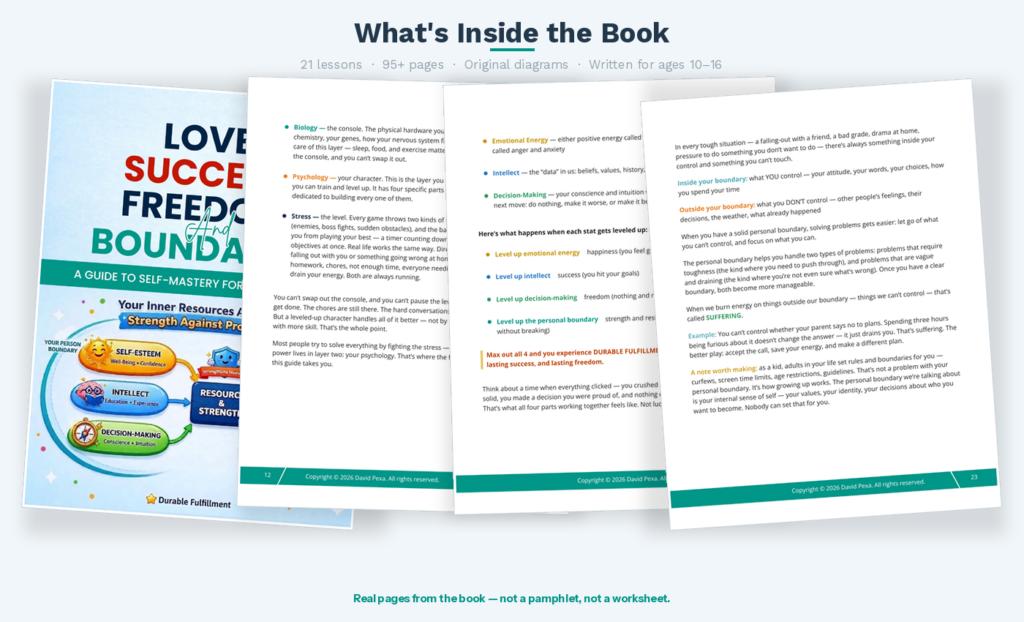
If this resonated, go deeper. My book Love, Success, Freedom and Boundaries gives you twelve frameworks for seeing the patterns that shape your life — and changing the ones that aren’t working.
Frequently Asked Questions
What’s the actual difference between emotions and feelings?
Emotions are the body’s automatic, biological responses — fast, unconscious, and universal. Feelings are your conscious interpretation of those responses, filtered through your experiences and beliefs. The emotion happens first; the feeling is what you make of it.
Why does the distinction matter?
Because two people can have the same emotion (fear) and completely different feelings about it (one feels excited, the other feels paralyzed). Understanding this gives you leverage — you can’t control the emotion, but you can influence the feeling.
Can you have emotions without feelings?
Yes. Your body registers emotions constantly that never reach conscious awareness. This is why you can feel tense or drained without knowing why — the emotion is running, but the feeling hasn’t been processed yet.
Keep Reading
- Your Guide to Understanding Mixed Emotions
- Master Your Feelings: The Ultimate Emotions Chart Guide
- Is Love an Emotion? A Guide to Its True Nature
If you process emotions through writing — journaling, drafting hard conversations, putting words to what you’re feeling — the tool I use to draft most of my words is Wispr Flow. It transcribes your voice into clean, edited text in real time, so the friction between thinking it and writing it basically disappears.
If this resonated, go deeper. My book Love, Success, Freedom and Boundaries gives you twelve frameworks for seeing the patterns that shape your life — and changing the ones that aren’t working.
Frequently Asked Questions
What’s the actual difference between emotions and feelings?
Emotions are the body’s automatic, biological responses — fast, unconscious, and universal. Feelings are your conscious interpretation of those responses, filtered through your experiences and beliefs. The emotion happens first; the feeling is what you make of it.
Why does the distinction matter?
Because two people can have the same emotion (fear) and completely different feelings about it (one feels excited, the other feels paralyzed). Understanding this gives you leverage — you can’t control the emotion, but you can influence the feeling.
Can you have emotions without feelings?
Yes. Your body registers emotions constantly that never reach conscious awareness. This is why you can feel tense or drained without knowing why — the emotion is running, but the feeling hasn’t been processed yet.
Keep Reading
- Your Guide to Understanding Mixed Emotions
- Master Your Feelings: The Ultimate Emotions Chart Guide
- Is Love an Emotion? A Guide to Its True Nature
If you process emotions through writing — journaling, drafting hard conversations, putting words to what you’re feeling — the tool I use to draft most of my words is Wispr Flow. It transcribes your voice into clean, edited text in real time, so the friction between thinking it and writing it basically disappears.
If this resonated, go deeper. My book Love, Success, Freedom and Boundaries gives you twelve frameworks for seeing the patterns that shape your life — and changing the ones that aren’t working.
Frequently Asked Questions
What’s the actual difference between emotions and feelings?
Emotions are the body’s automatic, biological responses — fast, unconscious, and universal. Feelings are your conscious interpretation of those responses, filtered through your experiences and beliefs. The emotion happens first; the feeling is what you make of it.
Why does the distinction matter?
Because two people can have the same emotion (fear) and completely different feelings about it (one feels excited, the other feels paralyzed). Understanding this gives you leverage — you can’t control the emotion, but you can influence the feeling.
Can you have emotions without feelings?
Yes. Your body registers emotions constantly that never reach conscious awareness. This is why you can feel tense or drained without knowing why — the emotion is running, but the feeling hasn’t been processed yet.
Keep Reading
- Your Guide to Understanding Mixed Emotions
- Master Your Feelings: The Ultimate Emotions Chart Guide
- Is Love an Emotion? A Guide to Its True Nature
If you process emotions through writing — journaling, drafting hard conversations, putting words to what you’re feeling — the tool I use to draft most of my words is Wispr Flow. It transcribes your voice into clean, edited text in real time, so the friction between thinking it and writing it basically disappears.
If this resonated, go deeper. My book Love, Success, Freedom and Boundaries gives you twelve frameworks for seeing the patterns that shape your life — and changing the ones that aren’t working.
Frequently Asked Questions
What’s the actual difference between emotions and feelings?
Emotions are the body’s automatic, biological responses — fast, unconscious, and universal. Feelings are your conscious interpretation of those responses, filtered through your experiences and beliefs. The emotion happens first; the feeling is what you make of it.
Why does the distinction matter?
Because two people can have the same emotion (fear) and completely different feelings about it (one feels excited, the other feels paralyzed). Understanding this gives you leverage — you can’t control the emotion, but you can influence the feeling.
Can you have emotions without feelings?
Yes. Your body registers emotions constantly that never reach conscious awareness. This is why you can feel tense or drained without knowing why — the emotion is running, but the feeling hasn’t been processed yet.
Keep Reading
- Your Guide to Understanding Mixed Emotions
- Master Your Feelings: The Ultimate Emotions Chart Guide
- Is Love an Emotion? A Guide to Its True Nature
If you process emotions through writing — journaling, drafting hard conversations, putting words to what you’re feeling — the tool I use to draft most of my words is Wispr Flow. It transcribes your voice into clean, edited text in real time, so the friction between thinking it and writing it basically disappears.
If this resonated, go deeper. My book Love, Success, Freedom and Boundaries gives you twelve frameworks for seeing the patterns that shape your life — and changing the ones that aren’t working.
Frequently Asked Questions
What’s the actual difference between emotions and feelings?
Emotions are the body’s automatic, biological responses — fast, unconscious, and universal. Feelings are your conscious interpretation of those responses, filtered through your experiences and beliefs. The emotion happens first; the feeling is what you make of it.
Why does the distinction matter?
Because two people can have the same emotion (fear) and completely different feelings about it (one feels excited, the other feels paralyzed). Understanding this gives you leverage — you can’t control the emotion, but you can influence the feeling.
Can you have emotions without feelings?
Yes. Your body registers emotions constantly that never reach conscious awareness. This is why you can feel tense or drained without knowing why — the emotion is running, but the feeling hasn’t been processed yet.
Keep Reading
- Your Guide to Understanding Mixed Emotions
- Master Your Feelings: The Ultimate Emotions Chart Guide
- Is Love an Emotion? A Guide to Its True Nature
If you process emotions through writing — journaling, drafting hard conversations, putting words to what you’re feeling — the tool I use to draft most of my words is Wispr Flow. It transcribes your voice into clean, edited text in real time, so the friction between thinking it and writing it basically disappears.
If this resonated, go deeper. My book Love, Success, Freedom and Boundaries gives you twelve frameworks for seeing the patterns that shape your life — and changing the ones that aren’t working.
Frequently Asked Questions
What’s the actual difference between emotions and feelings?
Emotions are the body’s automatic, biological responses — fast, unconscious, and universal. Feelings are your conscious interpretation of those responses, filtered through your experiences and beliefs. The emotion happens first; the feeling is what you make of it.
Why does the distinction matter?
Because two people can have the same emotion (fear) and completely different feelings about it (one feels excited, the other feels paralyzed). Understanding this gives you leverage — you can’t control the emotion, but you can influence the feeling.
Can you have emotions without feelings?
Yes. Your body registers emotions constantly that never reach conscious awareness. This is why you can feel tense or drained without knowing why — the emotion is running, but the feeling hasn’t been processed yet.
Keep Reading
- Your Guide to Understanding Mixed Emotions
- Master Your Feelings: The Ultimate Emotions Chart Guide
- Is Love an Emotion? A Guide to Its True Nature
If you process emotions through writing — journaling, drafting hard conversations, putting words to what you’re feeling — the tool I use to draft most of my words is Wispr Flow. It transcribes your voice into clean, edited text in real time, so the friction between thinking it and writing it basically disappears.
If this resonated, go deeper. My book Love, Success, Freedom and Boundaries gives you twelve frameworks for seeing the patterns that shape your life — and changing the ones that aren’t working.
Frequently Asked Questions
What’s the actual difference between emotions and feelings?
Emotions are the body’s automatic, biological responses — fast, unconscious, and universal. Feelings are your conscious interpretation of those responses, filtered through your experiences and beliefs. The emotion happens first; the feeling is what you make of it.
Why does the distinction matter?
Because two people can have the same emotion (fear) and completely different feelings about it (one feels excited, the other feels paralyzed). Understanding this gives you leverage — you can’t control the emotion, but you can influence the feeling.
Can you have emotions without feelings?
Yes. Your body registers emotions constantly that never reach conscious awareness. This is why you can feel tense or drained without knowing why — the emotion is running, but the feeling hasn’t been processed yet.
Keep Reading
- Your Guide to Understanding Mixed Emotions
- Master Your Feelings: The Ultimate Emotions Chart Guide
- Is Love an Emotion? A Guide to Its True Nature
If you process emotions through writing — journaling, drafting hard conversations, putting words to what you’re feeling — the tool I use to draft most of my words is Wispr Flow. It transcribes your voice into clean, edited text in real time, so the friction between thinking it and writing it basically disappears.
If this resonated, go deeper. My book Love, Success, Freedom and Boundaries gives you twelve frameworks for seeing the patterns that shape your life — and changing the ones that aren’t working.
Frequently Asked Questions
What’s the actual difference between emotions and feelings?
Emotions are the body’s automatic, biological responses — fast, unconscious, and universal. Feelings are your conscious interpretation of those responses, filtered through your experiences and beliefs. The emotion happens first; the feeling is what you make of it.
Why does the distinction matter?
Because two people can have the same emotion (fear) and completely different feelings about it (one feels excited, the other feels paralyzed). Understanding this gives you leverage — you can’t control the emotion, but you can influence the feeling.
Can you have emotions without feelings?
Yes. Your body registers emotions constantly that never reach conscious awareness. This is why you can feel tense or drained without knowing why — the emotion is running, but the feeling hasn’t been processed yet.
Keep Reading
- Your Guide to Understanding Mixed Emotions
- Master Your Feelings: The Ultimate Emotions Chart Guide
- Is Love an Emotion? A Guide to Its True Nature
If you process emotions through writing — journaling, drafting hard conversations, putting words to what you’re feeling — the tool I use to draft most of my words is Wispr Flow. It transcribes your voice into clean, edited text in real time, so the friction between thinking it and writing it basically disappears.
If this resonated, go deeper. My book Love, Success, Freedom and Boundaries gives you twelve frameworks for seeing the patterns that shape your life — and changing the ones that aren’t working.
Frequently Asked Questions
What’s the actual difference between emotions and feelings?
Emotions are the body’s automatic, biological responses — fast, unconscious, and universal. Feelings are your conscious interpretation of those responses, filtered through your experiences and beliefs. The emotion happens first; the feeling is what you make of it.
Why does the distinction matter?
Because two people can have the same emotion (fear) and completely different feelings about it (one feels excited, the other feels paralyzed). Understanding this gives you leverage — you can’t control the emotion, but you can influence the feeling.
Can you have emotions without feelings?
Yes. Your body registers emotions constantly that never reach conscious awareness. This is why you can feel tense or drained without knowing why — the emotion is running, but the feeling hasn’t been processed yet.
Keep Reading
- Your Guide to Understanding Mixed Emotions
- Master Your Feelings: The Ultimate Emotions Chart Guide
- Is Love an Emotion? A Guide to Its True Nature
If you process emotions through writing — journaling, drafting hard conversations, putting words to what you’re feeling — the tool I use to draft most of my words is Wispr Flow. It transcribes your voice into clean, edited text in real time, so the friction between thinking it and writing it basically disappears.
If this resonated, go deeper. My book Love, Success, Freedom and Boundaries gives you twelve frameworks for seeing the patterns that shape your life — and changing the ones that aren’t working.
Frequently Asked Questions
What’s the actual difference between emotions and feelings?
Emotions are the body’s automatic, biological responses — fast, unconscious, and universal. Feelings are your conscious interpretation of those responses, filtered through your experiences and beliefs. The emotion happens first; the feeling is what you make of it.
Why does the distinction matter?
Because two people can have the same emotion (fear) and completely different feelings about it (one feels excited, the other feels paralyzed). Understanding this gives you leverage — you can’t control the emotion, but you can influence the feeling.
Can you have emotions without feelings?
Yes. Your body registers emotions constantly that never reach conscious awareness. This is why you can feel tense or drained without knowing why — the emotion is running, but the feeling hasn’t been processed yet.
Keep Reading
- Your Guide to Understanding Mixed Emotions
- Master Your Feelings: The Ultimate Emotions Chart Guide
- Is Love an Emotion? A Guide to Its True Nature
If you process emotions through writing — journaling, drafting hard conversations, putting words to what you’re feeling — the tool I use to draft most of my words is Wispr Flow. It transcribes your voice into clean, edited text in real time, so the friction between thinking it and writing it basically disappears.
If this resonated, go deeper. My book Love, Success, Freedom and Boundaries gives you twelve frameworks for seeing the patterns that shape your life — and changing the ones that aren’t working.
Frequently Asked Questions
What’s the actual difference between emotions and feelings?
Emotions are the body’s automatic, biological responses — fast, unconscious, and universal. Feelings are your conscious interpretation of those responses, filtered through your experiences and beliefs. The emotion happens first; the feeling is what you make of it.
Why does the distinction matter?
Because two people can have the same emotion (fear) and completely different feelings about it (one feels excited, the other feels paralyzed). Understanding this gives you leverage — you can’t control the emotion, but you can influence the feeling.
Can you have emotions without feelings?
Yes. Your body registers emotions constantly that never reach conscious awareness. This is why you can feel tense or drained without knowing why — the emotion is running, but the feeling hasn’t been processed yet.
Keep Reading
- Your Guide to Understanding Mixed Emotions
- Master Your Feelings: The Ultimate Emotions Chart Guide
- Is Love an Emotion? A Guide to Its True Nature
If you process emotions through writing — journaling, drafting hard conversations, putting words to what you’re feeling — the tool I use to draft most of my words is Wispr Flow. It transcribes your voice into clean, edited text in real time, so the friction between thinking it and writing it basically disappears.
If this resonated, go deeper. My book Love, Success, Freedom and Boundaries gives you twelve frameworks for seeing the patterns that shape your life — and changing the ones that aren’t working.
Frequently Asked Questions
What’s the actual difference between emotions and feelings?
Emotions are the body’s automatic, biological responses — fast, unconscious, and universal. Feelings are your conscious interpretation of those responses, filtered through your experiences and beliefs. The emotion happens first; the feeling is what you make of it.
Why does the distinction matter?
Because two people can have the same emotion (fear) and completely different feelings about it (one feels excited, the other feels paralyzed). Understanding this gives you leverage — you can’t control the emotion, but you can influence the feeling.
Can you have emotions without feelings?
Yes. Your body registers emotions constantly that never reach conscious awareness. This is why you can feel tense or drained without knowing why — the emotion is running, but the feeling hasn’t been processed yet.
Keep Reading
- Your Guide to Understanding Mixed Emotions
- Master Your Feelings: The Ultimate Emotions Chart Guide
- Is Love an Emotion? A Guide to Its True Nature
If you process emotions through writing — journaling, drafting hard conversations, putting words to what you’re feeling — the tool I use to draft most of my words is Wispr Flow. It transcribes your voice into clean, edited text in real time, so the friction between thinking it and writing it basically disappears.
If this resonated, go deeper. My book Love, Success, Freedom and Boundaries gives you twelve frameworks for seeing the patterns that shape your life — and changing the ones that aren’t working.
Frequently Asked Questions
What’s the actual difference between emotions and feelings?
Emotions are the body’s automatic, biological responses — fast, unconscious, and universal. Feelings are your conscious interpretation of those responses, filtered through your experiences and beliefs. The emotion happens first; the feeling is what you make of it.
Why does the distinction matter?
Because two people can have the same emotion (fear) and completely different feelings about it (one feels excited, the other feels paralyzed). Understanding this gives you leverage — you can’t control the emotion, but you can influence the feeling.
Can you have emotions without feelings?
Yes. Your body registers emotions constantly that never reach conscious awareness. This is why you can feel tense or drained without knowing why — the emotion is running, but the feeling hasn’t been processed yet.
Keep Reading
- Your Guide to Understanding Mixed Emotions
- Master Your Feelings: The Ultimate Emotions Chart Guide
- Is Love an Emotion? A Guide to Its True Nature
If you process emotions through writing — journaling, drafting hard conversations, putting words to what you’re feeling — the tool I use to draft most of my words is Wispr Flow. It transcribes your voice into clean, edited text in real time, so the friction between thinking it and writing it basically disappears.
If this resonated, go deeper. My book Love, Success, Freedom and Boundaries gives you twelve frameworks for seeing the patterns that shape your life — and changing the ones that aren’t working.
Frequently Asked Questions
What’s the actual difference between emotions and feelings?
Emotions are the body’s automatic, biological responses — fast, unconscious, and universal. Feelings are your conscious interpretation of those responses, filtered through your experiences and beliefs. The emotion happens first; the feeling is what you make of it.
Why does the distinction matter?
Because two people can have the same emotion (fear) and completely different feelings about it (one feels excited, the other feels paralyzed). Understanding this gives you leverage — you can’t control the emotion, but you can influence the feeling.
Can you have emotions without feelings?
Yes. Your body registers emotions constantly that never reach conscious awareness. This is why you can feel tense or drained without knowing why — the emotion is running, but the feeling hasn’t been processed yet.
Keep Reading
- Your Guide to Understanding Mixed Emotions
- Master Your Feelings: The Ultimate Emotions Chart Guide
- Is Love an Emotion? A Guide to Its True Nature
If you process emotions through writing — journaling, drafting hard conversations, putting words to what you’re feeling — the tool I use to draft most of my words is Wispr Flow. It transcribes your voice into clean, edited text in real time, so the friction between thinking it and writing it basically disappears.
If this resonated, go deeper. My book Love, Success, Freedom and Boundaries gives you twelve frameworks for seeing the patterns that shape your life — and changing the ones that aren’t working.
Frequently Asked Questions
What’s the actual difference between emotions and feelings?
Emotions are the body’s automatic, biological responses — fast, unconscious, and universal. Feelings are your conscious interpretation of those responses, filtered through your experiences and beliefs. The emotion happens first; the feeling is what you make of it.
Why does the distinction matter?
Because two people can have the same emotion (fear) and completely different feelings about it (one feels excited, the other feels paralyzed). Understanding this gives you leverage — you can’t control the emotion, but you can influence the feeling.
Can you have emotions without feelings?
Yes. Your body registers emotions constantly that never reach conscious awareness. This is why you can feel tense or drained without knowing why — the emotion is running, but the feeling hasn’t been processed yet.
Keep Reading
- Your Guide to Understanding Mixed Emotions
- Master Your Feelings: The Ultimate Emotions Chart Guide
- Is Love an Emotion? A Guide to Its True Nature
If you process emotions through writing — journaling, drafting hard conversations, putting words to what you’re feeling — the tool I use to draft most of my words is Wispr Flow. It transcribes your voice into clean, edited text in real time, so the friction between thinking it and writing it basically disappears.
If this resonated, go deeper. My book Love, Success, Freedom and Boundaries gives you twelve frameworks for seeing the patterns that shape your life — and changing the ones that aren’t working.
Frequently Asked Questions
What’s the actual difference between emotions and feelings?
Emotions are the body’s automatic, biological responses — fast, unconscious, and universal. Feelings are your conscious interpretation of those responses, filtered through your experiences and beliefs. The emotion happens first; the feeling is what you make of it.
Why does the distinction matter?
Because two people can have the same emotion (fear) and completely different feelings about it (one feels excited, the other feels paralyzed). Understanding this gives you leverage — you can’t control the emotion, but you can influence the feeling.
Can you have emotions without feelings?
Yes. Your body registers emotions constantly that never reach conscious awareness. This is why you can feel tense or drained without knowing why — the emotion is running, but the feeling hasn’t been processed yet.
Keep Reading
- Your Guide to Understanding Mixed Emotions
- Master Your Feelings: The Ultimate Emotions Chart Guide
- Is Love an Emotion? A Guide to Its True Nature
If you process emotions through writing — journaling, drafting hard conversations, putting words to what you’re feeling — the tool I use to draft most of my words is Wispr Flow. It transcribes your voice into clean, edited text in real time, so the friction between thinking it and writing it basically disappears.
If this resonated, go deeper. My book Love, Success, Freedom and Boundaries gives you twelve frameworks for seeing the patterns that shape your life — and changing the ones that aren’t working.
Frequently Asked Questions
What’s the actual difference between emotions and feelings?
Emotions are the body’s automatic, biological responses — fast, unconscious, and universal. Feelings are your conscious interpretation of those responses, filtered through your experiences and beliefs. The emotion happens first; the feeling is what you make of it.
Why does the distinction matter?
Because two people can have the same emotion (fear) and completely different feelings about it (one feels excited, the other feels paralyzed). Understanding this gives you leverage — you can’t control the emotion, but you can influence the feeling.
Can you have emotions without feelings?
Yes. Your body registers emotions constantly that never reach conscious awareness. This is why you can feel tense or drained without knowing why — the emotion is running, but the feeling hasn’t been processed yet.
Keep Reading
- Your Guide to Understanding Mixed Emotions
- Master Your Feelings: The Ultimate Emotions Chart Guide
- Is Love an Emotion? A Guide to Its True Nature
If you process emotions through writing — journaling, drafting hard conversations, putting words to what you’re feeling — the tool I use to draft most of my words is Wispr Flow. It transcribes your voice into clean, edited text in real time, so the friction between thinking it and writing it basically disappears.
If this resonated, go deeper. My book Love, Success, Freedom and Boundaries gives you twelve frameworks for seeing the patterns that shape your life — and changing the ones that aren’t working.
Frequently Asked Questions
What’s the actual difference between emotions and feelings?
Emotions are the body’s automatic, biological responses — fast, unconscious, and universal. Feelings are your conscious interpretation of those responses, filtered through your experiences and beliefs. The emotion happens first; the feeling is what you make of it.
Why does the distinction matter?
Because two people can have the same emotion (fear) and completely different feelings about it (one feels excited, the other feels paralyzed). Understanding this gives you leverage — you can’t control the emotion, but you can influence the feeling.
Can you have emotions without feelings?
Yes. Your body registers emotions constantly that never reach conscious awareness. This is why you can feel tense or drained without knowing why — the emotion is running, but the feeling hasn’t been processed yet.
Keep Reading
- Your Guide to Understanding Mixed Emotions
- Master Your Feelings: The Ultimate Emotions Chart Guide
- Is Love an Emotion? A Guide to Its True Nature
If you process emotions through writing — journaling, drafting hard conversations, putting words to what you’re feeling — the tool I use to draft most of my words is Wispr Flow. It transcribes your voice into clean, edited text in real time, so the friction between thinking it and writing it basically disappears.
If this resonated, go deeper. My book Love, Success, Freedom and Boundaries gives you twelve frameworks for seeing the patterns that shape your life — and changing the ones that aren’t working.
Frequently Asked Questions
What’s the actual difference between emotions and feelings?
Emotions are the body’s automatic, biological responses — fast, unconscious, and universal. Feelings are your conscious interpretation of those responses, filtered through your experiences and beliefs. The emotion happens first; the feeling is what you make of it.
Why does the distinction matter?
Because two people can have the same emotion (fear) and completely different feelings about it (one feels excited, the other feels paralyzed). Understanding this gives you leverage — you can’t control the emotion, but you can influence the feeling.
Can you have emotions without feelings?
Yes. Your body registers emotions constantly that never reach conscious awareness. This is why you can feel tense or drained without knowing why — the emotion is running, but the feeling hasn’t been processed yet.
Keep Reading
- Your Guide to Understanding Mixed Emotions
- Master Your Feelings: The Ultimate Emotions Chart Guide
- Is Love an Emotion? A Guide to Its True Nature
If you process emotions through writing — journaling, drafting hard conversations, putting words to what you’re feeling — the tool I use to draft most of my words is Wispr Flow. It transcribes your voice into clean, edited text in real time, so the friction between thinking it and writing it basically disappears.
If this resonated, go deeper. My book Love, Success, Freedom and Boundaries gives you twelve frameworks for seeing the patterns that shape your life — and changing the ones that aren’t working.
Frequently Asked Questions
What’s the actual difference between emotions and feelings?
Emotions are the body’s automatic, biological responses — fast, unconscious, and universal. Feelings are your conscious interpretation of those responses, filtered through your experiences and beliefs. The emotion happens first; the feeling is what you make of it.
Why does the distinction matter?
Because two people can have the same emotion (fear) and completely different feelings about it (one feels excited, the other feels paralyzed). Understanding this gives you leverage — you can’t control the emotion, but you can influence the feeling.
Can you have emotions without feelings?
Yes. Your body registers emotions constantly that never reach conscious awareness. This is why you can feel tense or drained without knowing why — the emotion is running, but the feeling hasn’t been processed yet.
Keep Reading
- Your Guide to Understanding Mixed Emotions
- Master Your Feelings: The Ultimate Emotions Chart Guide
- Is Love an Emotion? A Guide to Its True Nature
If you process emotions through writing — journaling, drafting hard conversations, putting words to what you’re feeling — the tool I use to draft most of my words is Wispr Flow. It transcribes your voice into clean, edited text in real time, so the friction between thinking it and writing it basically disappears.
If this resonated, go deeper. My book Love, Success, Freedom and Boundaries gives you twelve frameworks for seeing the patterns that shape your life — and changing the ones that aren’t working.
Frequently Asked Questions
What’s the actual difference between emotions and feelings?
Emotions are the body’s automatic, biological responses — fast, unconscious, and universal. Feelings are your conscious interpretation of those responses, filtered through your experiences and beliefs. The emotion happens first; the feeling is what you make of it.
Why does the distinction matter?
Because two people can have the same emotion (fear) and completely different feelings about it (one feels excited, the other feels paralyzed). Understanding this gives you leverage — you can’t control the emotion, but you can influence the feeling.
Can you have emotions without feelings?
Yes. Your body registers emotions constantly that never reach conscious awareness. This is why you can feel tense or drained without knowing why — the emotion is running, but the feeling hasn’t been processed yet.
Keep Reading
- Your Guide to Understanding Mixed Emotions
- Master Your Feelings: The Ultimate Emotions Chart Guide
- Is Love an Emotion? A Guide to Its True Nature
If you process emotions through writing — journaling, drafting hard conversations, putting words to what you’re feeling — the tool I use to draft most of my words is Wispr Flow. It transcribes your voice into clean, edited text in real time, so the friction between thinking it and writing it basically disappears.
If this resonated, go deeper. My book Love, Success, Freedom and Boundaries gives you twelve frameworks for seeing the patterns that shape your life — and changing the ones that aren’t working.
Frequently Asked Questions
What’s the actual difference between emotions and feelings?
Emotions are the body’s automatic, biological responses — fast, unconscious, and universal. Feelings are your conscious interpretation of those responses, filtered through your experiences and beliefs. The emotion happens first; the feeling is what you make of it.
Why does the distinction matter?
Because two people can have the same emotion (fear) and completely different feelings about it (one feels excited, the other feels paralyzed). Understanding this gives you leverage — you can’t control the emotion, but you can influence the feeling.
Can you have emotions without feelings?
Yes. Your body registers emotions constantly that never reach conscious awareness. This is why you can feel tense or drained without knowing why — the emotion is running, but the feeling hasn’t been processed yet.
Keep Reading
- Your Guide to Understanding Mixed Emotions
- Master Your Feelings: The Ultimate Emotions Chart Guide
- Is Love an Emotion? A Guide to Its True Nature
If you process emotions through writing — journaling, drafting hard conversations, putting words to what you’re feeling — the tool I use to draft most of my words is Wispr Flow. It transcribes your voice into clean, edited text in real time, so the friction between thinking it and writing it basically disappears.
If this resonated, go deeper. My book Love, Success, Freedom and Boundaries gives you twelve frameworks for seeing the patterns that shape your life — and changing the ones that aren’t working.
Frequently Asked Questions
What’s the actual difference between emotions and feelings?
Emotions are the body’s automatic, biological responses — fast, unconscious, and universal. Feelings are your conscious interpretation of those responses, filtered through your experiences and beliefs. The emotion happens first; the feeling is what you make of it.
Why does the distinction matter?
Because two people can have the same emotion (fear) and completely different feelings about it (one feels excited, the other feels paralyzed). Understanding this gives you leverage — you can’t control the emotion, but you can influence the feeling.
Can you have emotions without feelings?
Yes. Your body registers emotions constantly that never reach conscious awareness. This is why you can feel tense or drained without knowing why — the emotion is running, but the feeling hasn’t been processed yet.
Keep Reading
- Your Guide to Understanding Mixed Emotions
- Master Your Feelings: The Ultimate Emotions Chart Guide
- Is Love an Emotion? A Guide to Its True Nature
If you process emotions through writing — journaling, drafting hard conversations, putting words to what you’re feeling — the tool I use to draft most of my words is Wispr Flow. It transcribes your voice into clean, edited text in real time, so the friction between thinking it and writing it basically disappears.
If this resonated, go deeper. My book Love, Success, Freedom and Boundaries gives you twelve frameworks for seeing the patterns that shape your life — and changing the ones that aren’t working.
Frequently Asked Questions
What’s the actual difference between emotions and feelings?
Emotions are the body’s automatic, biological responses — fast, unconscious, and universal. Feelings are your conscious interpretation of those responses, filtered through your experiences and beliefs. The emotion happens first; the feeling is what you make of it.
Why does the distinction matter?
Because two people can have the same emotion (fear) and completely different feelings about it (one feels excited, the other feels paralyzed). Understanding this gives you leverage — you can’t control the emotion, but you can influence the feeling.
Can you have emotions without feelings?
Yes. Your body registers emotions constantly that never reach conscious awareness. This is why you can feel tense or drained without knowing why — the emotion is running, but the feeling hasn’t been processed yet.
Keep Reading
- Your Guide to Understanding Mixed Emotions
- Master Your Feelings: The Ultimate Emotions Chart Guide
- Is Love an Emotion? A Guide to Its True Nature
If you process emotions through writing — journaling, drafting hard conversations, putting words to what you’re feeling — the tool I use to draft most of my words is Wispr Flow. It transcribes your voice into clean, edited text in real time, so the friction between thinking it and writing it basically disappears.
If this resonated, go deeper. My book Love, Success, Freedom and Boundaries gives you twelve frameworks for seeing the patterns that shape your life — and changing the ones that aren’t working.
Frequently Asked Questions
What’s the actual difference between emotions and feelings?
Emotions are the body’s automatic, biological responses — fast, unconscious, and universal. Feelings are your conscious interpretation of those responses, filtered through your experiences and beliefs. The emotion happens first; the feeling is what you make of it.
Why does the distinction matter?
Because two people can have the same emotion (fear) and completely different feelings about it (one feels excited, the other feels paralyzed). Understanding this gives you leverage — you can’t control the emotion, but you can influence the feeling.
Can you have emotions without feelings?
Yes. Your body registers emotions constantly that never reach conscious awareness. This is why you can feel tense or drained without knowing why — the emotion is running, but the feeling hasn’t been processed yet.
Keep Reading
- Your Guide to Understanding Mixed Emotions
- Master Your Feelings: The Ultimate Emotions Chart Guide
- Is Love an Emotion? A Guide to Its True Nature
If you process emotions through writing — journaling, drafting hard conversations, putting words to what you’re feeling — the tool I use to draft most of my words is Wispr Flow. It transcribes your voice into clean, edited text in real time, so the friction between thinking it and writing it basically disappears.
If this resonated, go deeper. My book Love, Success, Freedom and Boundaries gives you twelve frameworks for seeing the patterns that shape your life — and changing the ones that aren’t working.
Frequently Asked Questions
What’s the actual difference between emotions and feelings?
Emotions are the body’s automatic, biological responses — fast, unconscious, and universal. Feelings are your conscious interpretation of those responses, filtered through your experiences and beliefs. The emotion happens first; the feeling is what you make of it.
Why does the distinction matter?
Because two people can have the same emotion (fear) and completely different feelings about it (one feels excited, the other feels paralyzed). Understanding this gives you leverage — you can’t control the emotion, but you can influence the feeling.
Can you have emotions without feelings?
Yes. Your body registers emotions constantly that never reach conscious awareness. This is why you can feel tense or drained without knowing why — the emotion is running, but the feeling hasn’t been processed yet.
Keep Reading
- Your Guide to Understanding Mixed Emotions
- Master Your Feelings: The Ultimate Emotions Chart Guide
- Is Love an Emotion? A Guide to Its True Nature
If you process emotions through writing — journaling, drafting hard conversations, putting words to what you’re feeling — the tool I use to draft most of my words is Wispr Flow. It transcribes your voice into clean, edited text in real time, so the friction between thinking it and writing it basically disappears.
If this resonated, go deeper. My book Love, Success, Freedom and Boundaries gives you twelve frameworks for seeing the patterns that shape your life — and changing the ones that aren’t working.
Frequently Asked Questions
What’s the actual difference between emotions and feelings?
Emotions are the body’s automatic, biological responses — fast, unconscious, and universal. Feelings are your conscious interpretation of those responses, filtered through your experiences and beliefs. The emotion happens first; the feeling is what you make of it.
Why does the distinction matter?
Because two people can have the same emotion (fear) and completely different feelings about it (one feels excited, the other feels paralyzed). Understanding this gives you leverage — you can’t control the emotion, but you can influence the feeling.
Can you have emotions without feelings?
Yes. Your body registers emotions constantly that never reach conscious awareness. This is why you can feel tense or drained without knowing why — the emotion is running, but the feeling hasn’t been processed yet.
Keep Reading
- Your Guide to Understanding Mixed Emotions
- Master Your Feelings: The Ultimate Emotions Chart Guide
- Is Love an Emotion? A Guide to Its True Nature
If you process emotions through writing — journaling, drafting hard conversations, putting words to what you’re feeling — the tool I use to draft most of my words is Wispr Flow. It transcribes your voice into clean, edited text in real time, so the friction between thinking it and writing it basically disappears.
If this resonated, go deeper. My book Love, Success, Freedom and Boundaries gives you twelve frameworks for seeing the patterns that shape your life — and changing the ones that aren’t working.
Frequently Asked Questions
What’s the actual difference between emotions and feelings?
Emotions are the body’s automatic, biological responses — fast, unconscious, and universal. Feelings are your conscious interpretation of those responses, filtered through your experiences and beliefs. The emotion happens first; the feeling is what you make of it.
Why does the distinction matter?
Because two people can have the same emotion (fear) and completely different feelings about it (one feels excited, the other feels paralyzed). Understanding this gives you leverage — you can’t control the emotion, but you can influence the feeling.
Can you have emotions without feelings?
Yes. Your body registers emotions constantly that never reach conscious awareness. This is why you can feel tense or drained without knowing why — the emotion is running, but the feeling hasn’t been processed yet.
Keep Reading
- Your Guide to Understanding Mixed Emotions
- Master Your Feelings: The Ultimate Emotions Chart Guide
- Is Love an Emotion? A Guide to Its True Nature
If you process emotions through writing — journaling, drafting hard conversations, putting words to what you’re feeling — the tool I use to draft most of my words is Wispr Flow. It transcribes your voice into clean, edited text in real time, so the friction between thinking it and writing it basically disappears.
If this resonated, go deeper. My book Love, Success, Freedom and Boundaries gives you twelve frameworks for seeing the patterns that shape your life — and changing the ones that aren’t working.
Frequently Asked Questions
What’s the actual difference between emotions and feelings?
Emotions are the body’s automatic, biological responses — fast, unconscious, and universal. Feelings are your conscious interpretation of those responses, filtered through your experiences and beliefs. The emotion happens first; the feeling is what you make of it.
Why does the distinction matter?
Because two people can have the same emotion (fear) and completely different feelings about it (one feels excited, the other feels paralyzed). Understanding this gives you leverage — you can’t control the emotion, but you can influence the feeling.
Can you have emotions without feelings?
Yes. Your body registers emotions constantly that never reach conscious awareness. This is why you can feel tense or drained without knowing why — the emotion is running, but the feeling hasn’t been processed yet.
Keep Reading
- Your Guide to Understanding Mixed Emotions
- Master Your Feelings: The Ultimate Emotions Chart Guide
- Is Love an Emotion? A Guide to Its True Nature
If you process emotions through writing — journaling, drafting hard conversations, putting words to what you’re feeling — the tool I use to draft most of my words is Wispr Flow. It transcribes your voice into clean, edited text in real time, so the friction between thinking it and writing it basically disappears.
If this resonated, go deeper. My book Love, Success, Freedom and Boundaries gives you twelve frameworks for seeing the patterns that shape your life — and changing the ones that aren’t working.
Frequently Asked Questions
What’s the actual difference between emotions and feelings?
Emotions are the body’s automatic, biological responses — fast, unconscious, and universal. Feelings are your conscious interpretation of those responses, filtered through your experiences and beliefs. The emotion happens first; the feeling is what you make of it.
Why does the distinction matter?
Because two people can have the same emotion (fear) and completely different feelings about it (one feels excited, the other feels paralyzed). Understanding this gives you leverage — you can’t control the emotion, but you can influence the feeling.
Can you have emotions without feelings?
Yes. Your body registers emotions constantly that never reach conscious awareness. This is why you can feel tense or drained without knowing why — the emotion is running, but the feeling hasn’t been processed yet.
Keep Reading
- Your Guide to Understanding Mixed Emotions
- Master Your Feelings: The Ultimate Emotions Chart Guide
- Is Love an Emotion? A Guide to Its True Nature
If you process emotions through writing — journaling, drafting hard conversations, putting words to what you’re feeling — the tool I use to draft most of my words is Wispr Flow. It transcribes your voice into clean, edited text in real time, so the friction between thinking it and writing it basically disappears.
If this resonated, go deeper. My book Love, Success, Freedom and Boundaries gives you twelve frameworks for seeing the patterns that shape your life — and changing the ones that aren’t working.
Frequently Asked Questions
What’s the actual difference between emotions and feelings?
Emotions are the body’s automatic, biological responses — fast, unconscious, and universal. Feelings are your conscious interpretation of those responses, filtered through your experiences and beliefs. The emotion happens first; the feeling is what you make of it.
Why does the distinction matter?
Because two people can have the same emotion (fear) and completely different feelings about it (one feels excited, the other feels paralyzed). Understanding this gives you leverage — you can’t control the emotion, but you can influence the feeling.
Can you have emotions without feelings?
Yes. Your body registers emotions constantly that never reach conscious awareness. This is why you can feel tense or drained without knowing why — the emotion is running, but the feeling hasn’t been processed yet.
Keep Reading
- Your Guide to Understanding Mixed Emotions
- Master Your Feelings: The Ultimate Emotions Chart Guide
- Is Love an Emotion? A Guide to Its True Nature
If you process emotions through writing — journaling, drafting hard conversations, putting words to what you’re feeling — the tool I use to draft most of my words is Wispr Flow. It transcribes your voice into clean, edited text in real time, so the friction between thinking it and writing it basically disappears.
If this resonated, go deeper. My book Love, Success, Freedom and Boundaries gives you twelve frameworks for seeing the patterns that shape your life — and changing the ones that aren’t working.
Frequently Asked Questions
What’s the actual difference between emotions and feelings?
Emotions are the body’s automatic, biological responses — fast, unconscious, and universal. Feelings are your conscious interpretation of those responses, filtered through your experiences and beliefs. The emotion happens first; the feeling is what you make of it.
Why does the distinction matter?
Because two people can have the same emotion (fear) and completely different feelings about it (one feels excited, the other feels paralyzed). Understanding this gives you leverage — you can’t control the emotion, but you can influence the feeling.
Can you have emotions without feelings?
Yes. Your body registers emotions constantly that never reach conscious awareness. This is why you can feel tense or drained without knowing why — the emotion is running, but the feeling hasn’t been processed yet.
Keep Reading
- Your Guide to Understanding Mixed Emotions
- Master Your Feelings: The Ultimate Emotions Chart Guide
- Is Love an Emotion? A Guide to Its True Nature
If you process emotions through writing — journaling, drafting hard conversations, putting words to what you’re feeling — the tool I use to draft most of my words is Wispr Flow. It transcribes your voice into clean, edited text in real time, so the friction between thinking it and writing it basically disappears.
If this resonated, go deeper. My book Love, Success, Freedom and Boundaries gives you twelve frameworks for seeing the patterns that shape your life — and changing the ones that aren’t working.
Frequently Asked Questions
What’s the actual difference between emotions and feelings?
Emotions are the body’s automatic, biological responses — fast, unconscious, and universal. Feelings are your conscious interpretation of those responses, filtered through your experiences and beliefs. The emotion happens first; the feeling is what you make of it.
Why does the distinction matter?
Because two people can have the same emotion (fear) and completely different feelings about it (one feels excited, the other feels paralyzed). Understanding this gives you leverage — you can’t control the emotion, but you can influence the feeling.
Can you have emotions without feelings?
Yes. Your body registers emotions constantly that never reach conscious awareness. This is why you can feel tense or drained without knowing why — the emotion is running, but the feeling hasn’t been processed yet.
Keep Reading
- Your Guide to Understanding Mixed Emotions
- Master Your Feelings: The Ultimate Emotions Chart Guide
- Is Love an Emotion? A Guide to Its True Nature
If you process emotions through writing — journaling, drafting hard conversations, putting words to what you’re feeling — the tool I use to draft most of my words is Wispr Flow. It transcribes your voice into clean, edited text in real time, so the friction between thinking it and writing it basically disappears.
If this resonated, go deeper. My book Love, Success, Freedom and Boundaries gives you twelve frameworks for seeing the patterns that shape your life — and changing the ones that aren’t working.
Frequently Asked Questions
What’s the actual difference between emotions and feelings?
Emotions are the body’s automatic, biological responses — fast, unconscious, and universal. Feelings are your conscious interpretation of those responses, filtered through your experiences and beliefs. The emotion happens first; the feeling is what you make of it.
Why does the distinction matter?
Because two people can have the same emotion (fear) and completely different feelings about it (one feels excited, the other feels paralyzed). Understanding this gives you leverage — you can’t control the emotion, but you can influence the feeling.
Can you have emotions without feelings?
Yes. Your body registers emotions constantly that never reach conscious awareness. This is why you can feel tense or drained without knowing why — the emotion is running, but the feeling hasn’t been processed yet.
Keep Reading
- Your Guide to Understanding Mixed Emotions
- Master Your Feelings: The Ultimate Emotions Chart Guide
- Is Love an Emotion? A Guide to Its True Nature
If you process emotions through writing — journaling, drafting hard conversations, putting words to what you’re feeling — the tool I use to draft most of my words is Wispr Flow. It transcribes your voice into clean, edited text in real time, so the friction between thinking it and writing it basically disappears.
If this resonated, go deeper. My book Love, Success, Freedom and Boundaries gives you twelve frameworks for seeing the patterns that shape your life — and changing the ones that aren’t working.
Frequently Asked Questions
What’s the actual difference between emotions and feelings?
Emotions are the body’s automatic, biological responses — fast, unconscious, and universal. Feelings are your conscious interpretation of those responses, filtered through your experiences and beliefs. The emotion happens first; the feeling is what you make of it.
Why does the distinction matter?
Because two people can have the same emotion (fear) and completely different feelings about it (one feels excited, the other feels paralyzed). Understanding this gives you leverage — you can’t control the emotion, but you can influence the feeling.
Can you have emotions without feelings?
Yes. Your body registers emotions constantly that never reach conscious awareness. This is why you can feel tense or drained without knowing why — the emotion is running, but the feeling hasn’t been processed yet.
Keep Reading
- Your Guide to Understanding Mixed Emotions
- Master Your Feelings: The Ultimate Emotions Chart Guide
- Is Love an Emotion? A Guide to Its True Nature
If you process emotions through writing — journaling, drafting hard conversations, putting words to what you’re feeling — the tool I use to draft most of my words is Wispr Flow. It transcribes your voice into clean, edited text in real time, so the friction between thinking it and writing it basically disappears.
If this resonated, go deeper. My book Love, Success, Freedom and Boundaries gives you twelve frameworks for seeing the patterns that shape your life — and changing the ones that aren’t working.
Frequently Asked Questions
What’s the actual difference between emotions and feelings?
Emotions are the body’s automatic, biological responses — fast, unconscious, and universal. Feelings are your conscious interpretation of those responses, filtered through your experiences and beliefs. The emotion happens first; the feeling is what you make of it.
Why does the distinction matter?
Because two people can have the same emotion (fear) and completely different feelings about it (one feels excited, the other feels paralyzed). Understanding this gives you leverage — you can’t control the emotion, but you can influence the feeling.
Can you have emotions without feelings?
Yes. Your body registers emotions constantly that never reach conscious awareness. This is why you can feel tense or drained without knowing why — the emotion is running, but the feeling hasn’t been processed yet.
Keep Reading
- Your Guide to Understanding Mixed Emotions
- Master Your Feelings: The Ultimate Emotions Chart Guide
- Is Love an Emotion? A Guide to Its True Nature
If you process emotions through writing — journaling, drafting hard conversations, putting words to what you’re feeling — the tool I use to draft most of my words is Wispr Flow. It transcribes your voice into clean, edited text in real time, so the friction between thinking it and writing it basically disappears.
If this resonated, go deeper. My book Love, Success, Freedom and Boundaries gives you twelve frameworks for seeing the patterns that shape your life — and changing the ones that aren’t working.
Frequently Asked Questions
What’s the actual difference between emotions and feelings?
Emotions are the body’s automatic, biological responses — fast, unconscious, and universal. Feelings are your conscious interpretation of those responses, filtered through your experiences and beliefs. The emotion happens first; the feeling is what you make of it.
Why does the distinction matter?
Because two people can have the same emotion (fear) and completely different feelings about it (one feels excited, the other feels paralyzed). Understanding this gives you leverage — you can’t control the emotion, but you can influence the feeling.
Can you have emotions without feelings?
Yes. Your body registers emotions constantly that never reach conscious awareness. This is why you can feel tense or drained without knowing why — the emotion is running, but the feeling hasn’t been processed yet.
Keep Reading
- Your Guide to Understanding Mixed Emotions
- Master Your Feelings: The Ultimate Emotions Chart Guide
- Is Love an Emotion? A Guide to Its True Nature
If you process emotions through writing — journaling, drafting hard conversations, putting words to what you’re feeling — the tool I use to draft most of my words is Wispr Flow. It transcribes your voice into clean, edited text in real time, so the friction between thinking it and writing it basically disappears.
If this resonated, go deeper. My book Love, Success, Freedom and Boundaries gives you twelve frameworks for seeing the patterns that shape your life — and changing the ones that aren’t working.
Frequently Asked Questions
What’s the actual difference between emotions and feelings?
Emotions are the body’s automatic, biological responses — fast, unconscious, and universal. Feelings are your conscious interpretation of those responses, filtered through your experiences and beliefs. The emotion happens first; the feeling is what you make of it.
Why does the distinction matter?
Because two people can have the same emotion (fear) and completely different feelings about it (one feels excited, the other feels paralyzed). Understanding this gives you leverage — you can’t control the emotion, but you can influence the feeling.
Can you have emotions without feelings?
Yes. Your body registers emotions constantly that never reach conscious awareness. This is why you can feel tense or drained without knowing why — the emotion is running, but the feeling hasn’t been processed yet.
Keep Reading
- Your Guide to Understanding Mixed Emotions
- Master Your Feelings: The Ultimate Emotions Chart Guide
- Is Love an Emotion? A Guide to Its True Nature
If you process emotions through writing — journaling, drafting hard conversations, putting words to what you’re feeling — the tool I use to draft most of my words is Wispr Flow. It transcribes your voice into clean, edited text in real time, so the friction between thinking it and writing it basically disappears.
If this resonated, go deeper. My book Love, Success, Freedom and Boundaries gives you twelve frameworks for seeing the patterns that shape your life — and changing the ones that aren’t working.
Frequently Asked Questions
What’s the actual difference between emotions and feelings?
Emotions are the body’s automatic, biological responses — fast, unconscious, and universal. Feelings are your conscious interpretation of those responses, filtered through your experiences and beliefs. The emotion happens first; the feeling is what you make of it.
Why does the distinction matter?
Because two people can have the same emotion (fear) and completely different feelings about it (one feels excited, the other feels paralyzed). Understanding this gives you leverage — you can’t control the emotion, but you can influence the feeling.
Can you have emotions without feelings?
Yes. Your body registers emotions constantly that never reach conscious awareness. This is why you can feel tense or drained without knowing why — the emotion is running, but the feeling hasn’t been processed yet.
Keep Reading
- Your Guide to Understanding Mixed Emotions
- Master Your Feelings: The Ultimate Emotions Chart Guide
- Is Love an Emotion? A Guide to Its True Nature
If you process emotions through writing — journaling, drafting hard conversations, putting words to what you’re feeling — the tool I use to draft most of my words is Wispr Flow. It transcribes your voice into clean, edited text in real time, so the friction between thinking it and writing it basically disappears.
If this resonated, go deeper. My book Love, Success, Freedom and Boundaries gives you twelve frameworks for seeing the patterns that shape your life — and changing the ones that aren’t working.
Frequently Asked Questions
What’s the actual difference between emotions and feelings?
Emotions are the body’s automatic, biological responses — fast, unconscious, and universal. Feelings are your conscious interpretation of those responses, filtered through your experiences and beliefs. The emotion happens first; the feeling is what you make of it.
Why does the distinction matter?
Because two people can have the same emotion (fear) and completely different feelings about it (one feels excited, the other feels paralyzed). Understanding this gives you leverage — you can’t control the emotion, but you can influence the feeling.
Can you have emotions without feelings?
Yes. Your body registers emotions constantly that never reach conscious awareness. This is why you can feel tense or drained without knowing why — the emotion is running, but the feeling hasn’t been processed yet.
Keep Reading
- Your Guide to Understanding Mixed Emotions
- Master Your Feelings: The Ultimate Emotions Chart Guide
- Is Love an Emotion? A Guide to Its True Nature
If you process emotions through writing — journaling, drafting hard conversations, putting words to what you’re feeling — the tool I use to draft most of my words is Wispr Flow. It transcribes your voice into clean, edited text in real time, so the friction between thinking it and writing it basically disappears.
If this resonated, go deeper. My book Love, Success, Freedom and Boundaries gives you twelve frameworks for seeing the patterns that shape your life — and changing the ones that aren’t working.
Frequently Asked Questions
What’s the actual difference between emotions and feelings?
Emotions are the body’s automatic, biological responses — fast, unconscious, and universal. Feelings are your conscious interpretation of those responses, filtered through your experiences and beliefs. The emotion happens first; the feeling is what you make of it.
Why does the distinction matter?
Because two people can have the same emotion (fear) and completely different feelings about it (one feels excited, the other feels paralyzed). Understanding this gives you leverage — you can’t control the emotion, but you can influence the feeling.
Can you have emotions without feelings?
Yes. Your body registers emotions constantly that never reach conscious awareness. This is why you can feel tense or drained without knowing why — the emotion is running, but the feeling hasn’t been processed yet.
Keep Reading
- Your Guide to Understanding Mixed Emotions
- Master Your Feelings: The Ultimate Emotions Chart Guide
- Is Love an Emotion? A Guide to Its True Nature
If you process emotions through writing — journaling, drafting hard conversations, putting words to what you’re feeling — the tool I use to draft most of my words is Wispr Flow. It transcribes your voice into clean, edited text in real time, so the friction between thinking it and writing it basically disappears.
If this resonated, go deeper. My book Love, Success, Freedom and Boundaries gives you twelve frameworks for seeing the patterns that shape your life — and changing the ones that aren’t working.
Frequently Asked Questions
What’s the actual difference between emotions and feelings?
Emotions are the body’s automatic, biological responses — fast, unconscious, and universal. Feelings are your conscious interpretation of those responses, filtered through your experiences and beliefs. The emotion happens first; the feeling is what you make of it.
Why does the distinction matter?
Because two people can have the same emotion (fear) and completely different feelings about it (one feels excited, the other feels paralyzed). Understanding this gives you leverage — you can’t control the emotion, but you can influence the feeling.
Can you have emotions without feelings?
Yes. Your body registers emotions constantly that never reach conscious awareness. This is why you can feel tense or drained without knowing why — the emotion is running, but the feeling hasn’t been processed yet.
Keep Reading
- Your Guide to Understanding Mixed Emotions
- Master Your Feelings: The Ultimate Emotions Chart Guide
- Is Love an Emotion? A Guide to Its True Nature
If you process emotions through writing — journaling, drafting hard conversations, putting words to what you’re feeling — the tool I use to draft most of my words is Wispr Flow. It transcribes your voice into clean, edited text in real time, so the friction between thinking it and writing it basically disappears.
If this resonated, go deeper. My book Love, Success, Freedom and Boundaries gives you twelve frameworks for seeing the patterns that shape your life — and changing the ones that aren’t working.
Frequently Asked Questions
What’s the actual difference between emotions and feelings?
Emotions are the body’s automatic, biological responses — fast, unconscious, and universal. Feelings are your conscious interpretation of those responses, filtered through your experiences and beliefs. The emotion happens first; the feeling is what you make of it.
Why does the distinction matter?
Because two people can have the same emotion (fear) and completely different feelings about it (one feels excited, the other feels paralyzed). Understanding this gives you leverage — you can’t control the emotion, but you can influence the feeling.
Can you have emotions without feelings?
Yes. Your body registers emotions constantly that never reach conscious awareness. This is why you can feel tense or drained without knowing why — the emotion is running, but the feeling hasn’t been processed yet.
Keep Reading
- Your Guide to Understanding Mixed Emotions
- Master Your Feelings: The Ultimate Emotions Chart Guide
- Is Love an Emotion? A Guide to Its True Nature
If you process emotions through writing — journaling, drafting hard conversations, putting words to what you’re feeling — the tool I use to draft most of my words is Wispr Flow. It transcribes your voice into clean, edited text in real time, so the friction between thinking it and writing it basically disappears.
If this resonated, go deeper. My book Love, Success, Freedom and Boundaries gives you twelve frameworks for seeing the patterns that shape your life — and changing the ones that aren’t working.
Frequently Asked Questions
What’s the actual difference between emotions and feelings?
Emotions are the body’s automatic, biological responses — fast, unconscious, and universal. Feelings are your conscious interpretation of those responses, filtered through your experiences and beliefs. The emotion happens first; the feeling is what you make of it.
Why does the distinction matter?
Because two people can have the same emotion (fear) and completely different feelings about it (one feels excited, the other feels paralyzed). Understanding this gives you leverage — you can’t control the emotion, but you can influence the feeling.
Can you have emotions without feelings?
Yes. Your body registers emotions constantly that never reach conscious awareness. This is why you can feel tense or drained without knowing why — the emotion is running, but the feeling hasn’t been processed yet.
Keep Reading
- Your Guide to Understanding Mixed Emotions
- Master Your Feelings: The Ultimate Emotions Chart Guide
- Is Love an Emotion? A Guide to Its True Nature
If you process emotions through writing — journaling, drafting hard conversations, putting words to what you’re feeling — the tool I use to draft most of my words is Wispr Flow. It transcribes your voice into clean, edited text in real time, so the friction between thinking it and writing it basically disappears.
If this resonated, go deeper. My book Love, Success, Freedom and Boundaries gives you twelve frameworks for seeing the patterns that shape your life — and changing the ones that aren’t working.
Frequently Asked Questions
What’s the actual difference between emotions and feelings?
Emotions are the body’s automatic, biological responses — fast, unconscious, and universal. Feelings are your conscious interpretation of those responses, filtered through your experiences and beliefs. The emotion happens first; the feeling is what you make of it.
Why does the distinction matter?
Because two people can have the same emotion (fear) and completely different feelings about it (one feels excited, the other feels paralyzed). Understanding this gives you leverage — you can’t control the emotion, but you can influence the feeling.
Can you have emotions without feelings?
Yes. Your body registers emotions constantly that never reach conscious awareness. This is why you can feel tense or drained without knowing why — the emotion is running, but the feeling hasn’t been processed yet.
Keep Reading
- Your Guide to Understanding Mixed Emotions
- Master Your Feelings: The Ultimate Emotions Chart Guide
- Is Love an Emotion? A Guide to Its True Nature
If you process emotions through writing — journaling, drafting hard conversations, putting words to what you’re feeling — the tool I use to draft most of my words is Wispr Flow. It transcribes your voice into clean, edited text in real time, so the friction between thinking it and writing it basically disappears.
If this resonated, go deeper. My book Love, Success, Freedom and Boundaries gives you twelve frameworks for seeing the patterns that shape your life — and changing the ones that aren’t working.
Frequently Asked Questions
What’s the actual difference between emotions and feelings?
Emotions are the body’s automatic, biological responses — fast, unconscious, and universal. Feelings are your conscious interpretation of those responses, filtered through your experiences and beliefs. The emotion happens first; the feeling is what you make of it.
Why does the distinction matter?
Because two people can have the same emotion (fear) and completely different feelings about it (one feels excited, the other feels paralyzed). Understanding this gives you leverage — you can’t control the emotion, but you can influence the feeling.
Can you have emotions without feelings?
Yes. Your body registers emotions constantly that never reach conscious awareness. This is why you can feel tense or drained without knowing why — the emotion is running, but the feeling hasn’t been processed yet.
Keep Reading
- Your Guide to Understanding Mixed Emotions
- Master Your Feelings: The Ultimate Emotions Chart Guide
- Is Love an Emotion? A Guide to Its True Nature
If you process emotions through writing — journaling, drafting hard conversations, putting words to what you’re feeling — the tool I use to draft most of my words is Wispr Flow. It transcribes your voice into clean, edited text in real time, so the friction between thinking it and writing it basically disappears.
If this resonated, go deeper. My book Love, Success, Freedom and Boundaries gives you twelve frameworks for seeing the patterns that shape your life — and changing the ones that aren’t working.
Frequently Asked Questions
What’s the actual difference between emotions and feelings?
Emotions are the body’s automatic, biological responses — fast, unconscious, and universal. Feelings are your conscious interpretation of those responses, filtered through your experiences and beliefs. The emotion happens first; the feeling is what you make of it.
Why does the distinction matter?
Because two people can have the same emotion (fear) and completely different feelings about it (one feels excited, the other feels paralyzed). Understanding this gives you leverage — you can’t control the emotion, but you can influence the feeling.
Can you have emotions without feelings?
Yes. Your body registers emotions constantly that never reach conscious awareness. This is why you can feel tense or drained without knowing why — the emotion is running, but the feeling hasn’t been processed yet.
Keep Reading
- Your Guide to Understanding Mixed Emotions
- Master Your Feelings: The Ultimate Emotions Chart Guide
- Is Love an Emotion? A Guide to Its True Nature
If you process emotions through writing — journaling, drafting hard conversations, putting words to what you’re feeling — the tool I use to draft most of my words is Wispr Flow. It transcribes your voice into clean, edited text in real time, so the friction between thinking it and writing it basically disappears.
If this resonated, go deeper. My book Love, Success, Freedom and Boundaries gives you twelve frameworks for seeing the patterns that shape your life — and changing the ones that aren’t working.
Frequently Asked Questions
What’s the actual difference between emotions and feelings?
Emotions are the body’s automatic, biological responses — fast, unconscious, and universal. Feelings are your conscious interpretation of those responses, filtered through your experiences and beliefs. The emotion happens first; the feeling is what you make of it.
Why does the distinction matter?
Because two people can have the same emotion (fear) and completely different feelings about it (one feels excited, the other feels paralyzed). Understanding this gives you leverage — you can’t control the emotion, but you can influence the feeling.
Can you have emotions without feelings?
Yes. Your body registers emotions constantly that never reach conscious awareness. This is why you can feel tense or drained without knowing why — the emotion is running, but the feeling hasn’t been processed yet.
Keep Reading
- Your Guide to Understanding Mixed Emotions
- Master Your Feelings: The Ultimate Emotions Chart Guide
- Is Love an Emotion? A Guide to Its True Nature
If you process emotions through writing — journaling, drafting hard conversations, putting words to what you’re feeling — the tool I use to draft most of my words is Wispr Flow. It transcribes your voice into clean, edited text in real time, so the friction between thinking it and writing it basically disappears.
If this resonated, go deeper. My book Love, Success, Freedom and Boundaries gives you twelve frameworks for seeing the patterns that shape your life — and changing the ones that aren’t working.
Frequently Asked Questions
What’s the actual difference between emotions and feelings?
Emotions are the body’s automatic, biological responses — fast, unconscious, and universal. Feelings are your conscious interpretation of those responses, filtered through your experiences and beliefs. The emotion happens first; the feeling is what you make of it.
Why does the distinction matter?
Because two people can have the same emotion (fear) and completely different feelings about it (one feels excited, the other feels paralyzed). Understanding this gives you leverage — you can’t control the emotion, but you can influence the feeling.
Can you have emotions without feelings?
Yes. Your body registers emotions constantly that never reach conscious awareness. This is why you can feel tense or drained without knowing why — the emotion is running, but the feeling hasn’t been processed yet.
Keep Reading
- Your Guide to Understanding Mixed Emotions
- Master Your Feelings: The Ultimate Emotions Chart Guide
- Is Love an Emotion? A Guide to Its True Nature
If you process emotions through writing — journaling, drafting hard conversations, putting words to what you’re feeling — the tool I use to draft most of my words is Wispr Flow. It transcribes your voice into clean, edited text in real time, so the friction between thinking it and writing it basically disappears.
If this resonated, go deeper. My book Love, Success, Freedom and Boundaries gives you twelve frameworks for seeing the patterns that shape your life — and changing the ones that aren’t working.
Frequently Asked Questions
What’s the actual difference between emotions and feelings?
Emotions are the body’s automatic, biological responses — fast, unconscious, and universal. Feelings are your conscious interpretation of those responses, filtered through your experiences and beliefs. The emotion happens first; the feeling is what you make of it.
Why does the distinction matter?
Because two people can have the same emotion (fear) and completely different feelings about it (one feels excited, the other feels paralyzed). Understanding this gives you leverage — you can’t control the emotion, but you can influence the feeling.
Can you have emotions without feelings?
Yes. Your body registers emotions constantly that never reach conscious awareness. This is why you can feel tense or drained without knowing why — the emotion is running, but the feeling hasn’t been processed yet.
Keep Reading
- Your Guide to Understanding Mixed Emotions
- Master Your Feelings: The Ultimate Emotions Chart Guide
- Is Love an Emotion? A Guide to Its True Nature
If you process emotions through writing — journaling, drafting hard conversations, putting words to what you’re feeling — the tool I use to draft most of my words is Wispr Flow. It transcribes your voice into clean, edited text in real time, so the friction between thinking it and writing it basically disappears.
If this resonated, go deeper. My book Love, Success, Freedom and Boundaries gives you twelve frameworks for seeing the patterns that shape your life — and changing the ones that aren’t working.
Frequently Asked Questions
What’s the actual difference between emotions and feelings?
Emotions are the body’s automatic, biological responses — fast, unconscious, and universal. Feelings are your conscious interpretation of those responses, filtered through your experiences and beliefs. The emotion happens first; the feeling is what you make of it.
Why does the distinction matter?
Because two people can have the same emotion (fear) and completely different feelings about it (one feels excited, the other feels paralyzed). Understanding this gives you leverage — you can’t control the emotion, but you can influence the feeling.
Can you have emotions without feelings?
Yes. Your body registers emotions constantly that never reach conscious awareness. This is why you can feel tense or drained without knowing why — the emotion is running, but the feeling hasn’t been processed yet.
Keep Reading
- Your Guide to Understanding Mixed Emotions
- Master Your Feelings: The Ultimate Emotions Chart Guide
- Is Love an Emotion? A Guide to Its True Nature
If you process emotions through writing — journaling, drafting hard conversations, putting words to what you’re feeling — the tool I use to draft most of my words is Wispr Flow. It transcribes your voice into clean, edited text in real time, so the friction between thinking it and writing it basically disappears.
If this resonated, go deeper. My book Love, Success, Freedom and Boundaries gives you twelve frameworks for seeing the patterns that shape your life — and changing the ones that aren’t working.
Frequently Asked Questions
What’s the actual difference between emotions and feelings?
Emotions are the body’s automatic, biological responses — fast, unconscious, and universal. Feelings are your conscious interpretation of those responses, filtered through your experiences and beliefs. The emotion happens first; the feeling is what you make of it.
Why does the distinction matter?
Because two people can have the same emotion (fear) and completely different feelings about it (one feels excited, the other feels paralyzed). Understanding this gives you leverage — you can’t control the emotion, but you can influence the feeling.
Can you have emotions without feelings?
Yes. Your body registers emotions constantly that never reach conscious awareness. This is why you can feel tense or drained without knowing why — the emotion is running, but the feeling hasn’t been processed yet.
Keep Reading
- Your Guide to Understanding Mixed Emotions
- Master Your Feelings: The Ultimate Emotions Chart Guide
- Is Love an Emotion? A Guide to Its True Nature
If you process emotions through writing — journaling, drafting hard conversations, putting words to what you’re feeling — the tool I use to draft most of my words is Wispr Flow. It transcribes your voice into clean, edited text in real time, so the friction between thinking it and writing it basically disappears.
If this resonated, go deeper. My book Love, Success, Freedom and Boundaries gives you twelve frameworks for seeing the patterns that shape your life — and changing the ones that aren’t working.
Frequently Asked Questions
What’s the actual difference between emotions and feelings?
Emotions are the body’s automatic, biological responses — fast, unconscious, and universal. Feelings are your conscious interpretation of those responses, filtered through your experiences and beliefs. The emotion happens first; the feeling is what you make of it.
Why does the distinction matter?
Because two people can have the same emotion (fear) and completely different feelings about it (one feels excited, the other feels paralyzed). Understanding this gives you leverage — you can’t control the emotion, but you can influence the feeling.
Can you have emotions without feelings?
Yes. Your body registers emotions constantly that never reach conscious awareness. This is why you can feel tense or drained without knowing why — the emotion is running, but the feeling hasn’t been processed yet.
Keep Reading
- Your Guide to Understanding Mixed Emotions
- Master Your Feelings: The Ultimate Emotions Chart Guide
- Is Love an Emotion? A Guide to Its True Nature
If you process emotions through writing — journaling, drafting hard conversations, putting words to what you’re feeling — the tool I use to draft most of my words is Wispr Flow. It transcribes your voice into clean, edited text in real time, so the friction between thinking it and writing it basically disappears.
If this resonated, go deeper. My book Love, Success, Freedom and Boundaries gives you twelve frameworks for seeing the patterns that shape your life — and changing the ones that aren’t working.
Frequently Asked Questions
What’s the actual difference between emotions and feelings?
Emotions are the body’s automatic, biological responses — fast, unconscious, and universal. Feelings are your conscious interpretation of those responses, filtered through your experiences and beliefs. The emotion happens first; the feeling is what you make of it.
Why does the distinction matter?
Because two people can have the same emotion (fear) and completely different feelings about it (one feels excited, the other feels paralyzed). Understanding this gives you leverage — you can’t control the emotion, but you can influence the feeling.
Can you have emotions without feelings?
Yes. Your body registers emotions constantly that never reach conscious awareness. This is why you can feel tense or drained without knowing why — the emotion is running, but the feeling hasn’t been processed yet.
Keep Reading
- Your Guide to Understanding Mixed Emotions
- Master Your Feelings: The Ultimate Emotions Chart Guide
- Is Love an Emotion? A Guide to Its True Nature
If you process emotions through writing — journaling, drafting hard conversations, putting words to what you’re feeling — the tool I use to draft most of my words is Wispr Flow. It transcribes your voice into clean, edited text in real time, so the friction between thinking it and writing it basically disappears.
If this resonated, go deeper. My book Love, Success, Freedom and Boundaries gives you twelve frameworks for seeing the patterns that shape your life — and changing the ones that aren’t working.
Frequently Asked Questions
What’s the actual difference between emotions and feelings?
Emotions are the body’s automatic, biological responses — fast, unconscious, and universal. Feelings are your conscious interpretation of those responses, filtered through your experiences and beliefs. The emotion happens first; the feeling is what you make of it.
Why does the distinction matter?
Because two people can have the same emotion (fear) and completely different feelings about it (one feels excited, the other feels paralyzed). Understanding this gives you leverage — you can’t control the emotion, but you can influence the feeling.
Can you have emotions without feelings?
Yes. Your body registers emotions constantly that never reach conscious awareness. This is why you can feel tense or drained without knowing why — the emotion is running, but the feeling hasn’t been processed yet.
Keep Reading
- Your Guide to Understanding Mixed Emotions
- Master Your Feelings: The Ultimate Emotions Chart Guide
- Is Love an Emotion? A Guide to Its True Nature
If you process emotions through writing — journaling, drafting hard conversations, putting words to what you’re feeling — the tool I use to draft most of my words is Wispr Flow. It transcribes your voice into clean, edited text in real time, so the friction between thinking it and writing it basically disappears.
If this resonated, go deeper. My book Love, Success, Freedom and Boundaries gives you twelve frameworks for seeing the patterns that shape your life — and changing the ones that aren’t working.
Frequently Asked Questions
What’s the actual difference between emotions and feelings?
Emotions are the body’s automatic, biological responses — fast, unconscious, and universal. Feelings are your conscious interpretation of those responses, filtered through your experiences and beliefs. The emotion happens first; the feeling is what you make of it.
Why does the distinction matter?
Because two people can have the same emotion (fear) and completely different feelings about it (one feels excited, the other feels paralyzed). Understanding this gives you leverage — you can’t control the emotion, but you can influence the feeling.
Can you have emotions without feelings?
Yes. Your body registers emotions constantly that never reach conscious awareness. This is why you can feel tense or drained without knowing why — the emotion is running, but the feeling hasn’t been processed yet.
Keep Reading
- Your Guide to Understanding Mixed Emotions
- Master Your Feelings: The Ultimate Emotions Chart Guide
- Is Love an Emotion? A Guide to Its True Nature
If you process emotions through writing — journaling, drafting hard conversations, putting words to what you’re feeling — the tool I use to draft most of my words is Wispr Flow. It transcribes your voice into clean, edited text in real time, so the friction between thinking it and writing it basically disappears.
If this resonated, go deeper. My book Love, Success, Freedom and Boundaries gives you twelve frameworks for seeing the patterns that shape your life — and changing the ones that aren’t working.
Frequently Asked Questions
What’s the actual difference between emotions and feelings?
Emotions are the body’s automatic, biological responses — fast, unconscious, and universal. Feelings are your conscious interpretation of those responses, filtered through your experiences and beliefs. The emotion happens first; the feeling is what you make of it.
Why does the distinction matter?
Because two people can have the same emotion (fear) and completely different feelings about it (one feels excited, the other feels paralyzed). Understanding this gives you leverage — you can’t control the emotion, but you can influence the feeling.
Can you have emotions without feelings?
Yes. Your body registers emotions constantly that never reach conscious awareness. This is why you can feel tense or drained without knowing why — the emotion is running, but the feeling hasn’t been processed yet.
Keep Reading
- Your Guide to Understanding Mixed Emotions
- Master Your Feelings: The Ultimate Emotions Chart Guide
- Is Love an Emotion? A Guide to Its True Nature
If you process emotions through writing — journaling, drafting hard conversations, putting words to what you’re feeling — the tool I use to draft most of my words is Wispr Flow. It transcribes your voice into clean, edited text in real time, so the friction between thinking it and writing it basically disappears.
If this resonated, go deeper. My book Love, Success, Freedom and Boundaries gives you twelve frameworks for seeing the patterns that shape your life — and changing the ones that aren’t working.
Frequently Asked Questions
What’s the actual difference between emotions and feelings?
Emotions are the body’s automatic, biological responses — fast, unconscious, and universal. Feelings are your conscious interpretation of those responses, filtered through your experiences and beliefs. The emotion happens first; the feeling is what you make of it.
Why does the distinction matter?
Because two people can have the same emotion (fear) and completely different feelings about it (one feels excited, the other feels paralyzed). Understanding this gives you leverage — you can’t control the emotion, but you can influence the feeling.
Can you have emotions without feelings?
Yes. Your body registers emotions constantly that never reach conscious awareness. This is why you can feel tense or drained without knowing why — the emotion is running, but the feeling hasn’t been processed yet.
Keep Reading
- Your Guide to Understanding Mixed Emotions
- Master Your Feelings: The Ultimate Emotions Chart Guide
- Is Love an Emotion? A Guide to Its True Nature
If you process emotions through writing — journaling, drafting hard conversations, putting words to what you’re feeling — the tool I use to draft most of my words is Wispr Flow. It transcribes your voice into clean, edited text in real time, so the friction between thinking it and writing it basically disappears.
If this resonated, go deeper. My book Love, Success, Freedom and Boundaries gives you twelve frameworks for seeing the patterns that shape your life — and changing the ones that aren’t working.
Frequently Asked Questions
What’s the actual difference between emotions and feelings?
Emotions are the body’s automatic, biological responses — fast, unconscious, and universal. Feelings are your conscious interpretation of those responses, filtered through your experiences and beliefs. The emotion happens first; the feeling is what you make of it.
Why does the distinction matter?
Because two people can have the same emotion (fear) and completely different feelings about it (one feels excited, the other feels paralyzed). Understanding this gives you leverage — you can’t control the emotion, but you can influence the feeling.
Can you have emotions without feelings?
Yes. Your body registers emotions constantly that never reach conscious awareness. This is why you can feel tense or drained without knowing why — the emotion is running, but the feeling hasn’t been processed yet.
Keep Reading
- Your Guide to Understanding Mixed Emotions
- Master Your Feelings: The Ultimate Emotions Chart Guide
- Is Love an Emotion? A Guide to Its True Nature
If you process emotions through writing — journaling, drafting hard conversations, putting words to what you’re feeling — the tool I use to draft most of my words is Wispr Flow. It transcribes your voice into clean, edited text in real time, so the friction between thinking it and writing it basically disappears.
If this resonated, go deeper. My book Love, Success, Freedom and Boundaries gives you twelve frameworks for seeing the patterns that shape your life — and changing the ones that aren’t working.
Frequently Asked Questions
What’s the actual difference between emotions and feelings?
Emotions are the body’s automatic, biological responses — fast, unconscious, and universal. Feelings are your conscious interpretation of those responses, filtered through your experiences and beliefs. The emotion happens first; the feeling is what you make of it.
Why does the distinction matter?
Because two people can have the same emotion (fear) and completely different feelings about it (one feels excited, the other feels paralyzed). Understanding this gives you leverage — you can’t control the emotion, but you can influence the feeling.
Can you have emotions without feelings?
Yes. Your body registers emotions constantly that never reach conscious awareness. This is why you can feel tense or drained without knowing why — the emotion is running, but the feeling hasn’t been processed yet.
Keep Reading
- Your Guide to Understanding Mixed Emotions
- Master Your Feelings: The Ultimate Emotions Chart Guide
- Is Love an Emotion? A Guide to Its True Nature
If you process emotions through writing — journaling, drafting hard conversations, putting words to what you’re feeling — the tool I use to draft most of my words is Wispr Flow. It transcribes your voice into clean, edited text in real time, so the friction between thinking it and writing it basically disappears.
If this resonated, go deeper. My book Love, Success, Freedom and Boundaries gives you twelve frameworks for seeing the patterns that shape your life — and changing the ones that aren’t working.
Frequently Asked Questions
What’s the actual difference between emotions and feelings?
Emotions are the body’s automatic, biological responses — fast, unconscious, and universal. Feelings are your conscious interpretation of those responses, filtered through your experiences and beliefs. The emotion happens first; the feeling is what you make of it.
Why does the distinction matter?
Because two people can have the same emotion (fear) and completely different feelings about it (one feels excited, the other feels paralyzed). Understanding this gives you leverage — you can’t control the emotion, but you can influence the feeling.
Can you have emotions without feelings?
Yes. Your body registers emotions constantly that never reach conscious awareness. This is why you can feel tense or drained without knowing why — the emotion is running, but the feeling hasn’t been processed yet.
Keep Reading
- Your Guide to Understanding Mixed Emotions
- Master Your Feelings: The Ultimate Emotions Chart Guide
- Is Love an Emotion? A Guide to Its True Nature
If you process emotions through writing — journaling, drafting hard conversations, putting words to what you’re feeling — the tool I use to draft most of my words is Wispr Flow. It transcribes your voice into clean, edited text in real time, so the friction between thinking it and writing it basically disappears.
If this resonated, go deeper. My book Love, Success, Freedom and Boundaries gives you twelve frameworks for seeing the patterns that shape your life — and changing the ones that aren’t working.
Frequently Asked Questions
What’s the actual difference between emotions and feelings?
Emotions are the body’s automatic, biological responses — fast, unconscious, and universal. Feelings are your conscious interpretation of those responses, filtered through your experiences and beliefs. The emotion happens first; the feeling is what you make of it.
Why does the distinction matter?
Because two people can have the same emotion (fear) and completely different feelings about it (one feels excited, the other feels paralyzed). Understanding this gives you leverage — you can’t control the emotion, but you can influence the feeling.
Can you have emotions without feelings?
Yes. Your body registers emotions constantly that never reach conscious awareness. This is why you can feel tense or drained without knowing why — the emotion is running, but the feeling hasn’t been processed yet.
Keep Reading
- Your Guide to Understanding Mixed Emotions
- Master Your Feelings: The Ultimate Emotions Chart Guide
- Is Love an Emotion? A Guide to Its True Nature
If you process emotions through writing — journaling, drafting hard conversations, putting words to what you’re feeling — the tool I use to draft most of my words is Wispr Flow. It transcribes your voice into clean, edited text in real time, so the friction between thinking it and writing it basically disappears.
If this resonated, go deeper. My book Love, Success, Freedom and Boundaries gives you twelve frameworks for seeing the patterns that shape your life — and changing the ones that aren’t working.
Frequently Asked Questions
What’s the actual difference between emotions and feelings?
Emotions are the body’s automatic, biological responses — fast, unconscious, and universal. Feelings are your conscious interpretation of those responses, filtered through your experiences and beliefs. The emotion happens first; the feeling is what you make of it.
Why does the distinction matter?
Because two people can have the same emotion (fear) and completely different feelings about it (one feels excited, the other feels paralyzed). Understanding this gives you leverage — you can’t control the emotion, but you can influence the feeling.
Can you have emotions without feelings?
Yes. Your body registers emotions constantly that never reach conscious awareness. This is why you can feel tense or drained without knowing why — the emotion is running, but the feeling hasn’t been processed yet.
Keep Reading
- Your Guide to Understanding Mixed Emotions
- Master Your Feelings: The Ultimate Emotions Chart Guide
- Is Love an Emotion? A Guide to Its True Nature
If you process emotions through writing — journaling, drafting hard conversations, putting words to what you’re feeling — the tool I use to draft most of my words is Wispr Flow. It transcribes your voice into clean, edited text in real time, so the friction between thinking it and writing it basically disappears.
If this resonated, go deeper. My book Love, Success, Freedom and Boundaries gives you twelve frameworks for seeing the patterns that shape your life — and changing the ones that aren’t working.
Frequently Asked Questions
What’s the actual difference between emotions and feelings?
Emotions are the body’s automatic, biological responses — fast, unconscious, and universal. Feelings are your conscious interpretation of those responses, filtered through your experiences and beliefs. The emotion happens first; the feeling is what you make of it.
Why does the distinction matter?
Because two people can have the same emotion (fear) and completely different feelings about it (one feels excited, the other feels paralyzed). Understanding this gives you leverage — you can’t control the emotion, but you can influence the feeling.
Can you have emotions without feelings?
Yes. Your body registers emotions constantly that never reach conscious awareness. This is why you can feel tense or drained without knowing why — the emotion is running, but the feeling hasn’t been processed yet.
Keep Reading
- Your Guide to Understanding Mixed Emotions
- Master Your Feelings: The Ultimate Emotions Chart Guide
- Is Love an Emotion? A Guide to Its True Nature
If you process emotions through writing — journaling, drafting hard conversations, putting words to what you’re feeling — the tool I use to draft most of my words is Wispr Flow. It transcribes your voice into clean, edited text in real time, so the friction between thinking it and writing it basically disappears.
If this resonated, go deeper. My book Love, Success, Freedom and Boundaries gives you twelve frameworks for seeing the patterns that shape your life — and changing the ones that aren’t working.
Frequently Asked Questions
What’s the actual difference between emotions and feelings?
Emotions are the body’s automatic, biological responses — fast, unconscious, and universal. Feelings are your conscious interpretation of those responses, filtered through your experiences and beliefs. The emotion happens first; the feeling is what you make of it.
Why does the distinction matter?
Because two people can have the same emotion (fear) and completely different feelings about it (one feels excited, the other feels paralyzed). Understanding this gives you leverage — you can’t control the emotion, but you can influence the feeling.
Can you have emotions without feelings?
Yes. Your body registers emotions constantly that never reach conscious awareness. This is why you can feel tense or drained without knowing why — the emotion is running, but the feeling hasn’t been processed yet.
Keep Reading
- Your Guide to Understanding Mixed Emotions
- Master Your Feelings: The Ultimate Emotions Chart Guide
- Is Love an Emotion? A Guide to Its True Nature
If you process emotions through writing — journaling, drafting hard conversations, putting words to what you’re feeling — the tool I use to draft most of my words is Wispr Flow. It transcribes your voice into clean, edited text in real time, so the friction between thinking it and writing it basically disappears.
If this resonated, go deeper. My book Love, Success, Freedom and Boundaries gives you twelve frameworks for seeing the patterns that shape your life — and changing the ones that aren’t working.
Frequently Asked Questions
What’s the actual difference between emotions and feelings?
Emotions are the body’s automatic, biological responses — fast, unconscious, and universal. Feelings are your conscious interpretation of those responses, filtered through your experiences and beliefs. The emotion happens first; the feeling is what you make of it.
Why does the distinction matter?
Because two people can have the same emotion (fear) and completely different feelings about it (one feels excited, the other feels paralyzed). Understanding this gives you leverage — you can’t control the emotion, but you can influence the feeling.
Can you have emotions without feelings?
Yes. Your body registers emotions constantly that never reach conscious awareness. This is why you can feel tense or drained without knowing why — the emotion is running, but the feeling hasn’t been processed yet.
Keep Reading
- Your Guide to Understanding Mixed Emotions
- Master Your Feelings: The Ultimate Emotions Chart Guide
- Is Love an Emotion? A Guide to Its True Nature
If you process emotions through writing — journaling, drafting hard conversations, putting words to what you’re feeling — the tool I use to draft most of my words is Wispr Flow. It transcribes your voice into clean, edited text in real time, so the friction between thinking it and writing it basically disappears.
If this resonated, go deeper. My book Love, Success, Freedom and Boundaries gives you twelve frameworks for seeing the patterns that shape your life — and changing the ones that aren’t working.
Frequently Asked Questions
What’s the actual difference between emotions and feelings?
Emotions are the body’s automatic, biological responses — fast, unconscious, and universal. Feelings are your conscious interpretation of those responses, filtered through your experiences and beliefs. The emotion happens first; the feeling is what you make of it.
Why does the distinction matter?
Because two people can have the same emotion (fear) and completely different feelings about it (one feels excited, the other feels paralyzed). Understanding this gives you leverage — you can’t control the emotion, but you can influence the feeling.
Can you have emotions without feelings?
Yes. Your body registers emotions constantly that never reach conscious awareness. This is why you can feel tense or drained without knowing why — the emotion is running, but the feeling hasn’t been processed yet.
Keep Reading
- Your Guide to Understanding Mixed Emotions
- Master Your Feelings: The Ultimate Emotions Chart Guide
- Is Love an Emotion? A Guide to Its True Nature
If you process emotions through writing — journaling, drafting hard conversations, putting words to what you’re feeling — the tool I use to draft most of my words is Wispr Flow. It transcribes your voice into clean, edited text in real time, so the friction between thinking it and writing it basically disappears.
If this resonated, go deeper. My book Love, Success, Freedom and Boundaries gives you twelve frameworks for seeing the patterns that shape your life — and changing the ones that aren’t working.
Frequently Asked Questions
What’s the actual difference between emotions and feelings?
Emotions are the body’s automatic, biological responses — fast, unconscious, and universal. Feelings are your conscious interpretation of those responses, filtered through your experiences and beliefs. The emotion happens first; the feeling is what you make of it.
Why does the distinction matter?
Because two people can have the same emotion (fear) and completely different feelings about it (one feels excited, the other feels paralyzed). Understanding this gives you leverage — you can’t control the emotion, but you can influence the feeling.
Can you have emotions without feelings?
Yes. Your body registers emotions constantly that never reach conscious awareness. This is why you can feel tense or drained without knowing why — the emotion is running, but the feeling hasn’t been processed yet.
Keep Reading
- Your Guide to Understanding Mixed Emotions
- Master Your Feelings: The Ultimate Emotions Chart Guide
- Is Love an Emotion? A Guide to Its True Nature
If you process emotions through writing — journaling, drafting hard conversations, putting words to what you’re feeling — the tool I use to draft most of my words is Wispr Flow. It transcribes your voice into clean, edited text in real time, so the friction between thinking it and writing it basically disappears.
If this resonated, go deeper. My book Love, Success, Freedom and Boundaries gives you twelve frameworks for seeing the patterns that shape your life — and changing the ones that aren’t working.
Frequently Asked Questions
What’s the actual difference between emotions and feelings?
Emotions are the body’s automatic, biological responses — fast, unconscious, and universal. Feelings are your conscious interpretation of those responses, filtered through your experiences and beliefs. The emotion happens first; the feeling is what you make of it.
Why does the distinction matter?
Because two people can have the same emotion (fear) and completely different feelings about it (one feels excited, the other feels paralyzed). Understanding this gives you leverage — you can’t control the emotion, but you can influence the feeling.
Can you have emotions without feelings?
Yes. Your body registers emotions constantly that never reach conscious awareness. This is why you can feel tense or drained without knowing why — the emotion is running, but the feeling hasn’t been processed yet.
Keep Reading
- Your Guide to Understanding Mixed Emotions
- Master Your Feelings: The Ultimate Emotions Chart Guide
- Is Love an Emotion? A Guide to Its True Nature
If you process emotions through writing — journaling, drafting hard conversations, putting words to what you’re feeling — the tool I use to draft most of my words is Wispr Flow. It transcribes your voice into clean, edited text in real time, so the friction between thinking it and writing it basically disappears.
If this resonated, go deeper. My book Love, Success, Freedom and Boundaries gives you twelve frameworks for seeing the patterns that shape your life — and changing the ones that aren’t working.
Frequently Asked Questions
What’s the actual difference between emotions and feelings?
Emotions are the body’s automatic, biological responses — fast, unconscious, and universal. Feelings are your conscious interpretation of those responses, filtered through your experiences and beliefs. The emotion happens first; the feeling is what you make of it.
Why does the distinction matter?
Because two people can have the same emotion (fear) and completely different feelings about it (one feels excited, the other feels paralyzed). Understanding this gives you leverage — you can’t control the emotion, but you can influence the feeling.
Can you have emotions without feelings?
Yes. Your body registers emotions constantly that never reach conscious awareness. This is why you can feel tense or drained without knowing why — the emotion is running, but the feeling hasn’t been processed yet.
Keep Reading
- Your Guide to Understanding Mixed Emotions
- Master Your Feelings: The Ultimate Emotions Chart Guide
- Is Love an Emotion? A Guide to Its True Nature
If you process emotions through writing — journaling, drafting hard conversations, putting words to what you’re feeling — the tool I use to draft most of my words is Wispr Flow. It transcribes your voice into clean, edited text in real time, so the friction between thinking it and writing it basically disappears.
If this resonated, go deeper. My book Love, Success, Freedom and Boundaries gives you twelve frameworks for seeing the patterns that shape your life — and changing the ones that aren’t working.
Frequently Asked Questions
What’s the actual difference between emotions and feelings?
Emotions are the body’s automatic, biological responses — fast, unconscious, and universal. Feelings are your conscious interpretation of those responses, filtered through your experiences and beliefs. The emotion happens first; the feeling is what you make of it.
Why does the distinction matter?
Because two people can have the same emotion (fear) and completely different feelings about it (one feels excited, the other feels paralyzed). Understanding this gives you leverage — you can’t control the emotion, but you can influence the feeling.
Can you have emotions without feelings?
Yes. Your body registers emotions constantly that never reach conscious awareness. This is why you can feel tense or drained without knowing why — the emotion is running, but the feeling hasn’t been processed yet.
Keep Reading
- Your Guide to Understanding Mixed Emotions
- Master Your Feelings: The Ultimate Emotions Chart Guide
- Is Love an Emotion? A Guide to Its True Nature
If you process emotions through writing — journaling, drafting hard conversations, putting words to what you’re feeling — the tool I use to draft most of my words is Wispr Flow. It transcribes your voice into clean, edited text in real time, so the friction between thinking it and writing it basically disappears.
If this resonated, go deeper. My book Love, Success, Freedom and Boundaries gives you twelve frameworks for seeing the patterns that shape your life — and changing the ones that aren’t working.
Frequently Asked Questions
What’s the actual difference between emotions and feelings?
Emotions are the body’s automatic, biological responses — fast, unconscious, and universal. Feelings are your conscious interpretation of those responses, filtered through your experiences and beliefs. The emotion happens first; the feeling is what you make of it.
Why does the distinction matter?
Because two people can have the same emotion (fear) and completely different feelings about it (one feels excited, the other feels paralyzed). Understanding this gives you leverage — you can’t control the emotion, but you can influence the feeling.
Can you have emotions without feelings?
Yes. Your body registers emotions constantly that never reach conscious awareness. This is why you can feel tense or drained without knowing why — the emotion is running, but the feeling hasn’t been processed yet.
Keep Reading
- Your Guide to Understanding Mixed Emotions
- Master Your Feelings: The Ultimate Emotions Chart Guide
- Is Love an Emotion? A Guide to Its True Nature
If you process emotions through writing — journaling, drafting hard conversations, putting words to what you’re feeling — the tool I use to draft most of my words is Wispr Flow. It transcribes your voice into clean, edited text in real time, so the friction between thinking it and writing it basically disappears.
If this resonated, go deeper. My book Love, Success, Freedom and Boundaries gives you twelve frameworks for seeing the patterns that shape your life — and changing the ones that aren’t working.
Frequently Asked Questions
What’s the actual difference between emotions and feelings?
Emotions are the body’s automatic, biological responses — fast, unconscious, and universal. Feelings are your conscious interpretation of those responses, filtered through your experiences and beliefs. The emotion happens first; the feeling is what you make of it.
Why does the distinction matter?
Because two people can have the same emotion (fear) and completely different feelings about it (one feels excited, the other feels paralyzed). Understanding this gives you leverage — you can’t control the emotion, but you can influence the feeling.
Can you have emotions without feelings?
Yes. Your body registers emotions constantly that never reach conscious awareness. This is why you can feel tense or drained without knowing why — the emotion is running, but the feeling hasn’t been processed yet.
Keep Reading
- Your Guide to Understanding Mixed Emotions
- Master Your Feelings: The Ultimate Emotions Chart Guide
- Is Love an Emotion? A Guide to Its True Nature
If you process emotions through writing — journaling, drafting hard conversations, putting words to what you’re feeling — the tool I use to draft most of my words is Wispr Flow. It transcribes your voice into clean, edited text in real time, so the friction between thinking it and writing it basically disappears.
If this resonated, go deeper. My book Love, Success, Freedom and Boundaries gives you twelve frameworks for seeing the patterns that shape your life — and changing the ones that aren’t working.
Frequently Asked Questions
What’s the actual difference between emotions and feelings?
Emotions are the body’s automatic, biological responses — fast, unconscious, and universal. Feelings are your conscious interpretation of those responses, filtered through your experiences and beliefs. The emotion happens first; the feeling is what you make of it.
Why does the distinction matter?
Because two people can have the same emotion (fear) and completely different feelings about it (one feels excited, the other feels paralyzed). Understanding this gives you leverage — you can’t control the emotion, but you can influence the feeling.
Can you have emotions without feelings?
Yes. Your body registers emotions constantly that never reach conscious awareness. This is why you can feel tense or drained without knowing why — the emotion is running, but the feeling hasn’t been processed yet.
Keep Reading
- Your Guide to Understanding Mixed Emotions
- Master Your Feelings: The Ultimate Emotions Chart Guide
- Is Love an Emotion? A Guide to Its True Nature
If you process emotions through writing — journaling, drafting hard conversations, putting words to what you’re feeling — the tool I use to draft most of my words is Wispr Flow. It transcribes your voice into clean, edited text in real time, so the friction between thinking it and writing it basically disappears.
If this resonated, go deeper. My book Love, Success, Freedom and Boundaries gives you twelve frameworks for seeing the patterns that shape your life — and changing the ones that aren’t working.
Frequently Asked Questions
What’s the actual difference between emotions and feelings?
Emotions are the body’s automatic, biological responses — fast, unconscious, and universal. Feelings are your conscious interpretation of those responses, filtered through your experiences and beliefs. The emotion happens first; the feeling is what you make of it.
Why does the distinction matter?
Because two people can have the same emotion (fear) and completely different feelings about it (one feels excited, the other feels paralyzed). Understanding this gives you leverage — you can’t control the emotion, but you can influence the feeling.
Can you have emotions without feelings?
Yes. Your body registers emotions constantly that never reach conscious awareness. This is why you can feel tense or drained without knowing why — the emotion is running, but the feeling hasn’t been processed yet.
Keep Reading
- Your Guide to Understanding Mixed Emotions
- Master Your Feelings: The Ultimate Emotions Chart Guide
- Is Love an Emotion? A Guide to Its True Nature
If you process emotions through writing — journaling, drafting hard conversations, putting words to what you’re feeling — the tool I use to draft most of my words is Wispr Flow. It transcribes your voice into clean, edited text in real time, so the friction between thinking it and writing it basically disappears.
If this resonated, go deeper. My book Love, Success, Freedom and Boundaries gives you twelve frameworks for seeing the patterns that shape your life — and changing the ones that aren’t working.
Frequently Asked Questions
What’s the actual difference between emotions and feelings?
Emotions are the body’s automatic, biological responses — fast, unconscious, and universal. Feelings are your conscious interpretation of those responses, filtered through your experiences and beliefs. The emotion happens first; the feeling is what you make of it.
Why does the distinction matter?
Because two people can have the same emotion (fear) and completely different feelings about it (one feels excited, the other feels paralyzed). Understanding this gives you leverage — you can’t control the emotion, but you can influence the feeling.
Can you have emotions without feelings?
Yes. Your body registers emotions constantly that never reach conscious awareness. This is why you can feel tense or drained without knowing why — the emotion is running, but the feeling hasn’t been processed yet.
Keep Reading
- Your Guide to Understanding Mixed Emotions
- Master Your Feelings: The Ultimate Emotions Chart Guide
- Is Love an Emotion? A Guide to Its True Nature
If you process emotions through writing — journaling, drafting hard conversations, putting words to what you’re feeling — the tool I use to draft most of my words is Wispr Flow. It transcribes your voice into clean, edited text in real time, so the friction between thinking it and writing it basically disappears.
If this resonated, go deeper. My book Love, Success, Freedom and Boundaries gives you twelve frameworks for seeing the patterns that shape your life — and changing the ones that aren’t working.
Frequently Asked Questions
What’s the actual difference between emotions and feelings?
Emotions are the body’s automatic, biological responses — fast, unconscious, and universal. Feelings are your conscious interpretation of those responses, filtered through your experiences and beliefs. The emotion happens first; the feeling is what you make of it.
Why does the distinction matter?
Because two people can have the same emotion (fear) and completely different feelings about it (one feels excited, the other feels paralyzed). Understanding this gives you leverage — you can’t control the emotion, but you can influence the feeling.
Can you have emotions without feelings?
Yes. Your body registers emotions constantly that never reach conscious awareness. This is why you can feel tense or drained without knowing why — the emotion is running, but the feeling hasn’t been processed yet.
Keep Reading
- Your Guide to Understanding Mixed Emotions
- Master Your Feelings: The Ultimate Emotions Chart Guide
- Is Love an Emotion? A Guide to Its True Nature
If you process emotions through writing — journaling, drafting hard conversations, putting words to what you’re feeling — the tool I use to draft most of my words is Wispr Flow. It transcribes your voice into clean, edited text in real time, so the friction between thinking it and writing it basically disappears.
If this resonated, go deeper. My book Love, Success, Freedom and Boundaries gives you twelve frameworks for seeing the patterns that shape your life — and changing the ones that aren’t working.
Frequently Asked Questions
What’s the actual difference between emotions and feelings?
Emotions are the body’s automatic, biological responses — fast, unconscious, and universal. Feelings are your conscious interpretation of those responses, filtered through your experiences and beliefs. The emotion happens first; the feeling is what you make of it.
Why does the distinction matter?
Because two people can have the same emotion (fear) and completely different feelings about it (one feels excited, the other feels paralyzed). Understanding this gives you leverage — you can’t control the emotion, but you can influence the feeling.
Can you have emotions without feelings?
Yes. Your body registers emotions constantly that never reach conscious awareness. This is why you can feel tense or drained without knowing why — the emotion is running, but the feeling hasn’t been processed yet.
Keep Reading
- Your Guide to Understanding Mixed Emotions
- Master Your Feelings: The Ultimate Emotions Chart Guide
- Is Love an Emotion? A Guide to Its True Nature
If you process emotions through writing — journaling, drafting hard conversations, putting words to what you’re feeling — the tool I use to draft most of my words is Wispr Flow. It transcribes your voice into clean, edited text in real time, so the friction between thinking it and writing it basically disappears.
If this resonated, go deeper. My book Love, Success, Freedom and Boundaries gives you twelve frameworks for seeing the patterns that shape your life — and changing the ones that aren’t working.
Frequently Asked Questions
What’s the actual difference between emotions and feelings?
Emotions are the body’s automatic, biological responses — fast, unconscious, and universal. Feelings are your conscious interpretation of those responses, filtered through your experiences and beliefs. The emotion happens first; the feeling is what you make of it.
Why does the distinction matter?
Because two people can have the same emotion (fear) and completely different feelings about it (one feels excited, the other feels paralyzed). Understanding this gives you leverage — you can’t control the emotion, but you can influence the feeling.
Can you have emotions without feelings?
Yes. Your body registers emotions constantly that never reach conscious awareness. This is why you can feel tense or drained without knowing why — the emotion is running, but the feeling hasn’t been processed yet.
Keep Reading
- Your Guide to Understanding Mixed Emotions
- Master Your Feelings: The Ultimate Emotions Chart Guide
- Is Love an Emotion? A Guide to Its True Nature
If you process emotions through writing — journaling, drafting hard conversations, putting words to what you’re feeling — the tool I use to draft most of my words is Wispr Flow. It transcribes your voice into clean, edited text in real time, so the friction between thinking it and writing it basically disappears.
If this resonated, go deeper. My book Love, Success, Freedom and Boundaries gives you twelve frameworks for seeing the patterns that shape your life — and changing the ones that aren’t working.
Frequently Asked Questions
What’s the actual difference between emotions and feelings?
Emotions are the body’s automatic, biological responses — fast, unconscious, and universal. Feelings are your conscious interpretation of those responses, filtered through your experiences and beliefs. The emotion happens first; the feeling is what you make of it.
Why does the distinction matter?
Because two people can have the same emotion (fear) and completely different feelings about it (one feels excited, the other feels paralyzed). Understanding this gives you leverage — you can’t control the emotion, but you can influence the feeling.
Can you have emotions without feelings?
Yes. Your body registers emotions constantly that never reach conscious awareness. This is why you can feel tense or drained without knowing why — the emotion is running, but the feeling hasn’t been processed yet.
Keep Reading
- Your Guide to Understanding Mixed Emotions
- Master Your Feelings: The Ultimate Emotions Chart Guide
- Is Love an Emotion? A Guide to Its True Nature
If you process emotions through writing — journaling, drafting hard conversations, putting words to what you’re feeling — the tool I use to draft most of my words is Wispr Flow. It transcribes your voice into clean, edited text in real time, so the friction between thinking it and writing it basically disappears.
If this resonated, go deeper. My book Love, Success, Freedom and Boundaries gives you twelve frameworks for seeing the patterns that shape your life — and changing the ones that aren’t working.
Frequently Asked Questions
What’s the actual difference between emotions and feelings?
Emotions are the body’s automatic, biological responses — fast, unconscious, and universal. Feelings are your conscious interpretation of those responses, filtered through your experiences and beliefs. The emotion happens first; the feeling is what you make of it.
Why does the distinction matter?
Because two people can have the same emotion (fear) and completely different feelings about it (one feels excited, the other feels paralyzed). Understanding this gives you leverage — you can’t control the emotion, but you can influence the feeling.
Can you have emotions without feelings?
Yes. Your body registers emotions constantly that never reach conscious awareness. This is why you can feel tense or drained without knowing why — the emotion is running, but the feeling hasn’t been processed yet.
Keep Reading
- Your Guide to Understanding Mixed Emotions
- Master Your Feelings: The Ultimate Emotions Chart Guide
- Is Love an Emotion? A Guide to Its True Nature
If you process emotions through writing — journaling, drafting hard conversations, putting words to what you’re feeling — the tool I use to draft most of my words is Wispr Flow. It transcribes your voice into clean, edited text in real time, so the friction between thinking it and writing it basically disappears.
If this resonated, go deeper. My book Love, Success, Freedom and Boundaries gives you twelve frameworks for seeing the patterns that shape your life — and changing the ones that aren’t working.
Frequently Asked Questions
What’s the actual difference between emotions and feelings?
Emotions are the body’s automatic, biological responses — fast, unconscious, and universal. Feelings are your conscious interpretation of those responses, filtered through your experiences and beliefs. The emotion happens first; the feeling is what you make of it.
Why does the distinction matter?
Because two people can have the same emotion (fear) and completely different feelings about it (one feels excited, the other feels paralyzed). Understanding this gives you leverage — you can’t control the emotion, but you can influence the feeling.
Can you have emotions without feelings?
Yes. Your body registers emotions constantly that never reach conscious awareness. This is why you can feel tense or drained without knowing why — the emotion is running, but the feeling hasn’t been processed yet.
Keep Reading
- Your Guide to Understanding Mixed Emotions
- Master Your Feelings: The Ultimate Emotions Chart Guide
- Is Love an Emotion? A Guide to Its True Nature
If you process emotions through writing — journaling, drafting hard conversations, putting words to what you’re feeling — the tool I use to draft most of my words is Wispr Flow. It transcribes your voice into clean, edited text in real time, so the friction between thinking it and writing it basically disappears.
If this resonated, go deeper. My book Love, Success, Freedom and Boundaries gives you twelve frameworks for seeing the patterns that shape your life — and changing the ones that aren’t working.
Frequently Asked Questions
What’s the actual difference between emotions and feelings?
Emotions are the body’s automatic, biological responses — fast, unconscious, and universal. Feelings are your conscious interpretation of those responses, filtered through your experiences and beliefs. The emotion happens first; the feeling is what you make of it.
Why does the distinction matter?
Because two people can have the same emotion (fear) and completely different feelings about it (one feels excited, the other feels paralyzed). Understanding this gives you leverage — you can’t control the emotion, but you can influence the feeling.
Can you have emotions without feelings?
Yes. Your body registers emotions constantly that never reach conscious awareness. This is why you can feel tense or drained without knowing why — the emotion is running, but the feeling hasn’t been processed yet.
Keep Reading
- Your Guide to Understanding Mixed Emotions
- Master Your Feelings: The Ultimate Emotions Chart Guide
- Is Love an Emotion? A Guide to Its True Nature
If you process emotions through writing — journaling, drafting hard conversations, putting words to what you’re feeling — the tool I use to draft most of my words is Wispr Flow. It transcribes your voice into clean, edited text in real time, so the friction between thinking it and writing it basically disappears.
If this resonated, go deeper. My book Love, Success, Freedom and Boundaries gives you twelve frameworks for seeing the patterns that shape your life — and changing the ones that aren’t working.
Frequently Asked Questions
What’s the actual difference between emotions and feelings?
Emotions are the body’s automatic, biological responses — fast, unconscious, and universal. Feelings are your conscious interpretation of those responses, filtered through your experiences and beliefs. The emotion happens first; the feeling is what you make of it.
Why does the distinction matter?
Because two people can have the same emotion (fear) and completely different feelings about it (one feels excited, the other feels paralyzed). Understanding this gives you leverage — you can’t control the emotion, but you can influence the feeling.
Can you have emotions without feelings?
Yes. Your body registers emotions constantly that never reach conscious awareness. This is why you can feel tense or drained without knowing why — the emotion is running, but the feeling hasn’t been processed yet.
Keep Reading
- Your Guide to Understanding Mixed Emotions
- Master Your Feelings: The Ultimate Emotions Chart Guide
- Is Love an Emotion? A Guide to Its True Nature
If you process emotions through writing — journaling, drafting hard conversations, putting words to what you’re feeling — the tool I use to draft most of my words is Wispr Flow. It transcribes your voice into clean, edited text in real time, so the friction between thinking it and writing it basically disappears.
If this resonated, go deeper. My book Love, Success, Freedom and Boundaries gives you twelve frameworks for seeing the patterns that shape your life — and changing the ones that aren’t working.
Frequently Asked Questions
What’s the actual difference between emotions and feelings?
Emotions are the body’s automatic, biological responses — fast, unconscious, and universal. Feelings are your conscious interpretation of those responses, filtered through your experiences and beliefs. The emotion happens first; the feeling is what you make of it.
Why does the distinction matter?
Because two people can have the same emotion (fear) and completely different feelings about it (one feels excited, the other feels paralyzed). Understanding this gives you leverage — you can’t control the emotion, but you can influence the feeling.
Can you have emotions without feelings?
Yes. Your body registers emotions constantly that never reach conscious awareness. This is why you can feel tense or drained without knowing why — the emotion is running, but the feeling hasn’t been processed yet.
Keep Reading
- Your Guide to Understanding Mixed Emotions
- Master Your Feelings: The Ultimate Emotions Chart Guide
- Is Love an Emotion? A Guide to Its True Nature
If you process emotions through writing — journaling, drafting hard conversations, putting words to what you’re feeling — the tool I use to draft most of my words is Wispr Flow. It transcribes your voice into clean, edited text in real time, so the friction between thinking it and writing it basically disappears.
If this resonated, go deeper. My book Love, Success, Freedom and Boundaries gives you twelve frameworks for seeing the patterns that shape your life — and changing the ones that aren’t working.
Frequently Asked Questions
What’s the actual difference between emotions and feelings?
Emotions are the body’s automatic, biological responses — fast, unconscious, and universal. Feelings are your conscious interpretation of those responses, filtered through your experiences and beliefs. The emotion happens first; the feeling is what you make of it.
Why does the distinction matter?
Because two people can have the same emotion (fear) and completely different feelings about it (one feels excited, the other feels paralyzed). Understanding this gives you leverage — you can’t control the emotion, but you can influence the feeling.
Can you have emotions without feelings?
Yes. Your body registers emotions constantly that never reach conscious awareness. This is why you can feel tense or drained without knowing why — the emotion is running, but the feeling hasn’t been processed yet.
Keep Reading
- Your Guide to Understanding Mixed Emotions
- Master Your Feelings: The Ultimate Emotions Chart Guide
- Is Love an Emotion? A Guide to Its True Nature
If you process emotions through writing — journaling, drafting hard conversations, putting words to what you’re feeling — the tool I use to draft most of my words is Wispr Flow. It transcribes your voice into clean, edited text in real time, so the friction between thinking it and writing it basically disappears.
If this resonated, go deeper. My book Love, Success, Freedom and Boundaries gives you twelve frameworks for seeing the patterns that shape your life — and changing the ones that aren’t working.
Frequently Asked Questions
What’s the actual difference between emotions and feelings?
Emotions are the body’s automatic, biological responses — fast, unconscious, and universal. Feelings are your conscious interpretation of those responses, filtered through your experiences and beliefs. The emotion happens first; the feeling is what you make of it.
Why does the distinction matter?
Because two people can have the same emotion (fear) and completely different feelings about it (one feels excited, the other feels paralyzed). Understanding this gives you leverage — you can’t control the emotion, but you can influence the feeling.
Can you have emotions without feelings?
Yes. Your body registers emotions constantly that never reach conscious awareness. This is why you can feel tense or drained without knowing why — the emotion is running, but the feeling hasn’t been processed yet.
Keep Reading
- Your Guide to Understanding Mixed Emotions
- Master Your Feelings: The Ultimate Emotions Chart Guide
- Is Love an Emotion? A Guide to Its True Nature
If you process emotions through writing — journaling, drafting hard conversations, putting words to what you’re feeling — the tool I use to draft most of my words is Wispr Flow. It transcribes your voice into clean, edited text in real time, so the friction between thinking it and writing it basically disappears.
If this resonated, go deeper. My book Love, Success, Freedom and Boundaries gives you twelve frameworks for seeing the patterns that shape your life — and changing the ones that aren’t working.
Frequently Asked Questions
What’s the actual difference between emotions and feelings?
Emotions are the body’s automatic, biological responses — fast, unconscious, and universal. Feelings are your conscious interpretation of those responses, filtered through your experiences and beliefs. The emotion happens first; the feeling is what you make of it.
Why does the distinction matter?
Because two people can have the same emotion (fear) and completely different feelings about it (one feels excited, the other feels paralyzed). Understanding this gives you leverage — you can’t control the emotion, but you can influence the feeling.
Can you have emotions without feelings?
Yes. Your body registers emotions constantly that never reach conscious awareness. This is why you can feel tense or drained without knowing why — the emotion is running, but the feeling hasn’t been processed yet.
Keep Reading
- Your Guide to Understanding Mixed Emotions
- Master Your Feelings: The Ultimate Emotions Chart Guide
- Is Love an Emotion? A Guide to Its True Nature
If you process emotions through writing — journaling, drafting hard conversations, putting words to what you’re feeling — the tool I use to draft most of my words is Wispr Flow. It transcribes your voice into clean, edited text in real time, so the friction between thinking it and writing it basically disappears.
If this resonated, go deeper. My book Love, Success, Freedom and Boundaries gives you twelve frameworks for seeing the patterns that shape your life — and changing the ones that aren’t working.
Frequently Asked Questions
What’s the actual difference between emotions and feelings?
Emotions are the body’s automatic, biological responses — fast, unconscious, and universal. Feelings are your conscious interpretation of those responses, filtered through your experiences and beliefs. The emotion happens first; the feeling is what you make of it.
Why does the distinction matter?
Because two people can have the same emotion (fear) and completely different feelings about it (one feels excited, the other feels paralyzed). Understanding this gives you leverage — you can’t control the emotion, but you can influence the feeling.
Can you have emotions without feelings?
Yes. Your body registers emotions constantly that never reach conscious awareness. This is why you can feel tense or drained without knowing why — the emotion is running, but the feeling hasn’t been processed yet.
Keep Reading
- Your Guide to Understanding Mixed Emotions
- Master Your Feelings: The Ultimate Emotions Chart Guide
- Is Love an Emotion? A Guide to Its True Nature
If you process emotions through writing — journaling, drafting hard conversations, putting words to what you’re feeling — the tool I use to draft most of my words is Wispr Flow. It transcribes your voice into clean, edited text in real time, so the friction between thinking it and writing it basically disappears.
If this resonated, go deeper. My book Love, Success, Freedom and Boundaries gives you twelve frameworks for seeing the patterns that shape your life — and changing the ones that aren’t working.
Frequently Asked Questions
What’s the actual difference between emotions and feelings?
Emotions are the body’s automatic, biological responses — fast, unconscious, and universal. Feelings are your conscious interpretation of those responses, filtered through your experiences and beliefs. The emotion happens first; the feeling is what you make of it.
Why does the distinction matter?
Because two people can have the same emotion (fear) and completely different feelings about it (one feels excited, the other feels paralyzed). Understanding this gives you leverage — you can’t control the emotion, but you can influence the feeling.
Can you have emotions without feelings?
Yes. Your body registers emotions constantly that never reach conscious awareness. This is why you can feel tense or drained without knowing why — the emotion is running, but the feeling hasn’t been processed yet.
Keep Reading
- Your Guide to Understanding Mixed Emotions
- Master Your Feelings: The Ultimate Emotions Chart Guide
- Is Love an Emotion? A Guide to Its True Nature
If you process emotions through writing — journaling, drafting hard conversations, putting words to what you’re feeling — the tool I use to draft most of my words is Wispr Flow. It transcribes your voice into clean, edited text in real time, so the friction between thinking it and writing it basically disappears.
If this resonated, go deeper. My book Love, Success, Freedom and Boundaries gives you twelve frameworks for seeing the patterns that shape your life — and changing the ones that aren’t working.
Frequently Asked Questions
What’s the actual difference between emotions and feelings?
Emotions are the body’s automatic, biological responses — fast, unconscious, and universal. Feelings are your conscious interpretation of those responses, filtered through your experiences and beliefs. The emotion happens first; the feeling is what you make of it.
Why does the distinction matter?
Because two people can have the same emotion (fear) and completely different feelings about it (one feels excited, the other feels paralyzed). Understanding this gives you leverage — you can’t control the emotion, but you can influence the feeling.
Can you have emotions without feelings?
Yes. Your body registers emotions constantly that never reach conscious awareness. This is why you can feel tense or drained without knowing why — the emotion is running, but the feeling hasn’t been processed yet.
Keep Reading
- Your Guide to Understanding Mixed Emotions
- Master Your Feelings: The Ultimate Emotions Chart Guide
- Is Love an Emotion? A Guide to Its True Nature
If you process emotions through writing — journaling, drafting hard conversations, putting words to what you’re feeling — the tool I use to draft most of my words is Wispr Flow. It transcribes your voice into clean, edited text in real time, so the friction between thinking it and writing it basically disappears.
If this resonated, go deeper. My book Love, Success, Freedom and Boundaries gives you twelve frameworks for seeing the patterns that shape your life — and changing the ones that aren’t working.
Frequently Asked Questions
What’s the actual difference between emotions and feelings?
Emotions are the body’s automatic, biological responses — fast, unconscious, and universal. Feelings are your conscious interpretation of those responses, filtered through your experiences and beliefs. The emotion happens first; the feeling is what you make of it.
Why does the distinction matter?
Because two people can have the same emotion (fear) and completely different feelings about it (one feels excited, the other feels paralyzed). Understanding this gives you leverage — you can’t control the emotion, but you can influence the feeling.
Can you have emotions without feelings?
Yes. Your body registers emotions constantly that never reach conscious awareness. This is why you can feel tense or drained without knowing why — the emotion is running, but the feeling hasn’t been processed yet.
Keep Reading
- Your Guide to Understanding Mixed Emotions
- Master Your Feelings: The Ultimate Emotions Chart Guide
- Is Love an Emotion? A Guide to Its True Nature
If you process emotions through writing — journaling, drafting hard conversations, putting words to what you’re feeling — the tool I use to draft most of my words is Wispr Flow. It transcribes your voice into clean, edited text in real time, so the friction between thinking it and writing it basically disappears.
If this resonated, go deeper. My book Love, Success, Freedom and Boundaries gives you twelve frameworks for seeing the patterns that shape your life — and changing the ones that aren’t working.
Frequently Asked Questions
What’s the actual difference between emotions and feelings?
Emotions are the body’s automatic, biological responses — fast, unconscious, and universal. Feelings are your conscious interpretation of those responses, filtered through your experiences and beliefs. The emotion happens first; the feeling is what you make of it.
Why does the distinction matter?
Because two people can have the same emotion (fear) and completely different feelings about it (one feels excited, the other feels paralyzed). Understanding this gives you leverage — you can’t control the emotion, but you can influence the feeling.
Can you have emotions without feelings?
Yes. Your body registers emotions constantly that never reach conscious awareness. This is why you can feel tense or drained without knowing why — the emotion is running, but the feeling hasn’t been processed yet.
Keep Reading
- Your Guide to Understanding Mixed Emotions
- Master Your Feelings: The Ultimate Emotions Chart Guide
- Is Love an Emotion? A Guide to Its True Nature
If you process emotions through writing — journaling, drafting hard conversations, putting words to what you’re feeling — the tool I use to draft most of my words is Wispr Flow. It transcribes your voice into clean, edited text in real time, so the friction between thinking it and writing it basically disappears.
If this resonated, go deeper. My book Love, Success, Freedom and Boundaries gives you twelve frameworks for seeing the patterns that shape your life — and changing the ones that aren’t working.
Frequently Asked Questions
What’s the actual difference between emotions and feelings?
Emotions are the body’s automatic, biological responses — fast, unconscious, and universal. Feelings are your conscious interpretation of those responses, filtered through your experiences and beliefs. The emotion happens first; the feeling is what you make of it.
Why does the distinction matter?
Because two people can have the same emotion (fear) and completely different feelings about it (one feels excited, the other feels paralyzed). Understanding this gives you leverage — you can’t control the emotion, but you can influence the feeling.
Can you have emotions without feelings?
Yes. Your body registers emotions constantly that never reach conscious awareness. This is why you can feel tense or drained without knowing why — the emotion is running, but the feeling hasn’t been processed yet.
Keep Reading
- Your Guide to Understanding Mixed Emotions
- Master Your Feelings: The Ultimate Emotions Chart Guide
- Is Love an Emotion? A Guide to Its True Nature
If you process emotions through writing — journaling, drafting hard conversations, putting words to what you’re feeling — the tool I use to draft most of my words is Wispr Flow. It transcribes your voice into clean, edited text in real time, so the friction between thinking it and writing it basically disappears.
If this resonated, go deeper. My book Love, Success, Freedom and Boundaries gives you twelve frameworks for seeing the patterns that shape your life — and changing the ones that aren’t working.
Frequently Asked Questions
What’s the actual difference between emotions and feelings?
Emotions are the body’s automatic, biological responses — fast, unconscious, and universal. Feelings are your conscious interpretation of those responses, filtered through your experiences and beliefs. The emotion happens first; the feeling is what you make of it.
Why does the distinction matter?
Because two people can have the same emotion (fear) and completely different feelings about it (one feels excited, the other feels paralyzed). Understanding this gives you leverage — you can’t control the emotion, but you can influence the feeling.
Can you have emotions without feelings?
Yes. Your body registers emotions constantly that never reach conscious awareness. This is why you can feel tense or drained without knowing why — the emotion is running, but the feeling hasn’t been processed yet.
Keep Reading
- Your Guide to Understanding Mixed Emotions
- Master Your Feelings: The Ultimate Emotions Chart Guide
- Is Love an Emotion? A Guide to Its True Nature
If you process emotions through writing — journaling, drafting hard conversations, putting words to what you’re feeling — the tool I use to draft most of my words is Wispr Flow. It transcribes your voice into clean, edited text in real time, so the friction between thinking it and writing it basically disappears.
If this resonated, go deeper. My book Love, Success, Freedom and Boundaries gives you twelve frameworks for seeing the patterns that shape your life — and changing the ones that aren’t working.
Frequently Asked Questions
What’s the actual difference between emotions and feelings?
Emotions are the body’s automatic, biological responses — fast, unconscious, and universal. Feelings are your conscious interpretation of those responses, filtered through your experiences and beliefs. The emotion happens first; the feeling is what you make of it.
Why does the distinction matter?
Because two people can have the same emotion (fear) and completely different feelings about it (one feels excited, the other feels paralyzed). Understanding this gives you leverage — you can’t control the emotion, but you can influence the feeling.
Can you have emotions without feelings?
Yes. Your body registers emotions constantly that never reach conscious awareness. This is why you can feel tense or drained without knowing why — the emotion is running, but the feeling hasn’t been processed yet.
Keep Reading
- Your Guide to Understanding Mixed Emotions
- Master Your Feelings: The Ultimate Emotions Chart Guide
- Is Love an Emotion? A Guide to Its True Nature
If you process emotions through writing — journaling, drafting hard conversations, putting words to what you’re feeling — the tool I use to draft most of my words is Wispr Flow. It transcribes your voice into clean, edited text in real time, so the friction between thinking it and writing it basically disappears.
If this resonated, go deeper. My book Love, Success, Freedom and Boundaries gives you twelve frameworks for seeing the patterns that shape your life — and changing the ones that aren’t working.
Frequently Asked Questions
What’s the actual difference between emotions and feelings?
Emotions are the body’s automatic, biological responses — fast, unconscious, and universal. Feelings are your conscious interpretation of those responses, filtered through your experiences and beliefs. The emotion happens first; the feeling is what you make of it.
Why does the distinction matter?
Because two people can have the same emotion (fear) and completely different feelings about it (one feels excited, the other feels paralyzed). Understanding this gives you leverage — you can’t control the emotion, but you can influence the feeling.
Can you have emotions without feelings?
Yes. Your body registers emotions constantly that never reach conscious awareness. This is why you can feel tense or drained without knowing why — the emotion is running, but the feeling hasn’t been processed yet.
Keep Reading
- Your Guide to Understanding Mixed Emotions
- Master Your Feelings: The Ultimate Emotions Chart Guide
- Is Love an Emotion? A Guide to Its True Nature
If you process emotions through writing — journaling, drafting hard conversations, putting words to what you’re feeling — the tool I use to draft most of my words is Wispr Flow. It transcribes your voice into clean, edited text in real time, so the friction between thinking it and writing it basically disappears.
If this resonated, go deeper. My book Love, Success, Freedom and Boundaries gives you twelve frameworks for seeing the patterns that shape your life — and changing the ones that aren’t working.
Frequently Asked Questions
What’s the actual difference between emotions and feelings?
Emotions are the body’s automatic, biological responses — fast, unconscious, and universal. Feelings are your conscious interpretation of those responses, filtered through your experiences and beliefs. The emotion happens first; the feeling is what you make of it.
Why does the distinction matter?
Because two people can have the same emotion (fear) and completely different feelings about it (one feels excited, the other feels paralyzed). Understanding this gives you leverage — you can’t control the emotion, but you can influence the feeling.
Can you have emotions without feelings?
Yes. Your body registers emotions constantly that never reach conscious awareness. This is why you can feel tense or drained without knowing why — the emotion is running, but the feeling hasn’t been processed yet.
Keep Reading
- Your Guide to Understanding Mixed Emotions
- Master Your Feelings: The Ultimate Emotions Chart Guide
- Is Love an Emotion? A Guide to Its True Nature
If you process emotions through writing — journaling, drafting hard conversations, putting words to what you’re feeling — the tool I use to draft most of my words is Wispr Flow. It transcribes your voice into clean, edited text in real time, so the friction between thinking it and writing it basically disappears.
If this resonated, go deeper. My book Love, Success, Freedom and Boundaries gives you twelve frameworks for seeing the patterns that shape your life — and changing the ones that aren’t working.
Frequently Asked Questions
What’s the actual difference between emotions and feelings?
Emotions are the body’s automatic, biological responses — fast, unconscious, and universal. Feelings are your conscious interpretation of those responses, filtered through your experiences and beliefs. The emotion happens first; the feeling is what you make of it.
Why does the distinction matter?
Because two people can have the same emotion (fear) and completely different feelings about it (one feels excited, the other feels paralyzed). Understanding this gives you leverage — you can’t control the emotion, but you can influence the feeling.
Can you have emotions without feelings?
Yes. Your body registers emotions constantly that never reach conscious awareness. This is why you can feel tense or drained without knowing why — the emotion is running, but the feeling hasn’t been processed yet.
Keep Reading
- Your Guide to Understanding Mixed Emotions
- Master Your Feelings: The Ultimate Emotions Chart Guide
- Is Love an Emotion? A Guide to Its True Nature
If you process emotions through writing — journaling, drafting hard conversations, putting words to what you’re feeling — the tool I use to draft most of my words is Wispr Flow. It transcribes your voice into clean, edited text in real time, so the friction between thinking it and writing it basically disappears.
If this resonated, go deeper. My book Love, Success, Freedom and Boundaries gives you twelve frameworks for seeing the patterns that shape your life — and changing the ones that aren’t working.
Frequently Asked Questions
What’s the actual difference between emotions and feelings?
Emotions are the body’s automatic, biological responses — fast, unconscious, and universal. Feelings are your conscious interpretation of those responses, filtered through your experiences and beliefs. The emotion happens first; the feeling is what you make of it.
Why does the distinction matter?
Because two people can have the same emotion (fear) and completely different feelings about it (one feels excited, the other feels paralyzed). Understanding this gives you leverage — you can’t control the emotion, but you can influence the feeling.
Can you have emotions without feelings?
Yes. Your body registers emotions constantly that never reach conscious awareness. This is why you can feel tense or drained without knowing why — the emotion is running, but the feeling hasn’t been processed yet.
Keep Reading
- Your Guide to Understanding Mixed Emotions
- Master Your Feelings: The Ultimate Emotions Chart Guide
- Is Love an Emotion? A Guide to Its True Nature
If you process emotions through writing — journaling, drafting hard conversations, putting words to what you’re feeling — the tool I use to draft most of my words is Wispr Flow. It transcribes your voice into clean, edited text in real time, so the friction between thinking it and writing it basically disappears.
If this resonated, go deeper. My book Love, Success, Freedom and Boundaries gives you twelve frameworks for seeing the patterns that shape your life — and changing the ones that aren’t working.
Frequently Asked Questions
What’s the actual difference between emotions and feelings?
Emotions are the body’s automatic, biological responses — fast, unconscious, and universal. Feelings are your conscious interpretation of those responses, filtered through your experiences and beliefs. The emotion happens first; the feeling is what you make of it.
Why does the distinction matter?
Because two people can have the same emotion (fear) and completely different feelings about it (one feels excited, the other feels paralyzed). Understanding this gives you leverage — you can’t control the emotion, but you can influence the feeling.
Can you have emotions without feelings?
Yes. Your body registers emotions constantly that never reach conscious awareness. This is why you can feel tense or drained without knowing why — the emotion is running, but the feeling hasn’t been processed yet.
Keep Reading
- Your Guide to Understanding Mixed Emotions
- Master Your Feelings: The Ultimate Emotions Chart Guide
- Is Love an Emotion? A Guide to Its True Nature
If you process emotions through writing — journaling, drafting hard conversations, putting words to what you’re feeling — the tool I use to draft most of my words is Wispr Flow. It transcribes your voice into clean, edited text in real time, so the friction between thinking it and writing it basically disappears.
If this resonated, go deeper. My book Love, Success, Freedom and Boundaries gives you twelve frameworks for seeing the patterns that shape your life — and changing the ones that aren’t working.
Frequently Asked Questions
What’s the actual difference between emotions and feelings?
Emotions are the body’s automatic, biological responses — fast, unconscious, and universal. Feelings are your conscious interpretation of those responses, filtered through your experiences and beliefs. The emotion happens first; the feeling is what you make of it.
Why does the distinction matter?
Because two people can have the same emotion (fear) and completely different feelings about it (one feels excited, the other feels paralyzed). Understanding this gives you leverage — you can’t control the emotion, but you can influence the feeling.
Can you have emotions without feelings?
Yes. Your body registers emotions constantly that never reach conscious awareness. This is why you can feel tense or drained without knowing why — the emotion is running, but the feeling hasn’t been processed yet.
Keep Reading
- Your Guide to Understanding Mixed Emotions
- Master Your Feelings: The Ultimate Emotions Chart Guide
- Is Love an Emotion? A Guide to Its True Nature
If you process emotions through writing — journaling, drafting hard conversations, putting words to what you’re feeling — the tool I use to draft most of my words is Wispr Flow. It transcribes your voice into clean, edited text in real time, so the friction between thinking it and writing it basically disappears.
If this resonated, go deeper. My book Love, Success, Freedom and Boundaries gives you twelve frameworks for seeing the patterns that shape your life — and changing the ones that aren’t working.
Frequently Asked Questions
What’s the actual difference between emotions and feelings?
Emotions are the body’s automatic, biological responses — fast, unconscious, and universal. Feelings are your conscious interpretation of those responses, filtered through your experiences and beliefs. The emotion happens first; the feeling is what you make of it.
Why does the distinction matter?
Because two people can have the same emotion (fear) and completely different feelings about it (one feels excited, the other feels paralyzed). Understanding this gives you leverage — you can’t control the emotion, but you can influence the feeling.
Can you have emotions without feelings?
Yes. Your body registers emotions constantly that never reach conscious awareness. This is why you can feel tense or drained without knowing why — the emotion is running, but the feeling hasn’t been processed yet.
Keep Reading
- Your Guide to Understanding Mixed Emotions
- Master Your Feelings: The Ultimate Emotions Chart Guide
- Is Love an Emotion? A Guide to Its True Nature
If you process emotions through writing — journaling, drafting hard conversations, putting words to what you’re feeling — the tool I use to draft most of my words is Wispr Flow. It transcribes your voice into clean, edited text in real time, so the friction between thinking it and writing it basically disappears.
If this resonated, go deeper. My book Love, Success, Freedom and Boundaries gives you twelve frameworks for seeing the patterns that shape your life — and changing the ones that aren’t working.
Frequently Asked Questions
What’s the actual difference between emotions and feelings?
Emotions are the body’s automatic, biological responses — fast, unconscious, and universal. Feelings are your conscious interpretation of those responses, filtered through your experiences and beliefs. The emotion happens first; the feeling is what you make of it.
Why does the distinction matter?
Because two people can have the same emotion (fear) and completely different feelings about it (one feels excited, the other feels paralyzed). Understanding this gives you leverage — you can’t control the emotion, but you can influence the feeling.
Can you have emotions without feelings?
Yes. Your body registers emotions constantly that never reach conscious awareness. This is why you can feel tense or drained without knowing why — the emotion is running, but the feeling hasn’t been processed yet.
Keep Reading
- Your Guide to Understanding Mixed Emotions
- Master Your Feelings: The Ultimate Emotions Chart Guide
- Is Love an Emotion? A Guide to Its True Nature
If you process emotions through writing — journaling, drafting hard conversations, putting words to what you’re feeling — the tool I use to draft most of my words is Wispr Flow. It transcribes your voice into clean, edited text in real time, so the friction between thinking it and writing it basically disappears.
If this resonated, go deeper. My book Love, Success, Freedom and Boundaries gives you twelve frameworks for seeing the patterns that shape your life — and changing the ones that aren’t working.
Frequently Asked Questions
What’s the actual difference between emotions and feelings?
Emotions are the body’s automatic, biological responses — fast, unconscious, and universal. Feelings are your conscious interpretation of those responses, filtered through your experiences and beliefs. The emotion happens first; the feeling is what you make of it.
Why does the distinction matter?
Because two people can have the same emotion (fear) and completely different feelings about it (one feels excited, the other feels paralyzed). Understanding this gives you leverage — you can’t control the emotion, but you can influence the feeling.
Can you have emotions without feelings?
Yes. Your body registers emotions constantly that never reach conscious awareness. This is why you can feel tense or drained without knowing why — the emotion is running, but the feeling hasn’t been processed yet.
Keep Reading
- Your Guide to Understanding Mixed Emotions
- Master Your Feelings: The Ultimate Emotions Chart Guide
- Is Love an Emotion? A Guide to Its True Nature
If you process emotions through writing — journaling, drafting hard conversations, putting words to what you’re feeling — the tool I use to draft most of my words is Wispr Flow. It transcribes your voice into clean, edited text in real time, so the friction between thinking it and writing it basically disappears.
If this resonated, go deeper. My book Love, Success, Freedom and Boundaries gives you twelve frameworks for seeing the patterns that shape your life — and changing the ones that aren’t working.
Frequently Asked Questions
What’s the actual difference between emotions and feelings?
Emotions are the body’s automatic, biological responses — fast, unconscious, and universal. Feelings are your conscious interpretation of those responses, filtered through your experiences and beliefs. The emotion happens first; the feeling is what you make of it.
Why does the distinction matter?
Because two people can have the same emotion (fear) and completely different feelings about it (one feels excited, the other feels paralyzed). Understanding this gives you leverage — you can’t control the emotion, but you can influence the feeling.
Can you have emotions without feelings?
Yes. Your body registers emotions constantly that never reach conscious awareness. This is why you can feel tense or drained without knowing why — the emotion is running, but the feeling hasn’t been processed yet.
Keep Reading
- Your Guide to Understanding Mixed Emotions
- Master Your Feelings: The Ultimate Emotions Chart Guide
- Is Love an Emotion? A Guide to Its True Nature
If you process emotions through writing — journaling, drafting hard conversations, putting words to what you’re feeling — the tool I use to draft most of my words is Wispr Flow. It transcribes your voice into clean, edited text in real time, so the friction between thinking it and writing it basically disappears.
If this resonated, go deeper. My book Love, Success, Freedom and Boundaries gives you twelve frameworks for seeing the patterns that shape your life — and changing the ones that aren’t working.
Frequently Asked Questions
What’s the actual difference between emotions and feelings?
Emotions are the body’s automatic, biological responses — fast, unconscious, and universal. Feelings are your conscious interpretation of those responses, filtered through your experiences and beliefs. The emotion happens first; the feeling is what you make of it.
Why does the distinction matter?
Because two people can have the same emotion (fear) and completely different feelings about it (one feels excited, the other feels paralyzed). Understanding this gives you leverage — you can’t control the emotion, but you can influence the feeling.
Can you have emotions without feelings?
Yes. Your body registers emotions constantly that never reach conscious awareness. This is why you can feel tense or drained without knowing why — the emotion is running, but the feeling hasn’t been processed yet.
Keep Reading
- Your Guide to Understanding Mixed Emotions
- Master Your Feelings: The Ultimate Emotions Chart Guide
- Is Love an Emotion? A Guide to Its True Nature
If you process emotions through writing — journaling, drafting hard conversations, putting words to what you’re feeling — the tool I use to draft most of my words is Wispr Flow. It transcribes your voice into clean, edited text in real time, so the friction between thinking it and writing it basically disappears.
If this resonated, go deeper. My book Love, Success, Freedom and Boundaries gives you twelve frameworks for seeing the patterns that shape your life — and changing the ones that aren’t working.
Frequently Asked Questions
What’s the actual difference between emotions and feelings?
Emotions are the body’s automatic, biological responses — fast, unconscious, and universal. Feelings are your conscious interpretation of those responses, filtered through your experiences and beliefs. The emotion happens first; the feeling is what you make of it.
Why does the distinction matter?
Because two people can have the same emotion (fear) and completely different feelings about it (one feels excited, the other feels paralyzed). Understanding this gives you leverage — you can’t control the emotion, but you can influence the feeling.
Can you have emotions without feelings?
Yes. Your body registers emotions constantly that never reach conscious awareness. This is why you can feel tense or drained without knowing why — the emotion is running, but the feeling hasn’t been processed yet.
Keep Reading
- Your Guide to Understanding Mixed Emotions
- Master Your Feelings: The Ultimate Emotions Chart Guide
- Is Love an Emotion? A Guide to Its True Nature
If you process emotions through writing — journaling, drafting hard conversations, putting words to what you’re feeling — the tool I use to draft most of my words is Wispr Flow. It transcribes your voice into clean, edited text in real time, so the friction between thinking it and writing it basically disappears.
If this resonated, go deeper. My book Love, Success, Freedom and Boundaries gives you twelve frameworks for seeing the patterns that shape your life — and changing the ones that aren’t working.
Frequently Asked Questions
What’s the actual difference between emotions and feelings?
Emotions are the body’s automatic, biological responses — fast, unconscious, and universal. Feelings are your conscious interpretation of those responses, filtered through your experiences and beliefs. The emotion happens first; the feeling is what you make of it.
Why does the distinction matter?
Because two people can have the same emotion (fear) and completely different feelings about it (one feels excited, the other feels paralyzed). Understanding this gives you leverage — you can’t control the emotion, but you can influence the feeling.
Can you have emotions without feelings?
Yes. Your body registers emotions constantly that never reach conscious awareness. This is why you can feel tense or drained without knowing why — the emotion is running, but the feeling hasn’t been processed yet.
Keep Reading
- Your Guide to Understanding Mixed Emotions
- Master Your Feelings: The Ultimate Emotions Chart Guide
- Is Love an Emotion? A Guide to Its True Nature
If you process emotions through writing — journaling, drafting hard conversations, putting words to what you’re feeling — the tool I use to draft most of my words is Wispr Flow. It transcribes your voice into clean, edited text in real time, so the friction between thinking it and writing it basically disappears.
If this resonated, go deeper. My book Love, Success, Freedom and Boundaries gives you twelve frameworks for seeing the patterns that shape your life — and changing the ones that aren’t working.
Frequently Asked Questions
What’s the actual difference between emotions and feelings?
Emotions are the body’s automatic, biological responses — fast, unconscious, and universal. Feelings are your conscious interpretation of those responses, filtered through your experiences and beliefs. The emotion happens first; the feeling is what you make of it.
Why does the distinction matter?
Because two people can have the same emotion (fear) and completely different feelings about it (one feels excited, the other feels paralyzed). Understanding this gives you leverage — you can’t control the emotion, but you can influence the feeling.
Can you have emotions without feelings?
Yes. Your body registers emotions constantly that never reach conscious awareness. This is why you can feel tense or drained without knowing why — the emotion is running, but the feeling hasn’t been processed yet.
Keep Reading
- Your Guide to Understanding Mixed Emotions
- Master Your Feelings: The Ultimate Emotions Chart Guide
- Is Love an Emotion? A Guide to Its True Nature
If you process emotions through writing — journaling, drafting hard conversations, putting words to what you’re feeling — the tool I use to draft most of my words is Wispr Flow. It transcribes your voice into clean, edited text in real time, so the friction between thinking it and writing it basically disappears.
If this resonated, go deeper. My book Love, Success, Freedom and Boundaries gives you twelve frameworks for seeing the patterns that shape your life — and changing the ones that aren’t working.
Frequently Asked Questions
What’s the actual difference between emotions and feelings?
Emotions are the body’s automatic, biological responses — fast, unconscious, and universal. Feelings are your conscious interpretation of those responses, filtered through your experiences and beliefs. The emotion happens first; the feeling is what you make of it.
Why does the distinction matter?
Because two people can have the same emotion (fear) and completely different feelings about it (one feels excited, the other feels paralyzed). Understanding this gives you leverage — you can’t control the emotion, but you can influence the feeling.
Can you have emotions without feelings?
Yes. Your body registers emotions constantly that never reach conscious awareness. This is why you can feel tense or drained without knowing why — the emotion is running, but the feeling hasn’t been processed yet.
Keep Reading
- Your Guide to Understanding Mixed Emotions
- Master Your Feelings: The Ultimate Emotions Chart Guide
- Is Love an Emotion? A Guide to Its True Nature
If you process emotions through writing — journaling, drafting hard conversations, putting words to what you’re feeling — the tool I use to draft most of my words is Wispr Flow. It transcribes your voice into clean, edited text in real time, so the friction between thinking it and writing it basically disappears.
If this resonated, go deeper. My book Love, Success, Freedom and Boundaries gives you twelve frameworks for seeing the patterns that shape your life — and changing the ones that aren’t working.
Frequently Asked Questions
What’s the actual difference between emotions and feelings?
Emotions are the body’s automatic, biological responses — fast, unconscious, and universal. Feelings are your conscious interpretation of those responses, filtered through your experiences and beliefs. The emotion happens first; the feeling is what you make of it.
Why does the distinction matter?
Because two people can have the same emotion (fear) and completely different feelings about it (one feels excited, the other feels paralyzed). Understanding this gives you leverage — you can’t control the emotion, but you can influence the feeling.
Can you have emotions without feelings?
Yes. Your body registers emotions constantly that never reach conscious awareness. This is why you can feel tense or drained without knowing why — the emotion is running, but the feeling hasn’t been processed yet.
Keep Reading
- Your Guide to Understanding Mixed Emotions
- Master Your Feelings: The Ultimate Emotions Chart Guide
- Is Love an Emotion? A Guide to Its True Nature
If you process emotions through writing — journaling, drafting hard conversations, putting words to what you’re feeling — the tool I use to draft most of my words is Wispr Flow. It transcribes your voice into clean, edited text in real time, so the friction between thinking it and writing it basically disappears.
If this resonated, go deeper. My book Love, Success, Freedom and Boundaries gives you twelve frameworks for seeing the patterns that shape your life — and changing the ones that aren’t working.
Frequently Asked Questions
What’s the actual difference between emotions and feelings?
Emotions are the body’s automatic, biological responses — fast, unconscious, and universal. Feelings are your conscious interpretation of those responses, filtered through your experiences and beliefs. The emotion happens first; the feeling is what you make of it.
Why does the distinction matter?
Because two people can have the same emotion (fear) and completely different feelings about it (one feels excited, the other feels paralyzed). Understanding this gives you leverage — you can’t control the emotion, but you can influence the feeling.
Can you have emotions without feelings?
Yes. Your body registers emotions constantly that never reach conscious awareness. This is why you can feel tense or drained without knowing why — the emotion is running, but the feeling hasn’t been processed yet.
Keep Reading
- Your Guide to Understanding Mixed Emotions
- Master Your Feelings: The Ultimate Emotions Chart Guide
- Is Love an Emotion? A Guide to Its True Nature
If you process emotions through writing — journaling, drafting hard conversations, putting words to what you’re feeling — the tool I use to draft most of my words is Wispr Flow. It transcribes your voice into clean, edited text in real time, so the friction between thinking it and writing it basically disappears.
If this resonated, go deeper. My book Love, Success, Freedom and Boundaries gives you twelve frameworks for seeing the patterns that shape your life — and changing the ones that aren’t working.
Frequently Asked Questions
What’s the actual difference between emotions and feelings?
Emotions are the body’s automatic, biological responses — fast, unconscious, and universal. Feelings are your conscious interpretation of those responses, filtered through your experiences and beliefs. The emotion happens first; the feeling is what you make of it.
Why does the distinction matter?
Because two people can have the same emotion (fear) and completely different feelings about it (one feels excited, the other feels paralyzed). Understanding this gives you leverage — you can’t control the emotion, but you can influence the feeling.
Can you have emotions without feelings?
Yes. Your body registers emotions constantly that never reach conscious awareness. This is why you can feel tense or drained without knowing why — the emotion is running, but the feeling hasn’t been processed yet.
Keep Reading
- Your Guide to Understanding Mixed Emotions
- Master Your Feelings: The Ultimate Emotions Chart Guide
- Is Love an Emotion? A Guide to Its True Nature
If you process emotions through writing — journaling, drafting hard conversations, putting words to what you’re feeling — the tool I use to draft most of my words is Wispr Flow. It transcribes your voice into clean, edited text in real time, so the friction between thinking it and writing it basically disappears.
If this resonated, go deeper. My book Love, Success, Freedom and Boundaries gives you twelve frameworks for seeing the patterns that shape your life — and changing the ones that aren’t working.
Frequently Asked Questions
What’s the actual difference between emotions and feelings?
Emotions are the body’s automatic, biological responses — fast, unconscious, and universal. Feelings are your conscious interpretation of those responses, filtered through your experiences and beliefs. The emotion happens first; the feeling is what you make of it.
Why does the distinction matter?
Because two people can have the same emotion (fear) and completely different feelings about it (one feels excited, the other feels paralyzed). Understanding this gives you leverage — you can’t control the emotion, but you can influence the feeling.
Can you have emotions without feelings?
Yes. Your body registers emotions constantly that never reach conscious awareness. This is why you can feel tense or drained without knowing why — the emotion is running, but the feeling hasn’t been processed yet.
Keep Reading
- Your Guide to Understanding Mixed Emotions
- Master Your Feelings: The Ultimate Emotions Chart Guide
- Is Love an Emotion? A Guide to Its True Nature
If you process emotions through writing — journaling, drafting hard conversations, putting words to what you’re feeling — the tool I use to draft most of my words is Wispr Flow. It transcribes your voice into clean, edited text in real time, so the friction between thinking it and writing it basically disappears.
If this resonated, go deeper. My book Love, Success, Freedom and Boundaries gives you twelve frameworks for seeing the patterns that shape your life — and changing the ones that aren’t working.
Frequently Asked Questions
What’s the actual difference between emotions and feelings?
Emotions are the body’s automatic, biological responses — fast, unconscious, and universal. Feelings are your conscious interpretation of those responses, filtered through your experiences and beliefs. The emotion happens first; the feeling is what you make of it.
Why does the distinction matter?
Because two people can have the same emotion (fear) and completely different feelings about it (one feels excited, the other feels paralyzed). Understanding this gives you leverage — you can’t control the emotion, but you can influence the feeling.
Can you have emotions without feelings?
Yes. Your body registers emotions constantly that never reach conscious awareness. This is why you can feel tense or drained without knowing why — the emotion is running, but the feeling hasn’t been processed yet.
Keep Reading
- Your Guide to Understanding Mixed Emotions
- Master Your Feelings: The Ultimate Emotions Chart Guide
- Is Love an Emotion? A Guide to Its True Nature
If you process emotions through writing — journaling, drafting hard conversations, putting words to what you’re feeling — the tool I use to draft most of my words is Wispr Flow. It transcribes your voice into clean, edited text in real time, so the friction between thinking it and writing it basically disappears.
If this resonated, go deeper. My book Love, Success, Freedom and Boundaries gives you twelve frameworks for seeing the patterns that shape your life — and changing the ones that aren’t working.
Frequently Asked Questions
What’s the actual difference between emotions and feelings?
Emotions are the body’s automatic, biological responses — fast, unconscious, and universal. Feelings are your conscious interpretation of those responses, filtered through your experiences and beliefs. The emotion happens first; the feeling is what you make of it.
Why does the distinction matter?
Because two people can have the same emotion (fear) and completely different feelings about it (one feels excited, the other feels paralyzed). Understanding this gives you leverage — you can’t control the emotion, but you can influence the feeling.
Can you have emotions without feelings?
Yes. Your body registers emotions constantly that never reach conscious awareness. This is why you can feel tense or drained without knowing why — the emotion is running, but the feeling hasn’t been processed yet.
Keep Reading
- Your Guide to Understanding Mixed Emotions
- Master Your Feelings: The Ultimate Emotions Chart Guide
- Is Love an Emotion? A Guide to Its True Nature
If you process emotions through writing — journaling, drafting hard conversations, putting words to what you’re feeling — the tool I use to draft most of my words is Wispr Flow. It transcribes your voice into clean, edited text in real time, so the friction between thinking it and writing it basically disappears.
If this resonated, go deeper. My book Love, Success, Freedom and Boundaries gives you twelve frameworks for seeing the patterns that shape your life — and changing the ones that aren’t working.
Frequently Asked Questions
What’s the actual difference between emotions and feelings?
Emotions are the body’s automatic, biological responses — fast, unconscious, and universal. Feelings are your conscious interpretation of those responses, filtered through your experiences and beliefs. The emotion happens first; the feeling is what you make of it.
Why does the distinction matter?
Because two people can have the same emotion (fear) and completely different feelings about it (one feels excited, the other feels paralyzed). Understanding this gives you leverage — you can’t control the emotion, but you can influence the feeling.
Can you have emotions without feelings?
Yes. Your body registers emotions constantly that never reach conscious awareness. This is why you can feel tense or drained without knowing why — the emotion is running, but the feeling hasn’t been processed yet.
Keep Reading
- Your Guide to Understanding Mixed Emotions
- Master Your Feelings: The Ultimate Emotions Chart Guide
- Is Love an Emotion? A Guide to Its True Nature
If you process emotions through writing — journaling, drafting hard conversations, putting words to what you’re feeling — the tool I use to draft most of my words is Wispr Flow. It transcribes your voice into clean, edited text in real time, so the friction between thinking it and writing it basically disappears.
If this resonated, go deeper. My book Love, Success, Freedom and Boundaries gives you twelve frameworks for seeing the patterns that shape your life — and changing the ones that aren’t working.
Frequently Asked Questions
What’s the actual difference between emotions and feelings?
Emotions are the body’s automatic, biological responses — fast, unconscious, and universal. Feelings are your conscious interpretation of those responses, filtered through your experiences and beliefs. The emotion happens first; the feeling is what you make of it.
Why does the distinction matter?
Because two people can have the same emotion (fear) and completely different feelings about it (one feels excited, the other feels paralyzed). Understanding this gives you leverage — you can’t control the emotion, but you can influence the feeling.
Can you have emotions without feelings?
Yes. Your body registers emotions constantly that never reach conscious awareness. This is why you can feel tense or drained without knowing why — the emotion is running, but the feeling hasn’t been processed yet.
Keep Reading
- Your Guide to Understanding Mixed Emotions
- Master Your Feelings: The Ultimate Emotions Chart Guide
- Is Love an Emotion? A Guide to Its True Nature
If you process emotions through writing — journaling, drafting hard conversations, putting words to what you’re feeling — the tool I use to draft most of my words is Wispr Flow. It transcribes your voice into clean, edited text in real time, so the friction between thinking it and writing it basically disappears.
If this resonated, go deeper. My book Love, Success, Freedom and Boundaries gives you twelve frameworks for seeing the patterns that shape your life — and changing the ones that aren’t working.
Frequently Asked Questions
What’s the actual difference between emotions and feelings?
Emotions are the body’s automatic, biological responses — fast, unconscious, and universal. Feelings are your conscious interpretation of those responses, filtered through your experiences and beliefs. The emotion happens first; the feeling is what you make of it.
Why does the distinction matter?
Because two people can have the same emotion (fear) and completely different feelings about it (one feels excited, the other feels paralyzed). Understanding this gives you leverage — you can’t control the emotion, but you can influence the feeling.
Can you have emotions without feelings?
Yes. Your body registers emotions constantly that never reach conscious awareness. This is why you can feel tense or drained without knowing why — the emotion is running, but the feeling hasn’t been processed yet.
Keep Reading
- Your Guide to Understanding Mixed Emotions
- Master Your Feelings: The Ultimate Emotions Chart Guide
- Is Love an Emotion? A Guide to Its True Nature
If you process emotions through writing — journaling, drafting hard conversations, putting words to what you’re feeling — the tool I use to draft most of my words is Wispr Flow. It transcribes your voice into clean, edited text in real time, so the friction between thinking it and writing it basically disappears.
If this resonated, go deeper. My book Love, Success, Freedom and Boundaries gives you twelve frameworks for seeing the patterns that shape your life — and changing the ones that aren’t working.
Frequently Asked Questions
What’s the actual difference between emotions and feelings?
Emotions are the body’s automatic, biological responses — fast, unconscious, and universal. Feelings are your conscious interpretation of those responses, filtered through your experiences and beliefs. The emotion happens first; the feeling is what you make of it.
Why does the distinction matter?
Because two people can have the same emotion (fear) and completely different feelings about it (one feels excited, the other feels paralyzed). Understanding this gives you leverage — you can’t control the emotion, but you can influence the feeling.
Can you have emotions without feelings?
Yes. Your body registers emotions constantly that never reach conscious awareness. This is why you can feel tense or drained without knowing why — the emotion is running, but the feeling hasn’t been processed yet.
Keep Reading
- Your Guide to Understanding Mixed Emotions
- Master Your Feelings: The Ultimate Emotions Chart Guide
- Is Love an Emotion? A Guide to Its True Nature
If you process emotions through writing — journaling, drafting hard conversations, putting words to what you’re feeling — the tool I use to draft most of my words is Wispr Flow. It transcribes your voice into clean, edited text in real time, so the friction between thinking it and writing it basically disappears.
If this resonated, go deeper. My book Love, Success, Freedom and Boundaries gives you twelve frameworks for seeing the patterns that shape your life — and changing the ones that aren’t working.
Frequently Asked Questions
What’s the actual difference between emotions and feelings?
Emotions are the body’s automatic, biological responses — fast, unconscious, and universal. Feelings are your conscious interpretation of those responses, filtered through your experiences and beliefs. The emotion happens first; the feeling is what you make of it.
Why does the distinction matter?
Because two people can have the same emotion (fear) and completely different feelings about it (one feels excited, the other feels paralyzed). Understanding this gives you leverage — you can’t control the emotion, but you can influence the feeling.
Can you have emotions without feelings?
Yes. Your body registers emotions constantly that never reach conscious awareness. This is why you can feel tense or drained without knowing why — the emotion is running, but the feeling hasn’t been processed yet.
Keep Reading
- Your Guide to Understanding Mixed Emotions
- Master Your Feelings: The Ultimate Emotions Chart Guide
- Is Love an Emotion? A Guide to Its True Nature
If you process emotions through writing — journaling, drafting hard conversations, putting words to what you’re feeling — the tool I use to draft most of my words is Wispr Flow. It transcribes your voice into clean, edited text in real time, so the friction between thinking it and writing it basically disappears.
If this resonated, go deeper. My book Love, Success, Freedom and Boundaries gives you twelve frameworks for seeing the patterns that shape your life — and changing the ones that aren’t working.
Frequently Asked Questions
What’s the actual difference between emotions and feelings?
Emotions are the body’s automatic, biological responses — fast, unconscious, and universal. Feelings are your conscious interpretation of those responses, filtered through your experiences and beliefs. The emotion happens first; the feeling is what you make of it.
Why does the distinction matter?
Because two people can have the same emotion (fear) and completely different feelings about it (one feels excited, the other feels paralyzed). Understanding this gives you leverage — you can’t control the emotion, but you can influence the feeling.
Can you have emotions without feelings?
Yes. Your body registers emotions constantly that never reach conscious awareness. This is why you can feel tense or drained without knowing why — the emotion is running, but the feeling hasn’t been processed yet.
Keep Reading
- Your Guide to Understanding Mixed Emotions
- Master Your Feelings: The Ultimate Emotions Chart Guide
- Is Love an Emotion? A Guide to Its True Nature
If you process emotions through writing — journaling, drafting hard conversations, putting words to what you’re feeling — the tool I use to draft most of my words is Wispr Flow. It transcribes your voice into clean, edited text in real time, so the friction between thinking it and writing it basically disappears.
If this resonated, go deeper. My book Love, Success, Freedom and Boundaries gives you twelve frameworks for seeing the patterns that shape your life — and changing the ones that aren’t working.
Frequently Asked Questions
What’s the actual difference between emotions and feelings?
Emotions are the body’s automatic, biological responses — fast, unconscious, and universal. Feelings are your conscious interpretation of those responses, filtered through your experiences and beliefs. The emotion happens first; the feeling is what you make of it.
Why does the distinction matter?
Because two people can have the same emotion (fear) and completely different feelings about it (one feels excited, the other feels paralyzed). Understanding this gives you leverage — you can’t control the emotion, but you can influence the feeling.
Can you have emotions without feelings?
Yes. Your body registers emotions constantly that never reach conscious awareness. This is why you can feel tense or drained without knowing why — the emotion is running, but the feeling hasn’t been processed yet.
Keep Reading
- Your Guide to Understanding Mixed Emotions
- Master Your Feelings: The Ultimate Emotions Chart Guide
- Is Love an Emotion? A Guide to Its True Nature
If you process emotions through writing — journaling, drafting hard conversations, putting words to what you’re feeling — the tool I use to draft most of my words is Wispr Flow. It transcribes your voice into clean, edited text in real time, so the friction between thinking it and writing it basically disappears.
If this resonated, go deeper. My book Love, Success, Freedom and Boundaries gives you twelve frameworks for seeing the patterns that shape your life — and changing the ones that aren’t working.
Frequently Asked Questions
What’s the actual difference between emotions and feelings?
Emotions are the body’s automatic, biological responses — fast, unconscious, and universal. Feelings are your conscious interpretation of those responses, filtered through your experiences and beliefs. The emotion happens first; the feeling is what you make of it.
Why does the distinction matter?
Because two people can have the same emotion (fear) and completely different feelings about it (one feels excited, the other feels paralyzed). Understanding this gives you leverage — you can’t control the emotion, but you can influence the feeling.
Can you have emotions without feelings?
Yes. Your body registers emotions constantly that never reach conscious awareness. This is why you can feel tense or drained without knowing why — the emotion is running, but the feeling hasn’t been processed yet.
Keep Reading
- Your Guide to Understanding Mixed Emotions
- Master Your Feelings: The Ultimate Emotions Chart Guide
- Is Love an Emotion? A Guide to Its True Nature
If you process emotions through writing — journaling, drafting hard conversations, putting words to what you’re feeling — the tool I use to draft most of my words is Wispr Flow. It transcribes your voice into clean, edited text in real time, so the friction between thinking it and writing it basically disappears.
If this resonated, go deeper. My book Love, Success, Freedom and Boundaries gives you twelve frameworks for seeing the patterns that shape your life — and changing the ones that aren’t working.
Frequently Asked Questions
What’s the actual difference between emotions and feelings?
Emotions are the body’s automatic, biological responses — fast, unconscious, and universal. Feelings are your conscious interpretation of those responses, filtered through your experiences and beliefs. The emotion happens first; the feeling is what you make of it.
Why does the distinction matter?
Because two people can have the same emotion (fear) and completely different feelings about it (one feels excited, the other feels paralyzed). Understanding this gives you leverage — you can’t control the emotion, but you can influence the feeling.
Can you have emotions without feelings?
Yes. Your body registers emotions constantly that never reach conscious awareness. This is why you can feel tense or drained without knowing why — the emotion is running, but the feeling hasn’t been processed yet.
Keep Reading
- Your Guide to Understanding Mixed Emotions
- Master Your Feelings: The Ultimate Emotions Chart Guide
- Is Love an Emotion? A Guide to Its True Nature
If you process emotions through writing — journaling, drafting hard conversations, putting words to what you’re feeling — the tool I use to draft most of my words is Wispr Flow. It transcribes your voice into clean, edited text in real time, so the friction between thinking it and writing it basically disappears.
If this resonated, go deeper. My book Love, Success, Freedom and Boundaries gives you twelve frameworks for seeing the patterns that shape your life — and changing the ones that aren’t working.
Frequently Asked Questions
What’s the actual difference between emotions and feelings?
Emotions are the body’s automatic, biological responses — fast, unconscious, and universal. Feelings are your conscious interpretation of those responses, filtered through your experiences and beliefs. The emotion happens first; the feeling is what you make of it.
Why does the distinction matter?
Because two people can have the same emotion (fear) and completely different feelings about it (one feels excited, the other feels paralyzed). Understanding this gives you leverage — you can’t control the emotion, but you can influence the feeling.
Can you have emotions without feelings?
Yes. Your body registers emotions constantly that never reach conscious awareness. This is why you can feel tense or drained without knowing why — the emotion is running, but the feeling hasn’t been processed yet.
Keep Reading
- Your Guide to Understanding Mixed Emotions
- Master Your Feelings: The Ultimate Emotions Chart Guide
- Is Love an Emotion? A Guide to Its True Nature
If you process emotions through writing — journaling, drafting hard conversations, putting words to what you’re feeling — the tool I use to draft most of my words is Wispr Flow. It transcribes your voice into clean, edited text in real time, so the friction between thinking it and writing it basically disappears.
If this resonated, go deeper. My book Love, Success, Freedom and Boundaries gives you twelve frameworks for seeing the patterns that shape your life — and changing the ones that aren’t working.
Frequently Asked Questions
What’s the actual difference between emotions and feelings?
Emotions are the body’s automatic, biological responses — fast, unconscious, and universal. Feelings are your conscious interpretation of those responses, filtered through your experiences and beliefs. The emotion happens first; the feeling is what you make of it.
Why does the distinction matter?
Because two people can have the same emotion (fear) and completely different feelings about it (one feels excited, the other feels paralyzed). Understanding this gives you leverage — you can’t control the emotion, but you can influence the feeling.
Can you have emotions without feelings?
Yes. Your body registers emotions constantly that never reach conscious awareness. This is why you can feel tense or drained without knowing why — the emotion is running, but the feeling hasn’t been processed yet.
Keep Reading
- Your Guide to Understanding Mixed Emotions
- Master Your Feelings: The Ultimate Emotions Chart Guide
- Is Love an Emotion? A Guide to Its True Nature
If you process emotions through writing — journaling, drafting hard conversations, putting words to what you’re feeling — the tool I use to draft most of my words is Wispr Flow. It transcribes your voice into clean, edited text in real time, so the friction between thinking it and writing it basically disappears.
If this resonated, go deeper. My book Love, Success, Freedom and Boundaries gives you twelve frameworks for seeing the patterns that shape your life — and changing the ones that aren’t working.
Frequently Asked Questions
What’s the actual difference between emotions and feelings?
Emotions are the body’s automatic, biological responses — fast, unconscious, and universal. Feelings are your conscious interpretation of those responses, filtered through your experiences and beliefs. The emotion happens first; the feeling is what you make of it.
Why does the distinction matter?
Because two people can have the same emotion (fear) and completely different feelings about it (one feels excited, the other feels paralyzed). Understanding this gives you leverage — you can’t control the emotion, but you can influence the feeling.
Can you have emotions without feelings?
Yes. Your body registers emotions constantly that never reach conscious awareness. This is why you can feel tense or drained without knowing why — the emotion is running, but the feeling hasn’t been processed yet.
Keep Reading
- Your Guide to Understanding Mixed Emotions
- Master Your Feelings: The Ultimate Emotions Chart Guide
- Is Love an Emotion? A Guide to Its True Nature
If you process emotions through writing — journaling, drafting hard conversations, putting words to what you’re feeling — the tool I use to draft most of my words is Wispr Flow. It transcribes your voice into clean, edited text in real time, so the friction between thinking it and writing it basically disappears.
If this resonated, go deeper. My book Love, Success, Freedom and Boundaries gives you twelve frameworks for seeing the patterns that shape your life — and changing the ones that aren’t working.
Frequently Asked Questions
What’s the actual difference between emotions and feelings?
Emotions are the body’s automatic, biological responses — fast, unconscious, and universal. Feelings are your conscious interpretation of those responses, filtered through your experiences and beliefs. The emotion happens first; the feeling is what you make of it.
Why does the distinction matter?
Because two people can have the same emotion (fear) and completely different feelings about it (one feels excited, the other feels paralyzed). Understanding this gives you leverage — you can’t control the emotion, but you can influence the feeling.
Can you have emotions without feelings?
Yes. Your body registers emotions constantly that never reach conscious awareness. This is why you can feel tense or drained without knowing why — the emotion is running, but the feeling hasn’t been processed yet.
Keep Reading
- Your Guide to Understanding Mixed Emotions
- Master Your Feelings: The Ultimate Emotions Chart Guide
- Is Love an Emotion? A Guide to Its True Nature
If you process emotions through writing — journaling, drafting hard conversations, putting words to what you’re feeling — the tool I use to draft most of my words is Wispr Flow. It transcribes your voice into clean, edited text in real time, so the friction between thinking it and writing it basically disappears.
If this resonated, go deeper. My book Love, Success, Freedom and Boundaries gives you twelve frameworks for seeing the patterns that shape your life — and changing the ones that aren’t working.
Frequently Asked Questions
What’s the actual difference between emotions and feelings?
Emotions are the body’s automatic, biological responses — fast, unconscious, and universal. Feelings are your conscious interpretation of those responses, filtered through your experiences and beliefs. The emotion happens first; the feeling is what you make of it.
Why does the distinction matter?
Because two people can have the same emotion (fear) and completely different feelings about it (one feels excited, the other feels paralyzed). Understanding this gives you leverage — you can’t control the emotion, but you can influence the feeling.
Can you have emotions without feelings?
Yes. Your body registers emotions constantly that never reach conscious awareness. This is why you can feel tense or drained without knowing why — the emotion is running, but the feeling hasn’t been processed yet.
Keep Reading
- Your Guide to Understanding Mixed Emotions
- Master Your Feelings: The Ultimate Emotions Chart Guide
- Is Love an Emotion? A Guide to Its True Nature
If you process emotions through writing — journaling, drafting hard conversations, putting words to what you’re feeling — the tool I use to draft most of my words is Wispr Flow. It transcribes your voice into clean, edited text in real time, so the friction between thinking it and writing it basically disappears.
If this resonated, go deeper. My book Love, Success, Freedom and Boundaries gives you twelve frameworks for seeing the patterns that shape your life — and changing the ones that aren’t working.
Frequently Asked Questions
What’s the actual difference between emotions and feelings?
Emotions are the body’s automatic, biological responses — fast, unconscious, and universal. Feelings are your conscious interpretation of those responses, filtered through your experiences and beliefs. The emotion happens first; the feeling is what you make of it.
Why does the distinction matter?
Because two people can have the same emotion (fear) and completely different feelings about it (one feels excited, the other feels paralyzed). Understanding this gives you leverage — you can’t control the emotion, but you can influence the feeling.
Can you have emotions without feelings?
Yes. Your body registers emotions constantly that never reach conscious awareness. This is why you can feel tense or drained without knowing why — the emotion is running, but the feeling hasn’t been processed yet.
Keep Reading
- Your Guide to Understanding Mixed Emotions
- Master Your Feelings: The Ultimate Emotions Chart Guide
- Is Love an Emotion? A Guide to Its True Nature
If you process emotions through writing — journaling, drafting hard conversations, putting words to what you’re feeling — the tool I use to draft most of my words is Wispr Flow. It transcribes your voice into clean, edited text in real time, so the friction between thinking it and writing it basically disappears.
If this resonated, go deeper. My book Love, Success, Freedom and Boundaries gives you twelve frameworks for seeing the patterns that shape your life — and changing the ones that aren’t working.
Frequently Asked Questions
What’s the actual difference between emotions and feelings?
Emotions are the body’s automatic, biological responses — fast, unconscious, and universal. Feelings are your conscious interpretation of those responses, filtered through your experiences and beliefs. The emotion happens first; the feeling is what you make of it.
Why does the distinction matter?
Because two people can have the same emotion (fear) and completely different feelings about it (one feels excited, the other feels paralyzed). Understanding this gives you leverage — you can’t control the emotion, but you can influence the feeling.
Can you have emotions without feelings?
Yes. Your body registers emotions constantly that never reach conscious awareness. This is why you can feel tense or drained without knowing why — the emotion is running, but the feeling hasn’t been processed yet.
Keep Reading
- Your Guide to Understanding Mixed Emotions
- Master Your Feelings: The Ultimate Emotions Chart Guide
- Is Love an Emotion? A Guide to Its True Nature
If you process emotions through writing — journaling, drafting hard conversations, putting words to what you’re feeling — the tool I use to draft most of my words is Wispr Flow. It transcribes your voice into clean, edited text in real time, so the friction between thinking it and writing it basically disappears.
If this resonated, go deeper. My book Love, Success, Freedom and Boundaries gives you twelve frameworks for seeing the patterns that shape your life — and changing the ones that aren’t working.
Frequently Asked Questions
What’s the actual difference between emotions and feelings?
Emotions are the body’s automatic, biological responses — fast, unconscious, and universal. Feelings are your conscious interpretation of those responses, filtered through your experiences and beliefs. The emotion happens first; the feeling is what you make of it.
Why does the distinction matter?
Because two people can have the same emotion (fear) and completely different feelings about it (one feels excited, the other feels paralyzed). Understanding this gives you leverage — you can’t control the emotion, but you can influence the feeling.
Can you have emotions without feelings?
Yes. Your body registers emotions constantly that never reach conscious awareness. This is why you can feel tense or drained without knowing why — the emotion is running, but the feeling hasn’t been processed yet.
Keep Reading
- Your Guide to Understanding Mixed Emotions
- Master Your Feelings: The Ultimate Emotions Chart Guide
- Is Love an Emotion? A Guide to Its True Nature
If you process emotions through writing — journaling, drafting hard conversations, putting words to what you’re feeling — the tool I use to draft most of my words is Wispr Flow. It transcribes your voice into clean, edited text in real time, so the friction between thinking it and writing it basically disappears.
If this resonated, go deeper. My book Love, Success, Freedom and Boundaries gives you twelve frameworks for seeing the patterns that shape your life — and changing the ones that aren’t working.
Frequently Asked Questions
What’s the actual difference between emotions and feelings?
Emotions are the body’s automatic, biological responses — fast, unconscious, and universal. Feelings are your conscious interpretation of those responses, filtered through your experiences and beliefs. The emotion happens first; the feeling is what you make of it.
Why does the distinction matter?
Because two people can have the same emotion (fear) and completely different feelings about it (one feels excited, the other feels paralyzed). Understanding this gives you leverage — you can’t control the emotion, but you can influence the feeling.
Can you have emotions without feelings?
Yes. Your body registers emotions constantly that never reach conscious awareness. This is why you can feel tense or drained without knowing why — the emotion is running, but the feeling hasn’t been processed yet.
Keep Reading
- Your Guide to Understanding Mixed Emotions
- Master Your Feelings: The Ultimate Emotions Chart Guide
- Is Love an Emotion? A Guide to Its True Nature
If you process emotions through writing — journaling, drafting hard conversations, putting words to what you’re feeling — the tool I use to draft most of my words is Wispr Flow. It transcribes your voice into clean, edited text in real time, so the friction between thinking it and writing it basically disappears.
If this resonated, go deeper. My book Love, Success, Freedom and Boundaries gives you twelve frameworks for seeing the patterns that shape your life — and changing the ones that aren’t working.
Frequently Asked Questions
What’s the actual difference between emotions and feelings?
Emotions are the body’s automatic, biological responses — fast, unconscious, and universal. Feelings are your conscious interpretation of those responses, filtered through your experiences and beliefs. The emotion happens first; the feeling is what you make of it.
Why does the distinction matter?
Because two people can have the same emotion (fear) and completely different feelings about it (one feels excited, the other feels paralyzed). Understanding this gives you leverage — you can’t control the emotion, but you can influence the feeling.
Can you have emotions without feelings?
Yes. Your body registers emotions constantly that never reach conscious awareness. This is why you can feel tense or drained without knowing why — the emotion is running, but the feeling hasn’t been processed yet.
Keep Reading
- Your Guide to Understanding Mixed Emotions
- Master Your Feelings: The Ultimate Emotions Chart Guide
- Is Love an Emotion? A Guide to Its True Nature
If you process emotions through writing — journaling, drafting hard conversations, putting words to what you’re feeling — the tool I use to draft most of my words is Wispr Flow. It transcribes your voice into clean, edited text in real time, so the friction between thinking it and writing it basically disappears.
If this resonated, go deeper. My book Love, Success, Freedom and Boundaries gives you twelve frameworks for seeing the patterns that shape your life — and changing the ones that aren’t working.
Frequently Asked Questions
What’s the actual difference between emotions and feelings?
Emotions are the body’s automatic, biological responses — fast, unconscious, and universal. Feelings are your conscious interpretation of those responses, filtered through your experiences and beliefs. The emotion happens first; the feeling is what you make of it.
Why does the distinction matter?
Because two people can have the same emotion (fear) and completely different feelings about it (one feels excited, the other feels paralyzed). Understanding this gives you leverage — you can’t control the emotion, but you can influence the feeling.
Can you have emotions without feelings?
Yes. Your body registers emotions constantly that never reach conscious awareness. This is why you can feel tense or drained without knowing why — the emotion is running, but the feeling hasn’t been processed yet.
Keep Reading
- Your Guide to Understanding Mixed Emotions
- Master Your Feelings: The Ultimate Emotions Chart Guide
- Is Love an Emotion? A Guide to Its True Nature
If you process emotions through writing — journaling, drafting hard conversations, putting words to what you’re feeling — the tool I use to draft most of my words is Wispr Flow. It transcribes your voice into clean, edited text in real time, so the friction between thinking it and writing it basically disappears.
If this resonated, go deeper. My book Love, Success, Freedom and Boundaries gives you twelve frameworks for seeing the patterns that shape your life — and changing the ones that aren’t working.
Frequently Asked Questions
What’s the actual difference between emotions and feelings?
Emotions are the body’s automatic, biological responses — fast, unconscious, and universal. Feelings are your conscious interpretation of those responses, filtered through your experiences and beliefs. The emotion happens first; the feeling is what you make of it.
Why does the distinction matter?
Because two people can have the same emotion (fear) and completely different feelings about it (one feels excited, the other feels paralyzed). Understanding this gives you leverage — you can’t control the emotion, but you can influence the feeling.
Can you have emotions without feelings?
Yes. Your body registers emotions constantly that never reach conscious awareness. This is why you can feel tense or drained without knowing why — the emotion is running, but the feeling hasn’t been processed yet.
Keep Reading
- Your Guide to Understanding Mixed Emotions
- Master Your Feelings: The Ultimate Emotions Chart Guide
- Is Love an Emotion? A Guide to Its True Nature
If you process emotions through writing — journaling, drafting hard conversations, putting words to what you’re feeling — the tool I use to draft most of my words is Wispr Flow. It transcribes your voice into clean, edited text in real time, so the friction between thinking it and writing it basically disappears.
If this resonated, go deeper. My book Love, Success, Freedom and Boundaries gives you twelve frameworks for seeing the patterns that shape your life — and changing the ones that aren’t working.
Frequently Asked Questions
What’s the actual difference between emotions and feelings?
Emotions are the body’s automatic, biological responses — fast, unconscious, and universal. Feelings are your conscious interpretation of those responses, filtered through your experiences and beliefs. The emotion happens first; the feeling is what you make of it.
Why does the distinction matter?
Because two people can have the same emotion (fear) and completely different feelings about it (one feels excited, the other feels paralyzed). Understanding this gives you leverage — you can’t control the emotion, but you can influence the feeling.
Can you have emotions without feelings?
Yes. Your body registers emotions constantly that never reach conscious awareness. This is why you can feel tense or drained without knowing why — the emotion is running, but the feeling hasn’t been processed yet.
Keep Reading
- Your Guide to Understanding Mixed Emotions
- Master Your Feelings: The Ultimate Emotions Chart Guide
- Is Love an Emotion? A Guide to Its True Nature
If you process emotions through writing — journaling, drafting hard conversations, putting words to what you’re feeling — the tool I use to draft most of my words is Wispr Flow. It transcribes your voice into clean, edited text in real time, so the friction between thinking it and writing it basically disappears.
If this resonated, go deeper. My book Love, Success, Freedom and Boundaries gives you twelve frameworks for seeing the patterns that shape your life — and changing the ones that aren’t working.
Frequently Asked Questions
What’s the actual difference between emotions and feelings?
Emotions are the body’s automatic, biological responses — fast, unconscious, and universal. Feelings are your conscious interpretation of those responses, filtered through your experiences and beliefs. The emotion happens first; the feeling is what you make of it.
Why does the distinction matter?
Because two people can have the same emotion (fear) and completely different feelings about it (one feels excited, the other feels paralyzed). Understanding this gives you leverage — you can’t control the emotion, but you can influence the feeling.
Can you have emotions without feelings?
Yes. Your body registers emotions constantly that never reach conscious awareness. This is why you can feel tense or drained without knowing why — the emotion is running, but the feeling hasn’t been processed yet.
Keep Reading
- Your Guide to Understanding Mixed Emotions
- Master Your Feelings: The Ultimate Emotions Chart Guide
- Is Love an Emotion? A Guide to Its True Nature
If you process emotions through writing — journaling, drafting hard conversations, putting words to what you’re feeling — the tool I use to draft most of my words is Wispr Flow. It transcribes your voice into clean, edited text in real time, so the friction between thinking it and writing it basically disappears.
If this resonated, go deeper. My book Love, Success, Freedom and Boundaries gives you twelve frameworks for seeing the patterns that shape your life — and changing the ones that aren’t working.
Frequently Asked Questions
What’s the actual difference between emotions and feelings?
Emotions are the body’s automatic, biological responses — fast, unconscious, and universal. Feelings are your conscious interpretation of those responses, filtered through your experiences and beliefs. The emotion happens first; the feeling is what you make of it.
Why does the distinction matter?
Because two people can have the same emotion (fear) and completely different feelings about it (one feels excited, the other feels paralyzed). Understanding this gives you leverage — you can’t control the emotion, but you can influence the feeling.
Can you have emotions without feelings?
Yes. Your body registers emotions constantly that never reach conscious awareness. This is why you can feel tense or drained without knowing why — the emotion is running, but the feeling hasn’t been processed yet.
Keep Reading
- Your Guide to Understanding Mixed Emotions
- Master Your Feelings: The Ultimate Emotions Chart Guide
- Is Love an Emotion? A Guide to Its True Nature
If you process emotions through writing — journaling, drafting hard conversations, putting words to what you’re feeling — the tool I use to draft most of my words is Wispr Flow. It transcribes your voice into clean, edited text in real time, so the friction between thinking it and writing it basically disappears.
If this resonated, go deeper. My book Love, Success, Freedom and Boundaries gives you twelve frameworks for seeing the patterns that shape your life — and changing the ones that aren’t working.
Frequently Asked Questions
What’s the actual difference between emotions and feelings?
Emotions are the body’s automatic, biological responses — fast, unconscious, and universal. Feelings are your conscious interpretation of those responses, filtered through your experiences and beliefs. The emotion happens first; the feeling is what you make of it.
Why does the distinction matter?
Because two people can have the same emotion (fear) and completely different feelings about it (one feels excited, the other feels paralyzed). Understanding this gives you leverage — you can’t control the emotion, but you can influence the feeling.
Can you have emotions without feelings?
Yes. Your body registers emotions constantly that never reach conscious awareness. This is why you can feel tense or drained without knowing why — the emotion is running, but the feeling hasn’t been processed yet.
Keep Reading
- Your Guide to Understanding Mixed Emotions
- Master Your Feelings: The Ultimate Emotions Chart Guide
- Is Love an Emotion? A Guide to Its True Nature
If you process emotions through writing — journaling, drafting hard conversations, putting words to what you’re feeling — the tool I use to draft most of my words is Wispr Flow. It transcribes your voice into clean, edited text in real time, so the friction between thinking it and writing it basically disappears.
If this resonated, go deeper. My book Love, Success, Freedom and Boundaries gives you twelve frameworks for seeing the patterns that shape your life — and changing the ones that aren’t working.
Frequently Asked Questions
What’s the actual difference between emotions and feelings?
Emotions are the body’s automatic, biological responses — fast, unconscious, and universal. Feelings are your conscious interpretation of those responses, filtered through your experiences and beliefs. The emotion happens first; the feeling is what you make of it.
Why does the distinction matter?
Because two people can have the same emotion (fear) and completely different feelings about it (one feels excited, the other feels paralyzed). Understanding this gives you leverage — you can’t control the emotion, but you can influence the feeling.
Can you have emotions without feelings?
Yes. Your body registers emotions constantly that never reach conscious awareness. This is why you can feel tense or drained without knowing why — the emotion is running, but the feeling hasn’t been processed yet.
Keep Reading
- Your Guide to Understanding Mixed Emotions
- Master Your Feelings: The Ultimate Emotions Chart Guide
- Is Love an Emotion? A Guide to Its True Nature
If you process emotions through writing — journaling, drafting hard conversations, putting words to what you’re feeling — the tool I use to draft most of my words is Wispr Flow. It transcribes your voice into clean, edited text in real time, so the friction between thinking it and writing it basically disappears.
If this resonated, go deeper. My book Love, Success, Freedom and Boundaries gives you twelve frameworks for seeing the patterns that shape your life — and changing the ones that aren’t working.
Frequently Asked Questions
What’s the actual difference between emotions and feelings?
Emotions are the body’s automatic, biological responses — fast, unconscious, and universal. Feelings are your conscious interpretation of those responses, filtered through your experiences and beliefs. The emotion happens first; the feeling is what you make of it.
Why does the distinction matter?
Because two people can have the same emotion (fear) and completely different feelings about it (one feels excited, the other feels paralyzed). Understanding this gives you leverage — you can’t control the emotion, but you can influence the feeling.
Can you have emotions without feelings?
Yes. Your body registers emotions constantly that never reach conscious awareness. This is why you can feel tense or drained without knowing why — the emotion is running, but the feeling hasn’t been processed yet.
Keep Reading
- Your Guide to Understanding Mixed Emotions
- Master Your Feelings: The Ultimate Emotions Chart Guide
- Is Love an Emotion? A Guide to Its True Nature
If you process emotions through writing — journaling, drafting hard conversations, putting words to what you’re feeling — the tool I use to draft most of my words is Wispr Flow. It transcribes your voice into clean, edited text in real time, so the friction between thinking it and writing it basically disappears.
If this resonated, go deeper. My book Love, Success, Freedom and Boundaries gives you twelve frameworks for seeing the patterns that shape your life — and changing the ones that aren’t working.
Frequently Asked Questions
What’s the actual difference between emotions and feelings?
Emotions are the body’s automatic, biological responses — fast, unconscious, and universal. Feelings are your conscious interpretation of those responses, filtered through your experiences and beliefs. The emotion happens first; the feeling is what you make of it.
Why does the distinction matter?
Because two people can have the same emotion (fear) and completely different feelings about it (one feels excited, the other feels paralyzed). Understanding this gives you leverage — you can’t control the emotion, but you can influence the feeling.
Can you have emotions without feelings?
Yes. Your body registers emotions constantly that never reach conscious awareness. This is why you can feel tense or drained without knowing why — the emotion is running, but the feeling hasn’t been processed yet.
Keep Reading
- Your Guide to Understanding Mixed Emotions
- Master Your Feelings: The Ultimate Emotions Chart Guide
- Is Love an Emotion? A Guide to Its True Nature
If you process emotions through writing — journaling, drafting hard conversations, putting words to what you’re feeling — the tool I use to draft most of my words is Wispr Flow. It transcribes your voice into clean, edited text in real time, so the friction between thinking it and writing it basically disappears.
If this resonated, go deeper. My book Love, Success, Freedom and Boundaries gives you twelve frameworks for seeing the patterns that shape your life — and changing the ones that aren’t working.
Frequently Asked Questions
What’s the actual difference between emotions and feelings?
Emotions are the body’s automatic, biological responses — fast, unconscious, and universal. Feelings are your conscious interpretation of those responses, filtered through your experiences and beliefs. The emotion happens first; the feeling is what you make of it.
Why does the distinction matter?
Because two people can have the same emotion (fear) and completely different feelings about it (one feels excited, the other feels paralyzed). Understanding this gives you leverage — you can’t control the emotion, but you can influence the feeling.
Can you have emotions without feelings?
Yes. Your body registers emotions constantly that never reach conscious awareness. This is why you can feel tense or drained without knowing why — the emotion is running, but the feeling hasn’t been processed yet.
Keep Reading
- Your Guide to Understanding Mixed Emotions
- Master Your Feelings: The Ultimate Emotions Chart Guide
- Is Love an Emotion? A Guide to Its True Nature
If you process emotions through writing — journaling, drafting hard conversations, putting words to what you’re feeling — the tool I use to draft most of my words is Wispr Flow. It transcribes your voice into clean, edited text in real time, so the friction between thinking it and writing it basically disappears.
If this resonated, go deeper. My book Love, Success, Freedom and Boundaries gives you twelve frameworks for seeing the patterns that shape your life — and changing the ones that aren’t working.
Frequently Asked Questions
What’s the actual difference between emotions and feelings?
Emotions are the body’s automatic, biological responses — fast, unconscious, and universal. Feelings are your conscious interpretation of those responses, filtered through your experiences and beliefs. The emotion happens first; the feeling is what you make of it.
Why does the distinction matter?
Because two people can have the same emotion (fear) and completely different feelings about it (one feels excited, the other feels paralyzed). Understanding this gives you leverage — you can’t control the emotion, but you can influence the feeling.
Can you have emotions without feelings?
Yes. Your body registers emotions constantly that never reach conscious awareness. This is why you can feel tense or drained without knowing why — the emotion is running, but the feeling hasn’t been processed yet.
Keep Reading
- Your Guide to Understanding Mixed Emotions
- Master Your Feelings: The Ultimate Emotions Chart Guide
- Is Love an Emotion? A Guide to Its True Nature
If you process emotions through writing — journaling, drafting hard conversations, putting words to what you’re feeling — the tool I use to draft most of my words is Wispr Flow. It transcribes your voice into clean, edited text in real time, so the friction between thinking it and writing it basically disappears.
If this resonated, go deeper. My book Love, Success, Freedom and Boundaries gives you twelve frameworks for seeing the patterns that shape your life — and changing the ones that aren’t working.
Frequently Asked Questions
What’s the actual difference between emotions and feelings?
Emotions are the body’s automatic, biological responses — fast, unconscious, and universal. Feelings are your conscious interpretation of those responses, filtered through your experiences and beliefs. The emotion happens first; the feeling is what you make of it.
Why does the distinction matter?
Because two people can have the same emotion (fear) and completely different feelings about it (one feels excited, the other feels paralyzed). Understanding this gives you leverage — you can’t control the emotion, but you can influence the feeling.
Can you have emotions without feelings?
Yes. Your body registers emotions constantly that never reach conscious awareness. This is why you can feel tense or drained without knowing why — the emotion is running, but the feeling hasn’t been processed yet.
Keep Reading
- Your Guide to Understanding Mixed Emotions
- Master Your Feelings: The Ultimate Emotions Chart Guide
- Is Love an Emotion? A Guide to Its True Nature
If you process emotions through writing — journaling, drafting hard conversations, putting words to what you’re feeling — the tool I use to draft most of my words is Wispr Flow. It transcribes your voice into clean, edited text in real time, so the friction between thinking it and writing it basically disappears.
If this resonated, go deeper. My book Love, Success, Freedom and Boundaries gives you twelve frameworks for seeing the patterns that shape your life — and changing the ones that aren’t working.
Frequently Asked Questions
What’s the actual difference between emotions and feelings?
Emotions are the body’s automatic, biological responses — fast, unconscious, and universal. Feelings are your conscious interpretation of those responses, filtered through your experiences and beliefs. The emotion happens first; the feeling is what you make of it.
Why does the distinction matter?
Because two people can have the same emotion (fear) and completely different feelings about it (one feels excited, the other feels paralyzed). Understanding this gives you leverage — you can’t control the emotion, but you can influence the feeling.
Can you have emotions without feelings?
Yes. Your body registers emotions constantly that never reach conscious awareness. This is why you can feel tense or drained without knowing why — the emotion is running, but the feeling hasn’t been processed yet.
Keep Reading
- Your Guide to Understanding Mixed Emotions
- Master Your Feelings: The Ultimate Emotions Chart Guide
- Is Love an Emotion? A Guide to Its True Nature
If you process emotions through writing — journaling, drafting hard conversations, putting words to what you’re feeling — the tool I use to draft most of my words is Wispr Flow. It transcribes your voice into clean, edited text in real time, so the friction between thinking it and writing it basically disappears.
If this resonated, go deeper. My book Love, Success, Freedom and Boundaries gives you twelve frameworks for seeing the patterns that shape your life — and changing the ones that aren’t working.
Frequently Asked Questions
What’s the actual difference between emotions and feelings?
Emotions are the body’s automatic, biological responses — fast, unconscious, and universal. Feelings are your conscious interpretation of those responses, filtered through your experiences and beliefs. The emotion happens first; the feeling is what you make of it.
Why does the distinction matter?
Because two people can have the same emotion (fear) and completely different feelings about it (one feels excited, the other feels paralyzed). Understanding this gives you leverage — you can’t control the emotion, but you can influence the feeling.
Can you have emotions without feelings?
Yes. Your body registers emotions constantly that never reach conscious awareness. This is why you can feel tense or drained without knowing why — the emotion is running, but the feeling hasn’t been processed yet.
Keep Reading
- Your Guide to Understanding Mixed Emotions
- Master Your Feelings: The Ultimate Emotions Chart Guide
- Is Love an Emotion? A Guide to Its True Nature
If you process emotions through writing — journaling, drafting hard conversations, putting words to what you’re feeling — the tool I use to draft most of my words is Wispr Flow. It transcribes your voice into clean, edited text in real time, so the friction between thinking it and writing it basically disappears.
If this resonated, go deeper. My book Love, Success, Freedom and Boundaries gives you twelve frameworks for seeing the patterns that shape your life — and changing the ones that aren’t working.
Frequently Asked Questions
What’s the actual difference between emotions and feelings?
Emotions are the body’s automatic, biological responses — fast, unconscious, and universal. Feelings are your conscious interpretation of those responses, filtered through your experiences and beliefs. The emotion happens first; the feeling is what you make of it.
Why does the distinction matter?
Because two people can have the same emotion (fear) and completely different feelings about it (one feels excited, the other feels paralyzed). Understanding this gives you leverage — you can’t control the emotion, but you can influence the feeling.
Can you have emotions without feelings?
Yes. Your body registers emotions constantly that never reach conscious awareness. This is why you can feel tense or drained without knowing why — the emotion is running, but the feeling hasn’t been processed yet.
Keep Reading
- Your Guide to Understanding Mixed Emotions
- Master Your Feelings: The Ultimate Emotions Chart Guide
- Is Love an Emotion? A Guide to Its True Nature
If you process emotions through writing — journaling, drafting hard conversations, putting words to what you’re feeling — the tool I use to draft most of my words is Wispr Flow. It transcribes your voice into clean, edited text in real time, so the friction between thinking it and writing it basically disappears.
If this resonated, go deeper. My book Love, Success, Freedom and Boundaries gives you twelve frameworks for seeing the patterns that shape your life — and changing the ones that aren’t working.
Frequently Asked Questions
What’s the actual difference between emotions and feelings?
Emotions are the body’s automatic, biological responses — fast, unconscious, and universal. Feelings are your conscious interpretation of those responses, filtered through your experiences and beliefs. The emotion happens first; the feeling is what you make of it.
Why does the distinction matter?
Because two people can have the same emotion (fear) and completely different feelings about it (one feels excited, the other feels paralyzed). Understanding this gives you leverage — you can’t control the emotion, but you can influence the feeling.
Can you have emotions without feelings?
Yes. Your body registers emotions constantly that never reach conscious awareness. This is why you can feel tense or drained without knowing why — the emotion is running, but the feeling hasn’t been processed yet.
Keep Reading
- Your Guide to Understanding Mixed Emotions
- Master Your Feelings: The Ultimate Emotions Chart Guide
- Is Love an Emotion? A Guide to Its True Nature
If you process emotions through writing — journaling, drafting hard conversations, putting words to what you’re feeling — the tool I use to draft most of my words is Wispr Flow. It transcribes your voice into clean, edited text in real time, so the friction between thinking it and writing it basically disappears.
If this resonated, go deeper. My book Love, Success, Freedom and Boundaries gives you twelve frameworks for seeing the patterns that shape your life — and changing the ones that aren’t working.
Frequently Asked Questions
What’s the actual difference between emotions and feelings?
Emotions are the body’s automatic, biological responses — fast, unconscious, and universal. Feelings are your conscious interpretation of those responses, filtered through your experiences and beliefs. The emotion happens first; the feeling is what you make of it.
Why does the distinction matter?
Because two people can have the same emotion (fear) and completely different feelings about it (one feels excited, the other feels paralyzed). Understanding this gives you leverage — you can’t control the emotion, but you can influence the feeling.
Can you have emotions without feelings?
Yes. Your body registers emotions constantly that never reach conscious awareness. This is why you can feel tense or drained without knowing why — the emotion is running, but the feeling hasn’t been processed yet.
Keep Reading
- Your Guide to Understanding Mixed Emotions
- Master Your Feelings: The Ultimate Emotions Chart Guide
- Is Love an Emotion? A Guide to Its True Nature
If you process emotions through writing — journaling, drafting hard conversations, putting words to what you’re feeling — the tool I use to draft most of my words is Wispr Flow. It transcribes your voice into clean, edited text in real time, so the friction between thinking it and writing it basically disappears.
If this resonated, go deeper. My book Love, Success, Freedom and Boundaries gives you twelve frameworks for seeing the patterns that shape your life — and changing the ones that aren’t working.
Frequently Asked Questions
What’s the actual difference between emotions and feelings?
Emotions are the body’s automatic, biological responses — fast, unconscious, and universal. Feelings are your conscious interpretation of those responses, filtered through your experiences and beliefs. The emotion happens first; the feeling is what you make of it.
Why does the distinction matter?
Because two people can have the same emotion (fear) and completely different feelings about it (one feels excited, the other feels paralyzed). Understanding this gives you leverage — you can’t control the emotion, but you can influence the feeling.
Can you have emotions without feelings?
Yes. Your body registers emotions constantly that never reach conscious awareness. This is why you can feel tense or drained without knowing why — the emotion is running, but the feeling hasn’t been processed yet.
Keep Reading
- Your Guide to Understanding Mixed Emotions
- Master Your Feelings: The Ultimate Emotions Chart Guide
- Is Love an Emotion? A Guide to Its True Nature
If you process emotions through writing — journaling, drafting hard conversations, putting words to what you’re feeling — the tool I use to draft most of my words is Wispr Flow. It transcribes your voice into clean, edited text in real time, so the friction between thinking it and writing it basically disappears.
If this resonated, go deeper. My book Love, Success, Freedom and Boundaries gives you twelve frameworks for seeing the patterns that shape your life — and changing the ones that aren’t working.
Frequently Asked Questions
What’s the actual difference between emotions and feelings?
Emotions are the body’s automatic, biological responses — fast, unconscious, and universal. Feelings are your conscious interpretation of those responses, filtered through your experiences and beliefs. The emotion happens first; the feeling is what you make of it.
Why does the distinction matter?
Because two people can have the same emotion (fear) and completely different feelings about it (one feels excited, the other feels paralyzed). Understanding this gives you leverage — you can’t control the emotion, but you can influence the feeling.
Can you have emotions without feelings?
Yes. Your body registers emotions constantly that never reach conscious awareness. This is why you can feel tense or drained without knowing why — the emotion is running, but the feeling hasn’t been processed yet.
Keep Reading
- Your Guide to Understanding Mixed Emotions
- Master Your Feelings: The Ultimate Emotions Chart Guide
- Is Love an Emotion? A Guide to Its True Nature
If you process emotions through writing — journaling, drafting hard conversations, putting words to what you’re feeling — the tool I use to draft most of my words is Wispr Flow. It transcribes your voice into clean, edited text in real time, so the friction between thinking it and writing it basically disappears.
If this resonated, go deeper. My book Love, Success, Freedom and Boundaries gives you twelve frameworks for seeing the patterns that shape your life — and changing the ones that aren’t working.
Frequently Asked Questions
What’s the actual difference between emotions and feelings?
Emotions are the body’s automatic, biological responses — fast, unconscious, and universal. Feelings are your conscious interpretation of those responses, filtered through your experiences and beliefs. The emotion happens first; the feeling is what you make of it.
Why does the distinction matter?
Because two people can have the same emotion (fear) and completely different feelings about it (one feels excited, the other feels paralyzed). Understanding this gives you leverage — you can’t control the emotion, but you can influence the feeling.
Can you have emotions without feelings?
Yes. Your body registers emotions constantly that never reach conscious awareness. This is why you can feel tense or drained without knowing why — the emotion is running, but the feeling hasn’t been processed yet.
Keep Reading
- Your Guide to Understanding Mixed Emotions
- Master Your Feelings: The Ultimate Emotions Chart Guide
- Is Love an Emotion? A Guide to Its True Nature
If you process emotions through writing — journaling, drafting hard conversations, putting words to what you’re feeling — the tool I use to draft most of my words is Wispr Flow. It transcribes your voice into clean, edited text in real time, so the friction between thinking it and writing it basically disappears.
If this resonated, go deeper. My book Love, Success, Freedom and Boundaries gives you twelve frameworks for seeing the patterns that shape your life — and changing the ones that aren’t working.
Frequently Asked Questions
What’s the actual difference between emotions and feelings?
Emotions are the body’s automatic, biological responses — fast, unconscious, and universal. Feelings are your conscious interpretation of those responses, filtered through your experiences and beliefs. The emotion happens first; the feeling is what you make of it.
Why does the distinction matter?
Because two people can have the same emotion (fear) and completely different feelings about it (one feels excited, the other feels paralyzed). Understanding this gives you leverage — you can’t control the emotion, but you can influence the feeling.
Can you have emotions without feelings?
Yes. Your body registers emotions constantly that never reach conscious awareness. This is why you can feel tense or drained without knowing why — the emotion is running, but the feeling hasn’t been processed yet.
Keep Reading
- Your Guide to Understanding Mixed Emotions
- Master Your Feelings: The Ultimate Emotions Chart Guide
- Is Love an Emotion? A Guide to Its True Nature
If you process emotions through writing — journaling, drafting hard conversations, putting words to what you’re feeling — the tool I use to draft most of my words is Wispr Flow. It transcribes your voice into clean, edited text in real time, so the friction between thinking it and writing it basically disappears.
If this resonated, go deeper. My book Love, Success, Freedom and Boundaries gives you twelve frameworks for seeing the patterns that shape your life — and changing the ones that aren’t working.
Frequently Asked Questions
What’s the actual difference between emotions and feelings?
Emotions are the body’s automatic, biological responses — fast, unconscious, and universal. Feelings are your conscious interpretation of those responses, filtered through your experiences and beliefs. The emotion happens first; the feeling is what you make of it.
Why does the distinction matter?
Because two people can have the same emotion (fear) and completely different feelings about it (one feels excited, the other feels paralyzed). Understanding this gives you leverage — you can’t control the emotion, but you can influence the feeling.
Can you have emotions without feelings?
Yes. Your body registers emotions constantly that never reach conscious awareness. This is why you can feel tense or drained without knowing why — the emotion is running, but the feeling hasn’t been processed yet.
Keep Reading
- Your Guide to Understanding Mixed Emotions
- Master Your Feelings: The Ultimate Emotions Chart Guide
- Is Love an Emotion? A Guide to Its True Nature
If you process emotions through writing — journaling, drafting hard conversations, putting words to what you’re feeling — the tool I use to draft most of my words is Wispr Flow. It transcribes your voice into clean, edited text in real time, so the friction between thinking it and writing it basically disappears.
If this resonated, go deeper. My book Love, Success, Freedom and Boundaries gives you twelve frameworks for seeing the patterns that shape your life — and changing the ones that aren’t working.
Frequently Asked Questions
What’s the actual difference between emotions and feelings?
Emotions are the body’s automatic, biological responses — fast, unconscious, and universal. Feelings are your conscious interpretation of those responses, filtered through your experiences and beliefs. The emotion happens first; the feeling is what you make of it.
Why does the distinction matter?
Because two people can have the same emotion (fear) and completely different feelings about it (one feels excited, the other feels paralyzed). Understanding this gives you leverage — you can’t control the emotion, but you can influence the feeling.
Can you have emotions without feelings?
Yes. Your body registers emotions constantly that never reach conscious awareness. This is why you can feel tense or drained without knowing why — the emotion is running, but the feeling hasn’t been processed yet.
Keep Reading
- Your Guide to Understanding Mixed Emotions
- Master Your Feelings: The Ultimate Emotions Chart Guide
- Is Love an Emotion? A Guide to Its True Nature
If you process emotions through writing — journaling, drafting hard conversations, putting words to what you’re feeling — the tool I use to draft most of my words is Wispr Flow. It transcribes your voice into clean, edited text in real time, so the friction between thinking it and writing it basically disappears.
If this resonated, go deeper. My book Love, Success, Freedom and Boundaries gives you twelve frameworks for seeing the patterns that shape your life — and changing the ones that aren’t working.
Frequently Asked Questions
What’s the actual difference between emotions and feelings?
Emotions are the body’s automatic, biological responses — fast, unconscious, and universal. Feelings are your conscious interpretation of those responses, filtered through your experiences and beliefs. The emotion happens first; the feeling is what you make of it.
Why does the distinction matter?
Because two people can have the same emotion (fear) and completely different feelings about it (one feels excited, the other feels paralyzed). Understanding this gives you leverage — you can’t control the emotion, but you can influence the feeling.
Can you have emotions without feelings?
Yes. Your body registers emotions constantly that never reach conscious awareness. This is why you can feel tense or drained without knowing why — the emotion is running, but the feeling hasn’t been processed yet.
Keep Reading
- Your Guide to Understanding Mixed Emotions
- Master Your Feelings: The Ultimate Emotions Chart Guide
- Is Love an Emotion? A Guide to Its True Nature
If you process emotions through writing — journaling, drafting hard conversations, putting words to what you’re feeling — the tool I use to draft most of my words is Wispr Flow. It transcribes your voice into clean, edited text in real time, so the friction between thinking it and writing it basically disappears.
If this resonated, go deeper. My book Love, Success, Freedom and Boundaries gives you twelve frameworks for seeing the patterns that shape your life — and changing the ones that aren’t working.
Frequently Asked Questions
What’s the actual difference between emotions and feelings?
Emotions are the body’s automatic, biological responses — fast, unconscious, and universal. Feelings are your conscious interpretation of those responses, filtered through your experiences and beliefs. The emotion happens first; the feeling is what you make of it.
Why does the distinction matter?
Because two people can have the same emotion (fear) and completely different feelings about it (one feels excited, the other feels paralyzed). Understanding this gives you leverage — you can’t control the emotion, but you can influence the feeling.
Can you have emotions without feelings?
Yes. Your body registers emotions constantly that never reach conscious awareness. This is why you can feel tense or drained without knowing why — the emotion is running, but the feeling hasn’t been processed yet.
Keep Reading
- Your Guide to Understanding Mixed Emotions
- Master Your Feelings: The Ultimate Emotions Chart Guide
- Is Love an Emotion? A Guide to Its True Nature
If you process emotions through writing — journaling, drafting hard conversations, putting words to what you’re feeling — the tool I use to draft most of my words is Wispr Flow. It transcribes your voice into clean, edited text in real time, so the friction between thinking it and writing it basically disappears.
If this resonated, go deeper. My book Love, Success, Freedom and Boundaries gives you twelve frameworks for seeing the patterns that shape your life — and changing the ones that aren’t working.
Frequently Asked Questions
What’s the actual difference between emotions and feelings?
Emotions are the body’s automatic, biological responses — fast, unconscious, and universal. Feelings are your conscious interpretation of those responses, filtered through your experiences and beliefs. The emotion happens first; the feeling is what you make of it.
Why does the distinction matter?
Because two people can have the same emotion (fear) and completely different feelings about it (one feels excited, the other feels paralyzed). Understanding this gives you leverage — you can’t control the emotion, but you can influence the feeling.
Can you have emotions without feelings?
Yes. Your body registers emotions constantly that never reach conscious awareness. This is why you can feel tense or drained without knowing why — the emotion is running, but the feeling hasn’t been processed yet.
Keep Reading
- Your Guide to Understanding Mixed Emotions
- Master Your Feelings: The Ultimate Emotions Chart Guide
- Is Love an Emotion? A Guide to Its True Nature
If you process emotions through writing — journaling, drafting hard conversations, putting words to what you’re feeling — the tool I use to draft most of my words is Wispr Flow. It transcribes your voice into clean, edited text in real time, so the friction between thinking it and writing it basically disappears.
If this resonated, go deeper. My book Love, Success, Freedom and Boundaries gives you twelve frameworks for seeing the patterns that shape your life — and changing the ones that aren’t working.
Frequently Asked Questions
What’s the actual difference between emotions and feelings?
Emotions are the body’s automatic, biological responses — fast, unconscious, and universal. Feelings are your conscious interpretation of those responses, filtered through your experiences and beliefs. The emotion happens first; the feeling is what you make of it.
Why does the distinction matter?
Because two people can have the same emotion (fear) and completely different feelings about it (one feels excited, the other feels paralyzed). Understanding this gives you leverage — you can’t control the emotion, but you can influence the feeling.
Can you have emotions without feelings?
Yes. Your body registers emotions constantly that never reach conscious awareness. This is why you can feel tense or drained without knowing why — the emotion is running, but the feeling hasn’t been processed yet.
Keep Reading
- Your Guide to Understanding Mixed Emotions
- Master Your Feelings: The Ultimate Emotions Chart Guide
- Is Love an Emotion? A Guide to Its True Nature
If you process emotions through writing — journaling, drafting hard conversations, putting words to what you’re feeling — the tool I use to draft most of my words is Wispr Flow. It transcribes your voice into clean, edited text in real time, so the friction between thinking it and writing it basically disappears.
If this resonated, go deeper. My book Love, Success, Freedom and Boundaries gives you twelve frameworks for seeing the patterns that shape your life — and changing the ones that aren’t working.
Frequently Asked Questions
What’s the actual difference between emotions and feelings?
Emotions are the body’s automatic, biological responses — fast, unconscious, and universal. Feelings are your conscious interpretation of those responses, filtered through your experiences and beliefs. The emotion happens first; the feeling is what you make of it.
Why does the distinction matter?
Because two people can have the same emotion (fear) and completely different feelings about it (one feels excited, the other feels paralyzed). Understanding this gives you leverage — you can’t control the emotion, but you can influence the feeling.
Can you have emotions without feelings?
Yes. Your body registers emotions constantly that never reach conscious awareness. This is why you can feel tense or drained without knowing why — the emotion is running, but the feeling hasn’t been processed yet.
Keep Reading
- Your Guide to Understanding Mixed Emotions
- Master Your Feelings: The Ultimate Emotions Chart Guide
- Is Love an Emotion? A Guide to Its True Nature
If you process emotions through writing — journaling, drafting hard conversations, putting words to what you’re feeling — the tool I use to draft most of my words is Wispr Flow. It transcribes your voice into clean, edited text in real time, so the friction between thinking it and writing it basically disappears.
If this resonated, go deeper. My book Love, Success, Freedom and Boundaries gives you twelve frameworks for seeing the patterns that shape your life — and changing the ones that aren’t working.
Frequently Asked Questions
What’s the actual difference between emotions and feelings?
Emotions are the body’s automatic, biological responses — fast, unconscious, and universal. Feelings are your conscious interpretation of those responses, filtered through your experiences and beliefs. The emotion happens first; the feeling is what you make of it.
Why does the distinction matter?
Because two people can have the same emotion (fear) and completely different feelings about it (one feels excited, the other feels paralyzed). Understanding this gives you leverage — you can’t control the emotion, but you can influence the feeling.
Can you have emotions without feelings?
Yes. Your body registers emotions constantly that never reach conscious awareness. This is why you can feel tense or drained without knowing why — the emotion is running, but the feeling hasn’t been processed yet.
Keep Reading
- Your Guide to Understanding Mixed Emotions
- Master Your Feelings: The Ultimate Emotions Chart Guide
- Is Love an Emotion? A Guide to Its True Nature
If you process emotions through writing — journaling, drafting hard conversations, putting words to what you’re feeling — the tool I use to draft most of my words is Wispr Flow. It transcribes your voice into clean, edited text in real time, so the friction between thinking it and writing it basically disappears.
If this resonated, go deeper. My book Love, Success, Freedom and Boundaries gives you twelve frameworks for seeing the patterns that shape your life — and changing the ones that aren’t working.
Frequently Asked Questions
What’s the actual difference between emotions and feelings?
Emotions are the body’s automatic, biological responses — fast, unconscious, and universal. Feelings are your conscious interpretation of those responses, filtered through your experiences and beliefs. The emotion happens first; the feeling is what you make of it.
Why does the distinction matter?
Because two people can have the same emotion (fear) and completely different feelings about it (one feels excited, the other feels paralyzed). Understanding this gives you leverage — you can’t control the emotion, but you can influence the feeling.
Can you have emotions without feelings?
Yes. Your body registers emotions constantly that never reach conscious awareness. This is why you can feel tense or drained without knowing why — the emotion is running, but the feeling hasn’t been processed yet.
Keep Reading
- Your Guide to Understanding Mixed Emotions
- Master Your Feelings: The Ultimate Emotions Chart Guide
- Is Love an Emotion? A Guide to Its True Nature
If you process emotions through writing — journaling, drafting hard conversations, putting words to what you’re feeling — the tool I use to draft most of my words is Wispr Flow. It transcribes your voice into clean, edited text in real time, so the friction between thinking it and writing it basically disappears.
If this resonated, go deeper. My book Love, Success, Freedom and Boundaries gives you twelve frameworks for seeing the patterns that shape your life — and changing the ones that aren’t working.
Frequently Asked Questions
What’s the actual difference between emotions and feelings?
Emotions are the body’s automatic, biological responses — fast, unconscious, and universal. Feelings are your conscious interpretation of those responses, filtered through your experiences and beliefs. The emotion happens first; the feeling is what you make of it.
Why does the distinction matter?
Because two people can have the same emotion (fear) and completely different feelings about it (one feels excited, the other feels paralyzed). Understanding this gives you leverage — you can’t control the emotion, but you can influence the feeling.
Can you have emotions without feelings?
Yes. Your body registers emotions constantly that never reach conscious awareness. This is why you can feel tense or drained without knowing why — the emotion is running, but the feeling hasn’t been processed yet.
Keep Reading
- Your Guide to Understanding Mixed Emotions
- Master Your Feelings: The Ultimate Emotions Chart Guide
- Is Love an Emotion? A Guide to Its True Nature
If you process emotions through writing — journaling, drafting hard conversations, putting words to what you’re feeling — the tool I use to draft most of my words is Wispr Flow. It transcribes your voice into clean, edited text in real time, so the friction between thinking it and writing it basically disappears.
If this resonated, go deeper. My book Love, Success, Freedom and Boundaries gives you twelve frameworks for seeing the patterns that shape your life — and changing the ones that aren’t working.
Frequently Asked Questions
What’s the actual difference between emotions and feelings?
Emotions are the body’s automatic, biological responses — fast, unconscious, and universal. Feelings are your conscious interpretation of those responses, filtered through your experiences and beliefs. The emotion happens first; the feeling is what you make of it.
Why does the distinction matter?
Because two people can have the same emotion (fear) and completely different feelings about it (one feels excited, the other feels paralyzed). Understanding this gives you leverage — you can’t control the emotion, but you can influence the feeling.
Can you have emotions without feelings?
Yes. Your body registers emotions constantly that never reach conscious awareness. This is why you can feel tense or drained without knowing why — the emotion is running, but the feeling hasn’t been processed yet.
Keep Reading
- Your Guide to Understanding Mixed Emotions
- Master Your Feelings: The Ultimate Emotions Chart Guide
- Is Love an Emotion? A Guide to Its True Nature
If you process emotions through writing — journaling, drafting hard conversations, putting words to what you’re feeling — the tool I use to draft most of my words is Wispr Flow. It transcribes your voice into clean, edited text in real time, so the friction between thinking it and writing it basically disappears.
If this resonated, go deeper. My book Love, Success, Freedom and Boundaries gives you twelve frameworks for seeing the patterns that shape your life — and changing the ones that aren’t working.
Frequently Asked Questions
What’s the actual difference between emotions and feelings?
Emotions are the body’s automatic, biological responses — fast, unconscious, and universal. Feelings are your conscious interpretation of those responses, filtered through your experiences and beliefs. The emotion happens first; the feeling is what you make of it.
Why does the distinction matter?
Because two people can have the same emotion (fear) and completely different feelings about it (one feels excited, the other feels paralyzed). Understanding this gives you leverage — you can’t control the emotion, but you can influence the feeling.
Can you have emotions without feelings?
Yes. Your body registers emotions constantly that never reach conscious awareness. This is why you can feel tense or drained without knowing why — the emotion is running, but the feeling hasn’t been processed yet.
Keep Reading
- Your Guide to Understanding Mixed Emotions
- Master Your Feelings: The Ultimate Emotions Chart Guide
- Is Love an Emotion? A Guide to Its True Nature
If you process emotions through writing — journaling, drafting hard conversations, putting words to what you’re feeling — the tool I use to draft most of my words is Wispr Flow. It transcribes your voice into clean, edited text in real time, so the friction between thinking it and writing it basically disappears.
If this resonated, go deeper. My book Love, Success, Freedom and Boundaries gives you twelve frameworks for seeing the patterns that shape your life — and changing the ones that aren’t working.
Frequently Asked Questions
What’s the actual difference between emotions and feelings?
Emotions are the body’s automatic, biological responses — fast, unconscious, and universal. Feelings are your conscious interpretation of those responses, filtered through your experiences and beliefs. The emotion happens first; the feeling is what you make of it.
Why does the distinction matter?
Because two people can have the same emotion (fear) and completely different feelings about it (one feels excited, the other feels paralyzed). Understanding this gives you leverage — you can’t control the emotion, but you can influence the feeling.
Can you have emotions without feelings?
Yes. Your body registers emotions constantly that never reach conscious awareness. This is why you can feel tense or drained without knowing why — the emotion is running, but the feeling hasn’t been processed yet.
Keep Reading
- Your Guide to Understanding Mixed Emotions
- Master Your Feelings: The Ultimate Emotions Chart Guide
- Is Love an Emotion? A Guide to Its True Nature
If you process emotions through writing — journaling, drafting hard conversations, putting words to what you’re feeling — the tool I use to draft most of my words is Wispr Flow. It transcribes your voice into clean, edited text in real time, so the friction between thinking it and writing it basically disappears.
If this resonated, go deeper. My book Love, Success, Freedom and Boundaries gives you twelve frameworks for seeing the patterns that shape your life — and changing the ones that aren’t working.
Frequently Asked Questions
What’s the actual difference between emotions and feelings?
Emotions are the body’s automatic, biological responses — fast, unconscious, and universal. Feelings are your conscious interpretation of those responses, filtered through your experiences and beliefs. The emotion happens first; the feeling is what you make of it.
Why does the distinction matter?
Because two people can have the same emotion (fear) and completely different feelings about it (one feels excited, the other feels paralyzed). Understanding this gives you leverage — you can’t control the emotion, but you can influence the feeling.
Can you have emotions without feelings?
Yes. Your body registers emotions constantly that never reach conscious awareness. This is why you can feel tense or drained without knowing why — the emotion is running, but the feeling hasn’t been processed yet.
Keep Reading
- Your Guide to Understanding Mixed Emotions
- Master Your Feelings: The Ultimate Emotions Chart Guide
- Is Love an Emotion? A Guide to Its True Nature
If you process emotions through writing — journaling, drafting hard conversations, putting words to what you’re feeling — the tool I use to draft most of my words is Wispr Flow. It transcribes your voice into clean, edited text in real time, so the friction between thinking it and writing it basically disappears.
If this resonated, go deeper. My book Love, Success, Freedom and Boundaries gives you twelve frameworks for seeing the patterns that shape your life — and changing the ones that aren’t working.
Frequently Asked Questions
What’s the actual difference between emotions and feelings?
Emotions are the body’s automatic, biological responses — fast, unconscious, and universal. Feelings are your conscious interpretation of those responses, filtered through your experiences and beliefs. The emotion happens first; the feeling is what you make of it.
Why does the distinction matter?
Because two people can have the same emotion (fear) and completely different feelings about it (one feels excited, the other feels paralyzed). Understanding this gives you leverage — you can’t control the emotion, but you can influence the feeling.
Can you have emotions without feelings?
Yes. Your body registers emotions constantly that never reach conscious awareness. This is why you can feel tense or drained without knowing why — the emotion is running, but the feeling hasn’t been processed yet.
Keep Reading
- Your Guide to Understanding Mixed Emotions
- Master Your Feelings: The Ultimate Emotions Chart Guide
- Is Love an Emotion? A Guide to Its True Nature
If you process emotions through writing — journaling, drafting hard conversations, putting words to what you’re feeling — the tool I use to draft most of my words is Wispr Flow. It transcribes your voice into clean, edited text in real time, so the friction between thinking it and writing it basically disappears.
If this resonated, go deeper. My book Love, Success, Freedom and Boundaries gives you twelve frameworks for seeing the patterns that shape your life — and changing the ones that aren’t working.
Frequently Asked Questions
What’s the actual difference between emotions and feelings?
Emotions are the body’s automatic, biological responses — fast, unconscious, and universal. Feelings are your conscious interpretation of those responses, filtered through your experiences and beliefs. The emotion happens first; the feeling is what you make of it.
Why does the distinction matter?
Because two people can have the same emotion (fear) and completely different feelings about it (one feels excited, the other feels paralyzed). Understanding this gives you leverage — you can’t control the emotion, but you can influence the feeling.
Can you have emotions without feelings?
Yes. Your body registers emotions constantly that never reach conscious awareness. This is why you can feel tense or drained without knowing why — the emotion is running, but the feeling hasn’t been processed yet.
Keep Reading
- Your Guide to Understanding Mixed Emotions
- Master Your Feelings: The Ultimate Emotions Chart Guide
- Is Love an Emotion? A Guide to Its True Nature
If you process emotions through writing — journaling, drafting hard conversations, putting words to what you’re feeling — the tool I use to draft most of my words is Wispr Flow. It transcribes your voice into clean, edited text in real time, so the friction between thinking it and writing it basically disappears.
If this resonated, go deeper. My book Love, Success, Freedom and Boundaries gives you twelve frameworks for seeing the patterns that shape your life — and changing the ones that aren’t working.
Frequently Asked Questions
What’s the actual difference between emotions and feelings?
Emotions are the body’s automatic, biological responses — fast, unconscious, and universal. Feelings are your conscious interpretation of those responses, filtered through your experiences and beliefs. The emotion happens first; the feeling is what you make of it.
Why does the distinction matter?
Because two people can have the same emotion (fear) and completely different feelings about it (one feels excited, the other feels paralyzed). Understanding this gives you leverage — you can’t control the emotion, but you can influence the feeling.
Can you have emotions without feelings?
Yes. Your body registers emotions constantly that never reach conscious awareness. This is why you can feel tense or drained without knowing why — the emotion is running, but the feeling hasn’t been processed yet.
Keep Reading
- Your Guide to Understanding Mixed Emotions
- Master Your Feelings: The Ultimate Emotions Chart Guide
- Is Love an Emotion? A Guide to Its True Nature
If you process emotions through writing — journaling, drafting hard conversations, putting words to what you’re feeling — the tool I use to draft most of my words is Wispr Flow. It transcribes your voice into clean, edited text in real time, so the friction between thinking it and writing it basically disappears.
If this resonated, go deeper. My book Love, Success, Freedom and Boundaries gives you twelve frameworks for seeing the patterns that shape your life — and changing the ones that aren’t working.
Frequently Asked Questions
What’s the actual difference between emotions and feelings?
Emotions are the body’s automatic, biological responses — fast, unconscious, and universal. Feelings are your conscious interpretation of those responses, filtered through your experiences and beliefs. The emotion happens first; the feeling is what you make of it.
Why does the distinction matter?
Because two people can have the same emotion (fear) and completely different feelings about it (one feels excited, the other feels paralyzed). Understanding this gives you leverage — you can’t control the emotion, but you can influence the feeling.
Can you have emotions without feelings?
Yes. Your body registers emotions constantly that never reach conscious awareness. This is why you can feel tense or drained without knowing why — the emotion is running, but the feeling hasn’t been processed yet.
Keep Reading
- Your Guide to Understanding Mixed Emotions
- Master Your Feelings: The Ultimate Emotions Chart Guide
- Is Love an Emotion? A Guide to Its True Nature
If you process emotions through writing — journaling, drafting hard conversations, putting words to what you’re feeling — the tool I use to draft most of my words is Wispr Flow. It transcribes your voice into clean, edited text in real time, so the friction between thinking it and writing it basically disappears.
If this resonated, go deeper. My book Love, Success, Freedom and Boundaries gives you twelve frameworks for seeing the patterns that shape your life — and changing the ones that aren’t working.
Frequently Asked Questions
What’s the actual difference between emotions and feelings?
Emotions are the body’s automatic, biological responses — fast, unconscious, and universal. Feelings are your conscious interpretation of those responses, filtered through your experiences and beliefs. The emotion happens first; the feeling is what you make of it.
Why does the distinction matter?
Because two people can have the same emotion (fear) and completely different feelings about it (one feels excited, the other feels paralyzed). Understanding this gives you leverage — you can’t control the emotion, but you can influence the feeling.
Can you have emotions without feelings?
Yes. Your body registers emotions constantly that never reach conscious awareness. This is why you can feel tense or drained without knowing why — the emotion is running, but the feeling hasn’t been processed yet.
Keep Reading
- Your Guide to Understanding Mixed Emotions
- Master Your Feelings: The Ultimate Emotions Chart Guide
- Is Love an Emotion? A Guide to Its True Nature
If you process emotions through writing — journaling, drafting hard conversations, putting words to what you’re feeling — the tool I use to draft most of my words is Wispr Flow. It transcribes your voice into clean, edited text in real time, so the friction between thinking it and writing it basically disappears.
If this resonated, go deeper. My book Love, Success, Freedom and Boundaries gives you twelve frameworks for seeing the patterns that shape your life — and changing the ones that aren’t working.
Frequently Asked Questions
What’s the actual difference between emotions and feelings?
Emotions are the body’s automatic, biological responses — fast, unconscious, and universal. Feelings are your conscious interpretation of those responses, filtered through your experiences and beliefs. The emotion happens first; the feeling is what you make of it.
Why does the distinction matter?
Because two people can have the same emotion (fear) and completely different feelings about it (one feels excited, the other feels paralyzed). Understanding this gives you leverage — you can’t control the emotion, but you can influence the feeling.
Can you have emotions without feelings?
Yes. Your body registers emotions constantly that never reach conscious awareness. This is why you can feel tense or drained without knowing why — the emotion is running, but the feeling hasn’t been processed yet.
Keep Reading
- Your Guide to Understanding Mixed Emotions
- Master Your Feelings: The Ultimate Emotions Chart Guide
- Is Love an Emotion? A Guide to Its True Nature
If you process emotions through writing — journaling, drafting hard conversations, putting words to what you’re feeling — the tool I use to draft most of my words is Wispr Flow. It transcribes your voice into clean, edited text in real time, so the friction between thinking it and writing it basically disappears.
If this resonated, go deeper. My book Love, Success, Freedom and Boundaries gives you twelve frameworks for seeing the patterns that shape your life — and changing the ones that aren’t working.
Frequently Asked Questions
What’s the actual difference between emotions and feelings?
Emotions are the body’s automatic, biological responses — fast, unconscious, and universal. Feelings are your conscious interpretation of those responses, filtered through your experiences and beliefs. The emotion happens first; the feeling is what you make of it.
Why does the distinction matter?
Because two people can have the same emotion (fear) and completely different feelings about it (one feels excited, the other feels paralyzed). Understanding this gives you leverage — you can’t control the emotion, but you can influence the feeling.
Can you have emotions without feelings?
Yes. Your body registers emotions constantly that never reach conscious awareness. This is why you can feel tense or drained without knowing why — the emotion is running, but the feeling hasn’t been processed yet.
Keep Reading
- Your Guide to Understanding Mixed Emotions
- Master Your Feelings: The Ultimate Emotions Chart Guide
- Is Love an Emotion? A Guide to Its True Nature
If you process emotions through writing — journaling, drafting hard conversations, putting words to what you’re feeling — the tool I use to draft most of my words is Wispr Flow. It transcribes your voice into clean, edited text in real time, so the friction between thinking it and writing it basically disappears.
If this resonated, go deeper. My book Love, Success, Freedom and Boundaries gives you twelve frameworks for seeing the patterns that shape your life — and changing the ones that aren’t working.
Frequently Asked Questions
What’s the actual difference between emotions and feelings?
Emotions are the body’s automatic, biological responses — fast, unconscious, and universal. Feelings are your conscious interpretation of those responses, filtered through your experiences and beliefs. The emotion happens first; the feeling is what you make of it.
Why does the distinction matter?
Because two people can have the same emotion (fear) and completely different feelings about it (one feels excited, the other feels paralyzed). Understanding this gives you leverage — you can’t control the emotion, but you can influence the feeling.
Can you have emotions without feelings?
Yes. Your body registers emotions constantly that never reach conscious awareness. This is why you can feel tense or drained without knowing why — the emotion is running, but the feeling hasn’t been processed yet.
Keep Reading
- Your Guide to Understanding Mixed Emotions
- Master Your Feelings: The Ultimate Emotions Chart Guide
- Is Love an Emotion? A Guide to Its True Nature
If you process emotions through writing — journaling, drafting hard conversations, putting words to what you’re feeling — the tool I use to draft most of my words is Wispr Flow. It transcribes your voice into clean, edited text in real time, so the friction between thinking it and writing it basically disappears.
If this resonated, go deeper. My book Love, Success, Freedom and Boundaries gives you twelve frameworks for seeing the patterns that shape your life — and changing the ones that aren’t working.
Frequently Asked Questions
What’s the actual difference between emotions and feelings?
Emotions are the body’s automatic, biological responses — fast, unconscious, and universal. Feelings are your conscious interpretation of those responses, filtered through your experiences and beliefs. The emotion happens first; the feeling is what you make of it.
Why does the distinction matter?
Because two people can have the same emotion (fear) and completely different feelings about it (one feels excited, the other feels paralyzed). Understanding this gives you leverage — you can’t control the emotion, but you can influence the feeling.
Can you have emotions without feelings?
Yes. Your body registers emotions constantly that never reach conscious awareness. This is why you can feel tense or drained without knowing why — the emotion is running, but the feeling hasn’t been processed yet.
Keep Reading
- Your Guide to Understanding Mixed Emotions
- Master Your Feelings: The Ultimate Emotions Chart Guide
- Is Love an Emotion? A Guide to Its True Nature
If you process emotions through writing — journaling, drafting hard conversations, putting words to what you’re feeling — the tool I use to draft most of my words is Wispr Flow. It transcribes your voice into clean, edited text in real time, so the friction between thinking it and writing it basically disappears.
If this resonated, go deeper. My book Love, Success, Freedom and Boundaries gives you twelve frameworks for seeing the patterns that shape your life — and changing the ones that aren’t working.
Frequently Asked Questions
What’s the actual difference between emotions and feelings?
Emotions are the body’s automatic, biological responses — fast, unconscious, and universal. Feelings are your conscious interpretation of those responses, filtered through your experiences and beliefs. The emotion happens first; the feeling is what you make of it.
Why does the distinction matter?
Because two people can have the same emotion (fear) and completely different feelings about it (one feels excited, the other feels paralyzed). Understanding this gives you leverage — you can’t control the emotion, but you can influence the feeling.
Can you have emotions without feelings?
Yes. Your body registers emotions constantly that never reach conscious awareness. This is why you can feel tense or drained without knowing why — the emotion is running, but the feeling hasn’t been processed yet.
Keep Reading
- Your Guide to Understanding Mixed Emotions
- Master Your Feelings: The Ultimate Emotions Chart Guide
- Is Love an Emotion? A Guide to Its True Nature
If you process emotions through writing — journaling, drafting hard conversations, putting words to what you’re feeling — the tool I use to draft most of my words is Wispr Flow. It transcribes your voice into clean, edited text in real time, so the friction between thinking it and writing it basically disappears.
If this resonated, go deeper. My book Love, Success, Freedom and Boundaries gives you twelve frameworks for seeing the patterns that shape your life — and changing the ones that aren’t working.
Frequently Asked Questions
What’s the actual difference between emotions and feelings?
Emotions are the body’s automatic, biological responses — fast, unconscious, and universal. Feelings are your conscious interpretation of those responses, filtered through your experiences and beliefs. The emotion happens first; the feeling is what you make of it.
Why does the distinction matter?
Because two people can have the same emotion (fear) and completely different feelings about it (one feels excited, the other feels paralyzed). Understanding this gives you leverage — you can’t control the emotion, but you can influence the feeling.
Can you have emotions without feelings?
Yes. Your body registers emotions constantly that never reach conscious awareness. This is why you can feel tense or drained without knowing why — the emotion is running, but the feeling hasn’t been processed yet.
Keep Reading
- Your Guide to Understanding Mixed Emotions
- Master Your Feelings: The Ultimate Emotions Chart Guide
- Is Love an Emotion? A Guide to Its True Nature
If you process emotions through writing — journaling, drafting hard conversations, putting words to what you’re feeling — the tool I use to draft most of my words is Wispr Flow. It transcribes your voice into clean, edited text in real time, so the friction between thinking it and writing it basically disappears.
If this resonated, go deeper. My book Love, Success, Freedom and Boundaries gives you twelve frameworks for seeing the patterns that shape your life — and changing the ones that aren’t working.
Frequently Asked Questions
What’s the actual difference between emotions and feelings?
Emotions are the body’s automatic, biological responses — fast, unconscious, and universal. Feelings are your conscious interpretation of those responses, filtered through your experiences and beliefs. The emotion happens first; the feeling is what you make of it.
Why does the distinction matter?
Because two people can have the same emotion (fear) and completely different feelings about it (one feels excited, the other feels paralyzed). Understanding this gives you leverage — you can’t control the emotion, but you can influence the feeling.
Can you have emotions without feelings?
Yes. Your body registers emotions constantly that never reach conscious awareness. This is why you can feel tense or drained without knowing why — the emotion is running, but the feeling hasn’t been processed yet.
Keep Reading
- Your Guide to Understanding Mixed Emotions
- Master Your Feelings: The Ultimate Emotions Chart Guide
- Is Love an Emotion? A Guide to Its True Nature
If you process emotions through writing — journaling, drafting hard conversations, putting words to what you’re feeling — the tool I use to draft most of my words is Wispr Flow. It transcribes your voice into clean, edited text in real time, so the friction between thinking it and writing it basically disappears.
If this resonated, go deeper. My book Love, Success, Freedom and Boundaries gives you twelve frameworks for seeing the patterns that shape your life — and changing the ones that aren’t working.
Frequently Asked Questions
What’s the actual difference between emotions and feelings?
Emotions are the body’s automatic, biological responses — fast, unconscious, and universal. Feelings are your conscious interpretation of those responses, filtered through your experiences and beliefs. The emotion happens first; the feeling is what you make of it.
Why does the distinction matter?
Because two people can have the same emotion (fear) and completely different feelings about it (one feels excited, the other feels paralyzed). Understanding this gives you leverage — you can’t control the emotion, but you can influence the feeling.
Can you have emotions without feelings?
Yes. Your body registers emotions constantly that never reach conscious awareness. This is why you can feel tense or drained without knowing why — the emotion is running, but the feeling hasn’t been processed yet.
Keep Reading
- Your Guide to Understanding Mixed Emotions
- Master Your Feelings: The Ultimate Emotions Chart Guide
- Is Love an Emotion? A Guide to Its True Nature
If you process emotions through writing — journaling, drafting hard conversations, putting words to what you’re feeling — the tool I use to draft most of my words is Wispr Flow. It transcribes your voice into clean, edited text in real time, so the friction between thinking it and writing it basically disappears.
If this resonated, go deeper. My book Love, Success, Freedom and Boundaries gives you twelve frameworks for seeing the patterns that shape your life — and changing the ones that aren’t working.
Frequently Asked Questions
What’s the actual difference between emotions and feelings?
Emotions are the body’s automatic, biological responses — fast, unconscious, and universal. Feelings are your conscious interpretation of those responses, filtered through your experiences and beliefs. The emotion happens first; the feeling is what you make of it.
Why does the distinction matter?
Because two people can have the same emotion (fear) and completely different feelings about it (one feels excited, the other feels paralyzed). Understanding this gives you leverage — you can’t control the emotion, but you can influence the feeling.
Can you have emotions without feelings?
Yes. Your body registers emotions constantly that never reach conscious awareness. This is why you can feel tense or drained without knowing why — the emotion is running, but the feeling hasn’t been processed yet.
Keep Reading
- Your Guide to Understanding Mixed Emotions
- Master Your Feelings: The Ultimate Emotions Chart Guide
- Is Love an Emotion? A Guide to Its True Nature
If you process emotions through writing — journaling, drafting hard conversations, putting words to what you’re feeling — the tool I use to draft most of my words is Wispr Flow. It transcribes your voice into clean, edited text in real time, so the friction between thinking it and writing it basically disappears.
If this resonated, go deeper. My book Love, Success, Freedom and Boundaries gives you twelve frameworks for seeing the patterns that shape your life — and changing the ones that aren’t working.
Frequently Asked Questions
What’s the actual difference between emotions and feelings?
Emotions are the body’s automatic, biological responses — fast, unconscious, and universal. Feelings are your conscious interpretation of those responses, filtered through your experiences and beliefs. The emotion happens first; the feeling is what you make of it.
Why does the distinction matter?
Because two people can have the same emotion (fear) and completely different feelings about it (one feels excited, the other feels paralyzed). Understanding this gives you leverage — you can’t control the emotion, but you can influence the feeling.
Can you have emotions without feelings?
Yes. Your body registers emotions constantly that never reach conscious awareness. This is why you can feel tense or drained without knowing why — the emotion is running, but the feeling hasn’t been processed yet.
Keep Reading
- Your Guide to Understanding Mixed Emotions
- Master Your Feelings: The Ultimate Emotions Chart Guide
- Is Love an Emotion? A Guide to Its True Nature
If you process emotions through writing — journaling, drafting hard conversations, putting words to what you’re feeling — the tool I use to draft most of my words is Wispr Flow. It transcribes your voice into clean, edited text in real time, so the friction between thinking it and writing it basically disappears.
If this resonated, go deeper. My book Love, Success, Freedom and Boundaries gives you twelve frameworks for seeing the patterns that shape your life — and changing the ones that aren’t working.
Frequently Asked Questions
What’s the actual difference between emotions and feelings?
Emotions are the body’s automatic, biological responses — fast, unconscious, and universal. Feelings are your conscious interpretation of those responses, filtered through your experiences and beliefs. The emotion happens first; the feeling is what you make of it.
Why does the distinction matter?
Because two people can have the same emotion (fear) and completely different feelings about it (one feels excited, the other feels paralyzed). Understanding this gives you leverage — you can’t control the emotion, but you can influence the feeling.
Can you have emotions without feelings?
Yes. Your body registers emotions constantly that never reach conscious awareness. This is why you can feel tense or drained without knowing why — the emotion is running, but the feeling hasn’t been processed yet.
Keep Reading
- Your Guide to Understanding Mixed Emotions
- Master Your Feelings: The Ultimate Emotions Chart Guide
- Is Love an Emotion? A Guide to Its True Nature
If you process emotions through writing — journaling, drafting hard conversations, putting words to what you’re feeling — the tool I use to draft most of my words is Wispr Flow. It transcribes your voice into clean, edited text in real time, so the friction between thinking it and writing it basically disappears.
If this resonated, go deeper. My book Love, Success, Freedom and Boundaries gives you twelve frameworks for seeing the patterns that shape your life — and changing the ones that aren’t working.
Frequently Asked Questions
What’s the actual difference between emotions and feelings?
Emotions are the body’s automatic, biological responses — fast, unconscious, and universal. Feelings are your conscious interpretation of those responses, filtered through your experiences and beliefs. The emotion happens first; the feeling is what you make of it.
Why does the distinction matter?
Because two people can have the same emotion (fear) and completely different feelings about it (one feels excited, the other feels paralyzed). Understanding this gives you leverage — you can’t control the emotion, but you can influence the feeling.
Can you have emotions without feelings?
Yes. Your body registers emotions constantly that never reach conscious awareness. This is why you can feel tense or drained without knowing why — the emotion is running, but the feeling hasn’t been processed yet.
Keep Reading
- Your Guide to Understanding Mixed Emotions
- Master Your Feelings: The Ultimate Emotions Chart Guide
- Is Love an Emotion? A Guide to Its True Nature
If you process emotions through writing — journaling, drafting hard conversations, putting words to what you’re feeling — the tool I use to draft most of my words is Wispr Flow. It transcribes your voice into clean, edited text in real time, so the friction between thinking it and writing it basically disappears.
If this resonated, go deeper. My book Love, Success, Freedom and Boundaries gives you twelve frameworks for seeing the patterns that shape your life — and changing the ones that aren’t working.
Frequently Asked Questions
What’s the actual difference between emotions and feelings?
Emotions are the body’s automatic, biological responses — fast, unconscious, and universal. Feelings are your conscious interpretation of those responses, filtered through your experiences and beliefs. The emotion happens first; the feeling is what you make of it.
Why does the distinction matter?
Because two people can have the same emotion (fear) and completely different feelings about it (one feels excited, the other feels paralyzed). Understanding this gives you leverage — you can’t control the emotion, but you can influence the feeling.
Can you have emotions without feelings?
Yes. Your body registers emotions constantly that never reach conscious awareness. This is why you can feel tense or drained without knowing why — the emotion is running, but the feeling hasn’t been processed yet.
Keep Reading
- Your Guide to Understanding Mixed Emotions
- Master Your Feelings: The Ultimate Emotions Chart Guide
- Is Love an Emotion? A Guide to Its True Nature
If you process emotions through writing — journaling, drafting hard conversations, putting words to what you’re feeling — the tool I use to draft most of my words is Wispr Flow. It transcribes your voice into clean, edited text in real time, so the friction between thinking it and writing it basically disappears.
If this resonated, go deeper. My book Love, Success, Freedom and Boundaries gives you twelve frameworks for seeing the patterns that shape your life — and changing the ones that aren’t working.
Frequently Asked Questions
What’s the actual difference between emotions and feelings?
Emotions are the body’s automatic, biological responses — fast, unconscious, and universal. Feelings are your conscious interpretation of those responses, filtered through your experiences and beliefs. The emotion happens first; the feeling is what you make of it.
Why does the distinction matter?
Because two people can have the same emotion (fear) and completely different feelings about it (one feels excited, the other feels paralyzed). Understanding this gives you leverage — you can’t control the emotion, but you can influence the feeling.
Can you have emotions without feelings?
Yes. Your body registers emotions constantly that never reach conscious awareness. This is why you can feel tense or drained without knowing why — the emotion is running, but the feeling hasn’t been processed yet.
Keep Reading
- Your Guide to Understanding Mixed Emotions
- Master Your Feelings: The Ultimate Emotions Chart Guide
- Is Love an Emotion? A Guide to Its True Nature
If you process emotions through writing — journaling, drafting hard conversations, putting words to what you’re feeling — the tool I use to draft most of my words is Wispr Flow. It transcribes your voice into clean, edited text in real time, so the friction between thinking it and writing it basically disappears.
If this resonated, go deeper. My book Love, Success, Freedom and Boundaries gives you twelve frameworks for seeing the patterns that shape your life — and changing the ones that aren’t working.
Frequently Asked Questions
What’s the actual difference between emotions and feelings?
Emotions are the body’s automatic, biological responses — fast, unconscious, and universal. Feelings are your conscious interpretation of those responses, filtered through your experiences and beliefs. The emotion happens first; the feeling is what you make of it.
Why does the distinction matter?
Because two people can have the same emotion (fear) and completely different feelings about it (one feels excited, the other feels paralyzed). Understanding this gives you leverage — you can’t control the emotion, but you can influence the feeling.
Can you have emotions without feelings?
Yes. Your body registers emotions constantly that never reach conscious awareness. This is why you can feel tense or drained without knowing why — the emotion is running, but the feeling hasn’t been processed yet.
Keep Reading
- Your Guide to Understanding Mixed Emotions
- Master Your Feelings: The Ultimate Emotions Chart Guide
- Is Love an Emotion? A Guide to Its True Nature
If you process emotions through writing — journaling, drafting hard conversations, putting words to what you’re feeling — the tool I use to draft most of my words is Wispr Flow. It transcribes your voice into clean, edited text in real time, so the friction between thinking it and writing it basically disappears.
If this resonated, go deeper. My book Love, Success, Freedom and Boundaries gives you twelve frameworks for seeing the patterns that shape your life — and changing the ones that aren’t working.
Frequently Asked Questions
What’s the actual difference between emotions and feelings?
Emotions are the body’s automatic, biological responses — fast, unconscious, and universal. Feelings are your conscious interpretation of those responses, filtered through your experiences and beliefs. The emotion happens first; the feeling is what you make of it.
Why does the distinction matter?
Because two people can have the same emotion (fear) and completely different feelings about it (one feels excited, the other feels paralyzed). Understanding this gives you leverage — you can’t control the emotion, but you can influence the feeling.
Can you have emotions without feelings?
Yes. Your body registers emotions constantly that never reach conscious awareness. This is why you can feel tense or drained without knowing why — the emotion is running, but the feeling hasn’t been processed yet.
Keep Reading
- Your Guide to Understanding Mixed Emotions
- Master Your Feelings: The Ultimate Emotions Chart Guide
- Is Love an Emotion? A Guide to Its True Nature
If you process emotions through writing — journaling, drafting hard conversations, putting words to what you’re feeling — the tool I use to draft most of my words is Wispr Flow. It transcribes your voice into clean, edited text in real time, so the friction between thinking it and writing it basically disappears.
If this resonated, go deeper. My book Love, Success, Freedom and Boundaries gives you twelve frameworks for seeing the patterns that shape your life — and changing the ones that aren’t working.
Frequently Asked Questions
What’s the actual difference between emotions and feelings?
Emotions are the body’s automatic, biological responses — fast, unconscious, and universal. Feelings are your conscious interpretation of those responses, filtered through your experiences and beliefs. The emotion happens first; the feeling is what you make of it.
Why does the distinction matter?
Because two people can have the same emotion (fear) and completely different feelings about it (one feels excited, the other feels paralyzed). Understanding this gives you leverage — you can’t control the emotion, but you can influence the feeling.
Can you have emotions without feelings?
Yes. Your body registers emotions constantly that never reach conscious awareness. This is why you can feel tense or drained without knowing why — the emotion is running, but the feeling hasn’t been processed yet.
Keep Reading
- Your Guide to Understanding Mixed Emotions
- Master Your Feelings: The Ultimate Emotions Chart Guide
- Is Love an Emotion? A Guide to Its True Nature
If you process emotions through writing — journaling, drafting hard conversations, putting words to what you’re feeling — the tool I use to draft most of my words is Wispr Flow. It transcribes your voice into clean, edited text in real time, so the friction between thinking it and writing it basically disappears.
If this resonated, go deeper. My book Love, Success, Freedom and Boundaries gives you twelve frameworks for seeing the patterns that shape your life — and changing the ones that aren’t working.
Frequently Asked Questions
What’s the actual difference between emotions and feelings?
Emotions are the body’s automatic, biological responses — fast, unconscious, and universal. Feelings are your conscious interpretation of those responses, filtered through your experiences and beliefs. The emotion happens first; the feeling is what you make of it.
Why does the distinction matter?
Because two people can have the same emotion (fear) and completely different feelings about it (one feels excited, the other feels paralyzed). Understanding this gives you leverage — you can’t control the emotion, but you can influence the feeling.
Can you have emotions without feelings?
Yes. Your body registers emotions constantly that never reach conscious awareness. This is why you can feel tense or drained without knowing why — the emotion is running, but the feeling hasn’t been processed yet.
Keep Reading
- Your Guide to Understanding Mixed Emotions
- Master Your Feelings: The Ultimate Emotions Chart Guide
- Is Love an Emotion? A Guide to Its True Nature
If you process emotions through writing — journaling, drafting hard conversations, putting words to what you’re feeling — the tool I use to draft most of my words is Wispr Flow. It transcribes your voice into clean, edited text in real time, so the friction between thinking it and writing it basically disappears.
If this resonated, go deeper. My book Love, Success, Freedom and Boundaries gives you twelve frameworks for seeing the patterns that shape your life — and changing the ones that aren’t working.
Frequently Asked Questions
What’s the actual difference between emotions and feelings?
Emotions are the body’s automatic, biological responses — fast, unconscious, and universal. Feelings are your conscious interpretation of those responses, filtered through your experiences and beliefs. The emotion happens first; the feeling is what you make of it.
Why does the distinction matter?
Because two people can have the same emotion (fear) and completely different feelings about it (one feels excited, the other feels paralyzed). Understanding this gives you leverage — you can’t control the emotion, but you can influence the feeling.
Can you have emotions without feelings?
Yes. Your body registers emotions constantly that never reach conscious awareness. This is why you can feel tense or drained without knowing why — the emotion is running, but the feeling hasn’t been processed yet.
Keep Reading
- Your Guide to Understanding Mixed Emotions
- Master Your Feelings: The Ultimate Emotions Chart Guide
- Is Love an Emotion? A Guide to Its True Nature
If you process emotions through writing — journaling, drafting hard conversations, putting words to what you’re feeling — the tool I use to draft most of my words is Wispr Flow. It transcribes your voice into clean, edited text in real time, so the friction between thinking it and writing it basically disappears.
If this resonated, go deeper. My book Love, Success, Freedom and Boundaries gives you twelve frameworks for seeing the patterns that shape your life — and changing the ones that aren’t working.
Frequently Asked Questions
What’s the actual difference between emotions and feelings?
Emotions are the body’s automatic, biological responses — fast, unconscious, and universal. Feelings are your conscious interpretation of those responses, filtered through your experiences and beliefs. The emotion happens first; the feeling is what you make of it.
Why does the distinction matter?
Because two people can have the same emotion (fear) and completely different feelings about it (one feels excited, the other feels paralyzed). Understanding this gives you leverage — you can’t control the emotion, but you can influence the feeling.
Can you have emotions without feelings?
Yes. Your body registers emotions constantly that never reach conscious awareness. This is why you can feel tense or drained without knowing why — the emotion is running, but the feeling hasn’t been processed yet.
Keep Reading
- Your Guide to Understanding Mixed Emotions
- Master Your Feelings: The Ultimate Emotions Chart Guide
- Is Love an Emotion? A Guide to Its True Nature
If you process emotions through writing — journaling, drafting hard conversations, putting words to what you’re feeling — the tool I use to draft most of my words is Wispr Flow. It transcribes your voice into clean, edited text in real time, so the friction between thinking it and writing it basically disappears.
If this resonated, go deeper. My book Love, Success, Freedom and Boundaries gives you twelve frameworks for seeing the patterns that shape your life — and changing the ones that aren’t working.
Frequently Asked Questions
What’s the actual difference between emotions and feelings?
Emotions are the body’s automatic, biological responses — fast, unconscious, and universal. Feelings are your conscious interpretation of those responses, filtered through your experiences and beliefs. The emotion happens first; the feeling is what you make of it.
Why does the distinction matter?
Because two people can have the same emotion (fear) and completely different feelings about it (one feels excited, the other feels paralyzed). Understanding this gives you leverage — you can’t control the emotion, but you can influence the feeling.
Can you have emotions without feelings?
Yes. Your body registers emotions constantly that never reach conscious awareness. This is why you can feel tense or drained without knowing why — the emotion is running, but the feeling hasn’t been processed yet.
Keep Reading
- Your Guide to Understanding Mixed Emotions
- Master Your Feelings: The Ultimate Emotions Chart Guide
- Is Love an Emotion? A Guide to Its True Nature
If you process emotions through writing — journaling, drafting hard conversations, putting words to what you’re feeling — the tool I use to draft most of my words is Wispr Flow. It transcribes your voice into clean, edited text in real time, so the friction between thinking it and writing it basically disappears.
If this resonated, go deeper. My book Love, Success, Freedom and Boundaries gives you twelve frameworks for seeing the patterns that shape your life — and changing the ones that aren’t working.
Frequently Asked Questions
What’s the actual difference between emotions and feelings?
Emotions are the body’s automatic, biological responses — fast, unconscious, and universal. Feelings are your conscious interpretation of those responses, filtered through your experiences and beliefs. The emotion happens first; the feeling is what you make of it.
Why does the distinction matter?
Because two people can have the same emotion (fear) and completely different feelings about it (one feels excited, the other feels paralyzed). Understanding this gives you leverage — you can’t control the emotion, but you can influence the feeling.
Can you have emotions without feelings?
Yes. Your body registers emotions constantly that never reach conscious awareness. This is why you can feel tense or drained without knowing why — the emotion is running, but the feeling hasn’t been processed yet.
Keep Reading
- Your Guide to Understanding Mixed Emotions
- Master Your Feelings: The Ultimate Emotions Chart Guide
- Is Love an Emotion? A Guide to Its True Nature
If you process emotions through writing — journaling, drafting hard conversations, putting words to what you’re feeling — the tool I use to draft most of my words is Wispr Flow. It transcribes your voice into clean, edited text in real time, so the friction between thinking it and writing it basically disappears.
If this resonated, go deeper. My book Love, Success, Freedom and Boundaries gives you twelve frameworks for seeing the patterns that shape your life — and changing the ones that aren’t working.
Frequently Asked Questions
What’s the actual difference between emotions and feelings?
Emotions are the body’s automatic, biological responses — fast, unconscious, and universal. Feelings are your conscious interpretation of those responses, filtered through your experiences and beliefs. The emotion happens first; the feeling is what you make of it.
Why does the distinction matter?
Because two people can have the same emotion (fear) and completely different feelings about it (one feels excited, the other feels paralyzed). Understanding this gives you leverage — you can’t control the emotion, but you can influence the feeling.
Can you have emotions without feelings?
Yes. Your body registers emotions constantly that never reach conscious awareness. This is why you can feel tense or drained without knowing why — the emotion is running, but the feeling hasn’t been processed yet.
Keep Reading
- Your Guide to Understanding Mixed Emotions
- Master Your Feelings: The Ultimate Emotions Chart Guide
- Is Love an Emotion? A Guide to Its True Nature
If you process emotions through writing — journaling, drafting hard conversations, putting words to what you’re feeling — the tool I use to draft most of my words is Wispr Flow. It transcribes your voice into clean, edited text in real time, so the friction between thinking it and writing it basically disappears.
If this resonated, go deeper. My book Love, Success, Freedom and Boundaries gives you twelve frameworks for seeing the patterns that shape your life — and changing the ones that aren’t working.
Frequently Asked Questions
What’s the actual difference between emotions and feelings?
Emotions are the body’s automatic, biological responses — fast, unconscious, and universal. Feelings are your conscious interpretation of those responses, filtered through your experiences and beliefs. The emotion happens first; the feeling is what you make of it.
Why does the distinction matter?
Because two people can have the same emotion (fear) and completely different feelings about it (one feels excited, the other feels paralyzed). Understanding this gives you leverage — you can’t control the emotion, but you can influence the feeling.
Can you have emotions without feelings?
Yes. Your body registers emotions constantly that never reach conscious awareness. This is why you can feel tense or drained without knowing why — the emotion is running, but the feeling hasn’t been processed yet.
Keep Reading
- Your Guide to Understanding Mixed Emotions
- Master Your Feelings: The Ultimate Emotions Chart Guide
- Is Love an Emotion? A Guide to Its True Nature
If you process emotions through writing — journaling, drafting hard conversations, putting words to what you’re feeling — the tool I use to draft most of my words is Wispr Flow. It transcribes your voice into clean, edited text in real time, so the friction between thinking it and writing it basically disappears.
If this resonated, go deeper. My book Love, Success, Freedom and Boundaries gives you twelve frameworks for seeing the patterns that shape your life — and changing the ones that aren’t working.
Frequently Asked Questions
What’s the actual difference between emotions and feelings?
Emotions are the body’s automatic, biological responses — fast, unconscious, and universal. Feelings are your conscious interpretation of those responses, filtered through your experiences and beliefs. The emotion happens first; the feeling is what you make of it.
Why does the distinction matter?
Because two people can have the same emotion (fear) and completely different feelings about it (one feels excited, the other feels paralyzed). Understanding this gives you leverage — you can’t control the emotion, but you can influence the feeling.
Can you have emotions without feelings?
Yes. Your body registers emotions constantly that never reach conscious awareness. This is why you can feel tense or drained without knowing why — the emotion is running, but the feeling hasn’t been processed yet.
Keep Reading
- Your Guide to Understanding Mixed Emotions
- Master Your Feelings: The Ultimate Emotions Chart Guide
- Is Love an Emotion? A Guide to Its True Nature
If you process emotions through writing — journaling, drafting hard conversations, putting words to what you’re feeling — the tool I use to draft most of my words is Wispr Flow. It transcribes your voice into clean, edited text in real time, so the friction between thinking it and writing it basically disappears.
If this resonated, go deeper. My book Love, Success, Freedom and Boundaries gives you twelve frameworks for seeing the patterns that shape your life — and changing the ones that aren’t working.
Frequently Asked Questions
What’s the actual difference between emotions and feelings?
Emotions are the body’s automatic, biological responses — fast, unconscious, and universal. Feelings are your conscious interpretation of those responses, filtered through your experiences and beliefs. The emotion happens first; the feeling is what you make of it.
Why does the distinction matter?
Because two people can have the same emotion (fear) and completely different feelings about it (one feels excited, the other feels paralyzed). Understanding this gives you leverage — you can’t control the emotion, but you can influence the feeling.
Can you have emotions without feelings?
Yes. Your body registers emotions constantly that never reach conscious awareness. This is why you can feel tense or drained without knowing why — the emotion is running, but the feeling hasn’t been processed yet.
Keep Reading
- Your Guide to Understanding Mixed Emotions
- Master Your Feelings: The Ultimate Emotions Chart Guide
- Is Love an Emotion? A Guide to Its True Nature
If you process emotions through writing — journaling, drafting hard conversations, putting words to what you’re feeling — the tool I use to draft most of my words is Wispr Flow. It transcribes your voice into clean, edited text in real time, so the friction between thinking it and writing it basically disappears.
If this resonated, go deeper. My book Love, Success, Freedom and Boundaries gives you twelve frameworks for seeing the patterns that shape your life — and changing the ones that aren’t working.
Frequently Asked Questions
What’s the actual difference between emotions and feelings?
Emotions are the body’s automatic, biological responses — fast, unconscious, and universal. Feelings are your conscious interpretation of those responses, filtered through your experiences and beliefs. The emotion happens first; the feeling is what you make of it.
Why does the distinction matter?
Because two people can have the same emotion (fear) and completely different feelings about it (one feels excited, the other feels paralyzed). Understanding this gives you leverage — you can’t control the emotion, but you can influence the feeling.
Can you have emotions without feelings?
Yes. Your body registers emotions constantly that never reach conscious awareness. This is why you can feel tense or drained without knowing why — the emotion is running, but the feeling hasn’t been processed yet.
Keep Reading
- Your Guide to Understanding Mixed Emotions
- Master Your Feelings: The Ultimate Emotions Chart Guide
- Is Love an Emotion? A Guide to Its True Nature
If you process emotions through writing — journaling, drafting hard conversations, putting words to what you’re feeling — the tool I use to draft most of my words is Wispr Flow. It transcribes your voice into clean, edited text in real time, so the friction between thinking it and writing it basically disappears.
If this resonated, go deeper. My book Love, Success, Freedom and Boundaries gives you twelve frameworks for seeing the patterns that shape your life — and changing the ones that aren’t working.
Frequently Asked Questions
What’s the actual difference between emotions and feelings?
Emotions are the body’s automatic, biological responses — fast, unconscious, and universal. Feelings are your conscious interpretation of those responses, filtered through your experiences and beliefs. The emotion happens first; the feeling is what you make of it.
Why does the distinction matter?
Because two people can have the same emotion (fear) and completely different feelings about it (one feels excited, the other feels paralyzed). Understanding this gives you leverage — you can’t control the emotion, but you can influence the feeling.
Can you have emotions without feelings?
Yes. Your body registers emotions constantly that never reach conscious awareness. This is why you can feel tense or drained without knowing why — the emotion is running, but the feeling hasn’t been processed yet.
Keep Reading
- Your Guide to Understanding Mixed Emotions
- Master Your Feelings: The Ultimate Emotions Chart Guide
- Is Love an Emotion? A Guide to Its True Nature
If you process emotions through writing — journaling, drafting hard conversations, putting words to what you’re feeling — the tool I use to draft most of my words is Wispr Flow. It transcribes your voice into clean, edited text in real time, so the friction between thinking it and writing it basically disappears.
If this resonated, go deeper. My book Love, Success, Freedom and Boundaries gives you twelve frameworks for seeing the patterns that shape your life — and changing the ones that aren’t working.
Frequently Asked Questions
What’s the actual difference between emotions and feelings?
Emotions are the body’s automatic, biological responses — fast, unconscious, and universal. Feelings are your conscious interpretation of those responses, filtered through your experiences and beliefs. The emotion happens first; the feeling is what you make of it.
Why does the distinction matter?
Because two people can have the same emotion (fear) and completely different feelings about it (one feels excited, the other feels paralyzed). Understanding this gives you leverage — you can’t control the emotion, but you can influence the feeling.
Can you have emotions without feelings?
Yes. Your body registers emotions constantly that never reach conscious awareness. This is why you can feel tense or drained without knowing why — the emotion is running, but the feeling hasn’t been processed yet.
Keep Reading
- Your Guide to Understanding Mixed Emotions
- Master Your Feelings: The Ultimate Emotions Chart Guide
- Is Love an Emotion? A Guide to Its True Nature
If you process emotions through writing — journaling, drafting hard conversations, putting words to what you’re feeling — the tool I use to draft most of my words is Wispr Flow. It transcribes your voice into clean, edited text in real time, so the friction between thinking it and writing it basically disappears.
If this resonated, go deeper. My book Love, Success, Freedom and Boundaries gives you twelve frameworks for seeing the patterns that shape your life — and changing the ones that aren’t working.
Frequently Asked Questions
What’s the actual difference between emotions and feelings?
Emotions are the body’s automatic, biological responses — fast, unconscious, and universal. Feelings are your conscious interpretation of those responses, filtered through your experiences and beliefs. The emotion happens first; the feeling is what you make of it.
Why does the distinction matter?
Because two people can have the same emotion (fear) and completely different feelings about it (one feels excited, the other feels paralyzed). Understanding this gives you leverage — you can’t control the emotion, but you can influence the feeling.
Can you have emotions without feelings?
Yes. Your body registers emotions constantly that never reach conscious awareness. This is why you can feel tense or drained without knowing why — the emotion is running, but the feeling hasn’t been processed yet.
Keep Reading
- Your Guide to Understanding Mixed Emotions
- Master Your Feelings: The Ultimate Emotions Chart Guide
- Is Love an Emotion? A Guide to Its True Nature
If you process emotions through writing — journaling, drafting hard conversations, putting words to what you’re feeling — the tool I use to draft most of my words is Wispr Flow. It transcribes your voice into clean, edited text in real time, so the friction between thinking it and writing it basically disappears.
If this resonated, go deeper. My book Love, Success, Freedom and Boundaries gives you twelve frameworks for seeing the patterns that shape your life — and changing the ones that aren’t working.
Frequently Asked Questions
What’s the actual difference between emotions and feelings?
Emotions are the body’s automatic, biological responses — fast, unconscious, and universal. Feelings are your conscious interpretation of those responses, filtered through your experiences and beliefs. The emotion happens first; the feeling is what you make of it.
Why does the distinction matter?
Because two people can have the same emotion (fear) and completely different feelings about it (one feels excited, the other feels paralyzed). Understanding this gives you leverage — you can’t control the emotion, but you can influence the feeling.
Can you have emotions without feelings?
Yes. Your body registers emotions constantly that never reach conscious awareness. This is why you can feel tense or drained without knowing why — the emotion is running, but the feeling hasn’t been processed yet.
Keep Reading
- Your Guide to Understanding Mixed Emotions
- Master Your Feelings: The Ultimate Emotions Chart Guide
- Is Love an Emotion? A Guide to Its True Nature
If you process emotions through writing — journaling, drafting hard conversations, putting words to what you’re feeling — the tool I use to draft most of my words is Wispr Flow. It transcribes your voice into clean, edited text in real time, so the friction between thinking it and writing it basically disappears.
If this resonated, go deeper. My book Love, Success, Freedom and Boundaries gives you twelve frameworks for seeing the patterns that shape your life — and changing the ones that aren’t working.
Frequently Asked Questions
What’s the actual difference between emotions and feelings?
Emotions are the body’s automatic, biological responses — fast, unconscious, and universal. Feelings are your conscious interpretation of those responses, filtered through your experiences and beliefs. The emotion happens first; the feeling is what you make of it.
Why does the distinction matter?
Because two people can have the same emotion (fear) and completely different feelings about it (one feels excited, the other feels paralyzed). Understanding this gives you leverage — you can’t control the emotion, but you can influence the feeling.
Can you have emotions without feelings?
Yes. Your body registers emotions constantly that never reach conscious awareness. This is why you can feel tense or drained without knowing why — the emotion is running, but the feeling hasn’t been processed yet.
Keep Reading
- Your Guide to Understanding Mixed Emotions
- Master Your Feelings: The Ultimate Emotions Chart Guide
- Is Love an Emotion? A Guide to Its True Nature
If you process emotions through writing — journaling, drafting hard conversations, putting words to what you’re feeling — the tool I use to draft most of my words is Wispr Flow. It transcribes your voice into clean, edited text in real time, so the friction between thinking it and writing it basically disappears.
If this resonated, go deeper. My book Love, Success, Freedom and Boundaries gives you twelve frameworks for seeing the patterns that shape your life — and changing the ones that aren’t working.
Frequently Asked Questions
What’s the actual difference between emotions and feelings?
Emotions are the body’s automatic, biological responses — fast, unconscious, and universal. Feelings are your conscious interpretation of those responses, filtered through your experiences and beliefs. The emotion happens first; the feeling is what you make of it.
Why does the distinction matter?
Because two people can have the same emotion (fear) and completely different feelings about it (one feels excited, the other feels paralyzed). Understanding this gives you leverage — you can’t control the emotion, but you can influence the feeling.
Can you have emotions without feelings?
Yes. Your body registers emotions constantly that never reach conscious awareness. This is why you can feel tense or drained without knowing why — the emotion is running, but the feeling hasn’t been processed yet.
Keep Reading
- Your Guide to Understanding Mixed Emotions
- Master Your Feelings: The Ultimate Emotions Chart Guide
- Is Love an Emotion? A Guide to Its True Nature
If you process emotions through writing — journaling, drafting hard conversations, putting words to what you’re feeling — the tool I use to draft most of my words is Wispr Flow. It transcribes your voice into clean, edited text in real time, so the friction between thinking it and writing it basically disappears.
If this resonated, go deeper. My book Love, Success, Freedom and Boundaries gives you twelve frameworks for seeing the patterns that shape your life — and changing the ones that aren’t working.
Frequently Asked Questions
What’s the actual difference between emotions and feelings?
Emotions are the body’s automatic, biological responses — fast, unconscious, and universal. Feelings are your conscious interpretation of those responses, filtered through your experiences and beliefs. The emotion happens first; the feeling is what you make of it.
Why does the distinction matter?
Because two people can have the same emotion (fear) and completely different feelings about it (one feels excited, the other feels paralyzed). Understanding this gives you leverage — you can’t control the emotion, but you can influence the feeling.
Can you have emotions without feelings?
Yes. Your body registers emotions constantly that never reach conscious awareness. This is why you can feel tense or drained without knowing why — the emotion is running, but the feeling hasn’t been processed yet.
Keep Reading
- Your Guide to Understanding Mixed Emotions
- Master Your Feelings: The Ultimate Emotions Chart Guide
- Is Love an Emotion? A Guide to Its True Nature
If you process emotions through writing — journaling, drafting hard conversations, putting words to what you’re feeling — the tool I use to draft most of my words is Wispr Flow. It transcribes your voice into clean, edited text in real time, so the friction between thinking it and writing it basically disappears.
If this resonated, go deeper. My book Love, Success, Freedom and Boundaries gives you twelve frameworks for seeing the patterns that shape your life — and changing the ones that aren’t working.
Frequently Asked Questions
What’s the actual difference between emotions and feelings?
Emotions are the body’s automatic, biological responses — fast, unconscious, and universal. Feelings are your conscious interpretation of those responses, filtered through your experiences and beliefs. The emotion happens first; the feeling is what you make of it.
Why does the distinction matter?
Because two people can have the same emotion (fear) and completely different feelings about it (one feels excited, the other feels paralyzed). Understanding this gives you leverage — you can’t control the emotion, but you can influence the feeling.
Can you have emotions without feelings?
Yes. Your body registers emotions constantly that never reach conscious awareness. This is why you can feel tense or drained without knowing why — the emotion is running, but the feeling hasn’t been processed yet.
Keep Reading
- Your Guide to Understanding Mixed Emotions
- Master Your Feelings: The Ultimate Emotions Chart Guide
- Is Love an Emotion? A Guide to Its True Nature
If you process emotions through writing — journaling, drafting hard conversations, putting words to what you’re feeling — the tool I use to draft most of my words is Wispr Flow. It transcribes your voice into clean, edited text in real time, so the friction between thinking it and writing it basically disappears.
If this resonated, go deeper. My book Love, Success, Freedom and Boundaries gives you twelve frameworks for seeing the patterns that shape your life — and changing the ones that aren’t working.
Frequently Asked Questions
What’s the actual difference between emotions and feelings?
Emotions are the body’s automatic, biological responses — fast, unconscious, and universal. Feelings are your conscious interpretation of those responses, filtered through your experiences and beliefs. The emotion happens first; the feeling is what you make of it.
Why does the distinction matter?
Because two people can have the same emotion (fear) and completely different feelings about it (one feels excited, the other feels paralyzed). Understanding this gives you leverage — you can’t control the emotion, but you can influence the feeling.
Can you have emotions without feelings?
Yes. Your body registers emotions constantly that never reach conscious awareness. This is why you can feel tense or drained without knowing why — the emotion is running, but the feeling hasn’t been processed yet.
Keep Reading
- Your Guide to Understanding Mixed Emotions
- Master Your Feelings: The Ultimate Emotions Chart Guide
- Is Love an Emotion? A Guide to Its True Nature
If you process emotions through writing — journaling, drafting hard conversations, putting words to what you’re feeling — the tool I use to draft most of my words is Wispr Flow. It transcribes your voice into clean, edited text in real time, so the friction between thinking it and writing it basically disappears.
If this resonated, go deeper. My book Love, Success, Freedom and Boundaries gives you twelve frameworks for seeing the patterns that shape your life — and changing the ones that aren’t working.
Frequently Asked Questions
What’s the actual difference between emotions and feelings?
Emotions are the body’s automatic, biological responses — fast, unconscious, and universal. Feelings are your conscious interpretation of those responses, filtered through your experiences and beliefs. The emotion happens first; the feeling is what you make of it.
Why does the distinction matter?
Because two people can have the same emotion (fear) and completely different feelings about it (one feels excited, the other feels paralyzed). Understanding this gives you leverage — you can’t control the emotion, but you can influence the feeling.
Can you have emotions without feelings?
Yes. Your body registers emotions constantly that never reach conscious awareness. This is why you can feel tense or drained without knowing why — the emotion is running, but the feeling hasn’t been processed yet.
Keep Reading
- Your Guide to Understanding Mixed Emotions
- Master Your Feelings: The Ultimate Emotions Chart Guide
- Is Love an Emotion? A Guide to Its True Nature
If you process emotions through writing — journaling, drafting hard conversations, putting words to what you’re feeling — the tool I use to draft most of my words is Wispr Flow. It transcribes your voice into clean, edited text in real time, so the friction between thinking it and writing it basically disappears.
If this resonated, go deeper. My book Love, Success, Freedom and Boundaries gives you twelve frameworks for seeing the patterns that shape your life — and changing the ones that aren’t working.
Frequently Asked Questions
What’s the actual difference between emotions and feelings?
Emotions are the body’s automatic, biological responses — fast, unconscious, and universal. Feelings are your conscious interpretation of those responses, filtered through your experiences and beliefs. The emotion happens first; the feeling is what you make of it.
Why does the distinction matter?
Because two people can have the same emotion (fear) and completely different feelings about it (one feels excited, the other feels paralyzed). Understanding this gives you leverage — you can’t control the emotion, but you can influence the feeling.
Can you have emotions without feelings?
Yes. Your body registers emotions constantly that never reach conscious awareness. This is why you can feel tense or drained without knowing why — the emotion is running, but the feeling hasn’t been processed yet.
Keep Reading
- Your Guide to Understanding Mixed Emotions
- Master Your Feelings: The Ultimate Emotions Chart Guide
- Is Love an Emotion? A Guide to Its True Nature
If you process emotions through writing — journaling, drafting hard conversations, putting words to what you’re feeling — the tool I use to draft most of my words is Wispr Flow. It transcribes your voice into clean, edited text in real time, so the friction between thinking it and writing it basically disappears.
If this resonated, go deeper. My book Love, Success, Freedom and Boundaries gives you twelve frameworks for seeing the patterns that shape your life — and changing the ones that aren’t working.
Frequently Asked Questions
What’s the actual difference between emotions and feelings?
Emotions are the body’s automatic, biological responses — fast, unconscious, and universal. Feelings are your conscious interpretation of those responses, filtered through your experiences and beliefs. The emotion happens first; the feeling is what you make of it.
Why does the distinction matter?
Because two people can have the same emotion (fear) and completely different feelings about it (one feels excited, the other feels paralyzed). Understanding this gives you leverage — you can’t control the emotion, but you can influence the feeling.
Can you have emotions without feelings?
Yes. Your body registers emotions constantly that never reach conscious awareness. This is why you can feel tense or drained without knowing why — the emotion is running, but the feeling hasn’t been processed yet.
Keep Reading
- Your Guide to Understanding Mixed Emotions
- Master Your Feelings: The Ultimate Emotions Chart Guide
- Is Love an Emotion? A Guide to Its True Nature
If you process emotions through writing — journaling, drafting hard conversations, putting words to what you’re feeling — the tool I use to draft most of my words is Wispr Flow. It transcribes your voice into clean, edited text in real time, so the friction between thinking it and writing it basically disappears.
If this resonated, go deeper. My book Love, Success, Freedom and Boundaries gives you twelve frameworks for seeing the patterns that shape your life — and changing the ones that aren’t working.
Frequently Asked Questions
What’s the actual difference between emotions and feelings?
Emotions are the body’s automatic, biological responses — fast, unconscious, and universal. Feelings are your conscious interpretation of those responses, filtered through your experiences and beliefs. The emotion happens first; the feeling is what you make of it.
Why does the distinction matter?
Because two people can have the same emotion (fear) and completely different feelings about it (one feels excited, the other feels paralyzed). Understanding this gives you leverage — you can’t control the emotion, but you can influence the feeling.
Can you have emotions without feelings?
Yes. Your body registers emotions constantly that never reach conscious awareness. This is why you can feel tense or drained without knowing why — the emotion is running, but the feeling hasn’t been processed yet.
Keep Reading
- Your Guide to Understanding Mixed Emotions
- Master Your Feelings: The Ultimate Emotions Chart Guide
- Is Love an Emotion? A Guide to Its True Nature
If you process emotions through writing — journaling, drafting hard conversations, putting words to what you’re feeling — the tool I use to draft most of my words is Wispr Flow. It transcribes your voice into clean, edited text in real time, so the friction between thinking it and writing it basically disappears.
If this resonated, go deeper. My book Love, Success, Freedom and Boundaries gives you twelve frameworks for seeing the patterns that shape your life — and changing the ones that aren’t working.
Frequently Asked Questions
What’s the actual difference between emotions and feelings?
Emotions are the body’s automatic, biological responses — fast, unconscious, and universal. Feelings are your conscious interpretation of those responses, filtered through your experiences and beliefs. The emotion happens first; the feeling is what you make of it.
Why does the distinction matter?
Because two people can have the same emotion (fear) and completely different feelings about it (one feels excited, the other feels paralyzed). Understanding this gives you leverage — you can’t control the emotion, but you can influence the feeling.
Can you have emotions without feelings?
Yes. Your body registers emotions constantly that never reach conscious awareness. This is why you can feel tense or drained without knowing why — the emotion is running, but the feeling hasn’t been processed yet.
Keep Reading
- Your Guide to Understanding Mixed Emotions
- Master Your Feelings: The Ultimate Emotions Chart Guide
- Is Love an Emotion? A Guide to Its True Nature
If you process emotions through writing — journaling, drafting hard conversations, putting words to what you’re feeling — the tool I use to draft most of my words is Wispr Flow. It transcribes your voice into clean, edited text in real time, so the friction between thinking it and writing it basically disappears.
If this resonated, go deeper. My book Love, Success, Freedom and Boundaries gives you twelve frameworks for seeing the patterns that shape your life — and changing the ones that aren’t working.
Frequently Asked Questions
What’s the actual difference between emotions and feelings?
Emotions are the body’s automatic, biological responses — fast, unconscious, and universal. Feelings are your conscious interpretation of those responses, filtered through your experiences and beliefs. The emotion happens first; the feeling is what you make of it.
Why does the distinction matter?
Because two people can have the same emotion (fear) and completely different feelings about it (one feels excited, the other feels paralyzed). Understanding this gives you leverage — you can’t control the emotion, but you can influence the feeling.
Can you have emotions without feelings?
Yes. Your body registers emotions constantly that never reach conscious awareness. This is why you can feel tense or drained without knowing why — the emotion is running, but the feeling hasn’t been processed yet.
Keep Reading
- Your Guide to Understanding Mixed Emotions
- Master Your Feelings: The Ultimate Emotions Chart Guide
- Is Love an Emotion? A Guide to Its True Nature
If you process emotions through writing — journaling, drafting hard conversations, putting words to what you’re feeling — the tool I use to draft most of my words is Wispr Flow. It transcribes your voice into clean, edited text in real time, so the friction between thinking it and writing it basically disappears.
If this resonated, go deeper. My book Love, Success, Freedom and Boundaries gives you twelve frameworks for seeing the patterns that shape your life — and changing the ones that aren’t working.
Frequently Asked Questions
What’s the actual difference between emotions and feelings?
Emotions are the body’s automatic, biological responses — fast, unconscious, and universal. Feelings are your conscious interpretation of those responses, filtered through your experiences and beliefs. The emotion happens first; the feeling is what you make of it.
Why does the distinction matter?
Because two people can have the same emotion (fear) and completely different feelings about it (one feels excited, the other feels paralyzed). Understanding this gives you leverage — you can’t control the emotion, but you can influence the feeling.
Can you have emotions without feelings?
Yes. Your body registers emotions constantly that never reach conscious awareness. This is why you can feel tense or drained without knowing why — the emotion is running, but the feeling hasn’t been processed yet.
Keep Reading
- Your Guide to Understanding Mixed Emotions
- Master Your Feelings: The Ultimate Emotions Chart Guide
- Is Love an Emotion? A Guide to Its True Nature
If you process emotions through writing — journaling, drafting hard conversations, putting words to what you’re feeling — the tool I use to draft most of my words is Wispr Flow. It transcribes your voice into clean, edited text in real time, so the friction between thinking it and writing it basically disappears.
If this resonated, go deeper. My book Love, Success, Freedom and Boundaries gives you twelve frameworks for seeing the patterns that shape your life — and changing the ones that aren’t working.
Frequently Asked Questions
What’s the actual difference between emotions and feelings?
Emotions are the body’s automatic, biological responses — fast, unconscious, and universal. Feelings are your conscious interpretation of those responses, filtered through your experiences and beliefs. The emotion happens first; the feeling is what you make of it.
Why does the distinction matter?
Because two people can have the same emotion (fear) and completely different feelings about it (one feels excited, the other feels paralyzed). Understanding this gives you leverage — you can’t control the emotion, but you can influence the feeling.
Can you have emotions without feelings?
Yes. Your body registers emotions constantly that never reach conscious awareness. This is why you can feel tense or drained without knowing why — the emotion is running, but the feeling hasn’t been processed yet.
Keep Reading
- Your Guide to Understanding Mixed Emotions
- Master Your Feelings: The Ultimate Emotions Chart Guide
- Is Love an Emotion? A Guide to Its True Nature
If you process emotions through writing — journaling, drafting hard conversations, putting words to what you’re feeling — the tool I use to draft most of my words is Wispr Flow. It transcribes your voice into clean, edited text in real time, so the friction between thinking it and writing it basically disappears.
If this resonated, go deeper. My book Love, Success, Freedom and Boundaries gives you twelve frameworks for seeing the patterns that shape your life — and changing the ones that aren’t working.
Frequently Asked Questions
What’s the actual difference between emotions and feelings?
Emotions are the body’s automatic, biological responses — fast, unconscious, and universal. Feelings are your conscious interpretation of those responses, filtered through your experiences and beliefs. The emotion happens first; the feeling is what you make of it.
Why does the distinction matter?
Because two people can have the same emotion (fear) and completely different feelings about it (one feels excited, the other feels paralyzed). Understanding this gives you leverage — you can’t control the emotion, but you can influence the feeling.
Can you have emotions without feelings?
Yes. Your body registers emotions constantly that never reach conscious awareness. This is why you can feel tense or drained without knowing why — the emotion is running, but the feeling hasn’t been processed yet.
Keep Reading
- Your Guide to Understanding Mixed Emotions
- Master Your Feelings: The Ultimate Emotions Chart Guide
- Is Love an Emotion? A Guide to Its True Nature
If you process emotions through writing — journaling, drafting hard conversations, putting words to what you’re feeling — the tool I use to draft most of my words is Wispr Flow. It transcribes your voice into clean, edited text in real time, so the friction between thinking it and writing it basically disappears.
If this resonated, go deeper. My book Love, Success, Freedom and Boundaries gives you twelve frameworks for seeing the patterns that shape your life — and changing the ones that aren’t working.
Frequently Asked Questions
What’s the actual difference between emotions and feelings?
Emotions are the body’s automatic, biological responses — fast, unconscious, and universal. Feelings are your conscious interpretation of those responses, filtered through your experiences and beliefs. The emotion happens first; the feeling is what you make of it.
Why does the distinction matter?
Because two people can have the same emotion (fear) and completely different feelings about it (one feels excited, the other feels paralyzed). Understanding this gives you leverage — you can’t control the emotion, but you can influence the feeling.
Can you have emotions without feelings?
Yes. Your body registers emotions constantly that never reach conscious awareness. This is why you can feel tense or drained without knowing why — the emotion is running, but the feeling hasn’t been processed yet.
Keep Reading
- Your Guide to Understanding Mixed Emotions
- Master Your Feelings: The Ultimate Emotions Chart Guide
- Is Love an Emotion? A Guide to Its True Nature
If you process emotions through writing — journaling, drafting hard conversations, putting words to what you’re feeling — the tool I use to draft most of my words is Wispr Flow. It transcribes your voice into clean, edited text in real time, so the friction between thinking it and writing it basically disappears.
If this resonated, go deeper. My book Love, Success, Freedom and Boundaries gives you twelve frameworks for seeing the patterns that shape your life — and changing the ones that aren’t working.
Frequently Asked Questions
What’s the actual difference between emotions and feelings?
Emotions are the body’s automatic, biological responses — fast, unconscious, and universal. Feelings are your conscious interpretation of those responses, filtered through your experiences and beliefs. The emotion happens first; the feeling is what you make of it.
Why does the distinction matter?
Because two people can have the same emotion (fear) and completely different feelings about it (one feels excited, the other feels paralyzed). Understanding this gives you leverage — you can’t control the emotion, but you can influence the feeling.
Can you have emotions without feelings?
Yes. Your body registers emotions constantly that never reach conscious awareness. This is why you can feel tense or drained without knowing why — the emotion is running, but the feeling hasn’t been processed yet.
Keep Reading
- Your Guide to Understanding Mixed Emotions
- Master Your Feelings: The Ultimate Emotions Chart Guide
- Is Love an Emotion? A Guide to Its True Nature
If you process emotions through writing — journaling, drafting hard conversations, putting words to what you’re feeling — the tool I use to draft most of my words is Wispr Flow. It transcribes your voice into clean, edited text in real time, so the friction between thinking it and writing it basically disappears.
If this resonated, go deeper. My book Love, Success, Freedom and Boundaries gives you twelve frameworks for seeing the patterns that shape your life — and changing the ones that aren’t working.
Frequently Asked Questions
What’s the actual difference between emotions and feelings?
Emotions are the body’s automatic, biological responses — fast, unconscious, and universal. Feelings are your conscious interpretation of those responses, filtered through your experiences and beliefs. The emotion happens first; the feeling is what you make of it.
Why does the distinction matter?
Because two people can have the same emotion (fear) and completely different feelings about it (one feels excited, the other feels paralyzed). Understanding this gives you leverage — you can’t control the emotion, but you can influence the feeling.
Can you have emotions without feelings?
Yes. Your body registers emotions constantly that never reach conscious awareness. This is why you can feel tense or drained without knowing why — the emotion is running, but the feeling hasn’t been processed yet.
Keep Reading
- Your Guide to Understanding Mixed Emotions
- Master Your Feelings: The Ultimate Emotions Chart Guide
- Is Love an Emotion? A Guide to Its True Nature
If you process emotions through writing — journaling, drafting hard conversations, putting words to what you’re feeling — the tool I use to draft most of my words is Wispr Flow. It transcribes your voice into clean, edited text in real time, so the friction between thinking it and writing it basically disappears.
If this resonated, go deeper. My book Love, Success, Freedom and Boundaries gives you twelve frameworks for seeing the patterns that shape your life — and changing the ones that aren’t working.
Frequently Asked Questions
What’s the actual difference between emotions and feelings?
Emotions are the body’s automatic, biological responses — fast, unconscious, and universal. Feelings are your conscious interpretation of those responses, filtered through your experiences and beliefs. The emotion happens first; the feeling is what you make of it.
Why does the distinction matter?
Because two people can have the same emotion (fear) and completely different feelings about it (one feels excited, the other feels paralyzed). Understanding this gives you leverage — you can’t control the emotion, but you can influence the feeling.
Can you have emotions without feelings?
Yes. Your body registers emotions constantly that never reach conscious awareness. This is why you can feel tense or drained without knowing why — the emotion is running, but the feeling hasn’t been processed yet.
Keep Reading
- Your Guide to Understanding Mixed Emotions
- Master Your Feelings: The Ultimate Emotions Chart Guide
- Is Love an Emotion? A Guide to Its True Nature
If you process emotions through writing — journaling, drafting hard conversations, putting words to what you’re feeling — the tool I use to draft most of my words is Wispr Flow. It transcribes your voice into clean, edited text in real time, so the friction between thinking it and writing it basically disappears.
If this resonated, go deeper. My book Love, Success, Freedom and Boundaries gives you twelve frameworks for seeing the patterns that shape your life — and changing the ones that aren’t working.
Frequently Asked Questions
What’s the actual difference between emotions and feelings?
Emotions are the body’s automatic, biological responses — fast, unconscious, and universal. Feelings are your conscious interpretation of those responses, filtered through your experiences and beliefs. The emotion happens first; the feeling is what you make of it.
Why does the distinction matter?
Because two people can have the same emotion (fear) and completely different feelings about it (one feels excited, the other feels paralyzed). Understanding this gives you leverage — you can’t control the emotion, but you can influence the feeling.
Can you have emotions without feelings?
Yes. Your body registers emotions constantly that never reach conscious awareness. This is why you can feel tense or drained without knowing why — the emotion is running, but the feeling hasn’t been processed yet.
Keep Reading
- Your Guide to Understanding Mixed Emotions
- Master Your Feelings: The Ultimate Emotions Chart Guide
- Is Love an Emotion? A Guide to Its True Nature
If you process emotions through writing — journaling, drafting hard conversations, putting words to what you’re feeling — the tool I use to draft most of my words is Wispr Flow. It transcribes your voice into clean, edited text in real time, so the friction between thinking it and writing it basically disappears.
If this resonated, go deeper. My book Love, Success, Freedom and Boundaries gives you twelve frameworks for seeing the patterns that shape your life — and changing the ones that aren’t working.
Frequently Asked Questions
What’s the actual difference between emotions and feelings?
Emotions are the body’s automatic, biological responses — fast, unconscious, and universal. Feelings are your conscious interpretation of those responses, filtered through your experiences and beliefs. The emotion happens first; the feeling is what you make of it.
Why does the distinction matter?
Because two people can have the same emotion (fear) and completely different feelings about it (one feels excited, the other feels paralyzed). Understanding this gives you leverage — you can’t control the emotion, but you can influence the feeling.
Can you have emotions without feelings?
Yes. Your body registers emotions constantly that never reach conscious awareness. This is why you can feel tense or drained without knowing why — the emotion is running, but the feeling hasn’t been processed yet.
Keep Reading
- Your Guide to Understanding Mixed Emotions
- Master Your Feelings: The Ultimate Emotions Chart Guide
- Is Love an Emotion? A Guide to Its True Nature
If you process emotions through writing — journaling, drafting hard conversations, putting words to what you’re feeling — the tool I use to draft most of my words is Wispr Flow. It transcribes your voice into clean, edited text in real time, so the friction between thinking it and writing it basically disappears.
If this resonated, go deeper. My book Love, Success, Freedom and Boundaries gives you twelve frameworks for seeing the patterns that shape your life — and changing the ones that aren’t working.
Frequently Asked Questions
What’s the actual difference between emotions and feelings?
Emotions are the body’s automatic, biological responses — fast, unconscious, and universal. Feelings are your conscious interpretation of those responses, filtered through your experiences and beliefs. The emotion happens first; the feeling is what you make of it.
Why does the distinction matter?
Because two people can have the same emotion (fear) and completely different feelings about it (one feels excited, the other feels paralyzed). Understanding this gives you leverage — you can’t control the emotion, but you can influence the feeling.
Can you have emotions without feelings?
Yes. Your body registers emotions constantly that never reach conscious awareness. This is why you can feel tense or drained without knowing why — the emotion is running, but the feeling hasn’t been processed yet.
Keep Reading
- Your Guide to Understanding Mixed Emotions
- Master Your Feelings: The Ultimate Emotions Chart Guide
- Is Love an Emotion? A Guide to Its True Nature
If you process emotions through writing — journaling, drafting hard conversations, putting words to what you’re feeling — the tool I use to draft most of my words is Wispr Flow. It transcribes your voice into clean, edited text in real time, so the friction between thinking it and writing it basically disappears.
If this resonated, go deeper. My book Love, Success, Freedom and Boundaries gives you twelve frameworks for seeing the patterns that shape your life — and changing the ones that aren’t working.
Frequently Asked Questions
What’s the actual difference between emotions and feelings?
Emotions are the body’s automatic, biological responses — fast, unconscious, and universal. Feelings are your conscious interpretation of those responses, filtered through your experiences and beliefs. The emotion happens first; the feeling is what you make of it.
Why does the distinction matter?
Because two people can have the same emotion (fear) and completely different feelings about it (one feels excited, the other feels paralyzed). Understanding this gives you leverage — you can’t control the emotion, but you can influence the feeling.
Can you have emotions without feelings?
Yes. Your body registers emotions constantly that never reach conscious awareness. This is why you can feel tense or drained without knowing why — the emotion is running, but the feeling hasn’t been processed yet.
Keep Reading
- Your Guide to Understanding Mixed Emotions
- Master Your Feelings: The Ultimate Emotions Chart Guide
- Is Love an Emotion? A Guide to Its True Nature
If you process emotions through writing — journaling, drafting hard conversations, putting words to what you’re feeling — the tool I use to draft most of my words is Wispr Flow. It transcribes your voice into clean, edited text in real time, so the friction between thinking it and writing it basically disappears.
If this resonated, go deeper. My book Love, Success, Freedom and Boundaries gives you twelve frameworks for seeing the patterns that shape your life — and changing the ones that aren’t working.
Frequently Asked Questions
What’s the actual difference between emotions and feelings?
Emotions are the body’s automatic, biological responses — fast, unconscious, and universal. Feelings are your conscious interpretation of those responses, filtered through your experiences and beliefs. The emotion happens first; the feeling is what you make of it.
Why does the distinction matter?
Because two people can have the same emotion (fear) and completely different feelings about it (one feels excited, the other feels paralyzed). Understanding this gives you leverage — you can’t control the emotion, but you can influence the feeling.
Can you have emotions without feelings?
Yes. Your body registers emotions constantly that never reach conscious awareness. This is why you can feel tense or drained without knowing why — the emotion is running, but the feeling hasn’t been processed yet.
Keep Reading
- Your Guide to Understanding Mixed Emotions
- Master Your Feelings: The Ultimate Emotions Chart Guide
- Is Love an Emotion? A Guide to Its True Nature
If you process emotions through writing — journaling, drafting hard conversations, putting words to what you’re feeling — the tool I use to draft most of my words is Wispr Flow. It transcribes your voice into clean, edited text in real time, so the friction between thinking it and writing it basically disappears.
If this resonated, go deeper. My book Love, Success, Freedom and Boundaries gives you twelve frameworks for seeing the patterns that shape your life — and changing the ones that aren’t working.
Frequently Asked Questions
What’s the actual difference between emotions and feelings?
Emotions are the body’s automatic, biological responses — fast, unconscious, and universal. Feelings are your conscious interpretation of those responses, filtered through your experiences and beliefs. The emotion happens first; the feeling is what you make of it.
Why does the distinction matter?
Because two people can have the same emotion (fear) and completely different feelings about it (one feels excited, the other feels paralyzed). Understanding this gives you leverage — you can’t control the emotion, but you can influence the feeling.
Can you have emotions without feelings?
Yes. Your body registers emotions constantly that never reach conscious awareness. This is why you can feel tense or drained without knowing why — the emotion is running, but the feeling hasn’t been processed yet.
Keep Reading
- Your Guide to Understanding Mixed Emotions
- Master Your Feelings: The Ultimate Emotions Chart Guide
- Is Love an Emotion? A Guide to Its True Nature
If you process emotions through writing — journaling, drafting hard conversations, putting words to what you’re feeling — the tool I use to draft most of my words is Wispr Flow. It transcribes your voice into clean, edited text in real time, so the friction between thinking it and writing it basically disappears.
If this resonated, go deeper. My book Love, Success, Freedom and Boundaries gives you twelve frameworks for seeing the patterns that shape your life — and changing the ones that aren’t working.
Frequently Asked Questions
What’s the actual difference between emotions and feelings?
Emotions are the body’s automatic, biological responses — fast, unconscious, and universal. Feelings are your conscious interpretation of those responses, filtered through your experiences and beliefs. The emotion happens first; the feeling is what you make of it.
Why does the distinction matter?
Because two people can have the same emotion (fear) and completely different feelings about it (one feels excited, the other feels paralyzed). Understanding this gives you leverage — you can’t control the emotion, but you can influence the feeling.
Can you have emotions without feelings?
Yes. Your body registers emotions constantly that never reach conscious awareness. This is why you can feel tense or drained without knowing why — the emotion is running, but the feeling hasn’t been processed yet.
Keep Reading
- Your Guide to Understanding Mixed Emotions
- Master Your Feelings: The Ultimate Emotions Chart Guide
- Is Love an Emotion? A Guide to Its True Nature
If you process emotions through writing — journaling, drafting hard conversations, putting words to what you’re feeling — the tool I use to draft most of my words is Wispr Flow. It transcribes your voice into clean, edited text in real time, so the friction between thinking it and writing it basically disappears.
If this resonated, go deeper. My book Love, Success, Freedom and Boundaries gives you twelve frameworks for seeing the patterns that shape your life — and changing the ones that aren’t working.
Frequently Asked Questions
What’s the actual difference between emotions and feelings?
Emotions are the body’s automatic, biological responses — fast, unconscious, and universal. Feelings are your conscious interpretation of those responses, filtered through your experiences and beliefs. The emotion happens first; the feeling is what you make of it.
Why does the distinction matter?
Because two people can have the same emotion (fear) and completely different feelings about it (one feels excited, the other feels paralyzed). Understanding this gives you leverage — you can’t control the emotion, but you can influence the feeling.
Can you have emotions without feelings?
Yes. Your body registers emotions constantly that never reach conscious awareness. This is why you can feel tense or drained without knowing why — the emotion is running, but the feeling hasn’t been processed yet.
Keep Reading
- Your Guide to Understanding Mixed Emotions
- Master Your Feelings: The Ultimate Emotions Chart Guide
- Is Love an Emotion? A Guide to Its True Nature
If you process emotions through writing — journaling, drafting hard conversations, putting words to what you’re feeling — the tool I use to draft most of my words is Wispr Flow. It transcribes your voice into clean, edited text in real time, so the friction between thinking it and writing it basically disappears.
If this resonated, go deeper. My book Love, Success, Freedom and Boundaries gives you twelve frameworks for seeing the patterns that shape your life — and changing the ones that aren’t working.
Frequently Asked Questions
What’s the actual difference between emotions and feelings?
Emotions are the body’s automatic, biological responses — fast, unconscious, and universal. Feelings are your conscious interpretation of those responses, filtered through your experiences and beliefs. The emotion happens first; the feeling is what you make of it.
Why does the distinction matter?
Because two people can have the same emotion (fear) and completely different feelings about it (one feels excited, the other feels paralyzed). Understanding this gives you leverage — you can’t control the emotion, but you can influence the feeling.
Can you have emotions without feelings?
Yes. Your body registers emotions constantly that never reach conscious awareness. This is why you can feel tense or drained without knowing why — the emotion is running, but the feeling hasn’t been processed yet.
Keep Reading
- Your Guide to Understanding Mixed Emotions
- Master Your Feelings: The Ultimate Emotions Chart Guide
- Is Love an Emotion? A Guide to Its True Nature
If you process emotions through writing — journaling, drafting hard conversations, putting words to what you’re feeling — the tool I use to draft most of my words is Wispr Flow. It transcribes your voice into clean, edited text in real time, so the friction between thinking it and writing it basically disappears.
If this resonated, go deeper. My book Love, Success, Freedom and Boundaries gives you twelve frameworks for seeing the patterns that shape your life — and changing the ones that aren’t working.
Frequently Asked Questions
What’s the actual difference between emotions and feelings?
Emotions are the body’s automatic, biological responses — fast, unconscious, and universal. Feelings are your conscious interpretation of those responses, filtered through your experiences and beliefs. The emotion happens first; the feeling is what you make of it.
Why does the distinction matter?
Because two people can have the same emotion (fear) and completely different feelings about it (one feels excited, the other feels paralyzed). Understanding this gives you leverage — you can’t control the emotion, but you can influence the feeling.
Can you have emotions without feelings?
Yes. Your body registers emotions constantly that never reach conscious awareness. This is why you can feel tense or drained without knowing why — the emotion is running, but the feeling hasn’t been processed yet.
Keep Reading
- Your Guide to Understanding Mixed Emotions
- Master Your Feelings: The Ultimate Emotions Chart Guide
- Is Love an Emotion? A Guide to Its True Nature
If you process emotions through writing — journaling, drafting hard conversations, putting words to what you’re feeling — the tool I use to draft most of my words is Wispr Flow. It transcribes your voice into clean, edited text in real time, so the friction between thinking it and writing it basically disappears.
If this resonated, go deeper. My book Love, Success, Freedom and Boundaries gives you twelve frameworks for seeing the patterns that shape your life — and changing the ones that aren’t working.
Frequently Asked Questions
What’s the actual difference between emotions and feelings?
Emotions are the body’s automatic, biological responses — fast, unconscious, and universal. Feelings are your conscious interpretation of those responses, filtered through your experiences and beliefs. The emotion happens first; the feeling is what you make of it.
Why does the distinction matter?
Because two people can have the same emotion (fear) and completely different feelings about it (one feels excited, the other feels paralyzed). Understanding this gives you leverage — you can’t control the emotion, but you can influence the feeling.
Can you have emotions without feelings?
Yes. Your body registers emotions constantly that never reach conscious awareness. This is why you can feel tense or drained without knowing why — the emotion is running, but the feeling hasn’t been processed yet.
Keep Reading
- Your Guide to Understanding Mixed Emotions
- Master Your Feelings: The Ultimate Emotions Chart Guide
- Is Love an Emotion? A Guide to Its True Nature
If you process emotions through writing — journaling, drafting hard conversations, putting words to what you’re feeling — the tool I use to draft most of my words is Wispr Flow. It transcribes your voice into clean, edited text in real time, so the friction between thinking it and writing it basically disappears.
If this resonated, go deeper. My book Love, Success, Freedom and Boundaries gives you twelve frameworks for seeing the patterns that shape your life — and changing the ones that aren’t working.
Frequently Asked Questions
What’s the actual difference between emotions and feelings?
Emotions are the body’s automatic, biological responses — fast, unconscious, and universal. Feelings are your conscious interpretation of those responses, filtered through your experiences and beliefs. The emotion happens first; the feeling is what you make of it.
Why does the distinction matter?
Because two people can have the same emotion (fear) and completely different feelings about it (one feels excited, the other feels paralyzed). Understanding this gives you leverage — you can’t control the emotion, but you can influence the feeling.
Can you have emotions without feelings?
Yes. Your body registers emotions constantly that never reach conscious awareness. This is why you can feel tense or drained without knowing why — the emotion is running, but the feeling hasn’t been processed yet.
Keep Reading
- Your Guide to Understanding Mixed Emotions
- Master Your Feelings: The Ultimate Emotions Chart Guide
- Is Love an Emotion? A Guide to Its True Nature
If you process emotions through writing — journaling, drafting hard conversations, putting words to what you’re feeling — the tool I use to draft most of my words is Wispr Flow. It transcribes your voice into clean, edited text in real time, so the friction between thinking it and writing it basically disappears.
If this resonated, go deeper. My book Love, Success, Freedom and Boundaries gives you twelve frameworks for seeing the patterns that shape your life — and changing the ones that aren’t working.
Frequently Asked Questions
What’s the actual difference between emotions and feelings?
Emotions are the body’s automatic, biological responses — fast, unconscious, and universal. Feelings are your conscious interpretation of those responses, filtered through your experiences and beliefs. The emotion happens first; the feeling is what you make of it.
Why does the distinction matter?
Because two people can have the same emotion (fear) and completely different feelings about it (one feels excited, the other feels paralyzed). Understanding this gives you leverage — you can’t control the emotion, but you can influence the feeling.
Can you have emotions without feelings?
Yes. Your body registers emotions constantly that never reach conscious awareness. This is why you can feel tense or drained without knowing why — the emotion is running, but the feeling hasn’t been processed yet.
Keep Reading
- Your Guide to Understanding Mixed Emotions
- Master Your Feelings: The Ultimate Emotions Chart Guide
- Is Love an Emotion? A Guide to Its True Nature
If you process emotions through writing — journaling, drafting hard conversations, putting words to what you’re feeling — the tool I use to draft most of my words is Wispr Flow. It transcribes your voice into clean, edited text in real time, so the friction between thinking it and writing it basically disappears.
If this resonated, go deeper. My book Love, Success, Freedom and Boundaries gives you twelve frameworks for seeing the patterns that shape your life — and changing the ones that aren’t working.
Frequently Asked Questions
What’s the actual difference between emotions and feelings?
Emotions are the body’s automatic, biological responses — fast, unconscious, and universal. Feelings are your conscious interpretation of those responses, filtered through your experiences and beliefs. The emotion happens first; the feeling is what you make of it.
Why does the distinction matter?
Because two people can have the same emotion (fear) and completely different feelings about it (one feels excited, the other feels paralyzed). Understanding this gives you leverage — you can’t control the emotion, but you can influence the feeling.
Can you have emotions without feelings?
Yes. Your body registers emotions constantly that never reach conscious awareness. This is why you can feel tense or drained without knowing why — the emotion is running, but the feeling hasn’t been processed yet.
Keep Reading
- Your Guide to Understanding Mixed Emotions
- Master Your Feelings: The Ultimate Emotions Chart Guide
- Is Love an Emotion? A Guide to Its True Nature
If you process emotions through writing — journaling, drafting hard conversations, putting words to what you’re feeling — the tool I use to draft most of my words is Wispr Flow. It transcribes your voice into clean, edited text in real time, so the friction between thinking it and writing it basically disappears.
If this resonated, go deeper. My book Love, Success, Freedom and Boundaries gives you twelve frameworks for seeing the patterns that shape your life — and changing the ones that aren’t working.
Frequently Asked Questions
What’s the actual difference between emotions and feelings?
Emotions are the body’s automatic, biological responses — fast, unconscious, and universal. Feelings are your conscious interpretation of those responses, filtered through your experiences and beliefs. The emotion happens first; the feeling is what you make of it.
Why does the distinction matter?
Because two people can have the same emotion (fear) and completely different feelings about it (one feels excited, the other feels paralyzed). Understanding this gives you leverage — you can’t control the emotion, but you can influence the feeling.
Can you have emotions without feelings?
Yes. Your body registers emotions constantly that never reach conscious awareness. This is why you can feel tense or drained without knowing why — the emotion is running, but the feeling hasn’t been processed yet.
Keep Reading
- Your Guide to Understanding Mixed Emotions
- Master Your Feelings: The Ultimate Emotions Chart Guide
- Is Love an Emotion? A Guide to Its True Nature
If you process emotions through writing — journaling, drafting hard conversations, putting words to what you’re feeling — the tool I use to draft most of my words is Wispr Flow. It transcribes your voice into clean, edited text in real time, so the friction between thinking it and writing it basically disappears.
If this resonated, go deeper. My book Love, Success, Freedom and Boundaries gives you twelve frameworks for seeing the patterns that shape your life — and changing the ones that aren’t working.
Frequently Asked Questions
What’s the actual difference between emotions and feelings?
Emotions are the body’s automatic, biological responses — fast, unconscious, and universal. Feelings are your conscious interpretation of those responses, filtered through your experiences and beliefs. The emotion happens first; the feeling is what you make of it.
Why does the distinction matter?
Because two people can have the same emotion (fear) and completely different feelings about it (one feels excited, the other feels paralyzed). Understanding this gives you leverage — you can’t control the emotion, but you can influence the feeling.
Can you have emotions without feelings?
Yes. Your body registers emotions constantly that never reach conscious awareness. This is why you can feel tense or drained without knowing why — the emotion is running, but the feeling hasn’t been processed yet.
Keep Reading
- Your Guide to Understanding Mixed Emotions
- Master Your Feelings: The Ultimate Emotions Chart Guide
- Is Love an Emotion? A Guide to Its True Nature
If you process emotions through writing — journaling, drafting hard conversations, putting words to what you’re feeling — the tool I use to draft most of my words is Wispr Flow. It transcribes your voice into clean, edited text in real time, so the friction between thinking it and writing it basically disappears.
If this resonated, go deeper. My book Love, Success, Freedom and Boundaries gives you twelve frameworks for seeing the patterns that shape your life — and changing the ones that aren’t working.
Frequently Asked Questions
What’s the actual difference between emotions and feelings?
Emotions are the body’s automatic, biological responses — fast, unconscious, and universal. Feelings are your conscious interpretation of those responses, filtered through your experiences and beliefs. The emotion happens first; the feeling is what you make of it.
Why does the distinction matter?
Because two people can have the same emotion (fear) and completely different feelings about it (one feels excited, the other feels paralyzed). Understanding this gives you leverage — you can’t control the emotion, but you can influence the feeling.
Can you have emotions without feelings?
Yes. Your body registers emotions constantly that never reach conscious awareness. This is why you can feel tense or drained without knowing why — the emotion is running, but the feeling hasn’t been processed yet.
Keep Reading
- Your Guide to Understanding Mixed Emotions
- Master Your Feelings: The Ultimate Emotions Chart Guide
- Is Love an Emotion? A Guide to Its True Nature
If you process emotions through writing — journaling, drafting hard conversations, putting words to what you’re feeling — the tool I use to draft most of my words is Wispr Flow. It transcribes your voice into clean, edited text in real time, so the friction between thinking it and writing it basically disappears.
If this resonated, go deeper. My book Love, Success, Freedom and Boundaries gives you twelve frameworks for seeing the patterns that shape your life — and changing the ones that aren’t working.
Frequently Asked Questions
What’s the actual difference between emotions and feelings?
Emotions are the body’s automatic, biological responses — fast, unconscious, and universal. Feelings are your conscious interpretation of those responses, filtered through your experiences and beliefs. The emotion happens first; the feeling is what you make of it.
Why does the distinction matter?
Because two people can have the same emotion (fear) and completely different feelings about it (one feels excited, the other feels paralyzed). Understanding this gives you leverage — you can’t control the emotion, but you can influence the feeling.
Can you have emotions without feelings?
Yes. Your body registers emotions constantly that never reach conscious awareness. This is why you can feel tense or drained without knowing why — the emotion is running, but the feeling hasn’t been processed yet.
Keep Reading
- Your Guide to Understanding Mixed Emotions
- Master Your Feelings: The Ultimate Emotions Chart Guide
- Is Love an Emotion? A Guide to Its True Nature
If you process emotions through writing — journaling, drafting hard conversations, putting words to what you’re feeling — the tool I use to draft most of my words is Wispr Flow. It transcribes your voice into clean, edited text in real time, so the friction between thinking it and writing it basically disappears.
If this resonated, go deeper. My book Love, Success, Freedom and Boundaries gives you twelve frameworks for seeing the patterns that shape your life — and changing the ones that aren’t working.
Frequently Asked Questions
What’s the actual difference between emotions and feelings?
Emotions are the body’s automatic, biological responses — fast, unconscious, and universal. Feelings are your conscious interpretation of those responses, filtered through your experiences and beliefs. The emotion happens first; the feeling is what you make of it.
Why does the distinction matter?
Because two people can have the same emotion (fear) and completely different feelings about it (one feels excited, the other feels paralyzed). Understanding this gives you leverage — you can’t control the emotion, but you can influence the feeling.
Can you have emotions without feelings?
Yes. Your body registers emotions constantly that never reach conscious awareness. This is why you can feel tense or drained without knowing why — the emotion is running, but the feeling hasn’t been processed yet.
Keep Reading
- Your Guide to Understanding Mixed Emotions
- Master Your Feelings: The Ultimate Emotions Chart Guide
- Is Love an Emotion? A Guide to Its True Nature
If you process emotions through writing — journaling, drafting hard conversations, putting words to what you’re feeling — the tool I use to draft most of my words is Wispr Flow. It transcribes your voice into clean, edited text in real time, so the friction between thinking it and writing it basically disappears.
If this resonated, go deeper. My book Love, Success, Freedom and Boundaries gives you twelve frameworks for seeing the patterns that shape your life — and changing the ones that aren’t working.
Frequently Asked Questions
What’s the actual difference between emotions and feelings?
Emotions are the body’s automatic, biological responses — fast, unconscious, and universal. Feelings are your conscious interpretation of those responses, filtered through your experiences and beliefs. The emotion happens first; the feeling is what you make of it.
Why does the distinction matter?
Because two people can have the same emotion (fear) and completely different feelings about it (one feels excited, the other feels paralyzed). Understanding this gives you leverage — you can’t control the emotion, but you can influence the feeling.
Can you have emotions without feelings?
Yes. Your body registers emotions constantly that never reach conscious awareness. This is why you can feel tense or drained without knowing why — the emotion is running, but the feeling hasn’t been processed yet.
Keep Reading
- Your Guide to Understanding Mixed Emotions
- Master Your Feelings: The Ultimate Emotions Chart Guide
- Is Love an Emotion? A Guide to Its True Nature
If you process emotions through writing — journaling, drafting hard conversations, putting words to what you’re feeling — the tool I use to draft most of my words is Wispr Flow. It transcribes your voice into clean, edited text in real time, so the friction between thinking it and writing it basically disappears.
If this resonated, go deeper. My book Love, Success, Freedom and Boundaries gives you twelve frameworks for seeing the patterns that shape your life — and changing the ones that aren’t working.
Frequently Asked Questions
What’s the actual difference between emotions and feelings?
Emotions are the body’s automatic, biological responses — fast, unconscious, and universal. Feelings are your conscious interpretation of those responses, filtered through your experiences and beliefs. The emotion happens first; the feeling is what you make of it.
Why does the distinction matter?
Because two people can have the same emotion (fear) and completely different feelings about it (one feels excited, the other feels paralyzed). Understanding this gives you leverage — you can’t control the emotion, but you can influence the feeling.
Can you have emotions without feelings?
Yes. Your body registers emotions constantly that never reach conscious awareness. This is why you can feel tense or drained without knowing why — the emotion is running, but the feeling hasn’t been processed yet.
Keep Reading
- Your Guide to Understanding Mixed Emotions
- Master Your Feelings: The Ultimate Emotions Chart Guide
- Is Love an Emotion? A Guide to Its True Nature
If you process emotions through writing — journaling, drafting hard conversations, putting words to what you’re feeling — the tool I use to draft most of my words is Wispr Flow. It transcribes your voice into clean, edited text in real time, so the friction between thinking it and writing it basically disappears.
If this resonated, go deeper. My book Love, Success, Freedom and Boundaries gives you twelve frameworks for seeing the patterns that shape your life — and changing the ones that aren’t working.
Frequently Asked Questions
What’s the actual difference between emotions and feelings?
Emotions are the body’s automatic, biological responses — fast, unconscious, and universal. Feelings are your conscious interpretation of those responses, filtered through your experiences and beliefs. The emotion happens first; the feeling is what you make of it.
Why does the distinction matter?
Because two people can have the same emotion (fear) and completely different feelings about it (one feels excited, the other feels paralyzed). Understanding this gives you leverage — you can’t control the emotion, but you can influence the feeling.
Can you have emotions without feelings?
Yes. Your body registers emotions constantly that never reach conscious awareness. This is why you can feel tense or drained without knowing why — the emotion is running, but the feeling hasn’t been processed yet.
Keep Reading
- Your Guide to Understanding Mixed Emotions
- Master Your Feelings: The Ultimate Emotions Chart Guide
- Is Love an Emotion? A Guide to Its True Nature
If you process emotions through writing — journaling, drafting hard conversations, putting words to what you’re feeling — the tool I use to draft most of my words is Wispr Flow. It transcribes your voice into clean, edited text in real time, so the friction between thinking it and writing it basically disappears.
If this resonated, go deeper. My book Love, Success, Freedom and Boundaries gives you twelve frameworks for seeing the patterns that shape your life — and changing the ones that aren’t working.
Frequently Asked Questions
What’s the actual difference between emotions and feelings?
Emotions are the body’s automatic, biological responses — fast, unconscious, and universal. Feelings are your conscious interpretation of those responses, filtered through your experiences and beliefs. The emotion happens first; the feeling is what you make of it.
Why does the distinction matter?
Because two people can have the same emotion (fear) and completely different feelings about it (one feels excited, the other feels paralyzed). Understanding this gives you leverage — you can’t control the emotion, but you can influence the feeling.
Can you have emotions without feelings?
Yes. Your body registers emotions constantly that never reach conscious awareness. This is why you can feel tense or drained without knowing why — the emotion is running, but the feeling hasn’t been processed yet.
Keep Reading
- Your Guide to Understanding Mixed Emotions
- Master Your Feelings: The Ultimate Emotions Chart Guide
- Is Love an Emotion? A Guide to Its True Nature
If you process emotions through writing — journaling, drafting hard conversations, putting words to what you’re feeling — the tool I use to draft most of my words is Wispr Flow. It transcribes your voice into clean, edited text in real time, so the friction between thinking it and writing it basically disappears.
If this resonated, go deeper. My book Love, Success, Freedom and Boundaries gives you twelve frameworks for seeing the patterns that shape your life — and changing the ones that aren’t working.
Frequently Asked Questions
What’s the actual difference between emotions and feelings?
Emotions are the body’s automatic, biological responses — fast, unconscious, and universal. Feelings are your conscious interpretation of those responses, filtered through your experiences and beliefs. The emotion happens first; the feeling is what you make of it.
Why does the distinction matter?
Because two people can have the same emotion (fear) and completely different feelings about it (one feels excited, the other feels paralyzed). Understanding this gives you leverage — you can’t control the emotion, but you can influence the feeling.
Can you have emotions without feelings?
Yes. Your body registers emotions constantly that never reach conscious awareness. This is why you can feel tense or drained without knowing why — the emotion is running, but the feeling hasn’t been processed yet.
Keep Reading
- Your Guide to Understanding Mixed Emotions
- Master Your Feelings: The Ultimate Emotions Chart Guide
- Is Love an Emotion? A Guide to Its True Nature
If you process emotions through writing — journaling, drafting hard conversations, putting words to what you’re feeling — the tool I use to draft most of my words is Wispr Flow. It transcribes your voice into clean, edited text in real time, so the friction between thinking it and writing it basically disappears.
If this resonated, go deeper. My book Love, Success, Freedom and Boundaries gives you twelve frameworks for seeing the patterns that shape your life — and changing the ones that aren’t working.
Frequently Asked Questions
What’s the actual difference between emotions and feelings?
Emotions are the body’s automatic, biological responses — fast, unconscious, and universal. Feelings are your conscious interpretation of those responses, filtered through your experiences and beliefs. The emotion happens first; the feeling is what you make of it.
Why does the distinction matter?
Because two people can have the same emotion (fear) and completely different feelings about it (one feels excited, the other feels paralyzed). Understanding this gives you leverage — you can’t control the emotion, but you can influence the feeling.
Can you have emotions without feelings?
Yes. Your body registers emotions constantly that never reach conscious awareness. This is why you can feel tense or drained without knowing why — the emotion is running, but the feeling hasn’t been processed yet.
Keep Reading
- Your Guide to Understanding Mixed Emotions
- Master Your Feelings: The Ultimate Emotions Chart Guide
- Is Love an Emotion? A Guide to Its True Nature
If you process emotions through writing — journaling, drafting hard conversations, putting words to what you’re feeling — the tool I use to draft most of my words is Wispr Flow. It transcribes your voice into clean, edited text in real time, so the friction between thinking it and writing it basically disappears.
If this resonated, go deeper. My book Love, Success, Freedom and Boundaries gives you twelve frameworks for seeing the patterns that shape your life — and changing the ones that aren’t working.
Frequently Asked Questions
What’s the actual difference between emotions and feelings?
Emotions are the body’s automatic, biological responses — fast, unconscious, and universal. Feelings are your conscious interpretation of those responses, filtered through your experiences and beliefs. The emotion happens first; the feeling is what you make of it.
Why does the distinction matter?
Because two people can have the same emotion (fear) and completely different feelings about it (one feels excited, the other feels paralyzed). Understanding this gives you leverage — you can’t control the emotion, but you can influence the feeling.
Can you have emotions without feelings?
Yes. Your body registers emotions constantly that never reach conscious awareness. This is why you can feel tense or drained without knowing why — the emotion is running, but the feeling hasn’t been processed yet.
Keep Reading
- Your Guide to Understanding Mixed Emotions
- Master Your Feelings: The Ultimate Emotions Chart Guide
- Is Love an Emotion? A Guide to Its True Nature
If you process emotions through writing — journaling, drafting hard conversations, putting words to what you’re feeling — the tool I use to draft most of my words is Wispr Flow. It transcribes your voice into clean, edited text in real time, so the friction between thinking it and writing it basically disappears.
If this resonated, go deeper. My book Love, Success, Freedom and Boundaries gives you twelve frameworks for seeing the patterns that shape your life — and changing the ones that aren’t working.
Frequently Asked Questions
What’s the actual difference between emotions and feelings?
Emotions are the body’s automatic, biological responses — fast, unconscious, and universal. Feelings are your conscious interpretation of those responses, filtered through your experiences and beliefs. The emotion happens first; the feeling is what you make of it.
Why does the distinction matter?
Because two people can have the same emotion (fear) and completely different feelings about it (one feels excited, the other feels paralyzed). Understanding this gives you leverage — you can’t control the emotion, but you can influence the feeling.
Can you have emotions without feelings?
Yes. Your body registers emotions constantly that never reach conscious awareness. This is why you can feel tense or drained without knowing why — the emotion is running, but the feeling hasn’t been processed yet.
Keep Reading
- Your Guide to Understanding Mixed Emotions
- Master Your Feelings: The Ultimate Emotions Chart Guide
- Is Love an Emotion? A Guide to Its True Nature
If you process emotions through writing — journaling, drafting hard conversations, putting words to what you’re feeling — the tool I use to draft most of my words is Wispr Flow. It transcribes your voice into clean, edited text in real time, so the friction between thinking it and writing it basically disappears.
If this resonated, go deeper. My book Love, Success, Freedom and Boundaries gives you twelve frameworks for seeing the patterns that shape your life — and changing the ones that aren’t working.
Frequently Asked Questions
What’s the actual difference between emotions and feelings?
Emotions are the body’s automatic, biological responses — fast, unconscious, and universal. Feelings are your conscious interpretation of those responses, filtered through your experiences and beliefs. The emotion happens first; the feeling is what you make of it.
Why does the distinction matter?
Because two people can have the same emotion (fear) and completely different feelings about it (one feels excited, the other feels paralyzed). Understanding this gives you leverage — you can’t control the emotion, but you can influence the feeling.
Can you have emotions without feelings?
Yes. Your body registers emotions constantly that never reach conscious awareness. This is why you can feel tense or drained without knowing why — the emotion is running, but the feeling hasn’t been processed yet.
Keep Reading
- Your Guide to Understanding Mixed Emotions
- Master Your Feelings: The Ultimate Emotions Chart Guide
- Is Love an Emotion? A Guide to Its True Nature
If you process emotions through writing — journaling, drafting hard conversations, putting words to what you’re feeling — the tool I use to draft most of my words is Wispr Flow. It transcribes your voice into clean, edited text in real time, so the friction between thinking it and writing it basically disappears.
If this resonated, go deeper. My book Love, Success, Freedom and Boundaries gives you twelve frameworks for seeing the patterns that shape your life — and changing the ones that aren’t working.
Frequently Asked Questions
What’s the actual difference between emotions and feelings?
Emotions are the body’s automatic, biological responses — fast, unconscious, and universal. Feelings are your conscious interpretation of those responses, filtered through your experiences and beliefs. The emotion happens first; the feeling is what you make of it.
Why does the distinction matter?
Because two people can have the same emotion (fear) and completely different feelings about it (one feels excited, the other feels paralyzed). Understanding this gives you leverage — you can’t control the emotion, but you can influence the feeling.
Can you have emotions without feelings?
Yes. Your body registers emotions constantly that never reach conscious awareness. This is why you can feel tense or drained without knowing why — the emotion is running, but the feeling hasn’t been processed yet.
Keep Reading
- Your Guide to Understanding Mixed Emotions
- Master Your Feelings: The Ultimate Emotions Chart Guide
- Is Love an Emotion? A Guide to Its True Nature
If you process emotions through writing — journaling, drafting hard conversations, putting words to what you’re feeling — the tool I use to draft most of my words is Wispr Flow. It transcribes your voice into clean, edited text in real time, so the friction between thinking it and writing it basically disappears.
If this resonated, go deeper. My book Love, Success, Freedom and Boundaries gives you twelve frameworks for seeing the patterns that shape your life — and changing the ones that aren’t working.
Frequently Asked Questions
What’s the actual difference between emotions and feelings?
Emotions are the body’s automatic, biological responses — fast, unconscious, and universal. Feelings are your conscious interpretation of those responses, filtered through your experiences and beliefs. The emotion happens first; the feeling is what you make of it.
Why does the distinction matter?
Because two people can have the same emotion (fear) and completely different feelings about it (one feels excited, the other feels paralyzed). Understanding this gives you leverage — you can’t control the emotion, but you can influence the feeling.
Can you have emotions without feelings?
Yes. Your body registers emotions constantly that never reach conscious awareness. This is why you can feel tense or drained without knowing why — the emotion is running, but the feeling hasn’t been processed yet.
Keep Reading
- Your Guide to Understanding Mixed Emotions
- Master Your Feelings: The Ultimate Emotions Chart Guide
- Is Love an Emotion? A Guide to Its True Nature
If you process emotions through writing — journaling, drafting hard conversations, putting words to what you’re feeling — the tool I use to draft most of my words is Wispr Flow. It transcribes your voice into clean, edited text in real time, so the friction between thinking it and writing it basically disappears.
If this resonated, go deeper. My book Love, Success, Freedom and Boundaries gives you twelve frameworks for seeing the patterns that shape your life — and changing the ones that aren’t working.
Frequently Asked Questions
What’s the actual difference between emotions and feelings?
Emotions are the body’s automatic, biological responses — fast, unconscious, and universal. Feelings are your conscious interpretation of those responses, filtered through your experiences and beliefs. The emotion happens first; the feeling is what you make of it.
Why does the distinction matter?
Because two people can have the same emotion (fear) and completely different feelings about it (one feels excited, the other feels paralyzed). Understanding this gives you leverage — you can’t control the emotion, but you can influence the feeling.
Can you have emotions without feelings?
Yes. Your body registers emotions constantly that never reach conscious awareness. This is why you can feel tense or drained without knowing why — the emotion is running, but the feeling hasn’t been processed yet.
Keep Reading
- Your Guide to Understanding Mixed Emotions
- Master Your Feelings: The Ultimate Emotions Chart Guide
- Is Love an Emotion? A Guide to Its True Nature
If you process emotions through writing — journaling, drafting hard conversations, putting words to what you’re feeling — the tool I use to draft most of my words is Wispr Flow. It transcribes your voice into clean, edited text in real time, so the friction between thinking it and writing it basically disappears.
If this resonated, go deeper. My book Love, Success, Freedom and Boundaries gives you twelve frameworks for seeing the patterns that shape your life — and changing the ones that aren’t working.
Frequently Asked Questions
What’s the actual difference between emotions and feelings?
Emotions are the body’s automatic, biological responses — fast, unconscious, and universal. Feelings are your conscious interpretation of those responses, filtered through your experiences and beliefs. The emotion happens first; the feeling is what you make of it.
Why does the distinction matter?
Because two people can have the same emotion (fear) and completely different feelings about it (one feels excited, the other feels paralyzed). Understanding this gives you leverage — you can’t control the emotion, but you can influence the feeling.
Can you have emotions without feelings?
Yes. Your body registers emotions constantly that never reach conscious awareness. This is why you can feel tense or drained without knowing why — the emotion is running, but the feeling hasn’t been processed yet.
Keep Reading
- Your Guide to Understanding Mixed Emotions
- Master Your Feelings: The Ultimate Emotions Chart Guide
- Is Love an Emotion? A Guide to Its True Nature
If you process emotions through writing — journaling, drafting hard conversations, putting words to what you’re feeling — the tool I use to draft most of my words is Wispr Flow. It transcribes your voice into clean, edited text in real time, so the friction between thinking it and writing it basically disappears.
If this resonated, go deeper. My book Love, Success, Freedom and Boundaries gives you twelve frameworks for seeing the patterns that shape your life — and changing the ones that aren’t working.
Frequently Asked Questions
What’s the actual difference between emotions and feelings?
Emotions are the body’s automatic, biological responses — fast, unconscious, and universal. Feelings are your conscious interpretation of those responses, filtered through your experiences and beliefs. The emotion happens first; the feeling is what you make of it.
Why does the distinction matter?
Because two people can have the same emotion (fear) and completely different feelings about it (one feels excited, the other feels paralyzed). Understanding this gives you leverage — you can’t control the emotion, but you can influence the feeling.
Can you have emotions without feelings?
Yes. Your body registers emotions constantly that never reach conscious awareness. This is why you can feel tense or drained without knowing why — the emotion is running, but the feeling hasn’t been processed yet.
Keep Reading
- Your Guide to Understanding Mixed Emotions
- Master Your Feelings: The Ultimate Emotions Chart Guide
- Is Love an Emotion? A Guide to Its True Nature
If you process emotions through writing — journaling, drafting hard conversations, putting words to what you’re feeling — the tool I use to draft most of my words is Wispr Flow. It transcribes your voice into clean, edited text in real time, so the friction between thinking it and writing it basically disappears.
If this resonated, go deeper. My book Love, Success, Freedom and Boundaries gives you twelve frameworks for seeing the patterns that shape your life — and changing the ones that aren’t working.
Frequently Asked Questions
What’s the actual difference between emotions and feelings?
Emotions are the body’s automatic, biological responses — fast, unconscious, and universal. Feelings are your conscious interpretation of those responses, filtered through your experiences and beliefs. The emotion happens first; the feeling is what you make of it.
Why does the distinction matter?
Because two people can have the same emotion (fear) and completely different feelings about it (one feels excited, the other feels paralyzed). Understanding this gives you leverage — you can’t control the emotion, but you can influence the feeling.
Can you have emotions without feelings?
Yes. Your body registers emotions constantly that never reach conscious awareness. This is why you can feel tense or drained without knowing why — the emotion is running, but the feeling hasn’t been processed yet.
Keep Reading
- Your Guide to Understanding Mixed Emotions
- Master Your Feelings: The Ultimate Emotions Chart Guide
- Is Love an Emotion? A Guide to Its True Nature
If you process emotions through writing — journaling, drafting hard conversations, putting words to what you’re feeling — the tool I use to draft most of my words is Wispr Flow. It transcribes your voice into clean, edited text in real time, so the friction between thinking it and writing it basically disappears.
If this resonated, go deeper. My book Love, Success, Freedom and Boundaries gives you twelve frameworks for seeing the patterns that shape your life — and changing the ones that aren’t working.
Frequently Asked Questions
What’s the actual difference between emotions and feelings?
Emotions are the body’s automatic, biological responses — fast, unconscious, and universal. Feelings are your conscious interpretation of those responses, filtered through your experiences and beliefs. The emotion happens first; the feeling is what you make of it.
Why does the distinction matter?
Because two people can have the same emotion (fear) and completely different feelings about it (one feels excited, the other feels paralyzed). Understanding this gives you leverage — you can’t control the emotion, but you can influence the feeling.
Can you have emotions without feelings?
Yes. Your body registers emotions constantly that never reach conscious awareness. This is why you can feel tense or drained without knowing why — the emotion is running, but the feeling hasn’t been processed yet.
Keep Reading
- Your Guide to Understanding Mixed Emotions
- Master Your Feelings: The Ultimate Emotions Chart Guide
- Is Love an Emotion? A Guide to Its True Nature
If you process emotions through writing — journaling, drafting hard conversations, putting words to what you’re feeling — the tool I use to draft most of my words is Wispr Flow. It transcribes your voice into clean, edited text in real time, so the friction between thinking it and writing it basically disappears.
If this resonated, go deeper. My book Love, Success, Freedom and Boundaries gives you twelve frameworks for seeing the patterns that shape your life — and changing the ones that aren’t working.
Frequently Asked Questions
What’s the actual difference between emotions and feelings?
Emotions are the body’s automatic, biological responses — fast, unconscious, and universal. Feelings are your conscious interpretation of those responses, filtered through your experiences and beliefs. The emotion happens first; the feeling is what you make of it.
Why does the distinction matter?
Because two people can have the same emotion (fear) and completely different feelings about it (one feels excited, the other feels paralyzed). Understanding this gives you leverage — you can’t control the emotion, but you can influence the feeling.
Can you have emotions without feelings?
Yes. Your body registers emotions constantly that never reach conscious awareness. This is why you can feel tense or drained without knowing why — the emotion is running, but the feeling hasn’t been processed yet.
Keep Reading
- Your Guide to Understanding Mixed Emotions
- Master Your Feelings: The Ultimate Emotions Chart Guide
- Is Love an Emotion? A Guide to Its True Nature
If you process emotions through writing — journaling, drafting hard conversations, putting words to what you’re feeling — the tool I use to draft most of my words is Wispr Flow. It transcribes your voice into clean, edited text in real time, so the friction between thinking it and writing it basically disappears.
If this resonated, go deeper. My book Love, Success, Freedom and Boundaries gives you twelve frameworks for seeing the patterns that shape your life — and changing the ones that aren’t working.
Frequently Asked Questions
What’s the actual difference between emotions and feelings?
Emotions are the body’s automatic, biological responses — fast, unconscious, and universal. Feelings are your conscious interpretation of those responses, filtered through your experiences and beliefs. The emotion happens first; the feeling is what you make of it.
Why does the distinction matter?
Because two people can have the same emotion (fear) and completely different feelings about it (one feels excited, the other feels paralyzed). Understanding this gives you leverage — you can’t control the emotion, but you can influence the feeling.
Can you have emotions without feelings?
Yes. Your body registers emotions constantly that never reach conscious awareness. This is why you can feel tense or drained without knowing why — the emotion is running, but the feeling hasn’t been processed yet.
Keep Reading
- Your Guide to Understanding Mixed Emotions
- Master Your Feelings: The Ultimate Emotions Chart Guide
- Is Love an Emotion? A Guide to Its True Nature
If you process emotions through writing — journaling, drafting hard conversations, putting words to what you’re feeling — the tool I use to draft most of my words is Wispr Flow. It transcribes your voice into clean, edited text in real time, so the friction between thinking it and writing it basically disappears.
If this resonated, go deeper. My book Love, Success, Freedom and Boundaries gives you twelve frameworks for seeing the patterns that shape your life — and changing the ones that aren’t working.
Frequently Asked Questions
What’s the actual difference between emotions and feelings?
Emotions are the body’s automatic, biological responses — fast, unconscious, and universal. Feelings are your conscious interpretation of those responses, filtered through your experiences and beliefs. The emotion happens first; the feeling is what you make of it.
Why does the distinction matter?
Because two people can have the same emotion (fear) and completely different feelings about it (one feels excited, the other feels paralyzed). Understanding this gives you leverage — you can’t control the emotion, but you can influence the feeling.
Can you have emotions without feelings?
Yes. Your body registers emotions constantly that never reach conscious awareness. This is why you can feel tense or drained without knowing why — the emotion is running, but the feeling hasn’t been processed yet.
Keep Reading
- Your Guide to Understanding Mixed Emotions
- Master Your Feelings: The Ultimate Emotions Chart Guide
- Is Love an Emotion? A Guide to Its True Nature
If you process emotions through writing — journaling, drafting hard conversations, putting words to what you’re feeling — the tool I use to draft most of my words is Wispr Flow. It transcribes your voice into clean, edited text in real time, so the friction between thinking it and writing it basically disappears.
If this resonated, go deeper. My book Love, Success, Freedom and Boundaries gives you twelve frameworks for seeing the patterns that shape your life — and changing the ones that aren’t working.
Frequently Asked Questions
What’s the actual difference between emotions and feelings?
Emotions are the body’s automatic, biological responses — fast, unconscious, and universal. Feelings are your conscious interpretation of those responses, filtered through your experiences and beliefs. The emotion happens first; the feeling is what you make of it.
Why does the distinction matter?
Because two people can have the same emotion (fear) and completely different feelings about it (one feels excited, the other feels paralyzed). Understanding this gives you leverage — you can’t control the emotion, but you can influence the feeling.
Can you have emotions without feelings?
Yes. Your body registers emotions constantly that never reach conscious awareness. This is why you can feel tense or drained without knowing why — the emotion is running, but the feeling hasn’t been processed yet.
Keep Reading
- Your Guide to Understanding Mixed Emotions
- Master Your Feelings: The Ultimate Emotions Chart Guide
- Is Love an Emotion? A Guide to Its True Nature
If you process emotions through writing — journaling, drafting hard conversations, putting words to what you’re feeling — the tool I use to draft most of my words is Wispr Flow. It transcribes your voice into clean, edited text in real time, so the friction between thinking it and writing it basically disappears.
If this resonated, go deeper. My book Love, Success, Freedom and Boundaries gives you twelve frameworks for seeing the patterns that shape your life — and changing the ones that aren’t working.
Frequently Asked Questions
What’s the actual difference between emotions and feelings?
Emotions are the body’s automatic, biological responses — fast, unconscious, and universal. Feelings are your conscious interpretation of those responses, filtered through your experiences and beliefs. The emotion happens first; the feeling is what you make of it.
Why does the distinction matter?
Because two people can have the same emotion (fear) and completely different feelings about it (one feels excited, the other feels paralyzed). Understanding this gives you leverage — you can’t control the emotion, but you can influence the feeling.
Can you have emotions without feelings?
Yes. Your body registers emotions constantly that never reach conscious awareness. This is why you can feel tense or drained without knowing why — the emotion is running, but the feeling hasn’t been processed yet.
Keep Reading
- Your Guide to Understanding Mixed Emotions
- Master Your Feelings: The Ultimate Emotions Chart Guide
- Is Love an Emotion? A Guide to Its True Nature
If you process emotions through writing — journaling, drafting hard conversations, putting words to what you’re feeling — the tool I use to draft most of my words is Wispr Flow. It transcribes your voice into clean, edited text in real time, so the friction between thinking it and writing it basically disappears.
If this resonated, go deeper. My book Love, Success, Freedom and Boundaries gives you twelve frameworks for seeing the patterns that shape your life — and changing the ones that aren’t working.
Frequently Asked Questions
What’s the actual difference between emotions and feelings?
Emotions are the body’s automatic, biological responses — fast, unconscious, and universal. Feelings are your conscious interpretation of those responses, filtered through your experiences and beliefs. The emotion happens first; the feeling is what you make of it.
Why does the distinction matter?
Because two people can have the same emotion (fear) and completely different feelings about it (one feels excited, the other feels paralyzed). Understanding this gives you leverage — you can’t control the emotion, but you can influence the feeling.
Can you have emotions without feelings?
Yes. Your body registers emotions constantly that never reach conscious awareness. This is why you can feel tense or drained without knowing why — the emotion is running, but the feeling hasn’t been processed yet.
Keep Reading
- Your Guide to Understanding Mixed Emotions
- Master Your Feelings: The Ultimate Emotions Chart Guide
- Is Love an Emotion? A Guide to Its True Nature
If you process emotions through writing — journaling, drafting hard conversations, putting words to what you’re feeling — the tool I use to draft most of my words is Wispr Flow. It transcribes your voice into clean, edited text in real time, so the friction between thinking it and writing it basically disappears.
If this resonated, go deeper. My book Love, Success, Freedom and Boundaries gives you twelve frameworks for seeing the patterns that shape your life — and changing the ones that aren’t working.
Frequently Asked Questions
What’s the actual difference between emotions and feelings?
Emotions are the body’s automatic, biological responses — fast, unconscious, and universal. Feelings are your conscious interpretation of those responses, filtered through your experiences and beliefs. The emotion happens first; the feeling is what you make of it.
Why does the distinction matter?
Because two people can have the same emotion (fear) and completely different feelings about it (one feels excited, the other feels paralyzed). Understanding this gives you leverage — you can’t control the emotion, but you can influence the feeling.
Can you have emotions without feelings?
Yes. Your body registers emotions constantly that never reach conscious awareness. This is why you can feel tense or drained without knowing why — the emotion is running, but the feeling hasn’t been processed yet.
Keep Reading
- Your Guide to Understanding Mixed Emotions
- Master Your Feelings: The Ultimate Emotions Chart Guide
- Is Love an Emotion? A Guide to Its True Nature
If you process emotions through writing — journaling, drafting hard conversations, putting words to what you’re feeling — the tool I use to draft most of my words is Wispr Flow. It transcribes your voice into clean, edited text in real time, so the friction between thinking it and writing it basically disappears.
If this resonated, go deeper. My book Love, Success, Freedom and Boundaries gives you twelve frameworks for seeing the patterns that shape your life — and changing the ones that aren’t working.
Frequently Asked Questions
What’s the actual difference between emotions and feelings?
Emotions are the body’s automatic, biological responses — fast, unconscious, and universal. Feelings are your conscious interpretation of those responses, filtered through your experiences and beliefs. The emotion happens first; the feeling is what you make of it.
Why does the distinction matter?
Because two people can have the same emotion (fear) and completely different feelings about it (one feels excited, the other feels paralyzed). Understanding this gives you leverage — you can’t control the emotion, but you can influence the feeling.
Can you have emotions without feelings?
Yes. Your body registers emotions constantly that never reach conscious awareness. This is why you can feel tense or drained without knowing why — the emotion is running, but the feeling hasn’t been processed yet.
Keep Reading
- Your Guide to Understanding Mixed Emotions
- Master Your Feelings: The Ultimate Emotions Chart Guide
- Is Love an Emotion? A Guide to Its True Nature
If you process emotions through writing — journaling, drafting hard conversations, putting words to what you’re feeling — the tool I use to draft most of my words is Wispr Flow. It transcribes your voice into clean, edited text in real time, so the friction between thinking it and writing it basically disappears.
If this resonated, go deeper. My book Love, Success, Freedom and Boundaries gives you twelve frameworks for seeing the patterns that shape your life — and changing the ones that aren’t working.
Frequently Asked Questions
What’s the actual difference between emotions and feelings?
Emotions are the body’s automatic, biological responses — fast, unconscious, and universal. Feelings are your conscious interpretation of those responses, filtered through your experiences and beliefs. The emotion happens first; the feeling is what you make of it.
Why does the distinction matter?
Because two people can have the same emotion (fear) and completely different feelings about it (one feels excited, the other feels paralyzed). Understanding this gives you leverage — you can’t control the emotion, but you can influence the feeling.
Can you have emotions without feelings?
Yes. Your body registers emotions constantly that never reach conscious awareness. This is why you can feel tense or drained without knowing why — the emotion is running, but the feeling hasn’t been processed yet.
Keep Reading
- Your Guide to Understanding Mixed Emotions
- Master Your Feelings: The Ultimate Emotions Chart Guide
- Is Love an Emotion? A Guide to Its True Nature
If you process emotions through writing — journaling, drafting hard conversations, putting words to what you’re feeling — the tool I use to draft most of my words is Wispr Flow. It transcribes your voice into clean, edited text in real time, so the friction between thinking it and writing it basically disappears.
If this resonated, go deeper. My book Love, Success, Freedom and Boundaries gives you twelve frameworks for seeing the patterns that shape your life — and changing the ones that aren’t working.
Frequently Asked Questions
What’s the actual difference between emotions and feelings?
Emotions are the body’s automatic, biological responses — fast, unconscious, and universal. Feelings are your conscious interpretation of those responses, filtered through your experiences and beliefs. The emotion happens first; the feeling is what you make of it.
Why does the distinction matter?
Because two people can have the same emotion (fear) and completely different feelings about it (one feels excited, the other feels paralyzed). Understanding this gives you leverage — you can’t control the emotion, but you can influence the feeling.
Can you have emotions without feelings?
Yes. Your body registers emotions constantly that never reach conscious awareness. This is why you can feel tense or drained without knowing why — the emotion is running, but the feeling hasn’t been processed yet.
Keep Reading
- Your Guide to Understanding Mixed Emotions
- Master Your Feelings: The Ultimate Emotions Chart Guide
- Is Love an Emotion? A Guide to Its True Nature
If you process emotions through writing — journaling, drafting hard conversations, putting words to what you’re feeling — the tool I use to draft most of my words is Wispr Flow. It transcribes your voice into clean, edited text in real time, so the friction between thinking it and writing it basically disappears.
If this resonated, go deeper. My book Love, Success, Freedom and Boundaries gives you twelve frameworks for seeing the patterns that shape your life — and changing the ones that aren’t working.
Frequently Asked Questions
What’s the actual difference between emotions and feelings?
Emotions are the body’s automatic, biological responses — fast, unconscious, and universal. Feelings are your conscious interpretation of those responses, filtered through your experiences and beliefs. The emotion happens first; the feeling is what you make of it.
Why does the distinction matter?
Because two people can have the same emotion (fear) and completely different feelings about it (one feels excited, the other feels paralyzed). Understanding this gives you leverage — you can’t control the emotion, but you can influence the feeling.
Can you have emotions without feelings?
Yes. Your body registers emotions constantly that never reach conscious awareness. This is why you can feel tense or drained without knowing why — the emotion is running, but the feeling hasn’t been processed yet.
Keep Reading
- Your Guide to Understanding Mixed Emotions
- Master Your Feelings: The Ultimate Emotions Chart Guide
- Is Love an Emotion? A Guide to Its True Nature
If you process emotions through writing — journaling, drafting hard conversations, putting words to what you’re feeling — the tool I use to draft most of my words is Wispr Flow. It transcribes your voice into clean, edited text in real time, so the friction between thinking it and writing it basically disappears.
If this resonated, go deeper. My book Love, Success, Freedom and Boundaries gives you twelve frameworks for seeing the patterns that shape your life — and changing the ones that aren’t working.
Frequently Asked Questions
What’s the actual difference between emotions and feelings?
Emotions are the body’s automatic, biological responses — fast, unconscious, and universal. Feelings are your conscious interpretation of those responses, filtered through your experiences and beliefs. The emotion happens first; the feeling is what you make of it.
Why does the distinction matter?
Because two people can have the same emotion (fear) and completely different feelings about it (one feels excited, the other feels paralyzed). Understanding this gives you leverage — you can’t control the emotion, but you can influence the feeling.
Can you have emotions without feelings?
Yes. Your body registers emotions constantly that never reach conscious awareness. This is why you can feel tense or drained without knowing why — the emotion is running, but the feeling hasn’t been processed yet.
Keep Reading
- Your Guide to Understanding Mixed Emotions
- Master Your Feelings: The Ultimate Emotions Chart Guide
- Is Love an Emotion? A Guide to Its True Nature
If you process emotions through writing — journaling, drafting hard conversations, putting words to what you’re feeling — the tool I use to draft most of my words is Wispr Flow. It transcribes your voice into clean, edited text in real time, so the friction between thinking it and writing it basically disappears.
If this resonated, go deeper. My book Love, Success, Freedom and Boundaries gives you twelve frameworks for seeing the patterns that shape your life — and changing the ones that aren’t working.
Frequently Asked Questions
What’s the actual difference between emotions and feelings?
Emotions are the body’s automatic, biological responses — fast, unconscious, and universal. Feelings are your conscious interpretation of those responses, filtered through your experiences and beliefs. The emotion happens first; the feeling is what you make of it.
Why does the distinction matter?
Because two people can have the same emotion (fear) and completely different feelings about it (one feels excited, the other feels paralyzed). Understanding this gives you leverage — you can’t control the emotion, but you can influence the feeling.
Can you have emotions without feelings?
Yes. Your body registers emotions constantly that never reach conscious awareness. This is why you can feel tense or drained without knowing why — the emotion is running, but the feeling hasn’t been processed yet.
Keep Reading
- Your Guide to Understanding Mixed Emotions
- Master Your Feelings: The Ultimate Emotions Chart Guide
- Is Love an Emotion? A Guide to Its True Nature
If you process emotions through writing — journaling, drafting hard conversations, putting words to what you’re feeling — the tool I use to draft most of my words is Wispr Flow. It transcribes your voice into clean, edited text in real time, so the friction between thinking it and writing it basically disappears.
If this resonated, go deeper. My book Love, Success, Freedom and Boundaries gives you twelve frameworks for seeing the patterns that shape your life — and changing the ones that aren’t working.
Frequently Asked Questions
What’s the actual difference between emotions and feelings?
Emotions are the body’s automatic, biological responses — fast, unconscious, and universal. Feelings are your conscious interpretation of those responses, filtered through your experiences and beliefs. The emotion happens first; the feeling is what you make of it.
Why does the distinction matter?
Because two people can have the same emotion (fear) and completely different feelings about it (one feels excited, the other feels paralyzed). Understanding this gives you leverage — you can’t control the emotion, but you can influence the feeling.
Can you have emotions without feelings?
Yes. Your body registers emotions constantly that never reach conscious awareness. This is why you can feel tense or drained without knowing why — the emotion is running, but the feeling hasn’t been processed yet.
Keep Reading
- Your Guide to Understanding Mixed Emotions
- Master Your Feelings: The Ultimate Emotions Chart Guide
- Is Love an Emotion? A Guide to Its True Nature
If you process emotions through writing — journaling, drafting hard conversations, putting words to what you’re feeling — the tool I use to draft most of my words is Wispr Flow. It transcribes your voice into clean, edited text in real time, so the friction between thinking it and writing it basically disappears.
If this resonated, go deeper. My book Love, Success, Freedom and Boundaries gives you twelve frameworks for seeing the patterns that shape your life — and changing the ones that aren’t working.
Frequently Asked Questions
What’s the actual difference between emotions and feelings?
Emotions are the body’s automatic, biological responses — fast, unconscious, and universal. Feelings are your conscious interpretation of those responses, filtered through your experiences and beliefs. The emotion happens first; the feeling is what you make of it.
Why does the distinction matter?
Because two people can have the same emotion (fear) and completely different feelings about it (one feels excited, the other feels paralyzed). Understanding this gives you leverage — you can’t control the emotion, but you can influence the feeling.
Can you have emotions without feelings?
Yes. Your body registers emotions constantly that never reach conscious awareness. This is why you can feel tense or drained without knowing why — the emotion is running, but the feeling hasn’t been processed yet.
Keep Reading
- Your Guide to Understanding Mixed Emotions
- Master Your Feelings: The Ultimate Emotions Chart Guide
- Is Love an Emotion? A Guide to Its True Nature
If you process emotions through writing — journaling, drafting hard conversations, putting words to what you’re feeling — the tool I use to draft most of my words is Wispr Flow. It transcribes your voice into clean, edited text in real time, so the friction between thinking it and writing it basically disappears.
If this resonated, go deeper. My book Love, Success, Freedom and Boundaries gives you twelve frameworks for seeing the patterns that shape your life — and changing the ones that aren’t working.
Frequently Asked Questions
What’s the actual difference between emotions and feelings?
Emotions are the body’s automatic, biological responses — fast, unconscious, and universal. Feelings are your conscious interpretation of those responses, filtered through your experiences and beliefs. The emotion happens first; the feeling is what you make of it.
Why does the distinction matter?
Because two people can have the same emotion (fear) and completely different feelings about it (one feels excited, the other feels paralyzed). Understanding this gives you leverage — you can’t control the emotion, but you can influence the feeling.
Can you have emotions without feelings?
Yes. Your body registers emotions constantly that never reach conscious awareness. This is why you can feel tense or drained without knowing why — the emotion is running, but the feeling hasn’t been processed yet.
Keep Reading
- Your Guide to Understanding Mixed Emotions
- Master Your Feelings: The Ultimate Emotions Chart Guide
- Is Love an Emotion? A Guide to Its True Nature
If you process emotions through writing — journaling, drafting hard conversations, putting words to what you’re feeling — the tool I use to draft most of my words is Wispr Flow. It transcribes your voice into clean, edited text in real time, so the friction between thinking it and writing it basically disappears.
If this resonated, go deeper. My book Love, Success, Freedom and Boundaries gives you twelve frameworks for seeing the patterns that shape your life — and changing the ones that aren’t working.
Frequently Asked Questions
What’s the actual difference between emotions and feelings?
Emotions are the body’s automatic, biological responses — fast, unconscious, and universal. Feelings are your conscious interpretation of those responses, filtered through your experiences and beliefs. The emotion happens first; the feeling is what you make of it.
Why does the distinction matter?
Because two people can have the same emotion (fear) and completely different feelings about it (one feels excited, the other feels paralyzed). Understanding this gives you leverage — you can’t control the emotion, but you can influence the feeling.
Can you have emotions without feelings?
Yes. Your body registers emotions constantly that never reach conscious awareness. This is why you can feel tense or drained without knowing why — the emotion is running, but the feeling hasn’t been processed yet.
Keep Reading
- Your Guide to Understanding Mixed Emotions
- Master Your Feelings: The Ultimate Emotions Chart Guide
- Is Love an Emotion? A Guide to Its True Nature
If you process emotions through writing — journaling, drafting hard conversations, putting words to what you’re feeling — the tool I use to draft most of my words is Wispr Flow. It transcribes your voice into clean, edited text in real time, so the friction between thinking it and writing it basically disappears.
If this resonated, go deeper. My book Love, Success, Freedom and Boundaries gives you twelve frameworks for seeing the patterns that shape your life — and changing the ones that aren’t working.
Frequently Asked Questions
What’s the actual difference between emotions and feelings?
Emotions are the body’s automatic, biological responses — fast, unconscious, and universal. Feelings are your conscious interpretation of those responses, filtered through your experiences and beliefs. The emotion happens first; the feeling is what you make of it.
Why does the distinction matter?
Because two people can have the same emotion (fear) and completely different feelings about it (one feels excited, the other feels paralyzed). Understanding this gives you leverage — you can’t control the emotion, but you can influence the feeling.
Can you have emotions without feelings?
Yes. Your body registers emotions constantly that never reach conscious awareness. This is why you can feel tense or drained without knowing why — the emotion is running, but the feeling hasn’t been processed yet.
Keep Reading
- Your Guide to Understanding Mixed Emotions
- Master Your Feelings: The Ultimate Emotions Chart Guide
- Is Love an Emotion? A Guide to Its True Nature
If you process emotions through writing — journaling, drafting hard conversations, putting words to what you’re feeling — the tool I use to draft most of my words is Wispr Flow. It transcribes your voice into clean, edited text in real time, so the friction between thinking it and writing it basically disappears.
If this resonated, go deeper. My book Love, Success, Freedom and Boundaries gives you twelve frameworks for seeing the patterns that shape your life — and changing the ones that aren’t working.
Frequently Asked Questions
What’s the actual difference between emotions and feelings?
Emotions are the body’s automatic, biological responses — fast, unconscious, and universal. Feelings are your conscious interpretation of those responses, filtered through your experiences and beliefs. The emotion happens first; the feeling is what you make of it.
Why does the distinction matter?
Because two people can have the same emotion (fear) and completely different feelings about it (one feels excited, the other feels paralyzed). Understanding this gives you leverage — you can’t control the emotion, but you can influence the feeling.
Can you have emotions without feelings?
Yes. Your body registers emotions constantly that never reach conscious awareness. This is why you can feel tense or drained without knowing why — the emotion is running, but the feeling hasn’t been processed yet.
Keep Reading
- Your Guide to Understanding Mixed Emotions
- Master Your Feelings: The Ultimate Emotions Chart Guide
- Is Love an Emotion? A Guide to Its True Nature
If you process emotions through writing — journaling, drafting hard conversations, putting words to what you’re feeling — the tool I use to draft most of my words is Wispr Flow. It transcribes your voice into clean, edited text in real time, so the friction between thinking it and writing it basically disappears.
If this resonated, go deeper. My book Love, Success, Freedom and Boundaries gives you twelve frameworks for seeing the patterns that shape your life — and changing the ones that aren’t working.
Frequently Asked Questions
What’s the actual difference between emotions and feelings?
Emotions are the body’s automatic, biological responses — fast, unconscious, and universal. Feelings are your conscious interpretation of those responses, filtered through your experiences and beliefs. The emotion happens first; the feeling is what you make of it.
Why does the distinction matter?
Because two people can have the same emotion (fear) and completely different feelings about it (one feels excited, the other feels paralyzed). Understanding this gives you leverage — you can’t control the emotion, but you can influence the feeling.
Can you have emotions without feelings?
Yes. Your body registers emotions constantly that never reach conscious awareness. This is why you can feel tense or drained without knowing why — the emotion is running, but the feeling hasn’t been processed yet.
Keep Reading
- Your Guide to Understanding Mixed Emotions
- Master Your Feelings: The Ultimate Emotions Chart Guide
- Is Love an Emotion? A Guide to Its True Nature
If you process emotions through writing — journaling, drafting hard conversations, putting words to what you’re feeling — the tool I use to draft most of my words is Wispr Flow. It transcribes your voice into clean, edited text in real time, so the friction between thinking it and writing it basically disappears.
If this resonated, go deeper. My book Love, Success, Freedom and Boundaries gives you twelve frameworks for seeing the patterns that shape your life — and changing the ones that aren’t working.
Frequently Asked Questions
What’s the actual difference between emotions and feelings?
Emotions are the body’s automatic, biological responses — fast, unconscious, and universal. Feelings are your conscious interpretation of those responses, filtered through your experiences and beliefs. The emotion happens first; the feeling is what you make of it.
Why does the distinction matter?
Because two people can have the same emotion (fear) and completely different feelings about it (one feels excited, the other feels paralyzed). Understanding this gives you leverage — you can’t control the emotion, but you can influence the feeling.
Can you have emotions without feelings?
Yes. Your body registers emotions constantly that never reach conscious awareness. This is why you can feel tense or drained without knowing why — the emotion is running, but the feeling hasn’t been processed yet.
Keep Reading
- Your Guide to Understanding Mixed Emotions
- Master Your Feelings: The Ultimate Emotions Chart Guide
- Is Love an Emotion? A Guide to Its True Nature
If you process emotions through writing — journaling, drafting hard conversations, putting words to what you’re feeling — the tool I use to draft most of my words is Wispr Flow. It transcribes your voice into clean, edited text in real time, so the friction between thinking it and writing it basically disappears.
If this resonated, go deeper. My book Love, Success, Freedom and Boundaries gives you twelve frameworks for seeing the patterns that shape your life — and changing the ones that aren’t working.
Frequently Asked Questions
What’s the actual difference between emotions and feelings?
Emotions are the body’s automatic, biological responses — fast, unconscious, and universal. Feelings are your conscious interpretation of those responses, filtered through your experiences and beliefs. The emotion happens first; the feeling is what you make of it.
Why does the distinction matter?
Because two people can have the same emotion (fear) and completely different feelings about it (one feels excited, the other feels paralyzed). Understanding this gives you leverage — you can’t control the emotion, but you can influence the feeling.
Can you have emotions without feelings?
Yes. Your body registers emotions constantly that never reach conscious awareness. This is why you can feel tense or drained without knowing why — the emotion is running, but the feeling hasn’t been processed yet.
Keep Reading
- Your Guide to Understanding Mixed Emotions
- Master Your Feelings: The Ultimate Emotions Chart Guide
- Is Love an Emotion? A Guide to Its True Nature
If you process emotions through writing — journaling, drafting hard conversations, putting words to what you’re feeling — the tool I use to draft most of my words is Wispr Flow. It transcribes your voice into clean, edited text in real time, so the friction between thinking it and writing it basically disappears.
If this resonated, go deeper. My book Love, Success, Freedom and Boundaries gives you twelve frameworks for seeing the patterns that shape your life — and changing the ones that aren’t working.
Frequently Asked Questions
What’s the actual difference between emotions and feelings?
Emotions are the body’s automatic, biological responses — fast, unconscious, and universal. Feelings are your conscious interpretation of those responses, filtered through your experiences and beliefs. The emotion happens first; the feeling is what you make of it.
Why does the distinction matter?
Because two people can have the same emotion (fear) and completely different feelings about it (one feels excited, the other feels paralyzed). Understanding this gives you leverage — you can’t control the emotion, but you can influence the feeling.
Can you have emotions without feelings?
Yes. Your body registers emotions constantly that never reach conscious awareness. This is why you can feel tense or drained without knowing why — the emotion is running, but the feeling hasn’t been processed yet.
Keep Reading
- Your Guide to Understanding Mixed Emotions
- Master Your Feelings: The Ultimate Emotions Chart Guide
- Is Love an Emotion? A Guide to Its True Nature
If you process emotions through writing — journaling, drafting hard conversations, putting words to what you’re feeling — the tool I use to draft most of my words is Wispr Flow. It transcribes your voice into clean, edited text in real time, so the friction between thinking it and writing it basically disappears.
If this resonated, go deeper. My book Love, Success, Freedom and Boundaries gives you twelve frameworks for seeing the patterns that shape your life — and changing the ones that aren’t working.
Frequently Asked Questions
What’s the actual difference between emotions and feelings?
Emotions are the body’s automatic, biological responses — fast, unconscious, and universal. Feelings are your conscious interpretation of those responses, filtered through your experiences and beliefs. The emotion happens first; the feeling is what you make of it.
Why does the distinction matter?
Because two people can have the same emotion (fear) and completely different feelings about it (one feels excited, the other feels paralyzed). Understanding this gives you leverage — you can’t control the emotion, but you can influence the feeling.
Can you have emotions without feelings?
Yes. Your body registers emotions constantly that never reach conscious awareness. This is why you can feel tense or drained without knowing why — the emotion is running, but the feeling hasn’t been processed yet.
Keep Reading
- Your Guide to Understanding Mixed Emotions
- Master Your Feelings: The Ultimate Emotions Chart Guide
- Is Love an Emotion? A Guide to Its True Nature
If you process emotions through writing — journaling, drafting hard conversations, putting words to what you’re feeling — the tool I use to draft most of my words is Wispr Flow. It transcribes your voice into clean, edited text in real time, so the friction between thinking it and writing it basically disappears.
If this resonated, go deeper. My book Love, Success, Freedom and Boundaries gives you twelve frameworks for seeing the patterns that shape your life — and changing the ones that aren’t working.
Frequently Asked Questions
What’s the actual difference between emotions and feelings?
Emotions are the body’s automatic, biological responses — fast, unconscious, and universal. Feelings are your conscious interpretation of those responses, filtered through your experiences and beliefs. The emotion happens first; the feeling is what you make of it.
Why does the distinction matter?
Because two people can have the same emotion (fear) and completely different feelings about it (one feels excited, the other feels paralyzed). Understanding this gives you leverage — you can’t control the emotion, but you can influence the feeling.
Can you have emotions without feelings?
Yes. Your body registers emotions constantly that never reach conscious awareness. This is why you can feel tense or drained without knowing why — the emotion is running, but the feeling hasn’t been processed yet.
Keep Reading
- Your Guide to Understanding Mixed Emotions
- Master Your Feelings: The Ultimate Emotions Chart Guide
- Is Love an Emotion? A Guide to Its True Nature
If you process emotions through writing — journaling, drafting hard conversations, putting words to what you’re feeling — the tool I use to draft most of my words is Wispr Flow. It transcribes your voice into clean, edited text in real time, so the friction between thinking it and writing it basically disappears.
If this resonated, go deeper. My book Love, Success, Freedom and Boundaries gives you twelve frameworks for seeing the patterns that shape your life — and changing the ones that aren’t working.
Frequently Asked Questions
What’s the actual difference between emotions and feelings?
Emotions are the body’s automatic, biological responses — fast, unconscious, and universal. Feelings are your conscious interpretation of those responses, filtered through your experiences and beliefs. The emotion happens first; the feeling is what you make of it.
Why does the distinction matter?
Because two people can have the same emotion (fear) and completely different feelings about it (one feels excited, the other feels paralyzed). Understanding this gives you leverage — you can’t control the emotion, but you can influence the feeling.
Can you have emotions without feelings?
Yes. Your body registers emotions constantly that never reach conscious awareness. This is why you can feel tense or drained without knowing why — the emotion is running, but the feeling hasn’t been processed yet.
Keep Reading
- Your Guide to Understanding Mixed Emotions
- Master Your Feelings: The Ultimate Emotions Chart Guide
- Is Love an Emotion? A Guide to Its True Nature
If you process emotions through writing — journaling, drafting hard conversations, putting words to what you’re feeling — the tool I use to draft most of my words is Wispr Flow. It transcribes your voice into clean, edited text in real time, so the friction between thinking it and writing it basically disappears.
If this resonated, go deeper. My book Love, Success, Freedom and Boundaries gives you twelve frameworks for seeing the patterns that shape your life — and changing the ones that aren’t working.
Frequently Asked Questions
What’s the actual difference between emotions and feelings?
Emotions are the body’s automatic, biological responses — fast, unconscious, and universal. Feelings are your conscious interpretation of those responses, filtered through your experiences and beliefs. The emotion happens first; the feeling is what you make of it.
Why does the distinction matter?
Because two people can have the same emotion (fear) and completely different feelings about it (one feels excited, the other feels paralyzed). Understanding this gives you leverage — you can’t control the emotion, but you can influence the feeling.
Can you have emotions without feelings?
Yes. Your body registers emotions constantly that never reach conscious awareness. This is why you can feel tense or drained without knowing why — the emotion is running, but the feeling hasn’t been processed yet.
Keep Reading
- Your Guide to Understanding Mixed Emotions
- Master Your Feelings: The Ultimate Emotions Chart Guide
- Is Love an Emotion? A Guide to Its True Nature
If you process emotions through writing — journaling, drafting hard conversations, putting words to what you’re feeling — the tool I use to draft most of my words is Wispr Flow. It transcribes your voice into clean, edited text in real time, so the friction between thinking it and writing it basically disappears.
If this resonated, go deeper. My book Love, Success, Freedom and Boundaries gives you twelve frameworks for seeing the patterns that shape your life — and changing the ones that aren’t working.
Frequently Asked Questions
What’s the actual difference between emotions and feelings?
Emotions are the body’s automatic, biological responses — fast, unconscious, and universal. Feelings are your conscious interpretation of those responses, filtered through your experiences and beliefs. The emotion happens first; the feeling is what you make of it.
Why does the distinction matter?
Because two people can have the same emotion (fear) and completely different feelings about it (one feels excited, the other feels paralyzed). Understanding this gives you leverage — you can’t control the emotion, but you can influence the feeling.
Can you have emotions without feelings?
Yes. Your body registers emotions constantly that never reach conscious awareness. This is why you can feel tense or drained without knowing why — the emotion is running, but the feeling hasn’t been processed yet.
Keep Reading
- Your Guide to Understanding Mixed Emotions
- Master Your Feelings: The Ultimate Emotions Chart Guide
- Is Love an Emotion? A Guide to Its True Nature
If you process emotions through writing — journaling, drafting hard conversations, putting words to what you’re feeling — the tool I use to draft most of my words is Wispr Flow. It transcribes your voice into clean, edited text in real time, so the friction between thinking it and writing it basically disappears.
If this resonated, go deeper. My book Love, Success, Freedom and Boundaries gives you twelve frameworks for seeing the patterns that shape your life — and changing the ones that aren’t working.
Frequently Asked Questions
What’s the actual difference between emotions and feelings?
Emotions are the body’s automatic, biological responses — fast, unconscious, and universal. Feelings are your conscious interpretation of those responses, filtered through your experiences and beliefs. The emotion happens first; the feeling is what you make of it.
Why does the distinction matter?
Because two people can have the same emotion (fear) and completely different feelings about it (one feels excited, the other feels paralyzed). Understanding this gives you leverage — you can’t control the emotion, but you can influence the feeling.
Can you have emotions without feelings?
Yes. Your body registers emotions constantly that never reach conscious awareness. This is why you can feel tense or drained without knowing why — the emotion is running, but the feeling hasn’t been processed yet.
Keep Reading
- Your Guide to Understanding Mixed Emotions
- Master Your Feelings: The Ultimate Emotions Chart Guide
- Is Love an Emotion? A Guide to Its True Nature
If you process emotions through writing — journaling, drafting hard conversations, putting words to what you’re feeling — the tool I use to draft most of my words is Wispr Flow. It transcribes your voice into clean, edited text in real time, so the friction between thinking it and writing it basically disappears.
If this resonated, go deeper. My book Love, Success, Freedom and Boundaries gives you twelve frameworks for seeing the patterns that shape your life — and changing the ones that aren’t working.
Frequently Asked Questions
What’s the actual difference between emotions and feelings?
Emotions are the body’s automatic, biological responses — fast, unconscious, and universal. Feelings are your conscious interpretation of those responses, filtered through your experiences and beliefs. The emotion happens first; the feeling is what you make of it.
Why does the distinction matter?
Because two people can have the same emotion (fear) and completely different feelings about it (one feels excited, the other feels paralyzed). Understanding this gives you leverage — you can’t control the emotion, but you can influence the feeling.
Can you have emotions without feelings?
Yes. Your body registers emotions constantly that never reach conscious awareness. This is why you can feel tense or drained without knowing why — the emotion is running, but the feeling hasn’t been processed yet.
Keep Reading
- Your Guide to Understanding Mixed Emotions
- Master Your Feelings: The Ultimate Emotions Chart Guide
- Is Love an Emotion? A Guide to Its True Nature
If you process emotions through writing — journaling, drafting hard conversations, putting words to what you’re feeling — the tool I use to draft most of my words is Wispr Flow. It transcribes your voice into clean, edited text in real time, so the friction between thinking it and writing it basically disappears.
If this resonated, go deeper. My book Love, Success, Freedom and Boundaries gives you twelve frameworks for seeing the patterns that shape your life — and changing the ones that aren’t working.
Frequently Asked Questions
What’s the actual difference between emotions and feelings?
Emotions are the body’s automatic, biological responses — fast, unconscious, and universal. Feelings are your conscious interpretation of those responses, filtered through your experiences and beliefs. The emotion happens first; the feeling is what you make of it.
Why does the distinction matter?
Because two people can have the same emotion (fear) and completely different feelings about it (one feels excited, the other feels paralyzed). Understanding this gives you leverage — you can’t control the emotion, but you can influence the feeling.
Can you have emotions without feelings?
Yes. Your body registers emotions constantly that never reach conscious awareness. This is why you can feel tense or drained without knowing why — the emotion is running, but the feeling hasn’t been processed yet.
Keep Reading
- Your Guide to Understanding Mixed Emotions
- Master Your Feelings: The Ultimate Emotions Chart Guide
- Is Love an Emotion? A Guide to Its True Nature
If you process emotions through writing — journaling, drafting hard conversations, putting words to what you’re feeling — the tool I use to draft most of my words is Wispr Flow. It transcribes your voice into clean, edited text in real time, so the friction between thinking it and writing it basically disappears.
If this resonated, go deeper. My book Love, Success, Freedom and Boundaries gives you twelve frameworks for seeing the patterns that shape your life — and changing the ones that aren’t working.
Frequently Asked Questions
What’s the actual difference between emotions and feelings?
Emotions are the body’s automatic, biological responses — fast, unconscious, and universal. Feelings are your conscious interpretation of those responses, filtered through your experiences and beliefs. The emotion happens first; the feeling is what you make of it.
Why does the distinction matter?
Because two people can have the same emotion (fear) and completely different feelings about it (one feels excited, the other feels paralyzed). Understanding this gives you leverage — you can’t control the emotion, but you can influence the feeling.
Can you have emotions without feelings?
Yes. Your body registers emotions constantly that never reach conscious awareness. This is why you can feel tense or drained without knowing why — the emotion is running, but the feeling hasn’t been processed yet.
Keep Reading
- Your Guide to Understanding Mixed Emotions
- Master Your Feelings: The Ultimate Emotions Chart Guide
- Is Love an Emotion? A Guide to Its True Nature
If you process emotions through writing — journaling, drafting hard conversations, putting words to what you’re feeling — the tool I use to draft most of my words is Wispr Flow. It transcribes your voice into clean, edited text in real time, so the friction between thinking it and writing it basically disappears.
If this resonated, go deeper. My book Love, Success, Freedom and Boundaries gives you twelve frameworks for seeing the patterns that shape your life — and changing the ones that aren’t working.
Frequently Asked Questions
What’s the actual difference between emotions and feelings?
Emotions are the body’s automatic, biological responses — fast, unconscious, and universal. Feelings are your conscious interpretation of those responses, filtered through your experiences and beliefs. The emotion happens first; the feeling is what you make of it.
Why does the distinction matter?
Because two people can have the same emotion (fear) and completely different feelings about it (one feels excited, the other feels paralyzed). Understanding this gives you leverage — you can’t control the emotion, but you can influence the feeling.
Can you have emotions without feelings?
Yes. Your body registers emotions constantly that never reach conscious awareness. This is why you can feel tense or drained without knowing why — the emotion is running, but the feeling hasn’t been processed yet.
Keep Reading
- Your Guide to Understanding Mixed Emotions
- Master Your Feelings: The Ultimate Emotions Chart Guide
- Is Love an Emotion? A Guide to Its True Nature
If you process emotions through writing — journaling, drafting hard conversations, putting words to what you’re feeling — the tool I use to draft most of my words is Wispr Flow. It transcribes your voice into clean, edited text in real time, so the friction between thinking it and writing it basically disappears.
If this resonated, go deeper. My book Love, Success, Freedom and Boundaries gives you twelve frameworks for seeing the patterns that shape your life — and changing the ones that aren’t working.
Frequently Asked Questions
What’s the actual difference between emotions and feelings?
Emotions are the body’s automatic, biological responses — fast, unconscious, and universal. Feelings are your conscious interpretation of those responses, filtered through your experiences and beliefs. The emotion happens first; the feeling is what you make of it.
Why does the distinction matter?
Because two people can have the same emotion (fear) and completely different feelings about it (one feels excited, the other feels paralyzed). Understanding this gives you leverage — you can’t control the emotion, but you can influence the feeling.
Can you have emotions without feelings?
Yes. Your body registers emotions constantly that never reach conscious awareness. This is why you can feel tense or drained without knowing why — the emotion is running, but the feeling hasn’t been processed yet.
Keep Reading
- Your Guide to Understanding Mixed Emotions
- Master Your Feelings: The Ultimate Emotions Chart Guide
- Is Love an Emotion? A Guide to Its True Nature
If you process emotions through writing — journaling, drafting hard conversations, putting words to what you’re feeling — the tool I use to draft most of my words is Wispr Flow. It transcribes your voice into clean, edited text in real time, so the friction between thinking it and writing it basically disappears.
If this resonated, go deeper. My book Love, Success, Freedom and Boundaries gives you twelve frameworks for seeing the patterns that shape your life — and changing the ones that aren’t working.
Frequently Asked Questions
What’s the actual difference between emotions and feelings?
Emotions are the body’s automatic, biological responses — fast, unconscious, and universal. Feelings are your conscious interpretation of those responses, filtered through your experiences and beliefs. The emotion happens first; the feeling is what you make of it.
Why does the distinction matter?
Because two people can have the same emotion (fear) and completely different feelings about it (one feels excited, the other feels paralyzed). Understanding this gives you leverage — you can’t control the emotion, but you can influence the feeling.
Can you have emotions without feelings?
Yes. Your body registers emotions constantly that never reach conscious awareness. This is why you can feel tense or drained without knowing why — the emotion is running, but the feeling hasn’t been processed yet.
Keep Reading
- Your Guide to Understanding Mixed Emotions
- Master Your Feelings: The Ultimate Emotions Chart Guide
- Is Love an Emotion? A Guide to Its True Nature
If you process emotions through writing — journaling, drafting hard conversations, putting words to what you’re feeling — the tool I use to draft most of my words is Wispr Flow. It transcribes your voice into clean, edited text in real time, so the friction between thinking it and writing it basically disappears.
If this resonated, go deeper. My book Love, Success, Freedom and Boundaries gives you twelve frameworks for seeing the patterns that shape your life — and changing the ones that aren’t working.
Frequently Asked Questions
What’s the actual difference between emotions and feelings?
Emotions are the body’s automatic, biological responses — fast, unconscious, and universal. Feelings are your conscious interpretation of those responses, filtered through your experiences and beliefs. The emotion happens first; the feeling is what you make of it.
Why does the distinction matter?
Because two people can have the same emotion (fear) and completely different feelings about it (one feels excited, the other feels paralyzed). Understanding this gives you leverage — you can’t control the emotion, but you can influence the feeling.
Can you have emotions without feelings?
Yes. Your body registers emotions constantly that never reach conscious awareness. This is why you can feel tense or drained without knowing why — the emotion is running, but the feeling hasn’t been processed yet.
Keep Reading
- Your Guide to Understanding Mixed Emotions
- Master Your Feelings: The Ultimate Emotions Chart Guide
- Is Love an Emotion? A Guide to Its True Nature
If you process emotions through writing — journaling, drafting hard conversations, putting words to what you’re feeling — the tool I use to draft most of my words is Wispr Flow. It transcribes your voice into clean, edited text in real time, so the friction between thinking it and writing it basically disappears.
If this resonated, go deeper. My book Love, Success, Freedom and Boundaries gives you twelve frameworks for seeing the patterns that shape your life — and changing the ones that aren’t working.
Frequently Asked Questions
What’s the actual difference between emotions and feelings?
Emotions are the body’s automatic, biological responses — fast, unconscious, and universal. Feelings are your conscious interpretation of those responses, filtered through your experiences and beliefs. The emotion happens first; the feeling is what you make of it.
Why does the distinction matter?
Because two people can have the same emotion (fear) and completely different feelings about it (one feels excited, the other feels paralyzed). Understanding this gives you leverage — you can’t control the emotion, but you can influence the feeling.
Can you have emotions without feelings?
Yes. Your body registers emotions constantly that never reach conscious awareness. This is why you can feel tense or drained without knowing why — the emotion is running, but the feeling hasn’t been processed yet.
Keep Reading
- Your Guide to Understanding Mixed Emotions
- Master Your Feelings: The Ultimate Emotions Chart Guide
- Is Love an Emotion? A Guide to Its True Nature
If you process emotions through writing — journaling, drafting hard conversations, putting words to what you’re feeling — the tool I use to draft most of my words is Wispr Flow. It transcribes your voice into clean, edited text in real time, so the friction between thinking it and writing it basically disappears.
If this resonated, go deeper. My book Love, Success, Freedom and Boundaries gives you twelve frameworks for seeing the patterns that shape your life — and changing the ones that aren’t working.
Frequently Asked Questions
What’s the actual difference between emotions and feelings?
Emotions are the body’s automatic, biological responses — fast, unconscious, and universal. Feelings are your conscious interpretation of those responses, filtered through your experiences and beliefs. The emotion happens first; the feeling is what you make of it.
Why does the distinction matter?
Because two people can have the same emotion (fear) and completely different feelings about it (one feels excited, the other feels paralyzed). Understanding this gives you leverage — you can’t control the emotion, but you can influence the feeling.
Can you have emotions without feelings?
Yes. Your body registers emotions constantly that never reach conscious awareness. This is why you can feel tense or drained without knowing why — the emotion is running, but the feeling hasn’t been processed yet.
Keep Reading
- Your Guide to Understanding Mixed Emotions
- Master Your Feelings: The Ultimate Emotions Chart Guide
- Is Love an Emotion? A Guide to Its True Nature
If you process emotions through writing — journaling, drafting hard conversations, putting words to what you’re feeling — the tool I use to draft most of my words is Wispr Flow. It transcribes your voice into clean, edited text in real time, so the friction between thinking it and writing it basically disappears.
If this resonated, go deeper. My book Love, Success, Freedom and Boundaries gives you twelve frameworks for seeing the patterns that shape your life — and changing the ones that aren’t working.
Frequently Asked Questions
What’s the actual difference between emotions and feelings?
Emotions are the body’s automatic, biological responses — fast, unconscious, and universal. Feelings are your conscious interpretation of those responses, filtered through your experiences and beliefs. The emotion happens first; the feeling is what you make of it.
Why does the distinction matter?
Because two people can have the same emotion (fear) and completely different feelings about it (one feels excited, the other feels paralyzed). Understanding this gives you leverage — you can’t control the emotion, but you can influence the feeling.
Can you have emotions without feelings?
Yes. Your body registers emotions constantly that never reach conscious awareness. This is why you can feel tense or drained without knowing why — the emotion is running, but the feeling hasn’t been processed yet.
Keep Reading
- Your Guide to Understanding Mixed Emotions
- Master Your Feelings: The Ultimate Emotions Chart Guide
- Is Love an Emotion? A Guide to Its True Nature
If you process emotions through writing — journaling, drafting hard conversations, putting words to what you’re feeling — the tool I use to draft most of my words is Wispr Flow. It transcribes your voice into clean, edited text in real time, so the friction between thinking it and writing it basically disappears.
If this resonated, go deeper. My book Love, Success, Freedom and Boundaries gives you twelve frameworks for seeing the patterns that shape your life — and changing the ones that aren’t working.
Frequently Asked Questions
What’s the actual difference between emotions and feelings?
Emotions are the body’s automatic, biological responses — fast, unconscious, and universal. Feelings are your conscious interpretation of those responses, filtered through your experiences and beliefs. The emotion happens first; the feeling is what you make of it.
Why does the distinction matter?
Because two people can have the same emotion (fear) and completely different feelings about it (one feels excited, the other feels paralyzed). Understanding this gives you leverage — you can’t control the emotion, but you can influence the feeling.
Can you have emotions without feelings?
Yes. Your body registers emotions constantly that never reach conscious awareness. This is why you can feel tense or drained without knowing why — the emotion is running, but the feeling hasn’t been processed yet.
Keep Reading
- Your Guide to Understanding Mixed Emotions
- Master Your Feelings: The Ultimate Emotions Chart Guide
- Is Love an Emotion? A Guide to Its True Nature
If you process emotions through writing — journaling, drafting hard conversations, putting words to what you’re feeling — the tool I use to draft most of my words is Wispr Flow. It transcribes your voice into clean, edited text in real time, so the friction between thinking it and writing it basically disappears.
If this resonated, go deeper. My book Love, Success, Freedom and Boundaries gives you twelve frameworks for seeing the patterns that shape your life — and changing the ones that aren’t working.
Frequently Asked Questions
What’s the actual difference between emotions and feelings?
Emotions are the body’s automatic, biological responses — fast, unconscious, and universal. Feelings are your conscious interpretation of those responses, filtered through your experiences and beliefs. The emotion happens first; the feeling is what you make of it.
Why does the distinction matter?
Because two people can have the same emotion (fear) and completely different feelings about it (one feels excited, the other feels paralyzed). Understanding this gives you leverage — you can’t control the emotion, but you can influence the feeling.
Can you have emotions without feelings?
Yes. Your body registers emotions constantly that never reach conscious awareness. This is why you can feel tense or drained without knowing why — the emotion is running, but the feeling hasn’t been processed yet.
Keep Reading
- Your Guide to Understanding Mixed Emotions
- Master Your Feelings: The Ultimate Emotions Chart Guide
- Is Love an Emotion? A Guide to Its True Nature
If you process emotions through writing — journaling, drafting hard conversations, putting words to what you’re feeling — the tool I use to draft most of my words is Wispr Flow. It transcribes your voice into clean, edited text in real time, so the friction between thinking it and writing it basically disappears.
If this resonated, go deeper. My book Love, Success, Freedom and Boundaries gives you twelve frameworks for seeing the patterns that shape your life — and changing the ones that aren’t working.
Frequently Asked Questions
What’s the actual difference between emotions and feelings?
Emotions are the body’s automatic, biological responses — fast, unconscious, and universal. Feelings are your conscious interpretation of those responses, filtered through your experiences and beliefs. The emotion happens first; the feeling is what you make of it.
Why does the distinction matter?
Because two people can have the same emotion (fear) and completely different feelings about it (one feels excited, the other feels paralyzed). Understanding this gives you leverage — you can’t control the emotion, but you can influence the feeling.
Can you have emotions without feelings?
Yes. Your body registers emotions constantly that never reach conscious awareness. This is why you can feel tense or drained without knowing why — the emotion is running, but the feeling hasn’t been processed yet.
Keep Reading
- Your Guide to Understanding Mixed Emotions
- Master Your Feelings: The Ultimate Emotions Chart Guide
- Is Love an Emotion? A Guide to Its True Nature
If you process emotions through writing — journaling, drafting hard conversations, putting words to what you’re feeling — the tool I use to draft most of my words is Wispr Flow. It transcribes your voice into clean, edited text in real time, so the friction between thinking it and writing it basically disappears.
If this resonated, go deeper. My book Love, Success, Freedom and Boundaries gives you twelve frameworks for seeing the patterns that shape your life — and changing the ones that aren’t working.
Frequently Asked Questions
What’s the actual difference between emotions and feelings?
Emotions are the body’s automatic, biological responses — fast, unconscious, and universal. Feelings are your conscious interpretation of those responses, filtered through your experiences and beliefs. The emotion happens first; the feeling is what you make of it.
Why does the distinction matter?
Because two people can have the same emotion (fear) and completely different feelings about it (one feels excited, the other feels paralyzed). Understanding this gives you leverage — you can’t control the emotion, but you can influence the feeling.
Can you have emotions without feelings?
Yes. Your body registers emotions constantly that never reach conscious awareness. This is why you can feel tense or drained without knowing why — the emotion is running, but the feeling hasn’t been processed yet.
Keep Reading
- Your Guide to Understanding Mixed Emotions
- Master Your Feelings: The Ultimate Emotions Chart Guide
- Is Love an Emotion? A Guide to Its True Nature
If you process emotions through writing — journaling, drafting hard conversations, putting words to what you’re feeling — the tool I use to draft most of my words is Wispr Flow. It transcribes your voice into clean, edited text in real time, so the friction between thinking it and writing it basically disappears.
If this resonated, go deeper. My book Love, Success, Freedom and Boundaries gives you twelve frameworks for seeing the patterns that shape your life — and changing the ones that aren’t working.
Frequently Asked Questions
What’s the actual difference between emotions and feelings?
Emotions are the body’s automatic, biological responses — fast, unconscious, and universal. Feelings are your conscious interpretation of those responses, filtered through your experiences and beliefs. The emotion happens first; the feeling is what you make of it.
Why does the distinction matter?
Because two people can have the same emotion (fear) and completely different feelings about it (one feels excited, the other feels paralyzed). Understanding this gives you leverage — you can’t control the emotion, but you can influence the feeling.
Can you have emotions without feelings?
Yes. Your body registers emotions constantly that never reach conscious awareness. This is why you can feel tense or drained without knowing why — the emotion is running, but the feeling hasn’t been processed yet.
Keep Reading
- Your Guide to Understanding Mixed Emotions
- Master Your Feelings: The Ultimate Emotions Chart Guide
- Is Love an Emotion? A Guide to Its True Nature
If you process emotions through writing — journaling, drafting hard conversations, putting words to what you’re feeling — the tool I use to draft most of my words is Wispr Flow. It transcribes your voice into clean, edited text in real time, so the friction between thinking it and writing it basically disappears.
If this resonated, go deeper. My book Love, Success, Freedom and Boundaries gives you twelve frameworks for seeing the patterns that shape your life — and changing the ones that aren’t working.
Frequently Asked Questions
What’s the actual difference between emotions and feelings?
Emotions are the body’s automatic, biological responses — fast, unconscious, and universal. Feelings are your conscious interpretation of those responses, filtered through your experiences and beliefs. The emotion happens first; the feeling is what you make of it.
Why does the distinction matter?
Because two people can have the same emotion (fear) and completely different feelings about it (one feels excited, the other feels paralyzed). Understanding this gives you leverage — you can’t control the emotion, but you can influence the feeling.
Can you have emotions without feelings?
Yes. Your body registers emotions constantly that never reach conscious awareness. This is why you can feel tense or drained without knowing why — the emotion is running, but the feeling hasn’t been processed yet.
Keep Reading
- Your Guide to Understanding Mixed Emotions
- Master Your Feelings: The Ultimate Emotions Chart Guide
- Is Love an Emotion? A Guide to Its True Nature
If you process emotions through writing — journaling, drafting hard conversations, putting words to what you’re feeling — the tool I use to draft most of my words is Wispr Flow. It transcribes your voice into clean, edited text in real time, so the friction between thinking it and writing it basically disappears.
If this resonated, go deeper. My book Love, Success, Freedom and Boundaries gives you twelve frameworks for seeing the patterns that shape your life — and changing the ones that aren’t working.
Frequently Asked Questions
What’s the actual difference between emotions and feelings?
Emotions are the body’s automatic, biological responses — fast, unconscious, and universal. Feelings are your conscious interpretation of those responses, filtered through your experiences and beliefs. The emotion happens first; the feeling is what you make of it.
Why does the distinction matter?
Because two people can have the same emotion (fear) and completely different feelings about it (one feels excited, the other feels paralyzed). Understanding this gives you leverage — you can’t control the emotion, but you can influence the feeling.
Can you have emotions without feelings?
Yes. Your body registers emotions constantly that never reach conscious awareness. This is why you can feel tense or drained without knowing why — the emotion is running, but the feeling hasn’t been processed yet.
Keep Reading
- Your Guide to Understanding Mixed Emotions
- Master Your Feelings: The Ultimate Emotions Chart Guide
- Is Love an Emotion? A Guide to Its True Nature
If you process emotions through writing — journaling, drafting hard conversations, putting words to what you’re feeling — the tool I use to draft most of my words is Wispr Flow. It transcribes your voice into clean, edited text in real time, so the friction between thinking it and writing it basically disappears.
If this resonated, go deeper. My book Love, Success, Freedom and Boundaries gives you twelve frameworks for seeing the patterns that shape your life — and changing the ones that aren’t working.
Frequently Asked Questions
What’s the actual difference between emotions and feelings?
Emotions are the body’s automatic, biological responses — fast, unconscious, and universal. Feelings are your conscious interpretation of those responses, filtered through your experiences and beliefs. The emotion happens first; the feeling is what you make of it.
Why does the distinction matter?
Because two people can have the same emotion (fear) and completely different feelings about it (one feels excited, the other feels paralyzed). Understanding this gives you leverage — you can’t control the emotion, but you can influence the feeling.
Can you have emotions without feelings?
Yes. Your body registers emotions constantly that never reach conscious awareness. This is why you can feel tense or drained without knowing why — the emotion is running, but the feeling hasn’t been processed yet.
Keep Reading
- Your Guide to Understanding Mixed Emotions
- Master Your Feelings: The Ultimate Emotions Chart Guide
- Is Love an Emotion? A Guide to Its True Nature
If you process emotions through writing — journaling, drafting hard conversations, putting words to what you’re feeling — the tool I use to draft most of my words is Wispr Flow. It transcribes your voice into clean, edited text in real time, so the friction between thinking it and writing it basically disappears.
If this resonated, go deeper. My book Love, Success, Freedom and Boundaries gives you twelve frameworks for seeing the patterns that shape your life — and changing the ones that aren’t working.
Frequently Asked Questions
What’s the actual difference between emotions and feelings?
Emotions are the body’s automatic, biological responses — fast, unconscious, and universal. Feelings are your conscious interpretation of those responses, filtered through your experiences and beliefs. The emotion happens first; the feeling is what you make of it.
Why does the distinction matter?
Because two people can have the same emotion (fear) and completely different feelings about it (one feels excited, the other feels paralyzed). Understanding this gives you leverage — you can’t control the emotion, but you can influence the feeling.
Can you have emotions without feelings?
Yes. Your body registers emotions constantly that never reach conscious awareness. This is why you can feel tense or drained without knowing why — the emotion is running, but the feeling hasn’t been processed yet.
Keep Reading
- Your Guide to Understanding Mixed Emotions
- Master Your Feelings: The Ultimate Emotions Chart Guide
- Is Love an Emotion? A Guide to Its True Nature
If you process emotions through writing — journaling, drafting hard conversations, putting words to what you’re feeling — the tool I use to draft most of my words is Wispr Flow. It transcribes your voice into clean, edited text in real time, so the friction between thinking it and writing it basically disappears.
If this resonated, go deeper. My book Love, Success, Freedom and Boundaries gives you twelve frameworks for seeing the patterns that shape your life — and changing the ones that aren’t working.
Frequently Asked Questions
What’s the actual difference between emotions and feelings?
Emotions are the body’s automatic, biological responses — fast, unconscious, and universal. Feelings are your conscious interpretation of those responses, filtered through your experiences and beliefs. The emotion happens first; the feeling is what you make of it.
Why does the distinction matter?
Because two people can have the same emotion (fear) and completely different feelings about it (one feels excited, the other feels paralyzed). Understanding this gives you leverage — you can’t control the emotion, but you can influence the feeling.
Can you have emotions without feelings?
Yes. Your body registers emotions constantly that never reach conscious awareness. This is why you can feel tense or drained without knowing why — the emotion is running, but the feeling hasn’t been processed yet.
Keep Reading
- Your Guide to Understanding Mixed Emotions
- Master Your Feelings: The Ultimate Emotions Chart Guide
- Is Love an Emotion? A Guide to Its True Nature
If you process emotions through writing — journaling, drafting hard conversations, putting words to what you’re feeling — the tool I use to draft most of my words is Wispr Flow. It transcribes your voice into clean, edited text in real time, so the friction between thinking it and writing it basically disappears.
If this resonated, go deeper. My book Love, Success, Freedom and Boundaries gives you twelve frameworks for seeing the patterns that shape your life — and changing the ones that aren’t working.
Frequently Asked Questions
What’s the actual difference between emotions and feelings?
Emotions are the body’s automatic, biological responses — fast, unconscious, and universal. Feelings are your conscious interpretation of those responses, filtered through your experiences and beliefs. The emotion happens first; the feeling is what you make of it.
Why does the distinction matter?
Because two people can have the same emotion (fear) and completely different feelings about it (one feels excited, the other feels paralyzed). Understanding this gives you leverage — you can’t control the emotion, but you can influence the feeling.
Can you have emotions without feelings?
Yes. Your body registers emotions constantly that never reach conscious awareness. This is why you can feel tense or drained without knowing why — the emotion is running, but the feeling hasn’t been processed yet.
Keep Reading
- Your Guide to Understanding Mixed Emotions
- Master Your Feelings: The Ultimate Emotions Chart Guide
- Is Love an Emotion? A Guide to Its True Nature
If you process emotions through writing — journaling, drafting hard conversations, putting words to what you’re feeling — the tool I use to draft most of my words is Wispr Flow. It transcribes your voice into clean, edited text in real time, so the friction between thinking it and writing it basically disappears.
If this resonated, go deeper. My book Love, Success, Freedom and Boundaries gives you twelve frameworks for seeing the patterns that shape your life — and changing the ones that aren’t working.
Frequently Asked Questions
What’s the actual difference between emotions and feelings?
Emotions are the body’s automatic, biological responses — fast, unconscious, and universal. Feelings are your conscious interpretation of those responses, filtered through your experiences and beliefs. The emotion happens first; the feeling is what you make of it.
Why does the distinction matter?
Because two people can have the same emotion (fear) and completely different feelings about it (one feels excited, the other feels paralyzed). Understanding this gives you leverage — you can’t control the emotion, but you can influence the feeling.
Can you have emotions without feelings?
Yes. Your body registers emotions constantly that never reach conscious awareness. This is why you can feel tense or drained without knowing why — the emotion is running, but the feeling hasn’t been processed yet.
Keep Reading
- Your Guide to Understanding Mixed Emotions
- Master Your Feelings: The Ultimate Emotions Chart Guide
- Is Love an Emotion? A Guide to Its True Nature
If you process emotions through writing — journaling, drafting hard conversations, putting words to what you’re feeling — the tool I use to draft most of my words is Wispr Flow. It transcribes your voice into clean, edited text in real time, so the friction between thinking it and writing it basically disappears.
If this resonated, go deeper. My book Love, Success, Freedom and Boundaries gives you twelve frameworks for seeing the patterns that shape your life — and changing the ones that aren’t working.
Frequently Asked Questions
What’s the actual difference between emotions and feelings?
Emotions are the body’s automatic, biological responses — fast, unconscious, and universal. Feelings are your conscious interpretation of those responses, filtered through your experiences and beliefs. The emotion happens first; the feeling is what you make of it.
Why does the distinction matter?
Because two people can have the same emotion (fear) and completely different feelings about it (one feels excited, the other feels paralyzed). Understanding this gives you leverage — you can’t control the emotion, but you can influence the feeling.
Can you have emotions without feelings?
Yes. Your body registers emotions constantly that never reach conscious awareness. This is why you can feel tense or drained without knowing why — the emotion is running, but the feeling hasn’t been processed yet.
Keep Reading
- Your Guide to Understanding Mixed Emotions
- Master Your Feelings: The Ultimate Emotions Chart Guide
- Is Love an Emotion? A Guide to Its True Nature
If you process emotions through writing — journaling, drafting hard conversations, putting words to what you’re feeling — the tool I use to draft most of my words is Wispr Flow. It transcribes your voice into clean, edited text in real time, so the friction between thinking it and writing it basically disappears.
If this resonated, go deeper. My book Love, Success, Freedom and Boundaries gives you twelve frameworks for seeing the patterns that shape your life — and changing the ones that aren’t working.
Frequently Asked Questions
What’s the actual difference between emotions and feelings?
Emotions are the body’s automatic, biological responses — fast, unconscious, and universal. Feelings are your conscious interpretation of those responses, filtered through your experiences and beliefs. The emotion happens first; the feeling is what you make of it.
Why does the distinction matter?
Because two people can have the same emotion (fear) and completely different feelings about it (one feels excited, the other feels paralyzed). Understanding this gives you leverage — you can’t control the emotion, but you can influence the feeling.
Can you have emotions without feelings?
Yes. Your body registers emotions constantly that never reach conscious awareness. This is why you can feel tense or drained without knowing why — the emotion is running, but the feeling hasn’t been processed yet.
Keep Reading
- Your Guide to Understanding Mixed Emotions
- Master Your Feelings: The Ultimate Emotions Chart Guide
- Is Love an Emotion? A Guide to Its True Nature
If you process emotions through writing — journaling, drafting hard conversations, putting words to what you’re feeling — the tool I use to draft most of my words is Wispr Flow. It transcribes your voice into clean, edited text in real time, so the friction between thinking it and writing it basically disappears.
If this resonated, go deeper. My book Love, Success, Freedom and Boundaries gives you twelve frameworks for seeing the patterns that shape your life — and changing the ones that aren’t working.
Frequently Asked Questions
What’s the actual difference between emotions and feelings?
Emotions are the body’s automatic, biological responses — fast, unconscious, and universal. Feelings are your conscious interpretation of those responses, filtered through your experiences and beliefs. The emotion happens first; the feeling is what you make of it.
Why does the distinction matter?
Because two people can have the same emotion (fear) and completely different feelings about it (one feels excited, the other feels paralyzed). Understanding this gives you leverage — you can’t control the emotion, but you can influence the feeling.
Can you have emotions without feelings?
Yes. Your body registers emotions constantly that never reach conscious awareness. This is why you can feel tense or drained without knowing why — the emotion is running, but the feeling hasn’t been processed yet.
Keep Reading
- Your Guide to Understanding Mixed Emotions
- Master Your Feelings: The Ultimate Emotions Chart Guide
- Is Love an Emotion? A Guide to Its True Nature
If you process emotions through writing — journaling, drafting hard conversations, putting words to what you’re feeling — the tool I use to draft most of my words is Wispr Flow. It transcribes your voice into clean, edited text in real time, so the friction between thinking it and writing it basically disappears.
If this resonated, go deeper. My book Love, Success, Freedom and Boundaries gives you twelve frameworks for seeing the patterns that shape your life — and changing the ones that aren’t working.
Frequently Asked Questions
What’s the actual difference between emotions and feelings?
Emotions are the body’s automatic, biological responses — fast, unconscious, and universal. Feelings are your conscious interpretation of those responses, filtered through your experiences and beliefs. The emotion happens first; the feeling is what you make of it.
Why does the distinction matter?
Because two people can have the same emotion (fear) and completely different feelings about it (one feels excited, the other feels paralyzed). Understanding this gives you leverage — you can’t control the emotion, but you can influence the feeling.
Can you have emotions without feelings?
Yes. Your body registers emotions constantly that never reach conscious awareness. This is why you can feel tense or drained without knowing why — the emotion is running, but the feeling hasn’t been processed yet.
Keep Reading
- Your Guide to Understanding Mixed Emotions
- Master Your Feelings: The Ultimate Emotions Chart Guide
- Is Love an Emotion? A Guide to Its True Nature
If you process emotions through writing — journaling, drafting hard conversations, putting words to what you’re feeling — the tool I use to draft most of my words is Wispr Flow. It transcribes your voice into clean, edited text in real time, so the friction between thinking it and writing it basically disappears.
If this resonated, go deeper. My book Love, Success, Freedom and Boundaries gives you twelve frameworks for seeing the patterns that shape your life — and changing the ones that aren’t working.
Frequently Asked Questions
What’s the actual difference between emotions and feelings?
Emotions are the body’s automatic, biological responses — fast, unconscious, and universal. Feelings are your conscious interpretation of those responses, filtered through your experiences and beliefs. The emotion happens first; the feeling is what you make of it.
Why does the distinction matter?
Because two people can have the same emotion (fear) and completely different feelings about it (one feels excited, the other feels paralyzed). Understanding this gives you leverage — you can’t control the emotion, but you can influence the feeling.
Can you have emotions without feelings?
Yes. Your body registers emotions constantly that never reach conscious awareness. This is why you can feel tense or drained without knowing why — the emotion is running, but the feeling hasn’t been processed yet.
Keep Reading
- Your Guide to Understanding Mixed Emotions
- Master Your Feelings: The Ultimate Emotions Chart Guide
- Is Love an Emotion? A Guide to Its True Nature
If you process emotions through writing — journaling, drafting hard conversations, putting words to what you’re feeling — the tool I use to draft most of my words is Wispr Flow. It transcribes your voice into clean, edited text in real time, so the friction between thinking it and writing it basically disappears.
If this resonated, go deeper. My book Love, Success, Freedom and Boundaries gives you twelve frameworks for seeing the patterns that shape your life — and changing the ones that aren’t working.
Frequently Asked Questions
What’s the actual difference between emotions and feelings?
Emotions are the body’s automatic, biological responses — fast, unconscious, and universal. Feelings are your conscious interpretation of those responses, filtered through your experiences and beliefs. The emotion happens first; the feeling is what you make of it.
Why does the distinction matter?
Because two people can have the same emotion (fear) and completely different feelings about it (one feels excited, the other feels paralyzed). Understanding this gives you leverage — you can’t control the emotion, but you can influence the feeling.
Can you have emotions without feelings?
Yes. Your body registers emotions constantly that never reach conscious awareness. This is why you can feel tense or drained without knowing why — the emotion is running, but the feeling hasn’t been processed yet.
Keep Reading
- Your Guide to Understanding Mixed Emotions
- Master Your Feelings: The Ultimate Emotions Chart Guide
- Is Love an Emotion? A Guide to Its True Nature
If you process emotions through writing — journaling, drafting hard conversations, putting words to what you’re feeling — the tool I use to draft most of my words is Wispr Flow. It transcribes your voice into clean, edited text in real time, so the friction between thinking it and writing it basically disappears.
If this resonated, go deeper. My book Love, Success, Freedom and Boundaries gives you twelve frameworks for seeing the patterns that shape your life — and changing the ones that aren’t working.
Frequently Asked Questions
What’s the actual difference between emotions and feelings?
Emotions are the body’s automatic, biological responses — fast, unconscious, and universal. Feelings are your conscious interpretation of those responses, filtered through your experiences and beliefs. The emotion happens first; the feeling is what you make of it.
Why does the distinction matter?
Because two people can have the same emotion (fear) and completely different feelings about it (one feels excited, the other feels paralyzed). Understanding this gives you leverage — you can’t control the emotion, but you can influence the feeling.
Can you have emotions without feelings?
Yes. Your body registers emotions constantly that never reach conscious awareness. This is why you can feel tense or drained without knowing why — the emotion is running, but the feeling hasn’t been processed yet.
Keep Reading
- Your Guide to Understanding Mixed Emotions
- Master Your Feelings: The Ultimate Emotions Chart Guide
- Is Love an Emotion? A Guide to Its True Nature
If you process emotions through writing — journaling, drafting hard conversations, putting words to what you’re feeling — the tool I use to draft most of my words is Wispr Flow. It transcribes your voice into clean, edited text in real time, so the friction between thinking it and writing it basically disappears.
If this resonated, go deeper. My book Love, Success, Freedom and Boundaries gives you twelve frameworks for seeing the patterns that shape your life — and changing the ones that aren’t working.
Frequently Asked Questions
What’s the actual difference between emotions and feelings?
Emotions are the body’s automatic, biological responses — fast, unconscious, and universal. Feelings are your conscious interpretation of those responses, filtered through your experiences and beliefs. The emotion happens first; the feeling is what you make of it.
Why does the distinction matter?
Because two people can have the same emotion (fear) and completely different feelings about it (one feels excited, the other feels paralyzed). Understanding this gives you leverage — you can’t control the emotion, but you can influence the feeling.
Can you have emotions without feelings?
Yes. Your body registers emotions constantly that never reach conscious awareness. This is why you can feel tense or drained without knowing why — the emotion is running, but the feeling hasn’t been processed yet.
Keep Reading
- Your Guide to Understanding Mixed Emotions
- Master Your Feelings: The Ultimate Emotions Chart Guide
- Is Love an Emotion? A Guide to Its True Nature
If you process emotions through writing — journaling, drafting hard conversations, putting words to what you’re feeling — the tool I use to draft most of my words is Wispr Flow. It transcribes your voice into clean, edited text in real time, so the friction between thinking it and writing it basically disappears.
If this resonated, go deeper. My book Love, Success, Freedom and Boundaries gives you twelve frameworks for seeing the patterns that shape your life — and changing the ones that aren’t working.
Frequently Asked Questions
What’s the actual difference between emotions and feelings?
Emotions are the body’s automatic, biological responses — fast, unconscious, and universal. Feelings are your conscious interpretation of those responses, filtered through your experiences and beliefs. The emotion happens first; the feeling is what you make of it.
Why does the distinction matter?
Because two people can have the same emotion (fear) and completely different feelings about it (one feels excited, the other feels paralyzed). Understanding this gives you leverage — you can’t control the emotion, but you can influence the feeling.
Can you have emotions without feelings?
Yes. Your body registers emotions constantly that never reach conscious awareness. This is why you can feel tense or drained without knowing why — the emotion is running, but the feeling hasn’t been processed yet.
Keep Reading
- Your Guide to Understanding Mixed Emotions
- Master Your Feelings: The Ultimate Emotions Chart Guide
- Is Love an Emotion? A Guide to Its True Nature
If you process emotions through writing — journaling, drafting hard conversations, putting words to what you’re feeling — the tool I use to draft most of my words is Wispr Flow. It transcribes your voice into clean, edited text in real time, so the friction between thinking it and writing it basically disappears.
If this resonated, go deeper. My book Love, Success, Freedom and Boundaries gives you twelve frameworks for seeing the patterns that shape your life — and changing the ones that aren’t working.
Frequently Asked Questions
What’s the actual difference between emotions and feelings?
Emotions are the body’s automatic, biological responses — fast, unconscious, and universal. Feelings are your conscious interpretation of those responses, filtered through your experiences and beliefs. The emotion happens first; the feeling is what you make of it.
Why does the distinction matter?
Because two people can have the same emotion (fear) and completely different feelings about it (one feels excited, the other feels paralyzed). Understanding this gives you leverage — you can’t control the emotion, but you can influence the feeling.
Can you have emotions without feelings?
Yes. Your body registers emotions constantly that never reach conscious awareness. This is why you can feel tense or drained without knowing why — the emotion is running, but the feeling hasn’t been processed yet.
Keep Reading
- Your Guide to Understanding Mixed Emotions
- Master Your Feelings: The Ultimate Emotions Chart Guide
- Is Love an Emotion? A Guide to Its True Nature
If you process emotions through writing — journaling, drafting hard conversations, putting words to what you’re feeling — the tool I use to draft most of my words is Wispr Flow. It transcribes your voice into clean, edited text in real time, so the friction between thinking it and writing it basically disappears.
If this resonated, go deeper. My book Love, Success, Freedom and Boundaries gives you twelve frameworks for seeing the patterns that shape your life — and changing the ones that aren’t working.
Frequently Asked Questions
What’s the actual difference between emotions and feelings?
Emotions are the body’s automatic, biological responses — fast, unconscious, and universal. Feelings are your conscious interpretation of those responses, filtered through your experiences and beliefs. The emotion happens first; the feeling is what you make of it.
Why does the distinction matter?
Because two people can have the same emotion (fear) and completely different feelings about it (one feels excited, the other feels paralyzed). Understanding this gives you leverage — you can’t control the emotion, but you can influence the feeling.
Can you have emotions without feelings?
Yes. Your body registers emotions constantly that never reach conscious awareness. This is why you can feel tense or drained without knowing why — the emotion is running, but the feeling hasn’t been processed yet.
Keep Reading
- Your Guide to Understanding Mixed Emotions
- Master Your Feelings: The Ultimate Emotions Chart Guide
- Is Love an Emotion? A Guide to Its True Nature
If you process emotions through writing — journaling, drafting hard conversations, putting words to what you’re feeling — the tool I use to draft most of my words is Wispr Flow. It transcribes your voice into clean, edited text in real time, so the friction between thinking it and writing it basically disappears.
If this resonated, go deeper. My book Love, Success, Freedom and Boundaries gives you twelve frameworks for seeing the patterns that shape your life — and changing the ones that aren’t working.
Frequently Asked Questions
What’s the actual difference between emotions and feelings?
Emotions are the body’s automatic, biological responses — fast, unconscious, and universal. Feelings are your conscious interpretation of those responses, filtered through your experiences and beliefs. The emotion happens first; the feeling is what you make of it.
Why does the distinction matter?
Because two people can have the same emotion (fear) and completely different feelings about it (one feels excited, the other feels paralyzed). Understanding this gives you leverage — you can’t control the emotion, but you can influence the feeling.
Can you have emotions without feelings?
Yes. Your body registers emotions constantly that never reach conscious awareness. This is why you can feel tense or drained without knowing why — the emotion is running, but the feeling hasn’t been processed yet.
Keep Reading
- Your Guide to Understanding Mixed Emotions
- Master Your Feelings: The Ultimate Emotions Chart Guide
- Is Love an Emotion? A Guide to Its True Nature
If you process emotions through writing — journaling, drafting hard conversations, putting words to what you’re feeling — the tool I use to draft most of my words is Wispr Flow. It transcribes your voice into clean, edited text in real time, so the friction between thinking it and writing it basically disappears.
If this resonated, go deeper. My book Love, Success, Freedom and Boundaries gives you twelve frameworks for seeing the patterns that shape your life — and changing the ones that aren’t working.
Frequently Asked Questions
What’s the actual difference between emotions and feelings?
Emotions are the body’s automatic, biological responses — fast, unconscious, and universal. Feelings are your conscious interpretation of those responses, filtered through your experiences and beliefs. The emotion happens first; the feeling is what you make of it.
Why does the distinction matter?
Because two people can have the same emotion (fear) and completely different feelings about it (one feels excited, the other feels paralyzed). Understanding this gives you leverage — you can’t control the emotion, but you can influence the feeling.
Can you have emotions without feelings?
Yes. Your body registers emotions constantly that never reach conscious awareness. This is why you can feel tense or drained without knowing why — the emotion is running, but the feeling hasn’t been processed yet.
Keep Reading
- Your Guide to Understanding Mixed Emotions
- Master Your Feelings: The Ultimate Emotions Chart Guide
- Is Love an Emotion? A Guide to Its True Nature
If you process emotions through writing — journaling, drafting hard conversations, putting words to what you’re feeling — the tool I use to draft most of my words is Wispr Flow. It transcribes your voice into clean, edited text in real time, so the friction between thinking it and writing it basically disappears.
If this resonated, go deeper. My book Love, Success, Freedom and Boundaries gives you twelve frameworks for seeing the patterns that shape your life — and changing the ones that aren’t working.
Frequently Asked Questions
What’s the actual difference between emotions and feelings?
Emotions are the body’s automatic, biological responses — fast, unconscious, and universal. Feelings are your conscious interpretation of those responses, filtered through your experiences and beliefs. The emotion happens first; the feeling is what you make of it.
Why does the distinction matter?
Because two people can have the same emotion (fear) and completely different feelings about it (one feels excited, the other feels paralyzed). Understanding this gives you leverage — you can’t control the emotion, but you can influence the feeling.
Can you have emotions without feelings?
Yes. Your body registers emotions constantly that never reach conscious awareness. This is why you can feel tense or drained without knowing why — the emotion is running, but the feeling hasn’t been processed yet.
Keep Reading
- Your Guide to Understanding Mixed Emotions
- Master Your Feelings: The Ultimate Emotions Chart Guide
- Is Love an Emotion? A Guide to Its True Nature
If you process emotions through writing — journaling, drafting hard conversations, putting words to what you’re feeling — the tool I use to draft most of my words is Wispr Flow. It transcribes your voice into clean, edited text in real time, so the friction between thinking it and writing it basically disappears.
If this resonated, go deeper. My book Love, Success, Freedom and Boundaries gives you twelve frameworks for seeing the patterns that shape your life — and changing the ones that aren’t working.
Frequently Asked Questions
What’s the actual difference between emotions and feelings?
Emotions are the body’s automatic, biological responses — fast, unconscious, and universal. Feelings are your conscious interpretation of those responses, filtered through your experiences and beliefs. The emotion happens first; the feeling is what you make of it.
Why does the distinction matter?
Because two people can have the same emotion (fear) and completely different feelings about it (one feels excited, the other feels paralyzed). Understanding this gives you leverage — you can’t control the emotion, but you can influence the feeling.
Can you have emotions without feelings?
Yes. Your body registers emotions constantly that never reach conscious awareness. This is why you can feel tense or drained without knowing why — the emotion is running, but the feeling hasn’t been processed yet.
Keep Reading
- Your Guide to Understanding Mixed Emotions
- Master Your Feelings: The Ultimate Emotions Chart Guide
- Is Love an Emotion? A Guide to Its True Nature
If you process emotions through writing — journaling, drafting hard conversations, putting words to what you’re feeling — the tool I use to draft most of my words is Wispr Flow. It transcribes your voice into clean, edited text in real time, so the friction between thinking it and writing it basically disappears.
If this resonated, go deeper. My book Love, Success, Freedom and Boundaries gives you twelve frameworks for seeing the patterns that shape your life — and changing the ones that aren’t working.
Frequently Asked Questions
What’s the actual difference between emotions and feelings?
Emotions are the body’s automatic, biological responses — fast, unconscious, and universal. Feelings are your conscious interpretation of those responses, filtered through your experiences and beliefs. The emotion happens first; the feeling is what you make of it.
Why does the distinction matter?
Because two people can have the same emotion (fear) and completely different feelings about it (one feels excited, the other feels paralyzed). Understanding this gives you leverage — you can’t control the emotion, but you can influence the feeling.
Can you have emotions without feelings?
Yes. Your body registers emotions constantly that never reach conscious awareness. This is why you can feel tense or drained without knowing why — the emotion is running, but the feeling hasn’t been processed yet.
Keep Reading
- Your Guide to Understanding Mixed Emotions
- Master Your Feelings: The Ultimate Emotions Chart Guide
- Is Love an Emotion? A Guide to Its True Nature
If you process emotions through writing — journaling, drafting hard conversations, putting words to what you’re feeling — the tool I use to draft most of my words is Wispr Flow. It transcribes your voice into clean, edited text in real time, so the friction between thinking it and writing it basically disappears.
If this resonated, go deeper. My book Love, Success, Freedom and Boundaries gives you twelve frameworks for seeing the patterns that shape your life — and changing the ones that aren’t working.
Frequently Asked Questions
What’s the actual difference between emotions and feelings?
Emotions are the body’s automatic, biological responses — fast, unconscious, and universal. Feelings are your conscious interpretation of those responses, filtered through your experiences and beliefs. The emotion happens first; the feeling is what you make of it.
Why does the distinction matter?
Because two people can have the same emotion (fear) and completely different feelings about it (one feels excited, the other feels paralyzed). Understanding this gives you leverage — you can’t control the emotion, but you can influence the feeling.
Can you have emotions without feelings?
Yes. Your body registers emotions constantly that never reach conscious awareness. This is why you can feel tense or drained without knowing why — the emotion is running, but the feeling hasn’t been processed yet.
Keep Reading
- Your Guide to Understanding Mixed Emotions
- Master Your Feelings: The Ultimate Emotions Chart Guide
- Is Love an Emotion? A Guide to Its True Nature
If you process emotions through writing — journaling, drafting hard conversations, putting words to what you’re feeling — the tool I use to draft most of my words is Wispr Flow. It transcribes your voice into clean, edited text in real time, so the friction between thinking it and writing it basically disappears.
If this resonated, go deeper. My book Love, Success, Freedom and Boundaries gives you twelve frameworks for seeing the patterns that shape your life — and changing the ones that aren’t working.
Frequently Asked Questions
What’s the actual difference between emotions and feelings?
Emotions are the body’s automatic, biological responses — fast, unconscious, and universal. Feelings are your conscious interpretation of those responses, filtered through your experiences and beliefs. The emotion happens first; the feeling is what you make of it.
Why does the distinction matter?
Because two people can have the same emotion (fear) and completely different feelings about it (one feels excited, the other feels paralyzed). Understanding this gives you leverage — you can’t control the emotion, but you can influence the feeling.
Can you have emotions without feelings?
Yes. Your body registers emotions constantly that never reach conscious awareness. This is why you can feel tense or drained without knowing why — the emotion is running, but the feeling hasn’t been processed yet.
Keep Reading
- Your Guide to Understanding Mixed Emotions
- Master Your Feelings: The Ultimate Emotions Chart Guide
- Is Love an Emotion? A Guide to Its True Nature
If you process emotions through writing — journaling, drafting hard conversations, putting words to what you’re feeling — the tool I use to draft most of my words is Wispr Flow. It transcribes your voice into clean, edited text in real time, so the friction between thinking it and writing it basically disappears.
If this resonated, go deeper. My book Love, Success, Freedom and Boundaries gives you twelve frameworks for seeing the patterns that shape your life — and changing the ones that aren’t working.
Frequently Asked Questions
What’s the actual difference between emotions and feelings?
Emotions are the body’s automatic, biological responses — fast, unconscious, and universal. Feelings are your conscious interpretation of those responses, filtered through your experiences and beliefs. The emotion happens first; the feeling is what you make of it.
Why does the distinction matter?
Because two people can have the same emotion (fear) and completely different feelings about it (one feels excited, the other feels paralyzed). Understanding this gives you leverage — you can’t control the emotion, but you can influence the feeling.
Can you have emotions without feelings?
Yes. Your body registers emotions constantly that never reach conscious awareness. This is why you can feel tense or drained without knowing why — the emotion is running, but the feeling hasn’t been processed yet.
Keep Reading
- Your Guide to Understanding Mixed Emotions
- Master Your Feelings: The Ultimate Emotions Chart Guide
- Is Love an Emotion? A Guide to Its True Nature
If you process emotions through writing — journaling, drafting hard conversations, putting words to what you’re feeling — the tool I use to draft most of my words is Wispr Flow. It transcribes your voice into clean, edited text in real time, so the friction between thinking it and writing it basically disappears.
If this resonated, go deeper. My book Love, Success, Freedom and Boundaries gives you twelve frameworks for seeing the patterns that shape your life — and changing the ones that aren’t working.
Frequently Asked Questions
What’s the actual difference between emotions and feelings?
Emotions are the body’s automatic, biological responses — fast, unconscious, and universal. Feelings are your conscious interpretation of those responses, filtered through your experiences and beliefs. The emotion happens first; the feeling is what you make of it.
Why does the distinction matter?
Because two people can have the same emotion (fear) and completely different feelings about it (one feels excited, the other feels paralyzed). Understanding this gives you leverage — you can’t control the emotion, but you can influence the feeling.
Can you have emotions without feelings?
Yes. Your body registers emotions constantly that never reach conscious awareness. This is why you can feel tense or drained without knowing why — the emotion is running, but the feeling hasn’t been processed yet.
Keep Reading
- Your Guide to Understanding Mixed Emotions
- Master Your Feelings: The Ultimate Emotions Chart Guide
- Is Love an Emotion? A Guide to Its True Nature
If you process emotions through writing — journaling, drafting hard conversations, putting words to what you’re feeling — the tool I use to draft most of my words is Wispr Flow. It transcribes your voice into clean, edited text in real time, so the friction between thinking it and writing it basically disappears.
If this resonated, go deeper. My book Love, Success, Freedom and Boundaries gives you twelve frameworks for seeing the patterns that shape your life — and changing the ones that aren’t working.
Frequently Asked Questions
What’s the actual difference between emotions and feelings?
Emotions are the body’s automatic, biological responses — fast, unconscious, and universal. Feelings are your conscious interpretation of those responses, filtered through your experiences and beliefs. The emotion happens first; the feeling is what you make of it.
Why does the distinction matter?
Because two people can have the same emotion (fear) and completely different feelings about it (one feels excited, the other feels paralyzed). Understanding this gives you leverage — you can’t control the emotion, but you can influence the feeling.
Can you have emotions without feelings?
Yes. Your body registers emotions constantly that never reach conscious awareness. This is why you can feel tense or drained without knowing why — the emotion is running, but the feeling hasn’t been processed yet.
Keep Reading
- Your Guide to Understanding Mixed Emotions
- Master Your Feelings: The Ultimate Emotions Chart Guide
- Is Love an Emotion? A Guide to Its True Nature
If you process emotions through writing — journaling, drafting hard conversations, putting words to what you’re feeling — the tool I use to draft most of my words is Wispr Flow. It transcribes your voice into clean, edited text in real time, so the friction between thinking it and writing it basically disappears.
If this resonated, go deeper. My book Love, Success, Freedom and Boundaries gives you twelve frameworks for seeing the patterns that shape your life — and changing the ones that aren’t working.
Frequently Asked Questions
What’s the actual difference between emotions and feelings?
Emotions are the body’s automatic, biological responses — fast, unconscious, and universal. Feelings are your conscious interpretation of those responses, filtered through your experiences and beliefs. The emotion happens first; the feeling is what you make of it.
Why does the distinction matter?
Because two people can have the same emotion (fear) and completely different feelings about it (one feels excited, the other feels paralyzed). Understanding this gives you leverage — you can’t control the emotion, but you can influence the feeling.
Can you have emotions without feelings?
Yes. Your body registers emotions constantly that never reach conscious awareness. This is why you can feel tense or drained without knowing why — the emotion is running, but the feeling hasn’t been processed yet.
Keep Reading
- Your Guide to Understanding Mixed Emotions
- Master Your Feelings: The Ultimate Emotions Chart Guide
- Is Love an Emotion? A Guide to Its True Nature
If you process emotions through writing — journaling, drafting hard conversations, putting words to what you’re feeling — the tool I use to draft most of my words is Wispr Flow. It transcribes your voice into clean, edited text in real time, so the friction between thinking it and writing it basically disappears.
If this resonated, go deeper. My book Love, Success, Freedom and Boundaries gives you twelve frameworks for seeing the patterns that shape your life — and changing the ones that aren’t working.
Frequently Asked Questions
What’s the actual difference between emotions and feelings?
Emotions are the body’s automatic, biological responses — fast, unconscious, and universal. Feelings are your conscious interpretation of those responses, filtered through your experiences and beliefs. The emotion happens first; the feeling is what you make of it.
Why does the distinction matter?
Because two people can have the same emotion (fear) and completely different feelings about it (one feels excited, the other feels paralyzed). Understanding this gives you leverage — you can’t control the emotion, but you can influence the feeling.
Can you have emotions without feelings?
Yes. Your body registers emotions constantly that never reach conscious awareness. This is why you can feel tense or drained without knowing why — the emotion is running, but the feeling hasn’t been processed yet.
Keep Reading
- Your Guide to Understanding Mixed Emotions
- Master Your Feelings: The Ultimate Emotions Chart Guide
- Is Love an Emotion? A Guide to Its True Nature
If you process emotions through writing — journaling, drafting hard conversations, putting words to what you’re feeling — the tool I use to draft most of my words is Wispr Flow. It transcribes your voice into clean, edited text in real time, so the friction between thinking it and writing it basically disappears.
If this resonated, go deeper. My book Love, Success, Freedom and Boundaries gives you twelve frameworks for seeing the patterns that shape your life — and changing the ones that aren’t working.
Frequently Asked Questions
What’s the actual difference between emotions and feelings?
Emotions are the body’s automatic, biological responses — fast, unconscious, and universal. Feelings are your conscious interpretation of those responses, filtered through your experiences and beliefs. The emotion happens first; the feeling is what you make of it.
Why does the distinction matter?
Because two people can have the same emotion (fear) and completely different feelings about it (one feels excited, the other feels paralyzed). Understanding this gives you leverage — you can’t control the emotion, but you can influence the feeling.
Can you have emotions without feelings?
Yes. Your body registers emotions constantly that never reach conscious awareness. This is why you can feel tense or drained without knowing why — the emotion is running, but the feeling hasn’t been processed yet.
Keep Reading
- Your Guide to Understanding Mixed Emotions
- Master Your Feelings: The Ultimate Emotions Chart Guide
- Is Love an Emotion? A Guide to Its True Nature
If you process emotions through writing — journaling, drafting hard conversations, putting words to what you’re feeling — the tool I use to draft most of my words is Wispr Flow. It transcribes your voice into clean, edited text in real time, so the friction between thinking it and writing it basically disappears.
If this resonated, go deeper. My book Love, Success, Freedom and Boundaries gives you twelve frameworks for seeing the patterns that shape your life — and changing the ones that aren’t working.
Frequently Asked Questions
What’s the actual difference between emotions and feelings?
Emotions are the body’s automatic, biological responses — fast, unconscious, and universal. Feelings are your conscious interpretation of those responses, filtered through your experiences and beliefs. The emotion happens first; the feeling is what you make of it.
Why does the distinction matter?
Because two people can have the same emotion (fear) and completely different feelings about it (one feels excited, the other feels paralyzed). Understanding this gives you leverage — you can’t control the emotion, but you can influence the feeling.
Can you have emotions without feelings?
Yes. Your body registers emotions constantly that never reach conscious awareness. This is why you can feel tense or drained without knowing why — the emotion is running, but the feeling hasn’t been processed yet.
Keep Reading
- Your Guide to Understanding Mixed Emotions
- Master Your Feelings: The Ultimate Emotions Chart Guide
- Is Love an Emotion? A Guide to Its True Nature
If you process emotions through writing — journaling, drafting hard conversations, putting words to what you’re feeling — the tool I use to draft most of my words is Wispr Flow. It transcribes your voice into clean, edited text in real time, so the friction between thinking it and writing it basically disappears.
If this resonated, go deeper. My book Love, Success, Freedom and Boundaries gives you twelve frameworks for seeing the patterns that shape your life — and changing the ones that aren’t working.
Frequently Asked Questions
What’s the actual difference between emotions and feelings?
Emotions are the body’s automatic, biological responses — fast, unconscious, and universal. Feelings are your conscious interpretation of those responses, filtered through your experiences and beliefs. The emotion happens first; the feeling is what you make of it.
Why does the distinction matter?
Because two people can have the same emotion (fear) and completely different feelings about it (one feels excited, the other feels paralyzed). Understanding this gives you leverage — you can’t control the emotion, but you can influence the feeling.
Can you have emotions without feelings?
Yes. Your body registers emotions constantly that never reach conscious awareness. This is why you can feel tense or drained without knowing why — the emotion is running, but the feeling hasn’t been processed yet.
Keep Reading
- Your Guide to Understanding Mixed Emotions
- Master Your Feelings: The Ultimate Emotions Chart Guide
- Is Love an Emotion? A Guide to Its True Nature
If you process emotions through writing — journaling, drafting hard conversations, putting words to what you’re feeling — the tool I use to draft most of my words is Wispr Flow. It transcribes your voice into clean, edited text in real time, so the friction between thinking it and writing it basically disappears.
If this resonated, go deeper. My book Love, Success, Freedom and Boundaries gives you twelve frameworks for seeing the patterns that shape your life — and changing the ones that aren’t working.
Frequently Asked Questions
What’s the actual difference between emotions and feelings?
Emotions are the body’s automatic, biological responses — fast, unconscious, and universal. Feelings are your conscious interpretation of those responses, filtered through your experiences and beliefs. The emotion happens first; the feeling is what you make of it.
Why does the distinction matter?
Because two people can have the same emotion (fear) and completely different feelings about it (one feels excited, the other feels paralyzed). Understanding this gives you leverage — you can’t control the emotion, but you can influence the feeling.
Can you have emotions without feelings?
Yes. Your body registers emotions constantly that never reach conscious awareness. This is why you can feel tense or drained without knowing why — the emotion is running, but the feeling hasn’t been processed yet.
Keep Reading
- Your Guide to Understanding Mixed Emotions
- Master Your Feelings: The Ultimate Emotions Chart Guide
- Is Love an Emotion? A Guide to Its True Nature
If you process emotions through writing — journaling, drafting hard conversations, putting words to what you’re feeling — the tool I use to draft most of my words is Wispr Flow. It transcribes your voice into clean, edited text in real time, so the friction between thinking it and writing it basically disappears.
If this resonated, go deeper. My book Love, Success, Freedom and Boundaries gives you twelve frameworks for seeing the patterns that shape your life — and changing the ones that aren’t working.
Frequently Asked Questions
What’s the actual difference between emotions and feelings?
Emotions are the body’s automatic, biological responses — fast, unconscious, and universal. Feelings are your conscious interpretation of those responses, filtered through your experiences and beliefs. The emotion happens first; the feeling is what you make of it.
Why does the distinction matter?
Because two people can have the same emotion (fear) and completely different feelings about it (one feels excited, the other feels paralyzed). Understanding this gives you leverage — you can’t control the emotion, but you can influence the feeling.
Can you have emotions without feelings?
Yes. Your body registers emotions constantly that never reach conscious awareness. This is why you can feel tense or drained without knowing why — the emotion is running, but the feeling hasn’t been processed yet.
Keep Reading
- Your Guide to Understanding Mixed Emotions
- Master Your Feelings: The Ultimate Emotions Chart Guide
- Is Love an Emotion? A Guide to Its True Nature
If you process emotions through writing — journaling, drafting hard conversations, putting words to what you’re feeling — the tool I use to draft most of my words is Wispr Flow. It transcribes your voice into clean, edited text in real time, so the friction between thinking it and writing it basically disappears.
If this resonated, go deeper. My book Love, Success, Freedom and Boundaries gives you twelve frameworks for seeing the patterns that shape your life — and changing the ones that aren’t working.
Frequently Asked Questions
What’s the actual difference between emotions and feelings?
Emotions are the body’s automatic, biological responses — fast, unconscious, and universal. Feelings are your conscious interpretation of those responses, filtered through your experiences and beliefs. The emotion happens first; the feeling is what you make of it.
Why does the distinction matter?
Because two people can have the same emotion (fear) and completely different feelings about it (one feels excited, the other feels paralyzed). Understanding this gives you leverage — you can’t control the emotion, but you can influence the feeling.
Can you have emotions without feelings?
Yes. Your body registers emotions constantly that never reach conscious awareness. This is why you can feel tense or drained without knowing why — the emotion is running, but the feeling hasn’t been processed yet.
Keep Reading
- Your Guide to Understanding Mixed Emotions
- Master Your Feelings: The Ultimate Emotions Chart Guide
- Is Love an Emotion? A Guide to Its True Nature
If you process emotions through writing — journaling, drafting hard conversations, putting words to what you’re feeling — the tool I use to draft most of my words is Wispr Flow. It transcribes your voice into clean, edited text in real time, so the friction between thinking it and writing it basically disappears.
If this resonated, go deeper. My book Love, Success, Freedom and Boundaries gives you twelve frameworks for seeing the patterns that shape your life — and changing the ones that aren’t working.
Frequently Asked Questions
What’s the actual difference between emotions and feelings?
Emotions are the body’s automatic, biological responses — fast, unconscious, and universal. Feelings are your conscious interpretation of those responses, filtered through your experiences and beliefs. The emotion happens first; the feeling is what you make of it.
Why does the distinction matter?
Because two people can have the same emotion (fear) and completely different feelings about it (one feels excited, the other feels paralyzed). Understanding this gives you leverage — you can’t control the emotion, but you can influence the feeling.
Can you have emotions without feelings?
Yes. Your body registers emotions constantly that never reach conscious awareness. This is why you can feel tense or drained without knowing why — the emotion is running, but the feeling hasn’t been processed yet.
Keep Reading
- Your Guide to Understanding Mixed Emotions
- Master Your Feelings: The Ultimate Emotions Chart Guide
- Is Love an Emotion? A Guide to Its True Nature
If you process emotions through writing — journaling, drafting hard conversations, putting words to what you’re feeling — the tool I use to draft most of my words is Wispr Flow. It transcribes your voice into clean, edited text in real time, so the friction between thinking it and writing it basically disappears.
If this resonated, go deeper. My book Love, Success, Freedom and Boundaries gives you twelve frameworks for seeing the patterns that shape your life — and changing the ones that aren’t working.
Frequently Asked Questions
What’s the actual difference between emotions and feelings?
Emotions are the body’s automatic, biological responses — fast, unconscious, and universal. Feelings are your conscious interpretation of those responses, filtered through your experiences and beliefs. The emotion happens first; the feeling is what you make of it.
Why does the distinction matter?
Because two people can have the same emotion (fear) and completely different feelings about it (one feels excited, the other feels paralyzed). Understanding this gives you leverage — you can’t control the emotion, but you can influence the feeling.
Can you have emotions without feelings?
Yes. Your body registers emotions constantly that never reach conscious awareness. This is why you can feel tense or drained without knowing why — the emotion is running, but the feeling hasn’t been processed yet.
Keep Reading
- Your Guide to Understanding Mixed Emotions
- Master Your Feelings: The Ultimate Emotions Chart Guide
- Is Love an Emotion? A Guide to Its True Nature
If you process emotions through writing — journaling, drafting hard conversations, putting words to what you’re feeling — the tool I use to draft most of my words is Wispr Flow. It transcribes your voice into clean, edited text in real time, so the friction between thinking it and writing it basically disappears.
If this resonated, go deeper. My book Love, Success, Freedom and Boundaries gives you twelve frameworks for seeing the patterns that shape your life — and changing the ones that aren’t working.
Frequently Asked Questions
What’s the actual difference between emotions and feelings?
Emotions are the body’s automatic, biological responses — fast, unconscious, and universal. Feelings are your conscious interpretation of those responses, filtered through your experiences and beliefs. The emotion happens first; the feeling is what you make of it.
Why does the distinction matter?
Because two people can have the same emotion (fear) and completely different feelings about it (one feels excited, the other feels paralyzed). Understanding this gives you leverage — you can’t control the emotion, but you can influence the feeling.
Can you have emotions without feelings?
Yes. Your body registers emotions constantly that never reach conscious awareness. This is why you can feel tense or drained without knowing why — the emotion is running, but the feeling hasn’t been processed yet.
Keep Reading
- Your Guide to Understanding Mixed Emotions
- Master Your Feelings: The Ultimate Emotions Chart Guide
- Is Love an Emotion? A Guide to Its True Nature
If you process emotions through writing — journaling, drafting hard conversations, putting words to what you’re feeling — the tool I use to draft most of my words is Wispr Flow. It transcribes your voice into clean, edited text in real time, so the friction between thinking it and writing it basically disappears.
If this resonated, go deeper. My book Love, Success, Freedom and Boundaries gives you twelve frameworks for seeing the patterns that shape your life — and changing the ones that aren’t working.
Frequently Asked Questions
What’s the actual difference between emotions and feelings?
Emotions are the body’s automatic, biological responses — fast, unconscious, and universal. Feelings are your conscious interpretation of those responses, filtered through your experiences and beliefs. The emotion happens first; the feeling is what you make of it.
Why does the distinction matter?
Because two people can have the same emotion (fear) and completely different feelings about it (one feels excited, the other feels paralyzed). Understanding this gives you leverage — you can’t control the emotion, but you can influence the feeling.
Can you have emotions without feelings?
Yes. Your body registers emotions constantly that never reach conscious awareness. This is why you can feel tense or drained without knowing why — the emotion is running, but the feeling hasn’t been processed yet.
Keep Reading
- Your Guide to Understanding Mixed Emotions
- Master Your Feelings: The Ultimate Emotions Chart Guide
- Is Love an Emotion? A Guide to Its True Nature
If you process emotions through writing — journaling, drafting hard conversations, putting words to what you’re feeling — the tool I use to draft most of my words is Wispr Flow. It transcribes your voice into clean, edited text in real time, so the friction between thinking it and writing it basically disappears.
If this resonated, go deeper. My book Love, Success, Freedom and Boundaries gives you twelve frameworks for seeing the patterns that shape your life — and changing the ones that aren’t working.
Frequently Asked Questions
What’s the actual difference between emotions and feelings?
Emotions are the body’s automatic, biological responses — fast, unconscious, and universal. Feelings are your conscious interpretation of those responses, filtered through your experiences and beliefs. The emotion happens first; the feeling is what you make of it.
Why does the distinction matter?
Because two people can have the same emotion (fear) and completely different feelings about it (one feels excited, the other feels paralyzed). Understanding this gives you leverage — you can’t control the emotion, but you can influence the feeling.
Can you have emotions without feelings?
Yes. Your body registers emotions constantly that never reach conscious awareness. This is why you can feel tense or drained without knowing why — the emotion is running, but the feeling hasn’t been processed yet.
Keep Reading
- Your Guide to Understanding Mixed Emotions
- Master Your Feelings: The Ultimate Emotions Chart Guide
- Is Love an Emotion? A Guide to Its True Nature
If you process emotions through writing — journaling, drafting hard conversations, putting words to what you’re feeling — the tool I use to draft most of my words is Wispr Flow. It transcribes your voice into clean, edited text in real time, so the friction between thinking it and writing it basically disappears.
If this resonated, go deeper. My book Love, Success, Freedom and Boundaries gives you twelve frameworks for seeing the patterns that shape your life — and changing the ones that aren’t working.
Frequently Asked Questions
What’s the actual difference between emotions and feelings?
Emotions are the body’s automatic, biological responses — fast, unconscious, and universal. Feelings are your conscious interpretation of those responses, filtered through your experiences and beliefs. The emotion happens first; the feeling is what you make of it.
Why does the distinction matter?
Because two people can have the same emotion (fear) and completely different feelings about it (one feels excited, the other feels paralyzed). Understanding this gives you leverage — you can’t control the emotion, but you can influence the feeling.
Can you have emotions without feelings?
Yes. Your body registers emotions constantly that never reach conscious awareness. This is why you can feel tense or drained without knowing why — the emotion is running, but the feeling hasn’t been processed yet.
Keep Reading
- Your Guide to Understanding Mixed Emotions
- Master Your Feelings: The Ultimate Emotions Chart Guide
- Is Love an Emotion? A Guide to Its True Nature
If you process emotions through writing — journaling, drafting hard conversations, putting words to what you’re feeling — the tool I use to draft most of my words is Wispr Flow. It transcribes your voice into clean, edited text in real time, so the friction between thinking it and writing it basically disappears.
If this resonated, go deeper. My book Love, Success, Freedom and Boundaries gives you twelve frameworks for seeing the patterns that shape your life — and changing the ones that aren’t working.
Frequently Asked Questions
What’s the actual difference between emotions and feelings?
Emotions are the body’s automatic, biological responses — fast, unconscious, and universal. Feelings are your conscious interpretation of those responses, filtered through your experiences and beliefs. The emotion happens first; the feeling is what you make of it.
Why does the distinction matter?
Because two people can have the same emotion (fear) and completely different feelings about it (one feels excited, the other feels paralyzed). Understanding this gives you leverage — you can’t control the emotion, but you can influence the feeling.
Can you have emotions without feelings?
Yes. Your body registers emotions constantly that never reach conscious awareness. This is why you can feel tense or drained without knowing why — the emotion is running, but the feeling hasn’t been processed yet.
Keep Reading
- Your Guide to Understanding Mixed Emotions
- Master Your Feelings: The Ultimate Emotions Chart Guide
- Is Love an Emotion? A Guide to Its True Nature
If you process emotions through writing — journaling, drafting hard conversations, putting words to what you’re feeling — the tool I use to draft most of my words is Wispr Flow. It transcribes your voice into clean, edited text in real time, so the friction between thinking it and writing it basically disappears.
If this resonated, go deeper. My book Love, Success, Freedom and Boundaries gives you twelve frameworks for seeing the patterns that shape your life — and changing the ones that aren’t working.
Frequently Asked Questions
What’s the actual difference between emotions and feelings?
Emotions are the body’s automatic, biological responses — fast, unconscious, and universal. Feelings are your conscious interpretation of those responses, filtered through your experiences and beliefs. The emotion happens first; the feeling is what you make of it.
Why does the distinction matter?
Because two people can have the same emotion (fear) and completely different feelings about it (one feels excited, the other feels paralyzed). Understanding this gives you leverage — you can’t control the emotion, but you can influence the feeling.
Can you have emotions without feelings?
Yes. Your body registers emotions constantly that never reach conscious awareness. This is why you can feel tense or drained without knowing why — the emotion is running, but the feeling hasn’t been processed yet.
Keep Reading
- Your Guide to Understanding Mixed Emotions
- Master Your Feelings: The Ultimate Emotions Chart Guide
- Is Love an Emotion? A Guide to Its True Nature
If you process emotions through writing — journaling, drafting hard conversations, putting words to what you’re feeling — the tool I use to draft most of my words is Wispr Flow. It transcribes your voice into clean, edited text in real time, so the friction between thinking it and writing it basically disappears.
If this resonated, go deeper. My book Love, Success, Freedom and Boundaries gives you twelve frameworks for seeing the patterns that shape your life — and changing the ones that aren’t working.
Frequently Asked Questions
What’s the actual difference between emotions and feelings?
Emotions are the body’s automatic, biological responses — fast, unconscious, and universal. Feelings are your conscious interpretation of those responses, filtered through your experiences and beliefs. The emotion happens first; the feeling is what you make of it.
Why does the distinction matter?
Because two people can have the same emotion (fear) and completely different feelings about it (one feels excited, the other feels paralyzed). Understanding this gives you leverage — you can’t control the emotion, but you can influence the feeling.
Can you have emotions without feelings?
Yes. Your body registers emotions constantly that never reach conscious awareness. This is why you can feel tense or drained without knowing why — the emotion is running, but the feeling hasn’t been processed yet.
Keep Reading
- Your Guide to Understanding Mixed Emotions
- Master Your Feelings: The Ultimate Emotions Chart Guide
- Is Love an Emotion? A Guide to Its True Nature
If you process emotions through writing — journaling, drafting hard conversations, putting words to what you’re feeling — the tool I use to draft most of my words is Wispr Flow. It transcribes your voice into clean, edited text in real time, so the friction between thinking it and writing it basically disappears.
If this resonated, go deeper. My book Love, Success, Freedom and Boundaries gives you twelve frameworks for seeing the patterns that shape your life — and changing the ones that aren’t working.
Frequently Asked Questions
What’s the actual difference between emotions and feelings?
Emotions are the body’s automatic, biological responses — fast, unconscious, and universal. Feelings are your conscious interpretation of those responses, filtered through your experiences and beliefs. The emotion happens first; the feeling is what you make of it.
Why does the distinction matter?
Because two people can have the same emotion (fear) and completely different feelings about it (one feels excited, the other feels paralyzed). Understanding this gives you leverage — you can’t control the emotion, but you can influence the feeling.
Can you have emotions without feelings?
Yes. Your body registers emotions constantly that never reach conscious awareness. This is why you can feel tense or drained without knowing why — the emotion is running, but the feeling hasn’t been processed yet.
Keep Reading
- Your Guide to Understanding Mixed Emotions
- Master Your Feelings: The Ultimate Emotions Chart Guide
- Is Love an Emotion? A Guide to Its True Nature
If you process emotions through writing — journaling, drafting hard conversations, putting words to what you’re feeling — the tool I use to draft most of my words is Wispr Flow. It transcribes your voice into clean, edited text in real time, so the friction between thinking it and writing it basically disappears.
If this resonated, go deeper. My book Love, Success, Freedom and Boundaries gives you twelve frameworks for seeing the patterns that shape your life — and changing the ones that aren’t working.
Frequently Asked Questions
What’s the actual difference between emotions and feelings?
Emotions are the body’s automatic, biological responses — fast, unconscious, and universal. Feelings are your conscious interpretation of those responses, filtered through your experiences and beliefs. The emotion happens first; the feeling is what you make of it.
Why does the distinction matter?
Because two people can have the same emotion (fear) and completely different feelings about it (one feels excited, the other feels paralyzed). Understanding this gives you leverage — you can’t control the emotion, but you can influence the feeling.
Can you have emotions without feelings?
Yes. Your body registers emotions constantly that never reach conscious awareness. This is why you can feel tense or drained without knowing why — the emotion is running, but the feeling hasn’t been processed yet.
Keep Reading
- Your Guide to Understanding Mixed Emotions
- Master Your Feelings: The Ultimate Emotions Chart Guide
- Is Love an Emotion? A Guide to Its True Nature
If you process emotions through writing — journaling, drafting hard conversations, putting words to what you’re feeling — the tool I use to draft most of my words is Wispr Flow. It transcribes your voice into clean, edited text in real time, so the friction between thinking it and writing it basically disappears.
If this resonated, go deeper. My book Love, Success, Freedom and Boundaries gives you twelve frameworks for seeing the patterns that shape your life — and changing the ones that aren’t working.
Frequently Asked Questions
What’s the actual difference between emotions and feelings?
Emotions are the body’s automatic, biological responses — fast, unconscious, and universal. Feelings are your conscious interpretation of those responses, filtered through your experiences and beliefs. The emotion happens first; the feeling is what you make of it.
Why does the distinction matter?
Because two people can have the same emotion (fear) and completely different feelings about it (one feels excited, the other feels paralyzed). Understanding this gives you leverage — you can’t control the emotion, but you can influence the feeling.
Can you have emotions without feelings?
Yes. Your body registers emotions constantly that never reach conscious awareness. This is why you can feel tense or drained without knowing why — the emotion is running, but the feeling hasn’t been processed yet.
Keep Reading
- Your Guide to Understanding Mixed Emotions
- Master Your Feelings: The Ultimate Emotions Chart Guide
- Is Love an Emotion? A Guide to Its True Nature
If you process emotions through writing — journaling, drafting hard conversations, putting words to what you’re feeling — the tool I use to draft most of my words is Wispr Flow. It transcribes your voice into clean, edited text in real time, so the friction between thinking it and writing it basically disappears.
If this resonated, go deeper. My book Love, Success, Freedom and Boundaries gives you twelve frameworks for seeing the patterns that shape your life — and changing the ones that aren’t working.
Frequently Asked Questions
What’s the actual difference between emotions and feelings?
Emotions are the body’s automatic, biological responses — fast, unconscious, and universal. Feelings are your conscious interpretation of those responses, filtered through your experiences and beliefs. The emotion happens first; the feeling is what you make of it.
Why does the distinction matter?
Because two people can have the same emotion (fear) and completely different feelings about it (one feels excited, the other feels paralyzed). Understanding this gives you leverage — you can’t control the emotion, but you can influence the feeling.
Can you have emotions without feelings?
Yes. Your body registers emotions constantly that never reach conscious awareness. This is why you can feel tense or drained without knowing why — the emotion is running, but the feeling hasn’t been processed yet.
Keep Reading
- Your Guide to Understanding Mixed Emotions
- Master Your Feelings: The Ultimate Emotions Chart Guide
- Is Love an Emotion? A Guide to Its True Nature
If you process emotions through writing — journaling, drafting hard conversations, putting words to what you’re feeling — the tool I use to draft most of my words is Wispr Flow. It transcribes your voice into clean, edited text in real time, so the friction between thinking it and writing it basically disappears.
If this resonated, go deeper. My book Love, Success, Freedom and Boundaries gives you twelve frameworks for seeing the patterns that shape your life — and changing the ones that aren’t working.
Frequently Asked Questions
What’s the actual difference between emotions and feelings?
Emotions are the body’s automatic, biological responses — fast, unconscious, and universal. Feelings are your conscious interpretation of those responses, filtered through your experiences and beliefs. The emotion happens first; the feeling is what you make of it.
Why does the distinction matter?
Because two people can have the same emotion (fear) and completely different feelings about it (one feels excited, the other feels paralyzed). Understanding this gives you leverage — you can’t control the emotion, but you can influence the feeling.
Can you have emotions without feelings?
Yes. Your body registers emotions constantly that never reach conscious awareness. This is why you can feel tense or drained without knowing why — the emotion is running, but the feeling hasn’t been processed yet.
Keep Reading
- Your Guide to Understanding Mixed Emotions
- Master Your Feelings: The Ultimate Emotions Chart Guide
- Is Love an Emotion? A Guide to Its True Nature
If you process emotions through writing — journaling, drafting hard conversations, putting words to what you’re feeling — the tool I use to draft most of my words is Wispr Flow. It transcribes your voice into clean, edited text in real time, so the friction between thinking it and writing it basically disappears.
If this resonated, go deeper. My book Love, Success, Freedom and Boundaries gives you twelve frameworks for seeing the patterns that shape your life — and changing the ones that aren’t working.
Frequently Asked Questions
What’s the actual difference between emotions and feelings?
Emotions are the body’s automatic, biological responses — fast, unconscious, and universal. Feelings are your conscious interpretation of those responses, filtered through your experiences and beliefs. The emotion happens first; the feeling is what you make of it.
Why does the distinction matter?
Because two people can have the same emotion (fear) and completely different feelings about it (one feels excited, the other feels paralyzed). Understanding this gives you leverage — you can’t control the emotion, but you can influence the feeling.
Can you have emotions without feelings?
Yes. Your body registers emotions constantly that never reach conscious awareness. This is why you can feel tense or drained without knowing why — the emotion is running, but the feeling hasn’t been processed yet.
Keep Reading
- Your Guide to Understanding Mixed Emotions
- Master Your Feelings: The Ultimate Emotions Chart Guide
- Is Love an Emotion? A Guide to Its True Nature
If you process emotions through writing — journaling, drafting hard conversations, putting words to what you’re feeling — the tool I use to draft most of my words is Wispr Flow. It transcribes your voice into clean, edited text in real time, so the friction between thinking it and writing it basically disappears.
If this resonated, go deeper. My book Love, Success, Freedom and Boundaries gives you twelve frameworks for seeing the patterns that shape your life — and changing the ones that aren’t working.
Frequently Asked Questions
What’s the actual difference between emotions and feelings?
Emotions are the body’s automatic, biological responses — fast, unconscious, and universal. Feelings are your conscious interpretation of those responses, filtered through your experiences and beliefs. The emotion happens first; the feeling is what you make of it.
Why does the distinction matter?
Because two people can have the same emotion (fear) and completely different feelings about it (one feels excited, the other feels paralyzed). Understanding this gives you leverage — you can’t control the emotion, but you can influence the feeling.
Can you have emotions without feelings?
Yes. Your body registers emotions constantly that never reach conscious awareness. This is why you can feel tense or drained without knowing why — the emotion is running, but the feeling hasn’t been processed yet.
Keep Reading
- Your Guide to Understanding Mixed Emotions
- Master Your Feelings: The Ultimate Emotions Chart Guide
- Is Love an Emotion? A Guide to Its True Nature
If you process emotions through writing — journaling, drafting hard conversations, putting words to what you’re feeling — the tool I use to draft most of my words is Wispr Flow. It transcribes your voice into clean, edited text in real time, so the friction between thinking it and writing it basically disappears.
If this resonated, go deeper. My book Love, Success, Freedom and Boundaries gives you twelve frameworks for seeing the patterns that shape your life — and changing the ones that aren’t working.
Frequently Asked Questions
What’s the actual difference between emotions and feelings?
Emotions are the body’s automatic, biological responses — fast, unconscious, and universal. Feelings are your conscious interpretation of those responses, filtered through your experiences and beliefs. The emotion happens first; the feeling is what you make of it.
Why does the distinction matter?
Because two people can have the same emotion (fear) and completely different feelings about it (one feels excited, the other feels paralyzed). Understanding this gives you leverage — you can’t control the emotion, but you can influence the feeling.
Can you have emotions without feelings?
Yes. Your body registers emotions constantly that never reach conscious awareness. This is why you can feel tense or drained without knowing why — the emotion is running, but the feeling hasn’t been processed yet.
Keep Reading
- Your Guide to Understanding Mixed Emotions
- Master Your Feelings: The Ultimate Emotions Chart Guide
- Is Love an Emotion? A Guide to Its True Nature
If you process emotions through writing — journaling, drafting hard conversations, putting words to what you’re feeling — the tool I use to draft most of my words is Wispr Flow. It transcribes your voice into clean, edited text in real time, so the friction between thinking it and writing it basically disappears.
If this resonated, go deeper. My book Love, Success, Freedom and Boundaries gives you twelve frameworks for seeing the patterns that shape your life — and changing the ones that aren’t working.
Frequently Asked Questions
What’s the actual difference between emotions and feelings?
Emotions are the body’s automatic, biological responses — fast, unconscious, and universal. Feelings are your conscious interpretation of those responses, filtered through your experiences and beliefs. The emotion happens first; the feeling is what you make of it.
Why does the distinction matter?
Because two people can have the same emotion (fear) and completely different feelings about it (one feels excited, the other feels paralyzed). Understanding this gives you leverage — you can’t control the emotion, but you can influence the feeling.
Can you have emotions without feelings?
Yes. Your body registers emotions constantly that never reach conscious awareness. This is why you can feel tense or drained without knowing why — the emotion is running, but the feeling hasn’t been processed yet.
Keep Reading
- Your Guide to Understanding Mixed Emotions
- Master Your Feelings: The Ultimate Emotions Chart Guide
- Is Love an Emotion? A Guide to Its True Nature
If you process emotions through writing — journaling, drafting hard conversations, putting words to what you’re feeling — the tool I use to draft most of my words is Wispr Flow. It transcribes your voice into clean, edited text in real time, so the friction between thinking it and writing it basically disappears.
If this resonated, go deeper. My book Love, Success, Freedom and Boundaries gives you twelve frameworks for seeing the patterns that shape your life — and changing the ones that aren’t working.
Frequently Asked Questions
What’s the actual difference between emotions and feelings?
Emotions are the body’s automatic, biological responses — fast, unconscious, and universal. Feelings are your conscious interpretation of those responses, filtered through your experiences and beliefs. The emotion happens first; the feeling is what you make of it.
Why does the distinction matter?
Because two people can have the same emotion (fear) and completely different feelings about it (one feels excited, the other feels paralyzed). Understanding this gives you leverage — you can’t control the emotion, but you can influence the feeling.
Can you have emotions without feelings?
Yes. Your body registers emotions constantly that never reach conscious awareness. This is why you can feel tense or drained without knowing why — the emotion is running, but the feeling hasn’t been processed yet.
Keep Reading
- Your Guide to Understanding Mixed Emotions
- Master Your Feelings: The Ultimate Emotions Chart Guide
- Is Love an Emotion? A Guide to Its True Nature
If you process emotions through writing — journaling, drafting hard conversations, putting words to what you’re feeling — the tool I use to draft most of my words is Wispr Flow. It transcribes your voice into clean, edited text in real time, so the friction between thinking it and writing it basically disappears.
If this resonated, go deeper. My book Love, Success, Freedom and Boundaries gives you twelve frameworks for seeing the patterns that shape your life — and changing the ones that aren’t working.
Frequently Asked Questions
What’s the actual difference between emotions and feelings?
Emotions are the body’s automatic, biological responses — fast, unconscious, and universal. Feelings are your conscious interpretation of those responses, filtered through your experiences and beliefs. The emotion happens first; the feeling is what you make of it.
Why does the distinction matter?
Because two people can have the same emotion (fear) and completely different feelings about it (one feels excited, the other feels paralyzed). Understanding this gives you leverage — you can’t control the emotion, but you can influence the feeling.
Can you have emotions without feelings?
Yes. Your body registers emotions constantly that never reach conscious awareness. This is why you can feel tense or drained without knowing why — the emotion is running, but the feeling hasn’t been processed yet.
Keep Reading
- Your Guide to Understanding Mixed Emotions
- Master Your Feelings: The Ultimate Emotions Chart Guide
- Is Love an Emotion? A Guide to Its True Nature
If you process emotions through writing — journaling, drafting hard conversations, putting words to what you’re feeling — the tool I use to draft most of my words is Wispr Flow. It transcribes your voice into clean, edited text in real time, so the friction between thinking it and writing it basically disappears.
If this resonated, go deeper. My book Love, Success, Freedom and Boundaries gives you twelve frameworks for seeing the patterns that shape your life — and changing the ones that aren’t working.
Frequently Asked Questions
What’s the actual difference between emotions and feelings?
Emotions are the body’s automatic, biological responses — fast, unconscious, and universal. Feelings are your conscious interpretation of those responses, filtered through your experiences and beliefs. The emotion happens first; the feeling is what you make of it.
Why does the distinction matter?
Because two people can have the same emotion (fear) and completely different feelings about it (one feels excited, the other feels paralyzed). Understanding this gives you leverage — you can’t control the emotion, but you can influence the feeling.
Can you have emotions without feelings?
Yes. Your body registers emotions constantly that never reach conscious awareness. This is why you can feel tense or drained without knowing why — the emotion is running, but the feeling hasn’t been processed yet.
Keep Reading
- Your Guide to Understanding Mixed Emotions
- Master Your Feelings: The Ultimate Emotions Chart Guide
- Is Love an Emotion? A Guide to Its True Nature
If you process emotions through writing — journaling, drafting hard conversations, putting words to what you’re feeling — the tool I use to draft most of my words is Wispr Flow. It transcribes your voice into clean, edited text in real time, so the friction between thinking it and writing it basically disappears.
If this resonated, go deeper. My book Love, Success, Freedom and Boundaries gives you twelve frameworks for seeing the patterns that shape your life — and changing the ones that aren’t working.
Frequently Asked Questions
What’s the actual difference between emotions and feelings?
Emotions are the body’s automatic, biological responses — fast, unconscious, and universal. Feelings are your conscious interpretation of those responses, filtered through your experiences and beliefs. The emotion happens first; the feeling is what you make of it.
Why does the distinction matter?
Because two people can have the same emotion (fear) and completely different feelings about it (one feels excited, the other feels paralyzed). Understanding this gives you leverage — you can’t control the emotion, but you can influence the feeling.
Can you have emotions without feelings?
Yes. Your body registers emotions constantly that never reach conscious awareness. This is why you can feel tense or drained without knowing why — the emotion is running, but the feeling hasn’t been processed yet.
Keep Reading
- Your Guide to Understanding Mixed Emotions
- Master Your Feelings: The Ultimate Emotions Chart Guide
- Is Love an Emotion? A Guide to Its True Nature
If you process emotions through writing — journaling, drafting hard conversations, putting words to what you’re feeling — the tool I use to draft most of my words is Wispr Flow. It transcribes your voice into clean, edited text in real time, so the friction between thinking it and writing it basically disappears.
If this resonated, go deeper. My book Love, Success, Freedom and Boundaries gives you twelve frameworks for seeing the patterns that shape your life — and changing the ones that aren’t working.
Frequently Asked Questions
What’s the actual difference between emotions and feelings?
Emotions are the body’s automatic, biological responses — fast, unconscious, and universal. Feelings are your conscious interpretation of those responses, filtered through your experiences and beliefs. The emotion happens first; the feeling is what you make of it.
Why does the distinction matter?
Because two people can have the same emotion (fear) and completely different feelings about it (one feels excited, the other feels paralyzed). Understanding this gives you leverage — you can’t control the emotion, but you can influence the feeling.
Can you have emotions without feelings?
Yes. Your body registers emotions constantly that never reach conscious awareness. This is why you can feel tense or drained without knowing why — the emotion is running, but the feeling hasn’t been processed yet.
Keep Reading
- Your Guide to Understanding Mixed Emotions
- Master Your Feelings: The Ultimate Emotions Chart Guide
- Is Love an Emotion? A Guide to Its True Nature
If you process emotions through writing — journaling, drafting hard conversations, putting words to what you’re feeling — the tool I use to draft most of my words is Wispr Flow. It transcribes your voice into clean, edited text in real time, so the friction between thinking it and writing it basically disappears.
If this resonated, go deeper. My book Love, Success, Freedom and Boundaries gives you twelve frameworks for seeing the patterns that shape your life — and changing the ones that aren’t working.
Frequently Asked Questions
What’s the actual difference between emotions and feelings?
Emotions are the body’s automatic, biological responses — fast, unconscious, and universal. Feelings are your conscious interpretation of those responses, filtered through your experiences and beliefs. The emotion happens first; the feeling is what you make of it.
Why does the distinction matter?
Because two people can have the same emotion (fear) and completely different feelings about it (one feels excited, the other feels paralyzed). Understanding this gives you leverage — you can’t control the emotion, but you can influence the feeling.
Can you have emotions without feelings?
Yes. Your body registers emotions constantly that never reach conscious awareness. This is why you can feel tense or drained without knowing why — the emotion is running, but the feeling hasn’t been processed yet.
Keep Reading
- Your Guide to Understanding Mixed Emotions
- Master Your Feelings: The Ultimate Emotions Chart Guide
- Is Love an Emotion? A Guide to Its True Nature
If you process emotions through writing — journaling, drafting hard conversations, putting words to what you’re feeling — the tool I use to draft most of my words is Wispr Flow. It transcribes your voice into clean, edited text in real time, so the friction between thinking it and writing it basically disappears.
If this resonated, go deeper. My book Love, Success, Freedom and Boundaries gives you twelve frameworks for seeing the patterns that shape your life — and changing the ones that aren’t working.
Frequently Asked Questions
What’s the actual difference between emotions and feelings?
Emotions are the body’s automatic, biological responses — fast, unconscious, and universal. Feelings are your conscious interpretation of those responses, filtered through your experiences and beliefs. The emotion happens first; the feeling is what you make of it.
Why does the distinction matter?
Because two people can have the same emotion (fear) and completely different feelings about it (one feels excited, the other feels paralyzed). Understanding this gives you leverage — you can’t control the emotion, but you can influence the feeling.
Can you have emotions without feelings?
Yes. Your body registers emotions constantly that never reach conscious awareness. This is why you can feel tense or drained without knowing why — the emotion is running, but the feeling hasn’t been processed yet.
Keep Reading
- Your Guide to Understanding Mixed Emotions
- Master Your Feelings: The Ultimate Emotions Chart Guide
- Is Love an Emotion? A Guide to Its True Nature
If you process emotions through writing — journaling, drafting hard conversations, putting words to what you’re feeling — the tool I use to draft most of my words is Wispr Flow. It transcribes your voice into clean, edited text in real time, so the friction between thinking it and writing it basically disappears.
If this resonated, go deeper. My book Love, Success, Freedom and Boundaries gives you twelve frameworks for seeing the patterns that shape your life — and changing the ones that aren’t working.
Frequently Asked Questions
What’s the actual difference between emotions and feelings?
Emotions are the body’s automatic, biological responses — fast, unconscious, and universal. Feelings are your conscious interpretation of those responses, filtered through your experiences and beliefs. The emotion happens first; the feeling is what you make of it.
Why does the distinction matter?
Because two people can have the same emotion (fear) and completely different feelings about it (one feels excited, the other feels paralyzed). Understanding this gives you leverage — you can’t control the emotion, but you can influence the feeling.
Can you have emotions without feelings?
Yes. Your body registers emotions constantly that never reach conscious awareness. This is why you can feel tense or drained without knowing why — the emotion is running, but the feeling hasn’t been processed yet.
Keep Reading
- Your Guide to Understanding Mixed Emotions
- Master Your Feelings: The Ultimate Emotions Chart Guide
- Is Love an Emotion? A Guide to Its True Nature
If you process emotions through writing — journaling, drafting hard conversations, putting words to what you’re feeling — the tool I use to draft most of my words is Wispr Flow. It transcribes your voice into clean, edited text in real time, so the friction between thinking it and writing it basically disappears.
If this resonated, go deeper. My book Love, Success, Freedom and Boundaries gives you twelve frameworks for seeing the patterns that shape your life — and changing the ones that aren’t working.
Frequently Asked Questions
What’s the actual difference between emotions and feelings?
Emotions are the body’s automatic, biological responses — fast, unconscious, and universal. Feelings are your conscious interpretation of those responses, filtered through your experiences and beliefs. The emotion happens first; the feeling is what you make of it.
Why does the distinction matter?
Because two people can have the same emotion (fear) and completely different feelings about it (one feels excited, the other feels paralyzed). Understanding this gives you leverage — you can’t control the emotion, but you can influence the feeling.
Can you have emotions without feelings?
Yes. Your body registers emotions constantly that never reach conscious awareness. This is why you can feel tense or drained without knowing why — the emotion is running, but the feeling hasn’t been processed yet.
Keep Reading
- Your Guide to Understanding Mixed Emotions
- Master Your Feelings: The Ultimate Emotions Chart Guide
- Is Love an Emotion? A Guide to Its True Nature
If you process emotions through writing — journaling, drafting hard conversations, putting words to what you’re feeling — the tool I use to draft most of my words is Wispr Flow. It transcribes your voice into clean, edited text in real time, so the friction between thinking it and writing it basically disappears.
If this resonated, go deeper. My book Love, Success, Freedom and Boundaries gives you twelve frameworks for seeing the patterns that shape your life — and changing the ones that aren’t working.
Frequently Asked Questions
What’s the actual difference between emotions and feelings?
Emotions are the body’s automatic, biological responses — fast, unconscious, and universal. Feelings are your conscious interpretation of those responses, filtered through your experiences and beliefs. The emotion happens first; the feeling is what you make of it.
Why does the distinction matter?
Because two people can have the same emotion (fear) and completely different feelings about it (one feels excited, the other feels paralyzed). Understanding this gives you leverage — you can’t control the emotion, but you can influence the feeling.
Can you have emotions without feelings?
Yes. Your body registers emotions constantly that never reach conscious awareness. This is why you can feel tense or drained without knowing why — the emotion is running, but the feeling hasn’t been processed yet.
Keep Reading
- Your Guide to Understanding Mixed Emotions
- Master Your Feelings: The Ultimate Emotions Chart Guide
- Is Love an Emotion? A Guide to Its True Nature
If you process emotions through writing — journaling, drafting hard conversations, putting words to what you’re feeling — the tool I use to draft most of my words is Wispr Flow. It transcribes your voice into clean, edited text in real time, so the friction between thinking it and writing it basically disappears.
If this resonated, go deeper. My book Love, Success, Freedom and Boundaries gives you twelve frameworks for seeing the patterns that shape your life — and changing the ones that aren’t working.
Frequently Asked Questions
What’s the actual difference between emotions and feelings?
Emotions are the body’s automatic, biological responses — fast, unconscious, and universal. Feelings are your conscious interpretation of those responses, filtered through your experiences and beliefs. The emotion happens first; the feeling is what you make of it.
Why does the distinction matter?
Because two people can have the same emotion (fear) and completely different feelings about it (one feels excited, the other feels paralyzed). Understanding this gives you leverage — you can’t control the emotion, but you can influence the feeling.
Can you have emotions without feelings?
Yes. Your body registers emotions constantly that never reach conscious awareness. This is why you can feel tense or drained without knowing why — the emotion is running, but the feeling hasn’t been processed yet.
Keep Reading
- Your Guide to Understanding Mixed Emotions
- Master Your Feelings: The Ultimate Emotions Chart Guide
- Is Love an Emotion? A Guide to Its True Nature
If you process emotions through writing — journaling, drafting hard conversations, putting words to what you’re feeling — the tool I use to draft most of my words is Wispr Flow. It transcribes your voice into clean, edited text in real time, so the friction between thinking it and writing it basically disappears.
If this resonated, go deeper. My book Love, Success, Freedom and Boundaries gives you twelve frameworks for seeing the patterns that shape your life — and changing the ones that aren’t working.
Frequently Asked Questions
What’s the actual difference between emotions and feelings?
Emotions are the body’s automatic, biological responses — fast, unconscious, and universal. Feelings are your conscious interpretation of those responses, filtered through your experiences and beliefs. The emotion happens first; the feeling is what you make of it.
Why does the distinction matter?
Because two people can have the same emotion (fear) and completely different feelings about it (one feels excited, the other feels paralyzed). Understanding this gives you leverage — you can’t control the emotion, but you can influence the feeling.
Can you have emotions without feelings?
Yes. Your body registers emotions constantly that never reach conscious awareness. This is why you can feel tense or drained without knowing why — the emotion is running, but the feeling hasn’t been processed yet.
Keep Reading
- Your Guide to Understanding Mixed Emotions
- Master Your Feelings: The Ultimate Emotions Chart Guide
- Is Love an Emotion? A Guide to Its True Nature
If you process emotions through writing — journaling, drafting hard conversations, putting words to what you’re feeling — the tool I use to draft most of my words is Wispr Flow. It transcribes your voice into clean, edited text in real time, so the friction between thinking it and writing it basically disappears.
If this resonated, go deeper. My book Love, Success, Freedom and Boundaries gives you twelve frameworks for seeing the patterns that shape your life — and changing the ones that aren’t working.
Frequently Asked Questions
What’s the actual difference between emotions and feelings?
Emotions are the body’s automatic, biological responses — fast, unconscious, and universal. Feelings are your conscious interpretation of those responses, filtered through your experiences and beliefs. The emotion happens first; the feeling is what you make of it.
Why does the distinction matter?
Because two people can have the same emotion (fear) and completely different feelings about it (one feels excited, the other feels paralyzed). Understanding this gives you leverage — you can’t control the emotion, but you can influence the feeling.
Can you have emotions without feelings?
Yes. Your body registers emotions constantly that never reach conscious awareness. This is why you can feel tense or drained without knowing why — the emotion is running, but the feeling hasn’t been processed yet.
Keep Reading
- Your Guide to Understanding Mixed Emotions
- Master Your Feelings: The Ultimate Emotions Chart Guide
- Is Love an Emotion? A Guide to Its True Nature
If you process emotions through writing — journaling, drafting hard conversations, putting words to what you’re feeling — the tool I use to draft most of my words is Wispr Flow. It transcribes your voice into clean, edited text in real time, so the friction between thinking it and writing it basically disappears.
If this resonated, go deeper. My book Love, Success, Freedom and Boundaries gives you twelve frameworks for seeing the patterns that shape your life — and changing the ones that aren’t working.
Frequently Asked Questions
What’s the actual difference between emotions and feelings?
Emotions are the body’s automatic, biological responses — fast, unconscious, and universal. Feelings are your conscious interpretation of those responses, filtered through your experiences and beliefs. The emotion happens first; the feeling is what you make of it.
Why does the distinction matter?
Because two people can have the same emotion (fear) and completely different feelings about it (one feels excited, the other feels paralyzed). Understanding this gives you leverage — you can’t control the emotion, but you can influence the feeling.
Can you have emotions without feelings?
Yes. Your body registers emotions constantly that never reach conscious awareness. This is why you can feel tense or drained without knowing why — the emotion is running, but the feeling hasn’t been processed yet.
Keep Reading
- Your Guide to Understanding Mixed Emotions
- Master Your Feelings: The Ultimate Emotions Chart Guide
- Is Love an Emotion? A Guide to Its True Nature
If you process emotions through writing — journaling, drafting hard conversations, putting words to what you’re feeling — the tool I use to draft most of my words is Wispr Flow. It transcribes your voice into clean, edited text in real time, so the friction between thinking it and writing it basically disappears.
If this resonated, go deeper. My book Love, Success, Freedom and Boundaries gives you twelve frameworks for seeing the patterns that shape your life — and changing the ones that aren’t working.
Frequently Asked Questions
What’s the actual difference between emotions and feelings?
Emotions are the body’s automatic, biological responses — fast, unconscious, and universal. Feelings are your conscious interpretation of those responses, filtered through your experiences and beliefs. The emotion happens first; the feeling is what you make of it.
Why does the distinction matter?
Because two people can have the same emotion (fear) and completely different feelings about it (one feels excited, the other feels paralyzed). Understanding this gives you leverage — you can’t control the emotion, but you can influence the feeling.
Can you have emotions without feelings?
Yes. Your body registers emotions constantly that never reach conscious awareness. This is why you can feel tense or drained without knowing why — the emotion is running, but the feeling hasn’t been processed yet.
Keep Reading
- Your Guide to Understanding Mixed Emotions
- Master Your Feelings: The Ultimate Emotions Chart Guide
- Is Love an Emotion? A Guide to Its True Nature
If you process emotions through writing — journaling, drafting hard conversations, putting words to what you’re feeling — the tool I use to draft most of my words is Wispr Flow. It transcribes your voice into clean, edited text in real time, so the friction between thinking it and writing it basically disappears.
If this resonated, go deeper. My book Love, Success, Freedom and Boundaries gives you twelve frameworks for seeing the patterns that shape your life — and changing the ones that aren’t working.
Frequently Asked Questions
What’s the actual difference between emotions and feelings?
Emotions are the body’s automatic, biological responses — fast, unconscious, and universal. Feelings are your conscious interpretation of those responses, filtered through your experiences and beliefs. The emotion happens first; the feeling is what you make of it.
Why does the distinction matter?
Because two people can have the same emotion (fear) and completely different feelings about it (one feels excited, the other feels paralyzed). Understanding this gives you leverage — you can’t control the emotion, but you can influence the feeling.
Can you have emotions without feelings?
Yes. Your body registers emotions constantly that never reach conscious awareness. This is why you can feel tense or drained without knowing why — the emotion is running, but the feeling hasn’t been processed yet.
Keep Reading
- Your Guide to Understanding Mixed Emotions
- Master Your Feelings: The Ultimate Emotions Chart Guide
- Is Love an Emotion? A Guide to Its True Nature
If you process emotions through writing — journaling, drafting hard conversations, putting words to what you’re feeling — the tool I use to draft most of my words is Wispr Flow. It transcribes your voice into clean, edited text in real time, so the friction between thinking it and writing it basically disappears.
If this resonated, go deeper. My book Love, Success, Freedom and Boundaries gives you twelve frameworks for seeing the patterns that shape your life — and changing the ones that aren’t working.
Frequently Asked Questions
What’s the actual difference between emotions and feelings?
Emotions are the body’s automatic, biological responses — fast, unconscious, and universal. Feelings are your conscious interpretation of those responses, filtered through your experiences and beliefs. The emotion happens first; the feeling is what you make of it.
Why does the distinction matter?
Because two people can have the same emotion (fear) and completely different feelings about it (one feels excited, the other feels paralyzed). Understanding this gives you leverage — you can’t control the emotion, but you can influence the feeling.
Can you have emotions without feelings?
Yes. Your body registers emotions constantly that never reach conscious awareness. This is why you can feel tense or drained without knowing why — the emotion is running, but the feeling hasn’t been processed yet.
Keep Reading
- Your Guide to Understanding Mixed Emotions
- Master Your Feelings: The Ultimate Emotions Chart Guide
- Is Love an Emotion? A Guide to Its True Nature
If you process emotions through writing — journaling, drafting hard conversations, putting words to what you’re feeling — the tool I use to draft most of my words is Wispr Flow. It transcribes your voice into clean, edited text in real time, so the friction between thinking it and writing it basically disappears.
If this resonated, go deeper. My book Love, Success, Freedom and Boundaries gives you twelve frameworks for seeing the patterns that shape your life — and changing the ones that aren’t working.
Frequently Asked Questions
What’s the actual difference between emotions and feelings?
Emotions are the body’s automatic, biological responses — fast, unconscious, and universal. Feelings are your conscious interpretation of those responses, filtered through your experiences and beliefs. The emotion happens first; the feeling is what you make of it.
Why does the distinction matter?
Because two people can have the same emotion (fear) and completely different feelings about it (one feels excited, the other feels paralyzed). Understanding this gives you leverage — you can’t control the emotion, but you can influence the feeling.
Can you have emotions without feelings?
Yes. Your body registers emotions constantly that never reach conscious awareness. This is why you can feel tense or drained without knowing why — the emotion is running, but the feeling hasn’t been processed yet.
Keep Reading
- Your Guide to Understanding Mixed Emotions
- Master Your Feelings: The Ultimate Emotions Chart Guide
- Is Love an Emotion? A Guide to Its True Nature
If you process emotions through writing — journaling, drafting hard conversations, putting words to what you’re feeling — the tool I use to draft most of my words is Wispr Flow. It transcribes your voice into clean, edited text in real time, so the friction between thinking it and writing it basically disappears.
If this resonated, go deeper. My book Love, Success, Freedom and Boundaries gives you twelve frameworks for seeing the patterns that shape your life — and changing the ones that aren’t working.
Frequently Asked Questions
What’s the actual difference between emotions and feelings?
Emotions are the body’s automatic, biological responses — fast, unconscious, and universal. Feelings are your conscious interpretation of those responses, filtered through your experiences and beliefs. The emotion happens first; the feeling is what you make of it.
Why does the distinction matter?
Because two people can have the same emotion (fear) and completely different feelings about it (one feels excited, the other feels paralyzed). Understanding this gives you leverage — you can’t control the emotion, but you can influence the feeling.
Can you have emotions without feelings?
Yes. Your body registers emotions constantly that never reach conscious awareness. This is why you can feel tense or drained without knowing why — the emotion is running, but the feeling hasn’t been processed yet.
Keep Reading
- Your Guide to Understanding Mixed Emotions
- Master Your Feelings: The Ultimate Emotions Chart Guide
- Is Love an Emotion? A Guide to Its True Nature
If you process emotions through writing — journaling, drafting hard conversations, putting words to what you’re feeling — the tool I use to draft most of my words is Wispr Flow. It transcribes your voice into clean, edited text in real time, so the friction between thinking it and writing it basically disappears.
If this resonated, go deeper. My book Love, Success, Freedom and Boundaries gives you twelve frameworks for seeing the patterns that shape your life — and changing the ones that aren’t working.
Frequently Asked Questions
What’s the actual difference between emotions and feelings?
Emotions are the body’s automatic, biological responses — fast, unconscious, and universal. Feelings are your conscious interpretation of those responses, filtered through your experiences and beliefs. The emotion happens first; the feeling is what you make of it.
Why does the distinction matter?
Because two people can have the same emotion (fear) and completely different feelings about it (one feels excited, the other feels paralyzed). Understanding this gives you leverage — you can’t control the emotion, but you can influence the feeling.
Can you have emotions without feelings?
Yes. Your body registers emotions constantly that never reach conscious awareness. This is why you can feel tense or drained without knowing why — the emotion is running, but the feeling hasn’t been processed yet.
Keep Reading
- Your Guide to Understanding Mixed Emotions
- Master Your Feelings: The Ultimate Emotions Chart Guide
- Is Love an Emotion? A Guide to Its True Nature
If you process emotions through writing — journaling, drafting hard conversations, putting words to what you’re feeling — the tool I use to draft most of my words is Wispr Flow. It transcribes your voice into clean, edited text in real time, so the friction between thinking it and writing it basically disappears.
If this resonated, go deeper. My book Love, Success, Freedom and Boundaries gives you twelve frameworks for seeing the patterns that shape your life — and changing the ones that aren’t working.
Frequently Asked Questions
What’s the actual difference between emotions and feelings?
Emotions are the body’s automatic, biological responses — fast, unconscious, and universal. Feelings are your conscious interpretation of those responses, filtered through your experiences and beliefs. The emotion happens first; the feeling is what you make of it.
Why does the distinction matter?
Because two people can have the same emotion (fear) and completely different feelings about it (one feels excited, the other feels paralyzed). Understanding this gives you leverage — you can’t control the emotion, but you can influence the feeling.
Can you have emotions without feelings?
Yes. Your body registers emotions constantly that never reach conscious awareness. This is why you can feel tense or drained without knowing why — the emotion is running, but the feeling hasn’t been processed yet.
Keep Reading
- Your Guide to Understanding Mixed Emotions
- Master Your Feelings: The Ultimate Emotions Chart Guide
- Is Love an Emotion? A Guide to Its True Nature
If you process emotions through writing — journaling, drafting hard conversations, putting words to what you’re feeling — the tool I use to draft most of my words is Wispr Flow. It transcribes your voice into clean, edited text in real time, so the friction between thinking it and writing it basically disappears.
If this resonated, go deeper. My book Love, Success, Freedom and Boundaries gives you twelve frameworks for seeing the patterns that shape your life — and changing the ones that aren’t working.
Frequently Asked Questions
What’s the actual difference between emotions and feelings?
Emotions are the body’s automatic, biological responses — fast, unconscious, and universal. Feelings are your conscious interpretation of those responses, filtered through your experiences and beliefs. The emotion happens first; the feeling is what you make of it.
Why does the distinction matter?
Because two people can have the same emotion (fear) and completely different feelings about it (one feels excited, the other feels paralyzed). Understanding this gives you leverage — you can’t control the emotion, but you can influence the feeling.
Can you have emotions without feelings?
Yes. Your body registers emotions constantly that never reach conscious awareness. This is why you can feel tense or drained without knowing why — the emotion is running, but the feeling hasn’t been processed yet.
Keep Reading
- Your Guide to Understanding Mixed Emotions
- Master Your Feelings: The Ultimate Emotions Chart Guide
- Is Love an Emotion? A Guide to Its True Nature
If you process emotions through writing — journaling, drafting hard conversations, putting words to what you’re feeling — the tool I use to draft most of my words is Wispr Flow. It transcribes your voice into clean, edited text in real time, so the friction between thinking it and writing it basically disappears.
If this resonated, go deeper. My book Love, Success, Freedom and Boundaries gives you twelve frameworks for seeing the patterns that shape your life — and changing the ones that aren’t working.
Frequently Asked Questions
What’s the actual difference between emotions and feelings?
Emotions are the body’s automatic, biological responses — fast, unconscious, and universal. Feelings are your conscious interpretation of those responses, filtered through your experiences and beliefs. The emotion happens first; the feeling is what you make of it.
Why does the distinction matter?
Because two people can have the same emotion (fear) and completely different feelings about it (one feels excited, the other feels paralyzed). Understanding this gives you leverage — you can’t control the emotion, but you can influence the feeling.
Can you have emotions without feelings?
Yes. Your body registers emotions constantly that never reach conscious awareness. This is why you can feel tense or drained without knowing why — the emotion is running, but the feeling hasn’t been processed yet.
Keep Reading
- Your Guide to Understanding Mixed Emotions
- Master Your Feelings: The Ultimate Emotions Chart Guide
- Is Love an Emotion? A Guide to Its True Nature
If you process emotions through writing — journaling, drafting hard conversations, putting words to what you’re feeling — the tool I use to draft most of my words is Wispr Flow. It transcribes your voice into clean, edited text in real time, so the friction between thinking it and writing it basically disappears.
If this resonated, go deeper. My book Love, Success, Freedom and Boundaries gives you twelve frameworks for seeing the patterns that shape your life — and changing the ones that aren’t working.
Frequently Asked Questions
What’s the actual difference between emotions and feelings?
Emotions are the body’s automatic, biological responses — fast, unconscious, and universal. Feelings are your conscious interpretation of those responses, filtered through your experiences and beliefs. The emotion happens first; the feeling is what you make of it.
Why does the distinction matter?
Because two people can have the same emotion (fear) and completely different feelings about it (one feels excited, the other feels paralyzed). Understanding this gives you leverage — you can’t control the emotion, but you can influence the feeling.
Can you have emotions without feelings?
Yes. Your body registers emotions constantly that never reach conscious awareness. This is why you can feel tense or drained without knowing why — the emotion is running, but the feeling hasn’t been processed yet.
Keep Reading
- Your Guide to Understanding Mixed Emotions
- Master Your Feelings: The Ultimate Emotions Chart Guide
- Is Love an Emotion? A Guide to Its True Nature
If you process emotions through writing — journaling, drafting hard conversations, putting words to what you’re feeling — the tool I use to draft most of my words is Wispr Flow. It transcribes your voice into clean, edited text in real time, so the friction between thinking it and writing it basically disappears.
If this resonated, go deeper. My book Love, Success, Freedom and Boundaries gives you twelve frameworks for seeing the patterns that shape your life — and changing the ones that aren’t working.
Frequently Asked Questions
What’s the actual difference between emotions and feelings?
Emotions are the body’s automatic, biological responses — fast, unconscious, and universal. Feelings are your conscious interpretation of those responses, filtered through your experiences and beliefs. The emotion happens first; the feeling is what you make of it.
Why does the distinction matter?
Because two people can have the same emotion (fear) and completely different feelings about it (one feels excited, the other feels paralyzed). Understanding this gives you leverage — you can’t control the emotion, but you can influence the feeling.
Can you have emotions without feelings?
Yes. Your body registers emotions constantly that never reach conscious awareness. This is why you can feel tense or drained without knowing why — the emotion is running, but the feeling hasn’t been processed yet.
Keep Reading
- Your Guide to Understanding Mixed Emotions
- Master Your Feelings: The Ultimate Emotions Chart Guide
- Is Love an Emotion? A Guide to Its True Nature
If you process emotions through writing — journaling, drafting hard conversations, putting words to what you’re feeling — the tool I use to draft most of my words is Wispr Flow. It transcribes your voice into clean, edited text in real time, so the friction between thinking it and writing it basically disappears.
If this resonated, go deeper. My book Love, Success, Freedom and Boundaries gives you twelve frameworks for seeing the patterns that shape your life — and changing the ones that aren’t working.
Frequently Asked Questions
What’s the actual difference between emotions and feelings?
Emotions are the body’s automatic, biological responses — fast, unconscious, and universal. Feelings are your conscious interpretation of those responses, filtered through your experiences and beliefs. The emotion happens first; the feeling is what you make of it.
Why does the distinction matter?
Because two people can have the same emotion (fear) and completely different feelings about it (one feels excited, the other feels paralyzed). Understanding this gives you leverage — you can’t control the emotion, but you can influence the feeling.
Can you have emotions without feelings?
Yes. Your body registers emotions constantly that never reach conscious awareness. This is why you can feel tense or drained without knowing why — the emotion is running, but the feeling hasn’t been processed yet.
Keep Reading
- Your Guide to Understanding Mixed Emotions
- Master Your Feelings: The Ultimate Emotions Chart Guide
- Is Love an Emotion? A Guide to Its True Nature
If you process emotions through writing — journaling, drafting hard conversations, putting words to what you’re feeling — the tool I use to draft most of my words is Wispr Flow. It transcribes your voice into clean, edited text in real time, so the friction between thinking it and writing it basically disappears.
If this resonated, go deeper. My book Love, Success, Freedom and Boundaries gives you twelve frameworks for seeing the patterns that shape your life — and changing the ones that aren’t working.
Frequently Asked Questions
What’s the actual difference between emotions and feelings?
Emotions are the body’s automatic, biological responses — fast, unconscious, and universal. Feelings are your conscious interpretation of those responses, filtered through your experiences and beliefs. The emotion happens first; the feeling is what you make of it.
Why does the distinction matter?
Because two people can have the same emotion (fear) and completely different feelings about it (one feels excited, the other feels paralyzed). Understanding this gives you leverage — you can’t control the emotion, but you can influence the feeling.
Can you have emotions without feelings?
Yes. Your body registers emotions constantly that never reach conscious awareness. This is why you can feel tense or drained without knowing why — the emotion is running, but the feeling hasn’t been processed yet.
Keep Reading
- Your Guide to Understanding Mixed Emotions
- Master Your Feelings: The Ultimate Emotions Chart Guide
- Is Love an Emotion? A Guide to Its True Nature
If you process emotions through writing — journaling, drafting hard conversations, putting words to what you’re feeling — the tool I use to draft most of my words is Wispr Flow. It transcribes your voice into clean, edited text in real time, so the friction between thinking it and writing it basically disappears.
If this resonated, go deeper. My book Love, Success, Freedom and Boundaries gives you twelve frameworks for seeing the patterns that shape your life — and changing the ones that aren’t working.
Frequently Asked Questions
What’s the actual difference between emotions and feelings?
Emotions are the body’s automatic, biological responses — fast, unconscious, and universal. Feelings are your conscious interpretation of those responses, filtered through your experiences and beliefs. The emotion happens first; the feeling is what you make of it.
Why does the distinction matter?
Because two people can have the same emotion (fear) and completely different feelings about it (one feels excited, the other feels paralyzed). Understanding this gives you leverage — you can’t control the emotion, but you can influence the feeling.
Can you have emotions without feelings?
Yes. Your body registers emotions constantly that never reach conscious awareness. This is why you can feel tense or drained without knowing why — the emotion is running, but the feeling hasn’t been processed yet.
Keep Reading
- Your Guide to Understanding Mixed Emotions
- Master Your Feelings: The Ultimate Emotions Chart Guide
- Is Love an Emotion? A Guide to Its True Nature
If you process emotions through writing — journaling, drafting hard conversations, putting words to what you’re feeling — the tool I use to draft most of my words is Wispr Flow. It transcribes your voice into clean, edited text in real time, so the friction between thinking it and writing it basically disappears.
If this resonated, go deeper. My book Love, Success, Freedom and Boundaries gives you twelve frameworks for seeing the patterns that shape your life — and changing the ones that aren’t working.
Frequently Asked Questions
What’s the actual difference between emotions and feelings?
Emotions are the body’s automatic, biological responses — fast, unconscious, and universal. Feelings are your conscious interpretation of those responses, filtered through your experiences and beliefs. The emotion happens first; the feeling is what you make of it.
Why does the distinction matter?
Because two people can have the same emotion (fear) and completely different feelings about it (one feels excited, the other feels paralyzed). Understanding this gives you leverage — you can’t control the emotion, but you can influence the feeling.
Can you have emotions without feelings?
Yes. Your body registers emotions constantly that never reach conscious awareness. This is why you can feel tense or drained without knowing why — the emotion is running, but the feeling hasn’t been processed yet.
Keep Reading
- Your Guide to Understanding Mixed Emotions
- Master Your Feelings: The Ultimate Emotions Chart Guide
- Is Love an Emotion? A Guide to Its True Nature
If you process emotions through writing — journaling, drafting hard conversations, putting words to what you’re feeling — the tool I use to draft most of my words is Wispr Flow. It transcribes your voice into clean, edited text in real time, so the friction between thinking it and writing it basically disappears.
If this resonated, go deeper. My book Love, Success, Freedom and Boundaries gives you twelve frameworks for seeing the patterns that shape your life — and changing the ones that aren’t working.
Frequently Asked Questions
What’s the actual difference between emotions and feelings?
Emotions are the body’s automatic, biological responses — fast, unconscious, and universal. Feelings are your conscious interpretation of those responses, filtered through your experiences and beliefs. The emotion happens first; the feeling is what you make of it.
Why does the distinction matter?
Because two people can have the same emotion (fear) and completely different feelings about it (one feels excited, the other feels paralyzed). Understanding this gives you leverage — you can’t control the emotion, but you can influence the feeling.
Can you have emotions without feelings?
Yes. Your body registers emotions constantly that never reach conscious awareness. This is why you can feel tense or drained without knowing why — the emotion is running, but the feeling hasn’t been processed yet.
Keep Reading
- Your Guide to Understanding Mixed Emotions
- Master Your Feelings: The Ultimate Emotions Chart Guide
- Is Love an Emotion? A Guide to Its True Nature
If you process emotions through writing — journaling, drafting hard conversations, putting words to what you’re feeling — the tool I use to draft most of my words is Wispr Flow. It transcribes your voice into clean, edited text in real time, so the friction between thinking it and writing it basically disappears.
If this resonated, go deeper. My book Love, Success, Freedom and Boundaries gives you twelve frameworks for seeing the patterns that shape your life — and changing the ones that aren’t working.
Frequently Asked Questions
What’s the actual difference between emotions and feelings?
Emotions are the body’s automatic, biological responses — fast, unconscious, and universal. Feelings are your conscious interpretation of those responses, filtered through your experiences and beliefs. The emotion happens first; the feeling is what you make of it.
Why does the distinction matter?
Because two people can have the same emotion (fear) and completely different feelings about it (one feels excited, the other feels paralyzed). Understanding this gives you leverage — you can’t control the emotion, but you can influence the feeling.
Can you have emotions without feelings?
Yes. Your body registers emotions constantly that never reach conscious awareness. This is why you can feel tense or drained without knowing why — the emotion is running, but the feeling hasn’t been processed yet.
Keep Reading
- Your Guide to Understanding Mixed Emotions
- Master Your Feelings: The Ultimate Emotions Chart Guide
- Is Love an Emotion? A Guide to Its True Nature
If you process emotions through writing — journaling, drafting hard conversations, putting words to what you’re feeling — the tool I use to draft most of my words is Wispr Flow. It transcribes your voice into clean, edited text in real time, so the friction between thinking it and writing it basically disappears.
If this resonated, go deeper. My book Love, Success, Freedom and Boundaries gives you twelve frameworks for seeing the patterns that shape your life — and changing the ones that aren’t working.
Frequently Asked Questions
What’s the actual difference between emotions and feelings?
Emotions are the body’s automatic, biological responses — fast, unconscious, and universal. Feelings are your conscious interpretation of those responses, filtered through your experiences and beliefs. The emotion happens first; the feeling is what you make of it.
Why does the distinction matter?
Because two people can have the same emotion (fear) and completely different feelings about it (one feels excited, the other feels paralyzed). Understanding this gives you leverage — you can’t control the emotion, but you can influence the feeling.
Can you have emotions without feelings?
Yes. Your body registers emotions constantly that never reach conscious awareness. This is why you can feel tense or drained without knowing why — the emotion is running, but the feeling hasn’t been processed yet.
Keep Reading
- Your Guide to Understanding Mixed Emotions
- Master Your Feelings: The Ultimate Emotions Chart Guide
- Is Love an Emotion? A Guide to Its True Nature
If you process emotions through writing — journaling, drafting hard conversations, putting words to what you’re feeling — the tool I use to draft most of my words is Wispr Flow. It transcribes your voice into clean, edited text in real time, so the friction between thinking it and writing it basically disappears.
If this resonated, go deeper. My book Love, Success, Freedom and Boundaries gives you twelve frameworks for seeing the patterns that shape your life — and changing the ones that aren’t working.
Frequently Asked Questions
What’s the actual difference between emotions and feelings?
Emotions are the body’s automatic, biological responses — fast, unconscious, and universal. Feelings are your conscious interpretation of those responses, filtered through your experiences and beliefs. The emotion happens first; the feeling is what you make of it.
Why does the distinction matter?
Because two people can have the same emotion (fear) and completely different feelings about it (one feels excited, the other feels paralyzed). Understanding this gives you leverage — you can’t control the emotion, but you can influence the feeling.
Can you have emotions without feelings?
Yes. Your body registers emotions constantly that never reach conscious awareness. This is why you can feel tense or drained without knowing why — the emotion is running, but the feeling hasn’t been processed yet.
Keep Reading
- Your Guide to Understanding Mixed Emotions
- Master Your Feelings: The Ultimate Emotions Chart Guide
- Is Love an Emotion? A Guide to Its True Nature
If you process emotions through writing — journaling, drafting hard conversations, putting words to what you’re feeling — the tool I use to draft most of my words is Wispr Flow. It transcribes your voice into clean, edited text in real time, so the friction between thinking it and writing it basically disappears.
If this resonated, go deeper. My book Love, Success, Freedom and Boundaries gives you twelve frameworks for seeing the patterns that shape your life — and changing the ones that aren’t working.
Frequently Asked Questions
What’s the actual difference between emotions and feelings?
Emotions are the body’s automatic, biological responses — fast, unconscious, and universal. Feelings are your conscious interpretation of those responses, filtered through your experiences and beliefs. The emotion happens first; the feeling is what you make of it.
Why does the distinction matter?
Because two people can have the same emotion (fear) and completely different feelings about it (one feels excited, the other feels paralyzed). Understanding this gives you leverage — you can’t control the emotion, but you can influence the feeling.
Can you have emotions without feelings?
Yes. Your body registers emotions constantly that never reach conscious awareness. This is why you can feel tense or drained without knowing why — the emotion is running, but the feeling hasn’t been processed yet.
Keep Reading
- Your Guide to Understanding Mixed Emotions
- Master Your Feelings: The Ultimate Emotions Chart Guide
- Is Love an Emotion? A Guide to Its True Nature
If you process emotions through writing — journaling, drafting hard conversations, putting words to what you’re feeling — the tool I use to draft most of my words is Wispr Flow. It transcribes your voice into clean, edited text in real time, so the friction between thinking it and writing it basically disappears.
If this resonated, go deeper. My book Love, Success, Freedom and Boundaries gives you twelve frameworks for seeing the patterns that shape your life — and changing the ones that aren’t working.
Frequently Asked Questions
What’s the actual difference between emotions and feelings?
Emotions are the body’s automatic, biological responses — fast, unconscious, and universal. Feelings are your conscious interpretation of those responses, filtered through your experiences and beliefs. The emotion happens first; the feeling is what you make of it.
Why does the distinction matter?
Because two people can have the same emotion (fear) and completely different feelings about it (one feels excited, the other feels paralyzed). Understanding this gives you leverage — you can’t control the emotion, but you can influence the feeling.
Can you have emotions without feelings?
Yes. Your body registers emotions constantly that never reach conscious awareness. This is why you can feel tense or drained without knowing why — the emotion is running, but the feeling hasn’t been processed yet.
Keep Reading
- Your Guide to Understanding Mixed Emotions
- Master Your Feelings: The Ultimate Emotions Chart Guide
- Is Love an Emotion? A Guide to Its True Nature
If you process emotions through writing — journaling, drafting hard conversations, putting words to what you’re feeling — the tool I use to draft most of my words is Wispr Flow. It transcribes your voice into clean, edited text in real time, so the friction between thinking it and writing it basically disappears.
If this resonated, go deeper. My book Love, Success, Freedom and Boundaries gives you twelve frameworks for seeing the patterns that shape your life — and changing the ones that aren’t working.
Frequently Asked Questions
What’s the actual difference between emotions and feelings?
Emotions are the body’s automatic, biological responses — fast, unconscious, and universal. Feelings are your conscious interpretation of those responses, filtered through your experiences and beliefs. The emotion happens first; the feeling is what you make of it.
Why does the distinction matter?
Because two people can have the same emotion (fear) and completely different feelings about it (one feels excited, the other feels paralyzed). Understanding this gives you leverage — you can’t control the emotion, but you can influence the feeling.
Can you have emotions without feelings?
Yes. Your body registers emotions constantly that never reach conscious awareness. This is why you can feel tense or drained without knowing why — the emotion is running, but the feeling hasn’t been processed yet.
Keep Reading
- Your Guide to Understanding Mixed Emotions
- Master Your Feelings: The Ultimate Emotions Chart Guide
- Is Love an Emotion? A Guide to Its True Nature
If you process emotions through writing — journaling, drafting hard conversations, putting words to what you’re feeling — the tool I use to draft most of my words is Wispr Flow. It transcribes your voice into clean, edited text in real time, so the friction between thinking it and writing it basically disappears.
If this resonated, go deeper. My book Love, Success, Freedom and Boundaries gives you twelve frameworks for seeing the patterns that shape your life — and changing the ones that aren’t working.
Frequently Asked Questions
What’s the actual difference between emotions and feelings?
Emotions are the body’s automatic, biological responses — fast, unconscious, and universal. Feelings are your conscious interpretation of those responses, filtered through your experiences and beliefs. The emotion happens first; the feeling is what you make of it.
Why does the distinction matter?
Because two people can have the same emotion (fear) and completely different feelings about it (one feels excited, the other feels paralyzed). Understanding this gives you leverage — you can’t control the emotion, but you can influence the feeling.
Can you have emotions without feelings?
Yes. Your body registers emotions constantly that never reach conscious awareness. This is why you can feel tense or drained without knowing why — the emotion is running, but the feeling hasn’t been processed yet.
Keep Reading
- Your Guide to Understanding Mixed Emotions
- Master Your Feelings: The Ultimate Emotions Chart Guide
- Is Love an Emotion? A Guide to Its True Nature
If you process emotions through writing — journaling, drafting hard conversations, putting words to what you’re feeling — the tool I use to draft most of my words is Wispr Flow. It transcribes your voice into clean, edited text in real time, so the friction between thinking it and writing it basically disappears.
If this resonated, go deeper. My book Love, Success, Freedom and Boundaries gives you twelve frameworks for seeing the patterns that shape your life — and changing the ones that aren’t working.
Frequently Asked Questions
What’s the actual difference between emotions and feelings?
Emotions are the body’s automatic, biological responses — fast, unconscious, and universal. Feelings are your conscious interpretation of those responses, filtered through your experiences and beliefs. The emotion happens first; the feeling is what you make of it.
Why does the distinction matter?
Because two people can have the same emotion (fear) and completely different feelings about it (one feels excited, the other feels paralyzed). Understanding this gives you leverage — you can’t control the emotion, but you can influence the feeling.
Can you have emotions without feelings?
Yes. Your body registers emotions constantly that never reach conscious awareness. This is why you can feel tense or drained without knowing why — the emotion is running, but the feeling hasn’t been processed yet.
Keep Reading
- Your Guide to Understanding Mixed Emotions
- Master Your Feelings: The Ultimate Emotions Chart Guide
- Is Love an Emotion? A Guide to Its True Nature
If you process emotions through writing — journaling, drafting hard conversations, putting words to what you’re feeling — the tool I use to draft most of my words is Wispr Flow. It transcribes your voice into clean, edited text in real time, so the friction between thinking it and writing it basically disappears.
If this resonated, go deeper. My book Love, Success, Freedom and Boundaries gives you twelve frameworks for seeing the patterns that shape your life — and changing the ones that aren’t working.
Frequently Asked Questions
What’s the actual difference between emotions and feelings?
Emotions are the body’s automatic, biological responses — fast, unconscious, and universal. Feelings are your conscious interpretation of those responses, filtered through your experiences and beliefs. The emotion happens first; the feeling is what you make of it.
Why does the distinction matter?
Because two people can have the same emotion (fear) and completely different feelings about it (one feels excited, the other feels paralyzed). Understanding this gives you leverage — you can’t control the emotion, but you can influence the feeling.
Can you have emotions without feelings?
Yes. Your body registers emotions constantly that never reach conscious awareness. This is why you can feel tense or drained without knowing why — the emotion is running, but the feeling hasn’t been processed yet.
Keep Reading
- Your Guide to Understanding Mixed Emotions
- Master Your Feelings: The Ultimate Emotions Chart Guide
- Is Love an Emotion? A Guide to Its True Nature
If you process emotions through writing — journaling, drafting hard conversations, putting words to what you’re feeling — the tool I use to draft most of my words is Wispr Flow. It transcribes your voice into clean, edited text in real time, so the friction between thinking it and writing it basically disappears.
If this resonated, go deeper. My book Love, Success, Freedom and Boundaries gives you twelve frameworks for seeing the patterns that shape your life — and changing the ones that aren’t working.
Frequently Asked Questions
What’s the actual difference between emotions and feelings?
Emotions are the body’s automatic, biological responses — fast, unconscious, and universal. Feelings are your conscious interpretation of those responses, filtered through your experiences and beliefs. The emotion happens first; the feeling is what you make of it.
Why does the distinction matter?
Because two people can have the same emotion (fear) and completely different feelings about it (one feels excited, the other feels paralyzed). Understanding this gives you leverage — you can’t control the emotion, but you can influence the feeling.
Can you have emotions without feelings?
Yes. Your body registers emotions constantly that never reach conscious awareness. This is why you can feel tense or drained without knowing why — the emotion is running, but the feeling hasn’t been processed yet.
Keep Reading
- Your Guide to Understanding Mixed Emotions
- Master Your Feelings: The Ultimate Emotions Chart Guide
- Is Love an Emotion? A Guide to Its True Nature
If you process emotions through writing — journaling, drafting hard conversations, putting words to what you’re feeling — the tool I use to draft most of my words is Wispr Flow. It transcribes your voice into clean, edited text in real time, so the friction between thinking it and writing it basically disappears.
If this resonated, go deeper. My book Love, Success, Freedom and Boundaries gives you twelve frameworks for seeing the patterns that shape your life — and changing the ones that aren’t working.
Frequently Asked Questions
What’s the actual difference between emotions and feelings?
Emotions are the body’s automatic, biological responses — fast, unconscious, and universal. Feelings are your conscious interpretation of those responses, filtered through your experiences and beliefs. The emotion happens first; the feeling is what you make of it.
Why does the distinction matter?
Because two people can have the same emotion (fear) and completely different feelings about it (one feels excited, the other feels paralyzed). Understanding this gives you leverage — you can’t control the emotion, but you can influence the feeling.
Can you have emotions without feelings?
Yes. Your body registers emotions constantly that never reach conscious awareness. This is why you can feel tense or drained without knowing why — the emotion is running, but the feeling hasn’t been processed yet.
Keep Reading
- Your Guide to Understanding Mixed Emotions
- Master Your Feelings: The Ultimate Emotions Chart Guide
- Is Love an Emotion? A Guide to Its True Nature
If you process emotions through writing — journaling, drafting hard conversations, putting words to what you’re feeling — the tool I use to draft most of my words is Wispr Flow. It transcribes your voice into clean, edited text in real time, so the friction between thinking it and writing it basically disappears.
If this resonated, go deeper. My book Love, Success, Freedom and Boundaries gives you twelve frameworks for seeing the patterns that shape your life — and changing the ones that aren’t working.
Frequently Asked Questions
What’s the actual difference between emotions and feelings?
Emotions are the body’s automatic, biological responses — fast, unconscious, and universal. Feelings are your conscious interpretation of those responses, filtered through your experiences and beliefs. The emotion happens first; the feeling is what you make of it.
Why does the distinction matter?
Because two people can have the same emotion (fear) and completely different feelings about it (one feels excited, the other feels paralyzed). Understanding this gives you leverage — you can’t control the emotion, but you can influence the feeling.
Can you have emotions without feelings?
Yes. Your body registers emotions constantly that never reach conscious awareness. This is why you can feel tense or drained without knowing why — the emotion is running, but the feeling hasn’t been processed yet.
Keep Reading
- Your Guide to Understanding Mixed Emotions
- Master Your Feelings: The Ultimate Emotions Chart Guide
- Is Love an Emotion? A Guide to Its True Nature
If you process emotions through writing — journaling, drafting hard conversations, putting words to what you’re feeling — the tool I use to draft most of my words is Wispr Flow. It transcribes your voice into clean, edited text in real time, so the friction between thinking it and writing it basically disappears.
If this resonated, go deeper. My book Love, Success, Freedom and Boundaries gives you twelve frameworks for seeing the patterns that shape your life — and changing the ones that aren’t working.
Frequently Asked Questions
What’s the actual difference between emotions and feelings?
Emotions are the body’s automatic, biological responses — fast, unconscious, and universal. Feelings are your conscious interpretation of those responses, filtered through your experiences and beliefs. The emotion happens first; the feeling is what you make of it.
Why does the distinction matter?
Because two people can have the same emotion (fear) and completely different feelings about it (one feels excited, the other feels paralyzed). Understanding this gives you leverage — you can’t control the emotion, but you can influence the feeling.
Can you have emotions without feelings?
Yes. Your body registers emotions constantly that never reach conscious awareness. This is why you can feel tense or drained without knowing why — the emotion is running, but the feeling hasn’t been processed yet.
Keep Reading
- Your Guide to Understanding Mixed Emotions
- Master Your Feelings: The Ultimate Emotions Chart Guide
- Is Love an Emotion? A Guide to Its True Nature
If you process emotions through writing — journaling, drafting hard conversations, putting words to what you’re feeling — the tool I use to draft most of my words is Wispr Flow. It transcribes your voice into clean, edited text in real time, so the friction between thinking it and writing it basically disappears.
If this resonated, go deeper. My book Love, Success, Freedom and Boundaries gives you twelve frameworks for seeing the patterns that shape your life — and changing the ones that aren’t working.
Frequently Asked Questions
What’s the actual difference between emotions and feelings?
Emotions are the body’s automatic, biological responses — fast, unconscious, and universal. Feelings are your conscious interpretation of those responses, filtered through your experiences and beliefs. The emotion happens first; the feeling is what you make of it.
Why does the distinction matter?
Because two people can have the same emotion (fear) and completely different feelings about it (one feels excited, the other feels paralyzed). Understanding this gives you leverage — you can’t control the emotion, but you can influence the feeling.
Can you have emotions without feelings?
Yes. Your body registers emotions constantly that never reach conscious awareness. This is why you can feel tense or drained without knowing why — the emotion is running, but the feeling hasn’t been processed yet.
Keep Reading
- Your Guide to Understanding Mixed Emotions
- Master Your Feelings: The Ultimate Emotions Chart Guide
- Is Love an Emotion? A Guide to Its True Nature
If you process emotions through writing — journaling, drafting hard conversations, putting words to what you’re feeling — the tool I use to draft most of my words is Wispr Flow. It transcribes your voice into clean, edited text in real time, so the friction between thinking it and writing it basically disappears.
If this resonated, go deeper. My book Love, Success, Freedom and Boundaries gives you twelve frameworks for seeing the patterns that shape your life — and changing the ones that aren’t working.
Frequently Asked Questions
What’s the actual difference between emotions and feelings?
Emotions are the body’s automatic, biological responses — fast, unconscious, and universal. Feelings are your conscious interpretation of those responses, filtered through your experiences and beliefs. The emotion happens first; the feeling is what you make of it.
Why does the distinction matter?
Because two people can have the same emotion (fear) and completely different feelings about it (one feels excited, the other feels paralyzed). Understanding this gives you leverage — you can’t control the emotion, but you can influence the feeling.
Can you have emotions without feelings?
Yes. Your body registers emotions constantly that never reach conscious awareness. This is why you can feel tense or drained without knowing why — the emotion is running, but the feeling hasn’t been processed yet.
Keep Reading
- Your Guide to Understanding Mixed Emotions
- Master Your Feelings: The Ultimate Emotions Chart Guide
- Is Love an Emotion? A Guide to Its True Nature
If you process emotions through writing — journaling, drafting hard conversations, putting words to what you’re feeling — the tool I use to draft most of my words is Wispr Flow. It transcribes your voice into clean, edited text in real time, so the friction between thinking it and writing it basically disappears.
If this resonated, go deeper. My book Love, Success, Freedom and Boundaries gives you twelve frameworks for seeing the patterns that shape your life — and changing the ones that aren’t working.
Frequently Asked Questions
What’s the actual difference between emotions and feelings?
Emotions are the body’s automatic, biological responses — fast, unconscious, and universal. Feelings are your conscious interpretation of those responses, filtered through your experiences and beliefs. The emotion happens first; the feeling is what you make of it.
Why does the distinction matter?
Because two people can have the same emotion (fear) and completely different feelings about it (one feels excited, the other feels paralyzed). Understanding this gives you leverage — you can’t control the emotion, but you can influence the feeling.
Can you have emotions without feelings?
Yes. Your body registers emotions constantly that never reach conscious awareness. This is why you can feel tense or drained without knowing why — the emotion is running, but the feeling hasn’t been processed yet.
Keep Reading
- Your Guide to Understanding Mixed Emotions
- Master Your Feelings: The Ultimate Emotions Chart Guide
- Is Love an Emotion? A Guide to Its True Nature
If you process emotions through writing — journaling, drafting hard conversations, putting words to what you’re feeling — the tool I use to draft most of my words is Wispr Flow. It transcribes your voice into clean, edited text in real time, so the friction between thinking it and writing it basically disappears.
If this resonated, go deeper. My book Love, Success, Freedom and Boundaries gives you twelve frameworks for seeing the patterns that shape your life — and changing the ones that aren’t working.
Frequently Asked Questions
What’s the actual difference between emotions and feelings?
Emotions are the body’s automatic, biological responses — fast, unconscious, and universal. Feelings are your conscious interpretation of those responses, filtered through your experiences and beliefs. The emotion happens first; the feeling is what you make of it.
Why does the distinction matter?
Because two people can have the same emotion (fear) and completely different feelings about it (one feels excited, the other feels paralyzed). Understanding this gives you leverage — you can’t control the emotion, but you can influence the feeling.
Can you have emotions without feelings?
Yes. Your body registers emotions constantly that never reach conscious awareness. This is why you can feel tense or drained without knowing why — the emotion is running, but the feeling hasn’t been processed yet.
Keep Reading
- Your Guide to Understanding Mixed Emotions
- Master Your Feelings: The Ultimate Emotions Chart Guide
- Is Love an Emotion? A Guide to Its True Nature
If you process emotions through writing — journaling, drafting hard conversations, putting words to what you’re feeling — the tool I use to draft most of my words is Wispr Flow. It transcribes your voice into clean, edited text in real time, so the friction between thinking it and writing it basically disappears.
If this resonated, go deeper. My book Love, Success, Freedom and Boundaries gives you twelve frameworks for seeing the patterns that shape your life — and changing the ones that aren’t working.
Frequently Asked Questions
What’s the actual difference between emotions and feelings?
Emotions are the body’s automatic, biological responses — fast, unconscious, and universal. Feelings are your conscious interpretation of those responses, filtered through your experiences and beliefs. The emotion happens first; the feeling is what you make of it.
Why does the distinction matter?
Because two people can have the same emotion (fear) and completely different feelings about it (one feels excited, the other feels paralyzed). Understanding this gives you leverage — you can’t control the emotion, but you can influence the feeling.
Can you have emotions without feelings?
Yes. Your body registers emotions constantly that never reach conscious awareness. This is why you can feel tense or drained without knowing why — the emotion is running, but the feeling hasn’t been processed yet.
Keep Reading
- Your Guide to Understanding Mixed Emotions
- Master Your Feelings: The Ultimate Emotions Chart Guide
- Is Love an Emotion? A Guide to Its True Nature
If you process emotions through writing — journaling, drafting hard conversations, putting words to what you’re feeling — the tool I use to draft most of my words is Wispr Flow. It transcribes your voice into clean, edited text in real time, so the friction between thinking it and writing it basically disappears.
If this resonated, go deeper. My book Love, Success, Freedom and Boundaries gives you twelve frameworks for seeing the patterns that shape your life — and changing the ones that aren’t working.
Frequently Asked Questions
What’s the actual difference between emotions and feelings?
Emotions are the body’s automatic, biological responses — fast, unconscious, and universal. Feelings are your conscious interpretation of those responses, filtered through your experiences and beliefs. The emotion happens first; the feeling is what you make of it.
Why does the distinction matter?
Because two people can have the same emotion (fear) and completely different feelings about it (one feels excited, the other feels paralyzed). Understanding this gives you leverage — you can’t control the emotion, but you can influence the feeling.
Can you have emotions without feelings?
Yes. Your body registers emotions constantly that never reach conscious awareness. This is why you can feel tense or drained without knowing why — the emotion is running, but the feeling hasn’t been processed yet.
Keep Reading
- Your Guide to Understanding Mixed Emotions
- Master Your Feelings: The Ultimate Emotions Chart Guide
- Is Love an Emotion? A Guide to Its True Nature
If you process emotions through writing — journaling, drafting hard conversations, putting words to what you’re feeling — the tool I use to draft most of my words is Wispr Flow. It transcribes your voice into clean, edited text in real time, so the friction between thinking it and writing it basically disappears.
If this resonated, go deeper. My book Love, Success, Freedom and Boundaries gives you twelve frameworks for seeing the patterns that shape your life — and changing the ones that aren’t working.
Frequently Asked Questions
What’s the actual difference between emotions and feelings?
Emotions are the body’s automatic, biological responses — fast, unconscious, and universal. Feelings are your conscious interpretation of those responses, filtered through your experiences and beliefs. The emotion happens first; the feeling is what you make of it.
Why does the distinction matter?
Because two people can have the same emotion (fear) and completely different feelings about it (one feels excited, the other feels paralyzed). Understanding this gives you leverage — you can’t control the emotion, but you can influence the feeling.
Can you have emotions without feelings?
Yes. Your body registers emotions constantly that never reach conscious awareness. This is why you can feel tense or drained without knowing why — the emotion is running, but the feeling hasn’t been processed yet.
Keep Reading
- Your Guide to Understanding Mixed Emotions
- Master Your Feelings: The Ultimate Emotions Chart Guide
- Is Love an Emotion? A Guide to Its True Nature
If you process emotions through writing — journaling, drafting hard conversations, putting words to what you’re feeling — the tool I use to draft most of my words is Wispr Flow. It transcribes your voice into clean, edited text in real time, so the friction between thinking it and writing it basically disappears.
If this resonated, go deeper. My book Love, Success, Freedom and Boundaries gives you twelve frameworks for seeing the patterns that shape your life — and changing the ones that aren’t working.
Frequently Asked Questions
What’s the actual difference between emotions and feelings?
Emotions are the body’s automatic, biological responses — fast, unconscious, and universal. Feelings are your conscious interpretation of those responses, filtered through your experiences and beliefs. The emotion happens first; the feeling is what you make of it.
Why does the distinction matter?
Because two people can have the same emotion (fear) and completely different feelings about it (one feels excited, the other feels paralyzed). Understanding this gives you leverage — you can’t control the emotion, but you can influence the feeling.
Can you have emotions without feelings?
Yes. Your body registers emotions constantly that never reach conscious awareness. This is why you can feel tense or drained without knowing why — the emotion is running, but the feeling hasn’t been processed yet.
Keep Reading
- Your Guide to Understanding Mixed Emotions
- Master Your Feelings: The Ultimate Emotions Chart Guide
- Is Love an Emotion? A Guide to Its True Nature
If you process emotions through writing — journaling, drafting hard conversations, putting words to what you’re feeling — the tool I use to draft most of my words is Wispr Flow. It transcribes your voice into clean, edited text in real time, so the friction between thinking it and writing it basically disappears.
If this resonated, go deeper. My book Love, Success, Freedom and Boundaries gives you twelve frameworks for seeing the patterns that shape your life — and changing the ones that aren’t working.
Frequently Asked Questions
What’s the actual difference between emotions and feelings?
Emotions are the body’s automatic, biological responses — fast, unconscious, and universal. Feelings are your conscious interpretation of those responses, filtered through your experiences and beliefs. The emotion happens first; the feeling is what you make of it.
Why does the distinction matter?
Because two people can have the same emotion (fear) and completely different feelings about it (one feels excited, the other feels paralyzed). Understanding this gives you leverage — you can’t control the emotion, but you can influence the feeling.
Can you have emotions without feelings?
Yes. Your body registers emotions constantly that never reach conscious awareness. This is why you can feel tense or drained without knowing why — the emotion is running, but the feeling hasn’t been processed yet.
Keep Reading
- Your Guide to Understanding Mixed Emotions
- Master Your Feelings: The Ultimate Emotions Chart Guide
- Is Love an Emotion? A Guide to Its True Nature
If you process emotions through writing — journaling, drafting hard conversations, putting words to what you’re feeling — the tool I use to draft most of my words is Wispr Flow. It transcribes your voice into clean, edited text in real time, so the friction between thinking it and writing it basically disappears.
If this resonated, go deeper. My book Love, Success, Freedom and Boundaries gives you twelve frameworks for seeing the patterns that shape your life — and changing the ones that aren’t working.
Frequently Asked Questions
What’s the actual difference between emotions and feelings?
Emotions are the body’s automatic, biological responses — fast, unconscious, and universal. Feelings are your conscious interpretation of those responses, filtered through your experiences and beliefs. The emotion happens first; the feeling is what you make of it.
Why does the distinction matter?
Because two people can have the same emotion (fear) and completely different feelings about it (one feels excited, the other feels paralyzed). Understanding this gives you leverage — you can’t control the emotion, but you can influence the feeling.
Can you have emotions without feelings?
Yes. Your body registers emotions constantly that never reach conscious awareness. This is why you can feel tense or drained without knowing why — the emotion is running, but the feeling hasn’t been processed yet.
Keep Reading
- Your Guide to Understanding Mixed Emotions
- Master Your Feelings: The Ultimate Emotions Chart Guide
- Is Love an Emotion? A Guide to Its True Nature
If you process emotions through writing — journaling, drafting hard conversations, putting words to what you’re feeling — the tool I use to draft most of my words is Wispr Flow. It transcribes your voice into clean, edited text in real time, so the friction between thinking it and writing it basically disappears.
If this resonated, go deeper. My book Love, Success, Freedom and Boundaries gives you twelve frameworks for seeing the patterns that shape your life — and changing the ones that aren’t working.
Frequently Asked Questions
What’s the actual difference between emotions and feelings?
Emotions are the body’s automatic, biological responses — fast, unconscious, and universal. Feelings are your conscious interpretation of those responses, filtered through your experiences and beliefs. The emotion happens first; the feeling is what you make of it.
Why does the distinction matter?
Because two people can have the same emotion (fear) and completely different feelings about it (one feels excited, the other feels paralyzed). Understanding this gives you leverage — you can’t control the emotion, but you can influence the feeling.
Can you have emotions without feelings?
Yes. Your body registers emotions constantly that never reach conscious awareness. This is why you can feel tense or drained without knowing why — the emotion is running, but the feeling hasn’t been processed yet.
Keep Reading
- Your Guide to Understanding Mixed Emotions
- Master Your Feelings: The Ultimate Emotions Chart Guide
- Is Love an Emotion? A Guide to Its True Nature
If you process emotions through writing — journaling, drafting hard conversations, putting words to what you’re feeling — the tool I use to draft most of my words is Wispr Flow. It transcribes your voice into clean, edited text in real time, so the friction between thinking it and writing it basically disappears.
If this resonated, go deeper. My book Love, Success, Freedom and Boundaries gives you twelve frameworks for seeing the patterns that shape your life — and changing the ones that aren’t working.
Frequently Asked Questions
What’s the actual difference between emotions and feelings?
Emotions are the body’s automatic, biological responses — fast, unconscious, and universal. Feelings are your conscious interpretation of those responses, filtered through your experiences and beliefs. The emotion happens first; the feeling is what you make of it.
Why does the distinction matter?
Because two people can have the same emotion (fear) and completely different feelings about it (one feels excited, the other feels paralyzed). Understanding this gives you leverage — you can’t control the emotion, but you can influence the feeling.
Can you have emotions without feelings?
Yes. Your body registers emotions constantly that never reach conscious awareness. This is why you can feel tense or drained without knowing why — the emotion is running, but the feeling hasn’t been processed yet.
Keep Reading
- Your Guide to Understanding Mixed Emotions
- Master Your Feelings: The Ultimate Emotions Chart Guide
- Is Love an Emotion? A Guide to Its True Nature
If you process emotions through writing — journaling, drafting hard conversations, putting words to what you’re feeling — the tool I use to draft most of my words is Wispr Flow. It transcribes your voice into clean, edited text in real time, so the friction between thinking it and writing it basically disappears.
If this resonated, go deeper. My book Love, Success, Freedom and Boundaries gives you twelve frameworks for seeing the patterns that shape your life — and changing the ones that aren’t working.
Frequently Asked Questions
What’s the actual difference between emotions and feelings?
Emotions are the body’s automatic, biological responses — fast, unconscious, and universal. Feelings are your conscious interpretation of those responses, filtered through your experiences and beliefs. The emotion happens first; the feeling is what you make of it.
Why does the distinction matter?
Because two people can have the same emotion (fear) and completely different feelings about it (one feels excited, the other feels paralyzed). Understanding this gives you leverage — you can’t control the emotion, but you can influence the feeling.
Can you have emotions without feelings?
Yes. Your body registers emotions constantly that never reach conscious awareness. This is why you can feel tense or drained without knowing why — the emotion is running, but the feeling hasn’t been processed yet.
Keep Reading
- Your Guide to Understanding Mixed Emotions
- Master Your Feelings: The Ultimate Emotions Chart Guide
- Is Love an Emotion? A Guide to Its True Nature
If you process emotions through writing — journaling, drafting hard conversations, putting words to what you’re feeling — the tool I use to draft most of my words is Wispr Flow. It transcribes your voice into clean, edited text in real time, so the friction between thinking it and writing it basically disappears.
If this resonated, go deeper. My book Love, Success, Freedom and Boundaries gives you twelve frameworks for seeing the patterns that shape your life — and changing the ones that aren’t working.
Frequently Asked Questions
What’s the actual difference between emotions and feelings?
Emotions are the body’s automatic, biological responses — fast, unconscious, and universal. Feelings are your conscious interpretation of those responses, filtered through your experiences and beliefs. The emotion happens first; the feeling is what you make of it.
Why does the distinction matter?
Because two people can have the same emotion (fear) and completely different feelings about it (one feels excited, the other feels paralyzed). Understanding this gives you leverage — you can’t control the emotion, but you can influence the feeling.
Can you have emotions without feelings?
Yes. Your body registers emotions constantly that never reach conscious awareness. This is why you can feel tense or drained without knowing why — the emotion is running, but the feeling hasn’t been processed yet.
Keep Reading
- Your Guide to Understanding Mixed Emotions
- Master Your Feelings: The Ultimate Emotions Chart Guide
- Is Love an Emotion? A Guide to Its True Nature
If you process emotions through writing — journaling, drafting hard conversations, putting words to what you’re feeling — the tool I use to draft most of my words is Wispr Flow. It transcribes your voice into clean, edited text in real time, so the friction between thinking it and writing it basically disappears.
If this resonated, go deeper. My book Love, Success, Freedom and Boundaries gives you twelve frameworks for seeing the patterns that shape your life — and changing the ones that aren’t working.
Frequently Asked Questions
What’s the actual difference between emotions and feelings?
Emotions are the body’s automatic, biological responses — fast, unconscious, and universal. Feelings are your conscious interpretation of those responses, filtered through your experiences and beliefs. The emotion happens first; the feeling is what you make of it.
Why does the distinction matter?
Because two people can have the same emotion (fear) and completely different feelings about it (one feels excited, the other feels paralyzed). Understanding this gives you leverage — you can’t control the emotion, but you can influence the feeling.
Can you have emotions without feelings?
Yes. Your body registers emotions constantly that never reach conscious awareness. This is why you can feel tense or drained without knowing why — the emotion is running, but the feeling hasn’t been processed yet.
Keep Reading
- Your Guide to Understanding Mixed Emotions
- Master Your Feelings: The Ultimate Emotions Chart Guide
- Is Love an Emotion? A Guide to Its True Nature
If you process emotions through writing — journaling, drafting hard conversations, putting words to what you’re feeling — the tool I use to draft most of my words is Wispr Flow. It transcribes your voice into clean, edited text in real time, so the friction between thinking it and writing it basically disappears.
If this resonated, go deeper. My book Love, Success, Freedom and Boundaries gives you twelve frameworks for seeing the patterns that shape your life — and changing the ones that aren’t working.
Frequently Asked Questions
What’s the actual difference between emotions and feelings?
Emotions are the body’s automatic, biological responses — fast, unconscious, and universal. Feelings are your conscious interpretation of those responses, filtered through your experiences and beliefs. The emotion happens first; the feeling is what you make of it.
Why does the distinction matter?
Because two people can have the same emotion (fear) and completely different feelings about it (one feels excited, the other feels paralyzed). Understanding this gives you leverage — you can’t control the emotion, but you can influence the feeling.
Can you have emotions without feelings?
Yes. Your body registers emotions constantly that never reach conscious awareness. This is why you can feel tense or drained without knowing why — the emotion is running, but the feeling hasn’t been processed yet.
Keep Reading
- Your Guide to Understanding Mixed Emotions
- Master Your Feelings: The Ultimate Emotions Chart Guide
- Is Love an Emotion? A Guide to Its True Nature
If you process emotions through writing — journaling, drafting hard conversations, putting words to what you’re feeling — the tool I use to draft most of my words is Wispr Flow. It transcribes your voice into clean, edited text in real time, so the friction between thinking it and writing it basically disappears.
If this resonated, go deeper. My book Love, Success, Freedom and Boundaries gives you twelve frameworks for seeing the patterns that shape your life — and changing the ones that aren’t working.
Frequently Asked Questions
What’s the actual difference between emotions and feelings?
Emotions are the body’s automatic, biological responses — fast, unconscious, and universal. Feelings are your conscious interpretation of those responses, filtered through your experiences and beliefs. The emotion happens first; the feeling is what you make of it.
Why does the distinction matter?
Because two people can have the same emotion (fear) and completely different feelings about it (one feels excited, the other feels paralyzed). Understanding this gives you leverage — you can’t control the emotion, but you can influence the feeling.
Can you have emotions without feelings?
Yes. Your body registers emotions constantly that never reach conscious awareness. This is why you can feel tense or drained without knowing why — the emotion is running, but the feeling hasn’t been processed yet.
Keep Reading
- Your Guide to Understanding Mixed Emotions
- Master Your Feelings: The Ultimate Emotions Chart Guide
- Is Love an Emotion? A Guide to Its True Nature
If you process emotions through writing — journaling, drafting hard conversations, putting words to what you’re feeling — the tool I use to draft most of my words is Wispr Flow. It transcribes your voice into clean, edited text in real time, so the friction between thinking it and writing it basically disappears.
If this resonated, go deeper. My book Love, Success, Freedom and Boundaries gives you twelve frameworks for seeing the patterns that shape your life — and changing the ones that aren’t working.
Frequently Asked Questions
What’s the actual difference between emotions and feelings?
Emotions are the body’s automatic, biological responses — fast, unconscious, and universal. Feelings are your conscious interpretation of those responses, filtered through your experiences and beliefs. The emotion happens first; the feeling is what you make of it.
Why does the distinction matter?
Because two people can have the same emotion (fear) and completely different feelings about it (one feels excited, the other feels paralyzed). Understanding this gives you leverage — you can’t control the emotion, but you can influence the feeling.
Can you have emotions without feelings?
Yes. Your body registers emotions constantly that never reach conscious awareness. This is why you can feel tense or drained without knowing why — the emotion is running, but the feeling hasn’t been processed yet.
Keep Reading
- Your Guide to Understanding Mixed Emotions
- Master Your Feelings: The Ultimate Emotions Chart Guide
- Is Love an Emotion? A Guide to Its True Nature
If you process emotions through writing — journaling, drafting hard conversations, putting words to what you’re feeling — the tool I use to draft most of my words is Wispr Flow. It transcribes your voice into clean, edited text in real time, so the friction between thinking it and writing it basically disappears.
If this resonated, go deeper. My book Love, Success, Freedom and Boundaries gives you twelve frameworks for seeing the patterns that shape your life — and changing the ones that aren’t working.
Frequently Asked Questions
What’s the actual difference between emotions and feelings?
Emotions are the body’s automatic, biological responses — fast, unconscious, and universal. Feelings are your conscious interpretation of those responses, filtered through your experiences and beliefs. The emotion happens first; the feeling is what you make of it.
Why does the distinction matter?
Because two people can have the same emotion (fear) and completely different feelings about it (one feels excited, the other feels paralyzed). Understanding this gives you leverage — you can’t control the emotion, but you can influence the feeling.
Can you have emotions without feelings?
Yes. Your body registers emotions constantly that never reach conscious awareness. This is why you can feel tense or drained without knowing why — the emotion is running, but the feeling hasn’t been processed yet.
Keep Reading
- Your Guide to Understanding Mixed Emotions
- Master Your Feelings: The Ultimate Emotions Chart Guide
- Is Love an Emotion? A Guide to Its True Nature
If you process emotions through writing — journaling, drafting hard conversations, putting words to what you’re feeling — the tool I use to draft most of my words is Wispr Flow. It transcribes your voice into clean, edited text in real time, so the friction between thinking it and writing it basically disappears.
If this resonated, go deeper. My book Love, Success, Freedom and Boundaries gives you twelve frameworks for seeing the patterns that shape your life — and changing the ones that aren’t working.
Frequently Asked Questions
What’s the actual difference between emotions and feelings?
Emotions are the body’s automatic, biological responses — fast, unconscious, and universal. Feelings are your conscious interpretation of those responses, filtered through your experiences and beliefs. The emotion happens first; the feeling is what you make of it.
Why does the distinction matter?
Because two people can have the same emotion (fear) and completely different feelings about it (one feels excited, the other feels paralyzed). Understanding this gives you leverage — you can’t control the emotion, but you can influence the feeling.
Can you have emotions without feelings?
Yes. Your body registers emotions constantly that never reach conscious awareness. This is why you can feel tense or drained without knowing why — the emotion is running, but the feeling hasn’t been processed yet.
Keep Reading
- Your Guide to Understanding Mixed Emotions
- Master Your Feelings: The Ultimate Emotions Chart Guide
- Is Love an Emotion? A Guide to Its True Nature
If you process emotions through writing — journaling, drafting hard conversations, putting words to what you’re feeling — the tool I use to draft most of my words is Wispr Flow. It transcribes your voice into clean, edited text in real time, so the friction between thinking it and writing it basically disappears.
If this resonated, go deeper. My book Love, Success, Freedom and Boundaries gives you twelve frameworks for seeing the patterns that shape your life — and changing the ones that aren’t working.
Frequently Asked Questions
What’s the actual difference between emotions and feelings?
Emotions are the body’s automatic, biological responses — fast, unconscious, and universal. Feelings are your conscious interpretation of those responses, filtered through your experiences and beliefs. The emotion happens first; the feeling is what you make of it.
Why does the distinction matter?
Because two people can have the same emotion (fear) and completely different feelings about it (one feels excited, the other feels paralyzed). Understanding this gives you leverage — you can’t control the emotion, but you can influence the feeling.
Can you have emotions without feelings?
Yes. Your body registers emotions constantly that never reach conscious awareness. This is why you can feel tense or drained without knowing why — the emotion is running, but the feeling hasn’t been processed yet.
Keep Reading
- Your Guide to Understanding Mixed Emotions
- Master Your Feelings: The Ultimate Emotions Chart Guide
- Is Love an Emotion? A Guide to Its True Nature
If you process emotions through writing — journaling, drafting hard conversations, putting words to what you’re feeling — the tool I use to draft most of my words is Wispr Flow. It transcribes your voice into clean, edited text in real time, so the friction between thinking it and writing it basically disappears.
If this resonated, go deeper. My book Love, Success, Freedom and Boundaries gives you twelve frameworks for seeing the patterns that shape your life — and changing the ones that aren’t working.
Frequently Asked Questions
What’s the actual difference between emotions and feelings?
Emotions are the body’s automatic, biological responses — fast, unconscious, and universal. Feelings are your conscious interpretation of those responses, filtered through your experiences and beliefs. The emotion happens first; the feeling is what you make of it.
Why does the distinction matter?
Because two people can have the same emotion (fear) and completely different feelings about it (one feels excited, the other feels paralyzed). Understanding this gives you leverage — you can’t control the emotion, but you can influence the feeling.
Can you have emotions without feelings?
Yes. Your body registers emotions constantly that never reach conscious awareness. This is why you can feel tense or drained without knowing why — the emotion is running, but the feeling hasn’t been processed yet.
Keep Reading
- Your Guide to Understanding Mixed Emotions
- Master Your Feelings: The Ultimate Emotions Chart Guide
- Is Love an Emotion? A Guide to Its True Nature
If you process emotions through writing — journaling, drafting hard conversations, putting words to what you’re feeling — the tool I use to draft most of my words is Wispr Flow. It transcribes your voice into clean, edited text in real time, so the friction between thinking it and writing it basically disappears.
If this resonated, go deeper. My book Love, Success, Freedom and Boundaries gives you twelve frameworks for seeing the patterns that shape your life — and changing the ones that aren’t working.
Frequently Asked Questions
What’s the actual difference between emotions and feelings?
Emotions are the body’s automatic, biological responses — fast, unconscious, and universal. Feelings are your conscious interpretation of those responses, filtered through your experiences and beliefs. The emotion happens first; the feeling is what you make of it.
Why does the distinction matter?
Because two people can have the same emotion (fear) and completely different feelings about it (one feels excited, the other feels paralyzed). Understanding this gives you leverage — you can’t control the emotion, but you can influence the feeling.
Can you have emotions without feelings?
Yes. Your body registers emotions constantly that never reach conscious awareness. This is why you can feel tense or drained without knowing why — the emotion is running, but the feeling hasn’t been processed yet.
Keep Reading
- Your Guide to Understanding Mixed Emotions
- Master Your Feelings: The Ultimate Emotions Chart Guide
- Is Love an Emotion? A Guide to Its True Nature
If you process emotions through writing — journaling, drafting hard conversations, putting words to what you’re feeling — the tool I use to draft most of my words is Wispr Flow. It transcribes your voice into clean, edited text in real time, so the friction between thinking it and writing it basically disappears.
If this resonated, go deeper. My book Love, Success, Freedom and Boundaries gives you twelve frameworks for seeing the patterns that shape your life — and changing the ones that aren’t working.
Frequently Asked Questions
What’s the actual difference between emotions and feelings?
Emotions are the body’s automatic, biological responses — fast, unconscious, and universal. Feelings are your conscious interpretation of those responses, filtered through your experiences and beliefs. The emotion happens first; the feeling is what you make of it.
Why does the distinction matter?
Because two people can have the same emotion (fear) and completely different feelings about it (one feels excited, the other feels paralyzed). Understanding this gives you leverage — you can’t control the emotion, but you can influence the feeling.
Can you have emotions without feelings?
Yes. Your body registers emotions constantly that never reach conscious awareness. This is why you can feel tense or drained without knowing why — the emotion is running, but the feeling hasn’t been processed yet.
Keep Reading
- Your Guide to Understanding Mixed Emotions
- Master Your Feelings: The Ultimate Emotions Chart Guide
- Is Love an Emotion? A Guide to Its True Nature
If you process emotions through writing — journaling, drafting hard conversations, putting words to what you’re feeling — the tool I use to draft most of my words is Wispr Flow. It transcribes your voice into clean, edited text in real time, so the friction between thinking it and writing it basically disappears.
If this resonated, go deeper. My book Love, Success, Freedom and Boundaries gives you twelve frameworks for seeing the patterns that shape your life — and changing the ones that aren’t working.
Frequently Asked Questions
What’s the actual difference between emotions and feelings?
Emotions are the body’s automatic, biological responses — fast, unconscious, and universal. Feelings are your conscious interpretation of those responses, filtered through your experiences and beliefs. The emotion happens first; the feeling is what you make of it.
Why does the distinction matter?
Because two people can have the same emotion (fear) and completely different feelings about it (one feels excited, the other feels paralyzed). Understanding this gives you leverage — you can’t control the emotion, but you can influence the feeling.
Can you have emotions without feelings?
Yes. Your body registers emotions constantly that never reach conscious awareness. This is why you can feel tense or drained without knowing why — the emotion is running, but the feeling hasn’t been processed yet.
Keep Reading
- Your Guide to Understanding Mixed Emotions
- Master Your Feelings: The Ultimate Emotions Chart Guide
- Is Love an Emotion? A Guide to Its True Nature
If you process emotions through writing — journaling, drafting hard conversations, putting words to what you’re feeling — the tool I use to draft most of my words is Wispr Flow. It transcribes your voice into clean, edited text in real time, so the friction between thinking it and writing it basically disappears.
If this resonated, go deeper. My book Love, Success, Freedom and Boundaries gives you twelve frameworks for seeing the patterns that shape your life — and changing the ones that aren’t working.
Frequently Asked Questions
What’s the actual difference between emotions and feelings?
Emotions are the body’s automatic, biological responses — fast, unconscious, and universal. Feelings are your conscious interpretation of those responses, filtered through your experiences and beliefs. The emotion happens first; the feeling is what you make of it.
Why does the distinction matter?
Because two people can have the same emotion (fear) and completely different feelings about it (one feels excited, the other feels paralyzed). Understanding this gives you leverage — you can’t control the emotion, but you can influence the feeling.
Can you have emotions without feelings?
Yes. Your body registers emotions constantly that never reach conscious awareness. This is why you can feel tense or drained without knowing why — the emotion is running, but the feeling hasn’t been processed yet.
Keep Reading
- Your Guide to Understanding Mixed Emotions
- Master Your Feelings: The Ultimate Emotions Chart Guide
- Is Love an Emotion? A Guide to Its True Nature
If you process emotions through writing — journaling, drafting hard conversations, putting words to what you’re feeling — the tool I use to draft most of my words is Wispr Flow. It transcribes your voice into clean, edited text in real time, so the friction between thinking it and writing it basically disappears.
If this resonated, go deeper. My book Love, Success, Freedom and Boundaries gives you twelve frameworks for seeing the patterns that shape your life — and changing the ones that aren’t working.
Frequently Asked Questions
What’s the actual difference between emotions and feelings?
Emotions are the body’s automatic, biological responses — fast, unconscious, and universal. Feelings are your conscious interpretation of those responses, filtered through your experiences and beliefs. The emotion happens first; the feeling is what you make of it.
Why does the distinction matter?
Because two people can have the same emotion (fear) and completely different feelings about it (one feels excited, the other feels paralyzed). Understanding this gives you leverage — you can’t control the emotion, but you can influence the feeling.
Can you have emotions without feelings?
Yes. Your body registers emotions constantly that never reach conscious awareness. This is why you can feel tense or drained without knowing why — the emotion is running, but the feeling hasn’t been processed yet.
Keep Reading
- Your Guide to Understanding Mixed Emotions
- Master Your Feelings: The Ultimate Emotions Chart Guide
- Is Love an Emotion? A Guide to Its True Nature
If you process emotions through writing — journaling, drafting hard conversations, putting words to what you’re feeling — the tool I use to draft most of my words is Wispr Flow. It transcribes your voice into clean, edited text in real time, so the friction between thinking it and writing it basically disappears.
If this resonated, go deeper. My book Love, Success, Freedom and Boundaries gives you twelve frameworks for seeing the patterns that shape your life — and changing the ones that aren’t working.
Frequently Asked Questions
What’s the actual difference between emotions and feelings?
Emotions are the body’s automatic, biological responses — fast, unconscious, and universal. Feelings are your conscious interpretation of those responses, filtered through your experiences and beliefs. The emotion happens first; the feeling is what you make of it.
Why does the distinction matter?
Because two people can have the same emotion (fear) and completely different feelings about it (one feels excited, the other feels paralyzed). Understanding this gives you leverage — you can’t control the emotion, but you can influence the feeling.
Can you have emotions without feelings?
Yes. Your body registers emotions constantly that never reach conscious awareness. This is why you can feel tense or drained without knowing why — the emotion is running, but the feeling hasn’t been processed yet.
Keep Reading
- Your Guide to Understanding Mixed Emotions
- Master Your Feelings: The Ultimate Emotions Chart Guide
- Is Love an Emotion? A Guide to Its True Nature
If you process emotions through writing — journaling, drafting hard conversations, putting words to what you’re feeling — the tool I use to draft most of my words is Wispr Flow. It transcribes your voice into clean, edited text in real time, so the friction between thinking it and writing it basically disappears.
If this resonated, go deeper. My book Love, Success, Freedom and Boundaries gives you twelve frameworks for seeing the patterns that shape your life — and changing the ones that aren’t working.
Frequently Asked Questions
What’s the actual difference between emotions and feelings?
Emotions are the body’s automatic, biological responses — fast, unconscious, and universal. Feelings are your conscious interpretation of those responses, filtered through your experiences and beliefs. The emotion happens first; the feeling is what you make of it.
Why does the distinction matter?
Because two people can have the same emotion (fear) and completely different feelings about it (one feels excited, the other feels paralyzed). Understanding this gives you leverage — you can’t control the emotion, but you can influence the feeling.
Can you have emotions without feelings?
Yes. Your body registers emotions constantly that never reach conscious awareness. This is why you can feel tense or drained without knowing why — the emotion is running, but the feeling hasn’t been processed yet.
Keep Reading
- Your Guide to Understanding Mixed Emotions
- Master Your Feelings: The Ultimate Emotions Chart Guide
- Is Love an Emotion? A Guide to Its True Nature
If you process emotions through writing — journaling, drafting hard conversations, putting words to what you’re feeling — the tool I use to draft most of my words is Wispr Flow. It transcribes your voice into clean, edited text in real time, so the friction between thinking it and writing it basically disappears.
If this resonated, go deeper. My book Love, Success, Freedom and Boundaries gives you twelve frameworks for seeing the patterns that shape your life — and changing the ones that aren’t working.
Frequently Asked Questions
What’s the actual difference between emotions and feelings?
Emotions are the body’s automatic, biological responses — fast, unconscious, and universal. Feelings are your conscious interpretation of those responses, filtered through your experiences and beliefs. The emotion happens first; the feeling is what you make of it.
Why does the distinction matter?
Because two people can have the same emotion (fear) and completely different feelings about it (one feels excited, the other feels paralyzed). Understanding this gives you leverage — you can’t control the emotion, but you can influence the feeling.
Can you have emotions without feelings?
Yes. Your body registers emotions constantly that never reach conscious awareness. This is why you can feel tense or drained without knowing why — the emotion is running, but the feeling hasn’t been processed yet.
Keep Reading
- Your Guide to Understanding Mixed Emotions
- Master Your Feelings: The Ultimate Emotions Chart Guide
- Is Love an Emotion? A Guide to Its True Nature
If you process emotions through writing — journaling, drafting hard conversations, putting words to what you’re feeling — the tool I use to draft most of my words is Wispr Flow. It transcribes your voice into clean, edited text in real time, so the friction between thinking it and writing it basically disappears.
If this resonated, go deeper. My book Love, Success, Freedom and Boundaries gives you twelve frameworks for seeing the patterns that shape your life — and changing the ones that aren’t working.
Frequently Asked Questions
What’s the actual difference between emotions and feelings?
Emotions are the body’s automatic, biological responses — fast, unconscious, and universal. Feelings are your conscious interpretation of those responses, filtered through your experiences and beliefs. The emotion happens first; the feeling is what you make of it.
Why does the distinction matter?
Because two people can have the same emotion (fear) and completely different feelings about it (one feels excited, the other feels paralyzed). Understanding this gives you leverage — you can’t control the emotion, but you can influence the feeling.
Can you have emotions without feelings?
Yes. Your body registers emotions constantly that never reach conscious awareness. This is why you can feel tense or drained without knowing why — the emotion is running, but the feeling hasn’t been processed yet.
Keep Reading
- Your Guide to Understanding Mixed Emotions
- Master Your Feelings: The Ultimate Emotions Chart Guide
- Is Love an Emotion? A Guide to Its True Nature
If you process emotions through writing — journaling, drafting hard conversations, putting words to what you’re feeling — the tool I use to draft most of my words is Wispr Flow. It transcribes your voice into clean, edited text in real time, so the friction between thinking it and writing it basically disappears.
If this resonated, go deeper. My book Love, Success, Freedom and Boundaries gives you twelve frameworks for seeing the patterns that shape your life — and changing the ones that aren’t working.
Frequently Asked Questions
What’s the actual difference between emotions and feelings?
Emotions are the body’s automatic, biological responses — fast, unconscious, and universal. Feelings are your conscious interpretation of those responses, filtered through your experiences and beliefs. The emotion happens first; the feeling is what you make of it.
Why does the distinction matter?
Because two people can have the same emotion (fear) and completely different feelings about it (one feels excited, the other feels paralyzed). Understanding this gives you leverage — you can’t control the emotion, but you can influence the feeling.
Can you have emotions without feelings?
Yes. Your body registers emotions constantly that never reach conscious awareness. This is why you can feel tense or drained without knowing why — the emotion is running, but the feeling hasn’t been processed yet.
Keep Reading
- Your Guide to Understanding Mixed Emotions
- Master Your Feelings: The Ultimate Emotions Chart Guide
- Is Love an Emotion? A Guide to Its True Nature
If you process emotions through writing — journaling, drafting hard conversations, putting words to what you’re feeling — the tool I use to draft most of my words is Wispr Flow. It transcribes your voice into clean, edited text in real time, so the friction between thinking it and writing it basically disappears.
If this resonated, go deeper. My book Love, Success, Freedom and Boundaries gives you twelve frameworks for seeing the patterns that shape your life — and changing the ones that aren’t working.
Frequently Asked Questions
What’s the actual difference between emotions and feelings?
Emotions are the body’s automatic, biological responses — fast, unconscious, and universal. Feelings are your conscious interpretation of those responses, filtered through your experiences and beliefs. The emotion happens first; the feeling is what you make of it.
Why does the distinction matter?
Because two people can have the same emotion (fear) and completely different feelings about it (one feels excited, the other feels paralyzed). Understanding this gives you leverage — you can’t control the emotion, but you can influence the feeling.
Can you have emotions without feelings?
Yes. Your body registers emotions constantly that never reach conscious awareness. This is why you can feel tense or drained without knowing why — the emotion is running, but the feeling hasn’t been processed yet.
Keep Reading
- Your Guide to Understanding Mixed Emotions
- Master Your Feelings: The Ultimate Emotions Chart Guide
- Is Love an Emotion? A Guide to Its True Nature
If you process emotions through writing — journaling, drafting hard conversations, putting words to what you’re feeling — the tool I use to draft most of my words is Wispr Flow. It transcribes your voice into clean, edited text in real time, so the friction between thinking it and writing it basically disappears.
If this resonated, go deeper. My book Love, Success, Freedom and Boundaries gives you twelve frameworks for seeing the patterns that shape your life — and changing the ones that aren’t working.
Frequently Asked Questions
What’s the actual difference between emotions and feelings?
Emotions are the body’s automatic, biological responses — fast, unconscious, and universal. Feelings are your conscious interpretation of those responses, filtered through your experiences and beliefs. The emotion happens first; the feeling is what you make of it.
Why does the distinction matter?
Because two people can have the same emotion (fear) and completely different feelings about it (one feels excited, the other feels paralyzed). Understanding this gives you leverage — you can’t control the emotion, but you can influence the feeling.
Can you have emotions without feelings?
Yes. Your body registers emotions constantly that never reach conscious awareness. This is why you can feel tense or drained without knowing why — the emotion is running, but the feeling hasn’t been processed yet.
Keep Reading
- Your Guide to Understanding Mixed Emotions
- Master Your Feelings: The Ultimate Emotions Chart Guide
- Is Love an Emotion? A Guide to Its True Nature
If you process emotions through writing — journaling, drafting hard conversations, putting words to what you’re feeling — the tool I use to draft most of my words is Wispr Flow. It transcribes your voice into clean, edited text in real time, so the friction between thinking it and writing it basically disappears.
If this resonated, go deeper. My book Love, Success, Freedom and Boundaries gives you twelve frameworks for seeing the patterns that shape your life — and changing the ones that aren’t working.
Frequently Asked Questions
What’s the actual difference between emotions and feelings?
Emotions are the body’s automatic, biological responses — fast, unconscious, and universal. Feelings are your conscious interpretation of those responses, filtered through your experiences and beliefs. The emotion happens first; the feeling is what you make of it.
Why does the distinction matter?
Because two people can have the same emotion (fear) and completely different feelings about it (one feels excited, the other feels paralyzed). Understanding this gives you leverage — you can’t control the emotion, but you can influence the feeling.
Can you have emotions without feelings?
Yes. Your body registers emotions constantly that never reach conscious awareness. This is why you can feel tense or drained without knowing why — the emotion is running, but the feeling hasn’t been processed yet.
Keep Reading
- Your Guide to Understanding Mixed Emotions
- Master Your Feelings: The Ultimate Emotions Chart Guide
- Is Love an Emotion? A Guide to Its True Nature
If you process emotions through writing — journaling, drafting hard conversations, putting words to what you’re feeling — the tool I use to draft most of my words is Wispr Flow. It transcribes your voice into clean, edited text in real time, so the friction between thinking it and writing it basically disappears.
If this resonated, go deeper. My book Love, Success, Freedom and Boundaries gives you twelve frameworks for seeing the patterns that shape your life — and changing the ones that aren’t working.
Frequently Asked Questions
What’s the actual difference between emotions and feelings?
Emotions are the body’s automatic, biological responses — fast, unconscious, and universal. Feelings are your conscious interpretation of those responses, filtered through your experiences and beliefs. The emotion happens first; the feeling is what you make of it.
Why does the distinction matter?
Because two people can have the same emotion (fear) and completely different feelings about it (one feels excited, the other feels paralyzed). Understanding this gives you leverage — you can’t control the emotion, but you can influence the feeling.
Can you have emotions without feelings?
Yes. Your body registers emotions constantly that never reach conscious awareness. This is why you can feel tense or drained without knowing why — the emotion is running, but the feeling hasn’t been processed yet.
Keep Reading
- Your Guide to Understanding Mixed Emotions
- Master Your Feelings: The Ultimate Emotions Chart Guide
- Is Love an Emotion? A Guide to Its True Nature
If you process emotions through writing — journaling, drafting hard conversations, putting words to what you’re feeling — the tool I use to draft most of my words is Wispr Flow. It transcribes your voice into clean, edited text in real time, so the friction between thinking it and writing it basically disappears.
If this resonated, go deeper. My book Love, Success, Freedom and Boundaries gives you twelve frameworks for seeing the patterns that shape your life — and changing the ones that aren’t working.
Frequently Asked Questions
What’s the actual difference between emotions and feelings?
Emotions are the body’s automatic, biological responses — fast, unconscious, and universal. Feelings are your conscious interpretation of those responses, filtered through your experiences and beliefs. The emotion happens first; the feeling is what you make of it.
Why does the distinction matter?
Because two people can have the same emotion (fear) and completely different feelings about it (one feels excited, the other feels paralyzed). Understanding this gives you leverage — you can’t control the emotion, but you can influence the feeling.
Can you have emotions without feelings?
Yes. Your body registers emotions constantly that never reach conscious awareness. This is why you can feel tense or drained without knowing why — the emotion is running, but the feeling hasn’t been processed yet.
Keep Reading
- Your Guide to Understanding Mixed Emotions
- Master Your Feelings: The Ultimate Emotions Chart Guide
- Is Love an Emotion? A Guide to Its True Nature
If you process emotions through writing — journaling, drafting hard conversations, putting words to what you’re feeling — the tool I use to draft most of my words is Wispr Flow. It transcribes your voice into clean, edited text in real time, so the friction between thinking it and writing it basically disappears.
If this resonated, go deeper. My book Love, Success, Freedom and Boundaries gives you twelve frameworks for seeing the patterns that shape your life — and changing the ones that aren’t working.
Frequently Asked Questions
What’s the actual difference between emotions and feelings?
Emotions are the body’s automatic, biological responses — fast, unconscious, and universal. Feelings are your conscious interpretation of those responses, filtered through your experiences and beliefs. The emotion happens first; the feeling is what you make of it.
Why does the distinction matter?
Because two people can have the same emotion (fear) and completely different feelings about it (one feels excited, the other feels paralyzed). Understanding this gives you leverage — you can’t control the emotion, but you can influence the feeling.
Can you have emotions without feelings?
Yes. Your body registers emotions constantly that never reach conscious awareness. This is why you can feel tense or drained without knowing why — the emotion is running, but the feeling hasn’t been processed yet.
Keep Reading
- Your Guide to Understanding Mixed Emotions
- Master Your Feelings: The Ultimate Emotions Chart Guide
- Is Love an Emotion? A Guide to Its True Nature
If you process emotions through writing — journaling, drafting hard conversations, putting words to what you’re feeling — the tool I use to draft most of my words is Wispr Flow. It transcribes your voice into clean, edited text in real time, so the friction between thinking it and writing it basically disappears.
If this resonated, go deeper. My book Love, Success, Freedom and Boundaries gives you twelve frameworks for seeing the patterns that shape your life — and changing the ones that aren’t working.
Frequently Asked Questions
What’s the actual difference between emotions and feelings?
Emotions are the body’s automatic, biological responses — fast, unconscious, and universal. Feelings are your conscious interpretation of those responses, filtered through your experiences and beliefs. The emotion happens first; the feeling is what you make of it.
Why does the distinction matter?
Because two people can have the same emotion (fear) and completely different feelings about it (one feels excited, the other feels paralyzed). Understanding this gives you leverage — you can’t control the emotion, but you can influence the feeling.
Can you have emotions without feelings?
Yes. Your body registers emotions constantly that never reach conscious awareness. This is why you can feel tense or drained without knowing why — the emotion is running, but the feeling hasn’t been processed yet.
Keep Reading
- Your Guide to Understanding Mixed Emotions
- Master Your Feelings: The Ultimate Emotions Chart Guide
- Is Love an Emotion? A Guide to Its True Nature
If you process emotions through writing — journaling, drafting hard conversations, putting words to what you’re feeling — the tool I use to draft most of my words is Wispr Flow. It transcribes your voice into clean, edited text in real time, so the friction between thinking it and writing it basically disappears.
If this resonated, go deeper. My book Love, Success, Freedom and Boundaries gives you twelve frameworks for seeing the patterns that shape your life — and changing the ones that aren’t working.
Frequently Asked Questions
What’s the actual difference between emotions and feelings?
Emotions are the body’s automatic, biological responses — fast, unconscious, and universal. Feelings are your conscious interpretation of those responses, filtered through your experiences and beliefs. The emotion happens first; the feeling is what you make of it.
Why does the distinction matter?
Because two people can have the same emotion (fear) and completely different feelings about it (one feels excited, the other feels paralyzed). Understanding this gives you leverage — you can’t control the emotion, but you can influence the feeling.
Can you have emotions without feelings?
Yes. Your body registers emotions constantly that never reach conscious awareness. This is why you can feel tense or drained without knowing why — the emotion is running, but the feeling hasn’t been processed yet.
Keep Reading
- Your Guide to Understanding Mixed Emotions
- Master Your Feelings: The Ultimate Emotions Chart Guide
- Is Love an Emotion? A Guide to Its True Nature
If you process emotions through writing — journaling, drafting hard conversations, putting words to what you’re feeling — the tool I use to draft most of my words is Wispr Flow. It transcribes your voice into clean, edited text in real time, so the friction between thinking it and writing it basically disappears.
If this resonated, go deeper. My book Love, Success, Freedom and Boundaries gives you twelve frameworks for seeing the patterns that shape your life — and changing the ones that aren’t working.
Frequently Asked Questions
What’s the actual difference between emotions and feelings?
Emotions are the body’s automatic, biological responses — fast, unconscious, and universal. Feelings are your conscious interpretation of those responses, filtered through your experiences and beliefs. The emotion happens first; the feeling is what you make of it.
Why does the distinction matter?
Because two people can have the same emotion (fear) and completely different feelings about it (one feels excited, the other feels paralyzed). Understanding this gives you leverage — you can’t control the emotion, but you can influence the feeling.
Can you have emotions without feelings?
Yes. Your body registers emotions constantly that never reach conscious awareness. This is why you can feel tense or drained without knowing why — the emotion is running, but the feeling hasn’t been processed yet.
Keep Reading
- Your Guide to Understanding Mixed Emotions
- Master Your Feelings: The Ultimate Emotions Chart Guide
- Is Love an Emotion? A Guide to Its True Nature
If you process emotions through writing — journaling, drafting hard conversations, putting words to what you’re feeling — the tool I use to draft most of my words is Wispr Flow. It transcribes your voice into clean, edited text in real time, so the friction between thinking it and writing it basically disappears.
If this resonated, go deeper. My book Love, Success, Freedom and Boundaries gives you twelve frameworks for seeing the patterns that shape your life — and changing the ones that aren’t working.
Frequently Asked Questions
What’s the actual difference between emotions and feelings?
Emotions are the body’s automatic, biological responses — fast, unconscious, and universal. Feelings are your conscious interpretation of those responses, filtered through your experiences and beliefs. The emotion happens first; the feeling is what you make of it.
Why does the distinction matter?
Because two people can have the same emotion (fear) and completely different feelings about it (one feels excited, the other feels paralyzed). Understanding this gives you leverage — you can’t control the emotion, but you can influence the feeling.
Can you have emotions without feelings?
Yes. Your body registers emotions constantly that never reach conscious awareness. This is why you can feel tense or drained without knowing why — the emotion is running, but the feeling hasn’t been processed yet.
Keep Reading
- Your Guide to Understanding Mixed Emotions
- Master Your Feelings: The Ultimate Emotions Chart Guide
- Is Love an Emotion? A Guide to Its True Nature
If you process emotions through writing — journaling, drafting hard conversations, putting words to what you’re feeling — the tool I use to draft most of my words is Wispr Flow. It transcribes your voice into clean, edited text in real time, so the friction between thinking it and writing it basically disappears.
If this resonated, go deeper. My book Love, Success, Freedom and Boundaries gives you twelve frameworks for seeing the patterns that shape your life — and changing the ones that aren’t working.
Frequently Asked Questions
What’s the actual difference between emotions and feelings?
Emotions are the body’s automatic, biological responses — fast, unconscious, and universal. Feelings are your conscious interpretation of those responses, filtered through your experiences and beliefs. The emotion happens first; the feeling is what you make of it.
Why does the distinction matter?
Because two people can have the same emotion (fear) and completely different feelings about it (one feels excited, the other feels paralyzed). Understanding this gives you leverage — you can’t control the emotion, but you can influence the feeling.
Can you have emotions without feelings?
Yes. Your body registers emotions constantly that never reach conscious awareness. This is why you can feel tense or drained without knowing why — the emotion is running, but the feeling hasn’t been processed yet.
Keep Reading
- Your Guide to Understanding Mixed Emotions
- Master Your Feelings: The Ultimate Emotions Chart Guide
- Is Love an Emotion? A Guide to Its True Nature
If you process emotions through writing — journaling, drafting hard conversations, putting words to what you’re feeling — the tool I use to draft most of my words is Wispr Flow. It transcribes your voice into clean, edited text in real time, so the friction between thinking it and writing it basically disappears.
If this resonated, go deeper. My book Love, Success, Freedom and Boundaries gives you twelve frameworks for seeing the patterns that shape your life — and changing the ones that aren’t working.
Frequently Asked Questions
What’s the actual difference between emotions and feelings?
Emotions are the body’s automatic, biological responses — fast, unconscious, and universal. Feelings are your conscious interpretation of those responses, filtered through your experiences and beliefs. The emotion happens first; the feeling is what you make of it.
Why does the distinction matter?
Because two people can have the same emotion (fear) and completely different feelings about it (one feels excited, the other feels paralyzed). Understanding this gives you leverage — you can’t control the emotion, but you can influence the feeling.
Can you have emotions without feelings?
Yes. Your body registers emotions constantly that never reach conscious awareness. This is why you can feel tense or drained without knowing why — the emotion is running, but the feeling hasn’t been processed yet.
Keep Reading
- Your Guide to Understanding Mixed Emotions
- Master Your Feelings: The Ultimate Emotions Chart Guide
- Is Love an Emotion? A Guide to Its True Nature
If you process emotions through writing — journaling, drafting hard conversations, putting words to what you’re feeling — the tool I use to draft most of my words is Wispr Flow. It transcribes your voice into clean, edited text in real time, so the friction between thinking it and writing it basically disappears.
If this resonated, go deeper. My book Love, Success, Freedom and Boundaries gives you twelve frameworks for seeing the patterns that shape your life — and changing the ones that aren’t working.
Frequently Asked Questions
What’s the actual difference between emotions and feelings?
Emotions are the body’s automatic, biological responses — fast, unconscious, and universal. Feelings are your conscious interpretation of those responses, filtered through your experiences and beliefs. The emotion happens first; the feeling is what you make of it.
Why does the distinction matter?
Because two people can have the same emotion (fear) and completely different feelings about it (one feels excited, the other feels paralyzed). Understanding this gives you leverage — you can’t control the emotion, but you can influence the feeling.
Can you have emotions without feelings?
Yes. Your body registers emotions constantly that never reach conscious awareness. This is why you can feel tense or drained without knowing why — the emotion is running, but the feeling hasn’t been processed yet.
Keep Reading
- Your Guide to Understanding Mixed Emotions
- Master Your Feelings: The Ultimate Emotions Chart Guide
- Is Love an Emotion? A Guide to Its True Nature
If you process emotions through writing — journaling, drafting hard conversations, putting words to what you’re feeling — the tool I use to draft most of my words is Wispr Flow. It transcribes your voice into clean, edited text in real time, so the friction between thinking it and writing it basically disappears.
If this resonated, go deeper. My book Love, Success, Freedom and Boundaries gives you twelve frameworks for seeing the patterns that shape your life — and changing the ones that aren’t working.
Frequently Asked Questions
What’s the actual difference between emotions and feelings?
Emotions are the body’s automatic, biological responses — fast, unconscious, and universal. Feelings are your conscious interpretation of those responses, filtered through your experiences and beliefs. The emotion happens first; the feeling is what you make of it.
Why does the distinction matter?
Because two people can have the same emotion (fear) and completely different feelings about it (one feels excited, the other feels paralyzed). Understanding this gives you leverage — you can’t control the emotion, but you can influence the feeling.
Can you have emotions without feelings?
Yes. Your body registers emotions constantly that never reach conscious awareness. This is why you can feel tense or drained without knowing why — the emotion is running, but the feeling hasn’t been processed yet.
Keep Reading
- Your Guide to Understanding Mixed Emotions
- Master Your Feelings: The Ultimate Emotions Chart Guide
- Is Love an Emotion? A Guide to Its True Nature
If you process emotions through writing — journaling, drafting hard conversations, putting words to what you’re feeling — the tool I use to draft most of my words is Wispr Flow. It transcribes your voice into clean, edited text in real time, so the friction between thinking it and writing it basically disappears.
If this resonated, go deeper. My book Love, Success, Freedom and Boundaries gives you twelve frameworks for seeing the patterns that shape your life — and changing the ones that aren’t working.
Frequently Asked Questions
What’s the actual difference between emotions and feelings?
Emotions are the body’s automatic, biological responses — fast, unconscious, and universal. Feelings are your conscious interpretation of those responses, filtered through your experiences and beliefs. The emotion happens first; the feeling is what you make of it.
Why does the distinction matter?
Because two people can have the same emotion (fear) and completely different feelings about it (one feels excited, the other feels paralyzed). Understanding this gives you leverage — you can’t control the emotion, but you can influence the feeling.
Can you have emotions without feelings?
Yes. Your body registers emotions constantly that never reach conscious awareness. This is why you can feel tense or drained without knowing why — the emotion is running, but the feeling hasn’t been processed yet.
Keep Reading
- Your Guide to Understanding Mixed Emotions
- Master Your Feelings: The Ultimate Emotions Chart Guide
- Is Love an Emotion? A Guide to Its True Nature
If you process emotions through writing — journaling, drafting hard conversations, putting words to what you’re feeling — the tool I use to draft most of my words is Wispr Flow. It transcribes your voice into clean, edited text in real time, so the friction between thinking it and writing it basically disappears.
If this resonated, go deeper. My book Love, Success, Freedom and Boundaries gives you twelve frameworks for seeing the patterns that shape your life — and changing the ones that aren’t working.
Frequently Asked Questions
What’s the actual difference between emotions and feelings?
Emotions are the body’s automatic, biological responses — fast, unconscious, and universal. Feelings are your conscious interpretation of those responses, filtered through your experiences and beliefs. The emotion happens first; the feeling is what you make of it.
Why does the distinction matter?
Because two people can have the same emotion (fear) and completely different feelings about it (one feels excited, the other feels paralyzed). Understanding this gives you leverage — you can’t control the emotion, but you can influence the feeling.
Can you have emotions without feelings?
Yes. Your body registers emotions constantly that never reach conscious awareness. This is why you can feel tense or drained without knowing why — the emotion is running, but the feeling hasn’t been processed yet.
Keep Reading
- Your Guide to Understanding Mixed Emotions
- Master Your Feelings: The Ultimate Emotions Chart Guide
- Is Love an Emotion? A Guide to Its True Nature
If you process emotions through writing — journaling, drafting hard conversations, putting words to what you’re feeling — the tool I use to draft most of my words is Wispr Flow. It transcribes your voice into clean, edited text in real time, so the friction between thinking it and writing it basically disappears.
If this resonated, go deeper. My book Love, Success, Freedom and Boundaries gives you twelve frameworks for seeing the patterns that shape your life — and changing the ones that aren’t working.
Frequently Asked Questions
What’s the actual difference between emotions and feelings?
Emotions are the body’s automatic, biological responses — fast, unconscious, and universal. Feelings are your conscious interpretation of those responses, filtered through your experiences and beliefs. The emotion happens first; the feeling is what you make of it.
Why does the distinction matter?
Because two people can have the same emotion (fear) and completely different feelings about it (one feels excited, the other feels paralyzed). Understanding this gives you leverage — you can’t control the emotion, but you can influence the feeling.
Can you have emotions without feelings?
Yes. Your body registers emotions constantly that never reach conscious awareness. This is why you can feel tense or drained without knowing why — the emotion is running, but the feeling hasn’t been processed yet.
Keep Reading
- Your Guide to Understanding Mixed Emotions
- Master Your Feelings: The Ultimate Emotions Chart Guide
- Is Love an Emotion? A Guide to Its True Nature
If you process emotions through writing — journaling, drafting hard conversations, putting words to what you’re feeling — the tool I use to draft most of my words is Wispr Flow. It transcribes your voice into clean, edited text in real time, so the friction between thinking it and writing it basically disappears.
If this resonated, go deeper. My book Love, Success, Freedom and Boundaries gives you twelve frameworks for seeing the patterns that shape your life — and changing the ones that aren’t working.
Frequently Asked Questions
What’s the actual difference between emotions and feelings?
Emotions are the body’s automatic, biological responses — fast, unconscious, and universal. Feelings are your conscious interpretation of those responses, filtered through your experiences and beliefs. The emotion happens first; the feeling is what you make of it.
Why does the distinction matter?
Because two people can have the same emotion (fear) and completely different feelings about it (one feels excited, the other feels paralyzed). Understanding this gives you leverage — you can’t control the emotion, but you can influence the feeling.
Can you have emotions without feelings?
Yes. Your body registers emotions constantly that never reach conscious awareness. This is why you can feel tense or drained without knowing why — the emotion is running, but the feeling hasn’t been processed yet.
Keep Reading
- Your Guide to Understanding Mixed Emotions
- Master Your Feelings: The Ultimate Emotions Chart Guide
- Is Love an Emotion? A Guide to Its True Nature
If you process emotions through writing — journaling, drafting hard conversations, putting words to what you’re feeling — the tool I use to draft most of my words is Wispr Flow. It transcribes your voice into clean, edited text in real time, so the friction between thinking it and writing it basically disappears.
If this resonated, go deeper. My book Love, Success, Freedom and Boundaries gives you twelve frameworks for seeing the patterns that shape your life — and changing the ones that aren’t working.
Frequently Asked Questions
What’s the actual difference between emotions and feelings?
Emotions are the body’s automatic, biological responses — fast, unconscious, and universal. Feelings are your conscious interpretation of those responses, filtered through your experiences and beliefs. The emotion happens first; the feeling is what you make of it.
Why does the distinction matter?
Because two people can have the same emotion (fear) and completely different feelings about it (one feels excited, the other feels paralyzed). Understanding this gives you leverage — you can’t control the emotion, but you can influence the feeling.
Can you have emotions without feelings?
Yes. Your body registers emotions constantly that never reach conscious awareness. This is why you can feel tense or drained without knowing why — the emotion is running, but the feeling hasn’t been processed yet.
Keep Reading
- Your Guide to Understanding Mixed Emotions
- Master Your Feelings: The Ultimate Emotions Chart Guide
- Is Love an Emotion? A Guide to Its True Nature
If you process emotions through writing — journaling, drafting hard conversations, putting words to what you’re feeling — the tool I use to draft most of my words is Wispr Flow. It transcribes your voice into clean, edited text in real time, so the friction between thinking it and writing it basically disappears.
If this resonated, go deeper. My book Love, Success, Freedom and Boundaries gives you twelve frameworks for seeing the patterns that shape your life — and changing the ones that aren’t working.
Frequently Asked Questions
What’s the actual difference between emotions and feelings?
Emotions are the body’s automatic, biological responses — fast, unconscious, and universal. Feelings are your conscious interpretation of those responses, filtered through your experiences and beliefs. The emotion happens first; the feeling is what you make of it.
Why does the distinction matter?
Because two people can have the same emotion (fear) and completely different feelings about it (one feels excited, the other feels paralyzed). Understanding this gives you leverage — you can’t control the emotion, but you can influence the feeling.
Can you have emotions without feelings?
Yes. Your body registers emotions constantly that never reach conscious awareness. This is why you can feel tense or drained without knowing why — the emotion is running, but the feeling hasn’t been processed yet.
Keep Reading
- Your Guide to Understanding Mixed Emotions
- Master Your Feelings: The Ultimate Emotions Chart Guide
- Is Love an Emotion? A Guide to Its True Nature
If you process emotions through writing — journaling, drafting hard conversations, putting words to what you’re feeling — the tool I use to draft most of my words is Wispr Flow. It transcribes your voice into clean, edited text in real time, so the friction between thinking it and writing it basically disappears.
If this resonated, go deeper. My book Love, Success, Freedom and Boundaries gives you twelve frameworks for seeing the patterns that shape your life — and changing the ones that aren’t working.
Frequently Asked Questions
What’s the actual difference between emotions and feelings?
Emotions are the body’s automatic, biological responses — fast, unconscious, and universal. Feelings are your conscious interpretation of those responses, filtered through your experiences and beliefs. The emotion happens first; the feeling is what you make of it.
Why does the distinction matter?
Because two people can have the same emotion (fear) and completely different feelings about it (one feels excited, the other feels paralyzed). Understanding this gives you leverage — you can’t control the emotion, but you can influence the feeling.
Can you have emotions without feelings?
Yes. Your body registers emotions constantly that never reach conscious awareness. This is why you can feel tense or drained without knowing why — the emotion is running, but the feeling hasn’t been processed yet.
Keep Reading
- Your Guide to Understanding Mixed Emotions
- Master Your Feelings: The Ultimate Emotions Chart Guide
- Is Love an Emotion? A Guide to Its True Nature
If you process emotions through writing — journaling, drafting hard conversations, putting words to what you’re feeling — the tool I use to draft most of my words is Wispr Flow. It transcribes your voice into clean, edited text in real time, so the friction between thinking it and writing it basically disappears.
If this resonated, go deeper. My book Love, Success, Freedom and Boundaries gives you twelve frameworks for seeing the patterns that shape your life — and changing the ones that aren’t working.
Frequently Asked Questions
What’s the actual difference between emotions and feelings?
Emotions are the body’s automatic, biological responses — fast, unconscious, and universal. Feelings are your conscious interpretation of those responses, filtered through your experiences and beliefs. The emotion happens first; the feeling is what you make of it.
Why does the distinction matter?
Because two people can have the same emotion (fear) and completely different feelings about it (one feels excited, the other feels paralyzed). Understanding this gives you leverage — you can’t control the emotion, but you can influence the feeling.
Can you have emotions without feelings?
Yes. Your body registers emotions constantly that never reach conscious awareness. This is why you can feel tense or drained without knowing why — the emotion is running, but the feeling hasn’t been processed yet.
Keep Reading
- Your Guide to Understanding Mixed Emotions
- Master Your Feelings: The Ultimate Emotions Chart Guide
- Is Love an Emotion? A Guide to Its True Nature
If you process emotions through writing — journaling, drafting hard conversations, putting words to what you’re feeling — the tool I use to draft most of my words is Wispr Flow. It transcribes your voice into clean, edited text in real time, so the friction between thinking it and writing it basically disappears.
If this resonated, go deeper. My book Love, Success, Freedom and Boundaries gives you twelve frameworks for seeing the patterns that shape your life — and changing the ones that aren’t working.
Frequently Asked Questions
What’s the actual difference between emotions and feelings?
Emotions are the body’s automatic, biological responses — fast, unconscious, and universal. Feelings are your conscious interpretation of those responses, filtered through your experiences and beliefs. The emotion happens first; the feeling is what you make of it.
Why does the distinction matter?
Because two people can have the same emotion (fear) and completely different feelings about it (one feels excited, the other feels paralyzed). Understanding this gives you leverage — you can’t control the emotion, but you can influence the feeling.
Can you have emotions without feelings?
Yes. Your body registers emotions constantly that never reach conscious awareness. This is why you can feel tense or drained without knowing why — the emotion is running, but the feeling hasn’t been processed yet.
Keep Reading
- Your Guide to Understanding Mixed Emotions
- Master Your Feelings: The Ultimate Emotions Chart Guide
- Is Love an Emotion? A Guide to Its True Nature
If you process emotions through writing — journaling, drafting hard conversations, putting words to what you’re feeling — the tool I use to draft most of my words is Wispr Flow. It transcribes your voice into clean, edited text in real time, so the friction between thinking it and writing it basically disappears.
If this resonated, go deeper. My book Love, Success, Freedom and Boundaries gives you twelve frameworks for seeing the patterns that shape your life — and changing the ones that aren’t working.
Frequently Asked Questions
What’s the actual difference between emotions and feelings?
Emotions are the body’s automatic, biological responses — fast, unconscious, and universal. Feelings are your conscious interpretation of those responses, filtered through your experiences and beliefs. The emotion happens first; the feeling is what you make of it.
Why does the distinction matter?
Because two people can have the same emotion (fear) and completely different feelings about it (one feels excited, the other feels paralyzed). Understanding this gives you leverage — you can’t control the emotion, but you can influence the feeling.
Can you have emotions without feelings?
Yes. Your body registers emotions constantly that never reach conscious awareness. This is why you can feel tense or drained without knowing why — the emotion is running, but the feeling hasn’t been processed yet.
Keep Reading
- Your Guide to Understanding Mixed Emotions
- Master Your Feelings: The Ultimate Emotions Chart Guide
- Is Love an Emotion? A Guide to Its True Nature
If you process emotions through writing — journaling, drafting hard conversations, putting words to what you’re feeling — the tool I use to draft most of my words is Wispr Flow. It transcribes your voice into clean, edited text in real time, so the friction between thinking it and writing it basically disappears.
If this resonated, go deeper. My book Love, Success, Freedom and Boundaries gives you twelve frameworks for seeing the patterns that shape your life — and changing the ones that aren’t working.
Frequently Asked Questions
What’s the actual difference between emotions and feelings?
Emotions are the body’s automatic, biological responses — fast, unconscious, and universal. Feelings are your conscious interpretation of those responses, filtered through your experiences and beliefs. The emotion happens first; the feeling is what you make of it.
Why does the distinction matter?
Because two people can have the same emotion (fear) and completely different feelings about it (one feels excited, the other feels paralyzed). Understanding this gives you leverage — you can’t control the emotion, but you can influence the feeling.
Can you have emotions without feelings?
Yes. Your body registers emotions constantly that never reach conscious awareness. This is why you can feel tense or drained without knowing why — the emotion is running, but the feeling hasn’t been processed yet.
Keep Reading
- Your Guide to Understanding Mixed Emotions
- Master Your Feelings: The Ultimate Emotions Chart Guide
- Is Love an Emotion? A Guide to Its True Nature
If you process emotions through writing — journaling, drafting hard conversations, putting words to what you’re feeling — the tool I use to draft most of my words is Wispr Flow. It transcribes your voice into clean, edited text in real time, so the friction between thinking it and writing it basically disappears.
If this resonated, go deeper. My book Love, Success, Freedom and Boundaries gives you twelve frameworks for seeing the patterns that shape your life — and changing the ones that aren’t working.
Frequently Asked Questions
What’s the actual difference between emotions and feelings?
Emotions are the body’s automatic, biological responses — fast, unconscious, and universal. Feelings are your conscious interpretation of those responses, filtered through your experiences and beliefs. The emotion happens first; the feeling is what you make of it.
Why does the distinction matter?
Because two people can have the same emotion (fear) and completely different feelings about it (one feels excited, the other feels paralyzed). Understanding this gives you leverage — you can’t control the emotion, but you can influence the feeling.
Can you have emotions without feelings?
Yes. Your body registers emotions constantly that never reach conscious awareness. This is why you can feel tense or drained without knowing why — the emotion is running, but the feeling hasn’t been processed yet.
Keep Reading
- Your Guide to Understanding Mixed Emotions
- Master Your Feelings: The Ultimate Emotions Chart Guide
- Is Love an Emotion? A Guide to Its True Nature
If you process emotions through writing — journaling, drafting hard conversations, putting words to what you’re feeling — the tool I use to draft most of my words is Wispr Flow. It transcribes your voice into clean, edited text in real time, so the friction between thinking it and writing it basically disappears.
If this resonated, go deeper. My book Love, Success, Freedom and Boundaries gives you twelve frameworks for seeing the patterns that shape your life — and changing the ones that aren’t working.
Frequently Asked Questions
What’s the actual difference between emotions and feelings?
Emotions are the body’s automatic, biological responses — fast, unconscious, and universal. Feelings are your conscious interpretation of those responses, filtered through your experiences and beliefs. The emotion happens first; the feeling is what you make of it.
Why does the distinction matter?
Because two people can have the same emotion (fear) and completely different feelings about it (one feels excited, the other feels paralyzed). Understanding this gives you leverage — you can’t control the emotion, but you can influence the feeling.
Can you have emotions without feelings?
Yes. Your body registers emotions constantly that never reach conscious awareness. This is why you can feel tense or drained without knowing why — the emotion is running, but the feeling hasn’t been processed yet.
Keep Reading
- Your Guide to Understanding Mixed Emotions
- Master Your Feelings: The Ultimate Emotions Chart Guide
- Is Love an Emotion? A Guide to Its True Nature
If you process emotions through writing — journaling, drafting hard conversations, putting words to what you’re feeling — the tool I use to draft most of my words is Wispr Flow. It transcribes your voice into clean, edited text in real time, so the friction between thinking it and writing it basically disappears.
If this resonated, go deeper. My book Love, Success, Freedom and Boundaries gives you twelve frameworks for seeing the patterns that shape your life — and changing the ones that aren’t working.
Frequently Asked Questions
What’s the actual difference between emotions and feelings?
Emotions are the body’s automatic, biological responses — fast, unconscious, and universal. Feelings are your conscious interpretation of those responses, filtered through your experiences and beliefs. The emotion happens first; the feeling is what you make of it.
Why does the distinction matter?
Because two people can have the same emotion (fear) and completely different feelings about it (one feels excited, the other feels paralyzed). Understanding this gives you leverage — you can’t control the emotion, but you can influence the feeling.
Can you have emotions without feelings?
Yes. Your body registers emotions constantly that never reach conscious awareness. This is why you can feel tense or drained without knowing why — the emotion is running, but the feeling hasn’t been processed yet.
Keep Reading
- Your Guide to Understanding Mixed Emotions
- Master Your Feelings: The Ultimate Emotions Chart Guide
- Is Love an Emotion? A Guide to Its True Nature
If you process emotions through writing — journaling, drafting hard conversations, putting words to what you’re feeling — the tool I use to draft most of my words is Wispr Flow. It transcribes your voice into clean, edited text in real time, so the friction between thinking it and writing it basically disappears.
If this resonated, go deeper. My book Love, Success, Freedom and Boundaries gives you twelve frameworks for seeing the patterns that shape your life — and changing the ones that aren’t working.
Frequently Asked Questions
What’s the actual difference between emotions and feelings?
Emotions are the body’s automatic, biological responses — fast, unconscious, and universal. Feelings are your conscious interpretation of those responses, filtered through your experiences and beliefs. The emotion happens first; the feeling is what you make of it.
Why does the distinction matter?
Because two people can have the same emotion (fear) and completely different feelings about it (one feels excited, the other feels paralyzed). Understanding this gives you leverage — you can’t control the emotion, but you can influence the feeling.
Can you have emotions without feelings?
Yes. Your body registers emotions constantly that never reach conscious awareness. This is why you can feel tense or drained without knowing why — the emotion is running, but the feeling hasn’t been processed yet.
Keep Reading
- Your Guide to Understanding Mixed Emotions
- Master Your Feelings: The Ultimate Emotions Chart Guide
- Is Love an Emotion? A Guide to Its True Nature
If you process emotions through writing — journaling, drafting hard conversations, putting words to what you’re feeling — the tool I use to draft most of my words is Wispr Flow. It transcribes your voice into clean, edited text in real time, so the friction between thinking it and writing it basically disappears.
If this resonated, go deeper. My book Love, Success, Freedom and Boundaries gives you twelve frameworks for seeing the patterns that shape your life — and changing the ones that aren’t working.
Frequently Asked Questions
What’s the actual difference between emotions and feelings?
Emotions are the body’s automatic, biological responses — fast, unconscious, and universal. Feelings are your conscious interpretation of those responses, filtered through your experiences and beliefs. The emotion happens first; the feeling is what you make of it.
Why does the distinction matter?
Because two people can have the same emotion (fear) and completely different feelings about it (one feels excited, the other feels paralyzed). Understanding this gives you leverage — you can’t control the emotion, but you can influence the feeling.
Can you have emotions without feelings?
Yes. Your body registers emotions constantly that never reach conscious awareness. This is why you can feel tense or drained without knowing why — the emotion is running, but the feeling hasn’t been processed yet.
Keep Reading
- Your Guide to Understanding Mixed Emotions
- Master Your Feelings: The Ultimate Emotions Chart Guide
- Is Love an Emotion? A Guide to Its True Nature
If you process emotions through writing — journaling, drafting hard conversations, putting words to what you’re feeling — the tool I use to draft most of my words is Wispr Flow. It transcribes your voice into clean, edited text in real time, so the friction between thinking it and writing it basically disappears.
If this resonated, go deeper. My book Love, Success, Freedom and Boundaries gives you twelve frameworks for seeing the patterns that shape your life — and changing the ones that aren’t working.
Frequently Asked Questions
What’s the actual difference between emotions and feelings?
Emotions are the body’s automatic, biological responses — fast, unconscious, and universal. Feelings are your conscious interpretation of those responses, filtered through your experiences and beliefs. The emotion happens first; the feeling is what you make of it.
Why does the distinction matter?
Because two people can have the same emotion (fear) and completely different feelings about it (one feels excited, the other feels paralyzed). Understanding this gives you leverage — you can’t control the emotion, but you can influence the feeling.
Can you have emotions without feelings?
Yes. Your body registers emotions constantly that never reach conscious awareness. This is why you can feel tense or drained without knowing why — the emotion is running, but the feeling hasn’t been processed yet.
Keep Reading
- Your Guide to Understanding Mixed Emotions
- Master Your Feelings: The Ultimate Emotions Chart Guide
- Is Love an Emotion? A Guide to Its True Nature
If you process emotions through writing — journaling, drafting hard conversations, putting words to what you’re feeling — the tool I use to draft most of my words is Wispr Flow. It transcribes your voice into clean, edited text in real time, so the friction between thinking it and writing it basically disappears.
If this resonated, go deeper. My book Love, Success, Freedom and Boundaries gives you twelve frameworks for seeing the patterns that shape your life — and changing the ones that aren’t working.
Frequently Asked Questions
What’s the actual difference between emotions and feelings?
Emotions are the body’s automatic, biological responses — fast, unconscious, and universal. Feelings are your conscious interpretation of those responses, filtered through your experiences and beliefs. The emotion happens first; the feeling is what you make of it.
Why does the distinction matter?
Because two people can have the same emotion (fear) and completely different feelings about it (one feels excited, the other feels paralyzed). Understanding this gives you leverage — you can’t control the emotion, but you can influence the feeling.
Can you have emotions without feelings?
Yes. Your body registers emotions constantly that never reach conscious awareness. This is why you can feel tense or drained without knowing why — the emotion is running, but the feeling hasn’t been processed yet.
Keep Reading
- Your Guide to Understanding Mixed Emotions
- Master Your Feelings: The Ultimate Emotions Chart Guide
- Is Love an Emotion? A Guide to Its True Nature
If you process emotions through writing — journaling, drafting hard conversations, putting words to what you’re feeling — the tool I use to draft most of my words is Wispr Flow. It transcribes your voice into clean, edited text in real time, so the friction between thinking it and writing it basically disappears.
If this resonated, go deeper. My book Love, Success, Freedom and Boundaries gives you twelve frameworks for seeing the patterns that shape your life — and changing the ones that aren’t working.
Frequently Asked Questions
What’s the actual difference between emotions and feelings?
Emotions are the body’s automatic, biological responses — fast, unconscious, and universal. Feelings are your conscious interpretation of those responses, filtered through your experiences and beliefs. The emotion happens first; the feeling is what you make of it.
Why does the distinction matter?
Because two people can have the same emotion (fear) and completely different feelings about it (one feels excited, the other feels paralyzed). Understanding this gives you leverage — you can’t control the emotion, but you can influence the feeling.
Can you have emotions without feelings?
Yes. Your body registers emotions constantly that never reach conscious awareness. This is why you can feel tense or drained without knowing why — the emotion is running, but the feeling hasn’t been processed yet.
Keep Reading
- Your Guide to Understanding Mixed Emotions
- Master Your Feelings: The Ultimate Emotions Chart Guide
- Is Love an Emotion? A Guide to Its True Nature
If you process emotions through writing — journaling, drafting hard conversations, putting words to what you’re feeling — the tool I use to draft most of my words is Wispr Flow. It transcribes your voice into clean, edited text in real time, so the friction between thinking it and writing it basically disappears.
If this resonated, go deeper. My book Love, Success, Freedom and Boundaries gives you twelve frameworks for seeing the patterns that shape your life — and changing the ones that aren’t working.
Frequently Asked Questions
What’s the actual difference between emotions and feelings?
Emotions are the body’s automatic, biological responses — fast, unconscious, and universal. Feelings are your conscious interpretation of those responses, filtered through your experiences and beliefs. The emotion happens first; the feeling is what you make of it.
Why does the distinction matter?
Because two people can have the same emotion (fear) and completely different feelings about it (one feels excited, the other feels paralyzed). Understanding this gives you leverage — you can’t control the emotion, but you can influence the feeling.
Can you have emotions without feelings?
Yes. Your body registers emotions constantly that never reach conscious awareness. This is why you can feel tense or drained without knowing why — the emotion is running, but the feeling hasn’t been processed yet.
Keep Reading
- Your Guide to Understanding Mixed Emotions
- Master Your Feelings: The Ultimate Emotions Chart Guide
- Is Love an Emotion? A Guide to Its True Nature
If you process emotions through writing — journaling, drafting hard conversations, putting words to what you’re feeling — the tool I use to draft most of my words is Wispr Flow. It transcribes your voice into clean, edited text in real time, so the friction between thinking it and writing it basically disappears.
If this resonated, go deeper. My book Love, Success, Freedom and Boundaries gives you twelve frameworks for seeing the patterns that shape your life — and changing the ones that aren’t working.
Frequently Asked Questions
What’s the actual difference between emotions and feelings?
Emotions are the body’s automatic, biological responses — fast, unconscious, and universal. Feelings are your conscious interpretation of those responses, filtered through your experiences and beliefs. The emotion happens first; the feeling is what you make of it.
Why does the distinction matter?
Because two people can have the same emotion (fear) and completely different feelings about it (one feels excited, the other feels paralyzed). Understanding this gives you leverage — you can’t control the emotion, but you can influence the feeling.
Can you have emotions without feelings?
Yes. Your body registers emotions constantly that never reach conscious awareness. This is why you can feel tense or drained without knowing why — the emotion is running, but the feeling hasn’t been processed yet.
Keep Reading
- Your Guide to Understanding Mixed Emotions
- Master Your Feelings: The Ultimate Emotions Chart Guide
- Is Love an Emotion? A Guide to Its True Nature
If you process emotions through writing — journaling, drafting hard conversations, putting words to what you’re feeling — the tool I use to draft most of my words is Wispr Flow. It transcribes your voice into clean, edited text in real time, so the friction between thinking it and writing it basically disappears.
If this resonated, go deeper. My book Love, Success, Freedom and Boundaries gives you twelve frameworks for seeing the patterns that shape your life — and changing the ones that aren’t working.
Frequently Asked Questions
What’s the actual difference between emotions and feelings?
Emotions are the body’s automatic, biological responses — fast, unconscious, and universal. Feelings are your conscious interpretation of those responses, filtered through your experiences and beliefs. The emotion happens first; the feeling is what you make of it.
Why does the distinction matter?
Because two people can have the same emotion (fear) and completely different feelings about it (one feels excited, the other feels paralyzed). Understanding this gives you leverage — you can’t control the emotion, but you can influence the feeling.
Can you have emotions without feelings?
Yes. Your body registers emotions constantly that never reach conscious awareness. This is why you can feel tense or drained without knowing why — the emotion is running, but the feeling hasn’t been processed yet.
Keep Reading
- Your Guide to Understanding Mixed Emotions
- Master Your Feelings: The Ultimate Emotions Chart Guide
- Is Love an Emotion? A Guide to Its True Nature
If you process emotions through writing — journaling, drafting hard conversations, putting words to what you’re feeling — the tool I use to draft most of my words is Wispr Flow. It transcribes your voice into clean, edited text in real time, so the friction between thinking it and writing it basically disappears.
If this resonated, go deeper. My book Love, Success, Freedom and Boundaries gives you twelve frameworks for seeing the patterns that shape your life — and changing the ones that aren’t working.
Frequently Asked Questions
What’s the actual difference between emotions and feelings?
Emotions are the body’s automatic, biological responses — fast, unconscious, and universal. Feelings are your conscious interpretation of those responses, filtered through your experiences and beliefs. The emotion happens first; the feeling is what you make of it.
Why does the distinction matter?
Because two people can have the same emotion (fear) and completely different feelings about it (one feels excited, the other feels paralyzed). Understanding this gives you leverage — you can’t control the emotion, but you can influence the feeling.
Can you have emotions without feelings?
Yes. Your body registers emotions constantly that never reach conscious awareness. This is why you can feel tense or drained without knowing why — the emotion is running, but the feeling hasn’t been processed yet.
Keep Reading
- Your Guide to Understanding Mixed Emotions
- Master Your Feelings: The Ultimate Emotions Chart Guide
- Is Love an Emotion? A Guide to Its True Nature
If you process emotions through writing — journaling, drafting hard conversations, putting words to what you’re feeling — the tool I use to draft most of my words is Wispr Flow. It transcribes your voice into clean, edited text in real time, so the friction between thinking it and writing it basically disappears.
If this resonated, go deeper. My book Love, Success, Freedom and Boundaries gives you twelve frameworks for seeing the patterns that shape your life — and changing the ones that aren’t working.
Frequently Asked Questions
What’s the actual difference between emotions and feelings?
Emotions are the body’s automatic, biological responses — fast, unconscious, and universal. Feelings are your conscious interpretation of those responses, filtered through your experiences and beliefs. The emotion happens first; the feeling is what you make of it.
Why does the distinction matter?
Because two people can have the same emotion (fear) and completely different feelings about it (one feels excited, the other feels paralyzed). Understanding this gives you leverage — you can’t control the emotion, but you can influence the feeling.
Can you have emotions without feelings?
Yes. Your body registers emotions constantly that never reach conscious awareness. This is why you can feel tense or drained without knowing why — the emotion is running, but the feeling hasn’t been processed yet.
Keep Reading
- Your Guide to Understanding Mixed Emotions
- Master Your Feelings: The Ultimate Emotions Chart Guide
- Is Love an Emotion? A Guide to Its True Nature
If you process emotions through writing — journaling, drafting hard conversations, putting words to what you’re feeling — the tool I use to draft most of my words is Wispr Flow. It transcribes your voice into clean, edited text in real time, so the friction between thinking it and writing it basically disappears.
If this resonated, go deeper. My book Love, Success, Freedom and Boundaries gives you twelve frameworks for seeing the patterns that shape your life — and changing the ones that aren’t working.
Frequently Asked Questions
What’s the actual difference between emotions and feelings?
Emotions are the body’s automatic, biological responses — fast, unconscious, and universal. Feelings are your conscious interpretation of those responses, filtered through your experiences and beliefs. The emotion happens first; the feeling is what you make of it.
Why does the distinction matter?
Because two people can have the same emotion (fear) and completely different feelings about it (one feels excited, the other feels paralyzed). Understanding this gives you leverage — you can’t control the emotion, but you can influence the feeling.
Can you have emotions without feelings?
Yes. Your body registers emotions constantly that never reach conscious awareness. This is why you can feel tense or drained without knowing why — the emotion is running, but the feeling hasn’t been processed yet.
Keep Reading
- Your Guide to Understanding Mixed Emotions
- Master Your Feelings: The Ultimate Emotions Chart Guide
- Is Love an Emotion? A Guide to Its True Nature
If you process emotions through writing — journaling, drafting hard conversations, putting words to what you’re feeling — the tool I use to draft most of my words is Wispr Flow. It transcribes your voice into clean, edited text in real time, so the friction between thinking it and writing it basically disappears.
If this resonated, go deeper. My book Love, Success, Freedom and Boundaries gives you twelve frameworks for seeing the patterns that shape your life — and changing the ones that aren’t working.
Frequently Asked Questions
What’s the actual difference between emotions and feelings?
Emotions are the body’s automatic, biological responses — fast, unconscious, and universal. Feelings are your conscious interpretation of those responses, filtered through your experiences and beliefs. The emotion happens first; the feeling is what you make of it.
Why does the distinction matter?
Because two people can have the same emotion (fear) and completely different feelings about it (one feels excited, the other feels paralyzed). Understanding this gives you leverage — you can’t control the emotion, but you can influence the feeling.
Can you have emotions without feelings?
Yes. Your body registers emotions constantly that never reach conscious awareness. This is why you can feel tense or drained without knowing why — the emotion is running, but the feeling hasn’t been processed yet.
Keep Reading
- Your Guide to Understanding Mixed Emotions
- Master Your Feelings: The Ultimate Emotions Chart Guide
- Is Love an Emotion? A Guide to Its True Nature
If you process emotions through writing — journaling, drafting hard conversations, putting words to what you’re feeling — the tool I use to draft most of my words is Wispr Flow. It transcribes your voice into clean, edited text in real time, so the friction between thinking it and writing it basically disappears.
If this resonated, go deeper. My book Love, Success, Freedom and Boundaries gives you twelve frameworks for seeing the patterns that shape your life — and changing the ones that aren’t working.
Frequently Asked Questions
What’s the actual difference between emotions and feelings?
Emotions are the body’s automatic, biological responses — fast, unconscious, and universal. Feelings are your conscious interpretation of those responses, filtered through your experiences and beliefs. The emotion happens first; the feeling is what you make of it.
Why does the distinction matter?
Because two people can have the same emotion (fear) and completely different feelings about it (one feels excited, the other feels paralyzed). Understanding this gives you leverage — you can’t control the emotion, but you can influence the feeling.
Can you have emotions without feelings?
Yes. Your body registers emotions constantly that never reach conscious awareness. This is why you can feel tense or drained without knowing why — the emotion is running, but the feeling hasn’t been processed yet.
Keep Reading
- Your Guide to Understanding Mixed Emotions
- Master Your Feelings: The Ultimate Emotions Chart Guide
- Is Love an Emotion? A Guide to Its True Nature
If you process emotions through writing — journaling, drafting hard conversations, putting words to what you’re feeling — the tool I use to draft most of my words is Wispr Flow. It transcribes your voice into clean, edited text in real time, so the friction between thinking it and writing it basically disappears.
If this resonated, go deeper. My book Love, Success, Freedom and Boundaries gives you twelve frameworks for seeing the patterns that shape your life — and changing the ones that aren’t working.
Frequently Asked Questions
What’s the actual difference between emotions and feelings?
Emotions are the body’s automatic, biological responses — fast, unconscious, and universal. Feelings are your conscious interpretation of those responses, filtered through your experiences and beliefs. The emotion happens first; the feeling is what you make of it.
Why does the distinction matter?
Because two people can have the same emotion (fear) and completely different feelings about it (one feels excited, the other feels paralyzed). Understanding this gives you leverage — you can’t control the emotion, but you can influence the feeling.
Can you have emotions without feelings?
Yes. Your body registers emotions constantly that never reach conscious awareness. This is why you can feel tense or drained without knowing why — the emotion is running, but the feeling hasn’t been processed yet.
Keep Reading
- Your Guide to Understanding Mixed Emotions
- Master Your Feelings: The Ultimate Emotions Chart Guide
- Is Love an Emotion? A Guide to Its True Nature
If you process emotions through writing — journaling, drafting hard conversations, putting words to what you’re feeling — the tool I use to draft most of my words is Wispr Flow. It transcribes your voice into clean, edited text in real time, so the friction between thinking it and writing it basically disappears.
If this resonated, go deeper. My book Love, Success, Freedom and Boundaries gives you twelve frameworks for seeing the patterns that shape your life — and changing the ones that aren’t working.
Frequently Asked Questions
What’s the actual difference between emotions and feelings?
Emotions are the body’s automatic, biological responses — fast, unconscious, and universal. Feelings are your conscious interpretation of those responses, filtered through your experiences and beliefs. The emotion happens first; the feeling is what you make of it.
Why does the distinction matter?
Because two people can have the same emotion (fear) and completely different feelings about it (one feels excited, the other feels paralyzed). Understanding this gives you leverage — you can’t control the emotion, but you can influence the feeling.
Can you have emotions without feelings?
Yes. Your body registers emotions constantly that never reach conscious awareness. This is why you can feel tense or drained without knowing why — the emotion is running, but the feeling hasn’t been processed yet.
Keep Reading
- Your Guide to Understanding Mixed Emotions
- Master Your Feelings: The Ultimate Emotions Chart Guide
- Is Love an Emotion? A Guide to Its True Nature
If you process emotions through writing — journaling, drafting hard conversations, putting words to what you’re feeling — the tool I use to draft most of my words is Wispr Flow. It transcribes your voice into clean, edited text in real time, so the friction between thinking it and writing it basically disappears.
If this resonated, go deeper. My book Love, Success, Freedom and Boundaries gives you twelve frameworks for seeing the patterns that shape your life — and changing the ones that aren’t working.
Frequently Asked Questions
What’s the actual difference between emotions and feelings?
Emotions are the body’s automatic, biological responses — fast, unconscious, and universal. Feelings are your conscious interpretation of those responses, filtered through your experiences and beliefs. The emotion happens first; the feeling is what you make of it.
Why does the distinction matter?
Because two people can have the same emotion (fear) and completely different feelings about it (one feels excited, the other feels paralyzed). Understanding this gives you leverage — you can’t control the emotion, but you can influence the feeling.
Can you have emotions without feelings?
Yes. Your body registers emotions constantly that never reach conscious awareness. This is why you can feel tense or drained without knowing why — the emotion is running, but the feeling hasn’t been processed yet.
Keep Reading
- Your Guide to Understanding Mixed Emotions
- Master Your Feelings: The Ultimate Emotions Chart Guide
- Is Love an Emotion? A Guide to Its True Nature
If you process emotions through writing — journaling, drafting hard conversations, putting words to what you’re feeling — the tool I use to draft most of my words is Wispr Flow. It transcribes your voice into clean, edited text in real time, so the friction between thinking it and writing it basically disappears.
If this resonated, go deeper. My book Love, Success, Freedom and Boundaries gives you twelve frameworks for seeing the patterns that shape your life — and changing the ones that aren’t working.
Frequently Asked Questions
What’s the actual difference between emotions and feelings?
Emotions are the body’s automatic, biological responses — fast, unconscious, and universal. Feelings are your conscious interpretation of those responses, filtered through your experiences and beliefs. The emotion happens first; the feeling is what you make of it.
Why does the distinction matter?
Because two people can have the same emotion (fear) and completely different feelings about it (one feels excited, the other feels paralyzed). Understanding this gives you leverage — you can’t control the emotion, but you can influence the feeling.
Can you have emotions without feelings?
Yes. Your body registers emotions constantly that never reach conscious awareness. This is why you can feel tense or drained without knowing why — the emotion is running, but the feeling hasn’t been processed yet.
Keep Reading
- Your Guide to Understanding Mixed Emotions
- Master Your Feelings: The Ultimate Emotions Chart Guide
- Is Love an Emotion? A Guide to Its True Nature
If you process emotions through writing — journaling, drafting hard conversations, putting words to what you’re feeling — the tool I use to draft most of my words is Wispr Flow. It transcribes your voice into clean, edited text in real time, so the friction between thinking it and writing it basically disappears.
If this resonated, go deeper. My book Love, Success, Freedom and Boundaries gives you twelve frameworks for seeing the patterns that shape your life — and changing the ones that aren’t working.
Frequently Asked Questions
What’s the actual difference between emotions and feelings?
Emotions are the body’s automatic, biological responses — fast, unconscious, and universal. Feelings are your conscious interpretation of those responses, filtered through your experiences and beliefs. The emotion happens first; the feeling is what you make of it.
Why does the distinction matter?
Because two people can have the same emotion (fear) and completely different feelings about it (one feels excited, the other feels paralyzed). Understanding this gives you leverage — you can’t control the emotion, but you can influence the feeling.
Can you have emotions without feelings?
Yes. Your body registers emotions constantly that never reach conscious awareness. This is why you can feel tense or drained without knowing why — the emotion is running, but the feeling hasn’t been processed yet.
Keep Reading
- Your Guide to Understanding Mixed Emotions
- Master Your Feelings: The Ultimate Emotions Chart Guide
- Is Love an Emotion? A Guide to Its True Nature
If you process emotions through writing — journaling, drafting hard conversations, putting words to what you’re feeling — the tool I use to draft most of my words is Wispr Flow. It transcribes your voice into clean, edited text in real time, so the friction between thinking it and writing it basically disappears.
If this resonated, go deeper. My book Love, Success, Freedom and Boundaries gives you twelve frameworks for seeing the patterns that shape your life — and changing the ones that aren’t working.
Frequently Asked Questions
What’s the actual difference between emotions and feelings?
Emotions are the body’s automatic, biological responses — fast, unconscious, and universal. Feelings are your conscious interpretation of those responses, filtered through your experiences and beliefs. The emotion happens first; the feeling is what you make of it.
Why does the distinction matter?
Because two people can have the same emotion (fear) and completely different feelings about it (one feels excited, the other feels paralyzed). Understanding this gives you leverage — you can’t control the emotion, but you can influence the feeling.
Can you have emotions without feelings?
Yes. Your body registers emotions constantly that never reach conscious awareness. This is why you can feel tense or drained without knowing why — the emotion is running, but the feeling hasn’t been processed yet.
Keep Reading
- Your Guide to Understanding Mixed Emotions
- Master Your Feelings: The Ultimate Emotions Chart Guide
- Is Love an Emotion? A Guide to Its True Nature
If you process emotions through writing — journaling, drafting hard conversations, putting words to what you’re feeling — the tool I use to draft most of my words is Wispr Flow. It transcribes your voice into clean, edited text in real time, so the friction between thinking it and writing it basically disappears.
If this resonated, go deeper. My book Love, Success, Freedom and Boundaries gives you twelve frameworks for seeing the patterns that shape your life — and changing the ones that aren’t working.
Frequently Asked Questions
What’s the actual difference between emotions and feelings?
Emotions are the body’s automatic, biological responses — fast, unconscious, and universal. Feelings are your conscious interpretation of those responses, filtered through your experiences and beliefs. The emotion happens first; the feeling is what you make of it.
Why does the distinction matter?
Because two people can have the same emotion (fear) and completely different feelings about it (one feels excited, the other feels paralyzed). Understanding this gives you leverage — you can’t control the emotion, but you can influence the feeling.
Can you have emotions without feelings?
Yes. Your body registers emotions constantly that never reach conscious awareness. This is why you can feel tense or drained without knowing why — the emotion is running, but the feeling hasn’t been processed yet.
Keep Reading
- Your Guide to Understanding Mixed Emotions
- Master Your Feelings: The Ultimate Emotions Chart Guide
- Is Love an Emotion? A Guide to Its True Nature
If you process emotions through writing — journaling, drafting hard conversations, putting words to what you’re feeling — the tool I use to draft most of my words is Wispr Flow. It transcribes your voice into clean, edited text in real time, so the friction between thinking it and writing it basically disappears.
If this resonated, go deeper. My book Love, Success, Freedom and Boundaries gives you twelve frameworks for seeing the patterns that shape your life — and changing the ones that aren’t working.
Frequently Asked Questions
What’s the actual difference between emotions and feelings?
Emotions are the body’s automatic, biological responses — fast, unconscious, and universal. Feelings are your conscious interpretation of those responses, filtered through your experiences and beliefs. The emotion happens first; the feeling is what you make of it.
Why does the distinction matter?
Because two people can have the same emotion (fear) and completely different feelings about it (one feels excited, the other feels paralyzed). Understanding this gives you leverage — you can’t control the emotion, but you can influence the feeling.
Can you have emotions without feelings?
Yes. Your body registers emotions constantly that never reach conscious awareness. This is why you can feel tense or drained without knowing why — the emotion is running, but the feeling hasn’t been processed yet.
Keep Reading
- Your Guide to Understanding Mixed Emotions
- Master Your Feelings: The Ultimate Emotions Chart Guide
- Is Love an Emotion? A Guide to Its True Nature
If you process emotions through writing — journaling, drafting hard conversations, putting words to what you’re feeling — the tool I use to draft most of my words is Wispr Flow. It transcribes your voice into clean, edited text in real time, so the friction between thinking it and writing it basically disappears.
If this resonated, go deeper. My book Love, Success, Freedom and Boundaries gives you twelve frameworks for seeing the patterns that shape your life — and changing the ones that aren’t working.
Frequently Asked Questions
What’s the actual difference between emotions and feelings?
Emotions are the body’s automatic, biological responses — fast, unconscious, and universal. Feelings are your conscious interpretation of those responses, filtered through your experiences and beliefs. The emotion happens first; the feeling is what you make of it.
Why does the distinction matter?
Because two people can have the same emotion (fear) and completely different feelings about it (one feels excited, the other feels paralyzed). Understanding this gives you leverage — you can’t control the emotion, but you can influence the feeling.
Can you have emotions without feelings?
Yes. Your body registers emotions constantly that never reach conscious awareness. This is why you can feel tense or drained without knowing why — the emotion is running, but the feeling hasn’t been processed yet.
Keep Reading
- Your Guide to Understanding Mixed Emotions
- Master Your Feelings: The Ultimate Emotions Chart Guide
- Is Love an Emotion? A Guide to Its True Nature
If you process emotions through writing — journaling, drafting hard conversations, putting words to what you’re feeling — the tool I use to draft most of my words is Wispr Flow. It transcribes your voice into clean, edited text in real time, so the friction between thinking it and writing it basically disappears.
If this resonated, go deeper. My book Love, Success, Freedom and Boundaries gives you twelve frameworks for seeing the patterns that shape your life — and changing the ones that aren’t working.
Frequently Asked Questions
What’s the actual difference between emotions and feelings?
Emotions are the body’s automatic, biological responses — fast, unconscious, and universal. Feelings are your conscious interpretation of those responses, filtered through your experiences and beliefs. The emotion happens first; the feeling is what you make of it.
Why does the distinction matter?
Because two people can have the same emotion (fear) and completely different feelings about it (one feels excited, the other feels paralyzed). Understanding this gives you leverage — you can’t control the emotion, but you can influence the feeling.
Can you have emotions without feelings?
Yes. Your body registers emotions constantly that never reach conscious awareness. This is why you can feel tense or drained without knowing why — the emotion is running, but the feeling hasn’t been processed yet.
Keep Reading
- Your Guide to Understanding Mixed Emotions
- Master Your Feelings: The Ultimate Emotions Chart Guide
- Is Love an Emotion? A Guide to Its True Nature
If you process emotions through writing — journaling, drafting hard conversations, putting words to what you’re feeling — the tool I use to draft most of my words is Wispr Flow. It transcribes your voice into clean, edited text in real time, so the friction between thinking it and writing it basically disappears.
If this resonated, go deeper. My book Love, Success, Freedom and Boundaries gives you twelve frameworks for seeing the patterns that shape your life — and changing the ones that aren’t working.
Frequently Asked Questions
What’s the actual difference between emotions and feelings?
Emotions are the body’s automatic, biological responses — fast, unconscious, and universal. Feelings are your conscious interpretation of those responses, filtered through your experiences and beliefs. The emotion happens first; the feeling is what you make of it.
Why does the distinction matter?
Because two people can have the same emotion (fear) and completely different feelings about it (one feels excited, the other feels paralyzed). Understanding this gives you leverage — you can’t control the emotion, but you can influence the feeling.
Can you have emotions without feelings?
Yes. Your body registers emotions constantly that never reach conscious awareness. This is why you can feel tense or drained without knowing why — the emotion is running, but the feeling hasn’t been processed yet.
Keep Reading
- Your Guide to Understanding Mixed Emotions
- Master Your Feelings: The Ultimate Emotions Chart Guide
- Is Love an Emotion? A Guide to Its True Nature
If you process emotions through writing — journaling, drafting hard conversations, putting words to what you’re feeling — the tool I use to draft most of my words is Wispr Flow. It transcribes your voice into clean, edited text in real time, so the friction between thinking it and writing it basically disappears.
If this resonated, go deeper. My book Love, Success, Freedom and Boundaries gives you twelve frameworks for seeing the patterns that shape your life — and changing the ones that aren’t working.
Frequently Asked Questions
What’s the actual difference between emotions and feelings?
Emotions are the body’s automatic, biological responses — fast, unconscious, and universal. Feelings are your conscious interpretation of those responses, filtered through your experiences and beliefs. The emotion happens first; the feeling is what you make of it.
Why does the distinction matter?
Because two people can have the same emotion (fear) and completely different feelings about it (one feels excited, the other feels paralyzed). Understanding this gives you leverage — you can’t control the emotion, but you can influence the feeling.
Can you have emotions without feelings?
Yes. Your body registers emotions constantly that never reach conscious awareness. This is why you can feel tense or drained without knowing why — the emotion is running, but the feeling hasn’t been processed yet.
Keep Reading
- Your Guide to Understanding Mixed Emotions
- Master Your Feelings: The Ultimate Emotions Chart Guide
- Is Love an Emotion? A Guide to Its True Nature
If you process emotions through writing — journaling, drafting hard conversations, putting words to what you’re feeling — the tool I use to draft most of my words is Wispr Flow. It transcribes your voice into clean, edited text in real time, so the friction between thinking it and writing it basically disappears.
If this resonated, go deeper. My book Love, Success, Freedom and Boundaries gives you twelve frameworks for seeing the patterns that shape your life — and changing the ones that aren’t working.
Frequently Asked Questions
What’s the actual difference between emotions and feelings?
Emotions are the body’s automatic, biological responses — fast, unconscious, and universal. Feelings are your conscious interpretation of those responses, filtered through your experiences and beliefs. The emotion happens first; the feeling is what you make of it.
Why does the distinction matter?
Because two people can have the same emotion (fear) and completely different feelings about it (one feels excited, the other feels paralyzed). Understanding this gives you leverage — you can’t control the emotion, but you can influence the feeling.
Can you have emotions without feelings?
Yes. Your body registers emotions constantly that never reach conscious awareness. This is why you can feel tense or drained without knowing why — the emotion is running, but the feeling hasn’t been processed yet.
Keep Reading
- Your Guide to Understanding Mixed Emotions
- Master Your Feelings: The Ultimate Emotions Chart Guide
- Is Love an Emotion? A Guide to Its True Nature
If you process emotions through writing — journaling, drafting hard conversations, putting words to what you’re feeling — the tool I use to draft most of my words is Wispr Flow. It transcribes your voice into clean, edited text in real time, so the friction between thinking it and writing it basically disappears.
If this resonated, go deeper. My book Love, Success, Freedom and Boundaries gives you twelve frameworks for seeing the patterns that shape your life — and changing the ones that aren’t working.
Frequently Asked Questions
What’s the actual difference between emotions and feelings?
Emotions are the body’s automatic, biological responses — fast, unconscious, and universal. Feelings are your conscious interpretation of those responses, filtered through your experiences and beliefs. The emotion happens first; the feeling is what you make of it.
Why does the distinction matter?
Because two people can have the same emotion (fear) and completely different feelings about it (one feels excited, the other feels paralyzed). Understanding this gives you leverage — you can’t control the emotion, but you can influence the feeling.
Can you have emotions without feelings?
Yes. Your body registers emotions constantly that never reach conscious awareness. This is why you can feel tense or drained without knowing why — the emotion is running, but the feeling hasn’t been processed yet.
Keep Reading
- Your Guide to Understanding Mixed Emotions
- Master Your Feelings: The Ultimate Emotions Chart Guide
- Is Love an Emotion? A Guide to Its True Nature
If you process emotions through writing — journaling, drafting hard conversations, putting words to what you’re feeling — the tool I use to draft most of my words is Wispr Flow. It transcribes your voice into clean, edited text in real time, so the friction between thinking it and writing it basically disappears.
If this resonated, go deeper. My book Love, Success, Freedom and Boundaries gives you twelve frameworks for seeing the patterns that shape your life — and changing the ones that aren’t working.
Frequently Asked Questions
What’s the actual difference between emotions and feelings?
Emotions are the body’s automatic, biological responses — fast, unconscious, and universal. Feelings are your conscious interpretation of those responses, filtered through your experiences and beliefs. The emotion happens first; the feeling is what you make of it.
Why does the distinction matter?
Because two people can have the same emotion (fear) and completely different feelings about it (one feels excited, the other feels paralyzed). Understanding this gives you leverage — you can’t control the emotion, but you can influence the feeling.
Can you have emotions without feelings?
Yes. Your body registers emotions constantly that never reach conscious awareness. This is why you can feel tense or drained without knowing why — the emotion is running, but the feeling hasn’t been processed yet.
Keep Reading
- Your Guide to Understanding Mixed Emotions
- Master Your Feelings: The Ultimate Emotions Chart Guide
- Is Love an Emotion? A Guide to Its True Nature
If you process emotions through writing — journaling, drafting hard conversations, putting words to what you’re feeling — the tool I use to draft most of my words is Wispr Flow. It transcribes your voice into clean, edited text in real time, so the friction between thinking it and writing it basically disappears.
If this resonated, go deeper. My book Love, Success, Freedom and Boundaries gives you twelve frameworks for seeing the patterns that shape your life — and changing the ones that aren’t working.
Frequently Asked Questions
What’s the actual difference between emotions and feelings?
Emotions are the body’s automatic, biological responses — fast, unconscious, and universal. Feelings are your conscious interpretation of those responses, filtered through your experiences and beliefs. The emotion happens first; the feeling is what you make of it.
Why does the distinction matter?
Because two people can have the same emotion (fear) and completely different feelings about it (one feels excited, the other feels paralyzed). Understanding this gives you leverage — you can’t control the emotion, but you can influence the feeling.
Can you have emotions without feelings?
Yes. Your body registers emotions constantly that never reach conscious awareness. This is why you can feel tense or drained without knowing why — the emotion is running, but the feeling hasn’t been processed yet.
Keep Reading
- Your Guide to Understanding Mixed Emotions
- Master Your Feelings: The Ultimate Emotions Chart Guide
- Is Love an Emotion? A Guide to Its True Nature
If you process emotions through writing — journaling, drafting hard conversations, putting words to what you’re feeling — the tool I use to draft most of my words is Wispr Flow. It transcribes your voice into clean, edited text in real time, so the friction between thinking it and writing it basically disappears.
If this resonated, go deeper. My book Love, Success, Freedom and Boundaries gives you twelve frameworks for seeing the patterns that shape your life — and changing the ones that aren’t working.
Frequently Asked Questions
What’s the actual difference between emotions and feelings?
Emotions are the body’s automatic, biological responses — fast, unconscious, and universal. Feelings are your conscious interpretation of those responses, filtered through your experiences and beliefs. The emotion happens first; the feeling is what you make of it.
Why does the distinction matter?
Because two people can have the same emotion (fear) and completely different feelings about it (one feels excited, the other feels paralyzed). Understanding this gives you leverage — you can’t control the emotion, but you can influence the feeling.
Can you have emotions without feelings?
Yes. Your body registers emotions constantly that never reach conscious awareness. This is why you can feel tense or drained without knowing why — the emotion is running, but the feeling hasn’t been processed yet.
Keep Reading
- Your Guide to Understanding Mixed Emotions
- Master Your Feelings: The Ultimate Emotions Chart Guide
- Is Love an Emotion? A Guide to Its True Nature
If you process emotions through writing — journaling, drafting hard conversations, putting words to what you’re feeling — the tool I use to draft most of my words is Wispr Flow. It transcribes your voice into clean, edited text in real time, so the friction between thinking it and writing it basically disappears.
If this resonated, go deeper. My book Love, Success, Freedom and Boundaries gives you twelve frameworks for seeing the patterns that shape your life — and changing the ones that aren’t working.
Frequently Asked Questions
What’s the actual difference between emotions and feelings?
Emotions are the body’s automatic, biological responses — fast, unconscious, and universal. Feelings are your conscious interpretation of those responses, filtered through your experiences and beliefs. The emotion happens first; the feeling is what you make of it.
Why does the distinction matter?
Because two people can have the same emotion (fear) and completely different feelings about it (one feels excited, the other feels paralyzed). Understanding this gives you leverage — you can’t control the emotion, but you can influence the feeling.
Can you have emotions without feelings?
Yes. Your body registers emotions constantly that never reach conscious awareness. This is why you can feel tense or drained without knowing why — the emotion is running, but the feeling hasn’t been processed yet.
Keep Reading
- Your Guide to Understanding Mixed Emotions
- Master Your Feelings: The Ultimate Emotions Chart Guide
- Is Love an Emotion? A Guide to Its True Nature
If you process emotions through writing — journaling, drafting hard conversations, putting words to what you’re feeling — the tool I use to draft most of my words is Wispr Flow. It transcribes your voice into clean, edited text in real time, so the friction between thinking it and writing it basically disappears.
If this resonated, go deeper. My book Love, Success, Freedom and Boundaries gives you twelve frameworks for seeing the patterns that shape your life — and changing the ones that aren’t working.
Frequently Asked Questions
What’s the actual difference between emotions and feelings?
Emotions are the body’s automatic, biological responses — fast, unconscious, and universal. Feelings are your conscious interpretation of those responses, filtered through your experiences and beliefs. The emotion happens first; the feeling is what you make of it.
Why does the distinction matter?
Because two people can have the same emotion (fear) and completely different feelings about it (one feels excited, the other feels paralyzed). Understanding this gives you leverage — you can’t control the emotion, but you can influence the feeling.
Can you have emotions without feelings?
Yes. Your body registers emotions constantly that never reach conscious awareness. This is why you can feel tense or drained without knowing why — the emotion is running, but the feeling hasn’t been processed yet.
Keep Reading
- Your Guide to Understanding Mixed Emotions
- Master Your Feelings: The Ultimate Emotions Chart Guide
- Is Love an Emotion? A Guide to Its True Nature
If you process emotions through writing — journaling, drafting hard conversations, putting words to what you’re feeling — the tool I use to draft most of my words is Wispr Flow. It transcribes your voice into clean, edited text in real time, so the friction between thinking it and writing it basically disappears.
If this resonated, go deeper. My book Love, Success, Freedom and Boundaries gives you twelve frameworks for seeing the patterns that shape your life — and changing the ones that aren’t working.
Frequently Asked Questions
What’s the actual difference between emotions and feelings?
Emotions are the body’s automatic, biological responses — fast, unconscious, and universal. Feelings are your conscious interpretation of those responses, filtered through your experiences and beliefs. The emotion happens first; the feeling is what you make of it.
Why does the distinction matter?
Because two people can have the same emotion (fear) and completely different feelings about it (one feels excited, the other feels paralyzed). Understanding this gives you leverage — you can’t control the emotion, but you can influence the feeling.
Can you have emotions without feelings?
Yes. Your body registers emotions constantly that never reach conscious awareness. This is why you can feel tense or drained without knowing why — the emotion is running, but the feeling hasn’t been processed yet.
Keep Reading
- Your Guide to Understanding Mixed Emotions
- Master Your Feelings: The Ultimate Emotions Chart Guide
- Is Love an Emotion? A Guide to Its True Nature
If you process emotions through writing — journaling, drafting hard conversations, putting words to what you’re feeling — the tool I use to draft most of my words is Wispr Flow. It transcribes your voice into clean, edited text in real time, so the friction between thinking it and writing it basically disappears.
If this resonated, go deeper. My book Love, Success, Freedom and Boundaries gives you twelve frameworks for seeing the patterns that shape your life — and changing the ones that aren’t working.
Frequently Asked Questions
What’s the actual difference between emotions and feelings?
Emotions are the body’s automatic, biological responses — fast, unconscious, and universal. Feelings are your conscious interpretation of those responses, filtered through your experiences and beliefs. The emotion happens first; the feeling is what you make of it.
Why does the distinction matter?
Because two people can have the same emotion (fear) and completely different feelings about it (one feels excited, the other feels paralyzed). Understanding this gives you leverage — you can’t control the emotion, but you can influence the feeling.
Can you have emotions without feelings?
Yes. Your body registers emotions constantly that never reach conscious awareness. This is why you can feel tense or drained without knowing why — the emotion is running, but the feeling hasn’t been processed yet.
Keep Reading
- Your Guide to Understanding Mixed Emotions
- Master Your Feelings: The Ultimate Emotions Chart Guide
- Is Love an Emotion? A Guide to Its True Nature
If you process emotions through writing — journaling, drafting hard conversations, putting words to what you’re feeling — the tool I use to draft most of my words is Wispr Flow. It transcribes your voice into clean, edited text in real time, so the friction between thinking it and writing it basically disappears.
If this resonated, go deeper. My book Love, Success, Freedom and Boundaries gives you twelve frameworks for seeing the patterns that shape your life — and changing the ones that aren’t working.
Frequently Asked Questions
What’s the actual difference between emotions and feelings?
Emotions are the body’s automatic, biological responses — fast, unconscious, and universal. Feelings are your conscious interpretation of those responses, filtered through your experiences and beliefs. The emotion happens first; the feeling is what you make of it.
Why does the distinction matter?
Because two people can have the same emotion (fear) and completely different feelings about it (one feels excited, the other feels paralyzed). Understanding this gives you leverage — you can’t control the emotion, but you can influence the feeling.
Can you have emotions without feelings?
Yes. Your body registers emotions constantly that never reach conscious awareness. This is why you can feel tense or drained without knowing why — the emotion is running, but the feeling hasn’t been processed yet.
Keep Reading
- Your Guide to Understanding Mixed Emotions
- Master Your Feelings: The Ultimate Emotions Chart Guide
- Is Love an Emotion? A Guide to Its True Nature
If you process emotions through writing — journaling, drafting hard conversations, putting words to what you’re feeling — the tool I use to draft most of my words is Wispr Flow. It transcribes your voice into clean, edited text in real time, so the friction between thinking it and writing it basically disappears.
If this resonated, go deeper. My book Love, Success, Freedom and Boundaries gives you twelve frameworks for seeing the patterns that shape your life — and changing the ones that aren’t working.
Frequently Asked Questions
What’s the actual difference between emotions and feelings?
Emotions are the body’s automatic, biological responses — fast, unconscious, and universal. Feelings are your conscious interpretation of those responses, filtered through your experiences and beliefs. The emotion happens first; the feeling is what you make of it.
Why does the distinction matter?
Because two people can have the same emotion (fear) and completely different feelings about it (one feels excited, the other feels paralyzed). Understanding this gives you leverage — you can’t control the emotion, but you can influence the feeling.
Can you have emotions without feelings?
Yes. Your body registers emotions constantly that never reach conscious awareness. This is why you can feel tense or drained without knowing why — the emotion is running, but the feeling hasn’t been processed yet.
Keep Reading
- Your Guide to Understanding Mixed Emotions
- Master Your Feelings: The Ultimate Emotions Chart Guide
- Is Love an Emotion? A Guide to Its True Nature
If you process emotions through writing — journaling, drafting hard conversations, putting words to what you’re feeling — the tool I use to draft most of my words is Wispr Flow. It transcribes your voice into clean, edited text in real time, so the friction between thinking it and writing it basically disappears.
If this resonated, go deeper. My book Love, Success, Freedom and Boundaries gives you twelve frameworks for seeing the patterns that shape your life — and changing the ones that aren’t working.
Frequently Asked Questions
What’s the actual difference between emotions and feelings?
Emotions are the body’s automatic, biological responses — fast, unconscious, and universal. Feelings are your conscious interpretation of those responses, filtered through your experiences and beliefs. The emotion happens first; the feeling is what you make of it.
Why does the distinction matter?
Because two people can have the same emotion (fear) and completely different feelings about it (one feels excited, the other feels paralyzed). Understanding this gives you leverage — you can’t control the emotion, but you can influence the feeling.
Can you have emotions without feelings?
Yes. Your body registers emotions constantly that never reach conscious awareness. This is why you can feel tense or drained without knowing why — the emotion is running, but the feeling hasn’t been processed yet.
Keep Reading
- Your Guide to Understanding Mixed Emotions
- Master Your Feelings: The Ultimate Emotions Chart Guide
- Is Love an Emotion? A Guide to Its True Nature
If you process emotions through writing — journaling, drafting hard conversations, putting words to what you’re feeling — the tool I use to draft most of my words is Wispr Flow. It transcribes your voice into clean, edited text in real time, so the friction between thinking it and writing it basically disappears.
If this resonated, go deeper. My book Love, Success, Freedom and Boundaries gives you twelve frameworks for seeing the patterns that shape your life — and changing the ones that aren’t working.
Frequently Asked Questions
What’s the actual difference between emotions and feelings?
Emotions are the body’s automatic, biological responses — fast, unconscious, and universal. Feelings are your conscious interpretation of those responses, filtered through your experiences and beliefs. The emotion happens first; the feeling is what you make of it.
Why does the distinction matter?
Because two people can have the same emotion (fear) and completely different feelings about it (one feels excited, the other feels paralyzed). Understanding this gives you leverage — you can’t control the emotion, but you can influence the feeling.
Can you have emotions without feelings?
Yes. Your body registers emotions constantly that never reach conscious awareness. This is why you can feel tense or drained without knowing why — the emotion is running, but the feeling hasn’t been processed yet.
Keep Reading
- Your Guide to Understanding Mixed Emotions
- Master Your Feelings: The Ultimate Emotions Chart Guide
- Is Love an Emotion? A Guide to Its True Nature
If you process emotions through writing — journaling, drafting hard conversations, putting words to what you’re feeling — the tool I use to draft most of my words is Wispr Flow. It transcribes your voice into clean, edited text in real time, so the friction between thinking it and writing it basically disappears.
If this resonated, go deeper. My book Love, Success, Freedom and Boundaries gives you twelve frameworks for seeing the patterns that shape your life — and changing the ones that aren’t working.
Frequently Asked Questions
What’s the actual difference between emotions and feelings?
Emotions are the body’s automatic, biological responses — fast, unconscious, and universal. Feelings are your conscious interpretation of those responses, filtered through your experiences and beliefs. The emotion happens first; the feeling is what you make of it.
Why does the distinction matter?
Because two people can have the same emotion (fear) and completely different feelings about it (one feels excited, the other feels paralyzed). Understanding this gives you leverage — you can’t control the emotion, but you can influence the feeling.
Can you have emotions without feelings?
Yes. Your body registers emotions constantly that never reach conscious awareness. This is why you can feel tense or drained without knowing why — the emotion is running, but the feeling hasn’t been processed yet.
Keep Reading
- Your Guide to Understanding Mixed Emotions
- Master Your Feelings: The Ultimate Emotions Chart Guide
- Is Love an Emotion? A Guide to Its True Nature
If you process emotions through writing — journaling, drafting hard conversations, putting words to what you’re feeling — the tool I use to draft most of my words is Wispr Flow. It transcribes your voice into clean, edited text in real time, so the friction between thinking it and writing it basically disappears.
If this resonated, go deeper. My book Love, Success, Freedom and Boundaries gives you twelve frameworks for seeing the patterns that shape your life — and changing the ones that aren’t working.
Frequently Asked Questions
What’s the actual difference between emotions and feelings?
Emotions are the body’s automatic, biological responses — fast, unconscious, and universal. Feelings are your conscious interpretation of those responses, filtered through your experiences and beliefs. The emotion happens first; the feeling is what you make of it.
Why does the distinction matter?
Because two people can have the same emotion (fear) and completely different feelings about it (one feels excited, the other feels paralyzed). Understanding this gives you leverage — you can’t control the emotion, but you can influence the feeling.
Can you have emotions without feelings?
Yes. Your body registers emotions constantly that never reach conscious awareness. This is why you can feel tense or drained without knowing why — the emotion is running, but the feeling hasn’t been processed yet.
Keep Reading
- Your Guide to Understanding Mixed Emotions
- Master Your Feelings: The Ultimate Emotions Chart Guide
- Is Love an Emotion? A Guide to Its True Nature
If you process emotions through writing — journaling, drafting hard conversations, putting words to what you’re feeling — the tool I use to draft most of my words is Wispr Flow. It transcribes your voice into clean, edited text in real time, so the friction between thinking it and writing it basically disappears.
If this resonated, go deeper. My book Love, Success, Freedom and Boundaries gives you twelve frameworks for seeing the patterns that shape your life — and changing the ones that aren’t working.
Frequently Asked Questions
What’s the actual difference between emotions and feelings?
Emotions are the body’s automatic, biological responses — fast, unconscious, and universal. Feelings are your conscious interpretation of those responses, filtered through your experiences and beliefs. The emotion happens first; the feeling is what you make of it.
Why does the distinction matter?
Because two people can have the same emotion (fear) and completely different feelings about it (one feels excited, the other feels paralyzed). Understanding this gives you leverage — you can’t control the emotion, but you can influence the feeling.
Can you have emotions without feelings?
Yes. Your body registers emotions constantly that never reach conscious awareness. This is why you can feel tense or drained without knowing why — the emotion is running, but the feeling hasn’t been processed yet.
Keep Reading
- Your Guide to Understanding Mixed Emotions
- Master Your Feelings: The Ultimate Emotions Chart Guide
- Is Love an Emotion? A Guide to Its True Nature
If you process emotions through writing — journaling, drafting hard conversations, putting words to what you’re feeling — the tool I use to draft most of my words is Wispr Flow. It transcribes your voice into clean, edited text in real time, so the friction between thinking it and writing it basically disappears.
If this resonated, go deeper. My book Love, Success, Freedom and Boundaries gives you twelve frameworks for seeing the patterns that shape your life — and changing the ones that aren’t working.
Frequently Asked Questions
What’s the actual difference between emotions and feelings?
Emotions are the body’s automatic, biological responses — fast, unconscious, and universal. Feelings are your conscious interpretation of those responses, filtered through your experiences and beliefs. The emotion happens first; the feeling is what you make of it.
Why does the distinction matter?
Because two people can have the same emotion (fear) and completely different feelings about it (one feels excited, the other feels paralyzed). Understanding this gives you leverage — you can’t control the emotion, but you can influence the feeling.
Can you have emotions without feelings?
Yes. Your body registers emotions constantly that never reach conscious awareness. This is why you can feel tense or drained without knowing why — the emotion is running, but the feeling hasn’t been processed yet.
Keep Reading
- Your Guide to Understanding Mixed Emotions
- Master Your Feelings: The Ultimate Emotions Chart Guide
- Is Love an Emotion? A Guide to Its True Nature
If you process emotions through writing — journaling, drafting hard conversations, putting words to what you’re feeling — the tool I use to draft most of my words is Wispr Flow. It transcribes your voice into clean, edited text in real time, so the friction between thinking it and writing it basically disappears.
If this resonated, go deeper. My book Love, Success, Freedom and Boundaries gives you twelve frameworks for seeing the patterns that shape your life — and changing the ones that aren’t working.
Frequently Asked Questions
What’s the actual difference between emotions and feelings?
Emotions are the body’s automatic, biological responses — fast, unconscious, and universal. Feelings are your conscious interpretation of those responses, filtered through your experiences and beliefs. The emotion happens first; the feeling is what you make of it.
Why does the distinction matter?
Because two people can have the same emotion (fear) and completely different feelings about it (one feels excited, the other feels paralyzed). Understanding this gives you leverage — you can’t control the emotion, but you can influence the feeling.
Can you have emotions without feelings?
Yes. Your body registers emotions constantly that never reach conscious awareness. This is why you can feel tense or drained without knowing why — the emotion is running, but the feeling hasn’t been processed yet.
Keep Reading
- Your Guide to Understanding Mixed Emotions
- Master Your Feelings: The Ultimate Emotions Chart Guide
- Is Love an Emotion? A Guide to Its True Nature
If you process emotions through writing — journaling, drafting hard conversations, putting words to what you’re feeling — the tool I use to draft most of my words is Wispr Flow. It transcribes your voice into clean, edited text in real time, so the friction between thinking it and writing it basically disappears.
If this resonated, go deeper. My book Love, Success, Freedom and Boundaries gives you twelve frameworks for seeing the patterns that shape your life — and changing the ones that aren’t working.
Frequently Asked Questions
What’s the actual difference between emotions and feelings?
Emotions are the body’s automatic, biological responses — fast, unconscious, and universal. Feelings are your conscious interpretation of those responses, filtered through your experiences and beliefs. The emotion happens first; the feeling is what you make of it.
Why does the distinction matter?
Because two people can have the same emotion (fear) and completely different feelings about it (one feels excited, the other feels paralyzed). Understanding this gives you leverage — you can’t control the emotion, but you can influence the feeling.
Can you have emotions without feelings?
Yes. Your body registers emotions constantly that never reach conscious awareness. This is why you can feel tense or drained without knowing why — the emotion is running, but the feeling hasn’t been processed yet.
Keep Reading
- Your Guide to Understanding Mixed Emotions
- Master Your Feelings: The Ultimate Emotions Chart Guide
- Is Love an Emotion? A Guide to Its True Nature
If you process emotions through writing — journaling, drafting hard conversations, putting words to what you’re feeling — the tool I use to draft most of my words is Wispr Flow. It transcribes your voice into clean, edited text in real time, so the friction between thinking it and writing it basically disappears.
If this resonated, go deeper. My book Love, Success, Freedom and Boundaries gives you twelve frameworks for seeing the patterns that shape your life — and changing the ones that aren’t working.
Frequently Asked Questions
What’s the actual difference between emotions and feelings?
Emotions are the body’s automatic, biological responses — fast, unconscious, and universal. Feelings are your conscious interpretation of those responses, filtered through your experiences and beliefs. The emotion happens first; the feeling is what you make of it.
Why does the distinction matter?
Because two people can have the same emotion (fear) and completely different feelings about it (one feels excited, the other feels paralyzed). Understanding this gives you leverage — you can’t control the emotion, but you can influence the feeling.
Can you have emotions without feelings?
Yes. Your body registers emotions constantly that never reach conscious awareness. This is why you can feel tense or drained without knowing why — the emotion is running, but the feeling hasn’t been processed yet.
Keep Reading
- Your Guide to Understanding Mixed Emotions
- Master Your Feelings: The Ultimate Emotions Chart Guide
- Is Love an Emotion? A Guide to Its True Nature
If you process emotions through writing — journaling, drafting hard conversations, putting words to what you’re feeling — the tool I use to draft most of my words is Wispr Flow. It transcribes your voice into clean, edited text in real time, so the friction between thinking it and writing it basically disappears.
If this resonated, go deeper. My book Love, Success, Freedom and Boundaries gives you twelve frameworks for seeing the patterns that shape your life — and changing the ones that aren’t working.
Frequently Asked Questions
What’s the actual difference between emotions and feelings?
Emotions are the body’s automatic, biological responses — fast, unconscious, and universal. Feelings are your conscious interpretation of those responses, filtered through your experiences and beliefs. The emotion happens first; the feeling is what you make of it.
Why does the distinction matter?
Because two people can have the same emotion (fear) and completely different feelings about it (one feels excited, the other feels paralyzed). Understanding this gives you leverage — you can’t control the emotion, but you can influence the feeling.
Can you have emotions without feelings?
Yes. Your body registers emotions constantly that never reach conscious awareness. This is why you can feel tense or drained without knowing why — the emotion is running, but the feeling hasn’t been processed yet.
Keep Reading
- Your Guide to Understanding Mixed Emotions
- Master Your Feelings: The Ultimate Emotions Chart Guide
- Is Love an Emotion? A Guide to Its True Nature
If you process emotions through writing — journaling, drafting hard conversations, putting words to what you’re feeling — the tool I use to draft most of my words is Wispr Flow. It transcribes your voice into clean, edited text in real time, so the friction between thinking it and writing it basically disappears.
If this resonated, go deeper. My book Love, Success, Freedom and Boundaries gives you twelve frameworks for seeing the patterns that shape your life — and changing the ones that aren’t working.
Frequently Asked Questions
What’s the actual difference between emotions and feelings?
Emotions are the body’s automatic, biological responses — fast, unconscious, and universal. Feelings are your conscious interpretation of those responses, filtered through your experiences and beliefs. The emotion happens first; the feeling is what you make of it.
Why does the distinction matter?
Because two people can have the same emotion (fear) and completely different feelings about it (one feels excited, the other feels paralyzed). Understanding this gives you leverage — you can’t control the emotion, but you can influence the feeling.
Can you have emotions without feelings?
Yes. Your body registers emotions constantly that never reach conscious awareness. This is why you can feel tense or drained without knowing why — the emotion is running, but the feeling hasn’t been processed yet.
Keep Reading
- Your Guide to Understanding Mixed Emotions
- Master Your Feelings: The Ultimate Emotions Chart Guide
- Is Love an Emotion? A Guide to Its True Nature
If you process emotions through writing — journaling, drafting hard conversations, putting words to what you’re feeling — the tool I use to draft most of my words is Wispr Flow. It transcribes your voice into clean, edited text in real time, so the friction between thinking it and writing it basically disappears.
If this resonated, go deeper. My book Love, Success, Freedom and Boundaries gives you twelve frameworks for seeing the patterns that shape your life — and changing the ones that aren’t working.
Frequently Asked Questions
What’s the actual difference between emotions and feelings?
Emotions are the body’s automatic, biological responses — fast, unconscious, and universal. Feelings are your conscious interpretation of those responses, filtered through your experiences and beliefs. The emotion happens first; the feeling is what you make of it.
Why does the distinction matter?
Because two people can have the same emotion (fear) and completely different feelings about it (one feels excited, the other feels paralyzed). Understanding this gives you leverage — you can’t control the emotion, but you can influence the feeling.
Can you have emotions without feelings?
Yes. Your body registers emotions constantly that never reach conscious awareness. This is why you can feel tense or drained without knowing why — the emotion is running, but the feeling hasn’t been processed yet.
Keep Reading
- Your Guide to Understanding Mixed Emotions
- Master Your Feelings: The Ultimate Emotions Chart Guide
- Is Love an Emotion? A Guide to Its True Nature
If you process emotions through writing — journaling, drafting hard conversations, putting words to what you’re feeling — the tool I use to draft most of my words is Wispr Flow. It transcribes your voice into clean, edited text in real time, so the friction between thinking it and writing it basically disappears.
If this resonated, go deeper. My book Love, Success, Freedom and Boundaries gives you twelve frameworks for seeing the patterns that shape your life — and changing the ones that aren’t working.
Frequently Asked Questions
What’s the actual difference between emotions and feelings?
Emotions are the body’s automatic, biological responses — fast, unconscious, and universal. Feelings are your conscious interpretation of those responses, filtered through your experiences and beliefs. The emotion happens first; the feeling is what you make of it.
Why does the distinction matter?
Because two people can have the same emotion (fear) and completely different feelings about it (one feels excited, the other feels paralyzed). Understanding this gives you leverage — you can’t control the emotion, but you can influence the feeling.
Can you have emotions without feelings?
Yes. Your body registers emotions constantly that never reach conscious awareness. This is why you can feel tense or drained without knowing why — the emotion is running, but the feeling hasn’t been processed yet.
Keep Reading
- Your Guide to Understanding Mixed Emotions
- Master Your Feelings: The Ultimate Emotions Chart Guide
- Is Love an Emotion? A Guide to Its True Nature
If you process emotions through writing — journaling, drafting hard conversations, putting words to what you’re feeling — the tool I use to draft most of my words is Wispr Flow. It transcribes your voice into clean, edited text in real time, so the friction between thinking it and writing it basically disappears.
If this resonated, go deeper. My book Love, Success, Freedom and Boundaries gives you twelve frameworks for seeing the patterns that shape your life — and changing the ones that aren’t working.
Frequently Asked Questions
What’s the actual difference between emotions and feelings?
Emotions are the body’s automatic, biological responses — fast, unconscious, and universal. Feelings are your conscious interpretation of those responses, filtered through your experiences and beliefs. The emotion happens first; the feeling is what you make of it.
Why does the distinction matter?
Because two people can have the same emotion (fear) and completely different feelings about it (one feels excited, the other feels paralyzed). Understanding this gives you leverage — you can’t control the emotion, but you can influence the feeling.
Can you have emotions without feelings?
Yes. Your body registers emotions constantly that never reach conscious awareness. This is why you can feel tense or drained without knowing why — the emotion is running, but the feeling hasn’t been processed yet.
Keep Reading
- Your Guide to Understanding Mixed Emotions
- Master Your Feelings: The Ultimate Emotions Chart Guide
- Is Love an Emotion? A Guide to Its True Nature
If you process emotions through writing — journaling, drafting hard conversations, putting words to what you’re feeling — the tool I use to draft most of my words is Wispr Flow. It transcribes your voice into clean, edited text in real time, so the friction between thinking it and writing it basically disappears.
If this resonated, go deeper. My book Love, Success, Freedom and Boundaries gives you twelve frameworks for seeing the patterns that shape your life — and changing the ones that aren’t working.
Frequently Asked Questions
What’s the actual difference between emotions and feelings?
Emotions are the body’s automatic, biological responses — fast, unconscious, and universal. Feelings are your conscious interpretation of those responses, filtered through your experiences and beliefs. The emotion happens first; the feeling is what you make of it.
Why does the distinction matter?
Because two people can have the same emotion (fear) and completely different feelings about it (one feels excited, the other feels paralyzed). Understanding this gives you leverage — you can’t control the emotion, but you can influence the feeling.
Can you have emotions without feelings?
Yes. Your body registers emotions constantly that never reach conscious awareness. This is why you can feel tense or drained without knowing why — the emotion is running, but the feeling hasn’t been processed yet.
Keep Reading
- Your Guide to Understanding Mixed Emotions
- Master Your Feelings: The Ultimate Emotions Chart Guide
- Is Love an Emotion? A Guide to Its True Nature
If you process emotions through writing — journaling, drafting hard conversations, putting words to what you’re feeling — the tool I use to draft most of my words is Wispr Flow. It transcribes your voice into clean, edited text in real time, so the friction between thinking it and writing it basically disappears.
If this resonated, go deeper. My book Love, Success, Freedom and Boundaries gives you twelve frameworks for seeing the patterns that shape your life — and changing the ones that aren’t working.
Frequently Asked Questions
What’s the actual difference between emotions and feelings?
Emotions are the body’s automatic, biological responses — fast, unconscious, and universal. Feelings are your conscious interpretation of those responses, filtered through your experiences and beliefs. The emotion happens first; the feeling is what you make of it.
Why does the distinction matter?
Because two people can have the same emotion (fear) and completely different feelings about it (one feels excited, the other feels paralyzed). Understanding this gives you leverage — you can’t control the emotion, but you can influence the feeling.
Can you have emotions without feelings?
Yes. Your body registers emotions constantly that never reach conscious awareness. This is why you can feel tense or drained without knowing why — the emotion is running, but the feeling hasn’t been processed yet.
Keep Reading
- Your Guide to Understanding Mixed Emotions
- Master Your Feelings: The Ultimate Emotions Chart Guide
- Is Love an Emotion? A Guide to Its True Nature
If you process emotions through writing — journaling, drafting hard conversations, putting words to what you’re feeling — the tool I use to draft most of my words is Wispr Flow. It transcribes your voice into clean, edited text in real time, so the friction between thinking it and writing it basically disappears.
If this resonated, go deeper. My book Love, Success, Freedom and Boundaries gives you twelve frameworks for seeing the patterns that shape your life — and changing the ones that aren’t working.
Frequently Asked Questions
What’s the actual difference between emotions and feelings?
Emotions are the body’s automatic, biological responses — fast, unconscious, and universal. Feelings are your conscious interpretation of those responses, filtered through your experiences and beliefs. The emotion happens first; the feeling is what you make of it.
Why does the distinction matter?
Because two people can have the same emotion (fear) and completely different feelings about it (one feels excited, the other feels paralyzed). Understanding this gives you leverage — you can’t control the emotion, but you can influence the feeling.
Can you have emotions without feelings?
Yes. Your body registers emotions constantly that never reach conscious awareness. This is why you can feel tense or drained without knowing why — the emotion is running, but the feeling hasn’t been processed yet.
Keep Reading
- Your Guide to Understanding Mixed Emotions
- Master Your Feelings: The Ultimate Emotions Chart Guide
- Is Love an Emotion? A Guide to Its True Nature
If you process emotions through writing — journaling, drafting hard conversations, putting words to what you’re feeling — the tool I use to draft most of my words is Wispr Flow. It transcribes your voice into clean, edited text in real time, so the friction between thinking it and writing it basically disappears.
If this resonated, go deeper. My book Love, Success, Freedom and Boundaries gives you twelve frameworks for seeing the patterns that shape your life — and changing the ones that aren’t working.
Frequently Asked Questions
What’s the actual difference between emotions and feelings?
Emotions are the body’s automatic, biological responses — fast, unconscious, and universal. Feelings are your conscious interpretation of those responses, filtered through your experiences and beliefs. The emotion happens first; the feeling is what you make of it.
Why does the distinction matter?
Because two people can have the same emotion (fear) and completely different feelings about it (one feels excited, the other feels paralyzed). Understanding this gives you leverage — you can’t control the emotion, but you can influence the feeling.
Can you have emotions without feelings?
Yes. Your body registers emotions constantly that never reach conscious awareness. This is why you can feel tense or drained without knowing why — the emotion is running, but the feeling hasn’t been processed yet.
Keep Reading
- Your Guide to Understanding Mixed Emotions
- Master Your Feelings: The Ultimate Emotions Chart Guide
- Is Love an Emotion? A Guide to Its True Nature
If you process emotions through writing — journaling, drafting hard conversations, putting words to what you’re feeling — the tool I use to draft most of my words is Wispr Flow. It transcribes your voice into clean, edited text in real time, so the friction between thinking it and writing it basically disappears.
If this resonated, go deeper. My book Love, Success, Freedom and Boundaries gives you twelve frameworks for seeing the patterns that shape your life — and changing the ones that aren’t working.
Frequently Asked Questions
What’s the actual difference between emotions and feelings?
Emotions are the body’s automatic, biological responses — fast, unconscious, and universal. Feelings are your conscious interpretation of those responses, filtered through your experiences and beliefs. The emotion happens first; the feeling is what you make of it.
Why does the distinction matter?
Because two people can have the same emotion (fear) and completely different feelings about it (one feels excited, the other feels paralyzed). Understanding this gives you leverage — you can’t control the emotion, but you can influence the feeling.
Can you have emotions without feelings?
Yes. Your body registers emotions constantly that never reach conscious awareness. This is why you can feel tense or drained without knowing why — the emotion is running, but the feeling hasn’t been processed yet.
Keep Reading
- Your Guide to Understanding Mixed Emotions
- Master Your Feelings: The Ultimate Emotions Chart Guide
- Is Love an Emotion? A Guide to Its True Nature
If you process emotions through writing — journaling, drafting hard conversations, putting words to what you’re feeling — the tool I use to draft most of my words is Wispr Flow. It transcribes your voice into clean, edited text in real time, so the friction between thinking it and writing it basically disappears.
If this resonated, go deeper. My book Love, Success, Freedom and Boundaries gives you twelve frameworks for seeing the patterns that shape your life — and changing the ones that aren’t working.
Frequently Asked Questions
What’s the actual difference between emotions and feelings?
Emotions are the body’s automatic, biological responses — fast, unconscious, and universal. Feelings are your conscious interpretation of those responses, filtered through your experiences and beliefs. The emotion happens first; the feeling is what you make of it.
Why does the distinction matter?
Because two people can have the same emotion (fear) and completely different feelings about it (one feels excited, the other feels paralyzed). Understanding this gives you leverage — you can’t control the emotion, but you can influence the feeling.
Can you have emotions without feelings?
Yes. Your body registers emotions constantly that never reach conscious awareness. This is why you can feel tense or drained without knowing why — the emotion is running, but the feeling hasn’t been processed yet.
Keep Reading
- Your Guide to Understanding Mixed Emotions
- Master Your Feelings: The Ultimate Emotions Chart Guide
- Is Love an Emotion? A Guide to Its True Nature
If you process emotions through writing — journaling, drafting hard conversations, putting words to what you’re feeling — the tool I use to draft most of my words is Wispr Flow. It transcribes your voice into clean, edited text in real time, so the friction between thinking it and writing it basically disappears.
If this resonated, go deeper. My book Love, Success, Freedom and Boundaries gives you twelve frameworks for seeing the patterns that shape your life — and changing the ones that aren’t working.
Frequently Asked Questions
What’s the actual difference between emotions and feelings?
Emotions are the body’s automatic, biological responses — fast, unconscious, and universal. Feelings are your conscious interpretation of those responses, filtered through your experiences and beliefs. The emotion happens first; the feeling is what you make of it.
Why does the distinction matter?
Because two people can have the same emotion (fear) and completely different feelings about it (one feels excited, the other feels paralyzed). Understanding this gives you leverage — you can’t control the emotion, but you can influence the feeling.
Can you have emotions without feelings?
Yes. Your body registers emotions constantly that never reach conscious awareness. This is why you can feel tense or drained without knowing why — the emotion is running, but the feeling hasn’t been processed yet.
Keep Reading
- Your Guide to Understanding Mixed Emotions
- Master Your Feelings: The Ultimate Emotions Chart Guide
- Is Love an Emotion? A Guide to Its True Nature
If you process emotions through writing — journaling, drafting hard conversations, putting words to what you’re feeling — the tool I use to draft most of my words is Wispr Flow. It transcribes your voice into clean, edited text in real time, so the friction between thinking it and writing it basically disappears.
If this resonated, go deeper. My book Love, Success, Freedom and Boundaries gives you twelve frameworks for seeing the patterns that shape your life — and changing the ones that aren’t working.
Frequently Asked Questions
What’s the actual difference between emotions and feelings?
Emotions are the body’s automatic, biological responses — fast, unconscious, and universal. Feelings are your conscious interpretation of those responses, filtered through your experiences and beliefs. The emotion happens first; the feeling is what you make of it.
Why does the distinction matter?
Because two people can have the same emotion (fear) and completely different feelings about it (one feels excited, the other feels paralyzed). Understanding this gives you leverage — you can’t control the emotion, but you can influence the feeling.
Can you have emotions without feelings?
Yes. Your body registers emotions constantly that never reach conscious awareness. This is why you can feel tense or drained without knowing why — the emotion is running, but the feeling hasn’t been processed yet.
Keep Reading
- Your Guide to Understanding Mixed Emotions
- Master Your Feelings: The Ultimate Emotions Chart Guide
- Is Love an Emotion? A Guide to Its True Nature
If you process emotions through writing — journaling, drafting hard conversations, putting words to what you’re feeling — the tool I use to draft most of my words is Wispr Flow. It transcribes your voice into clean, edited text in real time, so the friction between thinking it and writing it basically disappears.
If this resonated, go deeper. My book Love, Success, Freedom and Boundaries gives you twelve frameworks for seeing the patterns that shape your life — and changing the ones that aren’t working.
Frequently Asked Questions
What’s the actual difference between emotions and feelings?
Emotions are the body’s automatic, biological responses — fast, unconscious, and universal. Feelings are your conscious interpretation of those responses, filtered through your experiences and beliefs. The emotion happens first; the feeling is what you make of it.
Why does the distinction matter?
Because two people can have the same emotion (fear) and completely different feelings about it (one feels excited, the other feels paralyzed). Understanding this gives you leverage — you can’t control the emotion, but you can influence the feeling.
Can you have emotions without feelings?
Yes. Your body registers emotions constantly that never reach conscious awareness. This is why you can feel tense or drained without knowing why — the emotion is running, but the feeling hasn’t been processed yet.
Keep Reading
- Your Guide to Understanding Mixed Emotions
- Master Your Feelings: The Ultimate Emotions Chart Guide
- Is Love an Emotion? A Guide to Its True Nature
If you process emotions through writing — journaling, drafting hard conversations, putting words to what you’re feeling — the tool I use to draft most of my words is Wispr Flow. It transcribes your voice into clean, edited text in real time, so the friction between thinking it and writing it basically disappears.
If this resonated, go deeper. My book Love, Success, Freedom and Boundaries gives you twelve frameworks for seeing the patterns that shape your life — and changing the ones that aren’t working.
Frequently Asked Questions
What’s the actual difference between emotions and feelings?
Emotions are the body’s automatic, biological responses — fast, unconscious, and universal. Feelings are your conscious interpretation of those responses, filtered through your experiences and beliefs. The emotion happens first; the feeling is what you make of it.
Why does the distinction matter?
Because two people can have the same emotion (fear) and completely different feelings about it (one feels excited, the other feels paralyzed). Understanding this gives you leverage — you can’t control the emotion, but you can influence the feeling.
Can you have emotions without feelings?
Yes. Your body registers emotions constantly that never reach conscious awareness. This is why you can feel tense or drained without knowing why — the emotion is running, but the feeling hasn’t been processed yet.
Keep Reading
- Your Guide to Understanding Mixed Emotions
- Master Your Feelings: The Ultimate Emotions Chart Guide
- Is Love an Emotion? A Guide to Its True Nature
If you process emotions through writing — journaling, drafting hard conversations, putting words to what you’re feeling — the tool I use to draft most of my words is Wispr Flow. It transcribes your voice into clean, edited text in real time, so the friction between thinking it and writing it basically disappears.
If this resonated, go deeper. My book Love, Success, Freedom and Boundaries gives you twelve frameworks for seeing the patterns that shape your life — and changing the ones that aren’t working.
Frequently Asked Questions
What’s the actual difference between emotions and feelings?
Emotions are the body’s automatic, biological responses — fast, unconscious, and universal. Feelings are your conscious interpretation of those responses, filtered through your experiences and beliefs. The emotion happens first; the feeling is what you make of it.
Why does the distinction matter?
Because two people can have the same emotion (fear) and completely different feelings about it (one feels excited, the other feels paralyzed). Understanding this gives you leverage — you can’t control the emotion, but you can influence the feeling.
Can you have emotions without feelings?
Yes. Your body registers emotions constantly that never reach conscious awareness. This is why you can feel tense or drained without knowing why — the emotion is running, but the feeling hasn’t been processed yet.
Keep Reading
- Your Guide to Understanding Mixed Emotions
- Master Your Feelings: The Ultimate Emotions Chart Guide
- Is Love an Emotion? A Guide to Its True Nature
If you process emotions through writing — journaling, drafting hard conversations, putting words to what you’re feeling — the tool I use to draft most of my words is Wispr Flow. It transcribes your voice into clean, edited text in real time, so the friction between thinking it and writing it basically disappears.
If this resonated, go deeper. My book Love, Success, Freedom and Boundaries gives you twelve frameworks for seeing the patterns that shape your life — and changing the ones that aren’t working.
Frequently Asked Questions
What’s the actual difference between emotions and feelings?
Emotions are the body’s automatic, biological responses — fast, unconscious, and universal. Feelings are your conscious interpretation of those responses, filtered through your experiences and beliefs. The emotion happens first; the feeling is what you make of it.
Why does the distinction matter?
Because two people can have the same emotion (fear) and completely different feelings about it (one feels excited, the other feels paralyzed). Understanding this gives you leverage — you can’t control the emotion, but you can influence the feeling.
Can you have emotions without feelings?
Yes. Your body registers emotions constantly that never reach conscious awareness. This is why you can feel tense or drained without knowing why — the emotion is running, but the feeling hasn’t been processed yet.
Keep Reading
- Your Guide to Understanding Mixed Emotions
- Master Your Feelings: The Ultimate Emotions Chart Guide
- Is Love an Emotion? A Guide to Its True Nature
If you process emotions through writing — journaling, drafting hard conversations, putting words to what you’re feeling — the tool I use to draft most of my words is Wispr Flow. It transcribes your voice into clean, edited text in real time, so the friction between thinking it and writing it basically disappears.
If this resonated, go deeper. My book Love, Success, Freedom and Boundaries gives you twelve frameworks for seeing the patterns that shape your life — and changing the ones that aren’t working.
Frequently Asked Questions
What’s the actual difference between emotions and feelings?
Emotions are the body’s automatic, biological responses — fast, unconscious, and universal. Feelings are your conscious interpretation of those responses, filtered through your experiences and beliefs. The emotion happens first; the feeling is what you make of it.
Why does the distinction matter?
Because two people can have the same emotion (fear) and completely different feelings about it (one feels excited, the other feels paralyzed). Understanding this gives you leverage — you can’t control the emotion, but you can influence the feeling.
Can you have emotions without feelings?
Yes. Your body registers emotions constantly that never reach conscious awareness. This is why you can feel tense or drained without knowing why — the emotion is running, but the feeling hasn’t been processed yet.
Keep Reading
- Your Guide to Understanding Mixed Emotions
- Master Your Feelings: The Ultimate Emotions Chart Guide
- Is Love an Emotion? A Guide to Its True Nature
If you process emotions through writing — journaling, drafting hard conversations, putting words to what you’re feeling — the tool I use to draft most of my words is Wispr Flow. It transcribes your voice into clean, edited text in real time, so the friction between thinking it and writing it basically disappears.
If this resonated, go deeper. My book Love, Success, Freedom and Boundaries gives you twelve frameworks for seeing the patterns that shape your life — and changing the ones that aren’t working.
Frequently Asked Questions
What’s the actual difference between emotions and feelings?
Emotions are the body’s automatic, biological responses — fast, unconscious, and universal. Feelings are your conscious interpretation of those responses, filtered through your experiences and beliefs. The emotion happens first; the feeling is what you make of it.
Why does the distinction matter?
Because two people can have the same emotion (fear) and completely different feelings about it (one feels excited, the other feels paralyzed). Understanding this gives you leverage — you can’t control the emotion, but you can influence the feeling.
Can you have emotions without feelings?
Yes. Your body registers emotions constantly that never reach conscious awareness. This is why you can feel tense or drained without knowing why — the emotion is running, but the feeling hasn’t been processed yet.
Keep Reading
- Your Guide to Understanding Mixed Emotions
- Master Your Feelings: The Ultimate Emotions Chart Guide
- Is Love an Emotion? A Guide to Its True Nature
If you process emotions through writing — journaling, drafting hard conversations, putting words to what you’re feeling — the tool I use to draft most of my words is Wispr Flow. It transcribes your voice into clean, edited text in real time, so the friction between thinking it and writing it basically disappears.
If this resonated, go deeper. My book Love, Success, Freedom and Boundaries gives you twelve frameworks for seeing the patterns that shape your life — and changing the ones that aren’t working.
Frequently Asked Questions
What’s the actual difference between emotions and feelings?
Emotions are the body’s automatic, biological responses — fast, unconscious, and universal. Feelings are your conscious interpretation of those responses, filtered through your experiences and beliefs. The emotion happens first; the feeling is what you make of it.
Why does the distinction matter?
Because two people can have the same emotion (fear) and completely different feelings about it (one feels excited, the other feels paralyzed). Understanding this gives you leverage — you can’t control the emotion, but you can influence the feeling.
Can you have emotions without feelings?
Yes. Your body registers emotions constantly that never reach conscious awareness. This is why you can feel tense or drained without knowing why — the emotion is running, but the feeling hasn’t been processed yet.
Keep Reading
- Your Guide to Understanding Mixed Emotions
- Master Your Feelings: The Ultimate Emotions Chart Guide
- Is Love an Emotion? A Guide to Its True Nature
If you process emotions through writing — journaling, drafting hard conversations, putting words to what you’re feeling — the tool I use to draft most of my words is Wispr Flow. It transcribes your voice into clean, edited text in real time, so the friction between thinking it and writing it basically disappears.
If this resonated, go deeper. My book Love, Success, Freedom and Boundaries gives you twelve frameworks for seeing the patterns that shape your life — and changing the ones that aren’t working.
Frequently Asked Questions
What’s the actual difference between emotions and feelings?
Emotions are the body’s automatic, biological responses — fast, unconscious, and universal. Feelings are your conscious interpretation of those responses, filtered through your experiences and beliefs. The emotion happens first; the feeling is what you make of it.
Why does the distinction matter?
Because two people can have the same emotion (fear) and completely different feelings about it (one feels excited, the other feels paralyzed). Understanding this gives you leverage — you can’t control the emotion, but you can influence the feeling.
Can you have emotions without feelings?
Yes. Your body registers emotions constantly that never reach conscious awareness. This is why you can feel tense or drained without knowing why — the emotion is running, but the feeling hasn’t been processed yet.
Keep Reading
- Your Guide to Understanding Mixed Emotions
- Master Your Feelings: The Ultimate Emotions Chart Guide
- Is Love an Emotion? A Guide to Its True Nature
If you process emotions through writing — journaling, drafting hard conversations, putting words to what you’re feeling — the tool I use to draft most of my words is Wispr Flow. It transcribes your voice into clean, edited text in real time, so the friction between thinking it and writing it basically disappears.
If this resonated, go deeper. My book Love, Success, Freedom and Boundaries gives you twelve frameworks for seeing the patterns that shape your life — and changing the ones that aren’t working.
Frequently Asked Questions
What’s the actual difference between emotions and feelings?
Emotions are the body’s automatic, biological responses — fast, unconscious, and universal. Feelings are your conscious interpretation of those responses, filtered through your experiences and beliefs. The emotion happens first; the feeling is what you make of it.
Why does the distinction matter?
Because two people can have the same emotion (fear) and completely different feelings about it (one feels excited, the other feels paralyzed). Understanding this gives you leverage — you can’t control the emotion, but you can influence the feeling.
Can you have emotions without feelings?
Yes. Your body registers emotions constantly that never reach conscious awareness. This is why you can feel tense or drained without knowing why — the emotion is running, but the feeling hasn’t been processed yet.
Keep Reading
- Your Guide to Understanding Mixed Emotions
- Master Your Feelings: The Ultimate Emotions Chart Guide
- Is Love an Emotion? A Guide to Its True Nature
If you process emotions through writing — journaling, drafting hard conversations, putting words to what you’re feeling — the tool I use to draft most of my words is Wispr Flow. It transcribes your voice into clean, edited text in real time, so the friction between thinking it and writing it basically disappears.
If this resonated, go deeper. My book Love, Success, Freedom and Boundaries gives you twelve frameworks for seeing the patterns that shape your life — and changing the ones that aren’t working.
Frequently Asked Questions
What’s the actual difference between emotions and feelings?
Emotions are the body’s automatic, biological responses — fast, unconscious, and universal. Feelings are your conscious interpretation of those responses, filtered through your experiences and beliefs. The emotion happens first; the feeling is what you make of it.
Why does the distinction matter?
Because two people can have the same emotion (fear) and completely different feelings about it (one feels excited, the other feels paralyzed). Understanding this gives you leverage — you can’t control the emotion, but you can influence the feeling.
Can you have emotions without feelings?
Yes. Your body registers emotions constantly that never reach conscious awareness. This is why you can feel tense or drained without knowing why — the emotion is running, but the feeling hasn’t been processed yet.
Keep Reading
- Your Guide to Understanding Mixed Emotions
- Master Your Feelings: The Ultimate Emotions Chart Guide
- Is Love an Emotion? A Guide to Its True Nature
If you process emotions through writing — journaling, drafting hard conversations, putting words to what you’re feeling — the tool I use to draft most of my words is Wispr Flow. It transcribes your voice into clean, edited text in real time, so the friction between thinking it and writing it basically disappears.
If this resonated, go deeper. My book Love, Success, Freedom and Boundaries gives you twelve frameworks for seeing the patterns that shape your life — and changing the ones that aren’t working.
Frequently Asked Questions
What’s the actual difference between emotions and feelings?
Emotions are the body’s automatic, biological responses — fast, unconscious, and universal. Feelings are your conscious interpretation of those responses, filtered through your experiences and beliefs. The emotion happens first; the feeling is what you make of it.
Why does the distinction matter?
Because two people can have the same emotion (fear) and completely different feelings about it (one feels excited, the other feels paralyzed). Understanding this gives you leverage — you can’t control the emotion, but you can influence the feeling.
Can you have emotions without feelings?
Yes. Your body registers emotions constantly that never reach conscious awareness. This is why you can feel tense or drained without knowing why — the emotion is running, but the feeling hasn’t been processed yet.
Keep Reading
- Your Guide to Understanding Mixed Emotions
- Master Your Feelings: The Ultimate Emotions Chart Guide
- Is Love an Emotion? A Guide to Its True Nature
If you process emotions through writing — journaling, drafting hard conversations, putting words to what you’re feeling — the tool I use to draft most of my words is Wispr Flow. It transcribes your voice into clean, edited text in real time, so the friction between thinking it and writing it basically disappears.
If this resonated, go deeper. My book Love, Success, Freedom and Boundaries gives you twelve frameworks for seeing the patterns that shape your life — and changing the ones that aren’t working.
Frequently Asked Questions
What’s the actual difference between emotions and feelings?
Emotions are the body’s automatic, biological responses — fast, unconscious, and universal. Feelings are your conscious interpretation of those responses, filtered through your experiences and beliefs. The emotion happens first; the feeling is what you make of it.
Why does the distinction matter?
Because two people can have the same emotion (fear) and completely different feelings about it (one feels excited, the other feels paralyzed). Understanding this gives you leverage — you can’t control the emotion, but you can influence the feeling.
Can you have emotions without feelings?
Yes. Your body registers emotions constantly that never reach conscious awareness. This is why you can feel tense or drained without knowing why — the emotion is running, but the feeling hasn’t been processed yet.
Keep Reading
- Your Guide to Understanding Mixed Emotions
- Master Your Feelings: The Ultimate Emotions Chart Guide
- Is Love an Emotion? A Guide to Its True Nature
If you process emotions through writing — journaling, drafting hard conversations, putting words to what you’re feeling — the tool I use to draft most of my words is Wispr Flow. It transcribes your voice into clean, edited text in real time, so the friction between thinking it and writing it basically disappears.
If this resonated, go deeper. My book Love, Success, Freedom and Boundaries gives you twelve frameworks for seeing the patterns that shape your life — and changing the ones that aren’t working.
Frequently Asked Questions
What’s the actual difference between emotions and feelings?
Emotions are the body’s automatic, biological responses — fast, unconscious, and universal. Feelings are your conscious interpretation of those responses, filtered through your experiences and beliefs. The emotion happens first; the feeling is what you make of it.
Why does the distinction matter?
Because two people can have the same emotion (fear) and completely different feelings about it (one feels excited, the other feels paralyzed). Understanding this gives you leverage — you can’t control the emotion, but you can influence the feeling.
Can you have emotions without feelings?
Yes. Your body registers emotions constantly that never reach conscious awareness. This is why you can feel tense or drained without knowing why — the emotion is running, but the feeling hasn’t been processed yet.
Keep Reading
- Your Guide to Understanding Mixed Emotions
- Master Your Feelings: The Ultimate Emotions Chart Guide
- Is Love an Emotion? A Guide to Its True Nature
If you process emotions through writing — journaling, drafting hard conversations, putting words to what you’re feeling — the tool I use to draft most of my words is Wispr Flow. It transcribes your voice into clean, edited text in real time, so the friction between thinking it and writing it basically disappears.
If this resonated, go deeper. My book Love, Success, Freedom and Boundaries gives you twelve frameworks for seeing the patterns that shape your life — and changing the ones that aren’t working.
Frequently Asked Questions
What’s the actual difference between emotions and feelings?
Emotions are the body’s automatic, biological responses — fast, unconscious, and universal. Feelings are your conscious interpretation of those responses, filtered through your experiences and beliefs. The emotion happens first; the feeling is what you make of it.
Why does the distinction matter?
Because two people can have the same emotion (fear) and completely different feelings about it (one feels excited, the other feels paralyzed). Understanding this gives you leverage — you can’t control the emotion, but you can influence the feeling.
Can you have emotions without feelings?
Yes. Your body registers emotions constantly that never reach conscious awareness. This is why you can feel tense or drained without knowing why — the emotion is running, but the feeling hasn’t been processed yet.
Keep Reading
- Your Guide to Understanding Mixed Emotions
- Master Your Feelings: The Ultimate Emotions Chart Guide
- Is Love an Emotion? A Guide to Its True Nature
If you process emotions through writing — journaling, drafting hard conversations, putting words to what you’re feeling — the tool I use to draft most of my words is Wispr Flow. It transcribes your voice into clean, edited text in real time, so the friction between thinking it and writing it basically disappears.
If this resonated, go deeper. My book Love, Success, Freedom and Boundaries gives you twelve frameworks for seeing the patterns that shape your life — and changing the ones that aren’t working.
Frequently Asked Questions
What’s the actual difference between emotions and feelings?
Emotions are the body’s automatic, biological responses — fast, unconscious, and universal. Feelings are your conscious interpretation of those responses, filtered through your experiences and beliefs. The emotion happens first; the feeling is what you make of it.
Why does the distinction matter?
Because two people can have the same emotion (fear) and completely different feelings about it (one feels excited, the other feels paralyzed). Understanding this gives you leverage — you can’t control the emotion, but you can influence the feeling.
Can you have emotions without feelings?
Yes. Your body registers emotions constantly that never reach conscious awareness. This is why you can feel tense or drained without knowing why — the emotion is running, but the feeling hasn’t been processed yet.
Keep Reading
- Your Guide to Understanding Mixed Emotions
- Master Your Feelings: The Ultimate Emotions Chart Guide
- Is Love an Emotion? A Guide to Its True Nature
If you process emotions through writing — journaling, drafting hard conversations, putting words to what you’re feeling — the tool I use to draft most of my words is Wispr Flow. It transcribes your voice into clean, edited text in real time, so the friction between thinking it and writing it basically disappears.
If this resonated, go deeper. My book Love, Success, Freedom and Boundaries gives you twelve frameworks for seeing the patterns that shape your life — and changing the ones that aren’t working.
Frequently Asked Questions
What’s the actual difference between emotions and feelings?
Emotions are the body’s automatic, biological responses — fast, unconscious, and universal. Feelings are your conscious interpretation of those responses, filtered through your experiences and beliefs. The emotion happens first; the feeling is what you make of it.
Why does the distinction matter?
Because two people can have the same emotion (fear) and completely different feelings about it (one feels excited, the other feels paralyzed). Understanding this gives you leverage — you can’t control the emotion, but you can influence the feeling.
Can you have emotions without feelings?
Yes. Your body registers emotions constantly that never reach conscious awareness. This is why you can feel tense or drained without knowing why — the emotion is running, but the feeling hasn’t been processed yet.
Keep Reading
- Your Guide to Understanding Mixed Emotions
- Master Your Feelings: The Ultimate Emotions Chart Guide
- Is Love an Emotion? A Guide to Its True Nature
If you process emotions through writing — journaling, drafting hard conversations, putting words to what you’re feeling — the tool I use to draft most of my words is Wispr Flow. It transcribes your voice into clean, edited text in real time, so the friction between thinking it and writing it basically disappears.
If this resonated, go deeper. My book Love, Success, Freedom and Boundaries gives you twelve frameworks for seeing the patterns that shape your life — and changing the ones that aren’t working.
Frequently Asked Questions
What’s the actual difference between emotions and feelings?
Emotions are the body’s automatic, biological responses — fast, unconscious, and universal. Feelings are your conscious interpretation of those responses, filtered through your experiences and beliefs. The emotion happens first; the feeling is what you make of it.
Why does the distinction matter?
Because two people can have the same emotion (fear) and completely different feelings about it (one feels excited, the other feels paralyzed). Understanding this gives you leverage — you can’t control the emotion, but you can influence the feeling.
Can you have emotions without feelings?
Yes. Your body registers emotions constantly that never reach conscious awareness. This is why you can feel tense or drained without knowing why — the emotion is running, but the feeling hasn’t been processed yet.
Keep Reading
- Your Guide to Understanding Mixed Emotions
- Master Your Feelings: The Ultimate Emotions Chart Guide
- Is Love an Emotion? A Guide to Its True Nature
If you process emotions through writing — journaling, drafting hard conversations, putting words to what you’re feeling — the tool I use to draft most of my words is Wispr Flow. It transcribes your voice into clean, edited text in real time, so the friction between thinking it and writing it basically disappears.
If this resonated, go deeper. My book Love, Success, Freedom and Boundaries gives you twelve frameworks for seeing the patterns that shape your life — and changing the ones that aren’t working.
Frequently Asked Questions
What’s the actual difference between emotions and feelings?
Emotions are the body’s automatic, biological responses — fast, unconscious, and universal. Feelings are your conscious interpretation of those responses, filtered through your experiences and beliefs. The emotion happens first; the feeling is what you make of it.
Why does the distinction matter?
Because two people can have the same emotion (fear) and completely different feelings about it (one feels excited, the other feels paralyzed). Understanding this gives you leverage — you can’t control the emotion, but you can influence the feeling.
Can you have emotions without feelings?
Yes. Your body registers emotions constantly that never reach conscious awareness. This is why you can feel tense or drained without knowing why — the emotion is running, but the feeling hasn’t been processed yet.
Keep Reading
- Your Guide to Understanding Mixed Emotions
- Master Your Feelings: The Ultimate Emotions Chart Guide
- Is Love an Emotion? A Guide to Its True Nature
If you process emotions through writing — journaling, drafting hard conversations, putting words to what you’re feeling — the tool I use to draft most of my words is Wispr Flow. It transcribes your voice into clean, edited text in real time, so the friction between thinking it and writing it basically disappears.
If this resonated, go deeper. My book Love, Success, Freedom and Boundaries gives you twelve frameworks for seeing the patterns that shape your life — and changing the ones that aren’t working.
Frequently Asked Questions
What’s the actual difference between emotions and feelings?
Emotions are the body’s automatic, biological responses — fast, unconscious, and universal. Feelings are your conscious interpretation of those responses, filtered through your experiences and beliefs. The emotion happens first; the feeling is what you make of it.
Why does the distinction matter?
Because two people can have the same emotion (fear) and completely different feelings about it (one feels excited, the other feels paralyzed). Understanding this gives you leverage — you can’t control the emotion, but you can influence the feeling.
Can you have emotions without feelings?
Yes. Your body registers emotions constantly that never reach conscious awareness. This is why you can feel tense or drained without knowing why — the emotion is running, but the feeling hasn’t been processed yet.
Keep Reading
- Your Guide to Understanding Mixed Emotions
- Master Your Feelings: The Ultimate Emotions Chart Guide
- Is Love an Emotion? A Guide to Its True Nature
If you process emotions through writing — journaling, drafting hard conversations, putting words to what you’re feeling — the tool I use to draft most of my words is Wispr Flow. It transcribes your voice into clean, edited text in real time, so the friction between thinking it and writing it basically disappears.
If this resonated, go deeper. My book Love, Success, Freedom and Boundaries gives you twelve frameworks for seeing the patterns that shape your life — and changing the ones that aren’t working.
Frequently Asked Questions
What’s the actual difference between emotions and feelings?
Emotions are the body’s automatic, biological responses — fast, unconscious, and universal. Feelings are your conscious interpretation of those responses, filtered through your experiences and beliefs. The emotion happens first; the feeling is what you make of it.
Why does the distinction matter?
Because two people can have the same emotion (fear) and completely different feelings about it (one feels excited, the other feels paralyzed). Understanding this gives you leverage — you can’t control the emotion, but you can influence the feeling.
Can you have emotions without feelings?
Yes. Your body registers emotions constantly that never reach conscious awareness. This is why you can feel tense or drained without knowing why — the emotion is running, but the feeling hasn’t been processed yet.
Keep Reading
- Your Guide to Understanding Mixed Emotions
- Master Your Feelings: The Ultimate Emotions Chart Guide
- Is Love an Emotion? A Guide to Its True Nature
If you process emotions through writing — journaling, drafting hard conversations, putting words to what you’re feeling — the tool I use to draft most of my words is Wispr Flow. It transcribes your voice into clean, edited text in real time, so the friction between thinking it and writing it basically disappears.
If this resonated, go deeper. My book Love, Success, Freedom and Boundaries gives you twelve frameworks for seeing the patterns that shape your life — and changing the ones that aren’t working.
Frequently Asked Questions
What’s the actual difference between emotions and feelings?
Emotions are the body’s automatic, biological responses — fast, unconscious, and universal. Feelings are your conscious interpretation of those responses, filtered through your experiences and beliefs. The emotion happens first; the feeling is what you make of it.
Why does the distinction matter?
Because two people can have the same emotion (fear) and completely different feelings about it (one feels excited, the other feels paralyzed). Understanding this gives you leverage — you can’t control the emotion, but you can influence the feeling.
Can you have emotions without feelings?
Yes. Your body registers emotions constantly that never reach conscious awareness. This is why you can feel tense or drained without knowing why — the emotion is running, but the feeling hasn’t been processed yet.
Keep Reading
- Your Guide to Understanding Mixed Emotions
- Master Your Feelings: The Ultimate Emotions Chart Guide
- Is Love an Emotion? A Guide to Its True Nature
If you process emotions through writing — journaling, drafting hard conversations, putting words to what you’re feeling — the tool I use to draft most of my words is Wispr Flow. It transcribes your voice into clean, edited text in real time, so the friction between thinking it and writing it basically disappears.
If this resonated, go deeper. My book Love, Success, Freedom and Boundaries gives you twelve frameworks for seeing the patterns that shape your life — and changing the ones that aren’t working.
Frequently Asked Questions
What’s the actual difference between emotions and feelings?
Emotions are the body’s automatic, biological responses — fast, unconscious, and universal. Feelings are your conscious interpretation of those responses, filtered through your experiences and beliefs. The emotion happens first; the feeling is what you make of it.
Why does the distinction matter?
Because two people can have the same emotion (fear) and completely different feelings about it (one feels excited, the other feels paralyzed). Understanding this gives you leverage — you can’t control the emotion, but you can influence the feeling.
Can you have emotions without feelings?
Yes. Your body registers emotions constantly that never reach conscious awareness. This is why you can feel tense or drained without knowing why — the emotion is running, but the feeling hasn’t been processed yet.
Keep Reading
- Your Guide to Understanding Mixed Emotions
- Master Your Feelings: The Ultimate Emotions Chart Guide
- Is Love an Emotion? A Guide to Its True Nature
If you process emotions through writing — journaling, drafting hard conversations, putting words to what you’re feeling — the tool I use to draft most of my words is Wispr Flow. It transcribes your voice into clean, edited text in real time, so the friction between thinking it and writing it basically disappears.
If this resonated, go deeper. My book Love, Success, Freedom and Boundaries gives you twelve frameworks for seeing the patterns that shape your life — and changing the ones that aren’t working.
Frequently Asked Questions
What’s the actual difference between emotions and feelings?
Emotions are the body’s automatic, biological responses — fast, unconscious, and universal. Feelings are your conscious interpretation of those responses, filtered through your experiences and beliefs. The emotion happens first; the feeling is what you make of it.
Why does the distinction matter?
Because two people can have the same emotion (fear) and completely different feelings about it (one feels excited, the other feels paralyzed). Understanding this gives you leverage — you can’t control the emotion, but you can influence the feeling.
Can you have emotions without feelings?
Yes. Your body registers emotions constantly that never reach conscious awareness. This is why you can feel tense or drained without knowing why — the emotion is running, but the feeling hasn’t been processed yet.
Keep Reading
- Your Guide to Understanding Mixed Emotions
- Master Your Feelings: The Ultimate Emotions Chart Guide
- Is Love an Emotion? A Guide to Its True Nature
If you process emotions through writing — journaling, drafting hard conversations, putting words to what you’re feeling — the tool I use to draft most of my words is Wispr Flow. It transcribes your voice into clean, edited text in real time, so the friction between thinking it and writing it basically disappears.
If this resonated, go deeper. My book Love, Success, Freedom and Boundaries gives you twelve frameworks for seeing the patterns that shape your life — and changing the ones that aren’t working.
Frequently Asked Questions
What’s the actual difference between emotions and feelings?
Emotions are the body’s automatic, biological responses — fast, unconscious, and universal. Feelings are your conscious interpretation of those responses, filtered through your experiences and beliefs. The emotion happens first; the feeling is what you make of it.
Why does the distinction matter?
Because two people can have the same emotion (fear) and completely different feelings about it (one feels excited, the other feels paralyzed). Understanding this gives you leverage — you can’t control the emotion, but you can influence the feeling.
Can you have emotions without feelings?
Yes. Your body registers emotions constantly that never reach conscious awareness. This is why you can feel tense or drained without knowing why — the emotion is running, but the feeling hasn’t been processed yet.
Keep Reading
- Your Guide to Understanding Mixed Emotions
- Master Your Feelings: The Ultimate Emotions Chart Guide
- Is Love an Emotion? A Guide to Its True Nature
If you process emotions through writing — journaling, drafting hard conversations, putting words to what you’re feeling — the tool I use to draft most of my words is Wispr Flow. It transcribes your voice into clean, edited text in real time, so the friction between thinking it and writing it basically disappears.
If this resonated, go deeper. My book Love, Success, Freedom and Boundaries gives you twelve frameworks for seeing the patterns that shape your life — and changing the ones that aren’t working.
Frequently Asked Questions
What’s the actual difference between emotions and feelings?
Emotions are the body’s automatic, biological responses — fast, unconscious, and universal. Feelings are your conscious interpretation of those responses, filtered through your experiences and beliefs. The emotion happens first; the feeling is what you make of it.
Why does the distinction matter?
Because two people can have the same emotion (fear) and completely different feelings about it (one feels excited, the other feels paralyzed). Understanding this gives you leverage — you can’t control the emotion, but you can influence the feeling.
Can you have emotions without feelings?
Yes. Your body registers emotions constantly that never reach conscious awareness. This is why you can feel tense or drained without knowing why — the emotion is running, but the feeling hasn’t been processed yet.
Keep Reading
- Your Guide to Understanding Mixed Emotions
- Master Your Feelings: The Ultimate Emotions Chart Guide
- Is Love an Emotion? A Guide to Its True Nature
If you process emotions through writing — journaling, drafting hard conversations, putting words to what you’re feeling — the tool I use to draft most of my words is Wispr Flow. It transcribes your voice into clean, edited text in real time, so the friction between thinking it and writing it basically disappears.
If this resonated, go deeper. My book Love, Success, Freedom and Boundaries gives you twelve frameworks for seeing the patterns that shape your life — and changing the ones that aren’t working.
Frequently Asked Questions
What’s the actual difference between emotions and feelings?
Emotions are the body’s automatic, biological responses — fast, unconscious, and universal. Feelings are your conscious interpretation of those responses, filtered through your experiences and beliefs. The emotion happens first; the feeling is what you make of it.
Why does the distinction matter?
Because two people can have the same emotion (fear) and completely different feelings about it (one feels excited, the other feels paralyzed). Understanding this gives you leverage — you can’t control the emotion, but you can influence the feeling.
Can you have emotions without feelings?
Yes. Your body registers emotions constantly that never reach conscious awareness. This is why you can feel tense or drained without knowing why — the emotion is running, but the feeling hasn’t been processed yet.
Keep Reading
- Your Guide to Understanding Mixed Emotions
- Master Your Feelings: The Ultimate Emotions Chart Guide
- Is Love an Emotion? A Guide to Its True Nature
If you process emotions through writing — journaling, drafting hard conversations, putting words to what you’re feeling — the tool I use to draft most of my words is Wispr Flow. It transcribes your voice into clean, edited text in real time, so the friction between thinking it and writing it basically disappears.
If this resonated, go deeper. My book Love, Success, Freedom and Boundaries gives you twelve frameworks for seeing the patterns that shape your life — and changing the ones that aren’t working.
Frequently Asked Questions
What’s the actual difference between emotions and feelings?
Emotions are the body’s automatic, biological responses — fast, unconscious, and universal. Feelings are your conscious interpretation of those responses, filtered through your experiences and beliefs. The emotion happens first; the feeling is what you make of it.
Why does the distinction matter?
Because two people can have the same emotion (fear) and completely different feelings about it (one feels excited, the other feels paralyzed). Understanding this gives you leverage — you can’t control the emotion, but you can influence the feeling.
Can you have emotions without feelings?
Yes. Your body registers emotions constantly that never reach conscious awareness. This is why you can feel tense or drained without knowing why — the emotion is running, but the feeling hasn’t been processed yet.
Keep Reading
- Your Guide to Understanding Mixed Emotions
- Master Your Feelings: The Ultimate Emotions Chart Guide
- Is Love an Emotion? A Guide to Its True Nature
If you process emotions through writing — journaling, drafting hard conversations, putting words to what you’re feeling — the tool I use to draft most of my words is Wispr Flow. It transcribes your voice into clean, edited text in real time, so the friction between thinking it and writing it basically disappears.
If this resonated, go deeper. My book Love, Success, Freedom and Boundaries gives you twelve frameworks for seeing the patterns that shape your life — and changing the ones that aren’t working.
Frequently Asked Questions
What’s the actual difference between emotions and feelings?
Emotions are the body’s automatic, biological responses — fast, unconscious, and universal. Feelings are your conscious interpretation of those responses, filtered through your experiences and beliefs. The emotion happens first; the feeling is what you make of it.
Why does the distinction matter?
Because two people can have the same emotion (fear) and completely different feelings about it (one feels excited, the other feels paralyzed). Understanding this gives you leverage — you can’t control the emotion, but you can influence the feeling.
Can you have emotions without feelings?
Yes. Your body registers emotions constantly that never reach conscious awareness. This is why you can feel tense or drained without knowing why — the emotion is running, but the feeling hasn’t been processed yet.
Keep Reading
- Your Guide to Understanding Mixed Emotions
- Master Your Feelings: The Ultimate Emotions Chart Guide
- Is Love an Emotion? A Guide to Its True Nature
If you process emotions through writing — journaling, drafting hard conversations, putting words to what you’re feeling — the tool I use to draft most of my words is Wispr Flow. It transcribes your voice into clean, edited text in real time, so the friction between thinking it and writing it basically disappears.
If this resonated, go deeper. My book Love, Success, Freedom and Boundaries gives you twelve frameworks for seeing the patterns that shape your life — and changing the ones that aren’t working.
Frequently Asked Questions
What’s the actual difference between emotions and feelings?
Emotions are the body’s automatic, biological responses — fast, unconscious, and universal. Feelings are your conscious interpretation of those responses, filtered through your experiences and beliefs. The emotion happens first; the feeling is what you make of it.
Why does the distinction matter?
Because two people can have the same emotion (fear) and completely different feelings about it (one feels excited, the other feels paralyzed). Understanding this gives you leverage — you can’t control the emotion, but you can influence the feeling.
Can you have emotions without feelings?
Yes. Your body registers emotions constantly that never reach conscious awareness. This is why you can feel tense or drained without knowing why — the emotion is running, but the feeling hasn’t been processed yet.
Keep Reading
- Your Guide to Understanding Mixed Emotions
- Master Your Feelings: The Ultimate Emotions Chart Guide
- Is Love an Emotion? A Guide to Its True Nature
If you process emotions through writing — journaling, drafting hard conversations, putting words to what you’re feeling — the tool I use to draft most of my words is Wispr Flow. It transcribes your voice into clean, edited text in real time, so the friction between thinking it and writing it basically disappears.
If this resonated, go deeper. My book Love, Success, Freedom and Boundaries gives you twelve frameworks for seeing the patterns that shape your life — and changing the ones that aren’t working.
Frequently Asked Questions
What’s the actual difference between emotions and feelings?
Emotions are the body’s automatic, biological responses — fast, unconscious, and universal. Feelings are your conscious interpretation of those responses, filtered through your experiences and beliefs. The emotion happens first; the feeling is what you make of it.
Why does the distinction matter?
Because two people can have the same emotion (fear) and completely different feelings about it (one feels excited, the other feels paralyzed). Understanding this gives you leverage — you can’t control the emotion, but you can influence the feeling.
Can you have emotions without feelings?
Yes. Your body registers emotions constantly that never reach conscious awareness. This is why you can feel tense or drained without knowing why — the emotion is running, but the feeling hasn’t been processed yet.
Keep Reading
- Your Guide to Understanding Mixed Emotions
- Master Your Feelings: The Ultimate Emotions Chart Guide
- Is Love an Emotion? A Guide to Its True Nature
If you process emotions through writing — journaling, drafting hard conversations, putting words to what you’re feeling — the tool I use to draft most of my words is Wispr Flow. It transcribes your voice into clean, edited text in real time, so the friction between thinking it and writing it basically disappears.
If this resonated, go deeper. My book Love, Success, Freedom and Boundaries gives you twelve frameworks for seeing the patterns that shape your life — and changing the ones that aren’t working.
Frequently Asked Questions
What’s the actual difference between emotions and feelings?
Emotions are the body’s automatic, biological responses — fast, unconscious, and universal. Feelings are your conscious interpretation of those responses, filtered through your experiences and beliefs. The emotion happens first; the feeling is what you make of it.
Why does the distinction matter?
Because two people can have the same emotion (fear) and completely different feelings about it (one feels excited, the other feels paralyzed). Understanding this gives you leverage — you can’t control the emotion, but you can influence the feeling.
Can you have emotions without feelings?
Yes. Your body registers emotions constantly that never reach conscious awareness. This is why you can feel tense or drained without knowing why — the emotion is running, but the feeling hasn’t been processed yet.
Keep Reading
- Your Guide to Understanding Mixed Emotions
- Master Your Feelings: The Ultimate Emotions Chart Guide
- Is Love an Emotion? A Guide to Its True Nature
If you process emotions through writing — journaling, drafting hard conversations, putting words to what you’re feeling — the tool I use to draft most of my words is Wispr Flow. It transcribes your voice into clean, edited text in real time, so the friction between thinking it and writing it basically disappears.
If this resonated, go deeper. My book Love, Success, Freedom and Boundaries gives you twelve frameworks for seeing the patterns that shape your life — and changing the ones that aren’t working.
Frequently Asked Questions
What’s the actual difference between emotions and feelings?
Emotions are the body’s automatic, biological responses — fast, unconscious, and universal. Feelings are your conscious interpretation of those responses, filtered through your experiences and beliefs. The emotion happens first; the feeling is what you make of it.
Why does the distinction matter?
Because two people can have the same emotion (fear) and completely different feelings about it (one feels excited, the other feels paralyzed). Understanding this gives you leverage — you can’t control the emotion, but you can influence the feeling.
Can you have emotions without feelings?
Yes. Your body registers emotions constantly that never reach conscious awareness. This is why you can feel tense or drained without knowing why — the emotion is running, but the feeling hasn’t been processed yet.
Keep Reading
- Your Guide to Understanding Mixed Emotions
- Master Your Feelings: The Ultimate Emotions Chart Guide
- Is Love an Emotion? A Guide to Its True Nature
If you process emotions through writing — journaling, drafting hard conversations, putting words to what you’re feeling — the tool I use to draft most of my words is Wispr Flow. It transcribes your voice into clean, edited text in real time, so the friction between thinking it and writing it basically disappears.
If this resonated, go deeper. My book Love, Success, Freedom and Boundaries gives you twelve frameworks for seeing the patterns that shape your life — and changing the ones that aren’t working.
Frequently Asked Questions
What’s the actual difference between emotions and feelings?
Emotions are the body’s automatic, biological responses — fast, unconscious, and universal. Feelings are your conscious interpretation of those responses, filtered through your experiences and beliefs. The emotion happens first; the feeling is what you make of it.
Why does the distinction matter?
Because two people can have the same emotion (fear) and completely different feelings about it (one feels excited, the other feels paralyzed). Understanding this gives you leverage — you can’t control the emotion, but you can influence the feeling.
Can you have emotions without feelings?
Yes. Your body registers emotions constantly that never reach conscious awareness. This is why you can feel tense or drained without knowing why — the emotion is running, but the feeling hasn’t been processed yet.
Keep Reading
- Your Guide to Understanding Mixed Emotions
- Master Your Feelings: The Ultimate Emotions Chart Guide
- Is Love an Emotion? A Guide to Its True Nature
If you process emotions through writing — journaling, drafting hard conversations, putting words to what you’re feeling — the tool I use to draft most of my words is Wispr Flow. It transcribes your voice into clean, edited text in real time, so the friction between thinking it and writing it basically disappears.
If this resonated, go deeper. My book Love, Success, Freedom and Boundaries gives you twelve frameworks for seeing the patterns that shape your life — and changing the ones that aren’t working.
Frequently Asked Questions
What’s the actual difference between emotions and feelings?
Emotions are the body’s automatic, biological responses — fast, unconscious, and universal. Feelings are your conscious interpretation of those responses, filtered through your experiences and beliefs. The emotion happens first; the feeling is what you make of it.
Why does the distinction matter?
Because two people can have the same emotion (fear) and completely different feelings about it (one feels excited, the other feels paralyzed). Understanding this gives you leverage — you can’t control the emotion, but you can influence the feeling.
Can you have emotions without feelings?
Yes. Your body registers emotions constantly that never reach conscious awareness. This is why you can feel tense or drained without knowing why — the emotion is running, but the feeling hasn’t been processed yet.
Keep Reading
- Your Guide to Understanding Mixed Emotions
- Master Your Feelings: The Ultimate Emotions Chart Guide
- Is Love an Emotion? A Guide to Its True Nature
If you process emotions through writing — journaling, drafting hard conversations, putting words to what you’re feeling — the tool I use to draft most of my words is Wispr Flow. It transcribes your voice into clean, edited text in real time, so the friction between thinking it and writing it basically disappears.
If this resonated, go deeper. My book Love, Success, Freedom and Boundaries gives you twelve frameworks for seeing the patterns that shape your life — and changing the ones that aren’t working.
Frequently Asked Questions
What’s the actual difference between emotions and feelings?
Emotions are the body’s automatic, biological responses — fast, unconscious, and universal. Feelings are your conscious interpretation of those responses, filtered through your experiences and beliefs. The emotion happens first; the feeling is what you make of it.
Why does the distinction matter?
Because two people can have the same emotion (fear) and completely different feelings about it (one feels excited, the other feels paralyzed). Understanding this gives you leverage — you can’t control the emotion, but you can influence the feeling.
Can you have emotions without feelings?
Yes. Your body registers emotions constantly that never reach conscious awareness. This is why you can feel tense or drained without knowing why — the emotion is running, but the feeling hasn’t been processed yet.
Keep Reading
- Your Guide to Understanding Mixed Emotions
- Master Your Feelings: The Ultimate Emotions Chart Guide
- Is Love an Emotion? A Guide to Its True Nature
If you process emotions through writing — journaling, drafting hard conversations, putting words to what you’re feeling — the tool I use to draft most of my words is Wispr Flow. It transcribes your voice into clean, edited text in real time, so the friction between thinking it and writing it basically disappears.
If this resonated, go deeper. My book Love, Success, Freedom and Boundaries gives you twelve frameworks for seeing the patterns that shape your life — and changing the ones that aren’t working.
Frequently Asked Questions
What’s the actual difference between emotions and feelings?
Emotions are the body’s automatic, biological responses — fast, unconscious, and universal. Feelings are your conscious interpretation of those responses, filtered through your experiences and beliefs. The emotion happens first; the feeling is what you make of it.
Why does the distinction matter?
Because two people can have the same emotion (fear) and completely different feelings about it (one feels excited, the other feels paralyzed). Understanding this gives you leverage — you can’t control the emotion, but you can influence the feeling.
Can you have emotions without feelings?
Yes. Your body registers emotions constantly that never reach conscious awareness. This is why you can feel tense or drained without knowing why — the emotion is running, but the feeling hasn’t been processed yet.
Keep Reading
- Your Guide to Understanding Mixed Emotions
- Master Your Feelings: The Ultimate Emotions Chart Guide
- Is Love an Emotion? A Guide to Its True Nature
If you process emotions through writing — journaling, drafting hard conversations, putting words to what you’re feeling — the tool I use to draft most of my words is Wispr Flow. It transcribes your voice into clean, edited text in real time, so the friction between thinking it and writing it basically disappears.
If this resonated, go deeper. My book Love, Success, Freedom and Boundaries gives you twelve frameworks for seeing the patterns that shape your life — and changing the ones that aren’t working.
Frequently Asked Questions
What’s the actual difference between emotions and feelings?
Emotions are the body’s automatic, biological responses — fast, unconscious, and universal. Feelings are your conscious interpretation of those responses, filtered through your experiences and beliefs. The emotion happens first; the feeling is what you make of it.
Why does the distinction matter?
Because two people can have the same emotion (fear) and completely different feelings about it (one feels excited, the other feels paralyzed). Understanding this gives you leverage — you can’t control the emotion, but you can influence the feeling.
Can you have emotions without feelings?
Yes. Your body registers emotions constantly that never reach conscious awareness. This is why you can feel tense or drained without knowing why — the emotion is running, but the feeling hasn’t been processed yet.
Keep Reading
- Your Guide to Understanding Mixed Emotions
- Master Your Feelings: The Ultimate Emotions Chart Guide
- Is Love an Emotion? A Guide to Its True Nature
If you process emotions through writing — journaling, drafting hard conversations, putting words to what you’re feeling — the tool I use to draft most of my words is Wispr Flow. It transcribes your voice into clean, edited text in real time, so the friction between thinking it and writing it basically disappears.
If this resonated, go deeper. My book Love, Success, Freedom and Boundaries gives you twelve frameworks for seeing the patterns that shape your life — and changing the ones that aren’t working.
Frequently Asked Questions
What’s the actual difference between emotions and feelings?
Emotions are the body’s automatic, biological responses — fast, unconscious, and universal. Feelings are your conscious interpretation of those responses, filtered through your experiences and beliefs. The emotion happens first; the feeling is what you make of it.
Why does the distinction matter?
Because two people can have the same emotion (fear) and completely different feelings about it (one feels excited, the other feels paralyzed). Understanding this gives you leverage — you can’t control the emotion, but you can influence the feeling.
Can you have emotions without feelings?
Yes. Your body registers emotions constantly that never reach conscious awareness. This is why you can feel tense or drained without knowing why — the emotion is running, but the feeling hasn’t been processed yet.
Keep Reading
- Your Guide to Understanding Mixed Emotions
- Master Your Feelings: The Ultimate Emotions Chart Guide
- Is Love an Emotion? A Guide to Its True Nature
If you process emotions through writing — journaling, drafting hard conversations, putting words to what you’re feeling — the tool I use to draft most of my words is Wispr Flow. It transcribes your voice into clean, edited text in real time, so the friction between thinking it and writing it basically disappears.
If this resonated, go deeper. My book Love, Success, Freedom and Boundaries gives you twelve frameworks for seeing the patterns that shape your life — and changing the ones that aren’t working.
Frequently Asked Questions
What’s the actual difference between emotions and feelings?
Emotions are the body’s automatic, biological responses — fast, unconscious, and universal. Feelings are your conscious interpretation of those responses, filtered through your experiences and beliefs. The emotion happens first; the feeling is what you make of it.
Why does the distinction matter?
Because two people can have the same emotion (fear) and completely different feelings about it (one feels excited, the other feels paralyzed). Understanding this gives you leverage — you can’t control the emotion, but you can influence the feeling.
Can you have emotions without feelings?
Yes. Your body registers emotions constantly that never reach conscious awareness. This is why you can feel tense or drained without knowing why — the emotion is running, but the feeling hasn’t been processed yet.
Keep Reading
- Your Guide to Understanding Mixed Emotions
- Master Your Feelings: The Ultimate Emotions Chart Guide
- Is Love an Emotion? A Guide to Its True Nature
If you process emotions through writing — journaling, drafting hard conversations, putting words to what you’re feeling — the tool I use to draft most of my words is Wispr Flow. It transcribes your voice into clean, edited text in real time, so the friction between thinking it and writing it basically disappears.
If this resonated, go deeper. My book Love, Success, Freedom and Boundaries gives you twelve frameworks for seeing the patterns that shape your life — and changing the ones that aren’t working.
Frequently Asked Questions
What’s the actual difference between emotions and feelings?
Emotions are the body’s automatic, biological responses — fast, unconscious, and universal. Feelings are your conscious interpretation of those responses, filtered through your experiences and beliefs. The emotion happens first; the feeling is what you make of it.
Why does the distinction matter?
Because two people can have the same emotion (fear) and completely different feelings about it (one feels excited, the other feels paralyzed). Understanding this gives you leverage — you can’t control the emotion, but you can influence the feeling.
Can you have emotions without feelings?
Yes. Your body registers emotions constantly that never reach conscious awareness. This is why you can feel tense or drained without knowing why — the emotion is running, but the feeling hasn’t been processed yet.
Keep Reading
- Your Guide to Understanding Mixed Emotions
- Master Your Feelings: The Ultimate Emotions Chart Guide
- Is Love an Emotion? A Guide to Its True Nature
If you process emotions through writing — journaling, drafting hard conversations, putting words to what you’re feeling — the tool I use to draft most of my words is Wispr Flow. It transcribes your voice into clean, edited text in real time, so the friction between thinking it and writing it basically disappears.
If this resonated, go deeper. My book Love, Success, Freedom and Boundaries gives you twelve frameworks for seeing the patterns that shape your life — and changing the ones that aren’t working.
Frequently Asked Questions
What’s the actual difference between emotions and feelings?
Emotions are the body’s automatic, biological responses — fast, unconscious, and universal. Feelings are your conscious interpretation of those responses, filtered through your experiences and beliefs. The emotion happens first; the feeling is what you make of it.
Why does the distinction matter?
Because two people can have the same emotion (fear) and completely different feelings about it (one feels excited, the other feels paralyzed). Understanding this gives you leverage — you can’t control the emotion, but you can influence the feeling.
Can you have emotions without feelings?
Yes. Your body registers emotions constantly that never reach conscious awareness. This is why you can feel tense or drained without knowing why — the emotion is running, but the feeling hasn’t been processed yet.
Keep Reading
- Your Guide to Understanding Mixed Emotions
- Master Your Feelings: The Ultimate Emotions Chart Guide
- Is Love an Emotion? A Guide to Its True Nature
If you process emotions through writing — journaling, drafting hard conversations, putting words to what you’re feeling — the tool I use to draft most of my words is Wispr Flow. It transcribes your voice into clean, edited text in real time, so the friction between thinking it and writing it basically disappears.
If this resonated, go deeper. My book Love, Success, Freedom and Boundaries gives you twelve frameworks for seeing the patterns that shape your life — and changing the ones that aren’t working.
Frequently Asked Questions
What’s the actual difference between emotions and feelings?
Emotions are the body’s automatic, biological responses — fast, unconscious, and universal. Feelings are your conscious interpretation of those responses, filtered through your experiences and beliefs. The emotion happens first; the feeling is what you make of it.
Why does the distinction matter?
Because two people can have the same emotion (fear) and completely different feelings about it (one feels excited, the other feels paralyzed). Understanding this gives you leverage — you can’t control the emotion, but you can influence the feeling.
Can you have emotions without feelings?
Yes. Your body registers emotions constantly that never reach conscious awareness. This is why you can feel tense or drained without knowing why — the emotion is running, but the feeling hasn’t been processed yet.
Keep Reading
- Your Guide to Understanding Mixed Emotions
- Master Your Feelings: The Ultimate Emotions Chart Guide
- Is Love an Emotion? A Guide to Its True Nature
If you process emotions through writing — journaling, drafting hard conversations, putting words to what you’re feeling — the tool I use to draft most of my words is Wispr Flow. It transcribes your voice into clean, edited text in real time, so the friction between thinking it and writing it basically disappears.
If this resonated, go deeper. My book Love, Success, Freedom and Boundaries gives you twelve frameworks for seeing the patterns that shape your life — and changing the ones that aren’t working.
Frequently Asked Questions
What’s the actual difference between emotions and feelings?
Emotions are the body’s automatic, biological responses — fast, unconscious, and universal. Feelings are your conscious interpretation of those responses, filtered through your experiences and beliefs. The emotion happens first; the feeling is what you make of it.
Why does the distinction matter?
Because two people can have the same emotion (fear) and completely different feelings about it (one feels excited, the other feels paralyzed). Understanding this gives you leverage — you can’t control the emotion, but you can influence the feeling.
Can you have emotions without feelings?
Yes. Your body registers emotions constantly that never reach conscious awareness. This is why you can feel tense or drained without knowing why — the emotion is running, but the feeling hasn’t been processed yet.
Keep Reading
- Your Guide to Understanding Mixed Emotions
- Master Your Feelings: The Ultimate Emotions Chart Guide
- Is Love an Emotion? A Guide to Its True Nature
If you process emotions through writing — journaling, drafting hard conversations, putting words to what you’re feeling — the tool I use to draft most of my words is Wispr Flow. It transcribes your voice into clean, edited text in real time, so the friction between thinking it and writing it basically disappears.
If this resonated, go deeper. My book Love, Success, Freedom and Boundaries gives you twelve frameworks for seeing the patterns that shape your life — and changing the ones that aren’t working.
Frequently Asked Questions
What’s the actual difference between emotions and feelings?
Emotions are the body’s automatic, biological responses — fast, unconscious, and universal. Feelings are your conscious interpretation of those responses, filtered through your experiences and beliefs. The emotion happens first; the feeling is what you make of it.
Why does the distinction matter?
Because two people can have the same emotion (fear) and completely different feelings about it (one feels excited, the other feels paralyzed). Understanding this gives you leverage — you can’t control the emotion, but you can influence the feeling.
Can you have emotions without feelings?
Yes. Your body registers emotions constantly that never reach conscious awareness. This is why you can feel tense or drained without knowing why — the emotion is running, but the feeling hasn’t been processed yet.
Keep Reading
- Your Guide to Understanding Mixed Emotions
- Master Your Feelings: The Ultimate Emotions Chart Guide
- Is Love an Emotion? A Guide to Its True Nature
If you process emotions through writing — journaling, drafting hard conversations, putting words to what you’re feeling — the tool I use to draft most of my words is Wispr Flow. It transcribes your voice into clean, edited text in real time, so the friction between thinking it and writing it basically disappears.
If this resonated, go deeper. My book Love, Success, Freedom and Boundaries gives you twelve frameworks for seeing the patterns that shape your life — and changing the ones that aren’t working.
Frequently Asked Questions
What’s the actual difference between emotions and feelings?
Emotions are the body’s automatic, biological responses — fast, unconscious, and universal. Feelings are your conscious interpretation of those responses, filtered through your experiences and beliefs. The emotion happens first; the feeling is what you make of it.
Why does the distinction matter?
Because two people can have the same emotion (fear) and completely different feelings about it (one feels excited, the other feels paralyzed). Understanding this gives you leverage — you can’t control the emotion, but you can influence the feeling.
Can you have emotions without feelings?
Yes. Your body registers emotions constantly that never reach conscious awareness. This is why you can feel tense or drained without knowing why — the emotion is running, but the feeling hasn’t been processed yet.
Keep Reading
- Your Guide to Understanding Mixed Emotions
- Master Your Feelings: The Ultimate Emotions Chart Guide
- Is Love an Emotion? A Guide to Its True Nature
If you process emotions through writing — journaling, drafting hard conversations, putting words to what you’re feeling — the tool I use to draft most of my words is Wispr Flow. It transcribes your voice into clean, edited text in real time, so the friction between thinking it and writing it basically disappears.
If this resonated, go deeper. My book Love, Success, Freedom and Boundaries gives you twelve frameworks for seeing the patterns that shape your life — and changing the ones that aren’t working.
Frequently Asked Questions
What’s the actual difference between emotions and feelings?
Emotions are the body’s automatic, biological responses — fast, unconscious, and universal. Feelings are your conscious interpretation of those responses, filtered through your experiences and beliefs. The emotion happens first; the feeling is what you make of it.
Why does the distinction matter?
Because two people can have the same emotion (fear) and completely different feelings about it (one feels excited, the other feels paralyzed). Understanding this gives you leverage — you can’t control the emotion, but you can influence the feeling.
Can you have emotions without feelings?
Yes. Your body registers emotions constantly that never reach conscious awareness. This is why you can feel tense or drained without knowing why — the emotion is running, but the feeling hasn’t been processed yet.
Keep Reading
- Your Guide to Understanding Mixed Emotions
- Master Your Feelings: The Ultimate Emotions Chart Guide
- Is Love an Emotion? A Guide to Its True Nature
If you process emotions through writing — journaling, drafting hard conversations, putting words to what you’re feeling — the tool I use to draft most of my words is Wispr Flow. It transcribes your voice into clean, edited text in real time, so the friction between thinking it and writing it basically disappears.
If this resonated, go deeper. My book Love, Success, Freedom and Boundaries gives you twelve frameworks for seeing the patterns that shape your life — and changing the ones that aren’t working.
Frequently Asked Questions
What’s the actual difference between emotions and feelings?
Emotions are the body’s automatic, biological responses — fast, unconscious, and universal. Feelings are your conscious interpretation of those responses, filtered through your experiences and beliefs. The emotion happens first; the feeling is what you make of it.
Why does the distinction matter?
Because two people can have the same emotion (fear) and completely different feelings about it (one feels excited, the other feels paralyzed). Understanding this gives you leverage — you can’t control the emotion, but you can influence the feeling.
Can you have emotions without feelings?
Yes. Your body registers emotions constantly that never reach conscious awareness. This is why you can feel tense or drained without knowing why — the emotion is running, but the feeling hasn’t been processed yet.
Keep Reading
- Your Guide to Understanding Mixed Emotions
- Master Your Feelings: The Ultimate Emotions Chart Guide
- Is Love an Emotion? A Guide to Its True Nature
If you process emotions through writing — journaling, drafting hard conversations, putting words to what you’re feeling — the tool I use to draft most of my words is Wispr Flow. It transcribes your voice into clean, edited text in real time, so the friction between thinking it and writing it basically disappears.
If this resonated, go deeper. My book Love, Success, Freedom and Boundaries gives you twelve frameworks for seeing the patterns that shape your life — and changing the ones that aren’t working.
Frequently Asked Questions
What’s the actual difference between emotions and feelings?
Emotions are the body’s automatic, biological responses — fast, unconscious, and universal. Feelings are your conscious interpretation of those responses, filtered through your experiences and beliefs. The emotion happens first; the feeling is what you make of it.
Why does the distinction matter?
Because two people can have the same emotion (fear) and completely different feelings about it (one feels excited, the other feels paralyzed). Understanding this gives you leverage — you can’t control the emotion, but you can influence the feeling.
Can you have emotions without feelings?
Yes. Your body registers emotions constantly that never reach conscious awareness. This is why you can feel tense or drained without knowing why — the emotion is running, but the feeling hasn’t been processed yet.
Keep Reading
- Your Guide to Understanding Mixed Emotions
- Master Your Feelings: The Ultimate Emotions Chart Guide
- Is Love an Emotion? A Guide to Its True Nature
If you process emotions through writing — journaling, drafting hard conversations, putting words to what you’re feeling — the tool I use to draft most of my words is Wispr Flow. It transcribes your voice into clean, edited text in real time, so the friction between thinking it and writing it basically disappears.
If this resonated, go deeper. My book Love, Success, Freedom and Boundaries gives you twelve frameworks for seeing the patterns that shape your life — and changing the ones that aren’t working.
Frequently Asked Questions
What’s the actual difference between emotions and feelings?
Emotions are the body’s automatic, biological responses — fast, unconscious, and universal. Feelings are your conscious interpretation of those responses, filtered through your experiences and beliefs. The emotion happens first; the feeling is what you make of it.
Why does the distinction matter?
Because two people can have the same emotion (fear) and completely different feelings about it (one feels excited, the other feels paralyzed). Understanding this gives you leverage — you can’t control the emotion, but you can influence the feeling.
Can you have emotions without feelings?
Yes. Your body registers emotions constantly that never reach conscious awareness. This is why you can feel tense or drained without knowing why — the emotion is running, but the feeling hasn’t been processed yet.
Keep Reading
- Your Guide to Understanding Mixed Emotions
- Master Your Feelings: The Ultimate Emotions Chart Guide
- Is Love an Emotion? A Guide to Its True Nature
If you process emotions through writing — journaling, drafting hard conversations, putting words to what you’re feeling — the tool I use to draft most of my words is Wispr Flow. It transcribes your voice into clean, edited text in real time, so the friction between thinking it and writing it basically disappears.
If this resonated, go deeper. My book Love, Success, Freedom and Boundaries gives you twelve frameworks for seeing the patterns that shape your life — and changing the ones that aren’t working.
Frequently Asked Questions
What’s the actual difference between emotions and feelings?
Emotions are the body’s automatic, biological responses — fast, unconscious, and universal. Feelings are your conscious interpretation of those responses, filtered through your experiences and beliefs. The emotion happens first; the feeling is what you make of it.
Why does the distinction matter?
Because two people can have the same emotion (fear) and completely different feelings about it (one feels excited, the other feels paralyzed). Understanding this gives you leverage — you can’t control the emotion, but you can influence the feeling.
Can you have emotions without feelings?
Yes. Your body registers emotions constantly that never reach conscious awareness. This is why you can feel tense or drained without knowing why — the emotion is running, but the feeling hasn’t been processed yet.
Keep Reading
- Your Guide to Understanding Mixed Emotions
- Master Your Feelings: The Ultimate Emotions Chart Guide
- Is Love an Emotion? A Guide to Its True Nature
If you process emotions through writing — journaling, drafting hard conversations, putting words to what you’re feeling — the tool I use to draft most of my words is Wispr Flow. It transcribes your voice into clean, edited text in real time, so the friction between thinking it and writing it basically disappears.
If this resonated, go deeper. My book Love, Success, Freedom and Boundaries gives you twelve frameworks for seeing the patterns that shape your life — and changing the ones that aren’t working.
Frequently Asked Questions
What’s the actual difference between emotions and feelings?
Emotions are the body’s automatic, biological responses — fast, unconscious, and universal. Feelings are your conscious interpretation of those responses, filtered through your experiences and beliefs. The emotion happens first; the feeling is what you make of it.
Why does the distinction matter?
Because two people can have the same emotion (fear) and completely different feelings about it (one feels excited, the other feels paralyzed). Understanding this gives you leverage — you can’t control the emotion, but you can influence the feeling.
Can you have emotions without feelings?
Yes. Your body registers emotions constantly that never reach conscious awareness. This is why you can feel tense or drained without knowing why — the emotion is running, but the feeling hasn’t been processed yet.
Keep Reading
- Your Guide to Understanding Mixed Emotions
- Master Your Feelings: The Ultimate Emotions Chart Guide
- Is Love an Emotion? A Guide to Its True Nature
If you process emotions through writing — journaling, drafting hard conversations, putting words to what you’re feeling — the tool I use to draft most of my words is Wispr Flow. It transcribes your voice into clean, edited text in real time, so the friction between thinking it and writing it basically disappears.
If this resonated, go deeper. My book Love, Success, Freedom and Boundaries gives you twelve frameworks for seeing the patterns that shape your life — and changing the ones that aren’t working.
Frequently Asked Questions
What’s the actual difference between emotions and feelings?
Emotions are the body’s automatic, biological responses — fast, unconscious, and universal. Feelings are your conscious interpretation of those responses, filtered through your experiences and beliefs. The emotion happens first; the feeling is what you make of it.
Why does the distinction matter?
Because two people can have the same emotion (fear) and completely different feelings about it (one feels excited, the other feels paralyzed). Understanding this gives you leverage — you can’t control the emotion, but you can influence the feeling.
Can you have emotions without feelings?
Yes. Your body registers emotions constantly that never reach conscious awareness. This is why you can feel tense or drained without knowing why — the emotion is running, but the feeling hasn’t been processed yet.
Keep Reading
- Your Guide to Understanding Mixed Emotions
- Master Your Feelings: The Ultimate Emotions Chart Guide
- Is Love an Emotion? A Guide to Its True Nature
If you process emotions through writing — journaling, drafting hard conversations, putting words to what you’re feeling — the tool I use to draft most of my words is Wispr Flow. It transcribes your voice into clean, edited text in real time, so the friction between thinking it and writing it basically disappears.
If this resonated, go deeper. My book Love, Success, Freedom and Boundaries gives you twelve frameworks for seeing the patterns that shape your life — and changing the ones that aren’t working.
Frequently Asked Questions
What’s the actual difference between emotions and feelings?
Emotions are the body’s automatic, biological responses — fast, unconscious, and universal. Feelings are your conscious interpretation of those responses, filtered through your experiences and beliefs. The emotion happens first; the feeling is what you make of it.
Why does the distinction matter?
Because two people can have the same emotion (fear) and completely different feelings about it (one feels excited, the other feels paralyzed). Understanding this gives you leverage — you can’t control the emotion, but you can influence the feeling.
Can you have emotions without feelings?
Yes. Your body registers emotions constantly that never reach conscious awareness. This is why you can feel tense or drained without knowing why — the emotion is running, but the feeling hasn’t been processed yet.
Keep Reading
- Your Guide to Understanding Mixed Emotions
- Master Your Feelings: The Ultimate Emotions Chart Guide
- Is Love an Emotion? A Guide to Its True Nature
If you process emotions through writing — journaling, drafting hard conversations, putting words to what you’re feeling — the tool I use to draft most of my words is Wispr Flow. It transcribes your voice into clean, edited text in real time, so the friction between thinking it and writing it basically disappears.
If this resonated, go deeper. My book Love, Success, Freedom and Boundaries gives you twelve frameworks for seeing the patterns that shape your life — and changing the ones that aren’t working.
Frequently Asked Questions
What’s the actual difference between emotions and feelings?
Emotions are the body’s automatic, biological responses — fast, unconscious, and universal. Feelings are your conscious interpretation of those responses, filtered through your experiences and beliefs. The emotion happens first; the feeling is what you make of it.
Why does the distinction matter?
Because two people can have the same emotion (fear) and completely different feelings about it (one feels excited, the other feels paralyzed). Understanding this gives you leverage — you can’t control the emotion, but you can influence the feeling.
Can you have emotions without feelings?
Yes. Your body registers emotions constantly that never reach conscious awareness. This is why you can feel tense or drained without knowing why — the emotion is running, but the feeling hasn’t been processed yet.
Keep Reading
- Your Guide to Understanding Mixed Emotions
- Master Your Feelings: The Ultimate Emotions Chart Guide
- Is Love an Emotion? A Guide to Its True Nature
If you process emotions through writing — journaling, drafting hard conversations, putting words to what you’re feeling — the tool I use to draft most of my words is Wispr Flow. It transcribes your voice into clean, edited text in real time, so the friction between thinking it and writing it basically disappears.
If this resonated, go deeper. My book Love, Success, Freedom and Boundaries gives you twelve frameworks for seeing the patterns that shape your life — and changing the ones that aren’t working.
Frequently Asked Questions
What’s the actual difference between emotions and feelings?
Emotions are the body’s automatic, biological responses — fast, unconscious, and universal. Feelings are your conscious interpretation of those responses, filtered through your experiences and beliefs. The emotion happens first; the feeling is what you make of it.
Why does the distinction matter?
Because two people can have the same emotion (fear) and completely different feelings about it (one feels excited, the other feels paralyzed). Understanding this gives you leverage — you can’t control the emotion, but you can influence the feeling.
Can you have emotions without feelings?
Yes. Your body registers emotions constantly that never reach conscious awareness. This is why you can feel tense or drained without knowing why — the emotion is running, but the feeling hasn’t been processed yet.
Keep Reading
- Your Guide to Understanding Mixed Emotions
- Master Your Feelings: The Ultimate Emotions Chart Guide
- Is Love an Emotion? A Guide to Its True Nature
If you process emotions through writing — journaling, drafting hard conversations, putting words to what you’re feeling — the tool I use to draft most of my words is Wispr Flow. It transcribes your voice into clean, edited text in real time, so the friction between thinking it and writing it basically disappears.
If this resonated, go deeper. My book Love, Success, Freedom and Boundaries gives you twelve frameworks for seeing the patterns that shape your life — and changing the ones that aren’t working.
Frequently Asked Questions
What’s the actual difference between emotions and feelings?
Emotions are the body’s automatic, biological responses — fast, unconscious, and universal. Feelings are your conscious interpretation of those responses, filtered through your experiences and beliefs. The emotion happens first; the feeling is what you make of it.
Why does the distinction matter?
Because two people can have the same emotion (fear) and completely different feelings about it (one feels excited, the other feels paralyzed). Understanding this gives you leverage — you can’t control the emotion, but you can influence the feeling.
Can you have emotions without feelings?
Yes. Your body registers emotions constantly that never reach conscious awareness. This is why you can feel tense or drained without knowing why — the emotion is running, but the feeling hasn’t been processed yet.
Keep Reading
- Your Guide to Understanding Mixed Emotions
- Master Your Feelings: The Ultimate Emotions Chart Guide
- Is Love an Emotion? A Guide to Its True Nature
If you process emotions through writing — journaling, drafting hard conversations, putting words to what you’re feeling — the tool I use to draft most of my words is Wispr Flow. It transcribes your voice into clean, edited text in real time, so the friction between thinking it and writing it basically disappears.
If this resonated, go deeper. My book Love, Success, Freedom and Boundaries gives you twelve frameworks for seeing the patterns that shape your life — and changing the ones that aren’t working.
Frequently Asked Questions
What’s the actual difference between emotions and feelings?
Emotions are the body’s automatic, biological responses — fast, unconscious, and universal. Feelings are your conscious interpretation of those responses, filtered through your experiences and beliefs. The emotion happens first; the feeling is what you make of it.
Why does the distinction matter?
Because two people can have the same emotion (fear) and completely different feelings about it (one feels excited, the other feels paralyzed). Understanding this gives you leverage — you can’t control the emotion, but you can influence the feeling.
Can you have emotions without feelings?
Yes. Your body registers emotions constantly that never reach conscious awareness. This is why you can feel tense or drained without knowing why — the emotion is running, but the feeling hasn’t been processed yet.
Keep Reading
- Your Guide to Understanding Mixed Emotions
- Master Your Feelings: The Ultimate Emotions Chart Guide
- Is Love an Emotion? A Guide to Its True Nature
If you process emotions through writing — journaling, drafting hard conversations, putting words to what you’re feeling — the tool I use to draft most of my words is Wispr Flow. It transcribes your voice into clean, edited text in real time, so the friction between thinking it and writing it basically disappears.
If this resonated, go deeper. My book Love, Success, Freedom and Boundaries gives you twelve frameworks for seeing the patterns that shape your life — and changing the ones that aren’t working.
Frequently Asked Questions
What’s the actual difference between emotions and feelings?
Emotions are the body’s automatic, biological responses — fast, unconscious, and universal. Feelings are your conscious interpretation of those responses, filtered through your experiences and beliefs. The emotion happens first; the feeling is what you make of it.
Why does the distinction matter?
Because two people can have the same emotion (fear) and completely different feelings about it (one feels excited, the other feels paralyzed). Understanding this gives you leverage — you can’t control the emotion, but you can influence the feeling.
Can you have emotions without feelings?
Yes. Your body registers emotions constantly that never reach conscious awareness. This is why you can feel tense or drained without knowing why — the emotion is running, but the feeling hasn’t been processed yet.
Keep Reading
- Your Guide to Understanding Mixed Emotions
- Master Your Feelings: The Ultimate Emotions Chart Guide
- Is Love an Emotion? A Guide to Its True Nature
If you process emotions through writing — journaling, drafting hard conversations, putting words to what you’re feeling — the tool I use to draft most of my words is Wispr Flow. It transcribes your voice into clean, edited text in real time, so the friction between thinking it and writing it basically disappears.
If this resonated, go deeper. My book Love, Success, Freedom and Boundaries gives you twelve frameworks for seeing the patterns that shape your life — and changing the ones that aren’t working.
Frequently Asked Questions
What’s the actual difference between emotions and feelings?
Emotions are the body’s automatic, biological responses — fast, unconscious, and universal. Feelings are your conscious interpretation of those responses, filtered through your experiences and beliefs. The emotion happens first; the feeling is what you make of it.
Why does the distinction matter?
Because two people can have the same emotion (fear) and completely different feelings about it (one feels excited, the other feels paralyzed). Understanding this gives you leverage — you can’t control the emotion, but you can influence the feeling.
Can you have emotions without feelings?
Yes. Your body registers emotions constantly that never reach conscious awareness. This is why you can feel tense or drained without knowing why — the emotion is running, but the feeling hasn’t been processed yet.
Keep Reading
- Your Guide to Understanding Mixed Emotions
- Master Your Feelings: The Ultimate Emotions Chart Guide
- Is Love an Emotion? A Guide to Its True Nature
If you process emotions through writing — journaling, drafting hard conversations, putting words to what you’re feeling — the tool I use to draft most of my words is Wispr Flow. It transcribes your voice into clean, edited text in real time, so the friction between thinking it and writing it basically disappears.
If this resonated, go deeper. My book Love, Success, Freedom and Boundaries gives you twelve frameworks for seeing the patterns that shape your life — and changing the ones that aren’t working.
Frequently Asked Questions
What’s the actual difference between emotions and feelings?
Emotions are the body’s automatic, biological responses — fast, unconscious, and universal. Feelings are your conscious interpretation of those responses, filtered through your experiences and beliefs. The emotion happens first; the feeling is what you make of it.
Why does the distinction matter?
Because two people can have the same emotion (fear) and completely different feelings about it (one feels excited, the other feels paralyzed). Understanding this gives you leverage — you can’t control the emotion, but you can influence the feeling.
Can you have emotions without feelings?
Yes. Your body registers emotions constantly that never reach conscious awareness. This is why you can feel tense or drained without knowing why — the emotion is running, but the feeling hasn’t been processed yet.
Keep Reading
- Your Guide to Understanding Mixed Emotions
- Master Your Feelings: The Ultimate Emotions Chart Guide
- Is Love an Emotion? A Guide to Its True Nature
If you process emotions through writing — journaling, drafting hard conversations, putting words to what you’re feeling — the tool I use to draft most of my words is Wispr Flow. It transcribes your voice into clean, edited text in real time, so the friction between thinking it and writing it basically disappears.
If this resonated, go deeper. My book Love, Success, Freedom and Boundaries gives you twelve frameworks for seeing the patterns that shape your life — and changing the ones that aren’t working.
Frequently Asked Questions
What’s the actual difference between emotions and feelings?
Emotions are the body’s automatic, biological responses — fast, unconscious, and universal. Feelings are your conscious interpretation of those responses, filtered through your experiences and beliefs. The emotion happens first; the feeling is what you make of it.
Why does the distinction matter?
Because two people can have the same emotion (fear) and completely different feelings about it (one feels excited, the other feels paralyzed). Understanding this gives you leverage — you can’t control the emotion, but you can influence the feeling.
Can you have emotions without feelings?
Yes. Your body registers emotions constantly that never reach conscious awareness. This is why you can feel tense or drained without knowing why — the emotion is running, but the feeling hasn’t been processed yet.
Keep Reading
- Your Guide to Understanding Mixed Emotions
- Master Your Feelings: The Ultimate Emotions Chart Guide
- Is Love an Emotion? A Guide to Its True Nature
If you process emotions through writing — journaling, drafting hard conversations, putting words to what you’re feeling — the tool I use to draft most of my words is Wispr Flow. It transcribes your voice into clean, edited text in real time, so the friction between thinking it and writing it basically disappears.
If this resonated, go deeper. My book Love, Success, Freedom and Boundaries gives you twelve frameworks for seeing the patterns that shape your life — and changing the ones that aren’t working.
Frequently Asked Questions
What’s the actual difference between emotions and feelings?
Emotions are the body’s automatic, biological responses — fast, unconscious, and universal. Feelings are your conscious interpretation of those responses, filtered through your experiences and beliefs. The emotion happens first; the feeling is what you make of it.
Why does the distinction matter?
Because two people can have the same emotion (fear) and completely different feelings about it (one feels excited, the other feels paralyzed). Understanding this gives you leverage — you can’t control the emotion, but you can influence the feeling.
Can you have emotions without feelings?
Yes. Your body registers emotions constantly that never reach conscious awareness. This is why you can feel tense or drained without knowing why — the emotion is running, but the feeling hasn’t been processed yet.
Keep Reading
- Your Guide to Understanding Mixed Emotions
- Master Your Feelings: The Ultimate Emotions Chart Guide
- Is Love an Emotion? A Guide to Its True Nature
If you process emotions through writing — journaling, drafting hard conversations, putting words to what you’re feeling — the tool I use to draft most of my words is Wispr Flow. It transcribes your voice into clean, edited text in real time, so the friction between thinking it and writing it basically disappears.
If this resonated, go deeper. My book Love, Success, Freedom and Boundaries gives you twelve frameworks for seeing the patterns that shape your life — and changing the ones that aren’t working.
Frequently Asked Questions
What’s the actual difference between emotions and feelings?
Emotions are the body’s automatic, biological responses — fast, unconscious, and universal. Feelings are your conscious interpretation of those responses, filtered through your experiences and beliefs. The emotion happens first; the feeling is what you make of it.
Why does the distinction matter?
Because two people can have the same emotion (fear) and completely different feelings about it (one feels excited, the other feels paralyzed). Understanding this gives you leverage — you can’t control the emotion, but you can influence the feeling.
Can you have emotions without feelings?
Yes. Your body registers emotions constantly that never reach conscious awareness. This is why you can feel tense or drained without knowing why — the emotion is running, but the feeling hasn’t been processed yet.
Keep Reading
- Your Guide to Understanding Mixed Emotions
- Master Your Feelings: The Ultimate Emotions Chart Guide
- Is Love an Emotion? A Guide to Its True Nature
If you process emotions through writing — journaling, drafting hard conversations, putting words to what you’re feeling — the tool I use to draft most of my words is Wispr Flow. It transcribes your voice into clean, edited text in real time, so the friction between thinking it and writing it basically disappears.
If this resonated, go deeper. My book Love, Success, Freedom and Boundaries gives you twelve frameworks for seeing the patterns that shape your life — and changing the ones that aren’t working.
Frequently Asked Questions
What’s the actual difference between emotions and feelings?
Emotions are the body’s automatic, biological responses — fast, unconscious, and universal. Feelings are your conscious interpretation of those responses, filtered through your experiences and beliefs. The emotion happens first; the feeling is what you make of it.
Why does the distinction matter?
Because two people can have the same emotion (fear) and completely different feelings about it (one feels excited, the other feels paralyzed). Understanding this gives you leverage — you can’t control the emotion, but you can influence the feeling.
Can you have emotions without feelings?
Yes. Your body registers emotions constantly that never reach conscious awareness. This is why you can feel tense or drained without knowing why — the emotion is running, but the feeling hasn’t been processed yet.
Keep Reading
- Your Guide to Understanding Mixed Emotions
- Master Your Feelings: The Ultimate Emotions Chart Guide
- Is Love an Emotion? A Guide to Its True Nature
If you process emotions through writing — journaling, drafting hard conversations, putting words to what you’re feeling — the tool I use to draft most of my words is Wispr Flow. It transcribes your voice into clean, edited text in real time, so the friction between thinking it and writing it basically disappears.
If this resonated, go deeper. My book Love, Success, Freedom and Boundaries gives you twelve frameworks for seeing the patterns that shape your life — and changing the ones that aren’t working.
Frequently Asked Questions
What’s the actual difference between emotions and feelings?
Emotions are the body’s automatic, biological responses — fast, unconscious, and universal. Feelings are your conscious interpretation of those responses, filtered through your experiences and beliefs. The emotion happens first; the feeling is what you make of it.
Why does the distinction matter?
Because two people can have the same emotion (fear) and completely different feelings about it (one feels excited, the other feels paralyzed). Understanding this gives you leverage — you can’t control the emotion, but you can influence the feeling.
Can you have emotions without feelings?
Yes. Your body registers emotions constantly that never reach conscious awareness. This is why you can feel tense or drained without knowing why — the emotion is running, but the feeling hasn’t been processed yet.
Keep Reading
- Your Guide to Understanding Mixed Emotions
- Master Your Feelings: The Ultimate Emotions Chart Guide
- Is Love an Emotion? A Guide to Its True Nature
If you process emotions through writing — journaling, drafting hard conversations, putting words to what you’re feeling — the tool I use to draft most of my words is Wispr Flow. It transcribes your voice into clean, edited text in real time, so the friction between thinking it and writing it basically disappears.
If this resonated, go deeper. My book Love, Success, Freedom and Boundaries gives you twelve frameworks for seeing the patterns that shape your life — and changing the ones that aren’t working.
Frequently Asked Questions
What’s the actual difference between emotions and feelings?
Emotions are the body’s automatic, biological responses — fast, unconscious, and universal. Feelings are your conscious interpretation of those responses, filtered through your experiences and beliefs. The emotion happens first; the feeling is what you make of it.
Why does the distinction matter?
Because two people can have the same emotion (fear) and completely different feelings about it (one feels excited, the other feels paralyzed). Understanding this gives you leverage — you can’t control the emotion, but you can influence the feeling.
Can you have emotions without feelings?
Yes. Your body registers emotions constantly that never reach conscious awareness. This is why you can feel tense or drained without knowing why — the emotion is running, but the feeling hasn’t been processed yet.
Keep Reading
- Your Guide to Understanding Mixed Emotions
- Master Your Feelings: The Ultimate Emotions Chart Guide
- Is Love an Emotion? A Guide to Its True Nature
If you process emotions through writing — journaling, drafting hard conversations, putting words to what you’re feeling — the tool I use to draft most of my words is Wispr Flow. It transcribes your voice into clean, edited text in real time, so the friction between thinking it and writing it basically disappears.
If this resonated, go deeper. My book Love, Success, Freedom and Boundaries gives you twelve frameworks for seeing the patterns that shape your life — and changing the ones that aren’t working.
Frequently Asked Questions
What’s the actual difference between emotions and feelings?
Emotions are the body’s automatic, biological responses — fast, unconscious, and universal. Feelings are your conscious interpretation of those responses, filtered through your experiences and beliefs. The emotion happens first; the feeling is what you make of it.
Why does the distinction matter?
Because two people can have the same emotion (fear) and completely different feelings about it (one feels excited, the other feels paralyzed). Understanding this gives you leverage — you can’t control the emotion, but you can influence the feeling.
Can you have emotions without feelings?
Yes. Your body registers emotions constantly that never reach conscious awareness. This is why you can feel tense or drained without knowing why — the emotion is running, but the feeling hasn’t been processed yet.
Keep Reading
- Your Guide to Understanding Mixed Emotions
- Master Your Feelings: The Ultimate Emotions Chart Guide
- Is Love an Emotion? A Guide to Its True Nature
If you process emotions through writing — journaling, drafting hard conversations, putting words to what you’re feeling — the tool I use to draft most of my words is Wispr Flow. It transcribes your voice into clean, edited text in real time, so the friction between thinking it and writing it basically disappears.
If this resonated, go deeper. My book Love, Success, Freedom and Boundaries gives you twelve frameworks for seeing the patterns that shape your life — and changing the ones that aren’t working.
Frequently Asked Questions
What’s the actual difference between emotions and feelings?
Emotions are the body’s automatic, biological responses — fast, unconscious, and universal. Feelings are your conscious interpretation of those responses, filtered through your experiences and beliefs. The emotion happens first; the feeling is what you make of it.
Why does the distinction matter?
Because two people can have the same emotion (fear) and completely different feelings about it (one feels excited, the other feels paralyzed). Understanding this gives you leverage — you can’t control the emotion, but you can influence the feeling.
Can you have emotions without feelings?
Yes. Your body registers emotions constantly that never reach conscious awareness. This is why you can feel tense or drained without knowing why — the emotion is running, but the feeling hasn’t been processed yet.
Keep Reading
- Your Guide to Understanding Mixed Emotions
- Master Your Feelings: The Ultimate Emotions Chart Guide
- Is Love an Emotion? A Guide to Its True Nature
If you process emotions through writing — journaling, drafting hard conversations, putting words to what you’re feeling — the tool I use to draft most of my words is Wispr Flow. It transcribes your voice into clean, edited text in real time, so the friction between thinking it and writing it basically disappears.
If this resonated, go deeper. My book Love, Success, Freedom and Boundaries gives you twelve frameworks for seeing the patterns that shape your life — and changing the ones that aren’t working.
Frequently Asked Questions
What’s the actual difference between emotions and feelings?
Emotions are the body’s automatic, biological responses — fast, unconscious, and universal. Feelings are your conscious interpretation of those responses, filtered through your experiences and beliefs. The emotion happens first; the feeling is what you make of it.
Why does the distinction matter?
Because two people can have the same emotion (fear) and completely different feelings about it (one feels excited, the other feels paralyzed). Understanding this gives you leverage — you can’t control the emotion, but you can influence the feeling.
Can you have emotions without feelings?
Yes. Your body registers emotions constantly that never reach conscious awareness. This is why you can feel tense or drained without knowing why — the emotion is running, but the feeling hasn’t been processed yet.
Keep Reading
- Your Guide to Understanding Mixed Emotions
- Master Your Feelings: The Ultimate Emotions Chart Guide
- Is Love an Emotion? A Guide to Its True Nature
If you process emotions through writing — journaling, drafting hard conversations, putting words to what you’re feeling — the tool I use to draft most of my words is Wispr Flow. It transcribes your voice into clean, edited text in real time, so the friction between thinking it and writing it basically disappears.
If this resonated, go deeper. My book Love, Success, Freedom and Boundaries gives you twelve frameworks for seeing the patterns that shape your life — and changing the ones that aren’t working.
Frequently Asked Questions
What’s the actual difference between emotions and feelings?
Emotions are the body’s automatic, biological responses — fast, unconscious, and universal. Feelings are your conscious interpretation of those responses, filtered through your experiences and beliefs. The emotion happens first; the feeling is what you make of it.
Why does the distinction matter?
Because two people can have the same emotion (fear) and completely different feelings about it (one feels excited, the other feels paralyzed). Understanding this gives you leverage — you can’t control the emotion, but you can influence the feeling.
Can you have emotions without feelings?
Yes. Your body registers emotions constantly that never reach conscious awareness. This is why you can feel tense or drained without knowing why — the emotion is running, but the feeling hasn’t been processed yet.
Keep Reading
- Your Guide to Understanding Mixed Emotions
- Master Your Feelings: The Ultimate Emotions Chart Guide
- Is Love an Emotion? A Guide to Its True Nature
If you process emotions through writing — journaling, drafting hard conversations, putting words to what you’re feeling — the tool I use to draft most of my words is Wispr Flow. It transcribes your voice into clean, edited text in real time, so the friction between thinking it and writing it basically disappears.
If this resonated, go deeper. My book Love, Success, Freedom and Boundaries gives you twelve frameworks for seeing the patterns that shape your life — and changing the ones that aren’t working.
Frequently Asked Questions
What’s the actual difference between emotions and feelings?
Emotions are the body’s automatic, biological responses — fast, unconscious, and universal. Feelings are your conscious interpretation of those responses, filtered through your experiences and beliefs. The emotion happens first; the feeling is what you make of it.
Why does the distinction matter?
Because two people can have the same emotion (fear) and completely different feelings about it (one feels excited, the other feels paralyzed). Understanding this gives you leverage — you can’t control the emotion, but you can influence the feeling.
Can you have emotions without feelings?
Yes. Your body registers emotions constantly that never reach conscious awareness. This is why you can feel tense or drained without knowing why — the emotion is running, but the feeling hasn’t been processed yet.
Keep Reading
- Your Guide to Understanding Mixed Emotions
- Master Your Feelings: The Ultimate Emotions Chart Guide
- Is Love an Emotion? A Guide to Its True Nature
If you process emotions through writing — journaling, drafting hard conversations, putting words to what you’re feeling — the tool I use to draft most of my words is Wispr Flow. It transcribes your voice into clean, edited text in real time, so the friction between thinking it and writing it basically disappears.
If this resonated, go deeper. My book Love, Success, Freedom and Boundaries gives you twelve frameworks for seeing the patterns that shape your life — and changing the ones that aren’t working.
Frequently Asked Questions
What’s the actual difference between emotions and feelings?
Emotions are the body’s automatic, biological responses — fast, unconscious, and universal. Feelings are your conscious interpretation of those responses, filtered through your experiences and beliefs. The emotion happens first; the feeling is what you make of it.
Why does the distinction matter?
Because two people can have the same emotion (fear) and completely different feelings about it (one feels excited, the other feels paralyzed). Understanding this gives you leverage — you can’t control the emotion, but you can influence the feeling.
Can you have emotions without feelings?
Yes. Your body registers emotions constantly that never reach conscious awareness. This is why you can feel tense or drained without knowing why — the emotion is running, but the feeling hasn’t been processed yet.
Keep Reading
- Your Guide to Understanding Mixed Emotions
- Master Your Feelings: The Ultimate Emotions Chart Guide
- Is Love an Emotion? A Guide to Its True Nature
If you process emotions through writing — journaling, drafting hard conversations, putting words to what you’re feeling — the tool I use to draft most of my words is Wispr Flow. It transcribes your voice into clean, edited text in real time, so the friction between thinking it and writing it basically disappears.
If this resonated, go deeper. My book Love, Success, Freedom and Boundaries gives you twelve frameworks for seeing the patterns that shape your life — and changing the ones that aren’t working.
Frequently Asked Questions
What’s the actual difference between emotions and feelings?
Emotions are the body’s automatic, biological responses — fast, unconscious, and universal. Feelings are your conscious interpretation of those responses, filtered through your experiences and beliefs. The emotion happens first; the feeling is what you make of it.
Why does the distinction matter?
Because two people can have the same emotion (fear) and completely different feelings about it (one feels excited, the other feels paralyzed). Understanding this gives you leverage — you can’t control the emotion, but you can influence the feeling.
Can you have emotions without feelings?
Yes. Your body registers emotions constantly that never reach conscious awareness. This is why you can feel tense or drained without knowing why — the emotion is running, but the feeling hasn’t been processed yet.
Keep Reading
- Your Guide to Understanding Mixed Emotions
- Master Your Feelings: The Ultimate Emotions Chart Guide
- Is Love an Emotion? A Guide to Its True Nature
If you process emotions through writing — journaling, drafting hard conversations, putting words to what you’re feeling — the tool I use to draft most of my words is Wispr Flow. It transcribes your voice into clean, edited text in real time, so the friction between thinking it and writing it basically disappears.
If this resonated, go deeper. My book Love, Success, Freedom and Boundaries gives you twelve frameworks for seeing the patterns that shape your life — and changing the ones that aren’t working.
Frequently Asked Questions
What’s the actual difference between emotions and feelings?
Emotions are the body’s automatic, biological responses — fast, unconscious, and universal. Feelings are your conscious interpretation of those responses, filtered through your experiences and beliefs. The emotion happens first; the feeling is what you make of it.
Why does the distinction matter?
Because two people can have the same emotion (fear) and completely different feelings about it (one feels excited, the other feels paralyzed). Understanding this gives you leverage — you can’t control the emotion, but you can influence the feeling.
Can you have emotions without feelings?
Yes. Your body registers emotions constantly that never reach conscious awareness. This is why you can feel tense or drained without knowing why — the emotion is running, but the feeling hasn’t been processed yet.
Keep Reading
- Your Guide to Understanding Mixed Emotions
- Master Your Feelings: The Ultimate Emotions Chart Guide
- Is Love an Emotion? A Guide to Its True Nature
If you process emotions through writing — journaling, drafting hard conversations, putting words to what you’re feeling — the tool I use to draft most of my words is Wispr Flow. It transcribes your voice into clean, edited text in real time, so the friction between thinking it and writing it basically disappears.
If this resonated, go deeper. My book Love, Success, Freedom and Boundaries gives you twelve frameworks for seeing the patterns that shape your life — and changing the ones that aren’t working.
Frequently Asked Questions
What’s the actual difference between emotions and feelings?
Emotions are the body’s automatic, biological responses — fast, unconscious, and universal. Feelings are your conscious interpretation of those responses, filtered through your experiences and beliefs. The emotion happens first; the feeling is what you make of it.
Why does the distinction matter?
Because two people can have the same emotion (fear) and completely different feelings about it (one feels excited, the other feels paralyzed). Understanding this gives you leverage — you can’t control the emotion, but you can influence the feeling.
Can you have emotions without feelings?
Yes. Your body registers emotions constantly that never reach conscious awareness. This is why you can feel tense or drained without knowing why — the emotion is running, but the feeling hasn’t been processed yet.
Keep Reading
- Your Guide to Understanding Mixed Emotions
- Master Your Feelings: The Ultimate Emotions Chart Guide
- Is Love an Emotion? A Guide to Its True Nature
If you process emotions through writing — journaling, drafting hard conversations, putting words to what you’re feeling — the tool I use to draft most of my words is Wispr Flow. It transcribes your voice into clean, edited text in real time, so the friction between thinking it and writing it basically disappears.
If this resonated, go deeper. My book Love, Success, Freedom and Boundaries gives you twelve frameworks for seeing the patterns that shape your life — and changing the ones that aren’t working.
Frequently Asked Questions
What’s the actual difference between emotions and feelings?
Emotions are the body’s automatic, biological responses — fast, unconscious, and universal. Feelings are your conscious interpretation of those responses, filtered through your experiences and beliefs. The emotion happens first; the feeling is what you make of it.
Why does the distinction matter?
Because two people can have the same emotion (fear) and completely different feelings about it (one feels excited, the other feels paralyzed). Understanding this gives you leverage — you can’t control the emotion, but you can influence the feeling.
Can you have emotions without feelings?
Yes. Your body registers emotions constantly that never reach conscious awareness. This is why you can feel tense or drained without knowing why — the emotion is running, but the feeling hasn’t been processed yet.
Keep Reading
- Your Guide to Understanding Mixed Emotions
- Master Your Feelings: The Ultimate Emotions Chart Guide
- Is Love an Emotion? A Guide to Its True Nature
If you process emotions through writing — journaling, drafting hard conversations, putting words to what you’re feeling — the tool I use to draft most of my words is Wispr Flow. It transcribes your voice into clean, edited text in real time, so the friction between thinking it and writing it basically disappears.
If this resonated, go deeper. My book Love, Success, Freedom and Boundaries gives you twelve frameworks for seeing the patterns that shape your life — and changing the ones that aren’t working.
Frequently Asked Questions
What’s the actual difference between emotions and feelings?
Emotions are the body’s automatic, biological responses — fast, unconscious, and universal. Feelings are your conscious interpretation of those responses, filtered through your experiences and beliefs. The emotion happens first; the feeling is what you make of it.
Why does the distinction matter?
Because two people can have the same emotion (fear) and completely different feelings about it (one feels excited, the other feels paralyzed). Understanding this gives you leverage — you can’t control the emotion, but you can influence the feeling.
Can you have emotions without feelings?
Yes. Your body registers emotions constantly that never reach conscious awareness. This is why you can feel tense or drained without knowing why — the emotion is running, but the feeling hasn’t been processed yet.
Keep Reading
- Your Guide to Understanding Mixed Emotions
- Master Your Feelings: The Ultimate Emotions Chart Guide
- Is Love an Emotion? A Guide to Its True Nature
If you process emotions through writing — journaling, drafting hard conversations, putting words to what you’re feeling — the tool I use to draft most of my words is Wispr Flow. It transcribes your voice into clean, edited text in real time, so the friction between thinking it and writing it basically disappears.
If this resonated, go deeper. My book Love, Success, Freedom and Boundaries gives you twelve frameworks for seeing the patterns that shape your life — and changing the ones that aren’t working.
Frequently Asked Questions
What’s the actual difference between emotions and feelings?
Emotions are the body’s automatic, biological responses — fast, unconscious, and universal. Feelings are your conscious interpretation of those responses, filtered through your experiences and beliefs. The emotion happens first; the feeling is what you make of it.
Why does the distinction matter?
Because two people can have the same emotion (fear) and completely different feelings about it (one feels excited, the other feels paralyzed). Understanding this gives you leverage — you can’t control the emotion, but you can influence the feeling.
Can you have emotions without feelings?
Yes. Your body registers emotions constantly that never reach conscious awareness. This is why you can feel tense or drained without knowing why — the emotion is running, but the feeling hasn’t been processed yet.
Keep Reading
- Your Guide to Understanding Mixed Emotions
- Master Your Feelings: The Ultimate Emotions Chart Guide
- Is Love an Emotion? A Guide to Its True Nature
If you process emotions through writing — journaling, drafting hard conversations, putting words to what you’re feeling — the tool I use to draft most of my words is Wispr Flow. It transcribes your voice into clean, edited text in real time, so the friction between thinking it and writing it basically disappears.
If this resonated, go deeper. My book Love, Success, Freedom and Boundaries gives you twelve frameworks for seeing the patterns that shape your life — and changing the ones that aren’t working.
Frequently Asked Questions
What’s the actual difference between emotions and feelings?
Emotions are the body’s automatic, biological responses — fast, unconscious, and universal. Feelings are your conscious interpretation of those responses, filtered through your experiences and beliefs. The emotion happens first; the feeling is what you make of it.
Why does the distinction matter?
Because two people can have the same emotion (fear) and completely different feelings about it (one feels excited, the other feels paralyzed). Understanding this gives you leverage — you can’t control the emotion, but you can influence the feeling.
Can you have emotions without feelings?
Yes. Your body registers emotions constantly that never reach conscious awareness. This is why you can feel tense or drained without knowing why — the emotion is running, but the feeling hasn’t been processed yet.
Keep Reading
- Your Guide to Understanding Mixed Emotions
- Master Your Feelings: The Ultimate Emotions Chart Guide
- Is Love an Emotion? A Guide to Its True Nature
If you process emotions through writing — journaling, drafting hard conversations, putting words to what you’re feeling — the tool I use to draft most of my words is Wispr Flow. It transcribes your voice into clean, edited text in real time, so the friction between thinking it and writing it basically disappears.
If this resonated, go deeper. My book Love, Success, Freedom and Boundaries gives you twelve frameworks for seeing the patterns that shape your life — and changing the ones that aren’t working.
Frequently Asked Questions
What’s the actual difference between emotions and feelings?
Emotions are the body’s automatic, biological responses — fast, unconscious, and universal. Feelings are your conscious interpretation of those responses, filtered through your experiences and beliefs. The emotion happens first; the feeling is what you make of it.
Why does the distinction matter?
Because two people can have the same emotion (fear) and completely different feelings about it (one feels excited, the other feels paralyzed). Understanding this gives you leverage — you can’t control the emotion, but you can influence the feeling.
Can you have emotions without feelings?
Yes. Your body registers emotions constantly that never reach conscious awareness. This is why you can feel tense or drained without knowing why — the emotion is running, but the feeling hasn’t been processed yet.
Keep Reading
- Your Guide to Understanding Mixed Emotions
- Master Your Feelings: The Ultimate Emotions Chart Guide
- Is Love an Emotion? A Guide to Its True Nature
If you process emotions through writing — journaling, drafting hard conversations, putting words to what you’re feeling — the tool I use to draft most of my words is Wispr Flow. It transcribes your voice into clean, edited text in real time, so the friction between thinking it and writing it basically disappears.
If this resonated, go deeper. My book Love, Success, Freedom and Boundaries gives you twelve frameworks for seeing the patterns that shape your life — and changing the ones that aren’t working.
Frequently Asked Questions
What’s the actual difference between emotions and feelings?
Emotions are the body’s automatic, biological responses — fast, unconscious, and universal. Feelings are your conscious interpretation of those responses, filtered through your experiences and beliefs. The emotion happens first; the feeling is what you make of it.
Why does the distinction matter?
Because two people can have the same emotion (fear) and completely different feelings about it (one feels excited, the other feels paralyzed). Understanding this gives you leverage — you can’t control the emotion, but you can influence the feeling.
Can you have emotions without feelings?
Yes. Your body registers emotions constantly that never reach conscious awareness. This is why you can feel tense or drained without knowing why — the emotion is running, but the feeling hasn’t been processed yet.
Keep Reading
- Your Guide to Understanding Mixed Emotions
- Master Your Feelings: The Ultimate Emotions Chart Guide
- Is Love an Emotion? A Guide to Its True Nature
If you process emotions through writing — journaling, drafting hard conversations, putting words to what you’re feeling — the tool I use to draft most of my words is Wispr Flow. It transcribes your voice into clean, edited text in real time, so the friction between thinking it and writing it basically disappears.
If this resonated, go deeper. My book Love, Success, Freedom and Boundaries gives you twelve frameworks for seeing the patterns that shape your life — and changing the ones that aren’t working.
Frequently Asked Questions
What’s the actual difference between emotions and feelings?
Emotions are the body’s automatic, biological responses — fast, unconscious, and universal. Feelings are your conscious interpretation of those responses, filtered through your experiences and beliefs. The emotion happens first; the feeling is what you make of it.
Why does the distinction matter?
Because two people can have the same emotion (fear) and completely different feelings about it (one feels excited, the other feels paralyzed). Understanding this gives you leverage — you can’t control the emotion, but you can influence the feeling.
Can you have emotions without feelings?
Yes. Your body registers emotions constantly that never reach conscious awareness. This is why you can feel tense or drained without knowing why — the emotion is running, but the feeling hasn’t been processed yet.
Keep Reading
- Your Guide to Understanding Mixed Emotions
- Master Your Feelings: The Ultimate Emotions Chart Guide
- Is Love an Emotion? A Guide to Its True Nature
If you process emotions through writing — journaling, drafting hard conversations, putting words to what you’re feeling — the tool I use to draft most of my words is Wispr Flow. It transcribes your voice into clean, edited text in real time, so the friction between thinking it and writing it basically disappears.
If this resonated, go deeper. My book Love, Success, Freedom and Boundaries gives you twelve frameworks for seeing the patterns that shape your life — and changing the ones that aren’t working.
Frequently Asked Questions
What’s the actual difference between emotions and feelings?
Emotions are the body’s automatic, biological responses — fast, unconscious, and universal. Feelings are your conscious interpretation of those responses, filtered through your experiences and beliefs. The emotion happens first; the feeling is what you make of it.
Why does the distinction matter?
Because two people can have the same emotion (fear) and completely different feelings about it (one feels excited, the other feels paralyzed). Understanding this gives you leverage — you can’t control the emotion, but you can influence the feeling.
Can you have emotions without feelings?
Yes. Your body registers emotions constantly that never reach conscious awareness. This is why you can feel tense or drained without knowing why — the emotion is running, but the feeling hasn’t been processed yet.
Keep Reading
- Your Guide to Understanding Mixed Emotions
- Master Your Feelings: The Ultimate Emotions Chart Guide
- Is Love an Emotion? A Guide to Its True Nature
If you process emotions through writing — journaling, drafting hard conversations, putting words to what you’re feeling — the tool I use to draft most of my words is Wispr Flow. It transcribes your voice into clean, edited text in real time, so the friction between thinking it and writing it basically disappears.
If this resonated, go deeper. My book Love, Success, Freedom and Boundaries gives you twelve frameworks for seeing the patterns that shape your life — and changing the ones that aren’t working.
Frequently Asked Questions
What’s the actual difference between emotions and feelings?
Emotions are the body’s automatic, biological responses — fast, unconscious, and universal. Feelings are your conscious interpretation of those responses, filtered through your experiences and beliefs. The emotion happens first; the feeling is what you make of it.
Why does the distinction matter?
Because two people can have the same emotion (fear) and completely different feelings about it (one feels excited, the other feels paralyzed). Understanding this gives you leverage — you can’t control the emotion, but you can influence the feeling.
Can you have emotions without feelings?
Yes. Your body registers emotions constantly that never reach conscious awareness. This is why you can feel tense or drained without knowing why — the emotion is running, but the feeling hasn’t been processed yet.
Keep Reading
- Your Guide to Understanding Mixed Emotions
- Master Your Feelings: The Ultimate Emotions Chart Guide
- Is Love an Emotion? A Guide to Its True Nature
If you process emotions through writing — journaling, drafting hard conversations, putting words to what you’re feeling — the tool I use to draft most of my words is Wispr Flow. It transcribes your voice into clean, edited text in real time, so the friction between thinking it and writing it basically disappears.
If this resonated, go deeper. My book Love, Success, Freedom and Boundaries gives you twelve frameworks for seeing the patterns that shape your life — and changing the ones that aren’t working.
Frequently Asked Questions
What’s the actual difference between emotions and feelings?
Emotions are the body’s automatic, biological responses — fast, unconscious, and universal. Feelings are your conscious interpretation of those responses, filtered through your experiences and beliefs. The emotion happens first; the feeling is what you make of it.
Why does the distinction matter?
Because two people can have the same emotion (fear) and completely different feelings about it (one feels excited, the other feels paralyzed). Understanding this gives you leverage — you can’t control the emotion, but you can influence the feeling.
Can you have emotions without feelings?
Yes. Your body registers emotions constantly that never reach conscious awareness. This is why you can feel tense or drained without knowing why — the emotion is running, but the feeling hasn’t been processed yet.
Keep Reading
- Your Guide to Understanding Mixed Emotions
- Master Your Feelings: The Ultimate Emotions Chart Guide
- Is Love an Emotion? A Guide to Its True Nature
If you process emotions through writing — journaling, drafting hard conversations, putting words to what you’re feeling — the tool I use to draft most of my words is Wispr Flow. It transcribes your voice into clean, edited text in real time, so the friction between thinking it and writing it basically disappears.
If this resonated, go deeper. My book Love, Success, Freedom and Boundaries gives you twelve frameworks for seeing the patterns that shape your life — and changing the ones that aren’t working.
Frequently Asked Questions
What’s the actual difference between emotions and feelings?
Emotions are the body’s automatic, biological responses — fast, unconscious, and universal. Feelings are your conscious interpretation of those responses, filtered through your experiences and beliefs. The emotion happens first; the feeling is what you make of it.
Why does the distinction matter?
Because two people can have the same emotion (fear) and completely different feelings about it (one feels excited, the other feels paralyzed). Understanding this gives you leverage — you can’t control the emotion, but you can influence the feeling.
Can you have emotions without feelings?
Yes. Your body registers emotions constantly that never reach conscious awareness. This is why you can feel tense or drained without knowing why — the emotion is running, but the feeling hasn’t been processed yet.
Keep Reading
- Your Guide to Understanding Mixed Emotions
- Master Your Feelings: The Ultimate Emotions Chart Guide
- Is Love an Emotion? A Guide to Its True Nature
If you process emotions through writing — journaling, drafting hard conversations, putting words to what you’re feeling — the tool I use to draft most of my words is Wispr Flow. It transcribes your voice into clean, edited text in real time, so the friction between thinking it and writing it basically disappears.
If this resonated, go deeper. My book Love, Success, Freedom and Boundaries gives you twelve frameworks for seeing the patterns that shape your life — and changing the ones that aren’t working.
Frequently Asked Questions
What’s the actual difference between emotions and feelings?
Emotions are the body’s automatic, biological responses — fast, unconscious, and universal. Feelings are your conscious interpretation of those responses, filtered through your experiences and beliefs. The emotion happens first; the feeling is what you make of it.
Why does the distinction matter?
Because two people can have the same emotion (fear) and completely different feelings about it (one feels excited, the other feels paralyzed). Understanding this gives you leverage — you can’t control the emotion, but you can influence the feeling.
Can you have emotions without feelings?
Yes. Your body registers emotions constantly that never reach conscious awareness. This is why you can feel tense or drained without knowing why — the emotion is running, but the feeling hasn’t been processed yet.
Keep Reading
- Your Guide to Understanding Mixed Emotions
- Master Your Feelings: The Ultimate Emotions Chart Guide
- Is Love an Emotion? A Guide to Its True Nature
If you process emotions through writing — journaling, drafting hard conversations, putting words to what you’re feeling — the tool I use to draft most of my words is Wispr Flow. It transcribes your voice into clean, edited text in real time, so the friction between thinking it and writing it basically disappears.
If this resonated, go deeper. My book Love, Success, Freedom and Boundaries gives you twelve frameworks for seeing the patterns that shape your life — and changing the ones that aren’t working.
Frequently Asked Questions
What’s the actual difference between emotions and feelings?
Emotions are the body’s automatic, biological responses — fast, unconscious, and universal. Feelings are your conscious interpretation of those responses, filtered through your experiences and beliefs. The emotion happens first; the feeling is what you make of it.
Why does the distinction matter?
Because two people can have the same emotion (fear) and completely different feelings about it (one feels excited, the other feels paralyzed). Understanding this gives you leverage — you can’t control the emotion, but you can influence the feeling.
Can you have emotions without feelings?
Yes. Your body registers emotions constantly that never reach conscious awareness. This is why you can feel tense or drained without knowing why — the emotion is running, but the feeling hasn’t been processed yet.
Keep Reading
- Your Guide to Understanding Mixed Emotions
- Master Your Feelings: The Ultimate Emotions Chart Guide
- Is Love an Emotion? A Guide to Its True Nature
If you process emotions through writing — journaling, drafting hard conversations, putting words to what you’re feeling — the tool I use to draft most of my words is Wispr Flow. It transcribes your voice into clean, edited text in real time, so the friction between thinking it and writing it basically disappears.
If this resonated, go deeper. My book Love, Success, Freedom and Boundaries gives you twelve frameworks for seeing the patterns that shape your life — and changing the ones that aren’t working.
Frequently Asked Questions
What’s the actual difference between emotions and feelings?
Emotions are the body’s automatic, biological responses — fast, unconscious, and universal. Feelings are your conscious interpretation of those responses, filtered through your experiences and beliefs. The emotion happens first; the feeling is what you make of it.
Why does the distinction matter?
Because two people can have the same emotion (fear) and completely different feelings about it (one feels excited, the other feels paralyzed). Understanding this gives you leverage — you can’t control the emotion, but you can influence the feeling.
Can you have emotions without feelings?
Yes. Your body registers emotions constantly that never reach conscious awareness. This is why you can feel tense or drained without knowing why — the emotion is running, but the feeling hasn’t been processed yet.
Keep Reading
- Your Guide to Understanding Mixed Emotions
- Master Your Feelings: The Ultimate Emotions Chart Guide
- Is Love an Emotion? A Guide to Its True Nature
If you process emotions through writing — journaling, drafting hard conversations, putting words to what you’re feeling — the tool I use to draft most of my words is Wispr Flow. It transcribes your voice into clean, edited text in real time, so the friction between thinking it and writing it basically disappears.
If this resonated, go deeper. My book Love, Success, Freedom and Boundaries gives you twelve frameworks for seeing the patterns that shape your life — and changing the ones that aren’t working.
Frequently Asked Questions
What’s the actual difference between emotions and feelings?
Emotions are the body’s automatic, biological responses — fast, unconscious, and universal. Feelings are your conscious interpretation of those responses, filtered through your experiences and beliefs. The emotion happens first; the feeling is what you make of it.
Why does the distinction matter?
Because two people can have the same emotion (fear) and completely different feelings about it (one feels excited, the other feels paralyzed). Understanding this gives you leverage — you can’t control the emotion, but you can influence the feeling.
Can you have emotions without feelings?
Yes. Your body registers emotions constantly that never reach conscious awareness. This is why you can feel tense or drained without knowing why — the emotion is running, but the feeling hasn’t been processed yet.
Keep Reading
- Your Guide to Understanding Mixed Emotions
- Master Your Feelings: The Ultimate Emotions Chart Guide
- Is Love an Emotion? A Guide to Its True Nature
If you process emotions through writing — journaling, drafting hard conversations, putting words to what you’re feeling — the tool I use to draft most of my words is Wispr Flow. It transcribes your voice into clean, edited text in real time, so the friction between thinking it and writing it basically disappears.
If this resonated, go deeper. My book Love, Success, Freedom and Boundaries gives you twelve frameworks for seeing the patterns that shape your life — and changing the ones that aren’t working.
Frequently Asked Questions
What’s the actual difference between emotions and feelings?
Emotions are the body’s automatic, biological responses — fast, unconscious, and universal. Feelings are your conscious interpretation of those responses, filtered through your experiences and beliefs. The emotion happens first; the feeling is what you make of it.
Why does the distinction matter?
Because two people can have the same emotion (fear) and completely different feelings about it (one feels excited, the other feels paralyzed). Understanding this gives you leverage — you can’t control the emotion, but you can influence the feeling.
Can you have emotions without feelings?
Yes. Your body registers emotions constantly that never reach conscious awareness. This is why you can feel tense or drained without knowing why — the emotion is running, but the feeling hasn’t been processed yet.
Keep Reading
- Your Guide to Understanding Mixed Emotions
- Master Your Feelings: The Ultimate Emotions Chart Guide
- Is Love an Emotion? A Guide to Its True Nature
If you process emotions through writing — journaling, drafting hard conversations, putting words to what you’re feeling — the tool I use to draft most of my words is Wispr Flow. It transcribes your voice into clean, edited text in real time, so the friction between thinking it and writing it basically disappears.
If this resonated, go deeper. My book Love, Success, Freedom and Boundaries gives you twelve frameworks for seeing the patterns that shape your life — and changing the ones that aren’t working.
Frequently Asked Questions
What’s the actual difference between emotions and feelings?
Emotions are the body’s automatic, biological responses — fast, unconscious, and universal. Feelings are your conscious interpretation of those responses, filtered through your experiences and beliefs. The emotion happens first; the feeling is what you make of it.
Why does the distinction matter?
Because two people can have the same emotion (fear) and completely different feelings about it (one feels excited, the other feels paralyzed). Understanding this gives you leverage — you can’t control the emotion, but you can influence the feeling.
Can you have emotions without feelings?
Yes. Your body registers emotions constantly that never reach conscious awareness. This is why you can feel tense or drained without knowing why — the emotion is running, but the feeling hasn’t been processed yet.
Keep Reading
- Your Guide to Understanding Mixed Emotions
- Master Your Feelings: The Ultimate Emotions Chart Guide
- Is Love an Emotion? A Guide to Its True Nature
If you process emotions through writing — journaling, drafting hard conversations, putting words to what you’re feeling — the tool I use to draft most of my words is Wispr Flow. It transcribes your voice into clean, edited text in real time, so the friction between thinking it and writing it basically disappears.
If this resonated, go deeper. My book Love, Success, Freedom and Boundaries gives you twelve frameworks for seeing the patterns that shape your life — and changing the ones that aren’t working.
Frequently Asked Questions
What’s the actual difference between emotions and feelings?
Emotions are the body’s automatic, biological responses — fast, unconscious, and universal. Feelings are your conscious interpretation of those responses, filtered through your experiences and beliefs. The emotion happens first; the feeling is what you make of it.
Why does the distinction matter?
Because two people can have the same emotion (fear) and completely different feelings about it (one feels excited, the other feels paralyzed). Understanding this gives you leverage — you can’t control the emotion, but you can influence the feeling.
Can you have emotions without feelings?
Yes. Your body registers emotions constantly that never reach conscious awareness. This is why you can feel tense or drained without knowing why — the emotion is running, but the feeling hasn’t been processed yet.
Keep Reading
- Your Guide to Understanding Mixed Emotions
- Master Your Feelings: The Ultimate Emotions Chart Guide
- Is Love an Emotion? A Guide to Its True Nature
If you process emotions through writing — journaling, drafting hard conversations, putting words to what you’re feeling — the tool I use to draft most of my words is Wispr Flow. It transcribes your voice into clean, edited text in real time, so the friction between thinking it and writing it basically disappears.
If this resonated, go deeper. My book Love, Success, Freedom and Boundaries gives you twelve frameworks for seeing the patterns that shape your life — and changing the ones that aren’t working.
Frequently Asked Questions
What’s the actual difference between emotions and feelings?
Emotions are the body’s automatic, biological responses — fast, unconscious, and universal. Feelings are your conscious interpretation of those responses, filtered through your experiences and beliefs. The emotion happens first; the feeling is what you make of it.
Why does the distinction matter?
Because two people can have the same emotion (fear) and completely different feelings about it (one feels excited, the other feels paralyzed). Understanding this gives you leverage — you can’t control the emotion, but you can influence the feeling.
Can you have emotions without feelings?
Yes. Your body registers emotions constantly that never reach conscious awareness. This is why you can feel tense or drained without knowing why — the emotion is running, but the feeling hasn’t been processed yet.
Keep Reading
- Your Guide to Understanding Mixed Emotions
- Master Your Feelings: The Ultimate Emotions Chart Guide
- Is Love an Emotion? A Guide to Its True Nature
If you process emotions through writing — journaling, drafting hard conversations, putting words to what you’re feeling — the tool I use to draft most of my words is Wispr Flow. It transcribes your voice into clean, edited text in real time, so the friction between thinking it and writing it basically disappears.
If this resonated, go deeper. My book Love, Success, Freedom and Boundaries gives you twelve frameworks for seeing the patterns that shape your life — and changing the ones that aren’t working.
Frequently Asked Questions
What’s the actual difference between emotions and feelings?
Emotions are the body’s automatic, biological responses — fast, unconscious, and universal. Feelings are your conscious interpretation of those responses, filtered through your experiences and beliefs. The emotion happens first; the feeling is what you make of it.
Why does the distinction matter?
Because two people can have the same emotion (fear) and completely different feelings about it (one feels excited, the other feels paralyzed). Understanding this gives you leverage — you can’t control the emotion, but you can influence the feeling.
Can you have emotions without feelings?
Yes. Your body registers emotions constantly that never reach conscious awareness. This is why you can feel tense or drained without knowing why — the emotion is running, but the feeling hasn’t been processed yet.
Keep Reading
- Your Guide to Understanding Mixed Emotions
- Master Your Feelings: The Ultimate Emotions Chart Guide
- Is Love an Emotion? A Guide to Its True Nature
If you process emotions through writing — journaling, drafting hard conversations, putting words to what you’re feeling — the tool I use to draft most of my words is Wispr Flow. It transcribes your voice into clean, edited text in real time, so the friction between thinking it and writing it basically disappears.
If this resonated, go deeper. My book Love, Success, Freedom and Boundaries gives you twelve frameworks for seeing the patterns that shape your life — and changing the ones that aren’t working.
Frequently Asked Questions
What’s the actual difference between emotions and feelings?
Emotions are the body’s automatic, biological responses — fast, unconscious, and universal. Feelings are your conscious interpretation of those responses, filtered through your experiences and beliefs. The emotion happens first; the feeling is what you make of it.
Why does the distinction matter?
Because two people can have the same emotion (fear) and completely different feelings about it (one feels excited, the other feels paralyzed). Understanding this gives you leverage — you can’t control the emotion, but you can influence the feeling.
Can you have emotions without feelings?
Yes. Your body registers emotions constantly that never reach conscious awareness. This is why you can feel tense or drained without knowing why — the emotion is running, but the feeling hasn’t been processed yet.
Keep Reading
- Your Guide to Understanding Mixed Emotions
- Master Your Feelings: The Ultimate Emotions Chart Guide
- Is Love an Emotion? A Guide to Its True Nature
If you process emotions through writing — journaling, drafting hard conversations, putting words to what you’re feeling — the tool I use to draft most of my words is Wispr Flow. It transcribes your voice into clean, edited text in real time, so the friction between thinking it and writing it basically disappears.
If this resonated, go deeper. My book Love, Success, Freedom and Boundaries gives you twelve frameworks for seeing the patterns that shape your life — and changing the ones that aren’t working.
Frequently Asked Questions
What’s the actual difference between emotions and feelings?
Emotions are the body’s automatic, biological responses — fast, unconscious, and universal. Feelings are your conscious interpretation of those responses, filtered through your experiences and beliefs. The emotion happens first; the feeling is what you make of it.
Why does the distinction matter?
Because two people can have the same emotion (fear) and completely different feelings about it (one feels excited, the other feels paralyzed). Understanding this gives you leverage — you can’t control the emotion, but you can influence the feeling.
Can you have emotions without feelings?
Yes. Your body registers emotions constantly that never reach conscious awareness. This is why you can feel tense or drained without knowing why — the emotion is running, but the feeling hasn’t been processed yet.
Keep Reading
- Your Guide to Understanding Mixed Emotions
- Master Your Feelings: The Ultimate Emotions Chart Guide
- Is Love an Emotion? A Guide to Its True Nature
If you process emotions through writing — journaling, drafting hard conversations, putting words to what you’re feeling — the tool I use to draft most of my words is Wispr Flow. It transcribes your voice into clean, edited text in real time, so the friction between thinking it and writing it basically disappears.
If this resonated, go deeper. My book Love, Success, Freedom and Boundaries gives you twelve frameworks for seeing the patterns that shape your life — and changing the ones that aren’t working.
Frequently Asked Questions
What’s the actual difference between emotions and feelings?
Emotions are the body’s automatic, biological responses — fast, unconscious, and universal. Feelings are your conscious interpretation of those responses, filtered through your experiences and beliefs. The emotion happens first; the feeling is what you make of it.
Why does the distinction matter?
Because two people can have the same emotion (fear) and completely different feelings about it (one feels excited, the other feels paralyzed). Understanding this gives you leverage — you can’t control the emotion, but you can influence the feeling.
Can you have emotions without feelings?
Yes. Your body registers emotions constantly that never reach conscious awareness. This is why you can feel tense or drained without knowing why — the emotion is running, but the feeling hasn’t been processed yet.
Keep Reading
- Your Guide to Understanding Mixed Emotions
- Master Your Feelings: The Ultimate Emotions Chart Guide
- Is Love an Emotion? A Guide to Its True Nature
If you process emotions through writing — journaling, drafting hard conversations, putting words to what you’re feeling — the tool I use to draft most of my words is Wispr Flow. It transcribes your voice into clean, edited text in real time, so the friction between thinking it and writing it basically disappears.
If this resonated, go deeper. My book Love, Success, Freedom and Boundaries gives you twelve frameworks for seeing the patterns that shape your life — and changing the ones that aren’t working.
Frequently Asked Questions
What’s the actual difference between emotions and feelings?
Emotions are the body’s automatic, biological responses — fast, unconscious, and universal. Feelings are your conscious interpretation of those responses, filtered through your experiences and beliefs. The emotion happens first; the feeling is what you make of it.
Why does the distinction matter?
Because two people can have the same emotion (fear) and completely different feelings about it (one feels excited, the other feels paralyzed). Understanding this gives you leverage — you can’t control the emotion, but you can influence the feeling.
Can you have emotions without feelings?
Yes. Your body registers emotions constantly that never reach conscious awareness. This is why you can feel tense or drained without knowing why — the emotion is running, but the feeling hasn’t been processed yet.
Keep Reading
- Your Guide to Understanding Mixed Emotions
- Master Your Feelings: The Ultimate Emotions Chart Guide
- Is Love an Emotion? A Guide to Its True Nature
If you process emotions through writing — journaling, drafting hard conversations, putting words to what you’re feeling — the tool I use to draft most of my words is Wispr Flow. It transcribes your voice into clean, edited text in real time, so the friction between thinking it and writing it basically disappears.
If this resonated, go deeper. My book Love, Success, Freedom and Boundaries gives you twelve frameworks for seeing the patterns that shape your life — and changing the ones that aren’t working.
Frequently Asked Questions
What’s the actual difference between emotions and feelings?
Emotions are the body’s automatic, biological responses — fast, unconscious, and universal. Feelings are your conscious interpretation of those responses, filtered through your experiences and beliefs. The emotion happens first; the feeling is what you make of it.
Why does the distinction matter?
Because two people can have the same emotion (fear) and completely different feelings about it (one feels excited, the other feels paralyzed). Understanding this gives you leverage — you can’t control the emotion, but you can influence the feeling.
Can you have emotions without feelings?
Yes. Your body registers emotions constantly that never reach conscious awareness. This is why you can feel tense or drained without knowing why — the emotion is running, but the feeling hasn’t been processed yet.
Keep Reading
- Your Guide to Understanding Mixed Emotions
- Master Your Feelings: The Ultimate Emotions Chart Guide
- Is Love an Emotion? A Guide to Its True Nature
If you process emotions through writing — journaling, drafting hard conversations, putting words to what you’re feeling — the tool I use to draft most of my words is Wispr Flow. It transcribes your voice into clean, edited text in real time, so the friction between thinking it and writing it basically disappears.
If this resonated, go deeper. My book Love, Success, Freedom and Boundaries gives you twelve frameworks for seeing the patterns that shape your life — and changing the ones that aren’t working.
Frequently Asked Questions
What’s the actual difference between emotions and feelings?
Emotions are the body’s automatic, biological responses — fast, unconscious, and universal. Feelings are your conscious interpretation of those responses, filtered through your experiences and beliefs. The emotion happens first; the feeling is what you make of it.
Why does the distinction matter?
Because two people can have the same emotion (fear) and completely different feelings about it (one feels excited, the other feels paralyzed). Understanding this gives you leverage — you can’t control the emotion, but you can influence the feeling.
Can you have emotions without feelings?
Yes. Your body registers emotions constantly that never reach conscious awareness. This is why you can feel tense or drained without knowing why — the emotion is running, but the feeling hasn’t been processed yet.
Keep Reading
- Your Guide to Understanding Mixed Emotions
- Master Your Feelings: The Ultimate Emotions Chart Guide
- Is Love an Emotion? A Guide to Its True Nature
If you process emotions through writing — journaling, drafting hard conversations, putting words to what you’re feeling — the tool I use to draft most of my words is Wispr Flow. It transcribes your voice into clean, edited text in real time, so the friction between thinking it and writing it basically disappears.
If this resonated, go deeper. My book Love, Success, Freedom and Boundaries gives you twelve frameworks for seeing the patterns that shape your life — and changing the ones that aren’t working.
Frequently Asked Questions
What’s the actual difference between emotions and feelings?
Emotions are the body’s automatic, biological responses — fast, unconscious, and universal. Feelings are your conscious interpretation of those responses, filtered through your experiences and beliefs. The emotion happens first; the feeling is what you make of it.
Why does the distinction matter?
Because two people can have the same emotion (fear) and completely different feelings about it (one feels excited, the other feels paralyzed). Understanding this gives you leverage — you can’t control the emotion, but you can influence the feeling.
Can you have emotions without feelings?
Yes. Your body registers emotions constantly that never reach conscious awareness. This is why you can feel tense or drained without knowing why — the emotion is running, but the feeling hasn’t been processed yet.
Keep Reading
- Your Guide to Understanding Mixed Emotions
- Master Your Feelings: The Ultimate Emotions Chart Guide
- Is Love an Emotion? A Guide to Its True Nature
If you process emotions through writing — journaling, drafting hard conversations, putting words to what you’re feeling — the tool I use to draft most of my words is Wispr Flow. It transcribes your voice into clean, edited text in real time, so the friction between thinking it and writing it basically disappears.
If this resonated, go deeper. My book Love, Success, Freedom and Boundaries gives you twelve frameworks for seeing the patterns that shape your life — and changing the ones that aren’t working.
Frequently Asked Questions
What’s the actual difference between emotions and feelings?
Emotions are the body’s automatic, biological responses — fast, unconscious, and universal. Feelings are your conscious interpretation of those responses, filtered through your experiences and beliefs. The emotion happens first; the feeling is what you make of it.
Why does the distinction matter?
Because two people can have the same emotion (fear) and completely different feelings about it (one feels excited, the other feels paralyzed). Understanding this gives you leverage — you can’t control the emotion, but you can influence the feeling.
Can you have emotions without feelings?
Yes. Your body registers emotions constantly that never reach conscious awareness. This is why you can feel tense or drained without knowing why — the emotion is running, but the feeling hasn’t been processed yet.
Keep Reading
- Your Guide to Understanding Mixed Emotions
- Master Your Feelings: The Ultimate Emotions Chart Guide
- Is Love an Emotion? A Guide to Its True Nature
If you process emotions through writing — journaling, drafting hard conversations, putting words to what you’re feeling — the tool I use to draft most of my words is Wispr Flow. It transcribes your voice into clean, edited text in real time, so the friction between thinking it and writing it basically disappears.
If this resonated, go deeper. My book Love, Success, Freedom and Boundaries gives you twelve frameworks for seeing the patterns that shape your life — and changing the ones that aren’t working.
Frequently Asked Questions
What’s the actual difference between emotions and feelings?
Emotions are the body’s automatic, biological responses — fast, unconscious, and universal. Feelings are your conscious interpretation of those responses, filtered through your experiences and beliefs. The emotion happens first; the feeling is what you make of it.
Why does the distinction matter?
Because two people can have the same emotion (fear) and completely different feelings about it (one feels excited, the other feels paralyzed). Understanding this gives you leverage — you can’t control the emotion, but you can influence the feeling.
Can you have emotions without feelings?
Yes. Your body registers emotions constantly that never reach conscious awareness. This is why you can feel tense or drained without knowing why — the emotion is running, but the feeling hasn’t been processed yet.
Keep Reading
- Your Guide to Understanding Mixed Emotions
- Master Your Feelings: The Ultimate Emotions Chart Guide
- Is Love an Emotion? A Guide to Its True Nature
If you process emotions through writing — journaling, drafting hard conversations, putting words to what you’re feeling — the tool I use to draft most of my words is Wispr Flow. It transcribes your voice into clean, edited text in real time, so the friction between thinking it and writing it basically disappears.
If this resonated, go deeper. My book Love, Success, Freedom and Boundaries gives you twelve frameworks for seeing the patterns that shape your life — and changing the ones that aren’t working.
Frequently Asked Questions
What’s the actual difference between emotions and feelings?
Emotions are the body’s automatic, biological responses — fast, unconscious, and universal. Feelings are your conscious interpretation of those responses, filtered through your experiences and beliefs. The emotion happens first; the feeling is what you make of it.
Why does the distinction matter?
Because two people can have the same emotion (fear) and completely different feelings about it (one feels excited, the other feels paralyzed). Understanding this gives you leverage — you can’t control the emotion, but you can influence the feeling.
Can you have emotions without feelings?
Yes. Your body registers emotions constantly that never reach conscious awareness. This is why you can feel tense or drained without knowing why — the emotion is running, but the feeling hasn’t been processed yet.
Keep Reading
- Your Guide to Understanding Mixed Emotions
- Master Your Feelings: The Ultimate Emotions Chart Guide
- Is Love an Emotion? A Guide to Its True Nature
If you process emotions through writing — journaling, drafting hard conversations, putting words to what you’re feeling — the tool I use to draft most of my words is Wispr Flow. It transcribes your voice into clean, edited text in real time, so the friction between thinking it and writing it basically disappears.
If this resonated, go deeper. My book Love, Success, Freedom and Boundaries gives you twelve frameworks for seeing the patterns that shape your life — and changing the ones that aren’t working.
Frequently Asked Questions
What’s the actual difference between emotions and feelings?
Emotions are the body’s automatic, biological responses — fast, unconscious, and universal. Feelings are your conscious interpretation of those responses, filtered through your experiences and beliefs. The emotion happens first; the feeling is what you make of it.
Why does the distinction matter?
Because two people can have the same emotion (fear) and completely different feelings about it (one feels excited, the other feels paralyzed). Understanding this gives you leverage — you can’t control the emotion, but you can influence the feeling.
Can you have emotions without feelings?
Yes. Your body registers emotions constantly that never reach conscious awareness. This is why you can feel tense or drained without knowing why — the emotion is running, but the feeling hasn’t been processed yet.
Keep Reading
- Your Guide to Understanding Mixed Emotions
- Master Your Feelings: The Ultimate Emotions Chart Guide
- Is Love an Emotion? A Guide to Its True Nature
If you process emotions through writing — journaling, drafting hard conversations, putting words to what you’re feeling — the tool I use to draft most of my words is Wispr Flow. It transcribes your voice into clean, edited text in real time, so the friction between thinking it and writing it basically disappears.
If this resonated, go deeper. My book Love, Success, Freedom and Boundaries gives you twelve frameworks for seeing the patterns that shape your life — and changing the ones that aren’t working.
Frequently Asked Questions
What’s the actual difference between emotions and feelings?
Emotions are the body’s automatic, biological responses — fast, unconscious, and universal. Feelings are your conscious interpretation of those responses, filtered through your experiences and beliefs. The emotion happens first; the feeling is what you make of it.
Why does the distinction matter?
Because two people can have the same emotion (fear) and completely different feelings about it (one feels excited, the other feels paralyzed). Understanding this gives you leverage — you can’t control the emotion, but you can influence the feeling.
Can you have emotions without feelings?
Yes. Your body registers emotions constantly that never reach conscious awareness. This is why you can feel tense or drained without knowing why — the emotion is running, but the feeling hasn’t been processed yet.
Keep Reading
- Your Guide to Understanding Mixed Emotions
- Master Your Feelings: The Ultimate Emotions Chart Guide
- Is Love an Emotion? A Guide to Its True Nature
If you process emotions through writing — journaling, drafting hard conversations, putting words to what you’re feeling — the tool I use to draft most of my words is Wispr Flow. It transcribes your voice into clean, edited text in real time, so the friction between thinking it and writing it basically disappears.
If this resonated, go deeper. My book Love, Success, Freedom and Boundaries gives you twelve frameworks for seeing the patterns that shape your life — and changing the ones that aren’t working.
Frequently Asked Questions
What’s the actual difference between emotions and feelings?
Emotions are the body’s automatic, biological responses — fast, unconscious, and universal. Feelings are your conscious interpretation of those responses, filtered through your experiences and beliefs. The emotion happens first; the feeling is what you make of it.
Why does the distinction matter?
Because two people can have the same emotion (fear) and completely different feelings about it (one feels excited, the other feels paralyzed). Understanding this gives you leverage — you can’t control the emotion, but you can influence the feeling.
Can you have emotions without feelings?
Yes. Your body registers emotions constantly that never reach conscious awareness. This is why you can feel tense or drained without knowing why — the emotion is running, but the feeling hasn’t been processed yet.
Keep Reading
- Your Guide to Understanding Mixed Emotions
- Master Your Feelings: The Ultimate Emotions Chart Guide
- Is Love an Emotion? A Guide to Its True Nature
If you process emotions through writing — journaling, drafting hard conversations, putting words to what you’re feeling — the tool I use to draft most of my words is Wispr Flow. It transcribes your voice into clean, edited text in real time, so the friction between thinking it and writing it basically disappears.
If this resonated, go deeper. My book Love, Success, Freedom and Boundaries gives you twelve frameworks for seeing the patterns that shape your life — and changing the ones that aren’t working.
Frequently Asked Questions
What’s the actual difference between emotions and feelings?
Emotions are the body’s automatic, biological responses — fast, unconscious, and universal. Feelings are your conscious interpretation of those responses, filtered through your experiences and beliefs. The emotion happens first; the feeling is what you make of it.
Why does the distinction matter?
Because two people can have the same emotion (fear) and completely different feelings about it (one feels excited, the other feels paralyzed). Understanding this gives you leverage — you can’t control the emotion, but you can influence the feeling.
Can you have emotions without feelings?
Yes. Your body registers emotions constantly that never reach conscious awareness. This is why you can feel tense or drained without knowing why — the emotion is running, but the feeling hasn’t been processed yet.
Keep Reading
- Your Guide to Understanding Mixed Emotions
- Master Your Feelings: The Ultimate Emotions Chart Guide
- Is Love an Emotion? A Guide to Its True Nature
If you process emotions through writing — journaling, drafting hard conversations, putting words to what you’re feeling — the tool I use to draft most of my words is Wispr Flow. It transcribes your voice into clean, edited text in real time, so the friction between thinking it and writing it basically disappears.
If this resonated, go deeper. My book Love, Success, Freedom and Boundaries gives you twelve frameworks for seeing the patterns that shape your life — and changing the ones that aren’t working.
Frequently Asked Questions
What’s the actual difference between emotions and feelings?
Emotions are the body’s automatic, biological responses — fast, unconscious, and universal. Feelings are your conscious interpretation of those responses, filtered through your experiences and beliefs. The emotion happens first; the feeling is what you make of it.
Why does the distinction matter?
Because two people can have the same emotion (fear) and completely different feelings about it (one feels excited, the other feels paralyzed). Understanding this gives you leverage — you can’t control the emotion, but you can influence the feeling.
Can you have emotions without feelings?
Yes. Your body registers emotions constantly that never reach conscious awareness. This is why you can feel tense or drained without knowing why — the emotion is running, but the feeling hasn’t been processed yet.
Keep Reading
- Your Guide to Understanding Mixed Emotions
- Master Your Feelings: The Ultimate Emotions Chart Guide
- Is Love an Emotion? A Guide to Its True Nature
If you process emotions through writing — journaling, drafting hard conversations, putting words to what you’re feeling — the tool I use to draft most of my words is Wispr Flow. It transcribes your voice into clean, edited text in real time, so the friction between thinking it and writing it basically disappears.
If this resonated, go deeper. My book Love, Success, Freedom and Boundaries gives you twelve frameworks for seeing the patterns that shape your life — and changing the ones that aren’t working.
Frequently Asked Questions
What’s the actual difference between emotions and feelings?
Emotions are the body’s automatic, biological responses — fast, unconscious, and universal. Feelings are your conscious interpretation of those responses, filtered through your experiences and beliefs. The emotion happens first; the feeling is what you make of it.
Why does the distinction matter?
Because two people can have the same emotion (fear) and completely different feelings about it (one feels excited, the other feels paralyzed). Understanding this gives you leverage — you can’t control the emotion, but you can influence the feeling.
Can you have emotions without feelings?
Yes. Your body registers emotions constantly that never reach conscious awareness. This is why you can feel tense or drained without knowing why — the emotion is running, but the feeling hasn’t been processed yet.
Keep Reading
- Your Guide to Understanding Mixed Emotions
- Master Your Feelings: The Ultimate Emotions Chart Guide
- Is Love an Emotion? A Guide to Its True Nature
If you process emotions through writing — journaling, drafting hard conversations, putting words to what you’re feeling — the tool I use to draft most of my words is Wispr Flow. It transcribes your voice into clean, edited text in real time, so the friction between thinking it and writing it basically disappears.
If this resonated, go deeper. My book Love, Success, Freedom and Boundaries gives you twelve frameworks for seeing the patterns that shape your life — and changing the ones that aren’t working.
Frequently Asked Questions
What’s the actual difference between emotions and feelings?
Emotions are the body’s automatic, biological responses — fast, unconscious, and universal. Feelings are your conscious interpretation of those responses, filtered through your experiences and beliefs. The emotion happens first; the feeling is what you make of it.
Why does the distinction matter?
Because two people can have the same emotion (fear) and completely different feelings about it (one feels excited, the other feels paralyzed). Understanding this gives you leverage — you can’t control the emotion, but you can influence the feeling.
Can you have emotions without feelings?
Yes. Your body registers emotions constantly that never reach conscious awareness. This is why you can feel tense or drained without knowing why — the emotion is running, but the feeling hasn’t been processed yet.
Keep Reading
- Your Guide to Understanding Mixed Emotions
- Master Your Feelings: The Ultimate Emotions Chart Guide
- Is Love an Emotion? A Guide to Its True Nature
If you process emotions through writing — journaling, drafting hard conversations, putting words to what you’re feeling — the tool I use to draft most of my words is Wispr Flow. It transcribes your voice into clean, edited text in real time, so the friction between thinking it and writing it basically disappears.
If this resonated, go deeper. My book Love, Success, Freedom and Boundaries gives you twelve frameworks for seeing the patterns that shape your life — and changing the ones that aren’t working.
Frequently Asked Questions
What’s the actual difference between emotions and feelings?
Emotions are the body’s automatic, biological responses — fast, unconscious, and universal. Feelings are your conscious interpretation of those responses, filtered through your experiences and beliefs. The emotion happens first; the feeling is what you make of it.
Why does the distinction matter?
Because two people can have the same emotion (fear) and completely different feelings about it (one feels excited, the other feels paralyzed). Understanding this gives you leverage — you can’t control the emotion, but you can influence the feeling.
Can you have emotions without feelings?
Yes. Your body registers emotions constantly that never reach conscious awareness. This is why you can feel tense or drained without knowing why — the emotion is running, but the feeling hasn’t been processed yet.
Keep Reading
- Your Guide to Understanding Mixed Emotions
- Master Your Feelings: The Ultimate Emotions Chart Guide
- Is Love an Emotion? A Guide to Its True Nature
If you process emotions through writing — journaling, drafting hard conversations, putting words to what you’re feeling — the tool I use to draft most of my words is Wispr Flow. It transcribes your voice into clean, edited text in real time, so the friction between thinking it and writing it basically disappears.
If this resonated, go deeper. My book Love, Success, Freedom and Boundaries gives you twelve frameworks for seeing the patterns that shape your life — and changing the ones that aren’t working.
Frequently Asked Questions
What’s the actual difference between emotions and feelings?
Emotions are the body’s automatic, biological responses — fast, unconscious, and universal. Feelings are your conscious interpretation of those responses, filtered through your experiences and beliefs. The emotion happens first; the feeling is what you make of it.
Why does the distinction matter?
Because two people can have the same emotion (fear) and completely different feelings about it (one feels excited, the other feels paralyzed). Understanding this gives you leverage — you can’t control the emotion, but you can influence the feeling.
Can you have emotions without feelings?
Yes. Your body registers emotions constantly that never reach conscious awareness. This is why you can feel tense or drained without knowing why — the emotion is running, but the feeling hasn’t been processed yet.
Keep Reading
- Your Guide to Understanding Mixed Emotions
- Master Your Feelings: The Ultimate Emotions Chart Guide
- Is Love an Emotion? A Guide to Its True Nature
If you process emotions through writing — journaling, drafting hard conversations, putting words to what you’re feeling — the tool I use to draft most of my words is Wispr Flow. It transcribes your voice into clean, edited text in real time, so the friction between thinking it and writing it basically disappears.
If this resonated, go deeper. My book Love, Success, Freedom and Boundaries gives you twelve frameworks for seeing the patterns that shape your life — and changing the ones that aren’t working.
Frequently Asked Questions
What’s the actual difference between emotions and feelings?
Emotions are the body’s automatic, biological responses — fast, unconscious, and universal. Feelings are your conscious interpretation of those responses, filtered through your experiences and beliefs. The emotion happens first; the feeling is what you make of it.
Why does the distinction matter?
Because two people can have the same emotion (fear) and completely different feelings about it (one feels excited, the other feels paralyzed). Understanding this gives you leverage — you can’t control the emotion, but you can influence the feeling.
Can you have emotions without feelings?
Yes. Your body registers emotions constantly that never reach conscious awareness. This is why you can feel tense or drained without knowing why — the emotion is running, but the feeling hasn’t been processed yet.
Keep Reading
- Your Guide to Understanding Mixed Emotions
- Master Your Feelings: The Ultimate Emotions Chart Guide
- Is Love an Emotion? A Guide to Its True Nature
If you process emotions through writing — journaling, drafting hard conversations, putting words to what you’re feeling — the tool I use to draft most of my words is Wispr Flow. It transcribes your voice into clean, edited text in real time, so the friction between thinking it and writing it basically disappears.
If this resonated, go deeper. My book Love, Success, Freedom and Boundaries gives you twelve frameworks for seeing the patterns that shape your life — and changing the ones that aren’t working.
Frequently Asked Questions
What’s the actual difference between emotions and feelings?
Emotions are the body’s automatic, biological responses — fast, unconscious, and universal. Feelings are your conscious interpretation of those responses, filtered through your experiences and beliefs. The emotion happens first; the feeling is what you make of it.
Why does the distinction matter?
Because two people can have the same emotion (fear) and completely different feelings about it (one feels excited, the other feels paralyzed). Understanding this gives you leverage — you can’t control the emotion, but you can influence the feeling.
Can you have emotions without feelings?
Yes. Your body registers emotions constantly that never reach conscious awareness. This is why you can feel tense or drained without knowing why — the emotion is running, but the feeling hasn’t been processed yet.
Keep Reading
- Your Guide to Understanding Mixed Emotions
- Master Your Feelings: The Ultimate Emotions Chart Guide
- Is Love an Emotion? A Guide to Its True Nature
If you process emotions through writing — journaling, drafting hard conversations, putting words to what you’re feeling — the tool I use to draft most of my words is Wispr Flow. It transcribes your voice into clean, edited text in real time, so the friction between thinking it and writing it basically disappears.
If this resonated, go deeper. My book Love, Success, Freedom and Boundaries gives you twelve frameworks for seeing the patterns that shape your life — and changing the ones that aren’t working.
Frequently Asked Questions
What’s the actual difference between emotions and feelings?
Emotions are the body’s automatic, biological responses — fast, unconscious, and universal. Feelings are your conscious interpretation of those responses, filtered through your experiences and beliefs. The emotion happens first; the feeling is what you make of it.
Why does the distinction matter?
Because two people can have the same emotion (fear) and completely different feelings about it (one feels excited, the other feels paralyzed). Understanding this gives you leverage — you can’t control the emotion, but you can influence the feeling.
Can you have emotions without feelings?
Yes. Your body registers emotions constantly that never reach conscious awareness. This is why you can feel tense or drained without knowing why — the emotion is running, but the feeling hasn’t been processed yet.
Keep Reading
- Your Guide to Understanding Mixed Emotions
- Master Your Feelings: The Ultimate Emotions Chart Guide
- Is Love an Emotion? A Guide to Its True Nature
If you process emotions through writing — journaling, drafting hard conversations, putting words to what you’re feeling — the tool I use to draft most of my words is Wispr Flow. It transcribes your voice into clean, edited text in real time, so the friction between thinking it and writing it basically disappears.
If this resonated, go deeper. My book Love, Success, Freedom and Boundaries gives you twelve frameworks for seeing the patterns that shape your life — and changing the ones that aren’t working.
Frequently Asked Questions
What’s the actual difference between emotions and feelings?
Emotions are the body’s automatic, biological responses — fast, unconscious, and universal. Feelings are your conscious interpretation of those responses, filtered through your experiences and beliefs. The emotion happens first; the feeling is what you make of it.
Why does the distinction matter?
Because two people can have the same emotion (fear) and completely different feelings about it (one feels excited, the other feels paralyzed). Understanding this gives you leverage — you can’t control the emotion, but you can influence the feeling.
Can you have emotions without feelings?
Yes. Your body registers emotions constantly that never reach conscious awareness. This is why you can feel tense or drained without knowing why — the emotion is running, but the feeling hasn’t been processed yet.
Keep Reading
- Your Guide to Understanding Mixed Emotions
- Master Your Feelings: The Ultimate Emotions Chart Guide
- Is Love an Emotion? A Guide to Its True Nature
If you process emotions through writing — journaling, drafting hard conversations, putting words to what you’re feeling — the tool I use to draft most of my words is Wispr Flow. It transcribes your voice into clean, edited text in real time, so the friction between thinking it and writing it basically disappears.
If this resonated, go deeper. My book Love, Success, Freedom and Boundaries gives you twelve frameworks for seeing the patterns that shape your life — and changing the ones that aren’t working.
Frequently Asked Questions
What’s the actual difference between emotions and feelings?
Emotions are the body’s automatic, biological responses — fast, unconscious, and universal. Feelings are your conscious interpretation of those responses, filtered through your experiences and beliefs. The emotion happens first; the feeling is what you make of it.
Why does the distinction matter?
Because two people can have the same emotion (fear) and completely different feelings about it (one feels excited, the other feels paralyzed). Understanding this gives you leverage — you can’t control the emotion, but you can influence the feeling.
Can you have emotions without feelings?
Yes. Your body registers emotions constantly that never reach conscious awareness. This is why you can feel tense or drained without knowing why — the emotion is running, but the feeling hasn’t been processed yet.
Keep Reading
- Your Guide to Understanding Mixed Emotions
- Master Your Feelings: The Ultimate Emotions Chart Guide
- Is Love an Emotion? A Guide to Its True Nature
If you process emotions through writing — journaling, drafting hard conversations, putting words to what you’re feeling — the tool I use to draft most of my words is Wispr Flow. It transcribes your voice into clean, edited text in real time, so the friction between thinking it and writing it basically disappears.
If this resonated, go deeper. My book Love, Success, Freedom and Boundaries gives you twelve frameworks for seeing the patterns that shape your life — and changing the ones that aren’t working.
Frequently Asked Questions
What’s the actual difference between emotions and feelings?
Emotions are the body’s automatic, biological responses — fast, unconscious, and universal. Feelings are your conscious interpretation of those responses, filtered through your experiences and beliefs. The emotion happens first; the feeling is what you make of it.
Why does the distinction matter?
Because two people can have the same emotion (fear) and completely different feelings about it (one feels excited, the other feels paralyzed). Understanding this gives you leverage — you can’t control the emotion, but you can influence the feeling.
Can you have emotions without feelings?
Yes. Your body registers emotions constantly that never reach conscious awareness. This is why you can feel tense or drained without knowing why — the emotion is running, but the feeling hasn’t been processed yet.
Keep Reading
- Your Guide to Understanding Mixed Emotions
- Master Your Feelings: The Ultimate Emotions Chart Guide
- Is Love an Emotion? A Guide to Its True Nature
If you process emotions through writing — journaling, drafting hard conversations, putting words to what you’re feeling — the tool I use to draft most of my words is Wispr Flow. It transcribes your voice into clean, edited text in real time, so the friction between thinking it and writing it basically disappears.
If this resonated, go deeper. My book Love, Success, Freedom and Boundaries gives you twelve frameworks for seeing the patterns that shape your life — and changing the ones that aren’t working.
Frequently Asked Questions
What’s the actual difference between emotions and feelings?
Emotions are the body’s automatic, biological responses — fast, unconscious, and universal. Feelings are your conscious interpretation of those responses, filtered through your experiences and beliefs. The emotion happens first; the feeling is what you make of it.
Why does the distinction matter?
Because two people can have the same emotion (fear) and completely different feelings about it (one feels excited, the other feels paralyzed). Understanding this gives you leverage — you can’t control the emotion, but you can influence the feeling.
Can you have emotions without feelings?
Yes. Your body registers emotions constantly that never reach conscious awareness. This is why you can feel tense or drained without knowing why — the emotion is running, but the feeling hasn’t been processed yet.
Keep Reading
- Your Guide to Understanding Mixed Emotions
- Master Your Feelings: The Ultimate Emotions Chart Guide
- Is Love an Emotion? A Guide to Its True Nature
If you process emotions through writing — journaling, drafting hard conversations, putting words to what you’re feeling — the tool I use to draft most of my words is Wispr Flow. It transcribes your voice into clean, edited text in real time, so the friction between thinking it and writing it basically disappears.
If this resonated, go deeper. My book Love, Success, Freedom and Boundaries gives you twelve frameworks for seeing the patterns that shape your life — and changing the ones that aren’t working.
Frequently Asked Questions
What’s the actual difference between emotions and feelings?
Emotions are the body’s automatic, biological responses — fast, unconscious, and universal. Feelings are your conscious interpretation of those responses, filtered through your experiences and beliefs. The emotion happens first; the feeling is what you make of it.
Why does the distinction matter?
Because two people can have the same emotion (fear) and completely different feelings about it (one feels excited, the other feels paralyzed). Understanding this gives you leverage — you can’t control the emotion, but you can influence the feeling.
Can you have emotions without feelings?
Yes. Your body registers emotions constantly that never reach conscious awareness. This is why you can feel tense or drained without knowing why — the emotion is running, but the feeling hasn’t been processed yet.
Keep Reading
- Your Guide to Understanding Mixed Emotions
- Master Your Feelings: The Ultimate Emotions Chart Guide
- Is Love an Emotion? A Guide to Its True Nature
If you process emotions through writing — journaling, drafting hard conversations, putting words to what you’re feeling — the tool I use to draft most of my words is Wispr Flow. It transcribes your voice into clean, edited text in real time, so the friction between thinking it and writing it basically disappears.
If this resonated, go deeper. My book Love, Success, Freedom and Boundaries gives you twelve frameworks for seeing the patterns that shape your life — and changing the ones that aren’t working.
Frequently Asked Questions
What’s the actual difference between emotions and feelings?
Emotions are the body’s automatic, biological responses — fast, unconscious, and universal. Feelings are your conscious interpretation of those responses, filtered through your experiences and beliefs. The emotion happens first; the feeling is what you make of it.
Why does the distinction matter?
Because two people can have the same emotion (fear) and completely different feelings about it (one feels excited, the other feels paralyzed). Understanding this gives you leverage — you can’t control the emotion, but you can influence the feeling.
Can you have emotions without feelings?
Yes. Your body registers emotions constantly that never reach conscious awareness. This is why you can feel tense or drained without knowing why — the emotion is running, but the feeling hasn’t been processed yet.
Keep Reading
- Your Guide to Understanding Mixed Emotions
- Master Your Feelings: The Ultimate Emotions Chart Guide
- Is Love an Emotion? A Guide to Its True Nature
If you process emotions through writing — journaling, drafting hard conversations, putting words to what you’re feeling — the tool I use to draft most of my words is Wispr Flow. It transcribes your voice into clean, edited text in real time, so the friction between thinking it and writing it basically disappears.
If this resonated, go deeper. My book Love, Success, Freedom and Boundaries gives you twelve frameworks for seeing the patterns that shape your life — and changing the ones that aren’t working.
Frequently Asked Questions
What’s the actual difference between emotions and feelings?
Emotions are the body’s automatic, biological responses — fast, unconscious, and universal. Feelings are your conscious interpretation of those responses, filtered through your experiences and beliefs. The emotion happens first; the feeling is what you make of it.
Why does the distinction matter?
Because two people can have the same emotion (fear) and completely different feelings about it (one feels excited, the other feels paralyzed). Understanding this gives you leverage — you can’t control the emotion, but you can influence the feeling.
Can you have emotions without feelings?
Yes. Your body registers emotions constantly that never reach conscious awareness. This is why you can feel tense or drained without knowing why — the emotion is running, but the feeling hasn’t been processed yet.
Keep Reading
- Your Guide to Understanding Mixed Emotions
- Master Your Feelings: The Ultimate Emotions Chart Guide
- Is Love an Emotion? A Guide to Its True Nature
If you process emotions through writing — journaling, drafting hard conversations, putting words to what you’re feeling — the tool I use to draft most of my words is Wispr Flow. It transcribes your voice into clean, edited text in real time, so the friction between thinking it and writing it basically disappears.
If this resonated, go deeper. My book Love, Success, Freedom and Boundaries gives you twelve frameworks for seeing the patterns that shape your life — and changing the ones that aren’t working.
Frequently Asked Questions
What’s the actual difference between emotions and feelings?
Emotions are the body’s automatic, biological responses — fast, unconscious, and universal. Feelings are your conscious interpretation of those responses, filtered through your experiences and beliefs. The emotion happens first; the feeling is what you make of it.
Why does the distinction matter?
Because two people can have the same emotion (fear) and completely different feelings about it (one feels excited, the other feels paralyzed). Understanding this gives you leverage — you can’t control the emotion, but you can influence the feeling.
Can you have emotions without feelings?
Yes. Your body registers emotions constantly that never reach conscious awareness. This is why you can feel tense or drained without knowing why — the emotion is running, but the feeling hasn’t been processed yet.
Keep Reading
- Your Guide to Understanding Mixed Emotions
- Master Your Feelings: The Ultimate Emotions Chart Guide
- Is Love an Emotion? A Guide to Its True Nature
If you process emotions through writing — journaling, drafting hard conversations, putting words to what you’re feeling — the tool I use to draft most of my words is Wispr Flow. It transcribes your voice into clean, edited text in real time, so the friction between thinking it and writing it basically disappears.
If this resonated, go deeper. My book Love, Success, Freedom and Boundaries gives you twelve frameworks for seeing the patterns that shape your life — and changing the ones that aren’t working.
Frequently Asked Questions
What’s the actual difference between emotions and feelings?
Emotions are the body’s automatic, biological responses — fast, unconscious, and universal. Feelings are your conscious interpretation of those responses, filtered through your experiences and beliefs. The emotion happens first; the feeling is what you make of it.
Why does the distinction matter?
Because two people can have the same emotion (fear) and completely different feelings about it (one feels excited, the other feels paralyzed). Understanding this gives you leverage — you can’t control the emotion, but you can influence the feeling.
Can you have emotions without feelings?
Yes. Your body registers emotions constantly that never reach conscious awareness. This is why you can feel tense or drained without knowing why — the emotion is running, but the feeling hasn’t been processed yet.
Keep Reading
- Your Guide to Understanding Mixed Emotions
- Master Your Feelings: The Ultimate Emotions Chart Guide
- Is Love an Emotion? A Guide to Its True Nature
If you process emotions through writing — journaling, drafting hard conversations, putting words to what you’re feeling — the tool I use to draft most of my words is Wispr Flow. It transcribes your voice into clean, edited text in real time, so the friction between thinking it and writing it basically disappears.
If this resonated, go deeper. My book Love, Success, Freedom and Boundaries gives you twelve frameworks for seeing the patterns that shape your life — and changing the ones that aren’t working.
Frequently Asked Questions
What’s the actual difference between emotions and feelings?
Emotions are the body’s automatic, biological responses — fast, unconscious, and universal. Feelings are your conscious interpretation of those responses, filtered through your experiences and beliefs. The emotion happens first; the feeling is what you make of it.
Why does the distinction matter?
Because two people can have the same emotion (fear) and completely different feelings about it (one feels excited, the other feels paralyzed). Understanding this gives you leverage — you can’t control the emotion, but you can influence the feeling.
Can you have emotions without feelings?
Yes. Your body registers emotions constantly that never reach conscious awareness. This is why you can feel tense or drained without knowing why — the emotion is running, but the feeling hasn’t been processed yet.
Keep Reading
- Your Guide to Understanding Mixed Emotions
- Master Your Feelings: The Ultimate Emotions Chart Guide
- Is Love an Emotion? A Guide to Its True Nature
If you process emotions through writing — journaling, drafting hard conversations, putting words to what you’re feeling — the tool I use to draft most of my words is Wispr Flow. It transcribes your voice into clean, edited text in real time, so the friction between thinking it and writing it basically disappears.
If this resonated, go deeper. My book Love, Success, Freedom and Boundaries gives you twelve frameworks for seeing the patterns that shape your life — and changing the ones that aren’t working.
Frequently Asked Questions
What’s the actual difference between emotions and feelings?
Emotions are the body’s automatic, biological responses — fast, unconscious, and universal. Feelings are your conscious interpretation of those responses, filtered through your experiences and beliefs. The emotion happens first; the feeling is what you make of it.
Why does the distinction matter?
Because two people can have the same emotion (fear) and completely different feelings about it (one feels excited, the other feels paralyzed). Understanding this gives you leverage — you can’t control the emotion, but you can influence the feeling.
Can you have emotions without feelings?
Yes. Your body registers emotions constantly that never reach conscious awareness. This is why you can feel tense or drained without knowing why — the emotion is running, but the feeling hasn’t been processed yet.
Keep Reading
- Your Guide to Understanding Mixed Emotions
- Master Your Feelings: The Ultimate Emotions Chart Guide
- Is Love an Emotion? A Guide to Its True Nature
If you process emotions through writing — journaling, drafting hard conversations, putting words to what you’re feeling — the tool I use to draft most of my words is Wispr Flow. It transcribes your voice into clean, edited text in real time, so the friction between thinking it and writing it basically disappears.
If this resonated, go deeper. My book Love, Success, Freedom and Boundaries gives you twelve frameworks for seeing the patterns that shape your life — and changing the ones that aren’t working.
Frequently Asked Questions
What’s the actual difference between emotions and feelings?
Emotions are the body’s automatic, biological responses — fast, unconscious, and universal. Feelings are your conscious interpretation of those responses, filtered through your experiences and beliefs. The emotion happens first; the feeling is what you make of it.
Why does the distinction matter?
Because two people can have the same emotion (fear) and completely different feelings about it (one feels excited, the other feels paralyzed). Understanding this gives you leverage — you can’t control the emotion, but you can influence the feeling.
Can you have emotions without feelings?
Yes. Your body registers emotions constantly that never reach conscious awareness. This is why you can feel tense or drained without knowing why — the emotion is running, but the feeling hasn’t been processed yet.
Keep Reading
- Your Guide to Understanding Mixed Emotions
- Master Your Feelings: The Ultimate Emotions Chart Guide
- Is Love an Emotion? A Guide to Its True Nature
If you process emotions through writing — journaling, drafting hard conversations, putting words to what you’re feeling — the tool I use to draft most of my words is Wispr Flow. It transcribes your voice into clean, edited text in real time, so the friction between thinking it and writing it basically disappears.
If this resonated, go deeper. My book Love, Success, Freedom and Boundaries gives you twelve frameworks for seeing the patterns that shape your life — and changing the ones that aren’t working.
Frequently Asked Questions
What’s the actual difference between emotions and feelings?
Emotions are the body’s automatic, biological responses — fast, unconscious, and universal. Feelings are your conscious interpretation of those responses, filtered through your experiences and beliefs. The emotion happens first; the feeling is what you make of it.
Why does the distinction matter?
Because two people can have the same emotion (fear) and completely different feelings about it (one feels excited, the other feels paralyzed). Understanding this gives you leverage — you can’t control the emotion, but you can influence the feeling.
Can you have emotions without feelings?
Yes. Your body registers emotions constantly that never reach conscious awareness. This is why you can feel tense or drained without knowing why — the emotion is running, but the feeling hasn’t been processed yet.
Keep Reading
- Your Guide to Understanding Mixed Emotions
- Master Your Feelings: The Ultimate Emotions Chart Guide
- Is Love an Emotion? A Guide to Its True Nature
If you process emotions through writing — journaling, drafting hard conversations, putting words to what you’re feeling — the tool I use to draft most of my words is Wispr Flow. It transcribes your voice into clean, edited text in real time, so the friction between thinking it and writing it basically disappears.
If this resonated, go deeper. My book Love, Success, Freedom and Boundaries gives you twelve frameworks for seeing the patterns that shape your life — and changing the ones that aren’t working.
Frequently Asked Questions
What’s the actual difference between emotions and feelings?
Emotions are the body’s automatic, biological responses — fast, unconscious, and universal. Feelings are your conscious interpretation of those responses, filtered through your experiences and beliefs. The emotion happens first; the feeling is what you make of it.
Why does the distinction matter?
Because two people can have the same emotion (fear) and completely different feelings about it (one feels excited, the other feels paralyzed). Understanding this gives you leverage — you can’t control the emotion, but you can influence the feeling.
Can you have emotions without feelings?
Yes. Your body registers emotions constantly that never reach conscious awareness. This is why you can feel tense or drained without knowing why — the emotion is running, but the feeling hasn’t been processed yet.
Keep Reading
- Your Guide to Understanding Mixed Emotions
- Master Your Feelings: The Ultimate Emotions Chart Guide
- Is Love an Emotion? A Guide to Its True Nature
If you process emotions through writing — journaling, drafting hard conversations, putting words to what you’re feeling — the tool I use to draft most of my words is Wispr Flow. It transcribes your voice into clean, edited text in real time, so the friction between thinking it and writing it basically disappears.
If this resonated, go deeper. My book Love, Success, Freedom and Boundaries gives you twelve frameworks for seeing the patterns that shape your life — and changing the ones that aren’t working.
Frequently Asked Questions
What’s the actual difference between emotions and feelings?
Emotions are the body’s automatic, biological responses — fast, unconscious, and universal. Feelings are your conscious interpretation of those responses, filtered through your experiences and beliefs. The emotion happens first; the feeling is what you make of it.
Why does the distinction matter?
Because two people can have the same emotion (fear) and completely different feelings about it (one feels excited, the other feels paralyzed). Understanding this gives you leverage — you can’t control the emotion, but you can influence the feeling.
Can you have emotions without feelings?
Yes. Your body registers emotions constantly that never reach conscious awareness. This is why you can feel tense or drained without knowing why — the emotion is running, but the feeling hasn’t been processed yet.
Keep Reading
- Your Guide to Understanding Mixed Emotions
- Master Your Feelings: The Ultimate Emotions Chart Guide
- Is Love an Emotion? A Guide to Its True Nature
If you process emotions through writing — journaling, drafting hard conversations, putting words to what you’re feeling — the tool I use to draft most of my words is Wispr Flow. It transcribes your voice into clean, edited text in real time, so the friction between thinking it and writing it basically disappears.
If this resonated, go deeper. My book Love, Success, Freedom and Boundaries gives you twelve frameworks for seeing the patterns that shape your life — and changing the ones that aren’t working.
Frequently Asked Questions
What’s the actual difference between emotions and feelings?
Emotions are the body’s automatic, biological responses — fast, unconscious, and universal. Feelings are your conscious interpretation of those responses, filtered through your experiences and beliefs. The emotion happens first; the feeling is what you make of it.
Why does the distinction matter?
Because two people can have the same emotion (fear) and completely different feelings about it (one feels excited, the other feels paralyzed). Understanding this gives you leverage — you can’t control the emotion, but you can influence the feeling.
Can you have emotions without feelings?
Yes. Your body registers emotions constantly that never reach conscious awareness. This is why you can feel tense or drained without knowing why — the emotion is running, but the feeling hasn’t been processed yet.
Keep Reading
- Your Guide to Understanding Mixed Emotions
- Master Your Feelings: The Ultimate Emotions Chart Guide
- Is Love an Emotion? A Guide to Its True Nature
If you process emotions through writing — journaling, drafting hard conversations, putting words to what you’re feeling — the tool I use to draft most of my words is Wispr Flow. It transcribes your voice into clean, edited text in real time, so the friction between thinking it and writing it basically disappears.
If this resonated, go deeper. My book Love, Success, Freedom and Boundaries gives you twelve frameworks for seeing the patterns that shape your life — and changing the ones that aren’t working.
Frequently Asked Questions
What’s the actual difference between emotions and feelings?
Emotions are the body’s automatic, biological responses — fast, unconscious, and universal. Feelings are your conscious interpretation of those responses, filtered through your experiences and beliefs. The emotion happens first; the feeling is what you make of it.
Why does the distinction matter?
Because two people can have the same emotion (fear) and completely different feelings about it (one feels excited, the other feels paralyzed). Understanding this gives you leverage — you can’t control the emotion, but you can influence the feeling.
Can you have emotions without feelings?
Yes. Your body registers emotions constantly that never reach conscious awareness. This is why you can feel tense or drained without knowing why — the emotion is running, but the feeling hasn’t been processed yet.
Keep Reading
- Your Guide to Understanding Mixed Emotions
- Master Your Feelings: The Ultimate Emotions Chart Guide
- Is Love an Emotion? A Guide to Its True Nature
If you process emotions through writing — journaling, drafting hard conversations, putting words to what you’re feeling — the tool I use to draft most of my words is Wispr Flow. It transcribes your voice into clean, edited text in real time, so the friction between thinking it and writing it basically disappears.
If this resonated, go deeper. My book Love, Success, Freedom and Boundaries gives you twelve frameworks for seeing the patterns that shape your life — and changing the ones that aren’t working.
Frequently Asked Questions
What’s the actual difference between emotions and feelings?
Emotions are the body’s automatic, biological responses — fast, unconscious, and universal. Feelings are your conscious interpretation of those responses, filtered through your experiences and beliefs. The emotion happens first; the feeling is what you make of it.
Why does the distinction matter?
Because two people can have the same emotion (fear) and completely different feelings about it (one feels excited, the other feels paralyzed). Understanding this gives you leverage — you can’t control the emotion, but you can influence the feeling.
Can you have emotions without feelings?
Yes. Your body registers emotions constantly that never reach conscious awareness. This is why you can feel tense or drained without knowing why — the emotion is running, but the feeling hasn’t been processed yet.
Keep Reading
- Your Guide to Understanding Mixed Emotions
- Master Your Feelings: The Ultimate Emotions Chart Guide
- Is Love an Emotion? A Guide to Its True Nature
If you process emotions through writing — journaling, drafting hard conversations, putting words to what you’re feeling — the tool I use to draft most of my words is Wispr Flow. It transcribes your voice into clean, edited text in real time, so the friction between thinking it and writing it basically disappears.
If this resonated, go deeper. My book Love, Success, Freedom and Boundaries gives you twelve frameworks for seeing the patterns that shape your life — and changing the ones that aren’t working.
Frequently Asked Questions
What’s the actual difference between emotions and feelings?
Emotions are the body’s automatic, biological responses — fast, unconscious, and universal. Feelings are your conscious interpretation of those responses, filtered through your experiences and beliefs. The emotion happens first; the feeling is what you make of it.
Why does the distinction matter?
Because two people can have the same emotion (fear) and completely different feelings about it (one feels excited, the other feels paralyzed). Understanding this gives you leverage — you can’t control the emotion, but you can influence the feeling.
Can you have emotions without feelings?
Yes. Your body registers emotions constantly that never reach conscious awareness. This is why you can feel tense or drained without knowing why — the emotion is running, but the feeling hasn’t been processed yet.
Keep Reading
- Your Guide to Understanding Mixed Emotions
- Master Your Feelings: The Ultimate Emotions Chart Guide
- Is Love an Emotion? A Guide to Its True Nature
If you process emotions through writing — journaling, drafting hard conversations, putting words to what you’re feeling — the tool I use to draft most of my words is Wispr Flow. It transcribes your voice into clean, edited text in real time, so the friction between thinking it and writing it basically disappears.
If this resonated, go deeper. My book Love, Success, Freedom and Boundaries gives you twelve frameworks for seeing the patterns that shape your life — and changing the ones that aren’t working.
Frequently Asked Questions
What’s the actual difference between emotions and feelings?
Emotions are the body’s automatic, biological responses — fast, unconscious, and universal. Feelings are your conscious interpretation of those responses, filtered through your experiences and beliefs. The emotion happens first; the feeling is what you make of it.
Why does the distinction matter?
Because two people can have the same emotion (fear) and completely different feelings about it (one feels excited, the other feels paralyzed). Understanding this gives you leverage — you can’t control the emotion, but you can influence the feeling.
Can you have emotions without feelings?
Yes. Your body registers emotions constantly that never reach conscious awareness. This is why you can feel tense or drained without knowing why — the emotion is running, but the feeling hasn’t been processed yet.
Keep Reading
- Your Guide to Understanding Mixed Emotions
- Master Your Feelings: The Ultimate Emotions Chart Guide
- Is Love an Emotion? A Guide to Its True Nature
If you process emotions through writing — journaling, drafting hard conversations, putting words to what you’re feeling — the tool I use to draft most of my words is Wispr Flow. It transcribes your voice into clean, edited text in real time, so the friction between thinking it and writing it basically disappears.
If this resonated, go deeper. My book Love, Success, Freedom and Boundaries gives you twelve frameworks for seeing the patterns that shape your life — and changing the ones that aren’t working.
Frequently Asked Questions
What’s the actual difference between emotions and feelings?
Emotions are the body’s automatic, biological responses — fast, unconscious, and universal. Feelings are your conscious interpretation of those responses, filtered through your experiences and beliefs. The emotion happens first; the feeling is what you make of it.
Why does the distinction matter?
Because two people can have the same emotion (fear) and completely different feelings about it (one feels excited, the other feels paralyzed). Understanding this gives you leverage — you can’t control the emotion, but you can influence the feeling.
Can you have emotions without feelings?
Yes. Your body registers emotions constantly that never reach conscious awareness. This is why you can feel tense or drained without knowing why — the emotion is running, but the feeling hasn’t been processed yet.
Keep Reading
- Your Guide to Understanding Mixed Emotions
- Master Your Feelings: The Ultimate Emotions Chart Guide
- Is Love an Emotion? A Guide to Its True Nature
If you process emotions through writing — journaling, drafting hard conversations, putting words to what you’re feeling — the tool I use to draft most of my words is Wispr Flow. It transcribes your voice into clean, edited text in real time, so the friction between thinking it and writing it basically disappears.
If this resonated, go deeper. My book Love, Success, Freedom and Boundaries gives you twelve frameworks for seeing the patterns that shape your life — and changing the ones that aren’t working.
Frequently Asked Questions
What’s the actual difference between emotions and feelings?
Emotions are the body’s automatic, biological responses — fast, unconscious, and universal. Feelings are your conscious interpretation of those responses, filtered through your experiences and beliefs. The emotion happens first; the feeling is what you make of it.
Why does the distinction matter?
Because two people can have the same emotion (fear) and completely different feelings about it (one feels excited, the other feels paralyzed). Understanding this gives you leverage — you can’t control the emotion, but you can influence the feeling.
Can you have emotions without feelings?
Yes. Your body registers emotions constantly that never reach conscious awareness. This is why you can feel tense or drained without knowing why — the emotion is running, but the feeling hasn’t been processed yet.
Keep Reading
- Your Guide to Understanding Mixed Emotions
- Master Your Feelings: The Ultimate Emotions Chart Guide
- Is Love an Emotion? A Guide to Its True Nature
If you process emotions through writing — journaling, drafting hard conversations, putting words to what you’re feeling — the tool I use to draft most of my words is Wispr Flow. It transcribes your voice into clean, edited text in real time, so the friction between thinking it and writing it basically disappears.
If this resonated, go deeper. My book Love, Success, Freedom and Boundaries gives you twelve frameworks for seeing the patterns that shape your life — and changing the ones that aren’t working.
Frequently Asked Questions
What’s the actual difference between emotions and feelings?
Emotions are the body’s automatic, biological responses — fast, unconscious, and universal. Feelings are your conscious interpretation of those responses, filtered through your experiences and beliefs. The emotion happens first; the feeling is what you make of it.
Why does the distinction matter?
Because two people can have the same emotion (fear) and completely different feelings about it (one feels excited, the other feels paralyzed). Understanding this gives you leverage — you can’t control the emotion, but you can influence the feeling.
Can you have emotions without feelings?
Yes. Your body registers emotions constantly that never reach conscious awareness. This is why you can feel tense or drained without knowing why — the emotion is running, but the feeling hasn’t been processed yet.
Keep Reading
- Your Guide to Understanding Mixed Emotions
- Master Your Feelings: The Ultimate Emotions Chart Guide
- Is Love an Emotion? A Guide to Its True Nature
If you process emotions through writing — journaling, drafting hard conversations, putting words to what you’re feeling — the tool I use to draft most of my words is Wispr Flow. It transcribes your voice into clean, edited text in real time, so the friction between thinking it and writing it basically disappears.
If this resonated, go deeper. My book Love, Success, Freedom and Boundaries gives you twelve frameworks for seeing the patterns that shape your life — and changing the ones that aren’t working.
Frequently Asked Questions
What’s the actual difference between emotions and feelings?
Emotions are the body’s automatic, biological responses — fast, unconscious, and universal. Feelings are your conscious interpretation of those responses, filtered through your experiences and beliefs. The emotion happens first; the feeling is what you make of it.
Why does the distinction matter?
Because two people can have the same emotion (fear) and completely different feelings about it (one feels excited, the other feels paralyzed). Understanding this gives you leverage — you can’t control the emotion, but you can influence the feeling.
Can you have emotions without feelings?
Yes. Your body registers emotions constantly that never reach conscious awareness. This is why you can feel tense or drained without knowing why — the emotion is running, but the feeling hasn’t been processed yet.
Keep Reading
- Your Guide to Understanding Mixed Emotions
- Master Your Feelings: The Ultimate Emotions Chart Guide
- Is Love an Emotion? A Guide to Its True Nature
If you process emotions through writing — journaling, drafting hard conversations, putting words to what you’re feeling — the tool I use to draft most of my words is Wispr Flow. It transcribes your voice into clean, edited text in real time, so the friction between thinking it and writing it basically disappears.
If this resonated, go deeper. My book Love, Success, Freedom and Boundaries gives you twelve frameworks for seeing the patterns that shape your life — and changing the ones that aren’t working.
Frequently Asked Questions
What’s the actual difference between emotions and feelings?
Emotions are the body’s automatic, biological responses — fast, unconscious, and universal. Feelings are your conscious interpretation of those responses, filtered through your experiences and beliefs. The emotion happens first; the feeling is what you make of it.
Why does the distinction matter?
Because two people can have the same emotion (fear) and completely different feelings about it (one feels excited, the other feels paralyzed). Understanding this gives you leverage — you can’t control the emotion, but you can influence the feeling.
Can you have emotions without feelings?
Yes. Your body registers emotions constantly that never reach conscious awareness. This is why you can feel tense or drained without knowing why — the emotion is running, but the feeling hasn’t been processed yet.
Keep Reading
- Your Guide to Understanding Mixed Emotions
- Master Your Feelings: The Ultimate Emotions Chart Guide
- Is Love an Emotion? A Guide to Its True Nature
If you process emotions through writing — journaling, drafting hard conversations, putting words to what you’re feeling — the tool I use to draft most of my words is Wispr Flow. It transcribes your voice into clean, edited text in real time, so the friction between thinking it and writing it basically disappears.
If this resonated, go deeper. My book Love, Success, Freedom and Boundaries gives you twelve frameworks for seeing the patterns that shape your life — and changing the ones that aren’t working.
Frequently Asked Questions
What’s the actual difference between emotions and feelings?
Emotions are the body’s automatic, biological responses — fast, unconscious, and universal. Feelings are your conscious interpretation of those responses, filtered through your experiences and beliefs. The emotion happens first; the feeling is what you make of it.
Why does the distinction matter?
Because two people can have the same emotion (fear) and completely different feelings about it (one feels excited, the other feels paralyzed). Understanding this gives you leverage — you can’t control the emotion, but you can influence the feeling.
Can you have emotions without feelings?
Yes. Your body registers emotions constantly that never reach conscious awareness. This is why you can feel tense or drained without knowing why — the emotion is running, but the feeling hasn’t been processed yet.
Keep Reading
- Your Guide to Understanding Mixed Emotions
- Master Your Feelings: The Ultimate Emotions Chart Guide
- Is Love an Emotion? A Guide to Its True Nature
If you process emotions through writing — journaling, drafting hard conversations, putting words to what you’re feeling — the tool I use to draft most of my words is Wispr Flow. It transcribes your voice into clean, edited text in real time, so the friction between thinking it and writing it basically disappears.
If this resonated, go deeper. My book Love, Success, Freedom and Boundaries gives you twelve frameworks for seeing the patterns that shape your life — and changing the ones that aren’t working.
Frequently Asked Questions
What’s the actual difference between emotions and feelings?
Emotions are the body’s automatic, biological responses — fast, unconscious, and universal. Feelings are your conscious interpretation of those responses, filtered through your experiences and beliefs. The emotion happens first; the feeling is what you make of it.
Why does the distinction matter?
Because two people can have the same emotion (fear) and completely different feelings about it (one feels excited, the other feels paralyzed). Understanding this gives you leverage — you can’t control the emotion, but you can influence the feeling.
Can you have emotions without feelings?
Yes. Your body registers emotions constantly that never reach conscious awareness. This is why you can feel tense or drained without knowing why — the emotion is running, but the feeling hasn’t been processed yet.
Keep Reading
- Your Guide to Understanding Mixed Emotions
- Master Your Feelings: The Ultimate Emotions Chart Guide
- Is Love an Emotion? A Guide to Its True Nature
If you process emotions through writing — journaling, drafting hard conversations, putting words to what you’re feeling — the tool I use to draft most of my words is Wispr Flow. It transcribes your voice into clean, edited text in real time, so the friction between thinking it and writing it basically disappears.
If this resonated, go deeper. My book Love, Success, Freedom and Boundaries gives you twelve frameworks for seeing the patterns that shape your life — and changing the ones that aren’t working.
Frequently Asked Questions
What’s the actual difference between emotions and feelings?
Emotions are the body’s automatic, biological responses — fast, unconscious, and universal. Feelings are your conscious interpretation of those responses, filtered through your experiences and beliefs. The emotion happens first; the feeling is what you make of it.
Why does the distinction matter?
Because two people can have the same emotion (fear) and completely different feelings about it (one feels excited, the other feels paralyzed). Understanding this gives you leverage — you can’t control the emotion, but you can influence the feeling.
Can you have emotions without feelings?
Yes. Your body registers emotions constantly that never reach conscious awareness. This is why you can feel tense or drained without knowing why — the emotion is running, but the feeling hasn’t been processed yet.
Keep Reading
- Your Guide to Understanding Mixed Emotions
- Master Your Feelings: The Ultimate Emotions Chart Guide
- Is Love an Emotion? A Guide to Its True Nature
If you process emotions through writing — journaling, drafting hard conversations, putting words to what you’re feeling — the tool I use to draft most of my words is Wispr Flow. It transcribes your voice into clean, edited text in real time, so the friction between thinking it and writing it basically disappears.
If this resonated, go deeper. My book Love, Success, Freedom and Boundaries gives you twelve frameworks for seeing the patterns that shape your life — and changing the ones that aren’t working.
Frequently Asked Questions
What’s the actual difference between emotions and feelings?
Emotions are the body’s automatic, biological responses — fast, unconscious, and universal. Feelings are your conscious interpretation of those responses, filtered through your experiences and beliefs. The emotion happens first; the feeling is what you make of it.
Why does the distinction matter?
Because two people can have the same emotion (fear) and completely different feelings about it (one feels excited, the other feels paralyzed). Understanding this gives you leverage — you can’t control the emotion, but you can influence the feeling.
Can you have emotions without feelings?
Yes. Your body registers emotions constantly that never reach conscious awareness. This is why you can feel tense or drained without knowing why — the emotion is running, but the feeling hasn’t been processed yet.
Keep Reading
- Your Guide to Understanding Mixed Emotions
- Master Your Feelings: The Ultimate Emotions Chart Guide
- Is Love an Emotion? A Guide to Its True Nature
If you process emotions through writing — journaling, drafting hard conversations, putting words to what you’re feeling — the tool I use to draft most of my words is Wispr Flow. It transcribes your voice into clean, edited text in real time, so the friction between thinking it and writing it basically disappears.
If this resonated, go deeper. My book Love, Success, Freedom and Boundaries gives you twelve frameworks for seeing the patterns that shape your life — and changing the ones that aren’t working.
Frequently Asked Questions
What’s the actual difference between emotions and feelings?
Emotions are the body’s automatic, biological responses — fast, unconscious, and universal. Feelings are your conscious interpretation of those responses, filtered through your experiences and beliefs. The emotion happens first; the feeling is what you make of it.
Why does the distinction matter?
Because two people can have the same emotion (fear) and completely different feelings about it (one feels excited, the other feels paralyzed). Understanding this gives you leverage — you can’t control the emotion, but you can influence the feeling.
Can you have emotions without feelings?
Yes. Your body registers emotions constantly that never reach conscious awareness. This is why you can feel tense or drained without knowing why — the emotion is running, but the feeling hasn’t been processed yet.
Keep Reading
- Your Guide to Understanding Mixed Emotions
- Master Your Feelings: The Ultimate Emotions Chart Guide
- Is Love an Emotion? A Guide to Its True Nature
If you process emotions through writing — journaling, drafting hard conversations, putting words to what you’re feeling — the tool I use to draft most of my words is Wispr Flow. It transcribes your voice into clean, edited text in real time, so the friction between thinking it and writing it basically disappears.
If this resonated, go deeper. My book Love, Success, Freedom and Boundaries gives you twelve frameworks for seeing the patterns that shape your life — and changing the ones that aren’t working.
Frequently Asked Questions
What’s the actual difference between emotions and feelings?
Emotions are the body’s automatic, biological responses — fast, unconscious, and universal. Feelings are your conscious interpretation of those responses, filtered through your experiences and beliefs. The emotion happens first; the feeling is what you make of it.
Why does the distinction matter?
Because two people can have the same emotion (fear) and completely different feelings about it (one feels excited, the other feels paralyzed). Understanding this gives you leverage — you can’t control the emotion, but you can influence the feeling.
Can you have emotions without feelings?
Yes. Your body registers emotions constantly that never reach conscious awareness. This is why you can feel tense or drained without knowing why — the emotion is running, but the feeling hasn’t been processed yet.
Keep Reading
- Your Guide to Understanding Mixed Emotions
- Master Your Feelings: The Ultimate Emotions Chart Guide
- Is Love an Emotion? A Guide to Its True Nature
If you process emotions through writing — journaling, drafting hard conversations, putting words to what you’re feeling — the tool I use to draft most of my words is Wispr Flow. It transcribes your voice into clean, edited text in real time, so the friction between thinking it and writing it basically disappears.
If this resonated, go deeper. My book Love, Success, Freedom and Boundaries gives you twelve frameworks for seeing the patterns that shape your life — and changing the ones that aren’t working.
Frequently Asked Questions
What’s the actual difference between emotions and feelings?
Emotions are the body’s automatic, biological responses — fast, unconscious, and universal. Feelings are your conscious interpretation of those responses, filtered through your experiences and beliefs. The emotion happens first; the feeling is what you make of it.
Why does the distinction matter?
Because two people can have the same emotion (fear) and completely different feelings about it (one feels excited, the other feels paralyzed). Understanding this gives you leverage — you can’t control the emotion, but you can influence the feeling.
Can you have emotions without feelings?
Yes. Your body registers emotions constantly that never reach conscious awareness. This is why you can feel tense or drained without knowing why — the emotion is running, but the feeling hasn’t been processed yet.
Keep Reading
- Your Guide to Understanding Mixed Emotions
- Master Your Feelings: The Ultimate Emotions Chart Guide
- Is Love an Emotion? A Guide to Its True Nature
If you process emotions through writing — journaling, drafting hard conversations, putting words to what you’re feeling — the tool I use to draft most of my words is Wispr Flow. It transcribes your voice into clean, edited text in real time, so the friction between thinking it and writing it basically disappears.
If this resonated, go deeper. My book Love, Success, Freedom and Boundaries gives you twelve frameworks for seeing the patterns that shape your life — and changing the ones that aren’t working.
Frequently Asked Questions
What’s the actual difference between emotions and feelings?
Emotions are the body’s automatic, biological responses — fast, unconscious, and universal. Feelings are your conscious interpretation of those responses, filtered through your experiences and beliefs. The emotion happens first; the feeling is what you make of it.
Why does the distinction matter?
Because two people can have the same emotion (fear) and completely different feelings about it (one feels excited, the other feels paralyzed). Understanding this gives you leverage — you can’t control the emotion, but you can influence the feeling.
Can you have emotions without feelings?
Yes. Your body registers emotions constantly that never reach conscious awareness. This is why you can feel tense or drained without knowing why — the emotion is running, but the feeling hasn’t been processed yet.
Keep Reading
- Your Guide to Understanding Mixed Emotions
- Master Your Feelings: The Ultimate Emotions Chart Guide
- Is Love an Emotion? A Guide to Its True Nature
If you process emotions through writing — journaling, drafting hard conversations, putting words to what you’re feeling — the tool I use to draft most of my words is Wispr Flow. It transcribes your voice into clean, edited text in real time, so the friction between thinking it and writing it basically disappears.
If this resonated, go deeper. My book Love, Success, Freedom and Boundaries gives you twelve frameworks for seeing the patterns that shape your life — and changing the ones that aren’t working.
Frequently Asked Questions
What’s the actual difference between emotions and feelings?
Emotions are the body’s automatic, biological responses — fast, unconscious, and universal. Feelings are your conscious interpretation of those responses, filtered through your experiences and beliefs. The emotion happens first; the feeling is what you make of it.
Why does the distinction matter?
Because two people can have the same emotion (fear) and completely different feelings about it (one feels excited, the other feels paralyzed). Understanding this gives you leverage — you can’t control the emotion, but you can influence the feeling.
Can you have emotions without feelings?
Yes. Your body registers emotions constantly that never reach conscious awareness. This is why you can feel tense or drained without knowing why — the emotion is running, but the feeling hasn’t been processed yet.
Keep Reading
- Your Guide to Understanding Mixed Emotions
- Master Your Feelings: The Ultimate Emotions Chart Guide
- Is Love an Emotion? A Guide to Its True Nature
If you process emotions through writing — journaling, drafting hard conversations, putting words to what you’re feeling — the tool I use to draft most of my words is Wispr Flow. It transcribes your voice into clean, edited text in real time, so the friction between thinking it and writing it basically disappears.
If this resonated, go deeper. My book Love, Success, Freedom and Boundaries gives you twelve frameworks for seeing the patterns that shape your life — and changing the ones that aren’t working.
Frequently Asked Questions
What’s the actual difference between emotions and feelings?
Emotions are the body’s automatic, biological responses — fast, unconscious, and universal. Feelings are your conscious interpretation of those responses, filtered through your experiences and beliefs. The emotion happens first; the feeling is what you make of it.
Why does the distinction matter?
Because two people can have the same emotion (fear) and completely different feelings about it (one feels excited, the other feels paralyzed). Understanding this gives you leverage — you can’t control the emotion, but you can influence the feeling.
Can you have emotions without feelings?
Yes. Your body registers emotions constantly that never reach conscious awareness. This is why you can feel tense or drained without knowing why — the emotion is running, but the feeling hasn’t been processed yet.
Keep Reading
- Your Guide to Understanding Mixed Emotions
- Master Your Feelings: The Ultimate Emotions Chart Guide
- Is Love an Emotion? A Guide to Its True Nature
If you process emotions through writing — journaling, drafting hard conversations, putting words to what you’re feeling — the tool I use to draft most of my words is Wispr Flow. It transcribes your voice into clean, edited text in real time, so the friction between thinking it and writing it basically disappears.
If this resonated, go deeper. My book Love, Success, Freedom and Boundaries gives you twelve frameworks for seeing the patterns that shape your life — and changing the ones that aren’t working.
Frequently Asked Questions
What’s the actual difference between emotions and feelings?
Emotions are the body’s automatic, biological responses — fast, unconscious, and universal. Feelings are your conscious interpretation of those responses, filtered through your experiences and beliefs. The emotion happens first; the feeling is what you make of it.
Why does the distinction matter?
Because two people can have the same emotion (fear) and completely different feelings about it (one feels excited, the other feels paralyzed). Understanding this gives you leverage — you can’t control the emotion, but you can influence the feeling.
Can you have emotions without feelings?
Yes. Your body registers emotions constantly that never reach conscious awareness. This is why you can feel tense or drained without knowing why — the emotion is running, but the feeling hasn’t been processed yet.
Keep Reading
- Your Guide to Understanding Mixed Emotions
- Master Your Feelings: The Ultimate Emotions Chart Guide
- Is Love an Emotion? A Guide to Its True Nature
If you process emotions through writing — journaling, drafting hard conversations, putting words to what you’re feeling — the tool I use to draft most of my words is Wispr Flow. It transcribes your voice into clean, edited text in real time, so the friction between thinking it and writing it basically disappears.
If this resonated, go deeper. My book Love, Success, Freedom and Boundaries gives you twelve frameworks for seeing the patterns that shape your life — and changing the ones that aren’t working.
Frequently Asked Questions
What’s the actual difference between emotions and feelings?
Emotions are the body’s automatic, biological responses — fast, unconscious, and universal. Feelings are your conscious interpretation of those responses, filtered through your experiences and beliefs. The emotion happens first; the feeling is what you make of it.
Why does the distinction matter?
Because two people can have the same emotion (fear) and completely different feelings about it (one feels excited, the other feels paralyzed). Understanding this gives you leverage — you can’t control the emotion, but you can influence the feeling.
Can you have emotions without feelings?
Yes. Your body registers emotions constantly that never reach conscious awareness. This is why you can feel tense or drained without knowing why — the emotion is running, but the feeling hasn’t been processed yet.
Keep Reading
- Your Guide to Understanding Mixed Emotions
- Master Your Feelings: The Ultimate Emotions Chart Guide
- Is Love an Emotion? A Guide to Its True Nature
If you process emotions through writing — journaling, drafting hard conversations, putting words to what you’re feeling — the tool I use to draft most of my words is Wispr Flow. It transcribes your voice into clean, edited text in real time, so the friction between thinking it and writing it basically disappears.
If this resonated, go deeper. My book Love, Success, Freedom and Boundaries gives you twelve frameworks for seeing the patterns that shape your life — and changing the ones that aren’t working.
Frequently Asked Questions
What’s the actual difference between emotions and feelings?
Emotions are the body’s automatic, biological responses — fast, unconscious, and universal. Feelings are your conscious interpretation of those responses, filtered through your experiences and beliefs. The emotion happens first; the feeling is what you make of it.
Why does the distinction matter?
Because two people can have the same emotion (fear) and completely different feelings about it (one feels excited, the other feels paralyzed). Understanding this gives you leverage — you can’t control the emotion, but you can influence the feeling.
Can you have emotions without feelings?
Yes. Your body registers emotions constantly that never reach conscious awareness. This is why you can feel tense or drained without knowing why — the emotion is running, but the feeling hasn’t been processed yet.
Keep Reading
- Your Guide to Understanding Mixed Emotions
- Master Your Feelings: The Ultimate Emotions Chart Guide
- Is Love an Emotion? A Guide to Its True Nature
If you process emotions through writing — journaling, drafting hard conversations, putting words to what you’re feeling — the tool I use to draft most of my words is Wispr Flow. It transcribes your voice into clean, edited text in real time, so the friction between thinking it and writing it basically disappears.
If this resonated, go deeper. My book Love, Success, Freedom and Boundaries gives you twelve frameworks for seeing the patterns that shape your life — and changing the ones that aren’t working.
Frequently Asked Questions
What’s the actual difference between emotions and feelings?
Emotions are the body’s automatic, biological responses — fast, unconscious, and universal. Feelings are your conscious interpretation of those responses, filtered through your experiences and beliefs. The emotion happens first; the feeling is what you make of it.
Why does the distinction matter?
Because two people can have the same emotion (fear) and completely different feelings about it (one feels excited, the other feels paralyzed). Understanding this gives you leverage — you can’t control the emotion, but you can influence the feeling.
Can you have emotions without feelings?
Yes. Your body registers emotions constantly that never reach conscious awareness. This is why you can feel tense or drained without knowing why — the emotion is running, but the feeling hasn’t been processed yet.
Keep Reading
- Your Guide to Understanding Mixed Emotions
- Master Your Feelings: The Ultimate Emotions Chart Guide
- Is Love an Emotion? A Guide to Its True Nature
If you process emotions through writing — journaling, drafting hard conversations, putting words to what you’re feeling — the tool I use to draft most of my words is Wispr Flow. It transcribes your voice into clean, edited text in real time, so the friction between thinking it and writing it basically disappears.
If this resonated, go deeper. My book Love, Success, Freedom and Boundaries gives you twelve frameworks for seeing the patterns that shape your life — and changing the ones that aren’t working.
Frequently Asked Questions
What’s the actual difference between emotions and feelings?
Emotions are the body’s automatic, biological responses — fast, unconscious, and universal. Feelings are your conscious interpretation of those responses, filtered through your experiences and beliefs. The emotion happens first; the feeling is what you make of it.
Why does the distinction matter?
Because two people can have the same emotion (fear) and completely different feelings about it (one feels excited, the other feels paralyzed). Understanding this gives you leverage — you can’t control the emotion, but you can influence the feeling.
Can you have emotions without feelings?
Yes. Your body registers emotions constantly that never reach conscious awareness. This is why you can feel tense or drained without knowing why — the emotion is running, but the feeling hasn’t been processed yet.
Keep Reading
- Your Guide to Understanding Mixed Emotions
- Master Your Feelings: The Ultimate Emotions Chart Guide
- Is Love an Emotion? A Guide to Its True Nature
If you process emotions through writing — journaling, drafting hard conversations, putting words to what you’re feeling — the tool I use to draft most of my words is Wispr Flow. It transcribes your voice into clean, edited text in real time, so the friction between thinking it and writing it basically disappears.
If this resonated, go deeper. My book Love, Success, Freedom and Boundaries gives you twelve frameworks for seeing the patterns that shape your life — and changing the ones that aren’t working.
Frequently Asked Questions
What’s the actual difference between emotions and feelings?
Emotions are the body’s automatic, biological responses — fast, unconscious, and universal. Feelings are your conscious interpretation of those responses, filtered through your experiences and beliefs. The emotion happens first; the feeling is what you make of it.
Why does the distinction matter?
Because two people can have the same emotion (fear) and completely different feelings about it (one feels excited, the other feels paralyzed). Understanding this gives you leverage — you can’t control the emotion, but you can influence the feeling.
Can you have emotions without feelings?
Yes. Your body registers emotions constantly that never reach conscious awareness. This is why you can feel tense or drained without knowing why — the emotion is running, but the feeling hasn’t been processed yet.
Keep Reading
- Your Guide to Understanding Mixed Emotions
- Master Your Feelings: The Ultimate Emotions Chart Guide
- Is Love an Emotion? A Guide to Its True Nature
If you process emotions through writing — journaling, drafting hard conversations, putting words to what you’re feeling — the tool I use to draft most of my words is Wispr Flow. It transcribes your voice into clean, edited text in real time, so the friction between thinking it and writing it basically disappears.
If this resonated, go deeper. My book Love, Success, Freedom and Boundaries gives you twelve frameworks for seeing the patterns that shape your life — and changing the ones that aren’t working.
Frequently Asked Questions
What’s the actual difference between emotions and feelings?
Emotions are the body’s automatic, biological responses — fast, unconscious, and universal. Feelings are your conscious interpretation of those responses, filtered through your experiences and beliefs. The emotion happens first; the feeling is what you make of it.
Why does the distinction matter?
Because two people can have the same emotion (fear) and completely different feelings about it (one feels excited, the other feels paralyzed). Understanding this gives you leverage — you can’t control the emotion, but you can influence the feeling.
Can you have emotions without feelings?
Yes. Your body registers emotions constantly that never reach conscious awareness. This is why you can feel tense or drained without knowing why — the emotion is running, but the feeling hasn’t been processed yet.
Keep Reading
- Your Guide to Understanding Mixed Emotions
- Master Your Feelings: The Ultimate Emotions Chart Guide
- Is Love an Emotion? A Guide to Its True Nature
If you process emotions through writing — journaling, drafting hard conversations, putting words to what you’re feeling — the tool I use to draft most of my words is Wispr Flow. It transcribes your voice into clean, edited text in real time, so the friction between thinking it and writing it basically disappears.
If this resonated, go deeper. My book Love, Success, Freedom and Boundaries gives you twelve frameworks for seeing the patterns that shape your life — and changing the ones that aren’t working.
Frequently Asked Questions
What’s the actual difference between emotions and feelings?
Emotions are the body’s automatic, biological responses — fast, unconscious, and universal. Feelings are your conscious interpretation of those responses, filtered through your experiences and beliefs. The emotion happens first; the feeling is what you make of it.
Why does the distinction matter?
Because two people can have the same emotion (fear) and completely different feelings about it (one feels excited, the other feels paralyzed). Understanding this gives you leverage — you can’t control the emotion, but you can influence the feeling.
Can you have emotions without feelings?
Yes. Your body registers emotions constantly that never reach conscious awareness. This is why you can feel tense or drained without knowing why — the emotion is running, but the feeling hasn’t been processed yet.
Keep Reading
- Your Guide to Understanding Mixed Emotions
- Master Your Feelings: The Ultimate Emotions Chart Guide
- Is Love an Emotion? A Guide to Its True Nature
If you process emotions through writing — journaling, drafting hard conversations, putting words to what you’re feeling — the tool I use to draft most of my words is Wispr Flow. It transcribes your voice into clean, edited text in real time, so the friction between thinking it and writing it basically disappears.
If this resonated, go deeper. My book Love, Success, Freedom and Boundaries gives you twelve frameworks for seeing the patterns that shape your life — and changing the ones that aren’t working.
Frequently Asked Questions
What’s the actual difference between emotions and feelings?
Emotions are the body’s automatic, biological responses — fast, unconscious, and universal. Feelings are your conscious interpretation of those responses, filtered through your experiences and beliefs. The emotion happens first; the feeling is what you make of it.
Why does the distinction matter?
Because two people can have the same emotion (fear) and completely different feelings about it (one feels excited, the other feels paralyzed). Understanding this gives you leverage — you can’t control the emotion, but you can influence the feeling.
Can you have emotions without feelings?
Yes. Your body registers emotions constantly that never reach conscious awareness. This is why you can feel tense or drained without knowing why — the emotion is running, but the feeling hasn’t been processed yet.
Keep Reading
- Your Guide to Understanding Mixed Emotions
- Master Your Feelings: The Ultimate Emotions Chart Guide
- Is Love an Emotion? A Guide to Its True Nature
If you process emotions through writing — journaling, drafting hard conversations, putting words to what you’re feeling — the tool I use to draft most of my words is Wispr Flow. It transcribes your voice into clean, edited text in real time, so the friction between thinking it and writing it basically disappears.
If this resonated, go deeper. My book Love, Success, Freedom and Boundaries gives you twelve frameworks for seeing the patterns that shape your life — and changing the ones that aren’t working.
Frequently Asked Questions
What’s the actual difference between emotions and feelings?
Emotions are the body’s automatic, biological responses — fast, unconscious, and universal. Feelings are your conscious interpretation of those responses, filtered through your experiences and beliefs. The emotion happens first; the feeling is what you make of it.
Why does the distinction matter?
Because two people can have the same emotion (fear) and completely different feelings about it (one feels excited, the other feels paralyzed). Understanding this gives you leverage — you can’t control the emotion, but you can influence the feeling.
Can you have emotions without feelings?
Yes. Your body registers emotions constantly that never reach conscious awareness. This is why you can feel tense or drained without knowing why — the emotion is running, but the feeling hasn’t been processed yet.
Keep Reading
- Your Guide to Understanding Mixed Emotions
- Master Your Feelings: The Ultimate Emotions Chart Guide
- Is Love an Emotion? A Guide to Its True Nature
If you process emotions through writing — journaling, drafting hard conversations, putting words to what you’re feeling — the tool I use to draft most of my words is Wispr Flow. It transcribes your voice into clean, edited text in real time, so the friction between thinking it and writing it basically disappears.
If this resonated, go deeper. My book Love, Success, Freedom and Boundaries gives you twelve frameworks for seeing the patterns that shape your life — and changing the ones that aren’t working.
Frequently Asked Questions
What’s the actual difference between emotions and feelings?
Emotions are the body’s automatic, biological responses — fast, unconscious, and universal. Feelings are your conscious interpretation of those responses, filtered through your experiences and beliefs. The emotion happens first; the feeling is what you make of it.
Why does the distinction matter?
Because two people can have the same emotion (fear) and completely different feelings about it (one feels excited, the other feels paralyzed). Understanding this gives you leverage — you can’t control the emotion, but you can influence the feeling.
Can you have emotions without feelings?
Yes. Your body registers emotions constantly that never reach conscious awareness. This is why you can feel tense or drained without knowing why — the emotion is running, but the feeling hasn’t been processed yet.
Keep Reading
- Your Guide to Understanding Mixed Emotions
- Master Your Feelings: The Ultimate Emotions Chart Guide
- Is Love an Emotion? A Guide to Its True Nature
If you process emotions through writing — journaling, drafting hard conversations, putting words to what you’re feeling — the tool I use to draft most of my words is Wispr Flow. It transcribes your voice into clean, edited text in real time, so the friction between thinking it and writing it basically disappears.
If this resonated, go deeper. My book Love, Success, Freedom and Boundaries gives you twelve frameworks for seeing the patterns that shape your life — and changing the ones that aren’t working.
Frequently Asked Questions
What’s the actual difference between emotions and feelings?
Emotions are the body’s automatic, biological responses — fast, unconscious, and universal. Feelings are your conscious interpretation of those responses, filtered through your experiences and beliefs. The emotion happens first; the feeling is what you make of it.
Why does the distinction matter?
Because two people can have the same emotion (fear) and completely different feelings about it (one feels excited, the other feels paralyzed). Understanding this gives you leverage — you can’t control the emotion, but you can influence the feeling.
Can you have emotions without feelings?
Yes. Your body registers emotions constantly that never reach conscious awareness. This is why you can feel tense or drained without knowing why — the emotion is running, but the feeling hasn’t been processed yet.
Keep Reading
- Your Guide to Understanding Mixed Emotions
- Master Your Feelings: The Ultimate Emotions Chart Guide
- Is Love an Emotion? A Guide to Its True Nature
If you process emotions through writing — journaling, drafting hard conversations, putting words to what you’re feeling — the tool I use to draft most of my words is Wispr Flow. It transcribes your voice into clean, edited text in real time, so the friction between thinking it and writing it basically disappears.
If this resonated, go deeper. My book Love, Success, Freedom and Boundaries gives you twelve frameworks for seeing the patterns that shape your life — and changing the ones that aren’t working.
Frequently Asked Questions
What’s the actual difference between emotions and feelings?
Emotions are the body’s automatic, biological responses — fast, unconscious, and universal. Feelings are your conscious interpretation of those responses, filtered through your experiences and beliefs. The emotion happens first; the feeling is what you make of it.
Why does the distinction matter?
Because two people can have the same emotion (fear) and completely different feelings about it (one feels excited, the other feels paralyzed). Understanding this gives you leverage — you can’t control the emotion, but you can influence the feeling.
Can you have emotions without feelings?
Yes. Your body registers emotions constantly that never reach conscious awareness. This is why you can feel tense or drained without knowing why — the emotion is running, but the feeling hasn’t been processed yet.
Keep Reading
- Your Guide to Understanding Mixed Emotions
- Master Your Feelings: The Ultimate Emotions Chart Guide
- Is Love an Emotion? A Guide to Its True Nature
If you process emotions through writing — journaling, drafting hard conversations, putting words to what you’re feeling — the tool I use to draft most of my words is Wispr Flow. It transcribes your voice into clean, edited text in real time, so the friction between thinking it and writing it basically disappears.
If this resonated, go deeper. My book Love, Success, Freedom and Boundaries gives you twelve frameworks for seeing the patterns that shape your life — and changing the ones that aren’t working.
Frequently Asked Questions
What’s the actual difference between emotions and feelings?
Emotions are the body’s automatic, biological responses — fast, unconscious, and universal. Feelings are your conscious interpretation of those responses, filtered through your experiences and beliefs. The emotion happens first; the feeling is what you make of it.
Why does the distinction matter?
Because two people can have the same emotion (fear) and completely different feelings about it (one feels excited, the other feels paralyzed). Understanding this gives you leverage — you can’t control the emotion, but you can influence the feeling.
Can you have emotions without feelings?
Yes. Your body registers emotions constantly that never reach conscious awareness. This is why you can feel tense or drained without knowing why — the emotion is running, but the feeling hasn’t been processed yet.
Keep Reading
- Your Guide to Understanding Mixed Emotions
- Master Your Feelings: The Ultimate Emotions Chart Guide
- Is Love an Emotion? A Guide to Its True Nature
If you process emotions through writing — journaling, drafting hard conversations, putting words to what you’re feeling — the tool I use to draft most of my words is Wispr Flow. It transcribes your voice into clean, edited text in real time, so the friction between thinking it and writing it basically disappears.
If this resonated, go deeper. My book Love, Success, Freedom and Boundaries gives you twelve frameworks for seeing the patterns that shape your life — and changing the ones that aren’t working.
Frequently Asked Questions
What’s the actual difference between emotions and feelings?
Emotions are the body’s automatic, biological responses — fast, unconscious, and universal. Feelings are your conscious interpretation of those responses, filtered through your experiences and beliefs. The emotion happens first; the feeling is what you make of it.
Why does the distinction matter?
Because two people can have the same emotion (fear) and completely different feelings about it (one feels excited, the other feels paralyzed). Understanding this gives you leverage — you can’t control the emotion, but you can influence the feeling.
Can you have emotions without feelings?
Yes. Your body registers emotions constantly that never reach conscious awareness. This is why you can feel tense or drained without knowing why — the emotion is running, but the feeling hasn’t been processed yet.
Keep Reading
- Your Guide to Understanding Mixed Emotions
- Master Your Feelings: The Ultimate Emotions Chart Guide
- Is Love an Emotion? A Guide to Its True Nature
If you process emotions through writing — journaling, drafting hard conversations, putting words to what you’re feeling — the tool I use to draft most of my words is Wispr Flow. It transcribes your voice into clean, edited text in real time, so the friction between thinking it and writing it basically disappears.
If this resonated, go deeper. My book Love, Success, Freedom and Boundaries gives you twelve frameworks for seeing the patterns that shape your life — and changing the ones that aren’t working.
Frequently Asked Questions
What’s the actual difference between emotions and feelings?
Emotions are the body’s automatic, biological responses — fast, unconscious, and universal. Feelings are your conscious interpretation of those responses, filtered through your experiences and beliefs. The emotion happens first; the feeling is what you make of it.
Why does the distinction matter?
Because two people can have the same emotion (fear) and completely different feelings about it (one feels excited, the other feels paralyzed). Understanding this gives you leverage — you can’t control the emotion, but you can influence the feeling.
Can you have emotions without feelings?
Yes. Your body registers emotions constantly that never reach conscious awareness. This is why you can feel tense or drained without knowing why — the emotion is running, but the feeling hasn’t been processed yet.
Keep Reading
- Your Guide to Understanding Mixed Emotions
- Master Your Feelings: The Ultimate Emotions Chart Guide
- Is Love an Emotion? A Guide to Its True Nature
If you process emotions through writing — journaling, drafting hard conversations, putting words to what you’re feeling — the tool I use to draft most of my words is Wispr Flow. It transcribes your voice into clean, edited text in real time, so the friction between thinking it and writing it basically disappears.
If this resonated, go deeper. My book Love, Success, Freedom and Boundaries gives you twelve frameworks for seeing the patterns that shape your life — and changing the ones that aren’t working.
Frequently Asked Questions
What’s the actual difference between emotions and feelings?
Emotions are the body’s automatic, biological responses — fast, unconscious, and universal. Feelings are your conscious interpretation of those responses, filtered through your experiences and beliefs. The emotion happens first; the feeling is what you make of it.
Why does the distinction matter?
Because two people can have the same emotion (fear) and completely different feelings about it (one feels excited, the other feels paralyzed). Understanding this gives you leverage — you can’t control the emotion, but you can influence the feeling.
Can you have emotions without feelings?
Yes. Your body registers emotions constantly that never reach conscious awareness. This is why you can feel tense or drained without knowing why — the emotion is running, but the feeling hasn’t been processed yet.
Keep Reading
- Your Guide to Understanding Mixed Emotions
- Master Your Feelings: The Ultimate Emotions Chart Guide
- Is Love an Emotion? A Guide to Its True Nature
If you process emotions through writing — journaling, drafting hard conversations, putting words to what you’re feeling — the tool I use to draft most of my words is Wispr Flow. It transcribes your voice into clean, edited text in real time, so the friction between thinking it and writing it basically disappears.
If this resonated, go deeper. My book Love, Success, Freedom and Boundaries gives you twelve frameworks for seeing the patterns that shape your life — and changing the ones that aren’t working.
Frequently Asked Questions
What’s the actual difference between emotions and feelings?
Emotions are the body’s automatic, biological responses — fast, unconscious, and universal. Feelings are your conscious interpretation of those responses, filtered through your experiences and beliefs. The emotion happens first; the feeling is what you make of it.
Why does the distinction matter?
Because two people can have the same emotion (fear) and completely different feelings about it (one feels excited, the other feels paralyzed). Understanding this gives you leverage — you can’t control the emotion, but you can influence the feeling.
Can you have emotions without feelings?
Yes. Your body registers emotions constantly that never reach conscious awareness. This is why you can feel tense or drained without knowing why — the emotion is running, but the feeling hasn’t been processed yet.
Keep Reading
- Your Guide to Understanding Mixed Emotions
- Master Your Feelings: The Ultimate Emotions Chart Guide
- Is Love an Emotion? A Guide to Its True Nature
If you process emotions through writing — journaling, drafting hard conversations, putting words to what you’re feeling — the tool I use to draft most of my words is Wispr Flow. It transcribes your voice into clean, edited text in real time, so the friction between thinking it and writing it basically disappears.
If this resonated, go deeper. My book Love, Success, Freedom and Boundaries gives you twelve frameworks for seeing the patterns that shape your life — and changing the ones that aren’t working.
Frequently Asked Questions
What’s the actual difference between emotions and feelings?
Emotions are the body’s automatic, biological responses — fast, unconscious, and universal. Feelings are your conscious interpretation of those responses, filtered through your experiences and beliefs. The emotion happens first; the feeling is what you make of it.
Why does the distinction matter?
Because two people can have the same emotion (fear) and completely different feelings about it (one feels excited, the other feels paralyzed). Understanding this gives you leverage — you can’t control the emotion, but you can influence the feeling.
Can you have emotions without feelings?
Yes. Your body registers emotions constantly that never reach conscious awareness. This is why you can feel tense or drained without knowing why — the emotion is running, but the feeling hasn’t been processed yet.
Keep Reading
- Your Guide to Understanding Mixed Emotions
- Master Your Feelings: The Ultimate Emotions Chart Guide
- Is Love an Emotion? A Guide to Its True Nature
If you process emotions through writing — journaling, drafting hard conversations, putting words to what you’re feeling — the tool I use to draft most of my words is Wispr Flow. It transcribes your voice into clean, edited text in real time, so the friction between thinking it and writing it basically disappears.
If this resonated, go deeper. My book Love, Success, Freedom and Boundaries gives you twelve frameworks for seeing the patterns that shape your life — and changing the ones that aren’t working.
Frequently Asked Questions
What’s the actual difference between emotions and feelings?
Emotions are the body’s automatic, biological responses — fast, unconscious, and universal. Feelings are your conscious interpretation of those responses, filtered through your experiences and beliefs. The emotion happens first; the feeling is what you make of it.
Why does the distinction matter?
Because two people can have the same emotion (fear) and completely different feelings about it (one feels excited, the other feels paralyzed). Understanding this gives you leverage — you can’t control the emotion, but you can influence the feeling.
Can you have emotions without feelings?
Yes. Your body registers emotions constantly that never reach conscious awareness. This is why you can feel tense or drained without knowing why — the emotion is running, but the feeling hasn’t been processed yet.
Keep Reading
- Your Guide to Understanding Mixed Emotions
- Master Your Feelings: The Ultimate Emotions Chart Guide
- Is Love an Emotion? A Guide to Its True Nature
If you process emotions through writing — journaling, drafting hard conversations, putting words to what you’re feeling — the tool I use to draft most of my words is Wispr Flow. It transcribes your voice into clean, edited text in real time, so the friction between thinking it and writing it basically disappears.
If this resonated, go deeper. My book Love, Success, Freedom and Boundaries gives you twelve frameworks for seeing the patterns that shape your life — and changing the ones that aren’t working.
Frequently Asked Questions
What’s the actual difference between emotions and feelings?
Emotions are the body’s automatic, biological responses — fast, unconscious, and universal. Feelings are your conscious interpretation of those responses, filtered through your experiences and beliefs. The emotion happens first; the feeling is what you make of it.
Why does the distinction matter?
Because two people can have the same emotion (fear) and completely different feelings about it (one feels excited, the other feels paralyzed). Understanding this gives you leverage — you can’t control the emotion, but you can influence the feeling.
Can you have emotions without feelings?
Yes. Your body registers emotions constantly that never reach conscious awareness. This is why you can feel tense or drained without knowing why — the emotion is running, but the feeling hasn’t been processed yet.
Keep Reading
- Your Guide to Understanding Mixed Emotions
- Master Your Feelings: The Ultimate Emotions Chart Guide
- Is Love an Emotion? A Guide to Its True Nature
If you process emotions through writing — journaling, drafting hard conversations, putting words to what you’re feeling — the tool I use to draft most of my words is Wispr Flow. It transcribes your voice into clean, edited text in real time, so the friction between thinking it and writing it basically disappears.
If this resonated, go deeper. My book Love, Success, Freedom and Boundaries gives you twelve frameworks for seeing the patterns that shape your life — and changing the ones that aren’t working.
Frequently Asked Questions
What’s the actual difference between emotions and feelings?
Emotions are the body’s automatic, biological responses — fast, unconscious, and universal. Feelings are your conscious interpretation of those responses, filtered through your experiences and beliefs. The emotion happens first; the feeling is what you make of it.
Why does the distinction matter?
Because two people can have the same emotion (fear) and completely different feelings about it (one feels excited, the other feels paralyzed). Understanding this gives you leverage — you can’t control the emotion, but you can influence the feeling.
Can you have emotions without feelings?
Yes. Your body registers emotions constantly that never reach conscious awareness. This is why you can feel tense or drained without knowing why — the emotion is running, but the feeling hasn’t been processed yet.
Keep Reading
- Your Guide to Understanding Mixed Emotions
- Master Your Feelings: The Ultimate Emotions Chart Guide
- Is Love an Emotion? A Guide to Its True Nature
If you process emotions through writing — journaling, drafting hard conversations, putting words to what you’re feeling — the tool I use to draft most of my words is Wispr Flow. It transcribes your voice into clean, edited text in real time, so the friction between thinking it and writing it basically disappears.
If this resonated, go deeper. My book Love, Success, Freedom and Boundaries gives you twelve frameworks for seeing the patterns that shape your life — and changing the ones that aren’t working.
Frequently Asked Questions
What’s the actual difference between emotions and feelings?
Emotions are the body’s automatic, biological responses — fast, unconscious, and universal. Feelings are your conscious interpretation of those responses, filtered through your experiences and beliefs. The emotion happens first; the feeling is what you make of it.
Why does the distinction matter?
Because two people can have the same emotion (fear) and completely different feelings about it (one feels excited, the other feels paralyzed). Understanding this gives you leverage — you can’t control the emotion, but you can influence the feeling.
Can you have emotions without feelings?
Yes. Your body registers emotions constantly that never reach conscious awareness. This is why you can feel tense or drained without knowing why — the emotion is running, but the feeling hasn’t been processed yet.
Keep Reading
- Your Guide to Understanding Mixed Emotions
- Master Your Feelings: The Ultimate Emotions Chart Guide
- Is Love an Emotion? A Guide to Its True Nature
If you process emotions through writing — journaling, drafting hard conversations, putting words to what you’re feeling — the tool I use to draft most of my words is Wispr Flow. It transcribes your voice into clean, edited text in real time, so the friction between thinking it and writing it basically disappears.
If this resonated, go deeper. My book Love, Success, Freedom and Boundaries gives you twelve frameworks for seeing the patterns that shape your life — and changing the ones that aren’t working.
Frequently Asked Questions
What’s the actual difference between emotions and feelings?
Emotions are the body’s automatic, biological responses — fast, unconscious, and universal. Feelings are your conscious interpretation of those responses, filtered through your experiences and beliefs. The emotion happens first; the feeling is what you make of it.
Why does the distinction matter?
Because two people can have the same emotion (fear) and completely different feelings about it (one feels excited, the other feels paralyzed). Understanding this gives you leverage — you can’t control the emotion, but you can influence the feeling.
Can you have emotions without feelings?
Yes. Your body registers emotions constantly that never reach conscious awareness. This is why you can feel tense or drained without knowing why — the emotion is running, but the feeling hasn’t been processed yet.
Keep Reading
- Your Guide to Understanding Mixed Emotions
- Master Your Feelings: The Ultimate Emotions Chart Guide
- Is Love an Emotion? A Guide to Its True Nature
If you process emotions through writing — journaling, drafting hard conversations, putting words to what you’re feeling — the tool I use to draft most of my words is Wispr Flow. It transcribes your voice into clean, edited text in real time, so the friction between thinking it and writing it basically disappears.
If this resonated, go deeper. My book Love, Success, Freedom and Boundaries gives you twelve frameworks for seeing the patterns that shape your life — and changing the ones that aren’t working.
Frequently Asked Questions
What’s the actual difference between emotions and feelings?
Emotions are the body’s automatic, biological responses — fast, unconscious, and universal. Feelings are your conscious interpretation of those responses, filtered through your experiences and beliefs. The emotion happens first; the feeling is what you make of it.
Why does the distinction matter?
Because two people can have the same emotion (fear) and completely different feelings about it (one feels excited, the other feels paralyzed). Understanding this gives you leverage — you can’t control the emotion, but you can influence the feeling.
Can you have emotions without feelings?
Yes. Your body registers emotions constantly that never reach conscious awareness. This is why you can feel tense or drained without knowing why — the emotion is running, but the feeling hasn’t been processed yet.
Keep Reading
- Your Guide to Understanding Mixed Emotions
- Master Your Feelings: The Ultimate Emotions Chart Guide
- Is Love an Emotion? A Guide to Its True Nature
If you process emotions through writing — journaling, drafting hard conversations, putting words to what you’re feeling — the tool I use to draft most of my words is Wispr Flow. It transcribes your voice into clean, edited text in real time, so the friction between thinking it and writing it basically disappears.
If this resonated, go deeper. My book Love, Success, Freedom and Boundaries gives you twelve frameworks for seeing the patterns that shape your life — and changing the ones that aren’t working.
Frequently Asked Questions
What’s the actual difference between emotions and feelings?
Emotions are the body’s automatic, biological responses — fast, unconscious, and universal. Feelings are your conscious interpretation of those responses, filtered through your experiences and beliefs. The emotion happens first; the feeling is what you make of it.
Why does the distinction matter?
Because two people can have the same emotion (fear) and completely different feelings about it (one feels excited, the other feels paralyzed). Understanding this gives you leverage — you can’t control the emotion, but you can influence the feeling.
Can you have emotions without feelings?
Yes. Your body registers emotions constantly that never reach conscious awareness. This is why you can feel tense or drained without knowing why — the emotion is running, but the feeling hasn’t been processed yet.
Keep Reading
- Your Guide to Understanding Mixed Emotions
- Master Your Feelings: The Ultimate Emotions Chart Guide
- Is Love an Emotion? A Guide to Its True Nature
If you process emotions through writing — journaling, drafting hard conversations, putting words to what you’re feeling — the tool I use to draft most of my words is Wispr Flow. It transcribes your voice into clean, edited text in real time, so the friction between thinking it and writing it basically disappears.
If this resonated, go deeper. My book Love, Success, Freedom and Boundaries gives you twelve frameworks for seeing the patterns that shape your life — and changing the ones that aren’t working.
Frequently Asked Questions
What’s the actual difference between emotions and feelings?
Emotions are the body’s automatic, biological responses — fast, unconscious, and universal. Feelings are your conscious interpretation of those responses, filtered through your experiences and beliefs. The emotion happens first; the feeling is what you make of it.
Why does the distinction matter?
Because two people can have the same emotion (fear) and completely different feelings about it (one feels excited, the other feels paralyzed). Understanding this gives you leverage — you can’t control the emotion, but you can influence the feeling.
Can you have emotions without feelings?
Yes. Your body registers emotions constantly that never reach conscious awareness. This is why you can feel tense or drained without knowing why — the emotion is running, but the feeling hasn’t been processed yet.
Keep Reading
- Your Guide to Understanding Mixed Emotions
- Master Your Feelings: The Ultimate Emotions Chart Guide
- Is Love an Emotion? A Guide to Its True Nature
If you process emotions through writing — journaling, drafting hard conversations, putting words to what you’re feeling — the tool I use to draft most of my words is Wispr Flow. It transcribes your voice into clean, edited text in real time, so the friction between thinking it and writing it basically disappears.
If this resonated, go deeper. My book Love, Success, Freedom and Boundaries gives you twelve frameworks for seeing the patterns that shape your life — and changing the ones that aren’t working.
Frequently Asked Questions
What’s the actual difference between emotions and feelings?
Emotions are the body’s automatic, biological responses — fast, unconscious, and universal. Feelings are your conscious interpretation of those responses, filtered through your experiences and beliefs. The emotion happens first; the feeling is what you make of it.
Why does the distinction matter?
Because two people can have the same emotion (fear) and completely different feelings about it (one feels excited, the other feels paralyzed). Understanding this gives you leverage — you can’t control the emotion, but you can influence the feeling.
Can you have emotions without feelings?
Yes. Your body registers emotions constantly that never reach conscious awareness. This is why you can feel tense or drained without knowing why — the emotion is running, but the feeling hasn’t been processed yet.
Keep Reading
- Your Guide to Understanding Mixed Emotions
- Master Your Feelings: The Ultimate Emotions Chart Guide
- Is Love an Emotion? A Guide to Its True Nature
If you process emotions through writing — journaling, drafting hard conversations, putting words to what you’re feeling — the tool I use to draft most of my words is Wispr Flow. It transcribes your voice into clean, edited text in real time, so the friction between thinking it and writing it basically disappears.
If this resonated, go deeper. My book Love, Success, Freedom and Boundaries gives you twelve frameworks for seeing the patterns that shape your life — and changing the ones that aren’t working.
Frequently Asked Questions
What’s the actual difference between emotions and feelings?
Emotions are the body’s automatic, biological responses — fast, unconscious, and universal. Feelings are your conscious interpretation of those responses, filtered through your experiences and beliefs. The emotion happens first; the feeling is what you make of it.
Why does the distinction matter?
Because two people can have the same emotion (fear) and completely different feelings about it (one feels excited, the other feels paralyzed). Understanding this gives you leverage — you can’t control the emotion, but you can influence the feeling.
Can you have emotions without feelings?
Yes. Your body registers emotions constantly that never reach conscious awareness. This is why you can feel tense or drained without knowing why — the emotion is running, but the feeling hasn’t been processed yet.
Keep Reading
- Your Guide to Understanding Mixed Emotions
- Master Your Feelings: The Ultimate Emotions Chart Guide
- Is Love an Emotion? A Guide to Its True Nature
If you process emotions through writing — journaling, drafting hard conversations, putting words to what you’re feeling — the tool I use to draft most of my words is Wispr Flow. It transcribes your voice into clean, edited text in real time, so the friction between thinking it and writing it basically disappears.
If this resonated, go deeper. My book Love, Success, Freedom and Boundaries gives you twelve frameworks for seeing the patterns that shape your life — and changing the ones that aren’t working.
Frequently Asked Questions
What’s the actual difference between emotions and feelings?
Emotions are the body’s automatic, biological responses — fast, unconscious, and universal. Feelings are your conscious interpretation of those responses, filtered through your experiences and beliefs. The emotion happens first; the feeling is what you make of it.
Why does the distinction matter?
Because two people can have the same emotion (fear) and completely different feelings about it (one feels excited, the other feels paralyzed). Understanding this gives you leverage — you can’t control the emotion, but you can influence the feeling.
Can you have emotions without feelings?
Yes. Your body registers emotions constantly that never reach conscious awareness. This is why you can feel tense or drained without knowing why — the emotion is running, but the feeling hasn’t been processed yet.
Keep Reading
- Your Guide to Understanding Mixed Emotions
- Master Your Feelings: The Ultimate Emotions Chart Guide
- Is Love an Emotion? A Guide to Its True Nature
If you process emotions through writing — journaling, drafting hard conversations, putting words to what you’re feeling — the tool I use to draft most of my words is Wispr Flow. It transcribes your voice into clean, edited text in real time, so the friction between thinking it and writing it basically disappears.
If this resonated, go deeper. My book Love, Success, Freedom and Boundaries gives you twelve frameworks for seeing the patterns that shape your life — and changing the ones that aren’t working.
Frequently Asked Questions
What’s the actual difference between emotions and feelings?
Emotions are the body’s automatic, biological responses — fast, unconscious, and universal. Feelings are your conscious interpretation of those responses, filtered through your experiences and beliefs. The emotion happens first; the feeling is what you make of it.
Why does the distinction matter?
Because two people can have the same emotion (fear) and completely different feelings about it (one feels excited, the other feels paralyzed). Understanding this gives you leverage — you can’t control the emotion, but you can influence the feeling.
Can you have emotions without feelings?
Yes. Your body registers emotions constantly that never reach conscious awareness. This is why you can feel tense or drained without knowing why — the emotion is running, but the feeling hasn’t been processed yet.
Keep Reading
- Your Guide to Understanding Mixed Emotions
- Master Your Feelings: The Ultimate Emotions Chart Guide
- Is Love an Emotion? A Guide to Its True Nature
If you process emotions through writing — journaling, drafting hard conversations, putting words to what you’re feeling — the tool I use to draft most of my words is Wispr Flow. It transcribes your voice into clean, edited text in real time, so the friction between thinking it and writing it basically disappears.
If this resonated, go deeper. My book Love, Success, Freedom and Boundaries gives you twelve frameworks for seeing the patterns that shape your life — and changing the ones that aren’t working.
Frequently Asked Questions
What’s the actual difference between emotions and feelings?
Emotions are the body’s automatic, biological responses — fast, unconscious, and universal. Feelings are your conscious interpretation of those responses, filtered through your experiences and beliefs. The emotion happens first; the feeling is what you make of it.
Why does the distinction matter?
Because two people can have the same emotion (fear) and completely different feelings about it (one feels excited, the other feels paralyzed). Understanding this gives you leverage — you can’t control the emotion, but you can influence the feeling.
Can you have emotions without feelings?
Yes. Your body registers emotions constantly that never reach conscious awareness. This is why you can feel tense or drained without knowing why — the emotion is running, but the feeling hasn’t been processed yet.
Keep Reading
- Your Guide to Understanding Mixed Emotions
- Master Your Feelings: The Ultimate Emotions Chart Guide
- Is Love an Emotion? A Guide to Its True Nature
If you process emotions through writing — journaling, drafting hard conversations, putting words to what you’re feeling — the tool I use to draft most of my words is Wispr Flow. It transcribes your voice into clean, edited text in real time, so the friction between thinking it and writing it basically disappears.
If this resonated, go deeper. My book Love, Success, Freedom and Boundaries gives you twelve frameworks for seeing the patterns that shape your life — and changing the ones that aren’t working.
Frequently Asked Questions
What’s the actual difference between emotions and feelings?
Emotions are the body’s automatic, biological responses — fast, unconscious, and universal. Feelings are your conscious interpretation of those responses, filtered through your experiences and beliefs. The emotion happens first; the feeling is what you make of it.
Why does the distinction matter?
Because two people can have the same emotion (fear) and completely different feelings about it (one feels excited, the other feels paralyzed). Understanding this gives you leverage — you can’t control the emotion, but you can influence the feeling.
Can you have emotions without feelings?
Yes. Your body registers emotions constantly that never reach conscious awareness. This is why you can feel tense or drained without knowing why — the emotion is running, but the feeling hasn’t been processed yet.
Keep Reading
- Your Guide to Understanding Mixed Emotions
- Master Your Feelings: The Ultimate Emotions Chart Guide
- Is Love an Emotion? A Guide to Its True Nature
If you process emotions through writing — journaling, drafting hard conversations, putting words to what you’re feeling — the tool I use to draft most of my words is Wispr Flow. It transcribes your voice into clean, edited text in real time, so the friction between thinking it and writing it basically disappears.
If this resonated, go deeper. My book Love, Success, Freedom and Boundaries gives you twelve frameworks for seeing the patterns that shape your life — and changing the ones that aren’t working.
Frequently Asked Questions
What’s the actual difference between emotions and feelings?
Emotions are the body’s automatic, biological responses — fast, unconscious, and universal. Feelings are your conscious interpretation of those responses, filtered through your experiences and beliefs. The emotion happens first; the feeling is what you make of it.
Why does the distinction matter?
Because two people can have the same emotion (fear) and completely different feelings about it (one feels excited, the other feels paralyzed). Understanding this gives you leverage — you can’t control the emotion, but you can influence the feeling.
Can you have emotions without feelings?
Yes. Your body registers emotions constantly that never reach conscious awareness. This is why you can feel tense or drained without knowing why — the emotion is running, but the feeling hasn’t been processed yet.
Keep Reading
- Your Guide to Understanding Mixed Emotions
- Master Your Feelings: The Ultimate Emotions Chart Guide
- Is Love an Emotion? A Guide to Its True Nature
If you process emotions through writing — journaling, drafting hard conversations, putting words to what you’re feeling — the tool I use to draft most of my words is Wispr Flow. It transcribes your voice into clean, edited text in real time, so the friction between thinking it and writing it basically disappears.
If this resonated, go deeper. My book Love, Success, Freedom and Boundaries gives you twelve frameworks for seeing the patterns that shape your life — and changing the ones that aren’t working.
Frequently Asked Questions
What’s the actual difference between emotions and feelings?
Emotions are the body’s automatic, biological responses — fast, unconscious, and universal. Feelings are your conscious interpretation of those responses, filtered through your experiences and beliefs. The emotion happens first; the feeling is what you make of it.
Why does the distinction matter?
Because two people can have the same emotion (fear) and completely different feelings about it (one feels excited, the other feels paralyzed). Understanding this gives you leverage — you can’t control the emotion, but you can influence the feeling.
Can you have emotions without feelings?
Yes. Your body registers emotions constantly that never reach conscious awareness. This is why you can feel tense or drained without knowing why — the emotion is running, but the feeling hasn’t been processed yet.
Keep Reading
- Your Guide to Understanding Mixed Emotions
- Master Your Feelings: The Ultimate Emotions Chart Guide
- Is Love an Emotion? A Guide to Its True Nature
If you process emotions through writing — journaling, drafting hard conversations, putting words to what you’re feeling — the tool I use to draft most of my words is Wispr Flow. It transcribes your voice into clean, edited text in real time, so the friction between thinking it and writing it basically disappears.
If this resonated, go deeper. My book Love, Success, Freedom and Boundaries gives you twelve frameworks for seeing the patterns that shape your life — and changing the ones that aren’t working.
Frequently Asked Questions
What’s the actual difference between emotions and feelings?
Emotions are the body’s automatic, biological responses — fast, unconscious, and universal. Feelings are your conscious interpretation of those responses, filtered through your experiences and beliefs. The emotion happens first; the feeling is what you make of it.
Why does the distinction matter?
Because two people can have the same emotion (fear) and completely different feelings about it (one feels excited, the other feels paralyzed). Understanding this gives you leverage — you can’t control the emotion, but you can influence the feeling.
Can you have emotions without feelings?
Yes. Your body registers emotions constantly that never reach conscious awareness. This is why you can feel tense or drained without knowing why — the emotion is running, but the feeling hasn’t been processed yet.
Keep Reading
- Your Guide to Understanding Mixed Emotions
- Master Your Feelings: The Ultimate Emotions Chart Guide
- Is Love an Emotion? A Guide to Its True Nature
If you process emotions through writing — journaling, drafting hard conversations, putting words to what you’re feeling — the tool I use to draft most of my words is Wispr Flow. It transcribes your voice into clean, edited text in real time, so the friction between thinking it and writing it basically disappears.
If this resonated, go deeper. My book Love, Success, Freedom and Boundaries gives you twelve frameworks for seeing the patterns that shape your life — and changing the ones that aren’t working.
Frequently Asked Questions
What’s the actual difference between emotions and feelings?
Emotions are the body’s automatic, biological responses — fast, unconscious, and universal. Feelings are your conscious interpretation of those responses, filtered through your experiences and beliefs. The emotion happens first; the feeling is what you make of it.
Why does the distinction matter?
Because two people can have the same emotion (fear) and completely different feelings about it (one feels excited, the other feels paralyzed). Understanding this gives you leverage — you can’t control the emotion, but you can influence the feeling.
Can you have emotions without feelings?
Yes. Your body registers emotions constantly that never reach conscious awareness. This is why you can feel tense or drained without knowing why — the emotion is running, but the feeling hasn’t been processed yet.
Keep Reading
- Your Guide to Understanding Mixed Emotions
- Master Your Feelings: The Ultimate Emotions Chart Guide
- Is Love an Emotion? A Guide to Its True Nature
If you process emotions through writing — journaling, drafting hard conversations, putting words to what you’re feeling — the tool I use to draft most of my words is Wispr Flow. It transcribes your voice into clean, edited text in real time, so the friction between thinking it and writing it basically disappears.
If this resonated, go deeper. My book Love, Success, Freedom and Boundaries gives you twelve frameworks for seeing the patterns that shape your life — and changing the ones that aren’t working.
Frequently Asked Questions
What’s the actual difference between emotions and feelings?
Emotions are the body’s automatic, biological responses — fast, unconscious, and universal. Feelings are your conscious interpretation of those responses, filtered through your experiences and beliefs. The emotion happens first; the feeling is what you make of it.
Why does the distinction matter?
Because two people can have the same emotion (fear) and completely different feelings about it (one feels excited, the other feels paralyzed). Understanding this gives you leverage — you can’t control the emotion, but you can influence the feeling.
Can you have emotions without feelings?
Yes. Your body registers emotions constantly that never reach conscious awareness. This is why you can feel tense or drained without knowing why — the emotion is running, but the feeling hasn’t been processed yet.
Keep Reading
- Your Guide to Understanding Mixed Emotions
- Master Your Feelings: The Ultimate Emotions Chart Guide
- Is Love an Emotion? A Guide to Its True Nature
If you process emotions through writing — journaling, drafting hard conversations, putting words to what you’re feeling — the tool I use to draft most of my words is Wispr Flow. It transcribes your voice into clean, edited text in real time, so the friction between thinking it and writing it basically disappears.
If this resonated, go deeper. My book Love, Success, Freedom and Boundaries gives you twelve frameworks for seeing the patterns that shape your life — and changing the ones that aren’t working.
Frequently Asked Questions
What’s the actual difference between emotions and feelings?
Emotions are the body’s automatic, biological responses — fast, unconscious, and universal. Feelings are your conscious interpretation of those responses, filtered through your experiences and beliefs. The emotion happens first; the feeling is what you make of it.
Why does the distinction matter?
Because two people can have the same emotion (fear) and completely different feelings about it (one feels excited, the other feels paralyzed). Understanding this gives you leverage — you can’t control the emotion, but you can influence the feeling.
Can you have emotions without feelings?
Yes. Your body registers emotions constantly that never reach conscious awareness. This is why you can feel tense or drained without knowing why — the emotion is running, but the feeling hasn’t been processed yet.
Keep Reading
- Your Guide to Understanding Mixed Emotions
- Master Your Feelings: The Ultimate Emotions Chart Guide
- Is Love an Emotion? A Guide to Its True Nature
If you process emotions through writing — journaling, drafting hard conversations, putting words to what you’re feeling — the tool I use to draft most of my words is Wispr Flow. It transcribes your voice into clean, edited text in real time, so the friction between thinking it and writing it basically disappears.
If this resonated, go deeper. My book Love, Success, Freedom and Boundaries gives you twelve frameworks for seeing the patterns that shape your life — and changing the ones that aren’t working.
Frequently Asked Questions
What’s the actual difference between emotions and feelings?
Emotions are the body’s automatic, biological responses — fast, unconscious, and universal. Feelings are your conscious interpretation of those responses, filtered through your experiences and beliefs. The emotion happens first; the feeling is what you make of it.
Why does the distinction matter?
Because two people can have the same emotion (fear) and completely different feelings about it (one feels excited, the other feels paralyzed). Understanding this gives you leverage — you can’t control the emotion, but you can influence the feeling.
Can you have emotions without feelings?
Yes. Your body registers emotions constantly that never reach conscious awareness. This is why you can feel tense or drained without knowing why — the emotion is running, but the feeling hasn’t been processed yet.
Keep Reading
- Your Guide to Understanding Mixed Emotions
- Master Your Feelings: The Ultimate Emotions Chart Guide
- Is Love an Emotion? A Guide to Its True Nature
If you process emotions through writing — journaling, drafting hard conversations, putting words to what you’re feeling — the tool I use to draft most of my words is Wispr Flow. It transcribes your voice into clean, edited text in real time, so the friction between thinking it and writing it basically disappears.
If this resonated, go deeper. My book Love, Success, Freedom and Boundaries gives you twelve frameworks for seeing the patterns that shape your life — and changing the ones that aren’t working.
Frequently Asked Questions
What’s the actual difference between emotions and feelings?
Emotions are the body’s automatic, biological responses — fast, unconscious, and universal. Feelings are your conscious interpretation of those responses, filtered through your experiences and beliefs. The emotion happens first; the feeling is what you make of it.
Why does the distinction matter?
Because two people can have the same emotion (fear) and completely different feelings about it (one feels excited, the other feels paralyzed). Understanding this gives you leverage — you can’t control the emotion, but you can influence the feeling.
Can you have emotions without feelings?
Yes. Your body registers emotions constantly that never reach conscious awareness. This is why you can feel tense or drained without knowing why — the emotion is running, but the feeling hasn’t been processed yet.
Keep Reading
- Your Guide to Understanding Mixed Emotions
- Master Your Feelings: The Ultimate Emotions Chart Guide
- Is Love an Emotion? A Guide to Its True Nature
If you process emotions through writing — journaling, drafting hard conversations, putting words to what you’re feeling — the tool I use to draft most of my words is Wispr Flow. It transcribes your voice into clean, edited text in real time, so the friction between thinking it and writing it basically disappears.
If this resonated, go deeper. My book Love, Success, Freedom and Boundaries gives you twelve frameworks for seeing the patterns that shape your life — and changing the ones that aren’t working.
Frequently Asked Questions
What’s the actual difference between emotions and feelings?
Emotions are the body’s automatic, biological responses — fast, unconscious, and universal. Feelings are your conscious interpretation of those responses, filtered through your experiences and beliefs. The emotion happens first; the feeling is what you make of it.
Why does the distinction matter?
Because two people can have the same emotion (fear) and completely different feelings about it (one feels excited, the other feels paralyzed). Understanding this gives you leverage — you can’t control the emotion, but you can influence the feeling.
Can you have emotions without feelings?
Yes. Your body registers emotions constantly that never reach conscious awareness. This is why you can feel tense or drained without knowing why — the emotion is running, but the feeling hasn’t been processed yet.
Keep Reading
- Your Guide to Understanding Mixed Emotions
- Master Your Feelings: The Ultimate Emotions Chart Guide
- Is Love an Emotion? A Guide to Its True Nature
If you process emotions through writing — journaling, drafting hard conversations, putting words to what you’re feeling — the tool I use to draft most of my words is Wispr Flow. It transcribes your voice into clean, edited text in real time, so the friction between thinking it and writing it basically disappears.
If this resonated, go deeper. My book Love, Success, Freedom and Boundaries gives you twelve frameworks for seeing the patterns that shape your life — and changing the ones that aren’t working.
Frequently Asked Questions
What’s the actual difference between emotions and feelings?
Emotions are the body’s automatic, biological responses — fast, unconscious, and universal. Feelings are your conscious interpretation of those responses, filtered through your experiences and beliefs. The emotion happens first; the feeling is what you make of it.
Why does the distinction matter?
Because two people can have the same emotion (fear) and completely different feelings about it (one feels excited, the other feels paralyzed). Understanding this gives you leverage — you can’t control the emotion, but you can influence the feeling.
Can you have emotions without feelings?
Yes. Your body registers emotions constantly that never reach conscious awareness. This is why you can feel tense or drained without knowing why — the emotion is running, but the feeling hasn’t been processed yet.
Keep Reading
- Your Guide to Understanding Mixed Emotions
- Master Your Feelings: The Ultimate Emotions Chart Guide
- Is Love an Emotion? A Guide to Its True Nature
If you process emotions through writing — journaling, drafting hard conversations, putting words to what you’re feeling — the tool I use to draft most of my words is Wispr Flow. It transcribes your voice into clean, edited text in real time, so the friction between thinking it and writing it basically disappears.
If this resonated, go deeper. My book Love, Success, Freedom and Boundaries gives you twelve frameworks for seeing the patterns that shape your life — and changing the ones that aren’t working.
Frequently Asked Questions
What’s the actual difference between emotions and feelings?
Emotions are the body’s automatic, biological responses — fast, unconscious, and universal. Feelings are your conscious interpretation of those responses, filtered through your experiences and beliefs. The emotion happens first; the feeling is what you make of it.
Why does the distinction matter?
Because two people can have the same emotion (fear) and completely different feelings about it (one feels excited, the other feels paralyzed). Understanding this gives you leverage — you can’t control the emotion, but you can influence the feeling.
Can you have emotions without feelings?
Yes. Your body registers emotions constantly that never reach conscious awareness. This is why you can feel tense or drained without knowing why — the emotion is running, but the feeling hasn’t been processed yet.
Keep Reading
- Your Guide to Understanding Mixed Emotions
- Master Your Feelings: The Ultimate Emotions Chart Guide
- Is Love an Emotion? A Guide to Its True Nature
If you process emotions through writing — journaling, drafting hard conversations, putting words to what you’re feeling — the tool I use to draft most of my words is Wispr Flow. It transcribes your voice into clean, edited text in real time, so the friction between thinking it and writing it basically disappears.
If this resonated, go deeper. My book Love, Success, Freedom and Boundaries gives you twelve frameworks for seeing the patterns that shape your life — and changing the ones that aren’t working.
Frequently Asked Questions
What’s the actual difference between emotions and feelings?
Emotions are the body’s automatic, biological responses — fast, unconscious, and universal. Feelings are your conscious interpretation of those responses, filtered through your experiences and beliefs. The emotion happens first; the feeling is what you make of it.
Why does the distinction matter?
Because two people can have the same emotion (fear) and completely different feelings about it (one feels excited, the other feels paralyzed). Understanding this gives you leverage — you can’t control the emotion, but you can influence the feeling.
Can you have emotions without feelings?
Yes. Your body registers emotions constantly that never reach conscious awareness. This is why you can feel tense or drained without knowing why — the emotion is running, but the feeling hasn’t been processed yet.
Keep Reading
- Your Guide to Understanding Mixed Emotions
- Master Your Feelings: The Ultimate Emotions Chart Guide
- Is Love an Emotion? A Guide to Its True Nature
If you process emotions through writing — journaling, drafting hard conversations, putting words to what you’re feeling — the tool I use to draft most of my words is Wispr Flow. It transcribes your voice into clean, edited text in real time, so the friction between thinking it and writing it basically disappears.
If this resonated, go deeper. My book Love, Success, Freedom and Boundaries gives you twelve frameworks for seeing the patterns that shape your life — and changing the ones that aren’t working.
Frequently Asked Questions
What’s the actual difference between emotions and feelings?
Emotions are the body’s automatic, biological responses — fast, unconscious, and universal. Feelings are your conscious interpretation of those responses, filtered through your experiences and beliefs. The emotion happens first; the feeling is what you make of it.
Why does the distinction matter?
Because two people can have the same emotion (fear) and completely different feelings about it (one feels excited, the other feels paralyzed). Understanding this gives you leverage — you can’t control the emotion, but you can influence the feeling.
Can you have emotions without feelings?
Yes. Your body registers emotions constantly that never reach conscious awareness. This is why you can feel tense or drained without knowing why — the emotion is running, but the feeling hasn’t been processed yet.
Keep Reading
- Your Guide to Understanding Mixed Emotions
- Master Your Feelings: The Ultimate Emotions Chart Guide
- Is Love an Emotion? A Guide to Its True Nature
If you process emotions through writing — journaling, drafting hard conversations, putting words to what you’re feeling — the tool I use to draft most of my words is Wispr Flow. It transcribes your voice into clean, edited text in real time, so the friction between thinking it and writing it basically disappears.
If this resonated, go deeper. My book Love, Success, Freedom and Boundaries gives you twelve frameworks for seeing the patterns that shape your life — and changing the ones that aren’t working.
Frequently Asked Questions
What’s the actual difference between emotions and feelings?
Emotions are the body’s automatic, biological responses — fast, unconscious, and universal. Feelings are your conscious interpretation of those responses, filtered through your experiences and beliefs. The emotion happens first; the feeling is what you make of it.
Why does the distinction matter?
Because two people can have the same emotion (fear) and completely different feelings about it (one feels excited, the other feels paralyzed). Understanding this gives you leverage — you can’t control the emotion, but you can influence the feeling.
Can you have emotions without feelings?
Yes. Your body registers emotions constantly that never reach conscious awareness. This is why you can feel tense or drained without knowing why — the emotion is running, but the feeling hasn’t been processed yet.
Keep Reading
- Your Guide to Understanding Mixed Emotions
- Master Your Feelings: The Ultimate Emotions Chart Guide
- Is Love an Emotion? A Guide to Its True Nature
If you process emotions through writing — journaling, drafting hard conversations, putting words to what you’re feeling — the tool I use to draft most of my words is Wispr Flow. It transcribes your voice into clean, edited text in real time, so the friction between thinking it and writing it basically disappears.
If this resonated, go deeper. My book Love, Success, Freedom and Boundaries gives you twelve frameworks for seeing the patterns that shape your life — and changing the ones that aren’t working.
Frequently Asked Questions
What’s the actual difference between emotions and feelings?
Emotions are the body’s automatic, biological responses — fast, unconscious, and universal. Feelings are your conscious interpretation of those responses, filtered through your experiences and beliefs. The emotion happens first; the feeling is what you make of it.
Why does the distinction matter?
Because two people can have the same emotion (fear) and completely different feelings about it (one feels excited, the other feels paralyzed). Understanding this gives you leverage — you can’t control the emotion, but you can influence the feeling.
Can you have emotions without feelings?
Yes. Your body registers emotions constantly that never reach conscious awareness. This is why you can feel tense or drained without knowing why — the emotion is running, but the feeling hasn’t been processed yet.
Keep Reading
- Your Guide to Understanding Mixed Emotions
- Master Your Feelings: The Ultimate Emotions Chart Guide
- Is Love an Emotion? A Guide to Its True Nature
If you process emotions through writing — journaling, drafting hard conversations, putting words to what you’re feeling — the tool I use to draft most of my words is Wispr Flow. It transcribes your voice into clean, edited text in real time, so the friction between thinking it and writing it basically disappears.
If this resonated, go deeper. My book Love, Success, Freedom and Boundaries gives you twelve frameworks for seeing the patterns that shape your life — and changing the ones that aren’t working.
Frequently Asked Questions
What’s the actual difference between emotions and feelings?
Emotions are the body’s automatic, biological responses — fast, unconscious, and universal. Feelings are your conscious interpretation of those responses, filtered through your experiences and beliefs. The emotion happens first; the feeling is what you make of it.
Why does the distinction matter?
Because two people can have the same emotion (fear) and completely different feelings about it (one feels excited, the other feels paralyzed). Understanding this gives you leverage — you can’t control the emotion, but you can influence the feeling.
Can you have emotions without feelings?
Yes. Your body registers emotions constantly that never reach conscious awareness. This is why you can feel tense or drained without knowing why — the emotion is running, but the feeling hasn’t been processed yet.
Keep Reading
- Your Guide to Understanding Mixed Emotions
- Master Your Feelings: The Ultimate Emotions Chart Guide
- Is Love an Emotion? A Guide to Its True Nature
If you process emotions through writing — journaling, drafting hard conversations, putting words to what you’re feeling — the tool I use to draft most of my words is Wispr Flow. It transcribes your voice into clean, edited text in real time, so the friction between thinking it and writing it basically disappears.
If this resonated, go deeper. My book Love, Success, Freedom and Boundaries gives you twelve frameworks for seeing the patterns that shape your life — and changing the ones that aren’t working.
Frequently Asked Questions
What’s the actual difference between emotions and feelings?
Emotions are the body’s automatic, biological responses — fast, unconscious, and universal. Feelings are your conscious interpretation of those responses, filtered through your experiences and beliefs. The emotion happens first; the feeling is what you make of it.
Why does the distinction matter?
Because two people can have the same emotion (fear) and completely different feelings about it (one feels excited, the other feels paralyzed). Understanding this gives you leverage — you can’t control the emotion, but you can influence the feeling.
Can you have emotions without feelings?
Yes. Your body registers emotions constantly that never reach conscious awareness. This is why you can feel tense or drained without knowing why — the emotion is running, but the feeling hasn’t been processed yet.
Keep Reading
- Your Guide to Understanding Mixed Emotions
- Master Your Feelings: The Ultimate Emotions Chart Guide
- Is Love an Emotion? A Guide to Its True Nature
If you process emotions through writing — journaling, drafting hard conversations, putting words to what you’re feeling — the tool I use to draft most of my words is Wispr Flow. It transcribes your voice into clean, edited text in real time, so the friction between thinking it and writing it basically disappears.
If this resonated, go deeper. My book Love, Success, Freedom and Boundaries gives you twelve frameworks for seeing the patterns that shape your life — and changing the ones that aren’t working.
Frequently Asked Questions
What’s the actual difference between emotions and feelings?
Emotions are the body’s automatic, biological responses — fast, unconscious, and universal. Feelings are your conscious interpretation of those responses, filtered through your experiences and beliefs. The emotion happens first; the feeling is what you make of it.
Why does the distinction matter?
Because two people can have the same emotion (fear) and completely different feelings about it (one feels excited, the other feels paralyzed). Understanding this gives you leverage — you can’t control the emotion, but you can influence the feeling.
Can you have emotions without feelings?
Yes. Your body registers emotions constantly that never reach conscious awareness. This is why you can feel tense or drained without knowing why — the emotion is running, but the feeling hasn’t been processed yet.
Keep Reading
- Your Guide to Understanding Mixed Emotions
- Master Your Feelings: The Ultimate Emotions Chart Guide
- Is Love an Emotion? A Guide to Its True Nature
If you process emotions through writing — journaling, drafting hard conversations, putting words to what you’re feeling — the tool I use to draft most of my words is Wispr Flow. It transcribes your voice into clean, edited text in real time, so the friction between thinking it and writing it basically disappears.
If this resonated, go deeper. My book Love, Success, Freedom and Boundaries gives you twelve frameworks for seeing the patterns that shape your life — and changing the ones that aren’t working.
Frequently Asked Questions
What’s the actual difference between emotions and feelings?
Emotions are the body’s automatic, biological responses — fast, unconscious, and universal. Feelings are your conscious interpretation of those responses, filtered through your experiences and beliefs. The emotion happens first; the feeling is what you make of it.
Why does the distinction matter?
Because two people can have the same emotion (fear) and completely different feelings about it (one feels excited, the other feels paralyzed). Understanding this gives you leverage — you can’t control the emotion, but you can influence the feeling.
Can you have emotions without feelings?
Yes. Your body registers emotions constantly that never reach conscious awareness. This is why you can feel tense or drained without knowing why — the emotion is running, but the feeling hasn’t been processed yet.
Keep Reading
- Your Guide to Understanding Mixed Emotions
- Master Your Feelings: The Ultimate Emotions Chart Guide
- Is Love an Emotion? A Guide to Its True Nature
If you process emotions through writing — journaling, drafting hard conversations, putting words to what you’re feeling — the tool I use to draft most of my words is Wispr Flow. It transcribes your voice into clean, edited text in real time, so the friction between thinking it and writing it basically disappears.
Conclusion
Understanding is the first step, but it’s what you do with that understanding that changes things. The ideas in this article aren’t meant to sit in your head — they’re meant to shift how you see your situation and give you something concrete to act on. Start with the one thing that felt most relevant, apply it this week, and notice what changes.
A note on affiliates: This article includes affiliate links to platforms I’ve vetted and would recommend to my own clients and students. If you start with a recommended service through a link here, I may earn a small commission — at no extra cost to you. I only mention what I’d actually point you to in person. The recommendation comes first; the relationship is disclosed second.
If this resonates, the full framework lives in Love, Success, Freedom and Boundaries.
A practical playbook for raising emotionally resilient kids — and breaking the patterns you didn’t choose to inherit.
