



Summary: Self Esteem vs Self Confidence A Guide to Personal Growth — understanding the signal beneath the surface and what you can actually do about it.
Most people use self-esteem and self-confidence interchangeably. They’re not the same thing. Understanding the difference is like understanding the difference between a foundation and a wall — one holds the other up.
At its heart, the difference is simple: self-esteem is your internal sense of worth—how you feel about yourself—while self-confidence is your external belief in your abilities—what you trust you can do.
You can think of self-esteem as the very foundation of a house. It’s your underlying value. Self-confidence, then, would be the different rooms, each representing a specific skill you possess.
Distinguishing Your Inner Worth From Your Outer Skills
People throw these terms around as if they mean the same thing, but separating them is the first real step toward meaningful personal growth. They’re definitely related, but they operate on completely different psychological levels. One is about being, the other is about doing.
Self-esteem is your global, big-picture evaluation of yourself. It’s the answer you give when you ask, “Am I a good, worthy person?” This feeling tends to be quite stable, built on core beliefs you’ve formed over a lifetime. It doesn’t—or shouldn’t—change based on how well you perform a single task.
Self-confidence, however, is all about the situation. You might feel incredibly confident in your ability to lead a team meeting but break into a cold sweat at the thought of giving a speech. It’s your trust in your capacity to learn, perform, and succeed in a specific context.
The Foundation Versus The Structure
Let’s go back to that house analogy, as it really clarifies the difference.
- Self-Esteem is the foundation. This is your unshakable sense of worthiness, an internal anchor that keeps you steady no matter what’s happening outside. A strong foundation supports the whole house, especially during storms like failure or criticism.
- Self-Confidence is the rooms built on top. Each room represents a different skill or part of your life—your career, relationships, or hobbies. You can be confident in your “kitchen skills” (cooking a great meal) but have zero confidence in your “garage skills” (fixing the car).
This distinction is so important because it’s possible to have high confidence in a few key areas while secretly battling low self-esteem. This creates a fragile state of being. Your whole sense of self can feel like it’s crumbling if you stumble in one of those high-confidence areas. It’s a surprisingly common struggle. A 2021 Ipsos survey revealed the global self-love average was just 53 out of 100, showing that nearly half of us lean toward self-doubt.
Self-esteem is your reputation with yourself. It’s the silent, internal verdict on your own value, independent of any specific accomplishment.
The graphic below does a great job of visually breaking down these two concepts, highlighting everything from their core attributes to their internal or external focus.
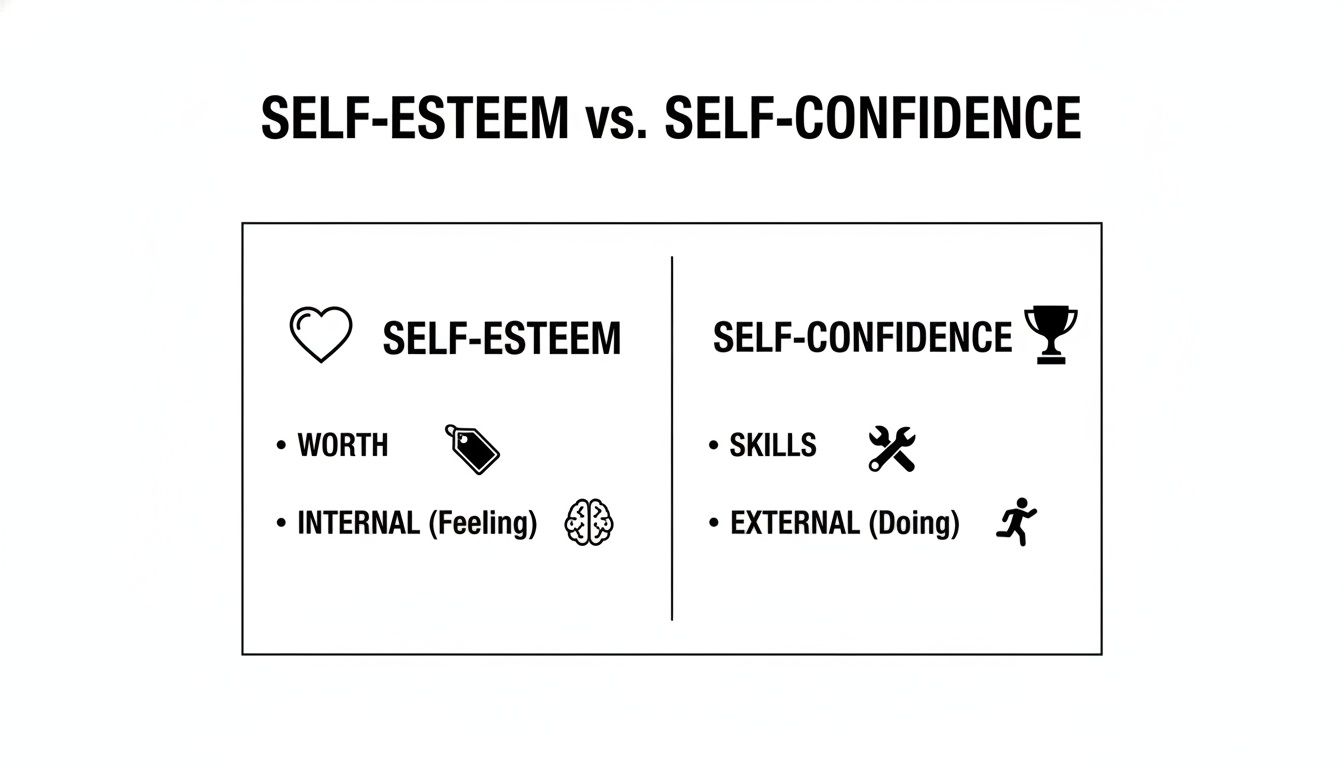
This visual helps reinforce that self-esteem is about your inherent value as a person, while self-confidence is tied to what you can do. To build a truly resilient mindset, you need both a solid foundation and well-built rooms. Getting a handle on how these two work together is also a key part of developing a growth vs. fixed mindset.
To make this even clearer, here is a quick side-by-side comparison that sums up the core differences.
Quick Comparison Self Esteem vs Self Confidence
| Attribute | Self Esteem Your Inner Worth | Self Confidence Your Outer Abilities |
|---|---|---|
| Focus | Your overall value as a person. | Your belief in your skills for a task. |
| Origin | Internal core beliefs about yourself. | External evidence and past performance. |
| Stability | Generally stable and consistent. | Varies depending on the situation. |
| Example | “I am a worthy and valuable person.” | “I am certain I can deliver this presentation.” |
As you can see, one is a broad, internal feeling of worth, while the other is a specific, external belief in your skills. Both are vital for a healthy, happy life, but they need to be nurtured in very different ways.
How Self Esteem and Self Confidence Develop and Appear
It’s one thing to define the difference between self-esteem and self-confidence, but it’s a whole other challenge to see how they actually take root and show up in your life. Their origins couldn’t be more different, and the same goes for their symptoms.
Think of it this way: self-esteem is your internal, private narrative about your worth, while self-confidence is forged in the outside world through practice and proof. One is a quiet, foundational feeling; the other is a visible, action-oriented belief. Understanding how they form and manifest is the first real step toward figuring out which one you need to nurture.
The Origins Self Esteem vs Self Confidence
So, where do these feelings even come from?
Self-esteem often traces its roots back to our earliest years. The way our parents and caregivers spoke to us, the sense of belonging we felt, and the core beliefs we absorbed about our value all laid the groundwork. It’s the sum total of feeling seen, accepted, and loved for who you are—not just for what you accomplish.
Self-confidence, on the other hand, is almost always built through hands-on experience and achievement. It’s the direct result of trying something, practicing a skill, and seeing that you can do it. Every successful presentation you deliver or new challenge you overcome acts like a deposit into a very specific “confidence account.”
This means your self-esteem is about your inherent, unchanging worth. Your self-confidence, however, is earned through action and can be intentionally grown over time.
How Low Levels Appear in Daily Life
At a glance, low self-esteem and low self-confidence can look pretty similar, but they’re driven by completely different internal monologues. Spotting their unique signs is crucial for addressing the right issue.
Here’s how they tend to manifest in day-to-day situations:
- A Sign of Low Self-Esteem: You find yourself constantly people-pleasing, often at your own expense. You might say “yes” when you mean “no” because you’re terrified of rejection or because you’ve subconsciously tied your worth to keeping others happy.
- A Sign of Low Self-Confidence: You freeze when asked to take on a new task at work that feels just outside your comfort zone. You avoid it not because you feel like a bad person, but because you doubt your specific abilities to get that particular job done.
Self-esteem answers the question, “Am I good enough?” while self-confidence answers, “Am I capable enough for this?” The first is a judgment on your being; the second is an assessment of your doing.
This distinction makes all the difference. The people-pleaser needs to work on rebuilding their fundamental sense of worth. The hesitant employee, however, needs to focus on building new skills and gathering evidence of their competence.
Contrasting Long-Term Effects
Over time, the consequences of low self-esteem versus low self-confidence diverge, shaping your life’s path in very different ways. A chronic deficit in one area creates distinct patterns of behavior and impacts your emotional health differently.
Low Self-Esteem’s Long-Term Impact:
This can foster a deep, pervasive sense of unhappiness and make you more vulnerable to mental health issues like anxiety and depression. People with low self-esteem often find themselves in unhealthy relationships, struggle to set firm boundaries, and are always chasing external validation that never quite fills the void. Their life is shadowed by a nagging feeling of “not-enoughness,” no matter how much they achieve.
Low Self-Confidence’s Long-Term Impact:
This more commonly leads to a stalled career and a life full of missed opportunities. You might be brilliant and perfectly capable but stay in a role that’s far below your potential simply because you don’t trust yourself to handle more. It creates a life of “what-ifs,” where the fear of failure keeps you from ever really trying to reach your goals.
Ultimately, while both are incredibly limiting, low self-esteem eats away at your core, making happiness feel undeserved. Low self-confidence, in contrast, primarily cages your actions and ambitions, boxing you into a smaller life than the one you could be living.
How Self-Esteem and Self-Confidence Fuel Each Other
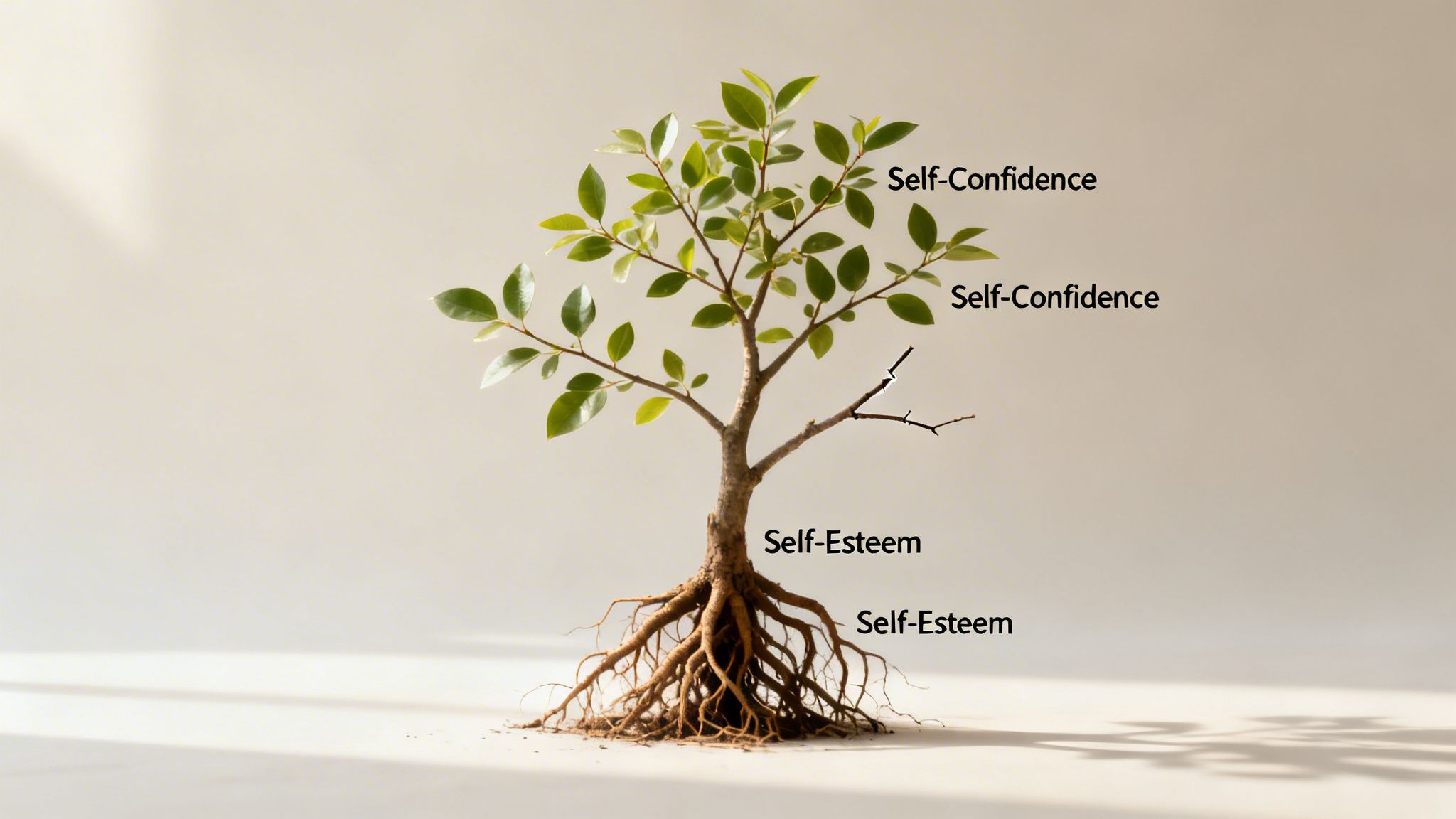
Knowing the difference between self-esteem and self-confidence is one thing. The real breakthrough comes when you grasp how they constantly interact, feeding off one another in a powerful cycle. They aren’t two separate states of being; they’re partners in a dance that dictates your every move.
Think of healthy self-esteem as your psychological safety net. When you have a core belief that you are inherently worthy, you give yourself permission to try, to fail, and to get back up again. This resilience is the bedrock for building self-confidence, because you can tackle a new challenge knowing that a stumble won’t shatter your sense of self.
And it’s a two-way street. Every time you build your confidence by mastering a skill—whether it’s nailing a presentation, learning to code, or even holding a difficult conversation—you gather tangible proof of your capabilities. This proof does more than just make you feel competent; it sends ripples back to your core, reinforcing your overall sense of worth.
The Upward Spiral of Growth
When self-esteem and self-confidence work in harmony, they create a powerful, self-reinforcing cycle of personal growth. This is where real, sustainable change happens.
Here’s what that positive feedback loop looks like in action:
- Worthiness Inspires Action: Your solid self-esteem lets you take a calculated risk. You decide to go for that promotion because you believe you deserve the opportunity, even if you don’t feel 100% confident in every single requirement just yet.
- Action Builds Competence: Through practice and hard work, you start getting the hang of the new responsibilities. This hands-on experience is the raw material from which confidence is built.
- Competence Ignites Self-Confidence: As you find your footing and start getting wins in the new role, your belief in your ability to perform soars. You feel capable and effective, proving to yourself you can handle it.
- Confidence Reinforces Self-Esteem: This new confidence validates your original belief in yourself. It reinforces the core idea that you are a person who can grow, adapt, and succeed, which in turn strengthens your fundamental self-esteem.
This cycle shows that while self-esteem can feel abstract, it’s powerfully shaped by what we do. And we’re far more likely to take bold, meaningful action when it comes from a place of self-worth.

The Danger of Fragile Confidence
But here’s the catch. A dangerous imbalance emerges when high self-confidence is built on a foundation of low self-esteem. This is what we call fragile confidence, a trap that many high-achievers accidentally fall into.
Someone with fragile confidence can look incredibly self-assured on the outside. They might be a star employee, a celebrated creative, or a successful leader. The problem is, their entire identity is propped up by their external performance.
Fragile confidence is like a beautiful sculpture made of glass. It’s impressive to look at, but the moment it’s challenged by failure or criticism, it shatters into a million pieces.
This happens because, without that solid bedrock of self-esteem, your value becomes entirely dependent on your last success. A single failed project, a bit of harsh feedback, or a period of struggle can trigger a devastating identity crisis, leaving you feeling completely worthless.
This interplay gets even more complex when we consider how self-esteem fluctuates over a lifetime. A landmark study of over 350,000 people revealed that self-esteem often dips in adolescence, climbs steadily through adulthood, and then tends to decline again in old age. Self-confidence in specific skills, however, doesn’t follow this predictable arc, which really highlights its distinct nature. You can read more about these fascinating trends in the full research published by the American Psychological Association.
The key is to recognize this dynamic in your own life. Is your confidence resilient enough to handle setbacks? Or is it fragile, relying on constant validation? The goal is to cultivate a healthy relationship between the two, where your actions build lasting confidence, and that confidence reinforces a deep, unshakable belief in your own value.
It’s one thing to understand the difference between self-esteem and self-confidence in theory. But to make real, tangible progress, you need to know where you’re starting from. This isn’t about judging yourself—it’s about taking an honest look so you can build a clear roadmap for growth.
Think of it like a personal inventory. In clinical settings, psychologists use validated tools like the Rosenberg Self-Esteem Scale to get a precise measurement of a person’s sense of self-worth. We can use a similar, more informal approach to get a quick snapshot of where we stand right now.
Getting a Quick Read on Your Self-Esteem and Self-Confidence
Instead of separate quizzes, let’s look at a few statements side-by-side. This helps highlight the subtle but important differences in how you might be feeling. It makes it easier to see if your inner sense of worth (esteem) aligns with your outer belief in your abilities (confidence).
Below is a quick self-assessment. Read each statement and simply check the box that feels more true for you right now. There are no right or wrong answers, only honest reflections.
Self-Assessment Snapshot
| Statement | More Aligned with My Self-Esteem | More Aligned with My Self-Confidence |
|---|---|---|
| I generally feel good about who I am as a person. | ☐ | |
| I trust my ability to learn new things. | ☐ | |
| I believe I am worthy of respect, regardless of my achievements. | ☐ | |
| I am prepared to handle unexpected problems that come my way. | ☐ | |
| I don’t feel like a failure, even when I make mistakes. | ☐ | |
| I know I have what it takes to achieve my goals. | ☐ |
This little exercise isn’t a scientific diagnosis, but it’s a powerful starting point. It helps you see which side of the coin—your internal value or your external capability—might need a bit more attention.
How to Make Sense of Your Results
So, what did you notice? The results aren’t a final verdict but more of a compass pointing you in the right direction.
-
Leaning toward Self-Esteem: If you found yourself checking more boxes in this column, it suggests you have a solid foundation of self-worth. You feel you are valuable just for being you. This is fantastic! It’s the bedrock of emotional resilience.
-
Leaning toward Self-Confidence: Checking more boxes here indicates a strong belief in your abilities. You feel competent, resourceful, and ready to take on challenges. This is your engine for action and achievement.
The goal isn’t to score perfectly in one or the other, but to see where the balance lies.
What the Imbalance Reveals: Many people find they are stronger in one area than the other. Someone with high self-esteem but low self-confidence might feel worthy but hesitate to act on their potential. On the flip side, someone with high self-confidence but low self-esteem might be a high-achiever who secretly feels like a fraud, constantly needing external validation to feel okay.
Recognizing this imbalance is the first step. It tells you where to focus your energy—whether that’s on nurturing your core sense of worth or on building tangible proof of your capabilities.
How to Build Resilient Self-Esteem from the Ground Up
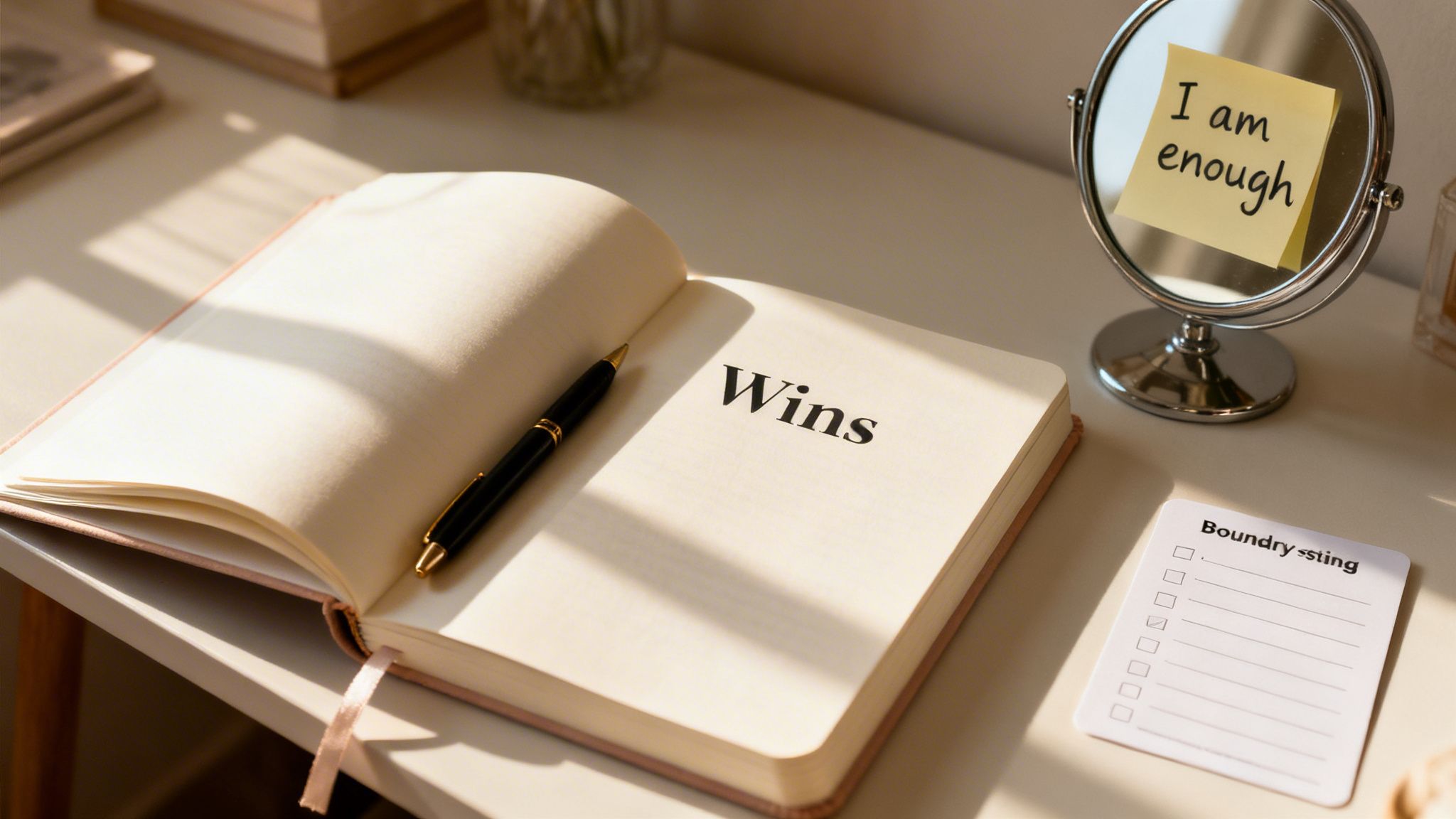
While confidence often grows from what we accomplish, true self-esteem is an inside job. It’s built by intentionally practicing things that prove your inherent worth, completely separate from your wins and losses. These aren’t just feel-good exercises; they are practical ways to nurture a deep, internal sense of value.
Building a solid foundation of self-esteem isn’t about looking in the mirror and repeating empty affirmations. It’s about taking real, concrete actions that show you that you deserve respect and kindness—most importantly, from yourself. This creates an unshakable core that keeps you steady, even when life gets rocky.
The goal here is to shift your internal monologue from self-criticism to genuine self-respect.
Practice Active Self-Compassion
The first, most crucial step is to turn down the volume on your inner critic. Self-compassion is simply about treating yourself with the same kindness you’d give to a friend who’s having a hard time. It means accepting your own humanity, flaws and all, without judgment.
Start by just noticing when that harsh inner voice pipes up. When you catch yourself in a loop of negative self-talk, just pause. Then, consciously try to reframe the thought.
How to Reframe Your Inner Critic:
- Instead of: “I’m so stupid for making that mistake.”
- Try: “That didn’t go as planned, and that’s okay. What can I learn from this?”
- Instead of: “I’ll never be good enough.”
- Try: “This is a tough moment, and I’m doing the best I can. It’s okay to struggle.”
A game-changing question I often have clients ask themselves is: “How would I talk to a friend in this exact situation?” This simple shift in perspective can instantly change your internal tone from harsh judgment to warm support.

Create a ‘Wins’ Journal Focused on Character
This isn’t your typical accomplishment list. A character-focused ‘wins’ journal is about noticing the qualities and effort you bring to the table, not just the results you get. This practice literally retrains your brain to see your own intrinsic value.
Every day, jot down one to three “wins” that highlight your character, resilience, or integrity. This is how you build self-respect, a core pillar of esteem.
Examples for Your ‘Wins’ Journal:
- Win: “I was honest about a mistake I made at work, even though it was terrifying.” (This highlights your integrity)
- Win: “I felt completely overwhelmed but still took 10 minutes to just sit and breathe.” (This highlights your commitment to self-care)
- Win: “I really listened to my friend’s problem without jumping in to fix it.” (This highlights your empathy)
This small exercise moves your focus from “What did I do?” to “Who was I today?” Over time, you build an undeniable portfolio of evidence that you are a person of value, no matter what your to-do list looks like. It’s also a fantastic way of overcoming limiting beliefs that might be keeping your self-esteem in a chokehold.
Set and Enforce Healthy Boundaries
Boundaries are self-worth in action. They are the clear lines you draw to protect your emotional, mental, and physical well-being. When you constantly fail to set or enforce them, you’re sending a subconscious message to yourself that your needs come second.
Start small. Pick one area where you feel your energy is constantly being drained. Maybe it’s a colleague who always drops last-minute work on your desk or a relative who makes critical comments.
A Simple Framework for Setting a Boundary:
- Identify the Need: “I need quiet, uninterrupted time in the evenings to recharge my batteries.”
- State the Boundary Clearly and Calmly: “Just so you know, I won’t be responding to work emails after 7 PM anymore.”
- Hold the Line (When It’s Tested): When someone inevitably pushes back, you don’t need to apologize or over-explain. Simply restate your boundary. “I understand this is a new routine, but I really need to stick to my 7 PM cutoff.”
Every single time you enforce a boundary, you cast a vote for your own self-respect. This isn’t selfish—it’s an absolutely essential practice for building and protecting a healthy sense of who you are.

Proven Techniques to Boost Your Situational Self Confidence
If self-esteem is your internal sense of worth, self-confidence is its real-world counterpart. It’s not something you just have; it’s something you build by collecting cold, hard evidence of what you can do. These techniques are all about taking action to create that proof.
Think of it like training for a marathon. You wouldn’t just wish yourself to the finish line. You build your endurance one practice run at a time. Confidence works the exact same way—it’s earned, step by step.
Master the ‘Small Wins’ Method
When a big goal feels paralyzing, it’s not a sign you lack willpower. It’s usually just a sign the goal is too big to tackle all at once. The trick is to make it smaller with the ‘Small Wins’ method, breaking a daunting project into ridiculously tiny micro-tasks.
Each tiny success gives your brain a hit of “I did it,” creating momentum and building a file of evidence that you’re making real progress. This isn’t just about feeling good; it’s about systematically proving your competence to yourself.
Example: The Intimidating Presentation
- Intimidating Goal: “Create and deliver a 30-minute presentation.”
- Small Wins Breakdown:
- Day 1: Open a new document and write only the title. That’s it.
- Day 2: Jot down three main bullet points for an outline.
- Day 3: Find one interesting statistic to use in the introduction.
- Day 4: Create just the first two slides.
Every time you check off a tiny step, you reinforce the belief that you can handle the next one. Before you know it, that once-terrifying goal feels completely within your grasp.
Engage the Competence Loop
Real, lasting confidence is born from a cycle of practice, feedback, and adjustment. This is the Competence Loop, and it’s the engine that drives true skill. It’s the difference between mindlessly repeating something and practicing with intention.
Here’s how the loop works:
- Practice: You try a specific skill with your full attention.
- Feedback: You get information on your performance. This could come from a mentor, watching a recording of yourself, or looking at objective results.
- Refinement: You use that feedback to make smart adjustments and try again.
This process removes the guesswork from getting better. You aren’t just hoping for improvement; you’re engineering it. This is a foundational concept in many coaching frameworks and is closely related to some effective cognitive-behavioral therapy techniques.
Confidence is a byproduct of evidence. The more evidence you gather through practice and small successes, the more your belief in your abilities becomes unshakable.

Use Mental Rehearsal for High-Stakes Events
Here’s a fascinating thing about your brain: it often struggles to tell the difference between a real memory and a vividly imagined one. You can use this quirk to your advantage with mental rehearsal, especially for nerve-wracking events like a job interview, a tough conversation, or speaking in public.
Instead of letting your mind spiral into what-if scenarios, take a few minutes each day to vividly picture the event going perfectly. See your confident posture, hear your calm tone of voice, and imagine yourself delivering clear, powerful answers. This does more than just soothe your anxiety; it actually primes your brain for success by creating familiar neural pathways before you even walk in the door.
Adopt Power Posing and Body Language
Your body and mind are in constant communication. How you hold yourself physically sends direct signals to your brain, a concept explored in well-known research on “power posing.” Simply standing or sitting in an expansive, open way can make you feel more powerful and self-assured.
Try This Quick State Change:
Before you walk into a meeting or make a call you’re dreading, find a private space and hold a “power pose” for just two minutes.
- Stand with your feet planted firmly apart.
- Place your hands on your hips.
- Lift your chin and open up your chest.
This isn’t about faking it for others; it’s a way to signal to your own brain that you are capable and in control. This simple physical reset can give you an immediate jolt of situational confidence right when you need it most. By putting these strategies to work, you can shift from feeling uncertain to feeling genuinely capable, one proven action at a time.
Frequently Asked Questions
When we start digging into the self esteem vs self confidence conversation, a few questions always pop up. Let’s tackle some of the most common ones I hear from clients to clear up any confusion and help you focus your efforts.
Can I Have High Self Confidence but Low Self Esteem?
Yes, and it’s a strange paradox I see all the time, especially with people who seem to have it all together. You might be a rockstar at your job or the life of the party, feeling totally confident in those moments, yet still go home feeling like you’re not good enough or that you’re just fooling everyone.
This is what we call “fragile confidence.” It’s propped up entirely by your latest achievement or compliment. When a project fails or you face criticism, your whole sense of self can feel like it’s teetering because it isn’t anchored in a stable, internal sense of worth. The real work is building your self-esteem so your value as a human being isn’t tied to your performance on any given day.
Which Is More Important to Work on First?
While you need both to truly thrive, most experts, myself included, will tell you to start with self-esteem. Think of it as the foundation. A solid sense of self-worth gives you the emotional safety net you need to try new things, risk failure, and build genuine, lasting confidence.
Building confidence without a base of self-esteem is like constructing a beautiful house on a foundation of sand. It might look impressive for a while, but it lacks the stability to withstand storms.
That said, the two often grow in a beautiful upward spiral. Nailing a small, manageable goal can give you a tangible win, which in turn can give your self-worth a much-needed jolt, kickstarting the whole process.
How Long Does It Take to Improve Self Esteem?
Improving your self-esteem is a marathon, not a sprint. It’s not like learning a new skill where you can see progress in a matter of weeks. We’re talking about shifting core beliefs you may have held about yourself for years.
With consistent practice using tools like self-compassion exercises and journaling, you can absolutely feel small but powerful shifts in a few weeks. However, making deep, lasting change usually takes several months of dedicated, patient effort. It’s far healthier to see it as an ongoing practice of self-care rather than a project with a deadline.
If this resonated, go deeper. My book Love, Success, Freedom and Boundaries gives you twelve frameworks for seeing the patterns that shape your life — and changing the ones that aren’t working.
Keep Reading
- Self Esteem vs Confidence: Key Differences & How to Build
- Self Esteem vs Self Confidence: What’s the Difference?
- Mastering the Antonym to Confidence: 8 Key Steps
If you process emotions through writing — journaling, drafting hard conversations, putting words to what you’re feeling — the tool I use to draft most of my words is Wispr Flow. It transcribes your voice into clean, edited text in real time, so the friction between thinking it and writing it basically disappears.
If this resonated, go deeper. My book Love, Success, Freedom and Boundaries gives you twelve frameworks for seeing the patterns that shape your life — and changing the ones that aren’t working.
Keep Reading
- Self Esteem vs Confidence: Key Differences & How to Build
- Self Esteem vs Self Confidence: What’s the Difference?
- Mastering the Antonym to Confidence: 8 Key Steps
If you process emotions through writing — journaling, drafting hard conversations, putting words to what you’re feeling — the tool I use to draft most of my words is Wispr Flow. It transcribes your voice into clean, edited text in real time, so the friction between thinking it and writing it basically disappears.
If this resonated, go deeper. My book Love, Success, Freedom and Boundaries gives you twelve frameworks for seeing the patterns that shape your life — and changing the ones that aren’t working.
Keep Reading
- Self Esteem vs Confidence: Key Differences & How to Build
- Self Esteem vs Self Confidence: What’s the Difference?
- Mastering the Antonym to Confidence: 8 Key Steps
If you process emotions through writing — journaling, drafting hard conversations, putting words to what you’re feeling — the tool I use to draft most of my words is Wispr Flow. It transcribes your voice into clean, edited text in real time, so the friction between thinking it and writing it basically disappears.
If this resonated, go deeper. My book Love, Success, Freedom and Boundaries gives you twelve frameworks for seeing the patterns that shape your life — and changing the ones that aren’t working.
Keep Reading
- Self Esteem vs Confidence: Key Differences & How to Build
- Self Esteem vs Self Confidence: What’s the Difference?
- Mastering the Antonym to Confidence: 8 Key Steps
If you process emotions through writing — journaling, drafting hard conversations, putting words to what you’re feeling — the tool I use to draft most of my words is Wispr Flow. It transcribes your voice into clean, edited text in real time, so the friction between thinking it and writing it basically disappears.
If this resonated, go deeper. My book Love, Success, Freedom and Boundaries gives you twelve frameworks for seeing the patterns that shape your life — and changing the ones that aren’t working.
Keep Reading
- Self Esteem vs Confidence: Key Differences & How to Build
- Self Esteem vs Self Confidence: What’s the Difference?
- Mastering the Antonym to Confidence: 8 Key Steps
If you process emotions through writing — journaling, drafting hard conversations, putting words to what you’re feeling — the tool I use to draft most of my words is Wispr Flow. It transcribes your voice into clean, edited text in real time, so the friction between thinking it and writing it basically disappears.
If this resonated, go deeper. My book Love, Success, Freedom and Boundaries gives you twelve frameworks for seeing the patterns that shape your life — and changing the ones that aren’t working.
Keep Reading
- Self Esteem vs Confidence: Key Differences & How to Build
- Self Esteem vs Self Confidence: What’s the Difference?
- Mastering the Antonym to Confidence: 8 Key Steps
If you process emotions through writing — journaling, drafting hard conversations, putting words to what you’re feeling — the tool I use to draft most of my words is Wispr Flow. It transcribes your voice into clean, edited text in real time, so the friction between thinking it and writing it basically disappears.
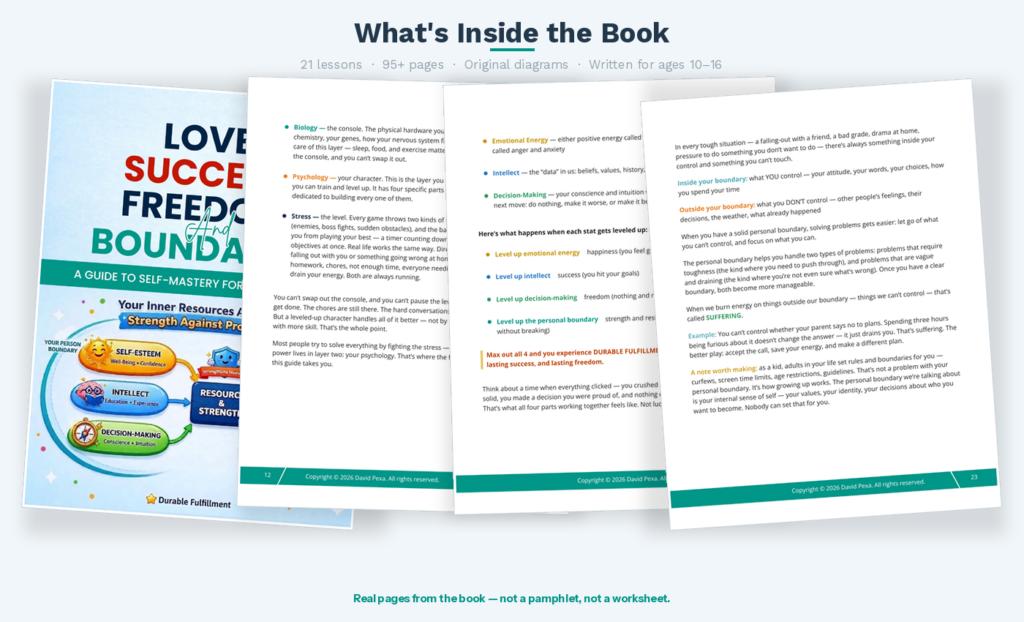
If this resonated, go deeper. My book Love, Success, Freedom and Boundaries gives you twelve frameworks for seeing the patterns that shape your life — and changing the ones that aren’t working.
Keep Reading
- Self Esteem vs Confidence: Key Differences & How to Build
- Self Esteem vs Self Confidence: What’s the Difference?
- Mastering the Antonym to Confidence: 8 Key Steps
If you process emotions through writing — journaling, drafting hard conversations, putting words to what you’re feeling — the tool I use to draft most of my words is Wispr Flow. It transcribes your voice into clean, edited text in real time, so the friction between thinking it and writing it basically disappears.
If this resonated, go deeper. My book Love, Success, Freedom and Boundaries gives you twelve frameworks for seeing the patterns that shape your life — and changing the ones that aren’t working.
Keep Reading
- Self Esteem vs Confidence: Key Differences & How to Build
- Self Esteem vs Self Confidence: What’s the Difference?
- Mastering the Antonym to Confidence: 8 Key Steps
If you process emotions through writing — journaling, drafting hard conversations, putting words to what you’re feeling — the tool I use to draft most of my words is Wispr Flow. It transcribes your voice into clean, edited text in real time, so the friction between thinking it and writing it basically disappears.
If this resonated, go deeper. My book Love, Success, Freedom and Boundaries gives you twelve frameworks for seeing the patterns that shape your life — and changing the ones that aren’t working.
Keep Reading
- Self Esteem vs Confidence: Key Differences & How to Build
- Self Esteem vs Self Confidence: What’s the Difference?
- Mastering the Antonym to Confidence: 8 Key Steps
If you process emotions through writing — journaling, drafting hard conversations, putting words to what you’re feeling — the tool I use to draft most of my words is Wispr Flow. It transcribes your voice into clean, edited text in real time, so the friction between thinking it and writing it basically disappears.
If this resonated, go deeper. My book Love, Success, Freedom and Boundaries gives you twelve frameworks for seeing the patterns that shape your life — and changing the ones that aren’t working.
Keep Reading
- Self Esteem vs Confidence: Key Differences & How to Build
- Self Esteem vs Self Confidence: What’s the Difference?
- Mastering the Antonym to Confidence: 8 Key Steps
If you process emotions through writing — journaling, drafting hard conversations, putting words to what you’re feeling — the tool I use to draft most of my words is Wispr Flow. It transcribes your voice into clean, edited text in real time, so the friction between thinking it and writing it basically disappears.
If this resonated, go deeper. My book Love, Success, Freedom and Boundaries gives you twelve frameworks for seeing the patterns that shape your life — and changing the ones that aren’t working.
Keep Reading
- Self Esteem vs Confidence: Key Differences & How to Build
- Self Esteem vs Self Confidence: What’s the Difference?
- Mastering the Antonym to Confidence: 8 Key Steps
If you process emotions through writing — journaling, drafting hard conversations, putting words to what you’re feeling — the tool I use to draft most of my words is Wispr Flow. It transcribes your voice into clean, edited text in real time, so the friction between thinking it and writing it basically disappears.
If this resonated, go deeper. My book Love, Success, Freedom and Boundaries gives you twelve frameworks for seeing the patterns that shape your life — and changing the ones that aren’t working.
Keep Reading
- Self Esteem vs Confidence: Key Differences & How to Build
- Self Esteem vs Self Confidence: What’s the Difference?
- Mastering the Antonym to Confidence: 8 Key Steps
If you process emotions through writing — journaling, drafting hard conversations, putting words to what you’re feeling — the tool I use to draft most of my words is Wispr Flow. It transcribes your voice into clean, edited text in real time, so the friction between thinking it and writing it basically disappears.
If this resonated, go deeper. My book Love, Success, Freedom and Boundaries gives you twelve frameworks for seeing the patterns that shape your life — and changing the ones that aren’t working.
Keep Reading
- Self Esteem vs Confidence: Key Differences & How to Build
- Self Esteem vs Self Confidence: What’s the Difference?
- Mastering the Antonym to Confidence: 8 Key Steps
If you process emotions through writing — journaling, drafting hard conversations, putting words to what you’re feeling — the tool I use to draft most of my words is Wispr Flow. It transcribes your voice into clean, edited text in real time, so the friction between thinking it and writing it basically disappears.
If this resonated, go deeper. My book Love, Success, Freedom and Boundaries gives you twelve frameworks for seeing the patterns that shape your life — and changing the ones that aren’t working.
Keep Reading
- Self Esteem vs Confidence: Key Differences & How to Build
- Self Esteem vs Self Confidence: What’s the Difference?
- Mastering the Antonym to Confidence: 8 Key Steps
If you process emotions through writing — journaling, drafting hard conversations, putting words to what you’re feeling — the tool I use to draft most of my words is Wispr Flow. It transcribes your voice into clean, edited text in real time, so the friction between thinking it and writing it basically disappears.
If this resonated, go deeper. My book Love, Success, Freedom and Boundaries gives you twelve frameworks for seeing the patterns that shape your life — and changing the ones that aren’t working.
Keep Reading
- Self Esteem vs Confidence: Key Differences & How to Build
- Self Esteem vs Self Confidence: What’s the Difference?
- Mastering the Antonym to Confidence: 8 Key Steps
If you process emotions through writing — journaling, drafting hard conversations, putting words to what you’re feeling — the tool I use to draft most of my words is Wispr Flow. It transcribes your voice into clean, edited text in real time, so the friction between thinking it and writing it basically disappears.
If this resonated, go deeper. My book Love, Success, Freedom and Boundaries gives you twelve frameworks for seeing the patterns that shape your life — and changing the ones that aren’t working.
Keep Reading
- Self Esteem vs Confidence: Key Differences & How to Build
- Self Esteem vs Self Confidence: What’s the Difference?
- Mastering the Antonym to Confidence: 8 Key Steps
If you process emotions through writing — journaling, drafting hard conversations, putting words to what you’re feeling — the tool I use to draft most of my words is Wispr Flow. It transcribes your voice into clean, edited text in real time, so the friction between thinking it and writing it basically disappears.
If this resonated, go deeper. My book Love, Success, Freedom and Boundaries gives you twelve frameworks for seeing the patterns that shape your life — and changing the ones that aren’t working.
Keep Reading
- Self Esteem vs Confidence: Key Differences & How to Build
- Self Esteem vs Self Confidence: What’s the Difference?
- Mastering the Antonym to Confidence: 8 Key Steps
If you process emotions through writing — journaling, drafting hard conversations, putting words to what you’re feeling — the tool I use to draft most of my words is Wispr Flow. It transcribes your voice into clean, edited text in real time, so the friction between thinking it and writing it basically disappears.
If this resonated, go deeper. My book Love, Success, Freedom and Boundaries gives you twelve frameworks for seeing the patterns that shape your life — and changing the ones that aren’t working.
Keep Reading
- Self Esteem vs Confidence: Key Differences & How to Build
- Self Esteem vs Self Confidence: What’s the Difference?
- Mastering the Antonym to Confidence: 8 Key Steps
If you process emotions through writing — journaling, drafting hard conversations, putting words to what you’re feeling — the tool I use to draft most of my words is Wispr Flow. It transcribes your voice into clean, edited text in real time, so the friction between thinking it and writing it basically disappears.
If this resonated, go deeper. My book Love, Success, Freedom and Boundaries gives you twelve frameworks for seeing the patterns that shape your life — and changing the ones that aren’t working.
Keep Reading
- Self Esteem vs Confidence: Key Differences & How to Build
- Self Esteem vs Self Confidence: What’s the Difference?
- Mastering the Antonym to Confidence: 8 Key Steps
If you process emotions through writing — journaling, drafting hard conversations, putting words to what you’re feeling — the tool I use to draft most of my words is Wispr Flow. It transcribes your voice into clean, edited text in real time, so the friction between thinking it and writing it basically disappears.
If this resonated, go deeper. My book Love, Success, Freedom and Boundaries gives you twelve frameworks for seeing the patterns that shape your life — and changing the ones that aren’t working.
Keep Reading
- Self Esteem vs Confidence: Key Differences & How to Build
- Self Esteem vs Self Confidence: What’s the Difference?
- Mastering the Antonym to Confidence: 8 Key Steps
If you process emotions through writing — journaling, drafting hard conversations, putting words to what you’re feeling — the tool I use to draft most of my words is Wispr Flow. It transcribes your voice into clean, edited text in real time, so the friction between thinking it and writing it basically disappears.
If this resonated, go deeper. My book Love, Success, Freedom and Boundaries gives you twelve frameworks for seeing the patterns that shape your life — and changing the ones that aren’t working.
Keep Reading
- Self Esteem vs Confidence: Key Differences & How to Build
- Self Esteem vs Self Confidence: What’s the Difference?
- Mastering the Antonym to Confidence: 8 Key Steps
If you process emotions through writing — journaling, drafting hard conversations, putting words to what you’re feeling — the tool I use to draft most of my words is Wispr Flow. It transcribes your voice into clean, edited text in real time, so the friction between thinking it and writing it basically disappears.
If this resonated, go deeper. My book Love, Success, Freedom and Boundaries gives you twelve frameworks for seeing the patterns that shape your life — and changing the ones that aren’t working.
Keep Reading
- Self Esteem vs Confidence: Key Differences & How to Build
- Self Esteem vs Self Confidence: What’s the Difference?
- Mastering the Antonym to Confidence: 8 Key Steps
If you process emotions through writing — journaling, drafting hard conversations, putting words to what you’re feeling — the tool I use to draft most of my words is Wispr Flow. It transcribes your voice into clean, edited text in real time, so the friction between thinking it and writing it basically disappears.
If this resonated, go deeper. My book Love, Success, Freedom and Boundaries gives you twelve frameworks for seeing the patterns that shape your life — and changing the ones that aren’t working.
Keep Reading
- Self Esteem vs Confidence: Key Differences & How to Build
- Self Esteem vs Self Confidence: What’s the Difference?
- Mastering the Antonym to Confidence: 8 Key Steps
If you process emotions through writing — journaling, drafting hard conversations, putting words to what you’re feeling — the tool I use to draft most of my words is Wispr Flow. It transcribes your voice into clean, edited text in real time, so the friction between thinking it and writing it basically disappears.
If this resonated, go deeper. My book Love, Success, Freedom and Boundaries gives you twelve frameworks for seeing the patterns that shape your life — and changing the ones that aren’t working.
Keep Reading
- Self Esteem vs Confidence: Key Differences & How to Build
- Self Esteem vs Self Confidence: What’s the Difference?
- Mastering the Antonym to Confidence: 8 Key Steps
If you process emotions through writing — journaling, drafting hard conversations, putting words to what you’re feeling — the tool I use to draft most of my words is Wispr Flow. It transcribes your voice into clean, edited text in real time, so the friction between thinking it and writing it basically disappears.
If this resonated, go deeper. My book Love, Success, Freedom and Boundaries gives you twelve frameworks for seeing the patterns that shape your life — and changing the ones that aren’t working.
Keep Reading
- Self Esteem vs Confidence: Key Differences & How to Build
- Self Esteem vs Self Confidence: What’s the Difference?
- Mastering the Antonym to Confidence: 8 Key Steps
If you process emotions through writing — journaling, drafting hard conversations, putting words to what you’re feeling — the tool I use to draft most of my words is Wispr Flow. It transcribes your voice into clean, edited text in real time, so the friction between thinking it and writing it basically disappears.
If this resonated, go deeper. My book Love, Success, Freedom and Boundaries gives you twelve frameworks for seeing the patterns that shape your life — and changing the ones that aren’t working.
Keep Reading
- Self Esteem vs Confidence: Key Differences & How to Build
- Self Esteem vs Self Confidence: What’s the Difference?
- Mastering the Antonym to Confidence: 8 Key Steps
If you process emotions through writing — journaling, drafting hard conversations, putting words to what you’re feeling — the tool I use to draft most of my words is Wispr Flow. It transcribes your voice into clean, edited text in real time, so the friction between thinking it and writing it basically disappears.
If this resonated, go deeper. My book Love, Success, Freedom and Boundaries gives you twelve frameworks for seeing the patterns that shape your life — and changing the ones that aren’t working.
Keep Reading
- Self Esteem vs Confidence: Key Differences & How to Build
- Self Esteem vs Self Confidence: What’s the Difference?
- Mastering the Antonym to Confidence: 8 Key Steps
If you process emotions through writing — journaling, drafting hard conversations, putting words to what you’re feeling — the tool I use to draft most of my words is Wispr Flow. It transcribes your voice into clean, edited text in real time, so the friction between thinking it and writing it basically disappears.
If this resonated, go deeper. My book Love, Success, Freedom and Boundaries gives you twelve frameworks for seeing the patterns that shape your life — and changing the ones that aren’t working.
Keep Reading
- Self Esteem vs Confidence: Key Differences & How to Build
- Self Esteem vs Self Confidence: What’s the Difference?
- Mastering the Antonym to Confidence: 8 Key Steps
If you process emotions through writing — journaling, drafting hard conversations, putting words to what you’re feeling — the tool I use to draft most of my words is Wispr Flow. It transcribes your voice into clean, edited text in real time, so the friction between thinking it and writing it basically disappears.
If this resonated, go deeper. My book Love, Success, Freedom and Boundaries gives you twelve frameworks for seeing the patterns that shape your life — and changing the ones that aren’t working.
Keep Reading
- Self Esteem vs Confidence: Key Differences & How to Build
- Self Esteem vs Self Confidence: What’s the Difference?
- Mastering the Antonym to Confidence: 8 Key Steps
If you process emotions through writing — journaling, drafting hard conversations, putting words to what you’re feeling — the tool I use to draft most of my words is Wispr Flow. It transcribes your voice into clean, edited text in real time, so the friction between thinking it and writing it basically disappears.
If this resonated, go deeper. My book Love, Success, Freedom and Boundaries gives you twelve frameworks for seeing the patterns that shape your life — and changing the ones that aren’t working.
Keep Reading
- Self Esteem vs Confidence: Key Differences & How to Build
- Self Esteem vs Self Confidence: What’s the Difference?
- Mastering the Antonym to Confidence: 8 Key Steps
If you process emotions through writing — journaling, drafting hard conversations, putting words to what you’re feeling — the tool I use to draft most of my words is Wispr Flow. It transcribes your voice into clean, edited text in real time, so the friction between thinking it and writing it basically disappears.
If this resonated, go deeper. My book Love, Success, Freedom and Boundaries gives you twelve frameworks for seeing the patterns that shape your life — and changing the ones that aren’t working.
Keep Reading
- Self Esteem vs Confidence: Key Differences & How to Build
- Self Esteem vs Self Confidence: What’s the Difference?
- Mastering the Antonym to Confidence: 8 Key Steps
If you process emotions through writing — journaling, drafting hard conversations, putting words to what you’re feeling — the tool I use to draft most of my words is Wispr Flow. It transcribes your voice into clean, edited text in real time, so the friction between thinking it and writing it basically disappears.
If this resonated, go deeper. My book Love, Success, Freedom and Boundaries gives you twelve frameworks for seeing the patterns that shape your life — and changing the ones that aren’t working.
Keep Reading
- Self Esteem vs Confidence: Key Differences & How to Build
- Self Esteem vs Self Confidence: What’s the Difference?
- Mastering the Antonym to Confidence: 8 Key Steps
If you process emotions through writing — journaling, drafting hard conversations, putting words to what you’re feeling — the tool I use to draft most of my words is Wispr Flow. It transcribes your voice into clean, edited text in real time, so the friction between thinking it and writing it basically disappears.
If this resonated, go deeper. My book Love, Success, Freedom and Boundaries gives you twelve frameworks for seeing the patterns that shape your life — and changing the ones that aren’t working.
Keep Reading
- Self Esteem vs Confidence: Key Differences & How to Build
- Self Esteem vs Self Confidence: What’s the Difference?
- Mastering the Antonym to Confidence: 8 Key Steps
If you process emotions through writing — journaling, drafting hard conversations, putting words to what you’re feeling — the tool I use to draft most of my words is Wispr Flow. It transcribes your voice into clean, edited text in real time, so the friction between thinking it and writing it basically disappears.
If this resonated, go deeper. My book Love, Success, Freedom and Boundaries gives you twelve frameworks for seeing the patterns that shape your life — and changing the ones that aren’t working.
Keep Reading
- Self Esteem vs Confidence: Key Differences & How to Build
- Self Esteem vs Self Confidence: What’s the Difference?
- Mastering the Antonym to Confidence: 8 Key Steps
If you process emotions through writing — journaling, drafting hard conversations, putting words to what you’re feeling — the tool I use to draft most of my words is Wispr Flow. It transcribes your voice into clean, edited text in real time, so the friction between thinking it and writing it basically disappears.
If this resonated, go deeper. My book Love, Success, Freedom and Boundaries gives you twelve frameworks for seeing the patterns that shape your life — and changing the ones that aren’t working.
Keep Reading
- Self Esteem vs Confidence: Key Differences & How to Build
- Self Esteem vs Self Confidence: What’s the Difference?
- Mastering the Antonym to Confidence: 8 Key Steps
If you process emotions through writing — journaling, drafting hard conversations, putting words to what you’re feeling — the tool I use to draft most of my words is Wispr Flow. It transcribes your voice into clean, edited text in real time, so the friction between thinking it and writing it basically disappears.
If this resonated, go deeper. My book Love, Success, Freedom and Boundaries gives you twelve frameworks for seeing the patterns that shape your life — and changing the ones that aren’t working.
Keep Reading
- Self Esteem vs Confidence: Key Differences & How to Build
- Self Esteem vs Self Confidence: What’s the Difference?
- Mastering the Antonym to Confidence: 8 Key Steps
If you process emotions through writing — journaling, drafting hard conversations, putting words to what you’re feeling — the tool I use to draft most of my words is Wispr Flow. It transcribes your voice into clean, edited text in real time, so the friction between thinking it and writing it basically disappears.
If this resonated, go deeper. My book Love, Success, Freedom and Boundaries gives you twelve frameworks for seeing the patterns that shape your life — and changing the ones that aren’t working.
Keep Reading
- Self Esteem vs Confidence: Key Differences & How to Build
- Self Esteem vs Self Confidence: What’s the Difference?
- Mastering the Antonym to Confidence: 8 Key Steps
If you process emotions through writing — journaling, drafting hard conversations, putting words to what you’re feeling — the tool I use to draft most of my words is Wispr Flow. It transcribes your voice into clean, edited text in real time, so the friction between thinking it and writing it basically disappears.
If this resonated, go deeper. My book Love, Success, Freedom and Boundaries gives you twelve frameworks for seeing the patterns that shape your life — and changing the ones that aren’t working.
Keep Reading
- Self Esteem vs Confidence: Key Differences & How to Build
- Self Esteem vs Self Confidence: What’s the Difference?
- Mastering the Antonym to Confidence: 8 Key Steps
If you process emotions through writing — journaling, drafting hard conversations, putting words to what you’re feeling — the tool I use to draft most of my words is Wispr Flow. It transcribes your voice into clean, edited text in real time, so the friction between thinking it and writing it basically disappears.
If this resonated, go deeper. My book Love, Success, Freedom and Boundaries gives you twelve frameworks for seeing the patterns that shape your life — and changing the ones that aren’t working.
Keep Reading
- Self Esteem vs Confidence: Key Differences & How to Build
- Self Esteem vs Self Confidence: What’s the Difference?
- Mastering the Antonym to Confidence: 8 Key Steps
If you process emotions through writing — journaling, drafting hard conversations, putting words to what you’re feeling — the tool I use to draft most of my words is Wispr Flow. It transcribes your voice into clean, edited text in real time, so the friction between thinking it and writing it basically disappears.
If this resonated, go deeper. My book Love, Success, Freedom and Boundaries gives you twelve frameworks for seeing the patterns that shape your life — and changing the ones that aren’t working.
Keep Reading
- Self Esteem vs Confidence: Key Differences & How to Build
- Self Esteem vs Self Confidence: What’s the Difference?
- Mastering the Antonym to Confidence: 8 Key Steps
If you process emotions through writing — journaling, drafting hard conversations, putting words to what you’re feeling — the tool I use to draft most of my words is Wispr Flow. It transcribes your voice into clean, edited text in real time, so the friction between thinking it and writing it basically disappears.
If this resonated, go deeper. My book Love, Success, Freedom and Boundaries gives you twelve frameworks for seeing the patterns that shape your life — and changing the ones that aren’t working.
Keep Reading
- Self Esteem vs Confidence: Key Differences & How to Build
- Self Esteem vs Self Confidence: What’s the Difference?
- Mastering the Antonym to Confidence: 8 Key Steps
If you process emotions through writing — journaling, drafting hard conversations, putting words to what you’re feeling — the tool I use to draft most of my words is Wispr Flow. It transcribes your voice into clean, edited text in real time, so the friction between thinking it and writing it basically disappears.
If this resonated, go deeper. My book Love, Success, Freedom and Boundaries gives you twelve frameworks for seeing the patterns that shape your life — and changing the ones that aren’t working.
Keep Reading
- Self Esteem vs Confidence: Key Differences & How to Build
- Self Esteem vs Self Confidence: What’s the Difference?
- Mastering the Antonym to Confidence: 8 Key Steps
If you process emotions through writing — journaling, drafting hard conversations, putting words to what you’re feeling — the tool I use to draft most of my words is Wispr Flow. It transcribes your voice into clean, edited text in real time, so the friction between thinking it and writing it basically disappears.
If this resonated, go deeper. My book Love, Success, Freedom and Boundaries gives you twelve frameworks for seeing the patterns that shape your life — and changing the ones that aren’t working.
Keep Reading
- Self Esteem vs Confidence: Key Differences & How to Build
- Self Esteem vs Self Confidence: What’s the Difference?
- Mastering the Antonym to Confidence: 8 Key Steps
If you process emotions through writing — journaling, drafting hard conversations, putting words to what you’re feeling — the tool I use to draft most of my words is Wispr Flow. It transcribes your voice into clean, edited text in real time, so the friction between thinking it and writing it basically disappears.
If this resonated, go deeper. My book Love, Success, Freedom and Boundaries gives you twelve frameworks for seeing the patterns that shape your life — and changing the ones that aren’t working.
Keep Reading
- Self Esteem vs Confidence: Key Differences & How to Build
- Self Esteem vs Self Confidence: What’s the Difference?
- Mastering the Antonym to Confidence: 8 Key Steps
If you process emotions through writing — journaling, drafting hard conversations, putting words to what you’re feeling — the tool I use to draft most of my words is Wispr Flow. It transcribes your voice into clean, edited text in real time, so the friction between thinking it and writing it basically disappears.
If this resonated, go deeper. My book Love, Success, Freedom and Boundaries gives you twelve frameworks for seeing the patterns that shape your life — and changing the ones that aren’t working.
Keep Reading
- Self Esteem vs Confidence: Key Differences & How to Build
- Self Esteem vs Self Confidence: What’s the Difference?
- Mastering the Antonym to Confidence: 8 Key Steps
If you process emotions through writing — journaling, drafting hard conversations, putting words to what you’re feeling — the tool I use to draft most of my words is Wispr Flow. It transcribes your voice into clean, edited text in real time, so the friction between thinking it and writing it basically disappears.
If this resonated, go deeper. My book Love, Success, Freedom and Boundaries gives you twelve frameworks for seeing the patterns that shape your life — and changing the ones that aren’t working.
Keep Reading
- Self Esteem vs Confidence: Key Differences & How to Build
- Self Esteem vs Self Confidence: What’s the Difference?
- Mastering the Antonym to Confidence: 8 Key Steps
If you process emotions through writing — journaling, drafting hard conversations, putting words to what you’re feeling — the tool I use to draft most of my words is Wispr Flow. It transcribes your voice into clean, edited text in real time, so the friction between thinking it and writing it basically disappears.
If this resonated, go deeper. My book Love, Success, Freedom and Boundaries gives you twelve frameworks for seeing the patterns that shape your life — and changing the ones that aren’t working.
Keep Reading
- Self Esteem vs Confidence: Key Differences & How to Build
- Self Esteem vs Self Confidence: What’s the Difference?
- Mastering the Antonym to Confidence: 8 Key Steps
If you process emotions through writing — journaling, drafting hard conversations, putting words to what you’re feeling — the tool I use to draft most of my words is Wispr Flow. It transcribes your voice into clean, edited text in real time, so the friction between thinking it and writing it basically disappears.
If this resonated, go deeper. My book Love, Success, Freedom and Boundaries gives you twelve frameworks for seeing the patterns that shape your life — and changing the ones that aren’t working.
Keep Reading
- Self Esteem vs Confidence: Key Differences & How to Build
- Self Esteem vs Self Confidence: What’s the Difference?
- Mastering the Antonym to Confidence: 8 Key Steps
If you process emotions through writing — journaling, drafting hard conversations, putting words to what you’re feeling — the tool I use to draft most of my words is Wispr Flow. It transcribes your voice into clean, edited text in real time, so the friction between thinking it and writing it basically disappears.
If this resonated, go deeper. My book Love, Success, Freedom and Boundaries gives you twelve frameworks for seeing the patterns that shape your life — and changing the ones that aren’t working.
Keep Reading
- Self Esteem vs Confidence: Key Differences & How to Build
- Self Esteem vs Self Confidence: What’s the Difference?
- Mastering the Antonym to Confidence: 8 Key Steps
If you process emotions through writing — journaling, drafting hard conversations, putting words to what you’re feeling — the tool I use to draft most of my words is Wispr Flow. It transcribes your voice into clean, edited text in real time, so the friction between thinking it and writing it basically disappears.
If this resonated, go deeper. My book Love, Success, Freedom and Boundaries gives you twelve frameworks for seeing the patterns that shape your life — and changing the ones that aren’t working.
Keep Reading
- Self Esteem vs Confidence: Key Differences & How to Build
- Self Esteem vs Self Confidence: What’s the Difference?
- Mastering the Antonym to Confidence: 8 Key Steps
If you process emotions through writing — journaling, drafting hard conversations, putting words to what you’re feeling — the tool I use to draft most of my words is Wispr Flow. It transcribes your voice into clean, edited text in real time, so the friction between thinking it and writing it basically disappears.
If this resonated, go deeper. My book Love, Success, Freedom and Boundaries gives you twelve frameworks for seeing the patterns that shape your life — and changing the ones that aren’t working.
Keep Reading
- Self Esteem vs Confidence: Key Differences & How to Build
- Self Esteem vs Self Confidence: What’s the Difference?
- Mastering the Antonym to Confidence: 8 Key Steps
If you process emotions through writing — journaling, drafting hard conversations, putting words to what you’re feeling — the tool I use to draft most of my words is Wispr Flow. It transcribes your voice into clean, edited text in real time, so the friction between thinking it and writing it basically disappears.
If this resonated, go deeper. My book Love, Success, Freedom and Boundaries gives you twelve frameworks for seeing the patterns that shape your life — and changing the ones that aren’t working.
Keep Reading
- Self Esteem vs Confidence: Key Differences & How to Build
- Self Esteem vs Self Confidence: What’s the Difference?
- Mastering the Antonym to Confidence: 8 Key Steps
If you process emotions through writing — journaling, drafting hard conversations, putting words to what you’re feeling — the tool I use to draft most of my words is Wispr Flow. It transcribes your voice into clean, edited text in real time, so the friction between thinking it and writing it basically disappears.
If this resonated, go deeper. My book Love, Success, Freedom and Boundaries gives you twelve frameworks for seeing the patterns that shape your life — and changing the ones that aren’t working.
Keep Reading
- Self Esteem vs Confidence: Key Differences & How to Build
- Self Esteem vs Self Confidence: What’s the Difference?
- Mastering the Antonym to Confidence: 8 Key Steps
If you process emotions through writing — journaling, drafting hard conversations, putting words to what you’re feeling — the tool I use to draft most of my words is Wispr Flow. It transcribes your voice into clean, edited text in real time, so the friction between thinking it and writing it basically disappears.
If this resonated, go deeper. My book Love, Success, Freedom and Boundaries gives you twelve frameworks for seeing the patterns that shape your life — and changing the ones that aren’t working.
Keep Reading
- Self Esteem vs Confidence: Key Differences & How to Build
- Self Esteem vs Self Confidence: What’s the Difference?
- Mastering the Antonym to Confidence: 8 Key Steps
If you process emotions through writing — journaling, drafting hard conversations, putting words to what you’re feeling — the tool I use to draft most of my words is Wispr Flow. It transcribes your voice into clean, edited text in real time, so the friction between thinking it and writing it basically disappears.
If this resonated, go deeper. My book Love, Success, Freedom and Boundaries gives you twelve frameworks for seeing the patterns that shape your life — and changing the ones that aren’t working.
Keep Reading
- Self Esteem vs Confidence: Key Differences & How to Build
- Self Esteem vs Self Confidence: What’s the Difference?
- Mastering the Antonym to Confidence: 8 Key Steps
If you process emotions through writing — journaling, drafting hard conversations, putting words to what you’re feeling — the tool I use to draft most of my words is Wispr Flow. It transcribes your voice into clean, edited text in real time, so the friction between thinking it and writing it basically disappears.
If this resonated, go deeper. My book Love, Success, Freedom and Boundaries gives you twelve frameworks for seeing the patterns that shape your life — and changing the ones that aren’t working.
Keep Reading
- Self Esteem vs Confidence: Key Differences & How to Build
- Self Esteem vs Self Confidence: What’s the Difference?
- Mastering the Antonym to Confidence: 8 Key Steps
If you process emotions through writing — journaling, drafting hard conversations, putting words to what you’re feeling — the tool I use to draft most of my words is Wispr Flow. It transcribes your voice into clean, edited text in real time, so the friction between thinking it and writing it basically disappears.
If this resonated, go deeper. My book Love, Success, Freedom and Boundaries gives you twelve frameworks for seeing the patterns that shape your life — and changing the ones that aren’t working.
Keep Reading
- Self Esteem vs Confidence: Key Differences & How to Build
- Self Esteem vs Self Confidence: What’s the Difference?
- Mastering the Antonym to Confidence: 8 Key Steps
If you process emotions through writing — journaling, drafting hard conversations, putting words to what you’re feeling — the tool I use to draft most of my words is Wispr Flow. It transcribes your voice into clean, edited text in real time, so the friction between thinking it and writing it basically disappears.
If this resonated, go deeper. My book Love, Success, Freedom and Boundaries gives you twelve frameworks for seeing the patterns that shape your life — and changing the ones that aren’t working.
Keep Reading
- Self Esteem vs Confidence: Key Differences & How to Build
- Self Esteem vs Self Confidence: What’s the Difference?
- Mastering the Antonym to Confidence: 8 Key Steps
If you process emotions through writing — journaling, drafting hard conversations, putting words to what you’re feeling — the tool I use to draft most of my words is Wispr Flow. It transcribes your voice into clean, edited text in real time, so the friction between thinking it and writing it basically disappears.
If this resonated, go deeper. My book Love, Success, Freedom and Boundaries gives you twelve frameworks for seeing the patterns that shape your life — and changing the ones that aren’t working.
Keep Reading
- Self Esteem vs Confidence: Key Differences & How to Build
- Self Esteem vs Self Confidence: What’s the Difference?
- Mastering the Antonym to Confidence: 8 Key Steps
If you process emotions through writing — journaling, drafting hard conversations, putting words to what you’re feeling — the tool I use to draft most of my words is Wispr Flow. It transcribes your voice into clean, edited text in real time, so the friction between thinking it and writing it basically disappears.
If this resonated, go deeper. My book Love, Success, Freedom and Boundaries gives you twelve frameworks for seeing the patterns that shape your life — and changing the ones that aren’t working.
Keep Reading
- Self Esteem vs Confidence: Key Differences & How to Build
- Self Esteem vs Self Confidence: What’s the Difference?
- Mastering the Antonym to Confidence: 8 Key Steps
If you process emotions through writing — journaling, drafting hard conversations, putting words to what you’re feeling — the tool I use to draft most of my words is Wispr Flow. It transcribes your voice into clean, edited text in real time, so the friction between thinking it and writing it basically disappears.
If this resonated, go deeper. My book Love, Success, Freedom and Boundaries gives you twelve frameworks for seeing the patterns that shape your life — and changing the ones that aren’t working.
Keep Reading
- Self Esteem vs Confidence: Key Differences & How to Build
- Self Esteem vs Self Confidence: What’s the Difference?
- Mastering the Antonym to Confidence: 8 Key Steps
If you process emotions through writing — journaling, drafting hard conversations, putting words to what you’re feeling — the tool I use to draft most of my words is Wispr Flow. It transcribes your voice into clean, edited text in real time, so the friction between thinking it and writing it basically disappears.
If this resonated, go deeper. My book Love, Success, Freedom and Boundaries gives you twelve frameworks for seeing the patterns that shape your life — and changing the ones that aren’t working.
Keep Reading
- Self Esteem vs Confidence: Key Differences & How to Build
- Self Esteem vs Self Confidence: What’s the Difference?
- Mastering the Antonym to Confidence: 8 Key Steps
If you process emotions through writing — journaling, drafting hard conversations, putting words to what you’re feeling — the tool I use to draft most of my words is Wispr Flow. It transcribes your voice into clean, edited text in real time, so the friction between thinking it and writing it basically disappears.
If this resonated, go deeper. My book Love, Success, Freedom and Boundaries gives you twelve frameworks for seeing the patterns that shape your life — and changing the ones that aren’t working.
Keep Reading
- Self Esteem vs Confidence: Key Differences & How to Build
- Self Esteem vs Self Confidence: What’s the Difference?
- Mastering the Antonym to Confidence: 8 Key Steps
If you process emotions through writing — journaling, drafting hard conversations, putting words to what you’re feeling — the tool I use to draft most of my words is Wispr Flow. It transcribes your voice into clean, edited text in real time, so the friction between thinking it and writing it basically disappears.
If this resonated, go deeper. My book Love, Success, Freedom and Boundaries gives you twelve frameworks for seeing the patterns that shape your life — and changing the ones that aren’t working.
Keep Reading
- Self Esteem vs Confidence: Key Differences & How to Build
- Self Esteem vs Self Confidence: What’s the Difference?
- Mastering the Antonym to Confidence: 8 Key Steps
If you process emotions through writing — journaling, drafting hard conversations, putting words to what you’re feeling — the tool I use to draft most of my words is Wispr Flow. It transcribes your voice into clean, edited text in real time, so the friction between thinking it and writing it basically disappears.
If this resonated, go deeper. My book Love, Success, Freedom and Boundaries gives you twelve frameworks for seeing the patterns that shape your life — and changing the ones that aren’t working.
Keep Reading
- Self Esteem vs Confidence: Key Differences & How to Build
- Self Esteem vs Self Confidence: What’s the Difference?
- Mastering the Antonym to Confidence: 8 Key Steps
If you process emotions through writing — journaling, drafting hard conversations, putting words to what you’re feeling — the tool I use to draft most of my words is Wispr Flow. It transcribes your voice into clean, edited text in real time, so the friction between thinking it and writing it basically disappears.
If this resonated, go deeper. My book Love, Success, Freedom and Boundaries gives you twelve frameworks for seeing the patterns that shape your life — and changing the ones that aren’t working.
Keep Reading
- Self Esteem vs Confidence: Key Differences & How to Build
- Self Esteem vs Self Confidence: What’s the Difference?
- Mastering the Antonym to Confidence: 8 Key Steps
If you process emotions through writing — journaling, drafting hard conversations, putting words to what you’re feeling — the tool I use to draft most of my words is Wispr Flow. It transcribes your voice into clean, edited text in real time, so the friction between thinking it and writing it basically disappears.
If this resonated, go deeper. My book Love, Success, Freedom and Boundaries gives you twelve frameworks for seeing the patterns that shape your life — and changing the ones that aren’t working.
Keep Reading
- Self Esteem vs Confidence: Key Differences & How to Build
- Self Esteem vs Self Confidence: What’s the Difference?
- Mastering the Antonym to Confidence: 8 Key Steps
If you process emotions through writing — journaling, drafting hard conversations, putting words to what you’re feeling — the tool I use to draft most of my words is Wispr Flow. It transcribes your voice into clean, edited text in real time, so the friction between thinking it and writing it basically disappears.
If this resonated, go deeper. My book Love, Success, Freedom and Boundaries gives you twelve frameworks for seeing the patterns that shape your life — and changing the ones that aren’t working.
Keep Reading
- Self Esteem vs Confidence: Key Differences & How to Build
- Self Esteem vs Self Confidence: What’s the Difference?
- Mastering the Antonym to Confidence: 8 Key Steps
If you process emotions through writing — journaling, drafting hard conversations, putting words to what you’re feeling — the tool I use to draft most of my words is Wispr Flow. It transcribes your voice into clean, edited text in real time, so the friction between thinking it and writing it basically disappears.
If this resonated, go deeper. My book Love, Success, Freedom and Boundaries gives you twelve frameworks for seeing the patterns that shape your life — and changing the ones that aren’t working.
Keep Reading
- Self Esteem vs Confidence: Key Differences & How to Build
- Self Esteem vs Self Confidence: What’s the Difference?
- Mastering the Antonym to Confidence: 8 Key Steps
If you process emotions through writing — journaling, drafting hard conversations, putting words to what you’re feeling — the tool I use to draft most of my words is Wispr Flow. It transcribes your voice into clean, edited text in real time, so the friction between thinking it and writing it basically disappears.
If this resonated, go deeper. My book Love, Success, Freedom and Boundaries gives you twelve frameworks for seeing the patterns that shape your life — and changing the ones that aren’t working.
Keep Reading
- Self Esteem vs Confidence: Key Differences & How to Build
- Self Esteem vs Self Confidence: What’s the Difference?
- Mastering the Antonym to Confidence: 8 Key Steps
If you process emotions through writing — journaling, drafting hard conversations, putting words to what you’re feeling — the tool I use to draft most of my words is Wispr Flow. It transcribes your voice into clean, edited text in real time, so the friction between thinking it and writing it basically disappears.
If this resonated, go deeper. My book Love, Success, Freedom and Boundaries gives you twelve frameworks for seeing the patterns that shape your life — and changing the ones that aren’t working.
Keep Reading
- Self Esteem vs Confidence: Key Differences & How to Build
- Self Esteem vs Self Confidence: What’s the Difference?
- Mastering the Antonym to Confidence: 8 Key Steps
If you process emotions through writing — journaling, drafting hard conversations, putting words to what you’re feeling — the tool I use to draft most of my words is Wispr Flow. It transcribes your voice into clean, edited text in real time, so the friction between thinking it and writing it basically disappears.
If this resonated, go deeper. My book Love, Success, Freedom and Boundaries gives you twelve frameworks for seeing the patterns that shape your life — and changing the ones that aren’t working.
Keep Reading
- Self Esteem vs Confidence: Key Differences & How to Build
- Self Esteem vs Self Confidence: What’s the Difference?
- Mastering the Antonym to Confidence: 8 Key Steps
If you process emotions through writing — journaling, drafting hard conversations, putting words to what you’re feeling — the tool I use to draft most of my words is Wispr Flow. It transcribes your voice into clean, edited text in real time, so the friction between thinking it and writing it basically disappears.
If this resonated, go deeper. My book Love, Success, Freedom and Boundaries gives you twelve frameworks for seeing the patterns that shape your life — and changing the ones that aren’t working.
Keep Reading
- Self Esteem vs Confidence: Key Differences & How to Build
- Self Esteem vs Self Confidence: What’s the Difference?
- Mastering the Antonym to Confidence: 8 Key Steps
If you process emotions through writing — journaling, drafting hard conversations, putting words to what you’re feeling — the tool I use to draft most of my words is Wispr Flow. It transcribes your voice into clean, edited text in real time, so the friction between thinking it and writing it basically disappears.
If this resonated, go deeper. My book Love, Success, Freedom and Boundaries gives you twelve frameworks for seeing the patterns that shape your life — and changing the ones that aren’t working.
Keep Reading
- Self Esteem vs Confidence: Key Differences & How to Build
- Self Esteem vs Self Confidence: What’s the Difference?
- Mastering the Antonym to Confidence: 8 Key Steps
If you process emotions through writing — journaling, drafting hard conversations, putting words to what you’re feeling — the tool I use to draft most of my words is Wispr Flow. It transcribes your voice into clean, edited text in real time, so the friction between thinking it and writing it basically disappears.
If this resonated, go deeper. My book Love, Success, Freedom and Boundaries gives you twelve frameworks for seeing the patterns that shape your life — and changing the ones that aren’t working.
Keep Reading
- Self Esteem vs Confidence: Key Differences & How to Build
- Self Esteem vs Self Confidence: What’s the Difference?
- Mastering the Antonym to Confidence: 8 Key Steps
If you process emotions through writing — journaling, drafting hard conversations, putting words to what you’re feeling — the tool I use to draft most of my words is Wispr Flow. It transcribes your voice into clean, edited text in real time, so the friction between thinking it and writing it basically disappears.
If this resonated, go deeper. My book Love, Success, Freedom and Boundaries gives you twelve frameworks for seeing the patterns that shape your life — and changing the ones that aren’t working.
Keep Reading
- Self Esteem vs Confidence: Key Differences & How to Build
- Self Esteem vs Self Confidence: What’s the Difference?
- Mastering the Antonym to Confidence: 8 Key Steps
If you process emotions through writing — journaling, drafting hard conversations, putting words to what you’re feeling — the tool I use to draft most of my words is Wispr Flow. It transcribes your voice into clean, edited text in real time, so the friction between thinking it and writing it basically disappears.
If this resonated, go deeper. My book Love, Success, Freedom and Boundaries gives you twelve frameworks for seeing the patterns that shape your life — and changing the ones that aren’t working.
Keep Reading
- Self Esteem vs Confidence: Key Differences & How to Build
- Self Esteem vs Self Confidence: What’s the Difference?
- Mastering the Antonym to Confidence: 8 Key Steps
If you process emotions through writing — journaling, drafting hard conversations, putting words to what you’re feeling — the tool I use to draft most of my words is Wispr Flow. It transcribes your voice into clean, edited text in real time, so the friction between thinking it and writing it basically disappears.
If this resonated, go deeper. My book Love, Success, Freedom and Boundaries gives you twelve frameworks for seeing the patterns that shape your life — and changing the ones that aren’t working.
Keep Reading
- Self Esteem vs Confidence: Key Differences & How to Build
- Self Esteem vs Self Confidence: What’s the Difference?
- Mastering the Antonym to Confidence: 8 Key Steps
If you process emotions through writing — journaling, drafting hard conversations, putting words to what you’re feeling — the tool I use to draft most of my words is Wispr Flow. It transcribes your voice into clean, edited text in real time, so the friction between thinking it and writing it basically disappears.
If this resonated, go deeper. My book Love, Success, Freedom and Boundaries gives you twelve frameworks for seeing the patterns that shape your life — and changing the ones that aren’t working.
Keep Reading
- Self Esteem vs Confidence: Key Differences & How to Build
- Self Esteem vs Self Confidence: What’s the Difference?
- Mastering the Antonym to Confidence: 8 Key Steps
If you process emotions through writing — journaling, drafting hard conversations, putting words to what you’re feeling — the tool I use to draft most of my words is Wispr Flow. It transcribes your voice into clean, edited text in real time, so the friction between thinking it and writing it basically disappears.
If this resonated, go deeper. My book Love, Success, Freedom and Boundaries gives you twelve frameworks for seeing the patterns that shape your life — and changing the ones that aren’t working.
Keep Reading
- Self Esteem vs Confidence: Key Differences & How to Build
- Self Esteem vs Self Confidence: What’s the Difference?
- Mastering the Antonym to Confidence: 8 Key Steps
If you process emotions through writing — journaling, drafting hard conversations, putting words to what you’re feeling — the tool I use to draft most of my words is Wispr Flow. It transcribes your voice into clean, edited text in real time, so the friction between thinking it and writing it basically disappears.
If this resonated, go deeper. My book Love, Success, Freedom and Boundaries gives you twelve frameworks for seeing the patterns that shape your life — and changing the ones that aren’t working.
Keep Reading
- Self Esteem vs Confidence: Key Differences & How to Build
- Self Esteem vs Self Confidence: What’s the Difference?
- Mastering the Antonym to Confidence: 8 Key Steps
If you process emotions through writing — journaling, drafting hard conversations, putting words to what you’re feeling — the tool I use to draft most of my words is Wispr Flow. It transcribes your voice into clean, edited text in real time, so the friction between thinking it and writing it basically disappears.
If this resonated, go deeper. My book Love, Success, Freedom and Boundaries gives you twelve frameworks for seeing the patterns that shape your life — and changing the ones that aren’t working.
Keep Reading
- Self Esteem vs Confidence: Key Differences & How to Build
- Self Esteem vs Self Confidence: What’s the Difference?
- Mastering the Antonym to Confidence: 8 Key Steps
If you process emotions through writing — journaling, drafting hard conversations, putting words to what you’re feeling — the tool I use to draft most of my words is Wispr Flow. It transcribes your voice into clean, edited text in real time, so the friction between thinking it and writing it basically disappears.
If this resonated, go deeper. My book Love, Success, Freedom and Boundaries gives you twelve frameworks for seeing the patterns that shape your life — and changing the ones that aren’t working.
Keep Reading
- Self Esteem vs Confidence: Key Differences & How to Build
- Self Esteem vs Self Confidence: What’s the Difference?
- Mastering the Antonym to Confidence: 8 Key Steps
If you process emotions through writing — journaling, drafting hard conversations, putting words to what you’re feeling — the tool I use to draft most of my words is Wispr Flow. It transcribes your voice into clean, edited text in real time, so the friction between thinking it and writing it basically disappears.
If this resonated, go deeper. My book Love, Success, Freedom and Boundaries gives you twelve frameworks for seeing the patterns that shape your life — and changing the ones that aren’t working.
Keep Reading
- Self Esteem vs Confidence: Key Differences & How to Build
- Self Esteem vs Self Confidence: What’s the Difference?
- Mastering the Antonym to Confidence: 8 Key Steps
If you process emotions through writing — journaling, drafting hard conversations, putting words to what you’re feeling — the tool I use to draft most of my words is Wispr Flow. It transcribes your voice into clean, edited text in real time, so the friction between thinking it and writing it basically disappears.
If this resonated, go deeper. My book Love, Success, Freedom and Boundaries gives you twelve frameworks for seeing the patterns that shape your life — and changing the ones that aren’t working.
Keep Reading
- Self Esteem vs Confidence: Key Differences & How to Build
- Self Esteem vs Self Confidence: What’s the Difference?
- Mastering the Antonym to Confidence: 8 Key Steps
If you process emotions through writing — journaling, drafting hard conversations, putting words to what you’re feeling — the tool I use to draft most of my words is Wispr Flow. It transcribes your voice into clean, edited text in real time, so the friction between thinking it and writing it basically disappears.
If this resonated, go deeper. My book Love, Success, Freedom and Boundaries gives you twelve frameworks for seeing the patterns that shape your life — and changing the ones that aren’t working.
Keep Reading
- Self Esteem vs Confidence: Key Differences & How to Build
- Self Esteem vs Self Confidence: What’s the Difference?
- Mastering the Antonym to Confidence: 8 Key Steps
If you process emotions through writing — journaling, drafting hard conversations, putting words to what you’re feeling — the tool I use to draft most of my words is Wispr Flow. It transcribes your voice into clean, edited text in real time, so the friction between thinking it and writing it basically disappears.
If this resonated, go deeper. My book Love, Success, Freedom and Boundaries gives you twelve frameworks for seeing the patterns that shape your life — and changing the ones that aren’t working.
Keep Reading
- Self Esteem vs Confidence: Key Differences & How to Build
- Self Esteem vs Self Confidence: What’s the Difference?
- Mastering the Antonym to Confidence: 8 Key Steps
If you process emotions through writing — journaling, drafting hard conversations, putting words to what you’re feeling — the tool I use to draft most of my words is Wispr Flow. It transcribes your voice into clean, edited text in real time, so the friction between thinking it and writing it basically disappears.
If this resonated, go deeper. My book Love, Success, Freedom and Boundaries gives you twelve frameworks for seeing the patterns that shape your life — and changing the ones that aren’t working.
Keep Reading
- Self Esteem vs Confidence: Key Differences & How to Build
- Self Esteem vs Self Confidence: What’s the Difference?
- Mastering the Antonym to Confidence: 8 Key Steps
If you process emotions through writing — journaling, drafting hard conversations, putting words to what you’re feeling — the tool I use to draft most of my words is Wispr Flow. It transcribes your voice into clean, edited text in real time, so the friction between thinking it and writing it basically disappears.
If this resonated, go deeper. My book Love, Success, Freedom and Boundaries gives you twelve frameworks for seeing the patterns that shape your life — and changing the ones that aren’t working.
Keep Reading
- Self Esteem vs Confidence: Key Differences & How to Build
- Self Esteem vs Self Confidence: What’s the Difference?
- Mastering the Antonym to Confidence: 8 Key Steps
If you process emotions through writing — journaling, drafting hard conversations, putting words to what you’re feeling — the tool I use to draft most of my words is Wispr Flow. It transcribes your voice into clean, edited text in real time, so the friction between thinking it and writing it basically disappears.
If this resonated, go deeper. My book Love, Success, Freedom and Boundaries gives you twelve frameworks for seeing the patterns that shape your life — and changing the ones that aren’t working.
Keep Reading
- Self Esteem vs Confidence: Key Differences & How to Build
- Self Esteem vs Self Confidence: What’s the Difference?
- Mastering the Antonym to Confidence: 8 Key Steps
If you process emotions through writing — journaling, drafting hard conversations, putting words to what you’re feeling — the tool I use to draft most of my words is Wispr Flow. It transcribes your voice into clean, edited text in real time, so the friction between thinking it and writing it basically disappears.
If this resonated, go deeper. My book Love, Success, Freedom and Boundaries gives you twelve frameworks for seeing the patterns that shape your life — and changing the ones that aren’t working.
Keep Reading
- Self Esteem vs Confidence: Key Differences & How to Build
- Self Esteem vs Self Confidence: What’s the Difference?
- Mastering the Antonym to Confidence: 8 Key Steps
If you process emotions through writing — journaling, drafting hard conversations, putting words to what you’re feeling — the tool I use to draft most of my words is Wispr Flow. It transcribes your voice into clean, edited text in real time, so the friction between thinking it and writing it basically disappears.
If this resonated, go deeper. My book Love, Success, Freedom and Boundaries gives you twelve frameworks for seeing the patterns that shape your life — and changing the ones that aren’t working.
Keep Reading
- Self Esteem vs Confidence: Key Differences & How to Build
- Self Esteem vs Self Confidence: What’s the Difference?
- Mastering the Antonym to Confidence: 8 Key Steps
If you process emotions through writing — journaling, drafting hard conversations, putting words to what you’re feeling — the tool I use to draft most of my words is Wispr Flow. It transcribes your voice into clean, edited text in real time, so the friction between thinking it and writing it basically disappears.
If this resonated, go deeper. My book Love, Success, Freedom and Boundaries gives you twelve frameworks for seeing the patterns that shape your life — and changing the ones that aren’t working.
Keep Reading
- Self Esteem vs Confidence: Key Differences & How to Build
- Self Esteem vs Self Confidence: What’s the Difference?
- Mastering the Antonym to Confidence: 8 Key Steps
If you process emotions through writing — journaling, drafting hard conversations, putting words to what you’re feeling — the tool I use to draft most of my words is Wispr Flow. It transcribes your voice into clean, edited text in real time, so the friction between thinking it and writing it basically disappears.
If this resonated, go deeper. My book Love, Success, Freedom and Boundaries gives you twelve frameworks for seeing the patterns that shape your life — and changing the ones that aren’t working.
Keep Reading
- Self Esteem vs Confidence: Key Differences & How to Build
- Self Esteem vs Self Confidence: What’s the Difference?
- Mastering the Antonym to Confidence: 8 Key Steps
If you process emotions through writing — journaling, drafting hard conversations, putting words to what you’re feeling — the tool I use to draft most of my words is Wispr Flow. It transcribes your voice into clean, edited text in real time, so the friction between thinking it and writing it basically disappears.
If this resonated, go deeper. My book Love, Success, Freedom and Boundaries gives you twelve frameworks for seeing the patterns that shape your life — and changing the ones that aren’t working.
Keep Reading
- Self Esteem vs Confidence: Key Differences & How to Build
- Self Esteem vs Self Confidence: What’s the Difference?
- Mastering the Antonym to Confidence: 8 Key Steps
If you process emotions through writing — journaling, drafting hard conversations, putting words to what you’re feeling — the tool I use to draft most of my words is Wispr Flow. It transcribes your voice into clean, edited text in real time, so the friction between thinking it and writing it basically disappears.
If this resonated, go deeper. My book Love, Success, Freedom and Boundaries gives you twelve frameworks for seeing the patterns that shape your life — and changing the ones that aren’t working.
Keep Reading
- Self Esteem vs Confidence: Key Differences & How to Build
- Self Esteem vs Self Confidence: What’s the Difference?
- Mastering the Antonym to Confidence: 8 Key Steps
If you process emotions through writing — journaling, drafting hard conversations, putting words to what you’re feeling — the tool I use to draft most of my words is Wispr Flow. It transcribes your voice into clean, edited text in real time, so the friction between thinking it and writing it basically disappears.
If this resonated, go deeper. My book Love, Success, Freedom and Boundaries gives you twelve frameworks for seeing the patterns that shape your life — and changing the ones that aren’t working.
Keep Reading
- Self Esteem vs Confidence: Key Differences & How to Build
- Self Esteem vs Self Confidence: What’s the Difference?
- Mastering the Antonym to Confidence: 8 Key Steps
If you process emotions through writing — journaling, drafting hard conversations, putting words to what you’re feeling — the tool I use to draft most of my words is Wispr Flow. It transcribes your voice into clean, edited text in real time, so the friction between thinking it and writing it basically disappears.
If this resonated, go deeper. My book Love, Success, Freedom and Boundaries gives you twelve frameworks for seeing the patterns that shape your life — and changing the ones that aren’t working.
Keep Reading
- Self Esteem vs Confidence: Key Differences & How to Build
- Self Esteem vs Self Confidence: What’s the Difference?
- Mastering the Antonym to Confidence: 8 Key Steps
If you process emotions through writing — journaling, drafting hard conversations, putting words to what you’re feeling — the tool I use to draft most of my words is Wispr Flow. It transcribes your voice into clean, edited text in real time, so the friction between thinking it and writing it basically disappears.
If this resonated, go deeper. My book Love, Success, Freedom and Boundaries gives you twelve frameworks for seeing the patterns that shape your life — and changing the ones that aren’t working.
Keep Reading
- Self Esteem vs Confidence: Key Differences & How to Build
- Self Esteem vs Self Confidence: What’s the Difference?
- Mastering the Antonym to Confidence: 8 Key Steps
If you process emotions through writing — journaling, drafting hard conversations, putting words to what you’re feeling — the tool I use to draft most of my words is Wispr Flow. It transcribes your voice into clean, edited text in real time, so the friction between thinking it and writing it basically disappears.
If this resonated, go deeper. My book Love, Success, Freedom and Boundaries gives you twelve frameworks for seeing the patterns that shape your life — and changing the ones that aren’t working.
Keep Reading
- Self Esteem vs Confidence: Key Differences & How to Build
- Self Esteem vs Self Confidence: What’s the Difference?
- Mastering the Antonym to Confidence: 8 Key Steps
If you process emotions through writing — journaling, drafting hard conversations, putting words to what you’re feeling — the tool I use to draft most of my words is Wispr Flow. It transcribes your voice into clean, edited text in real time, so the friction between thinking it and writing it basically disappears.
If this resonated, go deeper. My book Love, Success, Freedom and Boundaries gives you twelve frameworks for seeing the patterns that shape your life — and changing the ones that aren’t working.
Keep Reading
- Self Esteem vs Confidence: Key Differences & How to Build
- Self Esteem vs Self Confidence: What’s the Difference?
- Mastering the Antonym to Confidence: 8 Key Steps
If you process emotions through writing — journaling, drafting hard conversations, putting words to what you’re feeling — the tool I use to draft most of my words is Wispr Flow. It transcribes your voice into clean, edited text in real time, so the friction between thinking it and writing it basically disappears.
If this resonated, go deeper. My book Love, Success, Freedom and Boundaries gives you twelve frameworks for seeing the patterns that shape your life — and changing the ones that aren’t working.
Keep Reading
- Self Esteem vs Confidence: Key Differences & How to Build
- Self Esteem vs Self Confidence: What’s the Difference?
- Mastering the Antonym to Confidence: 8 Key Steps
If you process emotions through writing — journaling, drafting hard conversations, putting words to what you’re feeling — the tool I use to draft most of my words is Wispr Flow. It transcribes your voice into clean, edited text in real time, so the friction between thinking it and writing it basically disappears.
If this resonated, go deeper. My book Love, Success, Freedom and Boundaries gives you twelve frameworks for seeing the patterns that shape your life — and changing the ones that aren’t working.
Keep Reading
- Self Esteem vs Confidence: Key Differences & How to Build
- Self Esteem vs Self Confidence: What’s the Difference?
- Mastering the Antonym to Confidence: 8 Key Steps
If you process emotions through writing — journaling, drafting hard conversations, putting words to what you’re feeling — the tool I use to draft most of my words is Wispr Flow. It transcribes your voice into clean, edited text in real time, so the friction between thinking it and writing it basically disappears.
If this resonated, go deeper. My book Love, Success, Freedom and Boundaries gives you twelve frameworks for seeing the patterns that shape your life — and changing the ones that aren’t working.
Keep Reading
- Self Esteem vs Confidence: Key Differences & How to Build
- Self Esteem vs Self Confidence: What’s the Difference?
- Mastering the Antonym to Confidence: 8 Key Steps
If you process emotions through writing — journaling, drafting hard conversations, putting words to what you’re feeling — the tool I use to draft most of my words is Wispr Flow. It transcribes your voice into clean, edited text in real time, so the friction between thinking it and writing it basically disappears.
If this resonated, go deeper. My book Love, Success, Freedom and Boundaries gives you twelve frameworks for seeing the patterns that shape your life — and changing the ones that aren’t working.
Keep Reading
- Self Esteem vs Confidence: Key Differences & How to Build
- Self Esteem vs Self Confidence: What’s the Difference?
- Mastering the Antonym to Confidence: 8 Key Steps
If you process emotions through writing — journaling, drafting hard conversations, putting words to what you’re feeling — the tool I use to draft most of my words is Wispr Flow. It transcribes your voice into clean, edited text in real time, so the friction between thinking it and writing it basically disappears.
If this resonated, go deeper. My book Love, Success, Freedom and Boundaries gives you twelve frameworks for seeing the patterns that shape your life — and changing the ones that aren’t working.
Keep Reading
- Self Esteem vs Confidence: Key Differences & How to Build
- Self Esteem vs Self Confidence: What’s the Difference?
- Mastering the Antonym to Confidence: 8 Key Steps
If you process emotions through writing — journaling, drafting hard conversations, putting words to what you’re feeling — the tool I use to draft most of my words is Wispr Flow. It transcribes your voice into clean, edited text in real time, so the friction between thinking it and writing it basically disappears.
If this resonated, go deeper. My book Love, Success, Freedom and Boundaries gives you twelve frameworks for seeing the patterns that shape your life — and changing the ones that aren’t working.
Keep Reading
- Self Esteem vs Confidence: Key Differences & How to Build
- Self Esteem vs Self Confidence: What’s the Difference?
- Mastering the Antonym to Confidence: 8 Key Steps
If you process emotions through writing — journaling, drafting hard conversations, putting words to what you’re feeling — the tool I use to draft most of my words is Wispr Flow. It transcribes your voice into clean, edited text in real time, so the friction between thinking it and writing it basically disappears.
If this resonated, go deeper. My book Love, Success, Freedom and Boundaries gives you twelve frameworks for seeing the patterns that shape your life — and changing the ones that aren’t working.
Keep Reading
- Self Esteem vs Confidence: Key Differences & How to Build
- Self Esteem vs Self Confidence: What’s the Difference?
- Mastering the Antonym to Confidence: 8 Key Steps
If you process emotions through writing — journaling, drafting hard conversations, putting words to what you’re feeling — the tool I use to draft most of my words is Wispr Flow. It transcribes your voice into clean, edited text in real time, so the friction between thinking it and writing it basically disappears.
If this resonated, go deeper. My book Love, Success, Freedom and Boundaries gives you twelve frameworks for seeing the patterns that shape your life — and changing the ones that aren’t working.
Keep Reading
- Self Esteem vs Confidence: Key Differences & How to Build
- Self Esteem vs Self Confidence: What’s the Difference?
- Mastering the Antonym to Confidence: 8 Key Steps
If you process emotions through writing — journaling, drafting hard conversations, putting words to what you’re feeling — the tool I use to draft most of my words is Wispr Flow. It transcribes your voice into clean, edited text in real time, so the friction between thinking it and writing it basically disappears.
If this resonated, go deeper. My book Love, Success, Freedom and Boundaries gives you twelve frameworks for seeing the patterns that shape your life — and changing the ones that aren’t working.
Keep Reading
- Self Esteem vs Confidence: Key Differences & How to Build
- Self Esteem vs Self Confidence: What’s the Difference?
- Mastering the Antonym to Confidence: 8 Key Steps
If you process emotions through writing — journaling, drafting hard conversations, putting words to what you’re feeling — the tool I use to draft most of my words is Wispr Flow. It transcribes your voice into clean, edited text in real time, so the friction between thinking it and writing it basically disappears.
If this resonated, go deeper. My book Love, Success, Freedom and Boundaries gives you twelve frameworks for seeing the patterns that shape your life — and changing the ones that aren’t working.
Keep Reading
- Self Esteem vs Confidence: Key Differences & How to Build
- Self Esteem vs Self Confidence: What’s the Difference?
- Mastering the Antonym to Confidence: 8 Key Steps
If you process emotions through writing — journaling, drafting hard conversations, putting words to what you’re feeling — the tool I use to draft most of my words is Wispr Flow. It transcribes your voice into clean, edited text in real time, so the friction between thinking it and writing it basically disappears.
If this resonated, go deeper. My book Love, Success, Freedom and Boundaries gives you twelve frameworks for seeing the patterns that shape your life — and changing the ones that aren’t working.
Keep Reading
- Self Esteem vs Confidence: Key Differences & How to Build
- Self Esteem vs Self Confidence: What’s the Difference?
- Mastering the Antonym to Confidence: 8 Key Steps
If you process emotions through writing — journaling, drafting hard conversations, putting words to what you’re feeling — the tool I use to draft most of my words is Wispr Flow. It transcribes your voice into clean, edited text in real time, so the friction between thinking it and writing it basically disappears.
If this resonated, go deeper. My book Love, Success, Freedom and Boundaries gives you twelve frameworks for seeing the patterns that shape your life — and changing the ones that aren’t working.
Keep Reading
- Self Esteem vs Confidence: Key Differences & How to Build
- Self Esteem vs Self Confidence: What’s the Difference?
- Mastering the Antonym to Confidence: 8 Key Steps
If you process emotions through writing — journaling, drafting hard conversations, putting words to what you’re feeling — the tool I use to draft most of my words is Wispr Flow. It transcribes your voice into clean, edited text in real time, so the friction between thinking it and writing it basically disappears.
If this resonated, go deeper. My book Love, Success, Freedom and Boundaries gives you twelve frameworks for seeing the patterns that shape your life — and changing the ones that aren’t working.
Keep Reading
- Self Esteem vs Confidence: Key Differences & How to Build
- Self Esteem vs Self Confidence: What’s the Difference?
- Mastering the Antonym to Confidence: 8 Key Steps
If you process emotions through writing — journaling, drafting hard conversations, putting words to what you’re feeling — the tool I use to draft most of my words is Wispr Flow. It transcribes your voice into clean, edited text in real time, so the friction between thinking it and writing it basically disappears.
If this resonated, go deeper. My book Love, Success, Freedom and Boundaries gives you twelve frameworks for seeing the patterns that shape your life — and changing the ones that aren’t working.
Keep Reading
- Self Esteem vs Confidence: Key Differences & How to Build
- Self Esteem vs Self Confidence: What’s the Difference?
- Mastering the Antonym to Confidence: 8 Key Steps
If you process emotions through writing — journaling, drafting hard conversations, putting words to what you’re feeling — the tool I use to draft most of my words is Wispr Flow. It transcribes your voice into clean, edited text in real time, so the friction between thinking it and writing it basically disappears.
If this resonated, go deeper. My book Love, Success, Freedom and Boundaries gives you twelve frameworks for seeing the patterns that shape your life — and changing the ones that aren’t working.
Keep Reading
- Self Esteem vs Confidence: Key Differences & How to Build
- Self Esteem vs Self Confidence: What’s the Difference?
- Mastering the Antonym to Confidence: 8 Key Steps
If you process emotions through writing — journaling, drafting hard conversations, putting words to what you’re feeling — the tool I use to draft most of my words is Wispr Flow. It transcribes your voice into clean, edited text in real time, so the friction between thinking it and writing it basically disappears.
If this resonated, go deeper. My book Love, Success, Freedom and Boundaries gives you twelve frameworks for seeing the patterns that shape your life — and changing the ones that aren’t working.
Keep Reading
- Self Esteem vs Confidence: Key Differences & How to Build
- Self Esteem vs Self Confidence: What’s the Difference?
- Mastering the Antonym to Confidence: 8 Key Steps
If you process emotions through writing — journaling, drafting hard conversations, putting words to what you’re feeling — the tool I use to draft most of my words is Wispr Flow. It transcribes your voice into clean, edited text in real time, so the friction between thinking it and writing it basically disappears.
If this resonated, go deeper. My book Love, Success, Freedom and Boundaries gives you twelve frameworks for seeing the patterns that shape your life — and changing the ones that aren’t working.
Keep Reading
- Self Esteem vs Confidence: Key Differences & How to Build
- Self Esteem vs Self Confidence: What’s the Difference?
- Mastering the Antonym to Confidence: 8 Key Steps
If you process emotions through writing — journaling, drafting hard conversations, putting words to what you’re feeling — the tool I use to draft most of my words is Wispr Flow. It transcribes your voice into clean, edited text in real time, so the friction between thinking it and writing it basically disappears.
If this resonated, go deeper. My book Love, Success, Freedom and Boundaries gives you twelve frameworks for seeing the patterns that shape your life — and changing the ones that aren’t working.
Keep Reading
- Self Esteem vs Confidence: Key Differences & How to Build
- Self Esteem vs Self Confidence: What’s the Difference?
- Mastering the Antonym to Confidence: 8 Key Steps
If you process emotions through writing — journaling, drafting hard conversations, putting words to what you’re feeling — the tool I use to draft most of my words is Wispr Flow. It transcribes your voice into clean, edited text in real time, so the friction between thinking it and writing it basically disappears.
If this resonated, go deeper. My book Love, Success, Freedom and Boundaries gives you twelve frameworks for seeing the patterns that shape your life — and changing the ones that aren’t working.
Keep Reading
- Self Esteem vs Confidence: Key Differences & How to Build
- Self Esteem vs Self Confidence: What’s the Difference?
- Mastering the Antonym to Confidence: 8 Key Steps
If you process emotions through writing — journaling, drafting hard conversations, putting words to what you’re feeling — the tool I use to draft most of my words is Wispr Flow. It transcribes your voice into clean, edited text in real time, so the friction between thinking it and writing it basically disappears.
If this resonated, go deeper. My book Love, Success, Freedom and Boundaries gives you twelve frameworks for seeing the patterns that shape your life — and changing the ones that aren’t working.
Keep Reading
- Self Esteem vs Confidence: Key Differences & How to Build
- Self Esteem vs Self Confidence: What’s the Difference?
- Mastering the Antonym to Confidence: 8 Key Steps
If you process emotions through writing — journaling, drafting hard conversations, putting words to what you’re feeling — the tool I use to draft most of my words is Wispr Flow. It transcribes your voice into clean, edited text in real time, so the friction between thinking it and writing it basically disappears.
If this resonated, go deeper. My book Love, Success, Freedom and Boundaries gives you twelve frameworks for seeing the patterns that shape your life — and changing the ones that aren’t working.
Keep Reading
- Self Esteem vs Confidence: Key Differences & How to Build
- Self Esteem vs Self Confidence: What’s the Difference?
- Mastering the Antonym to Confidence: 8 Key Steps
If you process emotions through writing — journaling, drafting hard conversations, putting words to what you’re feeling — the tool I use to draft most of my words is Wispr Flow. It transcribes your voice into clean, edited text in real time, so the friction between thinking it and writing it basically disappears.
If this resonated, go deeper. My book Love, Success, Freedom and Boundaries gives you twelve frameworks for seeing the patterns that shape your life — and changing the ones that aren’t working.
Keep Reading
- Self Esteem vs Confidence: Key Differences & How to Build
- Self Esteem vs Self Confidence: What’s the Difference?
- Mastering the Antonym to Confidence: 8 Key Steps
If you process emotions through writing — journaling, drafting hard conversations, putting words to what you’re feeling — the tool I use to draft most of my words is Wispr Flow. It transcribes your voice into clean, edited text in real time, so the friction between thinking it and writing it basically disappears.
If this resonated, go deeper. My book Love, Success, Freedom and Boundaries gives you twelve frameworks for seeing the patterns that shape your life — and changing the ones that aren’t working.
Keep Reading
- Self Esteem vs Confidence: Key Differences & How to Build
- Self Esteem vs Self Confidence: What’s the Difference?
- Mastering the Antonym to Confidence: 8 Key Steps
If you process emotions through writing — journaling, drafting hard conversations, putting words to what you’re feeling — the tool I use to draft most of my words is Wispr Flow. It transcribes your voice into clean, edited text in real time, so the friction between thinking it and writing it basically disappears.
If this resonated, go deeper. My book Love, Success, Freedom and Boundaries gives you twelve frameworks for seeing the patterns that shape your life — and changing the ones that aren’t working.
Keep Reading
- Self Esteem vs Confidence: Key Differences & How to Build
- Self Esteem vs Self Confidence: What’s the Difference?
- Mastering the Antonym to Confidence: 8 Key Steps
If you process emotions through writing — journaling, drafting hard conversations, putting words to what you’re feeling — the tool I use to draft most of my words is Wispr Flow. It transcribes your voice into clean, edited text in real time, so the friction between thinking it and writing it basically disappears.
If this resonated, go deeper. My book Love, Success, Freedom and Boundaries gives you twelve frameworks for seeing the patterns that shape your life — and changing the ones that aren’t working.
Keep Reading
- Self Esteem vs Confidence: Key Differences & How to Build
- Self Esteem vs Self Confidence: What’s the Difference?
- Mastering the Antonym to Confidence: 8 Key Steps
If you process emotions through writing — journaling, drafting hard conversations, putting words to what you’re feeling — the tool I use to draft most of my words is Wispr Flow. It transcribes your voice into clean, edited text in real time, so the friction between thinking it and writing it basically disappears.
If this resonated, go deeper. My book Love, Success, Freedom and Boundaries gives you twelve frameworks for seeing the patterns that shape your life — and changing the ones that aren’t working.
Keep Reading
- Self Esteem vs Confidence: Key Differences & How to Build
- Self Esteem vs Self Confidence: What’s the Difference?
- Mastering the Antonym to Confidence: 8 Key Steps
If you process emotions through writing — journaling, drafting hard conversations, putting words to what you’re feeling — the tool I use to draft most of my words is Wispr Flow. It transcribes your voice into clean, edited text in real time, so the friction between thinking it and writing it basically disappears.
If this resonated, go deeper. My book Love, Success, Freedom and Boundaries gives you twelve frameworks for seeing the patterns that shape your life — and changing the ones that aren’t working.
Keep Reading
- Self Esteem vs Confidence: Key Differences & How to Build
- Self Esteem vs Self Confidence: What’s the Difference?
- Mastering the Antonym to Confidence: 8 Key Steps
If you process emotions through writing — journaling, drafting hard conversations, putting words to what you’re feeling — the tool I use to draft most of my words is Wispr Flow. It transcribes your voice into clean, edited text in real time, so the friction between thinking it and writing it basically disappears.
If this resonated, go deeper. My book Love, Success, Freedom and Boundaries gives you twelve frameworks for seeing the patterns that shape your life — and changing the ones that aren’t working.
Keep Reading
- Self Esteem vs Confidence: Key Differences & How to Build
- Self Esteem vs Self Confidence: What’s the Difference?
- Mastering the Antonym to Confidence: 8 Key Steps
If you process emotions through writing — journaling, drafting hard conversations, putting words to what you’re feeling — the tool I use to draft most of my words is Wispr Flow. It transcribes your voice into clean, edited text in real time, so the friction between thinking it and writing it basically disappears.
If this resonated, go deeper. My book Love, Success, Freedom and Boundaries gives you twelve frameworks for seeing the patterns that shape your life — and changing the ones that aren’t working.
Keep Reading
- Self Esteem vs Confidence: Key Differences & How to Build
- Self Esteem vs Self Confidence: What’s the Difference?
- Mastering the Antonym to Confidence: 8 Key Steps
If you process emotions through writing — journaling, drafting hard conversations, putting words to what you’re feeling — the tool I use to draft most of my words is Wispr Flow. It transcribes your voice into clean, edited text in real time, so the friction between thinking it and writing it basically disappears.
If this resonated, go deeper. My book Love, Success, Freedom and Boundaries gives you twelve frameworks for seeing the patterns that shape your life — and changing the ones that aren’t working.
Keep Reading
- Self Esteem vs Confidence: Key Differences & How to Build
- Self Esteem vs Self Confidence: What’s the Difference?
- Mastering the Antonym to Confidence: 8 Key Steps
If you process emotions through writing — journaling, drafting hard conversations, putting words to what you’re feeling — the tool I use to draft most of my words is Wispr Flow. It transcribes your voice into clean, edited text in real time, so the friction between thinking it and writing it basically disappears.
If this resonated, go deeper. My book Love, Success, Freedom and Boundaries gives you twelve frameworks for seeing the patterns that shape your life — and changing the ones that aren’t working.
Keep Reading
- Self Esteem vs Confidence: Key Differences & How to Build
- Self Esteem vs Self Confidence: What’s the Difference?
- Mastering the Antonym to Confidence: 8 Key Steps
If you process emotions through writing — journaling, drafting hard conversations, putting words to what you’re feeling — the tool I use to draft most of my words is Wispr Flow. It transcribes your voice into clean, edited text in real time, so the friction between thinking it and writing it basically disappears.
If this resonated, go deeper. My book Love, Success, Freedom and Boundaries gives you twelve frameworks for seeing the patterns that shape your life — and changing the ones that aren’t working.
Keep Reading
- Self Esteem vs Confidence: Key Differences & How to Build
- Self Esteem vs Self Confidence: What’s the Difference?
- Mastering the Antonym to Confidence: 8 Key Steps
If you process emotions through writing — journaling, drafting hard conversations, putting words to what you’re feeling — the tool I use to draft most of my words is Wispr Flow. It transcribes your voice into clean, edited text in real time, so the friction between thinking it and writing it basically disappears.
If this resonated, go deeper. My book Love, Success, Freedom and Boundaries gives you twelve frameworks for seeing the patterns that shape your life — and changing the ones that aren’t working.
Keep Reading
- Self Esteem vs Confidence: Key Differences & How to Build
- Self Esteem vs Self Confidence: What’s the Difference?
- Mastering the Antonym to Confidence: 8 Key Steps
If you process emotions through writing — journaling, drafting hard conversations, putting words to what you’re feeling — the tool I use to draft most of my words is Wispr Flow. It transcribes your voice into clean, edited text in real time, so the friction between thinking it and writing it basically disappears.
If this resonated, go deeper. My book Love, Success, Freedom and Boundaries gives you twelve frameworks for seeing the patterns that shape your life — and changing the ones that aren’t working.
Keep Reading
- Self Esteem vs Confidence: Key Differences & How to Build
- Self Esteem vs Self Confidence: What’s the Difference?
- Mastering the Antonym to Confidence: 8 Key Steps
If you process emotions through writing — journaling, drafting hard conversations, putting words to what you’re feeling — the tool I use to draft most of my words is Wispr Flow. It transcribes your voice into clean, edited text in real time, so the friction between thinking it and writing it basically disappears.
If this resonated, go deeper. My book Love, Success, Freedom and Boundaries gives you twelve frameworks for seeing the patterns that shape your life — and changing the ones that aren’t working.
Keep Reading
- Self Esteem vs Confidence: Key Differences & How to Build
- Self Esteem vs Self Confidence: What’s the Difference?
- Mastering the Antonym to Confidence: 8 Key Steps
If you process emotions through writing — journaling, drafting hard conversations, putting words to what you’re feeling — the tool I use to draft most of my words is Wispr Flow. It transcribes your voice into clean, edited text in real time, so the friction between thinking it and writing it basically disappears.
If this resonated, go deeper. My book Love, Success, Freedom and Boundaries gives you twelve frameworks for seeing the patterns that shape your life — and changing the ones that aren’t working.
Keep Reading
- Self Esteem vs Confidence: Key Differences & How to Build
- Self Esteem vs Self Confidence: What’s the Difference?
- Mastering the Antonym to Confidence: 8 Key Steps
If you process emotions through writing — journaling, drafting hard conversations, putting words to what you’re feeling — the tool I use to draft most of my words is Wispr Flow. It transcribes your voice into clean, edited text in real time, so the friction between thinking it and writing it basically disappears.
If this resonated, go deeper. My book Love, Success, Freedom and Boundaries gives you twelve frameworks for seeing the patterns that shape your life — and changing the ones that aren’t working.
Keep Reading
- Self Esteem vs Confidence: Key Differences & How to Build
- Self Esteem vs Self Confidence: What’s the Difference?
- Mastering the Antonym to Confidence: 8 Key Steps
If you process emotions through writing — journaling, drafting hard conversations, putting words to what you’re feeling — the tool I use to draft most of my words is Wispr Flow. It transcribes your voice into clean, edited text in real time, so the friction between thinking it and writing it basically disappears.
If this resonated, go deeper. My book Love, Success, Freedom and Boundaries gives you twelve frameworks for seeing the patterns that shape your life — and changing the ones that aren’t working.
Keep Reading
- Self Esteem vs Confidence: Key Differences & How to Build
- Self Esteem vs Self Confidence: What’s the Difference?
- Mastering the Antonym to Confidence: 8 Key Steps
If you process emotions through writing — journaling, drafting hard conversations, putting words to what you’re feeling — the tool I use to draft most of my words is Wispr Flow. It transcribes your voice into clean, edited text in real time, so the friction between thinking it and writing it basically disappears.
If this resonated, go deeper. My book Love, Success, Freedom and Boundaries gives you twelve frameworks for seeing the patterns that shape your life — and changing the ones that aren’t working.
Keep Reading
- Self Esteem vs Confidence: Key Differences & How to Build
- Self Esteem vs Self Confidence: What’s the Difference?
- Mastering the Antonym to Confidence: 8 Key Steps
If you process emotions through writing — journaling, drafting hard conversations, putting words to what you’re feeling — the tool I use to draft most of my words is Wispr Flow. It transcribes your voice into clean, edited text in real time, so the friction between thinking it and writing it basically disappears.
If this resonated, go deeper. My book Love, Success, Freedom and Boundaries gives you twelve frameworks for seeing the patterns that shape your life — and changing the ones that aren’t working.
Keep Reading
- Self Esteem vs Confidence: Key Differences & How to Build
- Self Esteem vs Self Confidence: What’s the Difference?
- Mastering the Antonym to Confidence: 8 Key Steps
If you process emotions through writing — journaling, drafting hard conversations, putting words to what you’re feeling — the tool I use to draft most of my words is Wispr Flow. It transcribes your voice into clean, edited text in real time, so the friction between thinking it and writing it basically disappears.
If this resonated, go deeper. My book Love, Success, Freedom and Boundaries gives you twelve frameworks for seeing the patterns that shape your life — and changing the ones that aren’t working.
Keep Reading
- Self Esteem vs Confidence: Key Differences & How to Build
- Self Esteem vs Self Confidence: What’s the Difference?
- Mastering the Antonym to Confidence: 8 Key Steps
If you process emotions through writing — journaling, drafting hard conversations, putting words to what you’re feeling — the tool I use to draft most of my words is Wispr Flow. It transcribes your voice into clean, edited text in real time, so the friction between thinking it and writing it basically disappears.
If this resonated, go deeper. My book Love, Success, Freedom and Boundaries gives you twelve frameworks for seeing the patterns that shape your life — and changing the ones that aren’t working.
Keep Reading
- Self Esteem vs Confidence: Key Differences & How to Build
- Self Esteem vs Self Confidence: What’s the Difference?
- Mastering the Antonym to Confidence: 8 Key Steps
If you process emotions through writing — journaling, drafting hard conversations, putting words to what you’re feeling — the tool I use to draft most of my words is Wispr Flow. It transcribes your voice into clean, edited text in real time, so the friction between thinking it and writing it basically disappears.
If this resonated, go deeper. My book Love, Success, Freedom and Boundaries gives you twelve frameworks for seeing the patterns that shape your life — and changing the ones that aren’t working.
Keep Reading
- Self Esteem vs Confidence: Key Differences & How to Build
- Self Esteem vs Self Confidence: What’s the Difference?
- Mastering the Antonym to Confidence: 8 Key Steps
If you process emotions through writing — journaling, drafting hard conversations, putting words to what you’re feeling — the tool I use to draft most of my words is Wispr Flow. It transcribes your voice into clean, edited text in real time, so the friction between thinking it and writing it basically disappears.
If this resonated, go deeper. My book Love, Success, Freedom and Boundaries gives you twelve frameworks for seeing the patterns that shape your life — and changing the ones that aren’t working.
Keep Reading
- Self Esteem vs Confidence: Key Differences & How to Build
- Self Esteem vs Self Confidence: What’s the Difference?
- Mastering the Antonym to Confidence: 8 Key Steps
If you process emotions through writing — journaling, drafting hard conversations, putting words to what you’re feeling — the tool I use to draft most of my words is Wispr Flow. It transcribes your voice into clean, edited text in real time, so the friction between thinking it and writing it basically disappears.
If this resonated, go deeper. My book Love, Success, Freedom and Boundaries gives you twelve frameworks for seeing the patterns that shape your life — and changing the ones that aren’t working.
Keep Reading
- Self Esteem vs Confidence: Key Differences & How to Build
- Self Esteem vs Self Confidence: What’s the Difference?
- Mastering the Antonym to Confidence: 8 Key Steps
If you process emotions through writing — journaling, drafting hard conversations, putting words to what you’re feeling — the tool I use to draft most of my words is Wispr Flow. It transcribes your voice into clean, edited text in real time, so the friction between thinking it and writing it basically disappears.
If this resonated, go deeper. My book Love, Success, Freedom and Boundaries gives you twelve frameworks for seeing the patterns that shape your life — and changing the ones that aren’t working.
Keep Reading
- Self Esteem vs Confidence: Key Differences & How to Build
- Self Esteem vs Self Confidence: What’s the Difference?
- Mastering the Antonym to Confidence: 8 Key Steps
If you process emotions through writing — journaling, drafting hard conversations, putting words to what you’re feeling — the tool I use to draft most of my words is Wispr Flow. It transcribes your voice into clean, edited text in real time, so the friction between thinking it and writing it basically disappears.
If this resonated, go deeper. My book Love, Success, Freedom and Boundaries gives you twelve frameworks for seeing the patterns that shape your life — and changing the ones that aren’t working.
Keep Reading
- Self Esteem vs Confidence: Key Differences & How to Build
- Self Esteem vs Self Confidence: What’s the Difference?
- Mastering the Antonym to Confidence: 8 Key Steps
If you process emotions through writing — journaling, drafting hard conversations, putting words to what you’re feeling — the tool I use to draft most of my words is Wispr Flow. It transcribes your voice into clean, edited text in real time, so the friction between thinking it and writing it basically disappears.
If this resonated, go deeper. My book Love, Success, Freedom and Boundaries gives you twelve frameworks for seeing the patterns that shape your life — and changing the ones that aren’t working.
Keep Reading
- Self Esteem vs Confidence: Key Differences & How to Build
- Self Esteem vs Self Confidence: What’s the Difference?
- Mastering the Antonym to Confidence: 8 Key Steps
If you process emotions through writing — journaling, drafting hard conversations, putting words to what you’re feeling — the tool I use to draft most of my words is Wispr Flow. It transcribes your voice into clean, edited text in real time, so the friction between thinking it and writing it basically disappears.
If this resonated, go deeper. My book Love, Success, Freedom and Boundaries gives you twelve frameworks for seeing the patterns that shape your life — and changing the ones that aren’t working.
Keep Reading
- Self Esteem vs Confidence: Key Differences & How to Build
- Self Esteem vs Self Confidence: What’s the Difference?
- Mastering the Antonym to Confidence: 8 Key Steps
If you process emotions through writing — journaling, drafting hard conversations, putting words to what you’re feeling — the tool I use to draft most of my words is Wispr Flow. It transcribes your voice into clean, edited text in real time, so the friction between thinking it and writing it basically disappears.
If this resonated, go deeper. My book Love, Success, Freedom and Boundaries gives you twelve frameworks for seeing the patterns that shape your life — and changing the ones that aren’t working.
Keep Reading
- Self Esteem vs Confidence: Key Differences & How to Build
- Self Esteem vs Self Confidence: What’s the Difference?
- Mastering the Antonym to Confidence: 8 Key Steps
If you process emotions through writing — journaling, drafting hard conversations, putting words to what you’re feeling — the tool I use to draft most of my words is Wispr Flow. It transcribes your voice into clean, edited text in real time, so the friction between thinking it and writing it basically disappears.
If this resonated, go deeper. My book Love, Success, Freedom and Boundaries gives you twelve frameworks for seeing the patterns that shape your life — and changing the ones that aren’t working.
Keep Reading
- Self Esteem vs Confidence: Key Differences & How to Build
- Self Esteem vs Self Confidence: What’s the Difference?
- Mastering the Antonym to Confidence: 8 Key Steps
If you process emotions through writing — journaling, drafting hard conversations, putting words to what you’re feeling — the tool I use to draft most of my words is Wispr Flow. It transcribes your voice into clean, edited text in real time, so the friction between thinking it and writing it basically disappears.
If this resonated, go deeper. My book Love, Success, Freedom and Boundaries gives you twelve frameworks for seeing the patterns that shape your life — and changing the ones that aren’t working.
Keep Reading
- Self Esteem vs Confidence: Key Differences & How to Build
- Self Esteem vs Self Confidence: What’s the Difference?
- Mastering the Antonym to Confidence: 8 Key Steps
If you process emotions through writing — journaling, drafting hard conversations, putting words to what you’re feeling — the tool I use to draft most of my words is Wispr Flow. It transcribes your voice into clean, edited text in real time, so the friction between thinking it and writing it basically disappears.
If this resonated, go deeper. My book Love, Success, Freedom and Boundaries gives you twelve frameworks for seeing the patterns that shape your life — and changing the ones that aren’t working.
Keep Reading
- Self Esteem vs Confidence: Key Differences & How to Build
- Self Esteem vs Self Confidence: What’s the Difference?
- Mastering the Antonym to Confidence: 8 Key Steps
If you process emotions through writing — journaling, drafting hard conversations, putting words to what you’re feeling — the tool I use to draft most of my words is Wispr Flow. It transcribes your voice into clean, edited text in real time, so the friction between thinking it and writing it basically disappears.
If this resonated, go deeper. My book Love, Success, Freedom and Boundaries gives you twelve frameworks for seeing the patterns that shape your life — and changing the ones that aren’t working.
Keep Reading
- Self Esteem vs Confidence: Key Differences & How to Build
- Self Esteem vs Self Confidence: What’s the Difference?
- Mastering the Antonym to Confidence: 8 Key Steps
If you process emotions through writing — journaling, drafting hard conversations, putting words to what you’re feeling — the tool I use to draft most of my words is Wispr Flow. It transcribes your voice into clean, edited text in real time, so the friction between thinking it and writing it basically disappears.
If this resonated, go deeper. My book Love, Success, Freedom and Boundaries gives you twelve frameworks for seeing the patterns that shape your life — and changing the ones that aren’t working.
Keep Reading
- Self Esteem vs Confidence: Key Differences & How to Build
- Self Esteem vs Self Confidence: What’s the Difference?
- Mastering the Antonym to Confidence: 8 Key Steps
If you process emotions through writing — journaling, drafting hard conversations, putting words to what you’re feeling — the tool I use to draft most of my words is Wispr Flow. It transcribes your voice into clean, edited text in real time, so the friction between thinking it and writing it basically disappears.
If this resonated, go deeper. My book Love, Success, Freedom and Boundaries gives you twelve frameworks for seeing the patterns that shape your life — and changing the ones that aren’t working.
Keep Reading
- Self Esteem vs Confidence: Key Differences & How to Build
- Self Esteem vs Self Confidence: What’s the Difference?
- Mastering the Antonym to Confidence: 8 Key Steps
If you process emotions through writing — journaling, drafting hard conversations, putting words to what you’re feeling — the tool I use to draft most of my words is Wispr Flow. It transcribes your voice into clean, edited text in real time, so the friction between thinking it and writing it basically disappears.
If this resonated, go deeper. My book Love, Success, Freedom and Boundaries gives you twelve frameworks for seeing the patterns that shape your life — and changing the ones that aren’t working.
Keep Reading
- Self Esteem vs Confidence: Key Differences & How to Build
- Self Esteem vs Self Confidence: What’s the Difference?
- Mastering the Antonym to Confidence: 8 Key Steps
If you process emotions through writing — journaling, drafting hard conversations, putting words to what you’re feeling — the tool I use to draft most of my words is Wispr Flow. It transcribes your voice into clean, edited text in real time, so the friction between thinking it and writing it basically disappears.
If this resonated, go deeper. My book Love, Success, Freedom and Boundaries gives you twelve frameworks for seeing the patterns that shape your life — and changing the ones that aren’t working.
Keep Reading
- Self Esteem vs Confidence: Key Differences & How to Build
- Self Esteem vs Self Confidence: What’s the Difference?
- Mastering the Antonym to Confidence: 8 Key Steps
If you process emotions through writing — journaling, drafting hard conversations, putting words to what you’re feeling — the tool I use to draft most of my words is Wispr Flow. It transcribes your voice into clean, edited text in real time, so the friction between thinking it and writing it basically disappears.
If this resonated, go deeper. My book Love, Success, Freedom and Boundaries gives you twelve frameworks for seeing the patterns that shape your life — and changing the ones that aren’t working.
Keep Reading
- Self Esteem vs Confidence: Key Differences & How to Build
- Self Esteem vs Self Confidence: What’s the Difference?
- Mastering the Antonym to Confidence: 8 Key Steps
If you process emotions through writing — journaling, drafting hard conversations, putting words to what you’re feeling — the tool I use to draft most of my words is Wispr Flow. It transcribes your voice into clean, edited text in real time, so the friction between thinking it and writing it basically disappears.
If this resonated, go deeper. My book Love, Success, Freedom and Boundaries gives you twelve frameworks for seeing the patterns that shape your life — and changing the ones that aren’t working.
Keep Reading
- Self Esteem vs Confidence: Key Differences & How to Build
- Self Esteem vs Self Confidence: What’s the Difference?
- Mastering the Antonym to Confidence: 8 Key Steps
If you process emotions through writing — journaling, drafting hard conversations, putting words to what you’re feeling — the tool I use to draft most of my words is Wispr Flow. It transcribes your voice into clean, edited text in real time, so the friction between thinking it and writing it basically disappears.
If this resonated, go deeper. My book Love, Success, Freedom and Boundaries gives you twelve frameworks for seeing the patterns that shape your life — and changing the ones that aren’t working.
Keep Reading
- Self Esteem vs Confidence: Key Differences & How to Build
- Self Esteem vs Self Confidence: What’s the Difference?
- Mastering the Antonym to Confidence: 8 Key Steps
If you process emotions through writing — journaling, drafting hard conversations, putting words to what you’re feeling — the tool I use to draft most of my words is Wispr Flow. It transcribes your voice into clean, edited text in real time, so the friction between thinking it and writing it basically disappears.
If this resonated, go deeper. My book Love, Success, Freedom and Boundaries gives you twelve frameworks for seeing the patterns that shape your life — and changing the ones that aren’t working.
Keep Reading
- Self Esteem vs Confidence: Key Differences & How to Build
- Self Esteem vs Self Confidence: What’s the Difference?
- Mastering the Antonym to Confidence: 8 Key Steps
If you process emotions through writing — journaling, drafting hard conversations, putting words to what you’re feeling — the tool I use to draft most of my words is Wispr Flow. It transcribes your voice into clean, edited text in real time, so the friction between thinking it and writing it basically disappears.
If this resonated, go deeper. My book Love, Success, Freedom and Boundaries gives you twelve frameworks for seeing the patterns that shape your life — and changing the ones that aren’t working.
Keep Reading
- Self Esteem vs Confidence: Key Differences & How to Build
- Self Esteem vs Self Confidence: What’s the Difference?
- Mastering the Antonym to Confidence: 8 Key Steps
If you process emotions through writing — journaling, drafting hard conversations, putting words to what you’re feeling — the tool I use to draft most of my words is Wispr Flow. It transcribes your voice into clean, edited text in real time, so the friction between thinking it and writing it basically disappears.
If this resonated, go deeper. My book Love, Success, Freedom and Boundaries gives you twelve frameworks for seeing the patterns that shape your life — and changing the ones that aren’t working.
Keep Reading
- Self Esteem vs Confidence: Key Differences & How to Build
- Self Esteem vs Self Confidence: What’s the Difference?
- Mastering the Antonym to Confidence: 8 Key Steps
If you process emotions through writing — journaling, drafting hard conversations, putting words to what you’re feeling — the tool I use to draft most of my words is Wispr Flow. It transcribes your voice into clean, edited text in real time, so the friction between thinking it and writing it basically disappears.
If this resonated, go deeper. My book Love, Success, Freedom and Boundaries gives you twelve frameworks for seeing the patterns that shape your life — and changing the ones that aren’t working.
Keep Reading
- Self Esteem vs Confidence: Key Differences & How to Build
- Self Esteem vs Self Confidence: What’s the Difference?
- Mastering the Antonym to Confidence: 8 Key Steps
If you process emotions through writing — journaling, drafting hard conversations, putting words to what you’re feeling — the tool I use to draft most of my words is Wispr Flow. It transcribes your voice into clean, edited text in real time, so the friction between thinking it and writing it basically disappears.
If this resonated, go deeper. My book Love, Success, Freedom and Boundaries gives you twelve frameworks for seeing the patterns that shape your life — and changing the ones that aren’t working.
Keep Reading
- Self Esteem vs Confidence: Key Differences & How to Build
- Self Esteem vs Self Confidence: What’s the Difference?
- Mastering the Antonym to Confidence: 8 Key Steps
If you process emotions through writing — journaling, drafting hard conversations, putting words to what you’re feeling — the tool I use to draft most of my words is Wispr Flow. It transcribes your voice into clean, edited text in real time, so the friction between thinking it and writing it basically disappears.
If this resonated, go deeper. My book Love, Success, Freedom and Boundaries gives you twelve frameworks for seeing the patterns that shape your life — and changing the ones that aren’t working.
Keep Reading
- Self Esteem vs Confidence: Key Differences & How to Build
- Self Esteem vs Self Confidence: What’s the Difference?
- Mastering the Antonym to Confidence: 8 Key Steps
If you process emotions through writing — journaling, drafting hard conversations, putting words to what you’re feeling — the tool I use to draft most of my words is Wispr Flow. It transcribes your voice into clean, edited text in real time, so the friction between thinking it and writing it basically disappears.
If this resonated, go deeper. My book Love, Success, Freedom and Boundaries gives you twelve frameworks for seeing the patterns that shape your life — and changing the ones that aren’t working.
Keep Reading
- Self Esteem vs Confidence: Key Differences & How to Build
- Self Esteem vs Self Confidence: What’s the Difference?
- Mastering the Antonym to Confidence: 8 Key Steps
If you process emotions through writing — journaling, drafting hard conversations, putting words to what you’re feeling — the tool I use to draft most of my words is Wispr Flow. It transcribes your voice into clean, edited text in real time, so the friction between thinking it and writing it basically disappears.
If this resonated, go deeper. My book Love, Success, Freedom and Boundaries gives you twelve frameworks for seeing the patterns that shape your life — and changing the ones that aren’t working.
Keep Reading
- Self Esteem vs Confidence: Key Differences & How to Build
- Self Esteem vs Self Confidence: What’s the Difference?
- Mastering the Antonym to Confidence: 8 Key Steps
If you process emotions through writing — journaling, drafting hard conversations, putting words to what you’re feeling — the tool I use to draft most of my words is Wispr Flow. It transcribes your voice into clean, edited text in real time, so the friction between thinking it and writing it basically disappears.
If this resonated, go deeper. My book Love, Success, Freedom and Boundaries gives you twelve frameworks for seeing the patterns that shape your life — and changing the ones that aren’t working.
Keep Reading
- Self Esteem vs Confidence: Key Differences & How to Build
- Self Esteem vs Self Confidence: What’s the Difference?
- Mastering the Antonym to Confidence: 8 Key Steps
If you process emotions through writing — journaling, drafting hard conversations, putting words to what you’re feeling — the tool I use to draft most of my words is Wispr Flow. It transcribes your voice into clean, edited text in real time, so the friction between thinking it and writing it basically disappears.
If this resonated, go deeper. My book Love, Success, Freedom and Boundaries gives you twelve frameworks for seeing the patterns that shape your life — and changing the ones that aren’t working.
Keep Reading
- Self Esteem vs Confidence: Key Differences & How to Build
- Self Esteem vs Self Confidence: What’s the Difference?
- Mastering the Antonym to Confidence: 8 Key Steps
If you process emotions through writing — journaling, drafting hard conversations, putting words to what you’re feeling — the tool I use to draft most of my words is Wispr Flow. It transcribes your voice into clean, edited text in real time, so the friction between thinking it and writing it basically disappears.
If this resonated, go deeper. My book Love, Success, Freedom and Boundaries gives you twelve frameworks for seeing the patterns that shape your life — and changing the ones that aren’t working.
Keep Reading
- Self Esteem vs Confidence: Key Differences & How to Build
- Self Esteem vs Self Confidence: What’s the Difference?
- Mastering the Antonym to Confidence: 8 Key Steps
If you process emotions through writing — journaling, drafting hard conversations, putting words to what you’re feeling — the tool I use to draft most of my words is Wispr Flow. It transcribes your voice into clean, edited text in real time, so the friction between thinking it and writing it basically disappears.
If this resonated, go deeper. My book Love, Success, Freedom and Boundaries gives you twelve frameworks for seeing the patterns that shape your life — and changing the ones that aren’t working.
Keep Reading
- Self Esteem vs Confidence: Key Differences & How to Build
- Self Esteem vs Self Confidence: What’s the Difference?
- Mastering the Antonym to Confidence: 8 Key Steps
If you process emotions through writing — journaling, drafting hard conversations, putting words to what you’re feeling — the tool I use to draft most of my words is Wispr Flow. It transcribes your voice into clean, edited text in real time, so the friction between thinking it and writing it basically disappears.
If this resonated, go deeper. My book Love, Success, Freedom and Boundaries gives you twelve frameworks for seeing the patterns that shape your life — and changing the ones that aren’t working.
Keep Reading
- Self Esteem vs Confidence: Key Differences & How to Build
- Self Esteem vs Self Confidence: What’s the Difference?
- Mastering the Antonym to Confidence: 8 Key Steps
If you process emotions through writing — journaling, drafting hard conversations, putting words to what you’re feeling — the tool I use to draft most of my words is Wispr Flow. It transcribes your voice into clean, edited text in real time, so the friction between thinking it and writing it basically disappears.
If this resonated, go deeper. My book Love, Success, Freedom and Boundaries gives you twelve frameworks for seeing the patterns that shape your life — and changing the ones that aren’t working.
Keep Reading
- Self Esteem vs Confidence: Key Differences & How to Build
- Self Esteem vs Self Confidence: What’s the Difference?
- Mastering the Antonym to Confidence: 8 Key Steps
If you process emotions through writing — journaling, drafting hard conversations, putting words to what you’re feeling — the tool I use to draft most of my words is Wispr Flow. It transcribes your voice into clean, edited text in real time, so the friction between thinking it and writing it basically disappears.
If this resonated, go deeper. My book Love, Success, Freedom and Boundaries gives you twelve frameworks for seeing the patterns that shape your life — and changing the ones that aren’t working.
Keep Reading
- Self Esteem vs Confidence: Key Differences & How to Build
- Self Esteem vs Self Confidence: What’s the Difference?
- Mastering the Antonym to Confidence: 8 Key Steps
If you process emotions through writing — journaling, drafting hard conversations, putting words to what you’re feeling — the tool I use to draft most of my words is Wispr Flow. It transcribes your voice into clean, edited text in real time, so the friction between thinking it and writing it basically disappears.
If this resonated, go deeper. My book Love, Success, Freedom and Boundaries gives you twelve frameworks for seeing the patterns that shape your life — and changing the ones that aren’t working.
Keep Reading
- Self Esteem vs Confidence: Key Differences & How to Build
- Self Esteem vs Self Confidence: What’s the Difference?
- Mastering the Antonym to Confidence: 8 Key Steps
If you process emotions through writing — journaling, drafting hard conversations, putting words to what you’re feeling — the tool I use to draft most of my words is Wispr Flow. It transcribes your voice into clean, edited text in real time, so the friction between thinking it and writing it basically disappears.
If this resonated, go deeper. My book Love, Success, Freedom and Boundaries gives you twelve frameworks for seeing the patterns that shape your life — and changing the ones that aren’t working.
Keep Reading
- Self Esteem vs Confidence: Key Differences & How to Build
- Self Esteem vs Self Confidence: What’s the Difference?
- Mastering the Antonym to Confidence: 8 Key Steps
If you process emotions through writing — journaling, drafting hard conversations, putting words to what you’re feeling — the tool I use to draft most of my words is Wispr Flow. It transcribes your voice into clean, edited text in real time, so the friction between thinking it and writing it basically disappears.
If this resonated, go deeper. My book Love, Success, Freedom and Boundaries gives you twelve frameworks for seeing the patterns that shape your life — and changing the ones that aren’t working.
Keep Reading
- Self Esteem vs Confidence: Key Differences & How to Build
- Self Esteem vs Self Confidence: What’s the Difference?
- Mastering the Antonym to Confidence: 8 Key Steps
If you process emotions through writing — journaling, drafting hard conversations, putting words to what you’re feeling — the tool I use to draft most of my words is Wispr Flow. It transcribes your voice into clean, edited text in real time, so the friction between thinking it and writing it basically disappears.
If this resonated, go deeper. My book Love, Success, Freedom and Boundaries gives you twelve frameworks for seeing the patterns that shape your life — and changing the ones that aren’t working.
Keep Reading
- Self Esteem vs Confidence: Key Differences & How to Build
- Self Esteem vs Self Confidence: What’s the Difference?
- Mastering the Antonym to Confidence: 8 Key Steps
If you process emotions through writing — journaling, drafting hard conversations, putting words to what you’re feeling — the tool I use to draft most of my words is Wispr Flow. It transcribes your voice into clean, edited text in real time, so the friction between thinking it and writing it basically disappears.
If this resonated, go deeper. My book Love, Success, Freedom and Boundaries gives you twelve frameworks for seeing the patterns that shape your life — and changing the ones that aren’t working.
Keep Reading
- Self Esteem vs Confidence: Key Differences & How to Build
- Self Esteem vs Self Confidence: What’s the Difference?
- Mastering the Antonym to Confidence: 8 Key Steps
If you process emotions through writing — journaling, drafting hard conversations, putting words to what you’re feeling — the tool I use to draft most of my words is Wispr Flow. It transcribes your voice into clean, edited text in real time, so the friction between thinking it and writing it basically disappears.
If this resonated, go deeper. My book Love, Success, Freedom and Boundaries gives you twelve frameworks for seeing the patterns that shape your life — and changing the ones that aren’t working.
Keep Reading
- Self Esteem vs Confidence: Key Differences & How to Build
- Self Esteem vs Self Confidence: What’s the Difference?
- Mastering the Antonym to Confidence: 8 Key Steps
If you process emotions through writing — journaling, drafting hard conversations, putting words to what you’re feeling — the tool I use to draft most of my words is Wispr Flow. It transcribes your voice into clean, edited text in real time, so the friction between thinking it and writing it basically disappears.
If this resonated, go deeper. My book Love, Success, Freedom and Boundaries gives you twelve frameworks for seeing the patterns that shape your life — and changing the ones that aren’t working.
Keep Reading
- Self Esteem vs Confidence: Key Differences & How to Build
- Self Esteem vs Self Confidence: What’s the Difference?
- Mastering the Antonym to Confidence: 8 Key Steps
If you process emotions through writing — journaling, drafting hard conversations, putting words to what you’re feeling — the tool I use to draft most of my words is Wispr Flow. It transcribes your voice into clean, edited text in real time, so the friction between thinking it and writing it basically disappears.
If this resonated, go deeper. My book Love, Success, Freedom and Boundaries gives you twelve frameworks for seeing the patterns that shape your life — and changing the ones that aren’t working.
Keep Reading
- Self Esteem vs Confidence: Key Differences & How to Build
- Self Esteem vs Self Confidence: What’s the Difference?
- Mastering the Antonym to Confidence: 8 Key Steps
If you process emotions through writing — journaling, drafting hard conversations, putting words to what you’re feeling — the tool I use to draft most of my words is Wispr Flow. It transcribes your voice into clean, edited text in real time, so the friction between thinking it and writing it basically disappears.
If this resonated, go deeper. My book Love, Success, Freedom and Boundaries gives you twelve frameworks for seeing the patterns that shape your life — and changing the ones that aren’t working.
Keep Reading
- Self Esteem vs Confidence: Key Differences & How to Build
- Self Esteem vs Self Confidence: What’s the Difference?
- Mastering the Antonym to Confidence: 8 Key Steps
If you process emotions through writing — journaling, drafting hard conversations, putting words to what you’re feeling — the tool I use to draft most of my words is Wispr Flow. It transcribes your voice into clean, edited text in real time, so the friction between thinking it and writing it basically disappears.
If this resonated, go deeper. My book Love, Success, Freedom and Boundaries gives you twelve frameworks for seeing the patterns that shape your life — and changing the ones that aren’t working.
Keep Reading
- Self Esteem vs Confidence: Key Differences & How to Build
- Self Esteem vs Self Confidence: What’s the Difference?
- Mastering the Antonym to Confidence: 8 Key Steps
If you process emotions through writing — journaling, drafting hard conversations, putting words to what you’re feeling — the tool I use to draft most of my words is Wispr Flow. It transcribes your voice into clean, edited text in real time, so the friction between thinking it and writing it basically disappears.
If this resonated, go deeper. My book Love, Success, Freedom and Boundaries gives you twelve frameworks for seeing the patterns that shape your life — and changing the ones that aren’t working.
Keep Reading
- Self Esteem vs Confidence: Key Differences & How to Build
- Self Esteem vs Self Confidence: What’s the Difference?
- Mastering the Antonym to Confidence: 8 Key Steps
If you process emotions through writing — journaling, drafting hard conversations, putting words to what you’re feeling — the tool I use to draft most of my words is Wispr Flow. It transcribes your voice into clean, edited text in real time, so the friction between thinking it and writing it basically disappears.
If this resonated, go deeper. My book Love, Success, Freedom and Boundaries gives you twelve frameworks for seeing the patterns that shape your life — and changing the ones that aren’t working.
Keep Reading
- Self Esteem vs Confidence: Key Differences & How to Build
- Self Esteem vs Self Confidence: What’s the Difference?
- Mastering the Antonym to Confidence: 8 Key Steps
If you process emotions through writing — journaling, drafting hard conversations, putting words to what you’re feeling — the tool I use to draft most of my words is Wispr Flow. It transcribes your voice into clean, edited text in real time, so the friction between thinking it and writing it basically disappears.
If this resonated, go deeper. My book Love, Success, Freedom and Boundaries gives you twelve frameworks for seeing the patterns that shape your life — and changing the ones that aren’t working.
Keep Reading
- Self Esteem vs Confidence: Key Differences & How to Build
- Self Esteem vs Self Confidence: What’s the Difference?
- Mastering the Antonym to Confidence: 8 Key Steps
If you process emotions through writing — journaling, drafting hard conversations, putting words to what you’re feeling — the tool I use to draft most of my words is Wispr Flow. It transcribes your voice into clean, edited text in real time, so the friction between thinking it and writing it basically disappears.
If this resonated, go deeper. My book Love, Success, Freedom and Boundaries gives you twelve frameworks for seeing the patterns that shape your life — and changing the ones that aren’t working.
Keep Reading
- Self Esteem vs Confidence: Key Differences & How to Build
- Self Esteem vs Self Confidence: What’s the Difference?
- Mastering the Antonym to Confidence: 8 Key Steps
If you process emotions through writing — journaling, drafting hard conversations, putting words to what you’re feeling — the tool I use to draft most of my words is Wispr Flow. It transcribes your voice into clean, edited text in real time, so the friction between thinking it and writing it basically disappears.
If this resonated, go deeper. My book Love, Success, Freedom and Boundaries gives you twelve frameworks for seeing the patterns that shape your life — and changing the ones that aren’t working.
Keep Reading
- Self Esteem vs Confidence: Key Differences & How to Build
- Self Esteem vs Self Confidence: What’s the Difference?
- Mastering the Antonym to Confidence: 8 Key Steps
If you process emotions through writing — journaling, drafting hard conversations, putting words to what you’re feeling — the tool I use to draft most of my words is Wispr Flow. It transcribes your voice into clean, edited text in real time, so the friction between thinking it and writing it basically disappears.
If this resonated, go deeper. My book Love, Success, Freedom and Boundaries gives you twelve frameworks for seeing the patterns that shape your life — and changing the ones that aren’t working.
Keep Reading
- Self Esteem vs Confidence: Key Differences & How to Build
- Self Esteem vs Self Confidence: What’s the Difference?
- Mastering the Antonym to Confidence: 8 Key Steps
If you process emotions through writing — journaling, drafting hard conversations, putting words to what you’re feeling — the tool I use to draft most of my words is Wispr Flow. It transcribes your voice into clean, edited text in real time, so the friction between thinking it and writing it basically disappears.
If this resonated, go deeper. My book Love, Success, Freedom and Boundaries gives you twelve frameworks for seeing the patterns that shape your life — and changing the ones that aren’t working.
Keep Reading
- Self Esteem vs Confidence: Key Differences & How to Build
- Self Esteem vs Self Confidence: What’s the Difference?
- Mastering the Antonym to Confidence: 8 Key Steps
If you process emotions through writing — journaling, drafting hard conversations, putting words to what you’re feeling — the tool I use to draft most of my words is Wispr Flow. It transcribes your voice into clean, edited text in real time, so the friction between thinking it and writing it basically disappears.
If this resonated, go deeper. My book Love, Success, Freedom and Boundaries gives you twelve frameworks for seeing the patterns that shape your life — and changing the ones that aren’t working.
Keep Reading
- Self Esteem vs Confidence: Key Differences & How to Build
- Self Esteem vs Self Confidence: What’s the Difference?
- Mastering the Antonym to Confidence: 8 Key Steps
If you process emotions through writing — journaling, drafting hard conversations, putting words to what you’re feeling — the tool I use to draft most of my words is Wispr Flow. It transcribes your voice into clean, edited text in real time, so the friction between thinking it and writing it basically disappears.
If this resonated, go deeper. My book Love, Success, Freedom and Boundaries gives you twelve frameworks for seeing the patterns that shape your life — and changing the ones that aren’t working.
Keep Reading
- Self Esteem vs Confidence: Key Differences & How to Build
- Self Esteem vs Self Confidence: What’s the Difference?
- Mastering the Antonym to Confidence: 8 Key Steps
If you process emotions through writing — journaling, drafting hard conversations, putting words to what you’re feeling — the tool I use to draft most of my words is Wispr Flow. It transcribes your voice into clean, edited text in real time, so the friction between thinking it and writing it basically disappears.
If this resonated, go deeper. My book Love, Success, Freedom and Boundaries gives you twelve frameworks for seeing the patterns that shape your life — and changing the ones that aren’t working.
Keep Reading
- Self Esteem vs Confidence: Key Differences & How to Build
- Self Esteem vs Self Confidence: What’s the Difference?
- Mastering the Antonym to Confidence: 8 Key Steps
If you process emotions through writing — journaling, drafting hard conversations, putting words to what you’re feeling — the tool I use to draft most of my words is Wispr Flow. It transcribes your voice into clean, edited text in real time, so the friction between thinking it and writing it basically disappears.
If this resonated, go deeper. My book Love, Success, Freedom and Boundaries gives you twelve frameworks for seeing the patterns that shape your life — and changing the ones that aren’t working.
Keep Reading
- Self Esteem vs Confidence: Key Differences & How to Build
- Self Esteem vs Self Confidence: What’s the Difference?
- Mastering the Antonym to Confidence: 8 Key Steps
If you process emotions through writing — journaling, drafting hard conversations, putting words to what you’re feeling — the tool I use to draft most of my words is Wispr Flow. It transcribes your voice into clean, edited text in real time, so the friction between thinking it and writing it basically disappears.
If this resonated, go deeper. My book Love, Success, Freedom and Boundaries gives you twelve frameworks for seeing the patterns that shape your life — and changing the ones that aren’t working.
Keep Reading
- Self Esteem vs Confidence: Key Differences & How to Build
- Self Esteem vs Self Confidence: What’s the Difference?
- Mastering the Antonym to Confidence: 8 Key Steps
If you process emotions through writing — journaling, drafting hard conversations, putting words to what you’re feeling — the tool I use to draft most of my words is Wispr Flow. It transcribes your voice into clean, edited text in real time, so the friction between thinking it and writing it basically disappears.
If this resonated, go deeper. My book Love, Success, Freedom and Boundaries gives you twelve frameworks for seeing the patterns that shape your life — and changing the ones that aren’t working.
Keep Reading
- Self Esteem vs Confidence: Key Differences & How to Build
- Self Esteem vs Self Confidence: What’s the Difference?
- Mastering the Antonym to Confidence: 8 Key Steps
If you process emotions through writing — journaling, drafting hard conversations, putting words to what you’re feeling — the tool I use to draft most of my words is Wispr Flow. It transcribes your voice into clean, edited text in real time, so the friction between thinking it and writing it basically disappears.
If this resonated, go deeper. My book Love, Success, Freedom and Boundaries gives you twelve frameworks for seeing the patterns that shape your life — and changing the ones that aren’t working.
Keep Reading
- Self Esteem vs Confidence: Key Differences & How to Build
- Self Esteem vs Self Confidence: What’s the Difference?
- Mastering the Antonym to Confidence: 8 Key Steps
If you process emotions through writing — journaling, drafting hard conversations, putting words to what you’re feeling — the tool I use to draft most of my words is Wispr Flow. It transcribes your voice into clean, edited text in real time, so the friction between thinking it and writing it basically disappears.
If this resonated, go deeper. My book Love, Success, Freedom and Boundaries gives you twelve frameworks for seeing the patterns that shape your life — and changing the ones that aren’t working.
Keep Reading
- Self Esteem vs Confidence: Key Differences & How to Build
- Self Esteem vs Self Confidence: What’s the Difference?
- Mastering the Antonym to Confidence: 8 Key Steps
If you process emotions through writing — journaling, drafting hard conversations, putting words to what you’re feeling — the tool I use to draft most of my words is Wispr Flow. It transcribes your voice into clean, edited text in real time, so the friction between thinking it and writing it basically disappears.
If this resonated, go deeper. My book Love, Success, Freedom and Boundaries gives you twelve frameworks for seeing the patterns that shape your life — and changing the ones that aren’t working.
Keep Reading
- Self Esteem vs Confidence: Key Differences & How to Build
- Self Esteem vs Self Confidence: What’s the Difference?
- Mastering the Antonym to Confidence: 8 Key Steps
If you process emotions through writing — journaling, drafting hard conversations, putting words to what you’re feeling — the tool I use to draft most of my words is Wispr Flow. It transcribes your voice into clean, edited text in real time, so the friction between thinking it and writing it basically disappears.
If this resonated, go deeper. My book Love, Success, Freedom and Boundaries gives you twelve frameworks for seeing the patterns that shape your life — and changing the ones that aren’t working.
Keep Reading
- Self Esteem vs Confidence: Key Differences & How to Build
- Self Esteem vs Self Confidence: What’s the Difference?
- Mastering the Antonym to Confidence: 8 Key Steps
If you process emotions through writing — journaling, drafting hard conversations, putting words to what you’re feeling — the tool I use to draft most of my words is Wispr Flow. It transcribes your voice into clean, edited text in real time, so the friction between thinking it and writing it basically disappears.
If this resonated, go deeper. My book Love, Success, Freedom and Boundaries gives you twelve frameworks for seeing the patterns that shape your life — and changing the ones that aren’t working.
Keep Reading
- Self Esteem vs Confidence: Key Differences & How to Build
- Self Esteem vs Self Confidence: What’s the Difference?
- Mastering the Antonym to Confidence: 8 Key Steps
If you process emotions through writing — journaling, drafting hard conversations, putting words to what you’re feeling — the tool I use to draft most of my words is Wispr Flow. It transcribes your voice into clean, edited text in real time, so the friction between thinking it and writing it basically disappears.
If this resonated, go deeper. My book Love, Success, Freedom and Boundaries gives you twelve frameworks for seeing the patterns that shape your life — and changing the ones that aren’t working.
Keep Reading
- Self Esteem vs Confidence: Key Differences & How to Build
- Self Esteem vs Self Confidence: What’s the Difference?
- Mastering the Antonym to Confidence: 8 Key Steps
If you process emotions through writing — journaling, drafting hard conversations, putting words to what you’re feeling — the tool I use to draft most of my words is Wispr Flow. It transcribes your voice into clean, edited text in real time, so the friction between thinking it and writing it basically disappears.
If this resonated, go deeper. My book Love, Success, Freedom and Boundaries gives you twelve frameworks for seeing the patterns that shape your life — and changing the ones that aren’t working.
Keep Reading
- Self Esteem vs Confidence: Key Differences & How to Build
- Self Esteem vs Self Confidence: What’s the Difference?
- Mastering the Antonym to Confidence: 8 Key Steps
If you process emotions through writing — journaling, drafting hard conversations, putting words to what you’re feeling — the tool I use to draft most of my words is Wispr Flow. It transcribes your voice into clean, edited text in real time, so the friction between thinking it and writing it basically disappears.
If this resonated, go deeper. My book Love, Success, Freedom and Boundaries gives you twelve frameworks for seeing the patterns that shape your life — and changing the ones that aren’t working.
Keep Reading
- Self Esteem vs Confidence: Key Differences & How to Build
- Self Esteem vs Self Confidence: What’s the Difference?
- Mastering the Antonym to Confidence: 8 Key Steps
If you process emotions through writing — journaling, drafting hard conversations, putting words to what you’re feeling — the tool I use to draft most of my words is Wispr Flow. It transcribes your voice into clean, edited text in real time, so the friction between thinking it and writing it basically disappears.
If this resonated, go deeper. My book Love, Success, Freedom and Boundaries gives you twelve frameworks for seeing the patterns that shape your life — and changing the ones that aren’t working.
Keep Reading
- Self Esteem vs Confidence: Key Differences & How to Build
- Self Esteem vs Self Confidence: What’s the Difference?
- Mastering the Antonym to Confidence: 8 Key Steps
If you process emotions through writing — journaling, drafting hard conversations, putting words to what you’re feeling — the tool I use to draft most of my words is Wispr Flow. It transcribes your voice into clean, edited text in real time, so the friction between thinking it and writing it basically disappears.
If this resonated, go deeper. My book Love, Success, Freedom and Boundaries gives you twelve frameworks for seeing the patterns that shape your life — and changing the ones that aren’t working.
Keep Reading
- Self Esteem vs Confidence: Key Differences & How to Build
- Self Esteem vs Self Confidence: What’s the Difference?
- Mastering the Antonym to Confidence: 8 Key Steps
If you process emotions through writing — journaling, drafting hard conversations, putting words to what you’re feeling — the tool I use to draft most of my words is Wispr Flow. It transcribes your voice into clean, edited text in real time, so the friction between thinking it and writing it basically disappears.
If this resonated, go deeper. My book Love, Success, Freedom and Boundaries gives you twelve frameworks for seeing the patterns that shape your life — and changing the ones that aren’t working.
Keep Reading
- Self Esteem vs Confidence: Key Differences & How to Build
- Self Esteem vs Self Confidence: What’s the Difference?
- Mastering the Antonym to Confidence: 8 Key Steps
If you process emotions through writing — journaling, drafting hard conversations, putting words to what you’re feeling — the tool I use to draft most of my words is Wispr Flow. It transcribes your voice into clean, edited text in real time, so the friction between thinking it and writing it basically disappears.
If this resonated, go deeper. My book Love, Success, Freedom and Boundaries gives you twelve frameworks for seeing the patterns that shape your life — and changing the ones that aren’t working.
Keep Reading
- Self Esteem vs Confidence: Key Differences & How to Build
- Self Esteem vs Self Confidence: What’s the Difference?
- Mastering the Antonym to Confidence: 8 Key Steps
If you process emotions through writing — journaling, drafting hard conversations, putting words to what you’re feeling — the tool I use to draft most of my words is Wispr Flow. It transcribes your voice into clean, edited text in real time, so the friction between thinking it and writing it basically disappears.
If this resonated, go deeper. My book Love, Success, Freedom and Boundaries gives you twelve frameworks for seeing the patterns that shape your life — and changing the ones that aren’t working.
Keep Reading
- Self Esteem vs Confidence: Key Differences & How to Build
- Self Esteem vs Self Confidence: What’s the Difference?
- Mastering the Antonym to Confidence: 8 Key Steps
If you process emotions through writing — journaling, drafting hard conversations, putting words to what you’re feeling — the tool I use to draft most of my words is Wispr Flow. It transcribes your voice into clean, edited text in real time, so the friction between thinking it and writing it basically disappears.
If this resonated, go deeper. My book Love, Success, Freedom and Boundaries gives you twelve frameworks for seeing the patterns that shape your life — and changing the ones that aren’t working.
Keep Reading
- Self Esteem vs Confidence: Key Differences & How to Build
- Self Esteem vs Self Confidence: What’s the Difference?
- Mastering the Antonym to Confidence: 8 Key Steps
If you process emotions through writing — journaling, drafting hard conversations, putting words to what you’re feeling — the tool I use to draft most of my words is Wispr Flow. It transcribes your voice into clean, edited text in real time, so the friction between thinking it and writing it basically disappears.
If this resonated, go deeper. My book Love, Success, Freedom and Boundaries gives you twelve frameworks for seeing the patterns that shape your life — and changing the ones that aren’t working.
Keep Reading
- Self Esteem vs Confidence: Key Differences & How to Build
- Self Esteem vs Self Confidence: What’s the Difference?
- Mastering the Antonym to Confidence: 8 Key Steps
If you process emotions through writing — journaling, drafting hard conversations, putting words to what you’re feeling — the tool I use to draft most of my words is Wispr Flow. It transcribes your voice into clean, edited text in real time, so the friction between thinking it and writing it basically disappears.
If this resonated, go deeper. My book Love, Success, Freedom and Boundaries gives you twelve frameworks for seeing the patterns that shape your life — and changing the ones that aren’t working.
Keep Reading
- Self Esteem vs Confidence: Key Differences & How to Build
- Self Esteem vs Self Confidence: What’s the Difference?
- Mastering the Antonym to Confidence: 8 Key Steps
If you process emotions through writing — journaling, drafting hard conversations, putting words to what you’re feeling — the tool I use to draft most of my words is Wispr Flow. It transcribes your voice into clean, edited text in real time, so the friction between thinking it and writing it basically disappears.
If this resonated, go deeper. My book Love, Success, Freedom and Boundaries gives you twelve frameworks for seeing the patterns that shape your life — and changing the ones that aren’t working.
Keep Reading
- Self Esteem vs Confidence: Key Differences & How to Build
- Self Esteem vs Self Confidence: What’s the Difference?
- Mastering the Antonym to Confidence: 8 Key Steps
If you process emotions through writing — journaling, drafting hard conversations, putting words to what you’re feeling — the tool I use to draft most of my words is Wispr Flow. It transcribes your voice into clean, edited text in real time, so the friction between thinking it and writing it basically disappears.
If this resonated, go deeper. My book Love, Success, Freedom and Boundaries gives you twelve frameworks for seeing the patterns that shape your life — and changing the ones that aren’t working.
Keep Reading
- Self Esteem vs Confidence: Key Differences & How to Build
- Self Esteem vs Self Confidence: What’s the Difference?
- Mastering the Antonym to Confidence: 8 Key Steps
If you process emotions through writing — journaling, drafting hard conversations, putting words to what you’re feeling — the tool I use to draft most of my words is Wispr Flow. It transcribes your voice into clean, edited text in real time, so the friction between thinking it and writing it basically disappears.
If this resonated, go deeper. My book Love, Success, Freedom and Boundaries gives you twelve frameworks for seeing the patterns that shape your life — and changing the ones that aren’t working.
Keep Reading
- Self Esteem vs Confidence: Key Differences & How to Build
- Self Esteem vs Self Confidence: What’s the Difference?
- Mastering the Antonym to Confidence: 8 Key Steps
If you process emotions through writing — journaling, drafting hard conversations, putting words to what you’re feeling — the tool I use to draft most of my words is Wispr Flow. It transcribes your voice into clean, edited text in real time, so the friction between thinking it and writing it basically disappears.
If this resonated, go deeper. My book Love, Success, Freedom and Boundaries gives you twelve frameworks for seeing the patterns that shape your life — and changing the ones that aren’t working.
Keep Reading
- Self Esteem vs Confidence: Key Differences & How to Build
- Self Esteem vs Self Confidence: What’s the Difference?
- Mastering the Antonym to Confidence: 8 Key Steps
If you process emotions through writing — journaling, drafting hard conversations, putting words to what you’re feeling — the tool I use to draft most of my words is Wispr Flow. It transcribes your voice into clean, edited text in real time, so the friction between thinking it and writing it basically disappears.
If this resonated, go deeper. My book Love, Success, Freedom and Boundaries gives you twelve frameworks for seeing the patterns that shape your life — and changing the ones that aren’t working.
Keep Reading
- Self Esteem vs Confidence: Key Differences & How to Build
- Self Esteem vs Self Confidence: What’s the Difference?
- Mastering the Antonym to Confidence: 8 Key Steps
If you process emotions through writing — journaling, drafting hard conversations, putting words to what you’re feeling — the tool I use to draft most of my words is Wispr Flow. It transcribes your voice into clean, edited text in real time, so the friction between thinking it and writing it basically disappears.
If this resonated, go deeper. My book Love, Success, Freedom and Boundaries gives you twelve frameworks for seeing the patterns that shape your life — and changing the ones that aren’t working.
Keep Reading
- Self Esteem vs Confidence: Key Differences & How to Build
- Self Esteem vs Self Confidence: What’s the Difference?
- Mastering the Antonym to Confidence: 8 Key Steps
If you process emotions through writing — journaling, drafting hard conversations, putting words to what you’re feeling — the tool I use to draft most of my words is Wispr Flow. It transcribes your voice into clean, edited text in real time, so the friction between thinking it and writing it basically disappears.
If this resonated, go deeper. My book Love, Success, Freedom and Boundaries gives you twelve frameworks for seeing the patterns that shape your life — and changing the ones that aren’t working.
Keep Reading
- Self Esteem vs Confidence: Key Differences & How to Build
- Self Esteem vs Self Confidence: What’s the Difference?
- Mastering the Antonym to Confidence: 8 Key Steps
If you process emotions through writing — journaling, drafting hard conversations, putting words to what you’re feeling — the tool I use to draft most of my words is Wispr Flow. It transcribes your voice into clean, edited text in real time, so the friction between thinking it and writing it basically disappears.
If this resonated, go deeper. My book Love, Success, Freedom and Boundaries gives you twelve frameworks for seeing the patterns that shape your life — and changing the ones that aren’t working.
Keep Reading
- Self Esteem vs Confidence: Key Differences & How to Build
- Self Esteem vs Self Confidence: What’s the Difference?
- Mastering the Antonym to Confidence: 8 Key Steps
If you process emotions through writing — journaling, drafting hard conversations, putting words to what you’re feeling — the tool I use to draft most of my words is Wispr Flow. It transcribes your voice into clean, edited text in real time, so the friction between thinking it and writing it basically disappears.
If this resonated, go deeper. My book Love, Success, Freedom and Boundaries gives you twelve frameworks for seeing the patterns that shape your life — and changing the ones that aren’t working.
Keep Reading
- Self Esteem vs Confidence: Key Differences & How to Build
- Self Esteem vs Self Confidence: What’s the Difference?
- Mastering the Antonym to Confidence: 8 Key Steps
If you process emotions through writing — journaling, drafting hard conversations, putting words to what you’re feeling — the tool I use to draft most of my words is Wispr Flow. It transcribes your voice into clean, edited text in real time, so the friction between thinking it and writing it basically disappears.
If this resonated, go deeper. My book Love, Success, Freedom and Boundaries gives you twelve frameworks for seeing the patterns that shape your life — and changing the ones that aren’t working.
Keep Reading
- Self Esteem vs Confidence: Key Differences & How to Build
- Self Esteem vs Self Confidence: What’s the Difference?
- Mastering the Antonym to Confidence: 8 Key Steps
If you process emotions through writing — journaling, drafting hard conversations, putting words to what you’re feeling — the tool I use to draft most of my words is Wispr Flow. It transcribes your voice into clean, edited text in real time, so the friction between thinking it and writing it basically disappears.
If this resonated, go deeper. My book Love, Success, Freedom and Boundaries gives you twelve frameworks for seeing the patterns that shape your life — and changing the ones that aren’t working.
Keep Reading
- Self Esteem vs Confidence: Key Differences & How to Build
- Self Esteem vs Self Confidence: What’s the Difference?
- Mastering the Antonym to Confidence: 8 Key Steps
If you process emotions through writing — journaling, drafting hard conversations, putting words to what you’re feeling — the tool I use to draft most of my words is Wispr Flow. It transcribes your voice into clean, edited text in real time, so the friction between thinking it and writing it basically disappears.
If this resonated, go deeper. My book Love, Success, Freedom and Boundaries gives you twelve frameworks for seeing the patterns that shape your life — and changing the ones that aren’t working.
Keep Reading
- Self Esteem vs Confidence: Key Differences & How to Build
- Self Esteem vs Self Confidence: What’s the Difference?
- Mastering the Antonym to Confidence: 8 Key Steps
If you process emotions through writing — journaling, drafting hard conversations, putting words to what you’re feeling — the tool I use to draft most of my words is Wispr Flow. It transcribes your voice into clean, edited text in real time, so the friction between thinking it and writing it basically disappears.
If this resonated, go deeper. My book Love, Success, Freedom and Boundaries gives you twelve frameworks for seeing the patterns that shape your life — and changing the ones that aren’t working.
Keep Reading
- Self Esteem vs Confidence: Key Differences & How to Build
- Self Esteem vs Self Confidence: What’s the Difference?
- Mastering the Antonym to Confidence: 8 Key Steps
If you process emotions through writing — journaling, drafting hard conversations, putting words to what you’re feeling — the tool I use to draft most of my words is Wispr Flow. It transcribes your voice into clean, edited text in real time, so the friction between thinking it and writing it basically disappears.
If this resonated, go deeper. My book Love, Success, Freedom and Boundaries gives you twelve frameworks for seeing the patterns that shape your life — and changing the ones that aren’t working.
Keep Reading
- Self Esteem vs Confidence: Key Differences & How to Build
- Self Esteem vs Self Confidence: What’s the Difference?
- Mastering the Antonym to Confidence: 8 Key Steps
If you process emotions through writing — journaling, drafting hard conversations, putting words to what you’re feeling — the tool I use to draft most of my words is Wispr Flow. It transcribes your voice into clean, edited text in real time, so the friction between thinking it and writing it basically disappears.
If this resonated, go deeper. My book Love, Success, Freedom and Boundaries gives you twelve frameworks for seeing the patterns that shape your life — and changing the ones that aren’t working.
Keep Reading
- Self Esteem vs Confidence: Key Differences & How to Build
- Self Esteem vs Self Confidence: What’s the Difference?
- Mastering the Antonym to Confidence: 8 Key Steps
If you process emotions through writing — journaling, drafting hard conversations, putting words to what you’re feeling — the tool I use to draft most of my words is Wispr Flow. It transcribes your voice into clean, edited text in real time, so the friction between thinking it and writing it basically disappears.
If this resonated, go deeper. My book Love, Success, Freedom and Boundaries gives you twelve frameworks for seeing the patterns that shape your life — and changing the ones that aren’t working.
Keep Reading
- Self Esteem vs Confidence: Key Differences & How to Build
- Self Esteem vs Self Confidence: What’s the Difference?
- Mastering the Antonym to Confidence: 8 Key Steps
If you process emotions through writing — journaling, drafting hard conversations, putting words to what you’re feeling — the tool I use to draft most of my words is Wispr Flow. It transcribes your voice into clean, edited text in real time, so the friction between thinking it and writing it basically disappears.
If this resonated, go deeper. My book Love, Success, Freedom and Boundaries gives you twelve frameworks for seeing the patterns that shape your life — and changing the ones that aren’t working.
Keep Reading
- Self Esteem vs Confidence: Key Differences & How to Build
- Self Esteem vs Self Confidence: What’s the Difference?
- Mastering the Antonym to Confidence: 8 Key Steps
If you process emotions through writing — journaling, drafting hard conversations, putting words to what you’re feeling — the tool I use to draft most of my words is Wispr Flow. It transcribes your voice into clean, edited text in real time, so the friction between thinking it and writing it basically disappears.
If this resonated, go deeper. My book Love, Success, Freedom and Boundaries gives you twelve frameworks for seeing the patterns that shape your life — and changing the ones that aren’t working.
Keep Reading
- Self Esteem vs Confidence: Key Differences & How to Build
- Self Esteem vs Self Confidence: What’s the Difference?
- Mastering the Antonym to Confidence: 8 Key Steps
If you process emotions through writing — journaling, drafting hard conversations, putting words to what you’re feeling — the tool I use to draft most of my words is Wispr Flow. It transcribes your voice into clean, edited text in real time, so the friction between thinking it and writing it basically disappears.
If this resonated, go deeper. My book Love, Success, Freedom and Boundaries gives you twelve frameworks for seeing the patterns that shape your life — and changing the ones that aren’t working.
Keep Reading
- Self Esteem vs Confidence: Key Differences & How to Build
- Self Esteem vs Self Confidence: What’s the Difference?
- Mastering the Antonym to Confidence: 8 Key Steps
If you process emotions through writing — journaling, drafting hard conversations, putting words to what you’re feeling — the tool I use to draft most of my words is Wispr Flow. It transcribes your voice into clean, edited text in real time, so the friction between thinking it and writing it basically disappears.
If this resonated, go deeper. My book Love, Success, Freedom and Boundaries gives you twelve frameworks for seeing the patterns that shape your life — and changing the ones that aren’t working.
Keep Reading
- Self Esteem vs Confidence: Key Differences & How to Build
- Self Esteem vs Self Confidence: What’s the Difference?
- Mastering the Antonym to Confidence: 8 Key Steps
If you process emotions through writing — journaling, drafting hard conversations, putting words to what you’re feeling — the tool I use to draft most of my words is Wispr Flow. It transcribes your voice into clean, edited text in real time, so the friction between thinking it and writing it basically disappears.
If this resonated, go deeper. My book Love, Success, Freedom and Boundaries gives you twelve frameworks for seeing the patterns that shape your life — and changing the ones that aren’t working.
Keep Reading
- Self Esteem vs Confidence: Key Differences & How to Build
- Self Esteem vs Self Confidence: What’s the Difference?
- Mastering the Antonym to Confidence: 8 Key Steps
If you process emotions through writing — journaling, drafting hard conversations, putting words to what you’re feeling — the tool I use to draft most of my words is Wispr Flow. It transcribes your voice into clean, edited text in real time, so the friction between thinking it and writing it basically disappears.
If this resonated, go deeper. My book Love, Success, Freedom and Boundaries gives you twelve frameworks for seeing the patterns that shape your life — and changing the ones that aren’t working.
Keep Reading
- Self Esteem vs Confidence: Key Differences & How to Build
- Self Esteem vs Self Confidence: What’s the Difference?
- Mastering the Antonym to Confidence: 8 Key Steps
If you process emotions through writing — journaling, drafting hard conversations, putting words to what you’re feeling — the tool I use to draft most of my words is Wispr Flow. It transcribes your voice into clean, edited text in real time, so the friction between thinking it and writing it basically disappears.
If this resonated, go deeper. My book Love, Success, Freedom and Boundaries gives you twelve frameworks for seeing the patterns that shape your life — and changing the ones that aren’t working.
Keep Reading
- Self Esteem vs Confidence: Key Differences & How to Build
- Self Esteem vs Self Confidence: What’s the Difference?
- Mastering the Antonym to Confidence: 8 Key Steps
If you process emotions through writing — journaling, drafting hard conversations, putting words to what you’re feeling — the tool I use to draft most of my words is Wispr Flow. It transcribes your voice into clean, edited text in real time, so the friction between thinking it and writing it basically disappears.
If this resonated, go deeper. My book Love, Success, Freedom and Boundaries gives you twelve frameworks for seeing the patterns that shape your life — and changing the ones that aren’t working.
Keep Reading
- Self Esteem vs Confidence: Key Differences & How to Build
- Self Esteem vs Self Confidence: What’s the Difference?
- Mastering the Antonym to Confidence: 8 Key Steps
If you process emotions through writing — journaling, drafting hard conversations, putting words to what you’re feeling — the tool I use to draft most of my words is Wispr Flow. It transcribes your voice into clean, edited text in real time, so the friction between thinking it and writing it basically disappears.
If this resonated, go deeper. My book Love, Success, Freedom and Boundaries gives you twelve frameworks for seeing the patterns that shape your life — and changing the ones that aren’t working.
Keep Reading
- Self Esteem vs Confidence: Key Differences & How to Build
- Self Esteem vs Self Confidence: What’s the Difference?
- Mastering the Antonym to Confidence: 8 Key Steps
If you process emotions through writing — journaling, drafting hard conversations, putting words to what you’re feeling — the tool I use to draft most of my words is Wispr Flow. It transcribes your voice into clean, edited text in real time, so the friction between thinking it and writing it basically disappears.
If this resonated, go deeper. My book Love, Success, Freedom and Boundaries gives you twelve frameworks for seeing the patterns that shape your life — and changing the ones that aren’t working.
Keep Reading
- Self Esteem vs Confidence: Key Differences & How to Build
- Self Esteem vs Self Confidence: What’s the Difference?
- Mastering the Antonym to Confidence: 8 Key Steps
If you process emotions through writing — journaling, drafting hard conversations, putting words to what you’re feeling — the tool I use to draft most of my words is Wispr Flow. It transcribes your voice into clean, edited text in real time, so the friction between thinking it and writing it basically disappears.
If this resonated, go deeper. My book Love, Success, Freedom and Boundaries gives you twelve frameworks for seeing the patterns that shape your life — and changing the ones that aren’t working.
Keep Reading
- Self Esteem vs Confidence: Key Differences & How to Build
- Self Esteem vs Self Confidence: What’s the Difference?
- Mastering the Antonym to Confidence: 8 Key Steps
If you process emotions through writing — journaling, drafting hard conversations, putting words to what you’re feeling — the tool I use to draft most of my words is Wispr Flow. It transcribes your voice into clean, edited text in real time, so the friction between thinking it and writing it basically disappears.
If this resonated, go deeper. My book Love, Success, Freedom and Boundaries gives you twelve frameworks for seeing the patterns that shape your life — and changing the ones that aren’t working.
Keep Reading
- Self Esteem vs Confidence: Key Differences & How to Build
- Self Esteem vs Self Confidence: What’s the Difference?
- Mastering the Antonym to Confidence: 8 Key Steps
If you process emotions through writing — journaling, drafting hard conversations, putting words to what you’re feeling — the tool I use to draft most of my words is Wispr Flow. It transcribes your voice into clean, edited text in real time, so the friction between thinking it and writing it basically disappears.
If this resonated, go deeper. My book Love, Success, Freedom and Boundaries gives you twelve frameworks for seeing the patterns that shape your life — and changing the ones that aren’t working.
Keep Reading
- Self Esteem vs Confidence: Key Differences & How to Build
- Self Esteem vs Self Confidence: What’s the Difference?
- Mastering the Antonym to Confidence: 8 Key Steps
If you process emotions through writing — journaling, drafting hard conversations, putting words to what you’re feeling — the tool I use to draft most of my words is Wispr Flow. It transcribes your voice into clean, edited text in real time, so the friction between thinking it and writing it basically disappears.
If this resonated, go deeper. My book Love, Success, Freedom and Boundaries gives you twelve frameworks for seeing the patterns that shape your life — and changing the ones that aren’t working.
Keep Reading
- Self Esteem vs Confidence: Key Differences & How to Build
- Self Esteem vs Self Confidence: What’s the Difference?
- Mastering the Antonym to Confidence: 8 Key Steps
If you process emotions through writing — journaling, drafting hard conversations, putting words to what you’re feeling — the tool I use to draft most of my words is Wispr Flow. It transcribes your voice into clean, edited text in real time, so the friction between thinking it and writing it basically disappears.
If this resonated, go deeper. My book Love, Success, Freedom and Boundaries gives you twelve frameworks for seeing the patterns that shape your life — and changing the ones that aren’t working.
Keep Reading
- Self Esteem vs Confidence: Key Differences & How to Build
- Self Esteem vs Self Confidence: What’s the Difference?
- Mastering the Antonym to Confidence: 8 Key Steps
If you process emotions through writing — journaling, drafting hard conversations, putting words to what you’re feeling — the tool I use to draft most of my words is Wispr Flow. It transcribes your voice into clean, edited text in real time, so the friction between thinking it and writing it basically disappears.
If this resonated, go deeper. My book Love, Success, Freedom and Boundaries gives you twelve frameworks for seeing the patterns that shape your life — and changing the ones that aren’t working.
Keep Reading
- Self Esteem vs Confidence: Key Differences & How to Build
- Self Esteem vs Self Confidence: What’s the Difference?
- Mastering the Antonym to Confidence: 8 Key Steps
If you process emotions through writing — journaling, drafting hard conversations, putting words to what you’re feeling — the tool I use to draft most of my words is Wispr Flow. It transcribes your voice into clean, edited text in real time, so the friction between thinking it and writing it basically disappears.
If this resonated, go deeper. My book Love, Success, Freedom and Boundaries gives you twelve frameworks for seeing the patterns that shape your life — and changing the ones that aren’t working.
Keep Reading
- Self Esteem vs Confidence: Key Differences & How to Build
- Self Esteem vs Self Confidence: What’s the Difference?
- Mastering the Antonym to Confidence: 8 Key Steps
If you process emotions through writing — journaling, drafting hard conversations, putting words to what you’re feeling — the tool I use to draft most of my words is Wispr Flow. It transcribes your voice into clean, edited text in real time, so the friction between thinking it and writing it basically disappears.
If this resonated, go deeper. My book Love, Success, Freedom and Boundaries gives you twelve frameworks for seeing the patterns that shape your life — and changing the ones that aren’t working.
Keep Reading
- Self Esteem vs Confidence: Key Differences & How to Build
- Self Esteem vs Self Confidence: What’s the Difference?
- Mastering the Antonym to Confidence: 8 Key Steps
If you process emotions through writing — journaling, drafting hard conversations, putting words to what you’re feeling — the tool I use to draft most of my words is Wispr Flow. It transcribes your voice into clean, edited text in real time, so the friction between thinking it and writing it basically disappears.
If this resonated, go deeper. My book Love, Success, Freedom and Boundaries gives you twelve frameworks for seeing the patterns that shape your life — and changing the ones that aren’t working.
Keep Reading
- Self Esteem vs Confidence: Key Differences & How to Build
- Self Esteem vs Self Confidence: What’s the Difference?
- Mastering the Antonym to Confidence: 8 Key Steps
If you process emotions through writing — journaling, drafting hard conversations, putting words to what you’re feeling — the tool I use to draft most of my words is Wispr Flow. It transcribes your voice into clean, edited text in real time, so the friction between thinking it and writing it basically disappears.
If this resonated, go deeper. My book Love, Success, Freedom and Boundaries gives you twelve frameworks for seeing the patterns that shape your life — and changing the ones that aren’t working.
Keep Reading
- Self Esteem vs Confidence: Key Differences & How to Build
- Self Esteem vs Self Confidence: What’s the Difference?
- Mastering the Antonym to Confidence: 8 Key Steps
If you process emotions through writing — journaling, drafting hard conversations, putting words to what you’re feeling — the tool I use to draft most of my words is Wispr Flow. It transcribes your voice into clean, edited text in real time, so the friction between thinking it and writing it basically disappears.
If this resonated, go deeper. My book Love, Success, Freedom and Boundaries gives you twelve frameworks for seeing the patterns that shape your life — and changing the ones that aren’t working.
Keep Reading
- Self Esteem vs Confidence: Key Differences & How to Build
- Self Esteem vs Self Confidence: What’s the Difference?
- Mastering the Antonym to Confidence: 8 Key Steps
If you process emotions through writing — journaling, drafting hard conversations, putting words to what you’re feeling — the tool I use to draft most of my words is Wispr Flow. It transcribes your voice into clean, edited text in real time, so the friction between thinking it and writing it basically disappears.
If this resonated, go deeper. My book Love, Success, Freedom and Boundaries gives you twelve frameworks for seeing the patterns that shape your life — and changing the ones that aren’t working.
Keep Reading
- Self Esteem vs Confidence: Key Differences & How to Build
- Self Esteem vs Self Confidence: What’s the Difference?
- Mastering the Antonym to Confidence: 8 Key Steps
If you process emotions through writing — journaling, drafting hard conversations, putting words to what you’re feeling — the tool I use to draft most of my words is Wispr Flow. It transcribes your voice into clean, edited text in real time, so the friction between thinking it and writing it basically disappears.
If this resonated, go deeper. My book Love, Success, Freedom and Boundaries gives you twelve frameworks for seeing the patterns that shape your life — and changing the ones that aren’t working.
Keep Reading
- Self Esteem vs Confidence: Key Differences & How to Build
- Self Esteem vs Self Confidence: What’s the Difference?
- Mastering the Antonym to Confidence: 8 Key Steps
If you process emotions through writing — journaling, drafting hard conversations, putting words to what you’re feeling — the tool I use to draft most of my words is Wispr Flow. It transcribes your voice into clean, edited text in real time, so the friction between thinking it and writing it basically disappears.
If this resonated, go deeper. My book Love, Success, Freedom and Boundaries gives you twelve frameworks for seeing the patterns that shape your life — and changing the ones that aren’t working.
Keep Reading
- Self Esteem vs Confidence: Key Differences & How to Build
- Self Esteem vs Self Confidence: What’s the Difference?
- Mastering the Antonym to Confidence: 8 Key Steps
If you process emotions through writing — journaling, drafting hard conversations, putting words to what you’re feeling — the tool I use to draft most of my words is Wispr Flow. It transcribes your voice into clean, edited text in real time, so the friction between thinking it and writing it basically disappears.
If this resonated, go deeper. My book Love, Success, Freedom and Boundaries gives you twelve frameworks for seeing the patterns that shape your life — and changing the ones that aren’t working.
Keep Reading
- Self Esteem vs Confidence: Key Differences & How to Build
- Self Esteem vs Self Confidence: What’s the Difference?
- Mastering the Antonym to Confidence: 8 Key Steps
If you process emotions through writing — journaling, drafting hard conversations, putting words to what you’re feeling — the tool I use to draft most of my words is Wispr Flow. It transcribes your voice into clean, edited text in real time, so the friction between thinking it and writing it basically disappears.
If this resonated, go deeper. My book Love, Success, Freedom and Boundaries gives you twelve frameworks for seeing the patterns that shape your life — and changing the ones that aren’t working.
Keep Reading
- Self Esteem vs Confidence: Key Differences & How to Build
- Self Esteem vs Self Confidence: What’s the Difference?
- Mastering the Antonym to Confidence: 8 Key Steps
If you process emotions through writing — journaling, drafting hard conversations, putting words to what you’re feeling — the tool I use to draft most of my words is Wispr Flow. It transcribes your voice into clean, edited text in real time, so the friction between thinking it and writing it basically disappears.
If this resonated, go deeper. My book Love, Success, Freedom and Boundaries gives you twelve frameworks for seeing the patterns that shape your life — and changing the ones that aren’t working.
Keep Reading
- Self Esteem vs Confidence: Key Differences & How to Build
- Self Esteem vs Self Confidence: What’s the Difference?
- Mastering the Antonym to Confidence: 8 Key Steps
If you process emotions through writing — journaling, drafting hard conversations, putting words to what you’re feeling — the tool I use to draft most of my words is Wispr Flow. It transcribes your voice into clean, edited text in real time, so the friction between thinking it and writing it basically disappears.
If this resonated, go deeper. My book Love, Success, Freedom and Boundaries gives you twelve frameworks for seeing the patterns that shape your life — and changing the ones that aren’t working.
Keep Reading
- Self Esteem vs Confidence: Key Differences & How to Build
- Self Esteem vs Self Confidence: What’s the Difference?
- Mastering the Antonym to Confidence: 8 Key Steps
If you process emotions through writing — journaling, drafting hard conversations, putting words to what you’re feeling — the tool I use to draft most of my words is Wispr Flow. It transcribes your voice into clean, edited text in real time, so the friction between thinking it and writing it basically disappears.
If this resonated, go deeper. My book Love, Success, Freedom and Boundaries gives you twelve frameworks for seeing the patterns that shape your life — and changing the ones that aren’t working.
Keep Reading
- Self Esteem vs Confidence: Key Differences & How to Build
- Self Esteem vs Self Confidence: What’s the Difference?
- Mastering the Antonym to Confidence: 8 Key Steps
If you process emotions through writing — journaling, drafting hard conversations, putting words to what you’re feeling — the tool I use to draft most of my words is Wispr Flow. It transcribes your voice into clean, edited text in real time, so the friction between thinking it and writing it basically disappears.
If this resonated, go deeper. My book Love, Success, Freedom and Boundaries gives you twelve frameworks for seeing the patterns that shape your life — and changing the ones that aren’t working.
Keep Reading
- Self Esteem vs Confidence: Key Differences & How to Build
- Self Esteem vs Self Confidence: What’s the Difference?
- Mastering the Antonym to Confidence: 8 Key Steps
If you process emotions through writing — journaling, drafting hard conversations, putting words to what you’re feeling — the tool I use to draft most of my words is Wispr Flow. It transcribes your voice into clean, edited text in real time, so the friction between thinking it and writing it basically disappears.
If this resonated, go deeper. My book Love, Success, Freedom and Boundaries gives you twelve frameworks for seeing the patterns that shape your life — and changing the ones that aren’t working.
Keep Reading
- Self Esteem vs Confidence: Key Differences & How to Build
- Self Esteem vs Self Confidence: What’s the Difference?
- Mastering the Antonym to Confidence: 8 Key Steps
If you process emotions through writing — journaling, drafting hard conversations, putting words to what you’re feeling — the tool I use to draft most of my words is Wispr Flow. It transcribes your voice into clean, edited text in real time, so the friction between thinking it and writing it basically disappears.
If this resonated, go deeper. My book Love, Success, Freedom and Boundaries gives you twelve frameworks for seeing the patterns that shape your life — and changing the ones that aren’t working.
Keep Reading
- Self Esteem vs Confidence: Key Differences & How to Build
- Self Esteem vs Self Confidence: What’s the Difference?
- Mastering the Antonym to Confidence: 8 Key Steps
If you process emotions through writing — journaling, drafting hard conversations, putting words to what you’re feeling — the tool I use to draft most of my words is Wispr Flow. It transcribes your voice into clean, edited text in real time, so the friction between thinking it and writing it basically disappears.
If this resonated, go deeper. My book Love, Success, Freedom and Boundaries gives you twelve frameworks for seeing the patterns that shape your life — and changing the ones that aren’t working.
Keep Reading
- Self Esteem vs Confidence: Key Differences & How to Build
- Self Esteem vs Self Confidence: What’s the Difference?
- Mastering the Antonym to Confidence: 8 Key Steps
If you process emotions through writing — journaling, drafting hard conversations, putting words to what you’re feeling — the tool I use to draft most of my words is Wispr Flow. It transcribes your voice into clean, edited text in real time, so the friction between thinking it and writing it basically disappears.
If this resonated, go deeper. My book Love, Success, Freedom and Boundaries gives you twelve frameworks for seeing the patterns that shape your life — and changing the ones that aren’t working.
Keep Reading
- Self Esteem vs Confidence: Key Differences & How to Build
- Self Esteem vs Self Confidence: What’s the Difference?
- Mastering the Antonym to Confidence: 8 Key Steps
If you process emotions through writing — journaling, drafting hard conversations, putting words to what you’re feeling — the tool I use to draft most of my words is Wispr Flow. It transcribes your voice into clean, edited text in real time, so the friction between thinking it and writing it basically disappears.
If this resonated, go deeper. My book Love, Success, Freedom and Boundaries gives you twelve frameworks for seeing the patterns that shape your life — and changing the ones that aren’t working.
Keep Reading
- Self Esteem vs Confidence: Key Differences & How to Build
- Self Esteem vs Self Confidence: What’s the Difference?
- Mastering the Antonym to Confidence: 8 Key Steps
If you process emotions through writing — journaling, drafting hard conversations, putting words to what you’re feeling — the tool I use to draft most of my words is Wispr Flow. It transcribes your voice into clean, edited text in real time, so the friction between thinking it and writing it basically disappears.
If this resonated, go deeper. My book Love, Success, Freedom and Boundaries gives you twelve frameworks for seeing the patterns that shape your life — and changing the ones that aren’t working.
Keep Reading
- Self Esteem vs Confidence: Key Differences & How to Build
- Self Esteem vs Self Confidence: What’s the Difference?
- Mastering the Antonym to Confidence: 8 Key Steps
If you process emotions through writing — journaling, drafting hard conversations, putting words to what you’re feeling — the tool I use to draft most of my words is Wispr Flow. It transcribes your voice into clean, edited text in real time, so the friction between thinking it and writing it basically disappears.
If this resonated, go deeper. My book Love, Success, Freedom and Boundaries gives you twelve frameworks for seeing the patterns that shape your life — and changing the ones that aren’t working.
Keep Reading
- Self Esteem vs Confidence: Key Differences & How to Build
- Self Esteem vs Self Confidence: What’s the Difference?
- Mastering the Antonym to Confidence: 8 Key Steps
If you process emotions through writing — journaling, drafting hard conversations, putting words to what you’re feeling — the tool I use to draft most of my words is Wispr Flow. It transcribes your voice into clean, edited text in real time, so the friction between thinking it and writing it basically disappears.
If this resonated, go deeper. My book Love, Success, Freedom and Boundaries gives you twelve frameworks for seeing the patterns that shape your life — and changing the ones that aren’t working.
Keep Reading
- Self Esteem vs Confidence: Key Differences & How to Build
- Self Esteem vs Self Confidence: What’s the Difference?
- Mastering the Antonym to Confidence: 8 Key Steps
If you process emotions through writing — journaling, drafting hard conversations, putting words to what you’re feeling — the tool I use to draft most of my words is Wispr Flow. It transcribes your voice into clean, edited text in real time, so the friction between thinking it and writing it basically disappears.
If this resonated, go deeper. My book Love, Success, Freedom and Boundaries gives you twelve frameworks for seeing the patterns that shape your life — and changing the ones that aren’t working.
Keep Reading
- Self Esteem vs Confidence: Key Differences & How to Build
- Self Esteem vs Self Confidence: What’s the Difference?
- Mastering the Antonym to Confidence: 8 Key Steps
If you process emotions through writing — journaling, drafting hard conversations, putting words to what you’re feeling — the tool I use to draft most of my words is Wispr Flow. It transcribes your voice into clean, edited text in real time, so the friction between thinking it and writing it basically disappears.
If this resonated, go deeper. My book Love, Success, Freedom and Boundaries gives you twelve frameworks for seeing the patterns that shape your life — and changing the ones that aren’t working.
Keep Reading
- Self Esteem vs Confidence: Key Differences & How to Build
- Self Esteem vs Self Confidence: What’s the Difference?
- Mastering the Antonym to Confidence: 8 Key Steps
If you process emotions through writing — journaling, drafting hard conversations, putting words to what you’re feeling — the tool I use to draft most of my words is Wispr Flow. It transcribes your voice into clean, edited text in real time, so the friction between thinking it and writing it basically disappears.
If this resonated, go deeper. My book Love, Success, Freedom and Boundaries gives you twelve frameworks for seeing the patterns that shape your life — and changing the ones that aren’t working.
Keep Reading
- Self Esteem vs Confidence: Key Differences & How to Build
- Self Esteem vs Self Confidence: What’s the Difference?
- Mastering the Antonym to Confidence: 8 Key Steps
If you process emotions through writing — journaling, drafting hard conversations, putting words to what you’re feeling — the tool I use to draft most of my words is Wispr Flow. It transcribes your voice into clean, edited text in real time, so the friction between thinking it and writing it basically disappears.
If this resonated, go deeper. My book Love, Success, Freedom and Boundaries gives you twelve frameworks for seeing the patterns that shape your life — and changing the ones that aren’t working.
Keep Reading
- Self Esteem vs Confidence: Key Differences & How to Build
- Self Esteem vs Self Confidence: What’s the Difference?
- Mastering the Antonym to Confidence: 8 Key Steps
If you process emotions through writing — journaling, drafting hard conversations, putting words to what you’re feeling — the tool I use to draft most of my words is Wispr Flow. It transcribes your voice into clean, edited text in real time, so the friction between thinking it and writing it basically disappears.
If this resonated, go deeper. My book Love, Success, Freedom and Boundaries gives you twelve frameworks for seeing the patterns that shape your life — and changing the ones that aren’t working.
Keep Reading
- Self Esteem vs Confidence: Key Differences & How to Build
- Self Esteem vs Self Confidence: What’s the Difference?
- Mastering the Antonym to Confidence: 8 Key Steps
If you process emotions through writing — journaling, drafting hard conversations, putting words to what you’re feeling — the tool I use to draft most of my words is Wispr Flow. It transcribes your voice into clean, edited text in real time, so the friction between thinking it and writing it basically disappears.
If this resonated, go deeper. My book Love, Success, Freedom and Boundaries gives you twelve frameworks for seeing the patterns that shape your life — and changing the ones that aren’t working.
Keep Reading
- Self Esteem vs Confidence: Key Differences & How to Build
- Self Esteem vs Self Confidence: What’s the Difference?
- Mastering the Antonym to Confidence: 8 Key Steps
If you process emotions through writing — journaling, drafting hard conversations, putting words to what you’re feeling — the tool I use to draft most of my words is Wispr Flow. It transcribes your voice into clean, edited text in real time, so the friction between thinking it and writing it basically disappears.
If this resonated, go deeper. My book Love, Success, Freedom and Boundaries gives you twelve frameworks for seeing the patterns that shape your life — and changing the ones that aren’t working.
Keep Reading
- Self Esteem vs Confidence: Key Differences & How to Build
- Self Esteem vs Self Confidence: What’s the Difference?
- Mastering the Antonym to Confidence: 8 Key Steps
If you process emotions through writing — journaling, drafting hard conversations, putting words to what you’re feeling — the tool I use to draft most of my words is Wispr Flow. It transcribes your voice into clean, edited text in real time, so the friction between thinking it and writing it basically disappears.
If this resonated, go deeper. My book Love, Success, Freedom and Boundaries gives you twelve frameworks for seeing the patterns that shape your life — and changing the ones that aren’t working.
Keep Reading
- Self Esteem vs Confidence: Key Differences & How to Build
- Self Esteem vs Self Confidence: What’s the Difference?
- Mastering the Antonym to Confidence: 8 Key Steps
If you process emotions through writing — journaling, drafting hard conversations, putting words to what you’re feeling — the tool I use to draft most of my words is Wispr Flow. It transcribes your voice into clean, edited text in real time, so the friction between thinking it and writing it basically disappears.
If this resonated, go deeper. My book Love, Success, Freedom and Boundaries gives you twelve frameworks for seeing the patterns that shape your life — and changing the ones that aren’t working.
Keep Reading
- Self Esteem vs Confidence: Key Differences & How to Build
- Self Esteem vs Self Confidence: What’s the Difference?
- Mastering the Antonym to Confidence: 8 Key Steps
If you process emotions through writing — journaling, drafting hard conversations, putting words to what you’re feeling — the tool I use to draft most of my words is Wispr Flow. It transcribes your voice into clean, edited text in real time, so the friction between thinking it and writing it basically disappears.
If this resonated, go deeper. My book Love, Success, Freedom and Boundaries gives you twelve frameworks for seeing the patterns that shape your life — and changing the ones that aren’t working.
Keep Reading
- Self Esteem vs Confidence: Key Differences & How to Build
- Self Esteem vs Self Confidence: What’s the Difference?
- Mastering the Antonym to Confidence: 8 Key Steps
If you process emotions through writing — journaling, drafting hard conversations, putting words to what you’re feeling — the tool I use to draft most of my words is Wispr Flow. It transcribes your voice into clean, edited text in real time, so the friction between thinking it and writing it basically disappears.
If this resonated, go deeper. My book Love, Success, Freedom and Boundaries gives you twelve frameworks for seeing the patterns that shape your life — and changing the ones that aren’t working.
Keep Reading
- Self Esteem vs Confidence: Key Differences & How to Build
- Self Esteem vs Self Confidence: What’s the Difference?
- Mastering the Antonym to Confidence: 8 Key Steps
If you process emotions through writing — journaling, drafting hard conversations, putting words to what you’re feeling — the tool I use to draft most of my words is Wispr Flow. It transcribes your voice into clean, edited text in real time, so the friction between thinking it and writing it basically disappears.
If this resonated, go deeper. My book Love, Success, Freedom and Boundaries gives you twelve frameworks for seeing the patterns that shape your life — and changing the ones that aren’t working.
Keep Reading
- Self Esteem vs Confidence: Key Differences & How to Build
- Self Esteem vs Self Confidence: What’s the Difference?
- Mastering the Antonym to Confidence: 8 Key Steps
If you process emotions through writing — journaling, drafting hard conversations, putting words to what you’re feeling — the tool I use to draft most of my words is Wispr Flow. It transcribes your voice into clean, edited text in real time, so the friction between thinking it and writing it basically disappears.
If this resonated, go deeper. My book Love, Success, Freedom and Boundaries gives you twelve frameworks for seeing the patterns that shape your life — and changing the ones that aren’t working.
Keep Reading
- Self Esteem vs Confidence: Key Differences & How to Build
- Self Esteem vs Self Confidence: What’s the Difference?
- Mastering the Antonym to Confidence: 8 Key Steps
If you process emotions through writing — journaling, drafting hard conversations, putting words to what you’re feeling — the tool I use to draft most of my words is Wispr Flow. It transcribes your voice into clean, edited text in real time, so the friction between thinking it and writing it basically disappears.
If this resonated, go deeper. My book Love, Success, Freedom and Boundaries gives you twelve frameworks for seeing the patterns that shape your life — and changing the ones that aren’t working.
Keep Reading
- Self Esteem vs Confidence: Key Differences & How to Build
- Self Esteem vs Self Confidence: What’s the Difference?
- Mastering the Antonym to Confidence: 8 Key Steps
If you process emotions through writing — journaling, drafting hard conversations, putting words to what you’re feeling — the tool I use to draft most of my words is Wispr Flow. It transcribes your voice into clean, edited text in real time, so the friction between thinking it and writing it basically disappears.
If this resonated, go deeper. My book Love, Success, Freedom and Boundaries gives you twelve frameworks for seeing the patterns that shape your life — and changing the ones that aren’t working.
Keep Reading
- Self Esteem vs Confidence: Key Differences & How to Build
- Self Esteem vs Self Confidence: What’s the Difference?
- Mastering the Antonym to Confidence: 8 Key Steps
If you process emotions through writing — journaling, drafting hard conversations, putting words to what you’re feeling — the tool I use to draft most of my words is Wispr Flow. It transcribes your voice into clean, edited text in real time, so the friction between thinking it and writing it basically disappears.
If this resonated, go deeper. My book Love, Success, Freedom and Boundaries gives you twelve frameworks for seeing the patterns that shape your life — and changing the ones that aren’t working.
Keep Reading
- Self Esteem vs Confidence: Key Differences & How to Build
- Self Esteem vs Self Confidence: What’s the Difference?
- Mastering the Antonym to Confidence: 8 Key Steps
If you process emotions through writing — journaling, drafting hard conversations, putting words to what you’re feeling — the tool I use to draft most of my words is Wispr Flow. It transcribes your voice into clean, edited text in real time, so the friction between thinking it and writing it basically disappears.
If this resonated, go deeper. My book Love, Success, Freedom and Boundaries gives you twelve frameworks for seeing the patterns that shape your life — and changing the ones that aren’t working.
Keep Reading
- Self Esteem vs Confidence: Key Differences & How to Build
- Self Esteem vs Self Confidence: What’s the Difference?
- Mastering the Antonym to Confidence: 8 Key Steps
If you process emotions through writing — journaling, drafting hard conversations, putting words to what you’re feeling — the tool I use to draft most of my words is Wispr Flow. It transcribes your voice into clean, edited text in real time, so the friction between thinking it and writing it basically disappears.
If this resonated, go deeper. My book Love, Success, Freedom and Boundaries gives you twelve frameworks for seeing the patterns that shape your life — and changing the ones that aren’t working.
Keep Reading
- Self Esteem vs Confidence: Key Differences & How to Build
- Self Esteem vs Self Confidence: What’s the Difference?
- Mastering the Antonym to Confidence: 8 Key Steps
If you process emotions through writing — journaling, drafting hard conversations, putting words to what you’re feeling — the tool I use to draft most of my words is Wispr Flow. It transcribes your voice into clean, edited text in real time, so the friction between thinking it and writing it basically disappears.
If this resonated, go deeper. My book Love, Success, Freedom and Boundaries gives you twelve frameworks for seeing the patterns that shape your life — and changing the ones that aren’t working.
Keep Reading
- Self Esteem vs Confidence: Key Differences & How to Build
- Self Esteem vs Self Confidence: What’s the Difference?
- Mastering the Antonym to Confidence: 8 Key Steps
If you process emotions through writing — journaling, drafting hard conversations, putting words to what you’re feeling — the tool I use to draft most of my words is Wispr Flow. It transcribes your voice into clean, edited text in real time, so the friction between thinking it and writing it basically disappears.
If this resonated, go deeper. My book Love, Success, Freedom and Boundaries gives you twelve frameworks for seeing the patterns that shape your life — and changing the ones that aren’t working.
Keep Reading
- Self Esteem vs Confidence: Key Differences & How to Build
- Self Esteem vs Self Confidence: What’s the Difference?
- Mastering the Antonym to Confidence: 8 Key Steps
If you process emotions through writing — journaling, drafting hard conversations, putting words to what you’re feeling — the tool I use to draft most of my words is Wispr Flow. It transcribes your voice into clean, edited text in real time, so the friction between thinking it and writing it basically disappears.
If this resonated, go deeper. My book Love, Success, Freedom and Boundaries gives you twelve frameworks for seeing the patterns that shape your life — and changing the ones that aren’t working.
Keep Reading
- Self Esteem vs Confidence: Key Differences & How to Build
- Self Esteem vs Self Confidence: What’s the Difference?
- Mastering the Antonym to Confidence: 8 Key Steps
If you process emotions through writing — journaling, drafting hard conversations, putting words to what you’re feeling — the tool I use to draft most of my words is Wispr Flow. It transcribes your voice into clean, edited text in real time, so the friction between thinking it and writing it basically disappears.
If this resonated, go deeper. My book Love, Success, Freedom and Boundaries gives you twelve frameworks for seeing the patterns that shape your life — and changing the ones that aren’t working.
Keep Reading
- Self Esteem vs Confidence: Key Differences & How to Build
- Self Esteem vs Self Confidence: What’s the Difference?
- Mastering the Antonym to Confidence: 8 Key Steps
If you process emotions through writing — journaling, drafting hard conversations, putting words to what you’re feeling — the tool I use to draft most of my words is Wispr Flow. It transcribes your voice into clean, edited text in real time, so the friction between thinking it and writing it basically disappears.
If this resonated, go deeper. My book Love, Success, Freedom and Boundaries gives you twelve frameworks for seeing the patterns that shape your life — and changing the ones that aren’t working.
Keep Reading
- Self Esteem vs Confidence: Key Differences & How to Build
- Self Esteem vs Self Confidence: What’s the Difference?
- Mastering the Antonym to Confidence: 8 Key Steps
If you process emotions through writing — journaling, drafting hard conversations, putting words to what you’re feeling — the tool I use to draft most of my words is Wispr Flow. It transcribes your voice into clean, edited text in real time, so the friction between thinking it and writing it basically disappears.
If this resonated, go deeper. My book Love, Success, Freedom and Boundaries gives you twelve frameworks for seeing the patterns that shape your life — and changing the ones that aren’t working.
Keep Reading
- Self Esteem vs Confidence: Key Differences & How to Build
- Self Esteem vs Self Confidence: What’s the Difference?
- Mastering the Antonym to Confidence: 8 Key Steps
If you process emotions through writing — journaling, drafting hard conversations, putting words to what you’re feeling — the tool I use to draft most of my words is Wispr Flow. It transcribes your voice into clean, edited text in real time, so the friction between thinking it and writing it basically disappears.
If this resonated, go deeper. My book Love, Success, Freedom and Boundaries gives you twelve frameworks for seeing the patterns that shape your life — and changing the ones that aren’t working.
Keep Reading
- Self Esteem vs Confidence: Key Differences & How to Build
- Self Esteem vs Self Confidence: What’s the Difference?
- Mastering the Antonym to Confidence: 8 Key Steps
If you process emotions through writing — journaling, drafting hard conversations, putting words to what you’re feeling — the tool I use to draft most of my words is Wispr Flow. It transcribes your voice into clean, edited text in real time, so the friction between thinking it and writing it basically disappears.
If this resonated, go deeper. My book Love, Success, Freedom and Boundaries gives you twelve frameworks for seeing the patterns that shape your life — and changing the ones that aren’t working.
Keep Reading
- Self Esteem vs Confidence: Key Differences & How to Build
- Self Esteem vs Self Confidence: What’s the Difference?
- Mastering the Antonym to Confidence: 8 Key Steps
If you process emotions through writing — journaling, drafting hard conversations, putting words to what you’re feeling — the tool I use to draft most of my words is Wispr Flow. It transcribes your voice into clean, edited text in real time, so the friction between thinking it and writing it basically disappears.
If this resonated, go deeper. My book Love, Success, Freedom and Boundaries gives you twelve frameworks for seeing the patterns that shape your life — and changing the ones that aren’t working.
Keep Reading
- Self Esteem vs Confidence: Key Differences & How to Build
- Self Esteem vs Self Confidence: What’s the Difference?
- Mastering the Antonym to Confidence: 8 Key Steps
If you process emotions through writing — journaling, drafting hard conversations, putting words to what you’re feeling — the tool I use to draft most of my words is Wispr Flow. It transcribes your voice into clean, edited text in real time, so the friction between thinking it and writing it basically disappears.
If this resonated, go deeper. My book Love, Success, Freedom and Boundaries gives you twelve frameworks for seeing the patterns that shape your life — and changing the ones that aren’t working.
Keep Reading
- Self Esteem vs Confidence: Key Differences & How to Build
- Self Esteem vs Self Confidence: What’s the Difference?
- Mastering the Antonym to Confidence: 8 Key Steps
If you process emotions through writing — journaling, drafting hard conversations, putting words to what you’re feeling — the tool I use to draft most of my words is Wispr Flow. It transcribes your voice into clean, edited text in real time, so the friction between thinking it and writing it basically disappears.
If this resonated, go deeper. My book Love, Success, Freedom and Boundaries gives you twelve frameworks for seeing the patterns that shape your life — and changing the ones that aren’t working.
Keep Reading
- Self Esteem vs Confidence: Key Differences & How to Build
- Self Esteem vs Self Confidence: What’s the Difference?
- Mastering the Antonym to Confidence: 8 Key Steps
If you process emotions through writing — journaling, drafting hard conversations, putting words to what you’re feeling — the tool I use to draft most of my words is Wispr Flow. It transcribes your voice into clean, edited text in real time, so the friction between thinking it and writing it basically disappears.
If this resonated, go deeper. My book Love, Success, Freedom and Boundaries gives you twelve frameworks for seeing the patterns that shape your life — and changing the ones that aren’t working.
Keep Reading
- Self Esteem vs Confidence: Key Differences & How to Build
- Self Esteem vs Self Confidence: What’s the Difference?
- Mastering the Antonym to Confidence: 8 Key Steps
If you process emotions through writing — journaling, drafting hard conversations, putting words to what you’re feeling — the tool I use to draft most of my words is Wispr Flow. It transcribes your voice into clean, edited text in real time, so the friction between thinking it and writing it basically disappears.
If this resonated, go deeper. My book Love, Success, Freedom and Boundaries gives you twelve frameworks for seeing the patterns that shape your life — and changing the ones that aren’t working.
Keep Reading
- Self Esteem vs Confidence: Key Differences & How to Build
- Self Esteem vs Self Confidence: What’s the Difference?
- Mastering the Antonym to Confidence: 8 Key Steps
If you process emotions through writing — journaling, drafting hard conversations, putting words to what you’re feeling — the tool I use to draft most of my words is Wispr Flow. It transcribes your voice into clean, edited text in real time, so the friction between thinking it and writing it basically disappears.
If this resonated, go deeper. My book Love, Success, Freedom and Boundaries gives you twelve frameworks for seeing the patterns that shape your life — and changing the ones that aren’t working.
Keep Reading
- Self Esteem vs Confidence: Key Differences & How to Build
- Self Esteem vs Self Confidence: What’s the Difference?
- Mastering the Antonym to Confidence: 8 Key Steps
If you process emotions through writing — journaling, drafting hard conversations, putting words to what you’re feeling — the tool I use to draft most of my words is Wispr Flow. It transcribes your voice into clean, edited text in real time, so the friction between thinking it and writing it basically disappears.
If this resonated, go deeper. My book Love, Success, Freedom and Boundaries gives you twelve frameworks for seeing the patterns that shape your life — and changing the ones that aren’t working.
Keep Reading
- Self Esteem vs Confidence: Key Differences & How to Build
- Self Esteem vs Self Confidence: What’s the Difference?
- Mastering the Antonym to Confidence: 8 Key Steps
If you process emotions through writing — journaling, drafting hard conversations, putting words to what you’re feeling — the tool I use to draft most of my words is Wispr Flow. It transcribes your voice into clean, edited text in real time, so the friction between thinking it and writing it basically disappears.
If this resonated, go deeper. My book Love, Success, Freedom and Boundaries gives you twelve frameworks for seeing the patterns that shape your life — and changing the ones that aren’t working.
Keep Reading
- Self Esteem vs Confidence: Key Differences & How to Build
- Self Esteem vs Self Confidence: What’s the Difference?
- Mastering the Antonym to Confidence: 8 Key Steps
If you process emotions through writing — journaling, drafting hard conversations, putting words to what you’re feeling — the tool I use to draft most of my words is Wispr Flow. It transcribes your voice into clean, edited text in real time, so the friction between thinking it and writing it basically disappears.
If this resonated, go deeper. My book Love, Success, Freedom and Boundaries gives you twelve frameworks for seeing the patterns that shape your life — and changing the ones that aren’t working.
Keep Reading
- Self Esteem vs Confidence: Key Differences & How to Build
- Self Esteem vs Self Confidence: What’s the Difference?
- Mastering the Antonym to Confidence: 8 Key Steps
If you process emotions through writing — journaling, drafting hard conversations, putting words to what you’re feeling — the tool I use to draft most of my words is Wispr Flow. It transcribes your voice into clean, edited text in real time, so the friction between thinking it and writing it basically disappears.
If this resonated, go deeper. My book Love, Success, Freedom and Boundaries gives you twelve frameworks for seeing the patterns that shape your life — and changing the ones that aren’t working.
Keep Reading
- Self Esteem vs Confidence: Key Differences & How to Build
- Self Esteem vs Self Confidence: What’s the Difference?
- Mastering the Antonym to Confidence: 8 Key Steps
If you process emotions through writing — journaling, drafting hard conversations, putting words to what you’re feeling — the tool I use to draft most of my words is Wispr Flow. It transcribes your voice into clean, edited text in real time, so the friction between thinking it and writing it basically disappears.
If this resonated, go deeper. My book Love, Success, Freedom and Boundaries gives you twelve frameworks for seeing the patterns that shape your life — and changing the ones that aren’t working.
Keep Reading
- Self Esteem vs Confidence: Key Differences & How to Build
- Self Esteem vs Self Confidence: What’s the Difference?
- Mastering the Antonym to Confidence: 8 Key Steps
If you process emotions through writing — journaling, drafting hard conversations, putting words to what you’re feeling — the tool I use to draft most of my words is Wispr Flow. It transcribes your voice into clean, edited text in real time, so the friction between thinking it and writing it basically disappears.
If this resonated, go deeper. My book Love, Success, Freedom and Boundaries gives you twelve frameworks for seeing the patterns that shape your life — and changing the ones that aren’t working.
Keep Reading
- Self Esteem vs Confidence: Key Differences & How to Build
- Self Esteem vs Self Confidence: What’s the Difference?
- Mastering the Antonym to Confidence: 8 Key Steps
If you process emotions through writing — journaling, drafting hard conversations, putting words to what you’re feeling — the tool I use to draft most of my words is Wispr Flow. It transcribes your voice into clean, edited text in real time, so the friction between thinking it and writing it basically disappears.
If this resonated, go deeper. My book Love, Success, Freedom and Boundaries gives you twelve frameworks for seeing the patterns that shape your life — and changing the ones that aren’t working.
Keep Reading
- Self Esteem vs Confidence: Key Differences & How to Build
- Self Esteem vs Self Confidence: What’s the Difference?
- Mastering the Antonym to Confidence: 8 Key Steps
If you process emotions through writing — journaling, drafting hard conversations, putting words to what you’re feeling — the tool I use to draft most of my words is Wispr Flow. It transcribes your voice into clean, edited text in real time, so the friction between thinking it and writing it basically disappears.
If this resonated, go deeper. My book Love, Success, Freedom and Boundaries gives you twelve frameworks for seeing the patterns that shape your life — and changing the ones that aren’t working.
Keep Reading
- Self Esteem vs Confidence: Key Differences & How to Build
- Self Esteem vs Self Confidence: What’s the Difference?
- Mastering the Antonym to Confidence: 8 Key Steps
If you process emotions through writing — journaling, drafting hard conversations, putting words to what you’re feeling — the tool I use to draft most of my words is Wispr Flow. It transcribes your voice into clean, edited text in real time, so the friction between thinking it and writing it basically disappears.
If this resonated, go deeper. My book Love, Success, Freedom and Boundaries gives you twelve frameworks for seeing the patterns that shape your life — and changing the ones that aren’t working.
Keep Reading
- Self Esteem vs Confidence: Key Differences & How to Build
- Self Esteem vs Self Confidence: What’s the Difference?
- Mastering the Antonym to Confidence: 8 Key Steps
If you process emotions through writing — journaling, drafting hard conversations, putting words to what you’re feeling — the tool I use to draft most of my words is Wispr Flow. It transcribes your voice into clean, edited text in real time, so the friction between thinking it and writing it basically disappears.
If this resonated, go deeper. My book Love, Success, Freedom and Boundaries gives you twelve frameworks for seeing the patterns that shape your life — and changing the ones that aren’t working.
Keep Reading
- Self Esteem vs Confidence: Key Differences & How to Build
- Self Esteem vs Self Confidence: What’s the Difference?
- Mastering the Antonym to Confidence: 8 Key Steps
If you process emotions through writing — journaling, drafting hard conversations, putting words to what you’re feeling — the tool I use to draft most of my words is Wispr Flow. It transcribes your voice into clean, edited text in real time, so the friction between thinking it and writing it basically disappears.
If this resonated, go deeper. My book Love, Success, Freedom and Boundaries gives you twelve frameworks for seeing the patterns that shape your life — and changing the ones that aren’t working.
Keep Reading
- Self Esteem vs Confidence: Key Differences & How to Build
- Self Esteem vs Self Confidence: What’s the Difference?
- Mastering the Antonym to Confidence: 8 Key Steps
If you process emotions through writing — journaling, drafting hard conversations, putting words to what you’re feeling — the tool I use to draft most of my words is Wispr Flow. It transcribes your voice into clean, edited text in real time, so the friction between thinking it and writing it basically disappears.
If this resonated, go deeper. My book Love, Success, Freedom and Boundaries gives you twelve frameworks for seeing the patterns that shape your life — and changing the ones that aren’t working.
Keep Reading
- Self Esteem vs Confidence: Key Differences & How to Build
- Self Esteem vs Self Confidence: What’s the Difference?
- Mastering the Antonym to Confidence: 8 Key Steps
If you process emotions through writing — journaling, drafting hard conversations, putting words to what you’re feeling — the tool I use to draft most of my words is Wispr Flow. It transcribes your voice into clean, edited text in real time, so the friction between thinking it and writing it basically disappears.
If this resonated, go deeper. My book Love, Success, Freedom and Boundaries gives you twelve frameworks for seeing the patterns that shape your life — and changing the ones that aren’t working.
Keep Reading
- Self Esteem vs Confidence: Key Differences & How to Build
- Self Esteem vs Self Confidence: What’s the Difference?
- Mastering the Antonym to Confidence: 8 Key Steps
If you process emotions through writing — journaling, drafting hard conversations, putting words to what you’re feeling — the tool I use to draft most of my words is Wispr Flow. It transcribes your voice into clean, edited text in real time, so the friction between thinking it and writing it basically disappears.
If this resonated, go deeper. My book Love, Success, Freedom and Boundaries gives you twelve frameworks for seeing the patterns that shape your life — and changing the ones that aren’t working.
Keep Reading
- Self Esteem vs Confidence: Key Differences & How to Build
- Self Esteem vs Self Confidence: What’s the Difference?
- Mastering the Antonym to Confidence: 8 Key Steps
If you process emotions through writing — journaling, drafting hard conversations, putting words to what you’re feeling — the tool I use to draft most of my words is Wispr Flow. It transcribes your voice into clean, edited text in real time, so the friction between thinking it and writing it basically disappears.
If this resonated, go deeper. My book Love, Success, Freedom and Boundaries gives you twelve frameworks for seeing the patterns that shape your life — and changing the ones that aren’t working.
Keep Reading
- Self Esteem vs Confidence: Key Differences & How to Build
- Self Esteem vs Self Confidence: What’s the Difference?
- Mastering the Antonym to Confidence: 8 Key Steps
If you process emotions through writing — journaling, drafting hard conversations, putting words to what you’re feeling — the tool I use to draft most of my words is Wispr Flow. It transcribes your voice into clean, edited text in real time, so the friction between thinking it and writing it basically disappears.
If this resonated, go deeper. My book Love, Success, Freedom and Boundaries gives you twelve frameworks for seeing the patterns that shape your life — and changing the ones that aren’t working.
Keep Reading
- Self Esteem vs Confidence: Key Differences & How to Build
- Self Esteem vs Self Confidence: What’s the Difference?
- Mastering the Antonym to Confidence: 8 Key Steps
If you process emotions through writing — journaling, drafting hard conversations, putting words to what you’re feeling — the tool I use to draft most of my words is Wispr Flow. It transcribes your voice into clean, edited text in real time, so the friction between thinking it and writing it basically disappears.
If this resonated, go deeper. My book Love, Success, Freedom and Boundaries gives you twelve frameworks for seeing the patterns that shape your life — and changing the ones that aren’t working.
Keep Reading
- Self Esteem vs Confidence: Key Differences & How to Build
- Self Esteem vs Self Confidence: What’s the Difference?
- Mastering the Antonym to Confidence: 8 Key Steps
If you process emotions through writing — journaling, drafting hard conversations, putting words to what you’re feeling — the tool I use to draft most of my words is Wispr Flow. It transcribes your voice into clean, edited text in real time, so the friction between thinking it and writing it basically disappears.
If this resonated, go deeper. My book Love, Success, Freedom and Boundaries gives you twelve frameworks for seeing the patterns that shape your life — and changing the ones that aren’t working.
Keep Reading
- Self Esteem vs Confidence: Key Differences & How to Build
- Self Esteem vs Self Confidence: What’s the Difference?
- Mastering the Antonym to Confidence: 8 Key Steps
If you process emotions through writing — journaling, drafting hard conversations, putting words to what you’re feeling — the tool I use to draft most of my words is Wispr Flow. It transcribes your voice into clean, edited text in real time, so the friction between thinking it and writing it basically disappears.
If this resonated, go deeper. My book Love, Success, Freedom and Boundaries gives you twelve frameworks for seeing the patterns that shape your life — and changing the ones that aren’t working.
Keep Reading
- Self Esteem vs Confidence: Key Differences & How to Build
- Self Esteem vs Self Confidence: What’s the Difference?
- Mastering the Antonym to Confidence: 8 Key Steps
If you process emotions through writing — journaling, drafting hard conversations, putting words to what you’re feeling — the tool I use to draft most of my words is Wispr Flow. It transcribes your voice into clean, edited text in real time, so the friction between thinking it and writing it basically disappears.
If this resonated, go deeper. My book Love, Success, Freedom and Boundaries gives you twelve frameworks for seeing the patterns that shape your life — and changing the ones that aren’t working.
Keep Reading
- Self Esteem vs Confidence: Key Differences & How to Build
- Self Esteem vs Self Confidence: What’s the Difference?
- Mastering the Antonym to Confidence: 8 Key Steps
If you process emotions through writing — journaling, drafting hard conversations, putting words to what you’re feeling — the tool I use to draft most of my words is Wispr Flow. It transcribes your voice into clean, edited text in real time, so the friction between thinking it and writing it basically disappears.
If this resonated, go deeper. My book Love, Success, Freedom and Boundaries gives you twelve frameworks for seeing the patterns that shape your life — and changing the ones that aren’t working.
Keep Reading
- Self Esteem vs Confidence: Key Differences & How to Build
- Self Esteem vs Self Confidence: What’s the Difference?
- Mastering the Antonym to Confidence: 8 Key Steps
If you process emotions through writing — journaling, drafting hard conversations, putting words to what you’re feeling — the tool I use to draft most of my words is Wispr Flow. It transcribes your voice into clean, edited text in real time, so the friction between thinking it and writing it basically disappears.
If this resonated, go deeper. My book Love, Success, Freedom and Boundaries gives you twelve frameworks for seeing the patterns that shape your life — and changing the ones that aren’t working.
Keep Reading
- Self Esteem vs Confidence: Key Differences & How to Build
- Self Esteem vs Self Confidence: What’s the Difference?
- Mastering the Antonym to Confidence: 8 Key Steps
If you process emotions through writing — journaling, drafting hard conversations, putting words to what you’re feeling — the tool I use to draft most of my words is Wispr Flow. It transcribes your voice into clean, edited text in real time, so the friction between thinking it and writing it basically disappears.
If this resonated, go deeper. My book Love, Success, Freedom and Boundaries gives you twelve frameworks for seeing the patterns that shape your life — and changing the ones that aren’t working.
Keep Reading
- Self Esteem vs Confidence: Key Differences & How to Build
- Self Esteem vs Self Confidence: What’s the Difference?
- Mastering the Antonym to Confidence: 8 Key Steps
If you process emotions through writing — journaling, drafting hard conversations, putting words to what you’re feeling — the tool I use to draft most of my words is Wispr Flow. It transcribes your voice into clean, edited text in real time, so the friction between thinking it and writing it basically disappears.
If this resonated, go deeper. My book Love, Success, Freedom and Boundaries gives you twelve frameworks for seeing the patterns that shape your life — and changing the ones that aren’t working.
Keep Reading
- Self Esteem vs Confidence: Key Differences & How to Build
- Self Esteem vs Self Confidence: What’s the Difference?
- Mastering the Antonym to Confidence: 8 Key Steps
If you process emotions through writing — journaling, drafting hard conversations, putting words to what you’re feeling — the tool I use to draft most of my words is Wispr Flow. It transcribes your voice into clean, edited text in real time, so the friction between thinking it and writing it basically disappears.
If this resonated, go deeper. My book Love, Success, Freedom and Boundaries gives you twelve frameworks for seeing the patterns that shape your life — and changing the ones that aren’t working.
Keep Reading
- Self Esteem vs Confidence: Key Differences & How to Build
- Self Esteem vs Self Confidence: What’s the Difference?
- Mastering the Antonym to Confidence: 8 Key Steps
If you process emotions through writing — journaling, drafting hard conversations, putting words to what you’re feeling — the tool I use to draft most of my words is Wispr Flow. It transcribes your voice into clean, edited text in real time, so the friction between thinking it and writing it basically disappears.
If this resonated, go deeper. My book Love, Success, Freedom and Boundaries gives you twelve frameworks for seeing the patterns that shape your life — and changing the ones that aren’t working.
Keep Reading
- Self Esteem vs Confidence: Key Differences & How to Build
- Self Esteem vs Self Confidence: What’s the Difference?
- Mastering the Antonym to Confidence: 8 Key Steps
If you process emotions through writing — journaling, drafting hard conversations, putting words to what you’re feeling — the tool I use to draft most of my words is Wispr Flow. It transcribes your voice into clean, edited text in real time, so the friction between thinking it and writing it basically disappears.
If this resonated, go deeper. My book Love, Success, Freedom and Boundaries gives you twelve frameworks for seeing the patterns that shape your life — and changing the ones that aren’t working.
Keep Reading
- Self Esteem vs Confidence: Key Differences & How to Build
- Self Esteem vs Self Confidence: What’s the Difference?
- Mastering the Antonym to Confidence: 8 Key Steps
If you process emotions through writing — journaling, drafting hard conversations, putting words to what you’re feeling — the tool I use to draft most of my words is Wispr Flow. It transcribes your voice into clean, edited text in real time, so the friction between thinking it and writing it basically disappears.
If this resonated, go deeper. My book Love, Success, Freedom and Boundaries gives you twelve frameworks for seeing the patterns that shape your life — and changing the ones that aren’t working.
Keep Reading
- Self Esteem vs Confidence: Key Differences & How to Build
- Self Esteem vs Self Confidence: What’s the Difference?
- Mastering the Antonym to Confidence: 8 Key Steps
If you process emotions through writing — journaling, drafting hard conversations, putting words to what you’re feeling — the tool I use to draft most of my words is Wispr Flow. It transcribes your voice into clean, edited text in real time, so the friction between thinking it and writing it basically disappears.
If this resonated, go deeper. My book Love, Success, Freedom and Boundaries gives you twelve frameworks for seeing the patterns that shape your life — and changing the ones that aren’t working.
Keep Reading
- Self Esteem vs Confidence: Key Differences & How to Build
- Self Esteem vs Self Confidence: What’s the Difference?
- Mastering the Antonym to Confidence: 8 Key Steps
If you process emotions through writing — journaling, drafting hard conversations, putting words to what you’re feeling — the tool I use to draft most of my words is Wispr Flow. It transcribes your voice into clean, edited text in real time, so the friction between thinking it and writing it basically disappears.
If this resonated, go deeper. My book Love, Success, Freedom and Boundaries gives you twelve frameworks for seeing the patterns that shape your life — and changing the ones that aren’t working.
Keep Reading
- Self Esteem vs Confidence: Key Differences & How to Build
- Self Esteem vs Self Confidence: What’s the Difference?
- Mastering the Antonym to Confidence: 8 Key Steps
If you process emotions through writing — journaling, drafting hard conversations, putting words to what you’re feeling — the tool I use to draft most of my words is Wispr Flow. It transcribes your voice into clean, edited text in real time, so the friction between thinking it and writing it basically disappears.
If this resonated, go deeper. My book Love, Success, Freedom and Boundaries gives you twelve frameworks for seeing the patterns that shape your life — and changing the ones that aren’t working.
Keep Reading
- Self Esteem vs Confidence: Key Differences & How to Build
- Self Esteem vs Self Confidence: What’s the Difference?
- Mastering the Antonym to Confidence: 8 Key Steps
If you process emotions through writing — journaling, drafting hard conversations, putting words to what you’re feeling — the tool I use to draft most of my words is Wispr Flow. It transcribes your voice into clean, edited text in real time, so the friction between thinking it and writing it basically disappears.
If this resonated, go deeper. My book Love, Success, Freedom and Boundaries gives you twelve frameworks for seeing the patterns that shape your life — and changing the ones that aren’t working.
Keep Reading
- Self Esteem vs Confidence: Key Differences & How to Build
- Self Esteem vs Self Confidence: What’s the Difference?
- Mastering the Antonym to Confidence: 8 Key Steps
If you process emotions through writing — journaling, drafting hard conversations, putting words to what you’re feeling — the tool I use to draft most of my words is Wispr Flow. It transcribes your voice into clean, edited text in real time, so the friction between thinking it and writing it basically disappears.
If this resonated, go deeper. My book Love, Success, Freedom and Boundaries gives you twelve frameworks for seeing the patterns that shape your life — and changing the ones that aren’t working.
Keep Reading
- Self Esteem vs Confidence: Key Differences & How to Build
- Self Esteem vs Self Confidence: What’s the Difference?
- Mastering the Antonym to Confidence: 8 Key Steps
If you process emotions through writing — journaling, drafting hard conversations, putting words to what you’re feeling — the tool I use to draft most of my words is Wispr Flow. It transcribes your voice into clean, edited text in real time, so the friction between thinking it and writing it basically disappears.
If this resonated, go deeper. My book Love, Success, Freedom and Boundaries gives you twelve frameworks for seeing the patterns that shape your life — and changing the ones that aren’t working.
Keep Reading
- Self Esteem vs Confidence: Key Differences & How to Build
- Self Esteem vs Self Confidence: What’s the Difference?
- Mastering the Antonym to Confidence: 8 Key Steps
If you process emotions through writing — journaling, drafting hard conversations, putting words to what you’re feeling — the tool I use to draft most of my words is Wispr Flow. It transcribes your voice into clean, edited text in real time, so the friction between thinking it and writing it basically disappears.
If this resonated, go deeper. My book Love, Success, Freedom and Boundaries gives you twelve frameworks for seeing the patterns that shape your life — and changing the ones that aren’t working.
Keep Reading
- Self Esteem vs Confidence: Key Differences & How to Build
- Self Esteem vs Self Confidence: What’s the Difference?
- Mastering the Antonym to Confidence: 8 Key Steps
If you process emotions through writing — journaling, drafting hard conversations, putting words to what you’re feeling — the tool I use to draft most of my words is Wispr Flow. It transcribes your voice into clean, edited text in real time, so the friction between thinking it and writing it basically disappears.
If this resonated, go deeper. My book Love, Success, Freedom and Boundaries gives you twelve frameworks for seeing the patterns that shape your life — and changing the ones that aren’t working.
Keep Reading
- Self Esteem vs Confidence: Key Differences & How to Build
- Self Esteem vs Self Confidence: What’s the Difference?
- Mastering the Antonym to Confidence: 8 Key Steps
If you process emotions through writing — journaling, drafting hard conversations, putting words to what you’re feeling — the tool I use to draft most of my words is Wispr Flow. It transcribes your voice into clean, edited text in real time, so the friction between thinking it and writing it basically disappears.
If this resonated, go deeper. My book Love, Success, Freedom and Boundaries gives you twelve frameworks for seeing the patterns that shape your life — and changing the ones that aren’t working.
Keep Reading
- Self Esteem vs Confidence: Key Differences & How to Build
- Self Esteem vs Self Confidence: What’s the Difference?
- Mastering the Antonym to Confidence: 8 Key Steps
If you process emotions through writing — journaling, drafting hard conversations, putting words to what you’re feeling — the tool I use to draft most of my words is Wispr Flow. It transcribes your voice into clean, edited text in real time, so the friction between thinking it and writing it basically disappears.
If this resonated, go deeper. My book Love, Success, Freedom and Boundaries gives you twelve frameworks for seeing the patterns that shape your life — and changing the ones that aren’t working.
Keep Reading
- Self Esteem vs Confidence: Key Differences & How to Build
- Self Esteem vs Self Confidence: What’s the Difference?
- Mastering the Antonym to Confidence: 8 Key Steps
If you process emotions through writing — journaling, drafting hard conversations, putting words to what you’re feeling — the tool I use to draft most of my words is Wispr Flow. It transcribes your voice into clean, edited text in real time, so the friction between thinking it and writing it basically disappears.
If this resonated, go deeper. My book Love, Success, Freedom and Boundaries gives you twelve frameworks for seeing the patterns that shape your life — and changing the ones that aren’t working.
Keep Reading
- Self Esteem vs Confidence: Key Differences & How to Build
- Self Esteem vs Self Confidence: What’s the Difference?
- Mastering the Antonym to Confidence: 8 Key Steps
If you process emotions through writing — journaling, drafting hard conversations, putting words to what you’re feeling — the tool I use to draft most of my words is Wispr Flow. It transcribes your voice into clean, edited text in real time, so the friction between thinking it and writing it basically disappears.
If this resonated, go deeper. My book Love, Success, Freedom and Boundaries gives you twelve frameworks for seeing the patterns that shape your life — and changing the ones that aren’t working.
Keep Reading
- Self Esteem vs Confidence: Key Differences & How to Build
- Self Esteem vs Self Confidence: What’s the Difference?
- Mastering the Antonym to Confidence: 8 Key Steps
If you process emotions through writing — journaling, drafting hard conversations, putting words to what you’re feeling — the tool I use to draft most of my words is Wispr Flow. It transcribes your voice into clean, edited text in real time, so the friction between thinking it and writing it basically disappears.
If this resonated, go deeper. My book Love, Success, Freedom and Boundaries gives you twelve frameworks for seeing the patterns that shape your life — and changing the ones that aren’t working.
Keep Reading
- Self Esteem vs Confidence: Key Differences & How to Build
- Self Esteem vs Self Confidence: What’s the Difference?
- Mastering the Antonym to Confidence: 8 Key Steps
If you process emotions through writing — journaling, drafting hard conversations, putting words to what you’re feeling — the tool I use to draft most of my words is Wispr Flow. It transcribes your voice into clean, edited text in real time, so the friction between thinking it and writing it basically disappears.
If this resonated, go deeper. My book Love, Success, Freedom and Boundaries gives you twelve frameworks for seeing the patterns that shape your life — and changing the ones that aren’t working.
Keep Reading
- Self Esteem vs Confidence: Key Differences & How to Build
- Self Esteem vs Self Confidence: What’s the Difference?
- Mastering the Antonym to Confidence: 8 Key Steps
If you process emotions through writing — journaling, drafting hard conversations, putting words to what you’re feeling — the tool I use to draft most of my words is Wispr Flow. It transcribes your voice into clean, edited text in real time, so the friction between thinking it and writing it basically disappears.
If this resonated, go deeper. My book Love, Success, Freedom and Boundaries gives you twelve frameworks for seeing the patterns that shape your life — and changing the ones that aren’t working.
Keep Reading
- Self Esteem vs Confidence: Key Differences & How to Build
- Self Esteem vs Self Confidence: What’s the Difference?
- Mastering the Antonym to Confidence: 8 Key Steps
If you process emotions through writing — journaling, drafting hard conversations, putting words to what you’re feeling — the tool I use to draft most of my words is Wispr Flow. It transcribes your voice into clean, edited text in real time, so the friction between thinking it and writing it basically disappears.
If this resonated, go deeper. My book Love, Success, Freedom and Boundaries gives you twelve frameworks for seeing the patterns that shape your life — and changing the ones that aren’t working.
Keep Reading
- Self Esteem vs Confidence: Key Differences & How to Build
- Self Esteem vs Self Confidence: What’s the Difference?
- Mastering the Antonym to Confidence: 8 Key Steps
If you process emotions through writing — journaling, drafting hard conversations, putting words to what you’re feeling — the tool I use to draft most of my words is Wispr Flow. It transcribes your voice into clean, edited text in real time, so the friction between thinking it and writing it basically disappears.
If this resonated, go deeper. My book Love, Success, Freedom and Boundaries gives you twelve frameworks for seeing the patterns that shape your life — and changing the ones that aren’t working.
Keep Reading
- Self Esteem vs Confidence: Key Differences & How to Build
- Self Esteem vs Self Confidence: What’s the Difference?
- Mastering the Antonym to Confidence: 8 Key Steps
If you process emotions through writing — journaling, drafting hard conversations, putting words to what you’re feeling — the tool I use to draft most of my words is Wispr Flow. It transcribes your voice into clean, edited text in real time, so the friction between thinking it and writing it basically disappears.
If this resonated, go deeper. My book Love, Success, Freedom and Boundaries gives you twelve frameworks for seeing the patterns that shape your life — and changing the ones that aren’t working.
Keep Reading
- Self Esteem vs Confidence: Key Differences & How to Build
- Self Esteem vs Self Confidence: What’s the Difference?
- Mastering the Antonym to Confidence: 8 Key Steps
If you process emotions through writing — journaling, drafting hard conversations, putting words to what you’re feeling — the tool I use to draft most of my words is Wispr Flow. It transcribes your voice into clean, edited text in real time, so the friction between thinking it and writing it basically disappears.
If this resonated, go deeper. My book Love, Success, Freedom and Boundaries gives you twelve frameworks for seeing the patterns that shape your life — and changing the ones that aren’t working.
Keep Reading
- Self Esteem vs Confidence: Key Differences & How to Build
- Self Esteem vs Self Confidence: What’s the Difference?
- Mastering the Antonym to Confidence: 8 Key Steps
If you process emotions through writing — journaling, drafting hard conversations, putting words to what you’re feeling — the tool I use to draft most of my words is Wispr Flow. It transcribes your voice into clean, edited text in real time, so the friction between thinking it and writing it basically disappears.
If this resonated, go deeper. My book Love, Success, Freedom and Boundaries gives you twelve frameworks for seeing the patterns that shape your life — and changing the ones that aren’t working.
Keep Reading
- Self Esteem vs Confidence: Key Differences & How to Build
- Self Esteem vs Self Confidence: What’s the Difference?
- Mastering the Antonym to Confidence: 8 Key Steps
If you process emotions through writing — journaling, drafting hard conversations, putting words to what you’re feeling — the tool I use to draft most of my words is Wispr Flow. It transcribes your voice into clean, edited text in real time, so the friction between thinking it and writing it basically disappears.
If this resonated, go deeper. My book Love, Success, Freedom and Boundaries gives you twelve frameworks for seeing the patterns that shape your life — and changing the ones that aren’t working.
Keep Reading
- Self Esteem vs Confidence: Key Differences & How to Build
- Self Esteem vs Self Confidence: What’s the Difference?
- Mastering the Antonym to Confidence: 8 Key Steps
If you process emotions through writing — journaling, drafting hard conversations, putting words to what you’re feeling — the tool I use to draft most of my words is Wispr Flow. It transcribes your voice into clean, edited text in real time, so the friction between thinking it and writing it basically disappears.
If this resonated, go deeper. My book Love, Success, Freedom and Boundaries gives you twelve frameworks for seeing the patterns that shape your life — and changing the ones that aren’t working.
Keep Reading
- Self Esteem vs Confidence: Key Differences & How to Build
- Self Esteem vs Self Confidence: What’s the Difference?
- Mastering the Antonym to Confidence: 8 Key Steps
If you process emotions through writing — journaling, drafting hard conversations, putting words to what you’re feeling — the tool I use to draft most of my words is Wispr Flow. It transcribes your voice into clean, edited text in real time, so the friction between thinking it and writing it basically disappears.
If this resonated, go deeper. My book Love, Success, Freedom and Boundaries gives you twelve frameworks for seeing the patterns that shape your life — and changing the ones that aren’t working.
Keep Reading
- Self Esteem vs Confidence: Key Differences & How to Build
- Self Esteem vs Self Confidence: What’s the Difference?
- Mastering the Antonym to Confidence: 8 Key Steps
If you process emotions through writing — journaling, drafting hard conversations, putting words to what you’re feeling — the tool I use to draft most of my words is Wispr Flow. It transcribes your voice into clean, edited text in real time, so the friction between thinking it and writing it basically disappears.
If this resonated, go deeper. My book Love, Success, Freedom and Boundaries gives you twelve frameworks for seeing the patterns that shape your life — and changing the ones that aren’t working.
Keep Reading
- Self Esteem vs Confidence: Key Differences & How to Build
- Self Esteem vs Self Confidence: What’s the Difference?
- Mastering the Antonym to Confidence: 8 Key Steps
If you process emotions through writing — journaling, drafting hard conversations, putting words to what you’re feeling — the tool I use to draft most of my words is Wispr Flow. It transcribes your voice into clean, edited text in real time, so the friction between thinking it and writing it basically disappears.
If this resonated, go deeper. My book Love, Success, Freedom and Boundaries gives you twelve frameworks for seeing the patterns that shape your life — and changing the ones that aren’t working.
Keep Reading
- Self Esteem vs Confidence: Key Differences & How to Build
- Self Esteem vs Self Confidence: What’s the Difference?
- Mastering the Antonym to Confidence: 8 Key Steps
If you process emotions through writing — journaling, drafting hard conversations, putting words to what you’re feeling — the tool I use to draft most of my words is Wispr Flow. It transcribes your voice into clean, edited text in real time, so the friction between thinking it and writing it basically disappears.
If this resonated, go deeper. My book Love, Success, Freedom and Boundaries gives you twelve frameworks for seeing the patterns that shape your life — and changing the ones that aren’t working.
Keep Reading
- Self Esteem vs Confidence: Key Differences & How to Build
- Self Esteem vs Self Confidence: What’s the Difference?
- Mastering the Antonym to Confidence: 8 Key Steps
If you process emotions through writing — journaling, drafting hard conversations, putting words to what you’re feeling — the tool I use to draft most of my words is Wispr Flow. It transcribes your voice into clean, edited text in real time, so the friction between thinking it and writing it basically disappears.
If this resonated, go deeper. My book Love, Success, Freedom and Boundaries gives you twelve frameworks for seeing the patterns that shape your life — and changing the ones that aren’t working.
Keep Reading
- Self Esteem vs Confidence: Key Differences & How to Build
- Self Esteem vs Self Confidence: What’s the Difference?
- Mastering the Antonym to Confidence: 8 Key Steps
If you process emotions through writing — journaling, drafting hard conversations, putting words to what you’re feeling — the tool I use to draft most of my words is Wispr Flow. It transcribes your voice into clean, edited text in real time, so the friction between thinking it and writing it basically disappears.
If this resonated, go deeper. My book Love, Success, Freedom and Boundaries gives you twelve frameworks for seeing the patterns that shape your life — and changing the ones that aren’t working.
Keep Reading
- Self Esteem vs Confidence: Key Differences & How to Build
- Self Esteem vs Self Confidence: What’s the Difference?
- Mastering the Antonym to Confidence: 8 Key Steps
If you process emotions through writing — journaling, drafting hard conversations, putting words to what you’re feeling — the tool I use to draft most of my words is Wispr Flow. It transcribes your voice into clean, edited text in real time, so the friction between thinking it and writing it basically disappears.
If this resonated, go deeper. My book Love, Success, Freedom and Boundaries gives you twelve frameworks for seeing the patterns that shape your life — and changing the ones that aren’t working.
Keep Reading
- Self Esteem vs Confidence: Key Differences & How to Build
- Self Esteem vs Self Confidence: What’s the Difference?
- Mastering the Antonym to Confidence: 8 Key Steps
If you process emotions through writing — journaling, drafting hard conversations, putting words to what you’re feeling — the tool I use to draft most of my words is Wispr Flow. It transcribes your voice into clean, edited text in real time, so the friction between thinking it and writing it basically disappears.
If this resonated, go deeper. My book Love, Success, Freedom and Boundaries gives you twelve frameworks for seeing the patterns that shape your life — and changing the ones that aren’t working.
Keep Reading
- Self Esteem vs Confidence: Key Differences & How to Build
- Self Esteem vs Self Confidence: What’s the Difference?
- Mastering the Antonym to Confidence: 8 Key Steps
If you process emotions through writing — journaling, drafting hard conversations, putting words to what you’re feeling — the tool I use to draft most of my words is Wispr Flow. It transcribes your voice into clean, edited text in real time, so the friction between thinking it and writing it basically disappears.
If this resonated, go deeper. My book Love, Success, Freedom and Boundaries gives you twelve frameworks for seeing the patterns that shape your life — and changing the ones that aren’t working.
Keep Reading
- Self Esteem vs Confidence: Key Differences & How to Build
- Self Esteem vs Self Confidence: What’s the Difference?
- Mastering the Antonym to Confidence: 8 Key Steps
If you process emotions through writing — journaling, drafting hard conversations, putting words to what you’re feeling — the tool I use to draft most of my words is Wispr Flow. It transcribes your voice into clean, edited text in real time, so the friction between thinking it and writing it basically disappears.
If this resonated, go deeper. My book Love, Success, Freedom and Boundaries gives you twelve frameworks for seeing the patterns that shape your life — and changing the ones that aren’t working.
Keep Reading
- Self Esteem vs Confidence: Key Differences & How to Build
- Self Esteem vs Self Confidence: What’s the Difference?
- Mastering the Antonym to Confidence: 8 Key Steps
If you process emotions through writing — journaling, drafting hard conversations, putting words to what you’re feeling — the tool I use to draft most of my words is Wispr Flow. It transcribes your voice into clean, edited text in real time, so the friction between thinking it and writing it basically disappears.
If this resonated, go deeper. My book Love, Success, Freedom and Boundaries gives you twelve frameworks for seeing the patterns that shape your life — and changing the ones that aren’t working.
Keep Reading
- Self Esteem vs Confidence: Key Differences & How to Build
- Self Esteem vs Self Confidence: What’s the Difference?
- Mastering the Antonym to Confidence: 8 Key Steps
If you process emotions through writing — journaling, drafting hard conversations, putting words to what you’re feeling — the tool I use to draft most of my words is Wispr Flow. It transcribes your voice into clean, edited text in real time, so the friction between thinking it and writing it basically disappears.
If this resonated, go deeper. My book Love, Success, Freedom and Boundaries gives you twelve frameworks for seeing the patterns that shape your life — and changing the ones that aren’t working.
Keep Reading
- Self Esteem vs Confidence: Key Differences & How to Build
- Self Esteem vs Self Confidence: What’s the Difference?
- Mastering the Antonym to Confidence: 8 Key Steps
If you process emotions through writing — journaling, drafting hard conversations, putting words to what you’re feeling — the tool I use to draft most of my words is Wispr Flow. It transcribes your voice into clean, edited text in real time, so the friction between thinking it and writing it basically disappears.
If this resonated, go deeper. My book Love, Success, Freedom and Boundaries gives you twelve frameworks for seeing the patterns that shape your life — and changing the ones that aren’t working.
Keep Reading
- Self Esteem vs Confidence: Key Differences & How to Build
- Self Esteem vs Self Confidence: What’s the Difference?
- Mastering the Antonym to Confidence: 8 Key Steps
If you process emotions through writing — journaling, drafting hard conversations, putting words to what you’re feeling — the tool I use to draft most of my words is Wispr Flow. It transcribes your voice into clean, edited text in real time, so the friction between thinking it and writing it basically disappears.
If this resonated, go deeper. My book Love, Success, Freedom and Boundaries gives you twelve frameworks for seeing the patterns that shape your life — and changing the ones that aren’t working.
Keep Reading
- Self Esteem vs Confidence: Key Differences & How to Build
- Self Esteem vs Self Confidence: What’s the Difference?
- Mastering the Antonym to Confidence: 8 Key Steps
If you process emotions through writing — journaling, drafting hard conversations, putting words to what you’re feeling — the tool I use to draft most of my words is Wispr Flow. It transcribes your voice into clean, edited text in real time, so the friction between thinking it and writing it basically disappears.
If this resonated, go deeper. My book Love, Success, Freedom and Boundaries gives you twelve frameworks for seeing the patterns that shape your life — and changing the ones that aren’t working.
Keep Reading
- Self Esteem vs Confidence: Key Differences & How to Build
- Self Esteem vs Self Confidence: What’s the Difference?
- Mastering the Antonym to Confidence: 8 Key Steps
If you process emotions through writing — journaling, drafting hard conversations, putting words to what you’re feeling — the tool I use to draft most of my words is Wispr Flow. It transcribes your voice into clean, edited text in real time, so the friction between thinking it and writing it basically disappears.
If this resonated, go deeper. My book Love, Success, Freedom and Boundaries gives you twelve frameworks for seeing the patterns that shape your life — and changing the ones that aren’t working.
Keep Reading
- Self Esteem vs Confidence: Key Differences & How to Build
- Self Esteem vs Self Confidence: What’s the Difference?
- Mastering the Antonym to Confidence: 8 Key Steps
If you process emotions through writing — journaling, drafting hard conversations, putting words to what you’re feeling — the tool I use to draft most of my words is Wispr Flow. It transcribes your voice into clean, edited text in real time, so the friction between thinking it and writing it basically disappears.
If this resonated, go deeper. My book Love, Success, Freedom and Boundaries gives you twelve frameworks for seeing the patterns that shape your life — and changing the ones that aren’t working.
Keep Reading
- Self Esteem vs Confidence: Key Differences & How to Build
- Self Esteem vs Self Confidence: What’s the Difference?
- Mastering the Antonym to Confidence: 8 Key Steps
If you process emotions through writing — journaling, drafting hard conversations, putting words to what you’re feeling — the tool I use to draft most of my words is Wispr Flow. It transcribes your voice into clean, edited text in real time, so the friction between thinking it and writing it basically disappears.
If this resonated, go deeper. My book Love, Success, Freedom and Boundaries gives you twelve frameworks for seeing the patterns that shape your life — and changing the ones that aren’t working.
Keep Reading
- Self Esteem vs Confidence: Key Differences & How to Build
- Self Esteem vs Self Confidence: What’s the Difference?
- Mastering the Antonym to Confidence: 8 Key Steps
If you process emotions through writing — journaling, drafting hard conversations, putting words to what you’re feeling — the tool I use to draft most of my words is Wispr Flow. It transcribes your voice into clean, edited text in real time, so the friction between thinking it and writing it basically disappears.
If this resonated, go deeper. My book Love, Success, Freedom and Boundaries gives you twelve frameworks for seeing the patterns that shape your life — and changing the ones that aren’t working.
Keep Reading
- Self Esteem vs Confidence: Key Differences & How to Build
- Self Esteem vs Self Confidence: What’s the Difference?
- Mastering the Antonym to Confidence: 8 Key Steps
If you process emotions through writing — journaling, drafting hard conversations, putting words to what you’re feeling — the tool I use to draft most of my words is Wispr Flow. It transcribes your voice into clean, edited text in real time, so the friction between thinking it and writing it basically disappears.
If this resonated, go deeper. My book Love, Success, Freedom and Boundaries gives you twelve frameworks for seeing the patterns that shape your life — and changing the ones that aren’t working.
Keep Reading
- Self Esteem vs Confidence: Key Differences & How to Build
- Self Esteem vs Self Confidence: What’s the Difference?
- Mastering the Antonym to Confidence: 8 Key Steps
If you process emotions through writing — journaling, drafting hard conversations, putting words to what you’re feeling — the tool I use to draft most of my words is Wispr Flow. It transcribes your voice into clean, edited text in real time, so the friction between thinking it and writing it basically disappears.
If this resonated, go deeper. My book Love, Success, Freedom and Boundaries gives you twelve frameworks for seeing the patterns that shape your life — and changing the ones that aren’t working.
Keep Reading
- Self Esteem vs Confidence: Key Differences & How to Build
- Self Esteem vs Self Confidence: What’s the Difference?
- Mastering the Antonym to Confidence: 8 Key Steps
If you process emotions through writing — journaling, drafting hard conversations, putting words to what you’re feeling — the tool I use to draft most of my words is Wispr Flow. It transcribes your voice into clean, edited text in real time, so the friction between thinking it and writing it basically disappears.
If this resonated, go deeper. My book Love, Success, Freedom and Boundaries gives you twelve frameworks for seeing the patterns that shape your life — and changing the ones that aren’t working.
Keep Reading
- Self Esteem vs Confidence: Key Differences & How to Build
- Self Esteem vs Self Confidence: What’s the Difference?
- Mastering the Antonym to Confidence: 8 Key Steps
If you process emotions through writing — journaling, drafting hard conversations, putting words to what you’re feeling — the tool I use to draft most of my words is Wispr Flow. It transcribes your voice into clean, edited text in real time, so the friction between thinking it and writing it basically disappears.
If this resonated, go deeper. My book Love, Success, Freedom and Boundaries gives you twelve frameworks for seeing the patterns that shape your life — and changing the ones that aren’t working.
Keep Reading
- Self Esteem vs Confidence: Key Differences & How to Build
- Self Esteem vs Self Confidence: What’s the Difference?
- Mastering the Antonym to Confidence: 8 Key Steps
If you process emotions through writing — journaling, drafting hard conversations, putting words to what you’re feeling — the tool I use to draft most of my words is Wispr Flow. It transcribes your voice into clean, edited text in real time, so the friction between thinking it and writing it basically disappears.
If this resonated, go deeper. My book Love, Success, Freedom and Boundaries gives you twelve frameworks for seeing the patterns that shape your life — and changing the ones that aren’t working.
Keep Reading
- Self Esteem vs Confidence: Key Differences & How to Build
- Self Esteem vs Self Confidence: What’s the Difference?
- Mastering the Antonym to Confidence: 8 Key Steps
If you process emotions through writing — journaling, drafting hard conversations, putting words to what you’re feeling — the tool I use to draft most of my words is Wispr Flow. It transcribes your voice into clean, edited text in real time, so the friction between thinking it and writing it basically disappears.
If this resonated, go deeper. My book Love, Success, Freedom and Boundaries gives you twelve frameworks for seeing the patterns that shape your life — and changing the ones that aren’t working.
Keep Reading
- Self Esteem vs Confidence: Key Differences & How to Build
- Self Esteem vs Self Confidence: What’s the Difference?
- Mastering the Antonym to Confidence: 8 Key Steps
If you process emotions through writing — journaling, drafting hard conversations, putting words to what you’re feeling — the tool I use to draft most of my words is Wispr Flow. It transcribes your voice into clean, edited text in real time, so the friction between thinking it and writing it basically disappears.
If this resonated, go deeper. My book Love, Success, Freedom and Boundaries gives you twelve frameworks for seeing the patterns that shape your life — and changing the ones that aren’t working.
Keep Reading
- Self Esteem vs Confidence: Key Differences & How to Build
- Self Esteem vs Self Confidence: What’s the Difference?
- Mastering the Antonym to Confidence: 8 Key Steps
If you process emotions through writing — journaling, drafting hard conversations, putting words to what you’re feeling — the tool I use to draft most of my words is Wispr Flow. It transcribes your voice into clean, edited text in real time, so the friction between thinking it and writing it basically disappears.
If this resonated, go deeper. My book Love, Success, Freedom and Boundaries gives you twelve frameworks for seeing the patterns that shape your life — and changing the ones that aren’t working.
Keep Reading
- Self Esteem vs Confidence: Key Differences & How to Build
- Self Esteem vs Self Confidence: What’s the Difference?
- Mastering the Antonym to Confidence: 8 Key Steps
If you process emotions through writing — journaling, drafting hard conversations, putting words to what you’re feeling — the tool I use to draft most of my words is Wispr Flow. It transcribes your voice into clean, edited text in real time, so the friction between thinking it and writing it basically disappears.
If this resonated, go deeper. My book Love, Success, Freedom and Boundaries gives you twelve frameworks for seeing the patterns that shape your life — and changing the ones that aren’t working.
Keep Reading
- Self Esteem vs Confidence: Key Differences & How to Build
- Self Esteem vs Self Confidence: What’s the Difference?
- Mastering the Antonym to Confidence: 8 Key Steps
If you process emotions through writing — journaling, drafting hard conversations, putting words to what you’re feeling — the tool I use to draft most of my words is Wispr Flow. It transcribes your voice into clean, edited text in real time, so the friction between thinking it and writing it basically disappears.
If this resonated, go deeper. My book Love, Success, Freedom and Boundaries gives you twelve frameworks for seeing the patterns that shape your life — and changing the ones that aren’t working.
Keep Reading
- Self Esteem vs Confidence: Key Differences & How to Build
- Self Esteem vs Self Confidence: What’s the Difference?
- Mastering the Antonym to Confidence: 8 Key Steps
If you process emotions through writing — journaling, drafting hard conversations, putting words to what you’re feeling — the tool I use to draft most of my words is Wispr Flow. It transcribes your voice into clean, edited text in real time, so the friction between thinking it and writing it basically disappears.
If this resonated, go deeper. My book Love, Success, Freedom and Boundaries gives you twelve frameworks for seeing the patterns that shape your life — and changing the ones that aren’t working.
Keep Reading
- Self Esteem vs Confidence: Key Differences & How to Build
- Self Esteem vs Self Confidence: What’s the Difference?
- Mastering the Antonym to Confidence: 8 Key Steps
If you process emotions through writing — journaling, drafting hard conversations, putting words to what you’re feeling — the tool I use to draft most of my words is Wispr Flow. It transcribes your voice into clean, edited text in real time, so the friction between thinking it and writing it basically disappears.
If this resonated, go deeper. My book Love, Success, Freedom and Boundaries gives you twelve frameworks for seeing the patterns that shape your life — and changing the ones that aren’t working.
Keep Reading
- Self Esteem vs Confidence: Key Differences & How to Build
- Self Esteem vs Self Confidence: What’s the Difference?
- Mastering the Antonym to Confidence: 8 Key Steps
If you process emotions through writing — journaling, drafting hard conversations, putting words to what you’re feeling — the tool I use to draft most of my words is Wispr Flow. It transcribes your voice into clean, edited text in real time, so the friction between thinking it and writing it basically disappears.
If this resonated, go deeper. My book Love, Success, Freedom and Boundaries gives you twelve frameworks for seeing the patterns that shape your life — and changing the ones that aren’t working.
Keep Reading
- Self Esteem vs Confidence: Key Differences & How to Build
- Self Esteem vs Self Confidence: What’s the Difference?
- Mastering the Antonym to Confidence: 8 Key Steps
If you process emotions through writing — journaling, drafting hard conversations, putting words to what you’re feeling — the tool I use to draft most of my words is Wispr Flow. It transcribes your voice into clean, edited text in real time, so the friction between thinking it and writing it basically disappears.
If this resonated, go deeper. My book Love, Success, Freedom and Boundaries gives you twelve frameworks for seeing the patterns that shape your life — and changing the ones that aren’t working.
Keep Reading
- Self Esteem vs Confidence: Key Differences & How to Build
- Self Esteem vs Self Confidence: What’s the Difference?
- Mastering the Antonym to Confidence: 8 Key Steps
If you process emotions through writing — journaling, drafting hard conversations, putting words to what you’re feeling — the tool I use to draft most of my words is Wispr Flow. It transcribes your voice into clean, edited text in real time, so the friction between thinking it and writing it basically disappears.
If this resonated, go deeper. My book Love, Success, Freedom and Boundaries gives you twelve frameworks for seeing the patterns that shape your life — and changing the ones that aren’t working.
Keep Reading
- Self Esteem vs Confidence: Key Differences & How to Build
- Self Esteem vs Self Confidence: What’s the Difference?
- Mastering the Antonym to Confidence: 8 Key Steps
If you process emotions through writing — journaling, drafting hard conversations, putting words to what you’re feeling — the tool I use to draft most of my words is Wispr Flow. It transcribes your voice into clean, edited text in real time, so the friction between thinking it and writing it basically disappears.
If this resonated, go deeper. My book Love, Success, Freedom and Boundaries gives you twelve frameworks for seeing the patterns that shape your life — and changing the ones that aren’t working.
Keep Reading
- Self Esteem vs Confidence: Key Differences & How to Build
- Self Esteem vs Self Confidence: What’s the Difference?
- Mastering the Antonym to Confidence: 8 Key Steps
If you process emotions through writing — journaling, drafting hard conversations, putting words to what you’re feeling — the tool I use to draft most of my words is Wispr Flow. It transcribes your voice into clean, edited text in real time, so the friction between thinking it and writing it basically disappears.
If this resonated, go deeper. My book Love, Success, Freedom and Boundaries gives you twelve frameworks for seeing the patterns that shape your life — and changing the ones that aren’t working.
Keep Reading
- Self Esteem vs Confidence: Key Differences & How to Build
- Self Esteem vs Self Confidence: What’s the Difference?
- Mastering the Antonym to Confidence: 8 Key Steps
If you process emotions through writing — journaling, drafting hard conversations, putting words to what you’re feeling — the tool I use to draft most of my words is Wispr Flow. It transcribes your voice into clean, edited text in real time, so the friction between thinking it and writing it basically disappears.
If this resonated, go deeper. My book Love, Success, Freedom and Boundaries gives you twelve frameworks for seeing the patterns that shape your life — and changing the ones that aren’t working.
Keep Reading
- Self Esteem vs Confidence: Key Differences & How to Build
- Self Esteem vs Self Confidence: What’s the Difference?
- Mastering the Antonym to Confidence: 8 Key Steps
If you process emotions through writing — journaling, drafting hard conversations, putting words to what you’re feeling — the tool I use to draft most of my words is Wispr Flow. It transcribes your voice into clean, edited text in real time, so the friction between thinking it and writing it basically disappears.
If this resonated, go deeper. My book Love, Success, Freedom and Boundaries gives you twelve frameworks for seeing the patterns that shape your life — and changing the ones that aren’t working.
Keep Reading
- Self Esteem vs Confidence: Key Differences & How to Build
- Self Esteem vs Self Confidence: What’s the Difference?
- Mastering the Antonym to Confidence: 8 Key Steps
If you process emotions through writing — journaling, drafting hard conversations, putting words to what you’re feeling — the tool I use to draft most of my words is Wispr Flow. It transcribes your voice into clean, edited text in real time, so the friction between thinking it and writing it basically disappears.
If this resonated, go deeper. My book Love, Success, Freedom and Boundaries gives you twelve frameworks for seeing the patterns that shape your life — and changing the ones that aren’t working.
Keep Reading
- Self Esteem vs Confidence: Key Differences & How to Build
- Self Esteem vs Self Confidence: What’s the Difference?
- Mastering the Antonym to Confidence: 8 Key Steps
If you process emotions through writing — journaling, drafting hard conversations, putting words to what you’re feeling — the tool I use to draft most of my words is Wispr Flow. It transcribes your voice into clean, edited text in real time, so the friction between thinking it and writing it basically disappears.
If this resonated, go deeper. My book Love, Success, Freedom and Boundaries gives you twelve frameworks for seeing the patterns that shape your life — and changing the ones that aren’t working.
Keep Reading
- Self Esteem vs Confidence: Key Differences & How to Build
- Self Esteem vs Self Confidence: What’s the Difference?
- Mastering the Antonym to Confidence: 8 Key Steps
If you process emotions through writing — journaling, drafting hard conversations, putting words to what you’re feeling — the tool I use to draft most of my words is Wispr Flow. It transcribes your voice into clean, edited text in real time, so the friction between thinking it and writing it basically disappears.
If this resonated, go deeper. My book Love, Success, Freedom and Boundaries gives you twelve frameworks for seeing the patterns that shape your life — and changing the ones that aren’t working.
Keep Reading
- Self Esteem vs Confidence: Key Differences & How to Build
- Self Esteem vs Self Confidence: What’s the Difference?
- Mastering the Antonym to Confidence: 8 Key Steps
If you process emotions through writing — journaling, drafting hard conversations, putting words to what you’re feeling — the tool I use to draft most of my words is Wispr Flow. It transcribes your voice into clean, edited text in real time, so the friction between thinking it and writing it basically disappears.
If this resonated, go deeper. My book Love, Success, Freedom and Boundaries gives you twelve frameworks for seeing the patterns that shape your life — and changing the ones that aren’t working.
Keep Reading
- Self Esteem vs Confidence: Key Differences & How to Build
- Self Esteem vs Self Confidence: What’s the Difference?
- Mastering the Antonym to Confidence: 8 Key Steps
If you process emotions through writing — journaling, drafting hard conversations, putting words to what you’re feeling — the tool I use to draft most of my words is Wispr Flow. It transcribes your voice into clean, edited text in real time, so the friction between thinking it and writing it basically disappears.
If this resonated, go deeper. My book Love, Success, Freedom and Boundaries gives you twelve frameworks for seeing the patterns that shape your life — and changing the ones that aren’t working.
Keep Reading
- Self Esteem vs Confidence: Key Differences & How to Build
- Self Esteem vs Self Confidence: What’s the Difference?
- Mastering the Antonym to Confidence: 8 Key Steps
If you process emotions through writing — journaling, drafting hard conversations, putting words to what you’re feeling — the tool I use to draft most of my words is Wispr Flow. It transcribes your voice into clean, edited text in real time, so the friction between thinking it and writing it basically disappears.
If this resonated, go deeper. My book Love, Success, Freedom and Boundaries gives you twelve frameworks for seeing the patterns that shape your life — and changing the ones that aren’t working.
Keep Reading
- Self Esteem vs Confidence: Key Differences & How to Build
- Self Esteem vs Self Confidence: What’s the Difference?
- Mastering the Antonym to Confidence: 8 Key Steps
If you process emotions through writing — journaling, drafting hard conversations, putting words to what you’re feeling — the tool I use to draft most of my words is Wispr Flow. It transcribes your voice into clean, edited text in real time, so the friction between thinking it and writing it basically disappears.
If this resonated, go deeper. My book Love, Success, Freedom and Boundaries gives you twelve frameworks for seeing the patterns that shape your life — and changing the ones that aren’t working.
Keep Reading
- Self Esteem vs Confidence: Key Differences & How to Build
- Self Esteem vs Self Confidence: What’s the Difference?
- Mastering the Antonym to Confidence: 8 Key Steps
If you process emotions through writing — journaling, drafting hard conversations, putting words to what you’re feeling — the tool I use to draft most of my words is Wispr Flow. It transcribes your voice into clean, edited text in real time, so the friction between thinking it and writing it basically disappears.
If this resonated, go deeper. My book Love, Success, Freedom and Boundaries gives you twelve frameworks for seeing the patterns that shape your life — and changing the ones that aren’t working.
Keep Reading
- Self Esteem vs Confidence: Key Differences & How to Build
- Self Esteem vs Self Confidence: What’s the Difference?
- Mastering the Antonym to Confidence: 8 Key Steps
If you process emotions through writing — journaling, drafting hard conversations, putting words to what you’re feeling — the tool I use to draft most of my words is Wispr Flow. It transcribes your voice into clean, edited text in real time, so the friction between thinking it and writing it basically disappears.
If this resonated, go deeper. My book Love, Success, Freedom and Boundaries gives you twelve frameworks for seeing the patterns that shape your life — and changing the ones that aren’t working.
Keep Reading
- Self Esteem vs Confidence: Key Differences & How to Build
- Self Esteem vs Self Confidence: What’s the Difference?
- Mastering the Antonym to Confidence: 8 Key Steps
If you process emotions through writing — journaling, drafting hard conversations, putting words to what you’re feeling — the tool I use to draft most of my words is Wispr Flow. It transcribes your voice into clean, edited text in real time, so the friction between thinking it and writing it basically disappears.
If this resonated, go deeper. My book Love, Success, Freedom and Boundaries gives you twelve frameworks for seeing the patterns that shape your life — and changing the ones that aren’t working.
Keep Reading
- Self Esteem vs Confidence: Key Differences & How to Build
- Self Esteem vs Self Confidence: What’s the Difference?
- Mastering the Antonym to Confidence: 8 Key Steps
If you process emotions through writing — journaling, drafting hard conversations, putting words to what you’re feeling — the tool I use to draft most of my words is Wispr Flow. It transcribes your voice into clean, edited text in real time, so the friction between thinking it and writing it basically disappears.
If this resonated, go deeper. My book Love, Success, Freedom and Boundaries gives you twelve frameworks for seeing the patterns that shape your life — and changing the ones that aren’t working.
Keep Reading
- Self Esteem vs Confidence: Key Differences & How to Build
- Self Esteem vs Self Confidence: What’s the Difference?
- Mastering the Antonym to Confidence: 8 Key Steps
If you process emotions through writing — journaling, drafting hard conversations, putting words to what you’re feeling — the tool I use to draft most of my words is Wispr Flow. It transcribes your voice into clean, edited text in real time, so the friction between thinking it and writing it basically disappears.
If this resonated, go deeper. My book Love, Success, Freedom and Boundaries gives you twelve frameworks for seeing the patterns that shape your life — and changing the ones that aren’t working.
Keep Reading
- Self Esteem vs Confidence: Key Differences & How to Build
- Self Esteem vs Self Confidence: What’s the Difference?
- Mastering the Antonym to Confidence: 8 Key Steps
If you process emotions through writing — journaling, drafting hard conversations, putting words to what you’re feeling — the tool I use to draft most of my words is Wispr Flow. It transcribes your voice into clean, edited text in real time, so the friction between thinking it and writing it basically disappears.
If this resonated, go deeper. My book Love, Success, Freedom and Boundaries gives you twelve frameworks for seeing the patterns that shape your life — and changing the ones that aren’t working.
Keep Reading
- Self Esteem vs Confidence: Key Differences & How to Build
- Self Esteem vs Self Confidence: What’s the Difference?
- Mastering the Antonym to Confidence: 8 Key Steps
If you process emotions through writing — journaling, drafting hard conversations, putting words to what you’re feeling — the tool I use to draft most of my words is Wispr Flow. It transcribes your voice into clean, edited text in real time, so the friction between thinking it and writing it basically disappears.
If this resonated, go deeper. My book Love, Success, Freedom and Boundaries gives you twelve frameworks for seeing the patterns that shape your life — and changing the ones that aren’t working.
Keep Reading
- Self Esteem vs Confidence: Key Differences & How to Build
- Self Esteem vs Self Confidence: What’s the Difference?
- Mastering the Antonym to Confidence: 8 Key Steps
If you process emotions through writing — journaling, drafting hard conversations, putting words to what you’re feeling — the tool I use to draft most of my words is Wispr Flow. It transcribes your voice into clean, edited text in real time, so the friction between thinking it and writing it basically disappears.
If this resonated, go deeper. My book Love, Success, Freedom and Boundaries gives you twelve frameworks for seeing the patterns that shape your life — and changing the ones that aren’t working.
Keep Reading
- Self Esteem vs Confidence: Key Differences & How to Build
- Self Esteem vs Self Confidence: What’s the Difference?
- Mastering the Antonym to Confidence: 8 Key Steps
If you process emotions through writing — journaling, drafting hard conversations, putting words to what you’re feeling — the tool I use to draft most of my words is Wispr Flow. It transcribes your voice into clean, edited text in real time, so the friction between thinking it and writing it basically disappears.
If this resonated, go deeper. My book Love, Success, Freedom and Boundaries gives you twelve frameworks for seeing the patterns that shape your life — and changing the ones that aren’t working.
Keep Reading
- Self Esteem vs Confidence: Key Differences & How to Build
- Self Esteem vs Self Confidence: What’s the Difference?
- Mastering the Antonym to Confidence: 8 Key Steps
If you process emotions through writing — journaling, drafting hard conversations, putting words to what you’re feeling — the tool I use to draft most of my words is Wispr Flow. It transcribes your voice into clean, edited text in real time, so the friction between thinking it and writing it basically disappears.
If this resonated, go deeper. My book Love, Success, Freedom and Boundaries gives you twelve frameworks for seeing the patterns that shape your life — and changing the ones that aren’t working.
Keep Reading
- Self Esteem vs Confidence: Key Differences & How to Build
- Self Esteem vs Self Confidence: What’s the Difference?
- Mastering the Antonym to Confidence: 8 Key Steps
If you process emotions through writing — journaling, drafting hard conversations, putting words to what you’re feeling — the tool I use to draft most of my words is Wispr Flow. It transcribes your voice into clean, edited text in real time, so the friction between thinking it and writing it basically disappears.
If this resonated, go deeper. My book Love, Success, Freedom and Boundaries gives you twelve frameworks for seeing the patterns that shape your life — and changing the ones that aren’t working.
Keep Reading
- Self Esteem vs Confidence: Key Differences & How to Build
- Self Esteem vs Self Confidence: What’s the Difference?
- Mastering the Antonym to Confidence: 8 Key Steps
If you process emotions through writing — journaling, drafting hard conversations, putting words to what you’re feeling — the tool I use to draft most of my words is Wispr Flow. It transcribes your voice into clean, edited text in real time, so the friction between thinking it and writing it basically disappears.
If this resonated, go deeper. My book Love, Success, Freedom and Boundaries gives you twelve frameworks for seeing the patterns that shape your life — and changing the ones that aren’t working.
Keep Reading
- Self Esteem vs Confidence: Key Differences & How to Build
- Self Esteem vs Self Confidence: What’s the Difference?
- Mastering the Antonym to Confidence: 8 Key Steps
If you process emotions through writing — journaling, drafting hard conversations, putting words to what you’re feeling — the tool I use to draft most of my words is Wispr Flow. It transcribes your voice into clean, edited text in real time, so the friction between thinking it and writing it basically disappears.
If this resonated, go deeper. My book Love, Success, Freedom and Boundaries gives you twelve frameworks for seeing the patterns that shape your life — and changing the ones that aren’t working.
Keep Reading
- Self Esteem vs Confidence: Key Differences & How to Build
- Self Esteem vs Self Confidence: What’s the Difference?
- Mastering the Antonym to Confidence: 8 Key Steps
If you process emotions through writing — journaling, drafting hard conversations, putting words to what you’re feeling — the tool I use to draft most of my words is Wispr Flow. It transcribes your voice into clean, edited text in real time, so the friction between thinking it and writing it basically disappears.
If this resonated, go deeper. My book Love, Success, Freedom and Boundaries gives you twelve frameworks for seeing the patterns that shape your life — and changing the ones that aren’t working.
Keep Reading
- Self Esteem vs Confidence: Key Differences & How to Build
- Self Esteem vs Self Confidence: What’s the Difference?
- Mastering the Antonym to Confidence: 8 Key Steps
If you process emotions through writing — journaling, drafting hard conversations, putting words to what you’re feeling — the tool I use to draft most of my words is Wispr Flow. It transcribes your voice into clean, edited text in real time, so the friction between thinking it and writing it basically disappears.
If this resonated, go deeper. My book Love, Success, Freedom and Boundaries gives you twelve frameworks for seeing the patterns that shape your life — and changing the ones that aren’t working.
Keep Reading
- Self Esteem vs Confidence: Key Differences & How to Build
- Self Esteem vs Self Confidence: What’s the Difference?
- Mastering the Antonym to Confidence: 8 Key Steps
If you process emotions through writing — journaling, drafting hard conversations, putting words to what you’re feeling — the tool I use to draft most of my words is Wispr Flow. It transcribes your voice into clean, edited text in real time, so the friction between thinking it and writing it basically disappears.
If this resonated, go deeper. My book Love, Success, Freedom and Boundaries gives you twelve frameworks for seeing the patterns that shape your life — and changing the ones that aren’t working.
Keep Reading
- Self Esteem vs Confidence: Key Differences & How to Build
- Self Esteem vs Self Confidence: What’s the Difference?
- Mastering the Antonym to Confidence: 8 Key Steps
If you process emotions through writing — journaling, drafting hard conversations, putting words to what you’re feeling — the tool I use to draft most of my words is Wispr Flow. It transcribes your voice into clean, edited text in real time, so the friction between thinking it and writing it basically disappears.
If this resonated, go deeper. My book Love, Success, Freedom and Boundaries gives you twelve frameworks for seeing the patterns that shape your life — and changing the ones that aren’t working.
Keep Reading
- Self Esteem vs Confidence: Key Differences & How to Build
- Self Esteem vs Self Confidence: What’s the Difference?
- Mastering the Antonym to Confidence: 8 Key Steps
If you process emotions through writing — journaling, drafting hard conversations, putting words to what you’re feeling — the tool I use to draft most of my words is Wispr Flow. It transcribes your voice into clean, edited text in real time, so the friction between thinking it and writing it basically disappears.
If this resonated, go deeper. My book Love, Success, Freedom and Boundaries gives you twelve frameworks for seeing the patterns that shape your life — and changing the ones that aren’t working.
Keep Reading
- Self Esteem vs Confidence: Key Differences & How to Build
- Self Esteem vs Self Confidence: What’s the Difference?
- Mastering the Antonym to Confidence: 8 Key Steps
If you process emotions through writing — journaling, drafting hard conversations, putting words to what you’re feeling — the tool I use to draft most of my words is Wispr Flow. It transcribes your voice into clean, edited text in real time, so the friction between thinking it and writing it basically disappears.
If this resonated, go deeper. My book Love, Success, Freedom and Boundaries gives you twelve frameworks for seeing the patterns that shape your life — and changing the ones that aren’t working.
Keep Reading
- Self Esteem vs Confidence: Key Differences & How to Build
- Self Esteem vs Self Confidence: What’s the Difference?
- Mastering the Antonym to Confidence: 8 Key Steps
If you process emotions through writing — journaling, drafting hard conversations, putting words to what you’re feeling — the tool I use to draft most of my words is Wispr Flow. It transcribes your voice into clean, edited text in real time, so the friction between thinking it and writing it basically disappears.
If this resonated, go deeper. My book Love, Success, Freedom and Boundaries gives you twelve frameworks for seeing the patterns that shape your life — and changing the ones that aren’t working.
Keep Reading
- Self Esteem vs Confidence: Key Differences & How to Build
- Self Esteem vs Self Confidence: What’s the Difference?
- Mastering the Antonym to Confidence: 8 Key Steps
If you process emotions through writing — journaling, drafting hard conversations, putting words to what you’re feeling — the tool I use to draft most of my words is Wispr Flow. It transcribes your voice into clean, edited text in real time, so the friction between thinking it and writing it basically disappears.
If this resonated, go deeper. My book Love, Success, Freedom and Boundaries gives you twelve frameworks for seeing the patterns that shape your life — and changing the ones that aren’t working.
Keep Reading
- Self Esteem vs Confidence: Key Differences & How to Build
- Self Esteem vs Self Confidence: What’s the Difference?
- Mastering the Antonym to Confidence: 8 Key Steps
If you process emotions through writing — journaling, drafting hard conversations, putting words to what you’re feeling — the tool I use to draft most of my words is Wispr Flow. It transcribes your voice into clean, edited text in real time, so the friction between thinking it and writing it basically disappears.
If this resonated, go deeper. My book Love, Success, Freedom and Boundaries gives you twelve frameworks for seeing the patterns that shape your life — and changing the ones that aren’t working.
Keep Reading
- Self Esteem vs Confidence: Key Differences & How to Build
- Self Esteem vs Self Confidence: What’s the Difference?
- Mastering the Antonym to Confidence: 8 Key Steps
If you process emotions through writing — journaling, drafting hard conversations, putting words to what you’re feeling — the tool I use to draft most of my words is Wispr Flow. It transcribes your voice into clean, edited text in real time, so the friction between thinking it and writing it basically disappears.
If this resonated, go deeper. My book Love, Success, Freedom and Boundaries gives you twelve frameworks for seeing the patterns that shape your life — and changing the ones that aren’t working.
Keep Reading
- Self Esteem vs Confidence: Key Differences & How to Build
- Self Esteem vs Self Confidence: What’s the Difference?
- Mastering the Antonym to Confidence: 8 Key Steps
If you process emotions through writing — journaling, drafting hard conversations, putting words to what you’re feeling — the tool I use to draft most of my words is Wispr Flow. It transcribes your voice into clean, edited text in real time, so the friction between thinking it and writing it basically disappears.
If this resonated, go deeper. My book Love, Success, Freedom and Boundaries gives you twelve frameworks for seeing the patterns that shape your life — and changing the ones that aren’t working.
Keep Reading
- Self Esteem vs Confidence: Key Differences & How to Build
- Self Esteem vs Self Confidence: What’s the Difference?
- Mastering the Antonym to Confidence: 8 Key Steps
If you process emotions through writing — journaling, drafting hard conversations, putting words to what you’re feeling — the tool I use to draft most of my words is Wispr Flow. It transcribes your voice into clean, edited text in real time, so the friction between thinking it and writing it basically disappears.
If this resonated, go deeper. My book Love, Success, Freedom and Boundaries gives you twelve frameworks for seeing the patterns that shape your life — and changing the ones that aren’t working.
Keep Reading
- Self Esteem vs Confidence: Key Differences & How to Build
- Self Esteem vs Self Confidence: What’s the Difference?
- Mastering the Antonym to Confidence: 8 Key Steps
If you process emotions through writing — journaling, drafting hard conversations, putting words to what you’re feeling — the tool I use to draft most of my words is Wispr Flow. It transcribes your voice into clean, edited text in real time, so the friction between thinking it and writing it basically disappears.
If this resonated, go deeper. My book Love, Success, Freedom and Boundaries gives you twelve frameworks for seeing the patterns that shape your life — and changing the ones that aren’t working.
Keep Reading
- Self Esteem vs Confidence: Key Differences & How to Build
- Self Esteem vs Self Confidence: What’s the Difference?
- Mastering the Antonym to Confidence: 8 Key Steps
If you process emotions through writing — journaling, drafting hard conversations, putting words to what you’re feeling — the tool I use to draft most of my words is Wispr Flow. It transcribes your voice into clean, edited text in real time, so the friction between thinking it and writing it basically disappears.
If this resonated, go deeper. My book Love, Success, Freedom and Boundaries gives you twelve frameworks for seeing the patterns that shape your life — and changing the ones that aren’t working.
Keep Reading
- Self Esteem vs Confidence: Key Differences & How to Build
- Self Esteem vs Self Confidence: What’s the Difference?
- Mastering the Antonym to Confidence: 8 Key Steps
If you process emotions through writing — journaling, drafting hard conversations, putting words to what you’re feeling — the tool I use to draft most of my words is Wispr Flow. It transcribes your voice into clean, edited text in real time, so the friction between thinking it and writing it basically disappears.
If this resonated, go deeper. My book Love, Success, Freedom and Boundaries gives you twelve frameworks for seeing the patterns that shape your life — and changing the ones that aren’t working.
Keep Reading
- Self Esteem vs Confidence: Key Differences & How to Build
- Self Esteem vs Self Confidence: What’s the Difference?
- Mastering the Antonym to Confidence: 8 Key Steps
If you process emotions through writing — journaling, drafting hard conversations, putting words to what you’re feeling — the tool I use to draft most of my words is Wispr Flow. It transcribes your voice into clean, edited text in real time, so the friction between thinking it and writing it basically disappears.
If this resonated, go deeper. My book Love, Success, Freedom and Boundaries gives you twelve frameworks for seeing the patterns that shape your life — and changing the ones that aren’t working.
Keep Reading
- Self Esteem vs Confidence: Key Differences & How to Build
- Self Esteem vs Self Confidence: What’s the Difference?
- Mastering the Antonym to Confidence: 8 Key Steps
If you process emotions through writing — journaling, drafting hard conversations, putting words to what you’re feeling — the tool I use to draft most of my words is Wispr Flow. It transcribes your voice into clean, edited text in real time, so the friction between thinking it and writing it basically disappears.
If this resonated, go deeper. My book Love, Success, Freedom and Boundaries gives you twelve frameworks for seeing the patterns that shape your life — and changing the ones that aren’t working.
Keep Reading
- Self Esteem vs Confidence: Key Differences & How to Build
- Self Esteem vs Self Confidence: What’s the Difference?
- Mastering the Antonym to Confidence: 8 Key Steps
If you process emotions through writing — journaling, drafting hard conversations, putting words to what you’re feeling — the tool I use to draft most of my words is Wispr Flow. It transcribes your voice into clean, edited text in real time, so the friction between thinking it and writing it basically disappears.
If this resonated, go deeper. My book Love, Success, Freedom and Boundaries gives you twelve frameworks for seeing the patterns that shape your life — and changing the ones that aren’t working.
Keep Reading
- Self Esteem vs Confidence: Key Differences & How to Build
- Self Esteem vs Self Confidence: What’s the Difference?
- Mastering the Antonym to Confidence: 8 Key Steps
If you process emotions through writing — journaling, drafting hard conversations, putting words to what you’re feeling — the tool I use to draft most of my words is Wispr Flow. It transcribes your voice into clean, edited text in real time, so the friction between thinking it and writing it basically disappears.
If this resonated, go deeper. My book Love, Success, Freedom and Boundaries gives you twelve frameworks for seeing the patterns that shape your life — and changing the ones that aren’t working.
Keep Reading
- Self Esteem vs Confidence: Key Differences & How to Build
- Self Esteem vs Self Confidence: What’s the Difference?
- Mastering the Antonym to Confidence: 8 Key Steps
If you process emotions through writing — journaling, drafting hard conversations, putting words to what you’re feeling — the tool I use to draft most of my words is Wispr Flow. It transcribes your voice into clean, edited text in real time, so the friction between thinking it and writing it basically disappears.
If this resonated, go deeper. My book Love, Success, Freedom and Boundaries gives you twelve frameworks for seeing the patterns that shape your life — and changing the ones that aren’t working.
Keep Reading
- Self Esteem vs Confidence: Key Differences & How to Build
- Self Esteem vs Self Confidence: What’s the Difference?
- Mastering the Antonym to Confidence: 8 Key Steps
If you process emotions through writing — journaling, drafting hard conversations, putting words to what you’re feeling — the tool I use to draft most of my words is Wispr Flow. It transcribes your voice into clean, edited text in real time, so the friction between thinking it and writing it basically disappears.
If this resonated, go deeper. My book Love, Success, Freedom and Boundaries gives you twelve frameworks for seeing the patterns that shape your life — and changing the ones that aren’t working.
Keep Reading
- Self Esteem vs Confidence: Key Differences & How to Build
- Self Esteem vs Self Confidence: What’s the Difference?
- Mastering the Antonym to Confidence: 8 Key Steps
If you process emotions through writing — journaling, drafting hard conversations, putting words to what you’re feeling — the tool I use to draft most of my words is Wispr Flow. It transcribes your voice into clean, edited text in real time, so the friction between thinking it and writing it basically disappears.
If this resonated, go deeper. My book Love, Success, Freedom and Boundaries gives you twelve frameworks for seeing the patterns that shape your life — and changing the ones that aren’t working.
Keep Reading
- Self Esteem vs Confidence: Key Differences & How to Build
- Self Esteem vs Self Confidence: What’s the Difference?
- Mastering the Antonym to Confidence: 8 Key Steps
If you process emotions through writing — journaling, drafting hard conversations, putting words to what you’re feeling — the tool I use to draft most of my words is Wispr Flow. It transcribes your voice into clean, edited text in real time, so the friction between thinking it and writing it basically disappears.
If this resonated, go deeper. My book Love, Success, Freedom and Boundaries gives you twelve frameworks for seeing the patterns that shape your life — and changing the ones that aren’t working.
Keep Reading
- Self Esteem vs Confidence: Key Differences & How to Build
- Self Esteem vs Self Confidence: What’s the Difference?
- Mastering the Antonym to Confidence: 8 Key Steps
If you process emotions through writing — journaling, drafting hard conversations, putting words to what you’re feeling — the tool I use to draft most of my words is Wispr Flow. It transcribes your voice into clean, edited text in real time, so the friction between thinking it and writing it basically disappears.
If this resonated, go deeper. My book Love, Success, Freedom and Boundaries gives you twelve frameworks for seeing the patterns that shape your life — and changing the ones that aren’t working.
Keep Reading
- Self Esteem vs Confidence: Key Differences & How to Build
- Self Esteem vs Self Confidence: What’s the Difference?
- Mastering the Antonym to Confidence: 8 Key Steps
If you process emotions through writing — journaling, drafting hard conversations, putting words to what you’re feeling — the tool I use to draft most of my words is Wispr Flow. It transcribes your voice into clean, edited text in real time, so the friction between thinking it and writing it basically disappears.
If this resonated, go deeper. My book Love, Success, Freedom and Boundaries gives you twelve frameworks for seeing the patterns that shape your life — and changing the ones that aren’t working.
Keep Reading
- Self Esteem vs Confidence: Key Differences & How to Build
- Self Esteem vs Self Confidence: What’s the Difference?
- Mastering the Antonym to Confidence: 8 Key Steps
If you process emotions through writing — journaling, drafting hard conversations, putting words to what you’re feeling — the tool I use to draft most of my words is Wispr Flow. It transcribes your voice into clean, edited text in real time, so the friction between thinking it and writing it basically disappears.
If this resonated, go deeper. My book Love, Success, Freedom and Boundaries gives you twelve frameworks for seeing the patterns that shape your life — and changing the ones that aren’t working.
Keep Reading
- Self Esteem vs Confidence: Key Differences & How to Build
- Self Esteem vs Self Confidence: What’s the Difference?
- Mastering the Antonym to Confidence: 8 Key Steps
If you process emotions through writing — journaling, drafting hard conversations, putting words to what you’re feeling — the tool I use to draft most of my words is Wispr Flow. It transcribes your voice into clean, edited text in real time, so the friction between thinking it and writing it basically disappears.
If this resonated, go deeper. My book Love, Success, Freedom and Boundaries gives you twelve frameworks for seeing the patterns that shape your life — and changing the ones that aren’t working.
Keep Reading
- Self Esteem vs Confidence: Key Differences & How to Build
- Self Esteem vs Self Confidence: What’s the Difference?
- Mastering the Antonym to Confidence: 8 Key Steps
If you process emotions through writing — journaling, drafting hard conversations, putting words to what you’re feeling — the tool I use to draft most of my words is Wispr Flow. It transcribes your voice into clean, edited text in real time, so the friction between thinking it and writing it basically disappears.
If this resonated, go deeper. My book Love, Success, Freedom and Boundaries gives you twelve frameworks for seeing the patterns that shape your life — and changing the ones that aren’t working.
Keep Reading
- Self Esteem vs Confidence: Key Differences & How to Build
- Self Esteem vs Self Confidence: What’s the Difference?
- Mastering the Antonym to Confidence: 8 Key Steps
If you process emotions through writing — journaling, drafting hard conversations, putting words to what you’re feeling — the tool I use to draft most of my words is Wispr Flow. It transcribes your voice into clean, edited text in real time, so the friction between thinking it and writing it basically disappears.
If this resonated, go deeper. My book Love, Success, Freedom and Boundaries gives you twelve frameworks for seeing the patterns that shape your life — and changing the ones that aren’t working.
Keep Reading
- Self Esteem vs Confidence: Key Differences & How to Build
- Self Esteem vs Self Confidence: What’s the Difference?
- Mastering the Antonym to Confidence: 8 Key Steps
If you process emotions through writing — journaling, drafting hard conversations, putting words to what you’re feeling — the tool I use to draft most of my words is Wispr Flow. It transcribes your voice into clean, edited text in real time, so the friction between thinking it and writing it basically disappears.
If this resonated, go deeper. My book Love, Success, Freedom and Boundaries gives you twelve frameworks for seeing the patterns that shape your life — and changing the ones that aren’t working.
Keep Reading
- Self Esteem vs Confidence: Key Differences & How to Build
- Self Esteem vs Self Confidence: What’s the Difference?
- Mastering the Antonym to Confidence: 8 Key Steps
If you process emotions through writing — journaling, drafting hard conversations, putting words to what you’re feeling — the tool I use to draft most of my words is Wispr Flow. It transcribes your voice into clean, edited text in real time, so the friction between thinking it and writing it basically disappears.
If this resonated, go deeper. My book Love, Success, Freedom and Boundaries gives you twelve frameworks for seeing the patterns that shape your life — and changing the ones that aren’t working.
Keep Reading
- Self Esteem vs Confidence: Key Differences & How to Build
- Self Esteem vs Self Confidence: What’s the Difference?
- Mastering the Antonym to Confidence: 8 Key Steps
If you process emotions through writing — journaling, drafting hard conversations, putting words to what you’re feeling — the tool I use to draft most of my words is Wispr Flow. It transcribes your voice into clean, edited text in real time, so the friction between thinking it and writing it basically disappears.
If this resonated, go deeper. My book Love, Success, Freedom and Boundaries gives you twelve frameworks for seeing the patterns that shape your life — and changing the ones that aren’t working.
Keep Reading
- Self Esteem vs Confidence: Key Differences & How to Build
- Self Esteem vs Self Confidence: What’s the Difference?
- Mastering the Antonym to Confidence: 8 Key Steps
If you process emotions through writing — journaling, drafting hard conversations, putting words to what you’re feeling — the tool I use to draft most of my words is Wispr Flow. It transcribes your voice into clean, edited text in real time, so the friction between thinking it and writing it basically disappears.
If this resonated, go deeper. My book Love, Success, Freedom and Boundaries gives you twelve frameworks for seeing the patterns that shape your life — and changing the ones that aren’t working.
Keep Reading
- Self Esteem vs Confidence: Key Differences & How to Build
- Self Esteem vs Self Confidence: What’s the Difference?
- Mastering the Antonym to Confidence: 8 Key Steps
If you process emotions through writing — journaling, drafting hard conversations, putting words to what you’re feeling — the tool I use to draft most of my words is Wispr Flow. It transcribes your voice into clean, edited text in real time, so the friction between thinking it and writing it basically disappears.
If this resonated, go deeper. My book Love, Success, Freedom and Boundaries gives you twelve frameworks for seeing the patterns that shape your life — and changing the ones that aren’t working.
Keep Reading
- Self Esteem vs Confidence: Key Differences & How to Build
- Self Esteem vs Self Confidence: What’s the Difference?
- Mastering the Antonym to Confidence: 8 Key Steps
If you process emotions through writing — journaling, drafting hard conversations, putting words to what you’re feeling — the tool I use to draft most of my words is Wispr Flow. It transcribes your voice into clean, edited text in real time, so the friction between thinking it and writing it basically disappears.
If this resonated, go deeper. My book Love, Success, Freedom and Boundaries gives you twelve frameworks for seeing the patterns that shape your life — and changing the ones that aren’t working.
Keep Reading
- Self Esteem vs Confidence: Key Differences & How to Build
- Self Esteem vs Self Confidence: What’s the Difference?
- Mastering the Antonym to Confidence: 8 Key Steps
If you process emotions through writing — journaling, drafting hard conversations, putting words to what you’re feeling — the tool I use to draft most of my words is Wispr Flow. It transcribes your voice into clean, edited text in real time, so the friction between thinking it and writing it basically disappears.
If this resonated, go deeper. My book Love, Success, Freedom and Boundaries gives you twelve frameworks for seeing the patterns that shape your life — and changing the ones that aren’t working.
Keep Reading
- Self Esteem vs Confidence: Key Differences & How to Build
- Self Esteem vs Self Confidence: What’s the Difference?
- Mastering the Antonym to Confidence: 8 Key Steps
If you process emotions through writing — journaling, drafting hard conversations, putting words to what you’re feeling — the tool I use to draft most of my words is Wispr Flow. It transcribes your voice into clean, edited text in real time, so the friction between thinking it and writing it basically disappears.
If this resonated, go deeper. My book Love, Success, Freedom and Boundaries gives you twelve frameworks for seeing the patterns that shape your life — and changing the ones that aren’t working.
Keep Reading
- Self Esteem vs Confidence: Key Differences & How to Build
- Self Esteem vs Self Confidence: What’s the Difference?
- Mastering the Antonym to Confidence: 8 Key Steps
If you process emotions through writing — journaling, drafting hard conversations, putting words to what you’re feeling — the tool I use to draft most of my words is Wispr Flow. It transcribes your voice into clean, edited text in real time, so the friction between thinking it and writing it basically disappears.
If this resonated, go deeper. My book Love, Success, Freedom and Boundaries gives you twelve frameworks for seeing the patterns that shape your life — and changing the ones that aren’t working.
Keep Reading
- Self Esteem vs Confidence: Key Differences & How to Build
- Self Esteem vs Self Confidence: What’s the Difference?
- Mastering the Antonym to Confidence: 8 Key Steps
If you process emotions through writing — journaling, drafting hard conversations, putting words to what you’re feeling — the tool I use to draft most of my words is Wispr Flow. It transcribes your voice into clean, edited text in real time, so the friction between thinking it and writing it basically disappears.
If this resonated, go deeper. My book Love, Success, Freedom and Boundaries gives you twelve frameworks for seeing the patterns that shape your life — and changing the ones that aren’t working.
Keep Reading
- Self Esteem vs Confidence: Key Differences & How to Build
- Self Esteem vs Self Confidence: What’s the Difference?
- Mastering the Antonym to Confidence: 8 Key Steps
If you process emotions through writing — journaling, drafting hard conversations, putting words to what you’re feeling — the tool I use to draft most of my words is Wispr Flow. It transcribes your voice into clean, edited text in real time, so the friction between thinking it and writing it basically disappears.
If this resonated, go deeper. My book Love, Success, Freedom and Boundaries gives you twelve frameworks for seeing the patterns that shape your life — and changing the ones that aren’t working.
Keep Reading
- Self Esteem vs Confidence: Key Differences & How to Build
- Self Esteem vs Self Confidence: What’s the Difference?
- Mastering the Antonym to Confidence: 8 Key Steps
If you process emotions through writing — journaling, drafting hard conversations, putting words to what you’re feeling — the tool I use to draft most of my words is Wispr Flow. It transcribes your voice into clean, edited text in real time, so the friction between thinking it and writing it basically disappears.
If this resonated, go deeper. My book Love, Success, Freedom and Boundaries gives you twelve frameworks for seeing the patterns that shape your life — and changing the ones that aren’t working.
Keep Reading
- Self Esteem vs Confidence: Key Differences & How to Build
- Self Esteem vs Self Confidence: What’s the Difference?
- Mastering the Antonym to Confidence: 8 Key Steps
If you process emotions through writing — journaling, drafting hard conversations, putting words to what you’re feeling — the tool I use to draft most of my words is Wispr Flow. It transcribes your voice into clean, edited text in real time, so the friction between thinking it and writing it basically disappears.
If this resonated, go deeper. My book Love, Success, Freedom and Boundaries gives you twelve frameworks for seeing the patterns that shape your life — and changing the ones that aren’t working.
Keep Reading
- Self Esteem vs Confidence: Key Differences & How to Build
- Self Esteem vs Self Confidence: What’s the Difference?
- Mastering the Antonym to Confidence: 8 Key Steps
If you process emotions through writing — journaling, drafting hard conversations, putting words to what you’re feeling — the tool I use to draft most of my words is Wispr Flow. It transcribes your voice into clean, edited text in real time, so the friction between thinking it and writing it basically disappears.
If this resonated, go deeper. My book Love, Success, Freedom and Boundaries gives you twelve frameworks for seeing the patterns that shape your life — and changing the ones that aren’t working.
Keep Reading
- Self Esteem vs Confidence: Key Differences & How to Build
- Self Esteem vs Self Confidence: What’s the Difference?
- Mastering the Antonym to Confidence: 8 Key Steps
If you process emotions through writing — journaling, drafting hard conversations, putting words to what you’re feeling — the tool I use to draft most of my words is Wispr Flow. It transcribes your voice into clean, edited text in real time, so the friction between thinking it and writing it basically disappears.
If this resonated, go deeper. My book Love, Success, Freedom and Boundaries gives you twelve frameworks for seeing the patterns that shape your life — and changing the ones that aren’t working.
Keep Reading
- Self Esteem vs Confidence: Key Differences & How to Build
- Self Esteem vs Self Confidence: What’s the Difference?
- Mastering the Antonym to Confidence: 8 Key Steps
If you process emotions through writing — journaling, drafting hard conversations, putting words to what you’re feeling — the tool I use to draft most of my words is Wispr Flow. It transcribes your voice into clean, edited text in real time, so the friction between thinking it and writing it basically disappears.
If this resonated, go deeper. My book Love, Success, Freedom and Boundaries gives you twelve frameworks for seeing the patterns that shape your life — and changing the ones that aren’t working.
Keep Reading
- Self Esteem vs Confidence: Key Differences & How to Build
- Self Esteem vs Self Confidence: What’s the Difference?
- Mastering the Antonym to Confidence: 8 Key Steps
If you process emotions through writing — journaling, drafting hard conversations, putting words to what you’re feeling — the tool I use to draft most of my words is Wispr Flow. It transcribes your voice into clean, edited text in real time, so the friction between thinking it and writing it basically disappears.
If this resonated, go deeper. My book Love, Success, Freedom and Boundaries gives you twelve frameworks for seeing the patterns that shape your life — and changing the ones that aren’t working.
Keep Reading
- Self Esteem vs Confidence: Key Differences & How to Build
- Self Esteem vs Self Confidence: What’s the Difference?
- Mastering the Antonym to Confidence: 8 Key Steps
If you process emotions through writing — journaling, drafting hard conversations, putting words to what you’re feeling — the tool I use to draft most of my words is Wispr Flow. It transcribes your voice into clean, edited text in real time, so the friction between thinking it and writing it basically disappears.
If this resonated, go deeper. My book Love, Success, Freedom and Boundaries gives you twelve frameworks for seeing the patterns that shape your life — and changing the ones that aren’t working.
Keep Reading
- Self Esteem vs Confidence: Key Differences & How to Build
- Self Esteem vs Self Confidence: What’s the Difference?
- Mastering the Antonym to Confidence: 8 Key Steps
If you process emotions through writing — journaling, drafting hard conversations, putting words to what you’re feeling — the tool I use to draft most of my words is Wispr Flow. It transcribes your voice into clean, edited text in real time, so the friction between thinking it and writing it basically disappears.
If this resonated, go deeper. My book Love, Success, Freedom and Boundaries gives you twelve frameworks for seeing the patterns that shape your life — and changing the ones that aren’t working.
Keep Reading
- Self Esteem vs Confidence: Key Differences & How to Build
- Self Esteem vs Self Confidence: What’s the Difference?
- Mastering the Antonym to Confidence: 8 Key Steps
If you process emotions through writing — journaling, drafting hard conversations, putting words to what you’re feeling — the tool I use to draft most of my words is Wispr Flow. It transcribes your voice into clean, edited text in real time, so the friction between thinking it and writing it basically disappears.
If this resonated, go deeper. My book Love, Success, Freedom and Boundaries gives you twelve frameworks for seeing the patterns that shape your life — and changing the ones that aren’t working.
Keep Reading
- Self Esteem vs Confidence: Key Differences & How to Build
- Self Esteem vs Self Confidence: What’s the Difference?
- Mastering the Antonym to Confidence: 8 Key Steps
If you process emotions through writing — journaling, drafting hard conversations, putting words to what you’re feeling — the tool I use to draft most of my words is Wispr Flow. It transcribes your voice into clean, edited text in real time, so the friction between thinking it and writing it basically disappears.
If this resonated, go deeper. My book Love, Success, Freedom and Boundaries gives you twelve frameworks for seeing the patterns that shape your life — and changing the ones that aren’t working.
Keep Reading
- Self Esteem vs Confidence: Key Differences & How to Build
- Self Esteem vs Self Confidence: What’s the Difference?
- Mastering the Antonym to Confidence: 8 Key Steps
If you process emotions through writing — journaling, drafting hard conversations, putting words to what you’re feeling — the tool I use to draft most of my words is Wispr Flow. It transcribes your voice into clean, edited text in real time, so the friction between thinking it and writing it basically disappears.
If this resonated, go deeper. My book Love, Success, Freedom and Boundaries gives you twelve frameworks for seeing the patterns that shape your life — and changing the ones that aren’t working.
Keep Reading
- Self Esteem vs Confidence: Key Differences & How to Build
- Self Esteem vs Self Confidence: What’s the Difference?
- Mastering the Antonym to Confidence: 8 Key Steps
If you process emotions through writing — journaling, drafting hard conversations, putting words to what you’re feeling — the tool I use to draft most of my words is Wispr Flow. It transcribes your voice into clean, edited text in real time, so the friction between thinking it and writing it basically disappears.
If this resonated, go deeper. My book Love, Success, Freedom and Boundaries gives you twelve frameworks for seeing the patterns that shape your life — and changing the ones that aren’t working.
Keep Reading
- Self Esteem vs Confidence: Key Differences & How to Build
- Self Esteem vs Self Confidence: What’s the Difference?
- Mastering the Antonym to Confidence: 8 Key Steps
If you process emotions through writing — journaling, drafting hard conversations, putting words to what you’re feeling — the tool I use to draft most of my words is Wispr Flow. It transcribes your voice into clean, edited text in real time, so the friction between thinking it and writing it basically disappears.
If this resonated, go deeper. My book Love, Success, Freedom and Boundaries gives you twelve frameworks for seeing the patterns that shape your life — and changing the ones that aren’t working.
Keep Reading
- Self Esteem vs Confidence: Key Differences & How to Build
- Self Esteem vs Self Confidence: What’s the Difference?
- Mastering the Antonym to Confidence: 8 Key Steps
If you process emotions through writing — journaling, drafting hard conversations, putting words to what you’re feeling — the tool I use to draft most of my words is Wispr Flow. It transcribes your voice into clean, edited text in real time, so the friction between thinking it and writing it basically disappears.
If this resonated, go deeper. My book Love, Success, Freedom and Boundaries gives you twelve frameworks for seeing the patterns that shape your life — and changing the ones that aren’t working.
Keep Reading
- Self Esteem vs Confidence: Key Differences & How to Build
- Self Esteem vs Self Confidence: What’s the Difference?
- Mastering the Antonym to Confidence: 8 Key Steps
If you process emotions through writing — journaling, drafting hard conversations, putting words to what you’re feeling — the tool I use to draft most of my words is Wispr Flow. It transcribes your voice into clean, edited text in real time, so the friction between thinking it and writing it basically disappears.
If this resonated, go deeper. My book Love, Success, Freedom and Boundaries gives you twelve frameworks for seeing the patterns that shape your life — and changing the ones that aren’t working.
Keep Reading
- Self Esteem vs Confidence: Key Differences & How to Build
- Self Esteem vs Self Confidence: What’s the Difference?
- Mastering the Antonym to Confidence: 8 Key Steps
If you process emotions through writing — journaling, drafting hard conversations, putting words to what you’re feeling — the tool I use to draft most of my words is Wispr Flow. It transcribes your voice into clean, edited text in real time, so the friction between thinking it and writing it basically disappears.
If this resonated, go deeper. My book Love, Success, Freedom and Boundaries gives you twelve frameworks for seeing the patterns that shape your life — and changing the ones that aren’t working.
Keep Reading
- Self Esteem vs Confidence: Key Differences & How to Build
- Self Esteem vs Self Confidence: What’s the Difference?
- Mastering the Antonym to Confidence: 8 Key Steps
If you process emotions through writing — journaling, drafting hard conversations, putting words to what you’re feeling — the tool I use to draft most of my words is Wispr Flow. It transcribes your voice into clean, edited text in real time, so the friction between thinking it and writing it basically disappears.
If this resonated, go deeper. My book Love, Success, Freedom and Boundaries gives you twelve frameworks for seeing the patterns that shape your life — and changing the ones that aren’t working.
Keep Reading
- Self Esteem vs Confidence: Key Differences & How to Build
- Self Esteem vs Self Confidence: What’s the Difference?
- Mastering the Antonym to Confidence: 8 Key Steps
If you process emotions through writing — journaling, drafting hard conversations, putting words to what you’re feeling — the tool I use to draft most of my words is Wispr Flow. It transcribes your voice into clean, edited text in real time, so the friction between thinking it and writing it basically disappears.
If this resonated, go deeper. My book Love, Success, Freedom and Boundaries gives you twelve frameworks for seeing the patterns that shape your life — and changing the ones that aren’t working.
Keep Reading
- Self Esteem vs Confidence: Key Differences & How to Build
- Self Esteem vs Self Confidence: What’s the Difference?
- Mastering the Antonym to Confidence: 8 Key Steps
If you process emotions through writing — journaling, drafting hard conversations, putting words to what you’re feeling — the tool I use to draft most of my words is Wispr Flow. It transcribes your voice into clean, edited text in real time, so the friction between thinking it and writing it basically disappears.
If this resonated, go deeper. My book Love, Success, Freedom and Boundaries gives you twelve frameworks for seeing the patterns that shape your life — and changing the ones that aren’t working.
Keep Reading
- Self Esteem vs Confidence: Key Differences & How to Build
- Self Esteem vs Self Confidence: What’s the Difference?
- Mastering the Antonym to Confidence: 8 Key Steps
If you process emotions through writing — journaling, drafting hard conversations, putting words to what you’re feeling — the tool I use to draft most of my words is Wispr Flow. It transcribes your voice into clean, edited text in real time, so the friction between thinking it and writing it basically disappears.
If this resonated, go deeper. My book Love, Success, Freedom and Boundaries gives you twelve frameworks for seeing the patterns that shape your life — and changing the ones that aren’t working.
Keep Reading
- Self Esteem vs Confidence: Key Differences & How to Build
- Self Esteem vs Self Confidence: What’s the Difference?
- Mastering the Antonym to Confidence: 8 Key Steps
If you process emotions through writing — journaling, drafting hard conversations, putting words to what you’re feeling — the tool I use to draft most of my words is Wispr Flow. It transcribes your voice into clean, edited text in real time, so the friction between thinking it and writing it basically disappears.
If this resonated, go deeper. My book Love, Success, Freedom and Boundaries gives you twelve frameworks for seeing the patterns that shape your life — and changing the ones that aren’t working.
Keep Reading
- Self Esteem vs Confidence: Key Differences & How to Build
- Self Esteem vs Self Confidence: What’s the Difference?
- Mastering the Antonym to Confidence: 8 Key Steps
If you process emotions through writing — journaling, drafting hard conversations, putting words to what you’re feeling — the tool I use to draft most of my words is Wispr Flow. It transcribes your voice into clean, edited text in real time, so the friction between thinking it and writing it basically disappears.
If this resonated, go deeper. My book Love, Success, Freedom and Boundaries gives you twelve frameworks for seeing the patterns that shape your life — and changing the ones that aren’t working.
Keep Reading
- Self Esteem vs Confidence: Key Differences & How to Build
- Self Esteem vs Self Confidence: What’s the Difference?
- Mastering the Antonym to Confidence: 8 Key Steps
If you process emotions through writing — journaling, drafting hard conversations, putting words to what you’re feeling — the tool I use to draft most of my words is Wispr Flow. It transcribes your voice into clean, edited text in real time, so the friction between thinking it and writing it basically disappears.
If this resonated, go deeper. My book Love, Success, Freedom and Boundaries gives you twelve frameworks for seeing the patterns that shape your life — and changing the ones that aren’t working.
Keep Reading
- Self Esteem vs Confidence: Key Differences & How to Build
- Self Esteem vs Self Confidence: What’s the Difference?
- Mastering the Antonym to Confidence: 8 Key Steps
If you process emotions through writing — journaling, drafting hard conversations, putting words to what you’re feeling — the tool I use to draft most of my words is Wispr Flow. It transcribes your voice into clean, edited text in real time, so the friction between thinking it and writing it basically disappears.
If this resonated, go deeper. My book Love, Success, Freedom and Boundaries gives you twelve frameworks for seeing the patterns that shape your life — and changing the ones that aren’t working.
Keep Reading
- Self Esteem vs Confidence: Key Differences & How to Build
- Self Esteem vs Self Confidence: What’s the Difference?
- Mastering the Antonym to Confidence: 8 Key Steps
If you process emotions through writing — journaling, drafting hard conversations, putting words to what you’re feeling — the tool I use to draft most of my words is Wispr Flow. It transcribes your voice into clean, edited text in real time, so the friction between thinking it and writing it basically disappears.
If this resonated, go deeper. My book Love, Success, Freedom and Boundaries gives you twelve frameworks for seeing the patterns that shape your life — and changing the ones that aren’t working.
Keep Reading
- Self Esteem vs Confidence: Key Differences & How to Build
- Self Esteem vs Self Confidence: What’s the Difference?
- Mastering the Antonym to Confidence: 8 Key Steps
If you process emotions through writing — journaling, drafting hard conversations, putting words to what you’re feeling — the tool I use to draft most of my words is Wispr Flow. It transcribes your voice into clean, edited text in real time, so the friction between thinking it and writing it basically disappears.
If this resonated, go deeper. My book Love, Success, Freedom and Boundaries gives you twelve frameworks for seeing the patterns that shape your life — and changing the ones that aren’t working.
Keep Reading
- Self Esteem vs Confidence: Key Differences & How to Build
- Self Esteem vs Self Confidence: What’s the Difference?
- Mastering the Antonym to Confidence: 8 Key Steps
If you process emotions through writing — journaling, drafting hard conversations, putting words to what you’re feeling — the tool I use to draft most of my words is Wispr Flow. It transcribes your voice into clean, edited text in real time, so the friction between thinking it and writing it basically disappears.
If this resonated, go deeper. My book Love, Success, Freedom and Boundaries gives you twelve frameworks for seeing the patterns that shape your life — and changing the ones that aren’t working.
Keep Reading
- Self Esteem vs Confidence: Key Differences & How to Build
- Self Esteem vs Self Confidence: What’s the Difference?
- Mastering the Antonym to Confidence: 8 Key Steps
If you process emotions through writing — journaling, drafting hard conversations, putting words to what you’re feeling — the tool I use to draft most of my words is Wispr Flow. It transcribes your voice into clean, edited text in real time, so the friction between thinking it and writing it basically disappears.
If this resonated, go deeper. My book Love, Success, Freedom and Boundaries gives you twelve frameworks for seeing the patterns that shape your life — and changing the ones that aren’t working.
Keep Reading
- Self Esteem vs Confidence: Key Differences & How to Build
- Self Esteem vs Self Confidence: What’s the Difference?
- Mastering the Antonym to Confidence: 8 Key Steps
If you process emotions through writing — journaling, drafting hard conversations, putting words to what you’re feeling — the tool I use to draft most of my words is Wispr Flow. It transcribes your voice into clean, edited text in real time, so the friction between thinking it and writing it basically disappears.
If this resonated, go deeper. My book Love, Success, Freedom and Boundaries gives you twelve frameworks for seeing the patterns that shape your life — and changing the ones that aren’t working.
Keep Reading
- Self Esteem vs Confidence: Key Differences & How to Build
- Self Esteem vs Self Confidence: What’s the Difference?
- Mastering the Antonym to Confidence: 8 Key Steps
If you process emotions through writing — journaling, drafting hard conversations, putting words to what you’re feeling — the tool I use to draft most of my words is Wispr Flow. It transcribes your voice into clean, edited text in real time, so the friction between thinking it and writing it basically disappears.
If this resonated, go deeper. My book Love, Success, Freedom and Boundaries gives you twelve frameworks for seeing the patterns that shape your life — and changing the ones that aren’t working.
Keep Reading
- Self Esteem vs Confidence: Key Differences & How to Build
- Self Esteem vs Self Confidence: What’s the Difference?
- Mastering the Antonym to Confidence: 8 Key Steps
If you process emotions through writing — journaling, drafting hard conversations, putting words to what you’re feeling — the tool I use to draft most of my words is Wispr Flow. It transcribes your voice into clean, edited text in real time, so the friction between thinking it and writing it basically disappears.
If this resonated, go deeper. My book Love, Success, Freedom and Boundaries gives you twelve frameworks for seeing the patterns that shape your life — and changing the ones that aren’t working.
Keep Reading
- Self Esteem vs Confidence: Key Differences & How to Build
- Self Esteem vs Self Confidence: What’s the Difference?
- Mastering the Antonym to Confidence: 8 Key Steps
If you process emotions through writing — journaling, drafting hard conversations, putting words to what you’re feeling — the tool I use to draft most of my words is Wispr Flow. It transcribes your voice into clean, edited text in real time, so the friction between thinking it and writing it basically disappears.
If this resonated, go deeper. My book Love, Success, Freedom and Boundaries gives you twelve frameworks for seeing the patterns that shape your life — and changing the ones that aren’t working.
Keep Reading
- Self Esteem vs Confidence: Key Differences & How to Build
- Self Esteem vs Self Confidence: What’s the Difference?
- Mastering the Antonym to Confidence: 8 Key Steps
If you process emotions through writing — journaling, drafting hard conversations, putting words to what you’re feeling — the tool I use to draft most of my words is Wispr Flow. It transcribes your voice into clean, edited text in real time, so the friction between thinking it and writing it basically disappears.
If this resonated, go deeper. My book Love, Success, Freedom and Boundaries gives you twelve frameworks for seeing the patterns that shape your life — and changing the ones that aren’t working.
Keep Reading
- Self Esteem vs Confidence: Key Differences & How to Build
- Self Esteem vs Self Confidence: What’s the Difference?
- Mastering the Antonym to Confidence: 8 Key Steps
If you process emotions through writing — journaling, drafting hard conversations, putting words to what you’re feeling — the tool I use to draft most of my words is Wispr Flow. It transcribes your voice into clean, edited text in real time, so the friction between thinking it and writing it basically disappears.
If this resonated, go deeper. My book Love, Success, Freedom and Boundaries gives you twelve frameworks for seeing the patterns that shape your life — and changing the ones that aren’t working.
Keep Reading
- Self Esteem vs Confidence: Key Differences & How to Build
- Self Esteem vs Self Confidence: What’s the Difference?
- Mastering the Antonym to Confidence: 8 Key Steps
If you process emotions through writing — journaling, drafting hard conversations, putting words to what you’re feeling — the tool I use to draft most of my words is Wispr Flow. It transcribes your voice into clean, edited text in real time, so the friction between thinking it and writing it basically disappears.
If this resonated, go deeper. My book Love, Success, Freedom and Boundaries gives you twelve frameworks for seeing the patterns that shape your life — and changing the ones that aren’t working.
Keep Reading
- Self Esteem vs Confidence: Key Differences & How to Build
- Self Esteem vs Self Confidence: What’s the Difference?
- Mastering the Antonym to Confidence: 8 Key Steps
If you process emotions through writing — journaling, drafting hard conversations, putting words to what you’re feeling — the tool I use to draft most of my words is Wispr Flow. It transcribes your voice into clean, edited text in real time, so the friction between thinking it and writing it basically disappears.
If this resonated, go deeper. My book Love, Success, Freedom and Boundaries gives you twelve frameworks for seeing the patterns that shape your life — and changing the ones that aren’t working.
Keep Reading
- Self Esteem vs Confidence: Key Differences & How to Build
- Self Esteem vs Self Confidence: What’s the Difference?
- Mastering the Antonym to Confidence: 8 Key Steps
If you process emotions through writing — journaling, drafting hard conversations, putting words to what you’re feeling — the tool I use to draft most of my words is Wispr Flow. It transcribes your voice into clean, edited text in real time, so the friction between thinking it and writing it basically disappears.
If this resonated, go deeper. My book Love, Success, Freedom and Boundaries gives you twelve frameworks for seeing the patterns that shape your life — and changing the ones that aren’t working.
Keep Reading
- Self Esteem vs Confidence: Key Differences & How to Build
- Self Esteem vs Self Confidence: What’s the Difference?
- Mastering the Antonym to Confidence: 8 Key Steps
If you process emotions through writing — journaling, drafting hard conversations, putting words to what you’re feeling — the tool I use to draft most of my words is Wispr Flow. It transcribes your voice into clean, edited text in real time, so the friction between thinking it and writing it basically disappears.
If this resonated, go deeper. My book Love, Success, Freedom and Boundaries gives you twelve frameworks for seeing the patterns that shape your life — and changing the ones that aren’t working.
Keep Reading
- Self Esteem vs Confidence: Key Differences & How to Build
- Self Esteem vs Self Confidence: What’s the Difference?
- Mastering the Antonym to Confidence: 8 Key Steps
If you process emotions through writing — journaling, drafting hard conversations, putting words to what you’re feeling — the tool I use to draft most of my words is Wispr Flow. It transcribes your voice into clean, edited text in real time, so the friction between thinking it and writing it basically disappears.
If this resonated, go deeper. My book Love, Success, Freedom and Boundaries gives you twelve frameworks for seeing the patterns that shape your life — and changing the ones that aren’t working.
Keep Reading
- Self Esteem vs Confidence: Key Differences & How to Build
- Self Esteem vs Self Confidence: What’s the Difference?
- Mastering the Antonym to Confidence: 8 Key Steps
If you process emotions through writing — journaling, drafting hard conversations, putting words to what you’re feeling — the tool I use to draft most of my words is Wispr Flow. It transcribes your voice into clean, edited text in real time, so the friction between thinking it and writing it basically disappears.
If this resonated, go deeper. My book Love, Success, Freedom and Boundaries gives you twelve frameworks for seeing the patterns that shape your life — and changing the ones that aren’t working.
Keep Reading
- Self Esteem vs Confidence: Key Differences & How to Build
- Self Esteem vs Self Confidence: What’s the Difference?
- Mastering the Antonym to Confidence: 8 Key Steps
If you process emotions through writing — journaling, drafting hard conversations, putting words to what you’re feeling — the tool I use to draft most of my words is Wispr Flow. It transcribes your voice into clean, edited text in real time, so the friction between thinking it and writing it basically disappears.
If this resonated, go deeper. My book Love, Success, Freedom and Boundaries gives you twelve frameworks for seeing the patterns that shape your life — and changing the ones that aren’t working.
Keep Reading
- Self Esteem vs Confidence: Key Differences & How to Build
- Self Esteem vs Self Confidence: What’s the Difference?
- Mastering the Antonym to Confidence: 8 Key Steps
If you process emotions through writing — journaling, drafting hard conversations, putting words to what you’re feeling — the tool I use to draft most of my words is Wispr Flow. It transcribes your voice into clean, edited text in real time, so the friction between thinking it and writing it basically disappears.
If this resonated, go deeper. My book Love, Success, Freedom and Boundaries gives you twelve frameworks for seeing the patterns that shape your life — and changing the ones that aren’t working.
Keep Reading
- Self Esteem vs Confidence: Key Differences & How to Build
- Self Esteem vs Self Confidence: What’s the Difference?
- Mastering the Antonym to Confidence: 8 Key Steps
If you process emotions through writing — journaling, drafting hard conversations, putting words to what you’re feeling — the tool I use to draft most of my words is Wispr Flow. It transcribes your voice into clean, edited text in real time, so the friction between thinking it and writing it basically disappears.
If this resonated, go deeper. My book Love, Success, Freedom and Boundaries gives you twelve frameworks for seeing the patterns that shape your life — and changing the ones that aren’t working.
Keep Reading
- Self Esteem vs Confidence: Key Differences & How to Build
- Self Esteem vs Self Confidence: What’s the Difference?
- Mastering the Antonym to Confidence: 8 Key Steps
If you process emotions through writing — journaling, drafting hard conversations, putting words to what you’re feeling — the tool I use to draft most of my words is Wispr Flow. It transcribes your voice into clean, edited text in real time, so the friction between thinking it and writing it basically disappears.
If this resonated, go deeper. My book Love, Success, Freedom and Boundaries gives you twelve frameworks for seeing the patterns that shape your life — and changing the ones that aren’t working.
Keep Reading
- Self Esteem vs Confidence: Key Differences & How to Build
- Self Esteem vs Self Confidence: What’s the Difference?
- Mastering the Antonym to Confidence: 8 Key Steps
If you process emotions through writing — journaling, drafting hard conversations, putting words to what you’re feeling — the tool I use to draft most of my words is Wispr Flow. It transcribes your voice into clean, edited text in real time, so the friction between thinking it and writing it basically disappears.
If this resonated, go deeper. My book Love, Success, Freedom and Boundaries gives you twelve frameworks for seeing the patterns that shape your life — and changing the ones that aren’t working.
Keep Reading
- Self Esteem vs Confidence: Key Differences & How to Build
- Self Esteem vs Self Confidence: What’s the Difference?
- Mastering the Antonym to Confidence: 8 Key Steps
If you process emotions through writing — journaling, drafting hard conversations, putting words to what you’re feeling — the tool I use to draft most of my words is Wispr Flow. It transcribes your voice into clean, edited text in real time, so the friction between thinking it and writing it basically disappears.
If this resonated, go deeper. My book Love, Success, Freedom and Boundaries gives you twelve frameworks for seeing the patterns that shape your life — and changing the ones that aren’t working.
Keep Reading
- Self Esteem vs Confidence: Key Differences & How to Build
- Self Esteem vs Self Confidence: What’s the Difference?
- Mastering the Antonym to Confidence: 8 Key Steps
If you process emotions through writing — journaling, drafting hard conversations, putting words to what you’re feeling — the tool I use to draft most of my words is Wispr Flow. It transcribes your voice into clean, edited text in real time, so the friction between thinking it and writing it basically disappears.
If this resonated, go deeper. My book Love, Success, Freedom and Boundaries gives you twelve frameworks for seeing the patterns that shape your life — and changing the ones that aren’t working.
Keep Reading
- Self Esteem vs Confidence: Key Differences & How to Build
- Self Esteem vs Self Confidence: What’s the Difference?
- Mastering the Antonym to Confidence: 8 Key Steps
If you process emotions through writing — journaling, drafting hard conversations, putting words to what you’re feeling — the tool I use to draft most of my words is Wispr Flow. It transcribes your voice into clean, edited text in real time, so the friction between thinking it and writing it basically disappears.
If this resonated, go deeper. My book Love, Success, Freedom and Boundaries gives you twelve frameworks for seeing the patterns that shape your life — and changing the ones that aren’t working.
Keep Reading
- Self Esteem vs Confidence: Key Differences & How to Build
- Self Esteem vs Self Confidence: What’s the Difference?
- Mastering the Antonym to Confidence: 8 Key Steps
If you process emotions through writing — journaling, drafting hard conversations, putting words to what you’re feeling — the tool I use to draft most of my words is Wispr Flow. It transcribes your voice into clean, edited text in real time, so the friction between thinking it and writing it basically disappears.
If this resonated, go deeper. My book Love, Success, Freedom and Boundaries gives you twelve frameworks for seeing the patterns that shape your life — and changing the ones that aren’t working.
Keep Reading
- Self Esteem vs Confidence: Key Differences & How to Build
- Self Esteem vs Self Confidence: What’s the Difference?
- Mastering the Antonym to Confidence: 8 Key Steps
If you process emotions through writing — journaling, drafting hard conversations, putting words to what you’re feeling — the tool I use to draft most of my words is Wispr Flow. It transcribes your voice into clean, edited text in real time, so the friction between thinking it and writing it basically disappears.
If this resonated, go deeper. My book Love, Success, Freedom and Boundaries gives you twelve frameworks for seeing the patterns that shape your life — and changing the ones that aren’t working.
Keep Reading
- Self Esteem vs Confidence: Key Differences & How to Build
- Self Esteem vs Self Confidence: What’s the Difference?
- Mastering the Antonym to Confidence: 8 Key Steps
If you process emotions through writing — journaling, drafting hard conversations, putting words to what you’re feeling — the tool I use to draft most of my words is Wispr Flow. It transcribes your voice into clean, edited text in real time, so the friction between thinking it and writing it basically disappears.
If this resonated, go deeper. My book Love, Success, Freedom and Boundaries gives you twelve frameworks for seeing the patterns that shape your life — and changing the ones that aren’t working.
Keep Reading
- Self Esteem vs Confidence: Key Differences & How to Build
- Self Esteem vs Self Confidence: What’s the Difference?
- Mastering the Antonym to Confidence: 8 Key Steps
If you process emotions through writing — journaling, drafting hard conversations, putting words to what you’re feeling — the tool I use to draft most of my words is Wispr Flow. It transcribes your voice into clean, edited text in real time, so the friction between thinking it and writing it basically disappears.
If this resonated, go deeper. My book Love, Success, Freedom and Boundaries gives you twelve frameworks for seeing the patterns that shape your life — and changing the ones that aren’t working.
Keep Reading
- Self Esteem vs Confidence: Key Differences & How to Build
- Self Esteem vs Self Confidence: What’s the Difference?
- Mastering the Antonym to Confidence: 8 Key Steps
If you process emotions through writing — journaling, drafting hard conversations, putting words to what you’re feeling — the tool I use to draft most of my words is Wispr Flow. It transcribes your voice into clean, edited text in real time, so the friction between thinking it and writing it basically disappears.
If this resonated, go deeper. My book Love, Success, Freedom and Boundaries gives you twelve frameworks for seeing the patterns that shape your life — and changing the ones that aren’t working.
Keep Reading
- Self Esteem vs Confidence: Key Differences & How to Build
- Self Esteem vs Self Confidence: What’s the Difference?
- Mastering the Antonym to Confidence: 8 Key Steps
If you process emotions through writing — journaling, drafting hard conversations, putting words to what you’re feeling — the tool I use to draft most of my words is Wispr Flow. It transcribes your voice into clean, edited text in real time, so the friction between thinking it and writing it basically disappears.
If this resonated, go deeper. My book Love, Success, Freedom and Boundaries gives you twelve frameworks for seeing the patterns that shape your life — and changing the ones that aren’t working.
Keep Reading
- Self Esteem vs Confidence: Key Differences & How to Build
- Self Esteem vs Self Confidence: What’s the Difference?
- Mastering the Antonym to Confidence: 8 Key Steps
If you process emotions through writing — journaling, drafting hard conversations, putting words to what you’re feeling — the tool I use to draft most of my words is Wispr Flow. It transcribes your voice into clean, edited text in real time, so the friction between thinking it and writing it basically disappears.
If this resonated, go deeper. My book Love, Success, Freedom and Boundaries gives you twelve frameworks for seeing the patterns that shape your life — and changing the ones that aren’t working.
Keep Reading
- Self Esteem vs Confidence: Key Differences & How to Build
- Self Esteem vs Self Confidence: What’s the Difference?
- Mastering the Antonym to Confidence: 8 Key Steps
If you process emotions through writing — journaling, drafting hard conversations, putting words to what you’re feeling — the tool I use to draft most of my words is Wispr Flow. It transcribes your voice into clean, edited text in real time, so the friction between thinking it and writing it basically disappears.
If this resonated, go deeper. My book Love, Success, Freedom and Boundaries gives you twelve frameworks for seeing the patterns that shape your life — and changing the ones that aren’t working.
Keep Reading
- Self Esteem vs Confidence: Key Differences & How to Build
- Self Esteem vs Self Confidence: What’s the Difference?
- Mastering the Antonym to Confidence: 8 Key Steps
If you process emotions through writing — journaling, drafting hard conversations, putting words to what you’re feeling — the tool I use to draft most of my words is Wispr Flow. It transcribes your voice into clean, edited text in real time, so the friction between thinking it and writing it basically disappears.
If this resonated, go deeper. My book Love, Success, Freedom and Boundaries gives you twelve frameworks for seeing the patterns that shape your life — and changing the ones that aren’t working.
Keep Reading
- Self Esteem vs Confidence: Key Differences & How to Build
- Self Esteem vs Self Confidence: What’s the Difference?
- Mastering the Antonym to Confidence: 8 Key Steps
If you process emotions through writing — journaling, drafting hard conversations, putting words to what you’re feeling — the tool I use to draft most of my words is Wispr Flow. It transcribes your voice into clean, edited text in real time, so the friction between thinking it and writing it basically disappears.
If this resonated, go deeper. My book Love, Success, Freedom and Boundaries gives you twelve frameworks for seeing the patterns that shape your life — and changing the ones that aren’t working.
Keep Reading
- Self Esteem vs Confidence: Key Differences & How to Build
- Self Esteem vs Self Confidence: What’s the Difference?
- Mastering the Antonym to Confidence: 8 Key Steps
If you process emotions through writing — journaling, drafting hard conversations, putting words to what you’re feeling — the tool I use to draft most of my words is Wispr Flow. It transcribes your voice into clean, edited text in real time, so the friction between thinking it and writing it basically disappears.
If this resonated, go deeper. My book Love, Success, Freedom and Boundaries gives you twelve frameworks for seeing the patterns that shape your life — and changing the ones that aren’t working.
Keep Reading
- Self Esteem vs Confidence: Key Differences & How to Build
- Self Esteem vs Self Confidence: What’s the Difference?
- Mastering the Antonym to Confidence: 8 Key Steps
If you process emotions through writing — journaling, drafting hard conversations, putting words to what you’re feeling — the tool I use to draft most of my words is Wispr Flow. It transcribes your voice into clean, edited text in real time, so the friction between thinking it and writing it basically disappears.
If this resonated, go deeper. My book Love, Success, Freedom and Boundaries gives you twelve frameworks for seeing the patterns that shape your life — and changing the ones that aren’t working.
Keep Reading
- Self Esteem vs Confidence: Key Differences & How to Build
- Self Esteem vs Self Confidence: What’s the Difference?
- Mastering the Antonym to Confidence: 8 Key Steps
If you process emotions through writing — journaling, drafting hard conversations, putting words to what you’re feeling — the tool I use to draft most of my words is Wispr Flow. It transcribes your voice into clean, edited text in real time, so the friction between thinking it and writing it basically disappears.
If this resonated, go deeper. My book Love, Success, Freedom and Boundaries gives you twelve frameworks for seeing the patterns that shape your life — and changing the ones that aren’t working.
Keep Reading
- Self Esteem vs Confidence: Key Differences & How to Build
- Self Esteem vs Self Confidence: What’s the Difference?
- Mastering the Antonym to Confidence: 8 Key Steps
If you process emotions through writing — journaling, drafting hard conversations, putting words to what you’re feeling — the tool I use to draft most of my words is Wispr Flow. It transcribes your voice into clean, edited text in real time, so the friction between thinking it and writing it basically disappears.
If this resonated, go deeper. My book Love, Success, Freedom and Boundaries gives you twelve frameworks for seeing the patterns that shape your life — and changing the ones that aren’t working.
Keep Reading
- Self Esteem vs Confidence: Key Differences & How to Build
- Self Esteem vs Self Confidence: What’s the Difference?
- Mastering the Antonym to Confidence: 8 Key Steps
If you process emotions through writing — journaling, drafting hard conversations, putting words to what you’re feeling — the tool I use to draft most of my words is Wispr Flow. It transcribes your voice into clean, edited text in real time, so the friction between thinking it and writing it basically disappears.
If this resonated, go deeper. My book Love, Success, Freedom and Boundaries gives you twelve frameworks for seeing the patterns that shape your life — and changing the ones that aren’t working.
Keep Reading
- Self Esteem vs Confidence: Key Differences & How to Build
- Self Esteem vs Self Confidence: What’s the Difference?
- Mastering the Antonym to Confidence: 8 Key Steps
If you process emotions through writing — journaling, drafting hard conversations, putting words to what you’re feeling — the tool I use to draft most of my words is Wispr Flow. It transcribes your voice into clean, edited text in real time, so the friction between thinking it and writing it basically disappears.
If this resonated, go deeper. My book Love, Success, Freedom and Boundaries gives you twelve frameworks for seeing the patterns that shape your life — and changing the ones that aren’t working.
Keep Reading
- Self Esteem vs Confidence: Key Differences & How to Build
- Self Esteem vs Self Confidence: What’s the Difference?
- Mastering the Antonym to Confidence: 8 Key Steps
If you process emotions through writing — journaling, drafting hard conversations, putting words to what you’re feeling — the tool I use to draft most of my words is Wispr Flow. It transcribes your voice into clean, edited text in real time, so the friction between thinking it and writing it basically disappears.
If this resonated, go deeper. My book Love, Success, Freedom and Boundaries gives you twelve frameworks for seeing the patterns that shape your life — and changing the ones that aren’t working.
Keep Reading
- Self Esteem vs Confidence: Key Differences & How to Build
- Self Esteem vs Self Confidence: What’s the Difference?
- Mastering the Antonym to Confidence: 8 Key Steps
If you process emotions through writing — journaling, drafting hard conversations, putting words to what you’re feeling — the tool I use to draft most of my words is Wispr Flow. It transcribes your voice into clean, edited text in real time, so the friction between thinking it and writing it basically disappears.
If this resonated, go deeper. My book Love, Success, Freedom and Boundaries gives you twelve frameworks for seeing the patterns that shape your life — and changing the ones that aren’t working.
Keep Reading
- Self Esteem vs Confidence: Key Differences & How to Build
- Self Esteem vs Self Confidence: What’s the Difference?
- Mastering the Antonym to Confidence: 8 Key Steps
If you process emotions through writing — journaling, drafting hard conversations, putting words to what you’re feeling — the tool I use to draft most of my words is Wispr Flow. It transcribes your voice into clean, edited text in real time, so the friction between thinking it and writing it basically disappears.
If this resonated, go deeper. My book Love, Success, Freedom and Boundaries gives you twelve frameworks for seeing the patterns that shape your life — and changing the ones that aren’t working.
Keep Reading
- Self Esteem vs Confidence: Key Differences & How to Build
- Self Esteem vs Self Confidence: What’s the Difference?
- Mastering the Antonym to Confidence: 8 Key Steps
If you process emotions through writing — journaling, drafting hard conversations, putting words to what you’re feeling — the tool I use to draft most of my words is Wispr Flow. It transcribes your voice into clean, edited text in real time, so the friction between thinking it and writing it basically disappears.
If this resonated, go deeper. My book Love, Success, Freedom and Boundaries gives you twelve frameworks for seeing the patterns that shape your life — and changing the ones that aren’t working.
Keep Reading
- Self Esteem vs Confidence: Key Differences & How to Build
- Self Esteem vs Self Confidence: What’s the Difference?
- Mastering the Antonym to Confidence: 8 Key Steps
If you process emotions through writing — journaling, drafting hard conversations, putting words to what you’re feeling — the tool I use to draft most of my words is Wispr Flow. It transcribes your voice into clean, edited text in real time, so the friction between thinking it and writing it basically disappears.
If this resonated, go deeper. My book Love, Success, Freedom and Boundaries gives you twelve frameworks for seeing the patterns that shape your life — and changing the ones that aren’t working.
Keep Reading
- Self Esteem vs Confidence: Key Differences & How to Build
- Self Esteem vs Self Confidence: What’s the Difference?
- Mastering the Antonym to Confidence: 8 Key Steps
If you process emotions through writing — journaling, drafting hard conversations, putting words to what you’re feeling — the tool I use to draft most of my words is Wispr Flow. It transcribes your voice into clean, edited text in real time, so the friction between thinking it and writing it basically disappears.
If this resonated, go deeper. My book Love, Success, Freedom and Boundaries gives you twelve frameworks for seeing the patterns that shape your life — and changing the ones that aren’t working.
Keep Reading
- Self Esteem vs Confidence: Key Differences & How to Build
- Self Esteem vs Self Confidence: What’s the Difference?
- Mastering the Antonym to Confidence: 8 Key Steps
If you process emotions through writing — journaling, drafting hard conversations, putting words to what you’re feeling — the tool I use to draft most of my words is Wispr Flow. It transcribes your voice into clean, edited text in real time, so the friction between thinking it and writing it basically disappears.
If this resonated, go deeper. My book Love, Success, Freedom and Boundaries gives you twelve frameworks for seeing the patterns that shape your life — and changing the ones that aren’t working.
Keep Reading
- Self Esteem vs Confidence: Key Differences & How to Build
- Self Esteem vs Self Confidence: What’s the Difference?
- Mastering the Antonym to Confidence: 8 Key Steps
If you process emotions through writing — journaling, drafting hard conversations, putting words to what you’re feeling — the tool I use to draft most of my words is Wispr Flow. It transcribes your voice into clean, edited text in real time, so the friction between thinking it and writing it basically disappears.
If this resonated, go deeper. My book Love, Success, Freedom and Boundaries gives you twelve frameworks for seeing the patterns that shape your life — and changing the ones that aren’t working.
Keep Reading
- Self Esteem vs Confidence: Key Differences & How to Build
- Self Esteem vs Self Confidence: What’s the Difference?
- Mastering the Antonym to Confidence: 8 Key Steps
If you process emotions through writing — journaling, drafting hard conversations, putting words to what you’re feeling — the tool I use to draft most of my words is Wispr Flow. It transcribes your voice into clean, edited text in real time, so the friction between thinking it and writing it basically disappears.
If this resonated, go deeper. My book Love, Success, Freedom and Boundaries gives you twelve frameworks for seeing the patterns that shape your life — and changing the ones that aren’t working.
Keep Reading
- Self Esteem vs Confidence: Key Differences & How to Build
- Self Esteem vs Self Confidence: What’s the Difference?
- Mastering the Antonym to Confidence: 8 Key Steps
If you process emotions through writing — journaling, drafting hard conversations, putting words to what you’re feeling — the tool I use to draft most of my words is Wispr Flow. It transcribes your voice into clean, edited text in real time, so the friction between thinking it and writing it basically disappears.
If this resonated, go deeper. My book Love, Success, Freedom and Boundaries gives you twelve frameworks for seeing the patterns that shape your life — and changing the ones that aren’t working.
Keep Reading
- Self Esteem vs Confidence: Key Differences & How to Build
- Self Esteem vs Self Confidence: What’s the Difference?
- Mastering the Antonym to Confidence: 8 Key Steps
If you process emotions through writing — journaling, drafting hard conversations, putting words to what you’re feeling — the tool I use to draft most of my words is Wispr Flow. It transcribes your voice into clean, edited text in real time, so the friction between thinking it and writing it basically disappears.
If this resonated, go deeper. My book Love, Success, Freedom and Boundaries gives you twelve frameworks for seeing the patterns that shape your life — and changing the ones that aren’t working.
Keep Reading
- Self Esteem vs Confidence: Key Differences & How to Build
- Self Esteem vs Self Confidence: What’s the Difference?
- Mastering the Antonym to Confidence: 8 Key Steps
If you process emotions through writing — journaling, drafting hard conversations, putting words to what you’re feeling — the tool I use to draft most of my words is Wispr Flow. It transcribes your voice into clean, edited text in real time, so the friction between thinking it and writing it basically disappears.
If this resonated, go deeper. My book Love, Success, Freedom and Boundaries gives you twelve frameworks for seeing the patterns that shape your life — and changing the ones that aren’t working.
Keep Reading
- Self Esteem vs Confidence: Key Differences & How to Build
- Self Esteem vs Self Confidence: What’s the Difference?
- Mastering the Antonym to Confidence: 8 Key Steps
If you process emotions through writing — journaling, drafting hard conversations, putting words to what you’re feeling — the tool I use to draft most of my words is Wispr Flow. It transcribes your voice into clean, edited text in real time, so the friction between thinking it and writing it basically disappears.
If this resonated, go deeper. My book Love, Success, Freedom and Boundaries gives you twelve frameworks for seeing the patterns that shape your life — and changing the ones that aren’t working.
Keep Reading
- Self Esteem vs Confidence: Key Differences & How to Build
- Self Esteem vs Self Confidence: What’s the Difference?
- Mastering the Antonym to Confidence: 8 Key Steps
If you process emotions through writing — journaling, drafting hard conversations, putting words to what you’re feeling — the tool I use to draft most of my words is Wispr Flow. It transcribes your voice into clean, edited text in real time, so the friction between thinking it and writing it basically disappears.
If this resonated, go deeper. My book Love, Success, Freedom and Boundaries gives you twelve frameworks for seeing the patterns that shape your life — and changing the ones that aren’t working.
Keep Reading
- Self Esteem vs Confidence: Key Differences & How to Build
- Self Esteem vs Self Confidence: What’s the Difference?
- Mastering the Antonym to Confidence: 8 Key Steps
If you process emotions through writing — journaling, drafting hard conversations, putting words to what you’re feeling — the tool I use to draft most of my words is Wispr Flow. It transcribes your voice into clean, edited text in real time, so the friction between thinking it and writing it basically disappears.
If this resonated, go deeper. My book Love, Success, Freedom and Boundaries gives you twelve frameworks for seeing the patterns that shape your life — and changing the ones that aren’t working.
Keep Reading
- Self Esteem vs Confidence: Key Differences & How to Build
- Self Esteem vs Self Confidence: What’s the Difference?
- Mastering the Antonym to Confidence: 8 Key Steps
If you process emotions through writing — journaling, drafting hard conversations, putting words to what you’re feeling — the tool I use to draft most of my words is Wispr Flow. It transcribes your voice into clean, edited text in real time, so the friction between thinking it and writing it basically disappears.
If this resonated, go deeper. My book Love, Success, Freedom and Boundaries gives you twelve frameworks for seeing the patterns that shape your life — and changing the ones that aren’t working.
Keep Reading
- Self Esteem vs Confidence: Key Differences & How to Build
- Self Esteem vs Self Confidence: What’s the Difference?
- Mastering the Antonym to Confidence: 8 Key Steps
If you process emotions through writing — journaling, drafting hard conversations, putting words to what you’re feeling — the tool I use to draft most of my words is Wispr Flow. It transcribes your voice into clean, edited text in real time, so the friction between thinking it and writing it basically disappears.
If this resonated, go deeper. My book Love, Success, Freedom and Boundaries gives you twelve frameworks for seeing the patterns that shape your life — and changing the ones that aren’t working.
Keep Reading
- Self Esteem vs Confidence: Key Differences & How to Build
- Self Esteem vs Self Confidence: What’s the Difference?
- Mastering the Antonym to Confidence: 8 Key Steps
If you process emotions through writing — journaling, drafting hard conversations, putting words to what you’re feeling — the tool I use to draft most of my words is Wispr Flow. It transcribes your voice into clean, edited text in real time, so the friction between thinking it and writing it basically disappears.
If this resonated, go deeper. My book Love, Success, Freedom and Boundaries gives you twelve frameworks for seeing the patterns that shape your life — and changing the ones that aren’t working.
Keep Reading
- Self Esteem vs Confidence: Key Differences & How to Build
- Self Esteem vs Self Confidence: What’s the Difference?
- Mastering the Antonym to Confidence: 8 Key Steps
If you process emotions through writing — journaling, drafting hard conversations, putting words to what you’re feeling — the tool I use to draft most of my words is Wispr Flow. It transcribes your voice into clean, edited text in real time, so the friction between thinking it and writing it basically disappears.
If this resonated, go deeper. My book Love, Success, Freedom and Boundaries gives you twelve frameworks for seeing the patterns that shape your life — and changing the ones that aren’t working.
Keep Reading
- Self Esteem vs Confidence: Key Differences & How to Build
- Self Esteem vs Self Confidence: What’s the Difference?
- Mastering the Antonym to Confidence: 8 Key Steps
If you process emotions through writing — journaling, drafting hard conversations, putting words to what you’re feeling — the tool I use to draft most of my words is Wispr Flow. It transcribes your voice into clean, edited text in real time, so the friction between thinking it and writing it basically disappears.
If this resonated, go deeper. My book Love, Success, Freedom and Boundaries gives you twelve frameworks for seeing the patterns that shape your life — and changing the ones that aren’t working.
Keep Reading
- Self Esteem vs Confidence: Key Differences & How to Build
- Self Esteem vs Self Confidence: What’s the Difference?
- Mastering the Antonym to Confidence: 8 Key Steps
If you process emotions through writing — journaling, drafting hard conversations, putting words to what you’re feeling — the tool I use to draft most of my words is Wispr Flow. It transcribes your voice into clean, edited text in real time, so the friction between thinking it and writing it basically disappears.
If this resonated, go deeper. My book Love, Success, Freedom and Boundaries gives you twelve frameworks for seeing the patterns that shape your life — and changing the ones that aren’t working.
Keep Reading
- Self Esteem vs Confidence: Key Differences & How to Build
- Self Esteem vs Self Confidence: What’s the Difference?
- Mastering the Antonym to Confidence: 8 Key Steps
If you process emotions through writing — journaling, drafting hard conversations, putting words to what you’re feeling — the tool I use to draft most of my words is Wispr Flow. It transcribes your voice into clean, edited text in real time, so the friction between thinking it and writing it basically disappears.
If this resonated, go deeper. My book Love, Success, Freedom and Boundaries gives you twelve frameworks for seeing the patterns that shape your life — and changing the ones that aren’t working.
Keep Reading
- Self Esteem vs Confidence: Key Differences & How to Build
- Self Esteem vs Self Confidence: What’s the Difference?
- Mastering the Antonym to Confidence: 8 Key Steps
If you process emotions through writing — journaling, drafting hard conversations, putting words to what you’re feeling — the tool I use to draft most of my words is Wispr Flow. It transcribes your voice into clean, edited text in real time, so the friction between thinking it and writing it basically disappears.
If this resonated, go deeper. My book Love, Success, Freedom and Boundaries gives you twelve frameworks for seeing the patterns that shape your life — and changing the ones that aren’t working.
Keep Reading
- Self Esteem vs Confidence: Key Differences & How to Build
- Self Esteem vs Self Confidence: What’s the Difference?
- Mastering the Antonym to Confidence: 8 Key Steps
If you process emotions through writing — journaling, drafting hard conversations, putting words to what you’re feeling — the tool I use to draft most of my words is Wispr Flow. It transcribes your voice into clean, edited text in real time, so the friction between thinking it and writing it basically disappears.
If this resonated, go deeper. My book Love, Success, Freedom and Boundaries gives you twelve frameworks for seeing the patterns that shape your life — and changing the ones that aren’t working.
Keep Reading
- Self Esteem vs Confidence: Key Differences & How to Build
- Self Esteem vs Self Confidence: What’s the Difference?
- Mastering the Antonym to Confidence: 8 Key Steps
If you process emotions through writing — journaling, drafting hard conversations, putting words to what you’re feeling — the tool I use to draft most of my words is Wispr Flow. It transcribes your voice into clean, edited text in real time, so the friction between thinking it and writing it basically disappears.
If this resonated, go deeper. My book Love, Success, Freedom and Boundaries gives you twelve frameworks for seeing the patterns that shape your life — and changing the ones that aren’t working.
Keep Reading
- Self Esteem vs Confidence: Key Differences & How to Build
- Self Esteem vs Self Confidence: What’s the Difference?
- Mastering the Antonym to Confidence: 8 Key Steps
If you process emotions through writing — journaling, drafting hard conversations, putting words to what you’re feeling — the tool I use to draft most of my words is Wispr Flow. It transcribes your voice into clean, edited text in real time, so the friction between thinking it and writing it basically disappears.
If this resonated, go deeper. My book Love, Success, Freedom and Boundaries gives you twelve frameworks for seeing the patterns that shape your life — and changing the ones that aren’t working.
Keep Reading
- Self Esteem vs Confidence: Key Differences & How to Build
- Self Esteem vs Self Confidence: What’s the Difference?
- Mastering the Antonym to Confidence: 8 Key Steps
If you process emotions through writing — journaling, drafting hard conversations, putting words to what you’re feeling — the tool I use to draft most of my words is Wispr Flow. It transcribes your voice into clean, edited text in real time, so the friction between thinking it and writing it basically disappears.
If this resonated, go deeper. My book Love, Success, Freedom and Boundaries gives you twelve frameworks for seeing the patterns that shape your life — and changing the ones that aren’t working.
Keep Reading
- Self Esteem vs Confidence: Key Differences & How to Build
- Self Esteem vs Self Confidence: What’s the Difference?
- Mastering the Antonym to Confidence: 8 Key Steps
If you process emotions through writing — journaling, drafting hard conversations, putting words to what you’re feeling — the tool I use to draft most of my words is Wispr Flow. It transcribes your voice into clean, edited text in real time, so the friction between thinking it and writing it basically disappears.
If this resonated, go deeper. My book Love, Success, Freedom and Boundaries gives you twelve frameworks for seeing the patterns that shape your life — and changing the ones that aren’t working.
Keep Reading
- Self Esteem vs Confidence: Key Differences & How to Build
- Self Esteem vs Self Confidence: What’s the Difference?
- Mastering the Antonym to Confidence: 8 Key Steps
If you process emotions through writing — journaling, drafting hard conversations, putting words to what you’re feeling — the tool I use to draft most of my words is Wispr Flow. It transcribes your voice into clean, edited text in real time, so the friction between thinking it and writing it basically disappears.
If this resonated, go deeper. My book Love, Success, Freedom and Boundaries gives you twelve frameworks for seeing the patterns that shape your life — and changing the ones that aren’t working.
Keep Reading
- Self Esteem vs Confidence: Key Differences & How to Build
- Self Esteem vs Self Confidence: What’s the Difference?
- Mastering the Antonym to Confidence: 8 Key Steps
If you process emotions through writing — journaling, drafting hard conversations, putting words to what you’re feeling — the tool I use to draft most of my words is Wispr Flow. It transcribes your voice into clean, edited text in real time, so the friction between thinking it and writing it basically disappears.
If this resonated, go deeper. My book Love, Success, Freedom and Boundaries gives you twelve frameworks for seeing the patterns that shape your life — and changing the ones that aren’t working.
Keep Reading
- Self Esteem vs Confidence: Key Differences & How to Build
- Self Esteem vs Self Confidence: What’s the Difference?
- Mastering the Antonym to Confidence: 8 Key Steps
If you process emotions through writing — journaling, drafting hard conversations, putting words to what you’re feeling — the tool I use to draft most of my words is Wispr Flow. It transcribes your voice into clean, edited text in real time, so the friction between thinking it and writing it basically disappears.
If this resonated, go deeper. My book Love, Success, Freedom and Boundaries gives you twelve frameworks for seeing the patterns that shape your life — and changing the ones that aren’t working.
Keep Reading
- Self Esteem vs Confidence: Key Differences & How to Build
- Self Esteem vs Self Confidence: What’s the Difference?
- Mastering the Antonym to Confidence: 8 Key Steps
If you process emotions through writing — journaling, drafting hard conversations, putting words to what you’re feeling — the tool I use to draft most of my words is Wispr Flow. It transcribes your voice into clean, edited text in real time, so the friction between thinking it and writing it basically disappears.
If this resonated, go deeper. My book Love, Success, Freedom and Boundaries gives you twelve frameworks for seeing the patterns that shape your life — and changing the ones that aren’t working.
Keep Reading
- Self Esteem vs Confidence: Key Differences & How to Build
- Self Esteem vs Self Confidence: What’s the Difference?
- Mastering the Antonym to Confidence: 8 Key Steps
If you process emotions through writing — journaling, drafting hard conversations, putting words to what you’re feeling — the tool I use to draft most of my words is Wispr Flow. It transcribes your voice into clean, edited text in real time, so the friction between thinking it and writing it basically disappears.
If this resonated, go deeper. My book Love, Success, Freedom and Boundaries gives you twelve frameworks for seeing the patterns that shape your life — and changing the ones that aren’t working.
Keep Reading
- Self Esteem vs Confidence: Key Differences & How to Build
- Self Esteem vs Self Confidence: What’s the Difference?
- Mastering the Antonym to Confidence: 8 Key Steps
If you process emotions through writing — journaling, drafting hard conversations, putting words to what you’re feeling — the tool I use to draft most of my words is Wispr Flow. It transcribes your voice into clean, edited text in real time, so the friction between thinking it and writing it basically disappears.
If this resonated, go deeper. My book Love, Success, Freedom and Boundaries gives you twelve frameworks for seeing the patterns that shape your life — and changing the ones that aren’t working.
Keep Reading
- Self Esteem vs Confidence: Key Differences & How to Build
- Self Esteem vs Self Confidence: What’s the Difference?
- Mastering the Antonym to Confidence: 8 Key Steps
If you process emotions through writing — journaling, drafting hard conversations, putting words to what you’re feeling — the tool I use to draft most of my words is Wispr Flow. It transcribes your voice into clean, edited text in real time, so the friction between thinking it and writing it basically disappears.
If this resonated, go deeper. My book Love, Success, Freedom and Boundaries gives you twelve frameworks for seeing the patterns that shape your life — and changing the ones that aren’t working.
Keep Reading
- Self Esteem vs Confidence: Key Differences & How to Build
- Self Esteem vs Self Confidence: What’s the Difference?
- Mastering the Antonym to Confidence: 8 Key Steps
If you process emotions through writing — journaling, drafting hard conversations, putting words to what you’re feeling — the tool I use to draft most of my words is Wispr Flow. It transcribes your voice into clean, edited text in real time, so the friction between thinking it and writing it basically disappears.
If this resonated, go deeper. My book Love, Success, Freedom and Boundaries gives you twelve frameworks for seeing the patterns that shape your life — and changing the ones that aren’t working.
Keep Reading
- Self Esteem vs Confidence: Key Differences & How to Build
- Self Esteem vs Self Confidence: What’s the Difference?
- Mastering the Antonym to Confidence: 8 Key Steps
If you process emotions through writing — journaling, drafting hard conversations, putting words to what you’re feeling — the tool I use to draft most of my words is Wispr Flow. It transcribes your voice into clean, edited text in real time, so the friction between thinking it and writing it basically disappears.
If this resonated, go deeper. My book Love, Success, Freedom and Boundaries gives you twelve frameworks for seeing the patterns that shape your life — and changing the ones that aren’t working.
Keep Reading
- Self Esteem vs Confidence: Key Differences & How to Build
- Self Esteem vs Self Confidence: What’s the Difference?
- Mastering the Antonym to Confidence: 8 Key Steps
If you process emotions through writing — journaling, drafting hard conversations, putting words to what you’re feeling — the tool I use to draft most of my words is Wispr Flow. It transcribes your voice into clean, edited text in real time, so the friction between thinking it and writing it basically disappears.
If this resonated, go deeper. My book Love, Success, Freedom and Boundaries gives you twelve frameworks for seeing the patterns that shape your life — and changing the ones that aren’t working.
Keep Reading
- Self Esteem vs Confidence: Key Differences & How to Build
- Self Esteem vs Self Confidence: What’s the Difference?
- Mastering the Antonym to Confidence: 8 Key Steps
If you process emotions through writing — journaling, drafting hard conversations, putting words to what you’re feeling — the tool I use to draft most of my words is Wispr Flow. It transcribes your voice into clean, edited text in real time, so the friction between thinking it and writing it basically disappears.
If this resonated, go deeper. My book Love, Success, Freedom and Boundaries gives you twelve frameworks for seeing the patterns that shape your life — and changing the ones that aren’t working.
Keep Reading
- Self Esteem vs Confidence: Key Differences & How to Build
- Self Esteem vs Self Confidence: What’s the Difference?
- Mastering the Antonym to Confidence: 8 Key Steps
If you process emotions through writing — journaling, drafting hard conversations, putting words to what you’re feeling — the tool I use to draft most of my words is Wispr Flow. It transcribes your voice into clean, edited text in real time, so the friction between thinking it and writing it basically disappears.
If this resonated, go deeper. My book Love, Success, Freedom and Boundaries gives you twelve frameworks for seeing the patterns that shape your life — and changing the ones that aren’t working.
Keep Reading
- Self Esteem vs Confidence: Key Differences & How to Build
- Self Esteem vs Self Confidence: What’s the Difference?
- Mastering the Antonym to Confidence: 8 Key Steps
If you process emotions through writing — journaling, drafting hard conversations, putting words to what you’re feeling — the tool I use to draft most of my words is Wispr Flow. It transcribes your voice into clean, edited text in real time, so the friction between thinking it and writing it basically disappears.
If this resonated, go deeper. My book Love, Success, Freedom and Boundaries gives you twelve frameworks for seeing the patterns that shape your life — and changing the ones that aren’t working.
Keep Reading
- Self Esteem vs Confidence: Key Differences & How to Build
- Self Esteem vs Self Confidence: What’s the Difference?
- Mastering the Antonym to Confidence: 8 Key Steps
If you process emotions through writing — journaling, drafting hard conversations, putting words to what you’re feeling — the tool I use to draft most of my words is Wispr Flow. It transcribes your voice into clean, edited text in real time, so the friction between thinking it and writing it basically disappears.
If this resonated, go deeper. My book Love, Success, Freedom and Boundaries gives you twelve frameworks for seeing the patterns that shape your life — and changing the ones that aren’t working.
Keep Reading
- Self Esteem vs Confidence: Key Differences & How to Build
- Self Esteem vs Self Confidence: What’s the Difference?
- Mastering the Antonym to Confidence: 8 Key Steps
If you process emotions through writing — journaling, drafting hard conversations, putting words to what you’re feeling — the tool I use to draft most of my words is Wispr Flow. It transcribes your voice into clean, edited text in real time, so the friction between thinking it and writing it basically disappears.
If this resonated, go deeper. My book Love, Success, Freedom and Boundaries gives you twelve frameworks for seeing the patterns that shape your life — and changing the ones that aren’t working.
Keep Reading
- Self Esteem vs Confidence: Key Differences & How to Build
- Self Esteem vs Self Confidence: What’s the Difference?
- Mastering the Antonym to Confidence: 8 Key Steps
If you process emotions through writing — journaling, drafting hard conversations, putting words to what you’re feeling — the tool I use to draft most of my words is Wispr Flow. It transcribes your voice into clean, edited text in real time, so the friction between thinking it and writing it basically disappears.
If this resonated, go deeper. My book Love, Success, Freedom and Boundaries gives you twelve frameworks for seeing the patterns that shape your life — and changing the ones that aren’t working.
Keep Reading
- Self Esteem vs Confidence: Key Differences & How to Build
- Self Esteem vs Self Confidence: What’s the Difference?
- Mastering the Antonym to Confidence: 8 Key Steps
If you process emotions through writing — journaling, drafting hard conversations, putting words to what you’re feeling — the tool I use to draft most of my words is Wispr Flow. It transcribes your voice into clean, edited text in real time, so the friction between thinking it and writing it basically disappears.
If this resonated, go deeper. My book Love, Success, Freedom and Boundaries gives you twelve frameworks for seeing the patterns that shape your life — and changing the ones that aren’t working.
Keep Reading
- Self Esteem vs Confidence: Key Differences & How to Build
- Self Esteem vs Self Confidence: What’s the Difference?
- Mastering the Antonym to Confidence: 8 Key Steps
If you process emotions through writing — journaling, drafting hard conversations, putting words to what you’re feeling — the tool I use to draft most of my words is Wispr Flow. It transcribes your voice into clean, edited text in real time, so the friction between thinking it and writing it basically disappears.
If this resonated, go deeper. My book Love, Success, Freedom and Boundaries gives you twelve frameworks for seeing the patterns that shape your life — and changing the ones that aren’t working.
Keep Reading
- Self Esteem vs Confidence: Key Differences & How to Build
- Self Esteem vs Self Confidence: What’s the Difference?
- Mastering the Antonym to Confidence: 8 Key Steps
If you process emotions through writing — journaling, drafting hard conversations, putting words to what you’re feeling — the tool I use to draft most of my words is Wispr Flow. It transcribes your voice into clean, edited text in real time, so the friction between thinking it and writing it basically disappears.
If this resonated, go deeper. My book Love, Success, Freedom and Boundaries gives you twelve frameworks for seeing the patterns that shape your life — and changing the ones that aren’t working.
Keep Reading
- Self Esteem vs Confidence: Key Differences & How to Build
- Self Esteem vs Self Confidence: What’s the Difference?
- Mastering the Antonym to Confidence: 8 Key Steps
If you process emotions through writing — journaling, drafting hard conversations, putting words to what you’re feeling — the tool I use to draft most of my words is Wispr Flow. It transcribes your voice into clean, edited text in real time, so the friction between thinking it and writing it basically disappears.
If this resonated, go deeper. My book Love, Success, Freedom and Boundaries gives you twelve frameworks for seeing the patterns that shape your life — and changing the ones that aren’t working.
Keep Reading
- Self Esteem vs Confidence: Key Differences & How to Build
- Self Esteem vs Self Confidence: What’s the Difference?
- Mastering the Antonym to Confidence: 8 Key Steps
If you process emotions through writing — journaling, drafting hard conversations, putting words to what you’re feeling — the tool I use to draft most of my words is Wispr Flow. It transcribes your voice into clean, edited text in real time, so the friction between thinking it and writing it basically disappears.
If this resonated, go deeper. My book Love, Success, Freedom and Boundaries gives you twelve frameworks for seeing the patterns that shape your life — and changing the ones that aren’t working.
Keep Reading
- Self Esteem vs Confidence: Key Differences & How to Build
- Self Esteem vs Self Confidence: What’s the Difference?
- Mastering the Antonym to Confidence: 8 Key Steps
If you process emotions through writing — journaling, drafting hard conversations, putting words to what you’re feeling — the tool I use to draft most of my words is Wispr Flow. It transcribes your voice into clean, edited text in real time, so the friction between thinking it and writing it basically disappears.
If this resonated, go deeper. My book Love, Success, Freedom and Boundaries gives you twelve frameworks for seeing the patterns that shape your life — and changing the ones that aren’t working.
Keep Reading
- Self Esteem vs Confidence: Key Differences & How to Build
- Self Esteem vs Self Confidence: What’s the Difference?
- Mastering the Antonym to Confidence: 8 Key Steps
If you process emotions through writing — journaling, drafting hard conversations, putting words to what you’re feeling — the tool I use to draft most of my words is Wispr Flow. It transcribes your voice into clean, edited text in real time, so the friction between thinking it and writing it basically disappears.
If this resonated, go deeper. My book Love, Success, Freedom and Boundaries gives you twelve frameworks for seeing the patterns that shape your life — and changing the ones that aren’t working.
Keep Reading
- Self Esteem vs Confidence: Key Differences & How to Build
- Self Esteem vs Self Confidence: What’s the Difference?
- Mastering the Antonym to Confidence: 8 Key Steps
If you process emotions through writing — journaling, drafting hard conversations, putting words to what you’re feeling — the tool I use to draft most of my words is Wispr Flow. It transcribes your voice into clean, edited text in real time, so the friction between thinking it and writing it basically disappears.
If this resonated, go deeper. My book Love, Success, Freedom and Boundaries gives you twelve frameworks for seeing the patterns that shape your life — and changing the ones that aren’t working.
Keep Reading
- Self Esteem vs Confidence: Key Differences & How to Build
- Self Esteem vs Self Confidence: What’s the Difference?
- Mastering the Antonym to Confidence: 8 Key Steps
If you process emotions through writing — journaling, drafting hard conversations, putting words to what you’re feeling — the tool I use to draft most of my words is Wispr Flow. It transcribes your voice into clean, edited text in real time, so the friction between thinking it and writing it basically disappears.
If this resonated, go deeper. My book Love, Success, Freedom and Boundaries gives you twelve frameworks for seeing the patterns that shape your life — and changing the ones that aren’t working.
Keep Reading
- Self Esteem vs Confidence: Key Differences & How to Build
- Self Esteem vs Self Confidence: What’s the Difference?
- Mastering the Antonym to Confidence: 8 Key Steps
If you process emotions through writing — journaling, drafting hard conversations, putting words to what you’re feeling — the tool I use to draft most of my words is Wispr Flow. It transcribes your voice into clean, edited text in real time, so the friction between thinking it and writing it basically disappears.
If this resonated, go deeper. My book Love, Success, Freedom and Boundaries gives you twelve frameworks for seeing the patterns that shape your life — and changing the ones that aren’t working.
Keep Reading
- Self Esteem vs Confidence: Key Differences & How to Build
- Self Esteem vs Self Confidence: What’s the Difference?
- Mastering the Antonym to Confidence: 8 Key Steps
If you process emotions through writing — journaling, drafting hard conversations, putting words to what you’re feeling — the tool I use to draft most of my words is Wispr Flow. It transcribes your voice into clean, edited text in real time, so the friction between thinking it and writing it basically disappears.
If this resonated, go deeper. My book Love, Success, Freedom and Boundaries gives you twelve frameworks for seeing the patterns that shape your life — and changing the ones that aren’t working.
Keep Reading
- Self Esteem vs Confidence: Key Differences & How to Build
- Self Esteem vs Self Confidence: What’s the Difference?
- Mastering the Antonym to Confidence: 8 Key Steps
If you process emotions through writing — journaling, drafting hard conversations, putting words to what you’re feeling — the tool I use to draft most of my words is Wispr Flow. It transcribes your voice into clean, edited text in real time, so the friction between thinking it and writing it basically disappears.
If this resonated, go deeper. My book Love, Success, Freedom and Boundaries gives you twelve frameworks for seeing the patterns that shape your life — and changing the ones that aren’t working.
Keep Reading
- Self Esteem vs Confidence: Key Differences & How to Build
- Self Esteem vs Self Confidence: What’s the Difference?
- Mastering the Antonym to Confidence: 8 Key Steps
If you process emotions through writing — journaling, drafting hard conversations, putting words to what you’re feeling — the tool I use to draft most of my words is Wispr Flow. It transcribes your voice into clean, edited text in real time, so the friction between thinking it and writing it basically disappears.
If this resonated, go deeper. My book Love, Success, Freedom and Boundaries gives you twelve frameworks for seeing the patterns that shape your life — and changing the ones that aren’t working.
Keep Reading
- Self Esteem vs Confidence: Key Differences & How to Build
- Self Esteem vs Self Confidence: What’s the Difference?
- Mastering the Antonym to Confidence: 8 Key Steps
If you process emotions through writing — journaling, drafting hard conversations, putting words to what you’re feeling — the tool I use to draft most of my words is Wispr Flow. It transcribes your voice into clean, edited text in real time, so the friction between thinking it and writing it basically disappears.
If this resonated, go deeper. My book Love, Success, Freedom and Boundaries gives you twelve frameworks for seeing the patterns that shape your life — and changing the ones that aren’t working.
Keep Reading
- Self Esteem vs Confidence: Key Differences & How to Build
- Self Esteem vs Self Confidence: What’s the Difference?
- Mastering the Antonym to Confidence: 8 Key Steps
If you process emotions through writing — journaling, drafting hard conversations, putting words to what you’re feeling — the tool I use to draft most of my words is Wispr Flow. It transcribes your voice into clean, edited text in real time, so the friction between thinking it and writing it basically disappears.
If this resonated, go deeper. My book Love, Success, Freedom and Boundaries gives you twelve frameworks for seeing the patterns that shape your life — and changing the ones that aren’t working.
Keep Reading
- Self Esteem vs Confidence: Key Differences & How to Build
- Self Esteem vs Self Confidence: What’s the Difference?
- Mastering the Antonym to Confidence: 8 Key Steps
If you process emotions through writing — journaling, drafting hard conversations, putting words to what you’re feeling — the tool I use to draft most of my words is Wispr Flow. It transcribes your voice into clean, edited text in real time, so the friction between thinking it and writing it basically disappears.
If this resonated, go deeper. My book Love, Success, Freedom and Boundaries gives you twelve frameworks for seeing the patterns that shape your life — and changing the ones that aren’t working.
Keep Reading
- Self Esteem vs Confidence: Key Differences & How to Build
- Self Esteem vs Self Confidence: What’s the Difference?
- Mastering the Antonym to Confidence: 8 Key Steps
If you process emotions through writing — journaling, drafting hard conversations, putting words to what you’re feeling — the tool I use to draft most of my words is Wispr Flow. It transcribes your voice into clean, edited text in real time, so the friction between thinking it and writing it basically disappears.
If this resonated, go deeper. My book Love, Success, Freedom and Boundaries gives you twelve frameworks for seeing the patterns that shape your life — and changing the ones that aren’t working.
Keep Reading
- Self Esteem vs Confidence: Key Differences & How to Build
- Self Esteem vs Self Confidence: What’s the Difference?
- Mastering the Antonym to Confidence: 8 Key Steps
If you process emotions through writing — journaling, drafting hard conversations, putting words to what you’re feeling — the tool I use to draft most of my words is Wispr Flow. It transcribes your voice into clean, edited text in real time, so the friction between thinking it and writing it basically disappears.
If this resonated, go deeper. My book Love, Success, Freedom and Boundaries gives you twelve frameworks for seeing the patterns that shape your life — and changing the ones that aren’t working.
Keep Reading
- Self Esteem vs Confidence: Key Differences & How to Build
- Self Esteem vs Self Confidence: What’s the Difference?
- Mastering the Antonym to Confidence: 8 Key Steps
If you process emotions through writing — journaling, drafting hard conversations, putting words to what you’re feeling — the tool I use to draft most of my words is Wispr Flow. It transcribes your voice into clean, edited text in real time, so the friction between thinking it and writing it basically disappears.
If this resonated, go deeper. My book Love, Success, Freedom and Boundaries gives you twelve frameworks for seeing the patterns that shape your life — and changing the ones that aren’t working.
Keep Reading
- Self Esteem vs Confidence: Key Differences & How to Build
- Self Esteem vs Self Confidence: What’s the Difference?
- Mastering the Antonym to Confidence: 8 Key Steps
If you process emotions through writing — journaling, drafting hard conversations, putting words to what you’re feeling — the tool I use to draft most of my words is Wispr Flow. It transcribes your voice into clean, edited text in real time, so the friction between thinking it and writing it basically disappears.
If this resonated, go deeper. My book Love, Success, Freedom and Boundaries gives you twelve frameworks for seeing the patterns that shape your life — and changing the ones that aren’t working.
Keep Reading
- Self Esteem vs Confidence: Key Differences & How to Build
- Self Esteem vs Self Confidence: What’s the Difference?
- Mastering the Antonym to Confidence: 8 Key Steps
If you process emotions through writing — journaling, drafting hard conversations, putting words to what you’re feeling — the tool I use to draft most of my words is Wispr Flow. It transcribes your voice into clean, edited text in real time, so the friction between thinking it and writing it basically disappears.
If this resonated, go deeper. My book Love, Success, Freedom and Boundaries gives you twelve frameworks for seeing the patterns that shape your life — and changing the ones that aren’t working.
Keep Reading
- Self Esteem vs Confidence: Key Differences & How to Build
- Self Esteem vs Self Confidence: What’s the Difference?
- Mastering the Antonym to Confidence: 8 Key Steps
If you process emotions through writing — journaling, drafting hard conversations, putting words to what you’re feeling — the tool I use to draft most of my words is Wispr Flow. It transcribes your voice into clean, edited text in real time, so the friction between thinking it and writing it basically disappears.
If this resonated, go deeper. My book Love, Success, Freedom and Boundaries gives you twelve frameworks for seeing the patterns that shape your life — and changing the ones that aren’t working.
Keep Reading
- Self Esteem vs Confidence: Key Differences & How to Build
- Self Esteem vs Self Confidence: What’s the Difference?
- Mastering the Antonym to Confidence: 8 Key Steps
If you process emotions through writing — journaling, drafting hard conversations, putting words to what you’re feeling — the tool I use to draft most of my words is Wispr Flow. It transcribes your voice into clean, edited text in real time, so the friction between thinking it and writing it basically disappears.
If this resonated, go deeper. My book Love, Success, Freedom and Boundaries gives you twelve frameworks for seeing the patterns that shape your life — and changing the ones that aren’t working.
Keep Reading
- Self Esteem vs Confidence: Key Differences & How to Build
- Self Esteem vs Self Confidence: What’s the Difference?
- Mastering the Antonym to Confidence: 8 Key Steps
If you process emotions through writing — journaling, drafting hard conversations, putting words to what you’re feeling — the tool I use to draft most of my words is Wispr Flow. It transcribes your voice into clean, edited text in real time, so the friction between thinking it and writing it basically disappears.
If this resonated, go deeper. My book Love, Success, Freedom and Boundaries gives you twelve frameworks for seeing the patterns that shape your life — and changing the ones that aren’t working.
Keep Reading
- Self Esteem vs Confidence: Key Differences & How to Build
- Self Esteem vs Self Confidence: What’s the Difference?
- Mastering the Antonym to Confidence: 8 Key Steps
If you process emotions through writing — journaling, drafting hard conversations, putting words to what you’re feeling — the tool I use to draft most of my words is Wispr Flow. It transcribes your voice into clean, edited text in real time, so the friction between thinking it and writing it basically disappears.
If this resonated, go deeper. My book Love, Success, Freedom and Boundaries gives you twelve frameworks for seeing the patterns that shape your life — and changing the ones that aren’t working.
Keep Reading
- Self Esteem vs Confidence: Key Differences & How to Build
- Self Esteem vs Self Confidence: What’s the Difference?
- Mastering the Antonym to Confidence: 8 Key Steps
If you process emotions through writing — journaling, drafting hard conversations, putting words to what you’re feeling — the tool I use to draft most of my words is Wispr Flow. It transcribes your voice into clean, edited text in real time, so the friction between thinking it and writing it basically disappears.
If this resonated, go deeper. My book Love, Success, Freedom and Boundaries gives you twelve frameworks for seeing the patterns that shape your life — and changing the ones that aren’t working.
Keep Reading
- Self Esteem vs Confidence: Key Differences & How to Build
- Self Esteem vs Self Confidence: What’s the Difference?
- Mastering the Antonym to Confidence: 8 Key Steps
If you process emotions through writing — journaling, drafting hard conversations, putting words to what you’re feeling — the tool I use to draft most of my words is Wispr Flow. It transcribes your voice into clean, edited text in real time, so the friction between thinking it and writing it basically disappears.
If this resonated, go deeper. My book Love, Success, Freedom and Boundaries gives you twelve frameworks for seeing the patterns that shape your life — and changing the ones that aren’t working.
Keep Reading
- Self Esteem vs Confidence: Key Differences & How to Build
- Self Esteem vs Self Confidence: What’s the Difference?
- Mastering the Antonym to Confidence: 8 Key Steps
If you process emotions through writing — journaling, drafting hard conversations, putting words to what you’re feeling — the tool I use to draft most of my words is Wispr Flow. It transcribes your voice into clean, edited text in real time, so the friction between thinking it and writing it basically disappears.
If this resonated, go deeper. My book Love, Success, Freedom and Boundaries gives you twelve frameworks for seeing the patterns that shape your life — and changing the ones that aren’t working.
Keep Reading
- Self Esteem vs Confidence: Key Differences & How to Build
- Self Esteem vs Self Confidence: What’s the Difference?
- Mastering the Antonym to Confidence: 8 Key Steps
If you process emotions through writing — journaling, drafting hard conversations, putting words to what you’re feeling — the tool I use to draft most of my words is Wispr Flow. It transcribes your voice into clean, edited text in real time, so the friction between thinking it and writing it basically disappears.
If this resonated, go deeper. My book Love, Success, Freedom and Boundaries gives you twelve frameworks for seeing the patterns that shape your life — and changing the ones that aren’t working.
Keep Reading
- Self Esteem vs Confidence: Key Differences & How to Build
- Self Esteem vs Self Confidence: What’s the Difference?
- Mastering the Antonym to Confidence: 8 Key Steps
If you process emotions through writing — journaling, drafting hard conversations, putting words to what you’re feeling — the tool I use to draft most of my words is Wispr Flow. It transcribes your voice into clean, edited text in real time, so the friction between thinking it and writing it basically disappears.
If this resonated, go deeper. My book Love, Success, Freedom and Boundaries gives you twelve frameworks for seeing the patterns that shape your life — and changing the ones that aren’t working.
Keep Reading
- Self Esteem vs Confidence: Key Differences & How to Build
- Self Esteem vs Self Confidence: What’s the Difference?
- Mastering the Antonym to Confidence: 8 Key Steps
If you process emotions through writing — journaling, drafting hard conversations, putting words to what you’re feeling — the tool I use to draft most of my words is Wispr Flow. It transcribes your voice into clean, edited text in real time, so the friction between thinking it and writing it basically disappears.
If this resonated, go deeper. My book Love, Success, Freedom and Boundaries gives you twelve frameworks for seeing the patterns that shape your life — and changing the ones that aren’t working.
Keep Reading
- Self Esteem vs Confidence: Key Differences & How to Build
- Self Esteem vs Self Confidence: What’s the Difference?
- Mastering the Antonym to Confidence: 8 Key Steps
If you process emotions through writing — journaling, drafting hard conversations, putting words to what you’re feeling — the tool I use to draft most of my words is Wispr Flow. It transcribes your voice into clean, edited text in real time, so the friction between thinking it and writing it basically disappears.
If this resonated, go deeper. My book Love, Success, Freedom and Boundaries gives you twelve frameworks for seeing the patterns that shape your life — and changing the ones that aren’t working.
Keep Reading
- Self Esteem vs Confidence: Key Differences & How to Build
- Self Esteem vs Self Confidence: What’s the Difference?
- Mastering the Antonym to Confidence: 8 Key Steps
If you process emotions through writing — journaling, drafting hard conversations, putting words to what you’re feeling — the tool I use to draft most of my words is Wispr Flow. It transcribes your voice into clean, edited text in real time, so the friction between thinking it and writing it basically disappears.
If this resonated, go deeper. My book Love, Success, Freedom and Boundaries gives you twelve frameworks for seeing the patterns that shape your life — and changing the ones that aren’t working.
Keep Reading
- Self Esteem vs Confidence: Key Differences & How to Build
- Self Esteem vs Self Confidence: What’s the Difference?
- Mastering the Antonym to Confidence: 8 Key Steps
If you process emotions through writing — journaling, drafting hard conversations, putting words to what you’re feeling — the tool I use to draft most of my words is Wispr Flow. It transcribes your voice into clean, edited text in real time, so the friction between thinking it and writing it basically disappears.
If this resonated, go deeper. My book Love, Success, Freedom and Boundaries gives you twelve frameworks for seeing the patterns that shape your life — and changing the ones that aren’t working.
Keep Reading
- Self Esteem vs Confidence: Key Differences & How to Build
- Self Esteem vs Self Confidence: What’s the Difference?
- Mastering the Antonym to Confidence: 8 Key Steps
If you process emotions through writing — journaling, drafting hard conversations, putting words to what you’re feeling — the tool I use to draft most of my words is Wispr Flow. It transcribes your voice into clean, edited text in real time, so the friction between thinking it and writing it basically disappears.
If this resonated, go deeper. My book Love, Success, Freedom and Boundaries gives you twelve frameworks for seeing the patterns that shape your life — and changing the ones that aren’t working.
Keep Reading
- Self Esteem vs Confidence: Key Differences & How to Build
- Self Esteem vs Self Confidence: What’s the Difference?
- Mastering the Antonym to Confidence: 8 Key Steps
If you process emotions through writing — journaling, drafting hard conversations, putting words to what you’re feeling — the tool I use to draft most of my words is Wispr Flow. It transcribes your voice into clean, edited text in real time, so the friction between thinking it and writing it basically disappears.
If this resonated, go deeper. My book Love, Success, Freedom and Boundaries gives you twelve frameworks for seeing the patterns that shape your life — and changing the ones that aren’t working.
Keep Reading
- Self Esteem vs Confidence: Key Differences & How to Build
- Self Esteem vs Self Confidence: What’s the Difference?
- Mastering the Antonym to Confidence: 8 Key Steps
If you process emotions through writing — journaling, drafting hard conversations, putting words to what you’re feeling — the tool I use to draft most of my words is Wispr Flow. It transcribes your voice into clean, edited text in real time, so the friction between thinking it and writing it basically disappears.
If this resonated, go deeper. My book Love, Success, Freedom and Boundaries gives you twelve frameworks for seeing the patterns that shape your life — and changing the ones that aren’t working.
Keep Reading
- Self Esteem vs Confidence: Key Differences & How to Build
- Self Esteem vs Self Confidence: What’s the Difference?
- Mastering the Antonym to Confidence: 8 Key Steps
If you process emotions through writing — journaling, drafting hard conversations, putting words to what you’re feeling — the tool I use to draft most of my words is Wispr Flow. It transcribes your voice into clean, edited text in real time, so the friction between thinking it and writing it basically disappears.
If this resonated, go deeper. My book Love, Success, Freedom and Boundaries gives you twelve frameworks for seeing the patterns that shape your life — and changing the ones that aren’t working.
Keep Reading
- Self Esteem vs Confidence: Key Differences & How to Build
- Self Esteem vs Self Confidence: What’s the Difference?
- Mastering the Antonym to Confidence: 8 Key Steps
If you process emotions through writing — journaling, drafting hard conversations, putting words to what you’re feeling — the tool I use to draft most of my words is Wispr Flow. It transcribes your voice into clean, edited text in real time, so the friction between thinking it and writing it basically disappears.
If this resonated, go deeper. My book Love, Success, Freedom and Boundaries gives you twelve frameworks for seeing the patterns that shape your life — and changing the ones that aren’t working.
Keep Reading
- Self Esteem vs Confidence: Key Differences & How to Build
- Self Esteem vs Self Confidence: What’s the Difference?
- Mastering the Antonym to Confidence: 8 Key Steps
If you process emotions through writing — journaling, drafting hard conversations, putting words to what you’re feeling — the tool I use to draft most of my words is Wispr Flow. It transcribes your voice into clean, edited text in real time, so the friction between thinking it and writing it basically disappears.
If this resonated, go deeper. My book Love, Success, Freedom and Boundaries gives you twelve frameworks for seeing the patterns that shape your life — and changing the ones that aren’t working.
Keep Reading
- Self Esteem vs Confidence: Key Differences & How to Build
- Self Esteem vs Self Confidence: What’s the Difference?
- Mastering the Antonym to Confidence: 8 Key Steps
If you process emotions through writing — journaling, drafting hard conversations, putting words to what you’re feeling — the tool I use to draft most of my words is Wispr Flow. It transcribes your voice into clean, edited text in real time, so the friction between thinking it and writing it basically disappears.
If this resonated, go deeper. My book Love, Success, Freedom and Boundaries gives you twelve frameworks for seeing the patterns that shape your life — and changing the ones that aren’t working.
Keep Reading
- Self Esteem vs Confidence: Key Differences & How to Build
- Self Esteem vs Self Confidence: What’s the Difference?
- Mastering the Antonym to Confidence: 8 Key Steps
If you process emotions through writing — journaling, drafting hard conversations, putting words to what you’re feeling — the tool I use to draft most of my words is Wispr Flow. It transcribes your voice into clean, edited text in real time, so the friction between thinking it and writing it basically disappears.
If this resonated, go deeper. My book Love, Success, Freedom and Boundaries gives you twelve frameworks for seeing the patterns that shape your life — and changing the ones that aren’t working.
Keep Reading
- Self Esteem vs Confidence: Key Differences & How to Build
- Self Esteem vs Self Confidence: What’s the Difference?
- Mastering the Antonym to Confidence: 8 Key Steps
If you process emotions through writing — journaling, drafting hard conversations, putting words to what you’re feeling — the tool I use to draft most of my words is Wispr Flow. It transcribes your voice into clean, edited text in real time, so the friction between thinking it and writing it basically disappears.
If this resonated, go deeper. My book Love, Success, Freedom and Boundaries gives you twelve frameworks for seeing the patterns that shape your life — and changing the ones that aren’t working.
Keep Reading
- Self Esteem vs Confidence: Key Differences & How to Build
- Self Esteem vs Self Confidence: What’s the Difference?
- Mastering the Antonym to Confidence: 8 Key Steps
If you process emotions through writing — journaling, drafting hard conversations, putting words to what you’re feeling — the tool I use to draft most of my words is Wispr Flow. It transcribes your voice into clean, edited text in real time, so the friction between thinking it and writing it basically disappears.
If this resonated, go deeper. My book Love, Success, Freedom and Boundaries gives you twelve frameworks for seeing the patterns that shape your life — and changing the ones that aren’t working.
Keep Reading
- Self Esteem vs Confidence: Key Differences & How to Build
- Self Esteem vs Self Confidence: What’s the Difference?
- Mastering the Antonym to Confidence: 8 Key Steps
If you process emotions through writing — journaling, drafting hard conversations, putting words to what you’re feeling — the tool I use to draft most of my words is Wispr Flow. It transcribes your voice into clean, edited text in real time, so the friction between thinking it and writing it basically disappears.
If this resonated, go deeper. My book Love, Success, Freedom and Boundaries gives you twelve frameworks for seeing the patterns that shape your life — and changing the ones that aren’t working.
Keep Reading
- Self Esteem vs Confidence: Key Differences & How to Build
- Self Esteem vs Self Confidence: What’s the Difference?
- Mastering the Antonym to Confidence: 8 Key Steps
If you process emotions through writing — journaling, drafting hard conversations, putting words to what you’re feeling — the tool I use to draft most of my words is Wispr Flow. It transcribes your voice into clean, edited text in real time, so the friction between thinking it and writing it basically disappears.
If this resonated, go deeper. My book Love, Success, Freedom and Boundaries gives you twelve frameworks for seeing the patterns that shape your life — and changing the ones that aren’t working.
Keep Reading
- Self Esteem vs Confidence: Key Differences & How to Build
- Self Esteem vs Self Confidence: What’s the Difference?
- Mastering the Antonym to Confidence: 8 Key Steps
If you process emotions through writing — journaling, drafting hard conversations, putting words to what you’re feeling — the tool I use to draft most of my words is Wispr Flow. It transcribes your voice into clean, edited text in real time, so the friction between thinking it and writing it basically disappears.
If this resonated, go deeper. My book Love, Success, Freedom and Boundaries gives you twelve frameworks for seeing the patterns that shape your life — and changing the ones that aren’t working.
Keep Reading
- Self Esteem vs Confidence: Key Differences & How to Build
- Self Esteem vs Self Confidence: What’s the Difference?
- Mastering the Antonym to Confidence: 8 Key Steps
If you process emotions through writing — journaling, drafting hard conversations, putting words to what you’re feeling — the tool I use to draft most of my words is Wispr Flow. It transcribes your voice into clean, edited text in real time, so the friction between thinking it and writing it basically disappears.
If this resonated, go deeper. My book Love, Success, Freedom and Boundaries gives you twelve frameworks for seeing the patterns that shape your life — and changing the ones that aren’t working.
Keep Reading
- Self Esteem vs Confidence: Key Differences & How to Build
- Self Esteem vs Self Confidence: What’s the Difference?
- Mastering the Antonym to Confidence: 8 Key Steps
If you process emotions through writing — journaling, drafting hard conversations, putting words to what you’re feeling — the tool I use to draft most of my words is Wispr Flow. It transcribes your voice into clean, edited text in real time, so the friction between thinking it and writing it basically disappears.
If this resonated, go deeper. My book Love, Success, Freedom and Boundaries gives you twelve frameworks for seeing the patterns that shape your life — and changing the ones that aren’t working.
Keep Reading
- Self Esteem vs Confidence: Key Differences & How to Build
- Self Esteem vs Self Confidence: What’s the Difference?
- Mastering the Antonym to Confidence: 8 Key Steps
If you process emotions through writing — journaling, drafting hard conversations, putting words to what you’re feeling — the tool I use to draft most of my words is Wispr Flow. It transcribes your voice into clean, edited text in real time, so the friction between thinking it and writing it basically disappears.
If this resonated, go deeper. My book Love, Success, Freedom and Boundaries gives you twelve frameworks for seeing the patterns that shape your life — and changing the ones that aren’t working.
Keep Reading
- Self Esteem vs Confidence: Key Differences & How to Build
- Self Esteem vs Self Confidence: What’s the Difference?
- Mastering the Antonym to Confidence: 8 Key Steps
If you process emotions through writing — journaling, drafting hard conversations, putting words to what you’re feeling — the tool I use to draft most of my words is Wispr Flow. It transcribes your voice into clean, edited text in real time, so the friction between thinking it and writing it basically disappears.
If this resonated, go deeper. My book Love, Success, Freedom and Boundaries gives you twelve frameworks for seeing the patterns that shape your life — and changing the ones that aren’t working.
Keep Reading
- Self Esteem vs Confidence: Key Differences & How to Build
- Self Esteem vs Self Confidence: What’s the Difference?
- Mastering the Antonym to Confidence: 8 Key Steps
If you process emotions through writing — journaling, drafting hard conversations, putting words to what you’re feeling — the tool I use to draft most of my words is Wispr Flow. It transcribes your voice into clean, edited text in real time, so the friction between thinking it and writing it basically disappears.
If this resonated, go deeper. My book Love, Success, Freedom and Boundaries gives you twelve frameworks for seeing the patterns that shape your life — and changing the ones that aren’t working.
Keep Reading
- Self Esteem vs Confidence: Key Differences & How to Build
- Self Esteem vs Self Confidence: What’s the Difference?
- Mastering the Antonym to Confidence: 8 Key Steps
If you process emotions through writing — journaling, drafting hard conversations, putting words to what you’re feeling — the tool I use to draft most of my words is Wispr Flow. It transcribes your voice into clean, edited text in real time, so the friction between thinking it and writing it basically disappears.
If this resonated, go deeper. My book Love, Success, Freedom and Boundaries gives you twelve frameworks for seeing the patterns that shape your life — and changing the ones that aren’t working.
Keep Reading
- Self Esteem vs Confidence: Key Differences & How to Build
- Self Esteem vs Self Confidence: What’s the Difference?
- Mastering the Antonym to Confidence: 8 Key Steps
If you process emotions through writing — journaling, drafting hard conversations, putting words to what you’re feeling — the tool I use to draft most of my words is Wispr Flow. It transcribes your voice into clean, edited text in real time, so the friction between thinking it and writing it basically disappears.
If this resonated, go deeper. My book Love, Success, Freedom and Boundaries gives you twelve frameworks for seeing the patterns that shape your life — and changing the ones that aren’t working.
Keep Reading
- Self Esteem vs Confidence: Key Differences & How to Build
- Self Esteem vs Self Confidence: What’s the Difference?
- Mastering the Antonym to Confidence: 8 Key Steps
If you process emotions through writing — journaling, drafting hard conversations, putting words to what you’re feeling — the tool I use to draft most of my words is Wispr Flow. It transcribes your voice into clean, edited text in real time, so the friction between thinking it and writing it basically disappears.
If this resonated, go deeper. My book Love, Success, Freedom and Boundaries gives you twelve frameworks for seeing the patterns that shape your life — and changing the ones that aren’t working.
Keep Reading
- Self Esteem vs Confidence: Key Differences & How to Build
- Self Esteem vs Self Confidence: What’s the Difference?
- Mastering the Antonym to Confidence: 8 Key Steps
If you process emotions through writing — journaling, drafting hard conversations, putting words to what you’re feeling — the tool I use to draft most of my words is Wispr Flow. It transcribes your voice into clean, edited text in real time, so the friction between thinking it and writing it basically disappears.
If this resonated, go deeper. My book Love, Success, Freedom and Boundaries gives you twelve frameworks for seeing the patterns that shape your life — and changing the ones that aren’t working.
Keep Reading
- Self Esteem vs Confidence: Key Differences & How to Build
- Self Esteem vs Self Confidence: What’s the Difference?
- Mastering the Antonym to Confidence: 8 Key Steps
If you process emotions through writing — journaling, drafting hard conversations, putting words to what you’re feeling — the tool I use to draft most of my words is Wispr Flow. It transcribes your voice into clean, edited text in real time, so the friction between thinking it and writing it basically disappears.
If this resonated, go deeper. My book Love, Success, Freedom and Boundaries gives you twelve frameworks for seeing the patterns that shape your life — and changing the ones that aren’t working.
Keep Reading
- Self Esteem vs Confidence: Key Differences & How to Build
- Self Esteem vs Self Confidence: What’s the Difference?
- Mastering the Antonym to Confidence: 8 Key Steps
If you process emotions through writing — journaling, drafting hard conversations, putting words to what you’re feeling — the tool I use to draft most of my words is Wispr Flow. It transcribes your voice into clean, edited text in real time, so the friction between thinking it and writing it basically disappears.
If this resonated, go deeper. My book Love, Success, Freedom and Boundaries gives you twelve frameworks for seeing the patterns that shape your life — and changing the ones that aren’t working.
Keep Reading
- Self Esteem vs Confidence: Key Differences & How to Build
- Self Esteem vs Self Confidence: What’s the Difference?
- Mastering the Antonym to Confidence: 8 Key Steps
If you process emotions through writing — journaling, drafting hard conversations, putting words to what you’re feeling — the tool I use to draft most of my words is Wispr Flow. It transcribes your voice into clean, edited text in real time, so the friction between thinking it and writing it basically disappears.
If this resonated, go deeper. My book Love, Success, Freedom and Boundaries gives you twelve frameworks for seeing the patterns that shape your life — and changing the ones that aren’t working.
Keep Reading
- Self Esteem vs Confidence: Key Differences & How to Build
- Self Esteem vs Self Confidence: What’s the Difference?
- Mastering the Antonym to Confidence: 8 Key Steps
If you process emotions through writing — journaling, drafting hard conversations, putting words to what you’re feeling — the tool I use to draft most of my words is Wispr Flow. It transcribes your voice into clean, edited text in real time, so the friction between thinking it and writing it basically disappears.
If this resonated, go deeper. My book Love, Success, Freedom and Boundaries gives you twelve frameworks for seeing the patterns that shape your life — and changing the ones that aren’t working.
Keep Reading
- Self Esteem vs Confidence: Key Differences & How to Build
- Self Esteem vs Self Confidence: What’s the Difference?
- Mastering the Antonym to Confidence: 8 Key Steps
If you process emotions through writing — journaling, drafting hard conversations, putting words to what you’re feeling — the tool I use to draft most of my words is Wispr Flow. It transcribes your voice into clean, edited text in real time, so the friction between thinking it and writing it basically disappears.
If this resonated, go deeper. My book Love, Success, Freedom and Boundaries gives you twelve frameworks for seeing the patterns that shape your life — and changing the ones that aren’t working.
Keep Reading
- Self Esteem vs Confidence: Key Differences & How to Build
- Self Esteem vs Self Confidence: What’s the Difference?
- Mastering the Antonym to Confidence: 8 Key Steps
If you process emotions through writing — journaling, drafting hard conversations, putting words to what you’re feeling — the tool I use to draft most of my words is Wispr Flow. It transcribes your voice into clean, edited text in real time, so the friction between thinking it and writing it basically disappears.
If this resonated, go deeper. My book Love, Success, Freedom and Boundaries gives you twelve frameworks for seeing the patterns that shape your life — and changing the ones that aren’t working.
Keep Reading
- Self Esteem vs Confidence: Key Differences & How to Build
- Self Esteem vs Self Confidence: What’s the Difference?
- Mastering the Antonym to Confidence: 8 Key Steps
If you process emotions through writing — journaling, drafting hard conversations, putting words to what you’re feeling — the tool I use to draft most of my words is Wispr Flow. It transcribes your voice into clean, edited text in real time, so the friction between thinking it and writing it basically disappears.
If this resonated, go deeper. My book Love, Success, Freedom and Boundaries gives you twelve frameworks for seeing the patterns that shape your life — and changing the ones that aren’t working.
Keep Reading
- Self Esteem vs Confidence: Key Differences & How to Build
- Self Esteem vs Self Confidence: What’s the Difference?
- Mastering the Antonym to Confidence: 8 Key Steps
If you process emotions through writing — journaling, drafting hard conversations, putting words to what you’re feeling — the tool I use to draft most of my words is Wispr Flow. It transcribes your voice into clean, edited text in real time, so the friction between thinking it and writing it basically disappears.
If this resonated, go deeper. My book Love, Success, Freedom and Boundaries gives you twelve frameworks for seeing the patterns that shape your life — and changing the ones that aren’t working.
Keep Reading
- Self Esteem vs Confidence: Key Differences & How to Build
- Self Esteem vs Self Confidence: What’s the Difference?
- Mastering the Antonym to Confidence: 8 Key Steps
If you process emotions through writing — journaling, drafting hard conversations, putting words to what you’re feeling — the tool I use to draft most of my words is Wispr Flow. It transcribes your voice into clean, edited text in real time, so the friction between thinking it and writing it basically disappears.
If this resonated, go deeper. My book Love, Success, Freedom and Boundaries gives you twelve frameworks for seeing the patterns that shape your life — and changing the ones that aren’t working.
Keep Reading
- Self Esteem vs Confidence: Key Differences & How to Build
- Self Esteem vs Self Confidence: What’s the Difference?
- Mastering the Antonym to Confidence: 8 Key Steps
If you process emotions through writing — journaling, drafting hard conversations, putting words to what you’re feeling — the tool I use to draft most of my words is Wispr Flow. It transcribes your voice into clean, edited text in real time, so the friction between thinking it and writing it basically disappears.
If this resonated, go deeper. My book Love, Success, Freedom and Boundaries gives you twelve frameworks for seeing the patterns that shape your life — and changing the ones that aren’t working.
Keep Reading
- Self Esteem vs Confidence: Key Differences & How to Build
- Self Esteem vs Self Confidence: What’s the Difference?
- Mastering the Antonym to Confidence: 8 Key Steps
If you process emotions through writing — journaling, drafting hard conversations, putting words to what you’re feeling — the tool I use to draft most of my words is Wispr Flow. It transcribes your voice into clean, edited text in real time, so the friction between thinking it and writing it basically disappears.
If this resonated, go deeper. My book Love, Success, Freedom and Boundaries gives you twelve frameworks for seeing the patterns that shape your life — and changing the ones that aren’t working.
Keep Reading
- Self Esteem vs Confidence: Key Differences & How to Build
- Self Esteem vs Self Confidence: What’s the Difference?
- Mastering the Antonym to Confidence: 8 Key Steps
If you process emotions through writing — journaling, drafting hard conversations, putting words to what you’re feeling — the tool I use to draft most of my words is Wispr Flow. It transcribes your voice into clean, edited text in real time, so the friction between thinking it and writing it basically disappears.
If this resonated, go deeper. My book Love, Success, Freedom and Boundaries gives you twelve frameworks for seeing the patterns that shape your life — and changing the ones that aren’t working.
Keep Reading
- Self Esteem vs Confidence: Key Differences & How to Build
- Self Esteem vs Self Confidence: What’s the Difference?
- Mastering the Antonym to Confidence: 8 Key Steps
If you process emotions through writing — journaling, drafting hard conversations, putting words to what you’re feeling — the tool I use to draft most of my words is Wispr Flow. It transcribes your voice into clean, edited text in real time, so the friction between thinking it and writing it basically disappears.
If this resonated, go deeper. My book Love, Success, Freedom and Boundaries gives you twelve frameworks for seeing the patterns that shape your life — and changing the ones that aren’t working.
Keep Reading
- Self Esteem vs Confidence: Key Differences & How to Build
- Self Esteem vs Self Confidence: What’s the Difference?
- Mastering the Antonym to Confidence: 8 Key Steps
If you process emotions through writing — journaling, drafting hard conversations, putting words to what you’re feeling — the tool I use to draft most of my words is Wispr Flow. It transcribes your voice into clean, edited text in real time, so the friction between thinking it and writing it basically disappears.
If this resonated, go deeper. My book Love, Success, Freedom and Boundaries gives you twelve frameworks for seeing the patterns that shape your life — and changing the ones that aren’t working.
Keep Reading
- Self Esteem vs Confidence: Key Differences & How to Build
- Self Esteem vs Self Confidence: What’s the Difference?
- Mastering the Antonym to Confidence: 8 Key Steps
If you process emotions through writing — journaling, drafting hard conversations, putting words to what you’re feeling — the tool I use to draft most of my words is Wispr Flow. It transcribes your voice into clean, edited text in real time, so the friction between thinking it and writing it basically disappears.
If this resonated, go deeper. My book Love, Success, Freedom and Boundaries gives you twelve frameworks for seeing the patterns that shape your life — and changing the ones that aren’t working.
Keep Reading
- Self Esteem vs Confidence: Key Differences & How to Build
- Self Esteem vs Self Confidence: What’s the Difference?
- Mastering the Antonym to Confidence: 8 Key Steps
If you process emotions through writing — journaling, drafting hard conversations, putting words to what you’re feeling — the tool I use to draft most of my words is Wispr Flow. It transcribes your voice into clean, edited text in real time, so the friction between thinking it and writing it basically disappears.
If this resonated, go deeper. My book Love, Success, Freedom and Boundaries gives you twelve frameworks for seeing the patterns that shape your life — and changing the ones that aren’t working.
Keep Reading
- Self Esteem vs Confidence: Key Differences & How to Build
- Self Esteem vs Self Confidence: What’s the Difference?
- Mastering the Antonym to Confidence: 8 Key Steps
If you process emotions through writing — journaling, drafting hard conversations, putting words to what you’re feeling — the tool I use to draft most of my words is Wispr Flow. It transcribes your voice into clean, edited text in real time, so the friction between thinking it and writing it basically disappears.
If this resonated, go deeper. My book Love, Success, Freedom and Boundaries gives you twelve frameworks for seeing the patterns that shape your life — and changing the ones that aren’t working.
Keep Reading
- Self Esteem vs Confidence: Key Differences & How to Build
- Self Esteem vs Self Confidence: What’s the Difference?
- Mastering the Antonym to Confidence: 8 Key Steps
If you process emotions through writing — journaling, drafting hard conversations, putting words to what you’re feeling — the tool I use to draft most of my words is Wispr Flow. It transcribes your voice into clean, edited text in real time, so the friction between thinking it and writing it basically disappears.
If this resonated, go deeper. My book Love, Success, Freedom and Boundaries gives you twelve frameworks for seeing the patterns that shape your life — and changing the ones that aren’t working.
Keep Reading
- Self Esteem vs Confidence: Key Differences & How to Build
- Self Esteem vs Self Confidence: What’s the Difference?
- Mastering the Antonym to Confidence: 8 Key Steps
If you process emotions through writing — journaling, drafting hard conversations, putting words to what you’re feeling — the tool I use to draft most of my words is Wispr Flow. It transcribes your voice into clean, edited text in real time, so the friction between thinking it and writing it basically disappears.
If this resonated, go deeper. My book Love, Success, Freedom and Boundaries gives you twelve frameworks for seeing the patterns that shape your life — and changing the ones that aren’t working.
Keep Reading
- Self Esteem vs Confidence: Key Differences & How to Build
- Self Esteem vs Self Confidence: What’s the Difference?
- Mastering the Antonym to Confidence: 8 Key Steps
If you process emotions through writing — journaling, drafting hard conversations, putting words to what you’re feeling — the tool I use to draft most of my words is Wispr Flow. It transcribes your voice into clean, edited text in real time, so the friction between thinking it and writing it basically disappears.
If this resonated, go deeper. My book Love, Success, Freedom and Boundaries gives you twelve frameworks for seeing the patterns that shape your life — and changing the ones that aren’t working.
Keep Reading
- Self Esteem vs Confidence: Key Differences & How to Build
- Self Esteem vs Self Confidence: What’s the Difference?
- Mastering the Antonym to Confidence: 8 Key Steps
If you process emotions through writing — journaling, drafting hard conversations, putting words to what you’re feeling — the tool I use to draft most of my words is Wispr Flow. It transcribes your voice into clean, edited text in real time, so the friction between thinking it and writing it basically disappears.
If this resonated, go deeper. My book Love, Success, Freedom and Boundaries gives you twelve frameworks for seeing the patterns that shape your life — and changing the ones that aren’t working.
Keep Reading
- Self Esteem vs Confidence: Key Differences & How to Build
- Self Esteem vs Self Confidence: What’s the Difference?
- Mastering the Antonym to Confidence: 8 Key Steps
If you process emotions through writing — journaling, drafting hard conversations, putting words to what you’re feeling — the tool I use to draft most of my words is Wispr Flow. It transcribes your voice into clean, edited text in real time, so the friction between thinking it and writing it basically disappears.
If this resonated, go deeper. My book Love, Success, Freedom and Boundaries gives you twelve frameworks for seeing the patterns that shape your life — and changing the ones that aren’t working.
Keep Reading
- Self Esteem vs Confidence: Key Differences & How to Build
- Self Esteem vs Self Confidence: What’s the Difference?
- Mastering the Antonym to Confidence: 8 Key Steps
If you process emotions through writing — journaling, drafting hard conversations, putting words to what you’re feeling — the tool I use to draft most of my words is Wispr Flow. It transcribes your voice into clean, edited text in real time, so the friction between thinking it and writing it basically disappears.
If this resonated, go deeper. My book Love, Success, Freedom and Boundaries gives you twelve frameworks for seeing the patterns that shape your life — and changing the ones that aren’t working.
Keep Reading
- Self Esteem vs Confidence: Key Differences & How to Build
- Self Esteem vs Self Confidence: What’s the Difference?
- Mastering the Antonym to Confidence: 8 Key Steps
If you process emotions through writing — journaling, drafting hard conversations, putting words to what you’re feeling — the tool I use to draft most of my words is Wispr Flow. It transcribes your voice into clean, edited text in real time, so the friction between thinking it and writing it basically disappears.
If this resonated, go deeper. My book Love, Success, Freedom and Boundaries gives you twelve frameworks for seeing the patterns that shape your life — and changing the ones that aren’t working.
Keep Reading
- Self Esteem vs Confidence: Key Differences & How to Build
- Self Esteem vs Self Confidence: What’s the Difference?
- Mastering the Antonym to Confidence: 8 Key Steps
If you process emotions through writing — journaling, drafting hard conversations, putting words to what you’re feeling — the tool I use to draft most of my words is Wispr Flow. It transcribes your voice into clean, edited text in real time, so the friction between thinking it and writing it basically disappears.
If this resonated, go deeper. My book Love, Success, Freedom and Boundaries gives you twelve frameworks for seeing the patterns that shape your life — and changing the ones that aren’t working.
Keep Reading
- Self Esteem vs Confidence: Key Differences & How to Build
- Self Esteem vs Self Confidence: What’s the Difference?
- Mastering the Antonym to Confidence: 8 Key Steps
If you process emotions through writing — journaling, drafting hard conversations, putting words to what you’re feeling — the tool I use to draft most of my words is Wispr Flow. It transcribes your voice into clean, edited text in real time, so the friction between thinking it and writing it basically disappears.
If this resonated, go deeper. My book Love, Success, Freedom and Boundaries gives you twelve frameworks for seeing the patterns that shape your life — and changing the ones that aren’t working.
Keep Reading
- Self Esteem vs Confidence: Key Differences & How to Build
- Self Esteem vs Self Confidence: What’s the Difference?
- Mastering the Antonym to Confidence: 8 Key Steps
If you process emotions through writing — journaling, drafting hard conversations, putting words to what you’re feeling — the tool I use to draft most of my words is Wispr Flow. It transcribes your voice into clean, edited text in real time, so the friction between thinking it and writing it basically disappears.
If this resonated, go deeper. My book Love, Success, Freedom and Boundaries gives you twelve frameworks for seeing the patterns that shape your life — and changing the ones that aren’t working.
Keep Reading
- Self Esteem vs Confidence: Key Differences & How to Build
- Self Esteem vs Self Confidence: What’s the Difference?
- Mastering the Antonym to Confidence: 8 Key Steps
If you process emotions through writing — journaling, drafting hard conversations, putting words to what you’re feeling — the tool I use to draft most of my words is Wispr Flow. It transcribes your voice into clean, edited text in real time, so the friction between thinking it and writing it basically disappears.
If this resonated, go deeper. My book Love, Success, Freedom and Boundaries gives you twelve frameworks for seeing the patterns that shape your life — and changing the ones that aren’t working.
Keep Reading
- Self Esteem vs Confidence: Key Differences & How to Build
- Self Esteem vs Self Confidence: What’s the Difference?
- Mastering the Antonym to Confidence: 8 Key Steps
If you process emotions through writing — journaling, drafting hard conversations, putting words to what you’re feeling — the tool I use to draft most of my words is Wispr Flow. It transcribes your voice into clean, edited text in real time, so the friction between thinking it and writing it basically disappears.
If this resonated, go deeper. My book Love, Success, Freedom and Boundaries gives you twelve frameworks for seeing the patterns that shape your life — and changing the ones that aren’t working.
Keep Reading
- Self Esteem vs Confidence: Key Differences & How to Build
- Self Esteem vs Self Confidence: What’s the Difference?
- Mastering the Antonym to Confidence: 8 Key Steps
If you process emotions through writing — journaling, drafting hard conversations, putting words to what you’re feeling — the tool I use to draft most of my words is Wispr Flow. It transcribes your voice into clean, edited text in real time, so the friction between thinking it and writing it basically disappears.
If this resonated, go deeper. My book Love, Success, Freedom and Boundaries gives you twelve frameworks for seeing the patterns that shape your life — and changing the ones that aren’t working.
Keep Reading
- Self Esteem vs Confidence: Key Differences & How to Build
- Self Esteem vs Self Confidence: What’s the Difference?
- Mastering the Antonym to Confidence: 8 Key Steps
If you process emotions through writing — journaling, drafting hard conversations, putting words to what you’re feeling — the tool I use to draft most of my words is Wispr Flow. It transcribes your voice into clean, edited text in real time, so the friction between thinking it and writing it basically disappears.
If this resonated, go deeper. My book Love, Success, Freedom and Boundaries gives you twelve frameworks for seeing the patterns that shape your life — and changing the ones that aren’t working.
Keep Reading
- Self Esteem vs Confidence: Key Differences & How to Build
- Self Esteem vs Self Confidence: What’s the Difference?
- Mastering the Antonym to Confidence: 8 Key Steps
If you process emotions through writing — journaling, drafting hard conversations, putting words to what you’re feeling — the tool I use to draft most of my words is Wispr Flow. It transcribes your voice into clean, edited text in real time, so the friction between thinking it and writing it basically disappears.
If this resonated, go deeper. My book Love, Success, Freedom and Boundaries gives you twelve frameworks for seeing the patterns that shape your life — and changing the ones that aren’t working.
Keep Reading
- Self Esteem vs Confidence: Key Differences & How to Build
- Self Esteem vs Self Confidence: What’s the Difference?
- Mastering the Antonym to Confidence: 8 Key Steps
If you process emotions through writing — journaling, drafting hard conversations, putting words to what you’re feeling — the tool I use to draft most of my words is Wispr Flow. It transcribes your voice into clean, edited text in real time, so the friction between thinking it and writing it basically disappears.
If this resonated, go deeper. My book Love, Success, Freedom and Boundaries gives you twelve frameworks for seeing the patterns that shape your life — and changing the ones that aren’t working.
Keep Reading
- Self Esteem vs Confidence: Key Differences & How to Build
- Self Esteem vs Self Confidence: What’s the Difference?
- Mastering the Antonym to Confidence: 8 Key Steps
If you process emotions through writing — journaling, drafting hard conversations, putting words to what you’re feeling — the tool I use to draft most of my words is Wispr Flow. It transcribes your voice into clean, edited text in real time, so the friction between thinking it and writing it basically disappears.
If this resonated, go deeper. My book Love, Success, Freedom and Boundaries gives you twelve frameworks for seeing the patterns that shape your life — and changing the ones that aren’t working.
Keep Reading
- Self Esteem vs Confidence: Key Differences & How to Build
- Self Esteem vs Self Confidence: What’s the Difference?
- Mastering the Antonym to Confidence: 8 Key Steps
If you process emotions through writing — journaling, drafting hard conversations, putting words to what you’re feeling — the tool I use to draft most of my words is Wispr Flow. It transcribes your voice into clean, edited text in real time, so the friction between thinking it and writing it basically disappears.
If this resonated, go deeper. My book Love, Success, Freedom and Boundaries gives you twelve frameworks for seeing the patterns that shape your life — and changing the ones that aren’t working.
Keep Reading
- Self Esteem vs Confidence: Key Differences & How to Build
- Self Esteem vs Self Confidence: What’s the Difference?
- Mastering the Antonym to Confidence: 8 Key Steps
If you process emotions through writing — journaling, drafting hard conversations, putting words to what you’re feeling — the tool I use to draft most of my words is Wispr Flow. It transcribes your voice into clean, edited text in real time, so the friction between thinking it and writing it basically disappears.
If this resonated, go deeper. My book Love, Success, Freedom and Boundaries gives you twelve frameworks for seeing the patterns that shape your life — and changing the ones that aren’t working.
Keep Reading
- Self Esteem vs Confidence: Key Differences & How to Build
- Self Esteem vs Self Confidence: What’s the Difference?
- Mastering the Antonym to Confidence: 8 Key Steps
If you process emotions through writing — journaling, drafting hard conversations, putting words to what you’re feeling — the tool I use to draft most of my words is Wispr Flow. It transcribes your voice into clean, edited text in real time, so the friction between thinking it and writing it basically disappears.
If this resonated, go deeper. My book Love, Success, Freedom and Boundaries gives you twelve frameworks for seeing the patterns that shape your life — and changing the ones that aren’t working.
Keep Reading
- Self Esteem vs Confidence: Key Differences & How to Build
- Self Esteem vs Self Confidence: What’s the Difference?
- Mastering the Antonym to Confidence: 8 Key Steps
If you process emotions through writing — journaling, drafting hard conversations, putting words to what you’re feeling — the tool I use to draft most of my words is Wispr Flow. It transcribes your voice into clean, edited text in real time, so the friction between thinking it and writing it basically disappears.
If this resonated, go deeper. My book Love, Success, Freedom and Boundaries gives you twelve frameworks for seeing the patterns that shape your life — and changing the ones that aren’t working.
Keep Reading
- Self Esteem vs Confidence: Key Differences & How to Build
- Self Esteem vs Self Confidence: What’s the Difference?
- Mastering the Antonym to Confidence: 8 Key Steps
If you process emotions through writing — journaling, drafting hard conversations, putting words to what you’re feeling — the tool I use to draft most of my words is Wispr Flow. It transcribes your voice into clean, edited text in real time, so the friction between thinking it and writing it basically disappears.
If this resonated, go deeper. My book Love, Success, Freedom and Boundaries gives you twelve frameworks for seeing the patterns that shape your life — and changing the ones that aren’t working.
Keep Reading
- Self Esteem vs Confidence: Key Differences & How to Build
- Self Esteem vs Self Confidence: What’s the Difference?
- Mastering the Antonym to Confidence: 8 Key Steps
If you process emotions through writing — journaling, drafting hard conversations, putting words to what you’re feeling — the tool I use to draft most of my words is Wispr Flow. It transcribes your voice into clean, edited text in real time, so the friction between thinking it and writing it basically disappears.
If this resonated, go deeper. My book Love, Success, Freedom and Boundaries gives you twelve frameworks for seeing the patterns that shape your life — and changing the ones that aren’t working.
Keep Reading
- Self Esteem vs Confidence: Key Differences & How to Build
- Self Esteem vs Self Confidence: What’s the Difference?
- Mastering the Antonym to Confidence: 8 Key Steps
If you process emotions through writing — journaling, drafting hard conversations, putting words to what you’re feeling — the tool I use to draft most of my words is Wispr Flow. It transcribes your voice into clean, edited text in real time, so the friction between thinking it and writing it basically disappears.
If this resonated, go deeper. My book Love, Success, Freedom and Boundaries gives you twelve frameworks for seeing the patterns that shape your life — and changing the ones that aren’t working.
Keep Reading
- Self Esteem vs Confidence: Key Differences & How to Build
- Self Esteem vs Self Confidence: What’s the Difference?
- Mastering the Antonym to Confidence: 8 Key Steps
If you process emotions through writing — journaling, drafting hard conversations, putting words to what you’re feeling — the tool I use to draft most of my words is Wispr Flow. It transcribes your voice into clean, edited text in real time, so the friction between thinking it and writing it basically disappears.
If this resonated, go deeper. My book Love, Success, Freedom and Boundaries gives you twelve frameworks for seeing the patterns that shape your life — and changing the ones that aren’t working.
Keep Reading
- Self Esteem vs Confidence: Key Differences & How to Build
- Self Esteem vs Self Confidence: What’s the Difference?
- Mastering the Antonym to Confidence: 8 Key Steps
If you process emotions through writing — journaling, drafting hard conversations, putting words to what you’re feeling — the tool I use to draft most of my words is Wispr Flow. It transcribes your voice into clean, edited text in real time, so the friction between thinking it and writing it basically disappears.
If this resonated, go deeper. My book Love, Success, Freedom and Boundaries gives you twelve frameworks for seeing the patterns that shape your life — and changing the ones that aren’t working.
Keep Reading
- Self Esteem vs Confidence: Key Differences & How to Build
- Self Esteem vs Self Confidence: What’s the Difference?
- Mastering the Antonym to Confidence: 8 Key Steps
If you process emotions through writing — journaling, drafting hard conversations, putting words to what you’re feeling — the tool I use to draft most of my words is Wispr Flow. It transcribes your voice into clean, edited text in real time, so the friction between thinking it and writing it basically disappears.
If this resonated, go deeper. My book Love, Success, Freedom and Boundaries gives you twelve frameworks for seeing the patterns that shape your life — and changing the ones that aren’t working.
Keep Reading
- Self Esteem vs Confidence: Key Differences & How to Build
- Self Esteem vs Self Confidence: What’s the Difference?
- Mastering the Antonym to Confidence: 8 Key Steps
If you process emotions through writing — journaling, drafting hard conversations, putting words to what you’re feeling — the tool I use to draft most of my words is Wispr Flow. It transcribes your voice into clean, edited text in real time, so the friction between thinking it and writing it basically disappears.
If this resonated, go deeper. My book Love, Success, Freedom and Boundaries gives you twelve frameworks for seeing the patterns that shape your life — and changing the ones that aren’t working.
Keep Reading
- Self Esteem vs Confidence: Key Differences & How to Build
- Self Esteem vs Self Confidence: What’s the Difference?
- Mastering the Antonym to Confidence: 8 Key Steps
If you process emotions through writing — journaling, drafting hard conversations, putting words to what you’re feeling — the tool I use to draft most of my words is Wispr Flow. It transcribes your voice into clean, edited text in real time, so the friction between thinking it and writing it basically disappears.
If this resonated, go deeper. My book Love, Success, Freedom and Boundaries gives you twelve frameworks for seeing the patterns that shape your life — and changing the ones that aren’t working.
Keep Reading
- Self Esteem vs Confidence: Key Differences & How to Build
- Self Esteem vs Self Confidence: What’s the Difference?
- Mastering the Antonym to Confidence: 8 Key Steps
If you process emotions through writing — journaling, drafting hard conversations, putting words to what you’re feeling — the tool I use to draft most of my words is Wispr Flow. It transcribes your voice into clean, edited text in real time, so the friction between thinking it and writing it basically disappears.
If this resonated, go deeper. My book Love, Success, Freedom and Boundaries gives you twelve frameworks for seeing the patterns that shape your life — and changing the ones that aren’t working.
Keep Reading
- Self Esteem vs Confidence: Key Differences & How to Build
- Self Esteem vs Self Confidence: What’s the Difference?
- Mastering the Antonym to Confidence: 8 Key Steps
If you process emotions through writing — journaling, drafting hard conversations, putting words to what you’re feeling — the tool I use to draft most of my words is Wispr Flow. It transcribes your voice into clean, edited text in real time, so the friction between thinking it and writing it basically disappears.
If this resonated, go deeper. My book Love, Success, Freedom and Boundaries gives you twelve frameworks for seeing the patterns that shape your life — and changing the ones that aren’t working.
Keep Reading
- Self Esteem vs Confidence: Key Differences & How to Build
- Self Esteem vs Self Confidence: What’s the Difference?
- Mastering the Antonym to Confidence: 8 Key Steps
If you process emotions through writing — journaling, drafting hard conversations, putting words to what you’re feeling — the tool I use to draft most of my words is Wispr Flow. It transcribes your voice into clean, edited text in real time, so the friction between thinking it and writing it basically disappears.
If this resonated, go deeper. My book Love, Success, Freedom and Boundaries gives you twelve frameworks for seeing the patterns that shape your life — and changing the ones that aren’t working.
Keep Reading
- Self Esteem vs Confidence: Key Differences & How to Build
- Self Esteem vs Self Confidence: What’s the Difference?
- Mastering the Antonym to Confidence: 8 Key Steps
If you process emotions through writing — journaling, drafting hard conversations, putting words to what you’re feeling — the tool I use to draft most of my words is Wispr Flow. It transcribes your voice into clean, edited text in real time, so the friction between thinking it and writing it basically disappears.
If this resonated, go deeper. My book Love, Success, Freedom and Boundaries gives you twelve frameworks for seeing the patterns that shape your life — and changing the ones that aren’t working.
Keep Reading
- Self Esteem vs Confidence: Key Differences & How to Build
- Self Esteem vs Self Confidence: What’s the Difference?
- Mastering the Antonym to Confidence: 8 Key Steps
If you process emotions through writing — journaling, drafting hard conversations, putting words to what you’re feeling — the tool I use to draft most of my words is Wispr Flow. It transcribes your voice into clean, edited text in real time, so the friction between thinking it and writing it basically disappears.
If this resonated, go deeper. My book Love, Success, Freedom and Boundaries gives you twelve frameworks for seeing the patterns that shape your life — and changing the ones that aren’t working.
Keep Reading
- Self Esteem vs Confidence: Key Differences & How to Build
- Self Esteem vs Self Confidence: What’s the Difference?
- Mastering the Antonym to Confidence: 8 Key Steps
If you process emotions through writing — journaling, drafting hard conversations, putting words to what you’re feeling — the tool I use to draft most of my words is Wispr Flow. It transcribes your voice into clean, edited text in real time, so the friction between thinking it and writing it basically disappears.
If this resonated, go deeper. My book Love, Success, Freedom and Boundaries gives you twelve frameworks for seeing the patterns that shape your life — and changing the ones that aren’t working.
Keep Reading
- Self Esteem vs Confidence: Key Differences & How to Build
- Self Esteem vs Self Confidence: What’s the Difference?
- Mastering the Antonym to Confidence: 8 Key Steps
If you process emotions through writing — journaling, drafting hard conversations, putting words to what you’re feeling — the tool I use to draft most of my words is Wispr Flow. It transcribes your voice into clean, edited text in real time, so the friction between thinking it and writing it basically disappears.
If this resonated, go deeper. My book Love, Success, Freedom and Boundaries gives you twelve frameworks for seeing the patterns that shape your life — and changing the ones that aren’t working.
Keep Reading
- Self Esteem vs Confidence: Key Differences & How to Build
- Self Esteem vs Self Confidence: What’s the Difference?
- Mastering the Antonym to Confidence: 8 Key Steps
If you process emotions through writing — journaling, drafting hard conversations, putting words to what you’re feeling — the tool I use to draft most of my words is Wispr Flow. It transcribes your voice into clean, edited text in real time, so the friction between thinking it and writing it basically disappears.
If this resonated, go deeper. My book Love, Success, Freedom and Boundaries gives you twelve frameworks for seeing the patterns that shape your life — and changing the ones that aren’t working.
Keep Reading
- Self Esteem vs Confidence: Key Differences & How to Build
- Self Esteem vs Self Confidence: What’s the Difference?
- Mastering the Antonym to Confidence: 8 Key Steps
If you process emotions through writing — journaling, drafting hard conversations, putting words to what you’re feeling — the tool I use to draft most of my words is Wispr Flow. It transcribes your voice into clean, edited text in real time, so the friction between thinking it and writing it basically disappears.
If this resonated, go deeper. My book Love, Success, Freedom and Boundaries gives you twelve frameworks for seeing the patterns that shape your life — and changing the ones that aren’t working.
Keep Reading
- Self Esteem vs Confidence: Key Differences & How to Build
- Self Esteem vs Self Confidence: What’s the Difference?
- Mastering the Antonym to Confidence: 8 Key Steps
If you process emotions through writing — journaling, drafting hard conversations, putting words to what you’re feeling — the tool I use to draft most of my words is Wispr Flow. It transcribes your voice into clean, edited text in real time, so the friction between thinking it and writing it basically disappears.
If this resonated, go deeper. My book Love, Success, Freedom and Boundaries gives you twelve frameworks for seeing the patterns that shape your life — and changing the ones that aren’t working.
Keep Reading
- Self Esteem vs Confidence: Key Differences & How to Build
- Self Esteem vs Self Confidence: What’s the Difference?
- Mastering the Antonym to Confidence: 8 Key Steps
If you process emotions through writing — journaling, drafting hard conversations, putting words to what you’re feeling — the tool I use to draft most of my words is Wispr Flow. It transcribes your voice into clean, edited text in real time, so the friction between thinking it and writing it basically disappears.
If this resonated, go deeper. My book Love, Success, Freedom and Boundaries gives you twelve frameworks for seeing the patterns that shape your life — and changing the ones that aren’t working.
Keep Reading
- Self Esteem vs Confidence: Key Differences & How to Build
- Self Esteem vs Self Confidence: What’s the Difference?
- Mastering the Antonym to Confidence: 8 Key Steps
If you process emotions through writing — journaling, drafting hard conversations, putting words to what you’re feeling — the tool I use to draft most of my words is Wispr Flow. It transcribes your voice into clean, edited text in real time, so the friction between thinking it and writing it basically disappears.
If this resonated, go deeper. My book Love, Success, Freedom and Boundaries gives you twelve frameworks for seeing the patterns that shape your life — and changing the ones that aren’t working.
Keep Reading
- Self Esteem vs Confidence: Key Differences & How to Build
- Self Esteem vs Self Confidence: What’s the Difference?
- Mastering the Antonym to Confidence: 8 Key Steps
If you process emotions through writing — journaling, drafting hard conversations, putting words to what you’re feeling — the tool I use to draft most of my words is Wispr Flow. It transcribes your voice into clean, edited text in real time, so the friction between thinking it and writing it basically disappears.
If this resonated, go deeper. My book Love, Success, Freedom and Boundaries gives you twelve frameworks for seeing the patterns that shape your life — and changing the ones that aren’t working.
Keep Reading
- Self Esteem vs Confidence: Key Differences & How to Build
- Self Esteem vs Self Confidence: What’s the Difference?
- Mastering the Antonym to Confidence: 8 Key Steps
If you process emotions through writing — journaling, drafting hard conversations, putting words to what you’re feeling — the tool I use to draft most of my words is Wispr Flow. It transcribes your voice into clean, edited text in real time, so the friction between thinking it and writing it basically disappears.
If this resonated, go deeper. My book Love, Success, Freedom and Boundaries gives you twelve frameworks for seeing the patterns that shape your life — and changing the ones that aren’t working.
Keep Reading
- Self Esteem vs Confidence: Key Differences & How to Build
- Self Esteem vs Self Confidence: What’s the Difference?
- Mastering the Antonym to Confidence: 8 Key Steps
If you process emotions through writing — journaling, drafting hard conversations, putting words to what you’re feeling — the tool I use to draft most of my words is Wispr Flow. It transcribes your voice into clean, edited text in real time, so the friction between thinking it and writing it basically disappears.
If this resonated, go deeper. My book Love, Success, Freedom and Boundaries gives you twelve frameworks for seeing the patterns that shape your life — and changing the ones that aren’t working.
Keep Reading
- Self Esteem vs Confidence: Key Differences & How to Build
- Self Esteem vs Self Confidence: What’s the Difference?
- Mastering the Antonym to Confidence: 8 Key Steps
If you process emotions through writing — journaling, drafting hard conversations, putting words to what you’re feeling — the tool I use to draft most of my words is Wispr Flow. It transcribes your voice into clean, edited text in real time, so the friction between thinking it and writing it basically disappears.
If this resonated, go deeper. My book Love, Success, Freedom and Boundaries gives you twelve frameworks for seeing the patterns that shape your life — and changing the ones that aren’t working.
Keep Reading
- Self Esteem vs Confidence: Key Differences & How to Build
- Self Esteem vs Self Confidence: What’s the Difference?
- Mastering the Antonym to Confidence: 8 Key Steps
If you process emotions through writing — journaling, drafting hard conversations, putting words to what you’re feeling — the tool I use to draft most of my words is Wispr Flow. It transcribes your voice into clean, edited text in real time, so the friction between thinking it and writing it basically disappears.
If this resonated, go deeper. My book Love, Success, Freedom and Boundaries gives you twelve frameworks for seeing the patterns that shape your life — and changing the ones that aren’t working.
Keep Reading
- Self Esteem vs Confidence: Key Differences & How to Build
- Self Esteem vs Self Confidence: What’s the Difference?
- Mastering the Antonym to Confidence: 8 Key Steps
If you process emotions through writing — journaling, drafting hard conversations, putting words to what you’re feeling — the tool I use to draft most of my words is Wispr Flow. It transcribes your voice into clean, edited text in real time, so the friction between thinking it and writing it basically disappears.
If this resonated, go deeper. My book Love, Success, Freedom and Boundaries gives you twelve frameworks for seeing the patterns that shape your life — and changing the ones that aren’t working.
Keep Reading
- Self Esteem vs Confidence: Key Differences & How to Build
- Self Esteem vs Self Confidence: What’s the Difference?
- Mastering the Antonym to Confidence: 8 Key Steps
If you process emotions through writing — journaling, drafting hard conversations, putting words to what you’re feeling — the tool I use to draft most of my words is Wispr Flow. It transcribes your voice into clean, edited text in real time, so the friction between thinking it and writing it basically disappears.
If this resonated, go deeper. My book Love, Success, Freedom and Boundaries gives you twelve frameworks for seeing the patterns that shape your life — and changing the ones that aren’t working.
Keep Reading
- Self Esteem vs Confidence: Key Differences & How to Build
- Self Esteem vs Self Confidence: What’s the Difference?
- Mastering the Antonym to Confidence: 8 Key Steps
If you process emotions through writing — journaling, drafting hard conversations, putting words to what you’re feeling — the tool I use to draft most of my words is Wispr Flow. It transcribes your voice into clean, edited text in real time, so the friction between thinking it and writing it basically disappears.
If this resonated, go deeper. My book Love, Success, Freedom and Boundaries gives you twelve frameworks for seeing the patterns that shape your life — and changing the ones that aren’t working.
Keep Reading
- Self Esteem vs Confidence: Key Differences & How to Build
- Self Esteem vs Self Confidence: What’s the Difference?
- Mastering the Antonym to Confidence: 8 Key Steps
If you process emotions through writing — journaling, drafting hard conversations, putting words to what you’re feeling — the tool I use to draft most of my words is Wispr Flow. It transcribes your voice into clean, edited text in real time, so the friction between thinking it and writing it basically disappears.
If this resonated, go deeper. My book Love, Success, Freedom and Boundaries gives you twelve frameworks for seeing the patterns that shape your life — and changing the ones that aren’t working.
Keep Reading
- Self Esteem vs Confidence: Key Differences & How to Build
- Self Esteem vs Self Confidence: What’s the Difference?
- Mastering the Antonym to Confidence: 8 Key Steps
If you process emotions through writing — journaling, drafting hard conversations, putting words to what you’re feeling — the tool I use to draft most of my words is Wispr Flow. It transcribes your voice into clean, edited text in real time, so the friction between thinking it and writing it basically disappears.
If this resonated, go deeper. My book Love, Success, Freedom and Boundaries gives you twelve frameworks for seeing the patterns that shape your life — and changing the ones that aren’t working.
Keep Reading
- Self Esteem vs Confidence: Key Differences & How to Build
- Self Esteem vs Self Confidence: What’s the Difference?
- Mastering the Antonym to Confidence: 8 Key Steps
If you process emotions through writing — journaling, drafting hard conversations, putting words to what you’re feeling — the tool I use to draft most of my words is Wispr Flow. It transcribes your voice into clean, edited text in real time, so the friction between thinking it and writing it basically disappears.
If this resonated, go deeper. My book Love, Success, Freedom and Boundaries gives you twelve frameworks for seeing the patterns that shape your life — and changing the ones that aren’t working.
Keep Reading
- Self Esteem vs Confidence: Key Differences & How to Build
- Self Esteem vs Self Confidence: What’s the Difference?
- Mastering the Antonym to Confidence: 8 Key Steps
If you process emotions through writing — journaling, drafting hard conversations, putting words to what you’re feeling — the tool I use to draft most of my words is Wispr Flow. It transcribes your voice into clean, edited text in real time, so the friction between thinking it and writing it basically disappears.
If this resonated, go deeper. My book Love, Success, Freedom and Boundaries gives you twelve frameworks for seeing the patterns that shape your life — and changing the ones that aren’t working.
Keep Reading
- Self Esteem vs Confidence: Key Differences & How to Build
- Self Esteem vs Self Confidence: What’s the Difference?
- Mastering the Antonym to Confidence: 8 Key Steps
If you process emotions through writing — journaling, drafting hard conversations, putting words to what you’re feeling — the tool I use to draft most of my words is Wispr Flow. It transcribes your voice into clean, edited text in real time, so the friction between thinking it and writing it basically disappears.
If this resonated, go deeper. My book Love, Success, Freedom and Boundaries gives you twelve frameworks for seeing the patterns that shape your life — and changing the ones that aren’t working.
Keep Reading
- Self Esteem vs Confidence: Key Differences & How to Build
- Self Esteem vs Self Confidence: What’s the Difference?
- Mastering the Antonym to Confidence: 8 Key Steps
If you process emotions through writing — journaling, drafting hard conversations, putting words to what you’re feeling — the tool I use to draft most of my words is Wispr Flow. It transcribes your voice into clean, edited text in real time, so the friction between thinking it and writing it basically disappears.
If this resonated, go deeper. My book Love, Success, Freedom and Boundaries gives you twelve frameworks for seeing the patterns that shape your life — and changing the ones that aren’t working.
Keep Reading
- Self Esteem vs Confidence: Key Differences & How to Build
- Self Esteem vs Self Confidence: What’s the Difference?
- Mastering the Antonym to Confidence: 8 Key Steps
If you process emotions through writing — journaling, drafting hard conversations, putting words to what you’re feeling — the tool I use to draft most of my words is Wispr Flow. It transcribes your voice into clean, edited text in real time, so the friction between thinking it and writing it basically disappears.
If this resonated, go deeper. My book Love, Success, Freedom and Boundaries gives you twelve frameworks for seeing the patterns that shape your life — and changing the ones that aren’t working.
Keep Reading
- Self Esteem vs Confidence: Key Differences & How to Build
- Self Esteem vs Self Confidence: What’s the Difference?
- Mastering the Antonym to Confidence: 8 Key Steps
If you process emotions through writing — journaling, drafting hard conversations, putting words to what you’re feeling — the tool I use to draft most of my words is Wispr Flow. It transcribes your voice into clean, edited text in real time, so the friction between thinking it and writing it basically disappears.
If this resonated, go deeper. My book Love, Success, Freedom and Boundaries gives you twelve frameworks for seeing the patterns that shape your life — and changing the ones that aren’t working.
Keep Reading
- Self Esteem vs Confidence: Key Differences & How to Build
- Self Esteem vs Self Confidence: What’s the Difference?
- Mastering the Antonym to Confidence: 8 Key Steps
If you process emotions through writing — journaling, drafting hard conversations, putting words to what you’re feeling — the tool I use to draft most of my words is Wispr Flow. It transcribes your voice into clean, edited text in real time, so the friction between thinking it and writing it basically disappears.
If this resonated, go deeper. My book Love, Success, Freedom and Boundaries gives you twelve frameworks for seeing the patterns that shape your life — and changing the ones that aren’t working.
Keep Reading
- Self Esteem vs Confidence: Key Differences & How to Build
- Self Esteem vs Self Confidence: What’s the Difference?
- Mastering the Antonym to Confidence: 8 Key Steps
If you process emotions through writing — journaling, drafting hard conversations, putting words to what you’re feeling — the tool I use to draft most of my words is Wispr Flow. It transcribes your voice into clean, edited text in real time, so the friction between thinking it and writing it basically disappears.
If this resonated, go deeper. My book Love, Success, Freedom and Boundaries gives you twelve frameworks for seeing the patterns that shape your life — and changing the ones that aren’t working.
Keep Reading
- Self Esteem vs Confidence: Key Differences & How to Build
- Self Esteem vs Self Confidence: What’s the Difference?
- Mastering the Antonym to Confidence: 8 Key Steps
If you process emotions through writing — journaling, drafting hard conversations, putting words to what you’re feeling — the tool I use to draft most of my words is Wispr Flow. It transcribes your voice into clean, edited text in real time, so the friction between thinking it and writing it basically disappears.
If this resonated, go deeper. My book Love, Success, Freedom and Boundaries gives you twelve frameworks for seeing the patterns that shape your life — and changing the ones that aren’t working.
Keep Reading
- Self Esteem vs Confidence: Key Differences & How to Build
- Self Esteem vs Self Confidence: What’s the Difference?
- Mastering the Antonym to Confidence: 8 Key Steps
If you process emotions through writing — journaling, drafting hard conversations, putting words to what you’re feeling — the tool I use to draft most of my words is Wispr Flow. It transcribes your voice into clean, edited text in real time, so the friction between thinking it and writing it basically disappears.
If this resonated, go deeper. My book Love, Success, Freedom and Boundaries gives you twelve frameworks for seeing the patterns that shape your life — and changing the ones that aren’t working.
Keep Reading
- Self Esteem vs Confidence: Key Differences & How to Build
- Self Esteem vs Self Confidence: What’s the Difference?
- Mastering the Antonym to Confidence: 8 Key Steps
If you process emotions through writing — journaling, drafting hard conversations, putting words to what you’re feeling — the tool I use to draft most of my words is Wispr Flow. It transcribes your voice into clean, edited text in real time, so the friction between thinking it and writing it basically disappears.
If this resonated, go deeper. My book Love, Success, Freedom and Boundaries gives you twelve frameworks for seeing the patterns that shape your life — and changing the ones that aren’t working.
Keep Reading
- Self Esteem vs Confidence: Key Differences & How to Build
- Self Esteem vs Self Confidence: What’s the Difference?
- Mastering the Antonym to Confidence: 8 Key Steps
If you process emotions through writing — journaling, drafting hard conversations, putting words to what you’re feeling — the tool I use to draft most of my words is Wispr Flow. It transcribes your voice into clean, edited text in real time, so the friction between thinking it and writing it basically disappears.
If this resonated, go deeper. My book Love, Success, Freedom and Boundaries gives you twelve frameworks for seeing the patterns that shape your life — and changing the ones that aren’t working.
Keep Reading
- Self Esteem vs Confidence: Key Differences & How to Build
- Self Esteem vs Self Confidence: What’s the Difference?
- Mastering the Antonym to Confidence: 8 Key Steps
If you process emotions through writing — journaling, drafting hard conversations, putting words to what you’re feeling — the tool I use to draft most of my words is Wispr Flow. It transcribes your voice into clean, edited text in real time, so the friction between thinking it and writing it basically disappears.
If this resonated, go deeper. My book Love, Success, Freedom and Boundaries gives you twelve frameworks for seeing the patterns that shape your life — and changing the ones that aren’t working.
Keep Reading
- Self Esteem vs Confidence: Key Differences & How to Build
- Self Esteem vs Self Confidence: What’s the Difference?
- Mastering the Antonym to Confidence: 8 Key Steps
If you process emotions through writing — journaling, drafting hard conversations, putting words to what you’re feeling — the tool I use to draft most of my words is Wispr Flow. It transcribes your voice into clean, edited text in real time, so the friction between thinking it and writing it basically disappears.
If this resonated, go deeper. My book Love, Success, Freedom and Boundaries gives you twelve frameworks for seeing the patterns that shape your life — and changing the ones that aren’t working.
Keep Reading
- Self Esteem vs Confidence: Key Differences & How to Build
- Self Esteem vs Self Confidence: What’s the Difference?
- Mastering the Antonym to Confidence: 8 Key Steps
If you process emotions through writing — journaling, drafting hard conversations, putting words to what you’re feeling — the tool I use to draft most of my words is Wispr Flow. It transcribes your voice into clean, edited text in real time, so the friction between thinking it and writing it basically disappears.
If this resonated, go deeper. My book Love, Success, Freedom and Boundaries gives you twelve frameworks for seeing the patterns that shape your life — and changing the ones that aren’t working.
Keep Reading
- Self Esteem vs Confidence: Key Differences & How to Build
- Self Esteem vs Self Confidence: What’s the Difference?
- Mastering the Antonym to Confidence: 8 Key Steps
If you process emotions through writing — journaling, drafting hard conversations, putting words to what you’re feeling — the tool I use to draft most of my words is Wispr Flow. It transcribes your voice into clean, edited text in real time, so the friction between thinking it and writing it basically disappears.
If this resonated, go deeper. My book Love, Success, Freedom and Boundaries gives you twelve frameworks for seeing the patterns that shape your life — and changing the ones that aren’t working.
Keep Reading
- Self Esteem vs Confidence: Key Differences & How to Build
- Self Esteem vs Self Confidence: What’s the Difference?
- Mastering the Antonym to Confidence: 8 Key Steps
If you process emotions through writing — journaling, drafting hard conversations, putting words to what you’re feeling — the tool I use to draft most of my words is Wispr Flow. It transcribes your voice into clean, edited text in real time, so the friction between thinking it and writing it basically disappears.
If this resonated, go deeper. My book Love, Success, Freedom and Boundaries gives you twelve frameworks for seeing the patterns that shape your life — and changing the ones that aren’t working.
Keep Reading
- Self Esteem vs Confidence: Key Differences & How to Build
- Self Esteem vs Self Confidence: What’s the Difference?
- Mastering the Antonym to Confidence: 8 Key Steps
If you process emotions through writing — journaling, drafting hard conversations, putting words to what you’re feeling — the tool I use to draft most of my words is Wispr Flow. It transcribes your voice into clean, edited text in real time, so the friction between thinking it and writing it basically disappears.
If this resonated, go deeper. My book Love, Success, Freedom and Boundaries gives you twelve frameworks for seeing the patterns that shape your life — and changing the ones that aren’t working.
Keep Reading
- Self Esteem vs Confidence: Key Differences & How to Build
- Self Esteem vs Self Confidence: What’s the Difference?
- Mastering the Antonym to Confidence: 8 Key Steps
If you process emotions through writing — journaling, drafting hard conversations, putting words to what you’re feeling — the tool I use to draft most of my words is Wispr Flow. It transcribes your voice into clean, edited text in real time, so the friction between thinking it and writing it basically disappears.
If this resonated, go deeper. My book Love, Success, Freedom and Boundaries gives you twelve frameworks for seeing the patterns that shape your life — and changing the ones that aren’t working.
Keep Reading
- Self Esteem vs Confidence: Key Differences & How to Build
- Self Esteem vs Self Confidence: What’s the Difference?
- Mastering the Antonym to Confidence: 8 Key Steps
If you process emotions through writing — journaling, drafting hard conversations, putting words to what you’re feeling — the tool I use to draft most of my words is Wispr Flow. It transcribes your voice into clean, edited text in real time, so the friction between thinking it and writing it basically disappears.
If this resonated, go deeper. My book Love, Success, Freedom and Boundaries gives you twelve frameworks for seeing the patterns that shape your life — and changing the ones that aren’t working.
Keep Reading
- Self Esteem vs Confidence: Key Differences & How to Build
- Self Esteem vs Self Confidence: What’s the Difference?
- Mastering the Antonym to Confidence: 8 Key Steps
If you process emotions through writing — journaling, drafting hard conversations, putting words to what you’re feeling — the tool I use to draft most of my words is Wispr Flow. It transcribes your voice into clean, edited text in real time, so the friction between thinking it and writing it basically disappears.
If this resonated, go deeper. My book Love, Success, Freedom and Boundaries gives you twelve frameworks for seeing the patterns that shape your life — and changing the ones that aren’t working.
Keep Reading
- Self Esteem vs Confidence: Key Differences & How to Build
- Self Esteem vs Self Confidence: What’s the Difference?
- Mastering the Antonym to Confidence: 8 Key Steps
If you process emotions through writing — journaling, drafting hard conversations, putting words to what you’re feeling — the tool I use to draft most of my words is Wispr Flow. It transcribes your voice into clean, edited text in real time, so the friction between thinking it and writing it basically disappears.
If this resonated, go deeper. My book Love, Success, Freedom and Boundaries gives you twelve frameworks for seeing the patterns that shape your life — and changing the ones that aren’t working.
Keep Reading
- Self Esteem vs Confidence: Key Differences & How to Build
- Self Esteem vs Self Confidence: What’s the Difference?
- Mastering the Antonym to Confidence: 8 Key Steps
If you process emotions through writing — journaling, drafting hard conversations, putting words to what you’re feeling — the tool I use to draft most of my words is Wispr Flow. It transcribes your voice into clean, edited text in real time, so the friction between thinking it and writing it basically disappears.
If this resonated, go deeper. My book Love, Success, Freedom and Boundaries gives you twelve frameworks for seeing the patterns that shape your life — and changing the ones that aren’t working.
Keep Reading
- Self Esteem vs Confidence: Key Differences & How to Build
- Self Esteem vs Self Confidence: What’s the Difference?
- Mastering the Antonym to Confidence: 8 Key Steps
If you process emotions through writing — journaling, drafting hard conversations, putting words to what you’re feeling — the tool I use to draft most of my words is Wispr Flow. It transcribes your voice into clean, edited text in real time, so the friction between thinking it and writing it basically disappears.
If this resonated, go deeper. My book Love, Success, Freedom and Boundaries gives you twelve frameworks for seeing the patterns that shape your life — and changing the ones that aren’t working.
Keep Reading
- Self Esteem vs Confidence: Key Differences & How to Build
- Self Esteem vs Self Confidence: What’s the Difference?
- Mastering the Antonym to Confidence: 8 Key Steps
If you process emotions through writing — journaling, drafting hard conversations, putting words to what you’re feeling — the tool I use to draft most of my words is Wispr Flow. It transcribes your voice into clean, edited text in real time, so the friction between thinking it and writing it basically disappears.
If this resonated, go deeper. My book Love, Success, Freedom and Boundaries gives you twelve frameworks for seeing the patterns that shape your life — and changing the ones that aren’t working.
Keep Reading
- Self Esteem vs Confidence: Key Differences & How to Build
- Self Esteem vs Self Confidence: What’s the Difference?
- Mastering the Antonym to Confidence: 8 Key Steps
If you process emotions through writing — journaling, drafting hard conversations, putting words to what you’re feeling — the tool I use to draft most of my words is Wispr Flow. It transcribes your voice into clean, edited text in real time, so the friction between thinking it and writing it basically disappears.
If this resonated, go deeper. My book Love, Success, Freedom and Boundaries gives you twelve frameworks for seeing the patterns that shape your life — and changing the ones that aren’t working.
Keep Reading
- Self Esteem vs Confidence: Key Differences & How to Build
- Self Esteem vs Self Confidence: What’s the Difference?
- Mastering the Antonym to Confidence: 8 Key Steps
If you process emotions through writing — journaling, drafting hard conversations, putting words to what you’re feeling — the tool I use to draft most of my words is Wispr Flow. It transcribes your voice into clean, edited text in real time, so the friction between thinking it and writing it basically disappears.
If this resonated, go deeper. My book Love, Success, Freedom and Boundaries gives you twelve frameworks for seeing the patterns that shape your life — and changing the ones that aren’t working.
Keep Reading
- Self Esteem vs Confidence: Key Differences & How to Build
- Self Esteem vs Self Confidence: What’s the Difference?
- Mastering the Antonym to Confidence: 8 Key Steps
If you process emotions through writing — journaling, drafting hard conversations, putting words to what you’re feeling — the tool I use to draft most of my words is Wispr Flow. It transcribes your voice into clean, edited text in real time, so the friction between thinking it and writing it basically disappears.
If this resonated, go deeper. My book Love, Success, Freedom and Boundaries gives you twelve frameworks for seeing the patterns that shape your life — and changing the ones that aren’t working.
Keep Reading
- Self Esteem vs Confidence: Key Differences & How to Build
- Self Esteem vs Self Confidence: What’s the Difference?
- Mastering the Antonym to Confidence: 8 Key Steps
If you process emotions through writing — journaling, drafting hard conversations, putting words to what you’re feeling — the tool I use to draft most of my words is Wispr Flow. It transcribes your voice into clean, edited text in real time, so the friction between thinking it and writing it basically disappears.
If this resonated, go deeper. My book Love, Success, Freedom and Boundaries gives you twelve frameworks for seeing the patterns that shape your life — and changing the ones that aren’t working.
Keep Reading
- Self Esteem vs Confidence: Key Differences & How to Build
- Self Esteem vs Self Confidence: What’s the Difference?
- Mastering the Antonym to Confidence: 8 Key Steps
If you process emotions through writing — journaling, drafting hard conversations, putting words to what you’re feeling — the tool I use to draft most of my words is Wispr Flow. It transcribes your voice into clean, edited text in real time, so the friction between thinking it and writing it basically disappears.
If this resonated, go deeper. My book Love, Success, Freedom and Boundaries gives you twelve frameworks for seeing the patterns that shape your life — and changing the ones that aren’t working.
Keep Reading
- Self Esteem vs Confidence: Key Differences & How to Build
- Self Esteem vs Self Confidence: What’s the Difference?
- Mastering the Antonym to Confidence: 8 Key Steps
If you process emotions through writing — journaling, drafting hard conversations, putting words to what you’re feeling — the tool I use to draft most of my words is Wispr Flow. It transcribes your voice into clean, edited text in real time, so the friction between thinking it and writing it basically disappears.
If this resonated, go deeper. My book Love, Success, Freedom and Boundaries gives you twelve frameworks for seeing the patterns that shape your life — and changing the ones that aren’t working.
Keep Reading
- Self Esteem vs Confidence: Key Differences & How to Build
- Self Esteem vs Self Confidence: What’s the Difference?
- Mastering the Antonym to Confidence: 8 Key Steps
If you process emotions through writing — journaling, drafting hard conversations, putting words to what you’re feeling — the tool I use to draft most of my words is Wispr Flow. It transcribes your voice into clean, edited text in real time, so the friction between thinking it and writing it basically disappears.
If this resonated, go deeper. My book Love, Success, Freedom and Boundaries gives you twelve frameworks for seeing the patterns that shape your life — and changing the ones that aren’t working.
Keep Reading
- Self Esteem vs Confidence: Key Differences & How to Build
- Self Esteem vs Self Confidence: What’s the Difference?
- Mastering the Antonym to Confidence: 8 Key Steps
If you process emotions through writing — journaling, drafting hard conversations, putting words to what you’re feeling — the tool I use to draft most of my words is Wispr Flow. It transcribes your voice into clean, edited text in real time, so the friction between thinking it and writing it basically disappears.
If this resonated, go deeper. My book Love, Success, Freedom and Boundaries gives you twelve frameworks for seeing the patterns that shape your life — and changing the ones that aren’t working.
Keep Reading
- Self Esteem vs Confidence: Key Differences & How to Build
- Self Esteem vs Self Confidence: What’s the Difference?
- Mastering the Antonym to Confidence: 8 Key Steps
If you process emotions through writing — journaling, drafting hard conversations, putting words to what you’re feeling — the tool I use to draft most of my words is Wispr Flow. It transcribes your voice into clean, edited text in real time, so the friction between thinking it and writing it basically disappears.
If this resonated, go deeper. My book Love, Success, Freedom and Boundaries gives you twelve frameworks for seeing the patterns that shape your life — and changing the ones that aren’t working.
Keep Reading
- Self Esteem vs Confidence: Key Differences & How to Build
- Self Esteem vs Self Confidence: What’s the Difference?
- Mastering the Antonym to Confidence: 8 Key Steps
If you process emotions through writing — journaling, drafting hard conversations, putting words to what you’re feeling — the tool I use to draft most of my words is Wispr Flow. It transcribes your voice into clean, edited text in real time, so the friction between thinking it and writing it basically disappears.
If this resonated, go deeper. My book Love, Success, Freedom and Boundaries gives you twelve frameworks for seeing the patterns that shape your life — and changing the ones that aren’t working.
Keep Reading
- Self Esteem vs Confidence: Key Differences & How to Build
- Self Esteem vs Self Confidence: What’s the Difference?
- Mastering the Antonym to Confidence: 8 Key Steps
If you process emotions through writing — journaling, drafting hard conversations, putting words to what you’re feeling — the tool I use to draft most of my words is Wispr Flow. It transcribes your voice into clean, edited text in real time, so the friction between thinking it and writing it basically disappears.
If this resonated, go deeper. My book Love, Success, Freedom and Boundaries gives you twelve frameworks for seeing the patterns that shape your life — and changing the ones that aren’t working.
Keep Reading
- Self Esteem vs Confidence: Key Differences & How to Build
- Self Esteem vs Self Confidence: What’s the Difference?
- Mastering the Antonym to Confidence: 8 Key Steps
If you process emotions through writing — journaling, drafting hard conversations, putting words to what you’re feeling — the tool I use to draft most of my words is Wispr Flow. It transcribes your voice into clean, edited text in real time, so the friction between thinking it and writing it basically disappears.
If this resonated, go deeper. My book Love, Success, Freedom and Boundaries gives you twelve frameworks for seeing the patterns that shape your life — and changing the ones that aren’t working.
Keep Reading
- Self Esteem vs Confidence: Key Differences & How to Build
- Self Esteem vs Self Confidence: What’s the Difference?
- Mastering the Antonym to Confidence: 8 Key Steps
If you process emotions through writing — journaling, drafting hard conversations, putting words to what you’re feeling — the tool I use to draft most of my words is Wispr Flow. It transcribes your voice into clean, edited text in real time, so the friction between thinking it and writing it basically disappears.
If this resonated, go deeper. My book Love, Success, Freedom and Boundaries gives you twelve frameworks for seeing the patterns that shape your life — and changing the ones that aren’t working.
Keep Reading
- Self Esteem vs Confidence: Key Differences & How to Build
- Self Esteem vs Self Confidence: What’s the Difference?
- Mastering the Antonym to Confidence: 8 Key Steps
If you process emotions through writing — journaling, drafting hard conversations, putting words to what you’re feeling — the tool I use to draft most of my words is Wispr Flow. It transcribes your voice into clean, edited text in real time, so the friction between thinking it and writing it basically disappears.
If this resonated, go deeper. My book Love, Success, Freedom and Boundaries gives you twelve frameworks for seeing the patterns that shape your life — and changing the ones that aren’t working.
Keep Reading
- Self Esteem vs Confidence: Key Differences & How to Build
- Self Esteem vs Self Confidence: What’s the Difference?
- Mastering the Antonym to Confidence: 8 Key Steps
If you process emotions through writing — journaling, drafting hard conversations, putting words to what you’re feeling — the tool I use to draft most of my words is Wispr Flow. It transcribes your voice into clean, edited text in real time, so the friction between thinking it and writing it basically disappears.
If this resonated, go deeper. My book Love, Success, Freedom and Boundaries gives you twelve frameworks for seeing the patterns that shape your life — and changing the ones that aren’t working.
Keep Reading
- Self Esteem vs Confidence: Key Differences & How to Build
- Self Esteem vs Self Confidence: What’s the Difference?
- Mastering the Antonym to Confidence: 8 Key Steps
If you process emotions through writing — journaling, drafting hard conversations, putting words to what you’re feeling — the tool I use to draft most of my words is Wispr Flow. It transcribes your voice into clean, edited text in real time, so the friction between thinking it and writing it basically disappears.
If this resonated, go deeper. My book Love, Success, Freedom and Boundaries gives you twelve frameworks for seeing the patterns that shape your life — and changing the ones that aren’t working.
Keep Reading
- Self Esteem vs Confidence: Key Differences & How to Build
- Self Esteem vs Self Confidence: What’s the Difference?
- Mastering the Antonym to Confidence: 8 Key Steps
If you process emotions through writing — journaling, drafting hard conversations, putting words to what you’re feeling — the tool I use to draft most of my words is Wispr Flow. It transcribes your voice into clean, edited text in real time, so the friction between thinking it and writing it basically disappears.
If this resonated, go deeper. My book Love, Success, Freedom and Boundaries gives you twelve frameworks for seeing the patterns that shape your life — and changing the ones that aren’t working.
Keep Reading
- Self Esteem vs Confidence: Key Differences & How to Build
- Self Esteem vs Self Confidence: What’s the Difference?
- Mastering the Antonym to Confidence: 8 Key Steps
If you process emotions through writing — journaling, drafting hard conversations, putting words to what you’re feeling — the tool I use to draft most of my words is Wispr Flow. It transcribes your voice into clean, edited text in real time, so the friction between thinking it and writing it basically disappears.
If this resonated, go deeper. My book Love, Success, Freedom and Boundaries gives you twelve frameworks for seeing the patterns that shape your life — and changing the ones that aren’t working.
Keep Reading
- Self Esteem vs Confidence: Key Differences & How to Build
- Self Esteem vs Self Confidence: What’s the Difference?
- Mastering the Antonym to Confidence: 8 Key Steps
If you process emotions through writing — journaling, drafting hard conversations, putting words to what you’re feeling — the tool I use to draft most of my words is Wispr Flow. It transcribes your voice into clean, edited text in real time, so the friction between thinking it and writing it basically disappears.
If this resonated, go deeper. My book Love, Success, Freedom and Boundaries gives you twelve frameworks for seeing the patterns that shape your life — and changing the ones that aren’t working.
Keep Reading
- Self Esteem vs Confidence: Key Differences & How to Build
- Self Esteem vs Self Confidence: What’s the Difference?
- Mastering the Antonym to Confidence: 8 Key Steps
If you process emotions through writing — journaling, drafting hard conversations, putting words to what you’re feeling — the tool I use to draft most of my words is Wispr Flow. It transcribes your voice into clean, edited text in real time, so the friction between thinking it and writing it basically disappears.
If this resonated, go deeper. My book Love, Success, Freedom and Boundaries gives you twelve frameworks for seeing the patterns that shape your life — and changing the ones that aren’t working.
Keep Reading
- Self Esteem vs Confidence: Key Differences & How to Build
- Self Esteem vs Self Confidence: What’s the Difference?
- Mastering the Antonym to Confidence: 8 Key Steps
If you process emotions through writing — journaling, drafting hard conversations, putting words to what you’re feeling — the tool I use to draft most of my words is Wispr Flow. It transcribes your voice into clean, edited text in real time, so the friction between thinking it and writing it basically disappears.
If this resonated, go deeper. My book Love, Success, Freedom and Boundaries gives you twelve frameworks for seeing the patterns that shape your life — and changing the ones that aren’t working.
Keep Reading
- Self Esteem vs Confidence: Key Differences & How to Build
- Self Esteem vs Self Confidence: What’s the Difference?
- Mastering the Antonym to Confidence: 8 Key Steps
If you process emotions through writing — journaling, drafting hard conversations, putting words to what you’re feeling — the tool I use to draft most of my words is Wispr Flow. It transcribes your voice into clean, edited text in real time, so the friction between thinking it and writing it basically disappears.
If this resonated, go deeper. My book Love, Success, Freedom and Boundaries gives you twelve frameworks for seeing the patterns that shape your life — and changing the ones that aren’t working.
Keep Reading
- Self Esteem vs Confidence: Key Differences & How to Build
- Self Esteem vs Self Confidence: What’s the Difference?
- Mastering the Antonym to Confidence: 8 Key Steps
If you process emotions through writing — journaling, drafting hard conversations, putting words to what you’re feeling — the tool I use to draft most of my words is Wispr Flow. It transcribes your voice into clean, edited text in real time, so the friction between thinking it and writing it basically disappears.
Conclusion
Understanding is the first step, but it’s what you do with that understanding that changes things. The ideas in this article aren’t meant to sit in your head — they’re meant to shift how you see your situation and give you something concrete to act on. Start with the one thing that felt most relevant, apply it this week, and notice what changes.
A note on affiliates: This article includes affiliate links to platforms I’ve vetted and would recommend to my own clients and students. If you start with a recommended service through a link here, I may earn a small commission — at no extra cost to you. I only mention what I’d actually point you to in person. The recommendation comes first; the relationship is disclosed second.
If this resonates, the full framework lives in Love, Success, Freedom and Boundaries.
A practical playbook for raising emotionally resilient kids — and breaking the patterns you didn’t choose to inherit.
