


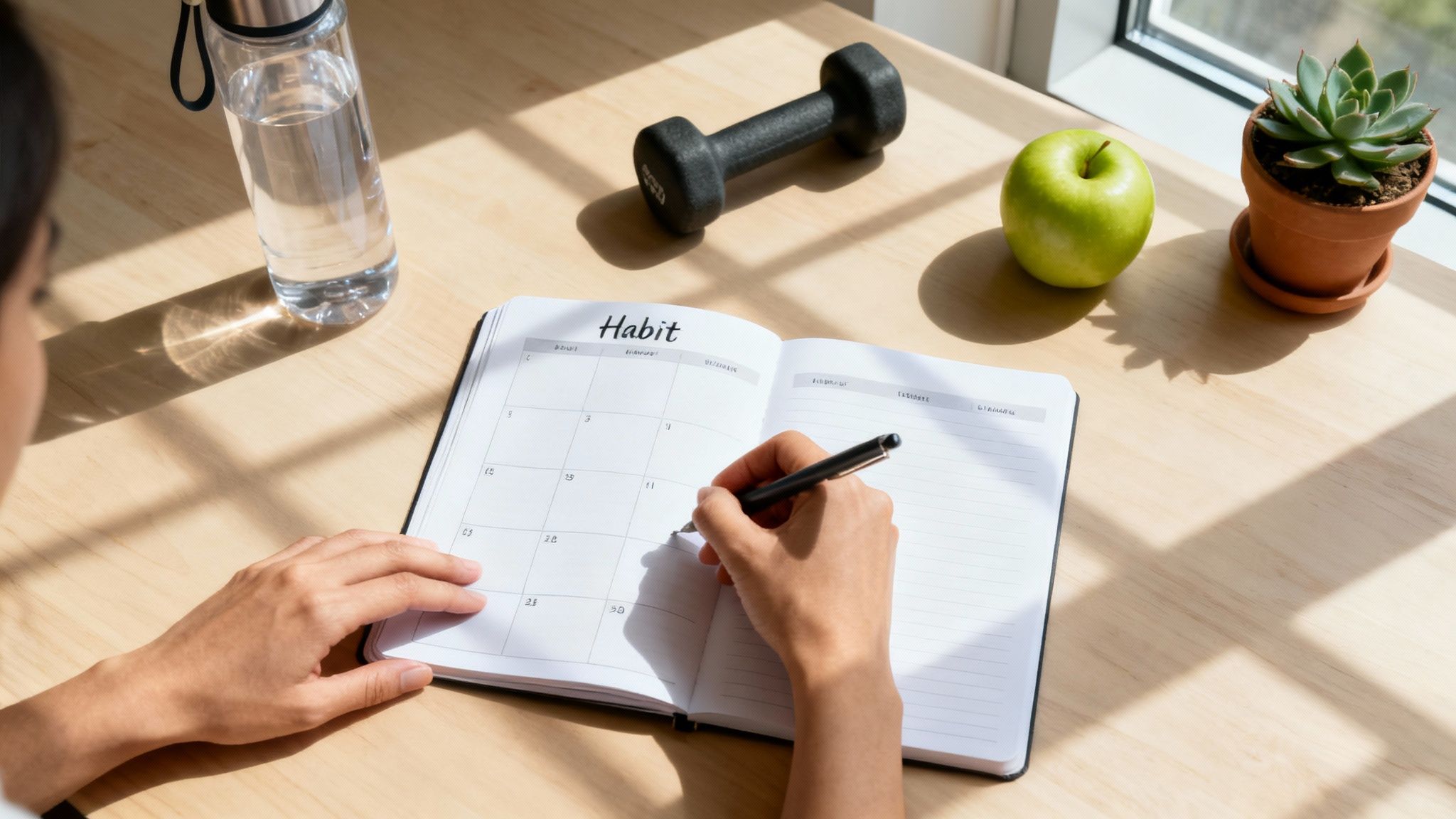
Summary: A practical guide to build healthy habits that actually stick. What actually works, what doesn’t, and where to start.
I’ve built and broken more habits than I can count. The ones that stuck all had something in common: they were small enough to do on my worst day.
Building new habits isn’t about white-knuckling it with willpower. It’s a game of strategy. The trick is to cleverly weave new behaviors into the fabric of your life—connecting them to who you want to be, setting up your space to make good choices easy, and starting so ridiculously small that you can’t possibly say no. This is how you sidestep the traps that doom most resolutions before they even get going.
Why Most New Habits Fail (and How Yours Won’t)
Ever set a New Year’s resolution in January only to find it’s a distant memory by February? You’re in good company. A staggering 43% of people reportedly throw in the towel on their goals before January is even over. It’s a classic, frustrating cycle. But the reason it happens has almost nothing to do with a lack of willpower or motivation.
The real problem is the approach. We treat building a new habit like a sprint, counting on a short-lived burst of inspiration to fuel a massive life change. But motivation is a fickle friend. Lasting change comes from building a smart system that works even on the days you don’t feel like it.
The Real Reasons Your Habits Don’t Stick
Most attempts at building healthy habits fall apart because of a few predictable, strategic mistakes. Once you see them, you can start to avoid them.
- You aim too high, too fast. Going from couch potato to a five-day-a-week gym habit is a classic recipe for burnout. Our brains are wired to resist drastic change, and once that initial wave of excitement wears off, the sheer effort feels impossible to maintain.
- You ignore your environment. If your pantry is a treasure trove of junk food, the habit of “eating healthier” becomes a constant, exhausting battle of willpower. Your environment is one of the most powerful, and most overlooked, forces shaping your daily actions.
- You don’t have a deep ‘why’. A vague goal like “get healthier” doesn’t have much staying power. Without a strong, personal connection to your values or your identity, there’s no emotional anchor to hold you steady when things get tough.
This is where a simple shift in thinking can change everything. Instead of beating yourself up for past attempts, it’s time to focus on building a smarter foundation for your next success.
“The secret to results that last is to never stop making improvements. It’s a remote outcome. It’s a process. It’s a system. It’s a commitment to the process that will determine your progress.” – James Clear
Adopt a Mindset of Progress, Not Perfection
The all-or-nothing mindset is the silent killer of good habits. The second you miss a workout or eat that slice of cake, you feel like a failure and think, “Well, I might as well give up.” A much healthier, and more effective, approach is built on self-compassion. The goal is consistency, not flawless perfection. You can learn more about this by exploring the difference between a growth vs. a fixed mindset, which is fundamental to any kind of long-term personal development.
Think of this guide as your playbook for reframing how you build habits. Forget about brute force. You’re going to learn how to make small, intelligent adjustments to your mindset and your space. This isn’t about a radical life overhaul overnight. It’s about setting yourself up for a series of small, sustainable wins that add up over time, creating real, lasting change from the ground up.
Designing Habits That Are Too Small to Fail
That initial jolt of enthusiasm when you set a new goal is a powerful thing. But it’s also fleeting. If you rely on sheer motivation to make a big life change, you’re going to burn out. It’s like trying to run a marathon on a single energy gel.
The real secret to building habits that last isn’t about massive, heroic efforts. It’s about making the new behavior so ridiculously easy to start that it feels almost silly not to do it.
This strategy cleverly sidesteps the need for willpower. Instead of committing to a 30-minute meditation session right out of the gate, you aim for just two minutes. Instead of a full workout, you do a single push-up. This is the power of micro-commitments. They’re so small your brain doesn’t put up a fight, which makes showing up every day a breeze and helps you build real momentum.
The process I’ve seen work time and again boils down to three core areas: aligning with your values, designing your environment, and tracking your progress. They all feed into each other to create a system that actually works.
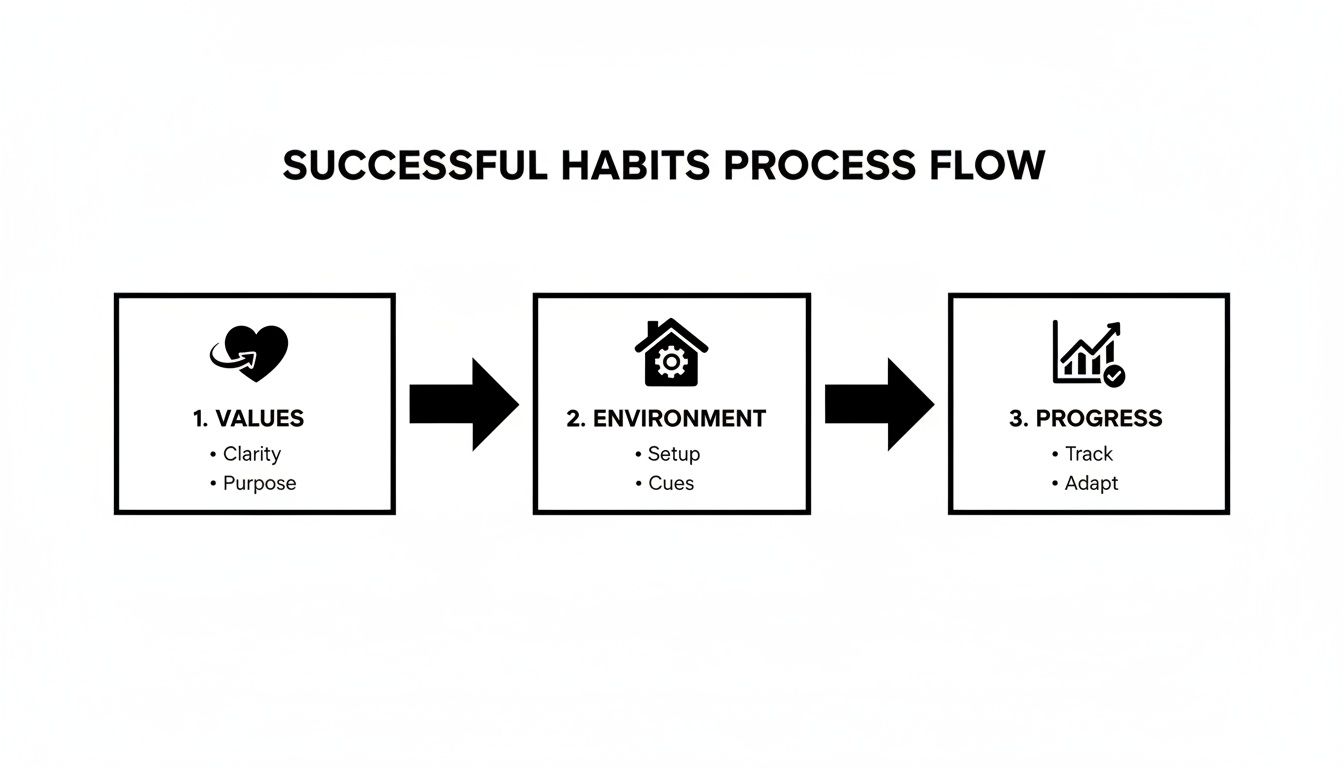
As you can see, long-term success isn’t just about the action itself. It’s about making sure that action fits into who you are and the space you live in.
The Cue-Routine-Reward Loop
Every single one of your habits—good or bad—runs on a simple neurological pattern called the Cue-Routine-Reward loop. Once you understand this three-part framework, you can take apart your old behaviors and start building better ones.
- The Cue: This is the trigger that kicks your brain into autopilot. It could be a time of day (your morning alarm), a place (the office breakroom), an emotional state (stress), or the action you just finished (clearing the dinner table).
- The Routine: This is the habit itself, the physical or mental action you take. Maybe it’s grabbing your phone, reaching for a snack, or lacing up your running shoes.
- The Reward: This is what signals to your brain, “Hey, that was good. Let’s remember this loop for next time.” The reward reinforces the habit, making it more likely you’ll repeat it.
To create a new habit, you just have to design the loop intentionally. Want to drink more water? The cue could be sitting down at your desk. The routine is drinking a full glass of water. The reward might be the simple satisfaction of ticking an item off your to-do list.
Attach New Habits to Existing Ones
One of the most effective tricks I know is to piggyback a new habit onto one you already do without thinking. This is called habit stacking. Instead of trying to carve out a new time and place for your habit, you just anchor it to something that’s already a permanent fixture in your day.
The formula couldn’t be simpler: “After I [current habit], I will [new habit].”
This works because your existing habit becomes a powerful, automatic cue. The decision is already made.
- Example 1: “After I brush my teeth in the morning, I will do five bodyweight squats.”
- Example 2: “After I pour my morning coffee, I will take my daily vitamin.”
- Example 3: “After I take off my work shoes, I will immediately change into my gym clothes.”
See how specific those are? They eliminate the “what now?” feeling that so often leads to doing nothing at all. If you find yourself getting stuck in the weeds and overthinking it, you might be falling into a common trap. You can get back on track by reading our guide on how to overcome analysis paralysis and returning to small, decisive actions.
Starting small isn’t just a motivational trick; it’s rooted in behavioral science. Habits formed through ‘micro-commitments’ stick around 80% better than ambitious overhauls because they don’t drain your limited willpower.
Make Your Habit Impossible to Forget
The last piece of the design puzzle is your environment. You have to rig the game in your favor. Make your good habits obvious and your bad habits invisible.
Want to read more? Don’t leave your book on the shelf—put it right on your pillow. Trying to eat more fruit? Move the fruit bowl from the corner to the center of your kitchen counter.
This works in reverse, too. If you want to break a bad habit, increase the friction. To watch less TV, unplug it after you’re done and put the remote in another room. These tiny obstacles create just enough of a pause for your conscious mind to catch up and ask, “Do I really want to do this?”
It takes an average of 66 days for a new behavior to become automatic. That means consistency beats intensity every single time, especially in the beginning. By starting tiny, stacking your habits, and designing your environment, you build a system that runs on its own—no motivation required.
Turning Intentions Into Consistent Action
Designing the perfect habit on paper is one thing. Actually doing it, day in and day out, when life gets messy? That’s the real challenge. This is where your well-crafted plans meet the real world, and where raw consistency becomes your greatest ally.
Let’s stop treating personal growth like a vague wish and start treating it like a project. You wouldn’t build a house without a timeline, right? The same principle applies here. We need a structure that gives you clear feedback, celebrates the small victories, and makes the whole process feel rewarding.
Your 30-Day Habit Kickstarter
The first month is when a new habit is at its most fragile. Your brain is working hard to carve out new neural pathways, but the behavior is far from automatic. A focused, 30-day sprint is the perfect way to build that critical early momentum.
The goal for this first month is simple: consistency over perfection. Just showing up is the win. A simple visual tracker is one of the most powerful tools you can use here.
- Grab a physical calendar: Seriously, get a cheap wall calendar and a big marker. Every single day you complete your habit, draw a huge ‘X’ over that date.
- Don’t break the chain: Your mission is to create an unbroken chain of X’s. It sounds simple, but this visual proof of your progress is incredibly motivating.
- Focus on the process, not the results: For these 30 days, your only job is to show up and make your mark. Forget the end goal for now.
This turns a chore into a game. Each ‘X’ is a tangible vote for the person you’re becoming.
Here is a simple template to get you started. Use it to track your new habit for the first 30 days. Remember, focus on consistency, not perfection, and take a moment to note how you feel along the way.
Your 30-Day Habit Kickstarter Template
| Day | Habit Focus (e.g., 10-min walk) | Trigger/Cue (e.g., After lunch) | Reward (e.g., Listen to podcast) | Completed (Yes/No) | Notes/Feelings |
|---|---|---|---|---|---|
| 1 | |||||
| 2 | |||||
| 3 | |||||
| … | |||||
| 30 |
Seeing this table fill up provides a powerful sense of accomplishment and gives you valuable data on what’s working and what isn’t.
From Kickstarter to Lifestyle
After nailing your 30-day kickstart, the habit will feel more familiar, but it probably isn’t locked in just yet. Now we shift to a 90-day integration phase. The goal here is to move beyond just doing the habit to making it a true part of who you are.
This longer runway allows the behavior to become deeply ingrained—strong enough to survive a vacation, a crazy week at work, or a dip in motivation. This is how you transition from consciously forcing the action to unconsciously being the kind of person who just does it. If you’re interested in the connection between our thoughts and behaviors, exploring some common Cognitive Behavioral Therapy techniques can be incredibly insightful.
The Game-Changing Weekly Review
If there’s one secret weapon for long-term success, it’s the weekly review. This is just a 15-minute meeting with yourself, once a week, to check in. It’s not about judgment; it’s about course correction.
A weekly review is the scheduled maintenance that keeps your habit system running smoothly. It helps you catch small problems before they become big failures.
During this check-in, just ask yourself three straightforward questions:
- What went well this week? Celebrate your wins, no matter how small. This reinforces the positive momentum.
- What was a struggle? Be honest. Did you miss a day? What got in the way?
- What one thing can I adjust for next week? Based on what you learned, make one tiny tweak. Maybe your cue wasn’t obvious enough, or the habit was too ambitious on a stressful day.
This simple loop of reflection and adjustment is what separates people who build lasting habits from those who give up. It turns slip-ups from “failures” into useful data, helping you build a system that’s resilient, flexible, and truly built for your life.
Weaving Movement Into Your Daily Routine
Let’s be honest: “get more exercise” is the first new habit to die when life gets busy. We tend to view physical activity as this big, separate event—something we have to carve out an hour for, get changed for, and then recover from. But that all-or-nothing mindset is precisely why it so often fails.
A much better approach is to stop thinking of movement as a scheduled event and start weaving it into the fabric of your day. It’s a complete perspective shift. Movement isn’t just a 45-minute gym session. It’s taking the stairs instead of the elevator, doing a few squats while you wait for your tea to steep, or walking to the local shop instead of driving. These small moments add up, transforming a sedentary day into an active one without blowing up your calendar.

Link Movement to Your Existing Habits
One of the most effective ways to make a new habit stick is to piggyback it onto an old one. This technique is called habit stacking, and it’s brilliant because it removes the need to find new time or motivation. You simply anchor the new behavior to a routine you already do on autopilot.
Think about your non-negotiable morning coffee. That’s a perfect anchor. While the coffee is brewing, you could do a set of calf raises or hold a plank. The coffee is your cue; the short exercise is the new routine. Research in behavioral science shows this simple trick can make you 2-3 times more likely to stick with a habit because it automates the decision.
For busy professionals, this is a game-changer. The World Health Organization (WHO) recommends 150 minutes of moderate activity per week, which is tied to a 30% reduction in heart disease risk and a serious boost in productivity. Attaching a quick walk to your post-coffee or post-lunch routine makes hitting that target feel effortless. You can dig into some of the research on these global health attitudes and their benefits to see just how much these small, consistent actions matter.
Break Down the Big Goals
That 150-minute weekly goal sounds like a lot, right? But when you do the math, it’s not so scary. It breaks down to just 22 minutes per day.
Now, look at your day through the lens of small, available pockets of time:
- Morning: 10 minutes of stretching right after you roll out of bed.
- Lunch Break: A brisk 15-minute walk around the block to clear your head.
- After Work: 10 minutes of bodyweight exercises before you crash on the couch.
Just like that, you’ve racked up 35 minutes without ever needing a gym membership. The secret is to stop seeing these small windows as wasted time and start seeing them as opportunities.
The most effective exercise routine is the one you actually enjoy and will stick with. If you hate running, don’t force it. The goal is sustainable consistency, not short-term intensity.
Find Joy in the Movement
In the long run, your success depends almost entirely on finding a type of physical activity you genuinely like. If your workout feels like a punishment, your brain will cook up a thousand excuses to skip it. But if it’s a source of joy, stress relief, or social connection, you’ll start to crave it.
So, what actually sounds fun to you?
- Love being outdoors? Try hiking, cycling, or kayaking.
- A social butterfly? Join a dance class, a rec sports league, or a neighborhood walking group.
- Need to quiet your mind? Yoga or tai chi could be the perfect fit.
The specific activity matters far less than your consistency with it. Think about cultures known for their longevity and high activity rates—they often don’t “exercise” in the way we do. Movement is just part of life, woven in through things like gardening, walking to the market, or social dancing. When you find an activity that energizes you, you’re not just building a habit; you’re adding a legitimate source of pleasure back into your life.
Making Healthy Eating Feel Effortless
Let’s be real: changing your diet shouldn’t feel like a full-time job or some kind of punishment. The world is full of restrictive, all-or-nothing diets that just leave you feeling frustrated and hungry. The real goal is to build simple, sustainable eating habits that fit into your actual life, not take it over. This is all about making the nutritious choice the easy choice.
Instead of trying to overhaul everything at once, I always recommend starting with a powerful little strategy I call the ‘Nutrition Forward’ swap. The idea is deceptively simple: each day, just replace one less-healthy food or drink with a better one. That’s it.
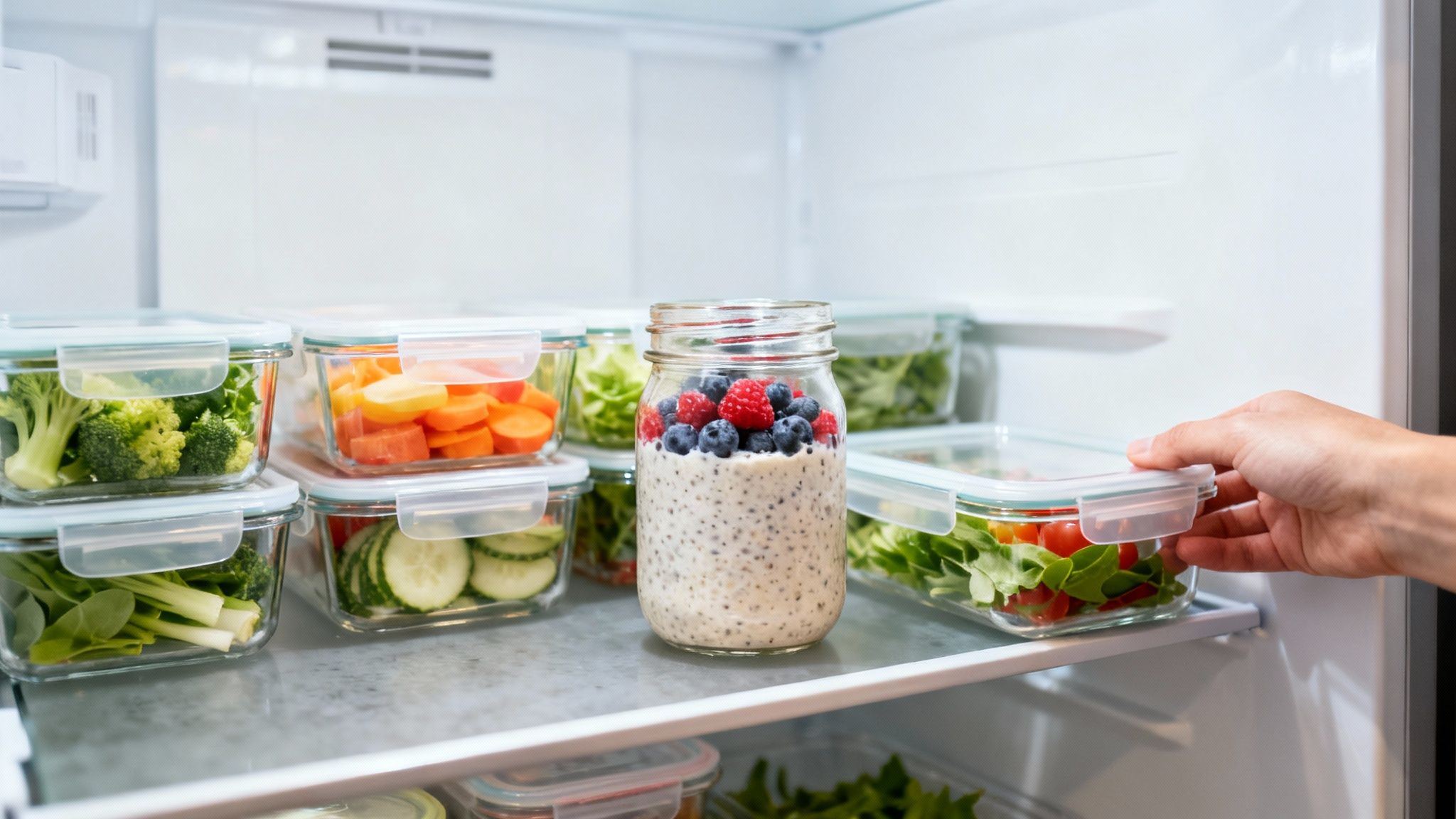
This one small action can build incredible momentum over time. Swapping your afternoon soda for sparkling water or trading chips for a handful of almonds might not feel like a big deal. But those consistent, daily wins are exactly what lasting change is built on.
Find Your Balance with the 80/20 Rule
One of the main reasons diets fail is that they’re just too rigid. You have one “bad” day, feel like you’ve blown it, and throw in the towel completely. A much more forgiving—and realistic—approach is the 80/20 rule.
The concept is simple: aim to eat nutrient-dense, whole foods 80% of the time. For the other 20%, you have the freedom to enjoy the foods you love without a side of guilt. This gives you a solid framework for healthy eating without turning you into the person who can’t enjoy a slice of birthday cake or a night out with friends.
This isn’t a free pass to go wild for 20% of your meals. It’s a structured way to build a healthy relationship with food, acknowledging that perfection is impossible and sustainable balance is the real prize.
This mindset lines up with what we’re seeing in broader wellness trends. For instance, new data shows that 73% of Millennials and Gen Z are motivated to eat healthy to gain more energy and focus, not just to lose weight. The 80/20 rule provides the perfect runway for this, allowing for consistency without burnout. If you’re interested in the data, you can discover insights on future wellness trends to see how people’s motivations are shifting.
Outsmart Decision Fatigue with Smart Prep
You know that feeling? You get home after a long day, you’re mentally fried, and the thought of cooking from scratch feels impossible. So, you grab your phone and order takeout. That’s decision fatigue winning the battle.
You can get ahead of this by doing a little bit of small-scale prep. I’m not talking about spending your entire Sunday chained to the kitchen. This is about making a few strategic moves to make your week run smoother.
Here are a few of my go-to prep ideas that take minimal time but deliver huge returns:
- Set Up Your Breakfast: Make a batch of overnight oats or hard-boil a half-dozen eggs. Suddenly, your morning meal is a simple grab-and-go affair.
- Chop Veggies Ahead of Time: Right after a grocery run, spend 20 minutes washing and chopping vegetables like bell peppers, onions, and broccoli. Store them in containers in the fridge, and they’re ready to toss into a stir-fry or salad at a moment’s notice.
- Portion Out Your Snacks: Instead of facing down a giant bag of trail mix when you’re hungry, pre-portion it into single-serving bags. It’s a simple trick to manage portion sizes without thinking.
These small investments of time completely change the game. You’re not just preparing food; you’re designing an environment where your good intentions can actually succeed, even when your willpower is running on empty. This is how healthy eating stops feeling like a chore and starts becoming an effortless part of who you are.
Common Questions About Building Habits
As you start putting these strategies into action, you’re bound to run into some snags. That’s a normal, expected part of the journey. Let’s tackle some of the most common hurdles people face when trying to make healthy habits stick for good.
How Long Does It Really Take to Form a Habit?
You’ve probably heard the old “21 days” myth. It’s time to let that one go. A much more revealing study found it takes an average of 66 days for a new behavior to feel automatic. But even that number isn’t the full picture.
The range in that study was massive—from a quick 18 days to a marathon 254 days. Why the big difference? It all depends on you, how complex the habit is, and how consistently you perform it.
The real takeaway here isn’t to get hung up on a magic number. Instead, pour your energy into simply showing up, day after day, especially during those critical first two months. Let the process work without worrying about a specific deadline.
What Should I Do If I Miss a Day?
This is the make-or-break moment where so many people’s best intentions crumble. If you remember nothing else, remember this one golden rule: never miss twice in a row.
A single missed day is just a data point, a slip-up. Two missed days is the start of a brand-new habit: quitting.
The all-or-nothing mindset is your biggest enemy here. If you skip a workout or forget to meditate, don’t let it spiral into thinking you’ve failed. Just acknowledge it, give yourself a little grace, and get right back on track the very next day.
Even better, use it as a chance to learn. Ask yourself one simple question: Why did I miss it?
- Was the habit too big for that specific day?
- Was my cue not obvious enough?
- Did something unexpected completely derail my schedule?
Your answer is pure gold. Use it to tweak your plan and make a small adjustment. This simple act turns a setback into valuable feedback, making your entire system stronger and more resilient.
How Many Habits Should I Build at Once?
When a wave of motivation hits, it’s so tempting to try and reinvent your entire life overnight. You decide you’re going to start meditating, exercising, journaling, and eating clean—all at once. This is a classic recipe for burnout.
Think of your willpower as a muscle. It gets tired. Trying to build several major habits at the same time divides your focus and drains your energy, making it almost certain that none of them will stick.
Behavioral experts are nearly unanimous on this one: start with just one new habit at a time.
Pour all of your focus into making that single habit consistent. Once it feels easy, almost second nature—when you do it without having a big internal debate—then, and only then, should you think about adding another. It might feel slow, but this one-by-one approach is actually the fastest path to real, lasting change.
My Motivation Fades After a Few Weeks. What’s Wrong?
Absolutely nothing. This is completely normal and, frankly, expected. Motivation is a feeling, and like any feeling, it’s fickle. It ebbs and flows. It’s a fantastic spark to get you started, but it’s a terrible fuel source to keep you going.
This is precisely why having a solid system is non-negotiable. Your system is what you fall back on when your motivation inevitably disappears.
What does this system look like in practice?
- Habit Stacking: Tying your new habit to an old one so it runs on autopilot.
- Environment Design: Making your cues unmissable and the action effortless.
- Tiny Habits: Shrinking your new habit down until it’s too small to say no to.
- Tracking: Creating a visual chain of your progress on a calendar to build momentum.
When you don’t feel like doing it, your system takes over. You might not have the motivation for your two-minute walk, but your running shoes are right by the door (environment design) and it’s what you always do right after lunch (habit stacking), so you just do it. Consistency is built by systems, not by fleeting motivation.
If this resonated, go deeper. My book Love, Success, Freedom and Boundaries gives you twelve frameworks for seeing the patterns that shape your life — and changing the ones that aren’t working.
Frequently Asked Questions
What’s the key to building habits that stick?
Make the habit so small it’s impossible to fail at. Not “meditate for 30 minutes” but “sit quietly for 60 seconds.” Consistency builds the neural pathway; you can increase intensity later. The goal initially is just showing up.
How long does it actually take to form a habit?
The 21-day myth is wrong. Research suggests 66 days on average, but it varies enormously by complexity. A simple habit like drinking water might take two weeks; a complex one like exercising daily might take six months. Focus on the process, not the timeline.
Why do I keep breaking habits?
Usually because you’re relying on motivation instead of systems. Motivation fluctuates; systems persist. Attach new habits to existing routines, remove friction, and design your environment to make the right choice easier than the wrong one.
Keep Reading
- The 10 Morning Habits of Successful People to Master in 2026
- Reducing Anxiety Naturally: Tips – reducing anxiety naturally
- Overcoming limiting beliefs: A Practical Guide to Growth
If you do any writing alongside the focus work — journaling, drafting, processing what you’re noticing — the tool I use to draft most of my words is Wispr Flow. It transcribes your voice into clean, edited text in real time, so the friction between thinking it and writing it basically disappears.
If this resonated, go deeper. My book Love, Success, Freedom and Boundaries gives you twelve frameworks for seeing the patterns that shape your life — and changing the ones that aren’t working.
Frequently Asked Questions
What’s the key to building habits that stick?
Make the habit so small it’s impossible to fail at. Not “meditate for 30 minutes” but “sit quietly for 60 seconds.” Consistency builds the neural pathway; you can increase intensity later. The goal initially is just showing up.
How long does it actually take to form a habit?
The 21-day myth is wrong. Research suggests 66 days on average, but it varies enormously by complexity. A simple habit like drinking water might take two weeks; a complex one like exercising daily might take six months. Focus on the process, not the timeline.
Why do I keep breaking habits?
Usually because you’re relying on motivation instead of systems. Motivation fluctuates; systems persist. Attach new habits to existing routines, remove friction, and design your environment to make the right choice easier than the wrong one.
Keep Reading
- The 10 Morning Habits of Successful People to Master in 2026
- Reducing Anxiety Naturally: Tips – reducing anxiety naturally
- Overcoming limiting beliefs: A Practical Guide to Growth
If you do any writing alongside the focus work — journaling, drafting, processing what you’re noticing — the tool I use to draft most of my words is Wispr Flow. It transcribes your voice into clean, edited text in real time, so the friction between thinking it and writing it basically disappears.
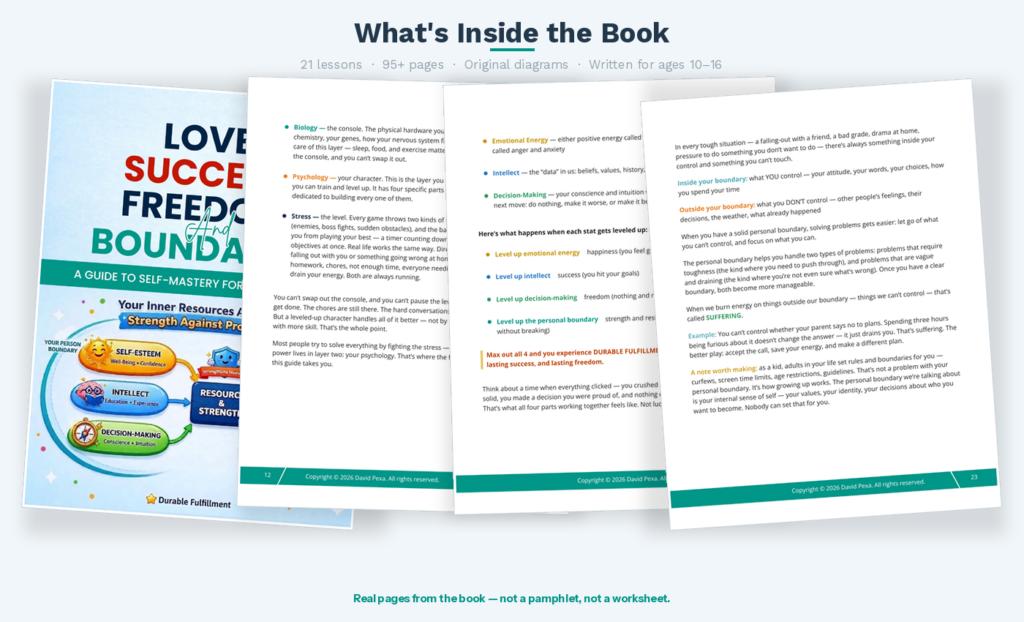
If this resonated, go deeper. My book Love, Success, Freedom and Boundaries gives you twelve frameworks for seeing the patterns that shape your life — and changing the ones that aren’t working.
Frequently Asked Questions
What’s the key to building habits that stick?
Make the habit so small it’s impossible to fail at. Not “meditate for 30 minutes” but “sit quietly for 60 seconds.” Consistency builds the neural pathway; you can increase intensity later. The goal initially is just showing up.
How long does it actually take to form a habit?
The 21-day myth is wrong. Research suggests 66 days on average, but it varies enormously by complexity. A simple habit like drinking water might take two weeks; a complex one like exercising daily might take six months. Focus on the process, not the timeline.
Why do I keep breaking habits?
Usually because you’re relying on motivation instead of systems. Motivation fluctuates; systems persist. Attach new habits to existing routines, remove friction, and design your environment to make the right choice easier than the wrong one.
Keep Reading
- The 10 Morning Habits of Successful People to Master in 2026
- Reducing Anxiety Naturally: Tips – reducing anxiety naturally
- Overcoming limiting beliefs: A Practical Guide to Growth
If you do any writing alongside the focus work — journaling, drafting, processing what you’re noticing — the tool I use to draft most of my words is Wispr Flow. It transcribes your voice into clean, edited text in real time, so the friction between thinking it and writing it basically disappears.
Conclusion
Understanding is the first step, but it’s what you do with that understanding that changes things. The ideas in this article aren’t meant to sit in your head — they’re meant to shift how you see your situation and give you something concrete to act on. Start with the one thing that felt most relevant, apply it this week, and notice what changes.
A note on affiliates: This article includes affiliate links to platforms I’ve vetted and would recommend to my own clients and students. If you start with a recommended service through a link here, I may earn a small commission — at no extra cost to you. I only mention what I’d actually point you to in person. The recommendation comes first; the relationship is disclosed second.
If this resonates, the full framework lives in Love, Success, Freedom and Boundaries.
A practical playbook for raising emotionally resilient kids — and breaking the patterns you didn’t choose to inherit.
