



Summary: 6 Personal Growth Counseling Strategies: Elevate Your Life — what it means, why it matters, and how to use it as a framework for real change in your life.
Personal growth counseling isn’t therapy, and it isn’t coaching — it sits in between. It’s for people who aren’t in crisis but know they’re not where they want to be. That describes most of the people I work with.
I’m David Pexa, a mindset coach and educator dedicated to helping individuals upgrade their thought processes, emotions, and overall lifestyle. My work focuses on the intersection of mind, body, and spirit, combining practical personal development techniques with insights from psychology, fitness, and emotional well-being.
Through my practice in life transformation coaching, I’ve seen firsthand the positive impact that a holistic approach can have on one’s life. By integrating various disciplines, I empower individuals to achieve lasting change and reach their full potential.
Key Takeaways
- Understanding the importance of a holistic approach to personal development
- Discovering effective strategies for life transformation
- Learning how to integrate mind, body, and spirit for overall well-being
- Gaining insights into the role of mindset in achieving personal goals
- Practical techniques for sustaining long-term lifestyle changes
My Journey to Becoming a Mindset Coach
Becoming a mindset coach required me to embark on a profound journey of self-improvement and emotional growth support. Through this journey, I discovered the importance of integrating various aspects of personal development.
From Personal Exploration to Professional Guidance
My path to becoming a mindset coach was not linear. It involved extensive personal exploration into areas such as performance enhancement, fasting, habit formation, and spirituality. As I navigated these different facets, I began to see the interconnectedness of mind, body, and spirit in achieving personal growth.
I started by exploring my own limitations and biases, which led to a deeper understanding of the challenges others face. This self-improvement therapy was crucial in shaping my approach to coaching. I learned to identify patterns that hinder growth and developed strategies to overcome them.
The Mind-Body-Spirit Connection in My Work
A key realization in my journey was the significance of the mind-body-spirit connection. I came to understand that emotional growth support is not just about mental techniques but also involves physical and spiritual practices. This holistic approach has been pivotal in my work as a mindset coach.
Some of the core principles I’ve integrated into my coaching include:
- Recognizing the interplay between physical practices and mental states
- Understanding the role of spirituality in personal growth
- Developing strategies that support emotional regulation and resilience

By sharing my framework publicly, I aim to help others navigate their own journeys of personal growth and self-improvement.
The Transformative Power of Personal Growth Counseling
In today’s fast-paced world, the need for intentional self-development through personal growth counseling is more pressing than ever. As individuals navigate the complexities of modern life, they often find themselves seeking more than just surface-level solutions to their challenges. Personal growth counseling offers a profound journey of self-discovery and transformation, empowering individuals to unlock their full potential.

The Growing Need for Intentional Self-Development
The world is changing at an unprecedented rate, and the demands on individuals are higher than ever. In this context, professional development coaching has emerged as a vital resource for those seeking to enhance their personal and professional lives. My work has expanded into structured programs, courses, and written material designed to create real, sustainable change.
By focusing on intentional self-development, individuals can cultivate the skills and mindset necessary to thrive in a rapidly evolving environment.
Breaking Through Modern Life’s Challenges
Modern life presents a unique set of challenges, from managing stress and anxiety to navigating complex relationships and career transitions. Personal growth counseling provides a supportive framework for addressing these challenges, helping individuals to break through barriers and achieve their goals.
Through my practice, I’ve seen how this approach can lead to lasting transformation, enabling individuals to live more authentic, fulfilling lives.
My Approach to Personal Growth Counseling
My method of personal growth counseling combines various disciplines to foster mental wellness guidance, helping individuals achieve a balanced and fulfilling life.
This integrated approach allows me to support clients in addressing multiple aspects of their well-being simultaneously, leading to more effective and lasting change.
Blending Psychology with Practical Development
I believe that personal growth is most effective when it combines theoretical psychological insights with practical, actionable strategies. By blending these elements, I help clients understand the underlying factors influencing their thoughts, feelings, and behaviors, while also providing them with the tools they need to make meaningful changes in their lives.
For instance, we might explore cognitive-behavioral techniques to challenge negative thought patterns, alongside mindfulness practices to enhance emotional regulation.
Creating Sustainable Change Through Structured Guidance
Sustainable change requires more than just insight; it demands a structured approach to personal development. That’s why I work with clients to create personalized growth plans, setting clear goals and identifying the steps needed to achieve them.
Through regular sessions and ongoing support, we track progress, celebrate successes, and address any challenges that arise along the way.
| Aspect of Well-being | Practical Strategies | Psychological Insights |
|---|---|---|
| Emotional Regulation | Mindfulness, Meditation | Understanding Emotional Triggers |
| Cognitive Function | Cognitive Training, Brain Exercises | Recognizing Cognitive Biases |
| Physical Health | Nutrition Planning, Exercise Regimens | The Psychology of Eating, Exercise Motivation |
Strategy 1: Mindset Recalibration for Enhanced Self-Awareness
Enhanced self-awareness through mindset recalibration is the foundation of self-discovery counseling. As I guide my clients through this process, I’ve seen firsthand how it can transform lives. Mindset recalibration involves identifying and challenging our limiting beliefs and patterns, allowing us to adopt a more positive and empowering mindset.
Identifying Limiting Belief Patterns
The first step in recalibrating our mindset is to become aware of our current thought patterns. This involves recognizing the beliefs that limit us. Some common limiting beliefs include:
- “I’m not good enough.”
- “I’ll never be able to achieve my goals.”
- “I’m not worthy of love or success.”
By acknowledging these beliefs, we can begin to challenge and change them.
Practical Exercises for Daily Mindset Shifts
To shift our mindset effectively, we need practical exercises that can be incorporated into our daily routine. One such exercise is the 5-Minute Morning Mindset Reset.
The 5-Minute Morning Mindset Reset
This simple yet powerful exercise sets a positive tone for the day. Here’s how to do it:
- Spend 1 minute practicing deep breathing exercises.
- Take 1 minute to reflect on what you’re grateful for.
- Use 1 minute to visualize your goals and how you’ll achieve them.
- Spend 1 minute affirming positive statements about yourself.
- End with 1 minute of setting an intention for the day.
By incorporating this exercise into your daily routine, you’ll begin to notice a significant shift in your mindset and overall outlook on life.
Recalibrating our mindset is not a one-time task but a continuous process. With consistent practice and patience, we can achieve enhanced self-awareness and move closer to our personal growth goals.

Strategy 2: Embodied Cognition Techniques for Emotional Regulation
Embodied cognition techniques offer a powerful approach to emotional regulation, leveraging the intricate connection between our physical practices and mental states. By acknowledging the interdependence of body and mind, we can harness embodied cognition to enhance our emotional well-being.
How Physical Practices Influence Mental States
Research has shown that physical practices can significantly impact our mental states. For instance, mindful movement practices like yoga and tai chi have been found to reduce stress and anxiety by promoting relaxation and improving mood. This is because physical activity influences our brain chemistry, releasing neurotransmitters that can either calm or stimulate the mind.
Movement-Based Approaches to Emotional Balance
Movement-based approaches are essential for achieving emotional balance. Techniques such as dance therapy and walking meditation can help individuals process and regulate their emotions. These practices encourage a mindful connection between the body and mind, fostering a deeper understanding of one’s emotional state.
Breath-Body Integration Exercises
Breath-body integration exercises are a crucial component of embodied cognition. Practices like holotropic breathwork can induce deep relaxation and emotional release. Here are some key exercises:
- Diaphragmatic breathing
- Progressive muscle relaxation
- Yoga nidra
These exercises help integrate the body and mind, promoting emotional regulation and overall well-being. By incorporating these practices into daily life, individuals can better support their emotional growth and resilience.
Strategy 3: Habit Engineering for Lasting Transformation
Habit engineering is a powerful strategy for personal growth counseling, enabling lasting transformation through systematic habit change. By understanding how habits are formed and changed, individuals can create systems that support their growth goals.
The Science of Habit Formation and Change
Habits are automatic responses to specific cues, developed through repetition and reinforcement. The process of habit formation involves a cue, a routine, and a reward. Understanding this loop is crucial for changing unwanted habits and creating new, positive ones.
The brain’s neural pathways play a significant role in habit formation. As we repeat a behavior, the associated neural pathway becomes stronger, making the behavior more automatic over time. This process can be harnessed to create positive habits that support personal growth.
Creating Systems That Support Your Growth Goals
To effectively engineer habits, one must create systems that support growth goals. This involves identifying the cues that trigger current habits and replacing the routines with more desirable behaviors, while maintaining the rewards.
For instance, if one’s goal is to start a regular exercise habit, identifying a consistent cue (like waking up at a certain time) and linking it to a new routine (exercising) followed by a reward (feeling accomplished) can be effective.
The 1% Improvement Protocol
A practical approach to habit engineering is the 1% Improvement Protocol. This involves making small, incremental changes to daily habits, aiming for a 1% improvement each day. Over time, these small changes compound, leading to significant transformations.
- Identify one habit you wish to change or create.
- Plan a 1% improvement in that habit for the next day.
- Implement the change and track the outcome.
- Repeat the process daily, gradually increasing the improvement.
By applying the 1% Improvement Protocol and understanding the science behind habit formation, individuals can create lasting transformations that support their personal growth counseling goals.
Strategy 4: Spiritual Alignment and Purpose Discovery
As a life transformation coach, I’ve seen how spiritual alignment can transform lives. Spiritual alignment and purpose discovery are fundamental to achieving a fulfilling life. This strategy involves connecting with your core values and cultivating inner wisdom to guide your personal growth journey.
Connecting to Your Core Values
Understanding your core values is essential for making decisions that align with your true self. To identify your core values, take time to reflect on what matters most to you in life. Consider times when you felt most alive and fulfilled. These reflections can help you uncover your core values and guide your actions towards a more purposeful life.
Practices for Cultivating Inner Wisdom
Cultivating inner wisdom is a practice that involves tuning into your inner self. This can be achieved through meditation, journaling, or spending time in nature. These practices help you connect with your inner voice and make decisions that align with your deeper purpose.
The Purpose Mapping Exercise
The Purpose Mapping Exercise is a powerful tool for discovering your life’s purpose. It involves creating a visual map of your values, passions, and long-term goals. By doing so, you can identify patterns and themes that reveal your deeper purpose.
| Core Values | Passions | Long-term Goals |
|---|---|---|
| Compassion | Helping others | Become a leading expert in my field |
| Creativity | Writing | Publish a book |
| Authenticity | Personal growth | Develop a personal growth program |
By aligning with your spiritual core and discovering your purpose, you can experience profound life transformation. This journey requires patience, self-reflection, and a willingness to explore your inner world. As you cultivate inner wisdom, you’ll be better equipped to navigate life’s challenges and make choices that support your long-term growth.
In my experience with life transformation coaching, clients who engage in spiritual alignment and purpose discovery often report a deeper sense of fulfillment and direction. By incorporating practices like the Purpose Mapping Exercise, you can unlock your full potential and achieve a more meaningful life.

Strategy 5: Relational Intelligence Development
In my work, enhancing connections through self-understanding has been a key factor in clients’ progress. Relational intelligence development is a vital aspect of self-improvement therapy that enables individuals to navigate complex social dynamics more effectively.
Enhancing Connections Through Self-Understanding
Understanding oneself is the foundation of building strong, meaningful relationships. By gaining insight into our own emotions, needs, and behaviors, we can communicate more effectively and empathize with others. This self-awareness is crucial in both personal and professional contexts.
Self-reflection is a powerful tool in this process. Through various exercises and practices, individuals can develop a deeper understanding of their motivations and responses to different situations, leading to more harmonious and productive interactions.
Communication Patterns That Foster Growth
Effective communication is the backbone of any successful relationship. Certain patterns of communication can significantly enhance relational intelligence. For instance, active listening, where one fully concentrates on and comprehends the message being conveyed, is crucial.
Another important aspect is the use of non-violent communication, which involves expressing needs and feelings without blame or judgment, promoting a more compassionate and understanding dialogue.
The Compassionate Feedback Loop
A key component of relational intelligence is the ability to give and receive feedback constructively. The Compassionate Feedback Loop is a technique that involves providing feedback that is specific, timely, and focused on behavior rather than personality, ensuring that it is received as a constructive tool for growth rather than criticism.
This approach not only enhances personal relationships but also fosters a supportive environment where individuals feel safe to express themselves and grow.
In conclusion, developing relational intelligence through self-understanding and effective communication patterns is a powerful strategy for personal growth. By incorporating practices like the Compassionate Feedback Loop, individuals can significantly enhance their relationships and overall well-being.

Strategy 6: Integrated Lifestyle Design for Holistic Wellbeing
The sixth strategy in our personal growth journey is integrated lifestyle design, which is about creating a balanced and fulfilling life. As we navigate through various life challenges, it’s essential to have a lifestyle that supports our overall wellbeing.
Balancing Performance with Recovery
A key aspect of integrated lifestyle design is finding a balance between performance and recovery. In today’s fast-paced world, we often push ourselves to achieve more, but neglecting recovery can lead to burnout. Professional development coaching emphasizes the importance of balancing our efforts with rest and relaxation to maintain our mental and physical health.
To achieve this balance, we can adopt several strategies:
- Prioritize tasks and focus on high-impact activities
- Schedule regular breaks and practice self-care
- Engage in activities that promote relaxation and stress relief
Creating a Life Architecture That Supports Your Evolution
Creating a life architecture that supports our evolution involves designing our lives in a way that fosters growth and development. This includes setting clear goals, establishing supportive habits, and cultivating a positive environment. Mental wellness guidance is crucial in this process, as it helps us navigate through challenges and stay focused on our objectives.
The Quarterly Life Design Review
To ensure we’re on track with our goals, conducting a Quarterly Life Design Review can be highly beneficial. This involves assessing our current lifestyle, identifying areas for improvement, and making necessary adjustments. Here’s an example of how to structure this review:
| Aspect | Current Status | Desired Outcome | Action Plan |
|---|---|---|---|
| Career | Satisfied but looking for growth | Secure a promotion within the next 6 months | Develop new skills, network, and take on additional responsibilities |
| Health | Regularly exercising but struggling with diet | Improve eating habits and maintain regular exercise | Meal planning, consulting a nutritionist, and scheduling workout sessions |
By regularly reviewing and adjusting our life design, we can ensure that we’re moving towards our goals and maintaining a balanced, fulfilling life.
Overcoming Common Challenges in Your Growth Journey
In my experience with clients seeking emotional growth support, I’ve seen that certain challenges frequently arise. Personal growth is a unique journey for each individual, and understanding how to navigate common obstacles is crucial for success.
Navigating Resistance and Plateaus
One of the most significant challenges is overcoming resistance to change. This can manifest as fear of the unknown or discomfort with new practices. To overcome this, it’s essential to develop strategies for managing resistance, such as gradual exposure to new experiences and practices.
Plateaus are another common challenge. When progress seems stagnant, it’s easy to become discouraged. However, plateaus can be opportunities for reflection and adjustment. By reassessing goals and strategies, individuals can break through these barriers.
Building Consistency Through Accountability
Building consistency is key to overcoming challenges. One effective method is through accountability. Regular check-ins with a coach or support group can provide the motivation needed to stay on track.
| Strategy | Description | Benefit |
|---|---|---|
| Regular Check-ins | Schedule regular meetings with a coach or accountability partner. | Increased motivation and support. |
| Progress Tracking | Keep a journal or log to monitor progress. | Enhanced self-awareness and adjustment opportunities. |
| Community Engagement | Participate in support groups or online forums. | Connection with others on a similar journey. |
By incorporating these strategies into your personal growth journey, you can overcome common challenges and continue to make progress toward your goals.
If you process emotions through writing — journaling, drafting hard conversations, putting words to what you’re feeling — the tool I use to draft most of my words is Wispr Flow. It transcribes your voice into clean, edited text in real time, so the friction between thinking it and writing it basically disappears.
Conclusion: Your Personal Growth Journey Begins Now
As we conclude our exploration of personal growth counseling strategies, I’m reminded that true transformation is a journey, not a destination. Through effective counseling, individuals can experience profound life changes. My work in life transformation coaching is designed to create real, sustainable change by empowering individuals with the tools and insights needed to navigate their personal growth journey.
By incorporating the strategies outlined in this article, you can begin to experience meaningful shifts in your life. Whether through mindset recalibration, embodied cognition techniques, or relational intelligence development, the key is to find what works best for you and commit to your personal growth counseling journey.
As you move forward, remember that personal growth is a continuous process. It requires patience, self-reflection, and a willingness to evolve. I’m confident that with the right support and guidance, you can achieve lasting transformation and live a more fulfilling life.
FAQ
What is personal growth counseling, and how can it help me?
How do I know if I need personal growth counseling or self-improvement therapy?
What can I expect from professional development coaching?
How does emotional growth support contribute to overall well-being?
Can self-discovery counseling really lead to life transformation?
What role does mental wellness guidance play in personal growth?
How can I start my journey with personal growth counseling or life transformation coaching?
Keep Reading
- Your Guide to Personal Growth Counseling in 2026
- What Is Personal Growth Counseling and Is It Right for You
- How to Create a Personal Growth Plan That Actually Works
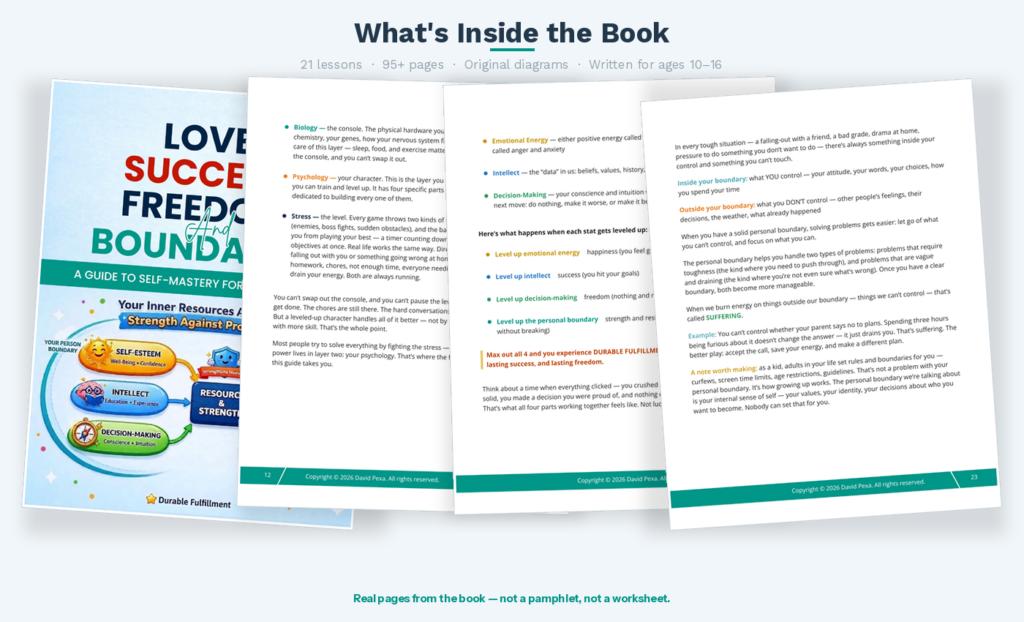
If this resonated, go deeper. My book Love, Success, Freedom and Boundaries gives you twelve frameworks for seeing the patterns that shape your life — and changing the ones that aren’t working.
A note on affiliates: This article includes affiliate links to platforms I’ve vetted and would recommend to my own clients and students. If you start with a recommended service through a link here, I may earn a small commission — at no extra cost to you. I only mention what I’d actually point you to in person. The recommendation comes first; the relationship is disclosed second.
If this resonates, the full framework lives in Love, Success, Freedom and Boundaries.
A practical playbook for raising emotionally resilient kids — and breaking the patterns you didn’t choose to inherit.
